
Jean Dubuffet stands as one of the most radical and influential figures of 20th-century art, fundamentally challenging traditional notions of beauty, culture, and artistic refinement. Rejecting the authority of academic art and established taste, he sought instead a raw, instinctive form of expression rooted in what he termed Art Brut—works created outside the boundaries of official culture, often by children, psychiatric patients, or self-taught individuals. His own practice, spanning painting, drawing, sculpture, and monumental environments, is characterized by rough textures, unconventional materials, and a deliberately anti-aesthetic approach. Through this rejection of convention, Dubuffet redefined the very foundations of artistic value, positioning spontaneity, imperfection, and authenticity at the center of modern art.
Introduction
Jean Dubuffet was born in Le Havre in 1901 and died in Paris in 1985. After a brief period at the Académie Julian in Paris, he distanced himself from academic instruction and returned to work in his family’s wine business. His definitive commitment to art came relatively late, in the early 1940s. That delay was formative. Dubuffet entered the art world without reverence for its institutions and without allegiance to its inherited hierarchies.
From the beginning, he rejected aesthetic refinement and the authority of cultural taste. Instead, he sought an art grounded in instinct, directness, and material presence. His suspicion of cultural conditioning would become the intellectual foundation of his career.
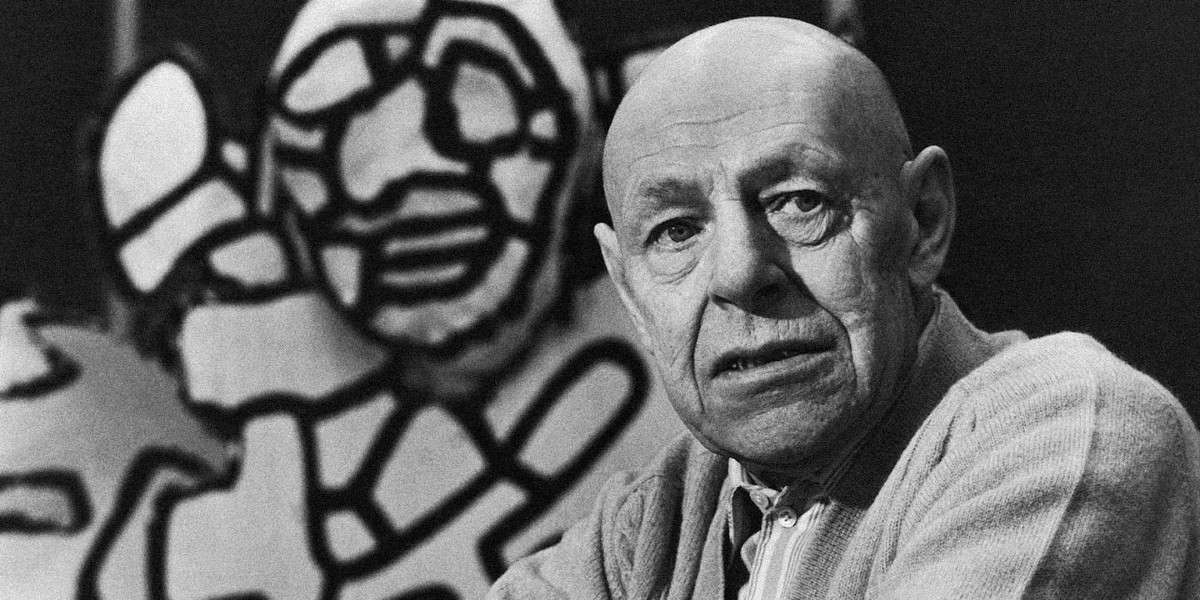
The Concept of Art Brut
In the mid-1940s, Dubuffet coined the term art brut to designate works produced outside established artistic culture—by psychiatric patients, prisoners, children, and self-taught individuals. For Dubuffet, these creations were not curiosities but vital alternatives to academic art. They demonstrated that imagination thrives without formal training and that institutional validation is not synonymous with authenticity.
Through the Compagnie de l’Art Brut and later initiatives, he helped institutionalize the study of these works. In doing so, he permanently altered postwar discourse. Art brut shifted attention toward the margins and challenged the authority of museums and academies to define artistic value.
Developing the concept of Art Brut in the 1940s, Dubuffet turned to the production of those operating outside of the narrow definitions of the Beaux Arts tradition including work made by prisoners, children, so-called ‘primitive’ artists, and the mentally ill in his search for a richer, more expressive model for artmaking. Radically decentring certain dominant art-historical narratives, Dubuffet pioneered more contemporary approaches to both the production and discussion of painting in the West.
Early Material Experiments: Hautes Pâtes (1940s)
Dubuffet’s early mature paintings are characterized by thick, encrusted surfaces known as hautes pâtes. Sand, gravel, tar, and impure pigments were mixed into the paint, transforming the canvas into a crusted terrain. Figures appear scratched or excavated rather than modeled.
These works do not aim at illusionistic depth. Instead, they insist on physical presence. The surface becomes the subject. In the aftermath of World War II, such material roughness carried ethical weight. Painting was stripped of elegance in favor of raw immediacy.
The Body and the Ground: Corps de Dames and Texturologies (1950s)
In the 1950s, Dubuffet developed series such as Corps de Dames, where female figures are rendered without classical idealization. These monumental bodies resemble landscapes as much as anatomy. Flesh and soil seem interchangeable. The traditional nude is dismantled and redefined as matter among matter.
Simultaneously, in the Texturologies and Matériologies, representation nearly disappears. Dense fields of granular texture fill the surface edge to edge. The painting is no longer a depiction but an object. These works anticipate later developments in postwar abstraction by foregrounding materiality over narrative.
The City as Spectacle: Paris Circus (Early 1960s)
With the Paris Circus series, Dubuffet introduced a vibrant chromatic shift. After years dominated by earthy tones, bright colors and animated urban scenes emerge. Shop windows, crowds, signage, and city streets pulse across the canvas.
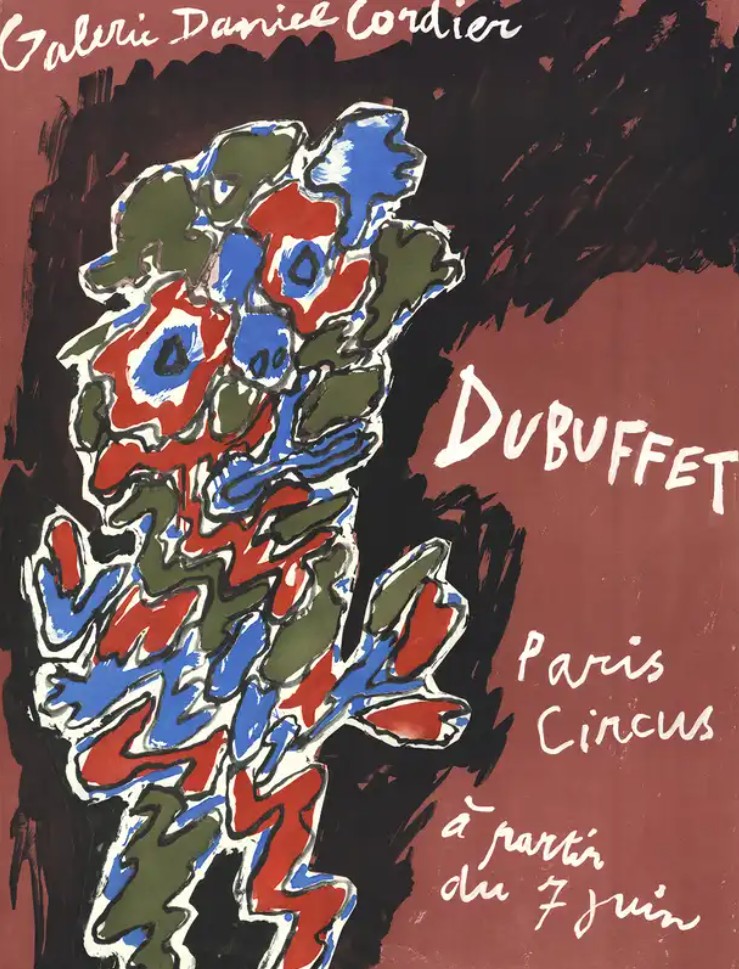
Yet beneath the playful surface lies critique. Modern life appears as a theater of repetition and spectacle. Dubuffet presents the city as a labyrinth of signs—simultaneously comic and disorienting.
A Total Visual Language: L’Hourloupe (1962–mid 1970s)
In 1962, Dubuffet began L’Hourloupe, the most recognizable phase of his career. Interlocking forms outlined in black and filled with restricted colors—often red, blue, and white—generate a continuous network of cells. Figures, architecture, and landscape dissolve into one unified system.
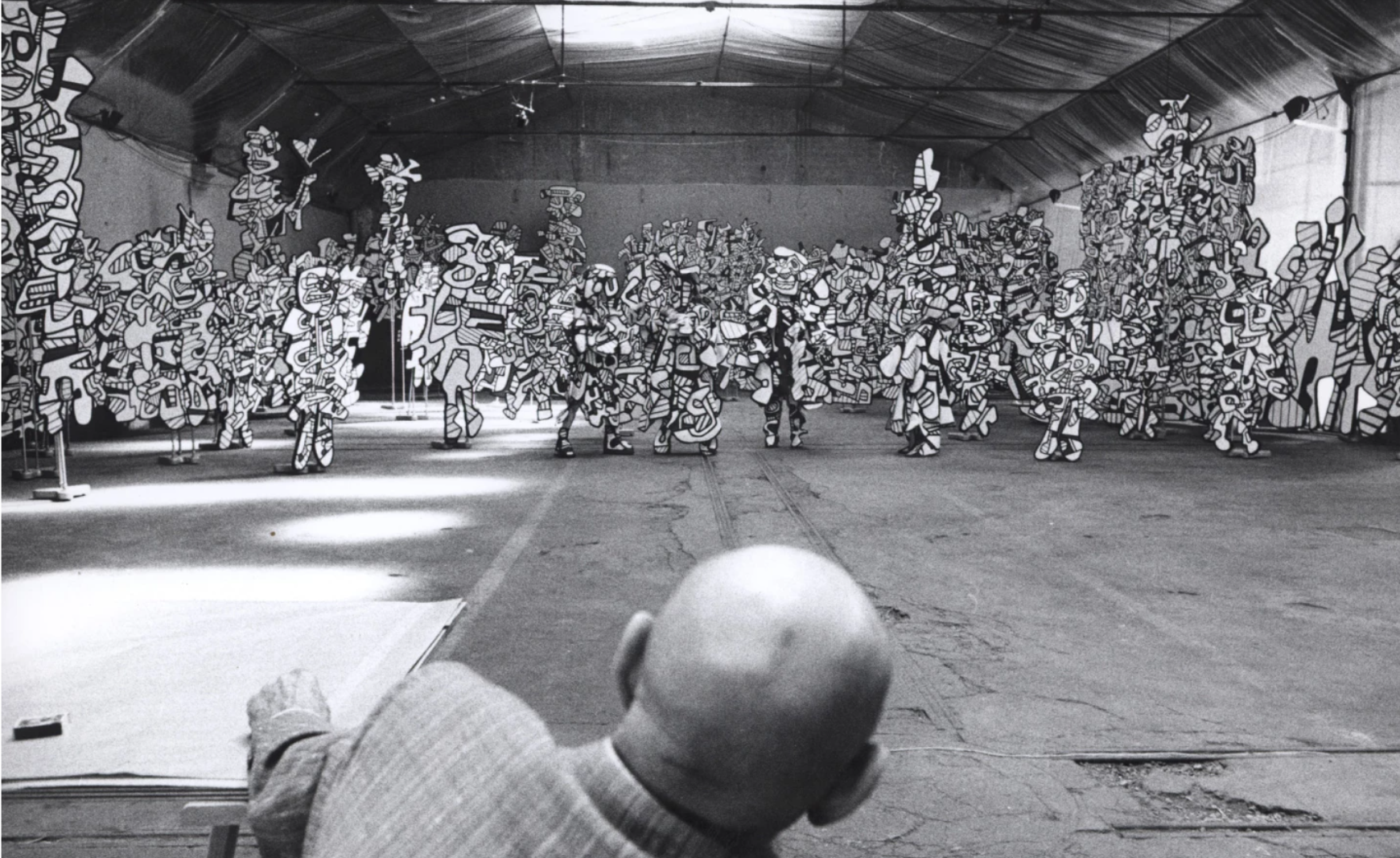
What began as drawings expanded into paintings, monumental sculptures, and immersive environments. Works such as the Tour aux Figures demonstrate how Dubuffet’s graphic language could structure three-dimensional space. Sculpture becomes inhabitable. The viewer does not simply look; the viewer enters.
Painting, Sculpture, and Works on Paper
Painting remained Dubuffet’s principal laboratory. It is here that his material experimentation and theoretical challenges are most fully articulated. Early hautes pâtes canvases and major Paris Circus works remain particularly significant in both institutional and market contexts.
Sculpture, especially during the Hourloupe period, translates his two-dimensional language into spatial form. Large-scale public works and environments underscore his ambition to move beyond the framed surface and into architecture itself.
Drawings, prints, and illustrated books function as sites of rapid invention. They retain the immediacy central to his practice and provide insight into the evolution of his visual systems. Increasingly, these works are reassessed as foundational rather than peripheral.
Museum Collections and Institutional Recognition
Dubuffet’s work is held in major international institutions, including the Museum of Modern Art, the Solomon R. Guggenheim Museum, the Tate, and the Centre Pompidou. The Fondation Dubuffet maintains archives, oversees the catalogue raisonné, and plays a crucial role in authentication and scholarship.
Major exhibitions such as “Jean Dubuffet: Soul of the Underground” at MoMA and “Brutal Beauty” at the Barbican have reaffirmed his centrality to postwar art history. These retrospectives positioned Dubuffet not merely as a stylistic innovator but as a theorist of culture itself.
With recent major retrospectives held at the Fondation Beyeler, Basel in 2016 and the Barbican Centre, London in 2021, Jean Dubuffet’s work continues to attract significant critical attention and remains foundational to art-historical discussions of Post-War and contemporary art.
Examples of his work reside in major institutions around the world including The Museum of Modern Art in New York, Tate Modern in London, and the Musée National d’art modern – Centre Pompidou in Paris.
Market Presence and Key Dealers
Pace Gallery has maintained a longstanding relationship with Dubuffet’s estate and continues to present significant works from key series. Important secondary-market dealers and major auction houses regularly handle early material paintings, major Paris Circus canvases, and significant sculptures.
Early hautes pâtes works and strong examples from the Paris Circus period have historically commanded particular attention. Monumental Hourloupe sculptures and environments, due to their scale and rarity, are often acquired by institutions or placed in public contexts.
Jean Dubuffet’s importance lies not in a single aesthetic formula but in a fundamental shift of perspective. He dismantled the hierarchy between high and low culture, elevated the marginal, and insisted that art could emerge from resistance rather than refinement. His influence extends across generations of artists who question institutional authority and embrace raw material presence. Dubuffet did not simply create a style; he expanded the boundaries of what art could be.
PART I: SUMMARY
Auction Market Overview
2025 Auction Highlights
38 lots sold at auction in 2025 for a total turnover of USD 33,476,816. With 6 lots failing to sell, the sell-through rate is 86%. The highest price of 2025 was achieved by Restaurant Rougeot II, a painting from the Paris Circus series dated 1961, from The Matthew and Carolyn Bucksbaum Collection that sold at Sotheby’s, in New-York, on 20 November 2025 for USD 7,492,000.
2025 Top 3 Lots
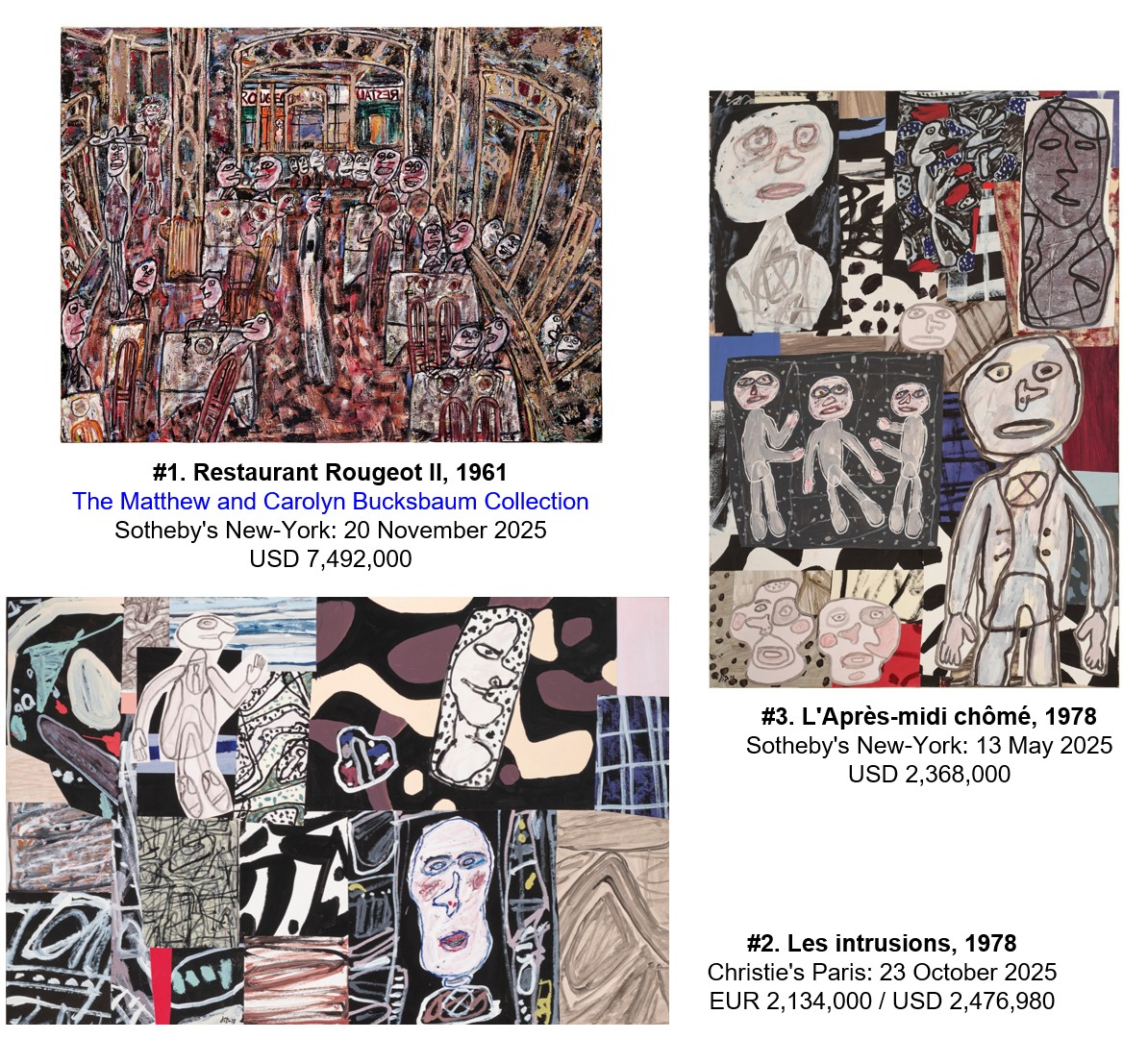
10 lots sold for more than USD 1 million, generating a cumulative turnover of USD 22,547,305, representing 67.4% of the total for 2025.
2024 Auction Highlights
50 lots sold at auction in 2024 for a total turnover of USD 42,661,981. With 4 lots failing to sell, the sell-through rate is 93%. The highest price has been achieved at Sotheby’s in Paris, on 18 October 2024, when Visiteur au chapeau bleu, a painting dated 1955, sold for EUR 6,880,000 (USD 7,450,585).
2024 Top 3 Lots
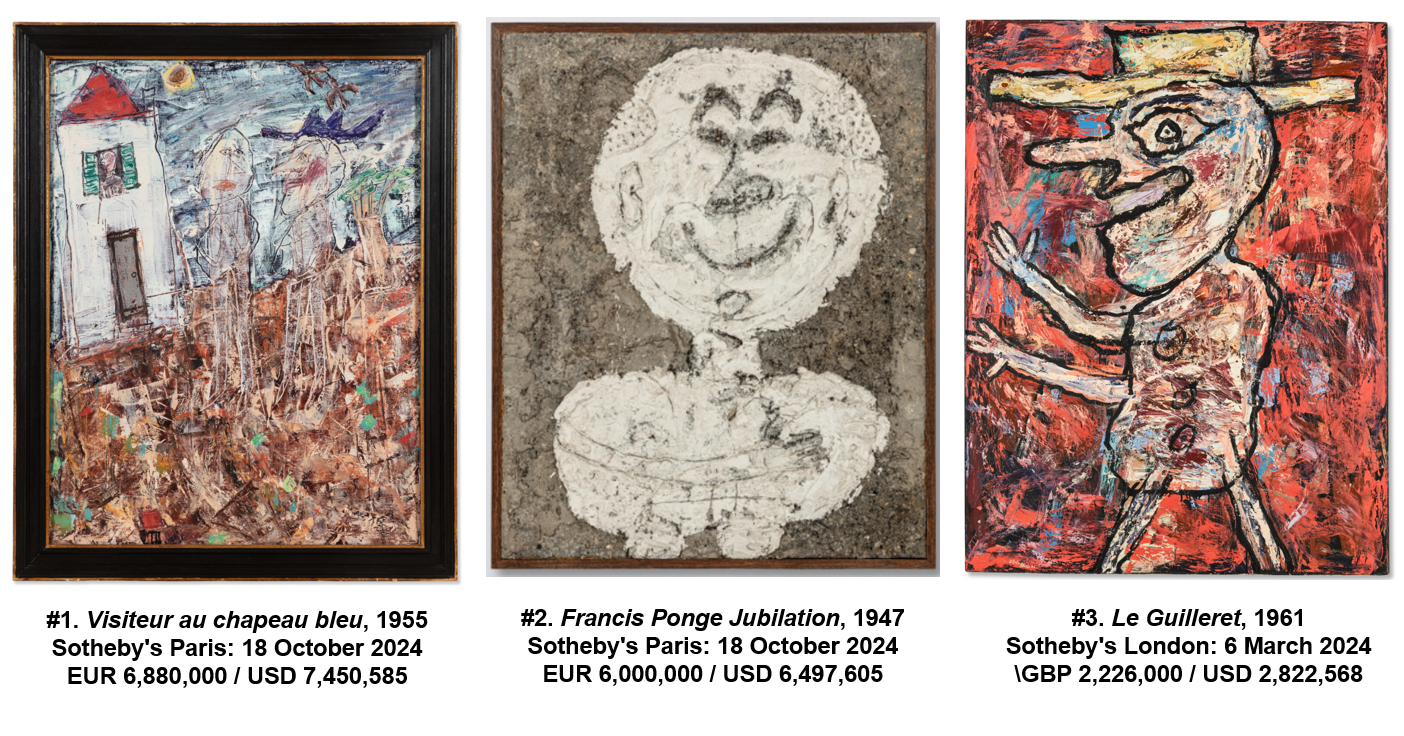
12 lots sold for more than USD 1 million, generating a cumulative turnover of USD 22,878,677, representing 70% of the total for 2024.
2023 Auction Highlights
43 lots sold at auction in 2023 for a total turnover of USD 30,219,213. With only 2 lots failing to sell, the sell-through rate is 96%. The highest price was achieved at Phillips in New-York on 15 November 2023, when Inspecteurs Sinoque et Dingue from the iconic L’Hourloupe series sold for USD 4,900,000.
2023 Top 3 Lots
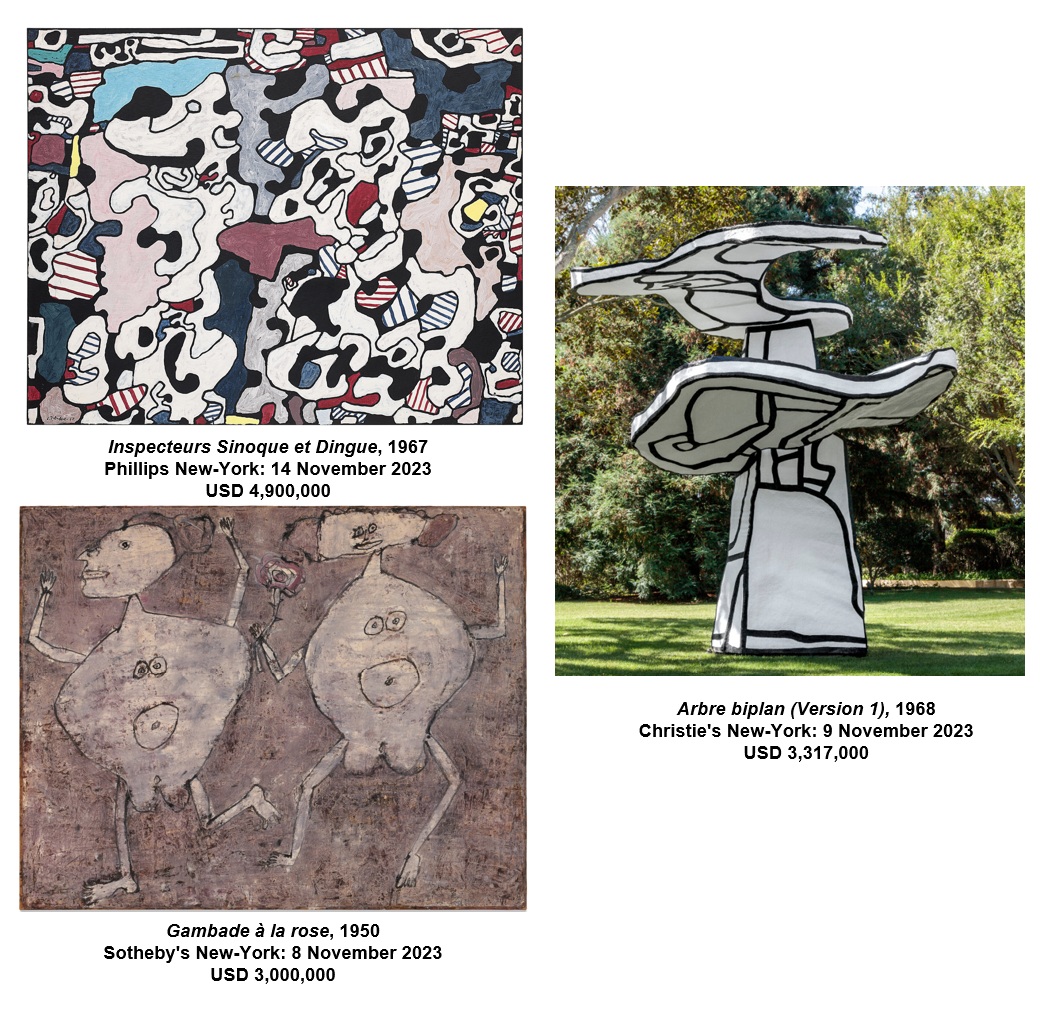
7 lots sold for more than USD 1 million, generating a cumulative turnover of USD 15,904,122, representing 52.6% of the total turnover for 2023.
PLEASE CLICK BELOW TO FIND AUCTION RESULTS FOR WORKS ON PAPER
Top Lots
#1. Paris Polka, 1961
Christie’s New-York: 11 May 2015
Estimate on Request
USD 24,805,000
Jean Dubuffet (1901-1985), Paris Polka | Christie’s (christies.com)
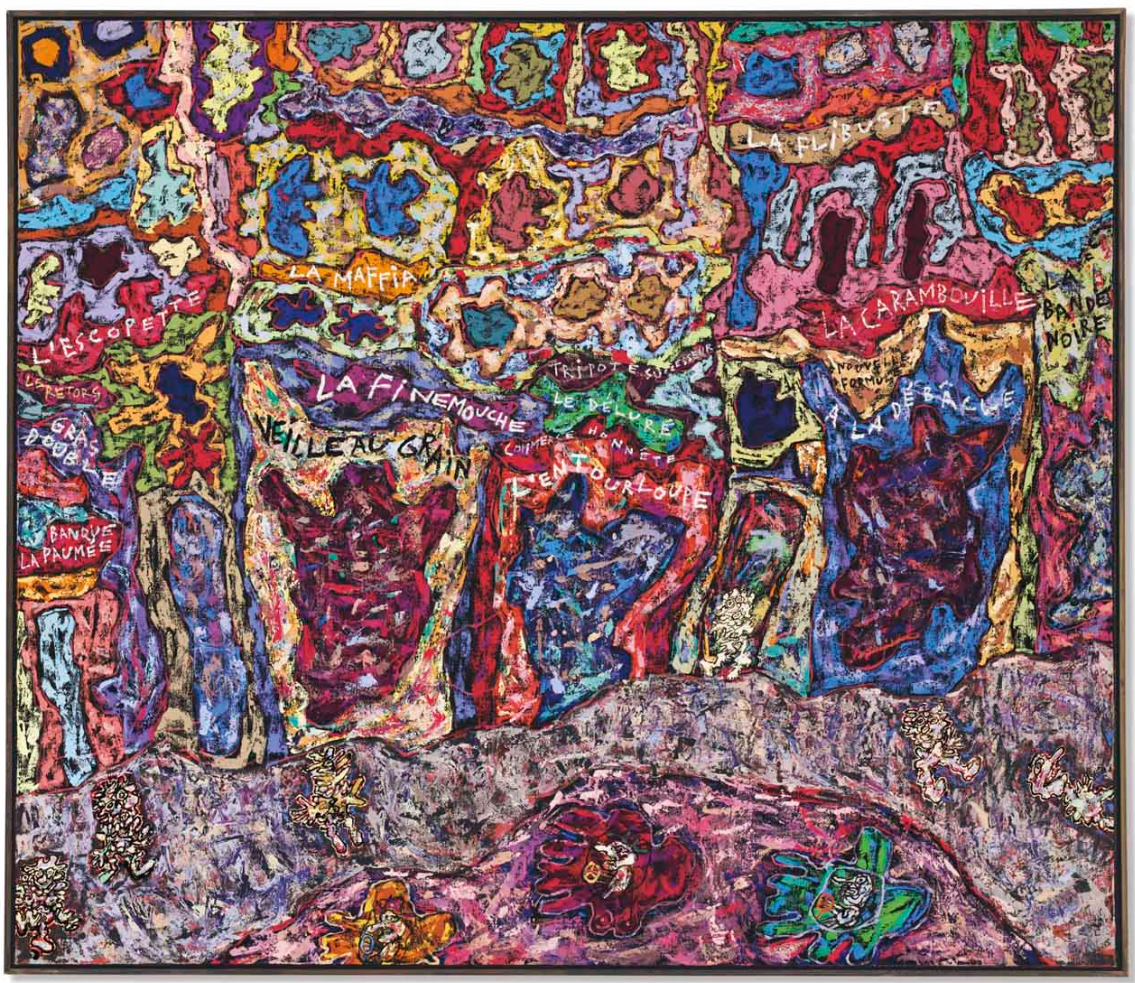
JEAN DUBUFFET (1901-1985)
Paris Polka, 1961
Oil on canvas
190×220 cm (74 3/4 x 86 1/2 inches)
Signed and dated ‘J. Dubuffet 61’ (lower right)
#2. Les Grandes Artères, 1961
Christie’s New-York: 15 November 2016
Estimated: USD 15,000,000 – 20,000,000
USD 23,767,500
Jean Dubuffet (1901-1985), Les Grandes Artères | Christie’s (christies.com)
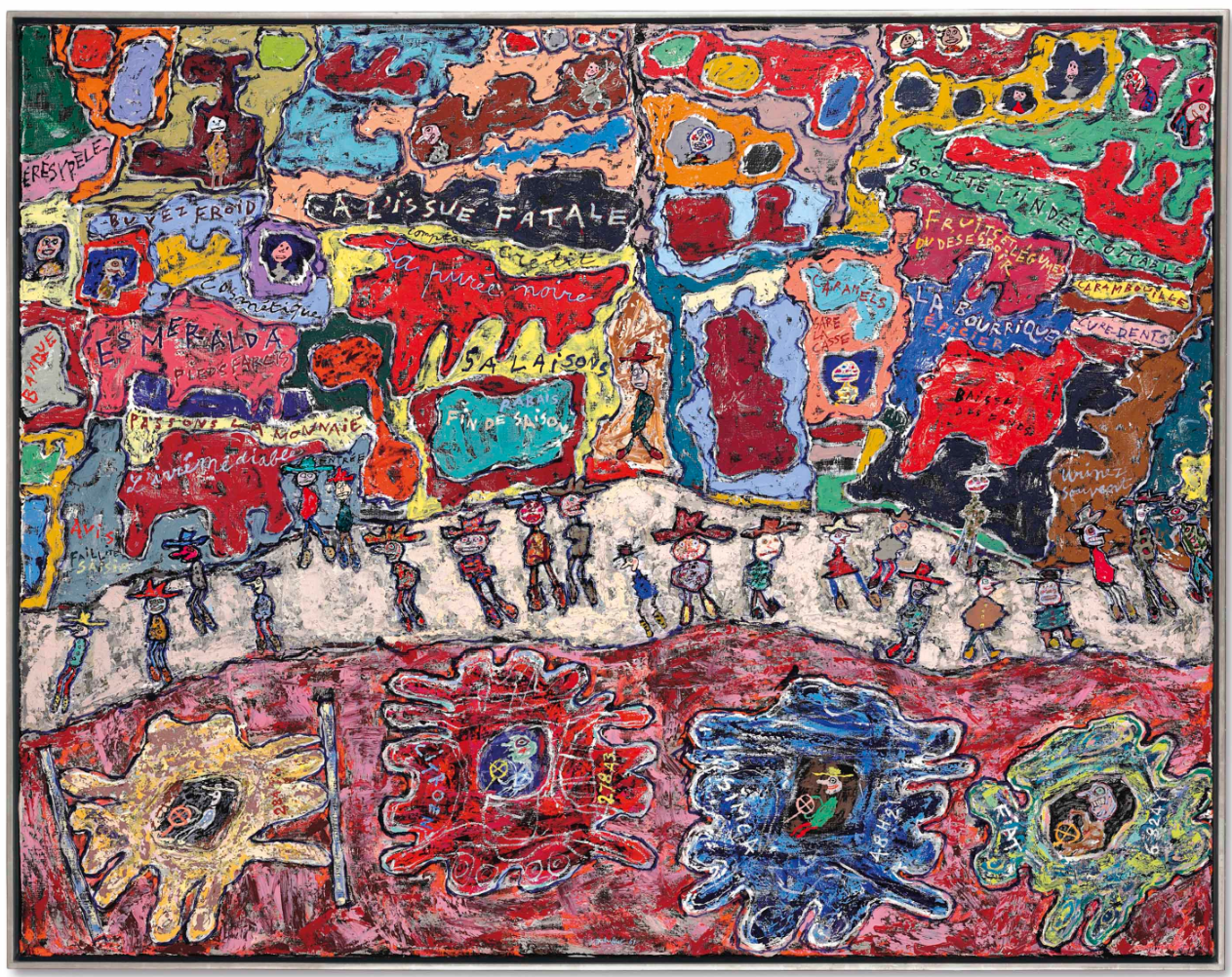
Jean Dubuffet (1901-1985)
Les Grandes Artères, 1961
Oil on canvas
113.7 x 146 cm (44 3/4 x 57 1/2 inches)
Signed and dated ‘J. Dubuffet 61’ (lower center)
Signed again, titled and dated again ‘les grandes artères J. Dubuffet juillet 61’ (on the reverse)
#3. Être et paraître (To Be and to Seem), 1963
Christie’s London: 7 March 2017
Estimated: GBP 7,000,000 – 10,000,000
GBP 10,021,000 / USD 12,193,430
Jean Dubuffet (1901-1985), Être et paraître (To Be and to Seem) | Christie’s (christies.com)
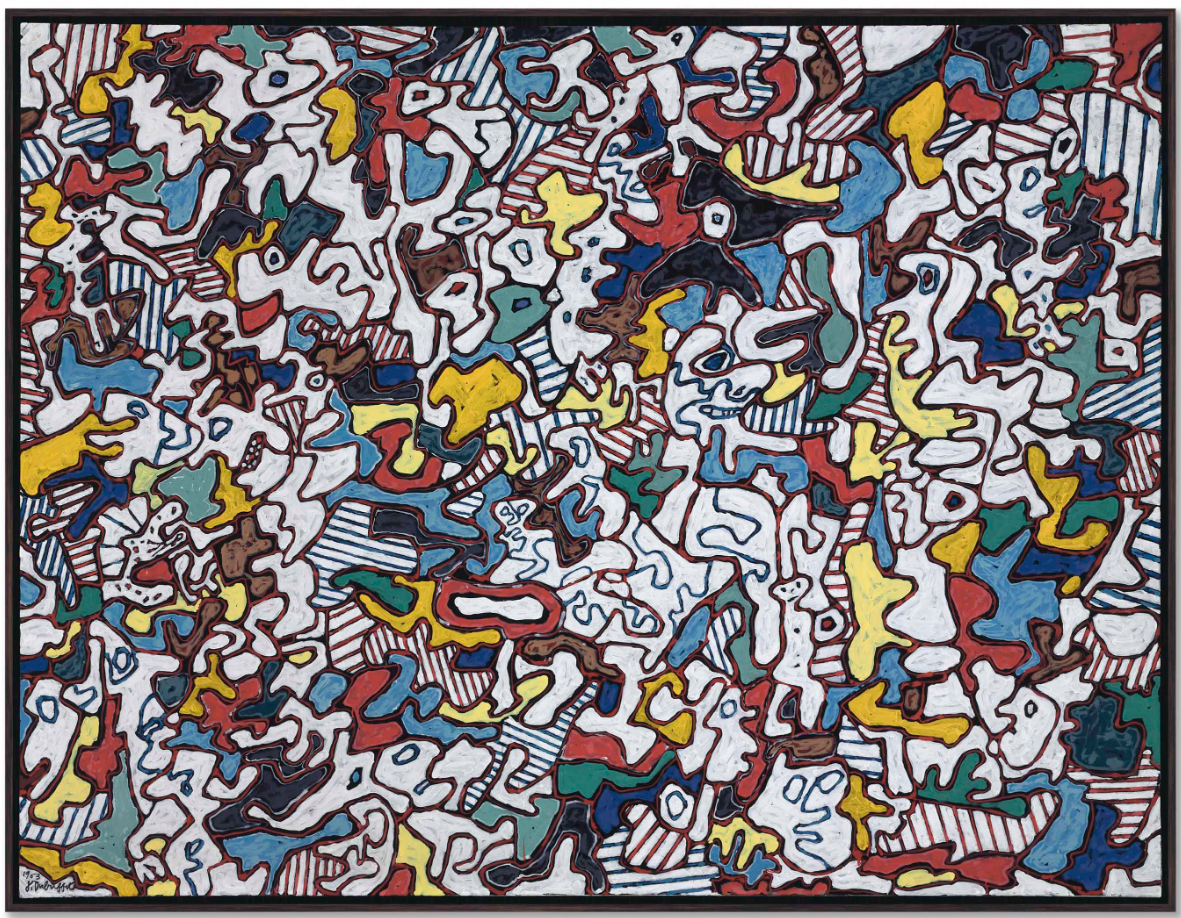
JEAN DUBUFFET (1901-1985)
Être et paraître (To Be and to Seem), 1963
Oil on canvas
150×195 cm (59 x 76 3/4 inches)
Signed and dated ‘1963 J. Dubuffet’ (lower left)
Signed again, titled and dated again “Être et paraitre J. Dubuffet juillet 63’ (on the reverse)
#5. Cérémonie (Ceremony), 1961
Christie’s London: 25 June 2019
Estimated: GBP 7,000,000 – 10,000,000
GBP 8,718,750 / USD 11,068,547
Jean Dubuffet (1901-1985), Cérémonie (Ceremony) | Christie’s (christies.com)
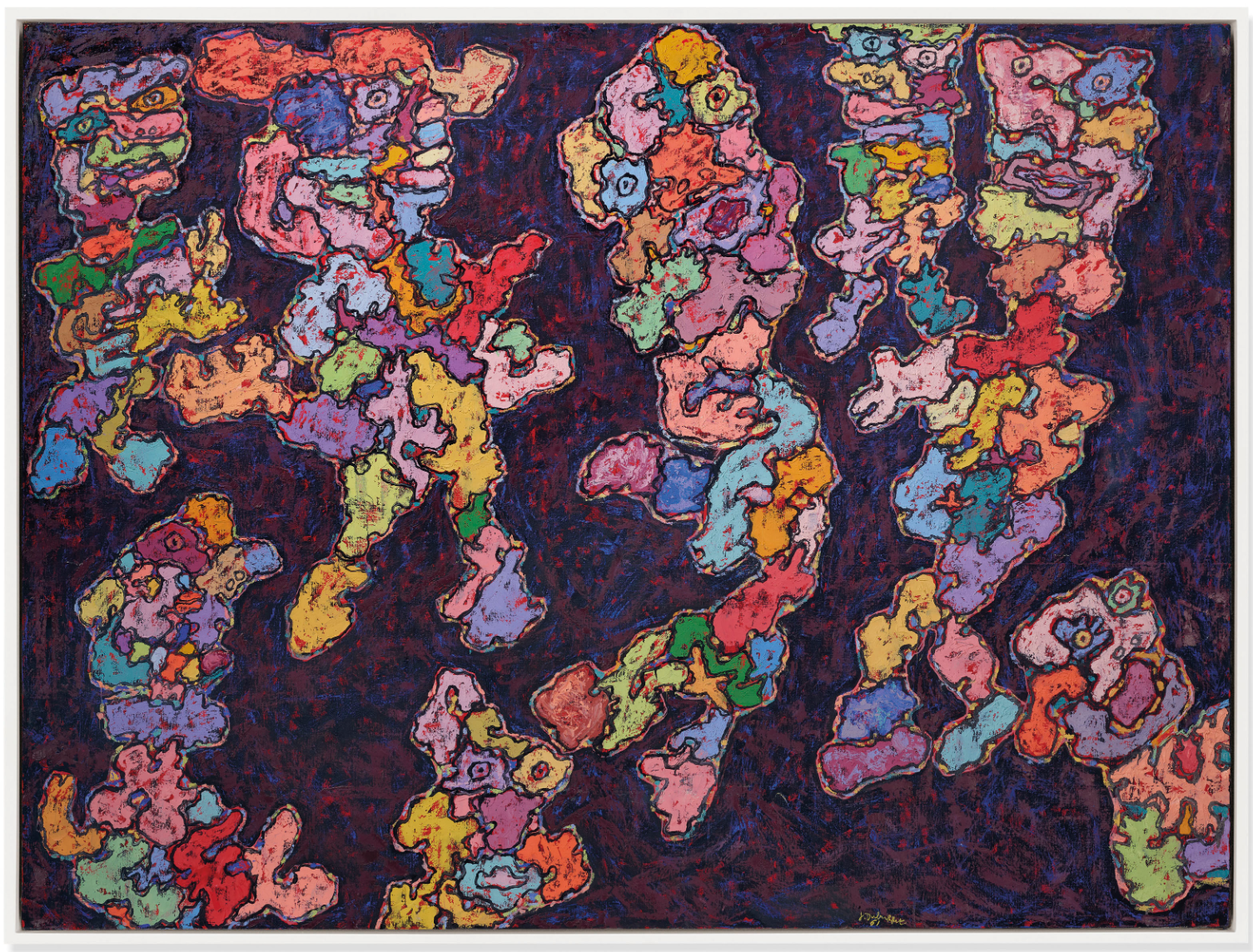
JEAN DUBUFFET (1901-1985)
Cérémonie (Ceremony), 1961
Oil on canvas
164.7 x 220 cm (64 7/8 x 86 5/8 inches)
Signed and dated ‘J. Dubuffet 61’ (lower right)
Titled and dated again ‘Cérémoníe J. Dubuffet nov. 1961’ (on the reverse)
PART II: AUCTION RESULTS
2026 Auction Results
J’opterai pour l’erreur (I will choose the mistake), 1963
The Roger and Josette Vanthournout Collection
Christie’s London: 5 March 2026
Estimated: GBP 1,500,000 – 2,000,000
GBP 2,856,000 / USD 3,815,330
JEAN DUBUFFET (1901-1985), J’opterai pour l’erreur (I will choose the mistake) | Christie’s
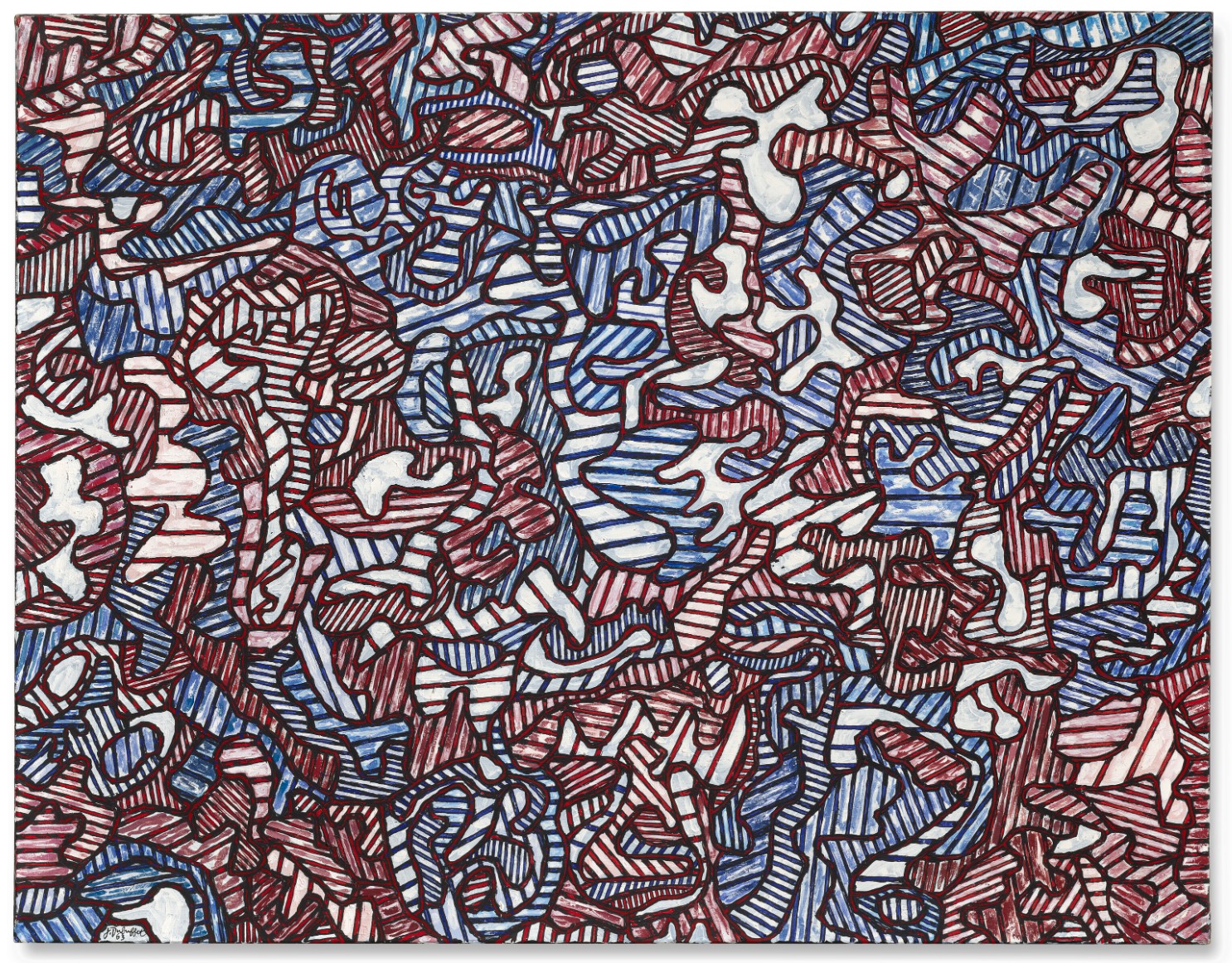
JEAN DUBUFFET (1901-1985)
J’opterai pour l’erreur (I will choose the mistake), 1963
Oil on canvas
113.5 x 145.5 cm (44-3/4 x 57-1/4 inches)
Signed and dated ‘J. Dubuffet 63’ (lower left)
Signed, titled and dated ‘J’opterai pour l’erreur J. Dubuffet 25 mars 1963’ (on the reverse)
Paysage Parcouru de Promeneurs, 1975
Sotheby’s New-York: 25 February 2026
Estimated: USD 700,000 – 1,000,000
USD 960,000
Paysage Parcouru de Promeneurs | Contemporary Curated | 2026 | Sotheby’s
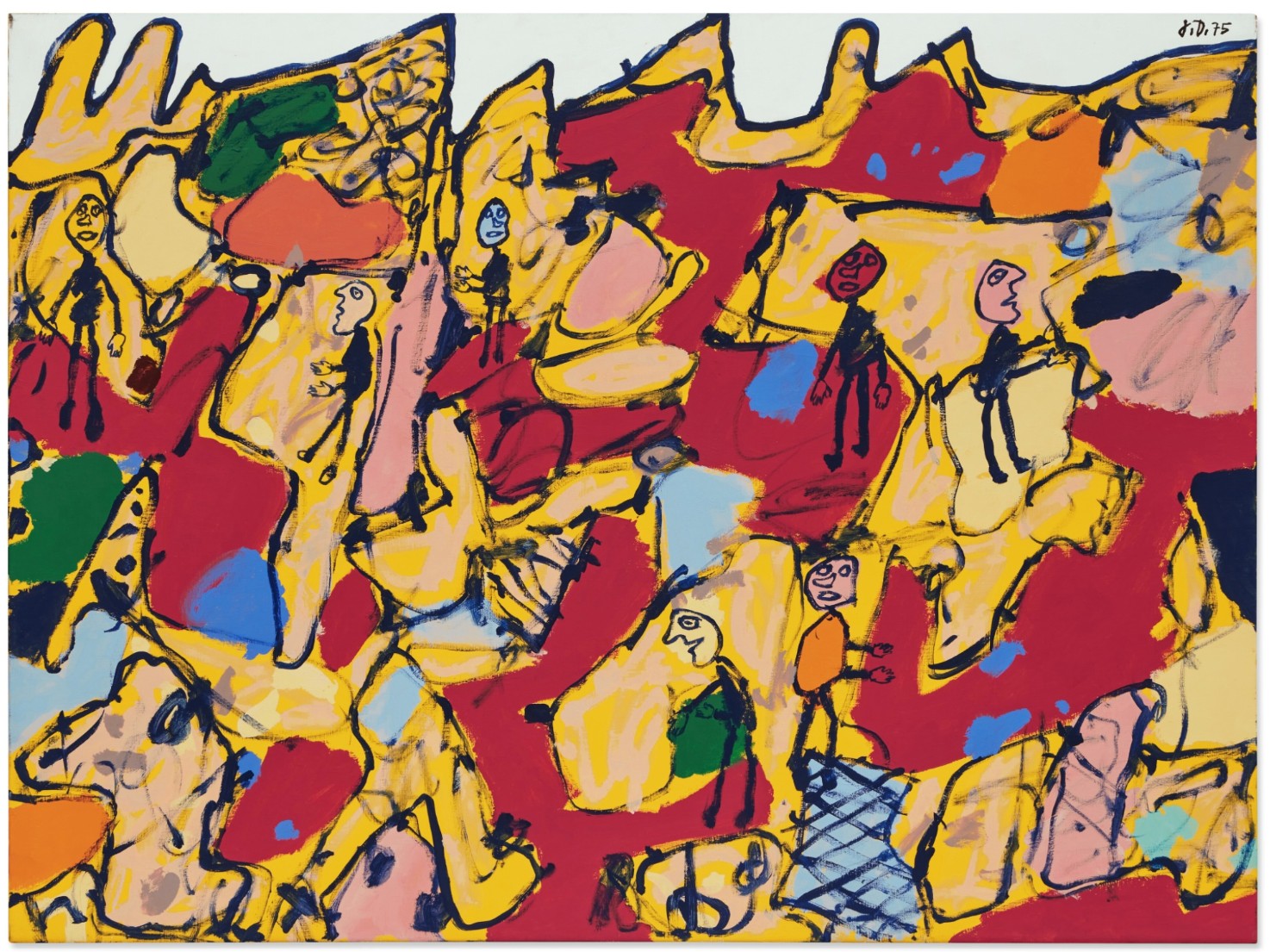
JEAN DUBUFFET (1901 – 1985)
Paysage Parcouru de Promeneurs, 1975
Acrylic on canvas
97.2 x 129.5 cm (38-1/4 x 51 inches)
Signed and dated 75 (upper right)
Titled (on the reverse)
Lots Withdrawn
Tour Turbulente, 1973-81
Sotheby’s New-York: 25 February 2026
Estimated: USD 1,800,000 – 2,500,000
WITHDRAWN
Tour Turbulente | Contemporary Curated | 2026 | Sotheby’s
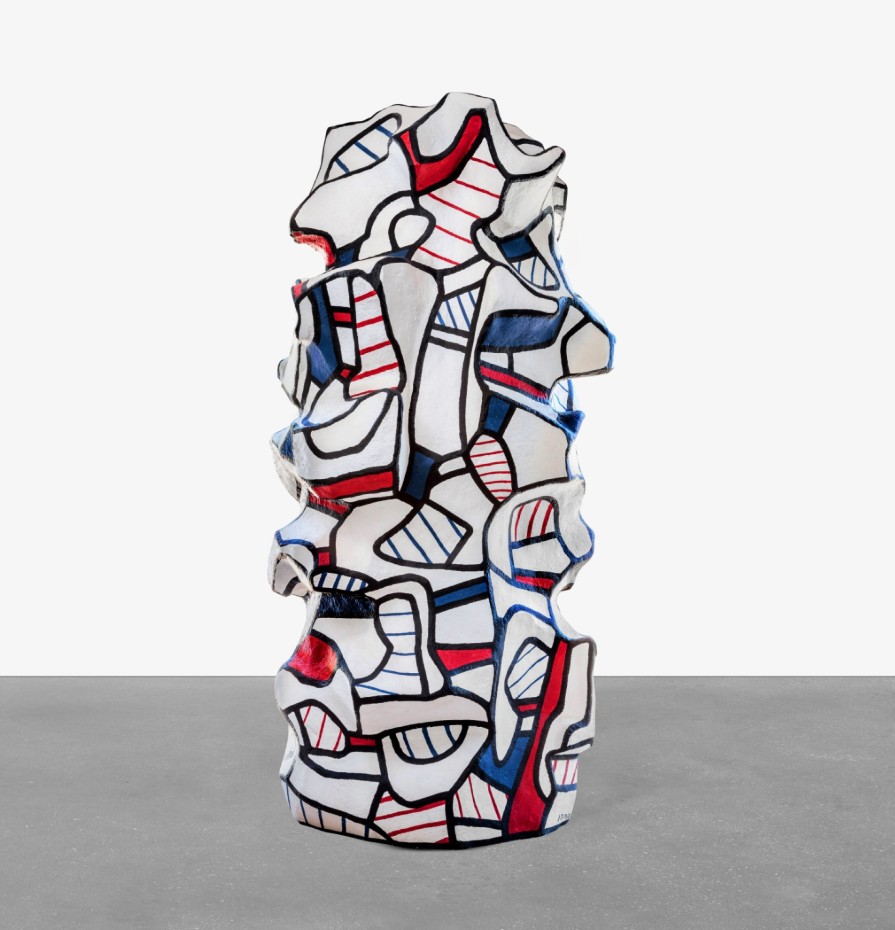
JEAN DUBUFFET (1901 – 1985)
Tour Turbulente, 1973-81
Polyurethane paint on polyester resin
228.6 x 121.9 x 111.8 cm (90x48x44 inches)
Signed with the artist’s initials and date 73/81 (at base)
2025 Auction Results
FOR PAINTINGS ONLY
38 lots sold at auction in 2025 for a total turnover of USD 33,476,816. With 6 lots failing to sell, the sell-through rate is 86%. The highest price of 2025 was achieved by Restaurant Rougeot II, a painting from the Paris Circus series dated 1961, from The Matthew and Carolyn Bucksbaum Collection that sold at Sotheby’s, in New-York, on 20 November 2025 for USD 7,492,000.
2025 Top 3 Lots
10 lots sold for more than USD 1 million, generating a cumulative turnover of USD 22,547,305, representing 67.4% of the total for 2025.
XXXXXXXXXX
#1. Restaurant Rougeot II, 1961
The Matthew and Carolyn Bucksbaum Collection
Sotheby’s New-York: 20 November 2025
Estimated: USD 6,000,000 – 8,000,000
USD 7,492,000
PARIS CIRCUS SERIES
READ MORE IN FOCUS SECTION
Restaurant Rougeot II | Modern Evening Auction | 2025 | Sotheby’s
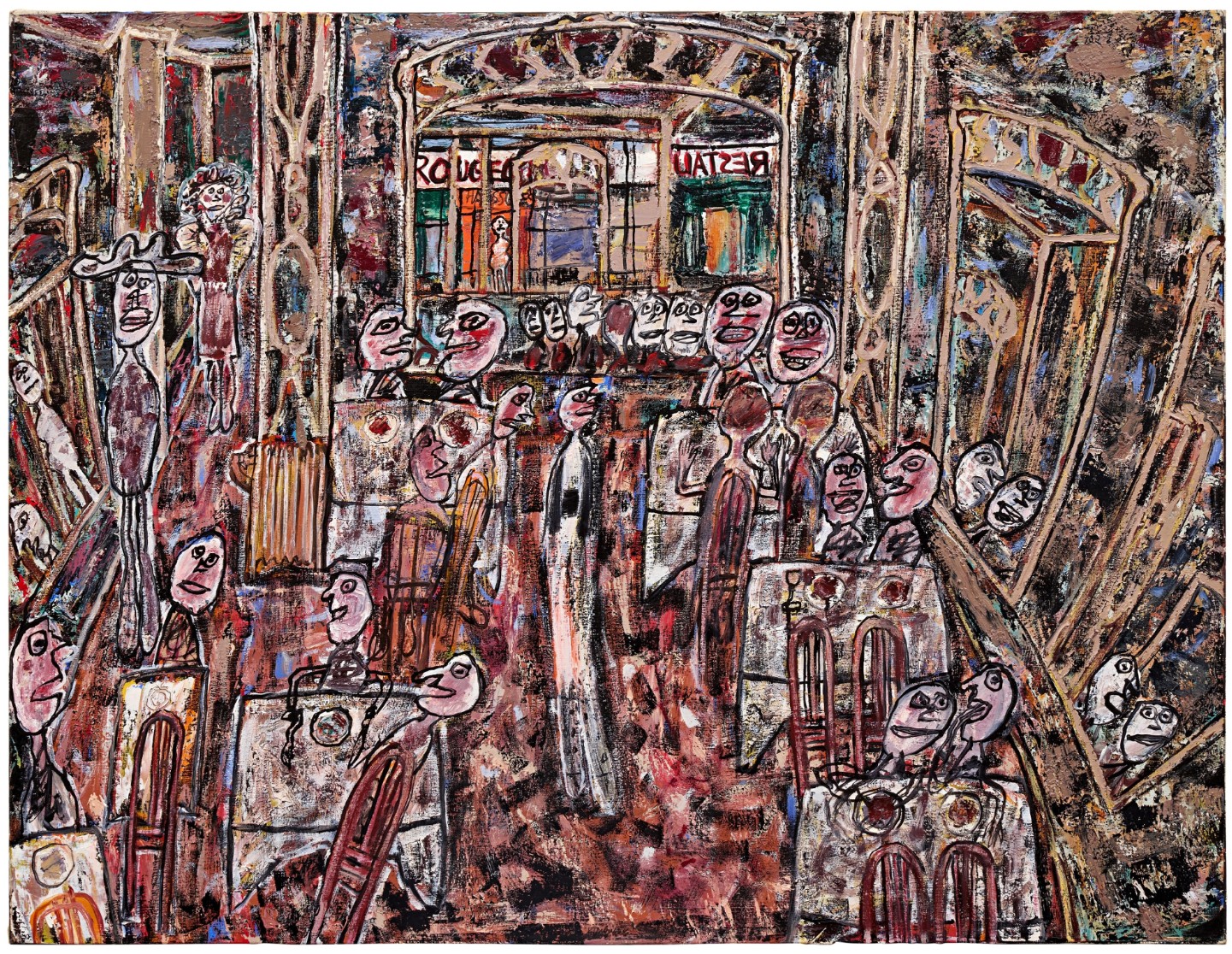
JEAN DUBUFFET (1901 – 1985)
Restaurant Rougeot II, 1961
Oil on canvas
90.5 x 116.2 cm (35 5/8 x 45 3/4 inches)
Signed J Dubuffet (lower center)
Signed again, titled and dated avril 61 (on the reverse)
Executed in March-April 1961
#2. Les intrusions, 1978
Christie’s Paris: 23 October 2025
Estimated: EUR 1,800,000 – 2,500,000
EUR 2,134,000 / USD 2,476,980
Jean Dubuffet (1901-1985), Les intrusions | Christie’s
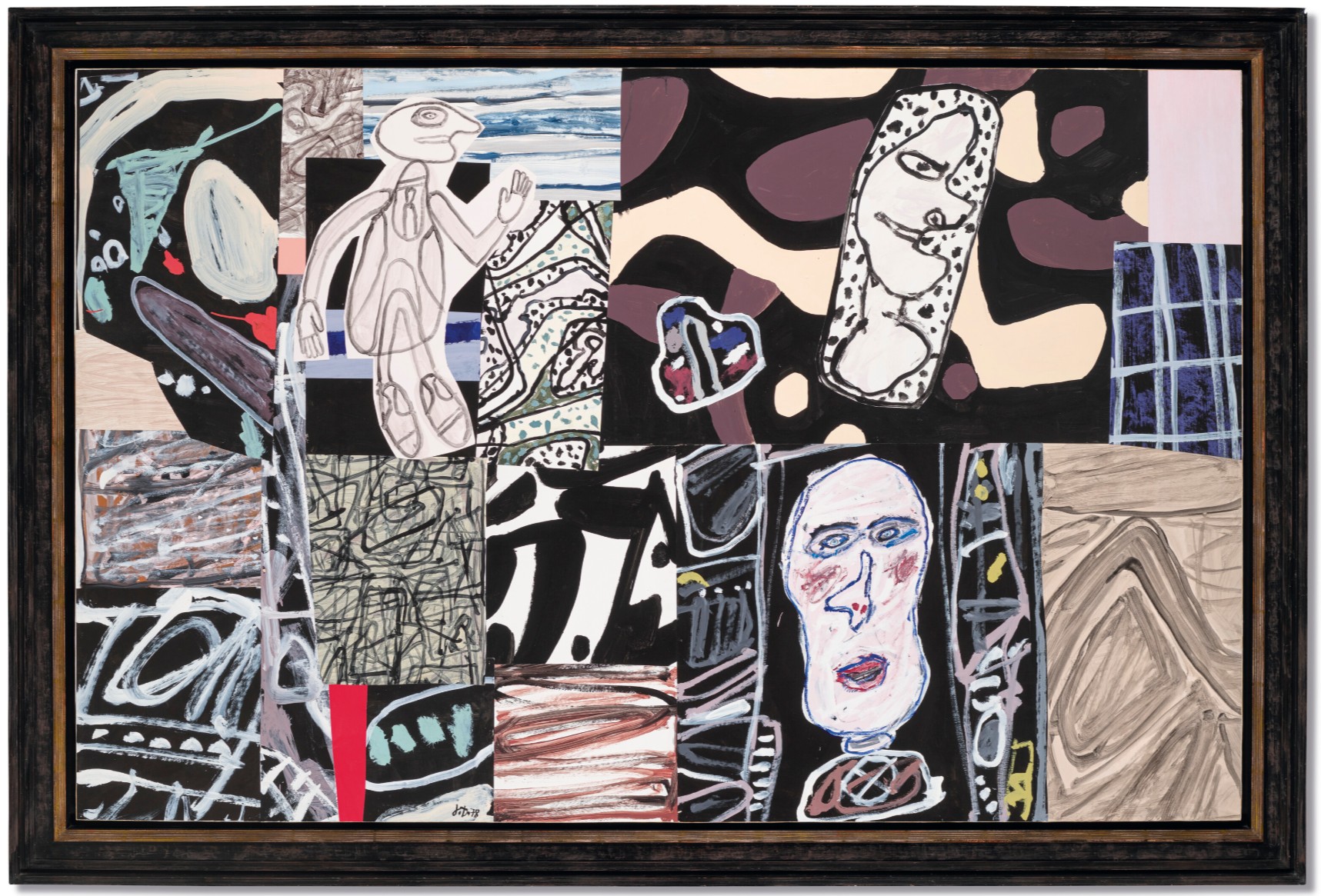
JEAN DUBUFFET (1901-1985)
Les intrusions, 1978
Acrylic on paper collages laid down on canvas
140 x 217.5 cm (55 1/8 x 85 5/8 inches)
Signed with the initials and dated ‘J.D. 78’ (lower left)
#3. L’Après-midi chômé, 1978
Sotheby’s New-York: 13 May 2025
Estimated: USD 1,500,000 – 2,000,000
USD 2,368,000
READ MORE IN FOCUS SECTION
L’Après-midi chômé | Modern Evening Auction | 2025 | Sotheby’s
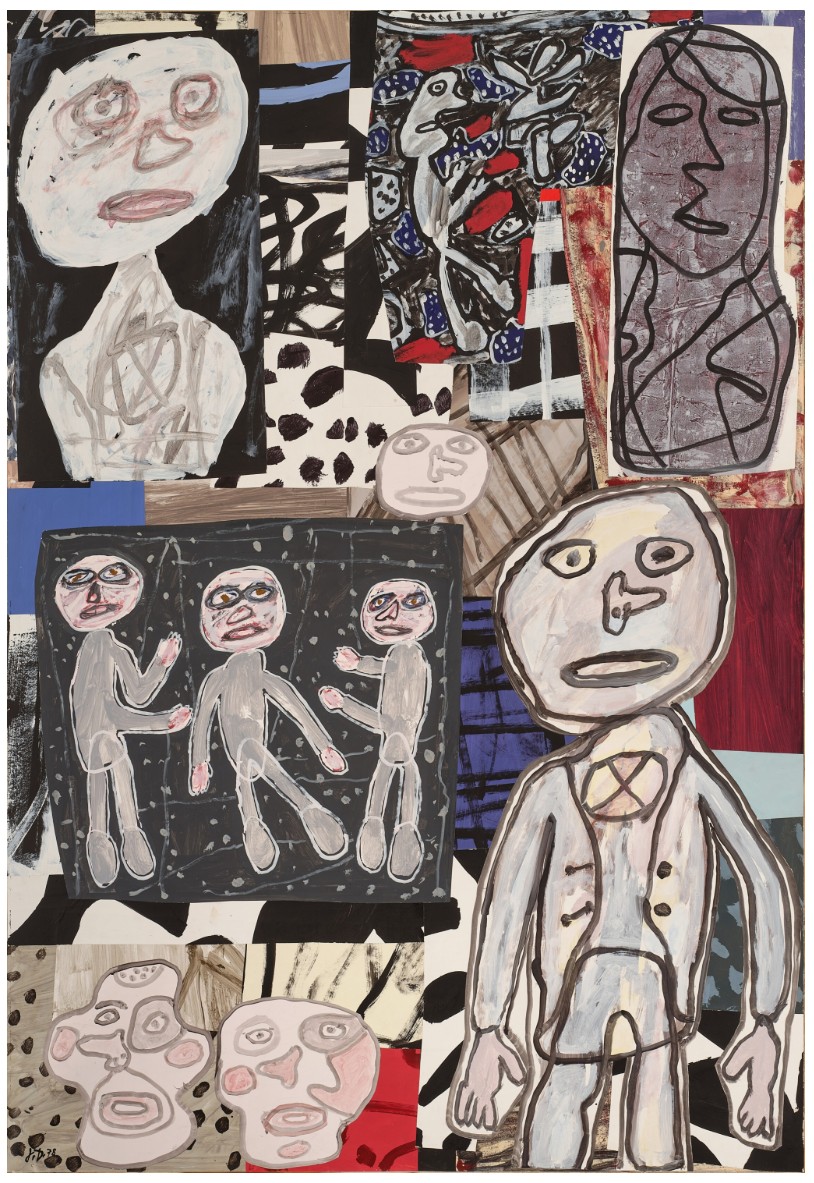
JEAN DUBUFFET (1901 – 1985)
L’Après-midi chômé, 1978
Acrylic and paper collage on canvas
171.1 x 117.5 cm (67 3/8 x 46 1/4 inches)
Signed with the initials J.D. and dated ‘78 (lower left)
Executed on 27 March 1978
#4. Sang et Feu (Corps de dame aux chairs rôties et rissolées), 1950
Christie’s Paris: 9 April 2025
Estimated: EUR 1,000,000 – 1,500,000
EUR 1,613,000 / USD 1,771,710
Jean Dubuffet (1901-1985), Sang et Feu (Corps de dame aux chairs rôties et rissolées) | Christie’s
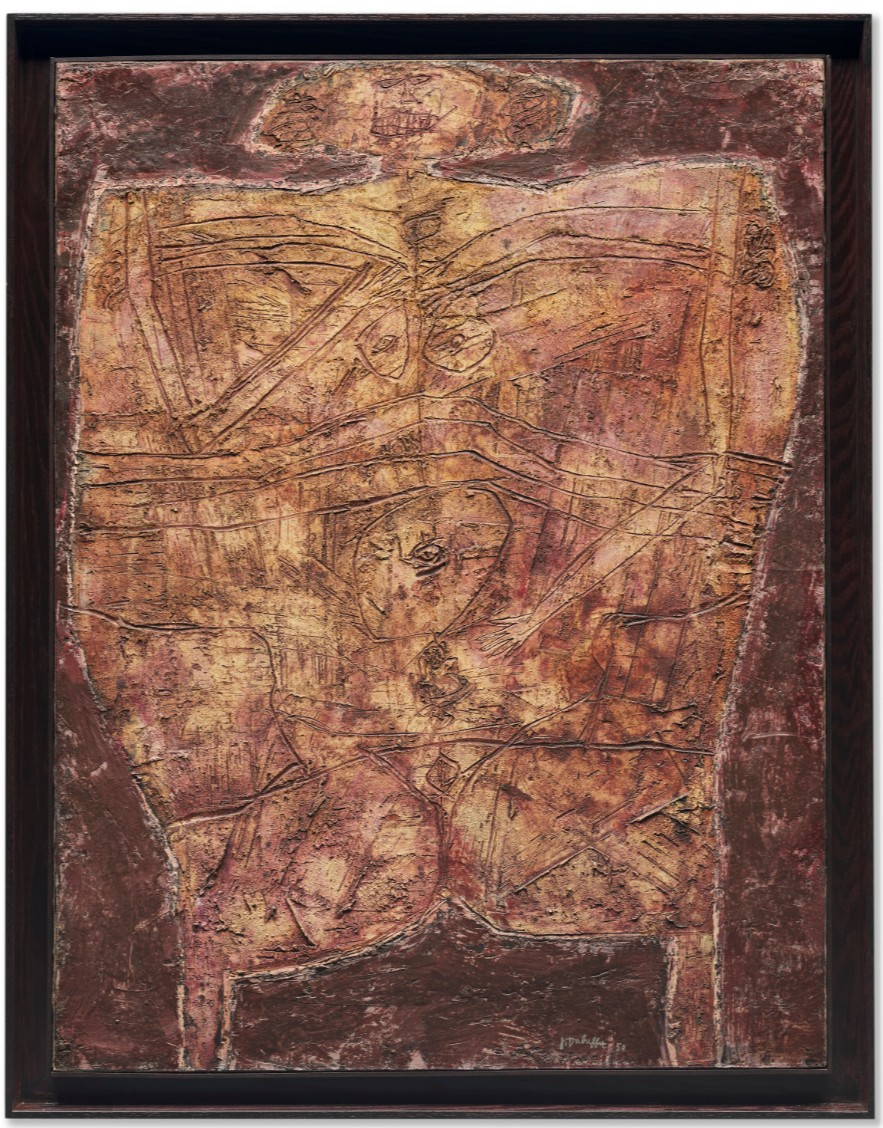
JEAN DUBUFFET (1901-1985)
Sang et Feu (Corps de dame aux chairs rôties et rissolées), 1950
Oil on canvas
116 x 88.5 cm (45 5/8 x 34 7/8 inches)
Signed and dated ‘J. Dubuffet 50′ (lower center)
Signed, titled and dated
”’Sang et Feu Corps de Dame aux chairs rôties et rissolées” J. Dubuffet Nov. 50’
(on the reverse)
#5. Site domestique (au fusil espadon) avec tête d’inca et petit fauteuil à droite, 1966
Provenant de la Galerie Jeanne Bucher Jaeger, Paris
Christie’s Paris: 23 October 2025
Estimated: EUR 1,200,000 – 1,800,000
EUR 1,460,500 / USD 1,695,235
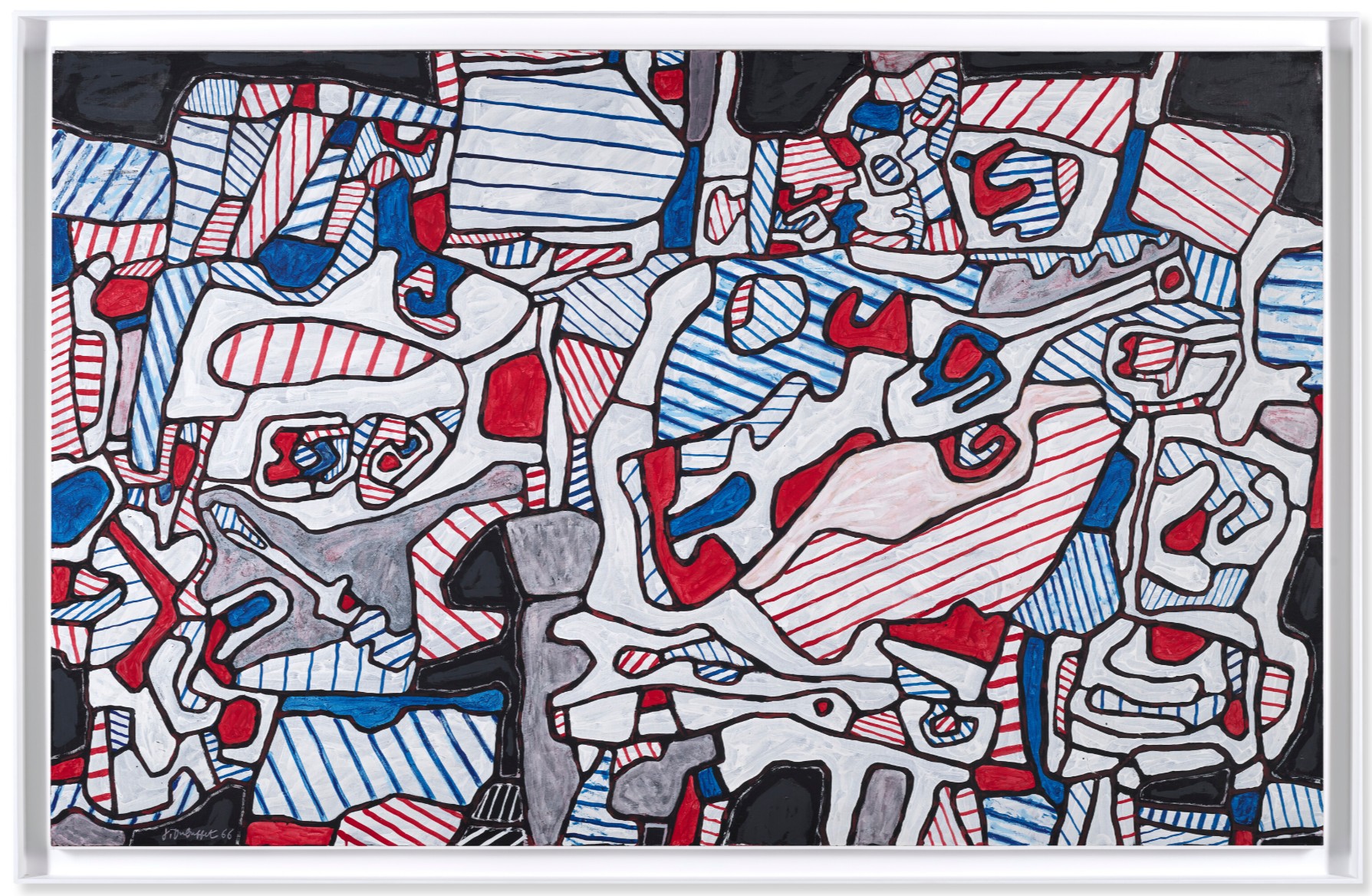
JEAN DUBUFFET (1901-1985)
Site domestique (au fusil espadon) avec tête d’inca et petit fauteuil à droite, 1966
Vinyl on canvas
125.5 x 199.5 cm (49 3/8 x 78 1/2 inches)
Signed and dated ‘J. Dubuffet 66′ (lower left)
Signed, titled and dated ”’Site domestique (au fusil)” J. Dubuffet janvier 1966’ (on the reverse)
#6. Echec à l’être, 1971
Sotheby’s New-York: 26 February 2025
Estimated: USD 800,000 – 1,200,000
USD 1,538,400
Echec à l’être | Contemporary Curated | 2025 | Sotheby’s
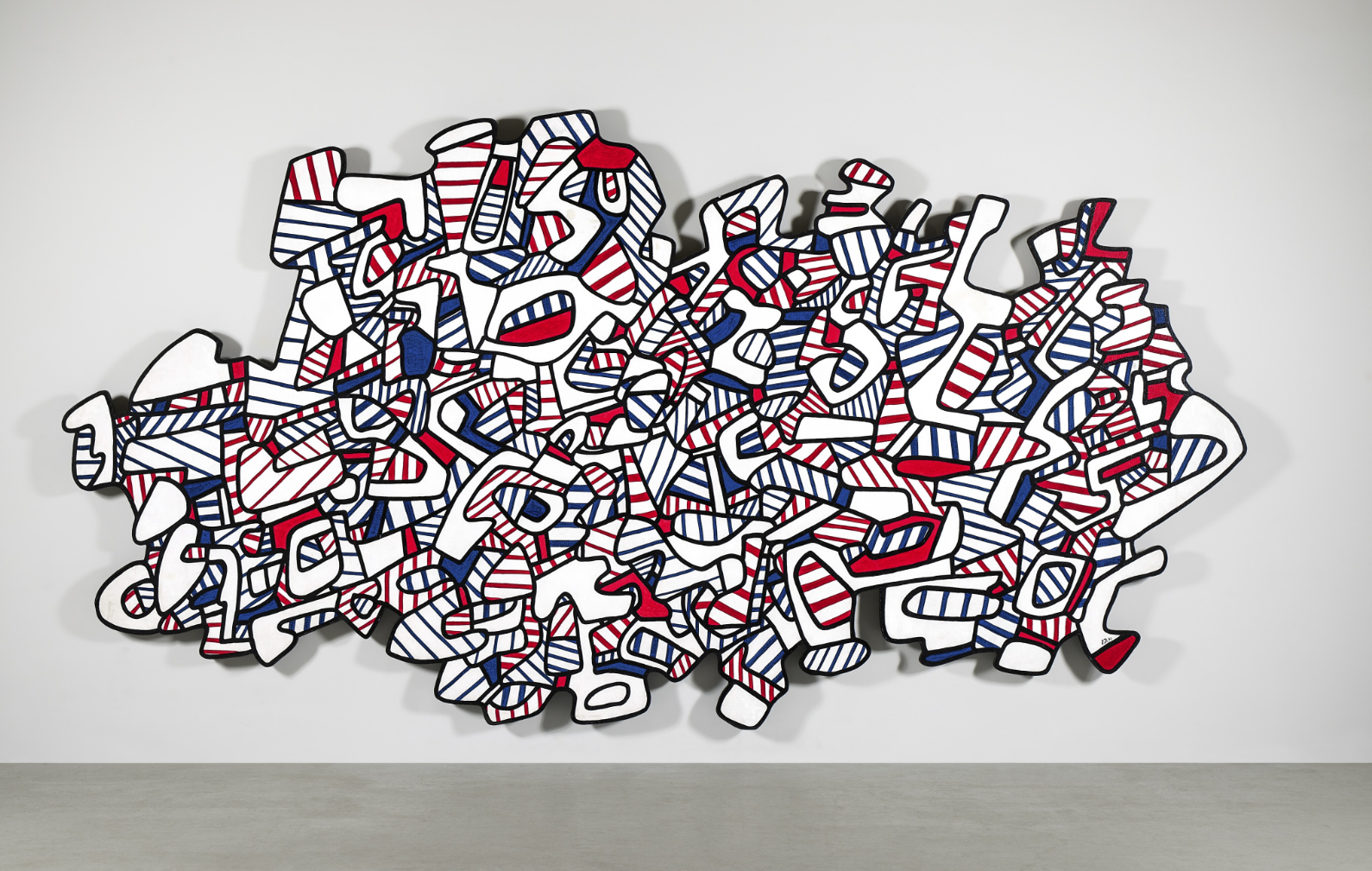
JEAN DUBUFFET (1901 – 1985)
Echec à l’être, 1971
Acrylic on Klegecell
261 x 504.8 x 11.4 cm (102 3/4 x 198 3/4 x 4 1/2 inches)
Signed with the artist’s initials and dated 71 (lower right); titled (on the reverse)
#7. Peigneuse, 1945
L’Œil de Dieu : Property from an Important Collection
Sotheby’s Paris: 24 October 2025
Estimated: EUR 800,000 – 1,200,000
EUR 1,323,500 / USD 1,537,535
Peigneuse | Modernités | 2025 | Sotheby’s
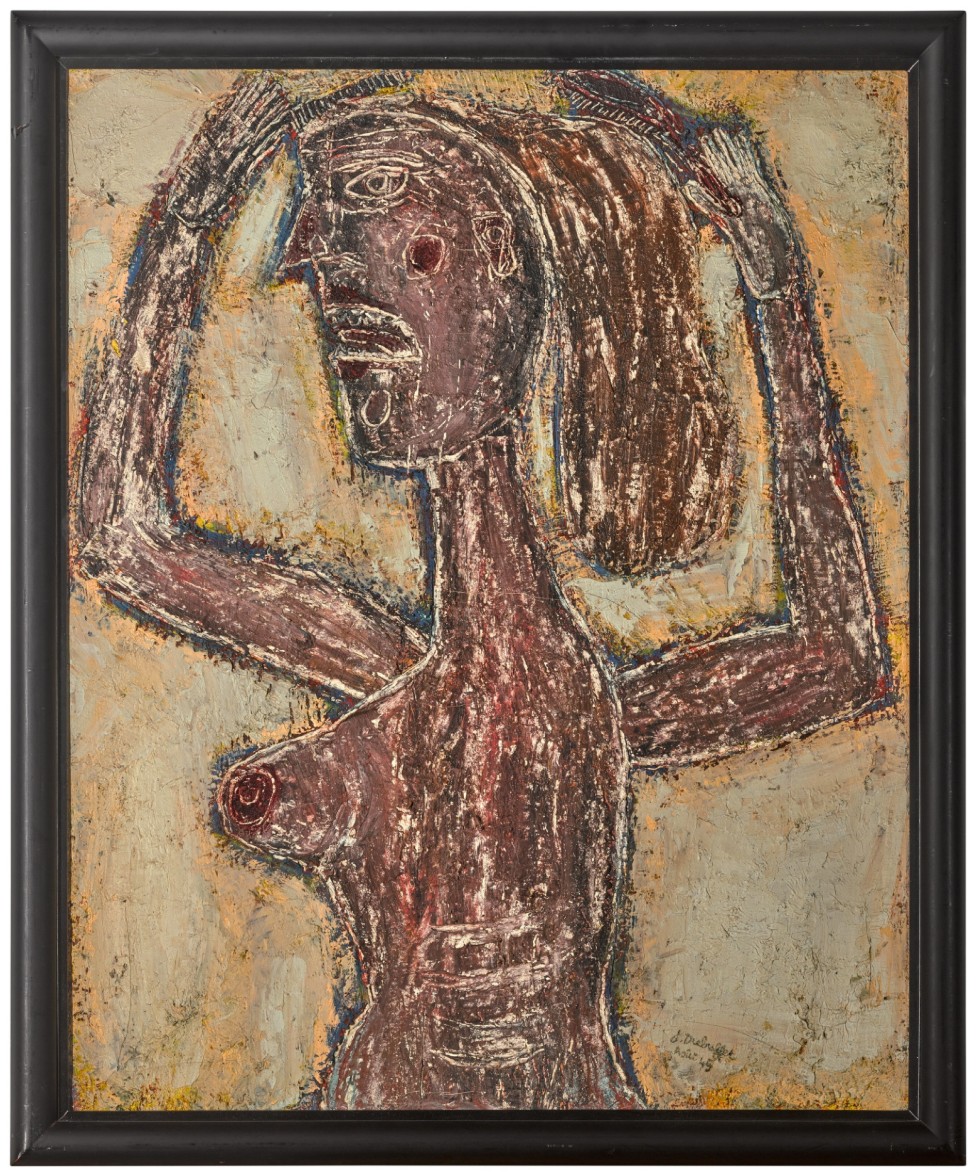
JEAN DUBUFFET (1901 – 1985)
Peigneuse, 1945
Haute Pâte on canvas
81×65 cm (31 7/8 x 25 5/8 inches)
Signed and dated Août 45 (lower center)
Signed and inscribed (on the reverse)
#8. Prestation de serment, 1965
Christie’s Paris: 9 April 2025
Estimated: EUR 900,000 – 1,300,000
EUR 1,250,000 / USD 1,372,995
Jean Dubuffet (1901-1985), Prestation de serment | Christie’s
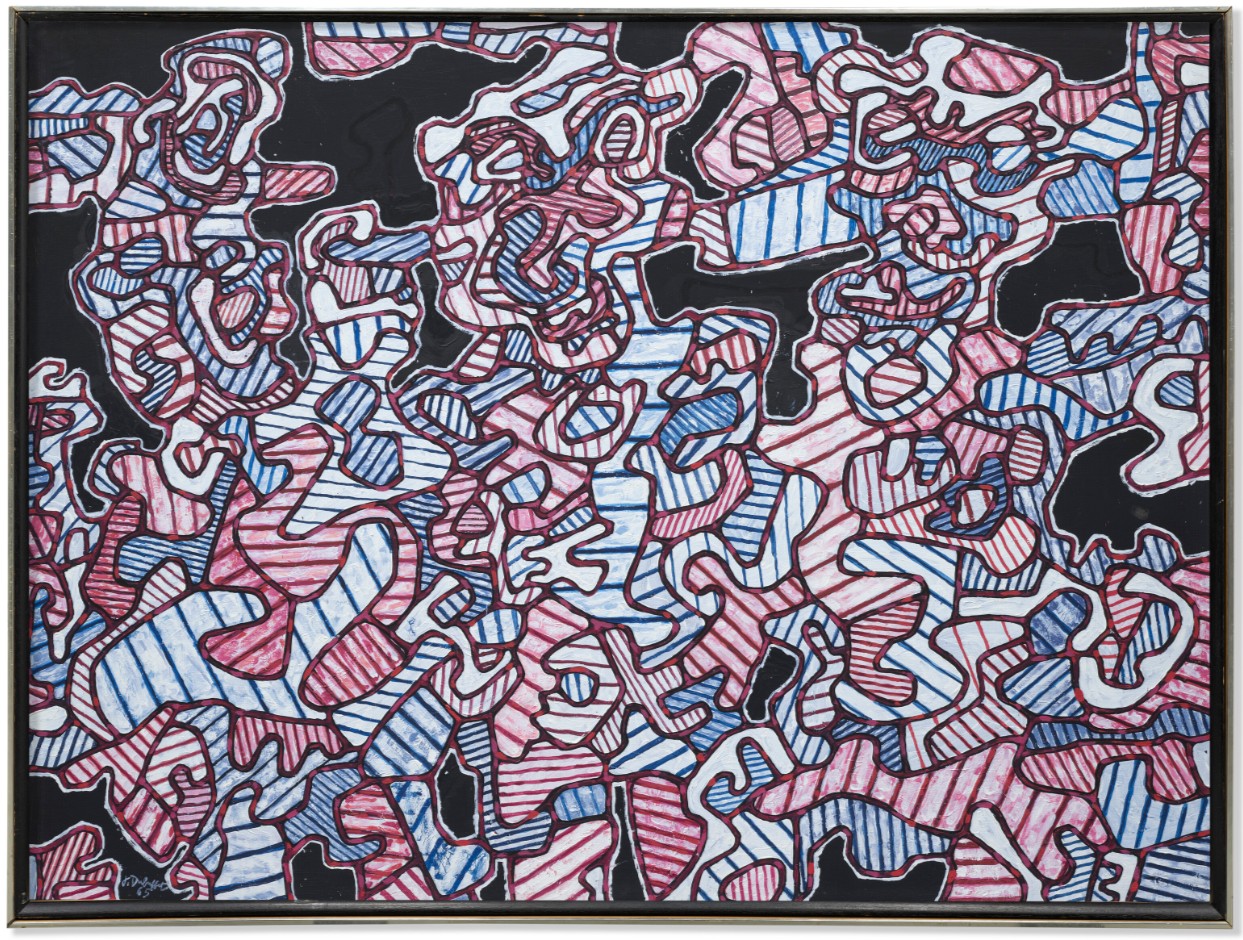
Jean Dubuffet (1901-1985)
Prestation de serment, 1965
Oil on canvas
96.5 x 130 cm (38 x 51 1/8 inches)
Signed and dated ‘J. Dubuffet 65′ (lower left)
Signed, titled and dated ”’Prestation de serment” J. dubuffet novembre 65’ (on the reverse)
#9. Robinson, 1949
L’Œil de Dieu : Property from an Important Collection
Sotheby’s Paris: 24 October 2025
Estimated: EUR 1,000,000 – 1,500,000
EUR 1,079,500 / USD 1,254,075
Robinson | Modernités | 2025 | Sotheby’s
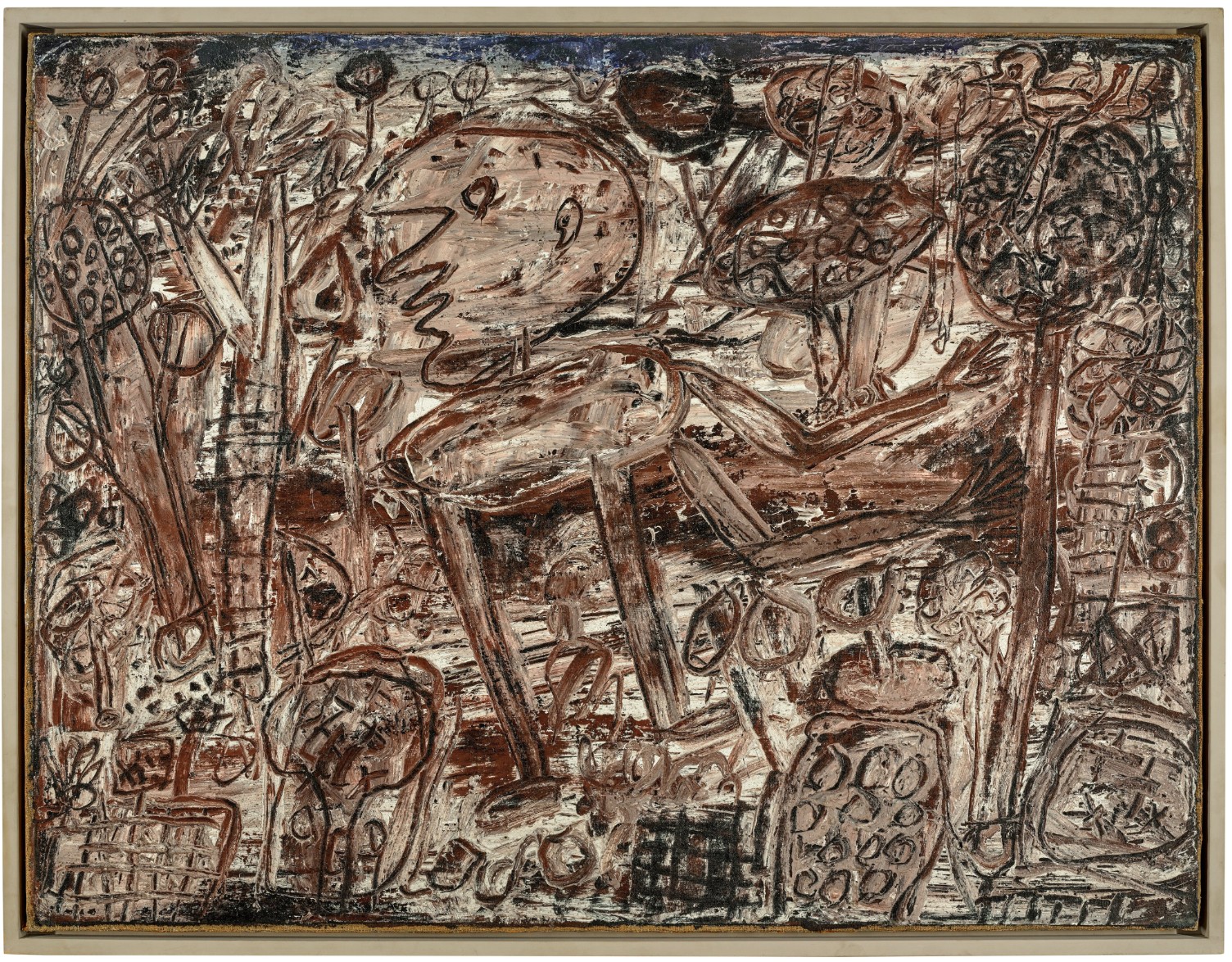
JEAN DUBUFFET (1901-1985)
Robinson, 1949
Oil on burlap
89×116 cm (35 x 45 5/8 inches)
Executed in June 1949
#10. Tour, 1975
Property from the Walker Art Center, Sold to Benefit the Acquisitions Fund
Sotheby’s New-York: 16 May 2025
Estimated: USD 800,000 – 1,200,000
USD 1,040,375
Tour | Contemporary Day Auction | 2025 | Sotheby’s
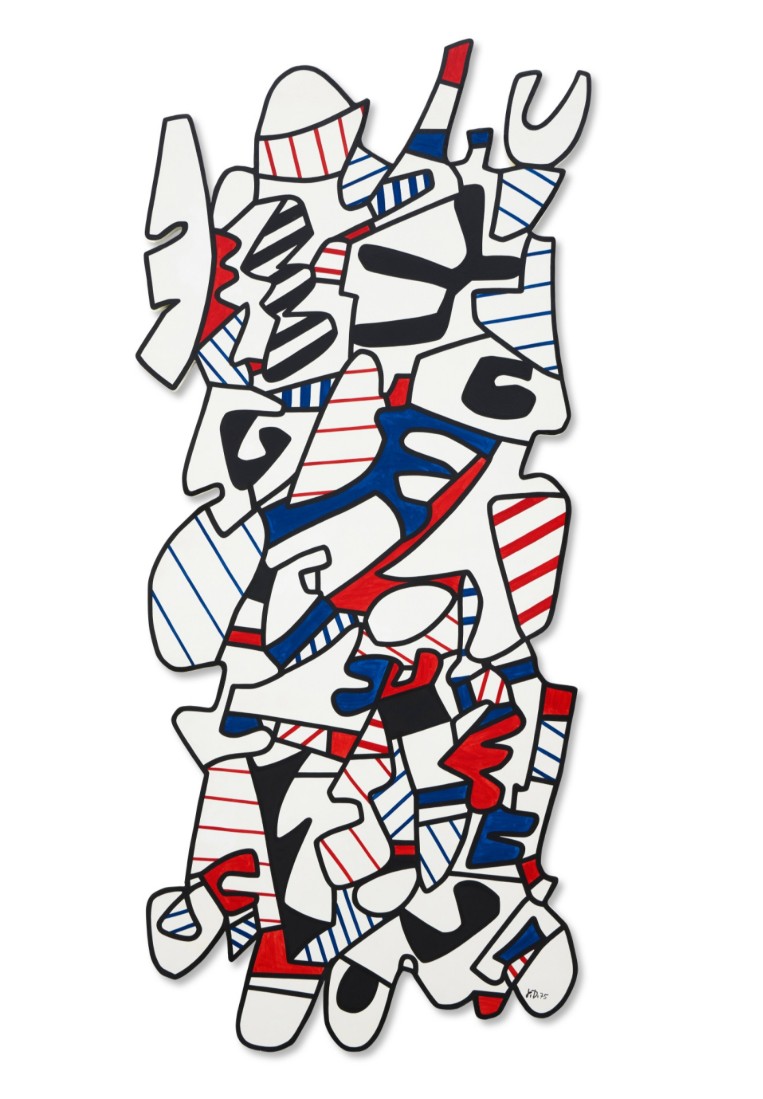
JEAN DUBUFFET (1901 – 1985)
Tour, 1975
Vinyl on shaped and laminated panel
271.8 x 121.9 cm (107×48 inches)
Signed with the artist’s initials and dated 75 (lower right)
USD 1 million
#11. Passe l’heure, 1980
The Geri Brawerman Collection: A Tribute to Los Angeles and A Legacy of Giving
Sotheby’s New-York: 20 November 2025
Estimated: USD 600,000 – 800,000
USD 952,500
Passe l’heure | Contemporary Day Auction | 2025 | Sotheby’s
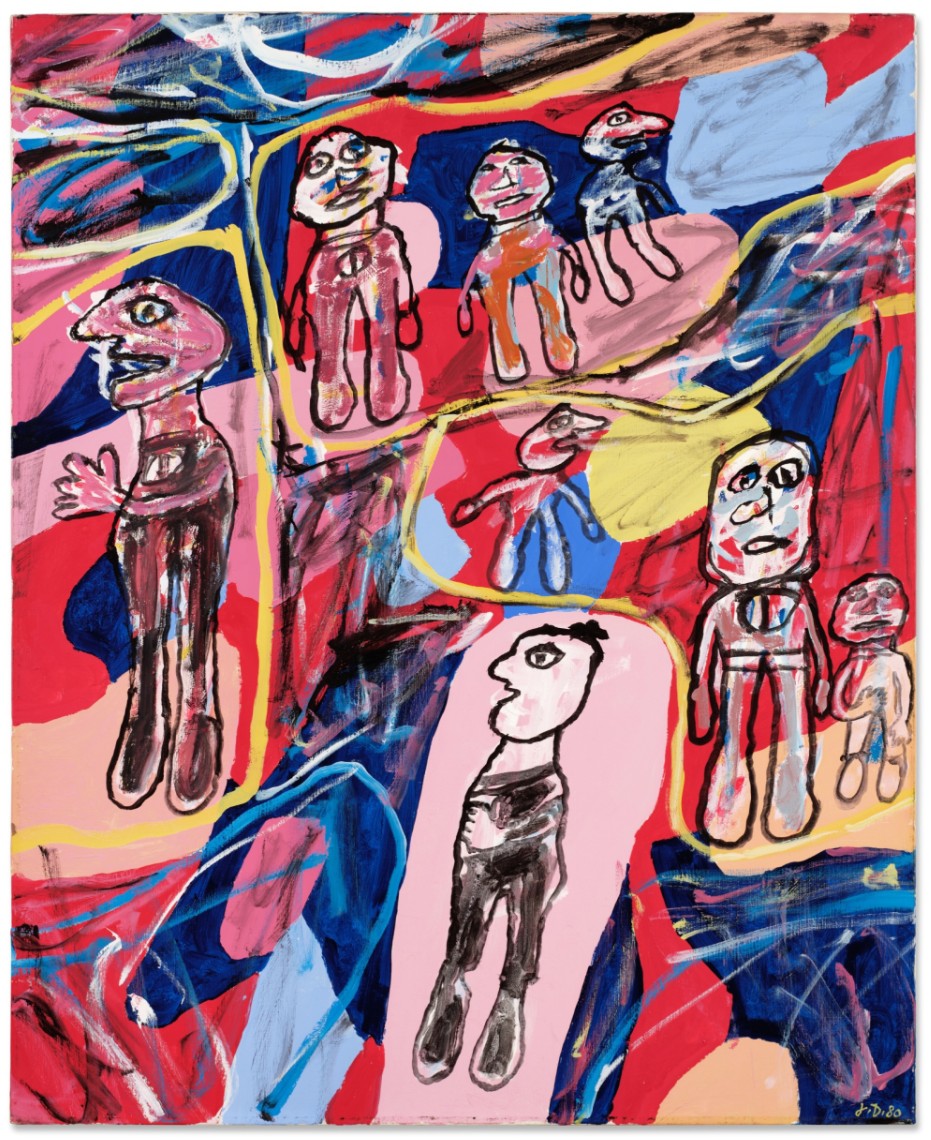
JEAN DUBUFFET (1901 – 1985)
Passe l’heure, 1980
Acrylic on canvas
100 x 81.2 cm (39 1/4 x 32 inches)
Signed with the artist’s initials and dated 80 (lower right)
Titled and dated Déc. 80 (on the reverse)
#12. Lampe et Balance I, 1964
Ketterer Kunst Munich: 6 June 2025
Estimated: EUR 500,000
EUR 698,500 / USD 800,000
L’HOURLOUPE SERIES
Ketterer Kunst, Art auctions, Book auctions Munich, Hamburg & Berlin
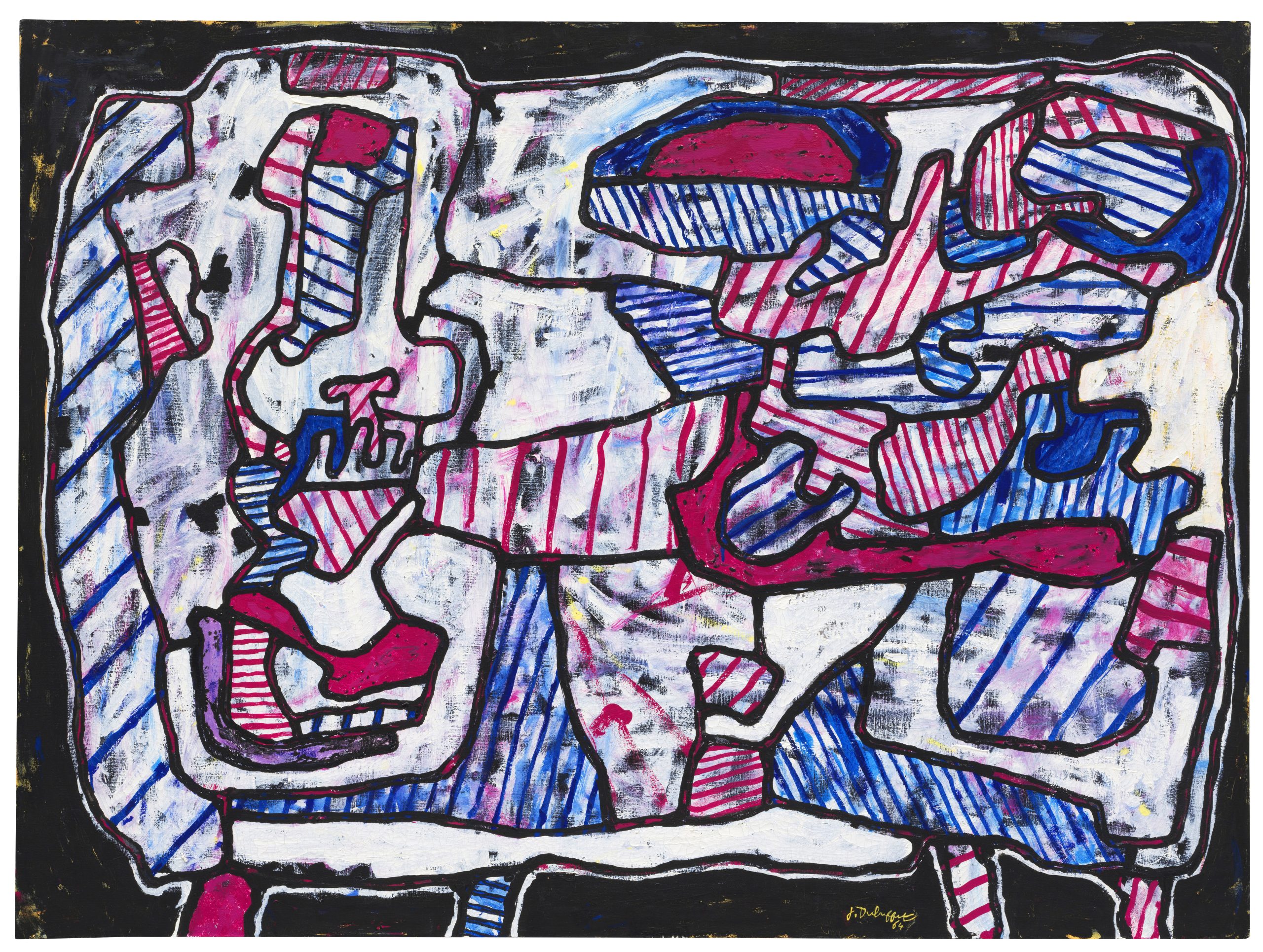
JEAN DUBUFFET
Lampe et Balance I, 1964
Oil on canvas
97×130 cm (38 1/8 x 51 1/8 inches)
Signed and dated in the bottom center
Signed, dated “juillet 64” and titled on the reverse of the canvas
#13. Marche en Campagne, 1974
Christie’s Paris: 9 April 2025
Estimated: EUR 450,000 – 650,000
EUR 686,700 / USD 754,265
Jean Dubuffet (1901-1985), Marche en Campagne | Christie’s
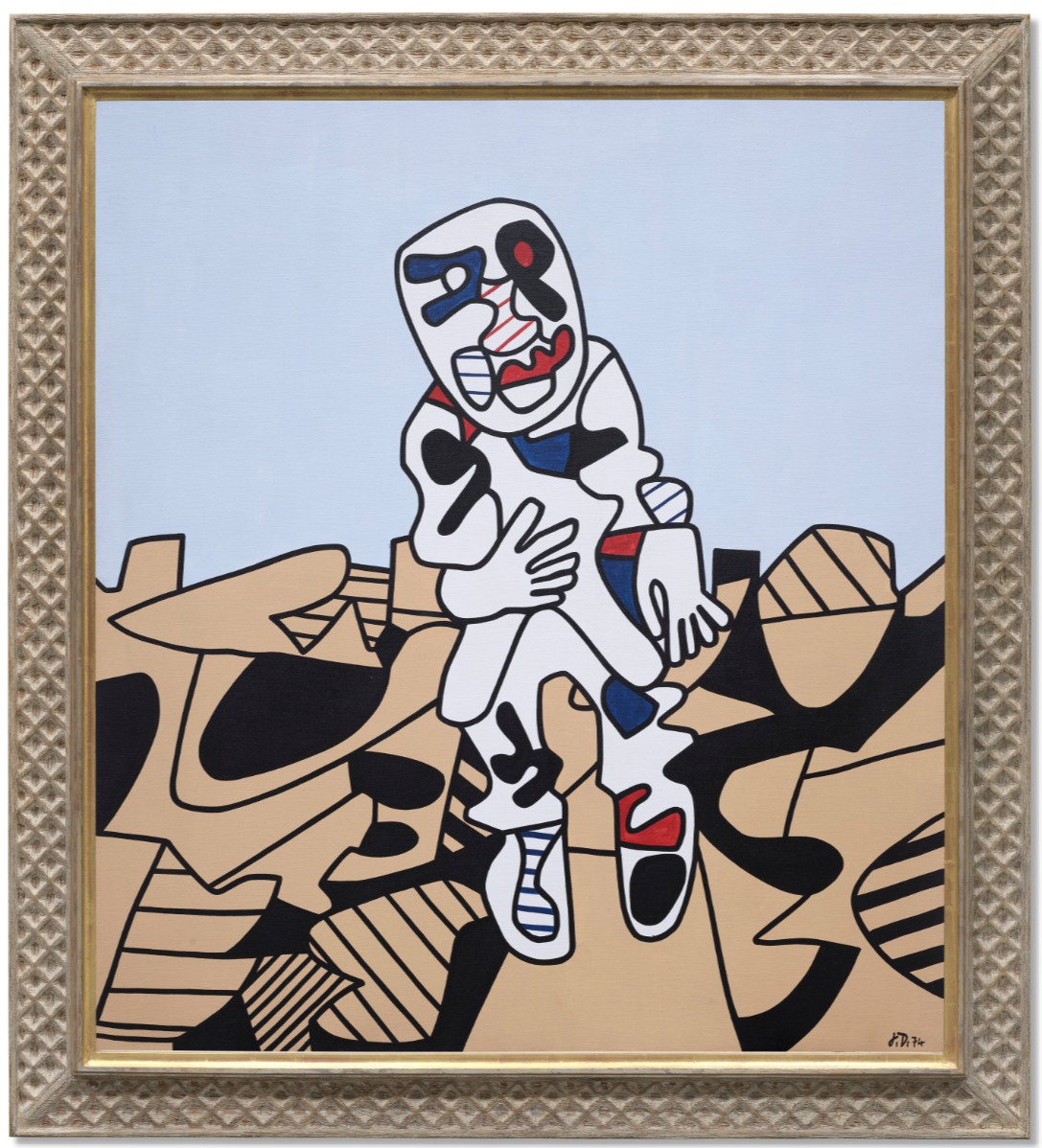
JEAN DUBUFFET (1901-1985)
Marche en Campagne, 1974
Vinyl on canvas
158 x 140.5 cm (62 1/4 x 55 1/4 inches)
Signed with the initials and dated ‘J.D. 74’ (lower right)
#14. Mire G 175 (Boléro), 1983
Christie’s Paris: 24 October 2025
Estimated: EUR 250,000 – 350,000
EUR 533,400 / USD 619,660
Jean Dubuffet (1901-1985), Mire G 175 (Boléro) | Christie’s
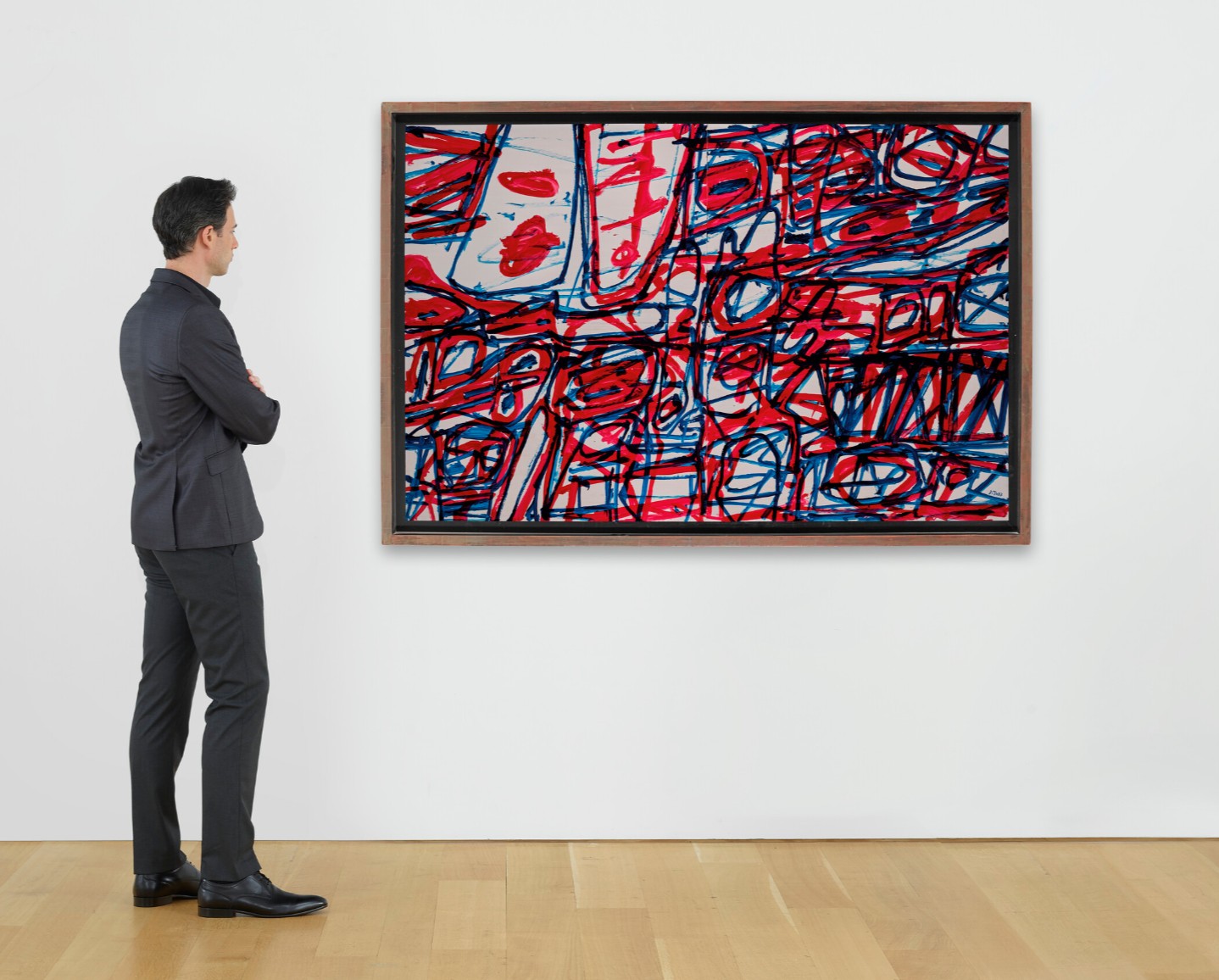
JEAN DUBUFFET (1901-1985)
Mire G 175 (Boléro), 1983
Acrylic on assembly of four paper sheets laid on canvas
135 x 201.5 cm (53 1/8 x 79 3/8 inches)
Signed with the initials and dated ‘J.D. 83’ (lower right)
#15. Mire G 109 (Kowloon), 1983
Sotheby’s New-York: 26 February 2025
Estimated: USD 200,000 – 400,000
USD 584,200
Mire G 109 (Kowloon) | Contemporary Curated | 2025 | Sotheby’s
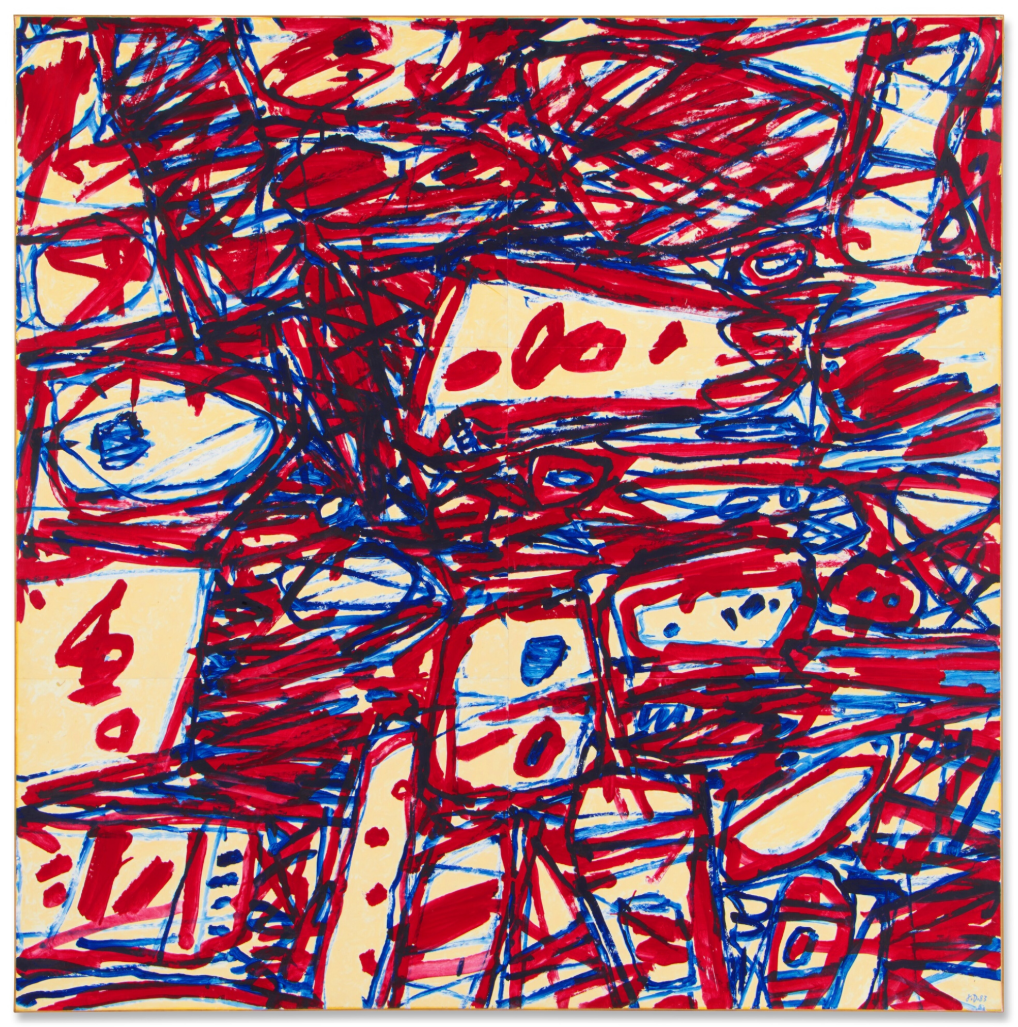
JEAN DUBUFFET (1901 – 1985)
Mire G 109 (Kowloon), 1983
Acrylic and paper laid on canvas
200.3 x 179.3 cm (78 7/8 x 79 5/8 inches)
Signed with the artist’s initials and dated 83 (lower right)
Executed on 28 July 1983
#16. Joyeuse commère, 1952
Christie’s New-York: 12 May 2025
Estimated: USD 300,000 – 500,000
USD 567,000
JEAN DUBUFFET (1901-1985), Joyeuse commère | Christie’s
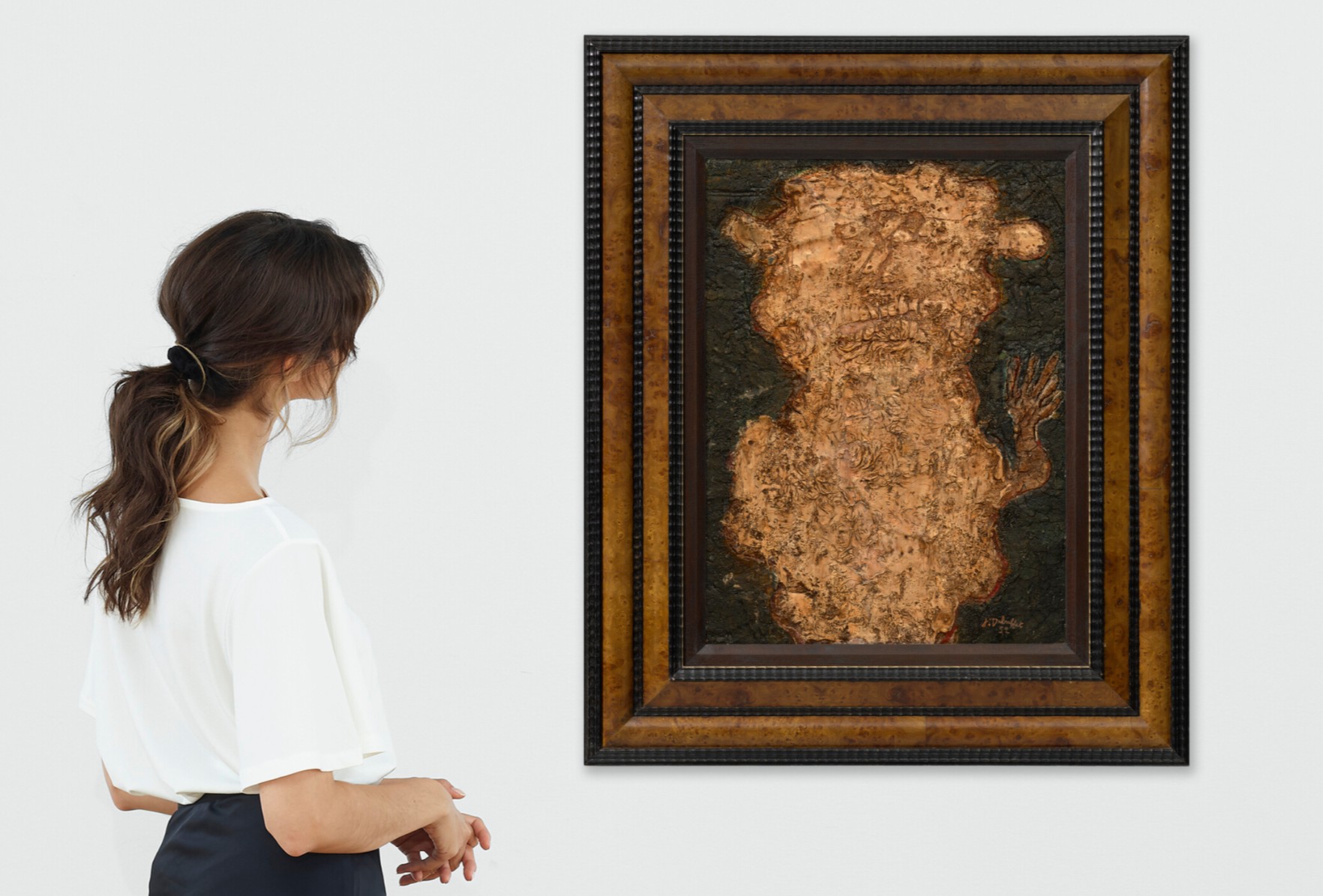
JEAN DUBUFFET (1901-1985)
Joyeuse commère, 1952
Oil on panel
61.6 x 45.7 cm (25 5/8 x 17 3/4 inches)
Signed and dated ‘J. Dubuffet 52’ (lower right)
Signed again, inscribed, titled and dated again
‘Joyeuse commère J. Dubuffet Février 52 New York’
(on the reverse)
#17. Robinet, 1965
Property from the Walker Art Center, Sold to Benefit the Acquisitions Fund
Sotheby’s New-York: 16 May 2025
Estimated: USD 50,000 – 70,000
USD 533,400
Robinet | Contemporary Day Auction | 2025 | Sotheby’s
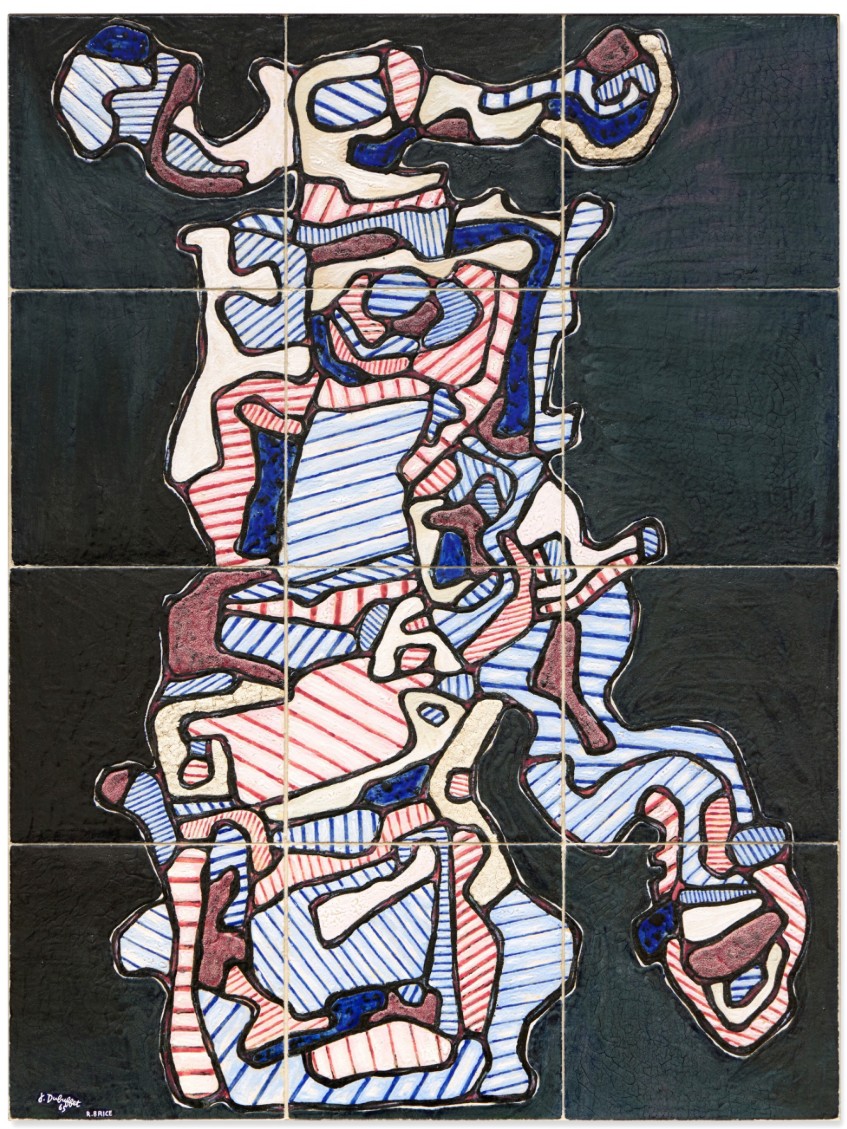
JEAN DUBUFFET (1901 – 1985)
Robinet, 1965
Glazed ceramic
172.7 x 122.6 cm (68 x 48 1/4 inches)
Signed and dated 65 (lower left)
This work is unique and was fabricated by Roland Brice
USD 500,000
#18. La cave à liqueurs, 1965
Sotheby’s Paris: 10 April 2025
Estimated: EUR 400,000 – 600,000
EUR 419,100 / USD 458,900
La cave à liqueurs | Art Moderne et Contemporain Evening Auction | 2025 | Sotheby’s
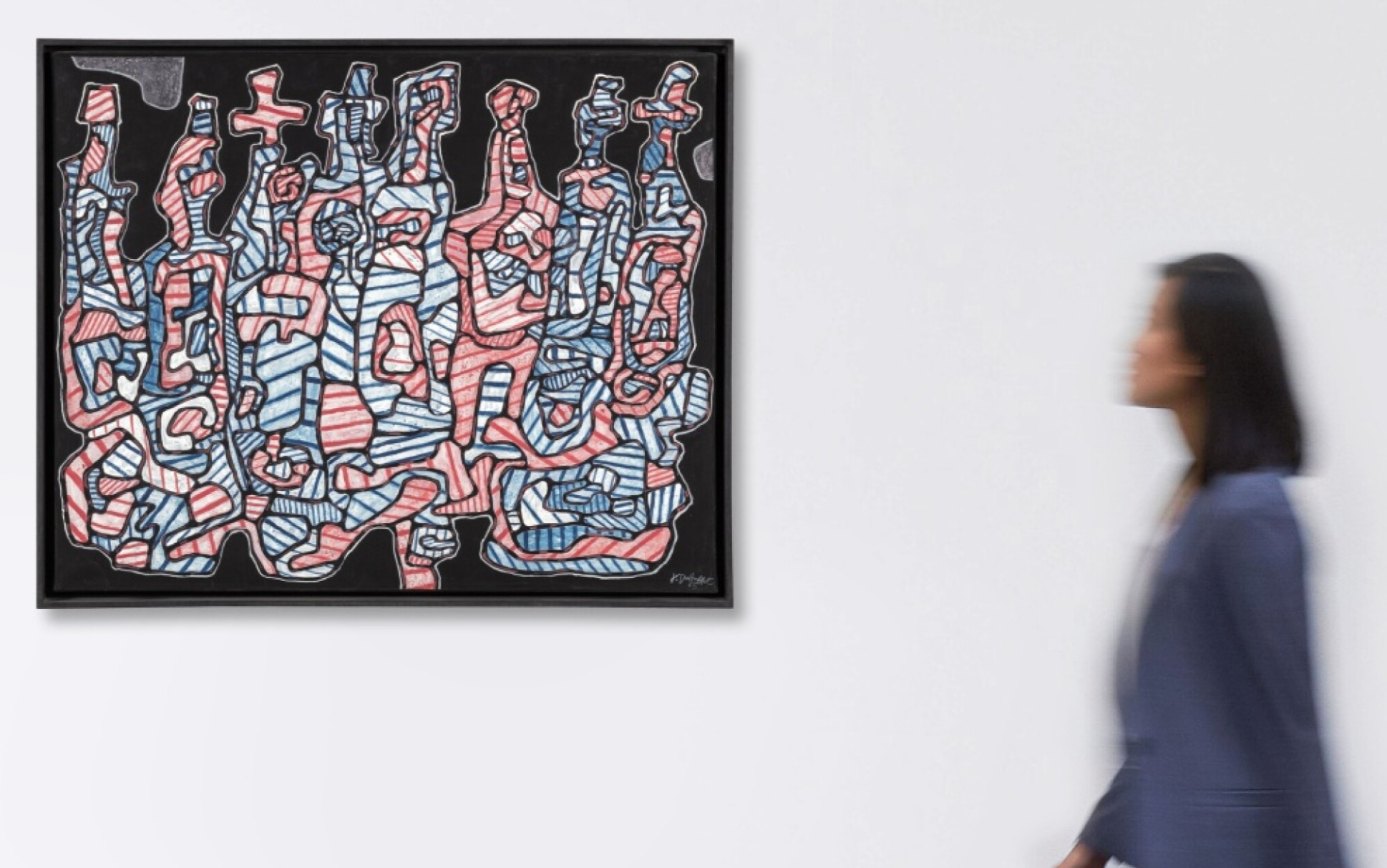
JEAN DUBUFFET (1901 – 1985)
La cave à liqueurs, 1965
Vinyl on paper laid down on canvas
81×100 cm (31 7/8 x 39 1/3 inches)
Signed and dated 65 (lower right)
#19. Arabe au désert, 1948
Phillips London: 6 March 2025
Estimated: GBP 350,000 – 550,000
GBP 355,600 / USD 455,425
Jean Dubuffet – Modern & Contemporary … Lot 22 March 2025 | Phillips
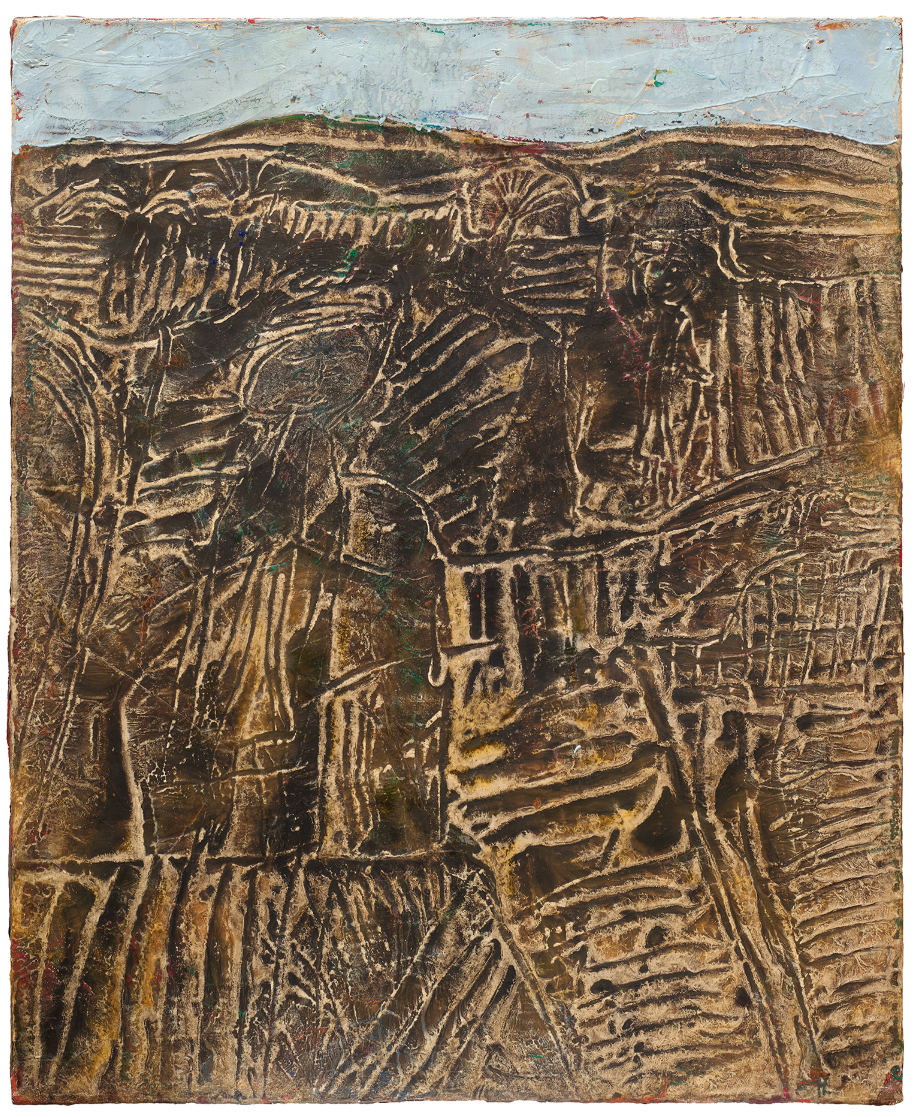
JEAN DUBUFFET
Arabe au désert, 1948
Oil on canvas
61×50 cm (24 x 19 5/8 inches)
#20. Texturologie XXVII (sable et argent), 1958
Christie’s Paris: 30 September 2025
Estimated: EUR 150,000 – 200,000
EUR 361,950 / USD 424,680
Jean Dubuffet (1901-1985), Texturologie XXVII (sable et argent) | Christie’s
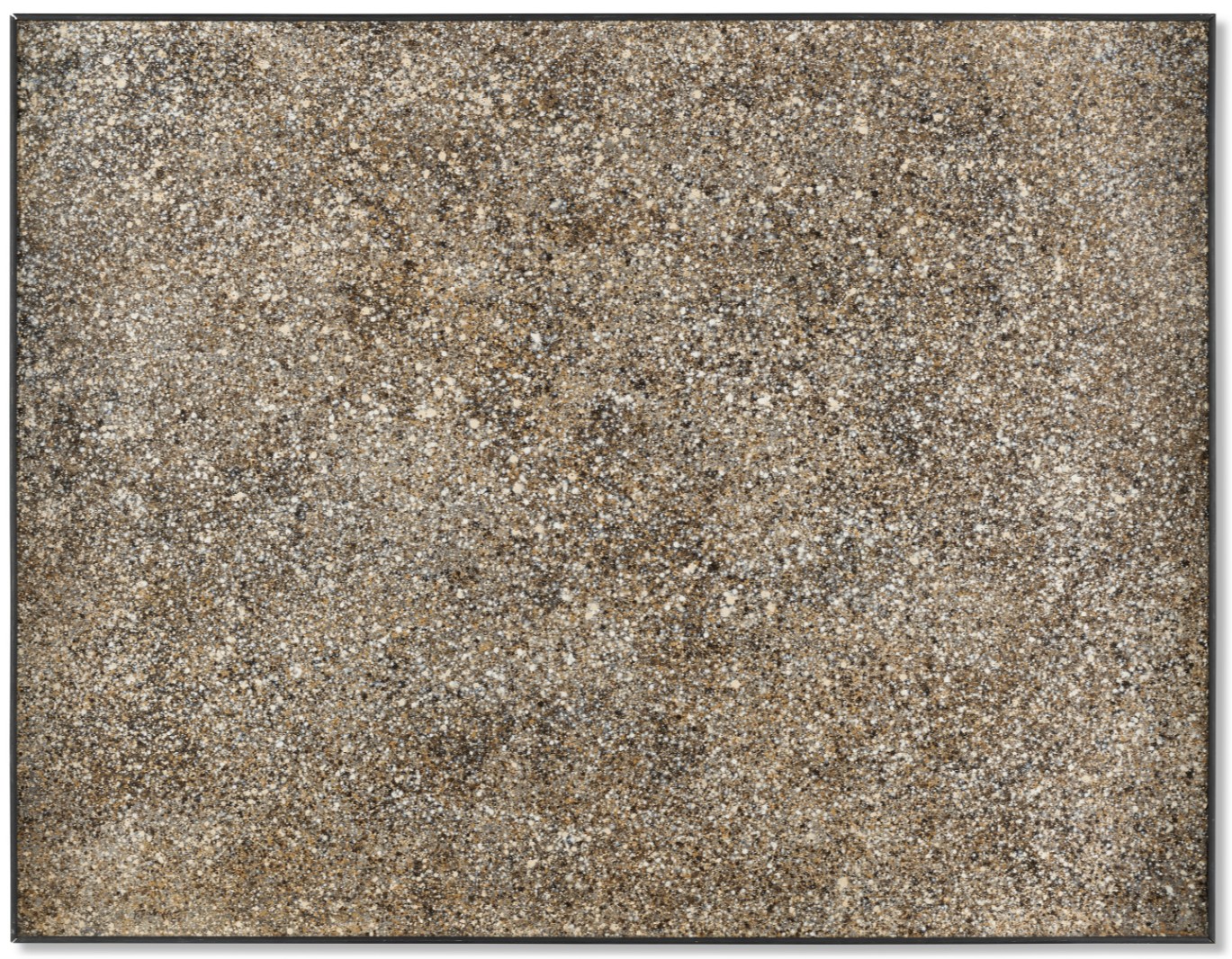
JEAN DUBUFFET (1901-1985)
Texturologie XXVII (sable et argent), 1958
Oil on canvas
114×146 cm (44 7/8 x 57 1/2 inches)
Signed and dated ‘J. Dubuffet 58′ (lower left)
Signed, titled and dated ”’Texturologie XXVII (sable et argent)” avril 58 J. Dubuffet’ (on the reverse)
#21. Le Petit Tour de Piste, 1958
Karl & Faber Munich: 4 December 2025
Estimated: EUR 350,000 – 400,000
EUR 355,600 / USD 414,605
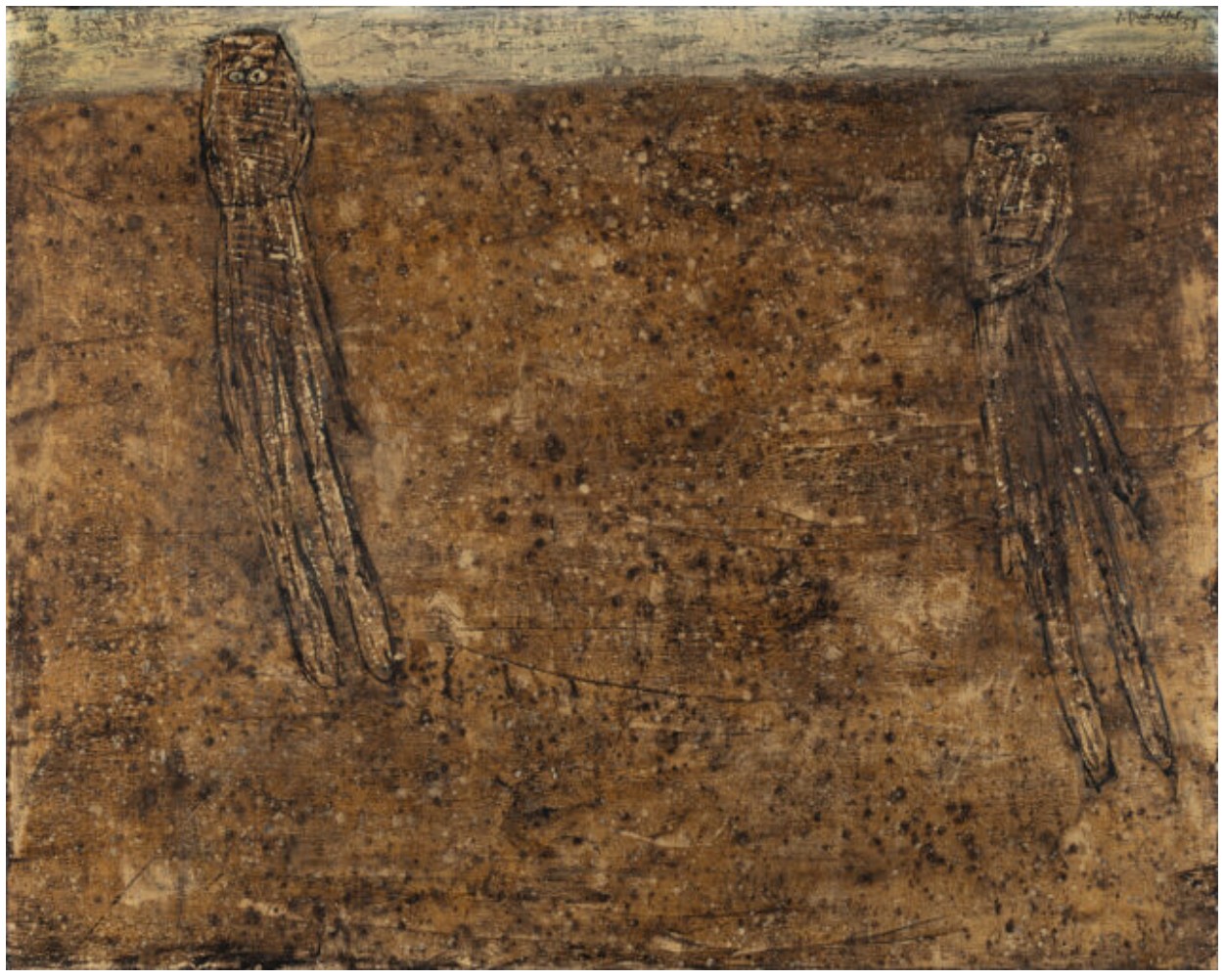
JEAN DUBUFFET
Le Petit Tour de Piste, 1958
Oil on canvas
73 x 92.5 cm
Signed and dated upper right
Signed, titled and dated verso on canvas
#22. Paysage à l’oiseau, 1969-1970
Christie’s Paris: 24 October 2025
Estimated: EUR 80,000 – 120,000
EUR 330,200 / USD 383,600
Jean Dubuffet (1901-1985), Paysage à l’oiseau | Christie’s
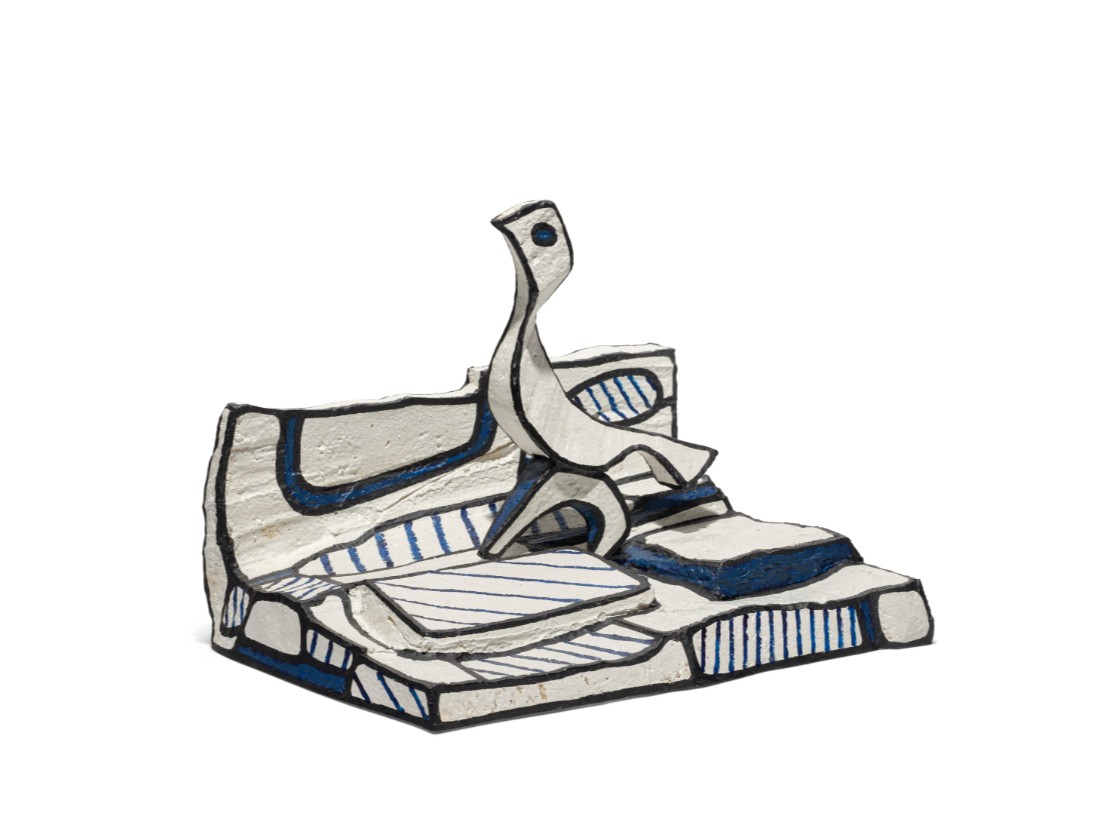
JEAN DUBUFFET (1901-1985)
Paysage à l’oiseau, 1969-1970
Polyurethane paint on polyester resin
38x50x35 cm (15 x 19 3/4 x 13 3/4 inches)
Signed with the initials, dated and dedicated ‘J. D. 69 à Slavko Kopac’ (on a side)
#23. Animation parcellaire, 1979
Phillips New-York: 14 May 2025
Estimated: USD 350,000 – 450,000
USD 355,600
Jean Dubuffet Modern & Contemporary Art Day Sale, Morning Session
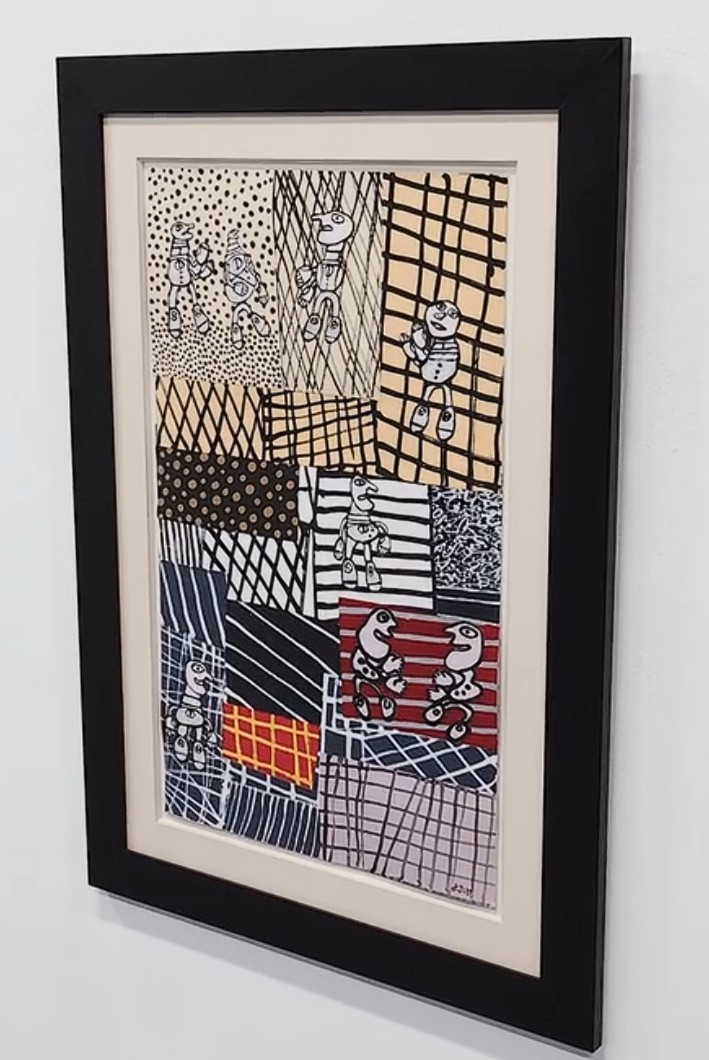
JEAN DUBUFFET
Animation parcellaire, 1979
Acrylic and paper collage mounted to canvas-backed paper
85.7 x 51.4 cm (33 3/4 x 20 1/4 inches)
Signed with the artist’s initials and dated “J.D. 79” lower right
Executed on June 8, 1979, in France
#24. Jindrinvince, 1962
Artcurial Paris: 25 October 2025
Estimated: EUR 200,000 – 300,000
EUR 264,800 / USD 308,395
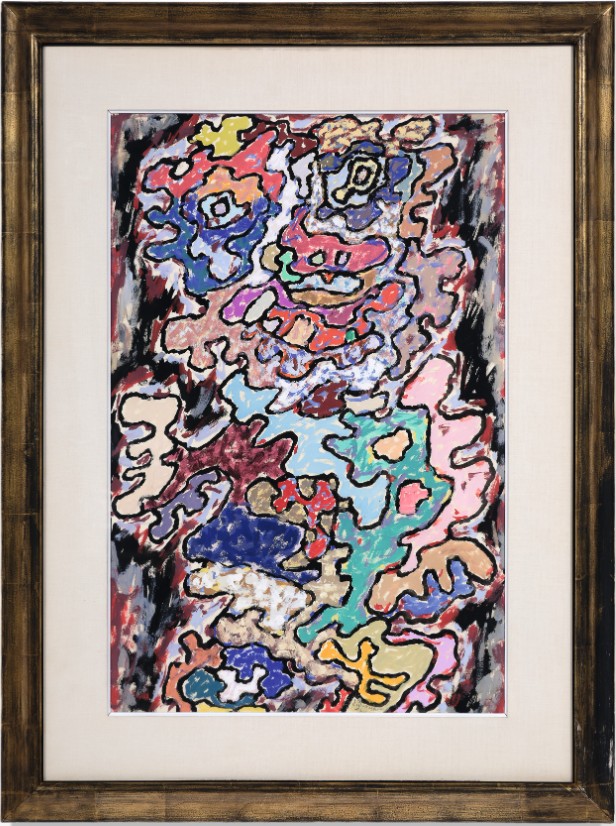
Jean DUBUFFET (1901-1985)
Jindrinvince, 1962
Gouache on paper laid down on canvas
67×45 cm (26 x 16-7/8 inches)
Signed and dated lower right
#25. Promeneuse et promeneur, 1970
PROPERTY OF A LADY, RANCHO MIRAGE AND NEW YORK CITY
Bonhams New-York: 19 November 2025
Estimated: USD 70,000 – 100,000
USD 305,300
L’HOURLOUPE
Bonhams : JEAN DUBUFFET (1901-1985) Promeneuse et promeneur
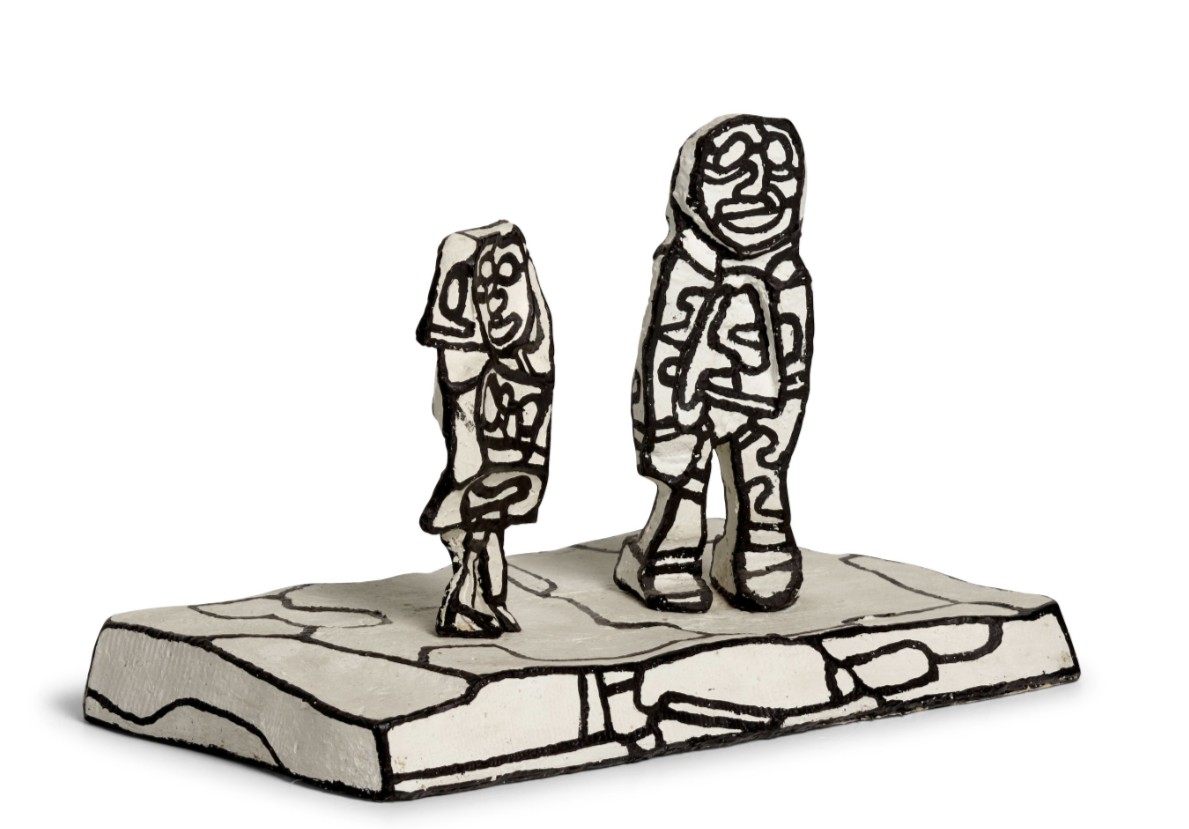
JEAN DUBUFFET (1901-1985)
Promeneuse et promeneur, 1970
Vinyl epoxy on polyurethane
20.8 x 33 x 23 cm (8-1/4 x 13 x 9 inches)
Signed with the artist’s initials
Inscribed and dated ‘J.D à Gordon Bunshaft 1970’ (on the right leg of the right figure)
Executed on October 28, 1970
#26. Bon entrain, 1979
Sotheby’s New-York: 26 September 2025
Estimated: USD 250,000 – 350,000
USD 304,800
Bon entrain | Contemporary Curated | 2025 | Sotheby’s
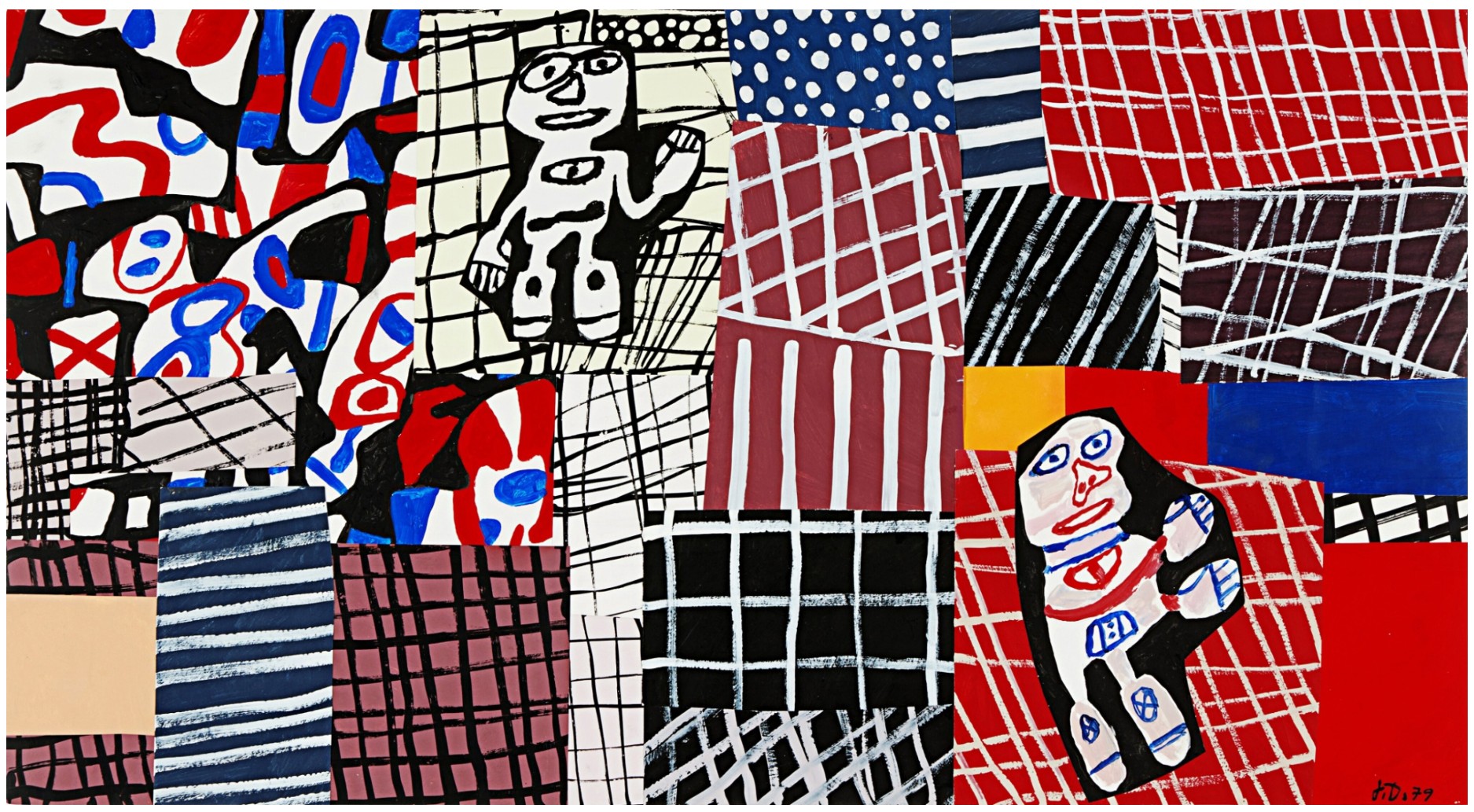
JEAN DUBUFFET (1901-1985)
Bon entrain, 1979
Acrylic and paper collage on canvas backed paper
50.8 x 94 cm (20×37 inches)
Signed with the artist’s initials and dated 79 (lower right)
Executed on 24 July 1979
#27. Tête de héros, 1950
Phillips London: 6 March 2025
Estimated: GBP 250,000 – 350,000
GBP 228,600 / USD 292,770
Jean Dubuffet – Modern & Contemporary … Lot 11 March 2025 | Phillips
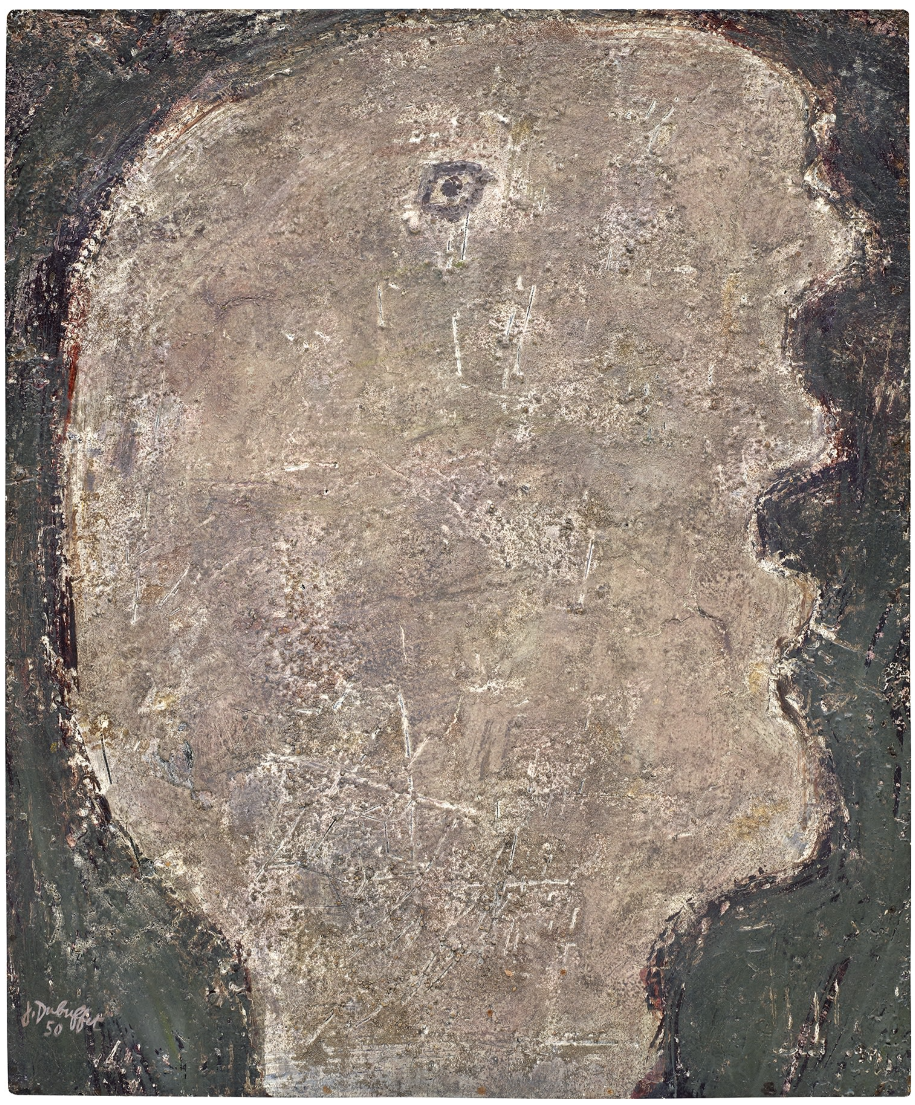
JEAN DUBUFFET
Tête de héros, 1950
Oil and sand on Masonite
65.1 x 54.1 cm (25 5/8 x 21 1/4 inches)
Signed and dated ‘J. Dubuffet 50’ lower left
Painted in November 1950
#28. Mire G 53 (Kowloon), 1983
Christie’s New-York: 20 November 2025
Estimated: USD 200,000 – 300,000
USD 292,100
JEAN DUBUFFET (1901-1985), Mire G 53 (Kowloon) | Christie’s
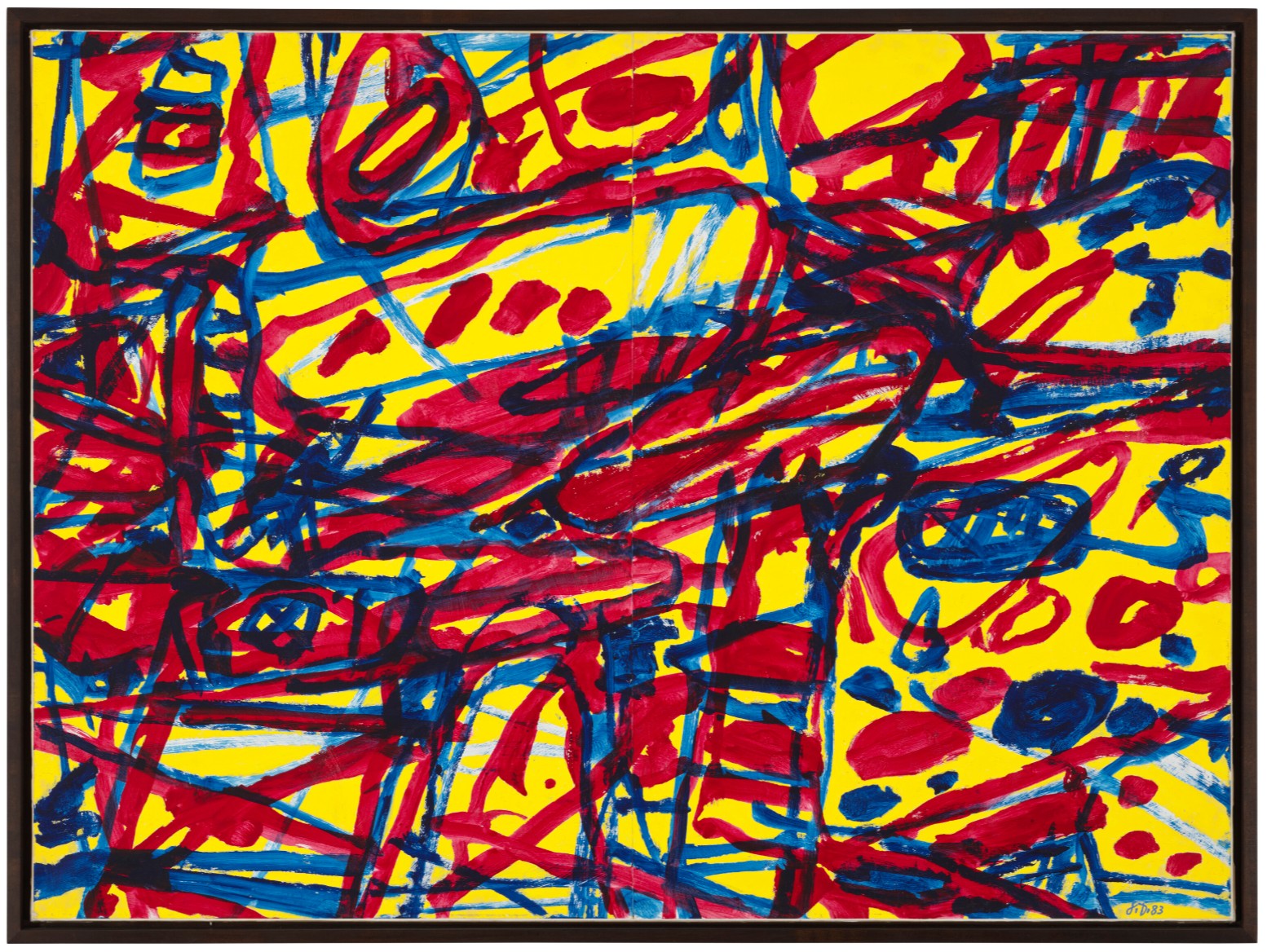
JEAN DUBUFFET (1901-1985)
Mire G 53 (Kowloon), 1983
Acrylic on two joined sheets of paper mounted on canvas
100 x 135.7 cm (39-3/8 x 53-3/8 inches)
Signed with the artist’s initials and dated ‘J.D. 83’ (lower right)
#29. Site avec deux personnages (F146), 1982
Koller Zurich: 26 June 2025
Estimated: CHF 150,000 – 250,000
CHF 225,000 / USD 281,555
JEAN DUBUFFET Site avec deux personnages (F 146). 1982.
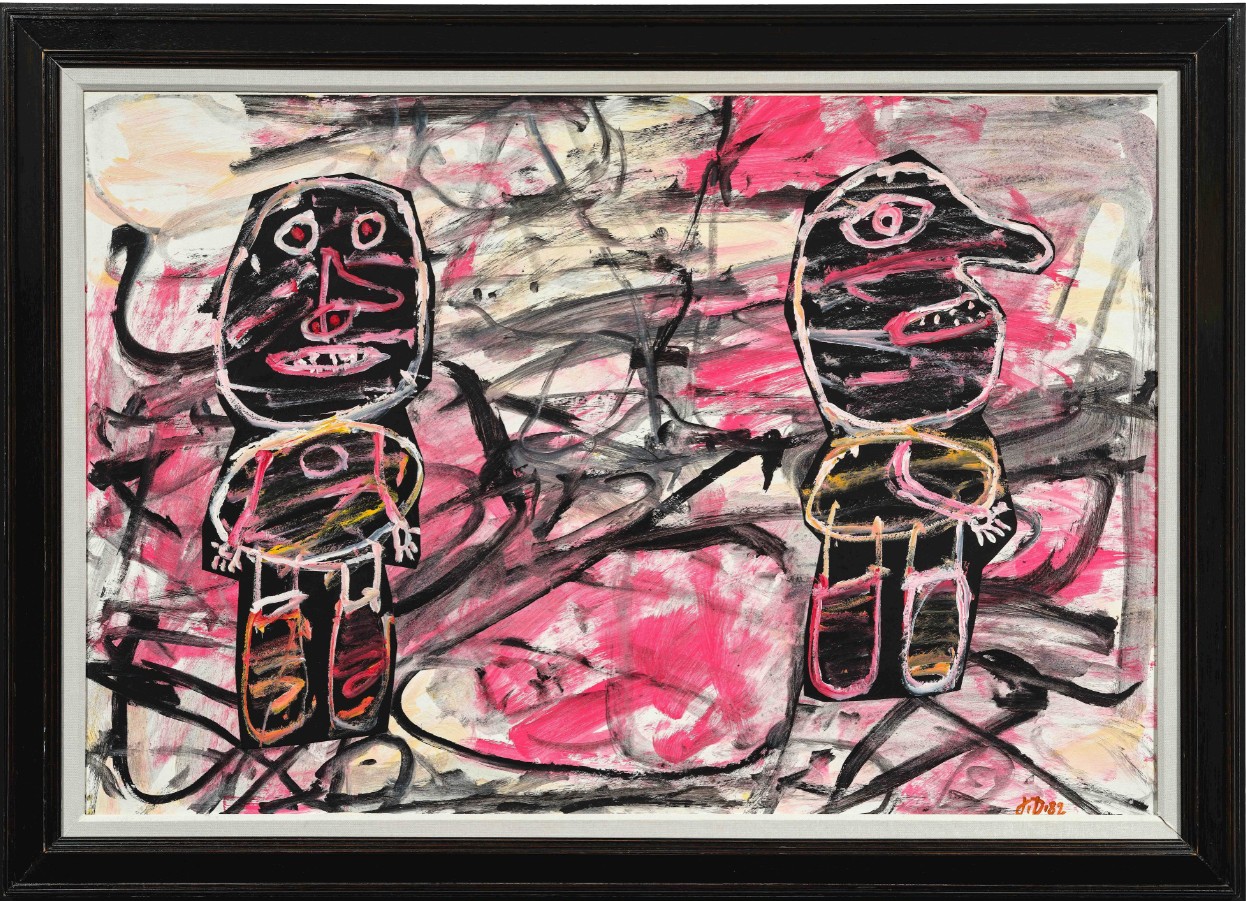
JEAN DUBUFFET (Le Havre 1901–1985 Paris)
Site avec deux personnages (F146), 1982
Acrylic and collage on paper, firmly laid down on canvas
67 x 99.5 cm
Monogrammed and dated lower right: J.D. 82
As well as numbered on the stretcher: F146
#30. Site aléatoire avec 3 personnages, 1982
¡ AMÉRICA ! From an Important European Collection
Sotheby’s Paris: 24 October 2025
Estimated: EUR 150,000 – 200,000
EUR 228,600 / USD 266,020
Site aléatoire avec 3 personnages | Modernités | 2025 | Sotheby’s
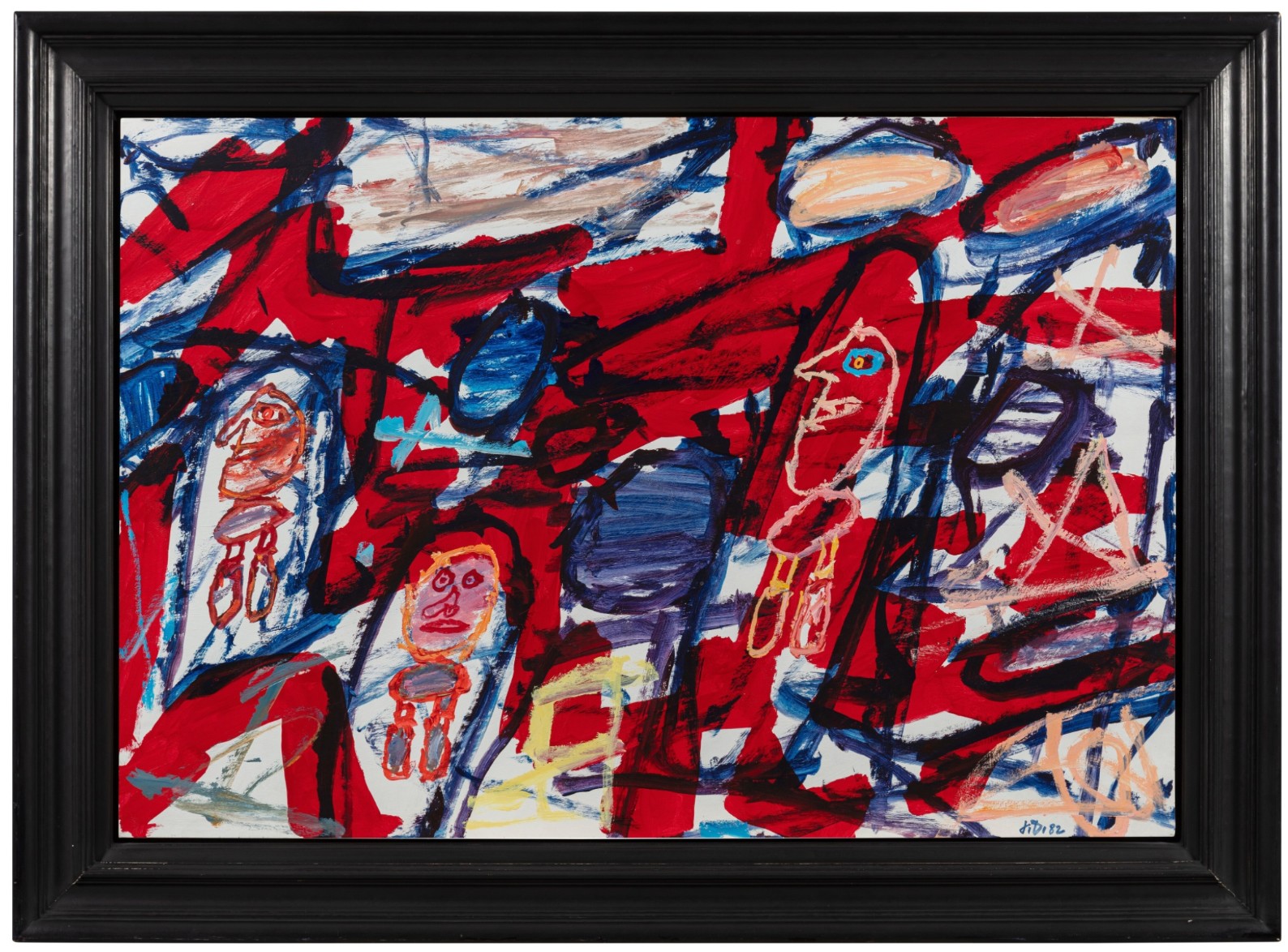
JEAN DUBUFFET (1901-1985)
Site aléatoire avec 3 personnages, 1982
Acrylic on paper laid down on canvas
67×100 cm (26-3/8 x 39-3/8 inches)
Signed with the artist’s initials and dated 82 (lower right)
#31. Tête d’homme, étrange fruit, 1957
Property from the Collection of Ann and Robert Fromer
Sotheby’s New-York: 16 May 2025
Estimated: USD 200,000 – 300,000
USD 254,000
Tête d’homme, étrange fruit | Contemporary Day Auction | 2025 | Sotheby’s
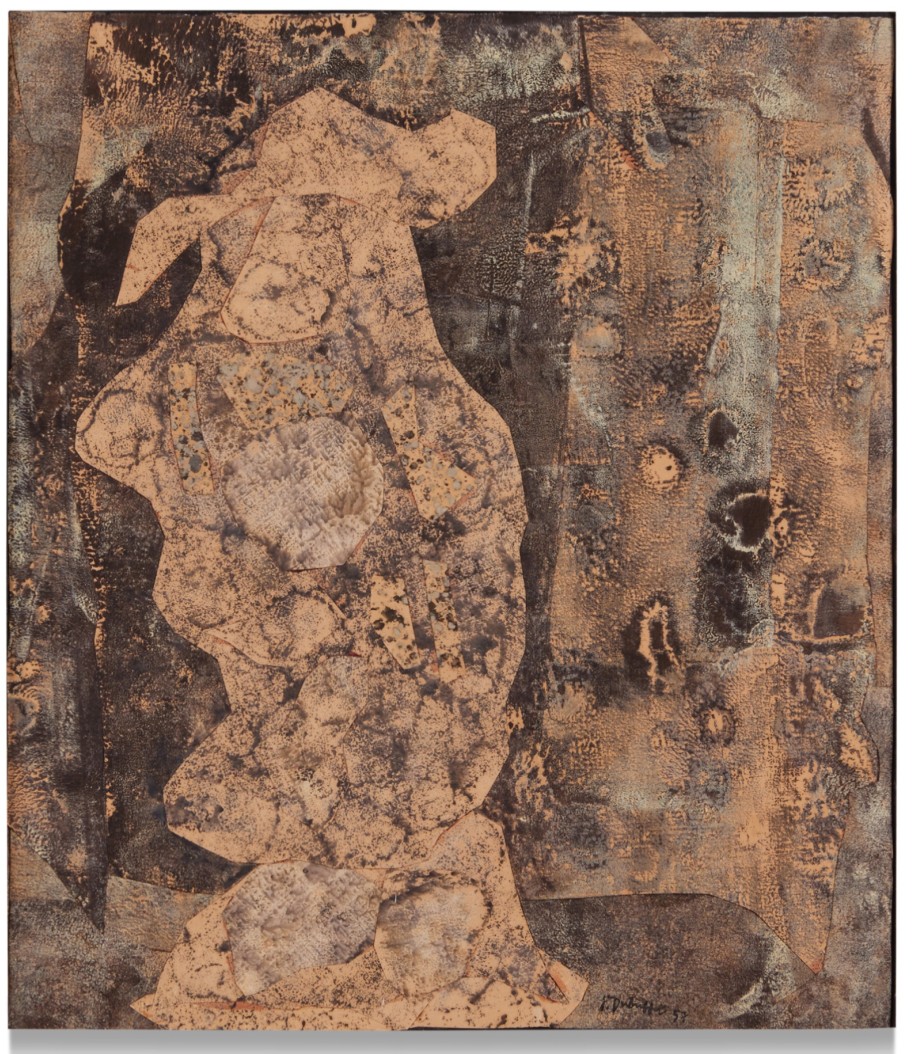
JEAN DUBUFFET (1901-1985)
Tête d’homme, étrange fruit, 1957
Oil and paper collage on paper mounted on canvas
69.9 x 61.9 cm (27-1/2 x 24-3/8 inches)
Signed and dated dec. 57 (lower right)
Signed, titled and dated 57 (on the reverse)
#32. Parachiffre XLVII, 1975
Christie’s Paris: 11 April 2025
Estimated: EUR 80,000 – 120,000
EUR 189,000 / USD 214,090
Jean Dubuffet (1901-1985), Parachiffre XLVII | Christie’s
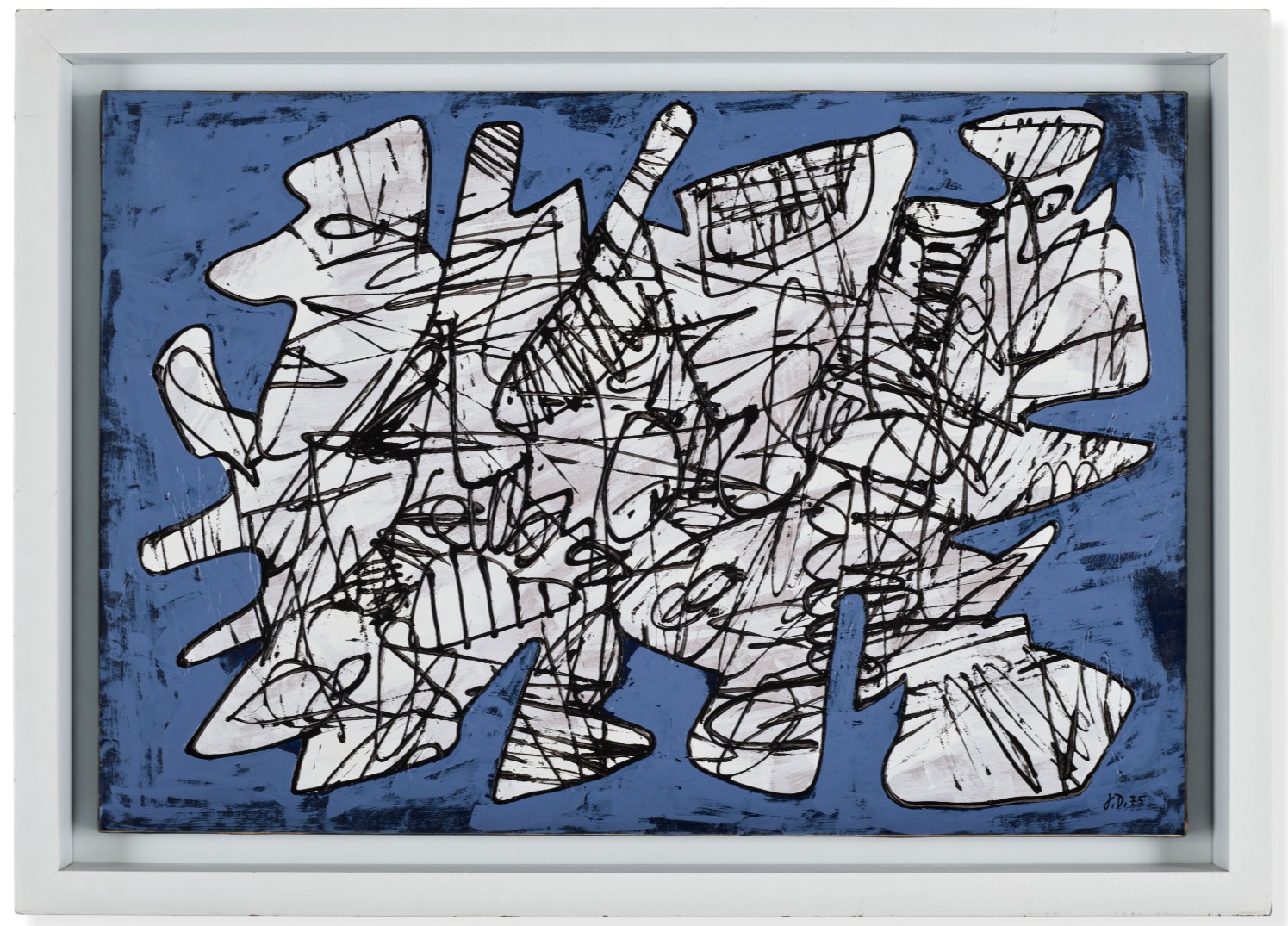
JEAN DUBUFFET (1901-1985)
Parachiffre XLVII, 1975
Acrylic and vynil on paper laid on canvas
68.9 x 101 cm (27-1/8 x 39-3/4 inches)
Signed with the initials and dated ‘J. D. 75′ (lower right)
Titled and numbered ”’Parachiffre XLVII” Z49’ (on the reverse)
#33. Parachiffre XXXII, 1975
Sotheby’s Paris: 8 July 2025
Estimated: EUR 70,000 – 100,000
EUR 165,100 / USD 194,410
Parachiffre XXXII | Modern & Contemporary Discoveries | 2025 | Sotheby’s
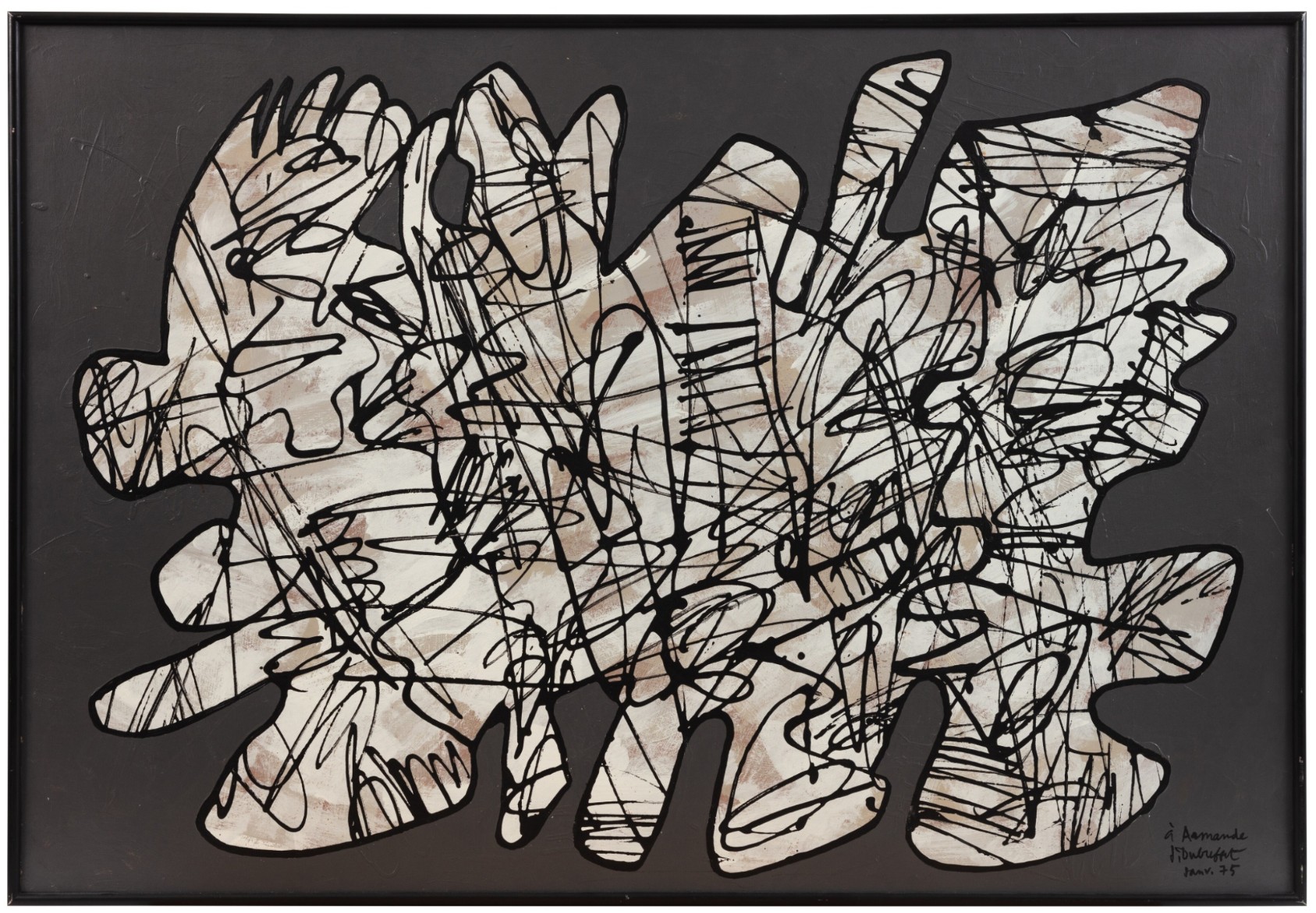
JEAN DUBUFFET (1901-1985)
Parachiffre XXXII, 1975
Vinyl on paper collage mounted on canvas
69×101 cm (27-1/8 x 39-3/4 inches)
Signed, dedicated and dated Jan.75 (lower right)
Executed on January 6th, 1975
#34. Eater with Fork, 1952
Digard Paris: 25 November 2025
Estimated: EUR 150,000 – 250,000
EUR 164,580 / USD 190,120
Jean DUBUFFET (1901-1985) – Lot 18
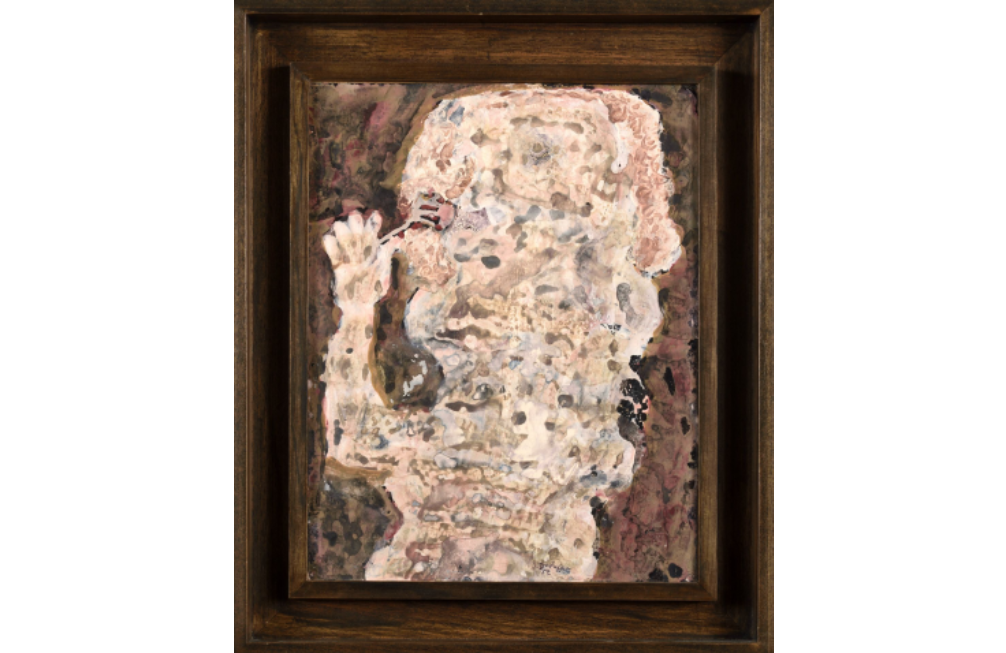
Jean DUBUFFET (1901-1985)
Eater with Fork, 1952
Oil on paper mounted on panel
35 x 27.5 cm (13-7/8 x 10-7/8 inches)
Signed and dated lower center
#35. Le moment de la rencontre, 1982
Christie’s New-York: 27 February 2025
Estimated: USD 120,000 – 180,000
USD 189,000
JEAN DUBUFFET (1901-1985), Le moment de la rencontre | Christie’s
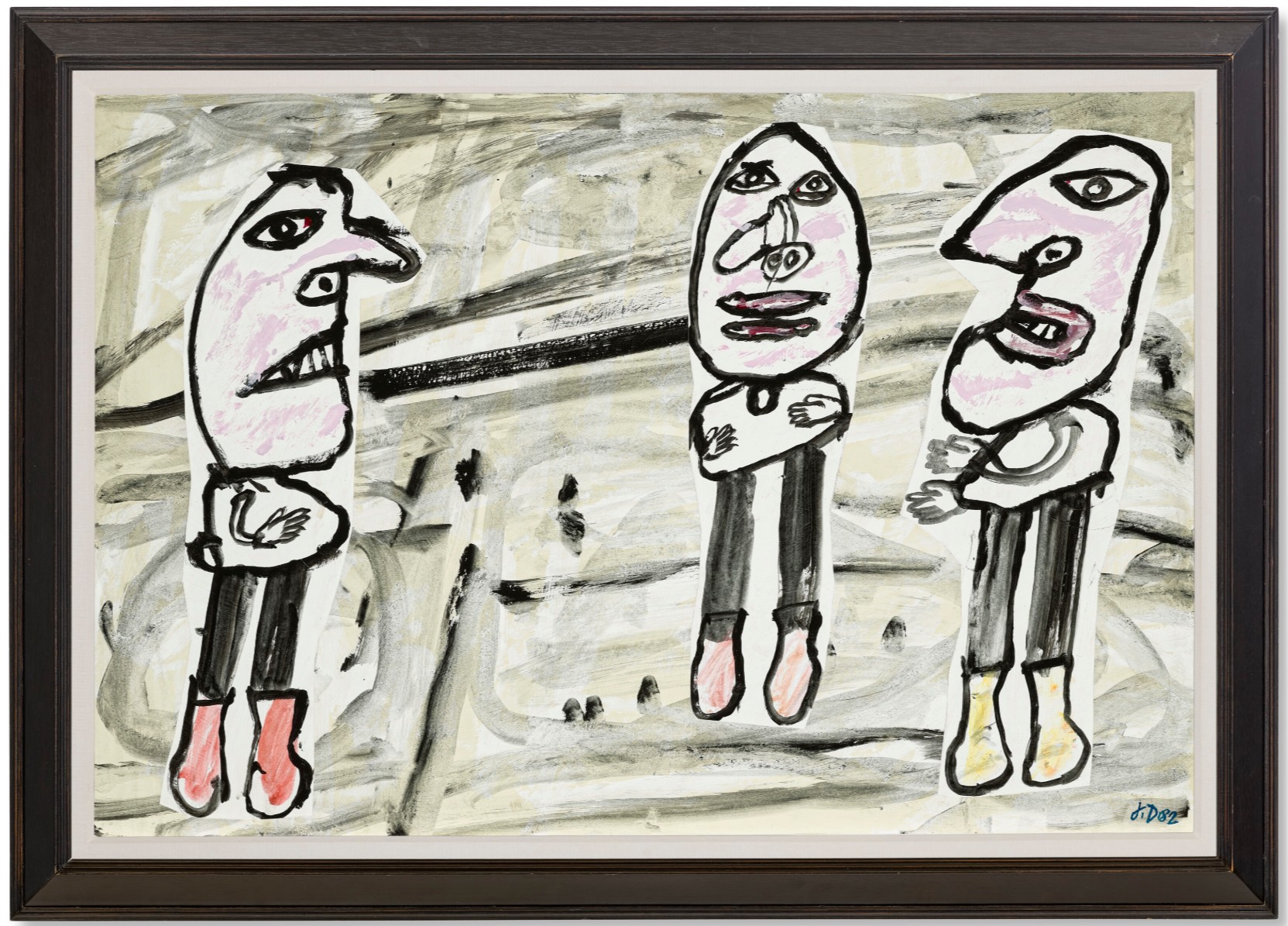
JEAN DUBUFFET (1901-1985)
Le moment de la rencontre, 1982
Acrylic and paper collage on paper mounted on canvas
67.3 x 100 cm (26-1/2 x 39-3/8 inches)
Signed with the artist’s initials and dated ‘J.D. 82’ (lower right)
#36. Site avec 5 personnages, 1981
Sotheby’s London: 17 October 2025
Estimated: GBP 100,000 – 150,000
GBP 114,300 / USD 153,395
Site avec 5 personnages | Contemporary Day Auction | 2025 | Sotheby’s
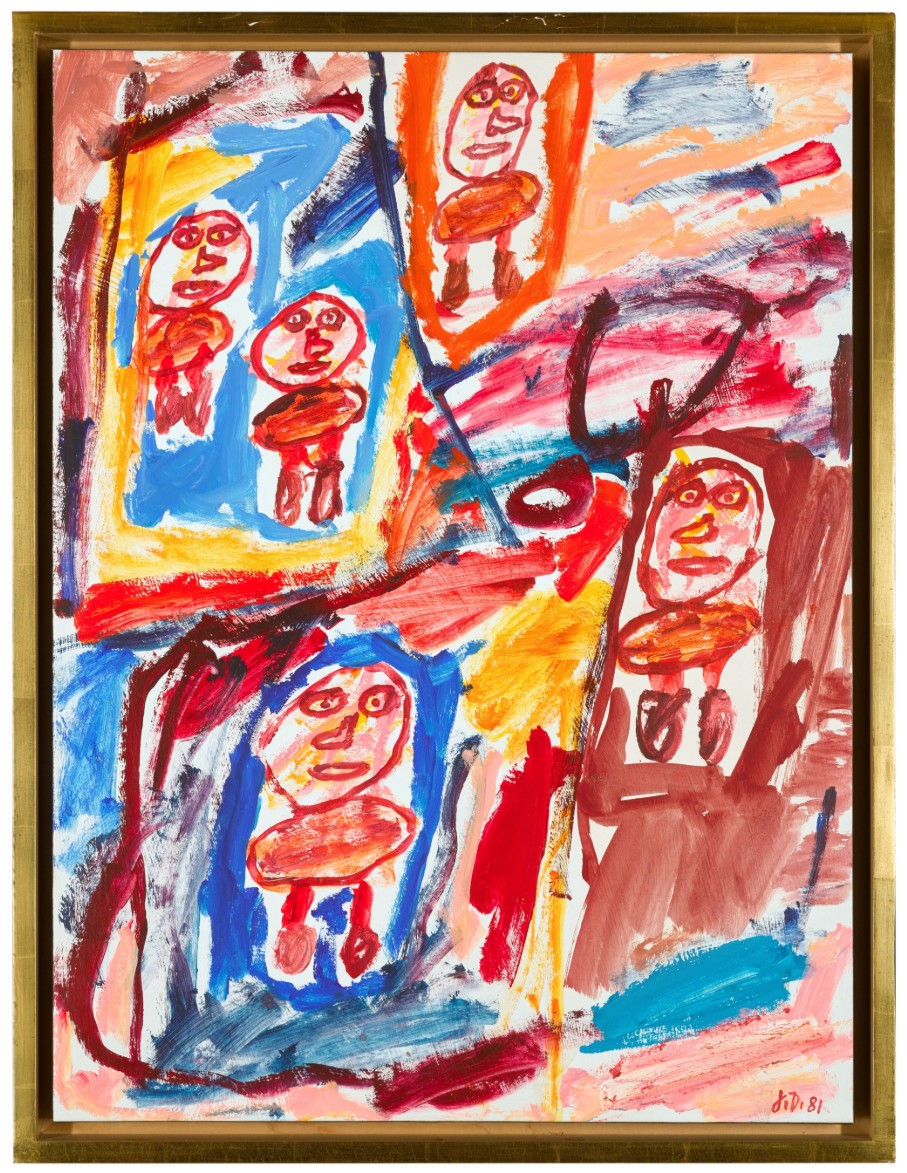
JEAN DUBUFFET (1901-1985)
Site avec 5 personnages, 1981
Acrylic on paper mounted on canvas
66.7 x 50 cm (26-1/4 x 19-3/4 inches)
Signed with the artist’s initials and dated 81 (lower right)
#37. Donnée (H32), 1984
Sotheby’s New-York: 26 September 2025
Estimated: USD 120,000 – 180,000
USD 127,000
Donnée (H32) | Contemporary Curated | 2025 | Sotheby’s
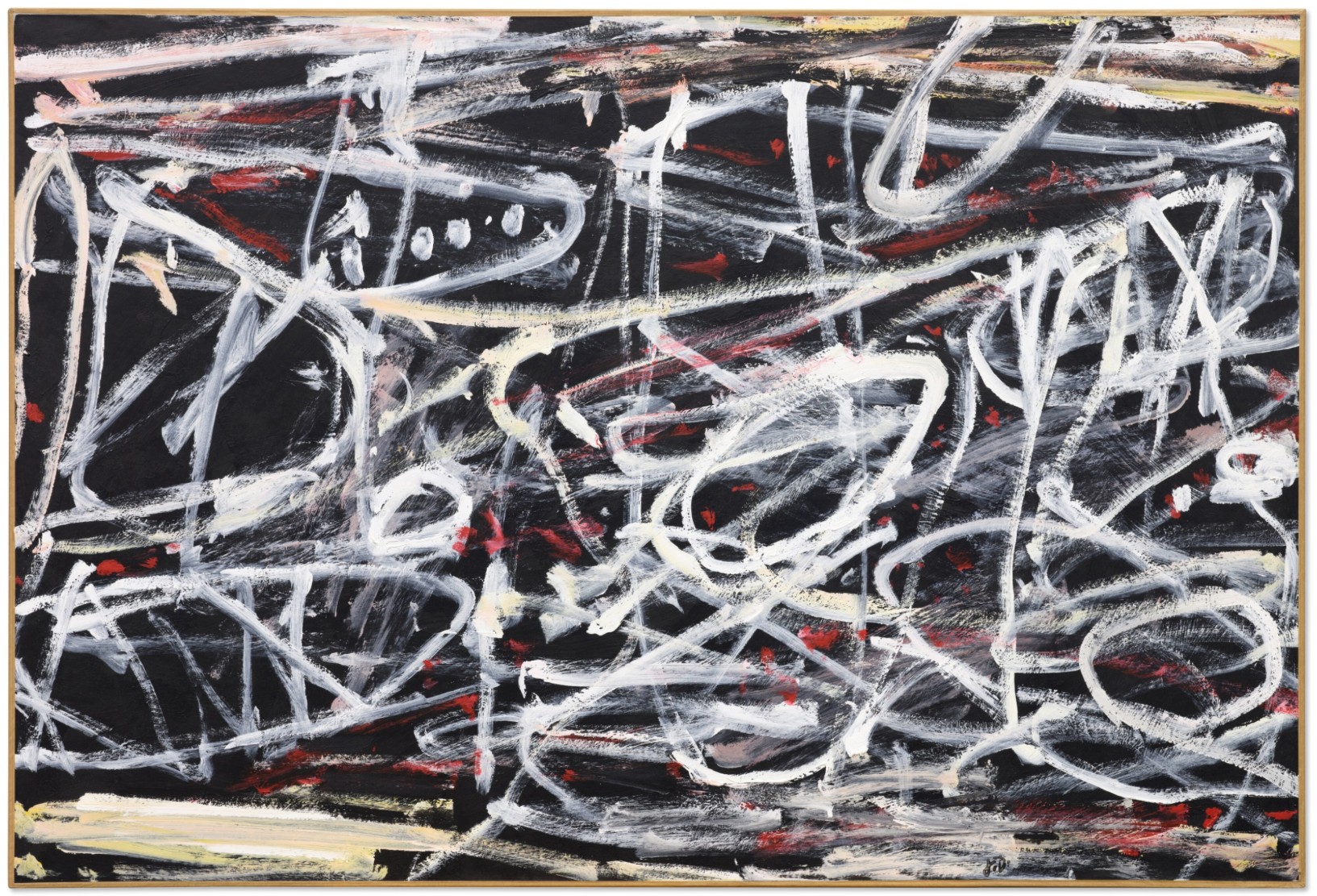
JEAN DUBUFFET (1901-1985)
Donnée (H32), 1984
Acrylic on paper mounted on canvas
67.9 x 100.3 cm (26-3/4 x 39-1/2 inches)
Signed with the artist’s initials (lower right)
Signed with the artist’s initials (on the reverse)
#38. Donnée H 64, 1984
Christie’s Paris: 24 October 2025
Estimated: EUR 80,000 – 120,000
EUR 101,600 / USD 118,115
Jean Dubuffet (1901-1985), Donnée H 64 | Christie’s
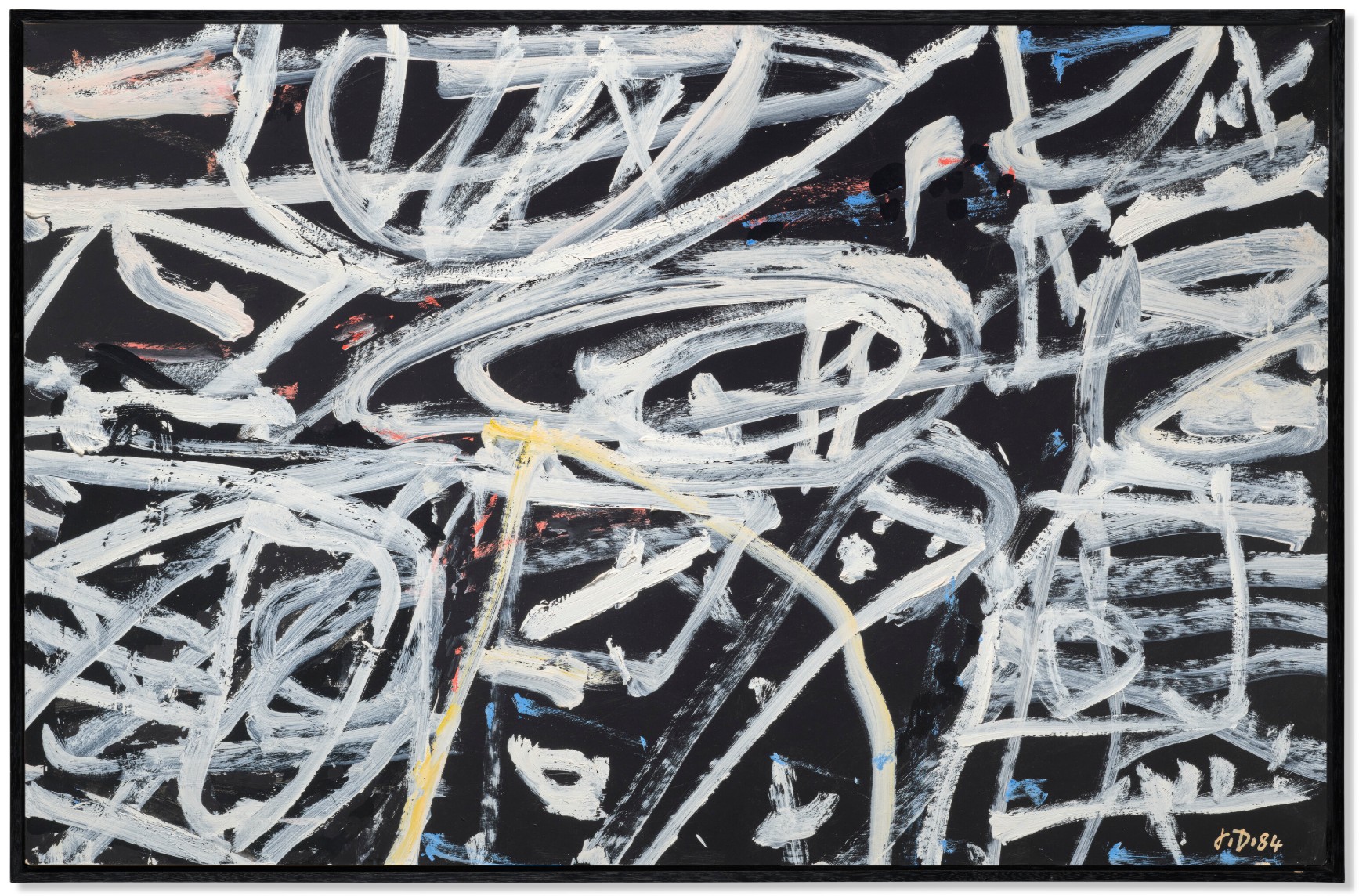
JEAN DUBUFFET (1901-1985)
Donnée H 64, 1984
Acrylic on paper laid on canvas
67×100 cm (26-3/8 x 39-3/8 inches)
Signed with the initials and dated ‘J. D. 84’ (lower right)
2024 Auction Results
FOR PAINTINGS ONLY
50 lots sold at auction in 2024 for a total turnover of USD 42,661,981. With 4 lots failing to sell, the sell-through rate is 93%. The highest price has been achieved at Sotheby’s in Paris, on 18 October 2024, when Visiteur au chapeau bleu, a painting dated 1955, sold for EUR 6,880,000 (USD 7,450,585).
12 lots sold for more than USD 1 million, generating a cumulative turnover of USD 22,878,677, representing 70% of the total for 2024.
2024 Top 3 Lots
#1. Visiteur au chapeau bleu, 1955
Jubilation: A Private Collection
Sotheby’s Paris: 18 October 2024
Estimated: EUR 3,500,000 – 4,500,000
EUR 6,880,000 / USD 7,450,585
Visiteur au chapeau bleu | Modernités | 2024 | Sotheby’s
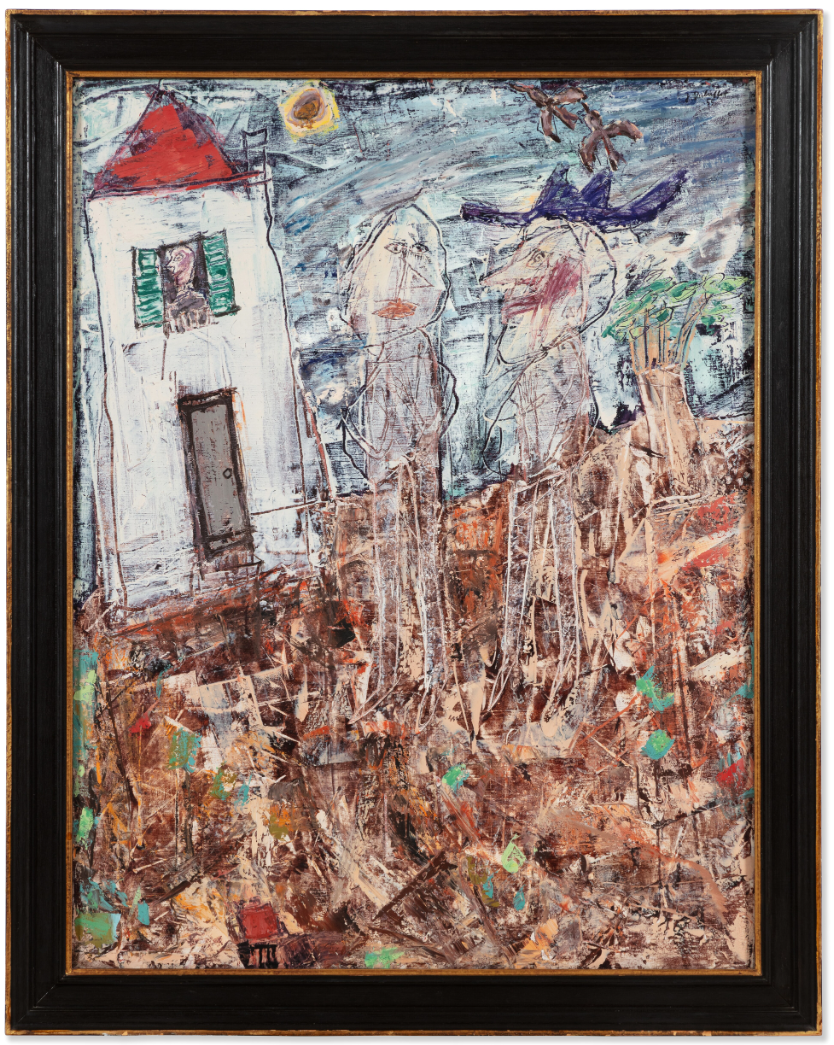
JEAN DUBUFFET (1901 – 1985)
Visiteur au chapeau bleu, 1955
Oil on canvas
116×89 cm (45 5/8 x 35 inches)
Signed and dated 55 (upper right)
Signed, titled, located Vence and dated avril 55 (on the reverse)
Executed in April 1955
#2. Francis Ponge Jubilation, 1947
Jubilation: A Private Collection
Sotheby’s Paris: 18 October 2024
Estimated: EUR 5,000,000 – 7,000,000
EUR 6,000,000 / USD 6,497,605
Francis Ponge Jubilation | Modernités | 2024 | Sotheby’s
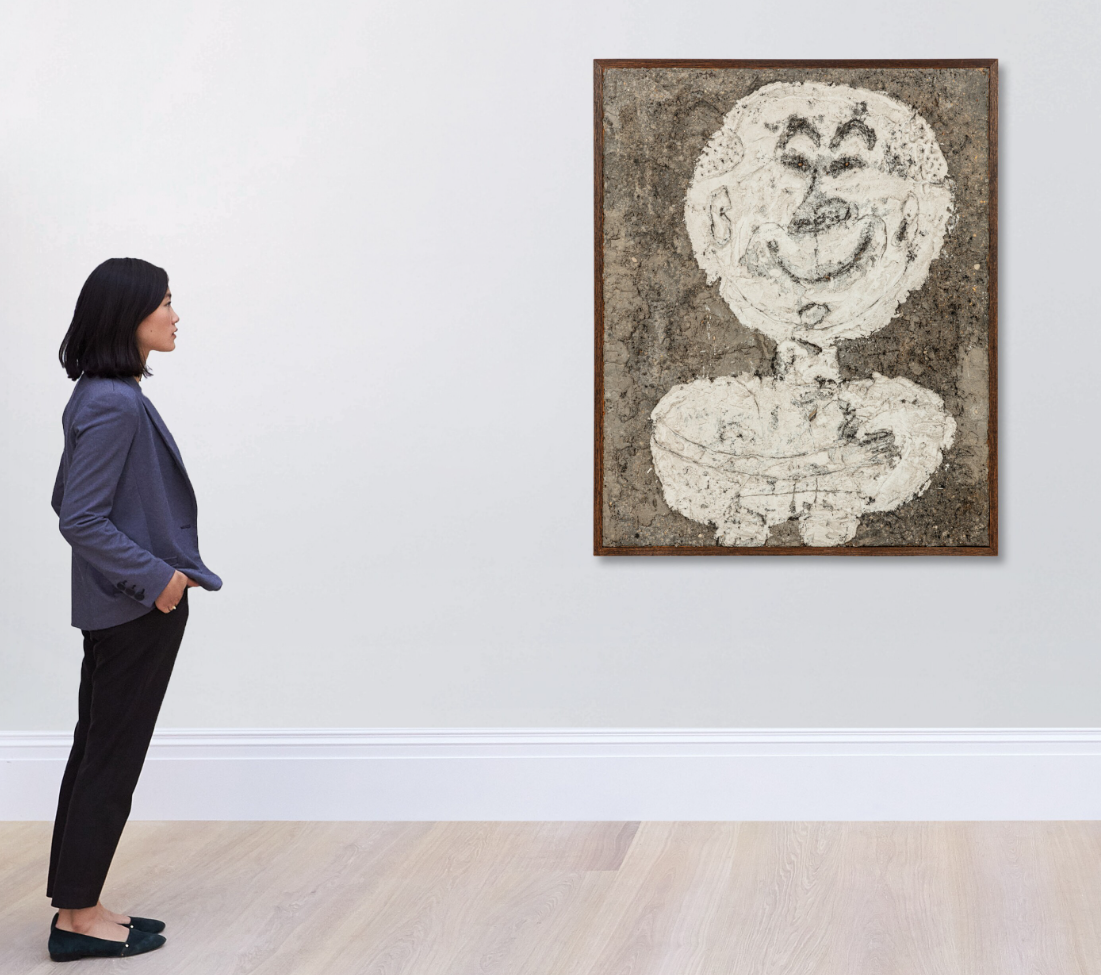
JEAN DUBUFFET (1901 – 1985)
Francis Ponge Jubilation, 1947
Whitewash and plaster on isorel
110×88 cm (43 1/4 x 34 5/8 inches)
Signed and dated 47 (upper left)
Executed in July-August 1947
#3. Le Guilleret, 1961
Sotheby’s London: 6 March 2024
Estimated: GBP 2,000,000 – 3,000,000
GBP 2,226,000 / USD 2,822,568
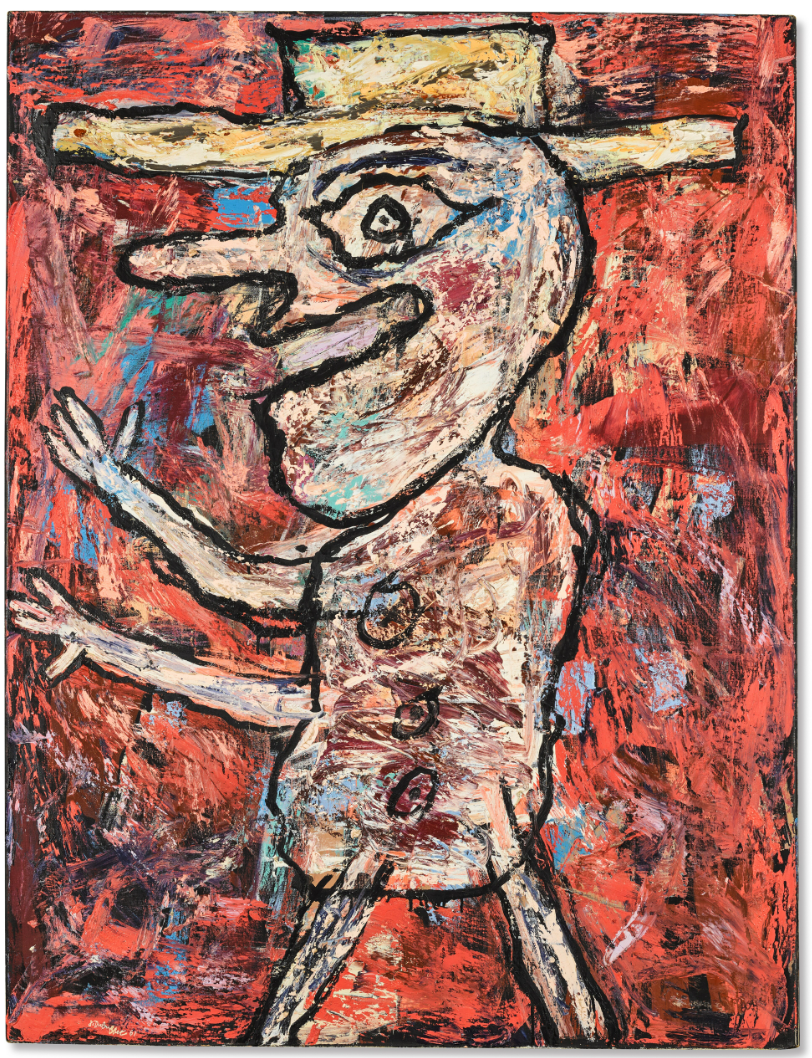
JEAN DUBUFFET (1901 – 1985)
Le Guilleret, 1961
Oil on canvas
116.1 x 88.8 cm (45 3/4 x 35 inches)
Signed and dated 61 (lower left)
Signed, titled and dated sept. 61 (on the reverse)
#4. Le Retour du soldat, 1964
Sotheby’s London: 6 March 2024
Estimated: GBP 1,200,000 – 1,800,000
GBP 2,165,000 / USD 2,745,854
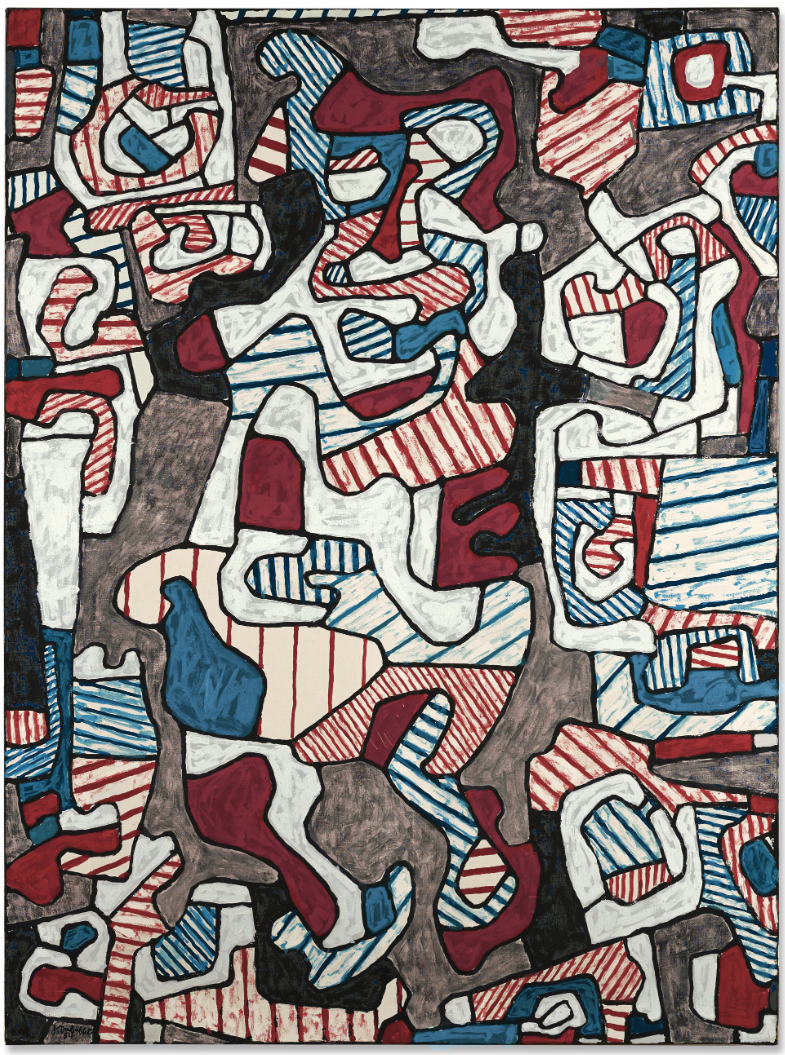
JEAN DUBUFFET (1901 – 1985)
Le Retour du soldat, 1964
Vinyl on canvas
130×97 cm (51 1/8 x 38 1/4 inches)
Signed and dated 64 (lower left)
Signed, titled, dated décembre 64 and variously inscribed (on the reverse)
Executed on 8 December 1964
#5. Synchronisation, 1975
Jubilation: A Private Collection
Sotheby’s Paris: 18 October 2024
Estimated: EUR 1,200,000 – 1,800,000
EUR 1,560,000 / USD 1,689,380
Synchronisation | Modernités | 2024 | Sotheby’s
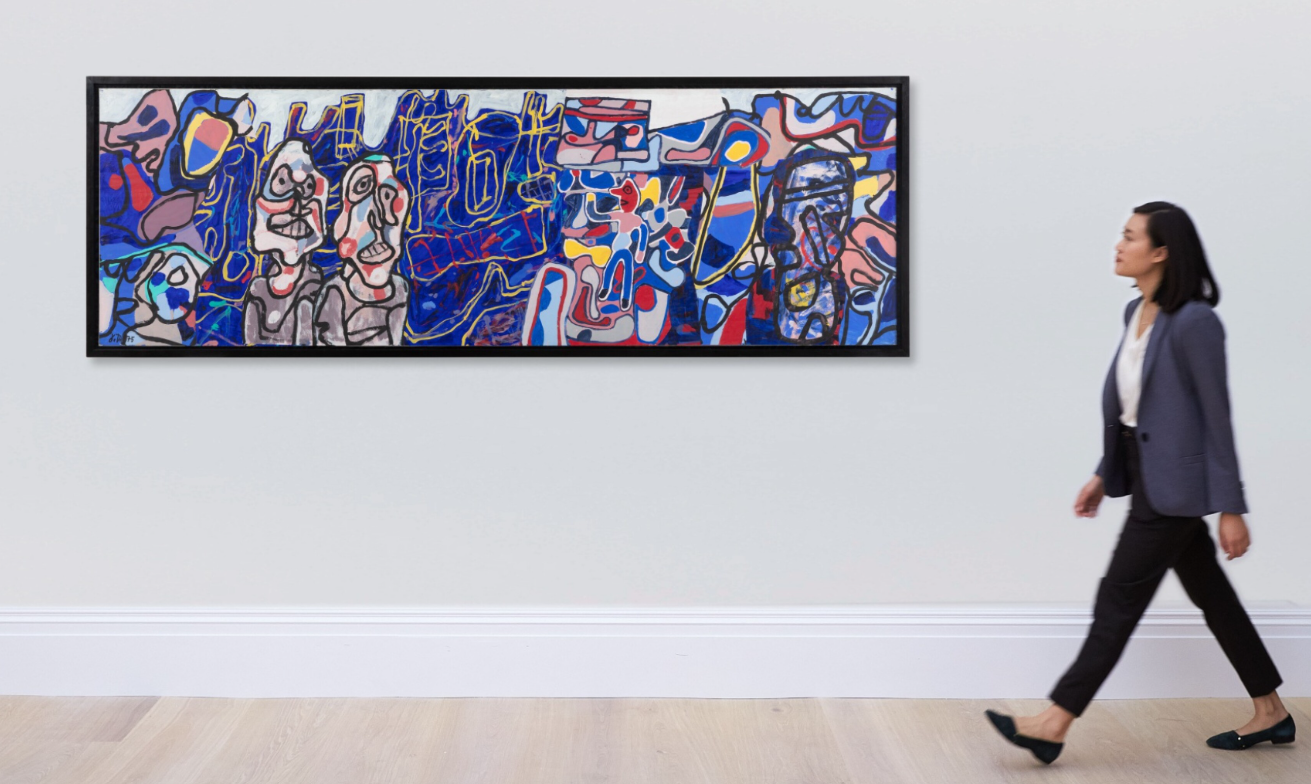
JEAN DUBUFFET (1901 – 1985)
Synchronisation, 1975
Acrylic and paper collage on paper laid down on canvas
67×212 cm (26 3/8 x 83 1/2 inches)
Signed and dated 75 (lower left)
Executed on October 31st, 1975
#6. Le Cérémonieux, 1954
Sotheby’s New-York: 18 November 2024
Estimated: USD 2,500,000 – 3,500,000
USD 1,500,000
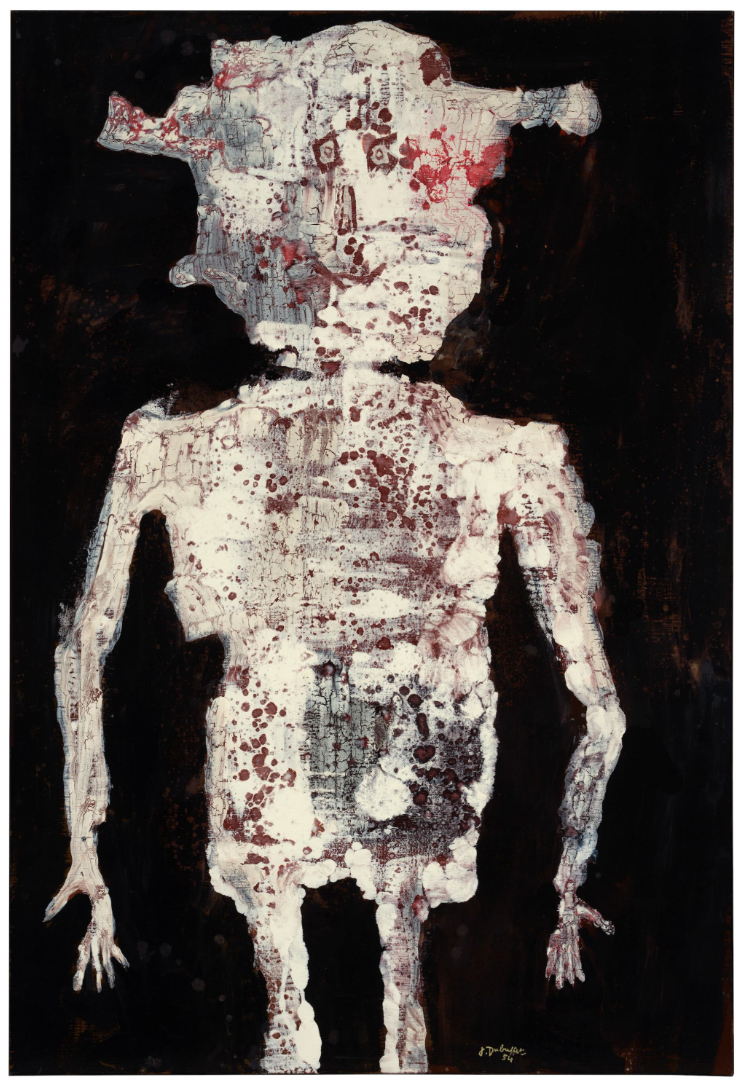
JEAN DUBUFFET (1901 – 1985)
Le Cérémonieux, 1954
Oil and enamel on canvas
130×89 cm (51 1/4 x 35 inches)
Signed J. Dubuffet and dated 54 (lower right); signed again, titled and dated juillet 54 (on the reverse)
Executed in July 1954
#7. Lice tapisse, 1972
Christie’s Paris: 6 June 2024
Collection Renault, Un Temps d’Avance
Estimated: EUR 1,000,000 – 1,500,000
EUR 1,371,000 / USD 1,490,815
https://www.christies.com/en/lot/lot-6485947
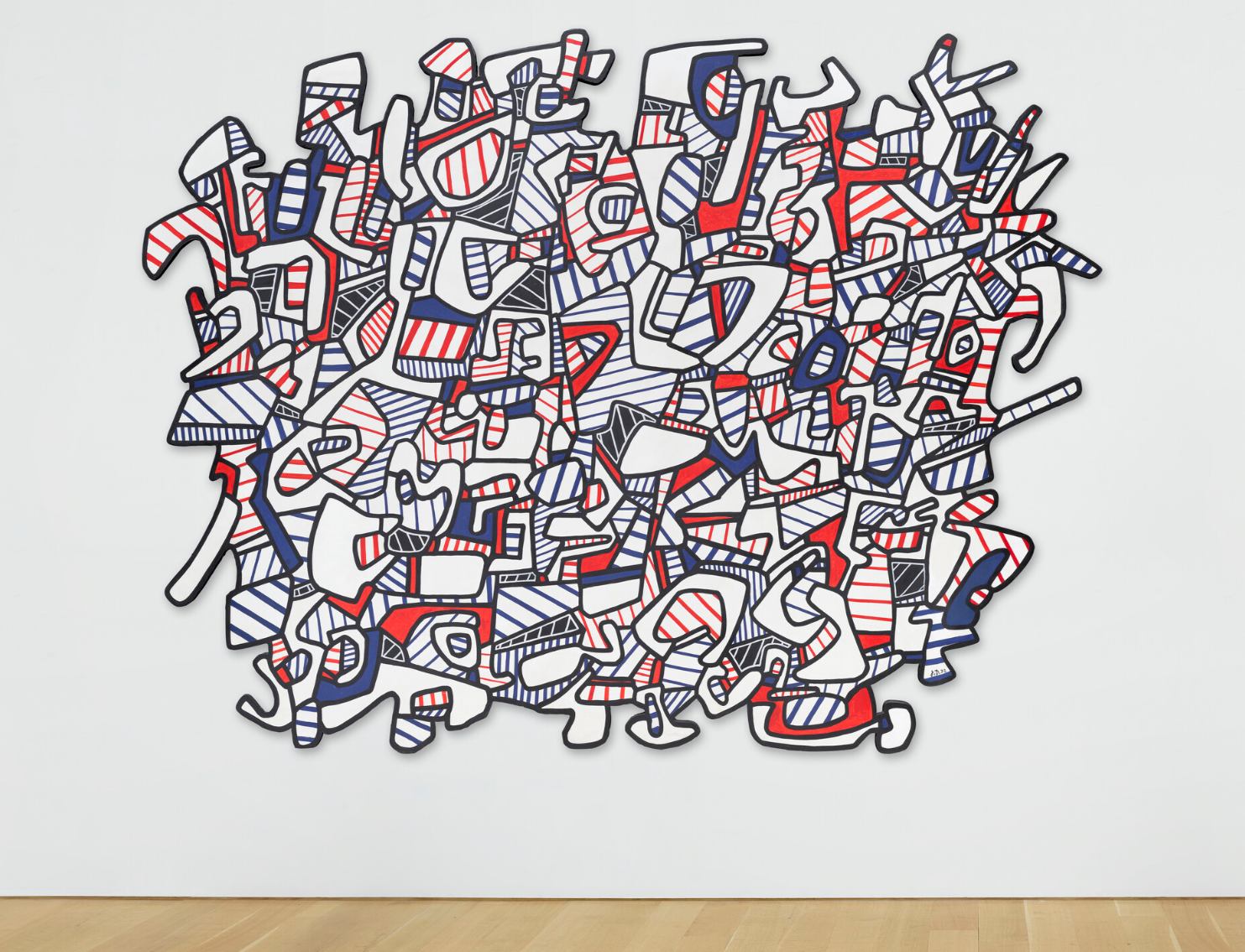
JEAN DUBUFFET (1901-1985)
Lice tapisse, 1972
Acrylic on Klegecell
288×386 cm (115 3/8 x 153 1/2 inches)
Signed with the initials and dated ‘J.D. 72’ (lower right)
#8. Paysage avec villa et personnage, 1974
Christie’s Paris: 6 June 2024
Collection Renault, Un Temps d’Avance
Estimated: EUR 700,000 – 900,000
EUR 1,298,400 / USD 1,411,870
https://www.christies.com/en/lot/lot-6485940
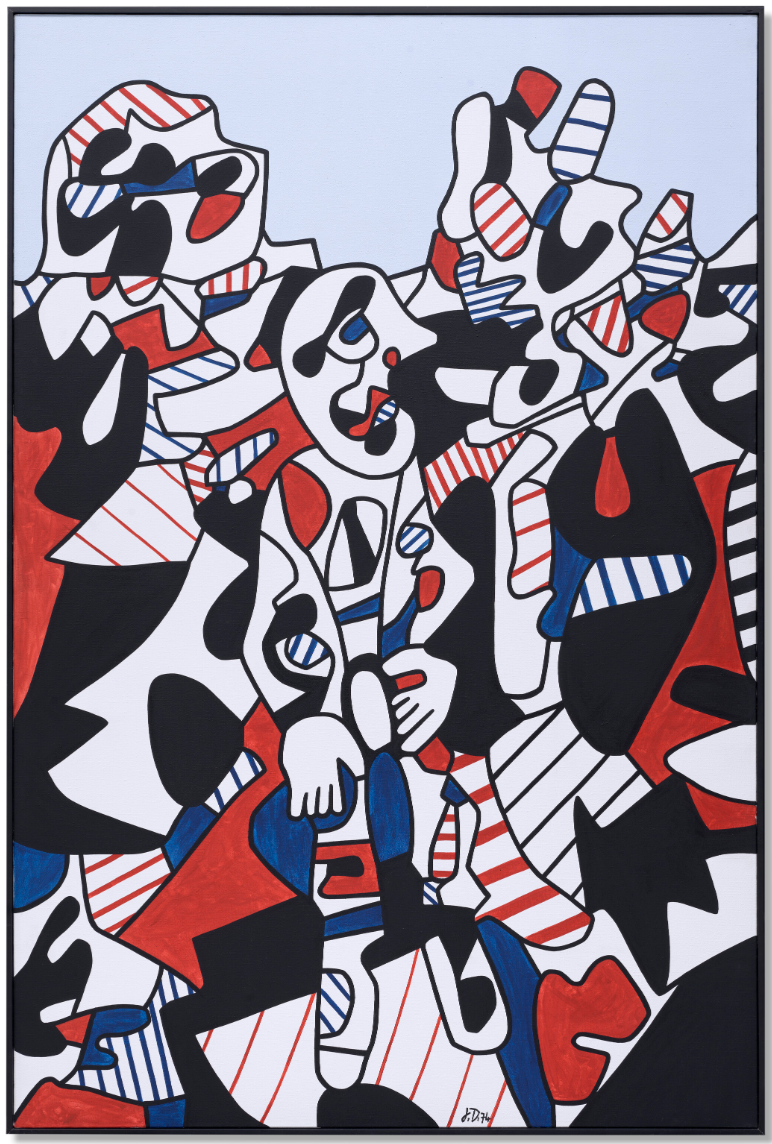
JEAN DUBUFFET (1901-1985)
Paysage avec villa et personnage, 1974
Vinyl on canvas
195.4 x 130.5 cm (76 7/8 x 51 3/8 inches)
Signed with the initials and dated ‘J.D. 74′ (lower center)
Signed, titled and dated ”’Paysage avec villa et personnage” J. Dubuffet 74’ (on the reverse)
#9. Le Moment critique (site avec deux personnages), 1974
Christie’s Paris: 6 June 2024
Collection Renault, Un Temps d’Avance
Estimated: EUR 600,000 – 800,000
EUR 1,068,500 / USD 1,161,880
https://www.christies.com/en/lot/lot-6485951
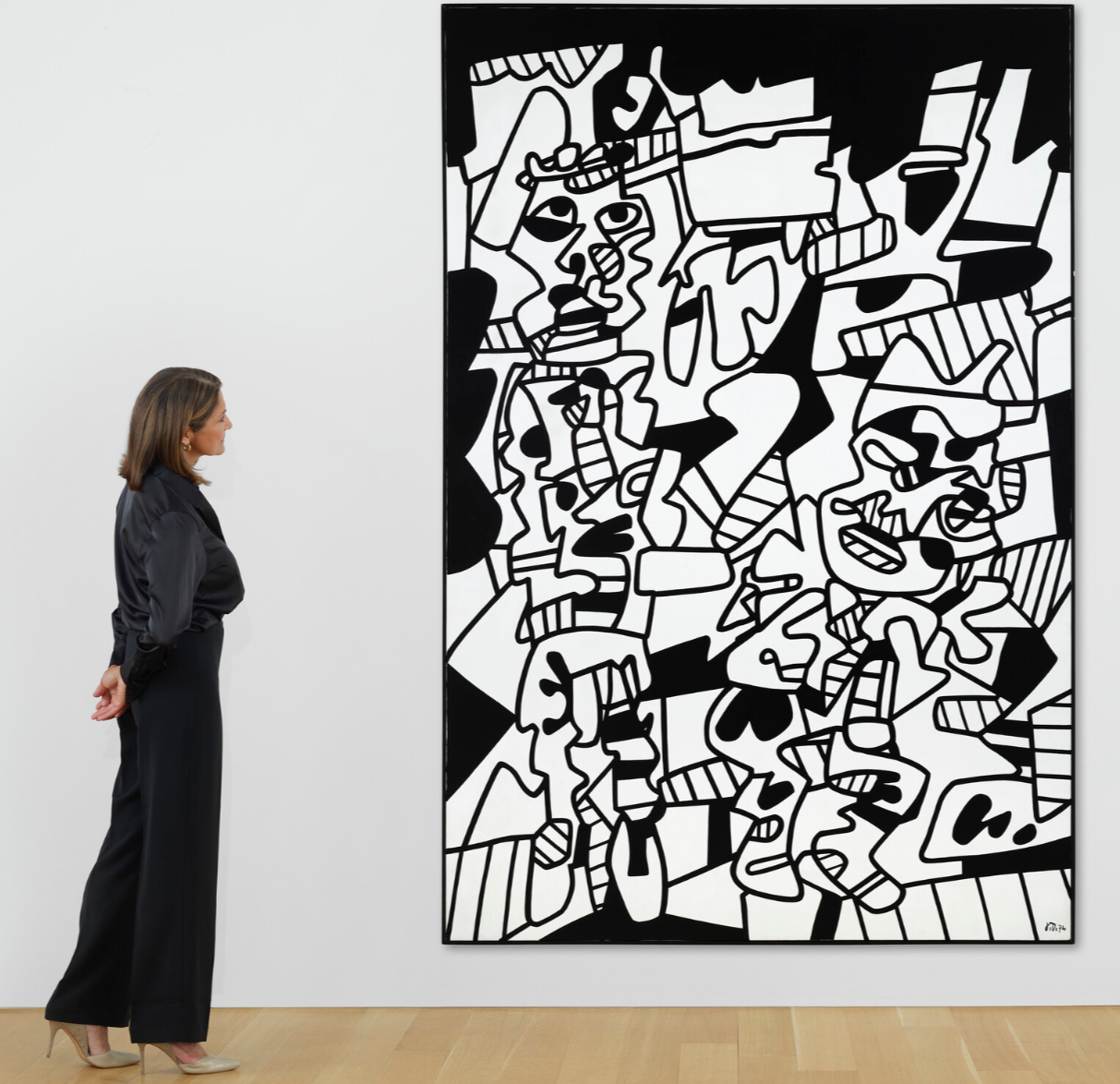
JEAN DUBUFFET (1901-1985)
Le Moment critique (site avec deux personnages), 1974
Vinyl on canvas
276×185 cm (108 5/8 x 72 7/8 inches)
Signed with the initials and dated ‘J.D. 74′ (lower right)
Signed, titled and dated ”’Le moment critique” J. Dubuffet 74’ (on the reverse)
#10. Fiston la Filoche, 1967
Christie’s Paris: 6 June 2024
Collection Renault, Un Temps d’Avance
Estimated: EUR 400,000 – 600,000
EUR 995,400 / USD 1,082,390
https://www.christies.com/en/lot/lot-6485936
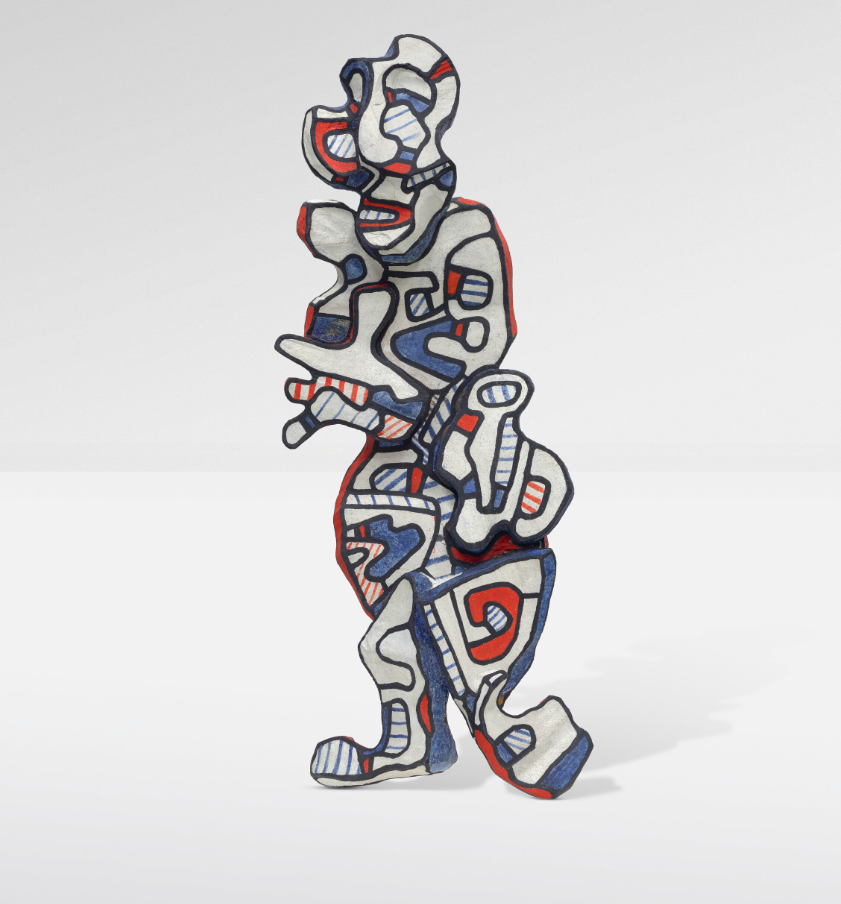
Jean Dubuffet (1901-1985)
Fiston la Filoche, 1967
Transfer on polyester
153x60x30 cm (60 1/4 x 23 5/8 x 11 3/4 inches)
Signed with the initials and dated ‘J.D. 67’ (on the reverse on one side)
#11. Chronique, 1980
Sotheby’s New-York: 1 March 2024
Estimated: USD 400,000 – 600,000
USD 1,016,000
Chronique | Contemporary Curated | 2024 | Sotheby’s (sothebys.com)
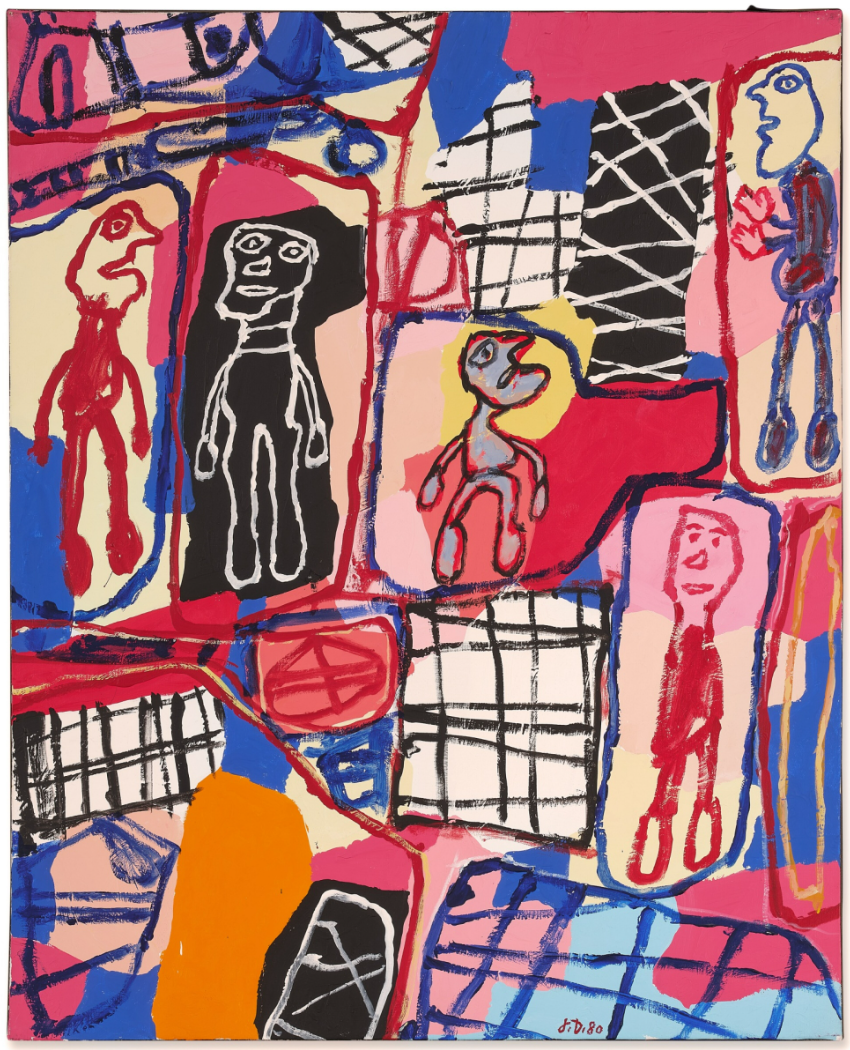
JEAN DUBUFFET (1901 – 1985)
Chronique, 1980
Acrylic on canvas
99.7 x 81.3 cm (39 1/4 x 32 inches)
Signed with the initials J.D. and dated 80 (lower right)
#12. Paysage épisodique, 1974
Christie’s Paris: 18 October 2024
Estimated: EUR 400,000 – 600,000
EUR 932,400 / USD 1,009,730
Jean Dubuffet (1901-1985), Paysage épisodique | Christie’s
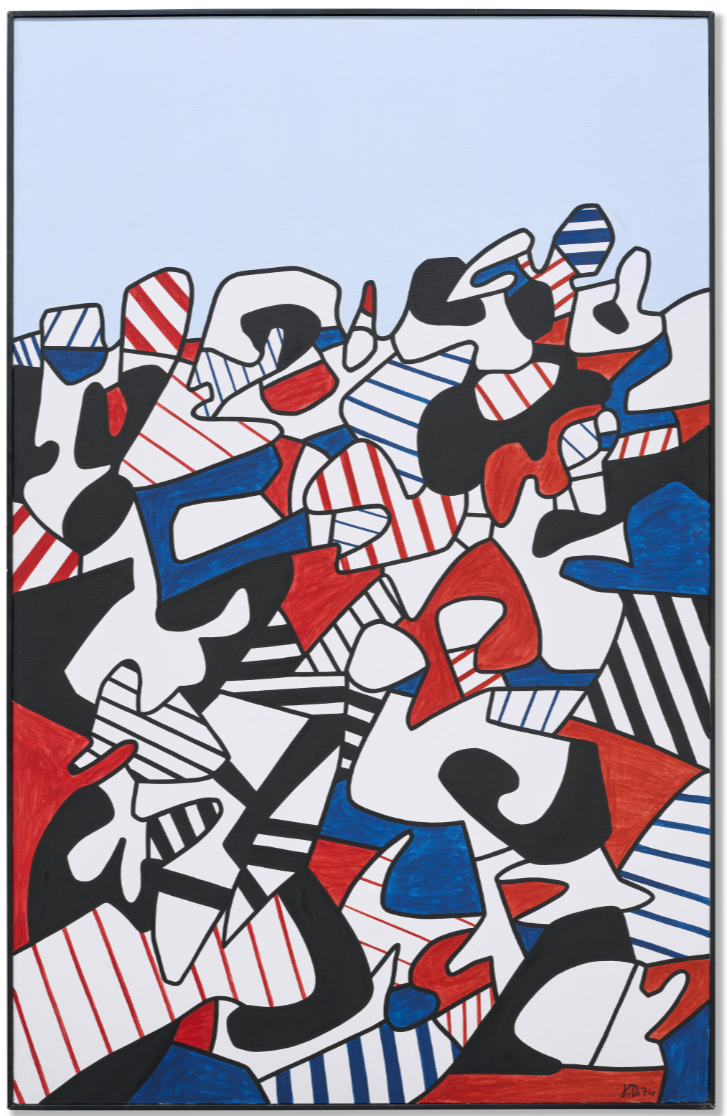
JEAN DUBUFFET (1901-1985)
Paysage épisodique, 1974
Vynil on canvas
203.3 x 129.5 cm (80×51 inches)
Signed with the initials and dated ‘J.D. 74′ (lower right)
Signed, titled and dated ”’Paysage épisodique” J. Dubuffet 74’ (on the reverse)
USD 1 million
#13. Escalier V, 1967
Christie’s Paris: 18 October 2024
Estimated: EUR 500,000 – 700,000
EUR 819,000 / USD 886,920
Jean Dubuffet (1901-1985), Escalier V | Christie’s
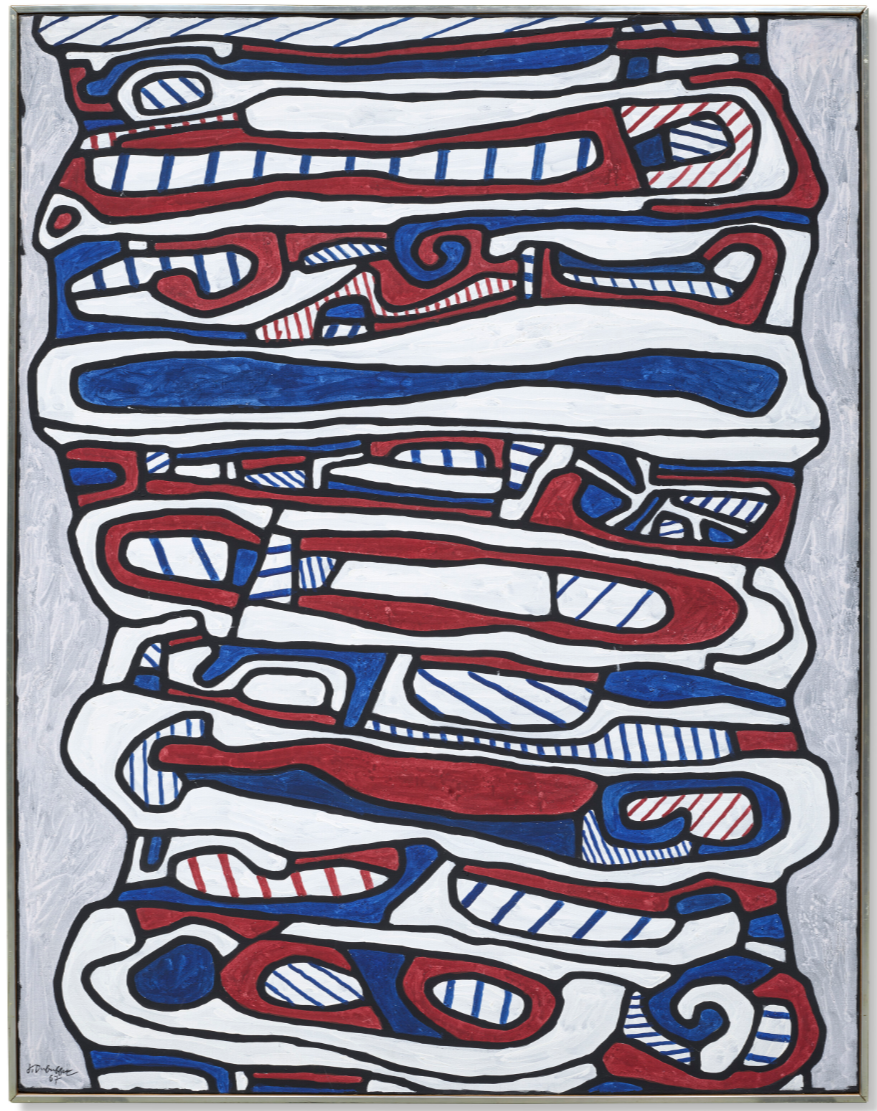
JEAN DUBUFFET (1901-1985)
Escalier V, 1967
Vinyl on canvas
146.5 x 114 cm (57 5/8 x 44 7/8 inches)
Signed and dated ‘J. Dubuffet 67’ (lower left)
Signed, titled and dated ”‘Escalier V” J. Dubuffet avril 67’ (on the reverse)
#14. Lampe et balance II, 1964
Sotheby’s New-York: 18 November 2024
Estimated: USD 800,000 – 1,200,000
USD 744,000
Lampe et Balance II | Modern Evening Auction | 2024 | Sotheby’s
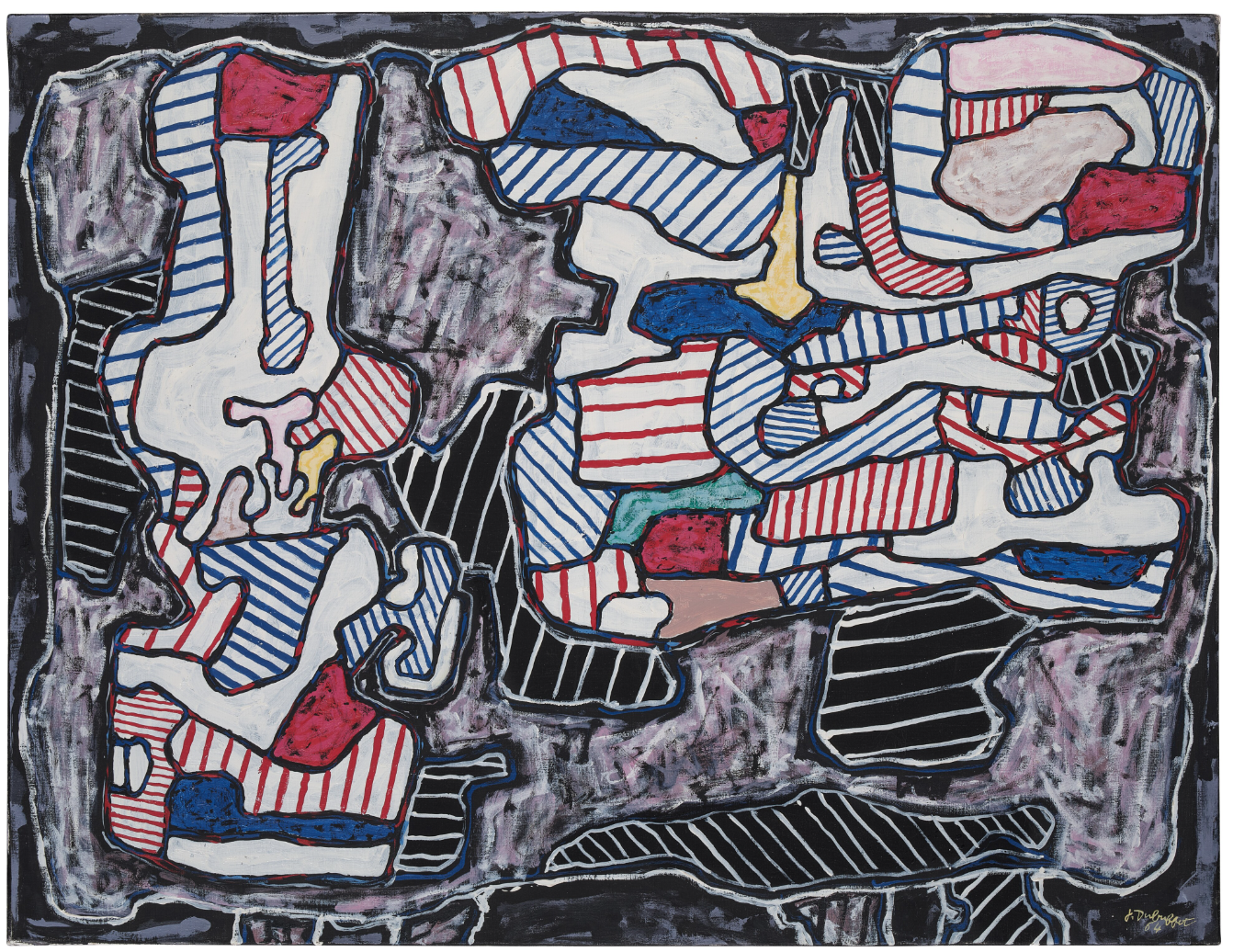
JEAN DUBUFFET (1901 – 1985)
Lampe et balance II, 1964
Oil on canvas
88.9 x 115.6 cm (35 x 45 1/2 inches)
Signed J. Dubuffet and dated 64 (lower right)
Signed again, titled and dated juillet 64 (on the reverse)
#15. Zône habitée, 1980
Sotheby’s London: 6 March 2024
Estimated: GBP 450,000 – 650,000
GBP 558,800 / USD 708,558
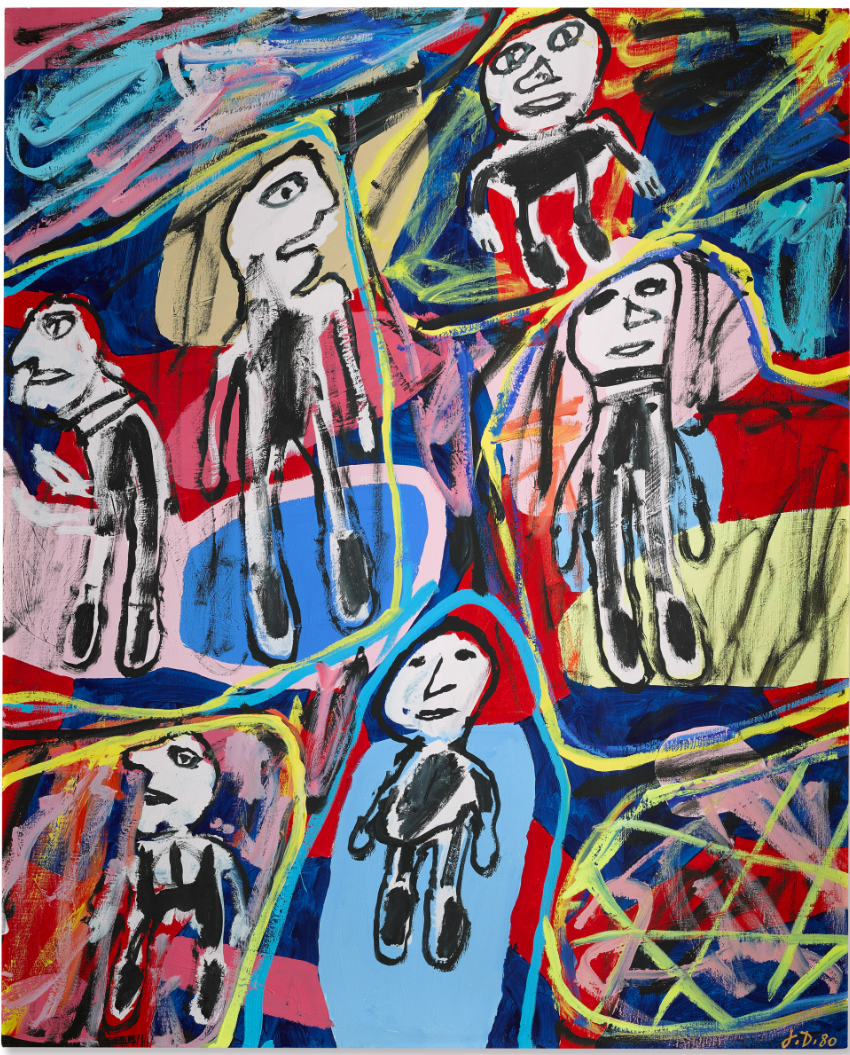
JEAN DUBUFFET (1901 – 1985)
Zône habitée, 1980
Acrylic on canvas
100×81 cm (39×32 inches)
Signed with the artist’s initials and dated 80 (lower right)
Titled, dated Déc. 80 and variously inscribed (on the reverse)
Executed on 15 December 1980
#16. Paysage à la vache (Le rendez-vous), 1957
Phillips New-York: 14 May 2024
Estimated: USD 700,000 – 1,000,000
USD 635,000
https://www.phillips.com/detail/jean-dubuffet/NY010324/27
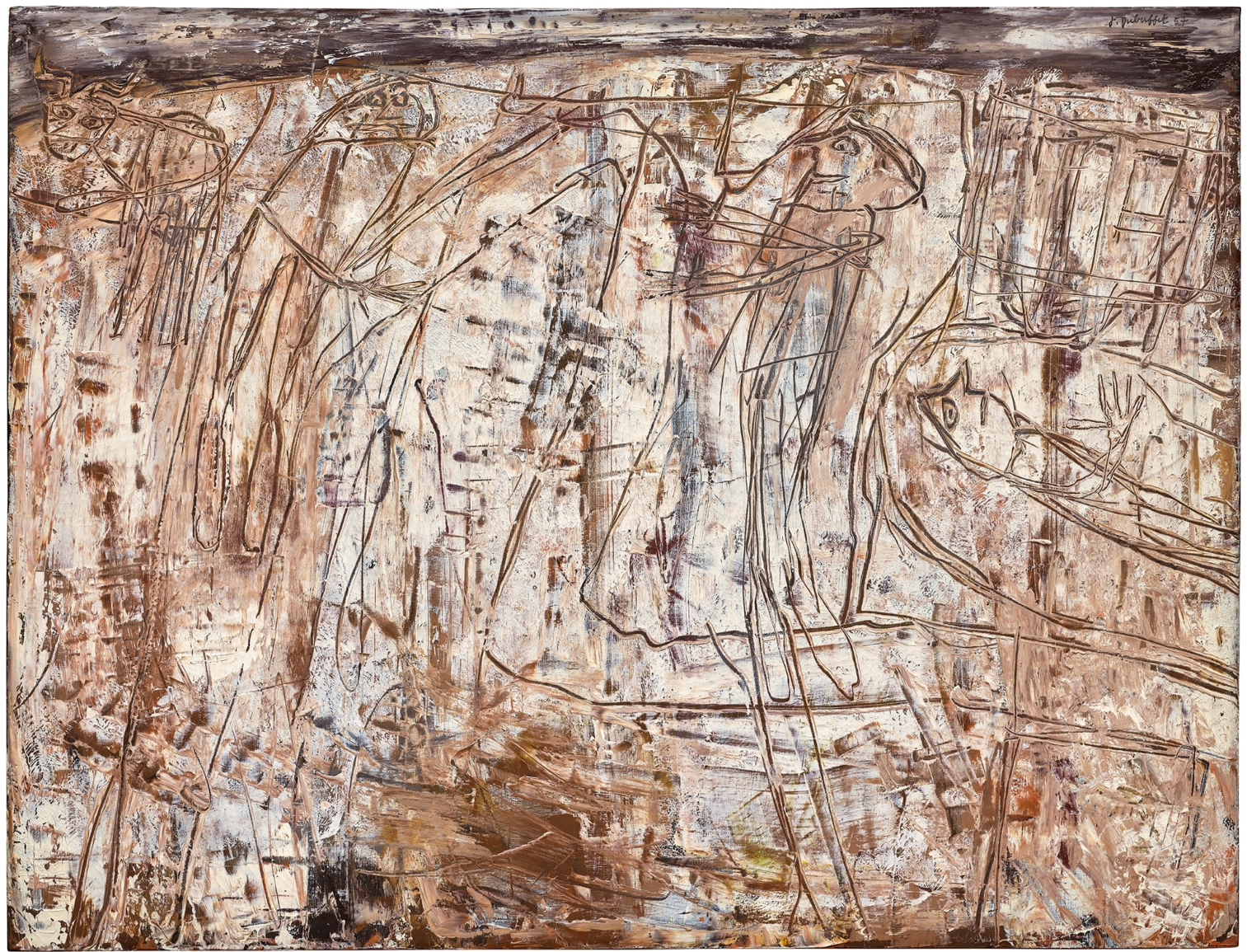
JEAN DUBUFFET
Paysage à la vache (Le rendez-vous), 1957
Oil on canvas
88.9 x 116.8 cm (35×46 inches)
Signed and dated “J. Dubuffet 57” upper right
Signed, titled and dated “Paysage à la vache (Le rendez-vous) J. Dubuffet juin 57” on the reverse
#17. Buste aux envols, 1972
Phillips London: 7 March 2024
Estimated: GBP 400,000 – 600,000
GBP 444,500 / USD 563,626
Jean Dubuffet – 20th Century & Contemp… Lot 25 March 2024 | Phillips
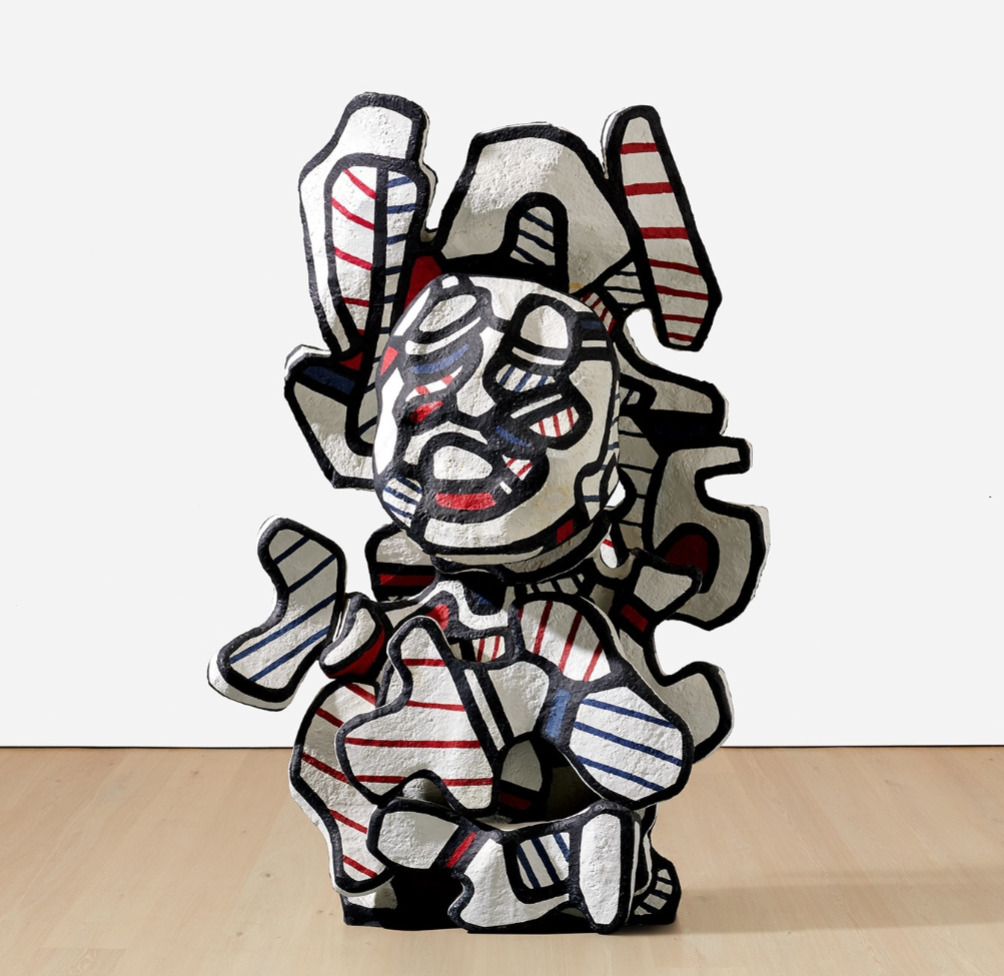
JEAN DUBUFFET
Buste aux envols, 1972
Polyurethane paint on epoxy resin
111.8 x 73.7 x 48.3 cm (44x29x19 inches)
Signed with the artist’s initials and dated ‘J.D. 72’ lower right edge
Executed on 13 May 1972
#18. Regard limpide, 1959
Christie’s Paris: 5 June 2024
Collection Cremieux, Passion Privee
Estimated: EUR 250,000 – 350,000
EUR 504,000 / USD 548,310
https://www.christies.com/en/lot/lot-6481612
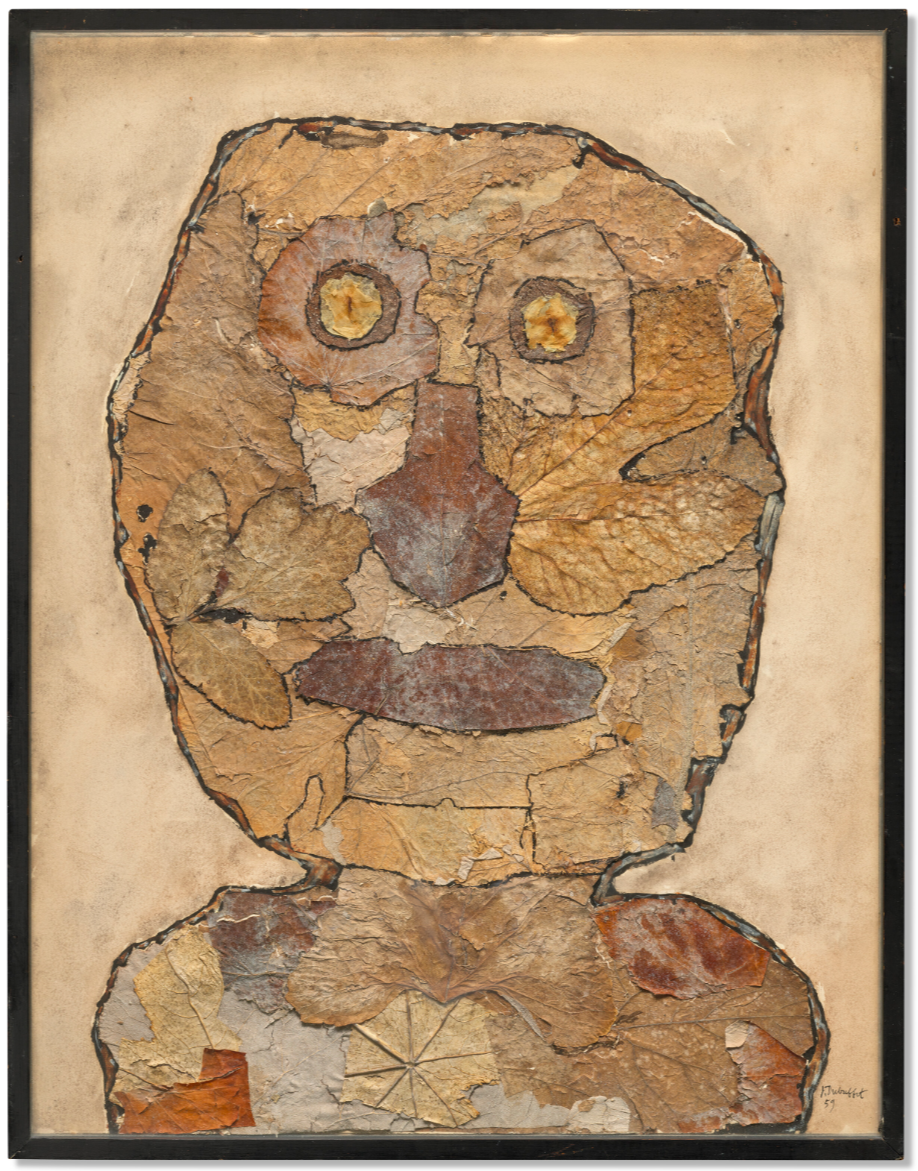
JEAN DUBUFFET (1901-1985)
Regard limpide, 1959
Collage of botanical elements
62×48 cm (24 3/8 x 18 7/8 inches)
Signed and dated ‘J. Dubuffet 59’ (lower right)
#19. Cafetière II, 1965
Sotheby’s New-York: 27 September 2024
Estimated: USD 450,000 – 650,000
USD 540,000
Cafetière II | Art Without Boundaries: The Abrams Family Collection | Live Sale | 2024 | Sotheby’s
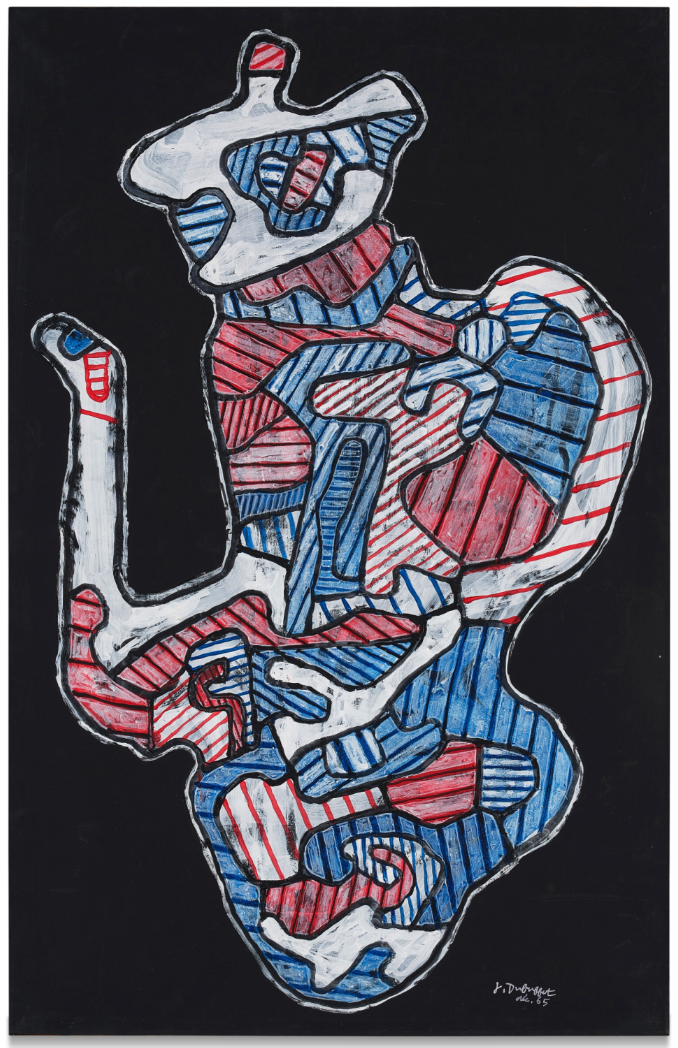
JEAN DUBUFFET (1901 – 1985)
Cafetière II, 1965
Vinyl on paper mounted to canvas
105.2 x 67.6 cm (41 3/8 x 26 5/8 inches)
Signed and dated déc 65 (lower right)
Signed, titled twice and dated décembre 65 (on the reverse)
#20. Amoncellement à l’épi, 1970
Christie’s New-York: 20 November 2024
Estimated: USD 250,000 – 350,000
USD 504,000
JEAN DUBUFFET (1901-1985), Amoncellement à l’épi | Christie’s
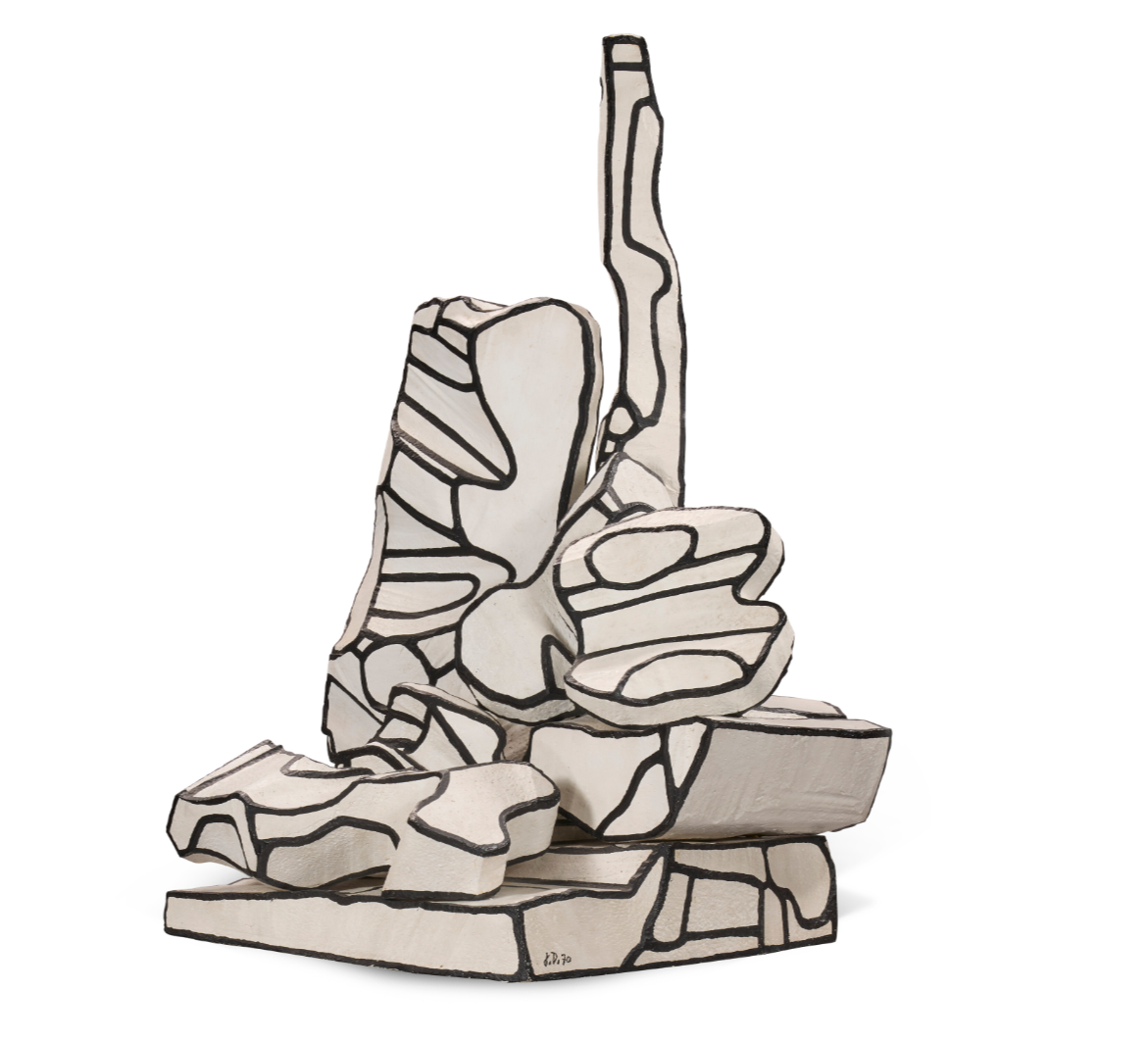
JEAN DUBUFFET (1901-1985)
Amoncellement à l’épi, 1970
Epoxy paint on polyurethane
91 x 72.9 x 55.1 cm (35 7/8 x 28 3/4 x 21 3/4 inches)
Signed with initials and dated ‘J.D. 70’ (lower right edge)
USD 500,000
#21. Terre et ciel, 1952
Sotheby’s Paris: 18 October 2024
Estimated: EUR 250,000 – 350,000
EUR 456,000 / USD 493,820
Terre et ciel | Modernités | 2024 | Sotheby’s
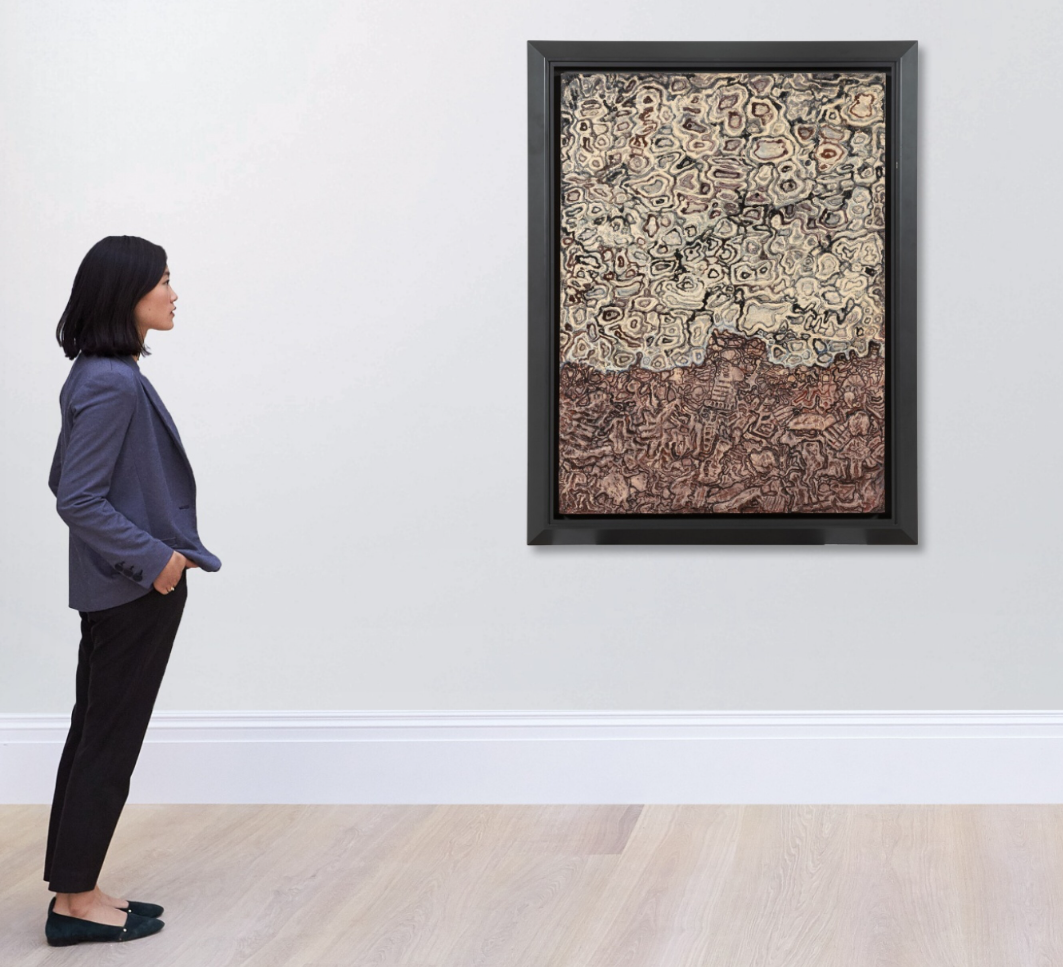
JEAN DUBUFFET (1901 – 1985)
Terre et ciel, 1952
Oil on Isorel
105×78 cm (41 3/8 x 30 3/4 inches)
Signed, titled and dated 52 (on the reverse)
#22. Le Château de bouteilles, 1965
Sotheby’s Paris: 5 July 2024
Estimated: EUR 400,000 – 600,000
EUR 456,000 / USD 493,070
Le château de bouteilles | Modern & Contemporary Discoveries | 2024 | Sotheby’s
REPEAT SALE
Sotheby’s Paris: 5 June 2023
Estimated: EUR 500,000 – 700,000
EUR 609,600 / USD 651,833
Le Château de bouteilles | Art Contemporain Evening Auction | 2023 | Sotheby’s (sothebys.com)
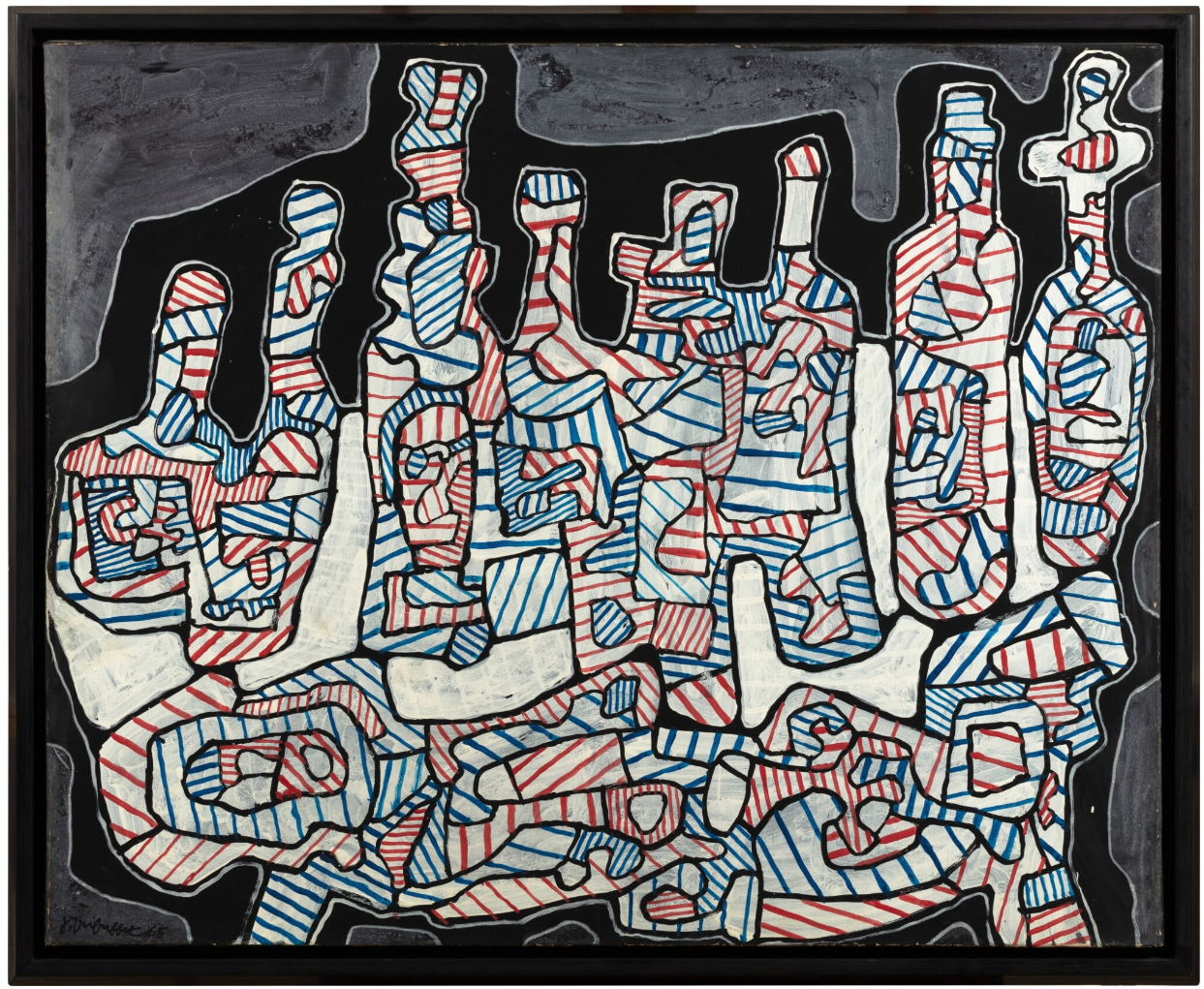
JEAN DUBUFFET (1901 – 1985)
Le Château de bouteilles, 1965
Vinyle on paper laid down on canvas
81×100 cm (31 7/8 x 39 1/3 inches)
Signed and dated 65 on the reverse
#23. Visage rose en pomme de bambou, 1950
Sotheby’s London: 7 March 2024
Estimated: GBP 300,000 – 400,000
GBP 355,600 / USD 450,901
Visage rose en pomme de bambou | Modern & Contemporary Day Auction | 2024 | Sotheby’s (sothebys.com)
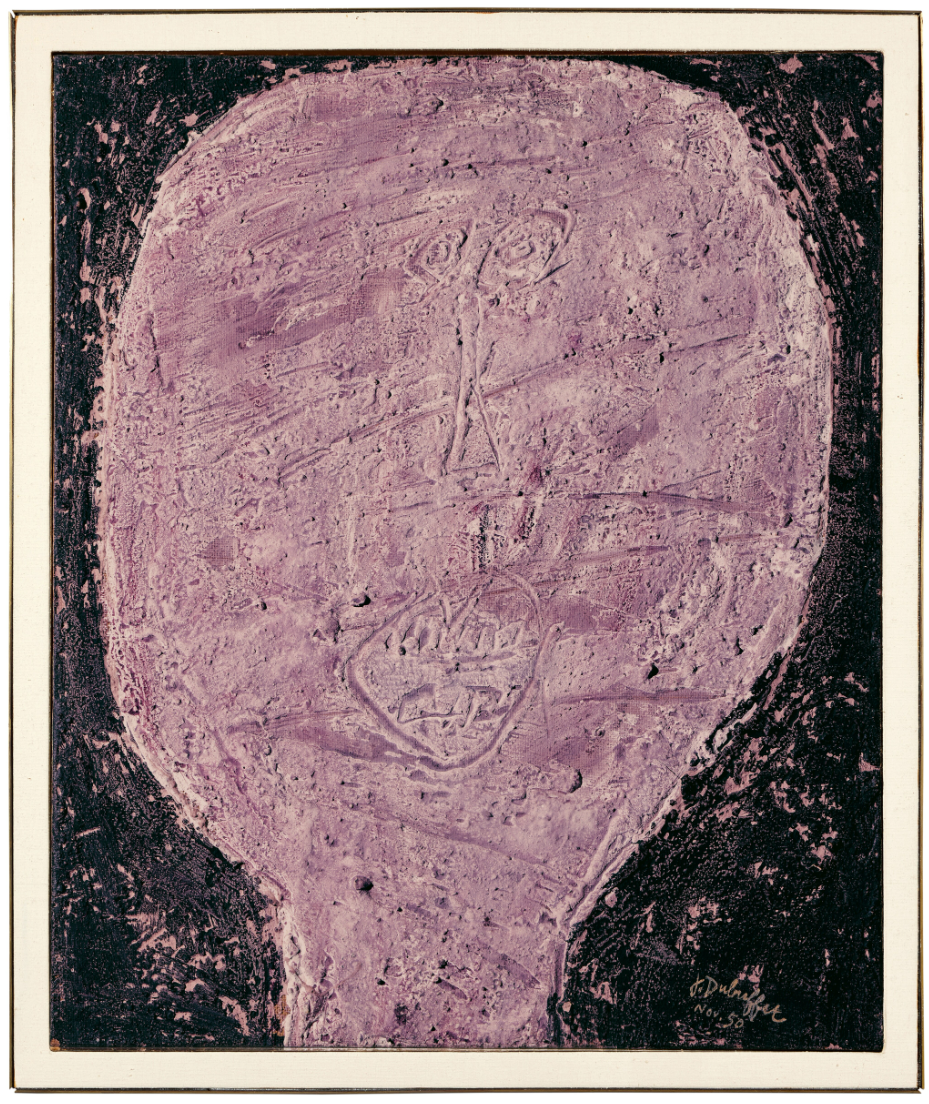
JEAN DUBUFFET (1901 – 1985)
Visage rose en pomme de bambou, 1950
Oil and sand on Masonite
55 x 45.7 cm (22 3/8 x 18 inches)
Signed and dated Nov.50 (lower right)
Signed, titled, dated Novembre 50 and variously inscribed (on the reverse)
#24. Scène à l’invalide, 1966
Christie’s Paris: 6 June 2024
Collection Renault, Un Temps d’Avance
Estimated: EUR 80,000 – 120,000
EUR 403,200 / USD 438,440
https://www.christies.com/en/lot/lot-6485933
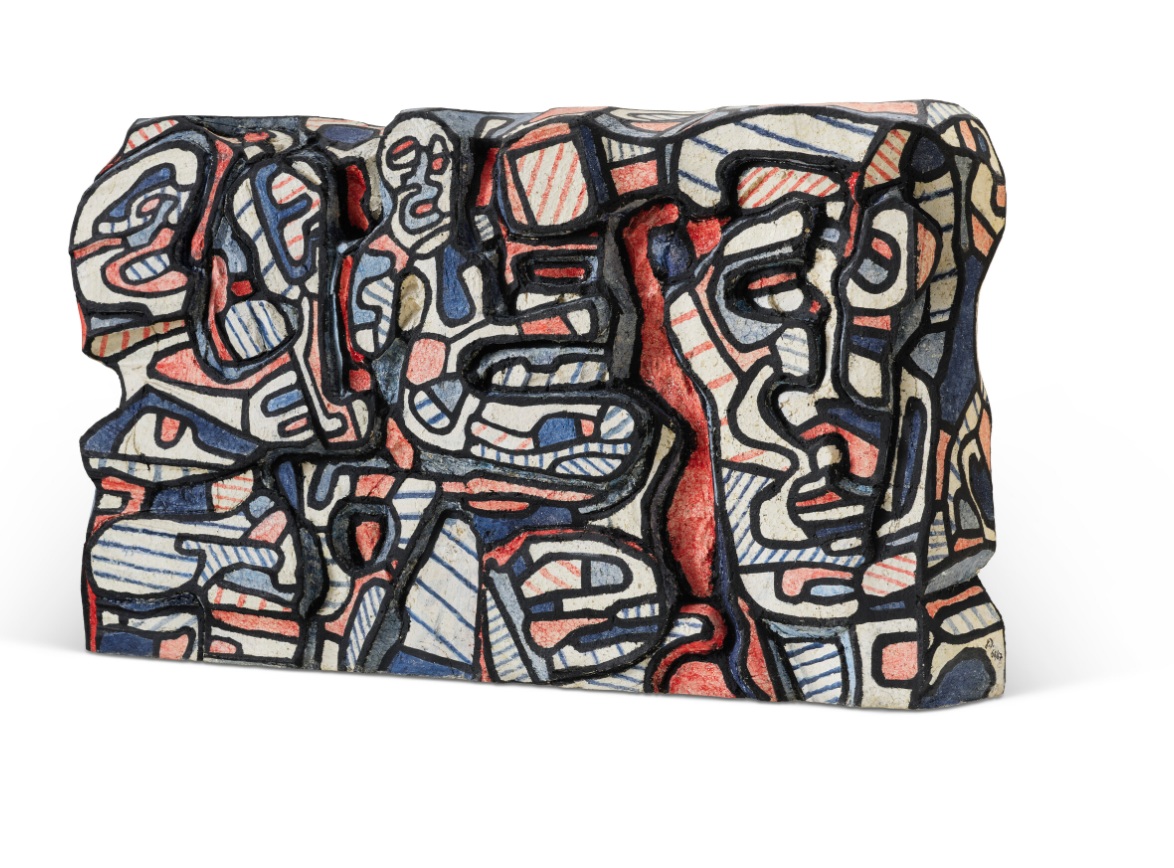
JEAN DUBUFFET (1901-1985)
Scène à l’invalide, 1966
Transfer on polyester
50 x 84.6 x 13.5 cm (19 3/4 x 33 1/4 x 5 1/4 inches)
Signed and dated ‘J.D. 66/67′ (on one side); inscribed ’17’ (on the reverse)
#25. Le cours promenade, 1980
Sotheby’s Paris: 23 April 2024
DUBUFFET: IMPORTANT WORKS FROM THE MARY AND GEORGE BLOCH COLLECTION
Estimated: EUR 300,000 – 500,000
EUR 355,600 / USD 378,890
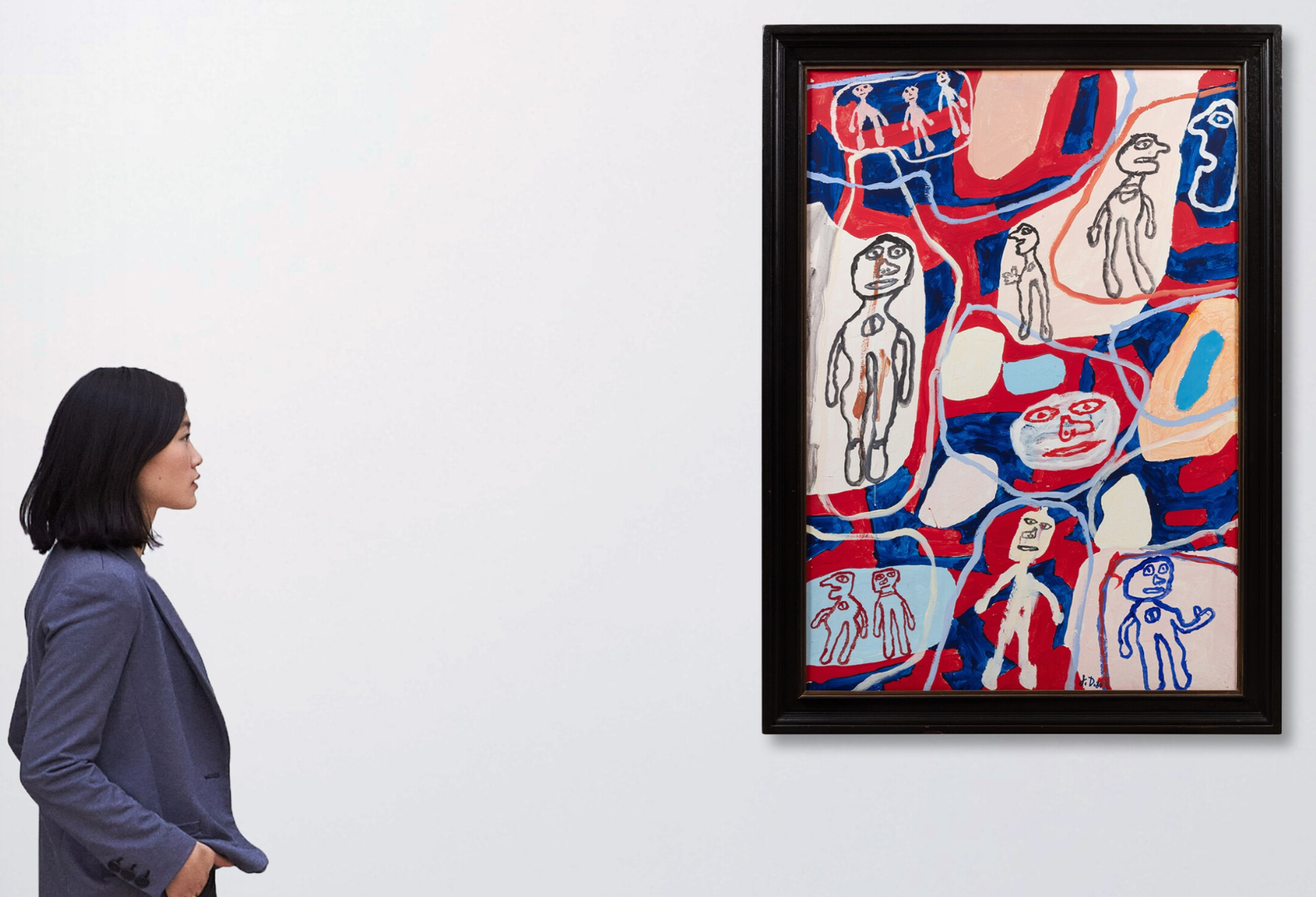
JEAN DUBUFFET (1901 – 1985)
Le cours promenade, 1980
Acrylic on paper laid down on canvas
102×70 cm (40 1/8 x 27 1/2 inches)
Signed with the initials and dated 80 (towards lower right)
Executed on November 12th, 1980
#26. Mondanité XXX, 1975
Christie’s New-York: 17 May 2024
Estimated: USD 300,000 – 500,000
USD 378,000
https://www.christies.com/en/lot/lot-6482389
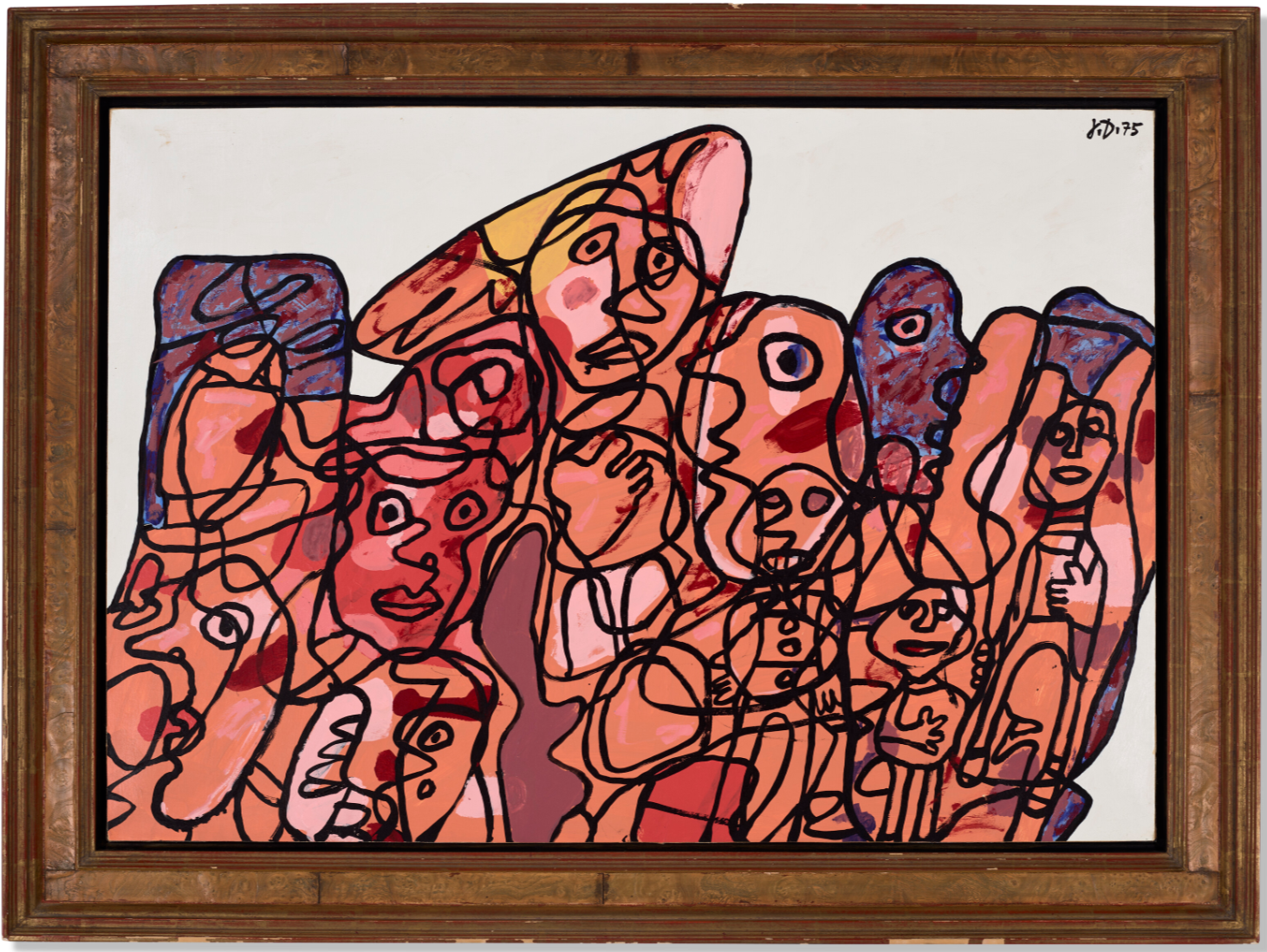
JEAN DUBUFFET (1901-1985)
Mondanité XXX, 1975
Acrylic on paper mounted on canvas
63.7 x 91.7 cm (25 1/4 x 36 1/8 inches)
Signed with the artist’s initials and dated ‘J.D. 75’ (upper right)
Titled ‘Mondanité XXX’ (on the reverse)
#27. Arbre bleu à l’éploiement, 1969
Sotheby’s Paris: 23 April 2024
Estimated: EUR 120,000 – 180,000
EUR 336,550 / USD 358,590
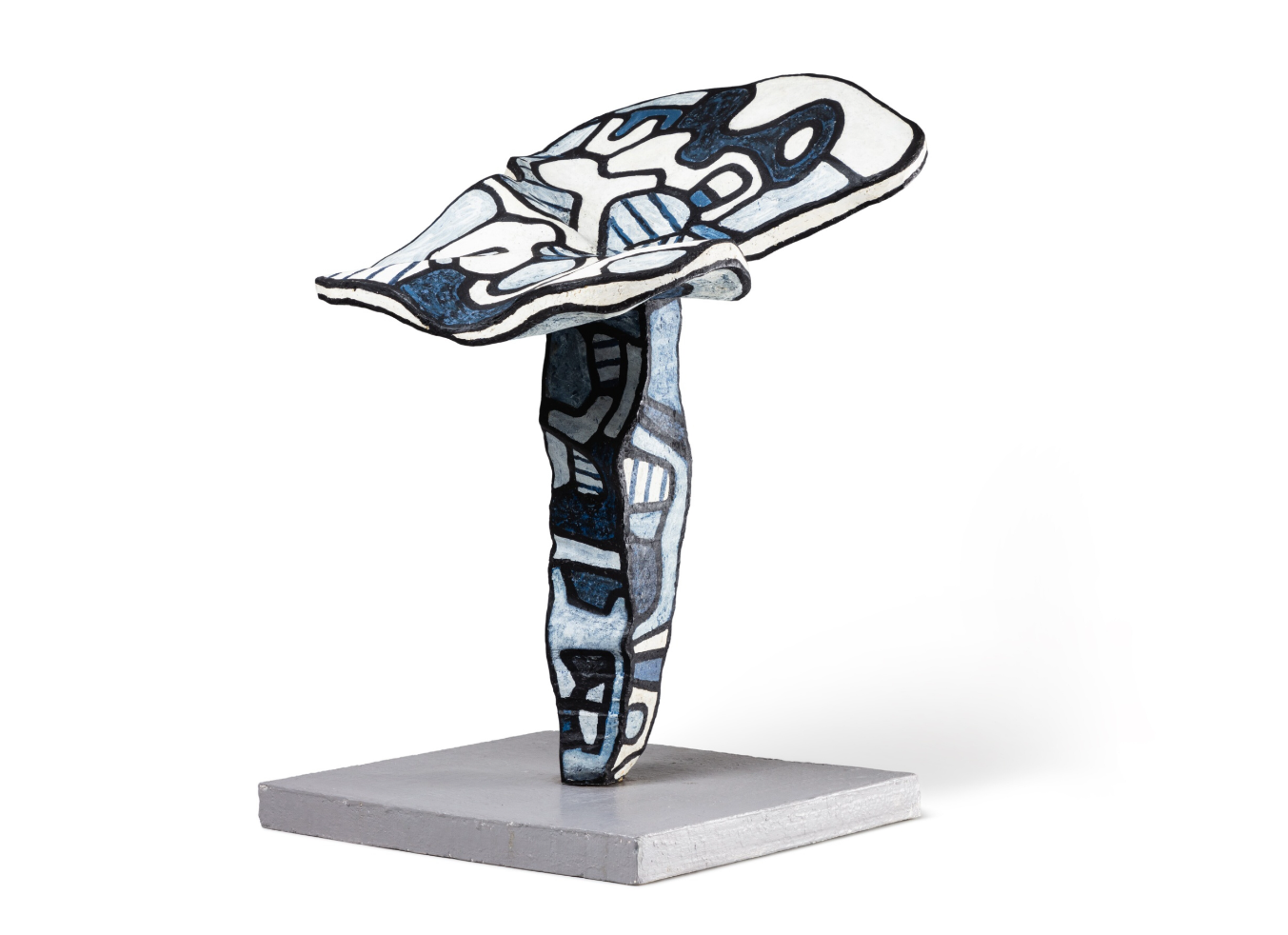
JEAN DUBUFFET (1901 – 1985)
Arbre bleu à l’éploiement, 1969
Transfer on polyester
67.9 x 43.2 x 48.3 cm (26 3/4 x 17 x 19 inches)
Signed and dated 69 (on the stem)
#28. Migration (L46), 1984
Sotheby’s Paris: 23 April 2024
DUBUFFET: IMPORTANT WORKS FROM THE MARY AND GEORGE BLOCH COLLECTION
Estimated: EUR 180,000 – 250,000
EUR 330,200 / USD 351,830
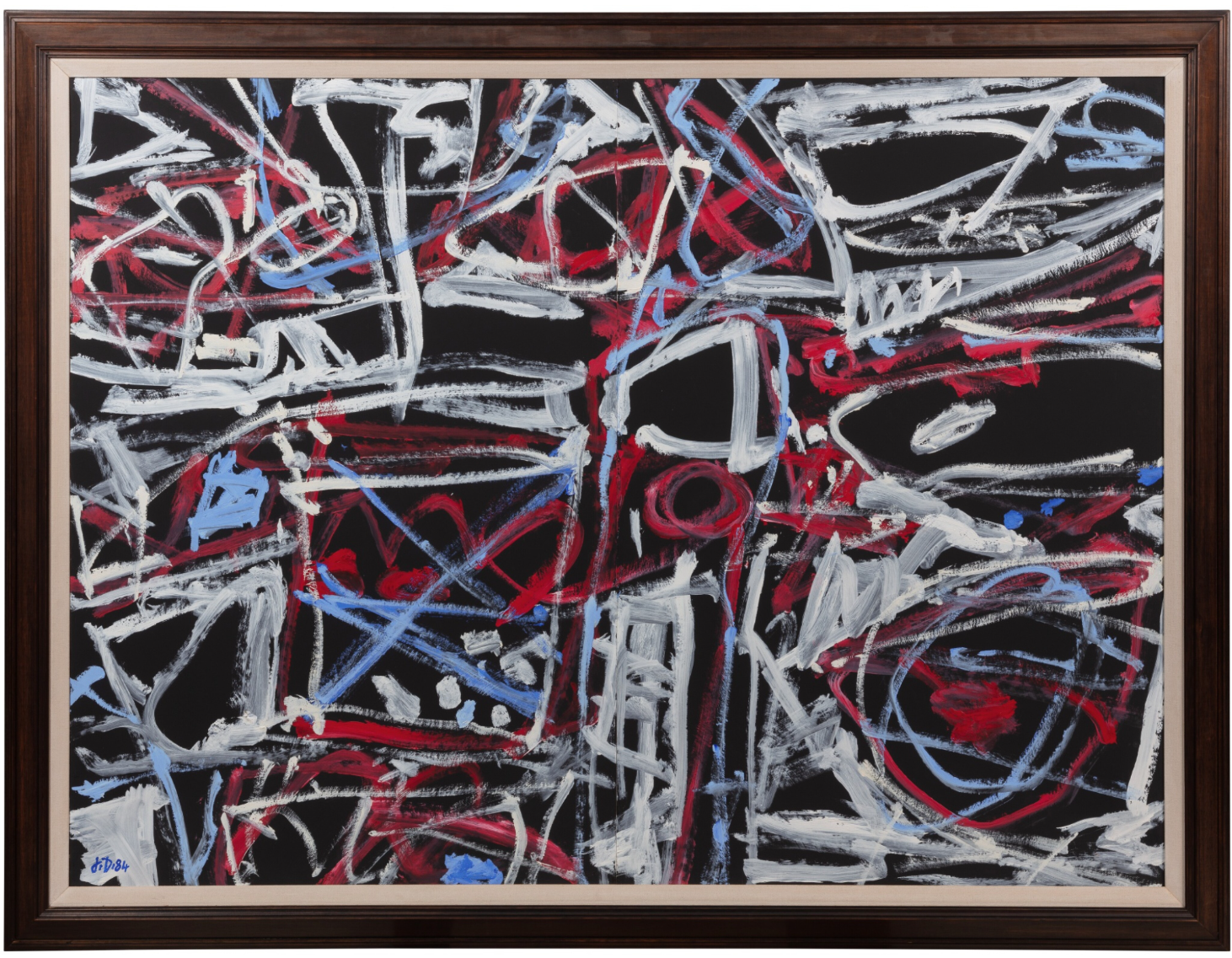
JEAN DUBUFFET (1901 – 1985)
Migration (L46), 1984
Acrylic on paper laid down on canvas
100×134 cm (39 3/8 x 52 3/4 inches)
Signed with the initials and dated 84 (lower left)
Executed on November 15th, 1984
#29. Mire G 54 (Kowloon), 1983
Sotheby’s London: 7 March 2024
Estimated: GBP 150,000 – 200,000
GBP 254,000 / USD 322,072
Mire G 54 (Kowloon) | Modern & Contemporary Day Auction | 2024 | Sotheby’s (sothebys.com)
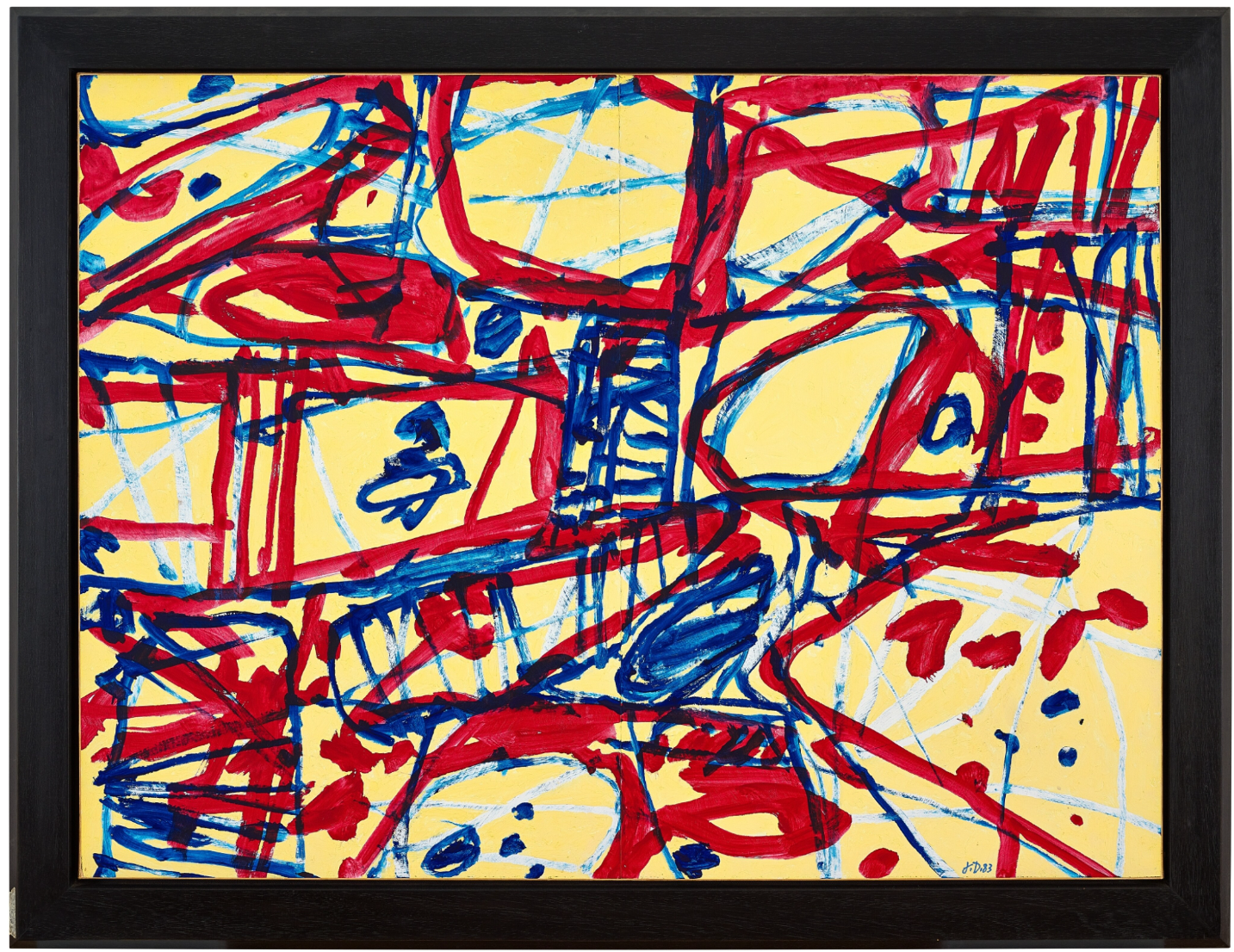
JEAN DUBUFFET (1901 – 1985)
Mire G 54 (Kowloon), 1983
Acrylic on paper laid down on canvas
100.3 x 135.3 cm (39 3/8 x 53 1/8 inches)
Signed with the artist’s initials and dated 83 (lower right)
#30. Situations disjointes, 1979
Sotheby’s London: 7 March 2024
Estimated: GBP 200,000 – 300,000
GBP 241,300 / USD 305,968
Situations disjointes | Modern & Contemporary Day Auction | 2024 | Sotheby’s (sothebys.com)
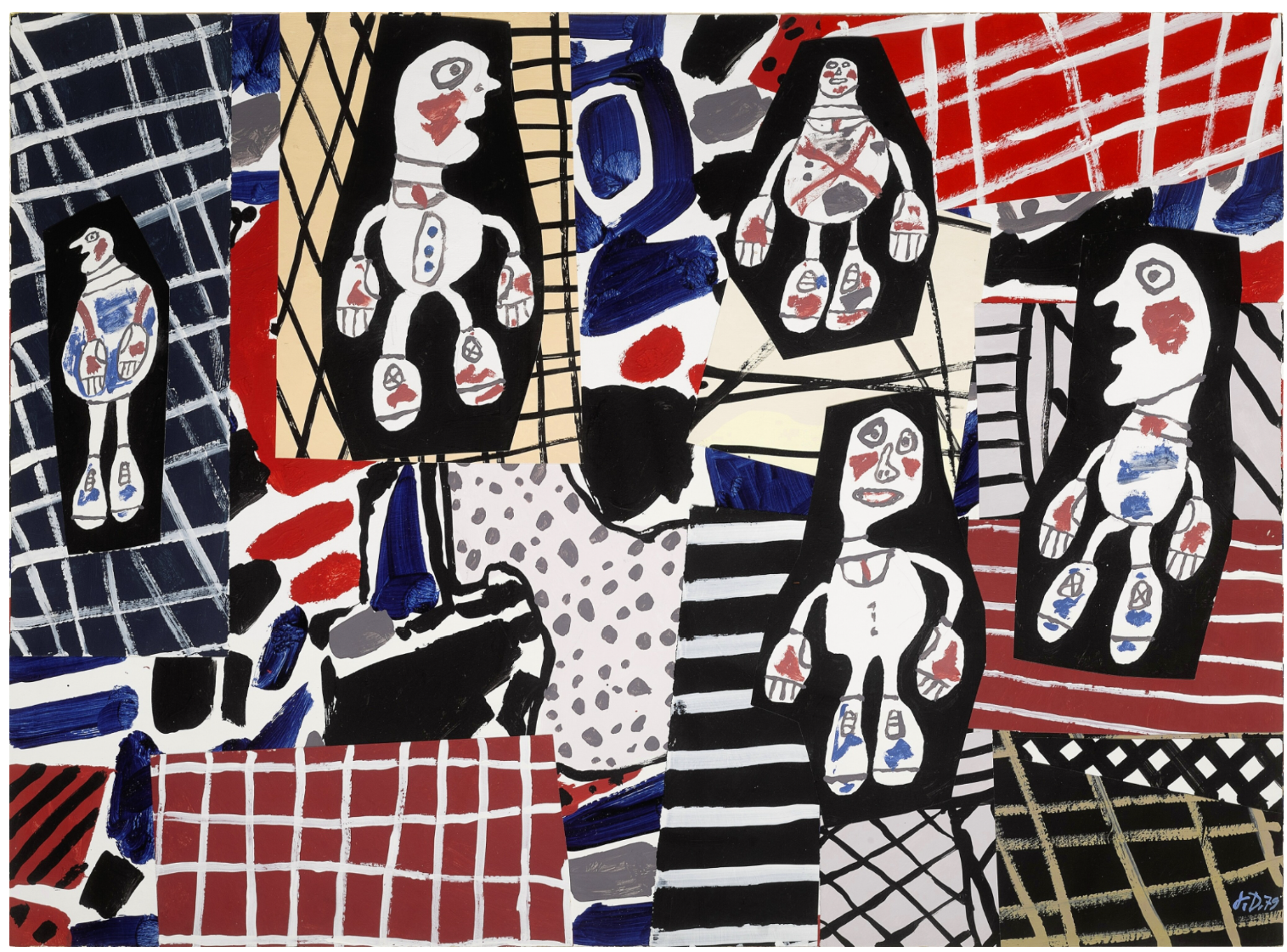
JEAN DUBUFFET (1901 – 1985)
Situations disjointes, 1979
Acrylic, pencil and paper collage on card laid on canvas board
51×70 cm (20 1/8 x 27 1/2 inches)
Signed with the artist’s initials and dated 79 (lower right)
#31. Midi d’Été, 1952
Bonhams New-York: 15 May 2024
Estimated: USD 300,000 – 500,000
USD 292,600
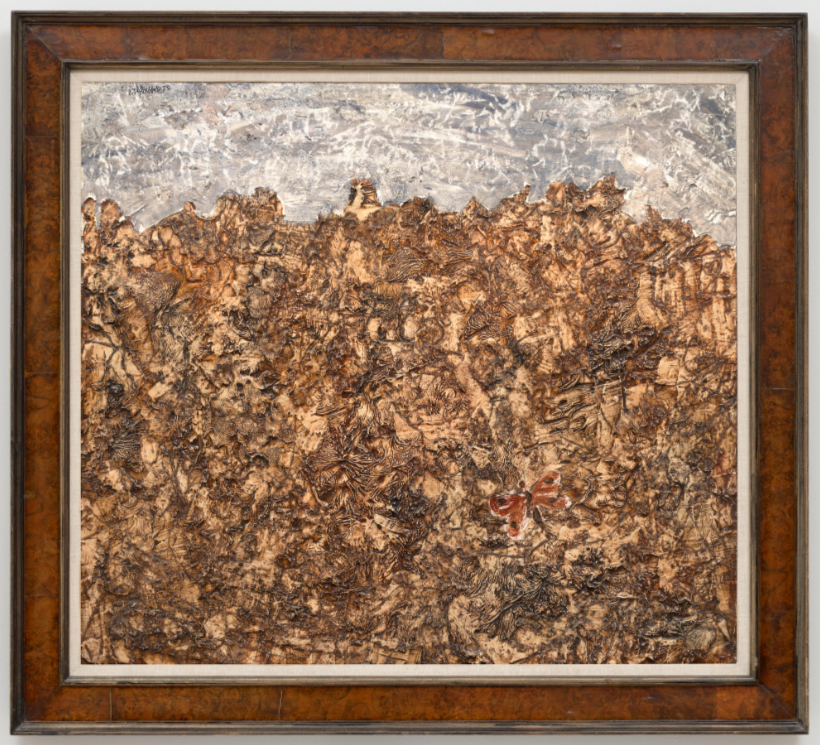
Oil on panel
81×92 cm (31 3/4 x 36 3/8 inches)
Signed and dated ‘J. Dubuffet 52’ (upper left)
Signed, inscribed and dated again ‘Midi d’Été J. Dubuffet mars 52 Sidney Janis’ (on the reverse)
#32. Mire G 146 (Kowloon), 1983
Bonhams London: 10 October 2024
Estimated: GBP 180,000 – 250,000
GBP 203,600 / USD 266,030
Bonhams : JEAN DUBUFFET (1901-1985) Mire G 146 (Kowloon) (Painted on 10 October 1983)
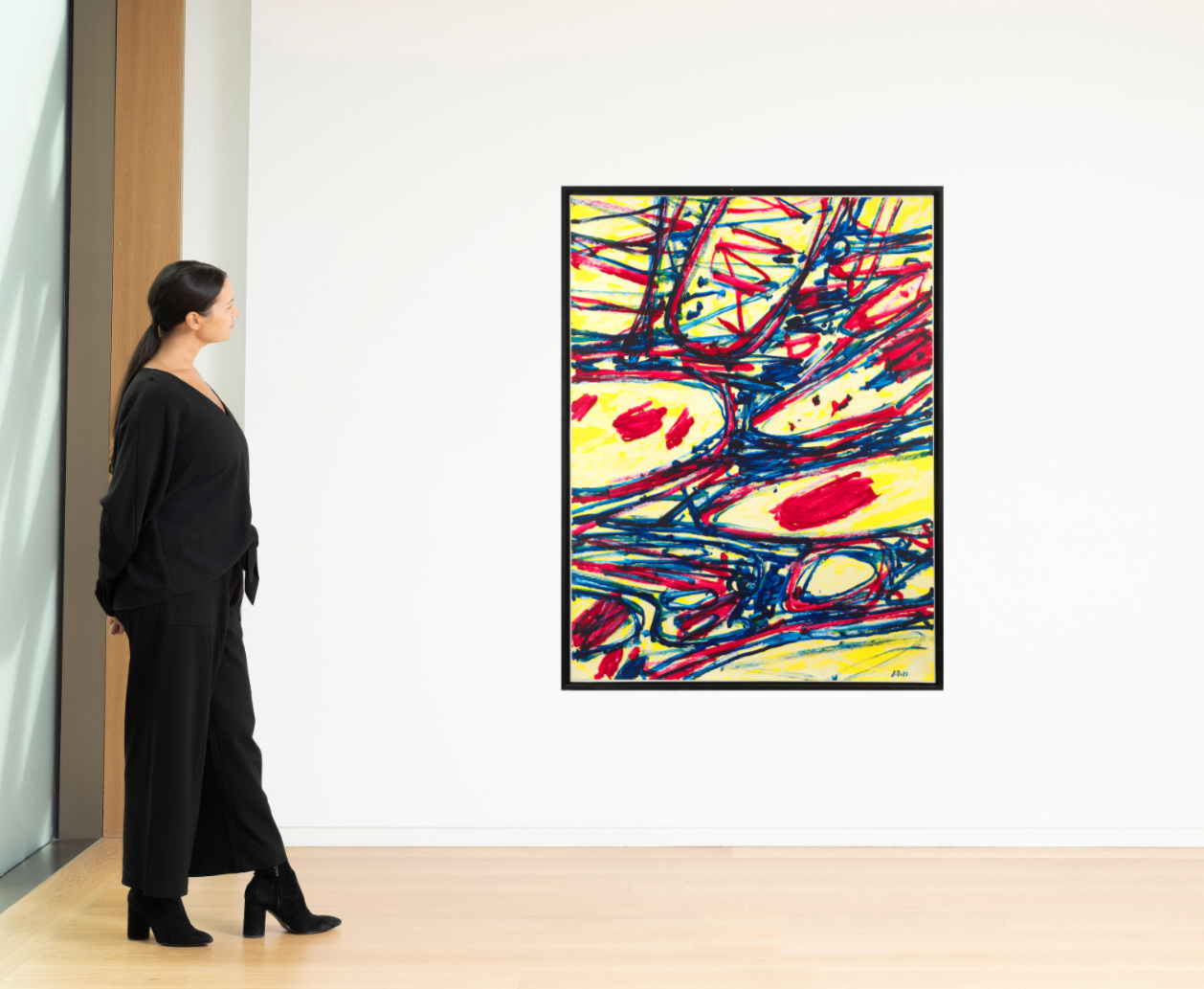
Acrylic on paper laid on canvas
135.2 x 100.2 cm (53 1/4 x 39 7/16 inches)
Signed with the artist’s initials and dated ‘J.D. 83’ (lower right)
#33. Personnage des légendes, 1962
Christie’s New-York: 13 March 2024
Estimated: USD 250,000 – 350,000
USD 245,700
JEAN DUBUFFET (1901-1985), Personnage des légendes | Christie’s (christies.com)
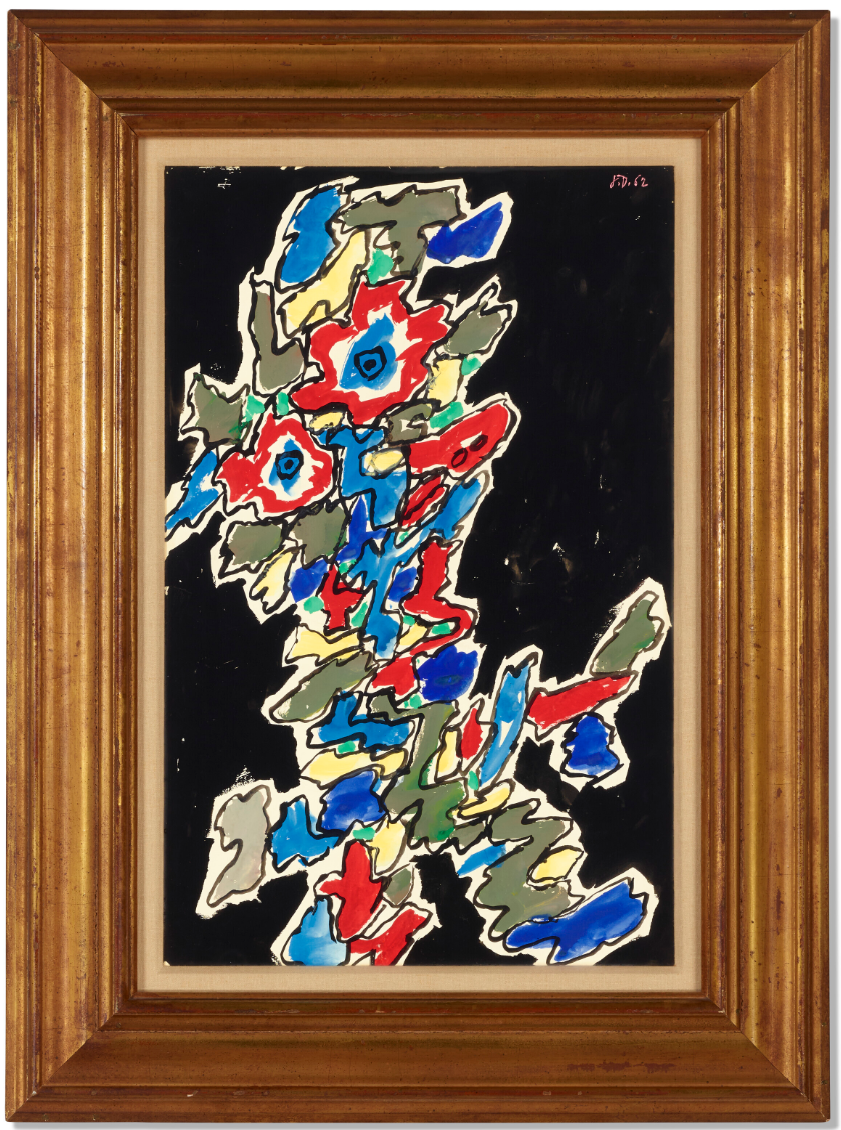
JEAN DUBUFFET (1901-1985)
Personnage des légendes, 1962
Gouache on paper laid down on panel
64 x 41.6 cm (25 1/4 x 16 3/8 inches)
Signed with the artist’s initials and dated ‘J.D. 62’ (upper right)
#34. Site avec 5 personnages, 1981
Sotheby’s New-Yok: 21 November 2024
Estimated: USD 120,000 – 180,000
USD 228,000
Site avec 5 personnages | Contemporary Day Auction | 2024 | Sotheby’s
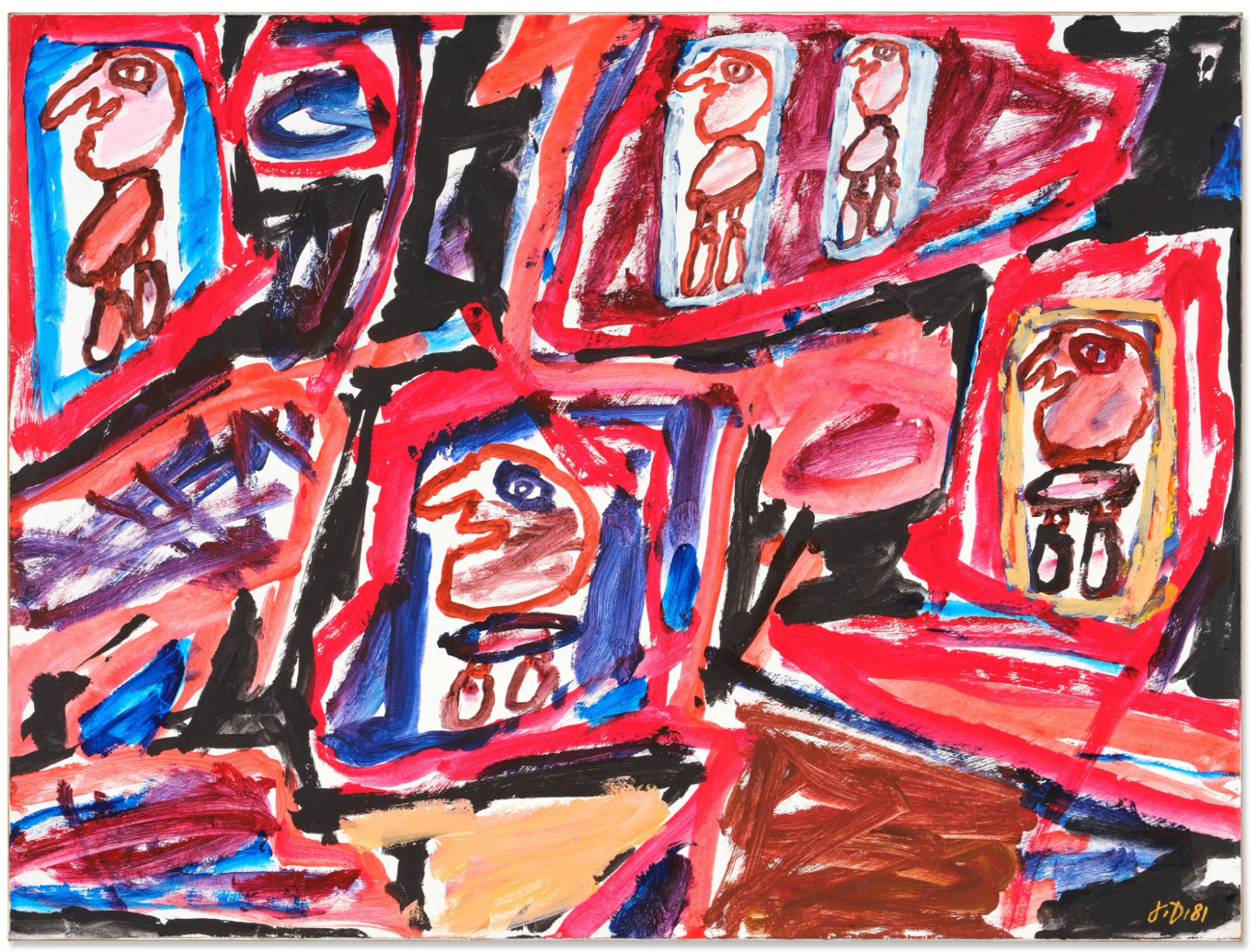
JEAN DUBUFFET (1901-1985)
Site avec 5 personnages, 1981
Acrylic on paper laid on canvas
50.8 x 67.3 cm (20 x 26 1/2 inches)
Signed with the artist’s initials and dated ’81 (lower right)
#35. Site avec 5 personnages, 1981
Sotheby’s London: 7 March 2024
Estimated: GBP 80,000 – 120,000
GBP 171,450 / USD 217,399
Site avec 5 personnages | Modern & Contemporary Day Auction | 2024 | Sotheby’s (sothebys.com)
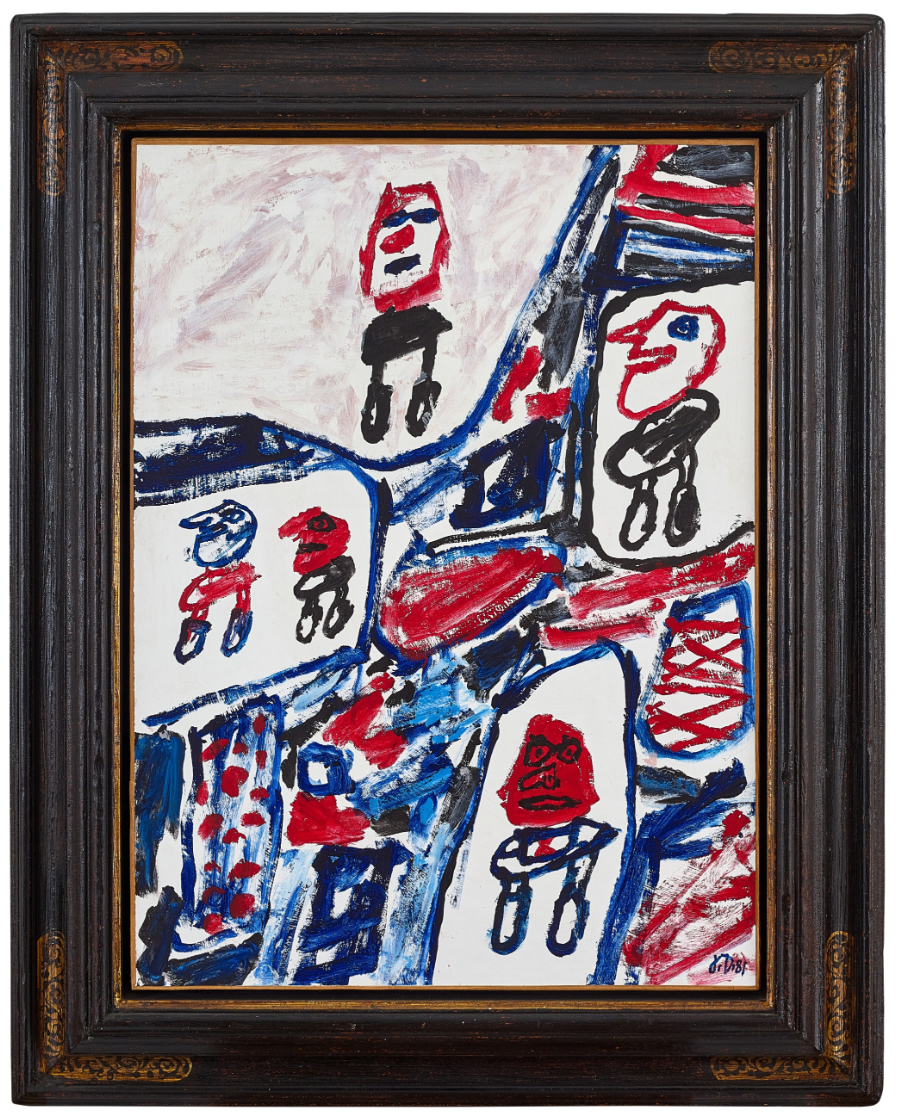
JEAN DUBUFFET (1901 – 1985)
Site avec 5 personnages, 1981
Acrylic on paper laid down on canvas
68.6 x 50.5 cm (27 x 19 7/8 inches)
Signed with the artist’s initials and dated 81 (lower right)
#36. Site avec quatre personnages (E96), 1981
Sotheby’s Paris: 23 April 2024
Estimated: EUR 100,000 – 150,000
EUR 203,200 / USD 216,510
Site avec quatre personnages (E96) | Art Moderne et Contemporain Evening Auction | 2024 | Sotheby’s
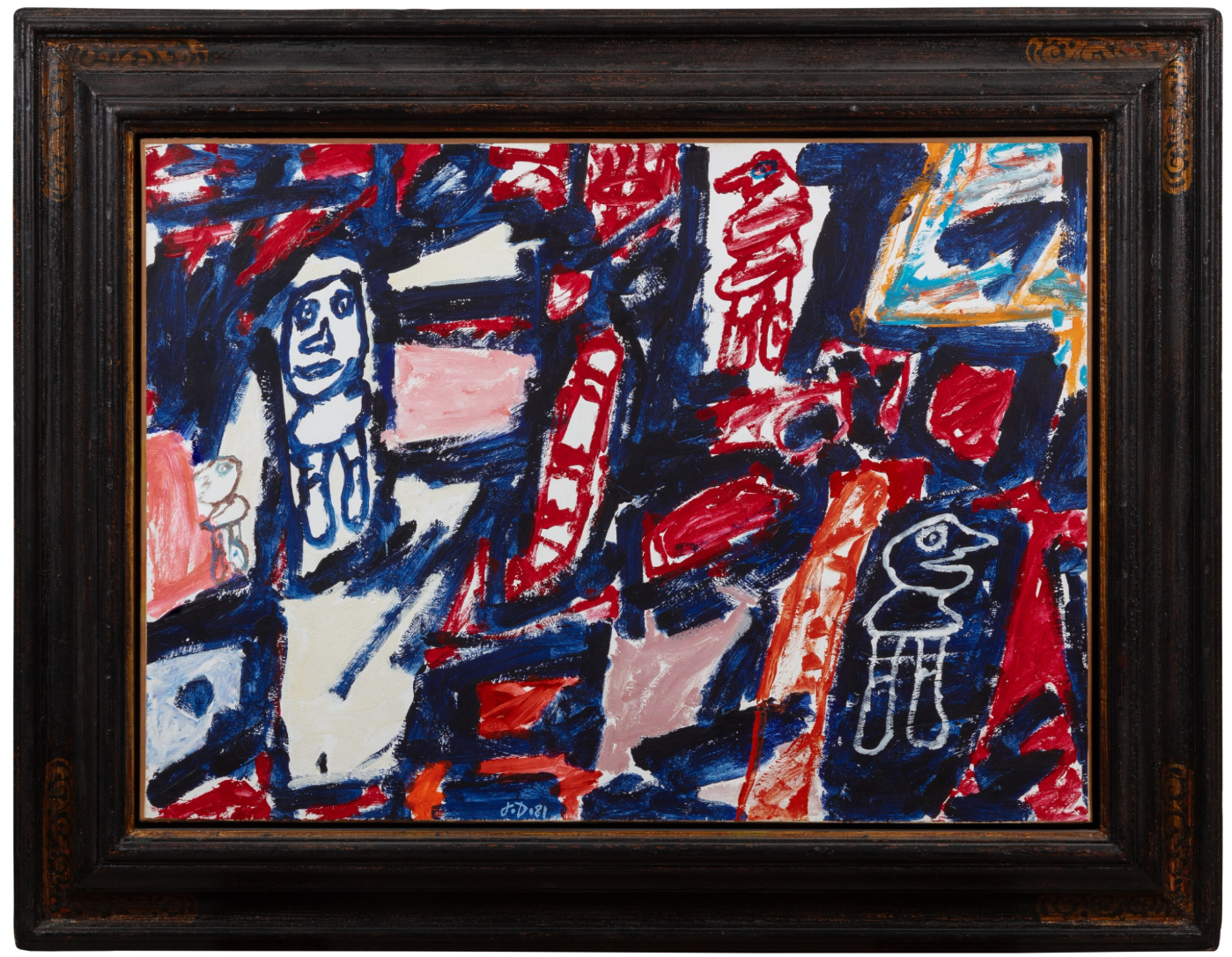
JEAN DUBUFFET (1901 – 1985)
Site avec quatre personnages (E96), 1981
Acrylic on paper laid down on canvas
51.5 x 71.5 cm (20 1/4 x 28 1/8 inches)
Signed with the initials and dated 81 (lower centre)
Executed on April 15th, 1981
#37. Site avec 7 personnages, 1981
Sotheby’s New-York: 14 May 2024
Estimated: USD 150,000 – 250,000
USD 203,200
Site avec 7 personnages | Contemporary Day Auction | 2024 | Sotheby’s
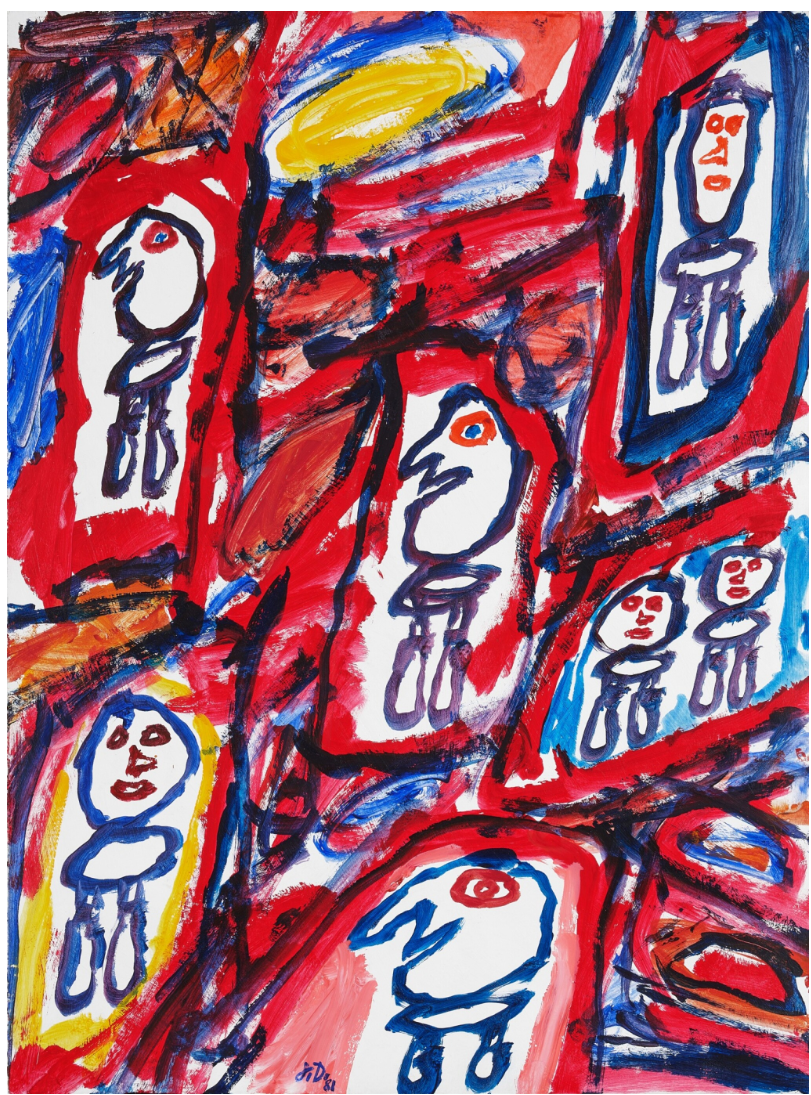
JEAN DUBUFFET (1901 – 1985)
Site avec 7 personnages, 1981
Acrylic on paper laid down on canvas
67.3 x 49.8 cm (26 1/2 x 19 5/8 inches)
Signed with the artist’s initials and dated 81 (lower center)
USD 200,000
#38. Site avec 2 personnages, 1982
Artcurial Paris: 4 June 2024
Estimated: EUR 130,000 – 180,000
EUR 165,312 / USD 180,310
Site avec 2 personnages – 1982 | Artcurial
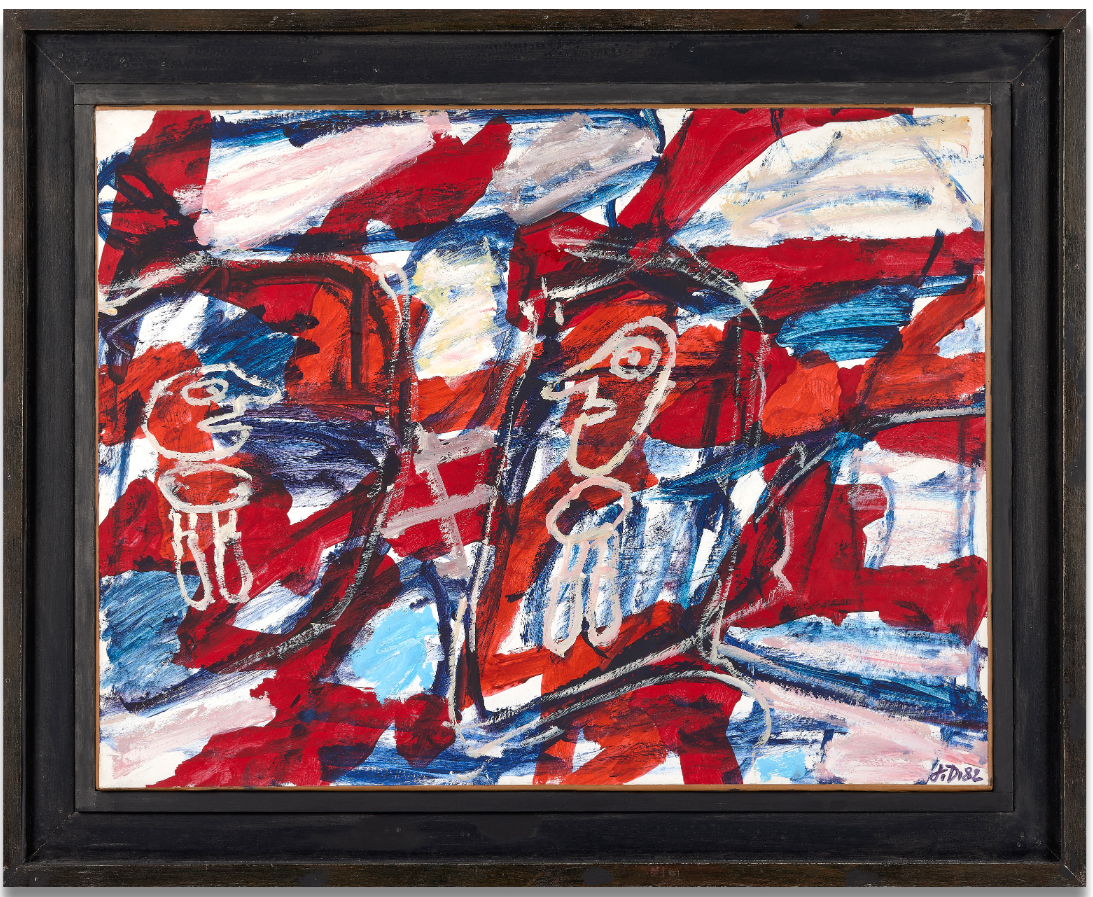
JEAN DUBUFFET
Site avec 2 personnages, 1982
Acrylic on paper laid down on canvas
67×50 cm (19 3/4 x 26 3/8 inches)
Signed with the initials and dated lower right
#39. Mire G77 (Kowloon), 1983
Artcurial Paris: 4 June 2024
Estimated: EUR 130,000 – 180,000
EUR 164,000 / USD 178,880
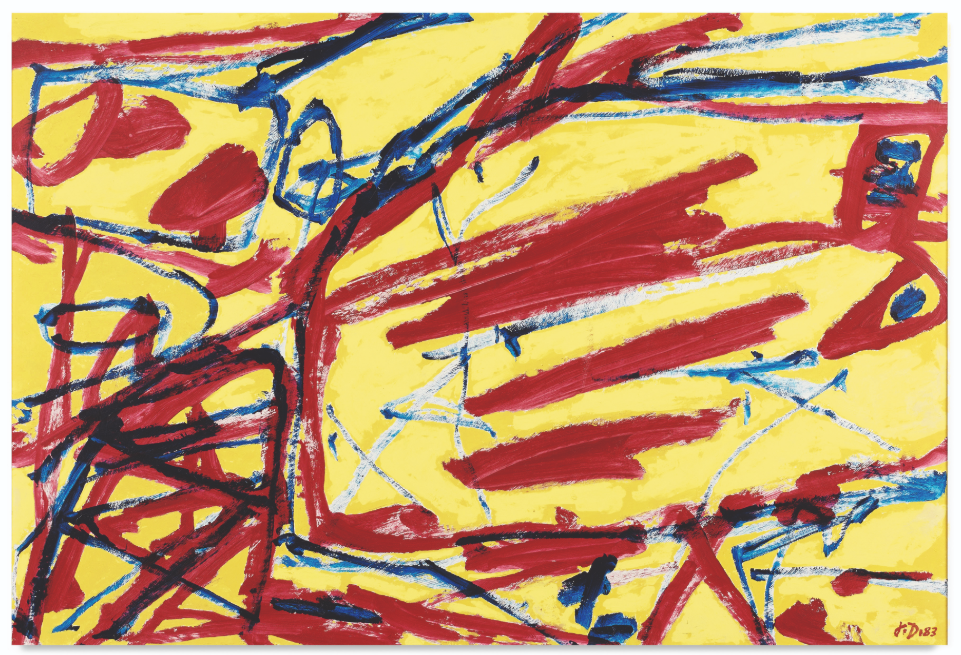
Mire G77 (Kowloon), 1983
100×67 cm (26 3/8 x 39 3/8 inches)
#40. Site avec 6 personnages, 1981
Estimated: EUR 100,000 – 150,000
EUR 163,800 / USD 178,090
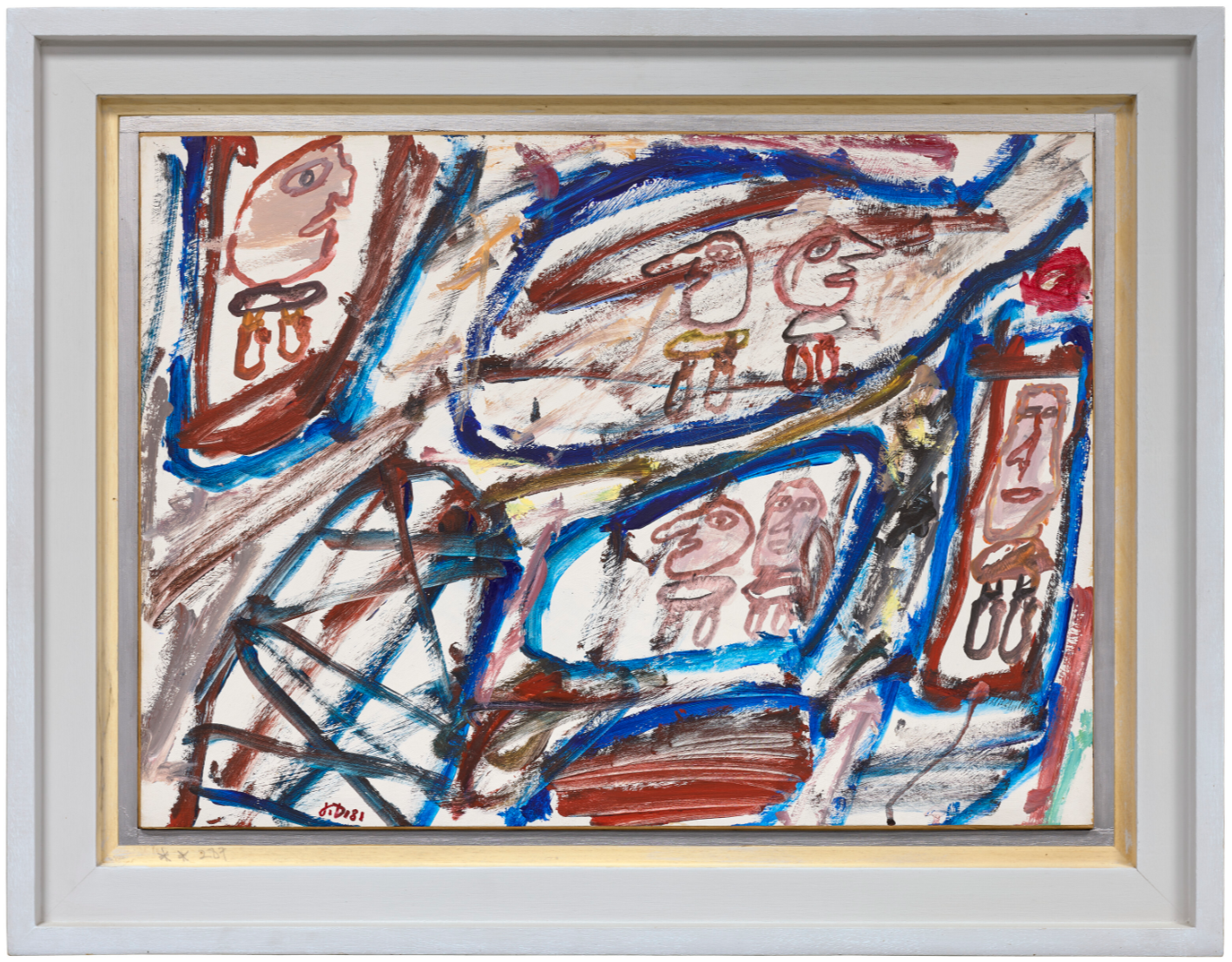
Site avec 6 personnages, 1981
Acrylic on paper laid on canvas
50.4 x 68.2 cm (19 7/8 x 26 7/8 inches)
Signed with the initials and dated ‘J. D. 81’ (lower left)
Painted in September 1981
#41. Site avec 3 personnages, 1981
Sotheby’s London: 7 March 2024
Estimated: GBP 80,000 – 120,000
GBP 139,700 / USD 177,140
Site avec trois personnages | Modern & Contemporary Day Auction | 2024 | Sotheby’s (sothebys.com)
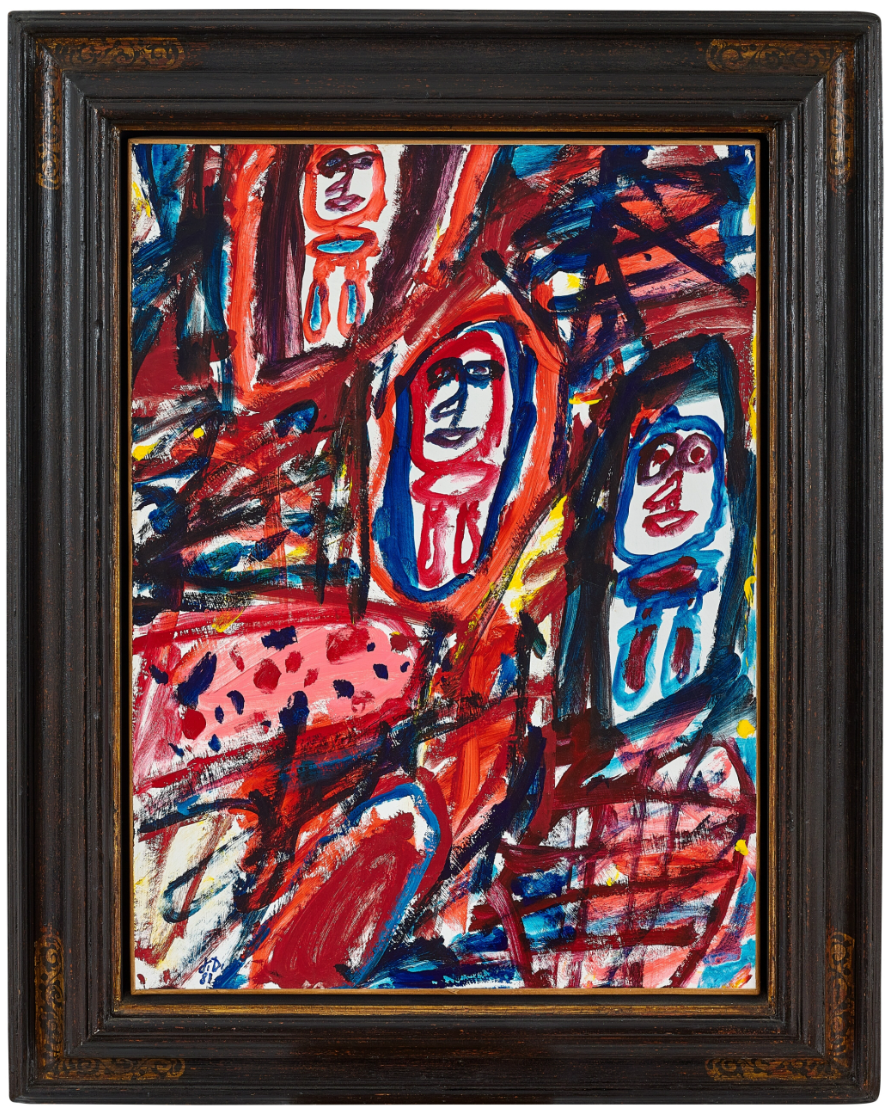
JEAN DUBUFFET (1901 – 1985)
Site avec trois personnages, 1981
Acrylic on paper laid down on canvas
68.3 x 50.2 cm (26 7/8 x 19 3/4 inches)
Signed with the artist’s initials and dated 81 (lower left)
#42. Donnée H5, 1984
Sotheby’s Paris: 24 April 2024
Estimated: EUR 100,000 – 150,000
EUR 165,100 / USD 176,690
Donnée H5 | Art Moderne et Contemporain Day Auction | 2024 | Sotheby’s
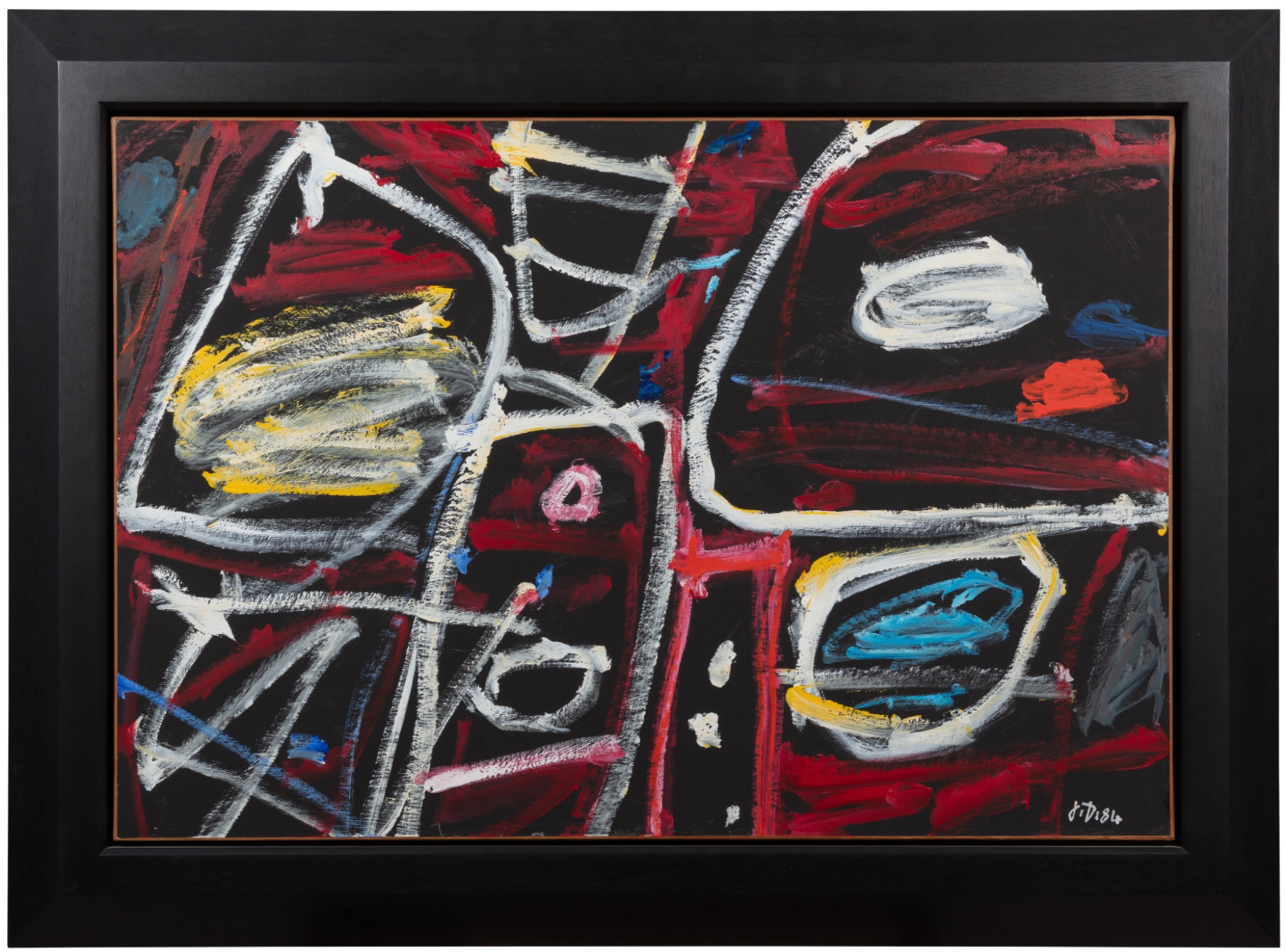
JEAN DUBUFFET (1901 – 1985)
Donnée H5, 1984
Acrylic on paper laid down on canvas
68×100 cm (26 5/8 x 39 3/8 inches)
Signed and dated 84 (lower right)
#43. Site avec 5 personnages, 1981
Christie’s New-York: 13 March 2024
Estimated: USD 120,000 – 180,000
USD 176,400
JEAN DUBUFFET (1901-1985), Site avec 5 personnages | Christie’s (christies.com)
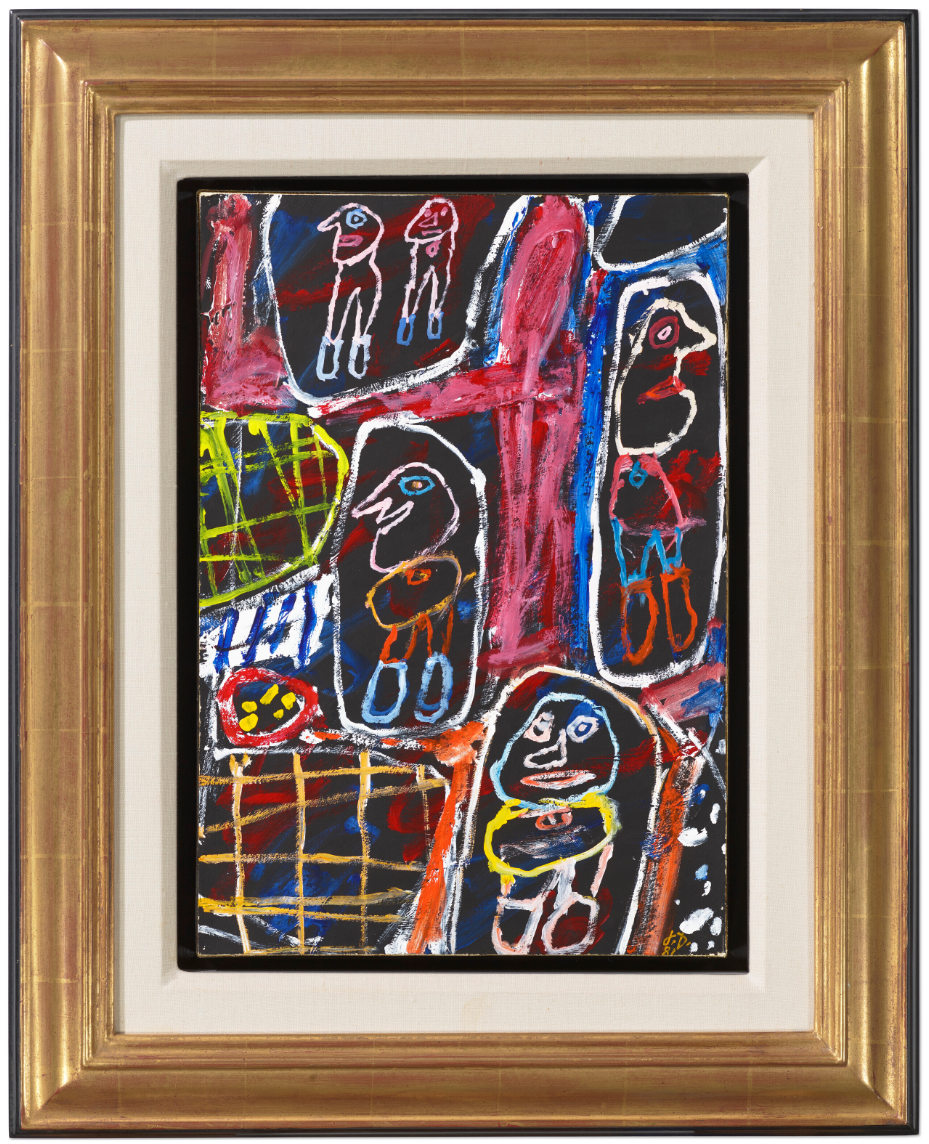
JEAN DUBUFFET (1901-1985)
Site avec 5 personnages, 1981
Acrylic on paper mounted on canvas
51×35 cm (20 x 13 7/8 inches)
Signed with the artist’s initials and dated ‘J.D. 81’ (lower right)
#44. Mire G26, 1983
Estimated: EUR 100,000 – 150,000
EUR 152,400 / USD 163,100
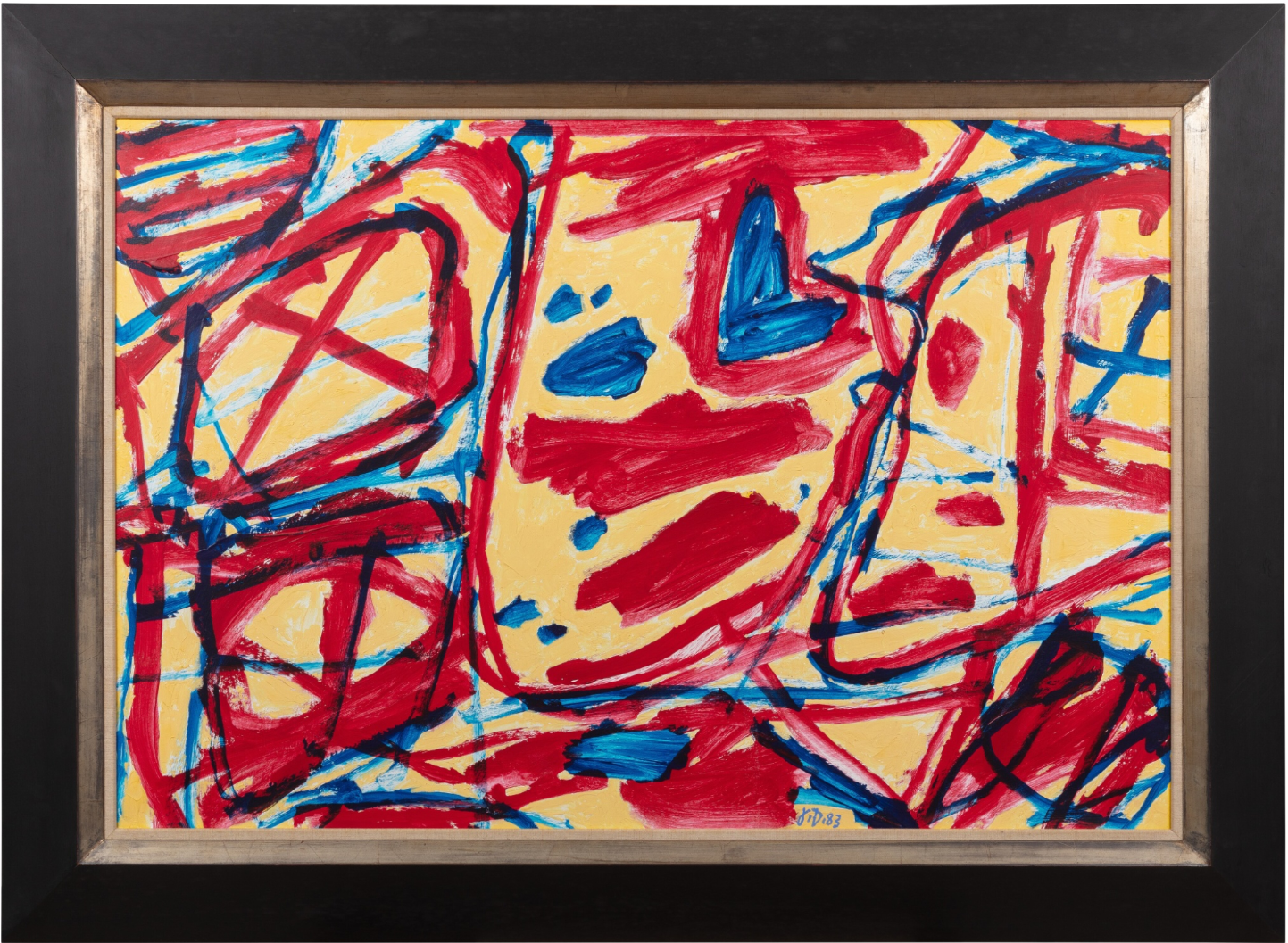
JEAN DUBUFFET (1901 – 1985)
Mire G26, 1983
Acrylic on paper laid down on canvas
68×101 cm (26 5/8 x 39 5/8 inches)
Signed with the initials and dated 83 (lower right)
#47. Exposé, 1984
Sotheby’s London: 7 March 2024
Estimated: GBP 80,000 – 120,000
GBP 107,950 / USD 136,881
Exposé | Modern & Contemporary Day Auction | 2024 | Sotheby’s (sothebys.com)
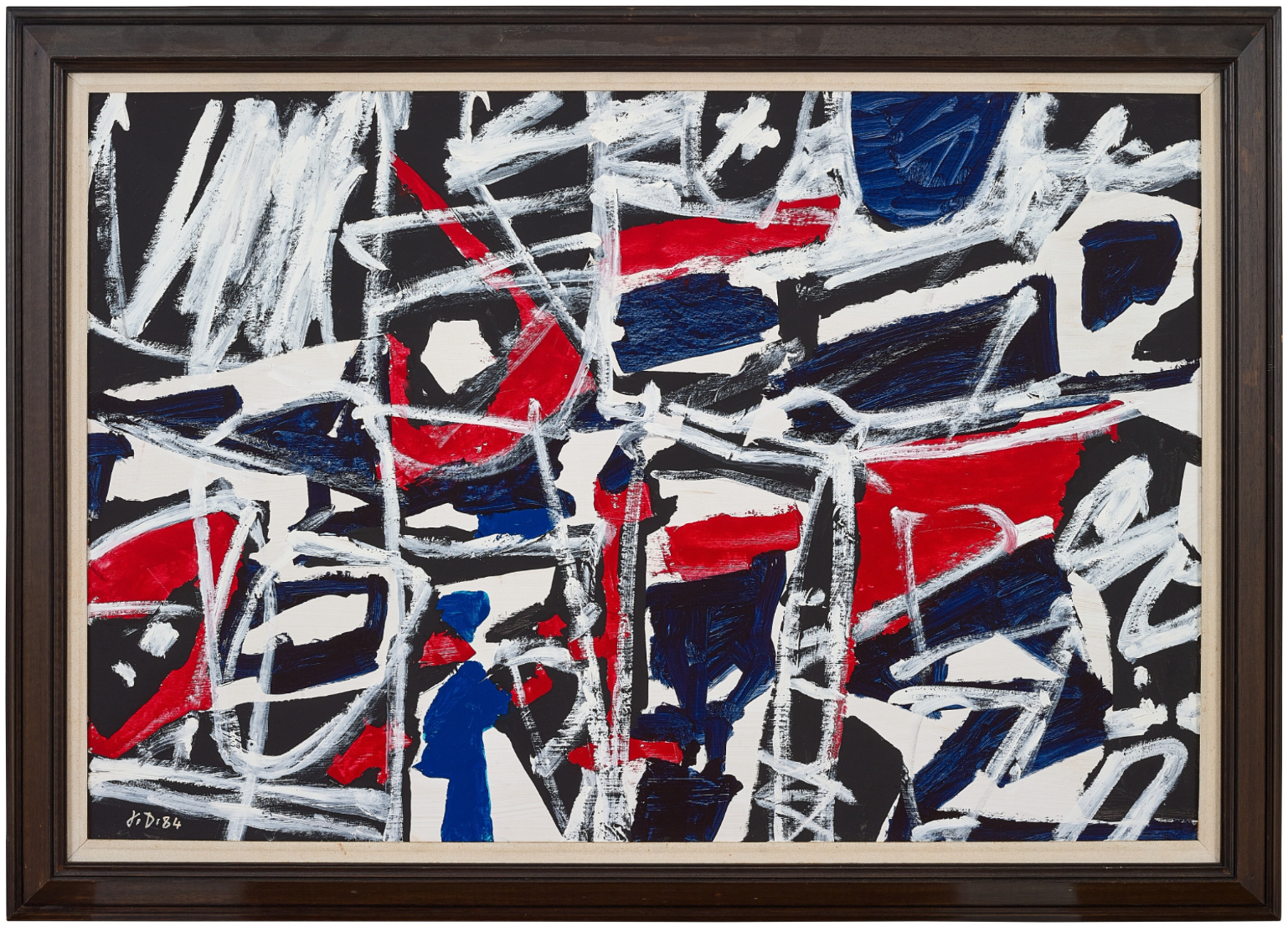
JEAN DUBUFFET (1901 – 1985)
Exposé, 1984
Acrylic on paper laid down on canvas
67.9 x 100.6 cm (26 3/4 x 39 5/8 inches)
Signed with the artist’s initials and dated 84 (lower left)
2023 Auction Results
FOR PAINTINGS ONLY
43 lots sold at auction in 2023 for a total turnover of USD 30,219,213. With only 2 lots failing to sell, the sell-through rate is 96%. The highest price was achieved at Phillips in New-York on 15 November 2023, when Inspecteurs Sinoque et Dingue from the iconic L’Hourloupe series sold for USD 4,900,000. 7 lots sold for more than USD 1 million, generating a cumulative turnover of USD 15,904,122, representing 52.6% of the total turnover for 2023.
2023 Top 3 Lots
#1. Inspecteurs Sinoque et Dingue, 1967
Phillips New-York: 14 November 2023
Estimated: USD 4,000,000 – 6,000,000
USD 4,900,000
Jean Dubuffet – Living the Avant-Gar… Lot 8 November 2023 | Phillips
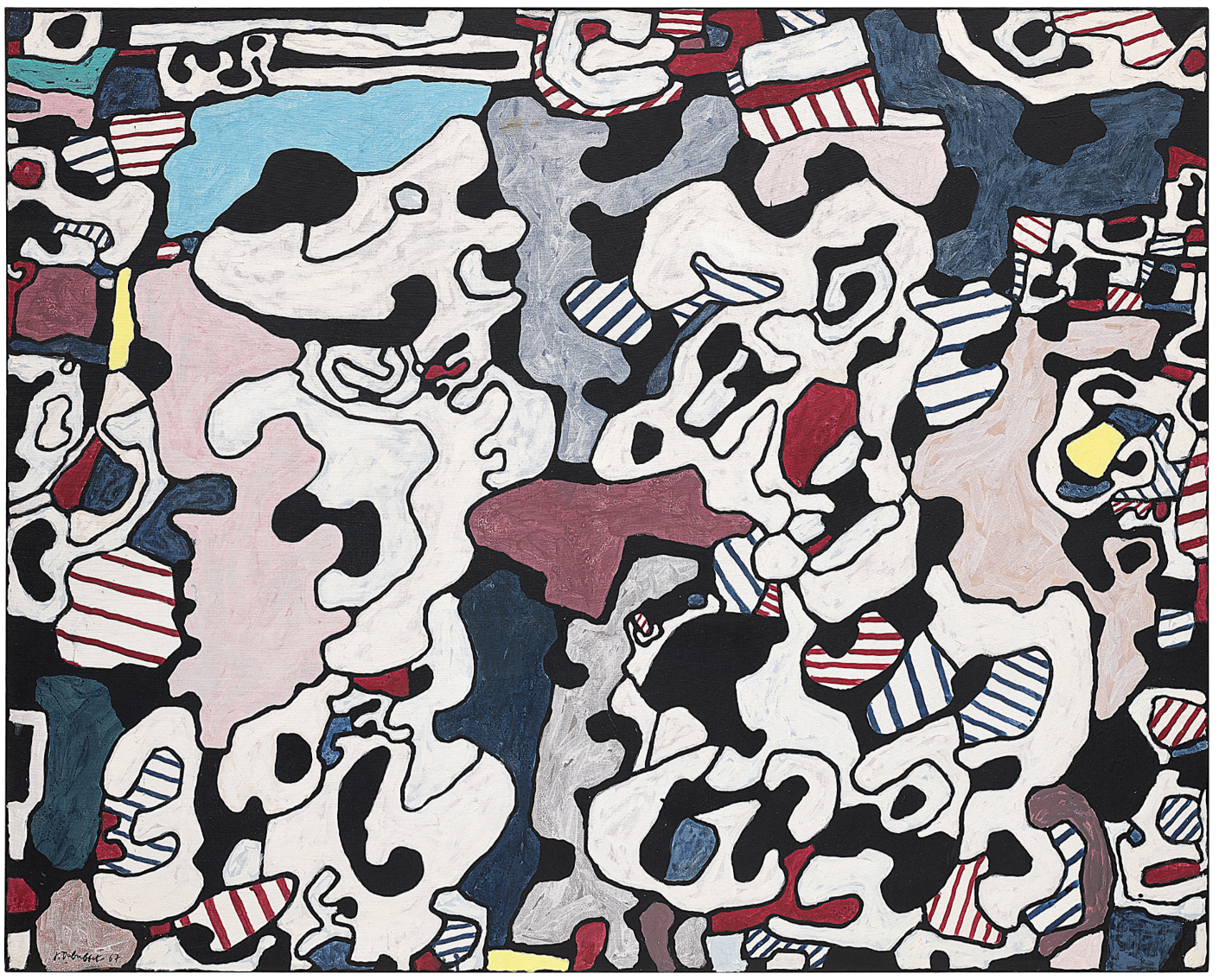
JEAN DUBUFFET
Inspecteurs Sinoque et Dingue, 1967
Acrylic on canvas
129.9 x 162.2 cm (51 1/8 x 63 7/8 inches)
Signed and dated “J. Dubuffet 67” lower left
Signed, titled and dated “Inspecteurs Sinoque et Dingue J. Dubuffet janvier 67” on the reverse
Painted on January 23, 1967
#2. Arbre biplan (Version 1), 1968
Christie’s New-York: 9 November 2023
Estimated: USD 1,800,000 – 2,500,000
USD 3,317,000
JEAN DUBUFFET (1901-1985), Arbre biplan (Version 1) | Christie’s (christies.com)
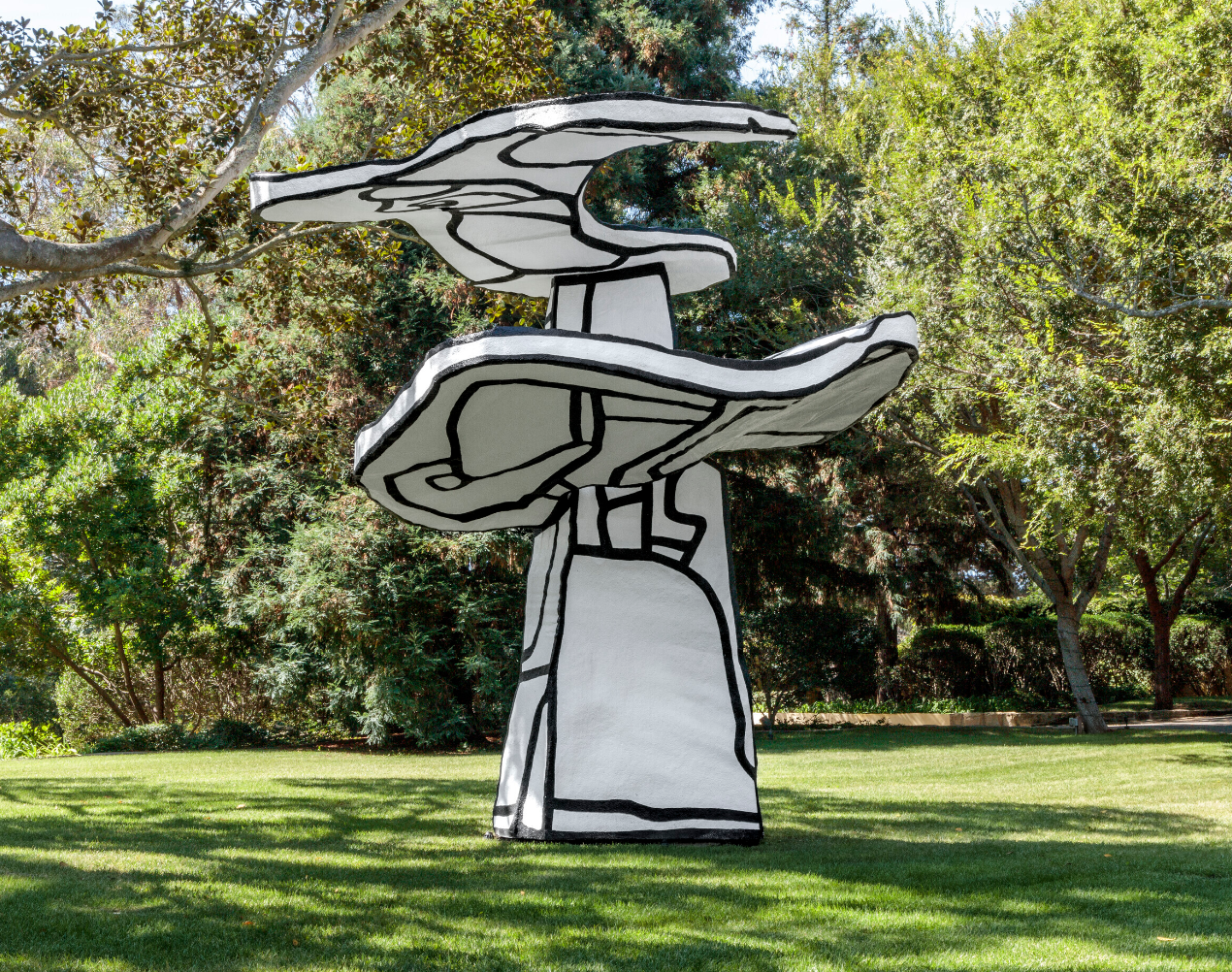
JEAN DUBUFFET (1901-1985)
Arbre biplan (Version 1), 1968
Epoxy paint on polyurethane
180x153x119 inches (457.2 x 388.6 x 302.3 cm)
Incised with the artist’s initials, title, number and date ‘Arbre biplan (Version 1) 1968-2020 2⁄3 J.D.’ (lower edge)
Conceived in 1968 and executed in 2020
This work is number two from an edition of three
#3. Gambade à la rose, 1950
Sotheby’s New-York: 8 November 2023
The Emily Fisher Landau Collection: An Era Defined
Estimated: USD 3,000,000 – 4,000,000
USD 3,000,000
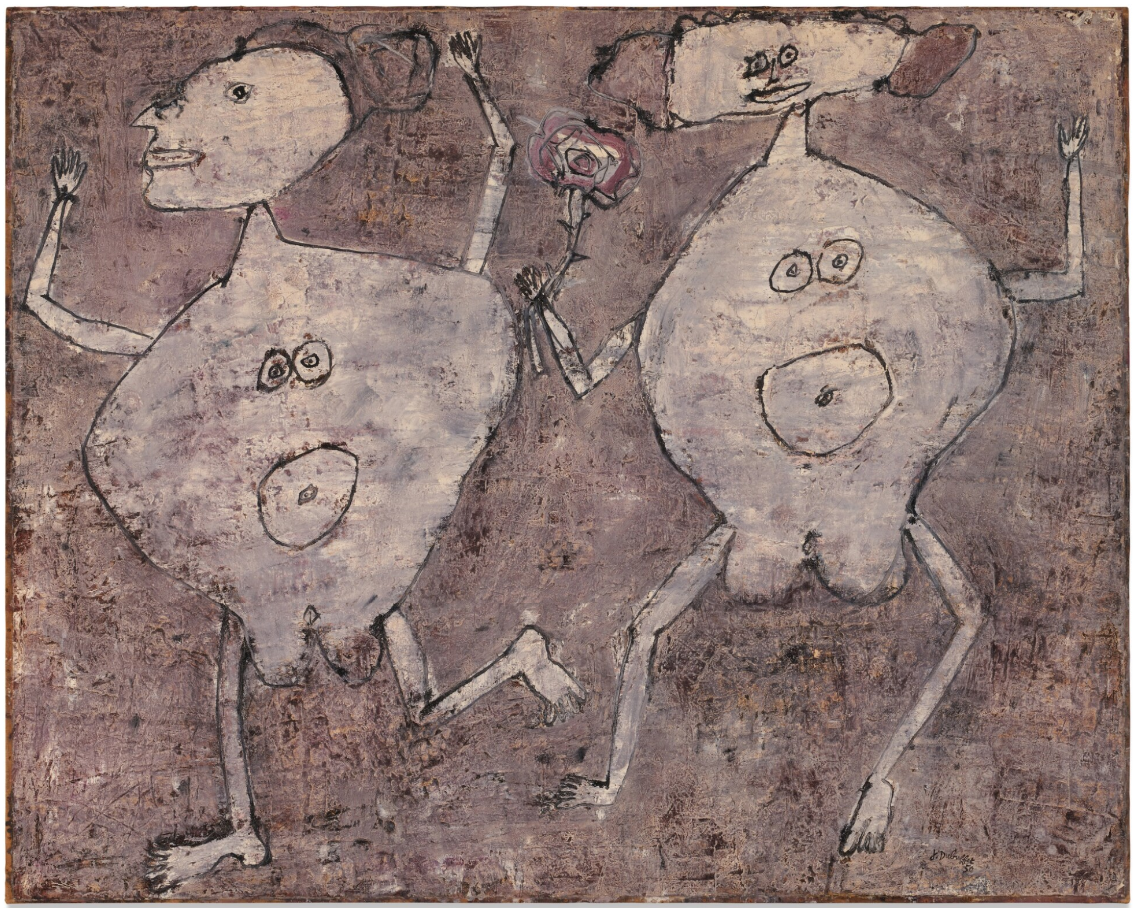
JEAN DUBUFFET (1901 – 1985)
Gambade à la rose, 1950
Oil on canvas
129.5 x 161.9 cm (51 x 63 3/4 inches)
Signed and dated 50 (lower right)
#4. La vie interne du minéral, 1959-1960
Christie’s Paris: 7 June 2023
Estimated: EUR 450,000 – 650,000
EUR 1,431,500 / USD 1,531,705
Jean Dubuffet (1901-1985), La vie interne du minéral | Christie’s (christies.com)
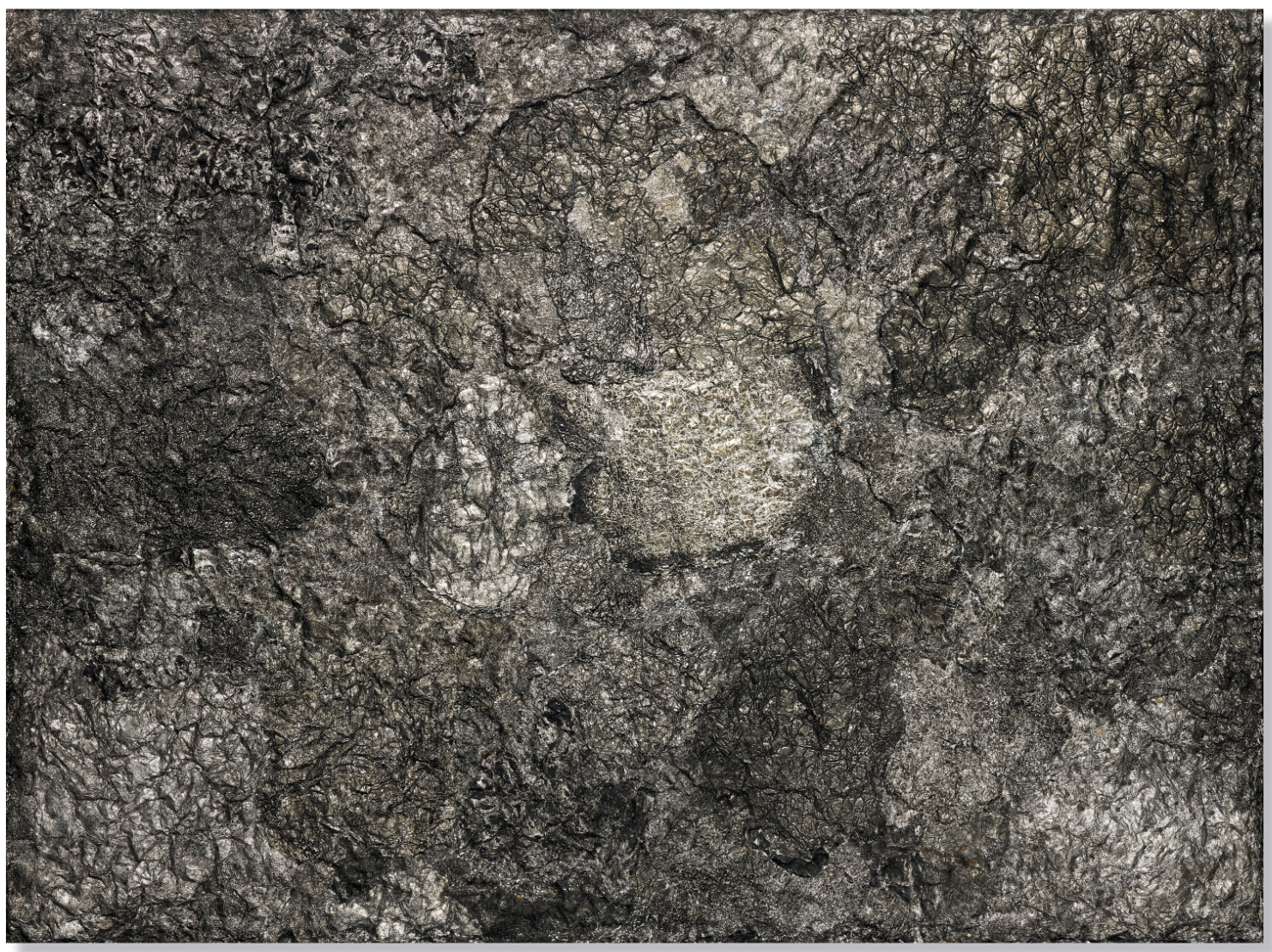
JEAN DUBUFFET (1901-1985)
La vie interne du minéral, 1959-1960
Silver paper mounted on masonite
97×130 cm (38 1/4 x 51 1/8 inches)
Titled ”La vie interne du minéral” (on the stretcher)
#5. La rue, 1943
Sotheby’s Paris: 19 October 2023
Estimated: EUR 1,000,000 – 1,500,000
EUR 1,016,000 / USD 1,087,120
La rue | Modernités | 2023 | Sotheby’s (sothebys.com)
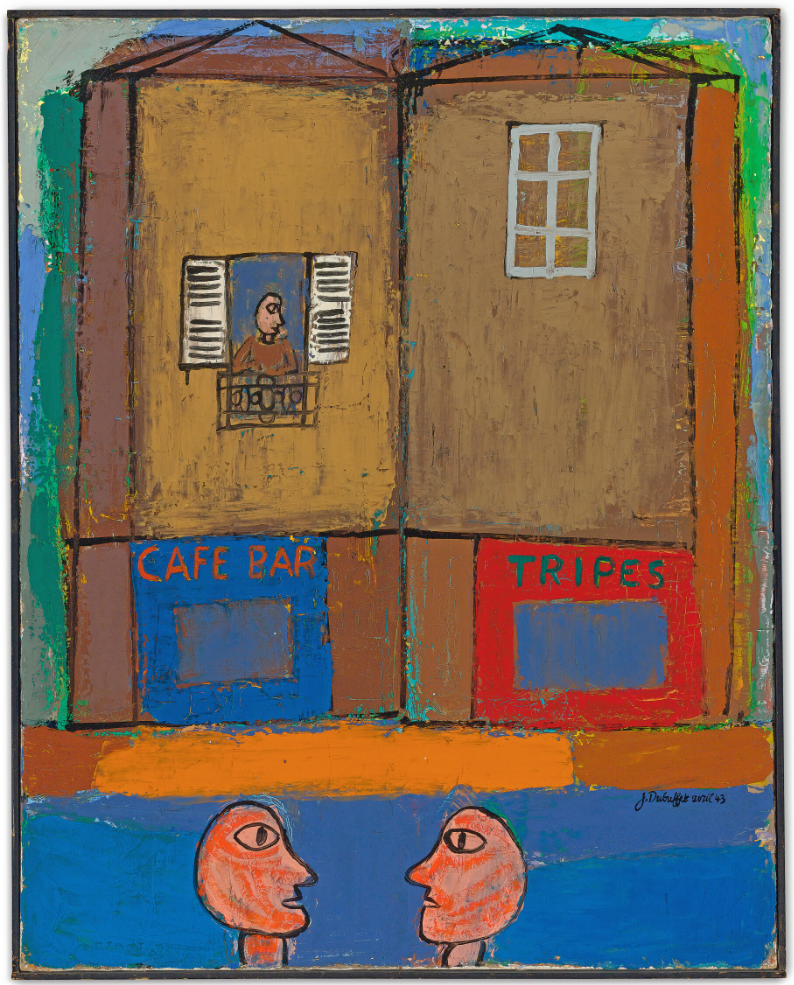
JEAN DUBUFFET (1901 – 1985)
La rue, 1943
Oil on canvas
92×73 cm (36 1/4 x 28 3/4 inches)
Signed and dated 43
#6. Territoire aux deux promeneurs, 1974
Sotheby’s Paris: 19 October 2023
Estimated: EUR 1,000,000 – 1,500,000
EUR 990,600 / USD 1,059,942
Territoire aux deux promeneurs | Modernités | 2023 | Sotheby’s (sothebys.com)
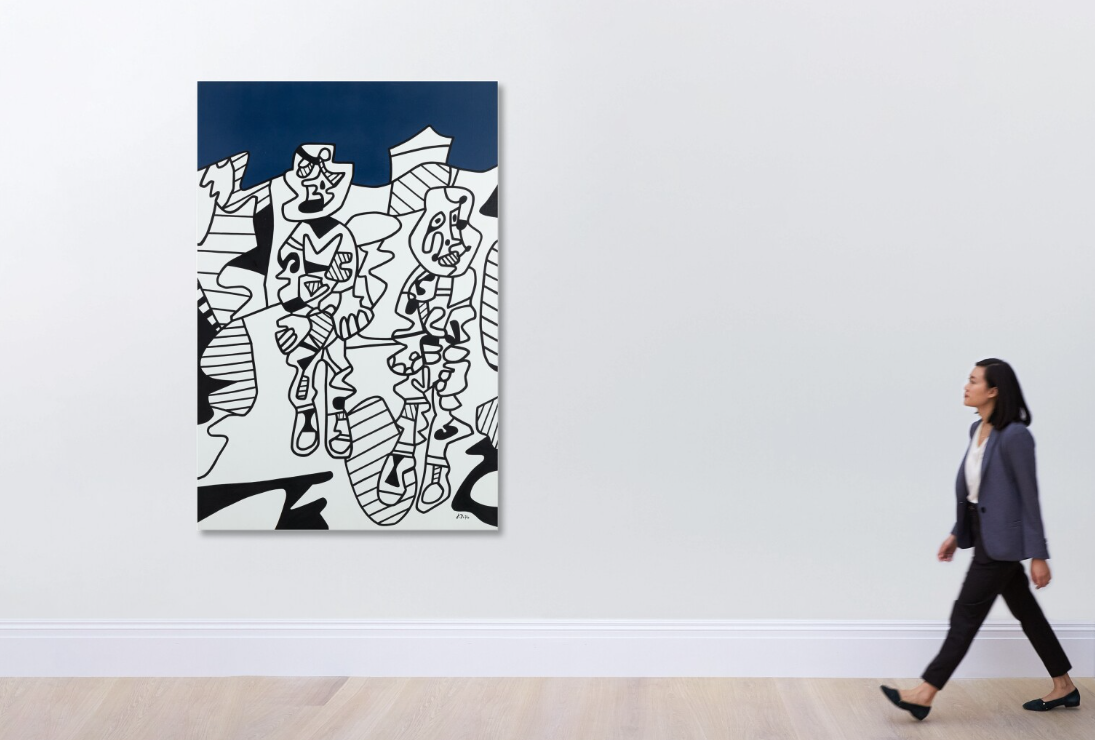
JEAN DUBUFFET (1901 – 1985)
Territoire aux deux promeneurs, 1974
Vinyl on canvas
195×130 cm (76 3/4 x 51 1/8 inches)
Signed with initials and dated 74; signed, titled and dated 74 on the reverse
#7. Site aléatoire avec 3 personnages, 1982
Phillips London: 2 March 2023
Estimated: GBP 500,000 – 700,000
GBP 838,200 / USD 1,008,355
Jean Dubuffet – 20th Century & Contemp… Lot 20 March 2023 | Phillips
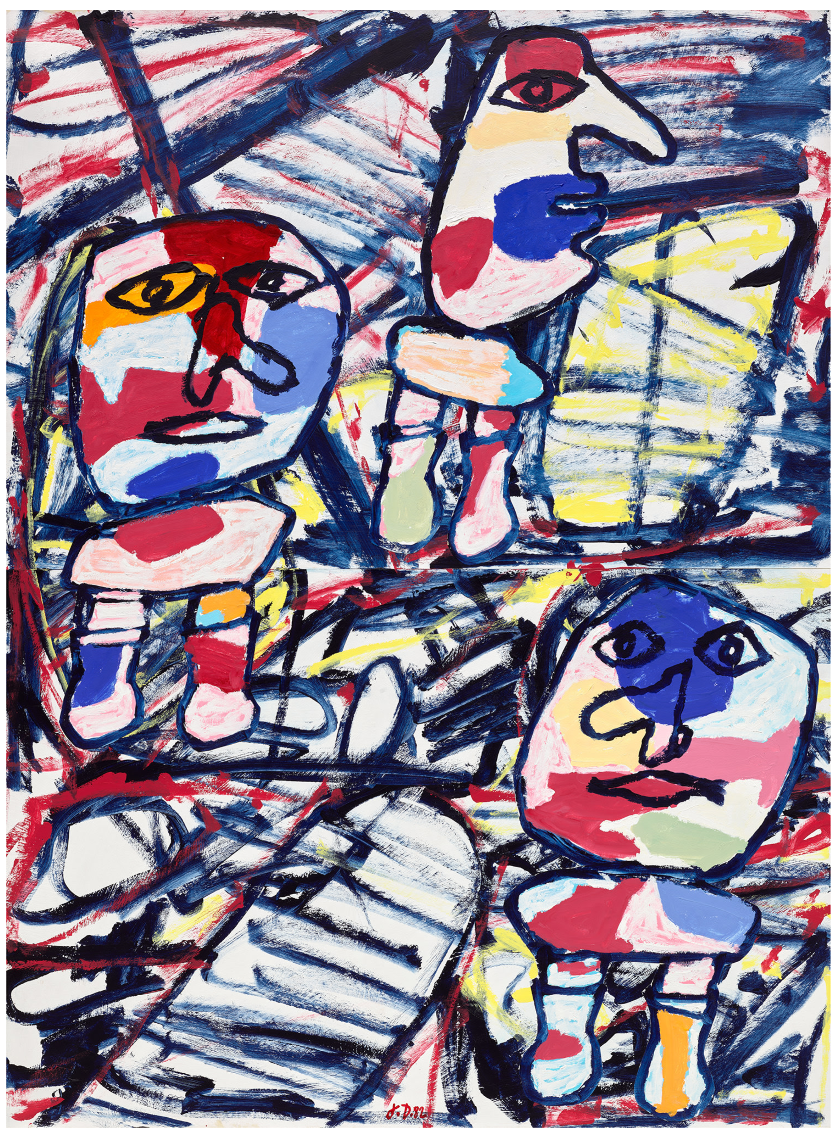
JEAN DUBUFFET
Site aléatoire avec 3 personnages, 1982
Acrylic and paper collage on paper laid on canvas
134×100 cm (52 3/4 x 39 3/8 inches)
Signed with the artist’s initials and dated ‘J.D. ’82’ lower centre
Executed on 3 July 1982
USD 1 million
#8. Campagne Cursive (Avec 4 Personnages), 1975
Christie’s New-York: 10 November 2023
Estimated: USD 500,000 – 700,000
USD 793,800
JEAN DUBUFFET (1901-1985), Campagne Cursive (Avec 4 Personnages) | Christie’s (christies.com)
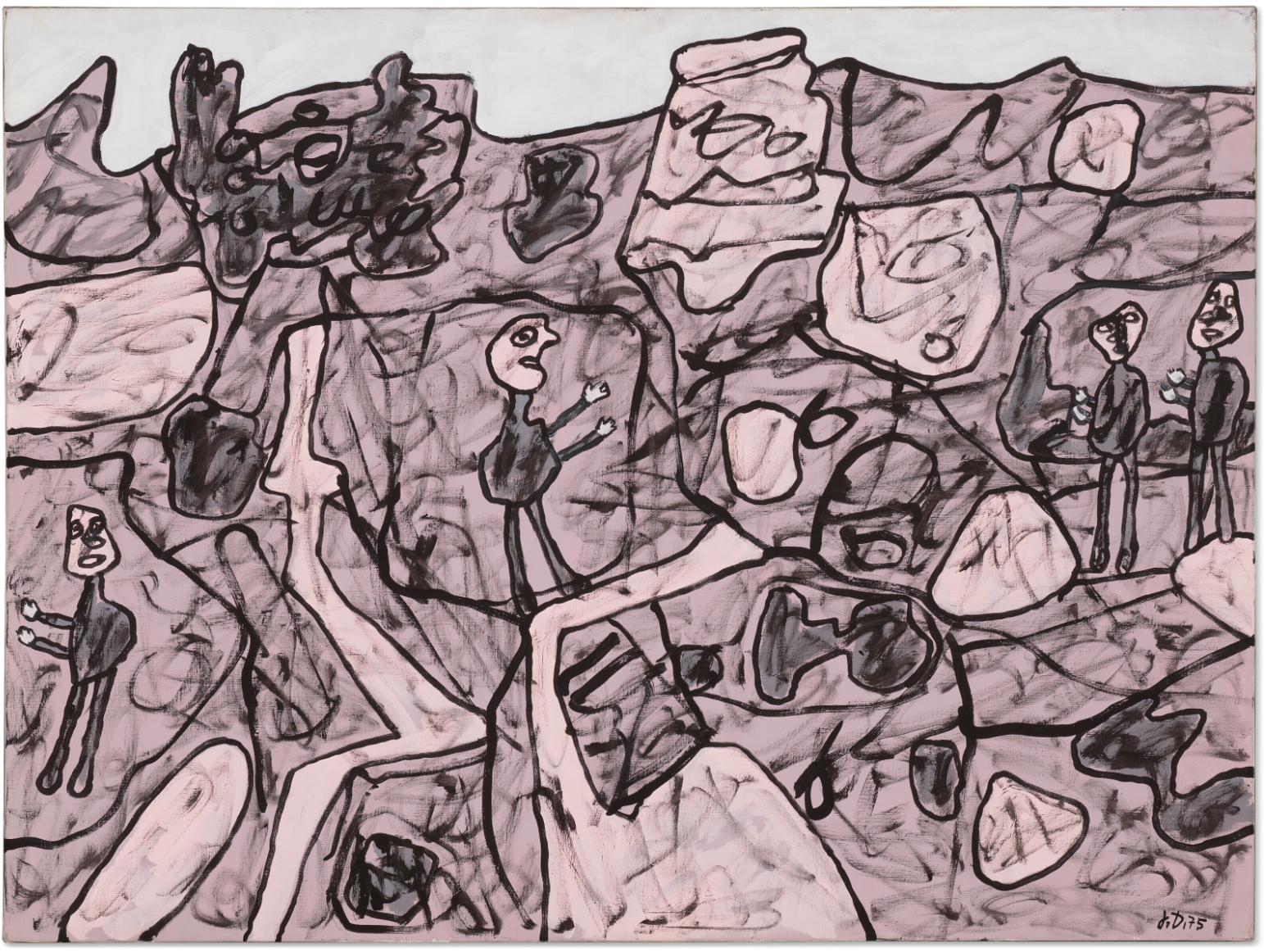
JEAN DUBUFFET (1901-1985)
Campagne Cursive (Avec 4 Personnages), 1975
Acrylic on canvas
96.8 x 129.8 cm (38 1/8 x 51 1/8 inches)
Signed with the artist’s initials and dated ‘J.D. 75’ (lower right)
#9. Cherche-Aubaine, 1973
Sotheby’s New-York: 17 May 2023
Estimated: USD 350,000 – 550,000
USD 787,400
Cherche-Aubaine | Modern Day Auction | 2023 | Sotheby’s (sothebys.com)
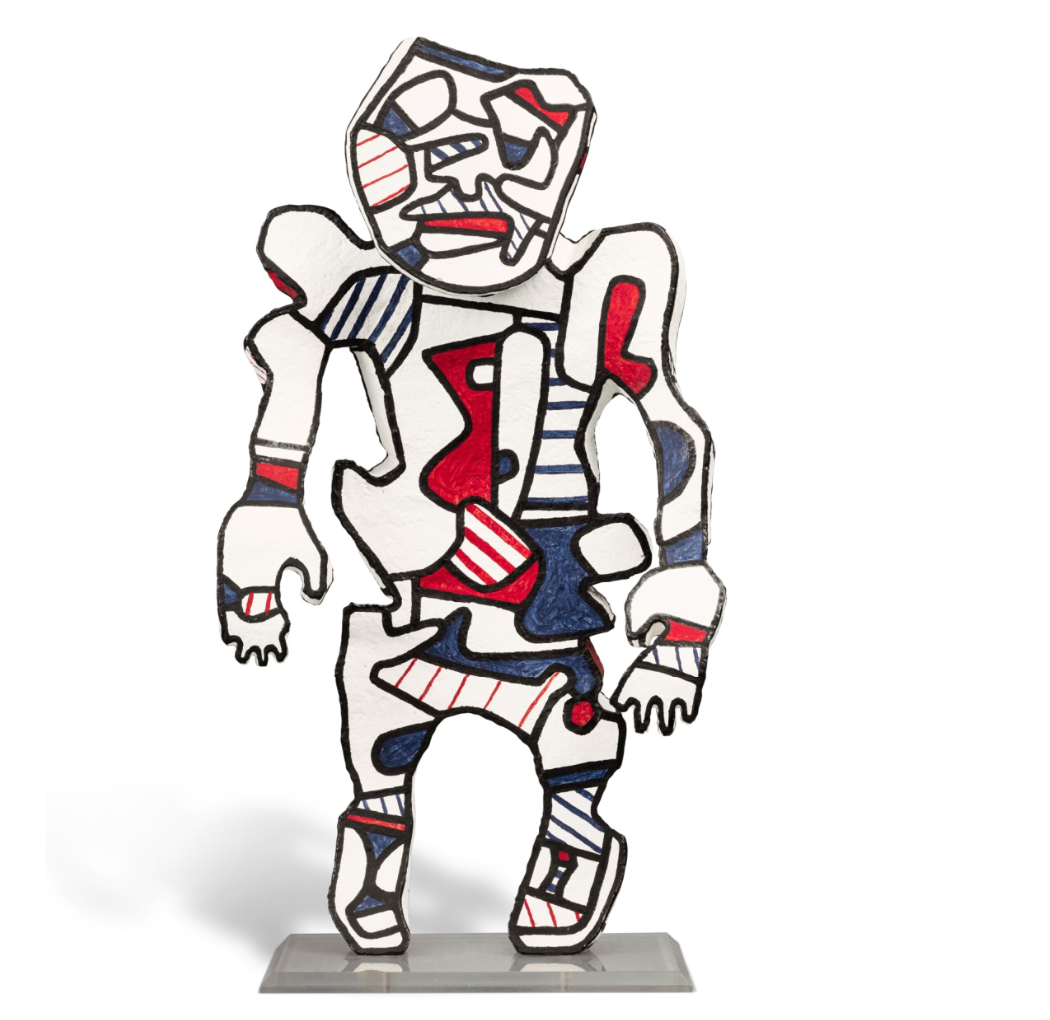
JEAN DUBUFFET (1901 – 1985)
Cherche-Aubaine, 1973
Polyurethane paint on epoxy
88.2 x 47.9 x 23.1 cm (34 3/4 x 18 7/8 x 9 1/8 inches)
Signed with the initials J.D. and dated 73 (lower left)
#10. Ji la grosse tête, 1971
Sotheby’s New-York: 16 November 2023
Estimated: USD 700,000 – 1,000,000
USD 762,000
Ji la grosse tête | Contemporary Day Auction | 2023 | Sotheby’s (sothebys.com)
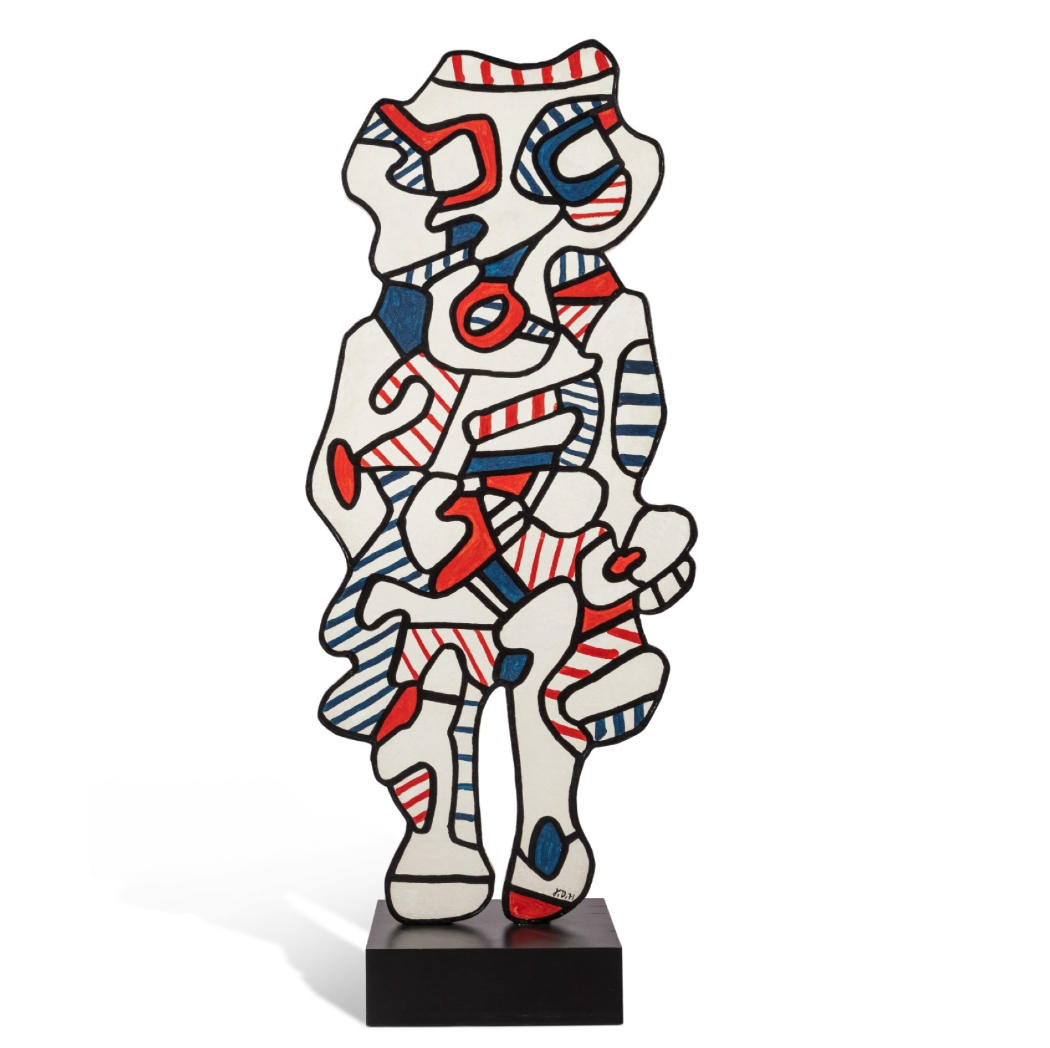
JEAN DUBUFFET (1901 – 1985)
Ji la grosse tête, 1971
Acrylic on Klegecell
Overall: 185.1 x 81.9 x 3.2 cm (72 7/8 x 32 1/4 x 1 1/4 inches)
Signed with the artist’s initials and dated 71 (lower right); titled and inscribed 16 (on the reverse)
#11. Tasse de thé II (Guillerette), 1965
Christie’s New-York: 18 May 2023
Estimated: USD 700,000 – 1,000,000
USD 718,200
JEAN DUBUFFET (1901-1985), Tasse de thé II (Guillerette) | Christie’s (christies.com)
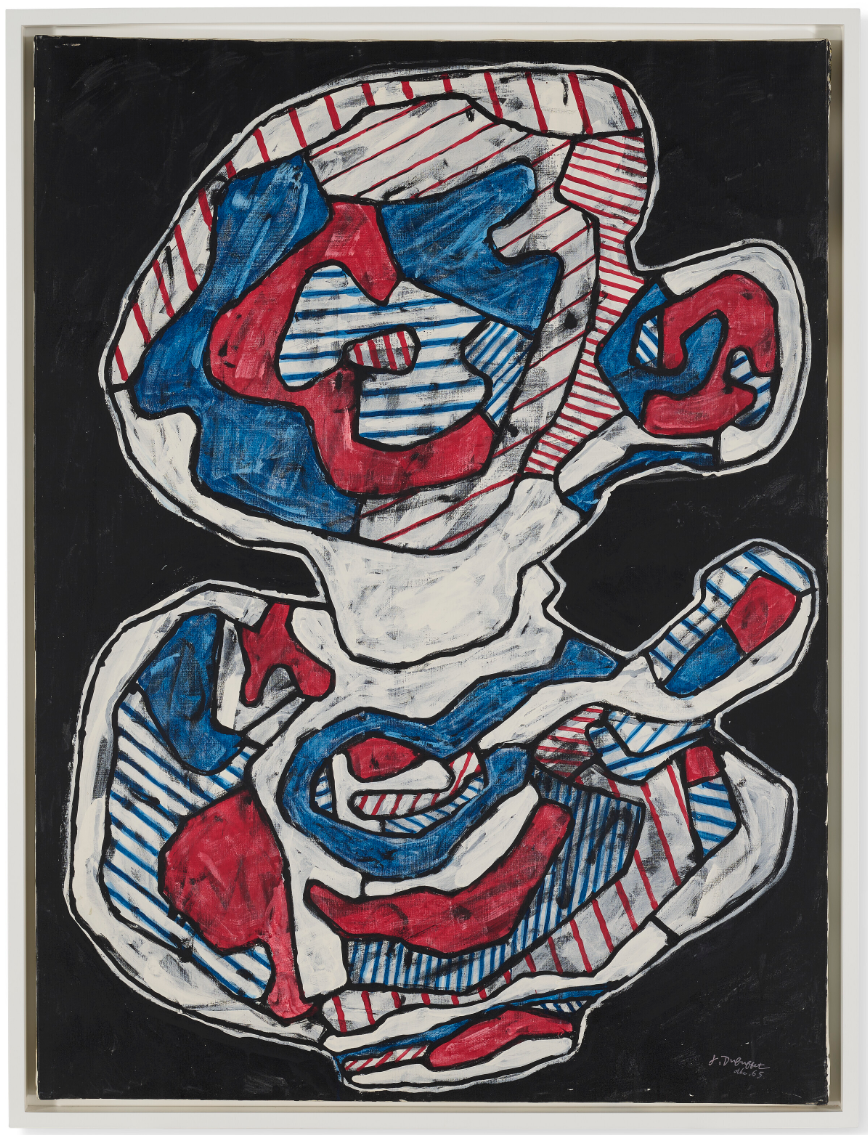
JEAN DUBUFFET (1901-1985)
Tasse de thé II (Guillerette), 1965
Vinyl on canvas
129.9 x 79 cm (51 1/8 x 31 1/8 inches)
Signed and dated ‘J. Dubuffet déc. 65’ (lower right)
Signed again, titled and dated ‘Tasse à thé II (guillerette) J. Dubuffet décembre 65’ (on the reverse)
#12. La vie en rose, 1980
Christie’s London: 28 February 2023
Estimated: GBP 450,000 – 650,000
GBP 567,000 / USD 682,101
JEAN DUBUFFET (1901-1985), La vie en rose | Christie’s (christies.com)
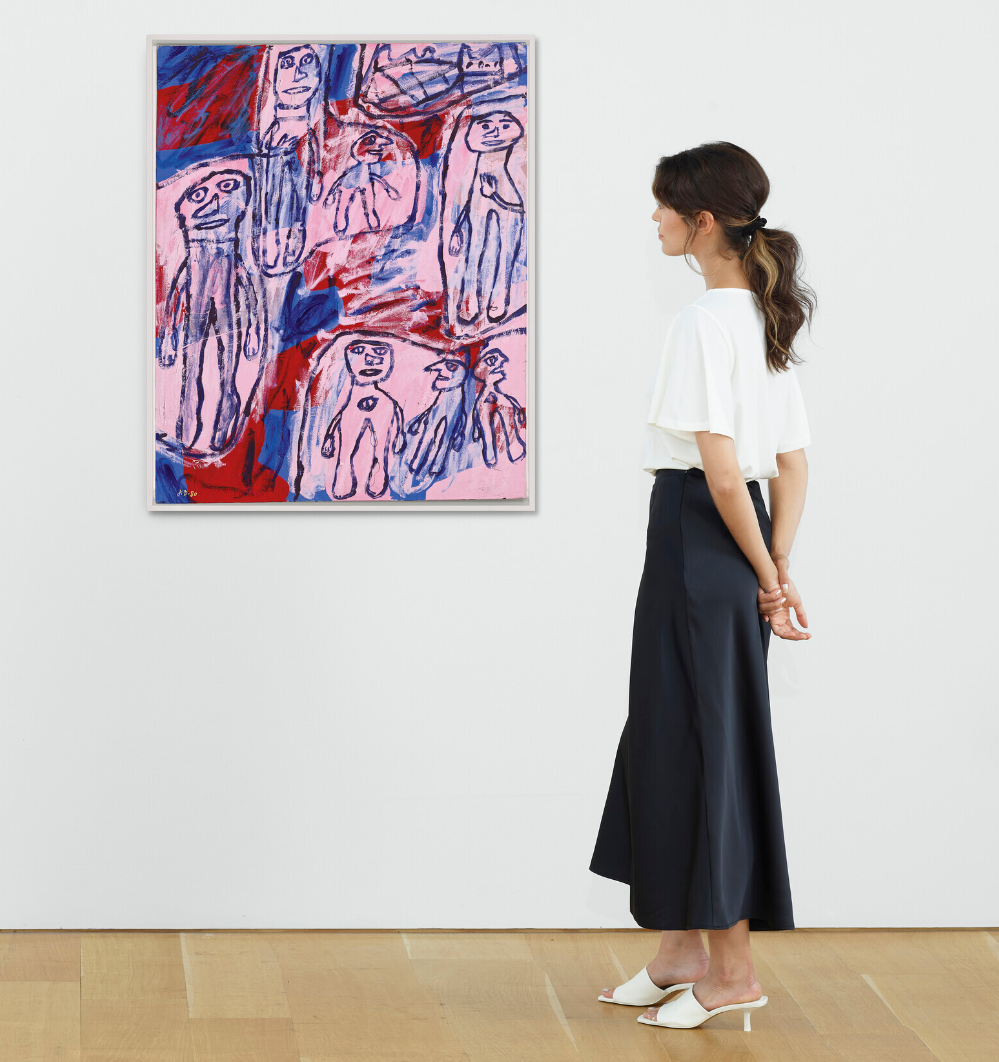
JEAN DUBUFFET (1901-1985)
La vie en rose, 1980
Acrylic on canvas
99.7 x 80.8 cm (39 1/4 x 31 3/4 inches)
Signed with the artist’s initials and dated ‘J. D. 80’ (lower left)
Inscribed, titled and dated ‘B41 La vie en rose Déc. 80’ (on the reverse)
#13. Paysage avec trois personnages, 1949
Christie’s New-York: 18 May 2023
Estimated: USD 700,000 – 1,000,000
USD 655,200
JEAN DUBUFFET (1901-1985), Paysage avec trois peronnages | Christie’s (christies.com)
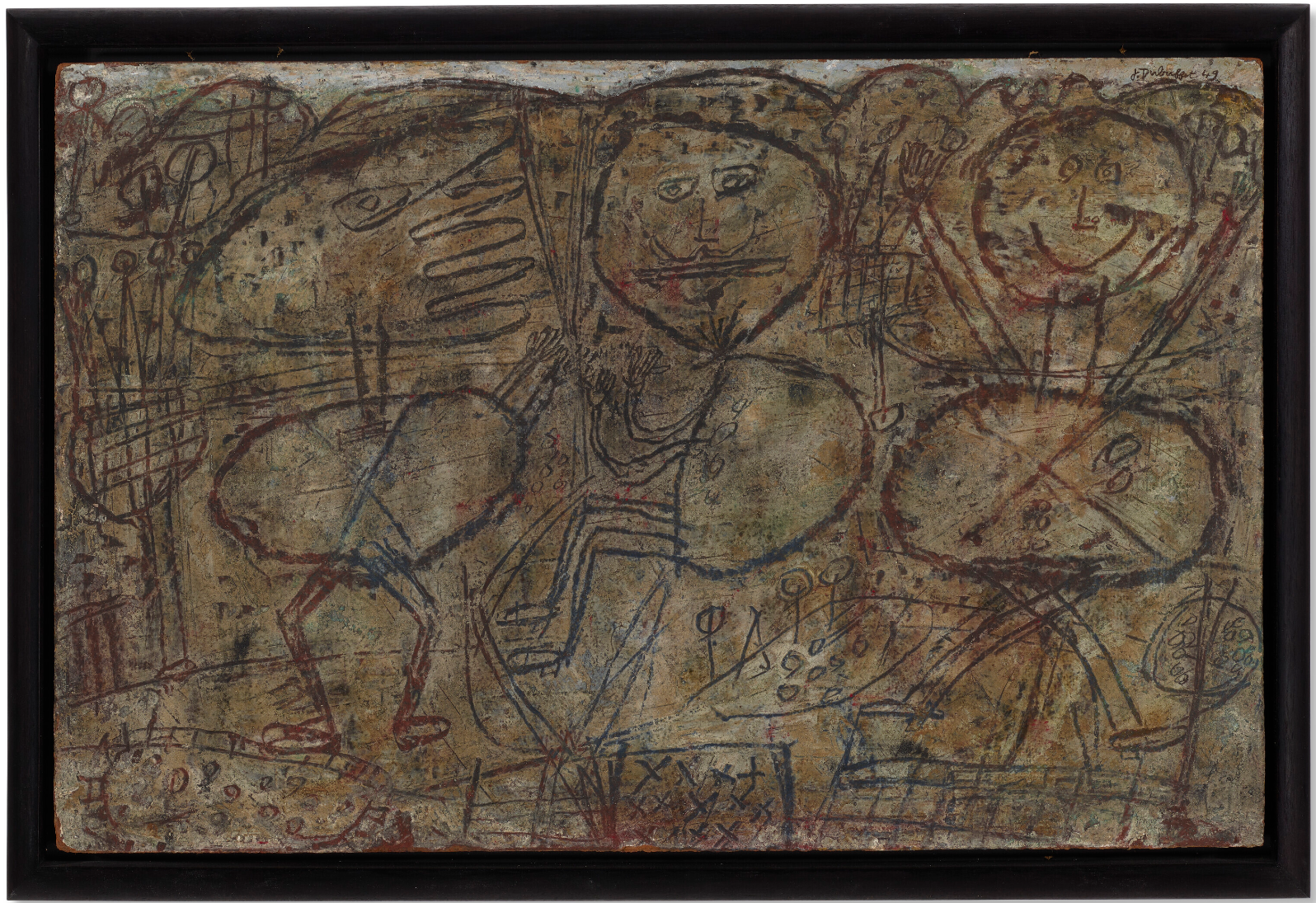
JEAN DUBUFFET (1901-1985)
Paysage avec trois peronnages, 1949
Oil and sand on board
38.7 x 59 cm (15 1/4 x 23 1/4 inches)
Signed and dated ‘J. Dubuffet 49’ (upper right)
Signed again, titled and dated twice ‘Paysage avec trois peronnages, 1949 J. Dubuffet 49-13’ (on the reverse)
#14. Le Château de bouteilles, 1965
Sotheby’s Paris: 5 June 2023
Estimated: EUR 500,000 – 700,000
EUR 609,600 / USD 651,833
Le Château de bouteilles | Art Contemporain Evening Auction | 2023 | Sotheby’s (sothebys.com)
JEAN DUBUFFET (1901 – 1985)
Le Château de bouteilles, 1965
Vinyle on paper laid down on canvas
81×100 cm (31 7/8 x 39 1/3 inches)
Signed and dated 65 on the reverse
#15. Nos châteaux peu denses, 1957
Christie’s Paris: 6 December 2023
Estimated: EUR 500,000 – 700,000
EUR 567,000 / USD 606,690
https://www.christies.com/en/lot/lot-6461893
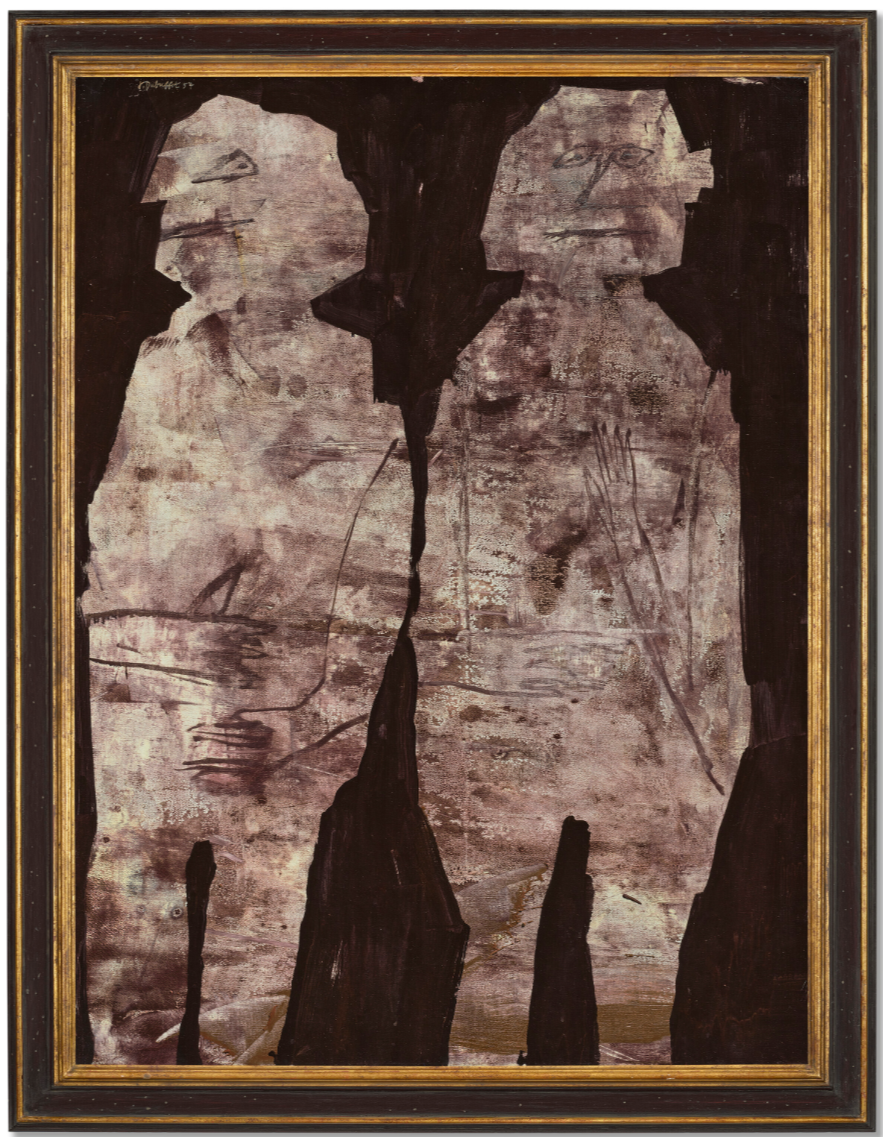
JEAN DUBUFFET (1901-1985)
Nos châteaux peu denses, 1957
Oil on canvas
130 x 97.4 cm (51 1/8 x 38 3/8 inches)
Signed and dated ‘J. Dubuffet 57′ (upper left)
Signed, titled and dated ”’Nos chateaux peu denses” J. Dubuffet novembre 57’ (on the reverse)
#16. Lieu de ressouvenance, 1980
Phillips London: 30 June 2023
Estimated: GBP 350,000 – 450,000
GBP 438,150 / USD 554,260
https://www.phillips.com/detail/jean-dubuffet/UK010423/27
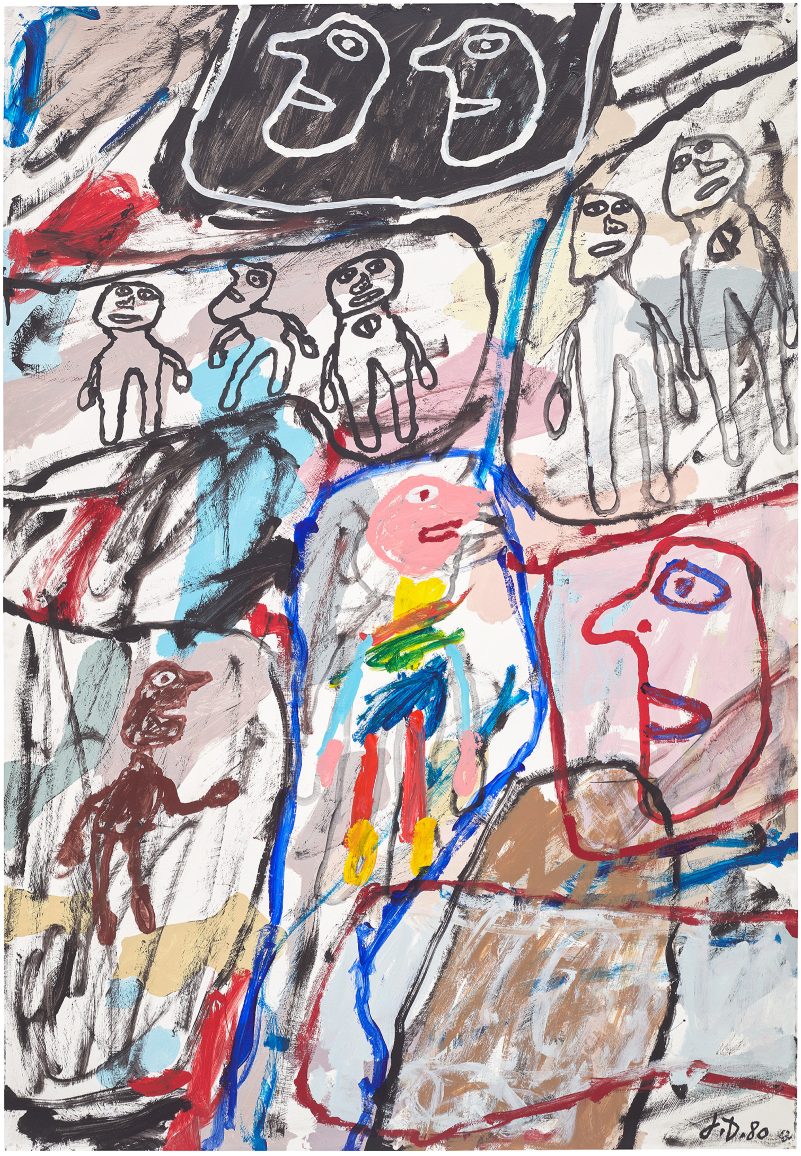
JEAN DUBUFFET
Lieu de ressouvenance, 1980
Acrylic on paper laid down on canvas
102.5 x 71.2 cm (40 3/8 x 28 inches)
Signed with the artist’s initials and dated ‘j.D. 80’ lower right
#17. Le fantasque, 1952
Phillips New-York: 16 May 2023
Estimated: USD 200,000 – 300,000
USD 508,000
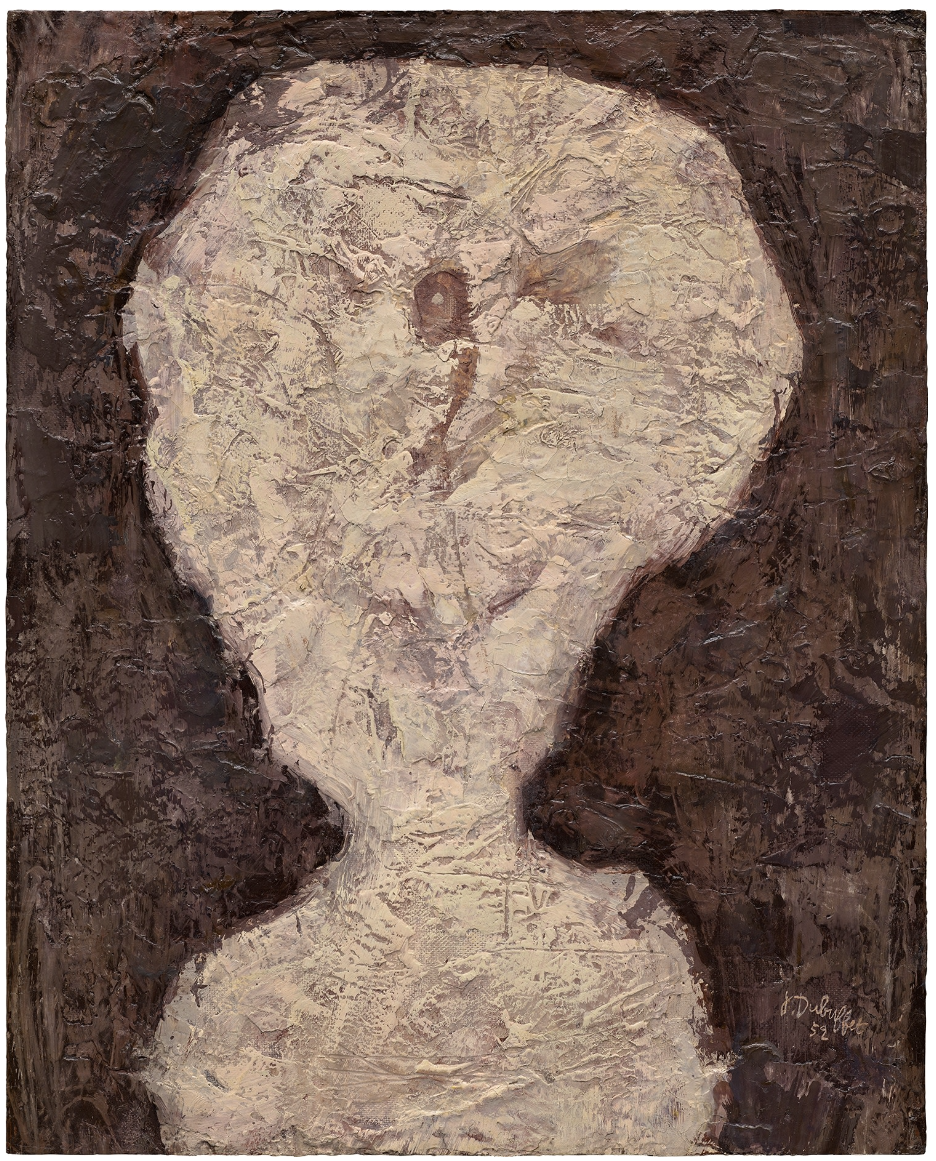
JEAN DUBUFFET
Le fantasque, 1952
Oil on panel
76.2 x 61 cm (30×24 inches)
Signed and dated “J. Dubuffet 52” lower right
Signed, titled, inscribed and dated “Le Fantasque J. Dubuffet Janvier 52 New York” on the reverse
#18. Gala de terre, 1959
Christie’s Paris: 7 June 2023
Estimated: EUR 200,000 – 300,000
EUR 441,000 / USD 471,870
Jean Dubuffet (1901-1985), Gala de terre | Christie’s (christies.com)
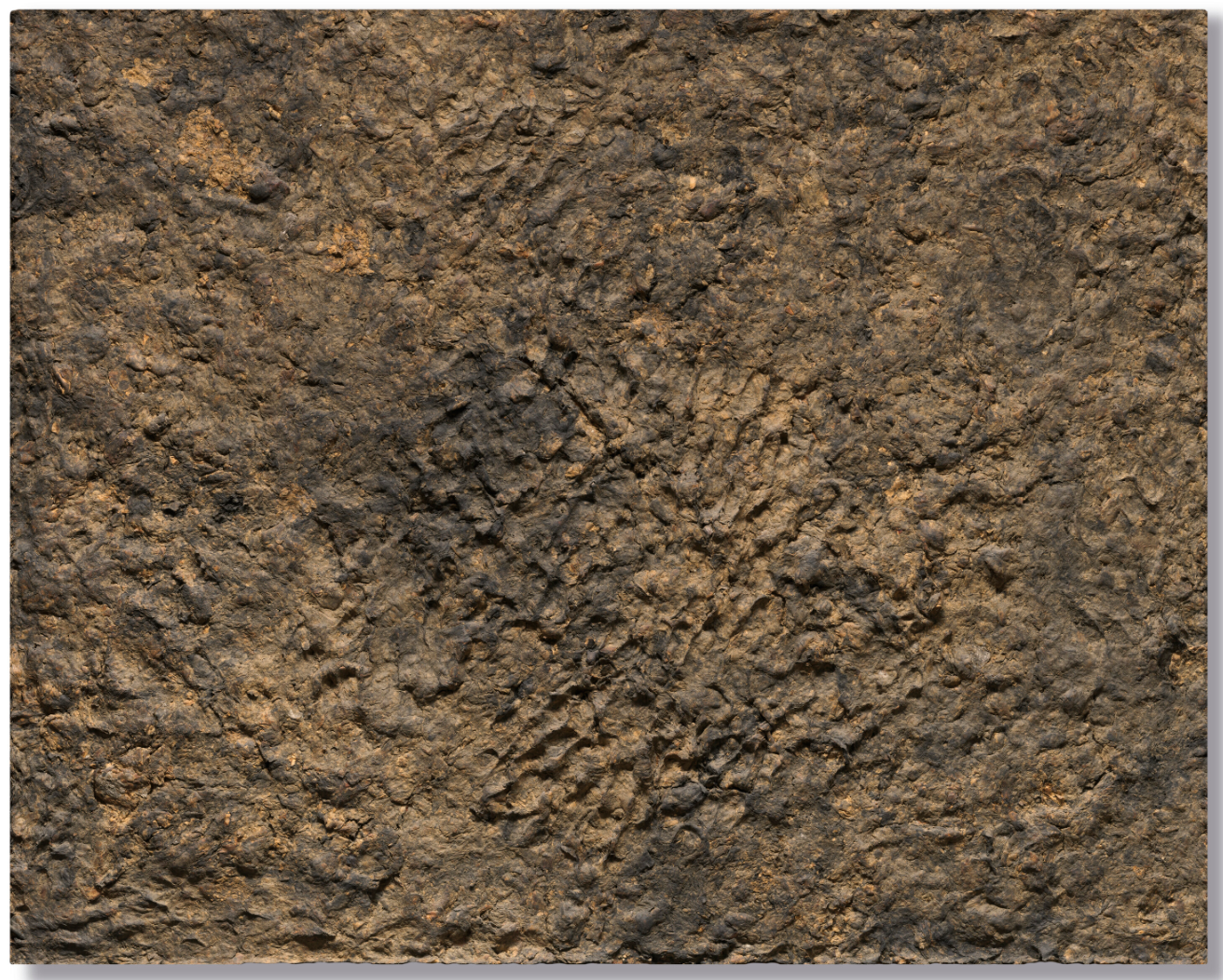
JEAN DUBUFFET (1901-1985)
Gala de terre, 1959
Papier mâché on masonite
81×100 cm (31 7/8 x 39 3/8 inches)
Signed and dated ‘J. Dubuffet 59’ (upper left)
Signed, titled and dated ”’Gala de Terre” J. Dubuffet décembre 59’ (on the reverse)
#19. La liquidité du monde, 1952
Phillips New-York: 16 May 2023
Estimated: USD 300,000 – 500,000
USD 444,500
https://www.phillips.com/detail/jean-dubuffet/NY010423/139
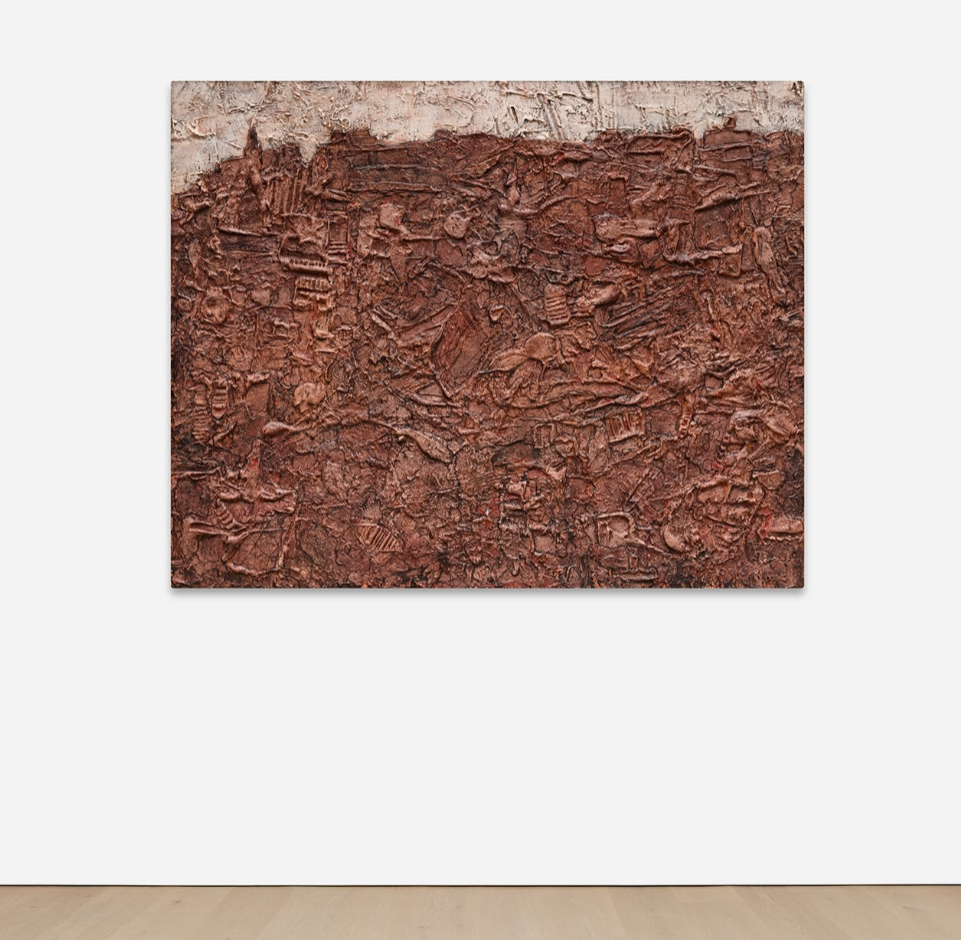
JEAN DUBUFFET
La liquidité du monde, 1952
Oil and mixed media on plywood on Masonite
130.2 x 161.9 cm (51 1/4 x 63 3/4 inches)
Signed and dated “J. Dubuffet 52” upper and lower left
Signed, titled and dated “La liquidité du monde J. Dubuffet 1952” on the reverse
#20. Tête en tache de moisissure, 1950
Christie’s London: 28 June 2023
Estimated: GBP 300,000 – 500,000
GBP 340,200 / USD 430,353
https://www.christies.com/en/lot/lot-6435051
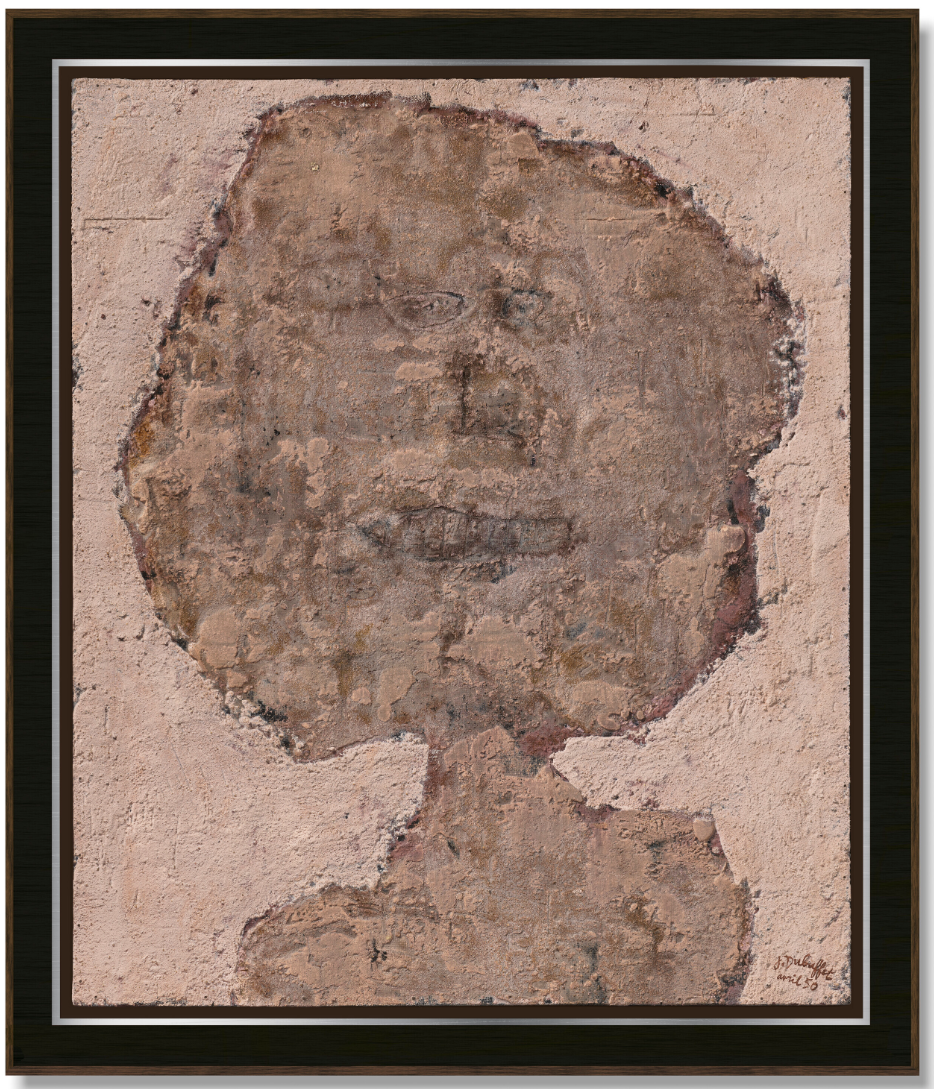
JEAN DUBUFFET (1901-1985)
Tête en tache de moisissure, 1950
Oil and sand on masonite
64.9 x 54 cm (25 1/2 x 21 1/4 inches)
Signed and dated ‘J. Dubuffet avril 50’ (lower right)
#21. Coq à l’oeil, 1959
Sotheby’s Paris: 6 December 2023
Estimated: EUR 300,000 – 400,000
EUR 393,700 / USD 421,259
Coq à l’oeil | Art Moderne et Contemporain Evening Auction | 2023 | Sotheby’s (sothebys.com)
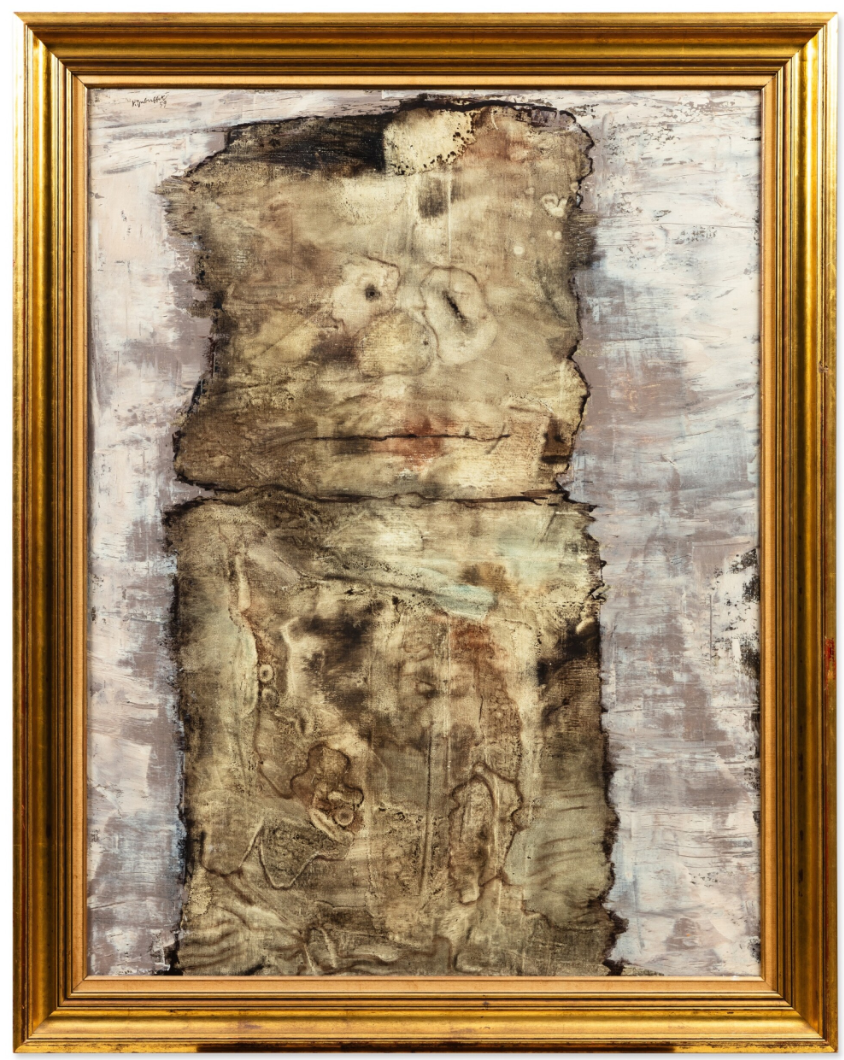
JEAN DUBUFFET (1901 – 1985)
Coq à l’oeil, 1959
Oil on canvas
114×86 cm (44 7/8 x 33 7/8 inches)
Signed and dated 59; signed, titled and dated sept. 59 on the reverse
#22. Danse brune (Brown Dance), 1959
Christie’s London: 29 June 2023
Estimated: GBP 250,000 – 350,000
GBP 327,600 / USD 414,414
https://www.christies.com/en/lot/lot-6435966
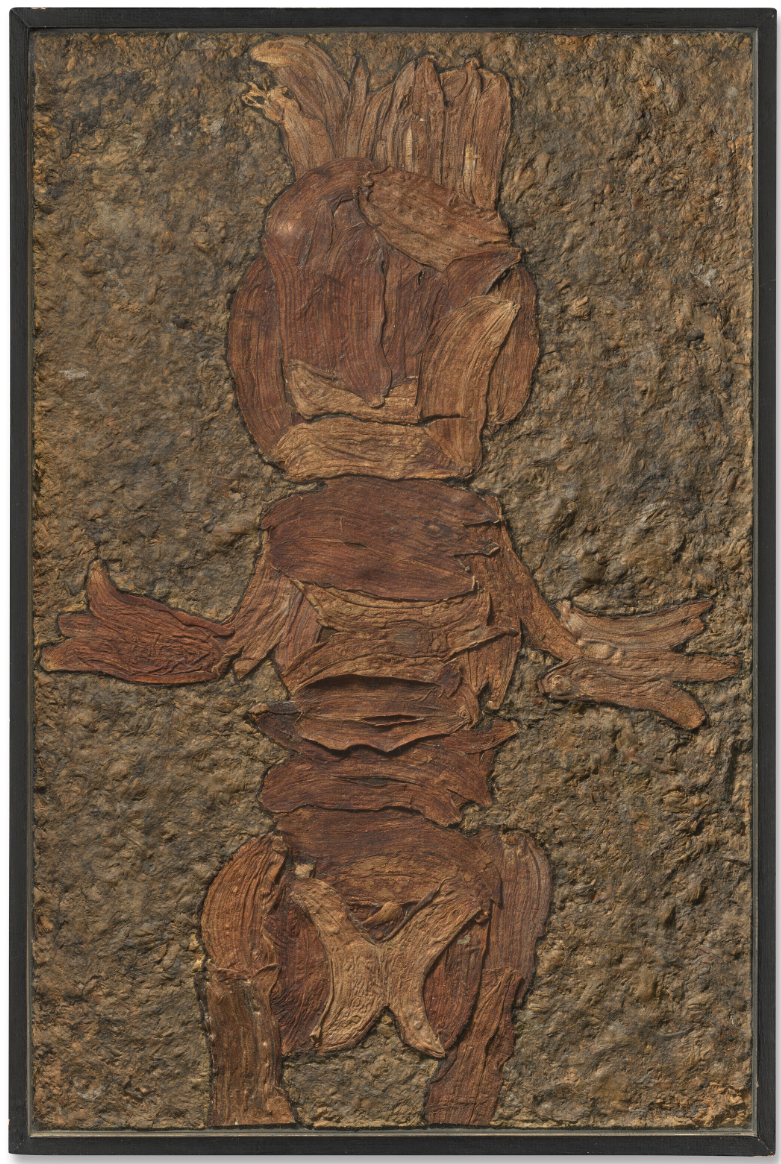
JEAN DUBUFFET (1901-1985)
Danse brune (Brown Dance), 1959
Banana skin, papier-mâché and oil on panel, in artist’s frame
68.9 x 45.9 cm (27 1/8 x 18 1/8 inches)
Signed and dated ‘J. Dubuffet 59’ (upper right)
Titled and dated ‘Danse brune Decembre 59’ (on the reverse)
#23. Octobre, 1952
Sotheby’s Paris: 5 June 2023
Estimated: EUR 220,000 – 320,000
EUR 381,000 / USD 407,670
Octobre | Art Contemporain Evening Auction | 2023 | Sotheby’s
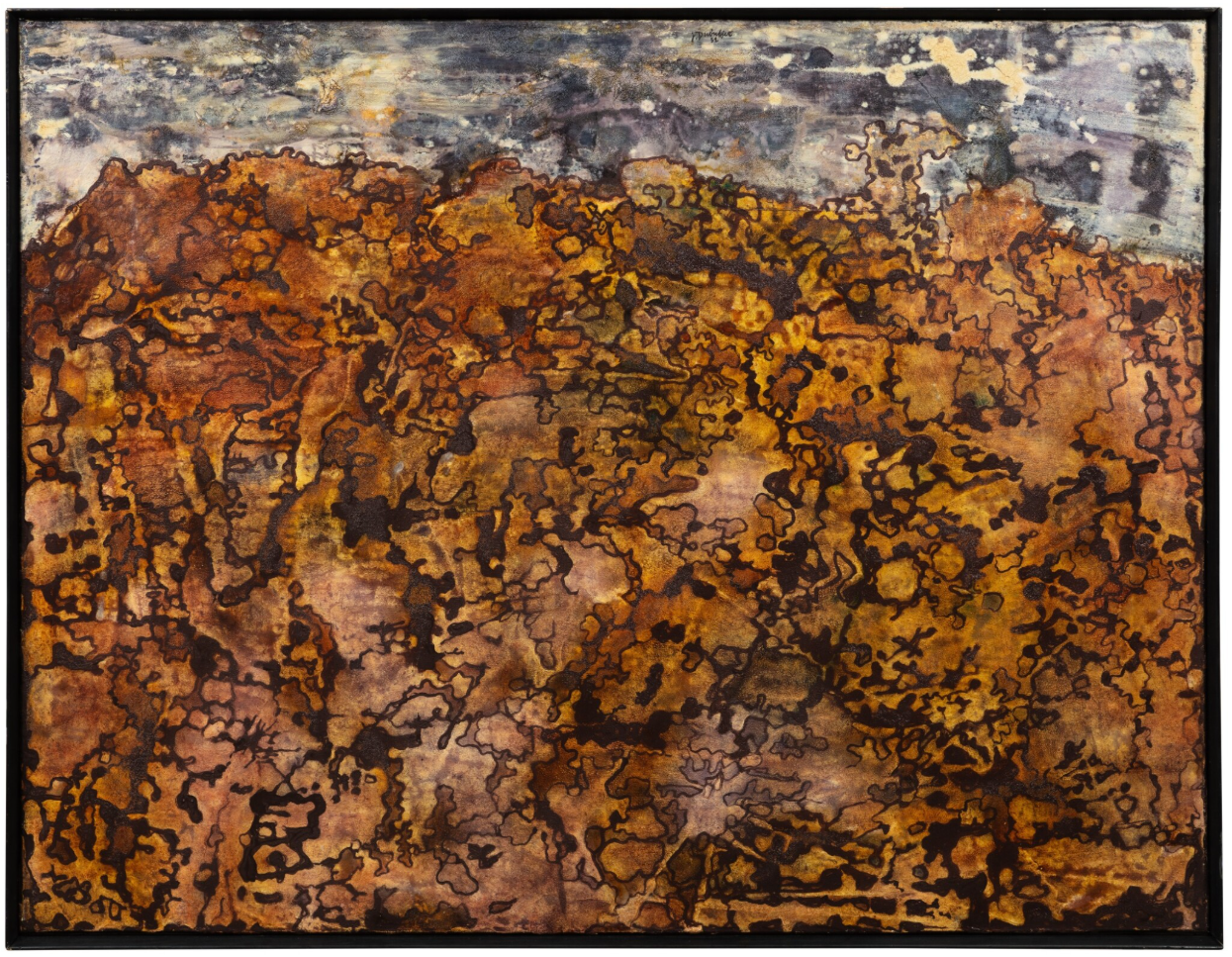
JEAN DUBUFFET (1901 – 1985)
Octobre, 1952
Oil on canvas
89×116 cm (35 x 45 5/8 inches)
Signed and dated 52
Executed between November, 15th and 18th, 1952
#24. Voyage à Deux, 1968
Christie’s New-York: 29 September 2023
Estimated: USD 200,000 – 300,000
USD 327,600
JEAN DUBUFFET (1901-1985), Voyage à Deux | Christie’s
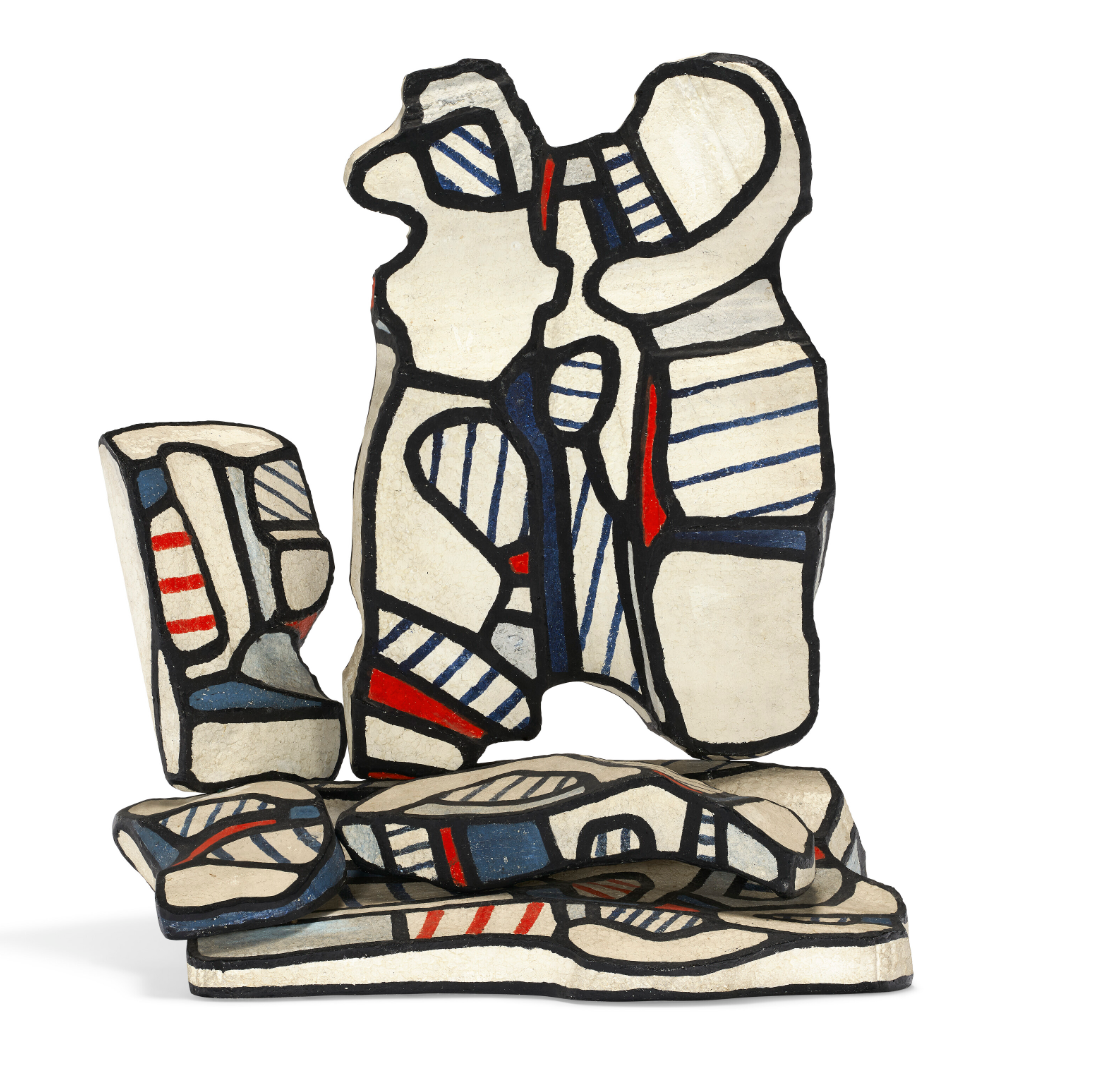
JEAN DUBUFFET (1901-1985)
Voyage à Deux, 1968
Transfer on polyester, in five parts
Overall: 66 x 55.9 x 33 cm (26x22x13 inches)
Signed with the artist’s initials and dated ‘J.D. 68’ (lower right)
#25. Site aléatoire avec 6 personnages, 1982
Christie’s New-York: 10 November 2023
Estimated: USD 250,000 – 350,000
USD 315,000
JEAN DUBUFFET (1901-1985), Site aléatoire avec 6 personnages | Christie’s
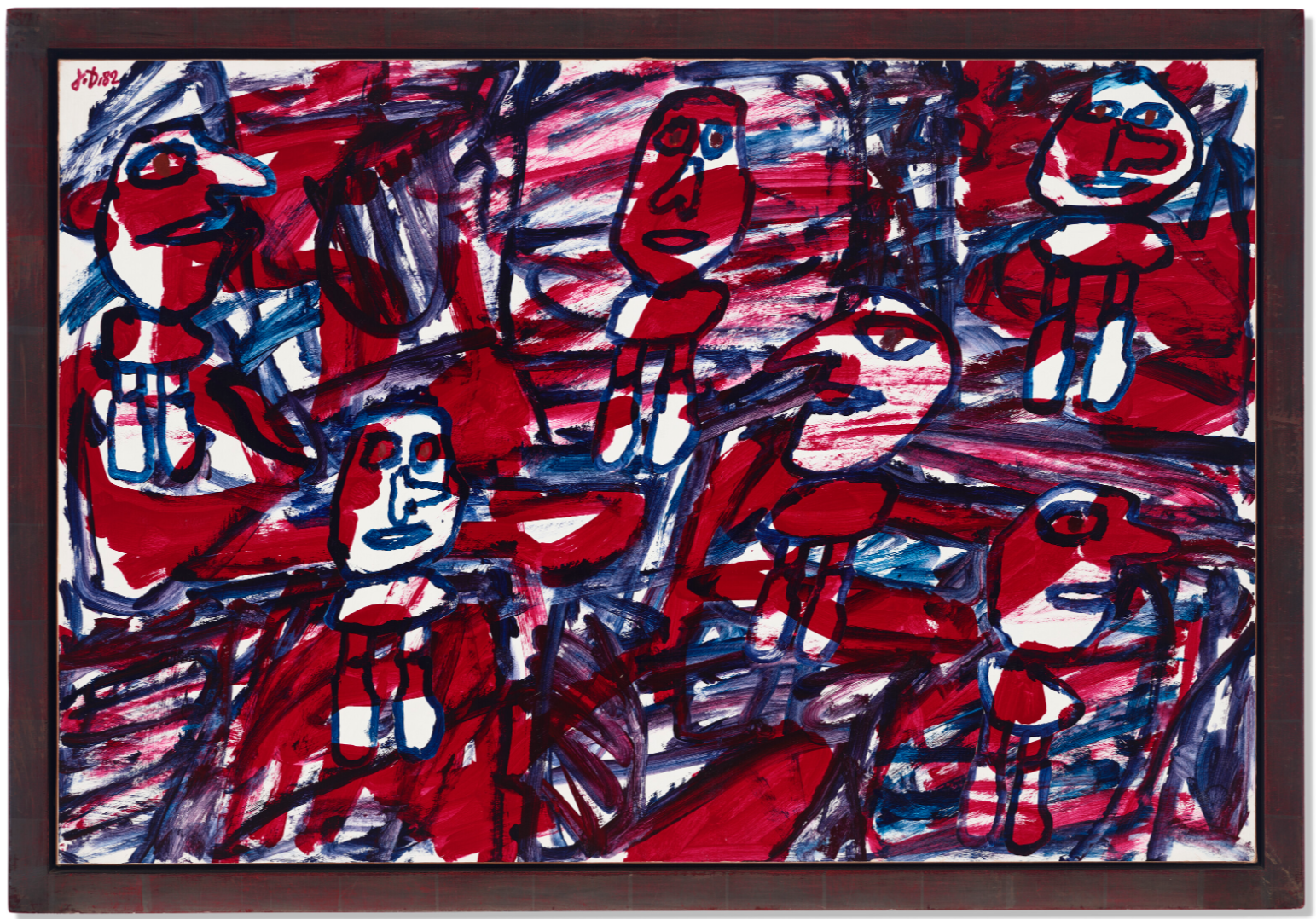
JEAN DUBUFFET (1901-1985)
Site aléatoire avec 6 personnages, 1982
Acrylic and paper collage on paper mounted on canvas
66.3 x 99.3 cm (26 1/2 x 39 1/4 inches)
Signed with the artist’s initials and dated ‘J.D. 82’ (upper left)
#26. Elément bleu X, 1968
Sotheby’s Paris: 13 December 2023
Estimated: EUR 80,000 – 120,000
EUR 279,400 / USD 298,960
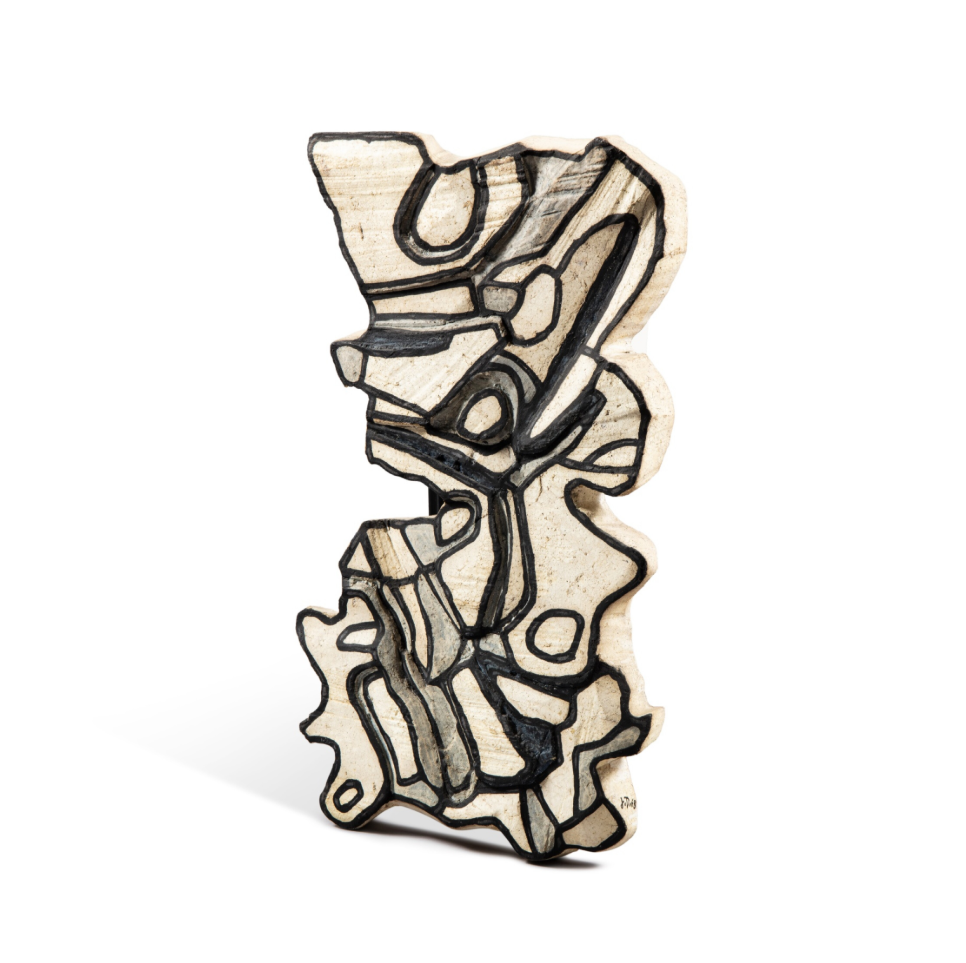
JEAN DUBUFFET (1901 – 1985)
Elément bleu X, 1968
Transfer on polyester
99.5 x 54 x 10 cm (39 3/16 x 21 1/4 x 3 15/16 inches)
Signed and dated 68
Executed on June 27, 1967
#27. Chevaux à la lune, 1943
Christie’s Paris: 4 April 2023
Estimated: EUR 100,000 – 150,000
EUR 277,200 / USD 296,605
Jean Dubuffet (1901-1985), Chevaux à la lune | Christie’s
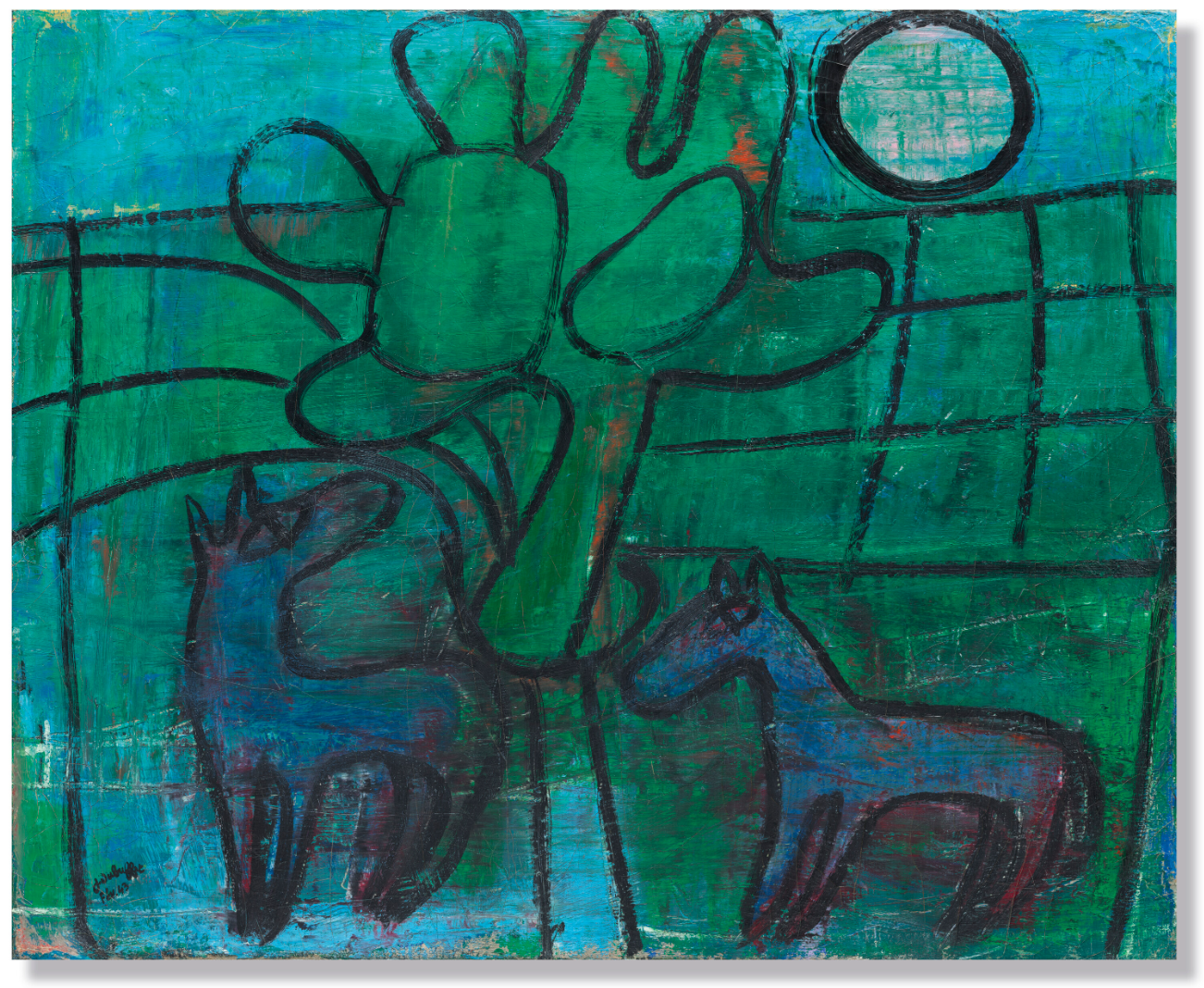
JEAN DUBUFFET (1901-1985)
Chevaux à la lune, 1943
Oil on canvas
50×61 cm (19 5/8 x 24 inches)
Signed and dated ‘J. Dubuffet Fév. 43’ (lower left)
Painted in February 1943
#28. Diffusion de l’être, 1984
Christie’s New-York: 10 November 2023
Estimated: USD 180,000 – 250,000
USD 239,400
JEAN DUBUFFET (1901-1985), Diffusion de l’être | Christie’s
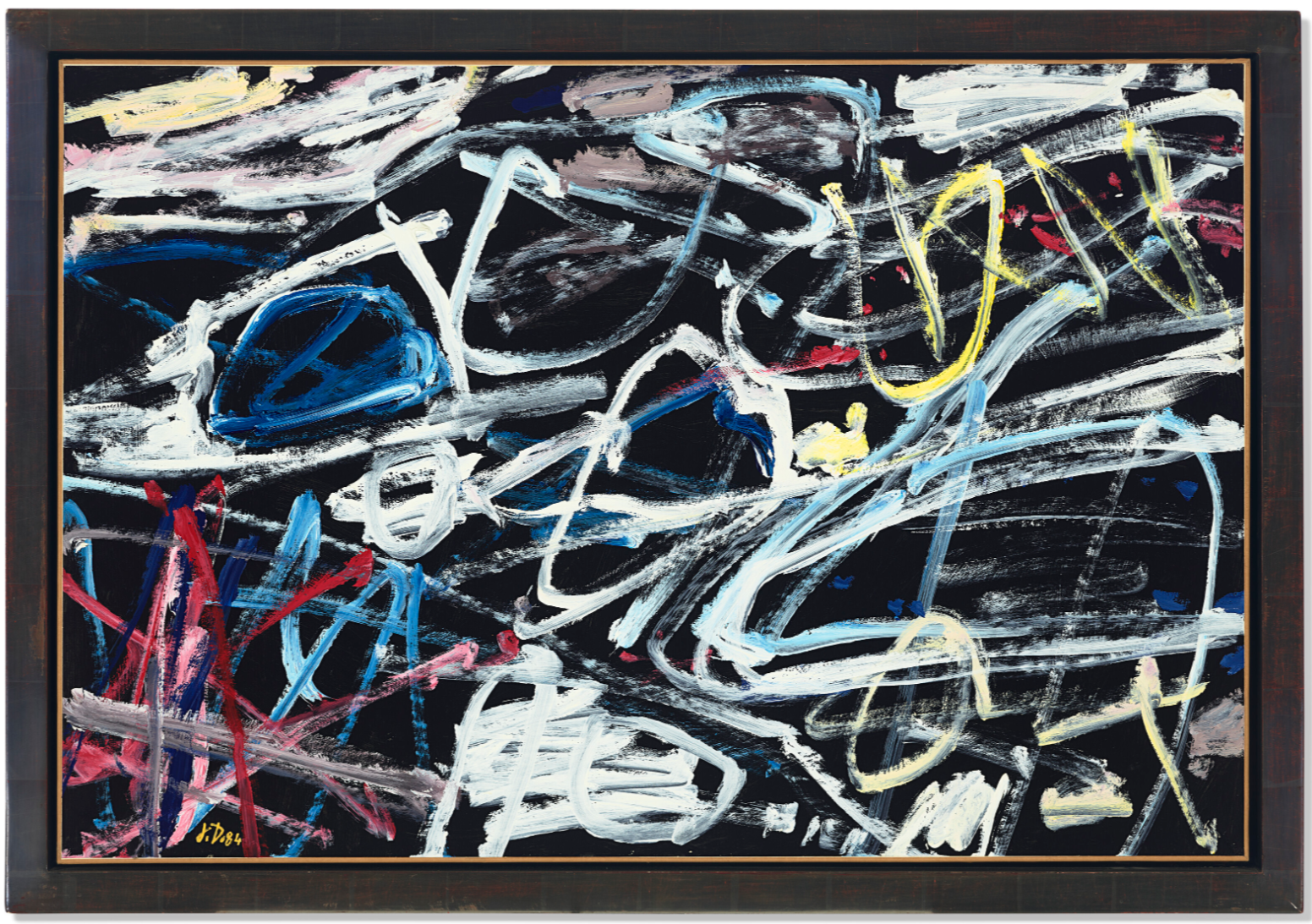
JEAN DUBUFFET (1901-1985)
Diffusion de l’être, 1984
Acrylic on paper mounted on canvas
66.8 x 100.3 cm (26 3/4 x 39 5/8 inches)
Signed with the artist’s initials and dated ‘J.D. 84’ (lower left)
Site avec trois personnages, 1982
Sotheby’s Paris: 13 December 2023
Estimated: EUR 120,000 – 180,000
EUR 203,200 / USD 217,424
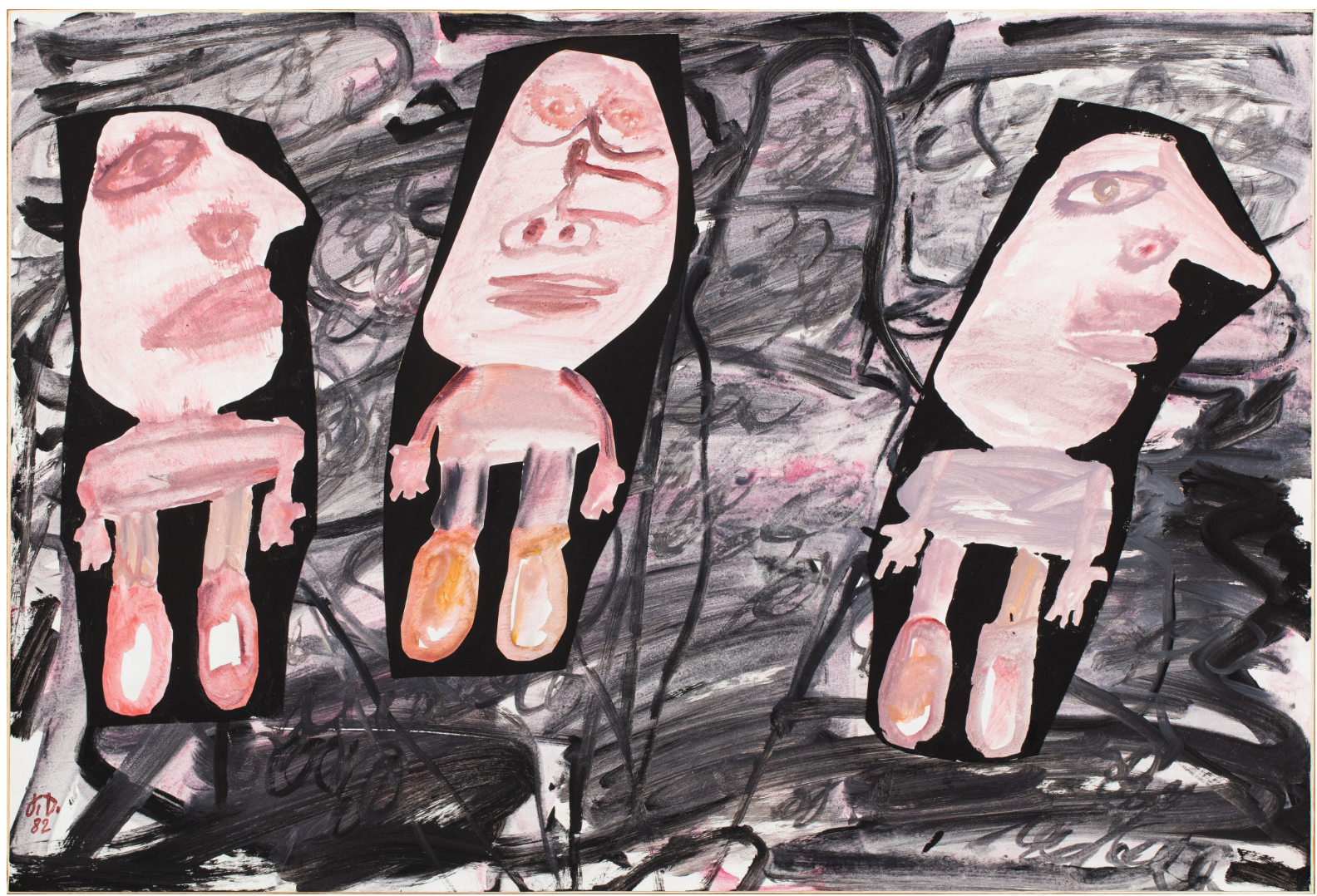
JEAN DUBUFFET (1901 – 1985)
Site avec trois personnages, 1982
Acrylic and paper collage on paper laid down on canvas
68.2 x 100.5 cm (26 7/8 x 39 9/16 inches)
Signed and dated 82
Executed on September 11, 1982
Site Avec 4 Personnages, 1981
Sotheby’s London: 28 June 2023
Estimated: GBP 100,000 – 150,000
GBP 165,100 / USD 208,852
Site Avec 4 Personnages | Modern & Contemporary Day Auction | 2023 | Sotheby’s
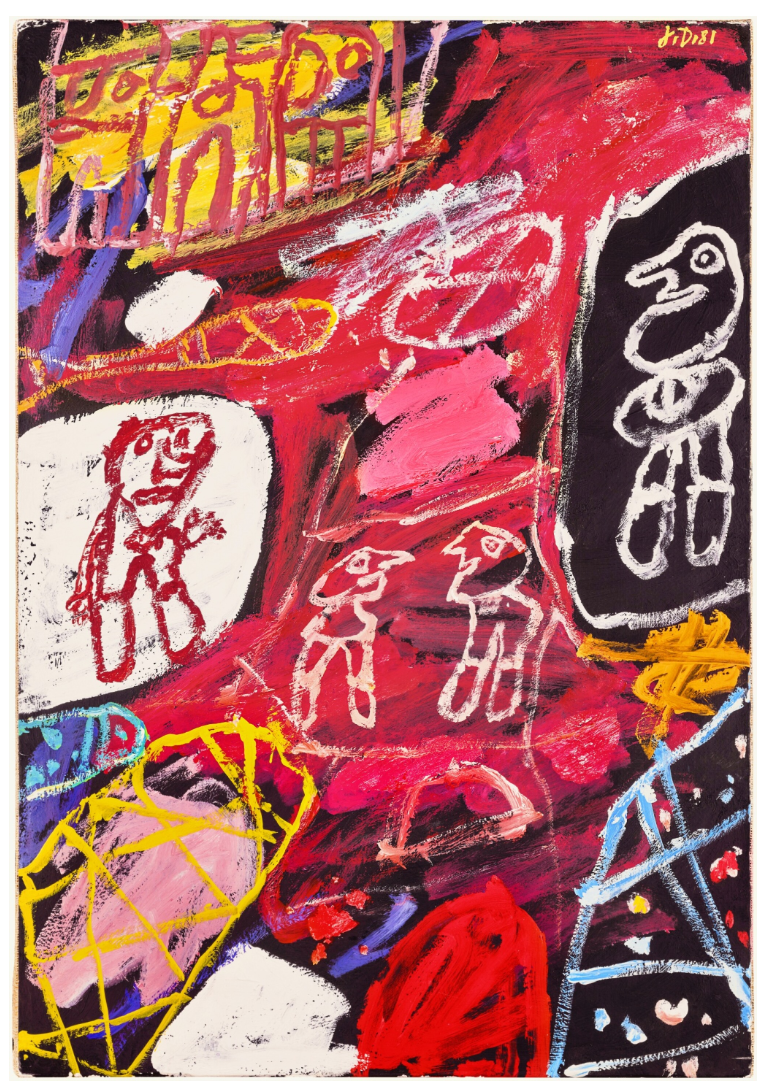
JEAN DUBUFFET (1901 – 1985)
Site Avec 4 Personnages, 1981
Acrylic on paper laid down on canvas
51 x 35.6 cm (20 1/8 x 14 inches)
Signed with the artist’s initials and dated 81
Occupation des Territoires, 1979
Christie’s New-York: 10 November 2023
Estimated: USD 250,000 – 350,000
USD 201,600
JEAN DUBUFFET (1901-1985), Occupation des Territoires | Christie’s
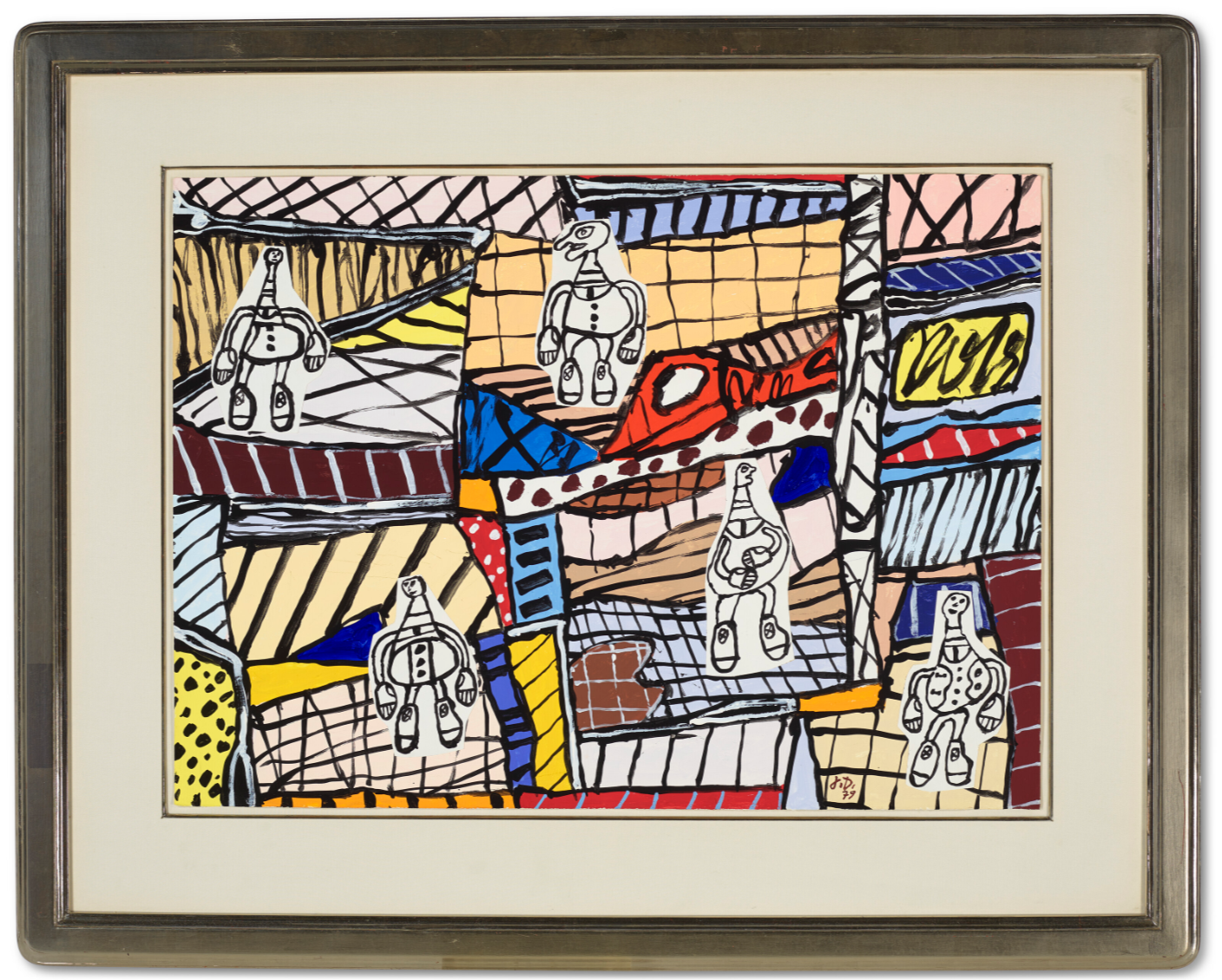
JEAN DUBUFFET (1901-1985)
Occupation des Territoires, 1979
Acrylic and paper collage on paper
50.8 x 68.8 cm (20 x 27 1/2 inches)
Signed with the artist’s initials and dated ‘J.D. 79’ (lower right)
2022 Auction Results
#1. Grand nu charbonneux, 1944
Sotheby’s New-York: 17 May 2022
The Macklowe Collection
Estimated: USD 4,000,000 – 6,000,000
USD 5,534,500
Grand nu charbonneux | The Macklowe Collection | 2022 | Sotheby’s (sothebys.com)
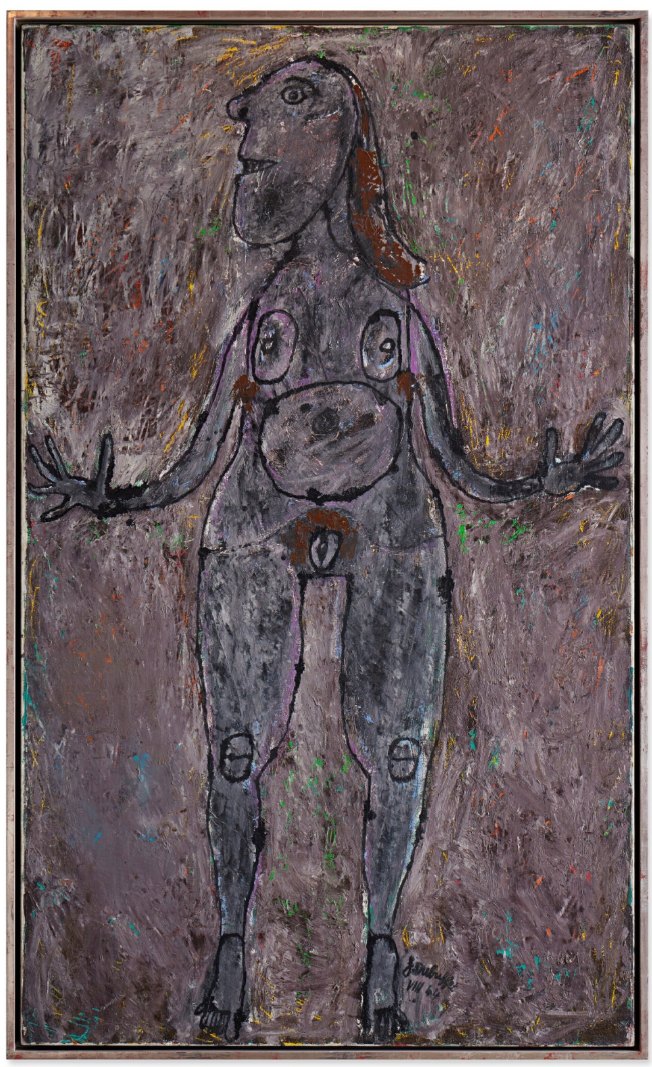
JEAN DUBUFFET (1901 – 1985)
Grand nu charbonneux, 1944
Oil on canvas
161.3 x 96.8 cm (63 1/2 x 38 1/8 inches)
Signed and dated VIII 44
#2. Épisode, 1967
Sotheby’s New-York: 14 November 2022
The David M. Solinger Collection
Estimated: USD 3,500,000 – 4,500,000
USD 5,132,000
Épisode | The David M. Solinger Collection Evening Auction | 2022 | Sotheby’s (sothebys.com)
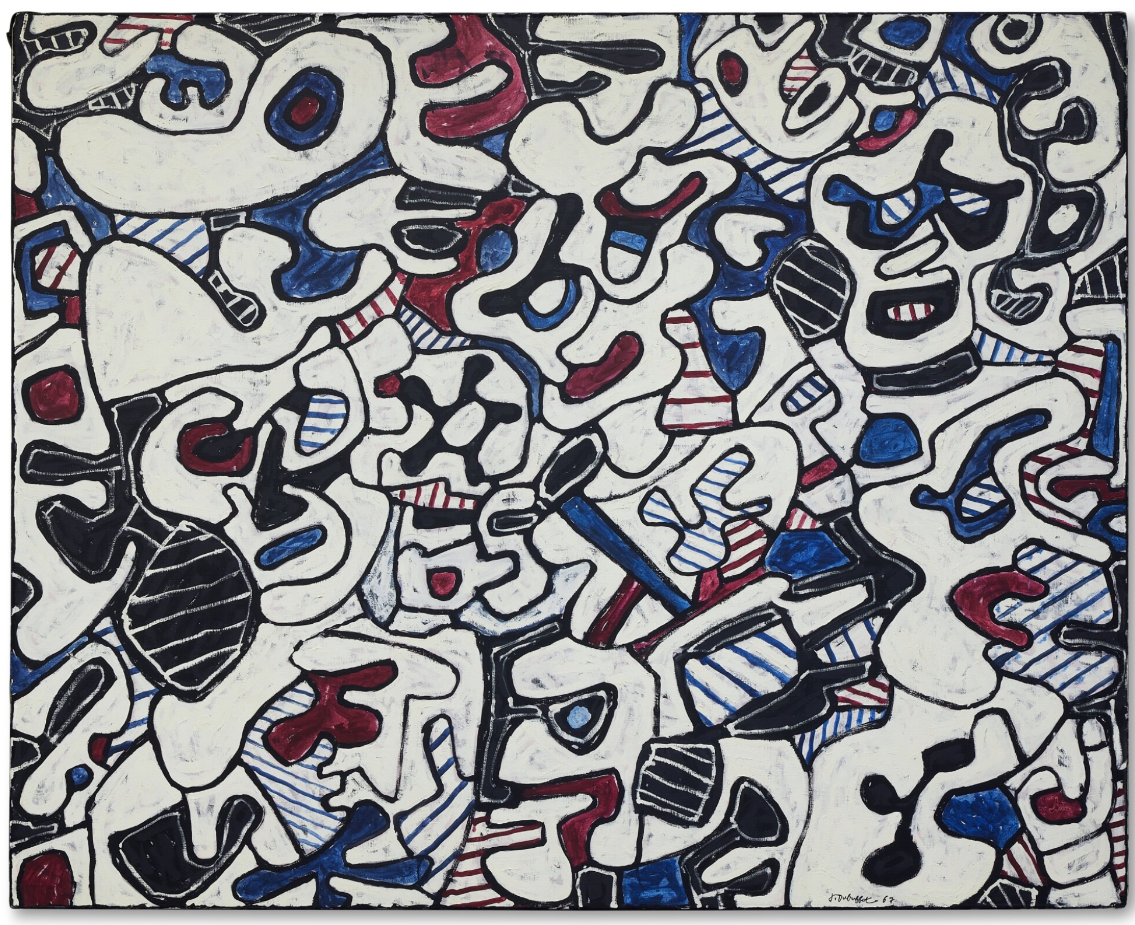
JEAN DUBUFFET (1901 – 1985)
Épisode, 1967
Acrylic on canvas
146.1 x 162.6 cm (57 1/2 x 64 inches)
Signed J. Dubuffet and dated 67 (lower right); signed again, titled Episode and dated Janvier 67 (on the reverse)
Executed on 22 January 1967
#3. L’homme au papillon, 1954
Christie’s New-York: 10 November 2022
Visionary: The Paul G. Allen Collection
Estimated: USD 2,500,000 – 3,500,000
USD 4,860,000
JEAN DUBUFFET (1901-1985), L’homme au papillon | Christie’s (christies.com)
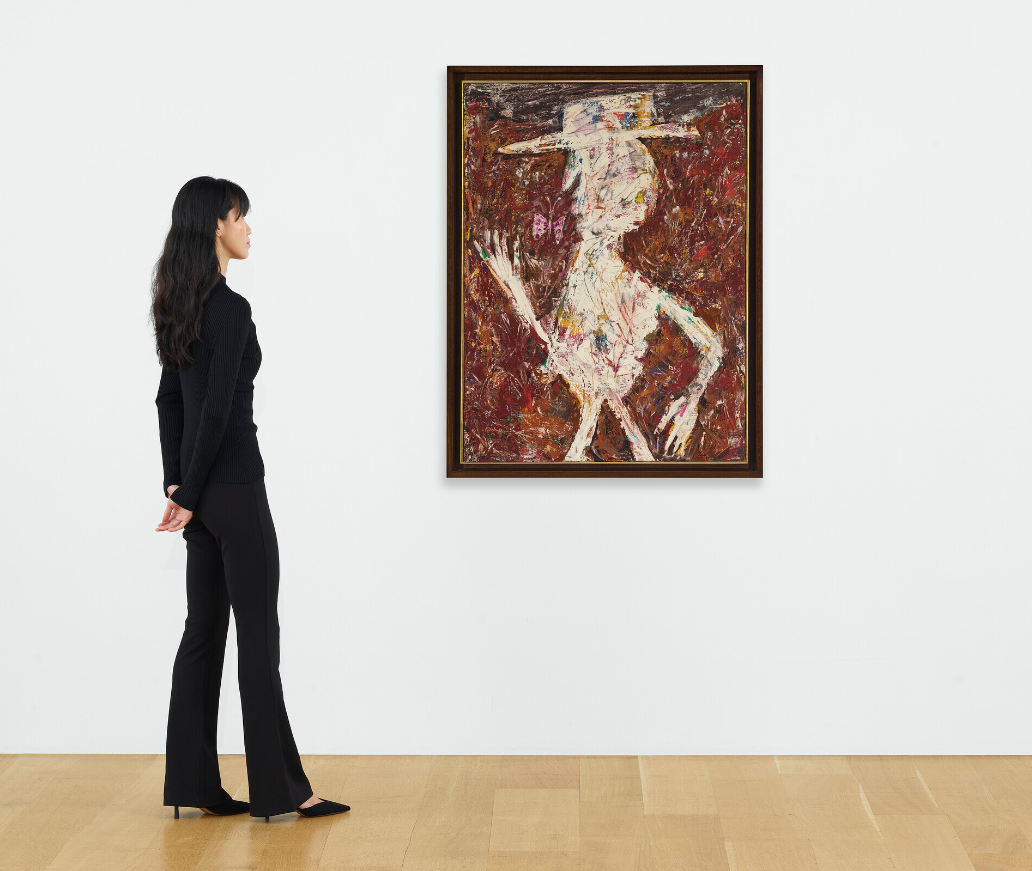
JEAN DUBUFFET (1901-1985)
L’homme au papillon, 1954
Oil on canvas
129.5 x 97 cm (51 x 38 1/8 inches)
Signed and dated ‘J. Dubuffet 54’ (lower left)
Signed again, titled and dated again ‘L’homme au papillon J. Dubuffet octobre 54’ (on the reverse)
#4. Le Présent se change en passé, 1956
Sotheby’s New-York: 17 May 2022
Estimated: USD 2,500,000 – 3,500,000
USD 4,527,000
Le Présent se change en passé | Modern Evening Auction | 2022 | Sotheby’s (sothebys.com)
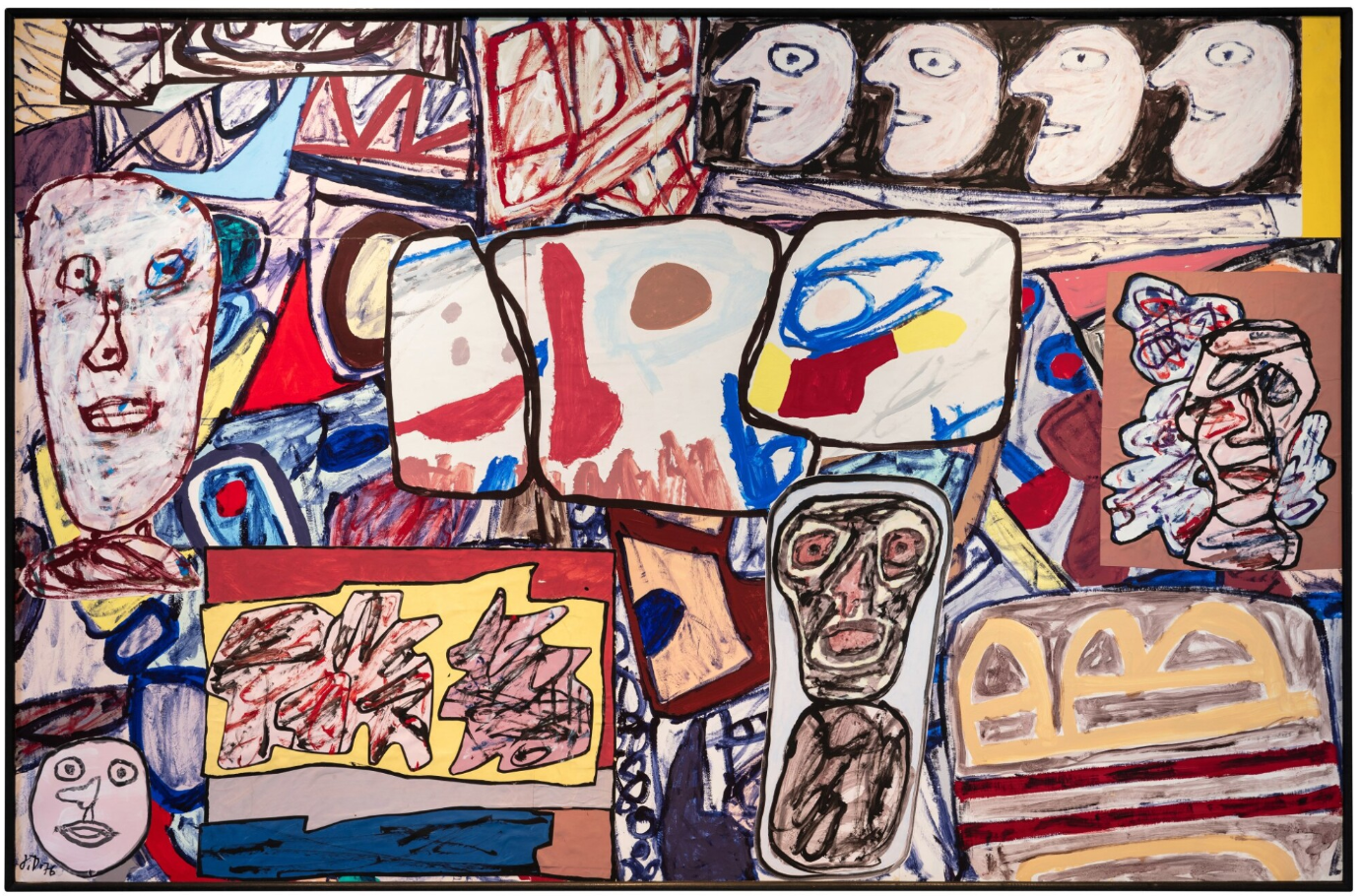
JEAN DUBUFFET (1901 – 1985)
Le Présent se change en passé, 1956
Oil on paper laid down on canvas
137.2 x 210.8 cm (54×83 inches)
Signed J. D. and dated 76 (lower left); titled and numbered no 36 (on the reverse)
#5. Chamelier, 1948
Sotheby’s New-York: 14 November 2022
The David M. Solinger Collection
Estimated: USD 2,000,000 – 3,000,000
USD 4,527,000
Chamelier | The David M. Solinger Collection Evening Auction | 2022 | Sotheby’s (sothebys.com)
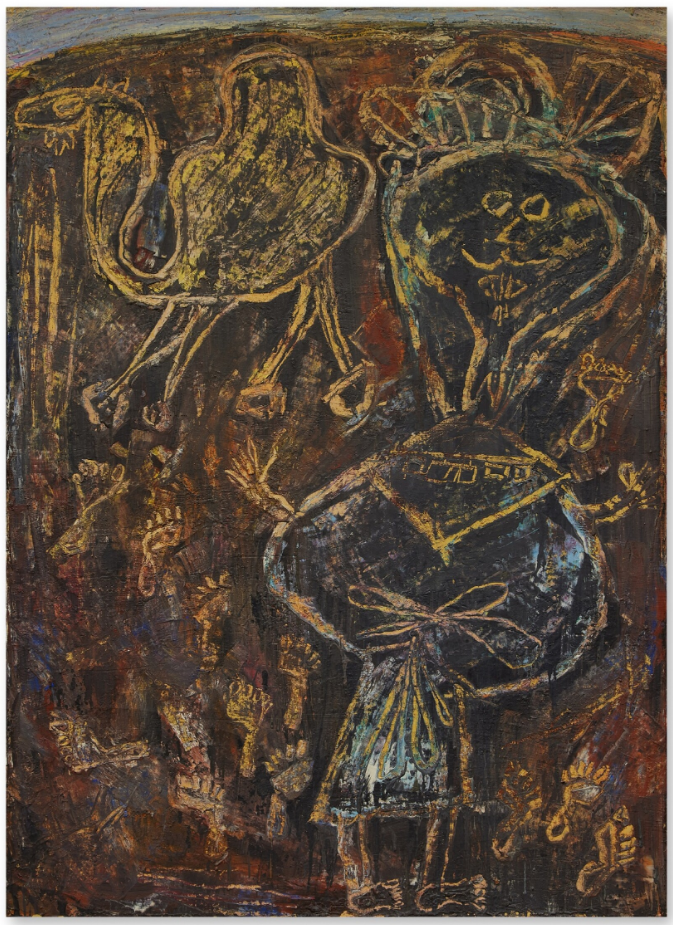
JEAN DUBUFFET (1901 – 1985)
Chamelier, 1948
Oil on canvas
100 x 72.4 cm (39 3/8 x 28 1/2 inches)
Signed J. Dubuffet and dated juin 48 (on the reverse)
#6. Les Trois promeneuses, 1971
Sotheby’s New-York: 17 May 2022
Estimated: USD 1,400,000 – 1,800,000
USD 3,559,000
Les Trois promeneuses | Modern Evening Auction | 2022 | Sotheby’s (sothebys.com)
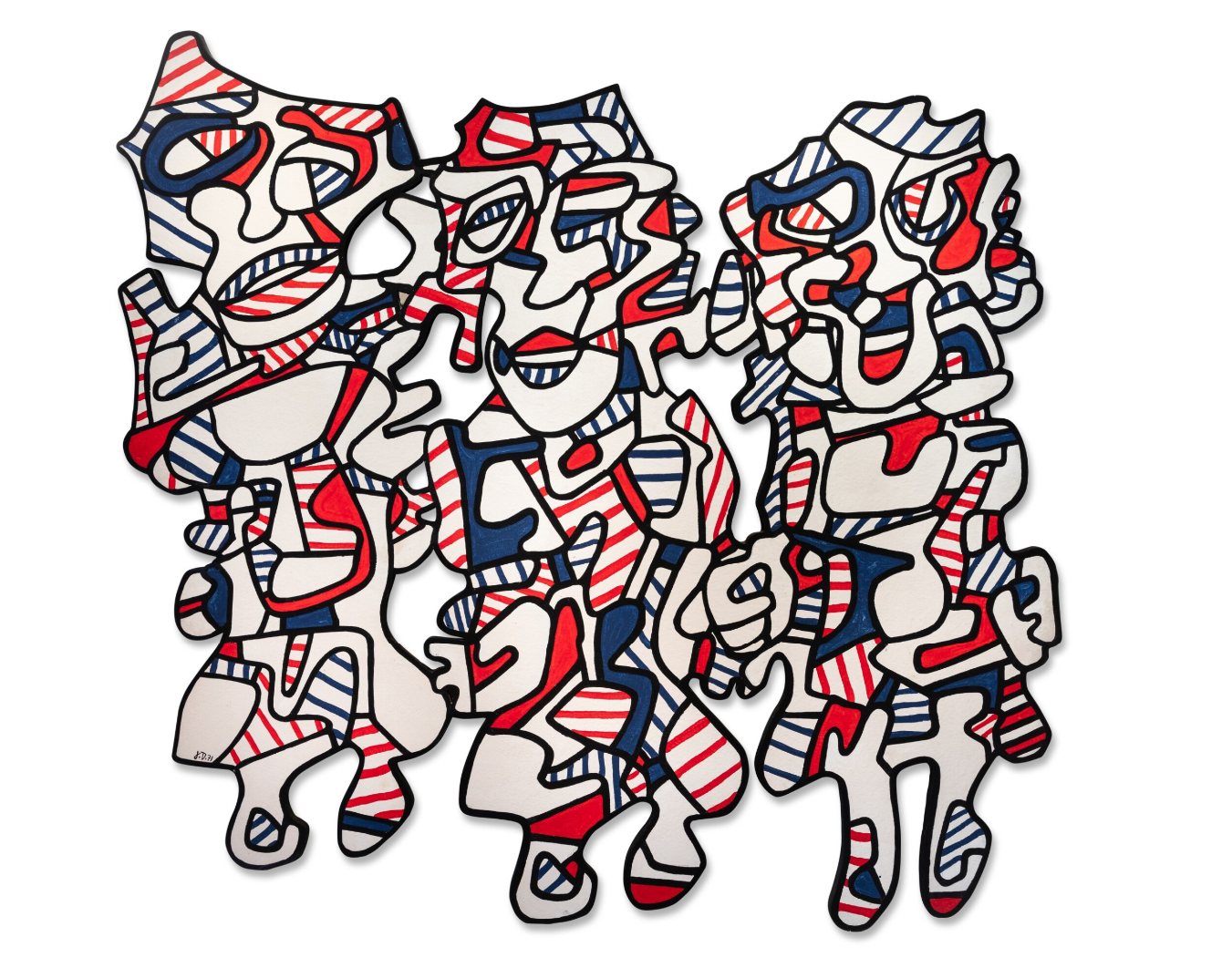
JEAN DUBUFFET (1901 – 1985)
Les Trois promeneuses, 1971
Acrylic on Klegecell panel
190.5 x 203.2 cm (75×80 inches)
Signed J.D. and dated 71 (lower left); titled and numbered 19 (on the reverse)
PART III: FOCUS
L’Hourloupe
The l’Hourloupe series was first conceived in July 1962 when Dubuffet absent-mindedly produced some simple, sinuous doodles on scraps of paper which he cross-hatched with red and blue ballpoint pen whilst speaking on the phone. In a manner similar to the Surrealist practice of automatic drawings, Dubuffet saw the act of doodling as a means of encouraging the emergence of subconscious knowledge through the uncontrolled movement of the hand. Upon cutting out and rearranging the various elements of these drawings, Dubuffet was struck by the immediacy at which they sprung to life when set against a black background. The fanciful name of the series is, likewise, a product of Dubuffet’s extraordinary imagination, created through the fusion of multiple French words into the sonorously luxuriant term, “l’Hourloupe.” Asked about the series, Dubuffet revealed that the word was “…based upon its sound. In French, these sounds suggest some wonderland or grotesque object or creature, while at the same time they evoke something rumbling and threatening with tragic overtones. Both are implied” (Jean Dubuffet quoted in Exh. Cat., New York, Solomon R. Guggenheim Museum, Jean Dubuffet: A Retrospective, 1973, p. 35).
Echec à l’être, 1971
Sotheby’s New-York: 26 February 2025
Estimated: USD 800,000 – 1,200,000
USD 1,538,400
Echec à l’être | Contemporary Curated | 2025 | Sotheby’s
JEAN DUBUFFET (1901 – 1985)
Echec à l’être, 1971
Acrylic on Klegecell
261 x 504.8 x 11.4 cm (102 3/4 x 198 3/4 x 4 1/2 inches)
Signed with the artist’s initials and dated 71 (lower right); titled (on the reverse)
Executed in October 1971, during the height of Jean Dubuffet’s renowned Hourloupe cycle, which spanned from 1962 to 1974, Echec à l’être represents the pinnacle of the artist’s most groundbreaking body of work. This period marked a significant evolution in Dubuffet’s artistic approach, as he fully embraced a lexicon of interlocking forms, densely packed and energetically rendered in his signature palette of primary red and blue set against a stark white background, all defined by bold black outlines. This striking aesthetic, instantly recognizable as one of the most influential artistic languages of the 20th century, allows shapes to spread and flow into one another, creating an exceptionally playful, immersive, and monumental composition. The sheer scale of this work further enhances its impact, making it a commanding presence within the space it occupies. The intricate balance of these forms embodies Dubuffet’s ongoing fascination with the subversion of traditional artistic norms and the embrace of his groundbreaking expressive visual language.
Jean Dubuffet at the Atelier de la Cartoucherie de Vincennes, attending one of the first rehearsals of Coucou Bazar, 1972
© ADAGP, Paris and DACS, London 2021. Photo © Archives Fondation Dubuffet, Paris. Photo: Kurt Wyss.
Echec à l’être is an integral part of Dubuffet’s extraordinary Coucou Bazar, an ambitious and unique project within his diverse oeuvre. Conceived as a hybrid between painting, sculpture, and performance, this hour-long spectacle brought Dubuffet’s Hourloupe universe to life through a dynamic interplay of paintings, actors, and dancers donned in Hourloupe-patterned costumes. These animated figures moved within a stage environment that was a living extension of Dubuffet’s painted works, effectively dissolving the boundaries between art and performance. Performed on three occasions—first at Dubuffet’s retrospective at the Solomon R. Guggenheim Museum in New York in 1973, then at his Grand Palais exhibition in Paris the same year, and finally in Turin in 1978—Coucou Bazar stands as a testament to Dubuffet’s relentless innovation and his rejection of conventional artistic structures.
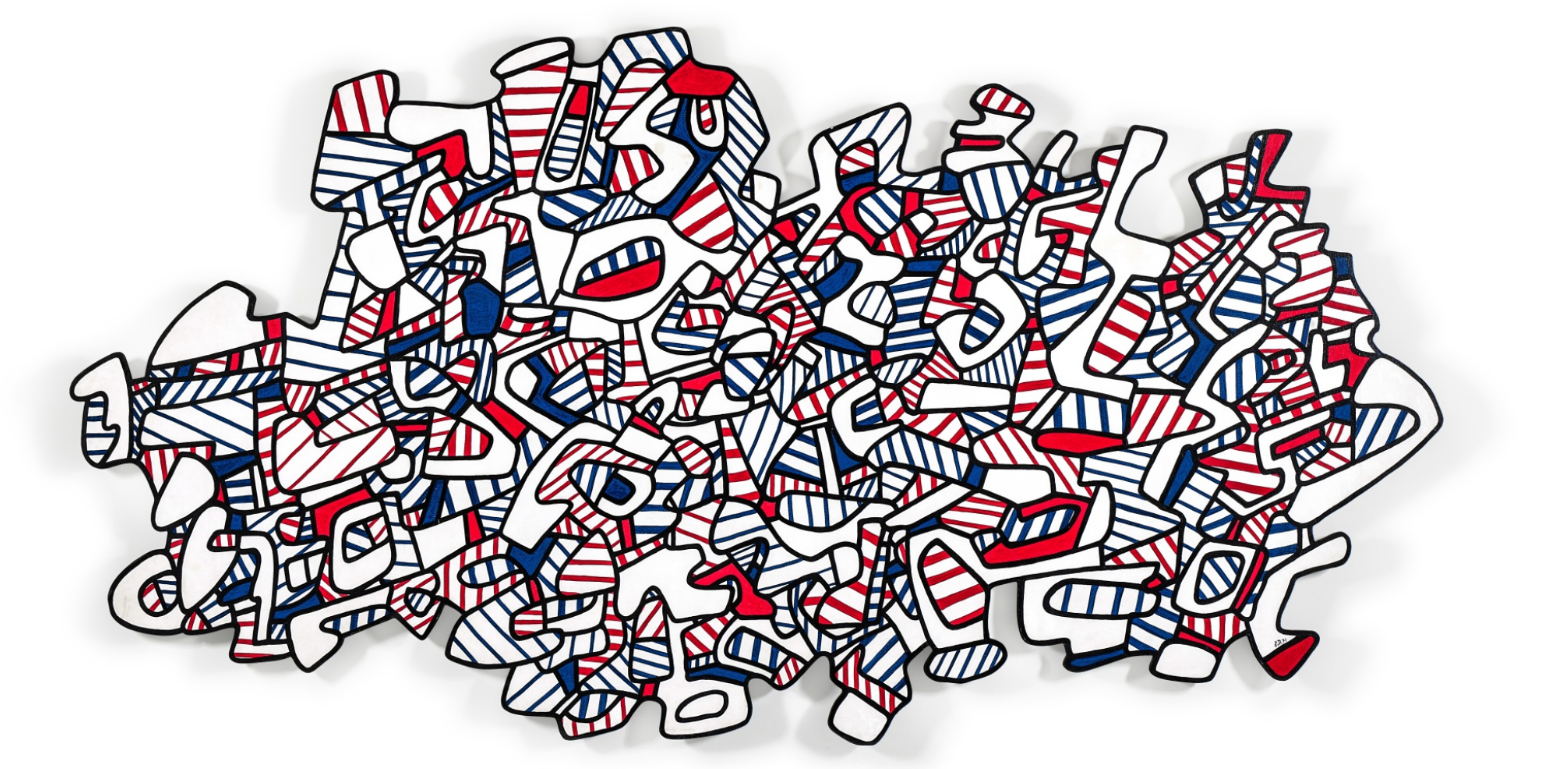
At the heart of Coucou Bazar were the Practicables, a collection of 175 moveable cutouts that functioned as stage elements and animated sculptures. Echec à l’être being one of them, embodies the tangible legacy of this groundbreaking performance. The monumental scale of this piece not only underscores its immersive qualities but also affirms its commanding physical presence, a key feature of Dubuffet’s vision for Coucou Bazar. While half of the Practicables are now housed at the Fondation Dubuffet, others are located in some of the world’s most prestigious art institutions, including the Tate in London, the Museum of Modern Art in New York, and the Walker Art Center in Minneapolis.
“The overall concept of the spectacle is based on a feeling for the uninterrupted continuity of all objects in the visible world and in particular the continuity and lack of differentiation between what are usually regarded as beings or objects and what are considered sites and grounds for these objects. The assignment of being, customarily conferred on certain privileged objects, is here taken to be illusory, the result of conventions which falsely condition our minds. ”
Through Echec à l’être and the broader Hourloupe cycle, Dubuffet challenges viewers to reconsider the boundaries of artistic expression. By integrating elements of performance, sculpture, and painting, he dissolves traditional categories and immerses the audience in a whimsical, yet deeply conceptual world. This innovative approach, which subverts the expectations of high art while celebrating raw, unfiltered creativity, affirms Dubuffet’s place as one of the most revolutionary artists of the 20th century. His rejection of conventional aesthetics in favor of a more liberated, intuitive mode of creation continues to inspire contemporary artists and remains a crucial touchstone in the discourse of modern art.
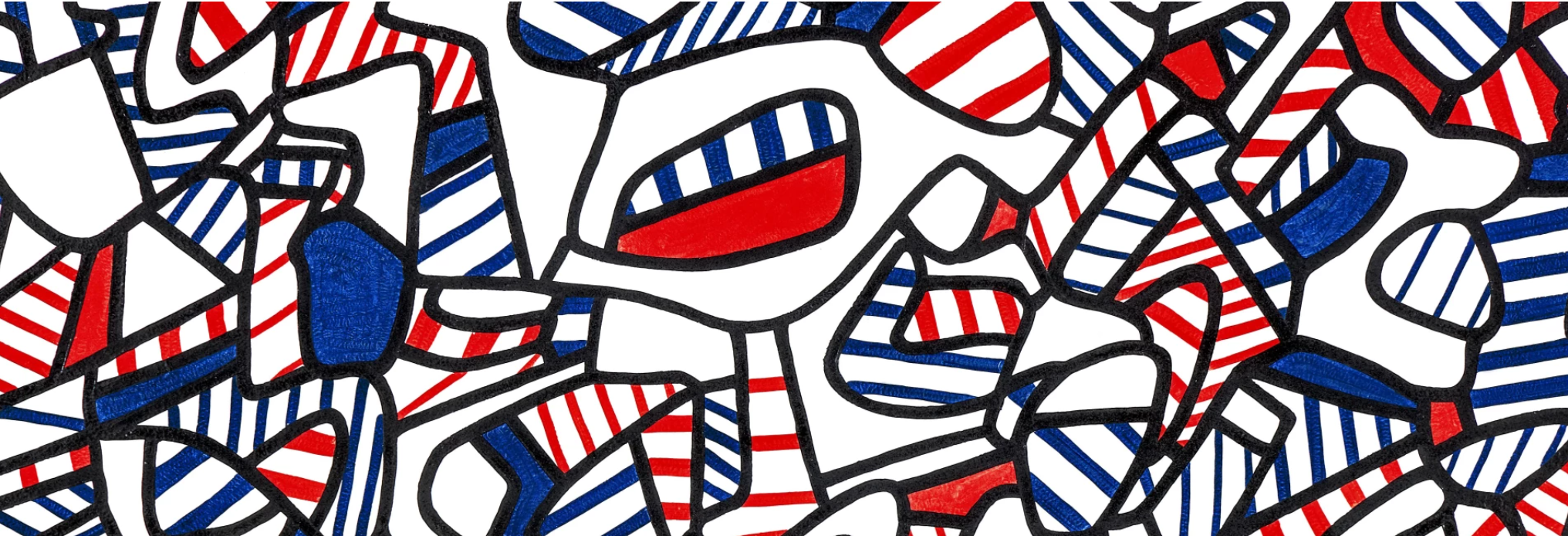
In essence, Echec à l’être is not merely a painting, but a relic of Dubuffet’s visionary project—a work that encapsulates the spirit of Coucou Bazar and the larger Hourloupe cycle. Its monumental scale amplifies its dynamic energy and immersive effect, ensuring that it remains an iconic and influential masterpiece. It stands as a vibrant testament to Dubuffet’s lifelong pursuit of redefining art’s boundaries, ultimately championing a world where creativity flourishes free from the constraints of tradition and academic expectation.
Cafetière II, 1965
Sotheby’s New-York: 27 September 2024
Estimated: USD 450,000 – 650,000
USD 540,000
Cafetière II | Art Without Boundaries: The Abrams Family Collection | Live Sale | 2024 | Sotheby’s
JEAN DUBUFFET (1901 – 1985)
Cafetière II, 1965
Vinyl on paper mounted to canvas
105.2 x 67.6 cm (41 3/8 x 26 5/8 inches)
Signed and dated déc 65 (lower right)
Signed, titled twice and dated décembre 65 (on the reverse)
Immersing the viewer in a jigsaw of visual complexity, Cafetière II stands as an exceptional still life from Jean Dubuffet’s most important series: l’Hourloupe. Characterized by its puzzle-like arrangement of crosshatched red, white, and blue pieces, this innovative cycle of works offered an alternative perspective on reality, signifying a remarkable formal evolution in the artist’s pictorial style. Executed in 1965, the present work belongs to a specific subgroup of paintings within the larger series entitled Ustensiles utopiques, in which the artist applied his signature l’Hourloupe style to a myriad of ubiquitous, everyday objects.
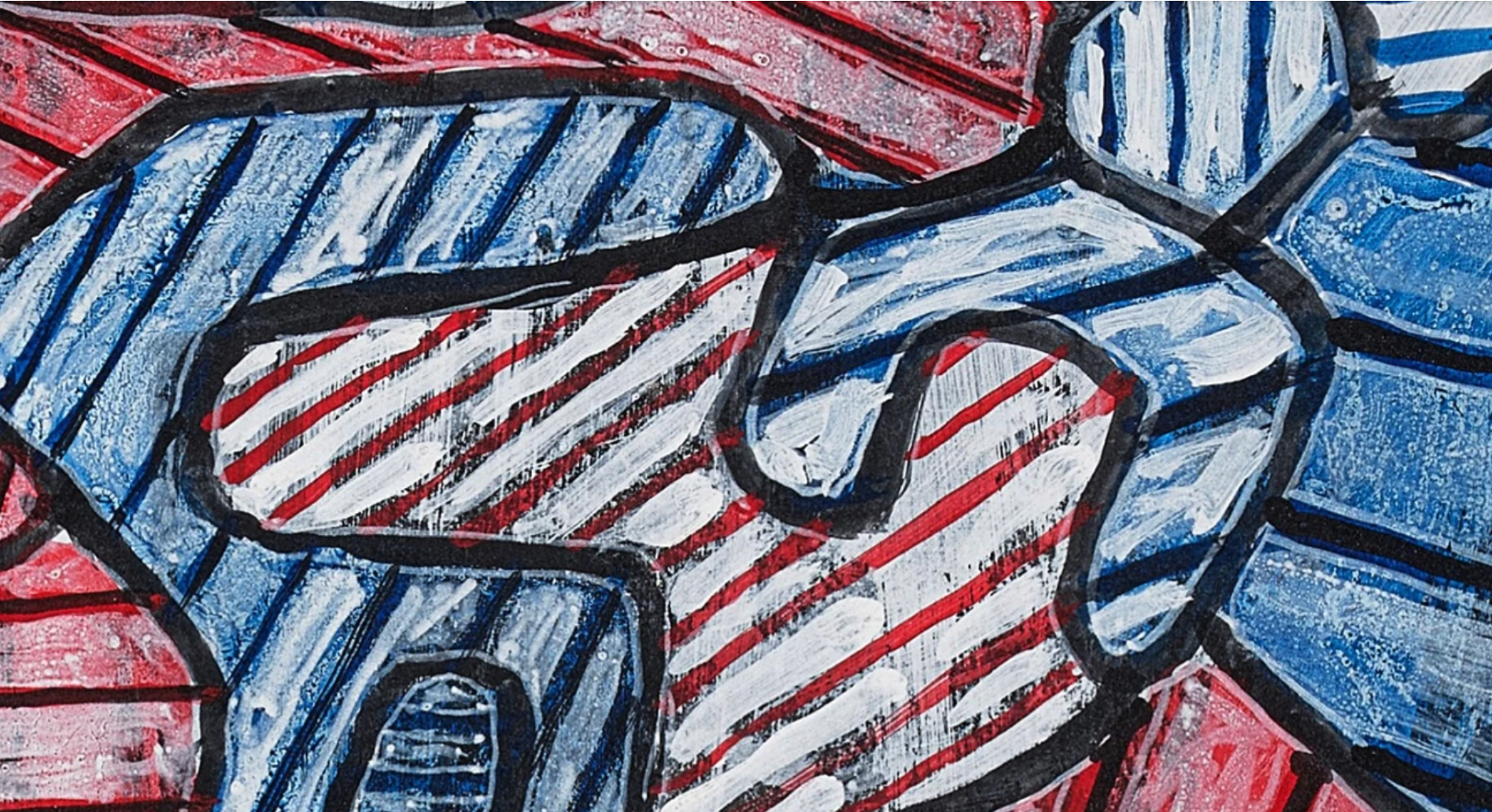
Paralleling developments across the Atlantic, where artists such as Roy Lichtenstein, Andy Warhol, and Claes Oldenburg were similarly turning their focus to the quotidian, Cafetière II, in its sensuous recreation of an irregularly shaped coffee pot, takes its place alongside kaleidoscopic depictions of chairs, bottles, wheelbarrows, scissors, and teapots. A beloved motif in the storied tradition of still lifes and a particular favorite in Picasso’s Cubist renditions, the cafetière appears in just six large-scale paintings by Dubuffet, along with a handful of drawings and group compositions from 1965 to 1966. A testament to the present work’s significance within the artist’s legendary career, Cafetière II was acquired by Harry Abrams in 1966, only one year after its execution, from the Robert Fraser Gallery in London, where it was exhibited that April in the first collective presentation of the Ustensiles utopiques series, and has remained in the family collection ever since.
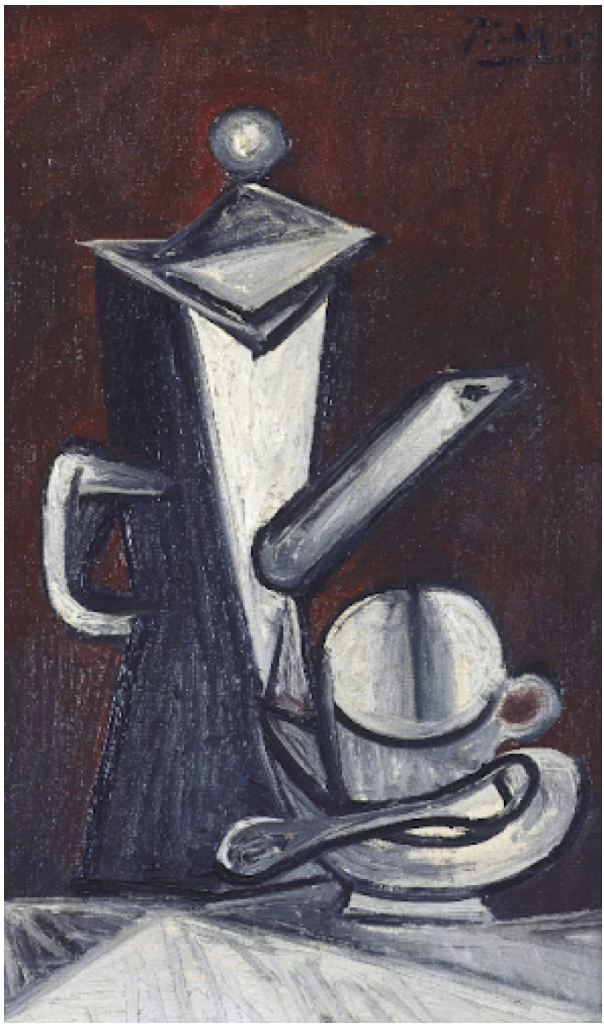
Pablo Picasso, Nature Morte “La Cafetiere”, 1944. San Francisco Museum of Modern Art. Image © Succession Picasso / Bridgeman Images. Art © 2024 Estate of Pablo Picasso / Artists Rights Society (ARS), New York.
Recognized as the artist’s largest and most sustained series, encompassing drawing, painting, and sculpture, l’Hourloupe occupied Dubuffet’s artistic output from 1962 to 1974. It was during this twelve year period that the artist produced some of the most visually captivating and richly imaginative paintings of his career, of which Cafetière II is no exception. While the previous Paris Circus series depicted, in a particularly rich palette and figures bustling around the urban magma, l’Hourloupe drastically reduced the color palette to concentrate on four main colors—red and blue, together with black and white—and immersed the viewer in a fantastical world now disconnected from reality. Through scribbles, the stylistic crux of the entire l’Hourloupe series, Dubuffet channels the instinct-driven creative fervor integral to his Art Brut aesthetic, which sought to elevate the strange, the outcast, and the outsider over academic methods and art world norms. “This cycle of work was characterized by a much more seriously arbitrary and irrational mood than anything I had done before,” Dubuffet explains. “This was a plunge into fantasy, into a phantom parallel universe. My renewed interest in outsider art was no doubt not unconnected with this sudden new development” (Jean Dubuffet quoted in Exh. Cat., Salzburg, Museum der Moderne (and traveling), Jean Dubuffet: Trace of an Adventure, November 2003 – April 2004, p. 174).
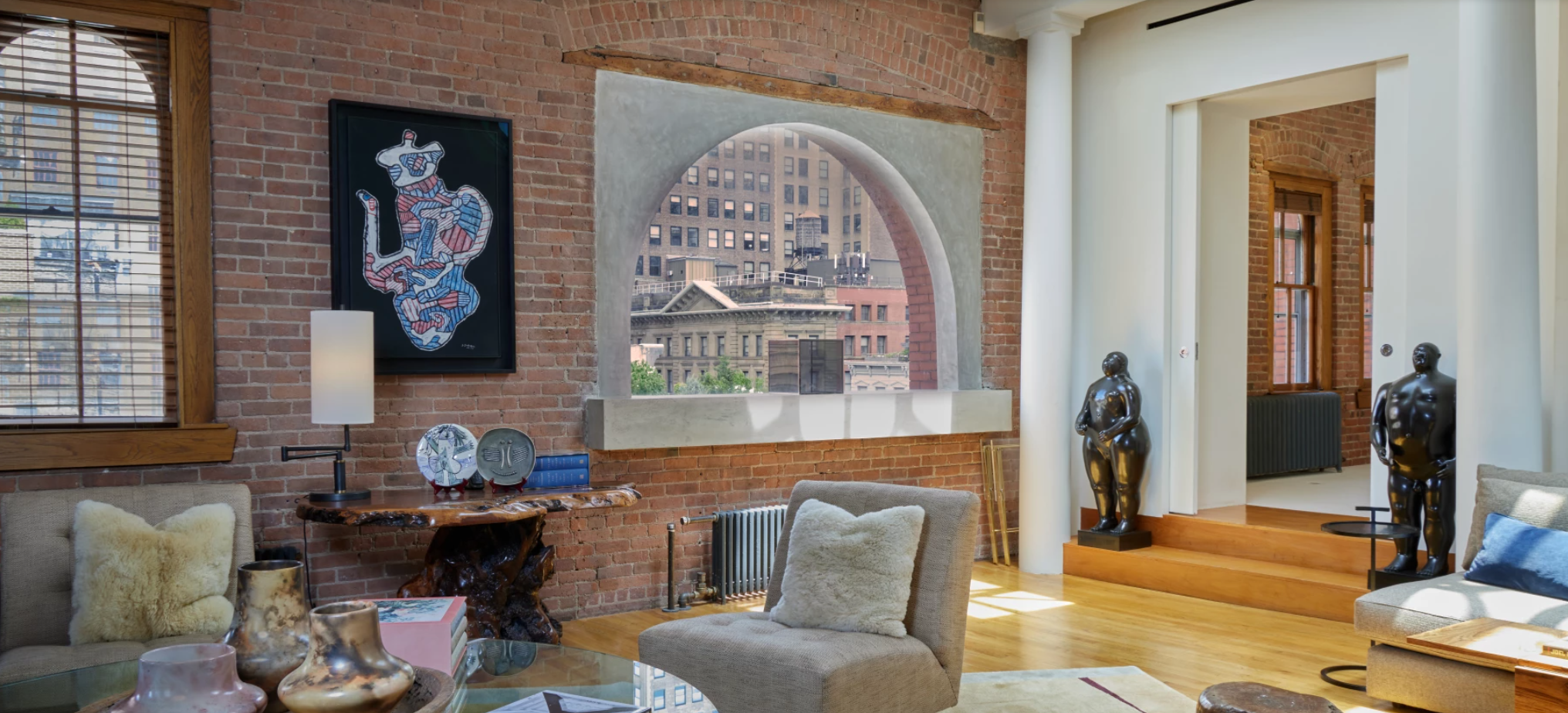
Cafetière II, in particular, belongs to a later subseries of paintings within l’Hourlope known as Ustensiles utopiques. Adhering to and expanding upon the visual vocabulary of the l’Hourlope series, each object in this cycle of works follows a consistent compositional structure: the object, abstractly rendered in the characteristic interlocking jigsaw of reds, blues, whites, and Breton stripes, is placed on a stark black background that is devoid of any potential signifiers of time and place. In a manner strikingly similar to his American contemporaries Andy Warhol, Claes Oldenburg, Roy Lichtenstein, and Robert Rauschenberg, Dubuffet chose to celebrate the beauty of the banal, defamiliarizing ubiquitous objects to create bold artistic interpretations. Divorced from any context, and presented as the sole focus of the composition, Cafetiere II is thus elevated from an ordinary coffee pot to a metamorphic curiosity that takes on a splendor of its own—a sublime icon in this celebration of the everyday. With Cafetière II and the rest of the Ustensiles utopiques, Dubuffet revolutionized the traditional genre of still life, ushering in a new brand of French Pop art.
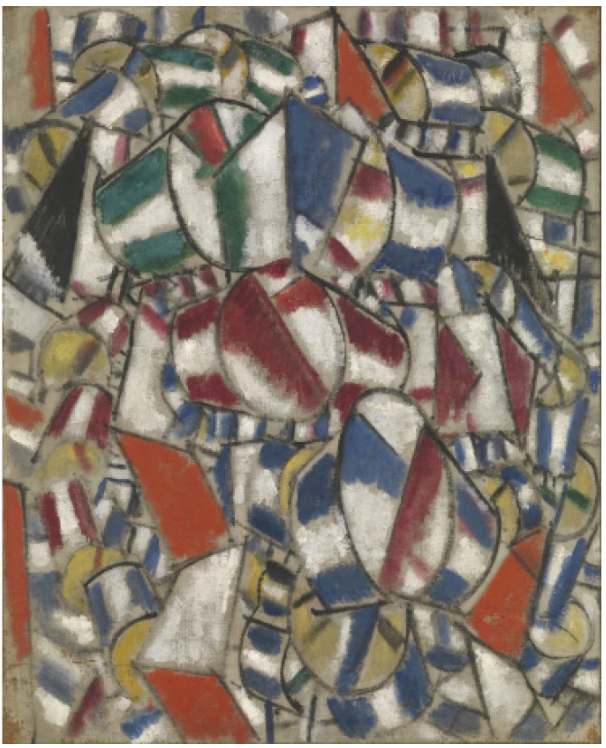
Fernand Léger, Contrast of Forms, 1913. Museum of Modern Art, New York.
Image © Bridgeman Images. Art © 2024 Fernand Léger / Artists Rights Society (ARS), New York.
Channeling the same uninhibited sense of wonder which fueled his earliest fascination with Art Brut, Dubuffet’s whimsical compositions in Ustensiles Utopiques bestowed considerable attention upon overlooked quotidian objects. Under the guise of his later and most formative l’Hourloupe, ordinary objects become sites of “utopia,” visionary reappraisals of the formerly unstudied paraphernalia of daily existence. Thus, Cafetiere II represents, in many ways, the culmination of Dubuffet’s artistic ambitions—a new unschooled visual dialect, leveraged to capture and translate the raw essence of everyday life.
Le Retour du soldat, 1964
Sotheby’s London: 6 March 2024
Estimated: GBP 1,200,000 – 1,800,000
GBP 2,165,000 / USD 2,745,854
JEAN DUBUFFET (1901 – 1985)
Le Retour du soldat, 1964
Vinyl on canvas
130×97 cm (51 1/8 x 38 1/4 inches)
Signed and dated 64 (lower left)
Signed, titled, dated décembre 64 and variously inscribed (on the reverse)
Executed on 8 December 1964
Executed in December of 1964, Le retour du soldat belongs to Jean Dubuffet’s widely celebrated and most recognizable L’Hourloupe series. Offered from the collection of Mary and George Bloch where the painting has resided since 1988, the present work exemplifies the distinctive style of this celebrated cycle in Dubuffet’s expansive oeuvre. The series began in the summer of 1962 and lasted for twelve years, making it the artist’s longest continuous body of work spanning across a wide array of media. Over this period, the series would grow from collage, painting, sculpture and later into the realms of architecture and stage performances. The present work, titled Le retour du soldat (The return of the soldier), depicts a central figure against a black and grey background, surrounded by indiscernible forms which are possibly the crowds welcoming the returning soldier, or buildings and traffic surrounding the soldier returning to the city. The all-over, puzzle-like composition is composed of a dense network of organic forms, each irregular shape filled in solid or hatched in blue or red. Amid the cellular lattice, faces, figures and objects are revealed and concealed in a game of visual hide-and-seek. Evoking the wanderings of the unconscious mind and the triumph of chaos over order, Le retour du soldat embodies that perpetual visual innovation that defines the enduring legacy of Dubuffet’s ground breaking practice.
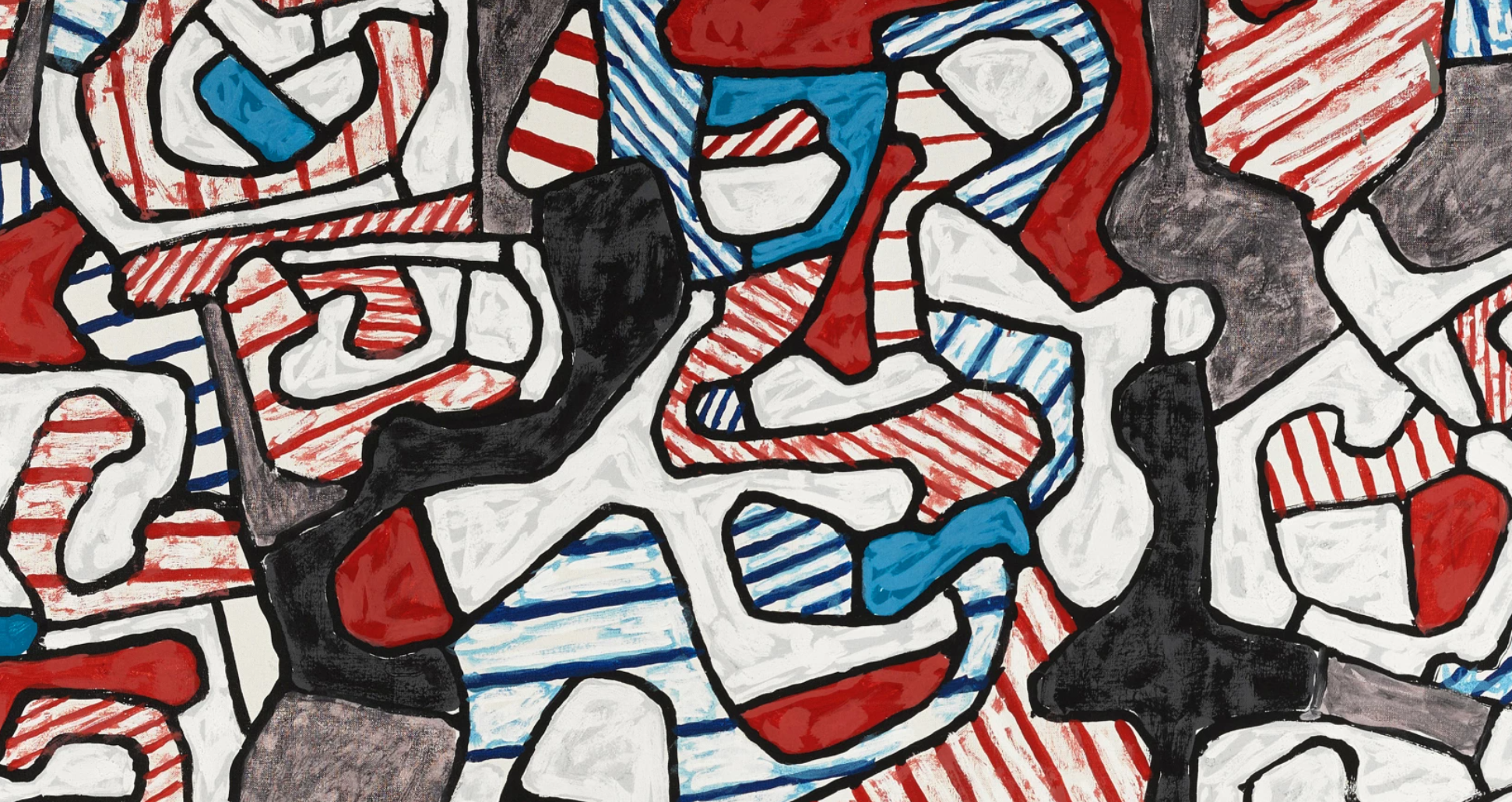
The series was first conceived when Dubuffet absent-mindedly produced some doodles on scraps of paper using red and blue ballpoint pen whilst speaking on the phone. In a manner similar to the Surrealist practice of automatic drawings, Dubuffet saw the act of doodling as a means of encouraging the emergence of subconscious knowledge through the uncontrolled movement of the hand. This new body of work coincided with the return of his personal Art Brut collection, which had been in the United States since the winter of 1951. Reunited with his collection, Dubuffet’s interest in creating a new visual universe and the spirit of Art Brut was reignited, and the L’Hourloupe series demonstrates this reimmersion into his radical pictorial language. Dubuffet named the new body of work L’Hourloupe, which was an onomatopoetic invention to imply a wonderful object or a grotesque creature. It rhymes with the French ‘entourloupe’ (to play a trick), and evokes the words ‘hurler’ (scream), ‘hululer’ (owl hoot), ‘loup’ (wolf), ‘Riquet a la Houppe’ (a fairy tale by Charles Perrault) and Guy de Maupassant’s short horror story titled Le Horla. The sense of fantastical and grotesque is at the core of this visual language, tapping into the unconscious mind and the spirit of Art Brut.
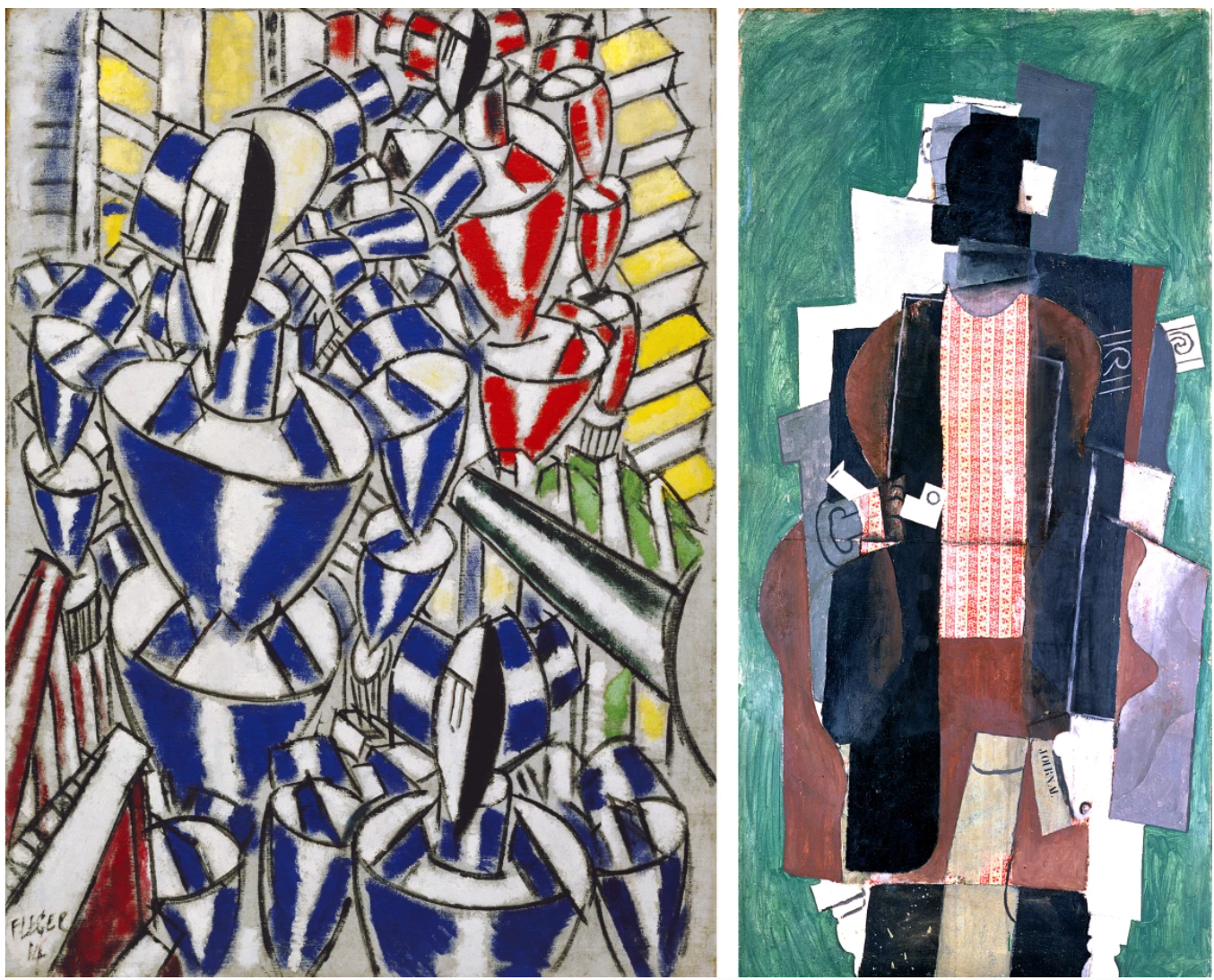
LEFT: FERNAND LEGER, SORTIE DES BALLETS RUSSES, 1914 .MUSEUM OF MODERN ART, NEW YORK
IMAGE: © FINE ART IMAGES / BRIDGEMAN IMAGES/ ARTWORK: © © ADAGP, PARIS AND DACS, LONDON 2024/ RIGHT: PABLO PICASSO, MAN WITH A PIPE, 1914. MUSEE PICASSO, PARIS IMAGE: © BRIDGEMAN IMAGES/ ARTWORK: © SUCCESSION PICASSO/DACS, LONDON 2024
While the shapes on the surface of Dubuffet’s L’Hourloupe are representational and referrential, their details remain deliberately elusive. On the surface of the present work, the figure exists free of any specific location in time or space. All sense of depth has been erased, as well as any hierarchy of form within the image. Adopting a radically new visual strategy in the manner of his celebrated forebears such as Pablo Picasso and Georges Braque, Dubuffet’s reduction of the human body to a new geometric schema challenged the traditional spatial and temporal dimensions in painting. Indeed, Dubuffet channels the instinct-driven creative fervour integral to his Art Brut aesthetic, which sought to elevate the strange, the outcast, and the naive over academic methods and art world norms. “This cycle of work was characterized by a much more seriously arbitrary and irrational mood than anything I had done before,” Dubuffet explained. “This was a plunge into fantasy, into a phantom parallel universe. My renewed interest in outsider art was no doubt not unconnected with this sudden new development” (Jean Dubuffet quoted in: Exh. Cat., Salzburg, Museum der Moderne (and traveling), Jean Dubuffet: Trace of an Adventure, 2003, p. 174). Executed around two years into the cycle, the present work is exemplary of the stylistic lexicon of L’Hourloupe, immersing the viewer in a jigsaw of visual complexity achieved by bewilderingly simple medium and form, oscillating between abstraction and figuration and the real and the imagined.
In the L’Hourloupe works, the chaotic, instinctual sketch became a critical tool to bypass conscious creation, and Dubuffet sought to express the human mind’s most natural state rather than its cultural afterthoughts. In reflecting on his own language of outsider art, Dubuffet asserted, “When one has looked at a painting of this kind, one looks at everything with a new refreshed eye, and one learns to see the unaccustomed and amusing side of things. When I say amusing, I do not mean solely the funny side, but also the grand, the moving and even the tragic aspects of ordinary things” (Jean Dubuffet quoted in: Exh. Cat., New York, The Solomon Guggenheim Museum, Jean Dubuffet: A Retrospective, 1973, p. 23).
Inspecteurs Sinoque et Dingue, 1967
Phillips New-York: 14 November 2023
Estimated: USD 4,000,000 – 6,000,000
USD 4,900,000
Jean Dubuffet – Living the Avant-Gar… Lot 8 November 2023 | Phillips
JEAN DUBUFFET
Inspecteurs Sinoque et Dingue, 1967
Acrylic on canvas
129.9 x 162.2 cm (51 1/8 x 63 7/8 inches)
Signed and dated “J. Dubuffet 67” lower left
Signed, titled and dated “Inspecteurs Sinoque et Dingue J. Dubuffet janvier 67” on the reverse
Painted on January 23, 1967
With its squiggling, black-outlined forms, and red, white, and blue color palette, Inspecteurs Sinoque et Dingue, 1967, is a summative example of Jean Dubuffet’s L’Hourloupe series. An expansive body of drawings, paintings, and sculpture created between 1962 and 1974, L’Hourloupe grew out of Dubuffet’s subconscious, originating in a ballpoint pen doodle that the artist drew absentmindedly while on the telephone. The series had a devoted exhibition at the Solomon R. Guggenheim Museum, New York, one year prior to the present work’s facture, indicating that Inspecteurs Sinoque et Dingue dates to a peak of Dubuffet’s international recognition for L’Hourloupe. Though it belongs to such a large body of work, Inspecteurs Sinoque et Dingue has a robust exhibition history, including three shows in three different countries in 1968 alone, indicating, from the start, that Inspecteurs Sinoque et Dingue has been seen as a representative L’Hourloupe work. Inspecteurs Sinoque et Dingue encapsulates the virtuosic draftsmanship, humor, and embrace of disorder that defined Jean Dubuffet’s L’Hourloupe series, and his legacy as a grandfather of graffiti art. A playful expression of Dubuffet’s wandering imagination, the picture flows easily between figuration and abstraction, with the profiles of the titular inspectors nearly indistinguishable from the expressive forms of the background. It is only through a canny use of color and outline that Dubuffet pulls the white faces of his officers out of the painted shapes that surround them.
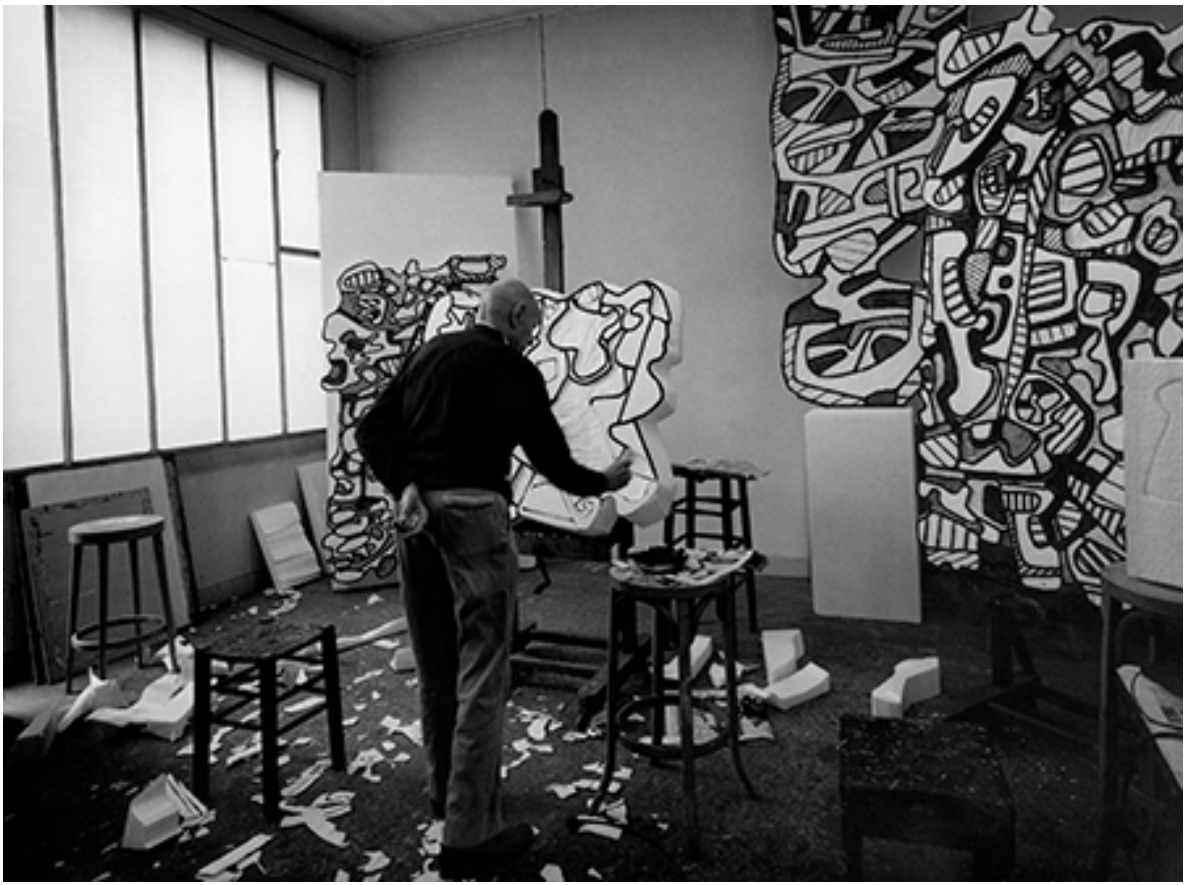
Jean Dubuffet in his studio, 1967. Image: © Tallandier / Bridgeman Images, Artwork: © 2023 Artists Rights Society (ARS), New York / ADAGP, Paris
L’Hourloupe is a neologism, coined by Dubuffet to evoke the wild wonder and distortion of the series; the term recalls both the French verbs hurler (to roar or yell), and hululer (to hoot), as well as la loup (wolf). The term loupe, which in both French and English signifies a magnifying glass, speaks to the sense that each work in L’Hourloupe is part of a wider, imagined universe; if one zoomed out from Inspecteurs Sinoque et Dingue, perhaps, the entire world of the inspectors’ madness and fantasy might reveal itself. The playful, inventive titling of L’Hourloupe applies to the present work as well; Sinoque and Dingue are not proper names, but pejorative, slang terms meaning stupid or crazy. Dubuffet’s combination of sinoque and dingue with the French title for a police detective picks up on the anti-authoritarian ethos of the 1960s, perhaps most acutely anticipating the Parisian student uprisings of 1968. Such wordplay and use of contradiction and disorder speak to the larger legacy of Dubuffet’s art brut on his artistic practice.
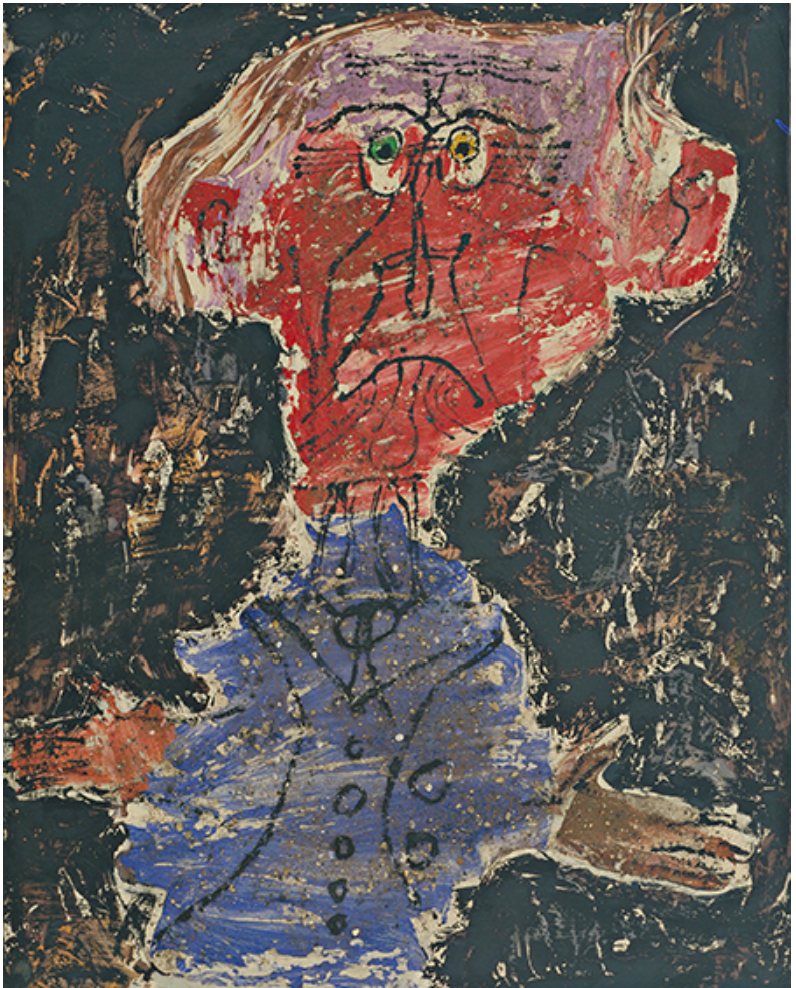
Jean Dubuffet, Léautaud, Redskin-Sorcerer, 1946. The Museum of Modern Art, New York. Image: © The Museum of Modern Art/Licensed by SCALA / Art Resource, NY, Artwork: © 2023 Artists Rights Society (ARS), New York / ADAGP, Paris
Dubuffet embraced the instinctive and indigent in art brut, which he developed in the 1940s as an elevation of outsider aesthetics in fine art. Drawing on so-called primitive arts, such as wooden figural sculpture from Africa and Oceania, as well as the art of the mentally ill, Dubuffet sought to create work that was more honest, more brutal, more real, which, in the process, revealed in a Surrealist sense the idiosyncrasies and everyday wanderings of the artist’s psyche. L’Hourloupe works like Inspecteurs Sinoque et Dingue were a new iteration of Dubuffet’s art brut goals. Per Dubuffet, L’Hourloupe “was characterized by a much more seriously arbitrary and irrational mood than anything I had done before. This was a plunge into fantasy, into a phantom parallel universe. My renewed interest in outsider art was no doubt not unconnected with this sudden new development.” Inspecteurs Sinoque et Dingue dates to a high point of L’Hourloupe, in the year after Dubuffet’s 1966 Guggenheim exhibition dedicated to the series. At the time of Inspecteurs Sinoque et Dingue’s creation in early 1967, the series was both benefiting from this international art world recognition, and undergoing a decisive conceptual shift. Beginning in late 1966, the visual lexicon of l’écriture logologique (logological writing) emerged in L’Hourloupe works, as Dubuffet took on the concept of logos as his artistic challenge. Logos is a term for the divine reason or predominant logic that orders and forms the universe, as articulated in Ancient Greek and Early Christian philosophy. Dubuffet sought to “endow this word with the opposite of its usual meaning” as a shorthand for the structures and belief systems that order contemporary life. As he explained, logos “commonly designates the mental operation of name and classification… my intention is, on the contrary, to wipe out categories and turn back to an undifferentiated continuum.”
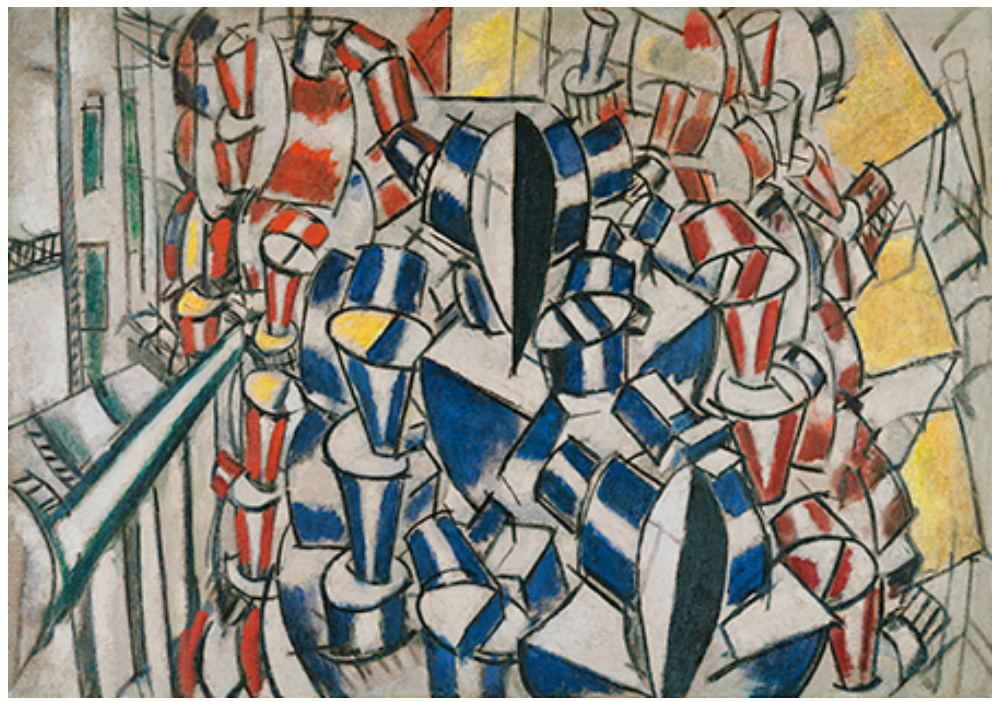
Fernand Léger, The Staircase (Second State), 1914. Museo Nacional Thyssen-Bornemisza, Madrid. Image: Museo Nacional Thyssen-Bornemisza / Scala / Art Resource, NY , Artwork: © 2023 Artists Rights Society (ARS), New York / ADAGP, Paris
Such an “undifferentiated continuum” exists within Inspecteurs Sinoque et Dingue, as the articulation of the painted surface does not discriminate between figure and form. The inspectors are rendered in the same black outline as the space around them; they are built from the same squiggling shapes, the same ellipses, bent ovals, rounded trapezoids. Dubuffet finds both humor and liberation in this breakdown of pictorial and philosophical order; through Inspecteurs Sinoque et Dingue, he says, he “reveal[s] the arbitrary and specious character of the logos with which we are familiar.”
“The aim of these works is, by breaking down the conventional logos, to set up or, rather, to suggest a new [logos], to reveal the arbitrary and specious character of the logos with which we are familiar, and the enduring possibility of reinterpreting the world and basing our thinking on a logos of a very different kind.”
Logos-as-chaos, then, is a utopian prospect for Dubuffet, an opportunity to create the world anew. Dubuffet takes this task seriously in L’Hourloupe works, as evidenced by the abundance of drafts and early drawings that go into each seemingly spontaneous composition. The present work, dated Jan. 23, 1967, takes its inspectors from two separate drawings done earlier that month, Personnage (buste), Jan. 3, 1967, and Personnage (buste), Jan. 4, 1967. The twenty days between these initial drawings and the final composition reflect the length and intensity of Dubuffet’s process, as he defines and redefines the terms of his écriture logologique.
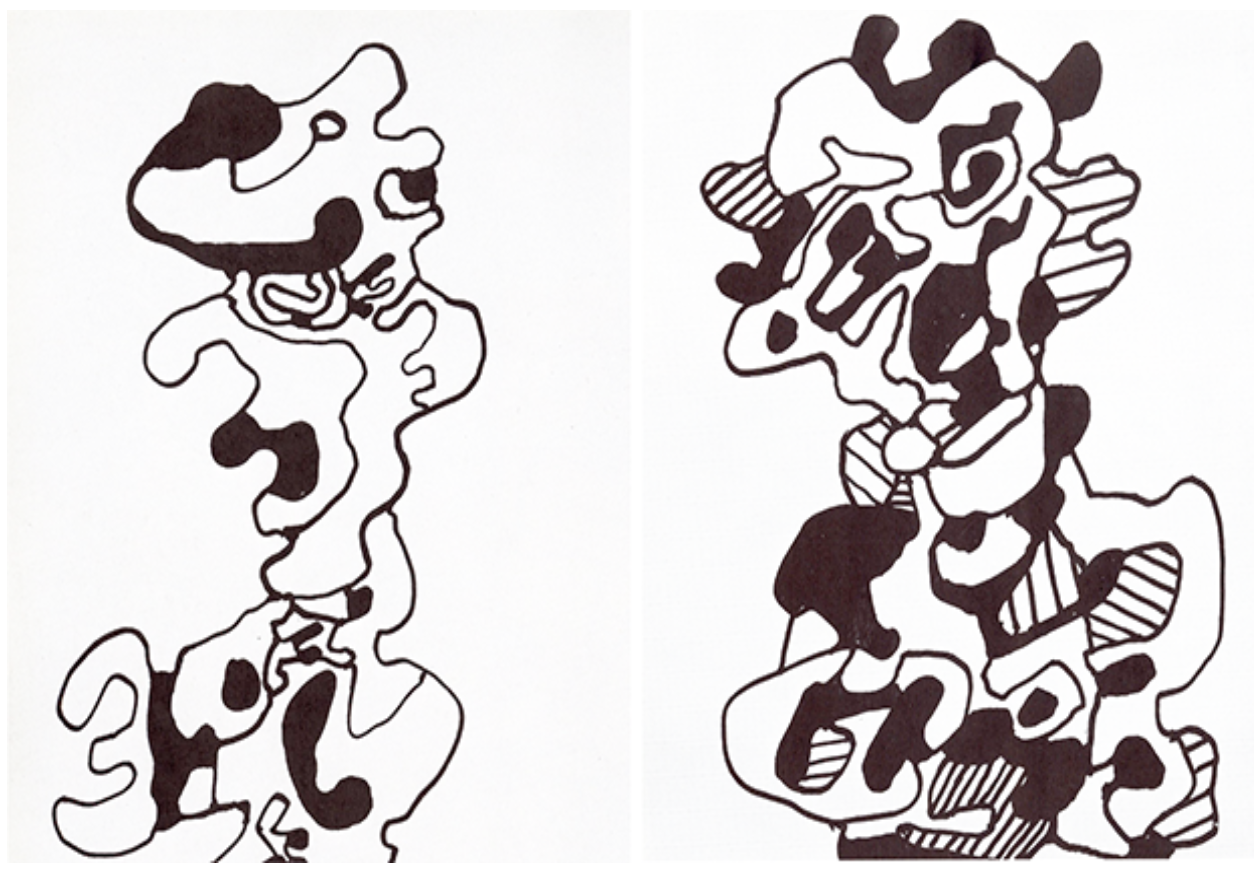
[Left] Jean Dubuffet, Personnage (buste), Jan. 3, 1967. Artwork: © 2023 Artists Rights Society (ARS), New York / ADAGP, Paris
[Right] Jean Dubuffet, Personnage (buste), Jan. 4, 1967. Artwork: © 2023 Artists Rights Society (ARS), New York / ADAGP, Paris
Dubuffet’s intentional approach to Inspecteurs Sinoque et Dingue, and his wholehearted commitment to chaos, disruption, and unconventionality made him an inspiration for some of the greatest artists of the late 20th century. His unpretentious art brut sensibility, intuitive draftsmanship, and acute social consciousness resonated with younger artists, particularly those working in the context of graffiti and street art. The scrawling, iterative shapes of Inspecteurs Sinoque et Dingue anticipate the way in which graffiti can take over a city surface, as a utopic reclamation of space.
Territoire aux deux promeneurs, 1974
Sotheby’s Paris: 19 October 2023
Estimated: EUR 1,000,000 – 1,500,000
EUR 990,600 / USD 1,059,942
Territoire aux deux promeneurs | Modernités | 2023 | Sotheby’s (sothebys.com)
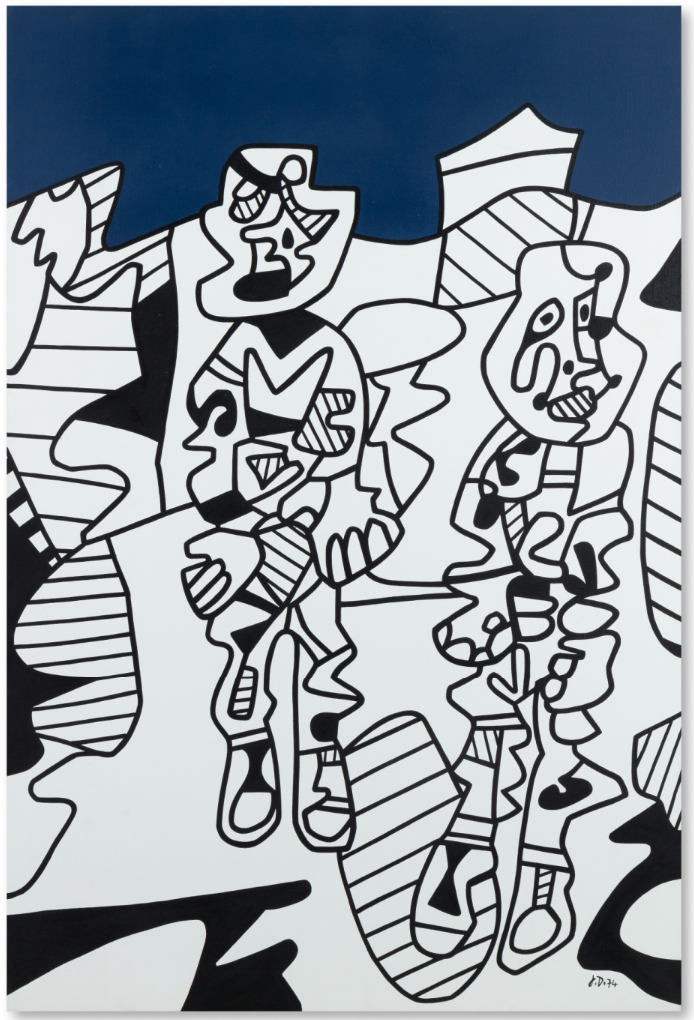
JEAN DUBUFFET (1901 – 1985)
Territoire aux deux promeneurs, 1974
Vinyl on canvas
195×130 cm (76 3/4 x 51 1/8 inches)
Signed with initials and dated 74; signed, titled and dated 74 on the reverse
Executed in September 1974, Territoire aux deux promeneurs is one of the last works in Jean Dubuffet’s Hourloupes series. This series, which is the artist’s most famous and enduring, began in 1962 when, during a telephone conversation, the artist used red and blue biros to mechanically draw fluid shapes on a sheet of paper. This gave rise to a new vocabulary, which he continued to develop over the next 12 years in works on paper, canvases, and sculptures with generous forms. The compositions oscillate between abstraction and figuration, illustrating flattened, two-dimensional figures that seem to float on monochrome backgrounds. The cursive movement of the artist’s deliberately impersonal strokes allows the viewer’s gaze to move uninterruptedly over the motif depicted, lending energy and dynamism to the subject.
“Nothing frightens so much as the confusion between the imaginary and the real, and the idea that what we hold to be real may well be imaginary.”
In this work, two figures walking through a landscape are visible in the foreground, contrasting with the black background of the sky. Vigorously silhouetted by a thick black line, the two walkers blend into the territory in which they stand, also defined in the same way. The expressions on the faces of the two silhouettes, and their grotesque-looking limbs, lend a figurative dimension to the painting, which otherwise remains fairly indecipherable. It is perhaps precisely this enigmatic charge that makes this two-color work extremely poetic and fascinating. By reinventing all possible aesthetic notions and interweaving the physical and mental worlds in a surprising composition, Dubuffet reached in this painting the pinnacle of art brut.
Épisode, 1967
Sotheby’s New-York: 14 November 2022
The David M. Solinger Collection
Estimated: USD 3,500,000 – 4,500,000
USD 5,132,000
Épisode | The David M. Solinger Collection Evening Auction | 2022 | Sotheby’s (sothebys.com)
JEAN DUBUFFET (1901 – 1985)
Épisode, 1967
Acrylic on canvas
146.1 x 162.6 cm (57 1/2 x 64 inches)
Signed J. Dubuffet and dated 67 (lower right); signed again, titled Episode and dated Janvier 67 (on the reverse)
Executed on 22 January 1967
Enveloping the viewer in a mesmerizing web of densely interlocking faces, patterns, and forms, Épisode from 1967 radiates with the jubilant and spontaneous spirit of Dubuffet’s iconic L’Hourloupe cycle. Seamlessly morphing between abstraction and figuration, the present work articulates the ambitious conceptual heights of his widely celebrated and longest-running series through the visual device of l’écriture logologique. Evoking the wanderings of the unconscious mind and the triumph of chaos over order, Épisode embodies that perpetual visual innovation that defines the enduring legacy of the groundbreaking twentieth-century artist.
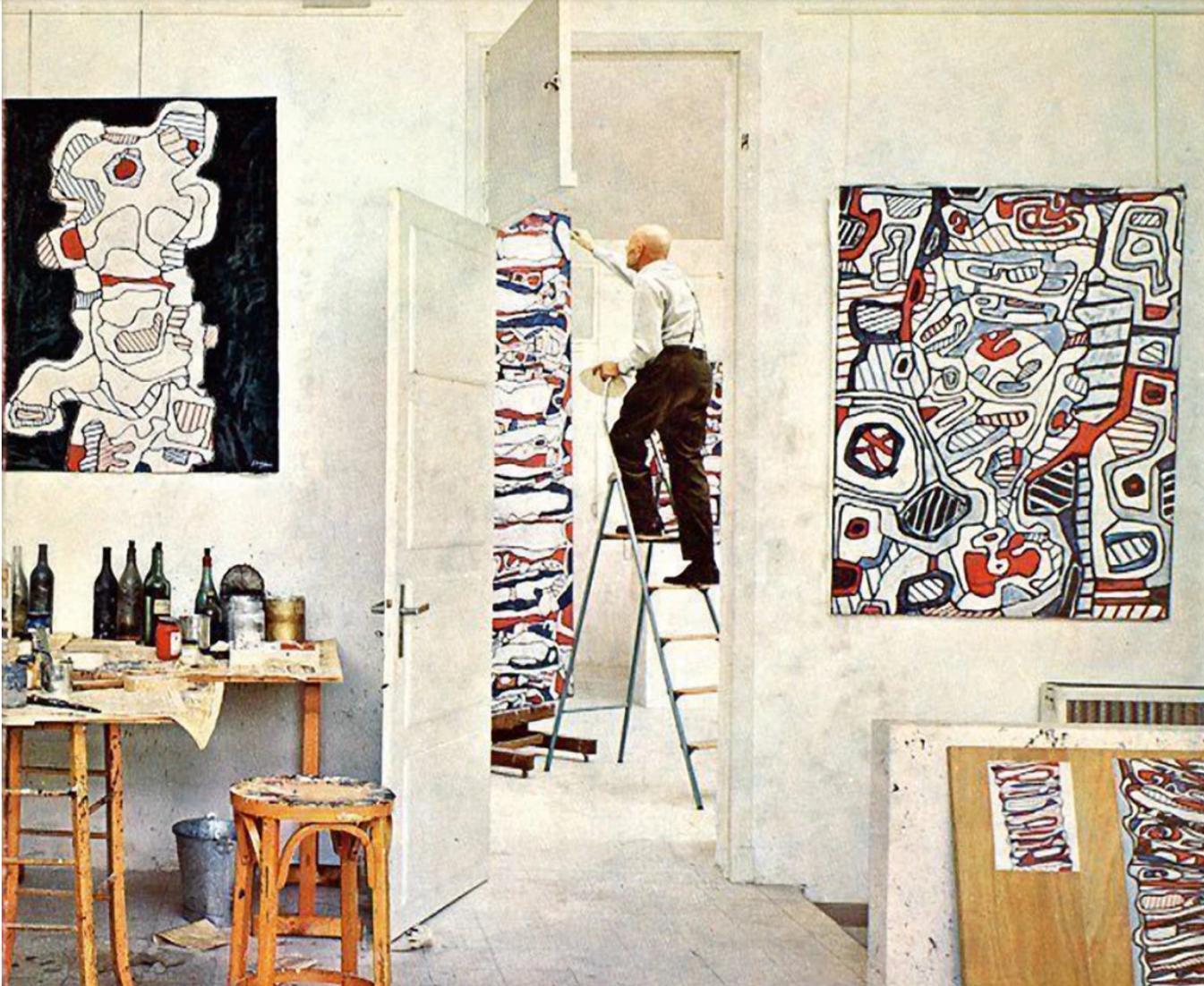
JEAN DUBUFFET IN HIS STUDIO, VENCE, FRANCE, 1964. PHOTO © ARCHIVES FONDATION JEAN DUBUFFET / MAX LOREAU. ART © 2022 FONDATION JEAN DUBUFFET / ARTISTS RIGHTS SOCIETY (ARS), NEW YORK
Épisode bursts from Dubuffet’s subconscious, its imaginative forms and visages allowing each of us a brief voyage in the fantastic world of L’Hourloupe. An expansive body of drawings, paintings, and sculptures executed between 1962 and 1974, the L’Hourloupe cycle of works originated with a simple doodle in ballpoint pen that Dubuffet scrawled absentmindedly on a scrap of paper as he spoke on the telephone. Dubuffet’s neologism ‘hourloupe,’ invented to imply a wonderful object or a grotesque creature, recalls both the French verbs ‘hurler’ and ‘hululer’—meaning ‘to roar’ and ‘to hoot’ respectively—as well as the word ‘loup’, the French noun for ‘wolf’. Through scribbles, the stylistic crux of the entire L’Hourloupe series, Dubuffet channels the instinct-driven creative fervor integral to his Art Brut aesthetic, which sought to elevate the strange, the outcast, and the outsider over academic methods and art world norms.
“This cycle of work was characterized by a much more seriously arbitrary and irrational mood than anything I had done before,” Dubuffet explains. “This was a plunge into fantasy, into a phantom parallel universe. My renewed interest in outsider art was no doubt not unconnected with this sudden new development.”
Adhering to yet expanding the stylistic lexicon of L’Hourloupe, Épisode immerses the viewer in a jigsaw of visual complexity achieved by bewilderingly simple medium and form. Building upon Dubuffet’s longstanding interest in portraiture, patterns of biomorphic shapes emerge from the sheer two-dimensionality of the picture plane as discrete faces. Melding with methodically executed cellular structures to create a vibrant pictorial syntax, these forms present an ebullient expression of unrestricted impulses and liberated thought.
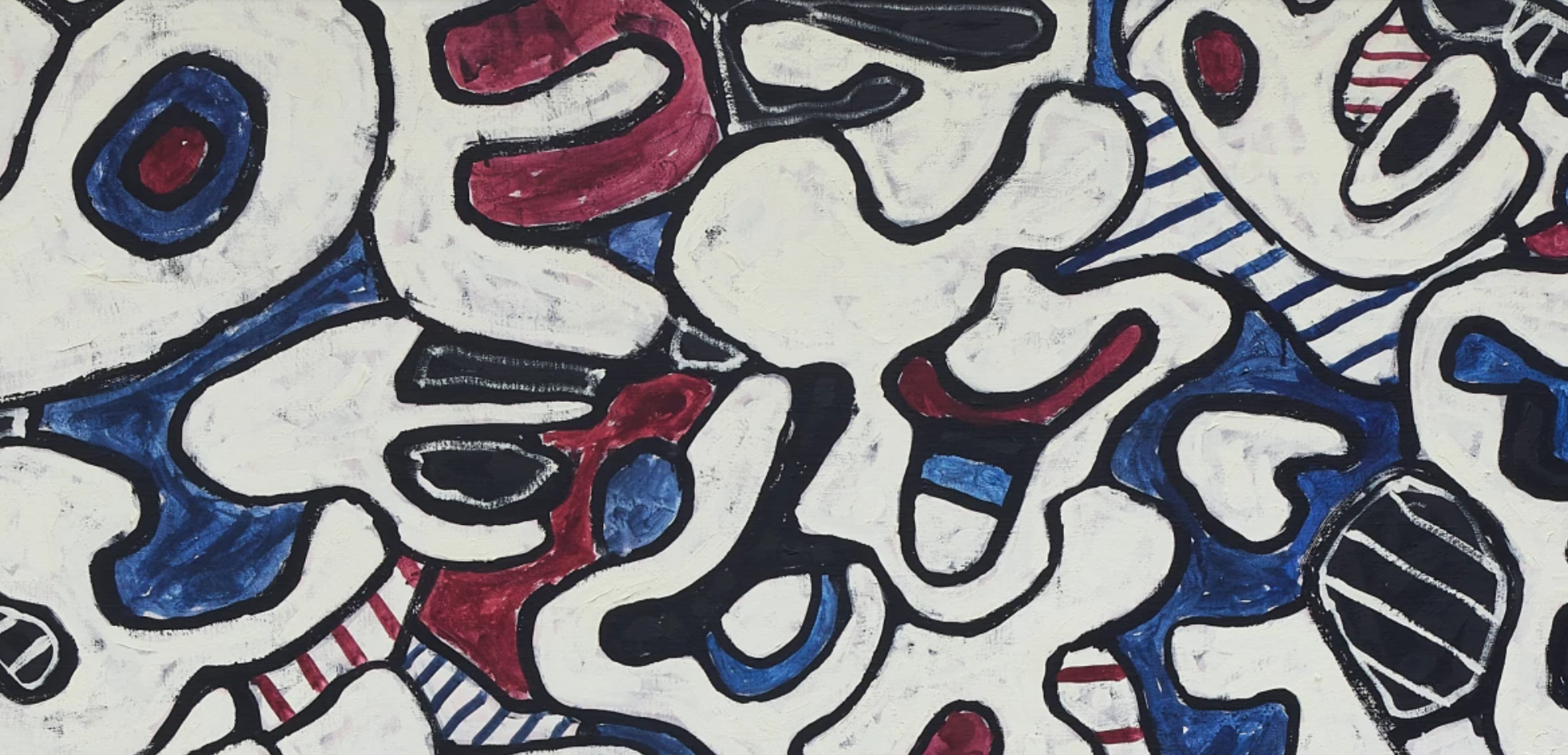
Épisode arrives at a critical moment for L’Hourloupe as the series both sensationally explodes onto the international art world stage and undergoes a decisive conceptual shift. Executed on 22 January 1967, the present work follows Dubuffet’s notable 1966 Guggenheim exhibition dedicated to L’Hourloupe. Equally, Épisode showcases the visual lexicon of l’écriture logologique (logological writing) that emerged in L’Hourloupe works beginning in late 1966. Borrowing the term logology, Dubuffet endeavored to redefine logos through his oeuvre.
Les Trois promeneuses, 1971
Sotheby’s New-York: 17 May 2022
Estimated: USD 1,400,000 – 1,800,000
USD 3,559,000
Les Trois promeneuses | Modern Evening Auction | 2022 | Sotheby’s (sothebys.com)
JEAN DUBUFFET (1901 – 1985)
Les Trois promeneuses, 1971
Acrylic on Klegecell panel
190.5 x 203.2 cm (75×80 inches)
Signed J.D. and dated 71 (lower left); titled and numbered 19 (on the reverse)
Executed in 1971, at the height of Dubuffet’s most significant and esteemed L’Hourloupe cycle of works, Les Trois promeneuses constitutes the apogee of the inimitable and profoundly influential corpus of one of the most celebrated artists of the twentieth century. Eschewing the constraints of representational painting in his depiction of three walking figures, Jean Dubuffet instead meticulously intertwines amorphous colors and shapes to balance figuration and abstraction, form and fantasy. Pulsating with mesmeric energy, the present work typifies on an impressive scale the playfulness and visual dynamism for which this series, and Dubuffet’s entire Art Brut oeuvre, are most acclaimed.
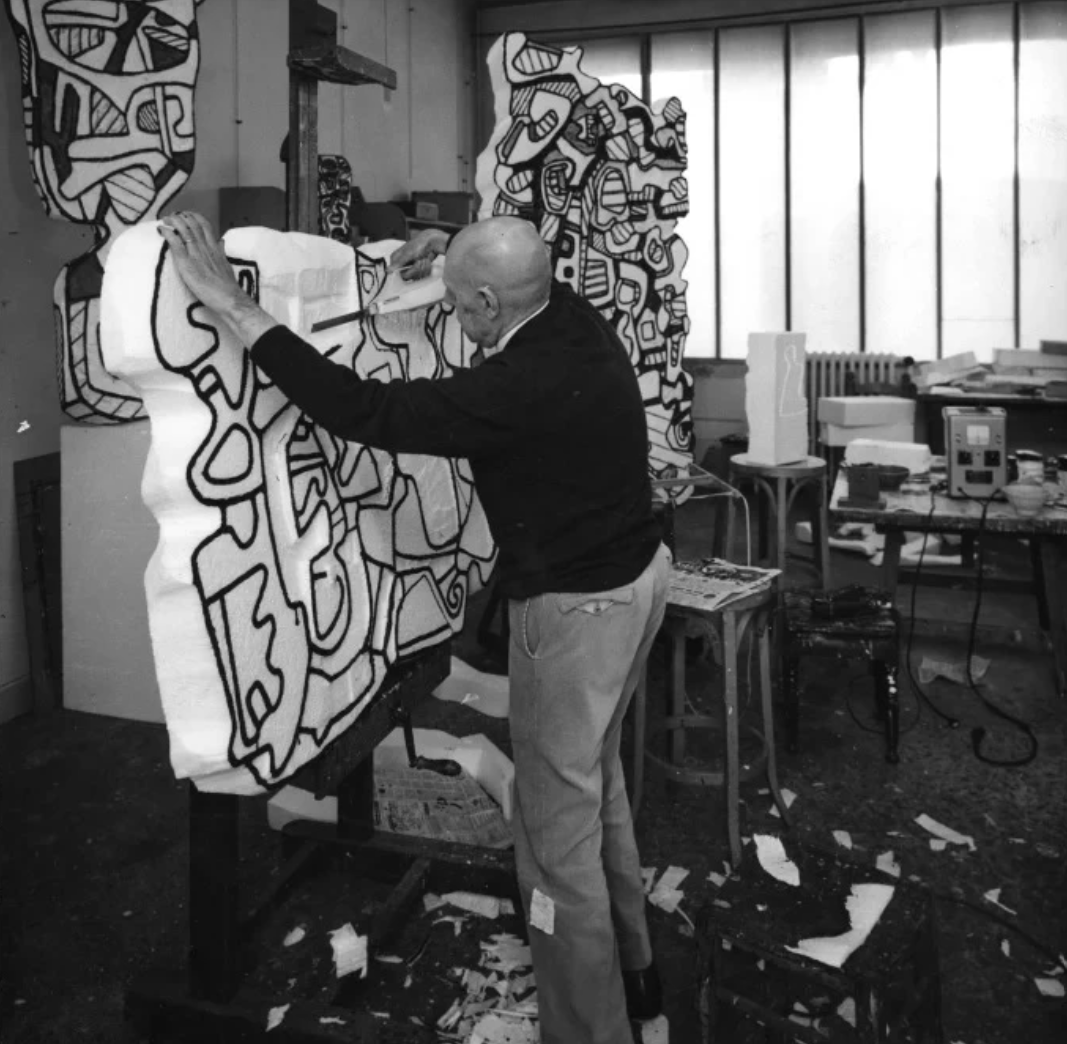
JEAN DUBUFFET IN HIS PARIS STUDIO, 1967. ART © 2022 FONDATION DUBUFFET, PARIS / ARTISTS RIGHTS SOCIETY (ARS), NEW YORK
Challenging us to consider our preconceived artistic notions anew, Les Trois promeneuses embodies the crux of not only Dubuffet’s conceptual project but also the aesthetic ambitions of his highly acclaimed, longest enduring series: L’Hourloupe. An expansive body of drawings, paintings, and sculptures executed between 1962 and 1974, L’Hourloupe illustriously originated with a simple doodle in ballpoint pen that Dubuffet scrawled mindlessly on a scrap of paper as he spoke on the telephone. Itself a transposition of a preparatory drawing onto industrial Klegecell paneling with vinyl paint, the present work contains free-flowing and intertwining linear elements executed in the constrained palette of industrial colors such as blue, black, red, and white. Thus rupturing the boundaries between painting and sculpture, Les Trois promeneuses evidences the distinct pictorial and representational shift signified by this semi-figurative, semi-abstract body of work. In a blurring of figure and ground, what can be seen in one instance as a grouping of human figures the very next emerges as a staccato juncture of methodically composed contours and cellular structures of striped and solid color. Erupting with poetic energy, these fantastical figures embody the spirit of the word L’Hourloupe, invented by the artist to imply a wonderful object or a grotesque creature. Equally, they channel the tenets of Art Brut synonymous with the artist’s oeuvre, namely the aesthetic influence of graffiti writers, prisoners, children and the insane and a renunciation of occidental notions of artistic beauty.
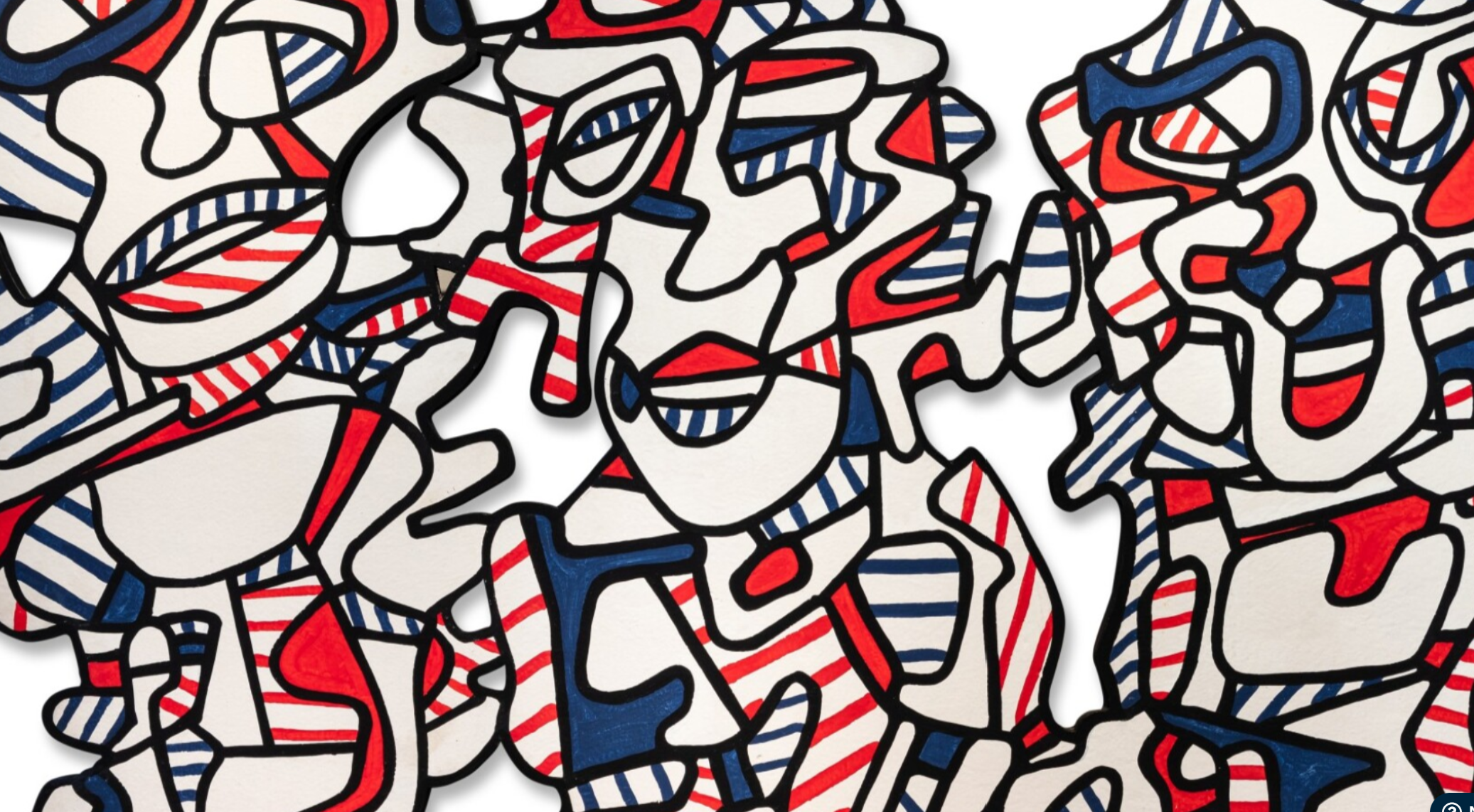
Exemplifying the vital, jubilant and spontaneous spirit of Dubuffet’s mature style, Les Trois promeneuses is a triumphant testament to his desire for entrancing, unbridled creativity. Explosive with whimsical intricacy, the present work is an instantly recognizable example of the enduringly important L’Hourloupe cycle and Coucou Bazar spectacle.
Promeneuse et promeneur, 1970
PROPERTY OF A LADY, RANCHO MIRAGE AND NEW YORK CITY
Bonhams New-York: 19 November 2025
Estimated: USD 70,000 – 100,000
USD 305,300
Bonhams : JEAN DUBUFFET (1901-1985) Promeneuse et promeneur
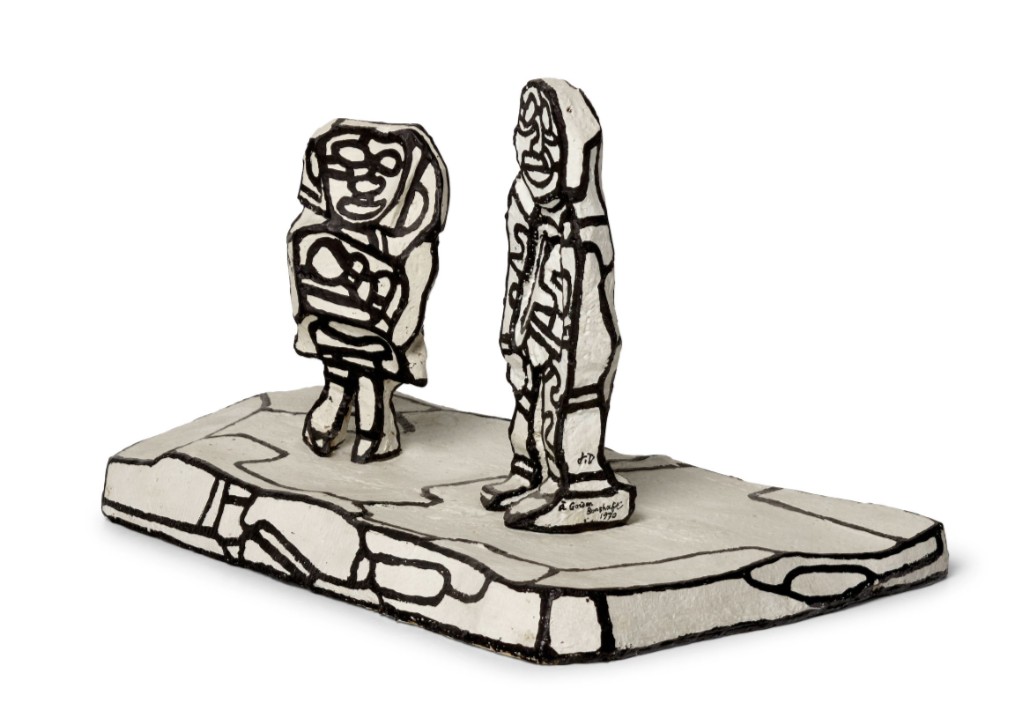
JEAN DUBUFFET (1901-1985)
Promeneuse et promeneur, 1970
Vinyl epoxy on polyurethane
20.8 x 33 x 23 cm (8-1/4 x 13 x 9 inches)
Signed with the artist’s initials
Inscribed and dated ‘J.D à Gordon Bunshaft 1970’ (on the right leg of the right figure)
Executed on October 28, 1970
Belonging to Dubuffet’s L’Hourloupe cycle, one of his most celebrated passages of work that occupied him from 1962 to 1974 and extended his graphic language into the realm of sculpture and architecture, Promeneuse et Promeneur is an exceptionally elegant and rare example of the artist’s sculptural foray. The subjects of the present work, outlined in the distinctive black tracery against a paper-white ground, appear as drawings conjured into being. In Promeneuse et Promeneur, Dubuffet has translated the spontaneity of his drawn line into three-dimensional form. This transformation, from the mental to the material, embodies the central premise of L’Hourloupe and indeed much of Dubuffet’s lifelong concern: that art could give form to thought itself, imagining a novel universe of forms and meaning.
Formerly in the collection of Nina and Gordon Bunshaft, patrons of some of the most renowned artists of the twentieth century, one need only consider a small number of the artworks the Bunshafts gifted to the Museum of Modern Art, New York, by bequest in 1995, to appreciate their profound connoisseurship and impact on the MoMA collection itself: Helen Frankenthaler’s Chairman of the Board (1971); Alberto Giacometti’s Tall Figure III (1960); Fernand Léger’s The Mirror (1925); Jean Dubuffet’s Facades d’immeubles (1946); Henry Moore’s Animal Form (1969-1970); Joan Miro’s Moonbird (1966).
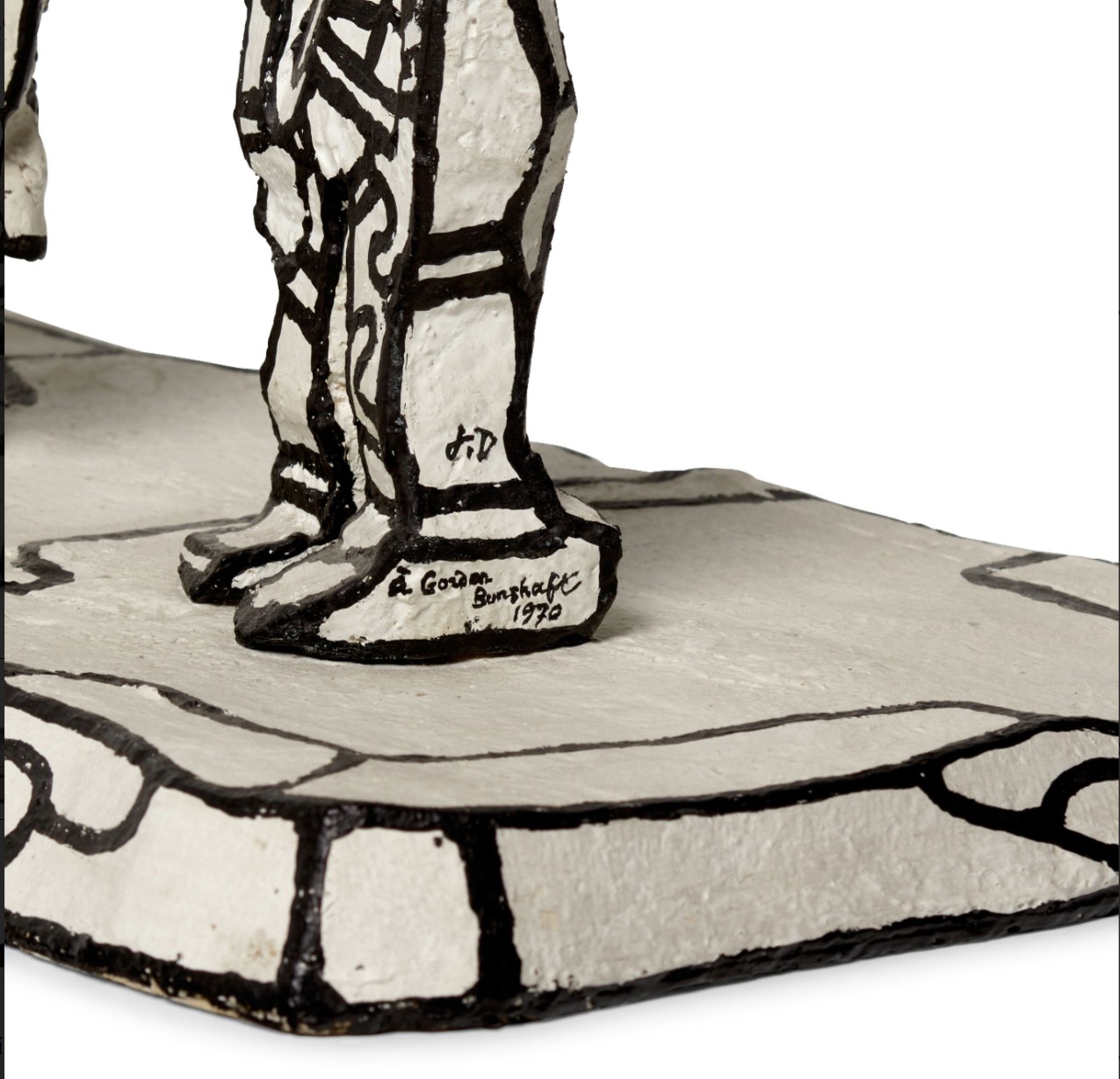
In the intimacy of this tabletop sculpture, we glimpse not only Dubuffet mastering a wonderfully concise scale, but the friendship and patronage through which it emerged. Bunshaft, longtime architect of Skidmore, Owings & Merril and winner of the Pritzker Architecture Prize in 1988, was not known to be affable or talkative. It’s been noted by biographer Nicholas Adams, however, that his friendships with artists revealed a softer, more vulnerable side to the terse architect. In a 1972 letter to Dubuffet, written after the unveiling of Groupe de quatre arbres – a commission for the plaza of the Chase Manhattan skyscraper Bunshaft had designed and opened in 1961 – Bunshaft reflected: “I enjoyed your visit here tremendously. I felt that although I have known you, off and on, for many years, this is the first time we really became closer” (quoted in: Nicholas Adams, “Silence and Gordon Bunshaft,” Yale University Press, November 19, 2019, Online). This sentiment reveals the closeness of spirit between two creators who had each contributed their vision to 28 Liberty Street.
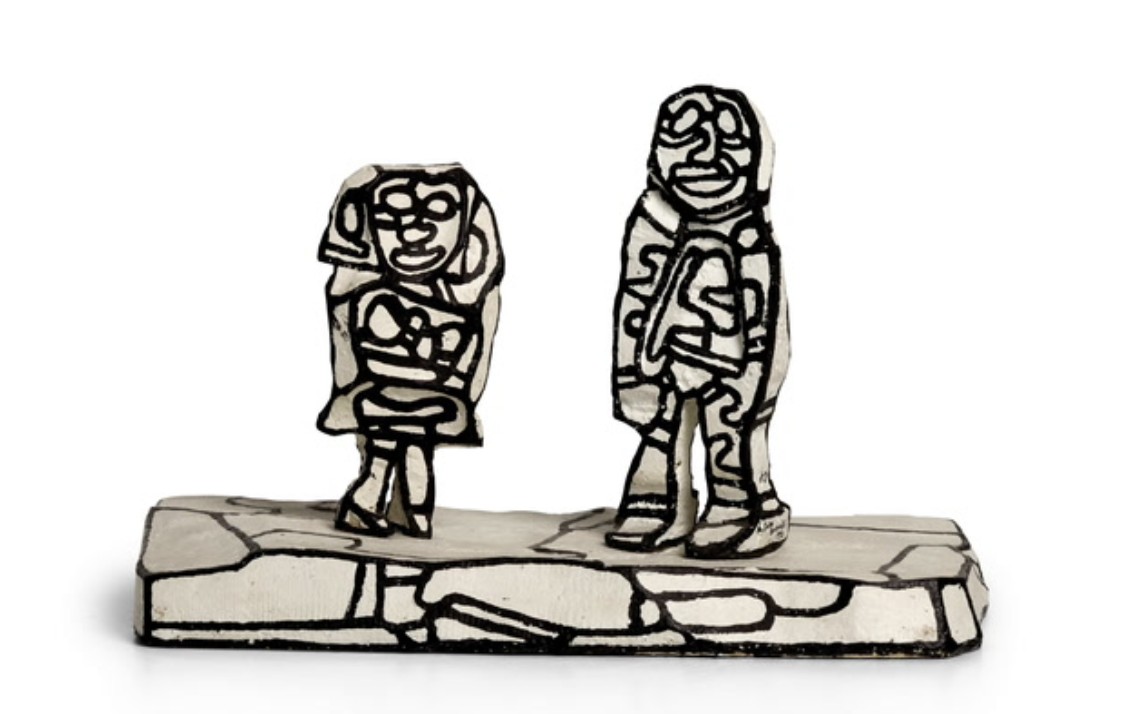
After long-term ownership since the sale from the MoMA-Bunshaft bequest in 1995, the opportunity to now acquire a museum-quality L’Hourloupe sculpture by Jean Dubuffet steeped in history is not to be missed.
Sites aléatoires
Passe l’heure, 1980
The Geri Brawerman Collection: A Tribute to Los Angeles and A Legacy of Giving
Sotheby’s New-York: 20 November 2025
Estimated: USD 600,000 – 800,000
USD 952,500
Passe l’heure | Contemporary Day Auction | 2025 | Sotheby’s
JEAN DUBUFFET (1901 – 1985)
Passe l’heure, 1980
Acrylic on canvas
100 x 81.2 cm (39 1/4 x 32 inches)
Signed with the artist’s initials and dated 80 (lower right)
Titled and dated Déc. 80 (on the reverse)
Executed in 1980, Passe l’heure captures Jean Dubuffet at a moment of extraordinary late-career vitality, when the artist’s restless inventiveness found new form in the Sites aux Figurines series. This body of work, produced between 1978 and 1981, marks a decisive shift in Dubuffet’s lifelong exploration of how thought, memory, and perception might be translated into visual form. Here, animated figures and fragmentary zones coalesce into a rhythmically charged composition that blurs distinctions between subject and setting, interior and exterior, self and environment.
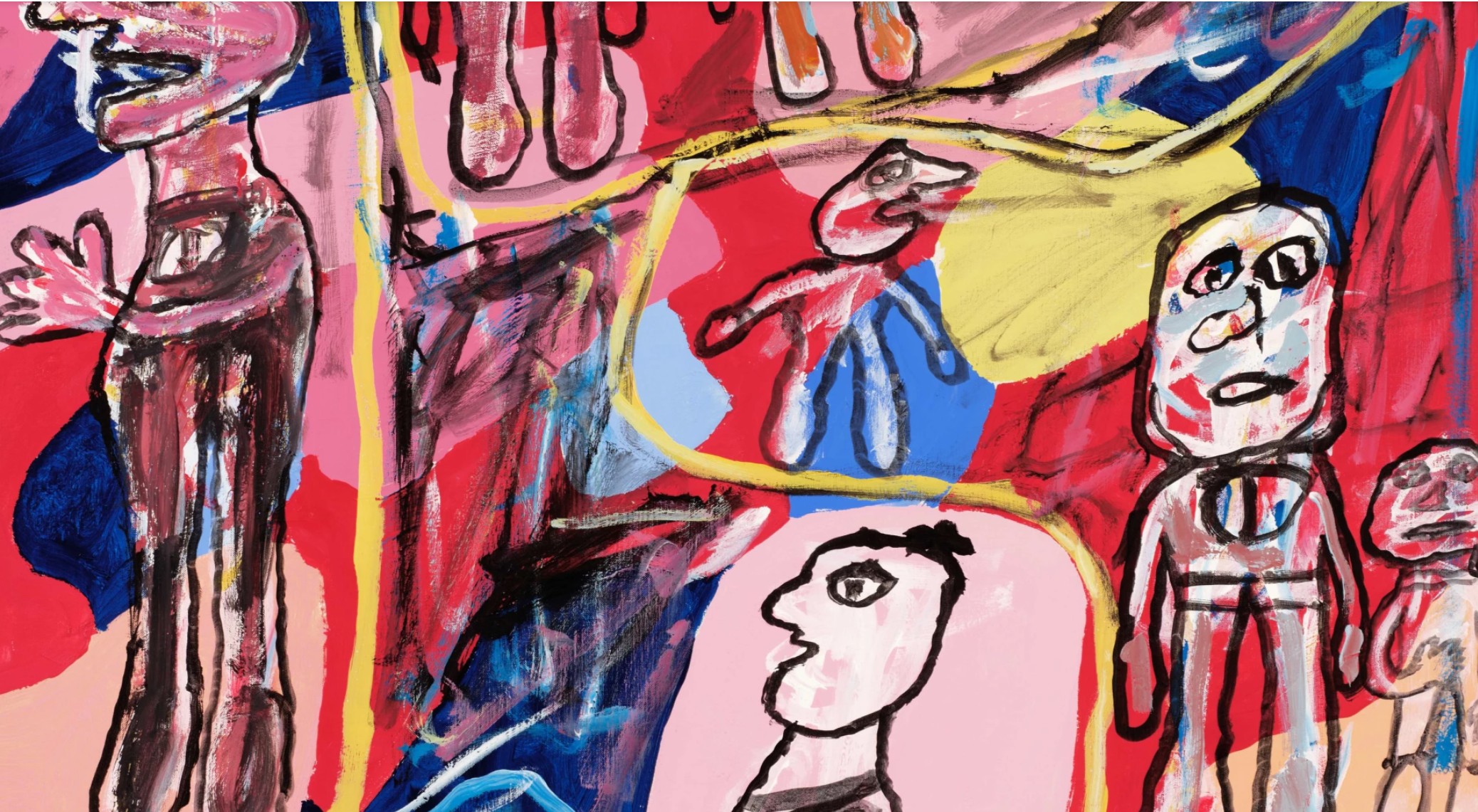
Across the composition, a dense constellation of figures rendered in vivid reds, ochres, blues, and whites populate the picture plane, their outlines simultaneously defined and absorbed into the intricate lattice of Dubuffet’s line. As in the closely related Partitions series that followed shortly after, Passe l’heure is governed by what the artist described as “a constantly occurring modulation of space… in which high and low, far and near, are no longer quite explicit” (Jean Dubuffet quoted in Exh. Cat., Salzburg, Museum der Moderne, Rupertinum Salzburg (and travelling), Jean Dubuffet – Traces of an Adventure, 2003, p. 240). Figures appear to drift between zones of color and gesture, caught in a perpetual state of flux that mirrors the instability of human thought and perception.
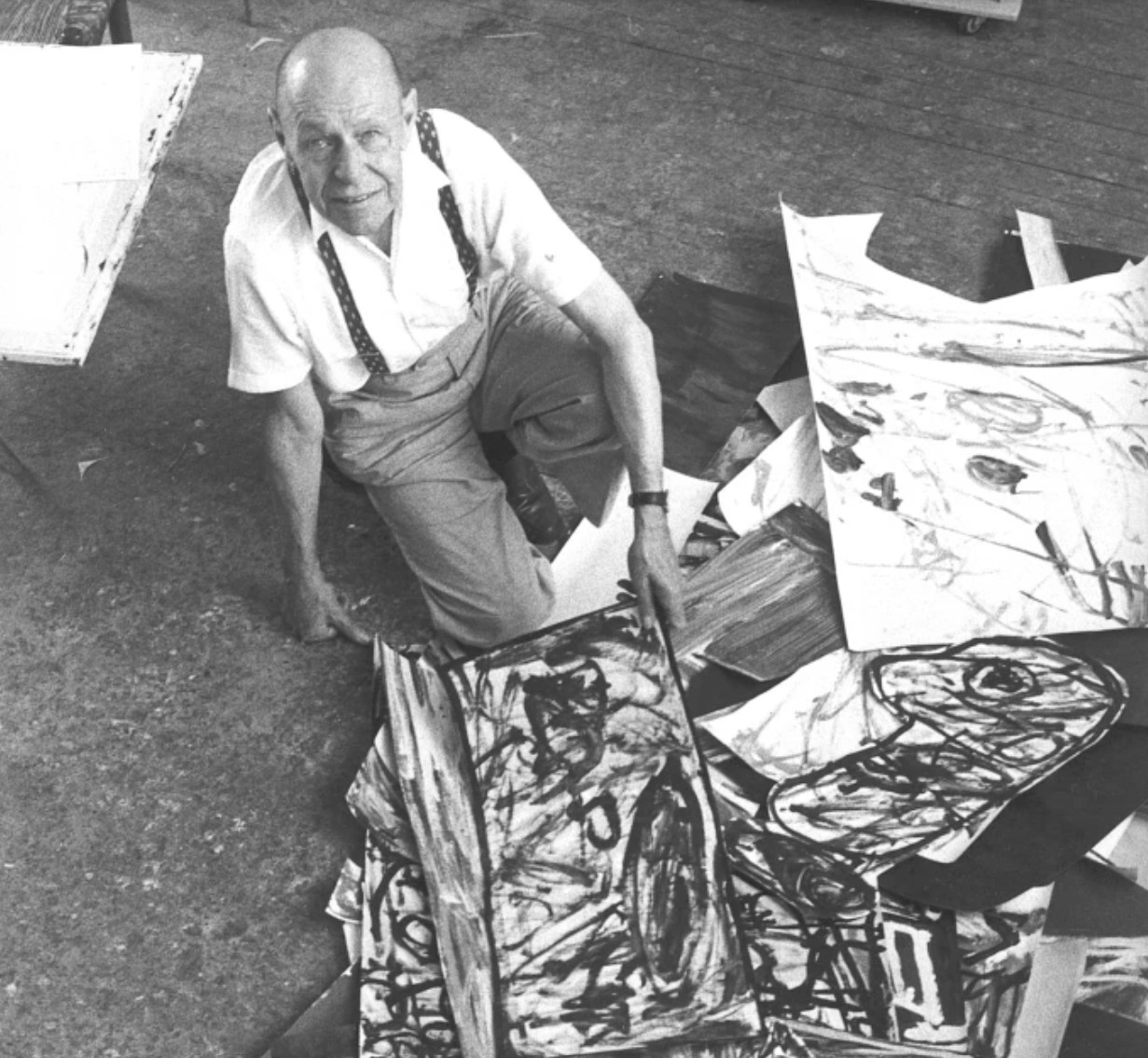
Portrait of Jean Dubuffet, Paris, 1976 © Archives Fondation Dubuffet, Paris / © Kurt Wyss, Basel / © ADAGP, Paris, 2025
This fragmentation of pictorial space can be traced to Dubuffet’s Théâtres de mémoire series, begun in 1975 and inspired by Frances Yates’s The Art of Memory. In those vast assemblages, Dubuffet fused gestural abstraction and figuration to evoke the associative structure of recollection. Following a back injury in 1978 that limited his physical movement, the artist turned to smaller formats, working seated and reimagining the sprawling mental landscapes of Théâtres de mémoire through the intimate, rhythmic surfaces of Sites aux Figurines. The present work epitomizes this transformation: a complex yet lucid orchestration of color and line that translates the mechanisms of memory and imagination into a visual language of joyful immediacy.
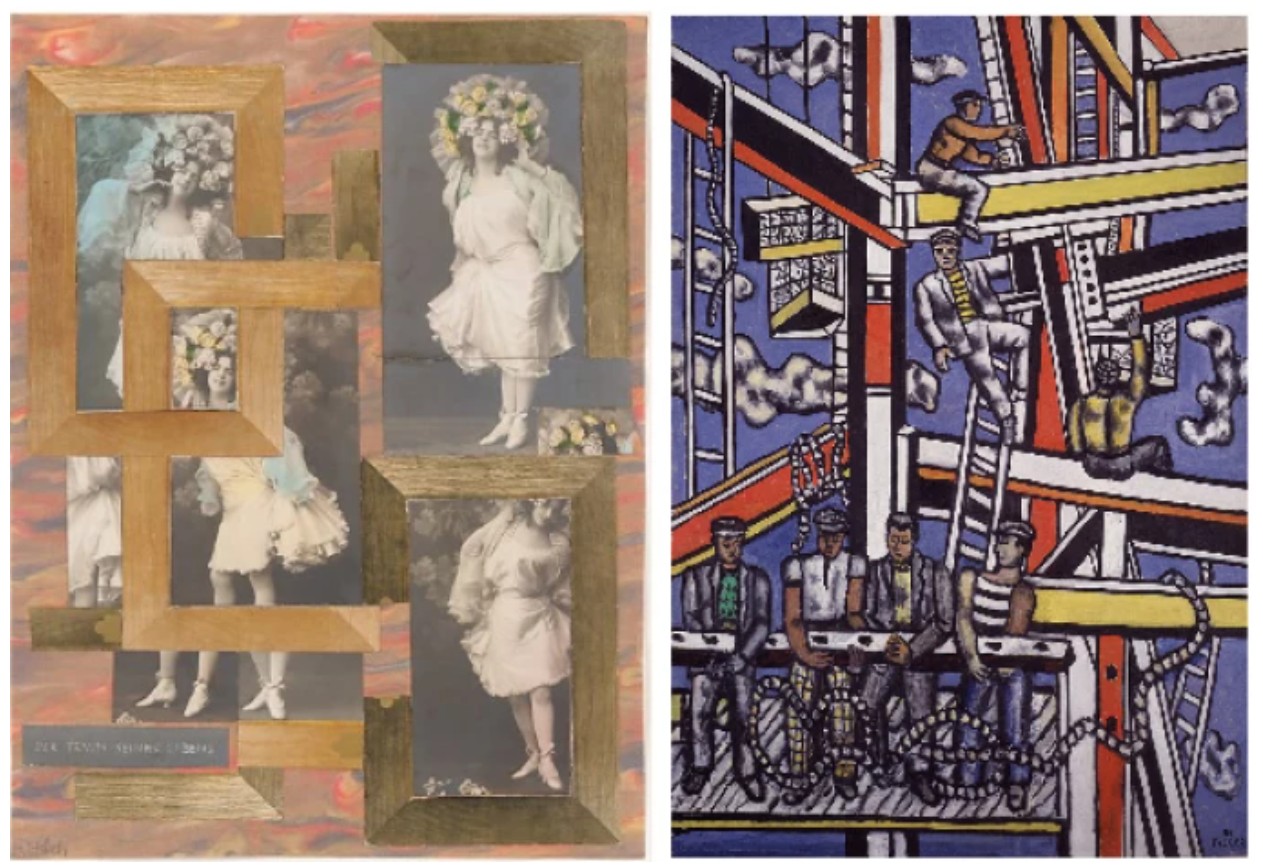
Left: Hannah Höch, Der Traum seinen Lebens (The Dream of His Life), 1925. The Metropolitan Museum of Art, New York.
Right: Fernand Léger, Builders with Rope, 1950. Solomon R. Guggenheim Museum, New York.
In Passe l’heure, Dubuffet’s figures—simplified yet expressive—reappear as inhabitants of psychological space rather than physical terrain. Each form is contained yet porous, suggesting zones of consciousness rather than bodies in a setting. The composition evokes what Dubuffet described as “representing what makes up our thoughts – to represent not the objective world, but what it becomes in our thoughts” (Jean Dubuffet quoted in Exh. Cat., London, Barbican, Jean Dubuffet: Brutal Beauty, 2021, p. 247). His late works abandon the illusion of perspective and the hierarchy of figure and ground in favor of an egalitarian pictorial democracy, where every line, shape, and hue participates equally in the life of the painting. With its kaleidoscopic interplay of form and color, Passe l’heure embodies the culmination of Dubuffet’s decades-long effort to unite thought, emotion, and material into a single continuum. The painting stands not only as a testament to the artist’s enduring creative force but as a profound declaration of faith in art’s capacity to mirror the restless, ever-shifting terrain of the human mind.
Site aléatoire avec 3 personnages, 1982
Phillips London: 2 March 2023
Estimated: GBP 500,000 – 700,000
GBP 838,200 / USD 1,008,355
Jean Dubuffet – 20th Century & Contemp… Lot 20 March 2023 | Phillips
JEAN DUBUFFET
Site aléatoire avec 3 personnages, 1982
Acrylic and paper collage on paper laid on canvas
134×100 cm (52 3/4 x 39 3/8 inches)
Signed with the artist’s initials and dated ‘J.D. ’82’ lower centre
Executed on 3 July 1982
Hovering against a tangled surface of staccato lines in primary-colored acrylic paint, three strange, simply rendered figures animate this late work from French post-war master Jean Dubuffet. Despite certain playful idiosyncrasies, these characters are non-specific, moving away from physical referents as they venture into more psychological territory. In Dubuffet’s own words, the works depict ‘nothing more than a notion of a place, with no specificity whatsoever. The human figures have no specificity either. They are rather ideas of figures inhabiting ideas of site.’
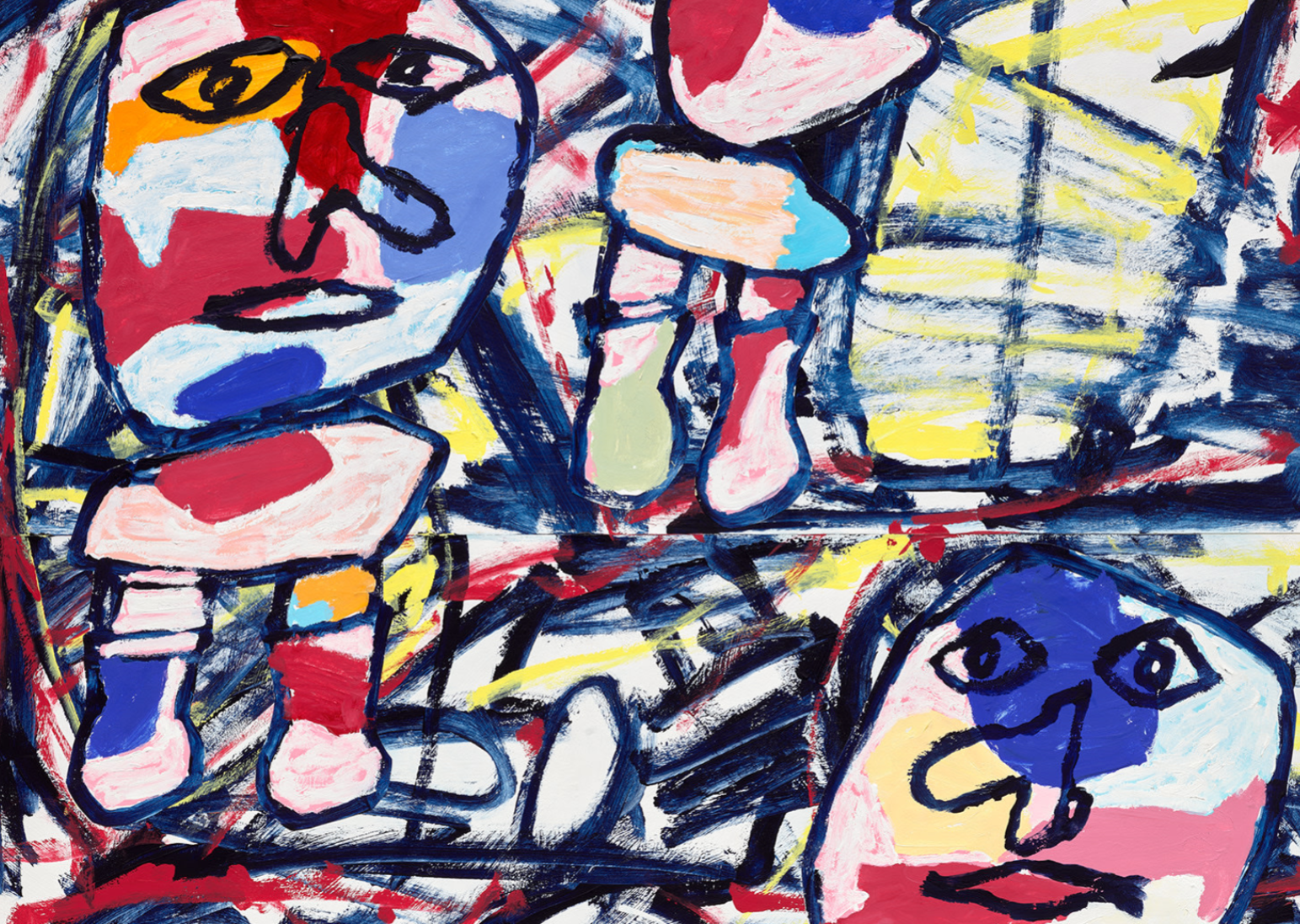
This quality of indeterminacy or equivalence would come to preoccupy Dubuffet more and more in the highly productive final years of his life, coming to fruition in works such as Site aléatoire avec 3 Personnages where the boundaries between abstraction, figuration, and urban cityscape became increasingly blurred and fluid. Closely related to other small cycles from this period such as the Partitions, Sites aux figures, and Psycho-sites, the present collaged work belongs to Dubuffet’s Sites aléatoires – or ‘Random Sites’ – series, which the artist first embarked on in 1982. While closely connected to certain thematic and stylistic elements established at the outset of Dubuffet’s radically experimental career, these turbulent psychological landscapes also anticipate the last, great pictorial experiments developed across the artist’s final Mires and Non-lieux series. First exhibited in the French Pavilion of XLI La Biennale di Venezia in 1984, just one year before Dubuffet’s death, monumental works such as Le cours des choses are closely related to the present work, developing the more complete dissolution of both pictorial space and the figure that we see Dubuffet experimenting with here.
“My desire is to make the site evoked by the picture something phantasmagoric; and that can be achieved only by jumbling together more or less veristic elements with interventions of arbitrary character aiming at unreality. I want my street to be crazy, my broad avenues, shops and buildings to join in a crazy dance, and that is why I deform and denature their contours and colours.”
Drawing on the energy and noisy vitality of his Paris Cirque and Hourloupe works, Site aléatoire avec 3 Personnages and the broader series to which it belongs returns the artist to what is arguably his most consistent themes – the figure in urban space and the city as a site of psychological intensity. In their flattened, simplified forms and heavy outlines, the three characters in the present work reference the artist’s earliest paintings, their shallow pictorial space and densely overworked surface recording Dubuffet’s long-standing desire to ‘represent things as we think them rather than as we see them’. However, while early works such as Apartment Houses are anchored in the physical reality of Paris itself, these later works masterfully blend figuration and abstraction, the frenetic city and the mind, creating complex inner landscapes.
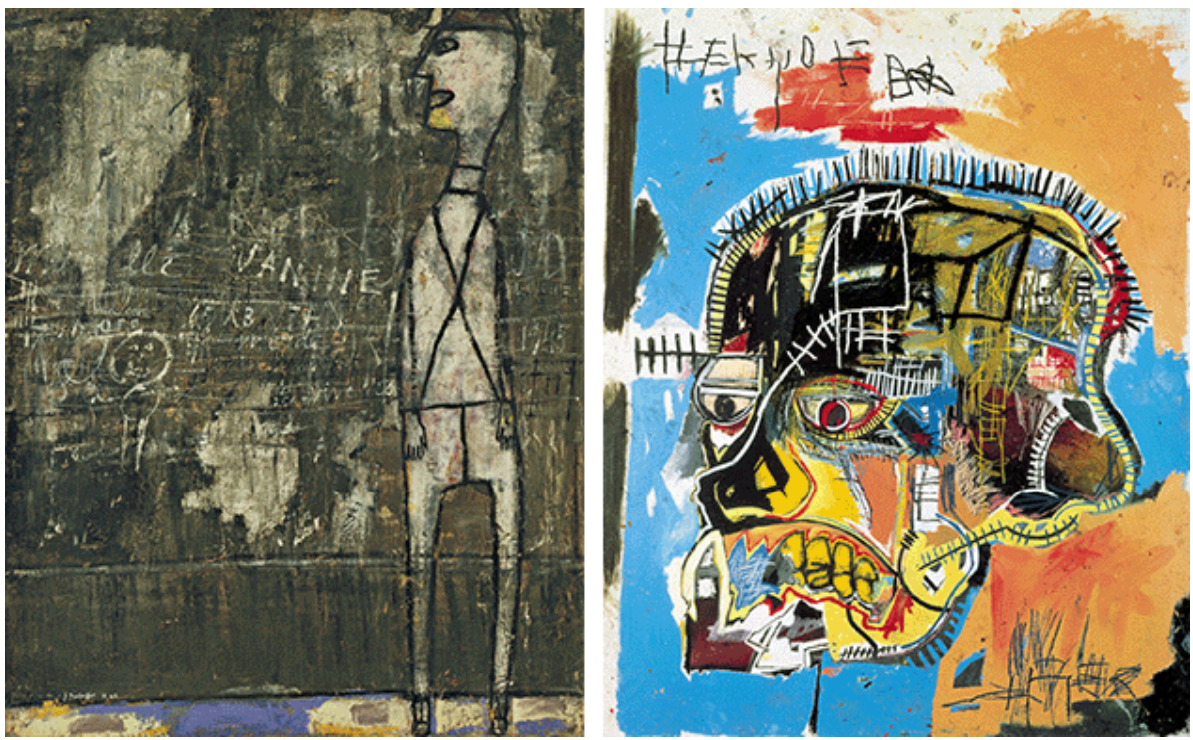
Left: Jean Dubuffet, Mur aux inscriptions (Wall with Inscriptions), April 1945, The Museum of Modern Art, New York. Image: © The Museum of Modern Art, New York/Scala, Florence, Artwork: © ADAGP, Paris and DACS, London 2023
Right: Jean-Michel Basquiat, Untitled, 1981, The Broad, Los Angeles. Image: ADAGP Images, Paris / Scala, Florence, Artwork: © The Estate of Jean-Michel Basquiat / ADAGP, Paris and DACS, London 2023
Alongside his deep fascination with the city as a unique site of psychological intensity, its material reality also fascinated Dubuffet, the scumbled textures and palimpsest properties of its graffitied walls presenting themselves to the artist as ‘poignant surfaces, their dense scars and inscriptions bearing witness to the past and present lives of the city.’Discussing the late Mires series, Charlotte Flint has directly connected their thick, lattice of overlaid lines to Dubuffet’s early interest in graffiti forms, establishing a thread of continuity across over 40 years that was picked up and developed by a new generation of artists including Rashid Johnson and the prodigious Jean-Michel Basquiat. As well as the rich proliferation of gestural marks activating the surface of Site aléatoire avec 3 Personnages, the collaged elements of the piece incorporate a further reference to the textures and built-up qualities associated with the walls of the city. After an extended period in the South of France, Dubuffet’s return to a rapidly urbanising Paris in 1961 redoubled his enthusiasm for these earlier areas of inquiry, allowing him to refocus the ‘lifelong oscillation between the body and the landscape, between figuration and abstraction’ fully realized in his late work.
Paris Circus
Restaurant Rougeot II, 1961
The Matthew and Carolyn Bucksbaum Collection
Sotheby’s New-York: 20 November 2025
Estimated: USD 6,000,000 – 8,000,000
USD 7,492,000
PARIS CIRCUS SERIES
Restaurant Rougeot II | Modern Evening Auction | 2025 | Sotheby’s
JEAN DUBUFFET (1901 – 1985)
Restaurant Rougeot II, 1961
Oil on canvas
90.5 by 116.2 cm (35 5/8 x 45 3/4 inches)
Signed J Dubuffet (lower center)
Signed again, titled and dated avril 61 (on the reverse)
Executed in March-April 1961
Standing before Jean Dubuffet’s Restaurant Rougeot II, one can almost hear the clatter of dishware, boisterous laughter, symphony of conversation, and spectacle of Parisian nightlife. Dubuffet’s jubilant scene immediately transports the viewer to mid-century Paris, capturing the joie-de-vivre and vibrant atmosphere that characterized a burgeoning era of prosperity and hope in the post-war period. Returning to the bustling urban milieu in Paris after years spent in the Vence countryside, Dubuffet was captivated by the city’s potent sense of optimism and liberation in the wake of World War II.
Executed in 1961, a revolutionary year in Dubuffet’s oeuvre, Restaurant Rougeot II is an early example from the artist’s most celebrated and coveted series: the Paris Circus. Dubuffet’s paintings from this limited body of work are poignant vignettes of a rejuvenated Paris: featuring storefronts and street signs, automobiles and local establishments, and city dwellers strewn about wide boulevards. In these works, Dubuffet harnesses a masterful fusion of figuration and abstraction, generating a sensation of unbridled energy through kaleidoscopic coloration and vigorous brushwork.
“I went to draw at Restaurant Rougeot on Tuesday morning, March 28, 1961 from 9 a.m. to 10:30 a.m and I went back for lunch to draw again while eating, after which I immediately started the painting, which I worked on from 1 p.m. to 8:30 p.m. and then for a few more hours the next day.”
Jean Dubuffet, 1964. Photo by Ida Kar © National Portrait Gallery, London
A rare and seminal painting within the Paris Circus series, Restaurant Rougeot II is one of an exceptional suite of just three paintings depicting Restaurant Rougeot, which was once a vibrant enterprise located on the Boulevard Montparnasse. The sister painting to the present work, Restaurant Rougeot I is held in the Dubuffet Foundation’s collection. Furthermore, Restaurant Rougeot II is one of few major city-scene Paris Circus paintings still remaining in private hands; other examples are held in the collections of Musée des Arts Décoratifs, Paris; Tate, London; The Museum of Modern Art, New York; National Gallery, Washington, D.C., and the Centre Pompidou, Paris, among others.
Auguste Renoir, Bal du moulin de la Galette, 1876. Musée d’Orsay, Paris. Image © RMN-Grand Palais / Art Resource, NY
Exuding the boisterous spirit of Parisian urban life, Restaurant Rougeot II crystallizes the ebullience of the dynamic social fabric that Dubuffet encountered upon his return to the city after his sojourn in the country. Here, the viewer is witness to a mesmeric restaurant scene in which patrons lean into gripping conversation, throw their arms up in exclamation, and drink and dine with glee. At the composition’s center, the maître d’ outfitted in a white apron commands his audience like the conductor of an orchestra—his swift movement between tables represented by brisk strokes of white pigment.
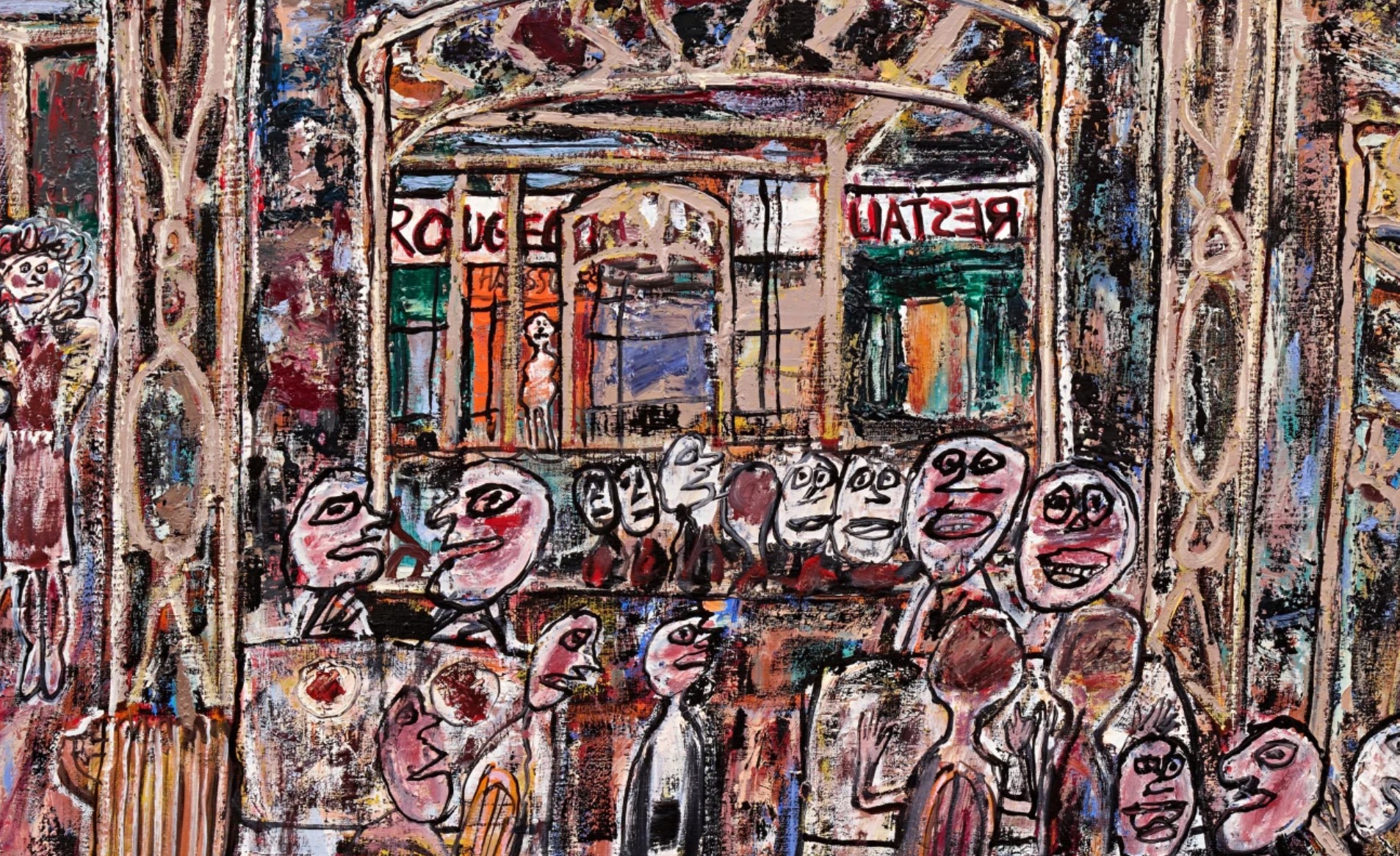
Diners converse over full plates and glasses of wine, at times mingling between tables. Hopeful patrons stand in line at the entrance, waiting their turn for a spot at the beloved Restaurant Rougeot. By the door, a woman presses her hands against her cheeks aghast at a gentleman’s transgression of wearing a hat indoors. A coat check attendant guards his valuables and passersby on the streets peer through paned windows like spectators at the theatre. Dubuffet masterfully navigates the dichotomies between inside and outside, capturing the interior’s lively atmosphere, ornate moldings, and high ceilings, while also situating the viewer in the context of Parisian cosmopolitan life on the street level.
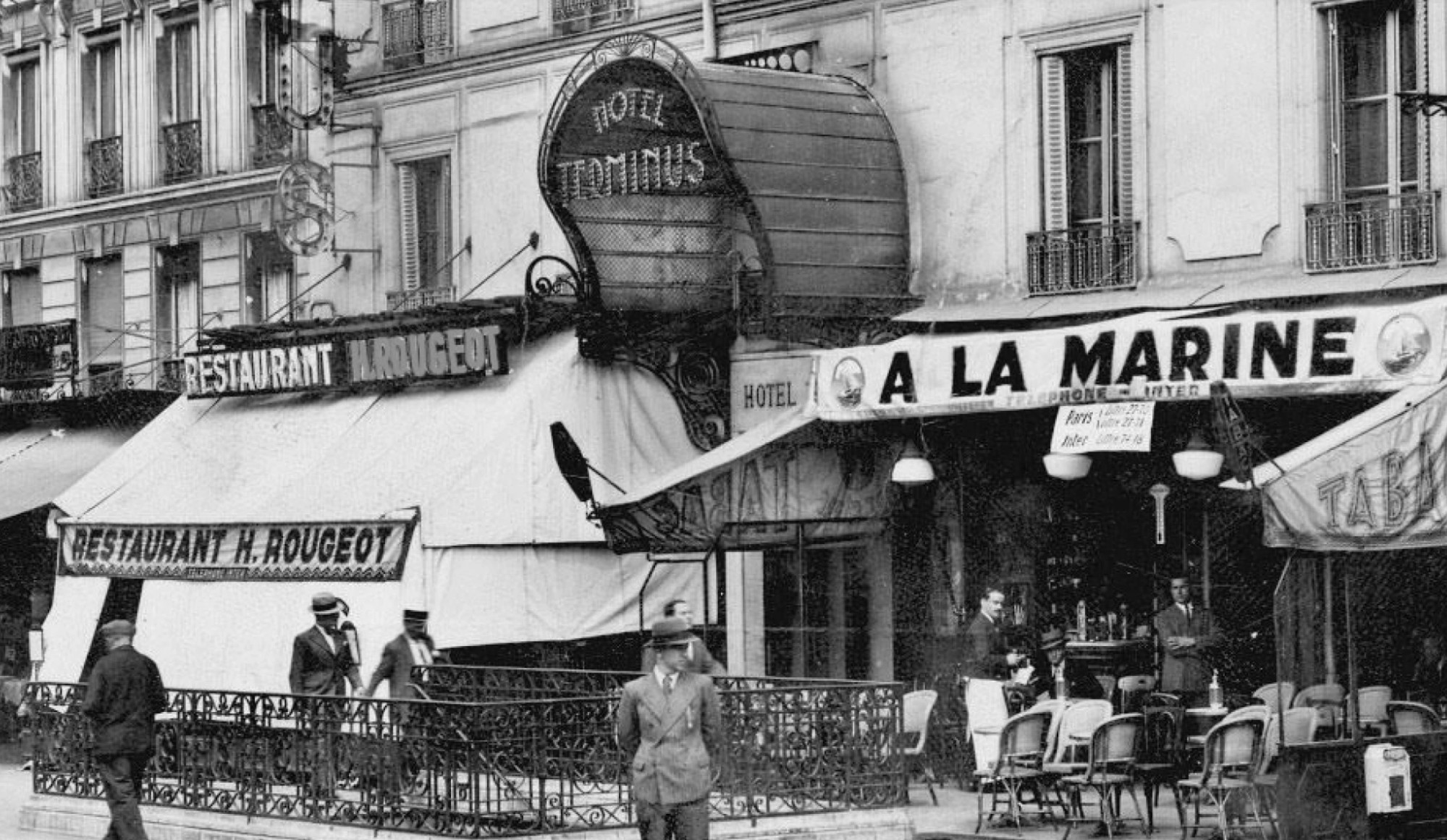
Le Boulevard Montparnasse, with Restaurant Rougeot. Photographer unknown
Dubuffet’s rendering of the Restaurant Rougeot sign above the entrance and individuality of expression afforded to each character in the scene imbues the painting with an enchanting familiarity, while maintaining the artist’s signature playful, liberated technique. Radically manipulating the perspective of the scene to produce a panoramic-like vantage for the viewer, Dubuffet captures the frenzied energy of Restaurant Rougeot as a microcosm for a vibrant Parisian metropolis.
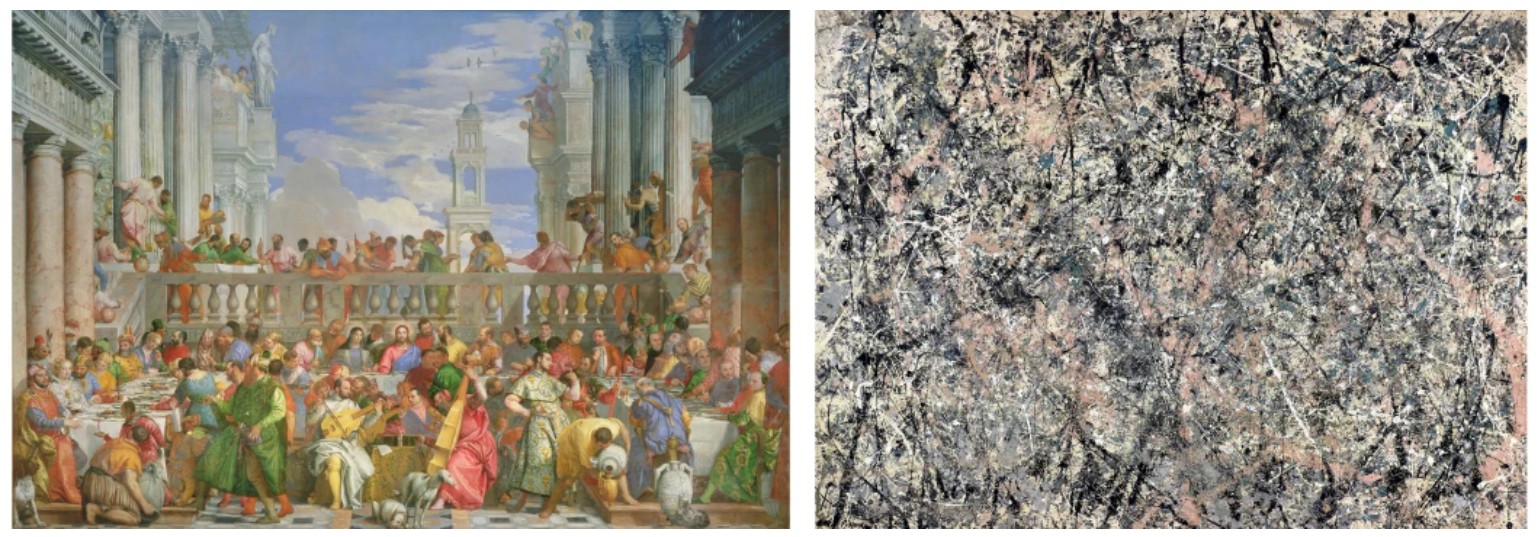
Left: Paolo Veronese, Le nozze di Cana, 1562-63. Musée du Louvre, Paris. Image © Photo Josse / Bridgeman Images. Right: Jackson Pollock, Number 1, 1950 (Lavender Mist), 1950. National Gallery of Art, Washington, D.C. Image © Bridgeman Images. Art © 2025 Pollock-Krasner Foundation / Artists Rights Society (ARS), New York
Begun in 1961, the Paris Circus series marked a revolutionary departure from Dubuffet’s output in the late 1950s. In 1955, in the aftermath of World War II, Dubuffet retreated to rural Vence and began a series of geologically informed works connected to the natural environment. Works of this period, including Topographies, Texturologies, and Matériologies demonstrate the artist’s fascination with exploring his new terrain on a microscopic level and were executed in an austere, earthy palette. After six years in the countryside, Dubuffet’s return to a revitalized Paris sparked watershed development in his practice. The Paris Dubuffet had left was sober and depressed by war, while the new Paris he encountered was a thriving metropolis. Dubuffet responded with a series of works capturing the vitality, speed, and energy igniting the city.
Restaurant Rougeot II is one of a seminal and rare suite of just three paintings depicting the iconic Restaurant Rougeot on the Boulevard Montparnasse, with the sister painting belonging to the Fondation Dubuffet, Paris. Further testament to the significance of the present work, Restaurant Rougeot II is one of few major city-scene Paris Circus paintings remaining in private hands, with others widely represented in prestigious collections, including Musée des Arts Décoratifs, Paris; Tate, London; The Museum of Modern Art, New York; National Gallery, Washington, D.C., and the Centre Pompidou, Paris.
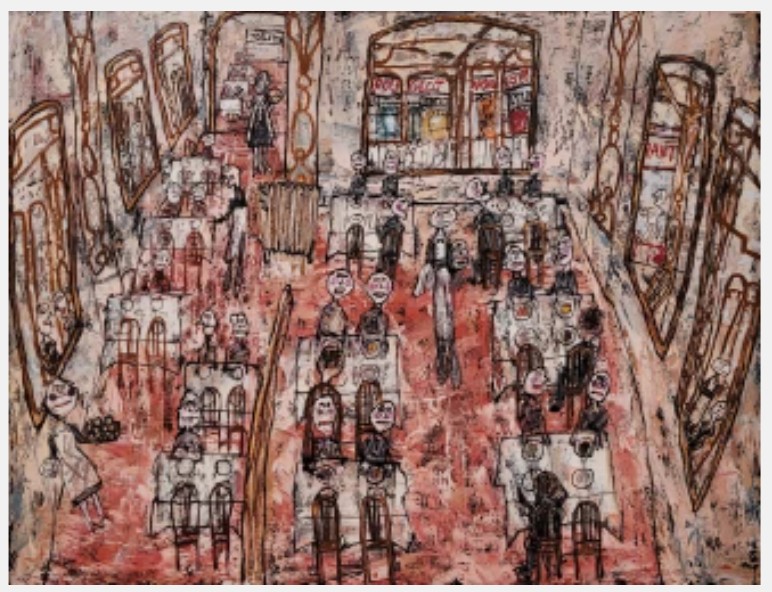
Restaurant Rougeot I, 1961, Fondation Dubuffet Paris
Using a chromatic palette of crimson reds, emerald greens, periwinkle blues, and tangerine oranges, applied in quick strokes over numerous layers, Dubuffet harnessed the essence of a city in progress in Restaurant Rougeot II. Dubuffet’s Paris Circus compositions are densely packed sensory barrages, brimming with information to uncover, just like a metropolitan street. Dubuffet explained his Paris Circus paintings in contrast with his earlier works: “The principle thing about [my paintings of this year] is that they are in complete contrast to those of the Texturology and Materiology series that I did previously. They are in every way the opposite… In reaction against this absenteeist tendency my paintings of this year put into play in all respects a very different intervention. The presence in them of the painter now is constant, even exaggerated. They are full of personages, and this time their role is played with spirit.” (the artist, “Statement on Paintings of 1961,” in: Peter Selz, The Work of Jean Dubuffet, New York 1962, p. 165)
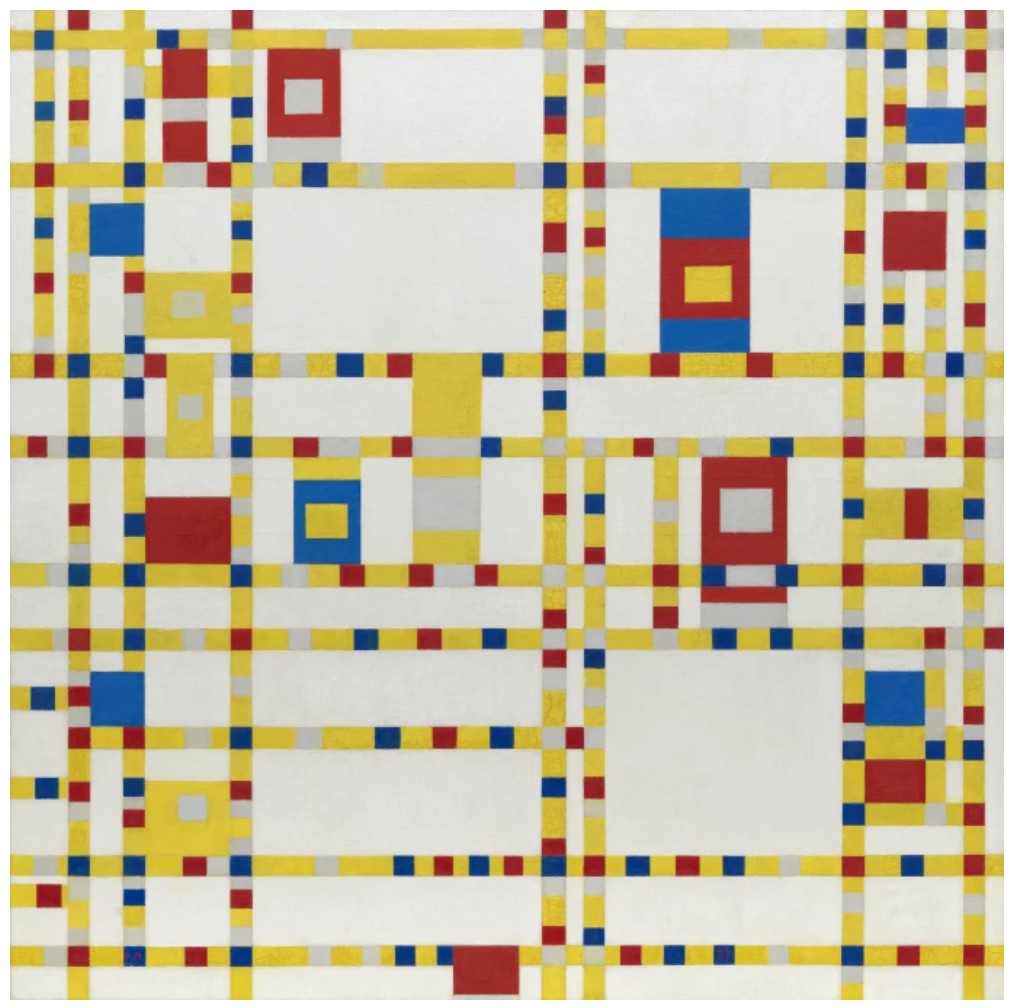
Piet Mondrian, Broadway Boogie Woogie, 1942-43. The Museum of Modern Art, New York.
Image © The Museum of Modern Art / Licensed by SCALA / Art Resource, NY
Boisterous and undaunted, Dubuffet’s Restaurant Rougeot II is an exceptional example from Dubuffet’s most acclaimed series. With a polychromatic palette, vigorous gesture and radical fusion of figuration and abstraction, Dubuffet enchants the viewer with a deluge of color and form, capturing the energy of a new Paris. Held in the same family collection for over forty years, Restaurant Rougeot II is an exceedingly rare and important work within Dubuffet’s exalted oeuvre.
Le Guilleret, 1961
Sotheby’s London: 6 March 2024
Estimated: GBP 2,000,000 – 3,000,000
GBP 2,226,000 / USD 2,822,568
JEAN DUBUFFET (1901 – 1985)
Le Guilleret, 1961
Oil on canvas
116.1 x 88.8 cm (45 3/4 x 35 inches)
Signed and dated 61 (lower left)
Signed, titled and dated sept. 61 (on the reverse)
Jean Dubuffet’s Le Guilleret from 1961 is an exquisite example of the Paris Circus series and captures the sense of humour and painterly command for which Dubuffet is most celebrated. The painting was acquired by Mary and George Bloch in 1985 and has remained in the same collection for nearly four decades. Depicting a walking man, Le Guilleret is outstanding in its vivid coloration and intricately layered brushwork, creating a kaleidoscopic surface full of vigor and energy which characterizes the artist’s renowned series.
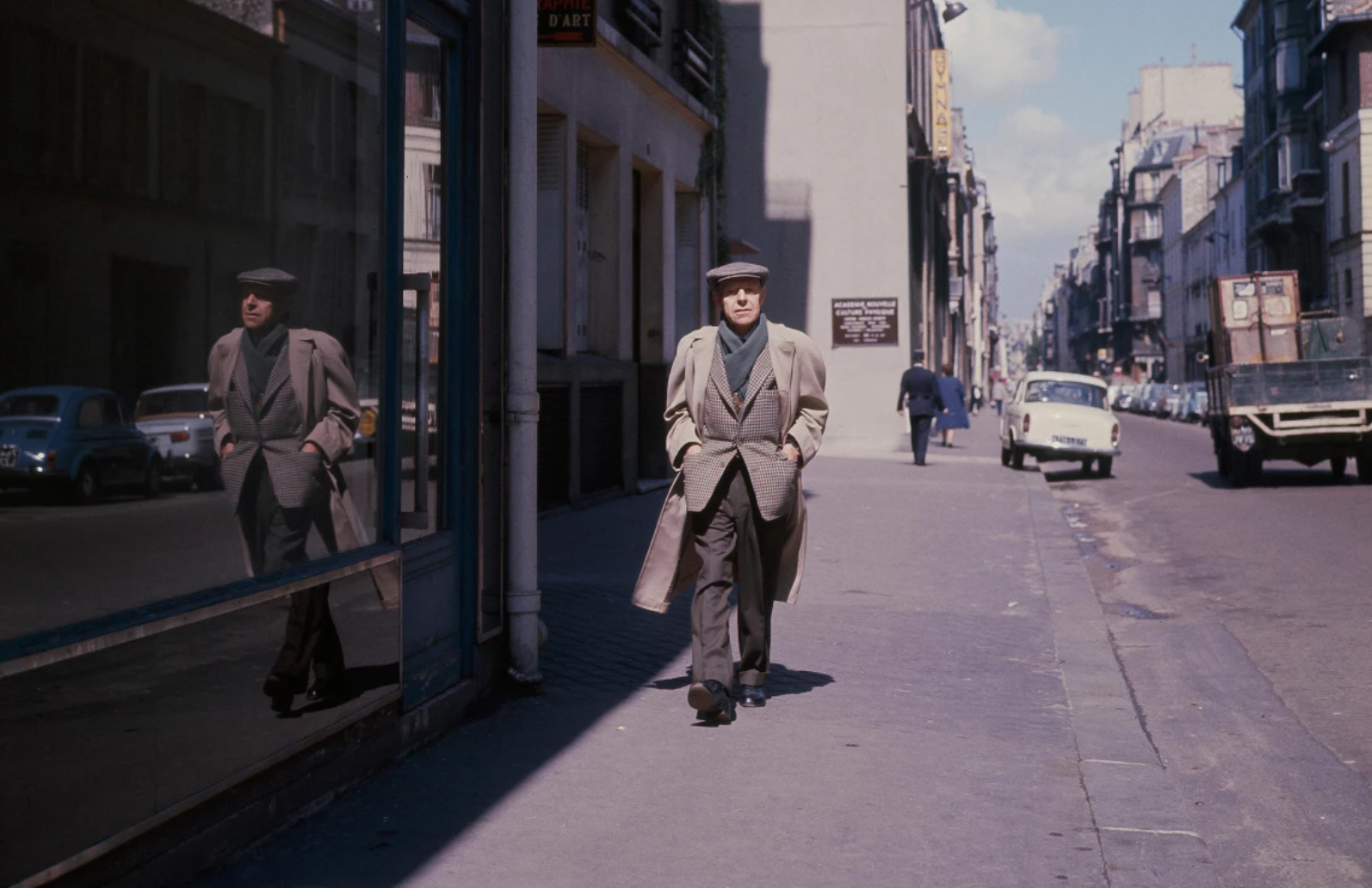
JEAN DUBUFFET IN PARIS PHOTOGRAPHED BY IDA KAR IN 1964 / IMAGE: © NATIONAL PORTRAIT GALLERY
The Paris Circus series was executed between the end of February 1961 and July of 1962, and marked a complete departure from his previous body of works which focused on the exploration of materials and their tactile qualities. The series was prompted by a bus journey through Paris in 1961; Dubuffet experienced the buzzing and vibrant metropolis in stark contrast to the remoteness of rural life he had led in Vence. It was his first extended stay in the city after six years away, and Paris had changed dramatically since his departure. The city’s population had grown, and a new economic boom in the post-war period had created a new consumer society. The urban landscape full of billboards, cars, shop fronts, restaurants and bars became his subject, coming together to form a short yet brilliant series of works depicting the capitalist spectacle, which Dubuffet fittingly titled Paris Circus.
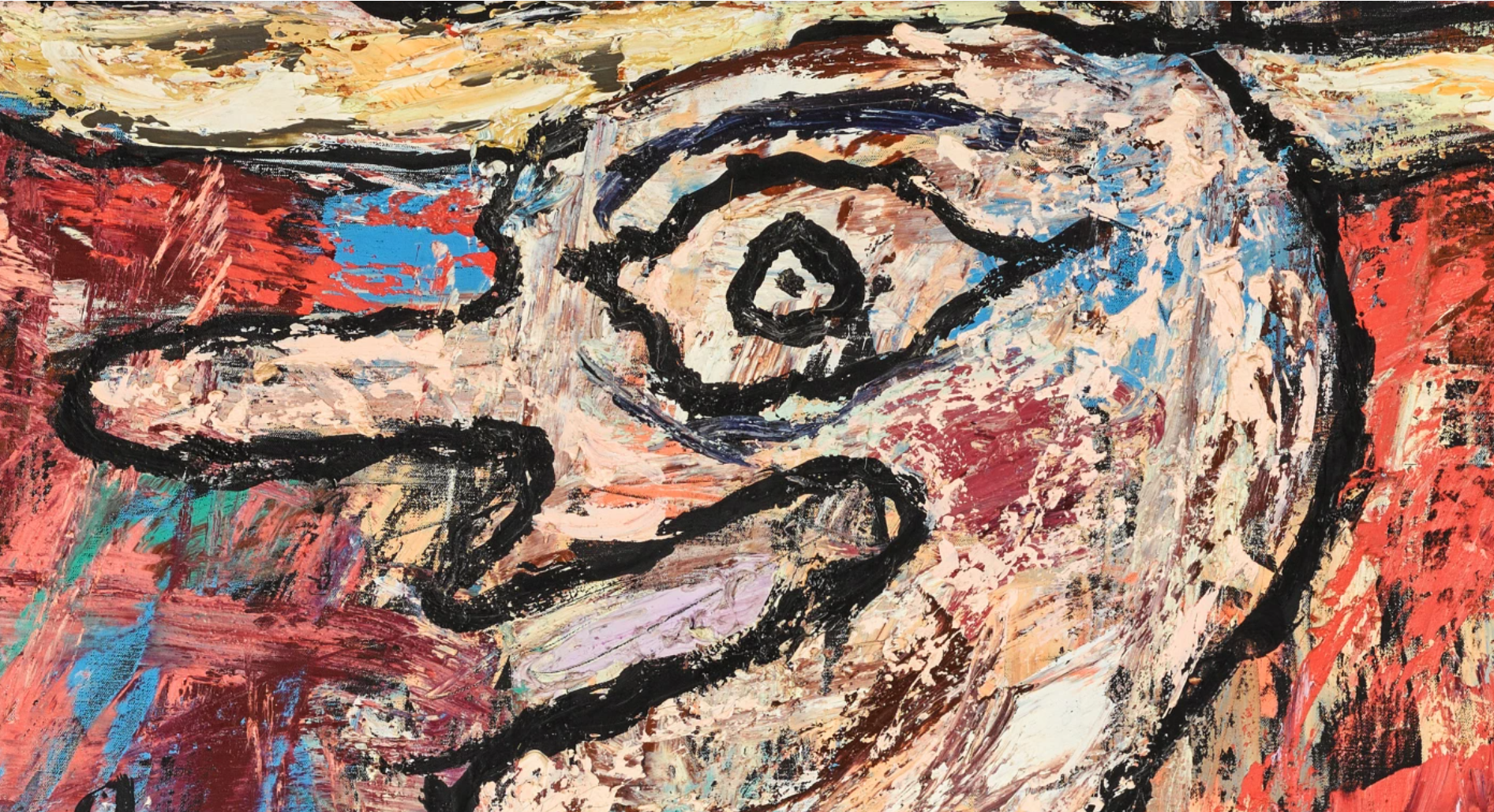
Painted with a bright and colorful palette, the Paris Circus series take on a joyous tone as Dubuffet departed from the earthy palette he had favored during the darker years of German occupation. As he wrote to his friend, curator and critic Genevieve Bonnefoi, “I live locked up in my studios, doing, guess what? Paintings in the spirit and manner of those I was making in 1943. [I have] decided to start all over from the beginning” (Jean Dubuffet quoted in: Jean Dubuffet, PES, vol. 2, 4 August 1961, p. 479). Indeed, in its flat, rounded form, the figure in the present work bears a clear resemblance to those populating his series Marionnettes de la ville from 1940s. In Le Guilleret, Dubuffet irreverently disarms the traditional deception of naturalistic perspective, accentuating his figure’s two-dimensionality through reductive and simplified shapes. Filling the entire picture plane, the figure’s boldly outlined body stretch and expand to fill the space it occupies, deviating from the historically established notion of balance and idealized compositions. Entering this new cycle of works, Dubuffet left behind his preoccupation with dirt, austerity and melancholy and moved instead towards theatricality, joie de vivre and the frenetic.
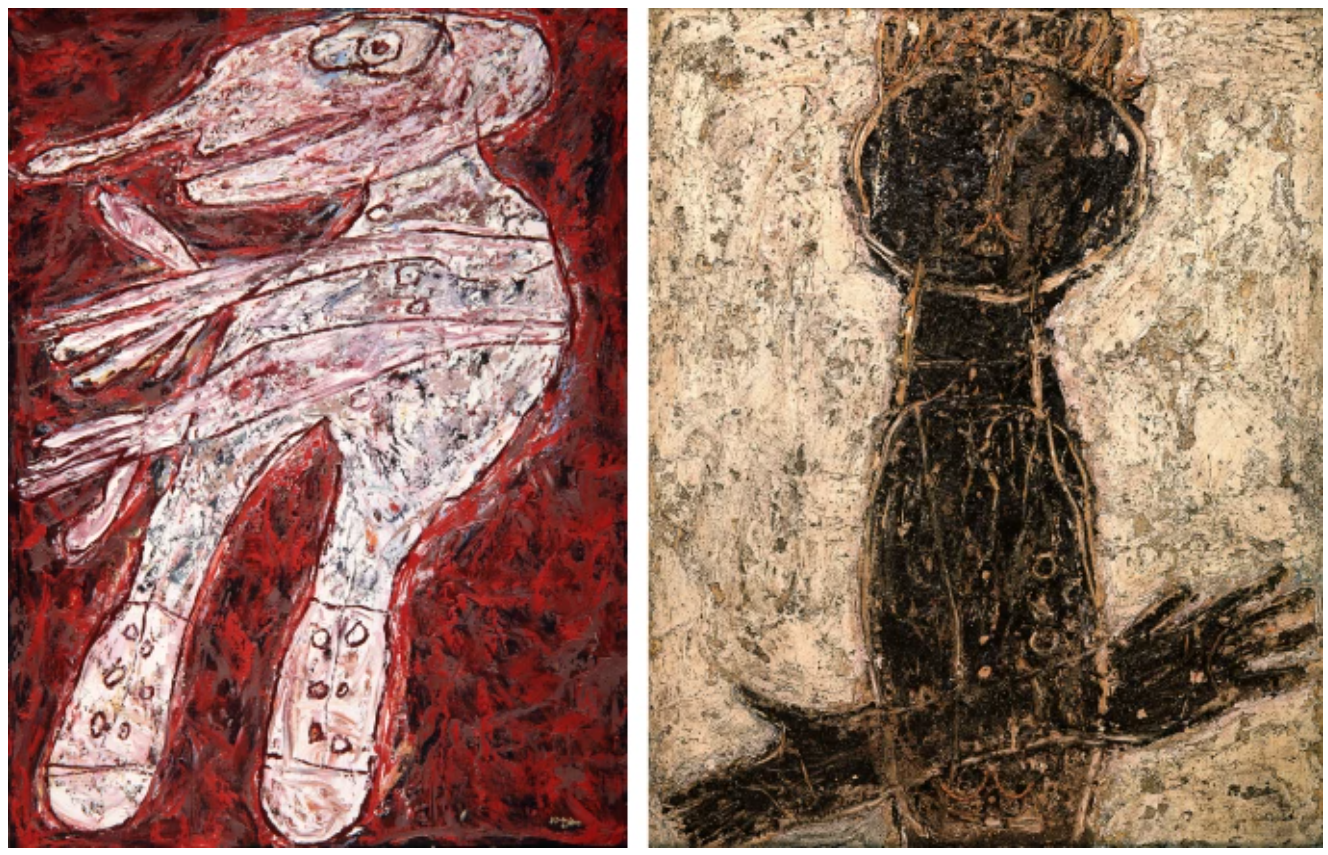
LEFT: JEAN DUBUFFET, LOOKING WELL, 1961, SAN DIEGO MUSEUM OF ART/ IMAGE: © BRIDGEMAN IMAGES/ ARTWORK: © 2024 FONDATION DUBUFFET, PARIS/ DACS, LONDON / RIGHT: JEAN DUBUFFET, RENÉ DROUIN: MAINS OUVERTES, 1946. KUNSTSAMMLUNG NORDHEIN-WESTFALE, DÜSSELDORF/ IMAGE: SCALA, FLORENCE/ ARTWORK: © 2024 FONDATION DUBUFFET, PARIS/ DACS, LONDON
Following the summer of 1961, Dubuffet stopped illustrating specific references to Paris. Instead, the paintings began to illustrate single or groups of figures, painted with intricate layers of impasto, floating in ambiguous space. Painted in September of 1961, the present work simply portrays an individual figure in isolation, creating an enigmatic portrait, painted with bold shapes. The wide-eyed “perky” man is illustrated in side-profile, his protruding nose mirroring the long rim of his hat. Three buttons run down the center of the man’s body, from which two arms and two legs extend outwards. The immediate force of the composition is palpable through the vigorous sweeps of bright crimson, sky blue and violet which coalesce into a colorful frenzy. The unrestrained and free brushwork which fills Le Guilleret captures the spontaneous and explosive mechanisms that guide Dubuffet’s practice, embodying the chaotic and colorful energy of the urban environment. In other words, the particularities of the urban environment provided fertile ground in which Dubuffet’s raw and automatic painterly impulses could be unleashed and manifested.
Eloquently expressed in Le Guilleret is Dubuffet’s preoccupation with quotidian life in Paris, and his commitment to capturing the uplifting resolve of the human spirit. The fervent brushwork spectacularly captures Dubuffet’s jovial and free creative sensibility that permeates the Paris Circus series. As he described in his own words: “Have we lost our joy in celebrating the arbitrary and the fantastic? Are we interested only in self-improvement? Would it not be legitimate, for once at least… to forget truth, to succumb to the vagaries of errors and pitfalls and to take pleasure in cultivating our function as drunken dancers?” (Jean Dubuffet quoted in: Exh. Cat., Munich, Städtische Galerie im Lenbacchus (and travelling), Mit dem Auge des Kindes, 1995, p. 162).
Paris Polka, 1961
Christie’s New-York: 11 May 2015
Estimate on Request
USD 24,805,000
Jean Dubuffet (1901-1985), Paris Polka | Christie’s (christies.com)
JEAN DUBUFFET (1901-1985)
Paris Polka, 1961
Oil on canvas
190×220 cm (74 3/4 x 86 1/2 inches)
Signed and dated ‘J. Dubuffet 61’ (lower right)
An iconic chef-d’oeuvre of Jean Dubuffet’s most celebrated series, the Paris Circus, Paris Polka radiates with the artist’s unfettered application of vibrant hues and boisterous brushwork resulting in dynamic interpretation, raw vitality, and joie de vivre that pulsated through the French capital in the 1960s. One of only four large-scaled canvases, Paris Polka is perhaps the most definitive masterpiece of the artist’s most influential series left in private hands. While many canvases belonging to the Paris Circus are housed in such reputable collections as the Tate, London; Solomon R. Guggenheim Museum, New York; National Gallery of Art, Washington, D.C., and the Centre Georges Pompidou, Paris, it is only Le Commerce Prospère (1961) at the Museum of Modern Art, New York that Paris Polka meets its match. Teeming with life and movement, Paris Polka offers a dynamic composition, executed in a particularly vibrant palette, that is filled with people, cars, storefronts and architecture. Each storefront and car appear to be a little world unto itself, and yet almost all of the characters face the viewer creating a strange and striking interaction. While loosely drawing from the aesthetic styles and subjects that launched his career, Paris Polka—through the boldly scrawled l’entourloupe—simultaneously announces Dubuffet’s departure into the Hourloupe style, which would occupy the artist from the summer of 1962 through the autumn of 1974.
Les Grandes Artères, 1961
Christie’s New-York: 15 November 2016
Estimated: USD 15,000,000 – 20,000,000
USD 23,767,500
Jean Dubuffet (1901-1985), Les Grandes Artères | Christie’s (christies.com)
Jean Dubuffet (1901-1985)
Les Grandes Artères, 1961
Oil on canvas
113.7 x 146 cm (44 3/4 x 57 1/2 inches)
Signed and dated ‘J. Dubuffet 61’ (lower center)
Signed again, titled and dated again ‘les grandes artères J. Dubuffet juillet 61’ (on the reverse)
Jean Dubuffet’s Les Grandes Artères is a masterful example of the artist’s celebrated Paris Circus series, which is regarded as the artist’s greatest body of work. Buzzing with frenetic energy, Dubuffet convenes a vibrant cast of bustling characters, cars and storefronts across the surface of his canvas, expertly capturing the sense of liberation enjoyed by Paris as it emerged from the darkness of the Second World War.
“My desire is to make the site evoked by the picture something phantasmagoric, and that can be achieved only by jumbling together more or less veristic elements with interventions of arbitrary character aiming at unreality. I want my street to be crazy, my broad avenues, shops and buildings to join in a crazy dance, and that is why I deform and denature their contours and colors.”
Using his signature naïve style, Dubuffet lays out the French capital’s grand boulevards with renewed vigor. Such is the standing of this series in the post-war artistic canon that many examples are housed in such important international collections including Tate, London; Solomon R. Guggenheim Museum, New York; National Gallery of Art, Washington, D.C., and the Centre Georges Pompidou, Paris. Flattened against the foreground of the canvas, four cellular cars commanded by their own drivers are rendered immobile against the bustle of city-goers that crowd above them. The titans of 1960s automobiles, Dubuffet has lined up the Ford, Citroën, Simca and Fiat as a representation of the pillars of artistic and industrial ingenuity spawned by the powers of France, Italy and the United States. In Dubuffet’s cityscape, gone is the omnipresence of the grand monuments of the past and the architectural icons that tourists still flock to today, and in their stead the seemingly humble car.
Être et paraître (To Be and to Seem), 1963
Christie’s London: 7 March 2017
Estimated: GBP 7,000,000 – 10,000,000
GBP 10,021,000 / USD 12,193,430
Jean Dubuffet (1901-1985), Être et paraître (To Be and to Seem) | Christie’s (christies.com)
JEAN DUBUFFET (1901-1985)
Être et paraître (To Be and to Seem), 1963
Oil on canvas
150×195 cm (59 x 76 3/4 inches)
Signed and dated ‘1963 J. Dubuffet’ (lower left)
Signed again, titled and dated again “Être et paraitre J. Dubuffet juillet 63’ (on the reverse)
An electrifying, technicolour vision of cellular chaos, Jean Dubuffet’s Être et paraître (To be and to seem) proclaims the birth of a new language. Standing among the largest privately-held works created during the pivotal year of 1963, it represents an explosive denouement of the artist’s ground-breaking Paris Circus series and an exhilarating overture to his greatest cycle of works: Hourloupe. Rare for its extraordinary chromatic range, the work offers a kaleidoscopic celebration of colour: a vibrant palette that Dubuffet would eventually restrict to red, blue, black and white. Infused with all the energy of the thriving post-War metropolis, it captures the bustling rhythms of cosmopolitan society, buoyed by the Zeitgeist of optimism, freedom and euphoria that swept the globe during the 1960s. Faces, figures and boulevards flicker in and out of focus as foreground and background oscillate in wild, untamed motion. At the same time, the composition is marshalled by a new internal logic: one of tight jigsaw-piece units, cross-hatched into abstraction, that quiver like amoebae under a microscope. Born from a series of distracted biro doodles, and titled with a made-up phonetic flourish, Hourloupe offered a parallel universe that would forge a new position for Dubuffet in the history of representation. Strains of Cubism, Abstract Expressionism and Pop saturate the canvas; its raw, scrubbed textures and optical pyrotechnics herald the birth of contemporary street art. Hovering before the spectator like a view of the earth from space, the work speaks directly to the heart of Dubuffet’s aesthetic ambitions: to elevate everyday experience to a state of frenzied hyper-reality. Unseen in public for over four decades, Être et paraître channels the spirit of the Parisian streets into a writhing, protean script: the first utopian utterances of a new world that no longer saw a distinction between ‘to be’ and ‘to seem’.
Cérémonie (Ceremony), 1961
Christie’s London: 25 June 2019
Estimated: GBP 7,000,000 – 10,000,000
GBP 8,718,750 / USD 11,068,547
Jean Dubuffet (1901-1985), Cérémonie (Ceremony) | Christie’s (christies.com)
JEAN DUBUFFET (1901-1985)
Cérémonie (Ceremony), 1961
Oil on canvas
164.7 x 220 cm (64 7/8 x 86 5/8 inches)
Signed and dated ‘J. Dubuffet 61’ (lower right)
Titled and dated again ‘Cérémoníe J. Dubuffet nov. 1961’ (on the reverse)
An electrifying masterpiece from the pinnacle of Jean Dubuffet’s career, Cérémonie (Ceremony) stands among the largest works in his celebrated Paris Circus series. Alive with kaleidoscopic texture and color, it offers a visceral portrait of cosmopolitan life, capturing the newfound joie de vivre that swept the French capital during the early 1960s. Upon a black ground, lit with streaks of red and blue impasto, eight characters spring to life, wrapped in wild linear scrawl. Eyes, noses, mouths and limbs emerge from a maelstrom of brightly-coloured segments, rendered in raw, chalky layers of pigment. Dubuffet’s Paris Circus was one of the most important artistic achievements of the post-war period, channelling the currents of Pop Art, Abstract Expressionism and Tachisme into one of the world’s first truly urban painterly languages. Painted between 7 and 9 November 1961, just weeks after the iconic canvases Le plomb dans l’aile (Detroit Institute of Arts) and Paris Polka, Cérémonie belongs to a distinctive subgroup of works entitled Légendes (Legends). With examples held in the Centre Georges Pompidou, Paris, and the Museum Ludwig, Cologne, this extraordinary cycle of paintings marked a new phase in the evolution of Paris Circus. The colourful rhythms of the streets were condensed to form large abstract figures that quivered like graffiti against dark backdrops. Their cellular structures, crucially, were prophetic of the visionary l’Hourloupe series that Dubuffet commenced the following year. With its carnivalesque furore, Cérémonie captures the alchemical magic of the artist’s greatest period: a desire to transform daily existence into exotic hyperreal fantasy.
Early Works
La rue, 1943
Sotheby’s Paris: 19 October 2023
Estimated: EUR 1,000,000 – 1,500,000
EUR 1,016,000 / USD 1,087,120
La rue | Modernités | 2023 | Sotheby’s (sothebys.com)
JEAN DUBUFFET (1901 – 1985)
La rue, 1943
Oil on canvas
92×73 cm (36 1/4 x 28 3/4 inches)
Signed and dated 43
A rare masterpiece from the beginning of Dubuffet’s career, La rue is a great pictorial revolution nourished by genuine philosophical reflection. It won over another great avant-gardist, Paul Eluard, who chose it for his personal collection. Dubuffet’s La rue questions the representation of the body and perspective, sacred in Western painting, breaking with the codes of figuration in an utterly revolutionary way, and revealing a presence. His interpretation is astonishing in its flattening of forms and transformation of the body into open planes, delimited by vague, shifting contours. All depth is abolished. For Jean Dubuffet, it was urgent to change art, to take up the brush as others take up arms.
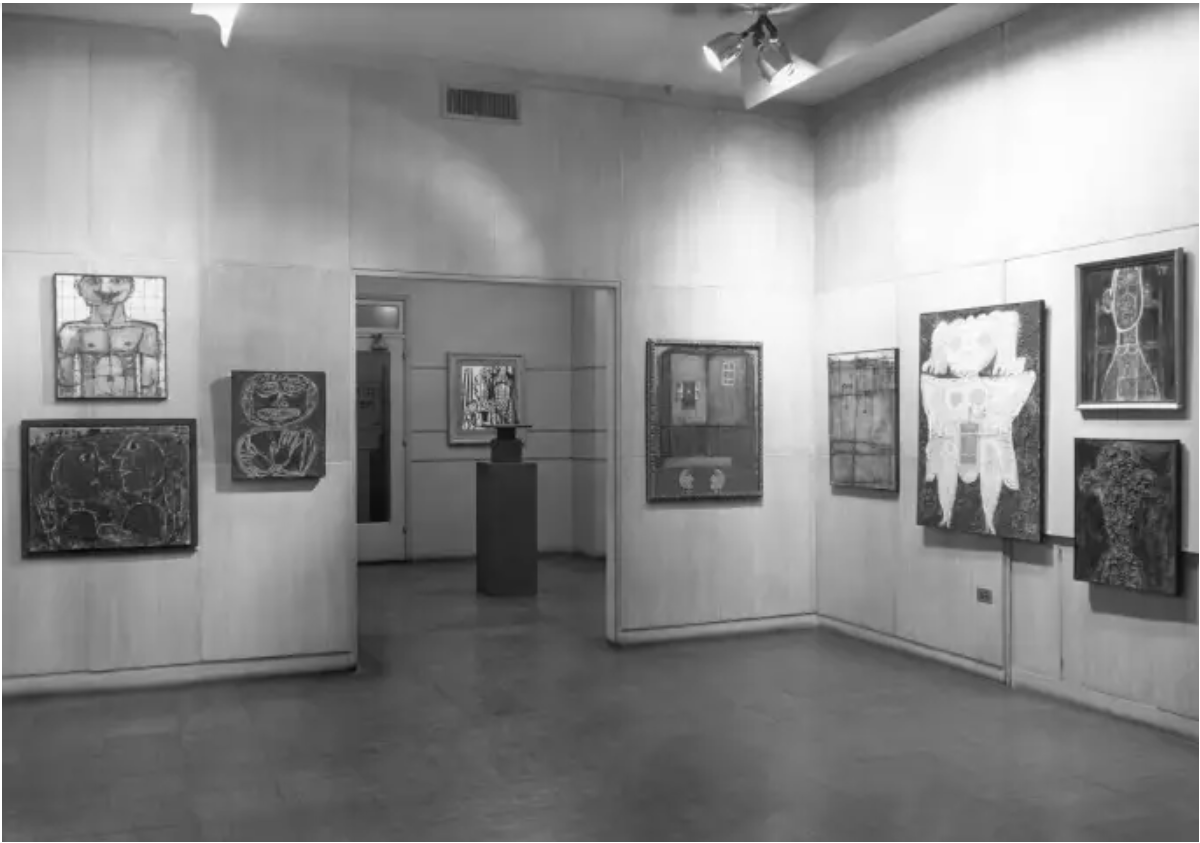
VUE DE L’EXPOSITION “PAINTINGS BY JEAN DUBUFFET : 1943-1949”, NEW YORK, PIERRE MATISSE GALLERY, 1950. © ARCHIVES FONDATION DUBUFFET, PARIS / PIERRE MATISSE GALLERY, NEW YORK (PHOTO : COLTEN PHOTOS, NEW YORK) © ADAGP, PARIS, 2023
Like him, Paul Eluard was ready to embrace the artistic and literary revolution that was taking place before their eyes, in a world that was cracking on all sides. The two men shared a revolutionary approach to their art, and drew inspiration from each other, with Eluard choosing La rue for his personal collection. This exceptional provenance ties in with the surrealist poet’s passion for non-cultural artistic productions and the art of madmen. After spending the winter of 1943 in the Saint-Alban-en-Lozère psychiatric asylum, pretending to be ill, Paul Eluard discovered the work of Auguste Forestier and his strange sculptures and assemblages. These monsters and characters evolve in composed scenes where the traditional rules of painting are set aside in exchange the delights of pure language, that of the man in the street, the child and the madman. In this way, Eluard and Dubuffet simultaneously expressed a strong desire for an art free of all rules and constraints.
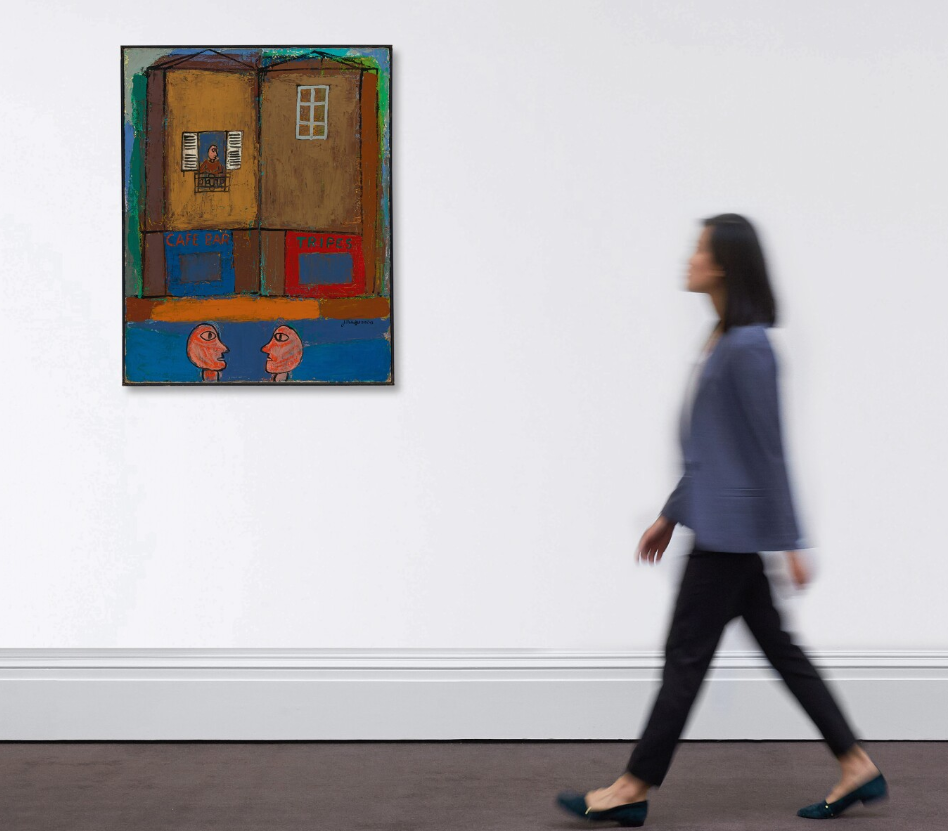
The viewpoint chosen for La rue is very personal and particularly moving, as it was inspired by the house at 35 rue Lhomond where Jean Dubuffet had his studio, in the heart of the Latin Quarter. The window on the left was opposite the window of his own room at 34 rue Lhomond. While Dubuffet’s relationship with architecture is well documented, the present work offers a new interpretation through his depiction of the building, the street and its inhabitants. While Paris is the predominant subject of these works, the city often recurs in Dubuffet’s oeuvre as a metaphor for painting itself, a space in which figure and background combine in endlessly evolving permutations that can be observed, imagined and represented repeatedly. For Dubuffet, the city becomes an infinite motif of forms, suggesting the material and immaterial networks that run through urban space. La rue was exhibited at a number of important exhibitions in Jean Dubuffet’s career, including his first solo show at the Galerie René Drouin in Paris in 1944. This exceptional work was then shown at the Pierre Matisse Gallery in New York in 1950, and later at the Musée National d’Art Moderne for its major retrospective devoted to Dubuffet in 2001.
Chevaux à la lune, 1943
Christie’s Paris: 4 April 2023
Estimated: EUR 100,000 – 150,000
EUR 277,200 / USD 296,605
Jean Dubuffet (1901-1985), Chevaux à la lune | Christie’s
JEAN DUBUFFET (1901-1985)
Chevaux à la lune, 1943
Oil on canvas
50×61 cm (19 5/8 x 24 inches)
Signed and dated ‘J. Dubuffet Fév. 43’ (lower left)
Painted in February 1943
“To be nourished by inscriptions, instinctive tracings. To respect the impulses, the ancestral spontaneity of the human hand when it traces its signs.”
On October 20, 1944, in a recently liberated Paris, Jean Dubuffet presented some fifty oil works in his very first solo exhibition at the Galerie René Drouin, Place Vendôme. Among them, a scene with astonishing blues and greens surprises by its elementary appearance, representative of the artist’s genius. Jean Dubuffet was not seeking to please the many critics. His refusal of the constraints imposed by visual perspective and a particular aversion to any constraint on freedom, guided him in a search for an instinctive and ancestral gesture. Chevaux à la lune, from the period of Marionnettes de la ville et de la campagne, heralds a desire for rurality that led the painter to spend a bucolic and striking holiday on bicycle in July 1943. It prefigures the systematic exploration of the landscape that Dubuffet began, first with on the spot gouaches and then with oils on canvas after returning from his trip, as in Paysage champêtre of November 1943 or Paysage cloisonné of December during the same year. These are mental spectacles, where the elements of the landscape appear as one might remember them in a dream, ridding oneself of all pictorial yokes.
He writes in his Prospectus aux amateurs de tout genre (1946) that he wants to explain “the difficulties where the painter found himself” in the representation of these landscapes, “and by what improvisation he solved the problem.”
The catalogue of the exhibition at the Galerie René Drouin added the mention “loaned” to Chevaux à la lune: at that time, the work belonged to the poet and publisher Pierre Seghers, who simultaneously published the monograph entitled L’Homme du commun ou Jean Dubuffet. In 1943, Jean Dubuffet came out of his “clandestinity”: introduced and promoted by Jean Paulhan within intellectual and literary circles, he met similar people who questioned culture and its learned forms. This claimed return to the impulses of the human hand conveys to Chevaux à la lune an apparent spontaneity; however it nevertheless conceals an undeniable mastery of the painting in its manner of convening at the same time a dreamlike and unusual nocturnal atmosphere.
Grand nu charbonneux, 1944
Sotheby’s New-York: 17 May 2022
The Macklowe Collection
Estimated: USD 4,000,000 – 6,000,000
USD 5,534,500
Grand nu charbonneux | The Macklowe Collection | 2022 | Sotheby’s (sothebys.com)
JEAN DUBUFFET (1901 – 1985)
Grand nu charbonneux, 1944
Oil on canvas
161.3 x 96.8 cm (63 1/2 x 38 1/8 inches)
Signed and dated VIII 44
Executed in 1944, Grand nu charbonneux is a seminal and exceptionally early example of Jean Dubuffet’s radical painterly style that provides rare and impressive insight into the artist’s development in the crucial formative stage of his career. His first large scale nude, the present work is a testament not only to Dubuffet’s revolutionary Art Brut philosophy and his enduring protest against traditional standards of artistry and convention, but to the artist’s lasting influence on the trajectory of modern painting. Further distinguished by its prestigious provenance—having remained in The Macklowe Collection for nearly four decades—Grand nu charbonneux was also once included in the collection of Carlo Frua de Angeli, the Milanese textile entrepreneur and collector who, together with his former wife Mary Callery, became an influential friend and patron of Pablo Picasso. Moreover, Grand nu charbonneux has been included in some of the artist’s most groundbreaking, early exhibitions, including his very first solo show in 1944 at Galerie Rene Drouin in Paris; the major career survey Jean Dubuffet: 1942-1960 at the Musée des Arts Décoratifs, Paris in 1960; and The Work of Jean Dubuffet at The Museum of Modern Art, New York in 1962, among many others. Quintessentially demonstrating Dubuffet’s “anti-art” ideology in its simplified mode of depiction, heavily worked surface, and universal verisimilitude, Grand nu charbonneux confirms the artist as one of the great innovators of twentieth century mark-making.
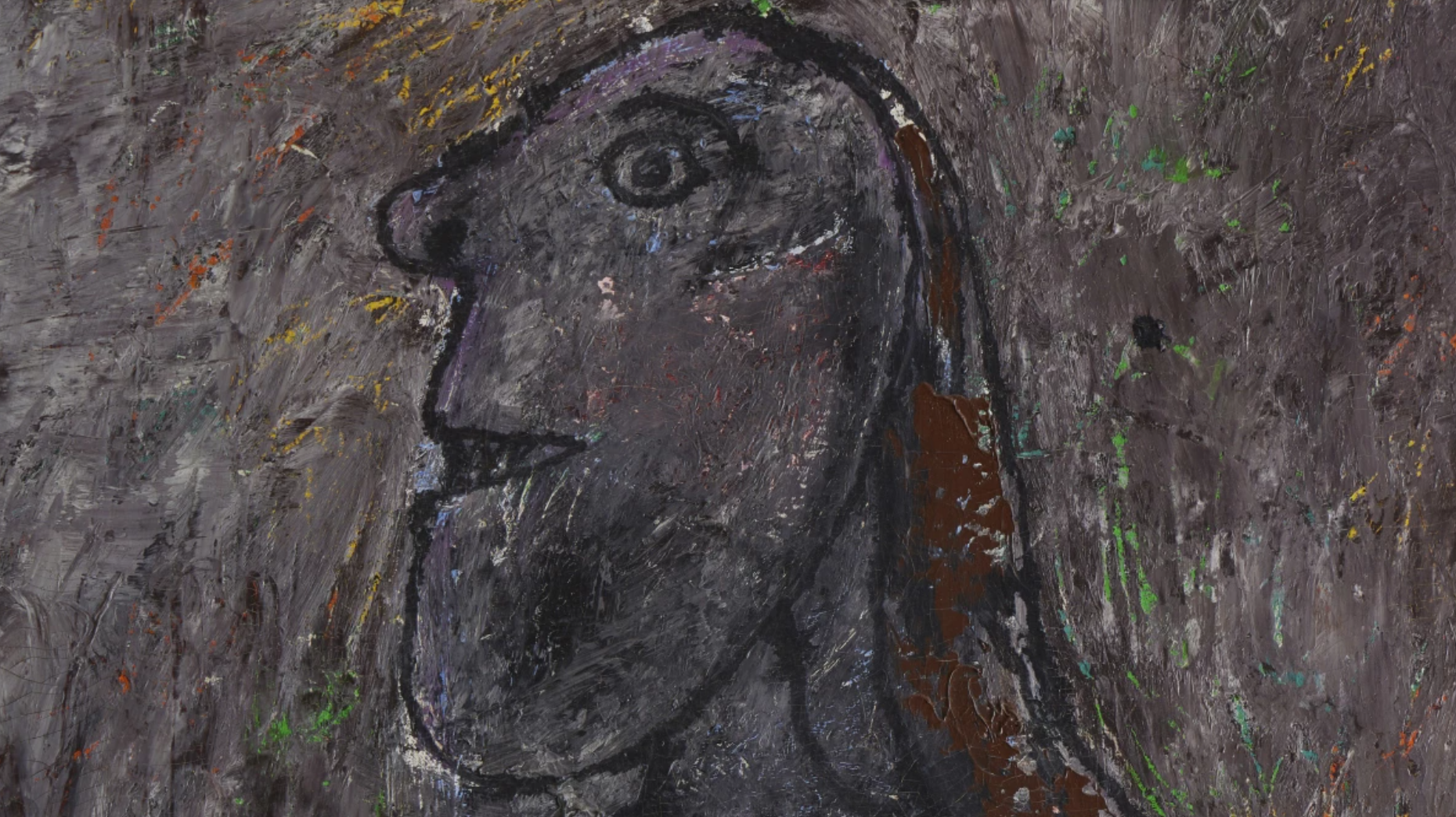
This portrait of a woman in grey, mauve, yellow, ultramarine, and scarlet is one of the most enthralling and enchanting paintings from the opening chapter of the artist’s illustrious career. Multicolored zones of deep purple, searing orange, and brilliant fuchsia glimmer from beneath a smoky veil of charcoal grey, while thick black lines comprise the simplified anatomy of the rigidly postured female body. Silhouetted against an equally variegated background, the woman fills the picture plane with her flattened, oversimplified figure. Importantly, Dubuffet abandons traditions of three-dimensional perspective, volumetric illusion, and prescribed color relationships for a more elementary, direct presentation of two-dimensional space. The emphasis on the figure’s female genitalia signifies a prosaic anonymity and aligns her with the ancient depictions of fertility goddesses; here Dubuffet negates the specificity of portraiture in favor of a more universal humanity.
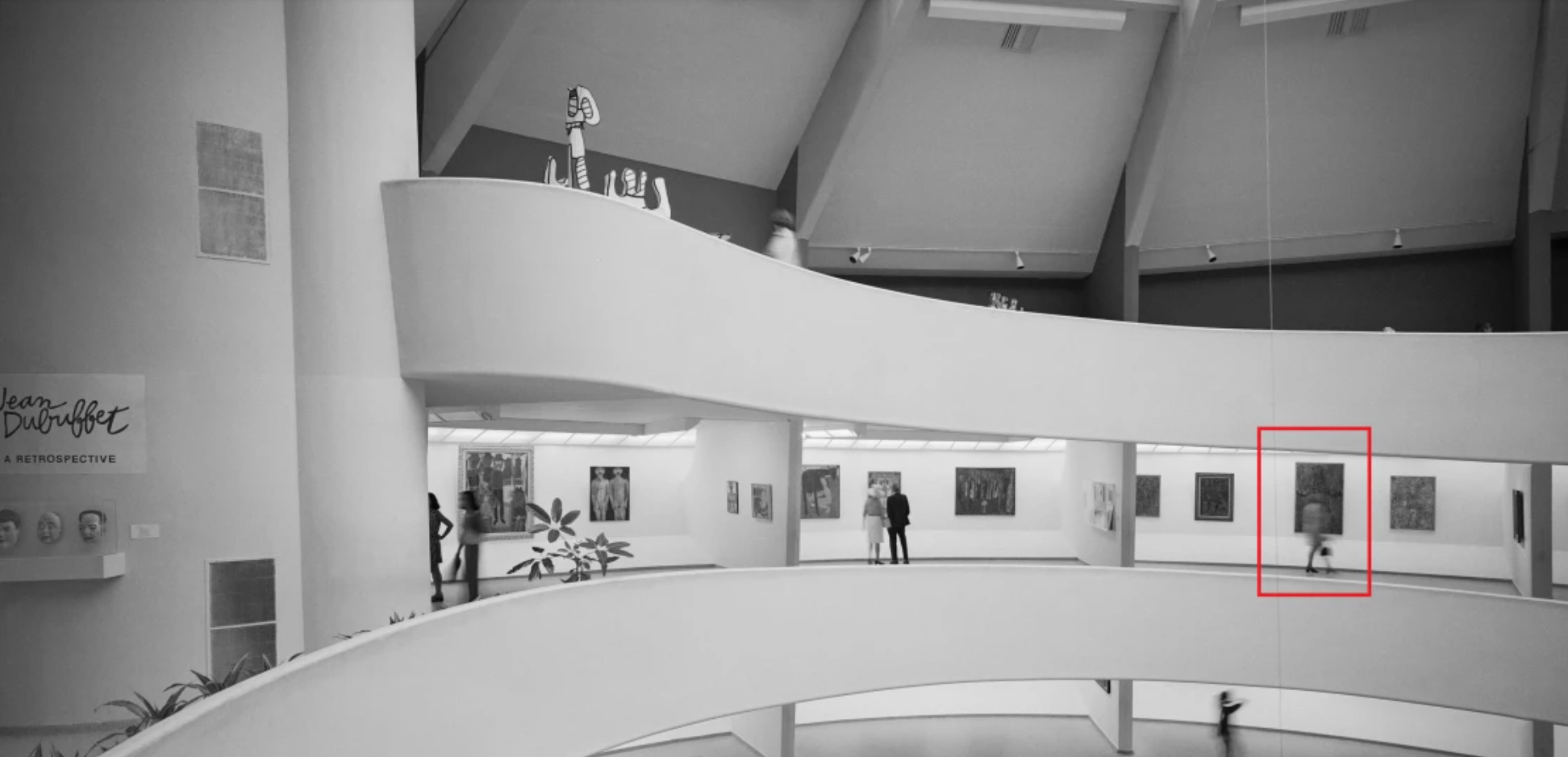
THE PRESENT WORK INSTALLED IN JEAN DUBUFFET: A RETROSPECTIVE, 1973, SOLOMON R. GUGGENHEIM MUSEUM, NEW YORK. PHOTO © SRGF. ART © 2022 FONDATION DUBUFFET / ARTISTS RIGHTS SOCIETY (ARS), NEW YORK
Predating his later experimentation with sand, tar, insects, and other non-traditional media, the present work is remarkably prescient of his later innovations in its dynamic surface: the oil paint is here scraped, carved, smeared, and layered to produce a sensual and richly worked texture. Indeed, Dubuffet himself spoke of this painting’s profound influence on his relationship to material.
“I’ve been looking at anthracite a lot these days… I felt a little changed myself in anthracite. But as I was painting the ravishing body of a naked woman, my obsession led me to paint her in the color and nature of anthracite, or at least halfway to that: half anthracite in short. Is it so for no good reason? From every object to every other there is a continuity, a path that joins them. And had you found it more logical than me, obsessed by my passion for anthracite, I paint an object—whatever it is—n exactly the same mood and with the same hand as someone who has never seen anthracite, or who was, at the time, obsessed, for example with egg yolk—or bread—or sand?”
Thus Grand nu Charbonneaux represents a watershed moment in the development of Art Brut’s intensely tactile celebration of materiality as championed by Dubuffet.
Intermèdes
Tête de héros, 1950
Phillips London: 6 March 2025
Estimated: GBP 250,000 – 350,000
GBP 228,600 / USD 292,770
Jean Dubuffet – Modern & Contemporary … Lot 11 March 2025 | Phillips
JEAN DUBUFFET
Tête de héros, 1950
Oil and sand on Masonite
65.1 x 54.1 cm (25 5/8 x 21 1/4 inches)
Signed and dated ‘J. Dubuffet 50’ lower left
Painted in November 1950
Painted in November 1950, Tête de héros is a pivotal work in Jean Dubuffet’s Intermèdes series, anticipating the raw materiality and deconstructed figuration that would define his subsequent Corps de dames series and exemplifying his radical reinvention of painting. As one of the leading figures in Art Brut, Dubuffet sought to dismantle the conventions of Western artistic tradition, privileging raw textures, anti-academic techniques, and a deeply visceral engagement with the medium. With its thick impasto, earthy palette, and primal rendering of the human face, Tête de héros epitomises Dubuffet’s exploration of the grotesque and the elemental, existing at the threshold between abstraction and figuration. Notably, paintings from the Intermèdes can be found in the collections of major institutions worldwide, including the Solomon R. Guggenheim Museum in New York, the Moderna Museet in Stockholm, the Musée cantonal des Beaux-Arts Lausanne, and the Allen Memorial Art Museum at Oberlin College, underscoring their significance in Dubuffet’s artistic trajectory. First exhibited at Acquavella Galleries in New York in 2014 as part of Dubuffet / Barceló—a two-artist exhibition exploring the thematic and material affinities between the French postwar painter and Miquel Barceló through their portraits and landscapes—Tête de héros was a central work in the show, even serving as the lead image in The New York Times review. This recognition speaks to the enduring power of Dubuffet’s vision, which continues to challenge and inspire contemporary artists. His radical approach to material and figuration laid the groundwork for movements such as Art Informel and Neo-Expressionism, influencing figures ranging from Anselm Kiefer to Jean-Michel Basquiat.
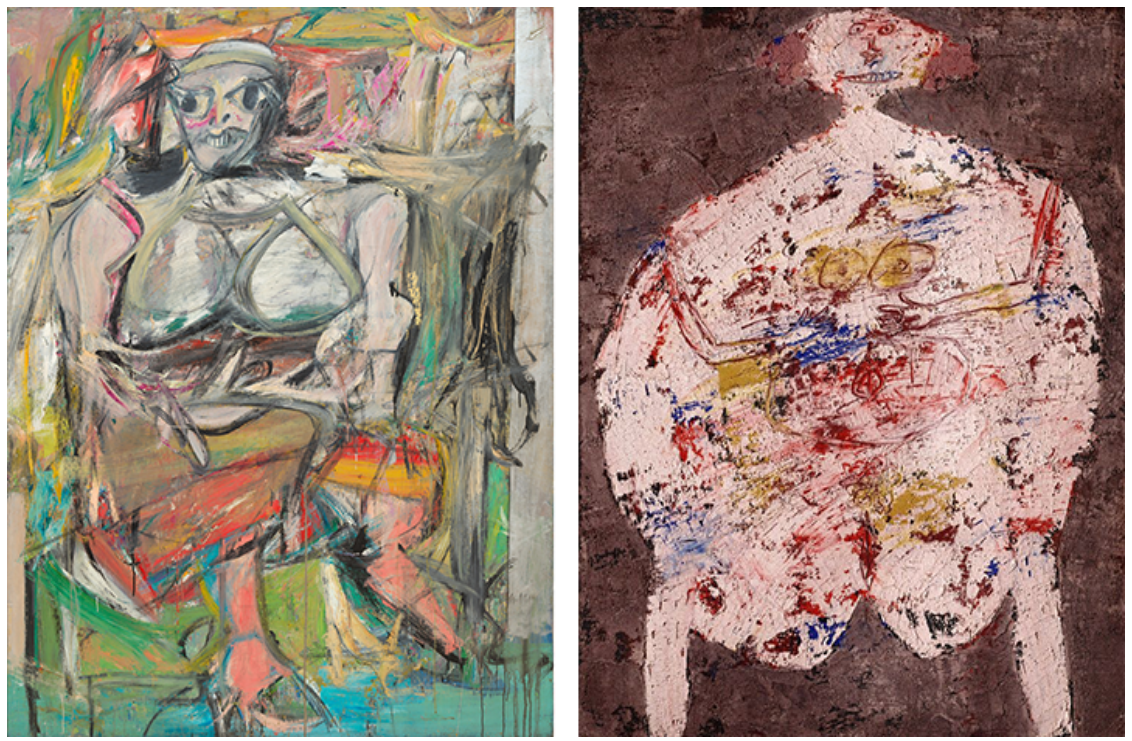
[Left] Willem de Kooning, Woman I, 1950–1952, The Museum of Modern Art, New York. Artwork: © The Willem de Kooning Foundation/Artists Rights Society (ARS), NY and DACS, London 2025
[Right] Jean Dubuffet, Corps de dame, jardin fleuri (Lady’s Body, Flower Garden), 1950, The Philadelphia Museum of Art. Artwork: © ADAGP, Paris and DACS, London 2025
Produced between January 1950 and February 1951, Dubuffet’s Intermèdes cycle, to which Tête de héros belongs, gave rise to his Corps de dames paintings—created between April 1950 and February 1951 and among the most emblematic works of his career. While Corps de Dames exaggerated the female form to the point of topographical distortion, the Intermèdes focused on the head and face, exploring how identity could be conveyed through texture, abstraction, and reduction. A subseries of mostly male portraits, the Intermèdes provided a counterpoint to the charged representations of the female nude in Corps de Dames, shifting from bodies as landscapes to heads as self-contained forms of expression. Despite their differences, both series reflect Dubuffet’s radical rejection of conventional representation. As the figures in Corps de dames gradually dissolve, their heads morphing into their surrounding terrain, the Intermèdes emerges as an alternative—a gallery of faces untethered from bodies, where survival, physiognomy, and landscape blur into a single, unstable form. Dubuffet’s close friend and editor of his Catalogue Raisonné, Max Loreau, observed that the figures in Paysages grotesques, a precursor to both series, ‘continue to live here; quite simply, their limbs have faded, and they are nothing more than faces.’ The present painting encapsulates this transition, distilling the human form to its most essential element: a face in which raw materiality supersedes anatomical definition and body and terrain collapse into each other.
“I prefer to avoid anything circumstantial in the subjects I paint; I would rather paint things generally. If I paint a country road, I want it to be an archetype of a country road, a synthesis of all the country roads in the world, and if I paint a man’s profile I am satisfied if my painting evokes an image of a human face, without accidental and unnecessary particular characteristics.”
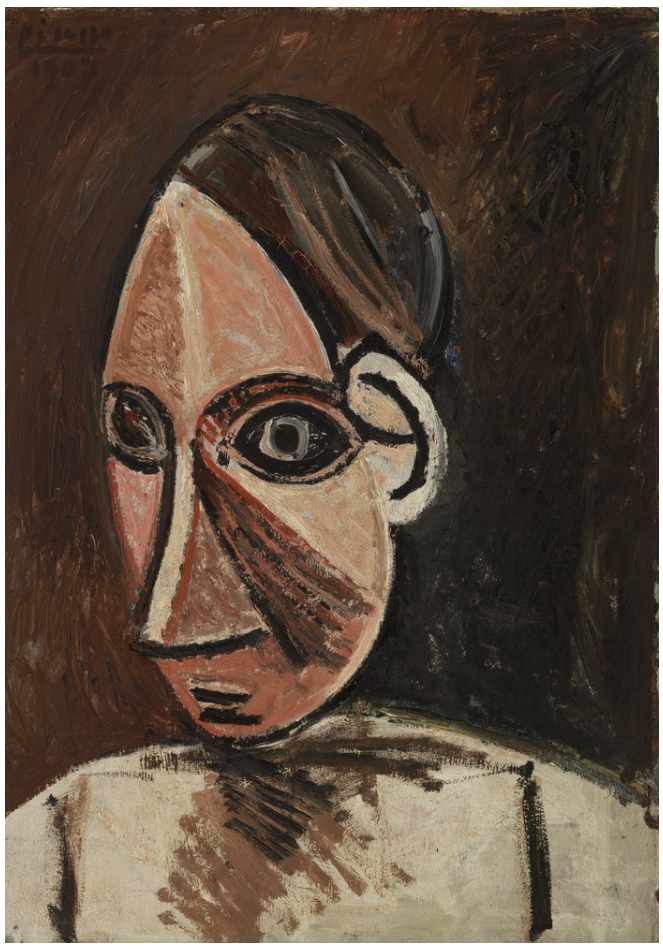
Pablo Picasso, Head of a Woman (Tête de femme), 1907, The Barnes Foundation, Philadelphia.
Artwork: © Succession Picasso / DACS, London 2025
Translating to ‘Head of a Hero’, the title, Tête de héros, carries an ironic weight within Dubuffet’s oeuvre. Rather than depicting a figure of classical heroism, the painting presents a disfigured, eroded visage that resists conventional ideals of beauty or nobility. The face appears both monumental and deteriorated, its eye reduced to a crude black mark, its mouth agape as if caught between a silent scream and an inarticulate cry. This ambiguity of expression, coupled with the deconstruction of recognizable features, places Tête de héros within the broader existential anxieties of postwar Europe. Dubuffet’s heroes are not the statuesque figures of antiquity but rather crude, primordial beings—closer to cave paintings or outsider art than to the refined portraiture of the academic tradition. As art historian Margit Rowell observed, Dubuffet’s art ‘is the opposite of heroic. It is conceived in terms of the vision of the ordinary man, it aspires to the immediacy of the spoken word, and it rejects all art historical models.’ His subjects, she continues, ‘are not noble; furthermore, they are conspicuously limited’, drawn from three recurring themes: the human figure, the landscape, and the mundane object. Tête de héros embodies this ethos, standing as a challenge to the Western tradition of heroic portraiture and offering instead an image that is vulnerable, fractured, and deeply human.
Visage rose en pomme de bambou, 1950
Sotheby’s London: 7 March 2024
Estimated: GBP 300,000 – 400,000
GBP 355,600 / USD 450,901
Visage rose en pomme de bambou | Modern & Contemporary Day Auction | 2024 | Sotheby’s (sothebys.com)
JEAN DUBUFFET (1901 – 1985)
Visage rose en pomme de bambou, 1950
Oil and sand on Masonite
55 x 45.7 cm (22 3/8 x 18 inches)
Signed and dated Nov.50 (lower right)
Signed, titled, dated Novembre 50 and variously inscribed (on the reverse)
Jean Dubuffet’s Visage rose en pomme de bambou stands as a testament to the artist’s unparalleled ingenuity and visionary prowess. Painted in 1950, the present work belongs to Dubuffet’s Intermèdes series. Begun in January 1950, this celebrated body of work was created alongside the artist’s critically acclaimed Corps de dames, which followed in April of the same year. While the latter controversially portrayed the female nude brutally stripped of prevailing notions of beauty, Intermèdes encompassed a broader range of subjects; both male and female portraits, and a small grouping of still-lifes. Instilled with a teasingly tangible corporeality, Visage rose en pomme de bambou exudes primal and primitive energy. The protagonist – carved, sculpted and unveiled from the depths of the picture plane – is rendered in rose tinted, fleshy pink hues amidst a backdrop of inky black scrawls. Dubuffet’s crude depiction, akin to ancient hieroglyphs feverishly etched into stone, defies conventional artistic standards, daring his audiences to embrace a new aesthetic language. In a departure from the refined elegance of classical portraiture, Visage rose en pomme de bambou sees Dubuffet’s radical philosophy realised.
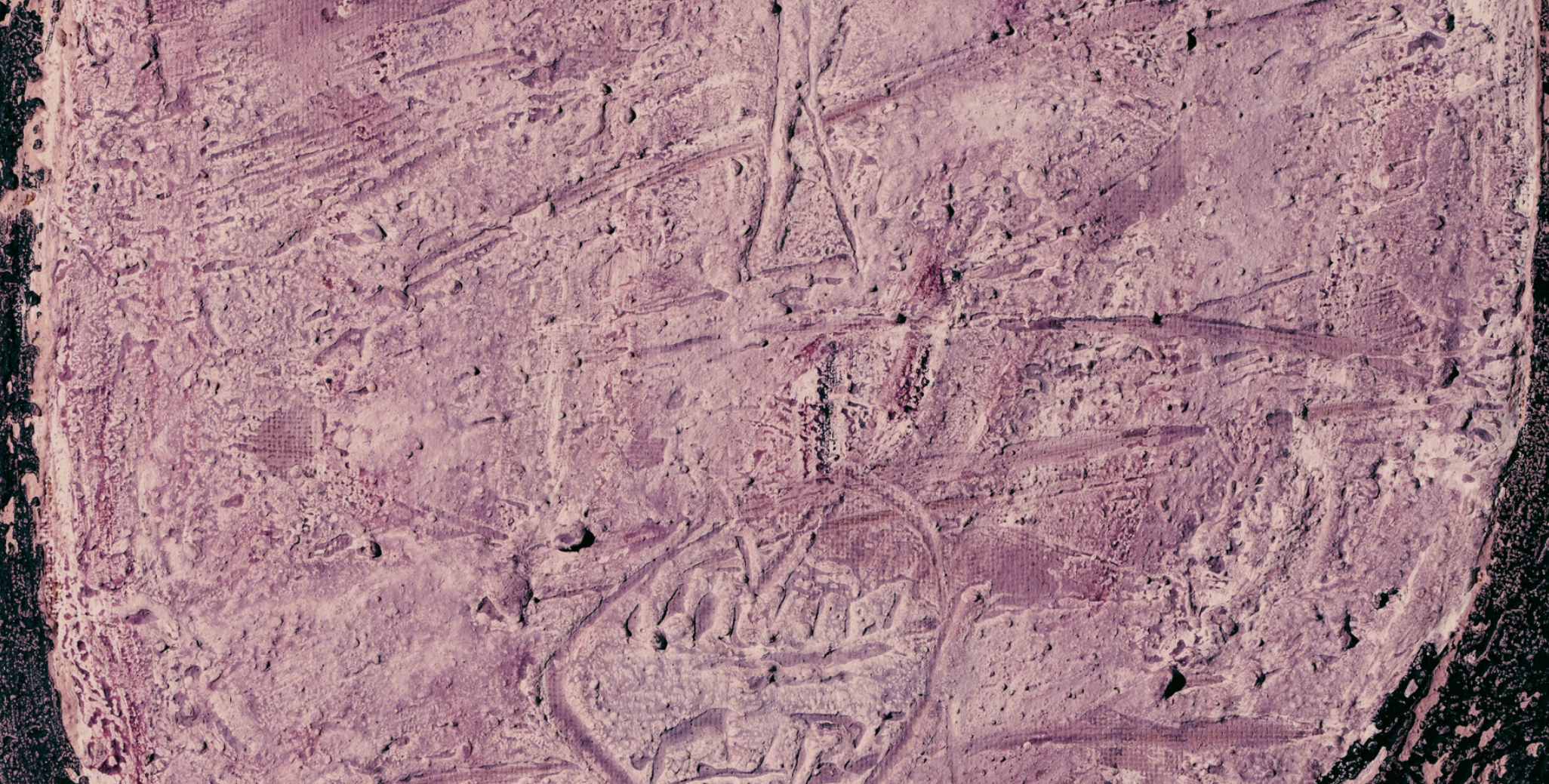
Abandoning traditional techniques in favour of an invigorated mark-making akin to that of a sculptor, Visage rose en pomme de bambou – and Dubuffet’s wider oeuvre – echoes the ideology that art should be a reflection of raw emotion, instinct and intuition. Championing art brut, Dubuffet encapsulated the distinctive styles of Informel and art autre dominant in Paris during this period. Influenced by Hans Prinzhorn’s exploration of outsider art – art that hovered outside of consecrated convention, including that created by children, prisoners, and psychiatric patients – Dubuffet’s corpus oscillates between figuration and abstraction to boldly reimagine the human condition, stripping away traditional perspective and embracing a two-dimensional, linear syntax of simplified form.
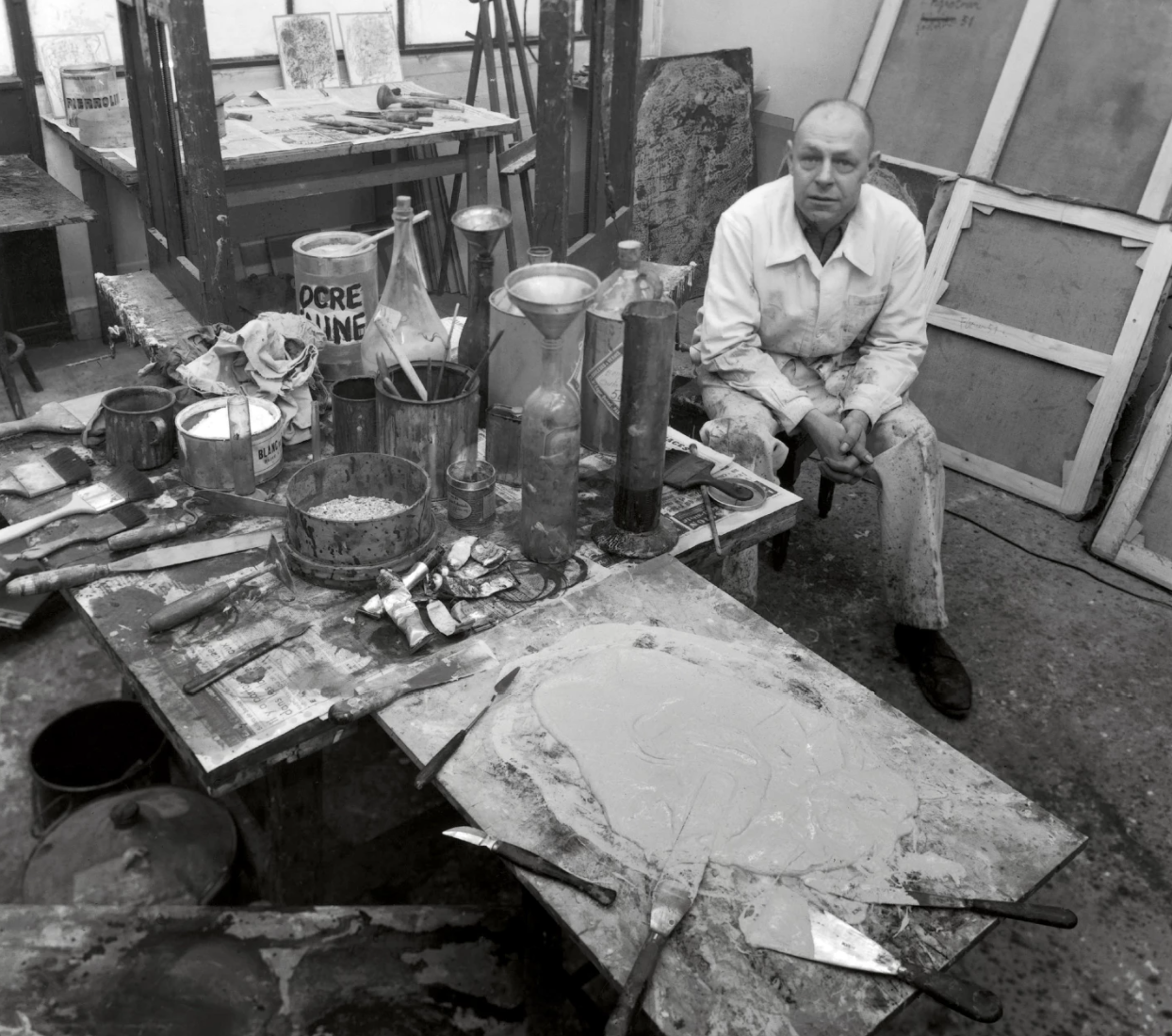
JEAN DUBUFFET IN HIS PARIS STUDIO, 1951. PHOTO © ROBERT DOISNEAU / GAMMA-RAPHO / GETTY IMAGES. ART © 2023 FONDATION DUBUFFET, PARIS / ARTISTS RIGHTS SOCIETY (ARS), NEW YORK
Through Visage rose en pomme de bambou the viewer is invited to engage with the work’s coarse, quasi-archaeological earth-like surface, reminiscent of geological rock formations and arid topographies from far away sun soaked lands. Dubuffet’s deep connection to landscape, particularly influenced by his experiences in the Sahara over three extended trips beginning in 1947, infuses the present work with a sense of prehistoric allure. Like a fossil or ancient artefact, the male’s head appears embedded within its support, echoing the artist’s masterful fusion of organic forms. Through techniques such as scoring, scraping, and carving the surface, Dubuffet creates a visceral quality that heightens the impact of the flattened figure. The thick application of viscous oil paint adds depth to the raw, distorted lines, enhancing the overall intensity of the composition. The brutality of expression is undeniable within the harsh lines and deep fissures, correlating profoundly to the desolation, despair and the unhealed scars of the postwar era.
Tête en tache de moisissure, 1950
Christie’s London: 28 June 2023
Estimated: GBP 300,000 – 500,000
GBP 340,200 / USD 430,353
https://www.christies.com/en/lot/lot-6435051
JEAN DUBUFFET (1901-1985)
Tête en tache de moisissure, 1950
Oil and sand on masonite
64.9 x 54 cm (25 1/2 x 21 1/4 inches)
Signed and dated ‘J. Dubuffet avril 50’ (lower right)
Painted in April 1950, Jean Dubuffet’s Tête en tache de moisissure is a ground-breaking portrait from the artist’s Intermèdes series. Rendered in crusting layers of oil, the work is an emphatic example of Dubuffet’s career-defining, and life-long commitment to art brut (‘raw art’). Eschewing the academic and art historical models of beauty and aesthetics in favor of an intuitive, almost primordial simplification of form, Dubuffet’s art brut sought inspiration from art that hovered outside of consecrated convention, including that created by children, prisoners, psychiatric patients and the mentally ill. Veering from figuration towards abstraction, lichenous spores of olive green and brown bloom on the mottled masonite surface, obfuscating Dubuffet’s subject. This work was one of twelve amorphous heads exhibited at the Pierre Matisse Gallery in 1951. The youngest son of Henri Matisse, Pierre Matisse played a pivotal role in bringing Dubuffet and other European modernist artists to rapid success in the American market. Purchased by Charles H. Carpenter, Jr in 1952, the painting was the first of several by the artist to enter the prestigious Carpenter collection, where it remained for over half a century.
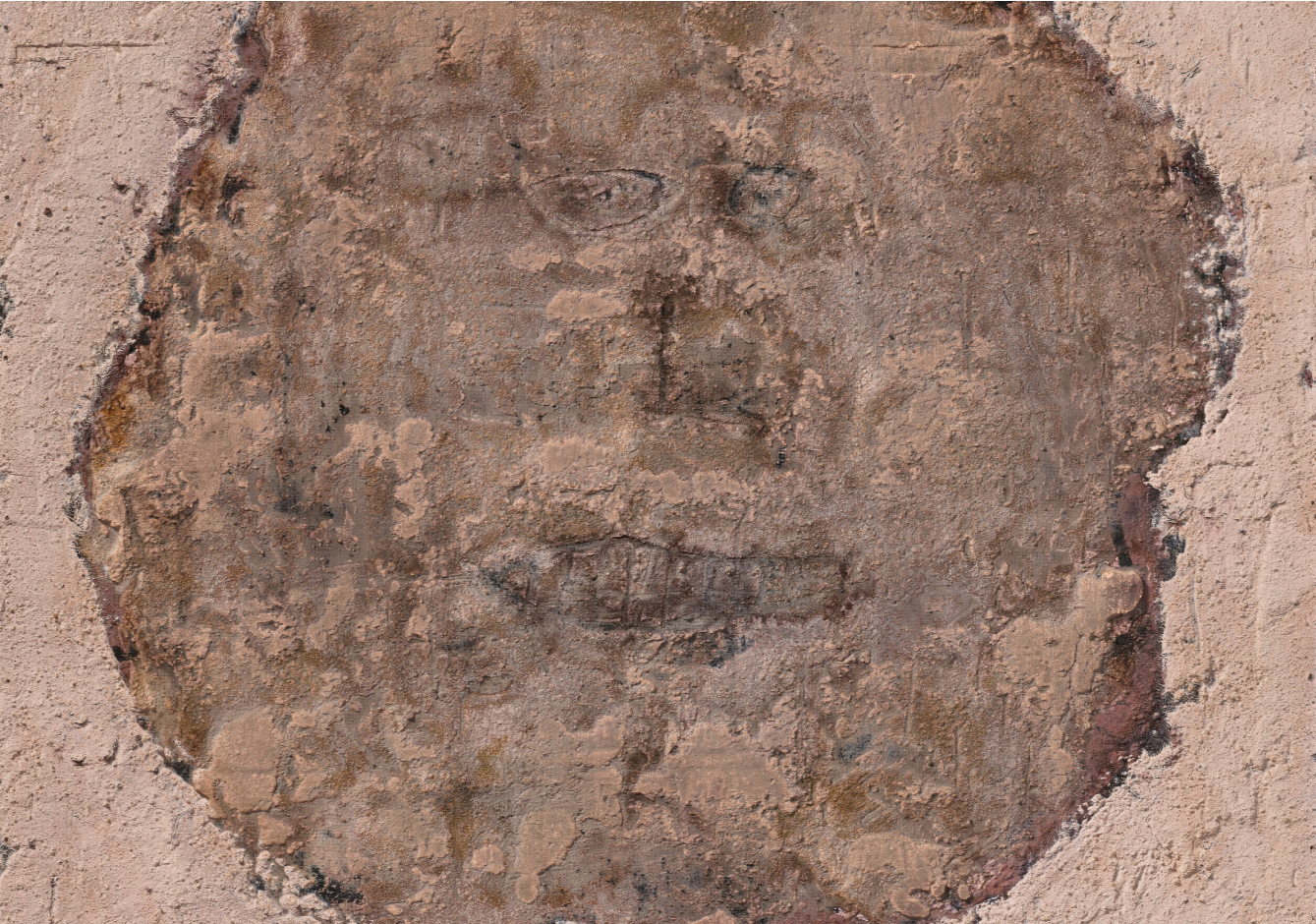
Painted within the same crucial month that Dubuffet commenced his acclaimed Corps de Dames series, this portrait is boldly rudimentary. Running adjacent to Corps de Dames, which featured similarly confronting impasto bodies and busts of women, Intermèdes is distinct for its fluid and transformative subjects. Delighting not in representational likeness, but in the stark, tactile appeal of his mortar-like paint, Dubuffet renders two eyes, a nose, and an endearing toothy smile with child-like incisions, scratches and scrapes. Working into his surface, rather than upon it, Dubuffet abandons traditional painting techniques in favour of a more invigorated and elementary mark-making, more akin to sculpture. The coarse, earth-like texture of the work presents a sculptural relief, within which we are invited to distinguish, uncover, and excavate form. Significantly, just months prior to this painting, Dubuffet had returned from his third stay in the Sahara, and the influence of landscape is unmistakable. Vivid memories of a formidable desert terrain, formed of sedimentary layers of sands and baked earths, are expressed in Dubuffet’s rich conjuring of topography upon the masonite board. The head appears embedded within its support like a fossil, or an ancient carved artefact. This masterful elision of organic, geological form with physiognomy imbues the work with a powerful air of the prehistoric, and attests to the fluid, metamorphic subject matters of the Intermèdes series.
Roses d’Allah, Clowns du Désert
Arabe au désert, 1948
Phillips London: 6 March 2025
Estimated: GBP 350,000 – 550,000
GBP 355,600 / USD 455,425
Jean Dubuffet – Modern & Contemporary … Lot 22 March 2025 | Phillips
JEAN DUBUFFET
Arabe au désert, 1948
Oil on canvas
61×50 cm (24 x 19 5/8 inches)
A pivotal work within Jean Dubuffet’s early oeuvre, Arabe au désert, 1948 marks a decisive moment when the artist’s practice shifted toward raw materiality and a bold departure from European artistic conventions. Painted shortly after his second trip to the Algerian Sahara, this oil on canvas is one of only eighteen works Dubuffet produced during a concentrated burst of creativity in Paris between May and June of 1948. Of these, only twelve directly reflect his experiences in the North African wilderness, while the remaining six belong to a sub-series of portraits titled Grandes têtes. The rarity of Arabe au désert is underscored by the fact that paintings from this exclusive group of Saharan oils are held in the permanent collections of the National Gallery of Victoria in Melbourne and the Staattiche Kunsthalle Karlsruhe in Germany. Moreover, the painting stands apart for its exceptional provenance: it has remained in private ownership since it was acquired directly from Dubuffet by Édouard Bret, the brother of the artist’s first wife, Paulette Bret. Beyond his familial connection, Édouard was the director of the Dubuffet family’s wine and spirits business, where the artist worked before fully committing to his art practice in the 1940s. Since Bret’s passing in 1982, the painting has remained within the family collection, untouched by public exhibition. Having never been exhibited publicly and held privately for over seventy years, Arabe au désert offers a rare and compelling glimpse into a transformative period in Dubuffet’s career, when his artistic philosophy evolved in response to the austere landscapes and timeless culture of the desert.
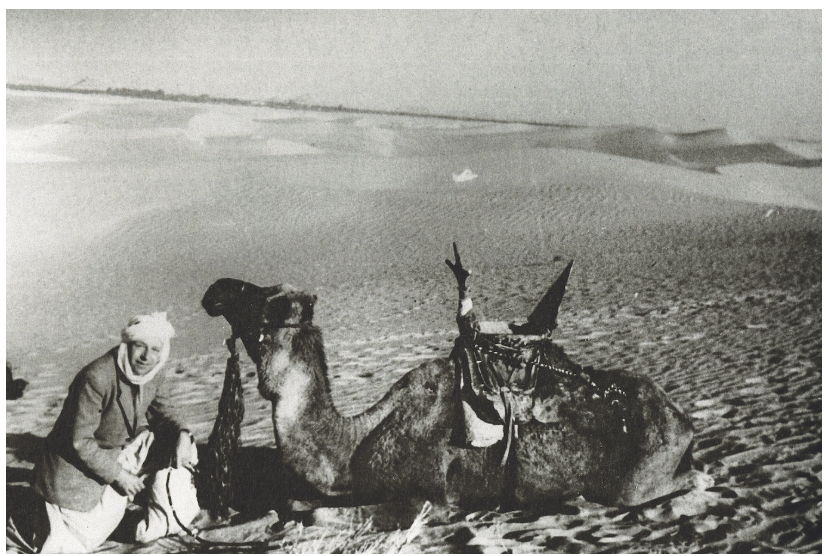
Jean Dubuffet in El Goléa (El Menia), 1948. Image: © ADAGP, Paris and DACS, London 2025
Arabe au désert forms part of Dubuffet’s broader cycle of Sahara-inspired works, collectively known as Roses d’Allah, Clowns du Désert (‘Sons of Allah, Clowns of Islam’), produced between his first visit to Algeria in February 1947 and his final trip in March 1949. The evocative title, conceived by French Surrealist poet Georges Limbour for a proposed exhibition at Galerie R. Drouin around 1953 that never took place, captures Dubuffet’s fascination with the elemental forces of the desert and the figurative visual language of its Bedouin inhabitants. This cycle, also includes a range of works created in situ—including drawings and gouaches—is represented in prestigious institutions such as the Art Institute of Chicago and The National Gallery of Art in Washington, D.C., highlighting the enduring significance of this period within Dubuffet’s oeuvre. Dubuffet’s fascination with the Sahara began in 1947, driven by a need to escape the hardships of post-war Paris, where a severe coal shortage had made winter conditions nearly unbearable. Together with his second wife, Emilie ‘Lili’ Carlu, Dubuffet traveled to the dunes of Algeria in search of warmth and respite, but the journey quickly evolved into a transformative artistic pilgrimage. The artist immersed himself in Bedouin culture, living among the nomadic tribes for several months in relative isolation, learning Arabic, and adapting to the customs of desert life.
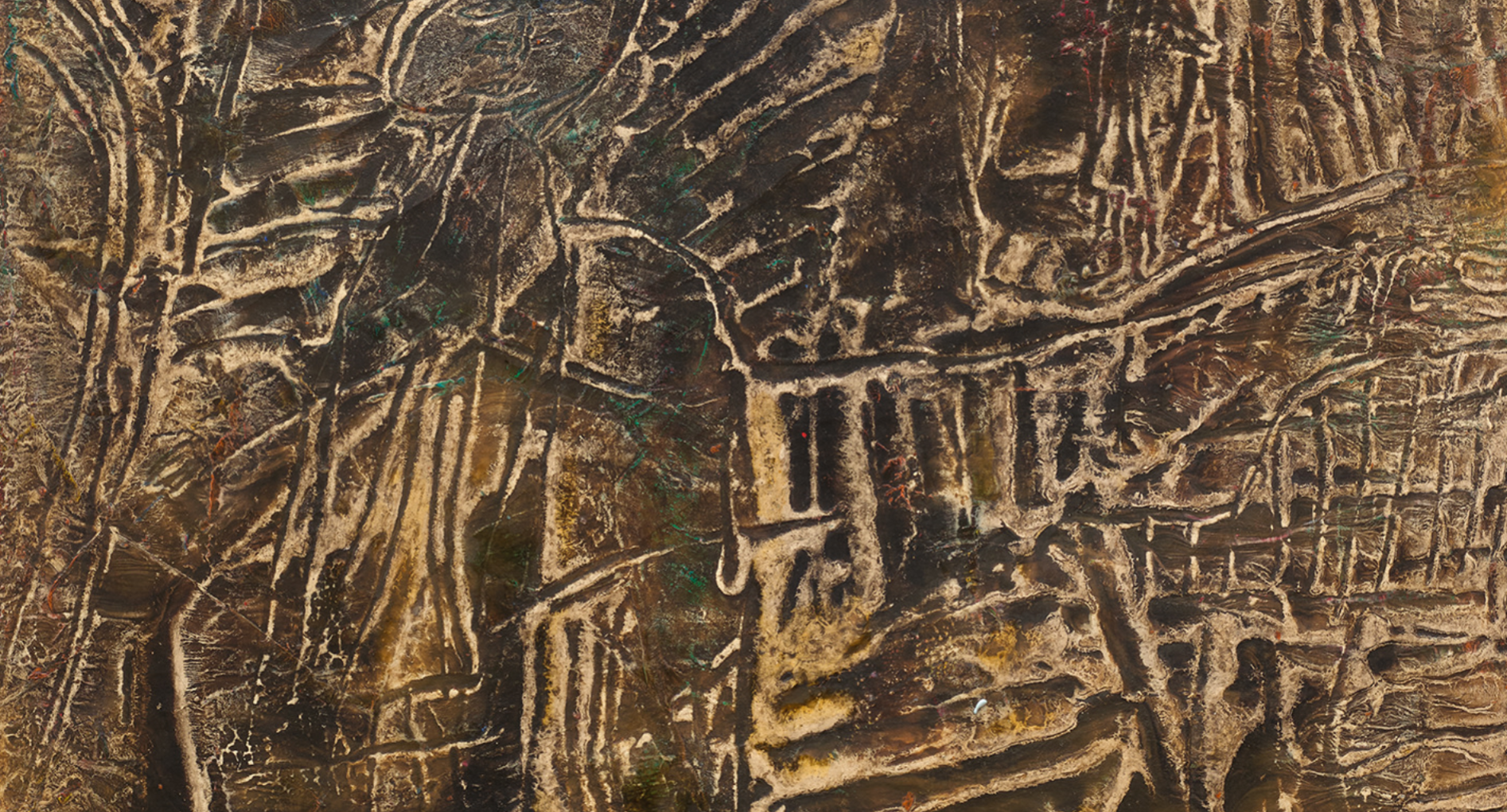
Arabe au désert is a masterful example of Dubuffet’s early experimentation with texture, a hallmark of his mature work. The painting’s surface is dominated by thick impasto, into which the artist used a palette knife to incise a rugged, tactile topography—a negative relief outlining a man and a smaller figure, possibly a child, in a sunbaked landscape of sand and palm trees. This technique embodies Dubuffet’s broader artistic philosophy of challenging the conventional hierarchy between surface and form. Rather than creating an illusionistic space with depth and perspective, he emphasizes the material presence of the paint itself, allowing the figures to appear both embedded in and emerging from the landscape. Indeed, the composition’s tactility serves as a physical testament to the artist’s assertion that ‘Mud, waste and dirt, which are man’s companion throughout his life, should they not be his most treasured possession and is it not a service to him to remind him of their beauty?’
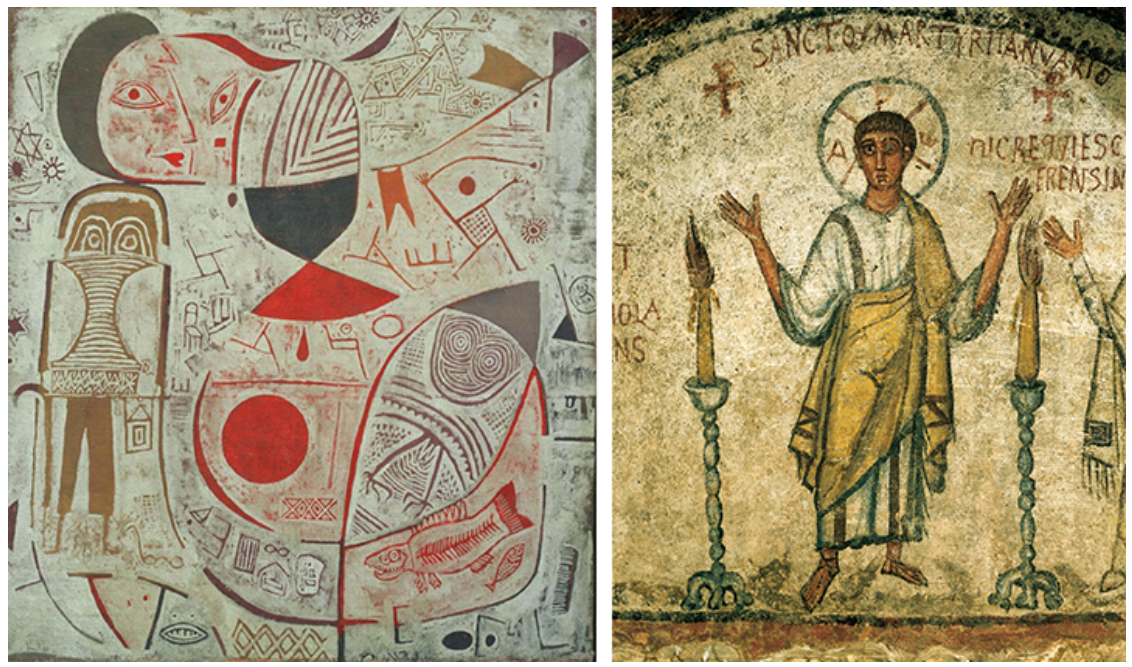
[Left] Paul Klee, Printed Sheet with Picture, 1937. The Phillips Collection, Washington, D.C.
[Right] 5th century Roman fresco. Catacombs of San Gennaro, Naples, Campania, Italy. Image: DeAgostini Picture Library/Scala, Florence
The painting’s earthy palette—featuring shades of ochre, umber, and rich sandy browns—further enhances its connection to the desert. Dubuffet employs color not to depict reality but to evoke the arid, desolate essence of the Sahara. The scene possesses the spontaneity of a quick sketch made on-site, while the high horizon line, pushed almost to the top edge of the canvas, compresses the pictorial space and creates a sense of boundless, ever-shifting vastness. Rejecting European traditions, Dubuffet draws instead on non-Western and pre-modern artistic practices. Consistent with his Art Brut sensibilities, the flattened perspective and abstracted, almost primitive figuration within Arabe au désert evoke his interest in the pictographic style of children’s art while recalling ancient art forms—such as Egyptian hieroglyphs, cave paintings, and Roman frescoes—as well as contemporary influences like the spontaneous aesthetics and ephemeral nature of graffiti.
“Man writes on the sand. This suits me well; effacement doesn’t bother me. When the tide goes out, I begin again.”
The painting’s textured surface and gestural marks evoke the unpredictability of the desert, offering a physical and sensory reflection of Dubuffet’s conceptual shift away from Western aesthetic norms. Anticipating the nearly abstract Texturologie and Matériologie series of the 1950s—where Dubuffet would push the expressive potential of surface and texture to new heights—Arabe au désert stands as a powerful early expression of these ideas, deeply rooted in the artist’s firsthand experiences of untouched wilderness.
Chamelier, 1948
Sotheby’s New-York: 14 November 2022
The David M. Solinger Collection
Estimated: USD 2,000,000 – 3,000,000
USD 4,527,000
Chamelier | The David M. Solinger Collection Evening Auction | 2022 | Sotheby’s (sothebys.com)
JEAN DUBUFFET (1901 – 1985)
Chamelier, 1948
Oil on canvas
100 x 72.4 cm (39 3/8 x 28 1/2 inches)
Signed J. Dubuffet and dated juin 48 (on the reverse)
An enthralling vision of the desert’s essence, Chamelier encapsulates the enduring influence of the Sahara and its inhabitants on Jean Dubuffet’s inimitable oeuvre. Executed between May and June 1948, the present work is one of the most compelling and dynamic works that emerged from Dubuffet’s transformative voyages to southern Algeria. As one of only eighteen works on canvas created as part of his cycle of works—titled Roses d’Allah, clowns du desert—Chamelier is a rarity within Dubuffet’s oeuvre. Attesting to the importance of this output, paintings from this series belong to prestigious museum collections including The National Gallery of Art, Washington, D.C.; Art Institute of Chicago; and the National Gallery of Victoria, Melbourne. An evocative rendering of the desert’s atmosphere rather than its literal appearance, the present work is a quintessential example of Dubuffet’s career-long investigation of memory, representation and the possibilities of paint.
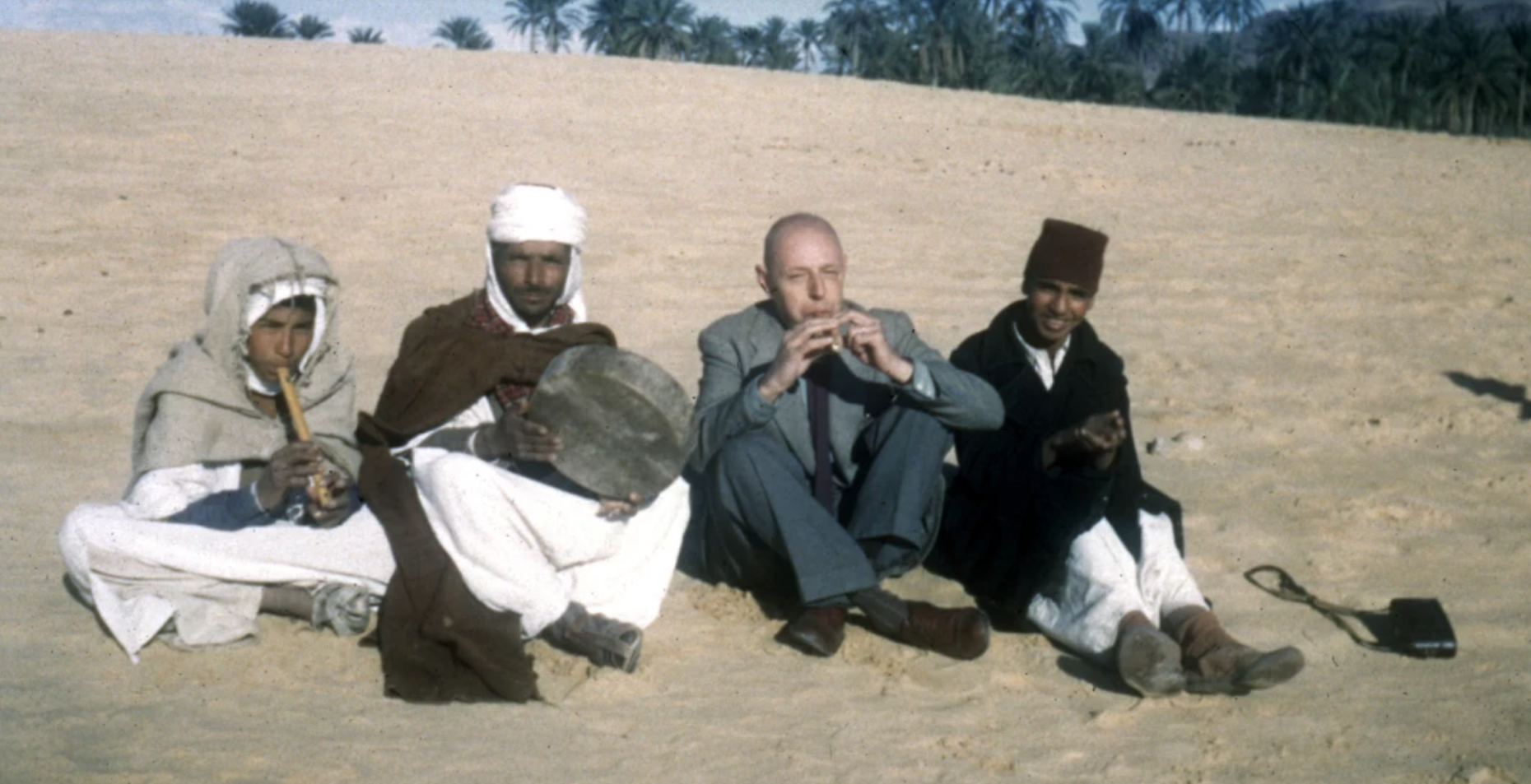
JEAN DUBUFFET IN EL GOLEA, SAHARA, 1948. PHOTO © 2022 ARCHIVES FONDATION JEAN DUBUFFET, PARIS
Chamelier emerged from Dubuffet’s three transformative extended sojourns with his wife Lili to the oasis of El Goléa, Algeria between 1948 and 1949. Sensing a deep malaise following World War II, Dubuffet sought to rid visual art of its cultural inhibitions. Following in the tradition of other European artists who traveled to North Africa, such as Eugène Delacroix, Henri Matisse and Paul Klee, Dubuffet was enraptured by his novel Saharan environs and by the customs of the Bedouin people. Dubuffet deliberately immersed himself in local life to detach himself from the conventions and doctrines of European culture, with the ancient traditions of nomadic desert-dwellers appealing to his enchantment with unprocessed visual languages and the instinctive, raw sensibilities that governed his Art Brut practice. Merged with the artist’s environmental solitude, this cultural reawakening heralded new artistic inquiries for Dubuffet: “Perhaps it was the time I spent in the deserts of White Africa that sharpened my taste…,” he writes, “for the little, the almost nothing, and especially, in my art, for the landscapes where one finds only the formless” (the artist cited in Mildred Glimcher, Jean Dubuffet: Towards An Alternative Reality, New York, 1987, p. 9).
CAVE PAINTING, CAMEL PERIOD (FROM 300 AD). OUAN BENDER, TASSILI N’AJJER (UNESCO WORLD HERITAGE LIST, 1982), ALGERIA
Limited by the materials available in the desert, Dubuffet primarily executed drawings and gouaches while in southern Algeria. His returns to Paris between his trips offered an opportunity to use a full range of media to convey his newfound liberation from his learned artistic techniques and to eschew the Modern sensibilities of his Pre-War style. Chamelier is one of twelve oil paintings Dubuffet created when returning to Paris between April 1948 and March 1949, all of which feature figurative elements. With Dubuffet’s sanctuary to the anti-cultural positions of Art Brut, the “Foyer de l’Art Brut,” enlarged and renamed to the “Compagnie de l’Art Brut” during these months, the desert became an ideal subject matter to convey a newly unfettered, intuitive artistic approach. Heaved from mixes and scrapes of earthen ochres, the topographical surface of Chamelier broadens the expressive possibilities of oil paint. A vast terrain of sand dunes, broken only by an extremely high horizon, erupts across the canvas with raw intensity. Vitalized by this raw landscape, the captivating camel-driver and his companion emerge in a near-cadmium negative relief. Through the hypnotic smears, scrawls, and incisions of his palette knife, Dubuffet embellishes his portrait with face-framing headgear and geometricized garb. Pointedly frontal, these figures synthesize the exquisite pictorial nature of the Arabic characters that Dubuffet intensely studied and his existing visual vernacular, which derived from the art of children and the insane and the aesthetics of graffiti and cave paintings.
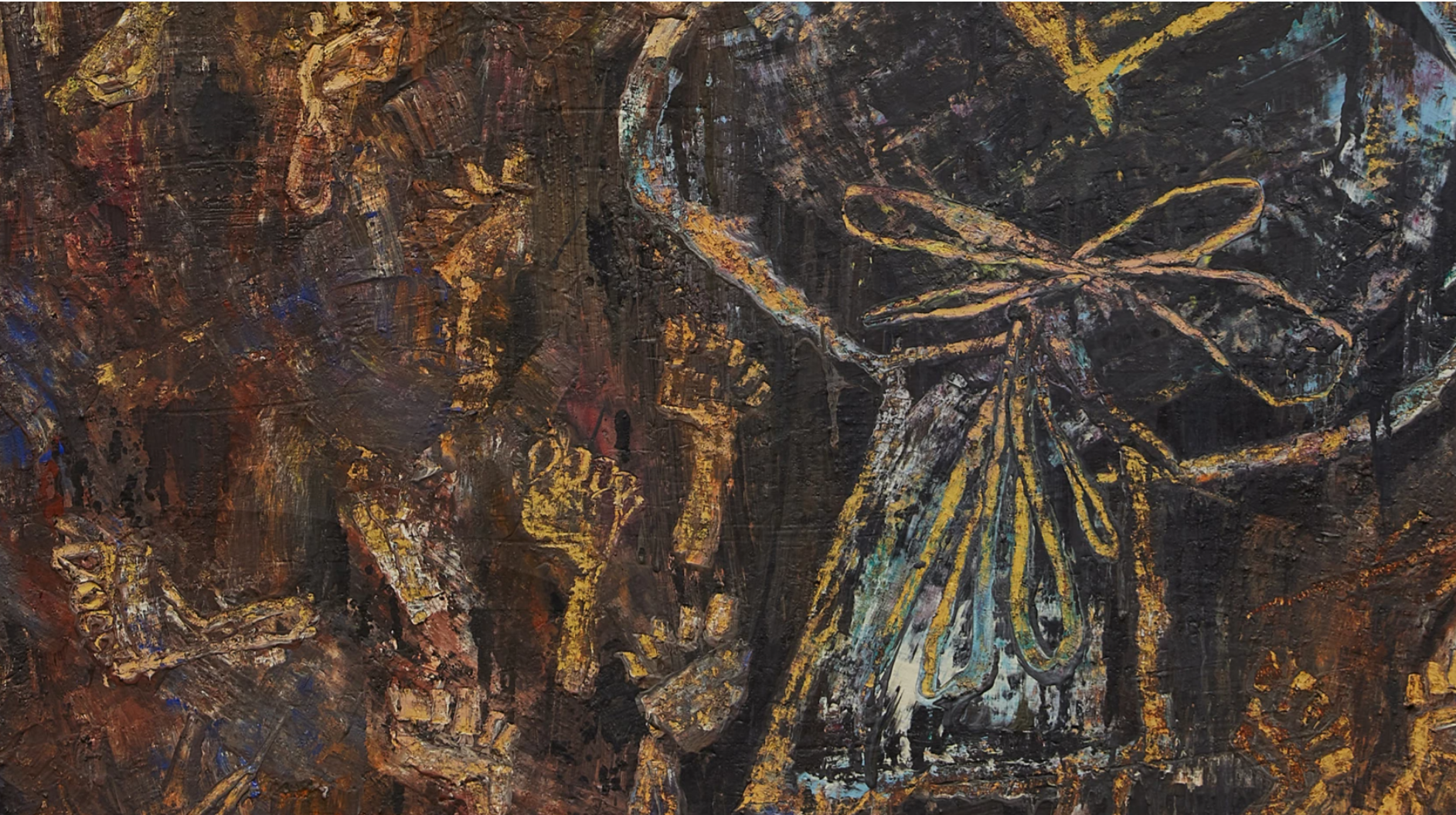
The textural depth and energy of the surface exposes Dubuffet’s fascination with the flowing continuity of the Sahara’s vast, ever-shifting landscape. Chamelier’s multidirectional tactility echoes sand’s capacity to efface human mark-making and endlessly renew itself, becoming a tabula rasa ad infinitum. During his excursions, Dubuffet found footprints to be an apt vehicle of this sentiment. Pervading the desert landscape of the present work, footprints evidence a fleeting human presence and, in turn, places the work in a specific temporal space. A mirage of memory, Chamelier showcases the liberating nature of the mutable Algerian landscape for Dubuffet. The present canvas illustrates the inception and development of many aesthetic possibilities, from the landscapes of his Paysages grotesques to the flattened forms of his seminal Corps de dames, that cement Dubuffet’s status as one of the foremost visual innovators of the twentieth century.
Theatre des Memoires
Animation parcellaire, 1979
Phillips New-York: 14 May 2025
Estimated: USD 350,000 – 450,000
USD 355,600
Jean Dubuffet Modern & Contemporary Art Day Sale, Morning Session
JEAN DUBUFFET
Animation parcellaire, 1979
Acrylic and paper collage mounted to canvas-backed paper
85.7 x 51.4 cm (33 3/4 x 20 1/4 inches)
Signed with the artist’s initials and dated “J.D. 79” lower right
Executed on June 8, 1979, in France
Translating to “plot animation,” Jean Dubuffet’s Animation parcellaire, 1979, depicts eight collaged figures within six different scenes, as marked by grid-like divisions. Positioned within a faux theatrical performance with no prescribed plot, these figures are placed atop patterned backgrounds of stripes, dots and cross hatches in shades of butter yellow, navy blue and crimson red. Having been in the same renowned private collection almost a decade, the present work comes from one of Dubuffet’s final series, Théâtres de mémoire – a monumental grouping of works from the second half of the 1970s, which trace the artist’s personal evolution throughout his career, as he lived through various cultural shifts and artistic breakthroughs.
“These assemblages have mixtures of sites and scenes, which are the constituent parts of a moment of viewing. Viewing by the mind, let us say, if not the immediate viewing by the eyes… The mind totalizes; it recapitulates all fields; it makes them dance together.”
Begun in September 1976, Dubuffet’s Théâtres de mémoire, or “Theaters of Memory,” represent a significant milestone within the artist’s career. The series derives its name from Frances Yates’ book The Art of Memory, which presents “memory techniques” used by Cicero and orators in the Middle Ages to recall bits of knowledge. Borrowing from Yates’ book, Dubuffet’s works in this series depict an amalgamation of places and scenes from the artist’s life and imagination, crowding both the compositions and the mind. Though there is no clear narrative to follow or motives for the characters, the compilations of shapes and patterns absorb the viewer, allowing him or her to get lost in the frenzied visual experience. Relying on his own memory to create these imagined scenes, Dubuffet in this series presents “multiple recollections of places and scenes, which at any given moment, jostle in our memory.” Indeed, “the mind totalizes; it recapitulates all the fields; it makes them dance together… Perhaps we live in a world invented by ourselves.”
L’Après-midi chômé, 1978
Sotheby’s New-York: 13 May 2025
Estimated: USD 1,500,000 – 2,000,000
USD 2,368,000
L’Après-midi chômé | Modern Evening Auction | 2025 | Sotheby’s
JEAN DUBUFFET (1901 – 1985)
L’Après-midi chômé, 1978
Acrylic and paper collage on canvas
171.1 x 117.5 cm (67 3/8 x 46 1/4 inches)
Signed with the initials J.D. and dated ‘78 (lower left)
Executed on 27 March 1978
A triumphant example of Jean Dubuffet’s celebrated Théâtres de mémoire series, L’Après-midi chômé from 1978 represents the artist’s mature work at its best—unconstrained, daring, and symphonic. In this arresting psychological landscape, Dubuffet masterfully fuses his signature Art Brut figures with the modern technique of collage, realizing a mature apex of his painterly practice. Assembled in rich layers of collage, the dynamic composition of L’Après-midi chômé simultaneously rejects organization and coalesces into a cohesive whole. Comprised of thirty-nine collage elements in a mesmerizing tapestry of color, movement, and line, the present work is an exceptional declaration of the vivid color, dynamic brushstrokes, and visual play that distinguish Jean Dubuffet’s production.
“These assemblages have mixtures of sites and scenes, which are the constituent parts of a moment of viewing. Viewing by the mind, let us say, if not the immediate viewing by the eyes… The mind totalizes; it recapitulates all fields; it makes them dance together. It shuffles them, exchanges them, everything is astir…”
In an entrancing mélange of figuration and organic abstraction, L’Après-midi chômé is an exceptional manifestation of Dubuffet’s investigation of memory and imagination.
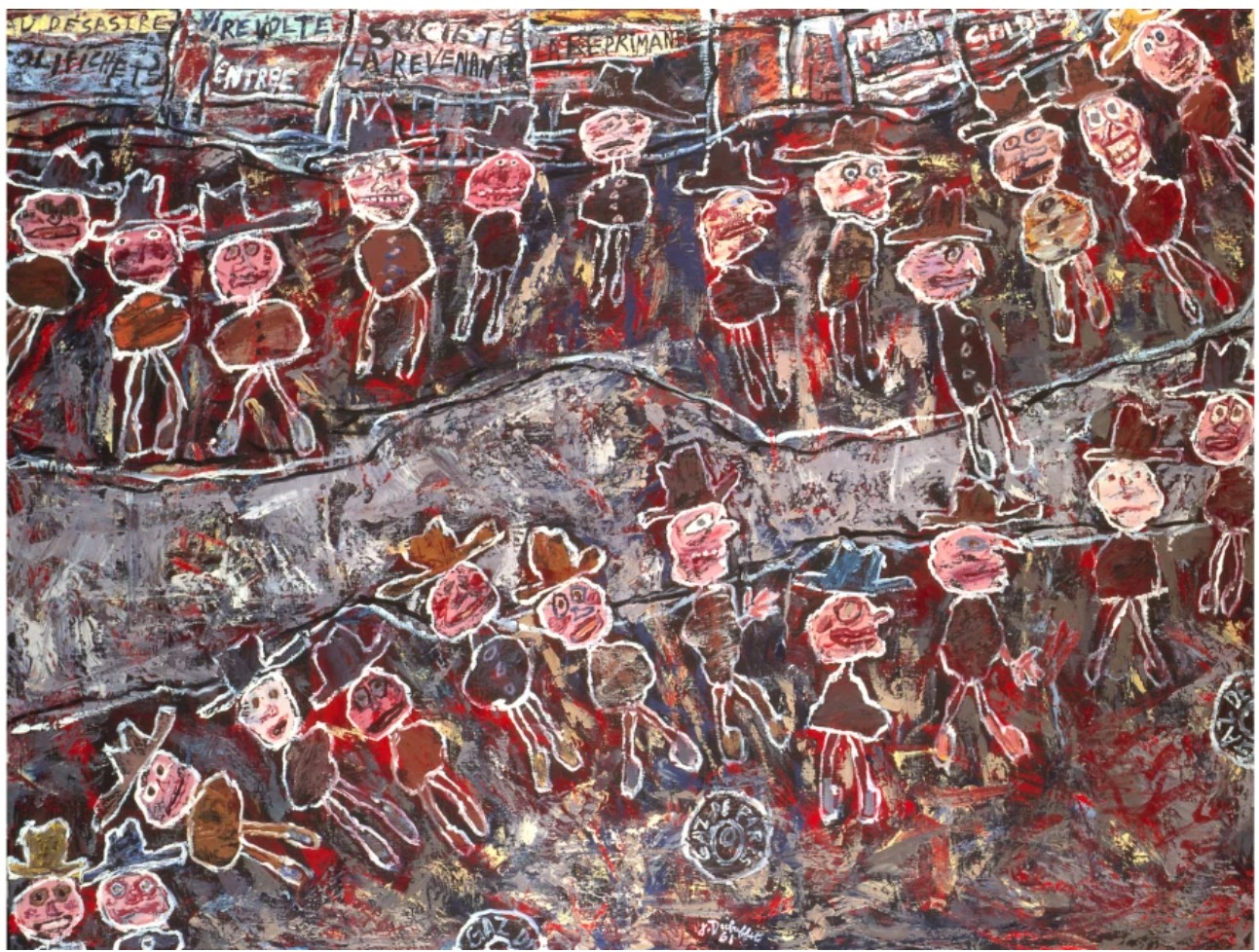
Jean Dubuffet, Spinning Round, 1961. Tate Gallery, London.
Image © Tate, London / Art Resource, NY. Art © 2025 Artists Rights Society (ARS), New York / ADAGP, Paris
An apogee of Dubuffet’s artistic oeuvre, the Théâtres de mémoire is among the artist’s most important and conceptually complex series, in which he progressed his distinctive visual vernacular through a new technique: collage. The works in this series are sensational syntheses of disparate smaller paintings on paper, featuring gestural abstract elements alongside clusters of figures. Each element is separately cut and pasted onto a larger canvas, together realizing stunning works of miscellanea fraught with post-war anxiety and internal, psychological drama. Inspired by Frances Yates’ seminal 1966 text, The Art of Memory, Dubuffet began to speculate on the nature of memory and how visual and auditory experiences are crystallized in our minds. Dubuffet, in his patchwork Théâtres, builds upon Yates’ conception of “specializing memories,” presenting each panel and collaged element as a physical embodiment of consciousness. In Dubuffet’s work, memory is presented as kaleidoscopic rather than chronological, encompassing a dazzling symphony of vignettes.
Hannah Höch, Da-Dandy, 1919. Private Collection. Image © Bridgeman Images.
Art © 2025 Hannah Höch / Artists Rights Society (ARS), New York / VG Bild-Kunst, Germany
A coalescence of frenzied lines and disparate forms merge in visual harmony in Dubuffet’s assemblage. L’Après-midi chômé features ten figures are rendered in bold, graphic lines, interspersed between fabric-like patterns in visual panoply. Reveling in a patchwork of varied patterns and tones, Dubuffet avails himself of the full spectrum of color, teasing out subtle relationships through unexpected transitions and contrasts. By situating existing images into entirely new configurations, Dubuffet illustrated Yates’s core tenets of the ways in which place and image solidify memory in a pictorial space. Repurposing several of his earlier drawings on paper, cut-out elements are here abundantly yet neatly collaged onto canvas with whirling lines and nascent compositions intersecting and overlapping to create a rich tapestry of color, movement, and form, flattened along a single picture plane.
Lee Krasner, Imperative, 1976. National Gallery of Art, Washington, D.C.
Image © Bridgeman Images. Art © 2025 Pollock-Krasner Foundation / Artists Rights Society (ARS), New York
L’Après-midi chômé and the Théâtres de mémoire series more broadly represent a consummation of Dubuffet’s practice through a novel medium of collage. The conception of this series marked a watershed moment in Dubuffet’s career, as he fused his distinct visual vocabulary with the technique of assemblage to create stunning compilations of references fraught with tension and drama. L’Apres-Midi Chome affirms a continuum of memory, primarily materialized in the present yet extending from the past into the future. Distinguished by an arresting visual arena, Dubuffet’s L’Après-midi chômé is a masterful manifestation of Dubuffet’s profound conceptual investigation of the volatility of memory, affirming the artist’s vital contribution to the Post-War period.
Synchronisation, 1975
Jubilation: A Private Collection
Sotheby’s Paris: 18 October 2024
Estimated: EUR 1,200,000 – 1,800,000
EUR 1,560,000 / USD 1,689,380
Synchronisation | Modernités | 2024 | Sotheby’s
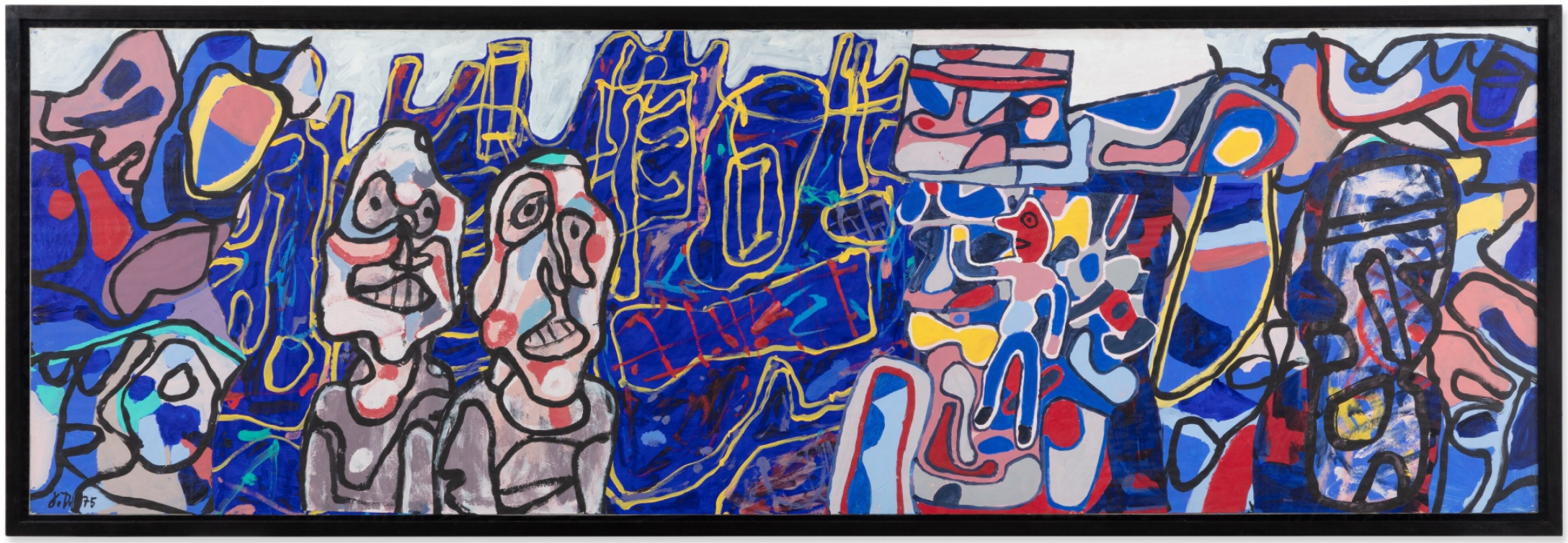
JEAN DUBUFFET (1901 – 1985)
Synchronisation, 1975
Acrylic and paper collage on paper laid down on canvas
67×212 cm (26 3/8 x 83 1/2 inches)
Signed and dated 75 (lower left)
Executed on October 31st, 1975
Executed on October 31st, 1975, Synchronisation inaugurates Dubuffet’s series titled “Théâtre de la Mémoire” and is characteristic of the artist’s last decade of creativity. The horizontality of the work unveils a plurality of assembled elements. In November 1977, the artist defined this series:
“[Those works] are assemblages of pieces that I extract from previously made paintings and then associate by juxtaposing and superimposing them. The goal is to bring together in a single view several different moments of vision. The result is a mechanism similar to what is called polyphony in music. […] These assemblages aim to evoke the moving flow of images in thought. They aim to suggest the mixing that thought does with all its visions – both the immediate visions presented to it by its surroundings and those that inhabit it, which it creates itself. The result is a kind of multi-voiced song; not voices singing in the same tone, but each in its own tone. Hence, a cacophony results.”
“Théâtre de la Mémoire” stands as a continuation of the artistic work Dubuffet begun in 1975 with “Lieux Abrégés”. Taking notice of the numerous works on paper scattered on the floor of his studio, and especially the disorganization and overlapping of the sheets, Dubuffet felt a new wind of inspiration. He started to rework these existing compositions with black outlines, and began to assemble them, as evidenced by the present work which is composed of seven synchronized pieces. The support is then adapted and reworked.
“To create an image, then destroy it to make something essentially different emerge through the simple play of the scissors, the combinatorial virtue of collage, an unprecedented aspect of vision.”
These images are finally fixed to the walls with magnets, enabling the artist to create a systematic diagram using precise measurements to determine the exact placement of each element. With its panoramic format of 67 x 212 cm, Synchronisation invites the viewer to enter a plural universe based on a succession of discontinuous elements, standing in contrast to traditional paintings which generally focus on a single point of view. The usual human scale is abolished, and the characters appear in places against a bluish background. The color palette is deliberately reduced, thus highlighting certain areas where the gaze is directed. Synchronisation offers a panorama with a heterogeneous and colorful appearance, embarking the viewer on a dynamic contemplative journey. Acquired directly from the artist by Galerie Beyeler, Synchronisation remained in the same collection for three decades.
Situations disjointes, 1979
Sotheby’s London: 7 March 2024
Estimated: GBP 200,000 – 300,000
GBP 241,300 / USD 305,968
Situations disjointes | Modern & Contemporary Day Auction | 2024 | Sotheby’s (sothebys.com)
JEAN DUBUFFET (1901 – 1985)
Situations disjointes, 1979
Acrylic, pencil and paper collage on card laid on canvas board
51×70 cm (20 1/8 x 27 1/2 inches)
Signed with the artist’s initials and dated 79 (lower right)
Executed in 1979, Jean Dubuffet’s Situations disjointes is a captivating masterpiece that skillfully unfurls a vivid tapestry of colour and narrative. A mature work within the artist’s oeuvre, examples of which now reside in the Tate Modern, London and the Fondation Beyeler, Basel, Situations disjointes belongs to the artist’s renowned Théâtres de mémoire, begun in 1975 and explored until 1979. Emerging as a conceptual tour de force, the title of the series draws inspiration from the intellectual wellspring of Dame Francis Yates’ The Art of Memory, which presents the ‘memory techniques’ used by Cicero and orators in the Middle Ages. Despite its abstract nature, each composition within Théâtres de Mémoire is, for Dubuffet, an amalgamation of myriad places and scenes that crowd and conflict in our memory. Within the curious cropping and contour devices, as well as the interplay of colors, one discerns the echoes of such memories, purposefully muddled and blurred to evoke the hazy recollections that reside within the recesses of our minds.
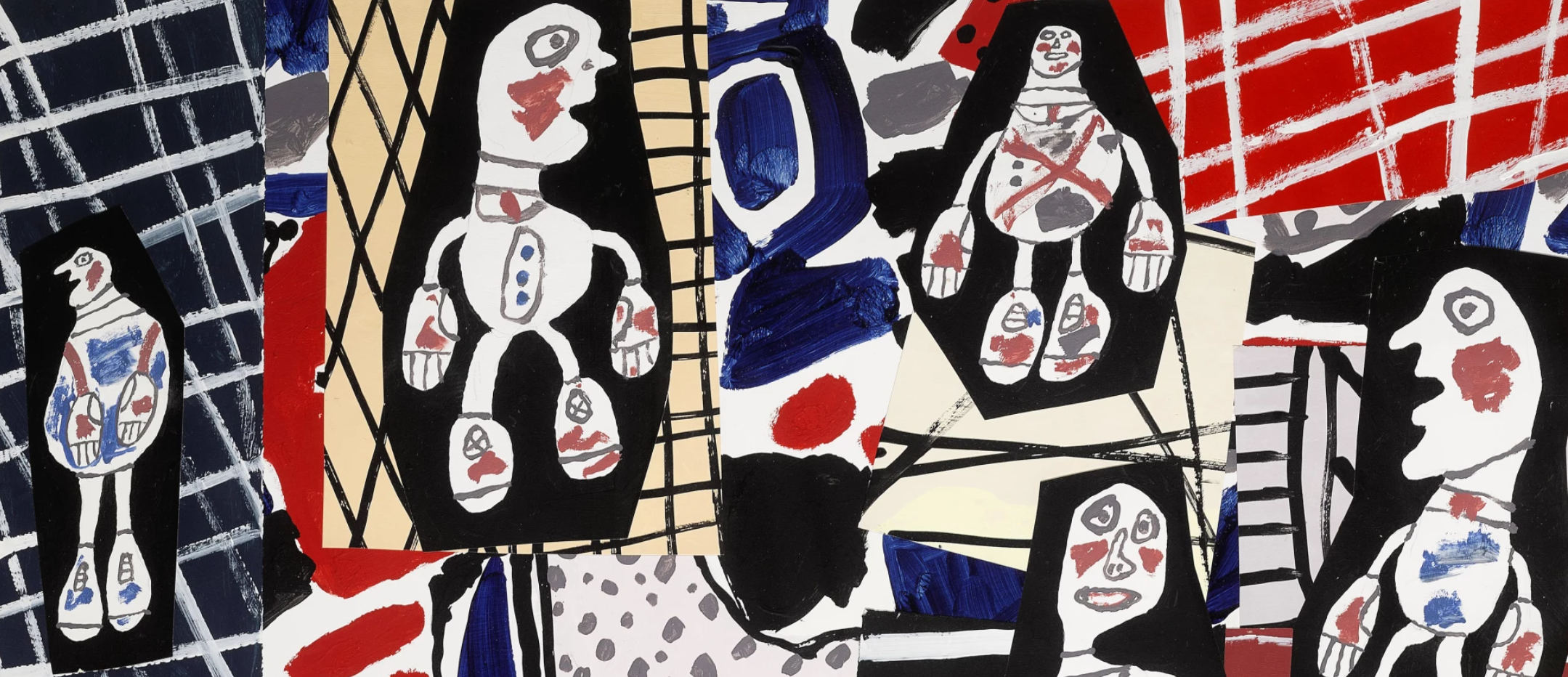
Behind the captivating allure of Situations disjointes lies a meticulous and immersive artistic process, revealing the unparalleled dedication of Dubuffet in bringing forth this series. To embark upon Théâtres de mémoire, Dubuffet engaged in a multi-faceted approach, involving the careful curation, sourcing, drawing, and collection of an eclectic array of collage materials. In the artist’s studio, the avant-garde methodology began on the floor, reaching new heights as Dubuffet strategically installed metal panels that allowed him to arrange and rearrange a profusion of cut-out elements with the aid of small magnets. Transforming his workspace into a realm where creativity knew no bounds, this revolutionary technique not only granted Dubuffet the freedom to meticulously consider the placement of each fragment, but also immersed him physically into the very fabric of the creative process. The result is a triumph; a tapestry of visual narratives woven together with precision and finesse. Through his use of collage and layering with a lack of a distinct starting point or narrative, Dubuffet is replicating the mind’s ability to be lost in thought, as memories fade and come to the fore, as well as depicting the intimacy that exploring these recollections can bring. Vibrant colours and assertive lines dance across the canvas, capturing the zeitgeist of postwar Paris with an unmistakable vigour. This work serves as a visual chronicle of the city’s lively spirit, encapsulated within the energetic fusion of form. At the ripe age of seventy-four, Dubuffet embarked on a creative odyssey that would leave a lasting legacy on the art world, with Situations Disjointes emerging as a singular gem within this influential corpus.
Le Présent se change en passé, 1956
Sotheby’s New-York: 17 May 2022
Estimated: USD 2,500,000 – 3,500,000
USD 4,527,000
Le Présent se change en passé | Modern Evening Auction | 2022 | Sotheby’s (sothebys.com)
JEAN DUBUFFET (1901 – 1985)
Le Présent se change en passé, 1956
Oil on paper laid down on canvas
137.2 x 210.8 cm (54×83 inches)
Signed J. D. and dated 76 (lower left); titled and numbered no 36 (on the reverse)
Rendered in a chaotic yet harmonious palette of primary colors and muted periwinkle, peach, and burgundy, Le Présent se change en passé presents a barrage of imagery that unravels as it recedes in and out between figuration and abstraction. In this arresting psychological landscape, the present work brilliantly conflates Dubuffet’s signature Art Brut figures with the modern technique of collage to proclaim the apotheosis of his masterful painterly practice. Dated 1976, Le Présent se change en passé is an exceptional work from one of the artist’s final and most significant bodies of work, Théâtres de mémoire, and it is distinguished as being part of a limited suite of large-scale paintings from this series that measure more than fifty inches in either direction. Testament to their pivotal importance within Dubuffet’s iconic oeuvre, numerous works that the artist executed on this scale now reside in the permanent collections of institutions such as Tate Modern, London; the Museum of Modern Art, New York; the Centre Georges Pompidou, Paris; and the Fondation Beyeler, Basel. Immersing our gaze within a majestic kaleidoscope of electrifying colors and daring forms all assembled within a flattened picture plane, Dubuffet’s Le Présent se change en passé presents the quintessential synthesis of some of the Modernist master’s most successful visual strategies.
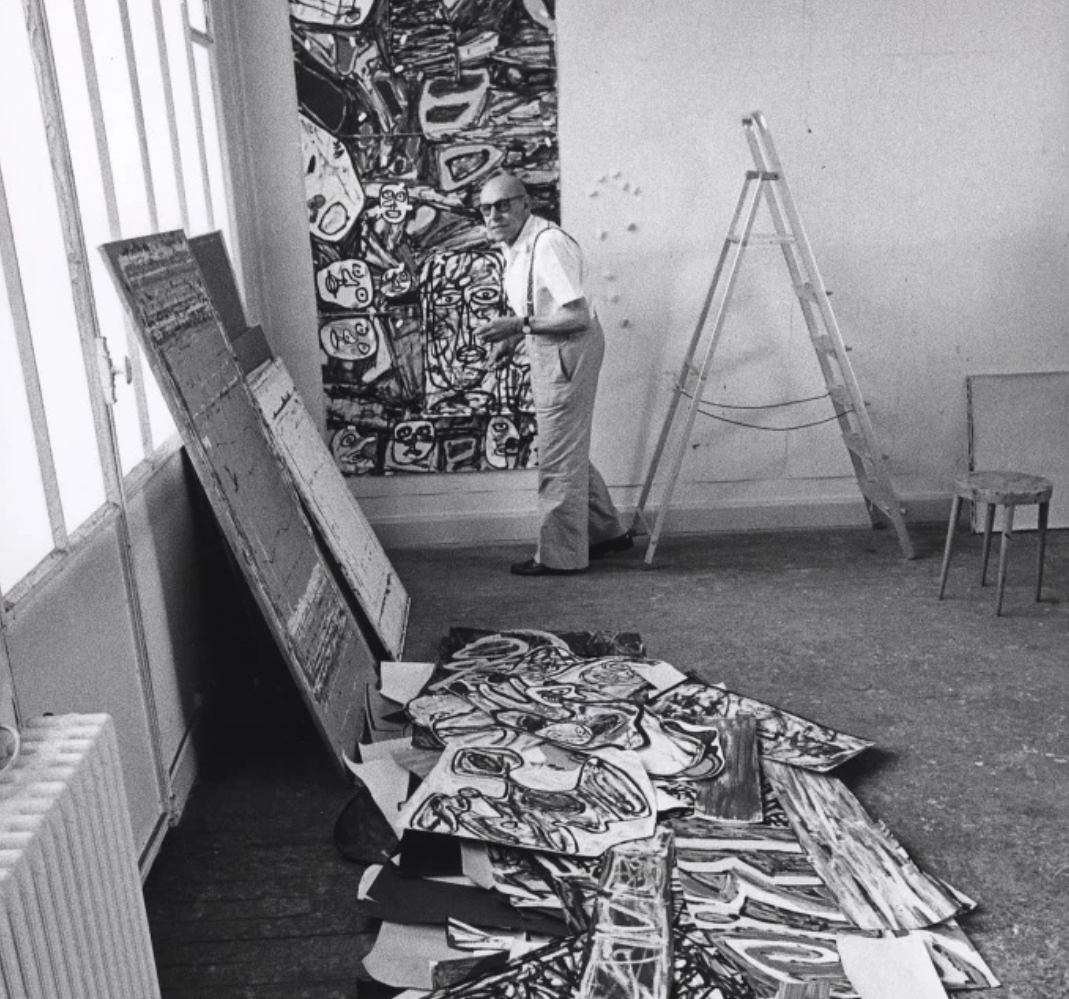
THE ARTIST IN HIS PARIS STUDIO, 1976. PHOTO BY KURT WYSS. ART © 2022 FONDATION DUBUFFET, PARIS / ARTISTS RIGHTS SOCIETY (ARS), NY
The execution of Théâtres de mémoire marked a watershed moment in Dubuffet’s prolific career in which he fused his distinct visual vocabulary with the technique of assemblage to create stunning works of miscellanea fraught with post-war anxiety and internal, psychological drama. This series takes its name from Italian philosopher Giulio Camillo’s “theatre of memory,” a sixteenth-century theory mapping the development of memory through an imagined physical space, which Dubuffet discovered from Frances Yates’s seminal 1966 book, The Art of Memory. Considered a groundbreaking contribution to the discourse of human knowledge, The Art of Memory served as a valuable source for Dubuffet, who visually translated Yates’s ideas into the remarkable group of large-scale works he executed between 1975 and 1980. Following several highly prolific years of production, the artist found his studio strewn with jumbled layers of drawings and paintings, creating random juxtapositions of figure and ground that inspired him to combine the various images into original works. By situating existing images into entirely new configurations, Dubuffet illustrated Yates’s core tenets of how place and image can solidify memory in a pictorial space.
“These assemblages have mixtures of sites and scenes, which are the constituent parts of a moment of viewing. Viewing by the mind, let us say, if not the immediate viewing by the eyes… The mind totalizes; it recapitulates all fields; it makes them dance together. It shuffles them, exchanges them, everything is astir… There is a great loss in what the eyes have caught when the mind gets hold of things. There is also a great addition; for the mind has quickly transfigured, substituting its own images for the ones it receives, mingling its own secretions with what the eyes send it.”
Jean Dubuffet’s Théâtres de mémoire series – named after Francis Yates’ book “The Art of Memory” – comprise one of Dubuffet’s final and most significant bodies of work. The present work is rarified as being part of a limited grouping of large-scale Théâtres de mémoire paintings (measuring greater than 50 inches in either direction) within the broader body of work. Of the works on this scale, there are 9 in museum collections – illustrated below – and another 17 in the collection of the Jean Dubuffet Foundation.
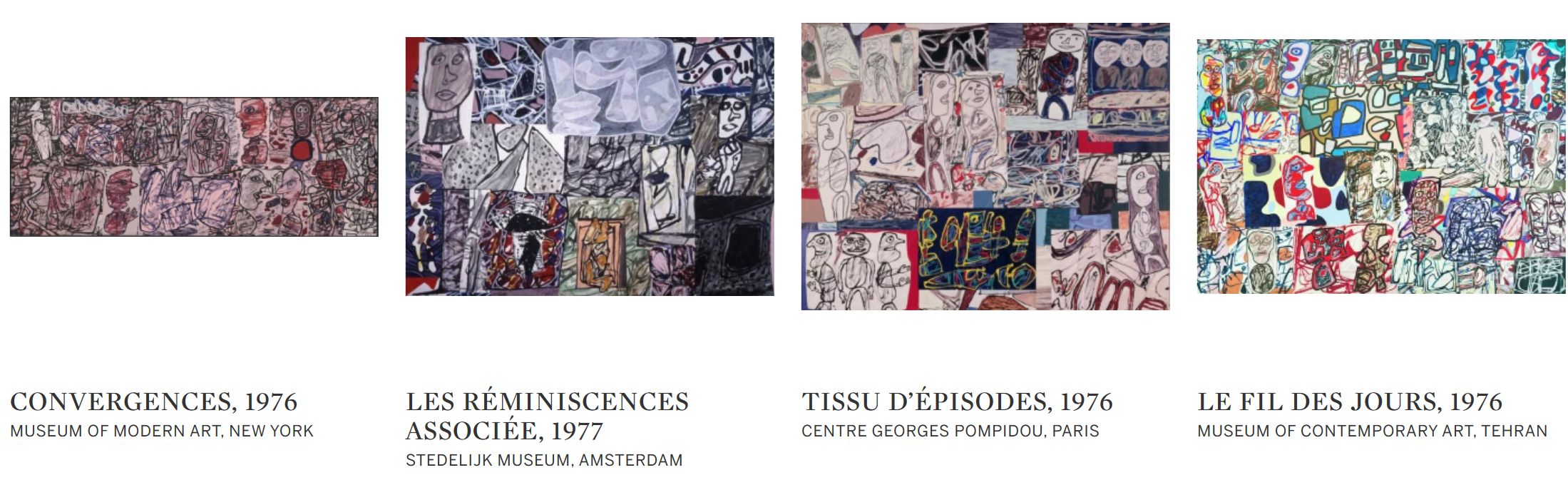
A cohesive tumult of color and line, Le Présent se change en passé presents Dubuffet’s answer to the phenomenological mysteries behind the experience of human memory. Repurposing several of his earlier drawings on paper, Dubuffet abundantly yet neatly collages cut-out elements onto canvas here to create a rich tapestry of color, movement, and form as whirling lines and nascent compositions intersect. Albeit flattened along a singular picture plane and grounded in Dubuffet’s signature art brut figures and heads, Le Présent se change en passé presents a mesmerizing visual experience that is orchestrated by his organic, cellular brushstrokes and punctuated by bursts of electric blue, swathes of buttery yellow, and stripes of brick red. Dubuffet’s willingness to activate passages with spontaneous jolts of primary color seen in the present work marks a significant shift from the muted earthen tones that had defined his earlier work from the 1950s.
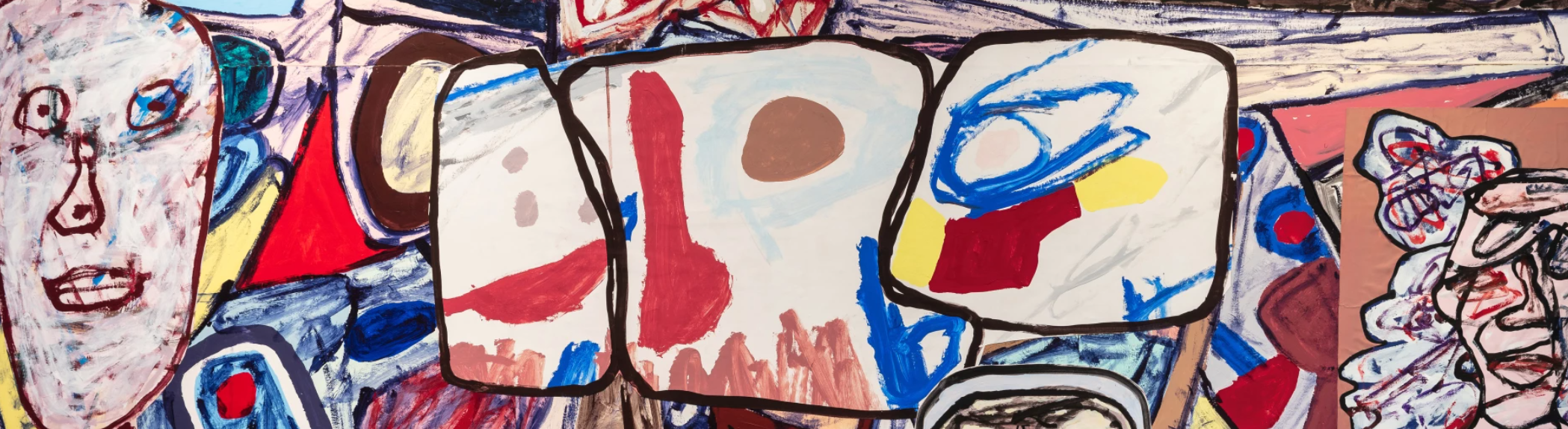
Reveling in a patchwork of varied patterns and tones, Dubuffet avails himself of the full spectrum of color to tactfully tease out subtle relationships within an otherwise frenetic maelstrom of intense pictorial stimulation. In their abrupt cessations of motion and truncated areas of pigment, the clashing shades and patterns assembled in Le Présent se change en passé brilliantly reproduce Dubuffet’s conception of memory. Coalesced in both a chaotic frenzy and a seamless harmony of visual stimulation, the cascade of disparate images, bold lines, and saturated primary colors together unravel in Dubuffet’s Le Présent se change en passé as a triumphant declaration of Dubuffet’s prolific brilliance. In its succinct yet profound manifestation of Dubuffet’s thesis on the volatility of memory, the present work confirms Dubuffet’s enduring legacy as one of the greatest painters of the Post-War period. For Dubuffet, each canvas presented an opportunity to expand his immersive painterly universe and develop his formal vocabulary. In the present work, Dubuffet does both, adding to his extensive canon of figurative motifs while incorporating organically inspired abstract elements. In its astounding and complete activation of the canvas, Le Présent se change en passé exemplifies the best of Dubuffet’s last and most conceptually complex series.
Mire Series
Mire G 109 (Kowloon), 1983
Sotheby’s New-York: 26 February 2025
Estimated: USD 200,000 – 400,000
USD 584,200
Mire G 109 (Kowloon) | Contemporary Curated | 2025 | Sotheby’s
JEAN DUBUFFET (1901 – 1985)
Mire G 109 (Kowloon), 1983
Acrylic and paper laid on canvas
200.3 x 179.3 cm (78 7/8 x 79 5/8 inches)
Signed with the artist’s initials and dated 83 (lower right)
Executed on 28 July 1983
Painted just a few years preceding the artist’s death in 1985, Jean Dubuffet’s Mire G 109 (Kowloon) is an exquisite example of the artist’s quest to find an “alternate reality” in his paintings, a world brought to life throughout his career and crystallized in works that, like the present lot, are entirely freed from the confines of figurative representation. Belonging to the artist’s penultimate body of work, Dubuffet’s series of Mires (Test Patterns) highlight the artist’s relentless exploration of the limits of painting and use of the medium to analyze the human condition. A resplendent representation of the artist’s late life achievements, the painting was showcased in the French Pavillion at the 1984 Venice Biennale alongside other works from the Mires series, bringing the artist back to a city that he had long held dear and further positioning his status as one of the great artists of the twentieth century.
“I want to free myself from the old nomenclature that I was led to believe catalogued reality. I want to transport my vision of what is around us in a different register, I want to live in an alternative reality.”
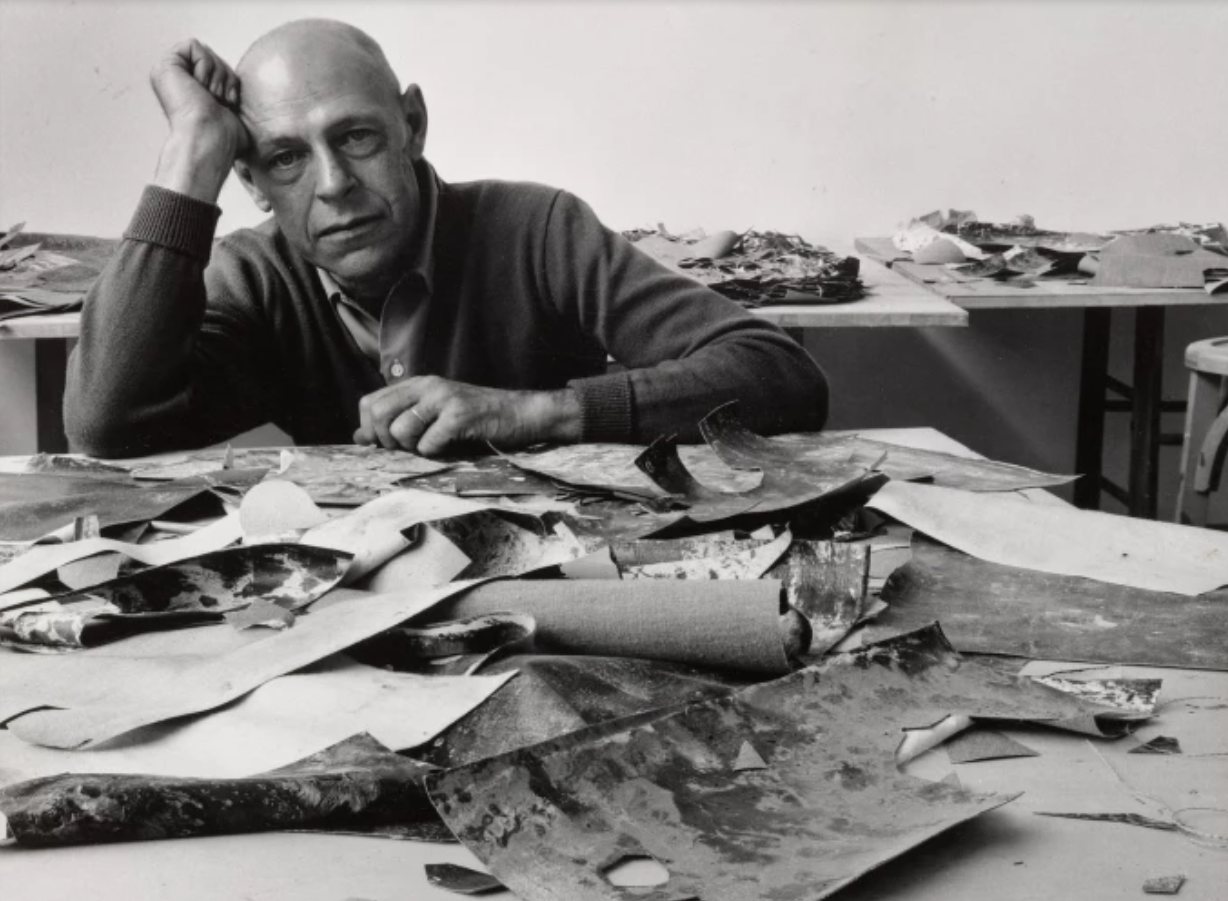
Arnold Newman, Jean Dubuffet in His Studio, 1956
Exhibiting a dazzling flurry of primary colors, the painting converges into whirlwinds of scrawls and overlapping lines that encapsulate the distinct aesthetic impulses of Dubuffet’s career and his shaping of Art Brut, the movement he pioneered characterized by raw, energetic compositions that strayed from the limitations of academic art. The painting, dominated by the two colors that had preoccupied much of the artist’s late career, red and blue, highlights Dubuffet’s singular belief in these primary colors and the forms elicited from their contrast. In the interstitial spaces between its seemingly endless scrawls, the yellow ground of the painting emerges, an element that was in fact added after the rest of the painting, as evidenced by the white halos around these yellow swaths. In this manner, Dubuffet flips the script of the painting, the lines themselves generating the grounds on which they are seemingly inscribed. The subtitle of the work, Kowloon, metaphorically references the Chinese citadel and its infamously frenzied representation of urban life in the twentieth century. The painting’s surface, behind its endless scrawl and frenzy of its lines, is simultaneously flat and absent of scale yet, through its converging lines and resultant shapes, has a subtle tilting effect that further confounds its viewer. Within its frenetic gestures and rich colors, Mire G 109 (Kowloon) encapsulates one of Dubuffet’s fundamental inquiries in his desire to create art that, instead of serving as a reproduction of reality, is an exploration of its endless visual possibilities. Rather than being merely “abstract” or “figurative,” Dubuffet’s Mires aim to transform the supposed binary between the two, transforming our modes of thought and presenting a dazzling embodiment of his interrogation of the human condition through the painted surface, a decisive late-career monument to the decades of exploration that preceded it.
Mire G 146 (Kowloon), 1983
Bonhams London: 10 October 2024
Estimated: GBP 180,000 – 250,000
GBP 203,600 / USD 266,030
Bonhams : JEAN DUBUFFET (1901-1985) Mire G 146 (Kowloon) (Painted on 10 October 1983)
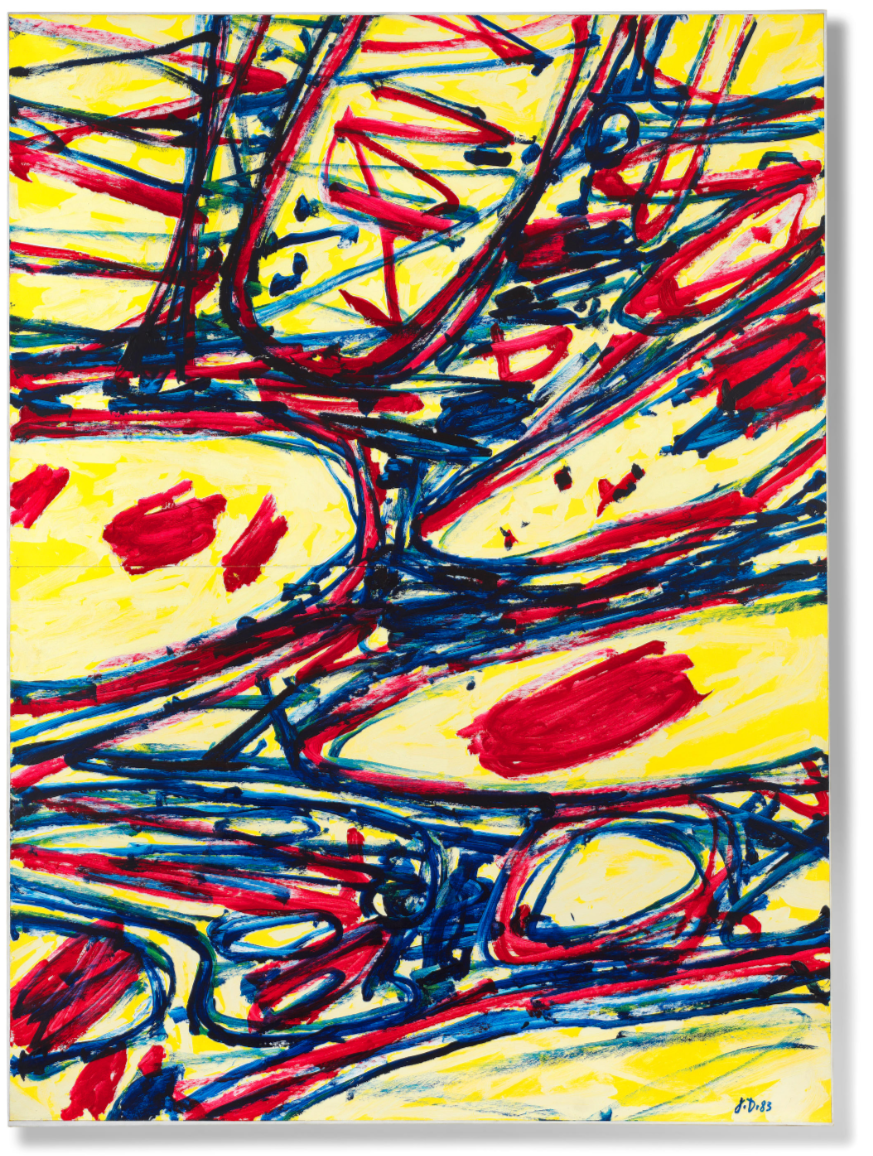
Acrylic on paper laid on canvas
135.2 x 100.2 cm (53 1/4 x 39 7/16 inches)
Signed with the artist’s initials and dated ‘J.D. 83’ (lower right)
“I want to free myself from the old nomenclature that I was led to believe catalogued reality. I want to transport my vision of what is around us in a different register, I want to live in an alternative reality.”
Mire G26, 1983
Estimated: EUR 100,000 – 150,000
EUR 152,400 / USD 163,100
JEAN DUBUFFET (1901 – 1985)
Mire G26, 1983
Acrylic on paper laid down on canvas
68×101 cm (26 5/8 x 39 5/8 inches)
Signed with the initials and dated 83 (lower right)
With its shimmering colors and frenetic gestures, Mire G26 (Kowloon) encapsulates Dubuffet’s fundamental proposition: to conceive art not as a reproduction of reality, but as an exploration of its infinite visual possibilities. In interpreting the “Mires” motif, Dubuffet presents a dazzling variant that represents his ultimate major pictorial accomplishment and epitomizes his late-career aesthetic choices, decisively forsaking figurative representation in favor of vibrant, engaging abstraction.
“These paintings are intended […] to depict the spectacles before our eyes, but in a very generalized form, to the point where the large and the small, bodies and voids and all anecdotal specificities are undifferentiated, to finally evoke indifferently any spectacle, any hold whatsoever in the continuous spectacle that the world offers us”
The “Mires” series constitutes a further advancement in Dubuffet’s experimentation, consistent with his perpetual aspiration to deconstruct established values and broaden our perception of the world. Through assembling sheets of paper painted in acrylic, the artist fabricates dynamic compositions, where blue and red lines on a yellow background evoke the dynamism and disorder of urban life. The subtitle “Kowloon” alludes to the bustling district of Hong Kong, suggesting the teeming masses and energy in a densely populated, noisy urban environment. With this series, Dubuffet extends his philosophical inquiry into painting, proposing a novel interpretation of the world rooted in the impulses of visual reality. Thus, Mire G26 (Kowloon) stands as a testament to Dubuffet’s artistic maturity and his dedication to pushing the boundaries of conventional art. With its vibrant colors and expressive gestures, this work aligns perfectly with Art Brut, a realm in constant flux where the spontaneity of gesture melds with profound contemplation.
Mire G 54 (Kowloon), 1983
Sotheby’s London: 7 March 2024
Estimated: GBP 150,000 – 200,000
GBP 254,000 / USD 322,072
Mire G 54 (Kowloon) | Modern & Contemporary Day Auction | 2024 | Sotheby’s (sothebys.com)
JEAN DUBUFFET (1901 – 1985)
Mire G 54 (Kowloon), 1983
Acrylic on paper laid down on canvas
100.3 x 135.3 cm (39 3/8 x 53 1/8 inches)
Signed with the artist’s initials and dated 83 (lower right)
Jean Dubuffet’s Mire G 54 (Kowloon) is a distinctive example of the ‘alternate reality’ which characterized Dubuffet’s art and life. Executed in 1983, amidst the twilight of Dubuffet’s illustrious career, Mire G 54 (Kowloon) belongs to the artist’s penultimate body of work, the Mires (Test Patterns) and stands as a testament to his relentless exploration of artistic boundaries. Following Mires (Test Patterns), Dubuffet’s final output, Non-Places, featured similarly bold explorations of colour and abstraction. A pinnacle achievement in his quest to redefine the very essence of artistry, works from this seminal series were prominently featured in Dubuffet’s acclaimed and final showcase at the prestigious 1984 Venice Biennale, where the present composition was exhibited. With each brushstroke, Dubuffet invites viewers into his expansive, all-encompassing artistic vision, inviting contemplation and exploration of the boundless possibilities within the realm of visual expression.
“I want to free myself from the old nomenclature that I was led to believe catalogued reality. I want to transport my vision of what is around us in a different register, I want to live in an alternative reality.”
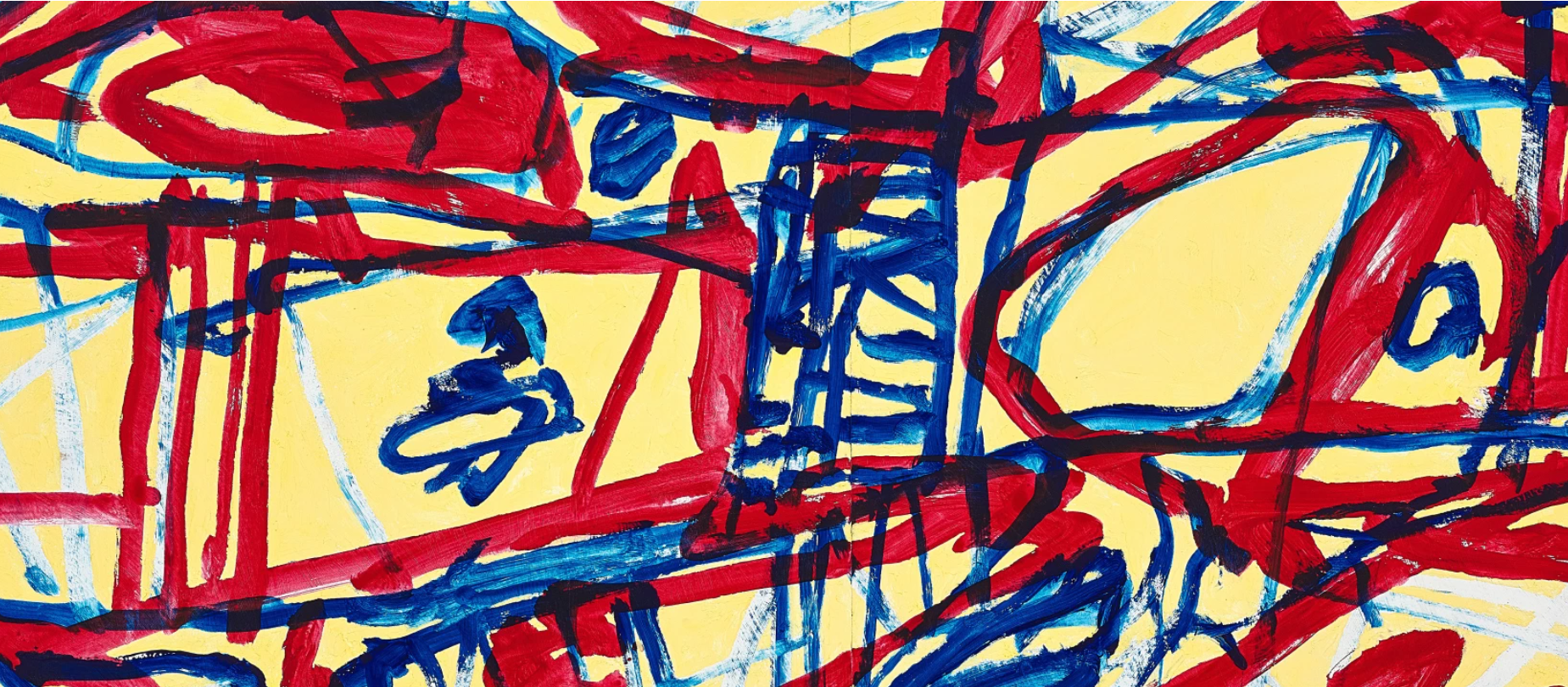
Exhibiting an energetic flow of primary colors, the present work features a captivating composition with vibrant strokes of red, yellow, and blue converging in a dynamic whirlwind. Embracing the tenets of art brut, Dubuffet encapsulates the distinct aesthetic paradigms of Informel and art autre that reigned supreme in the artistic milieu of postwar Paris. Dubuffet’s oeuvre traverses the realms of figuration and abstraction with audacity, offering a radical reimagining of the human experience. In France, America, and beyond, Dubuffet has had an influential and prolific career with immense success. In 2021, Dubuffet was subject to a large retrospective at London’s Barbican Art Gallery entitled Jean Dubuffet: Brutal Beauty which showcased four decades of his career. Exhibiting selected pieces from the Mires (Test Patterns) series, the exhibition highlighted the vital importance of the series in the final shaping of his career. Demonstrating the artist’s energetic exuberance projecting through his work, Mire G 54 (Kowloon) displays an artist at the height of his celebrated and illustrious career.
Psycho-site Series
Site avec quatre personnages (E96), 1981
Sotheby’s Paris: 23 April 2024
Estimated: EUR 100,000 – 150,000
EUR 203,200 / USD 216,510
Site avec quatre personnages (E96) | Art Moderne et Contemporain Evening Auction | 2024 | Sotheby’s
JEAN DUBUFFET (1901 – 1985)
Site avec quatre personnages (E96), 1981
Acrylic on paper laid down on canvas
51.5 x 71.5 cm (20 1/4 x 28 1/8 inches)
Signed with the initials and dated 81 (lower centre)
Executed on April 15th, 1981
Site avec 4 personnages (Site with 4 Characters) is a work from the Psycho-sites series, which incorporates all the characteristics of Jean Dubuffet’s research in 1981-1982. A field of “crude and trivial” colors, in his words, and frenetically drawn lines that split the painting and create several places of different scales, in which characters evolve. The notion of constructing sites through a network of semi-automatically drawn lines finds its culmination in this Psycho-sites series was a favorite theme of Jean Dubuffet since the mid-60s.
“Since the painting is not intended to show a concrete site, but a mental elaboration, it is conceivable that the figures, objects of particular attention, should be surrounded by a separating line that isolates them in the same way as a pencil surrounds a word you want to notice on a page of a book.”
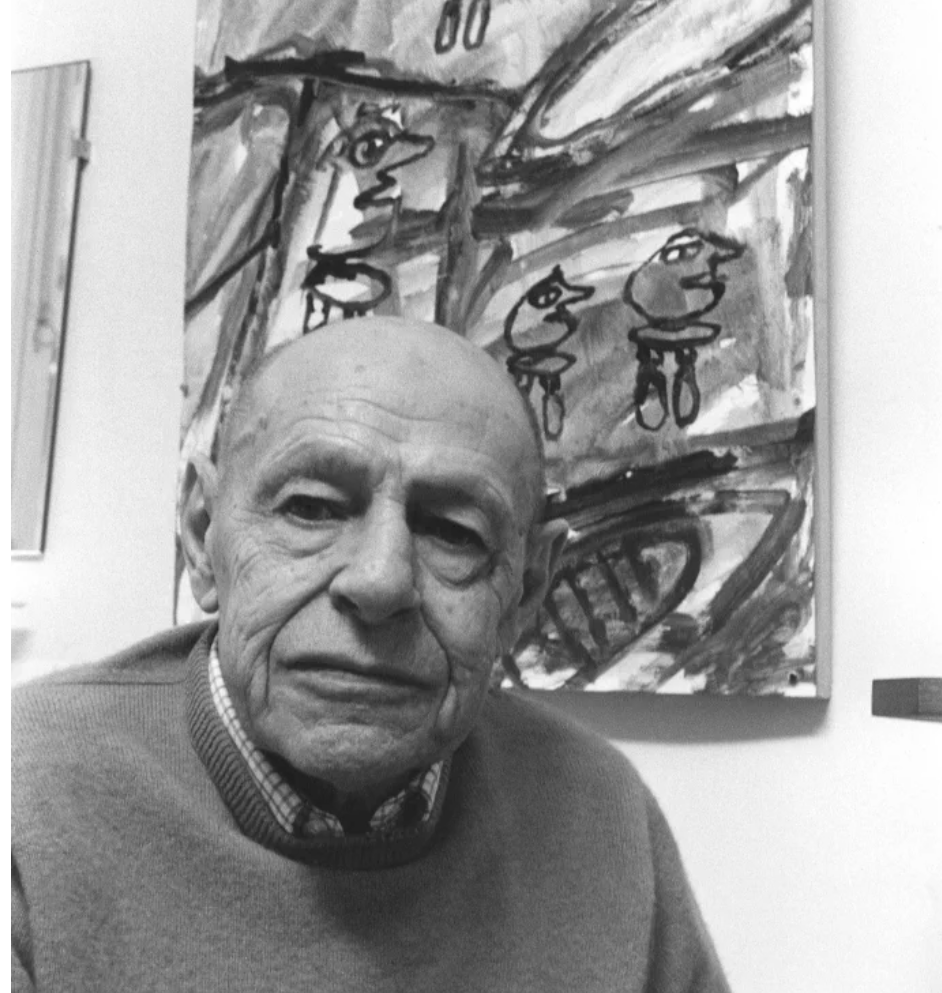
Jean Dubuffet with Site avec 4 personnages E408, Paris, 1982 © Archives Fondation Dubuffet, Paris / Photo : Kurt Wyss, Basel
“Indeed, all these little paintings are based on the conviction that there is no need to differentiate between a site claimed to be real and a mere fantasy, since everything we think we see is always, and in any case arbitrarily, a production of the mind.”
Through these sites, Jean Dubuffet offers the viewer an ideal place, straight out of his imagination. This work provides an insight into the artist’s creative process, giving concrete form to his theories. It brings together his characteristic line patterns, reminiscent of his Jardins, his grotesque figures and the vibrant colors that animate the different planes. A euphoric effect emerges from this composition, contrasting with Jean Dubuffet’s more monochromatic post-war output, in tune with the gloomy context. For Dubuffet, the 80’s were a time of blossoming, and the liberation of his spirit is reflected in his Psycho-sites.
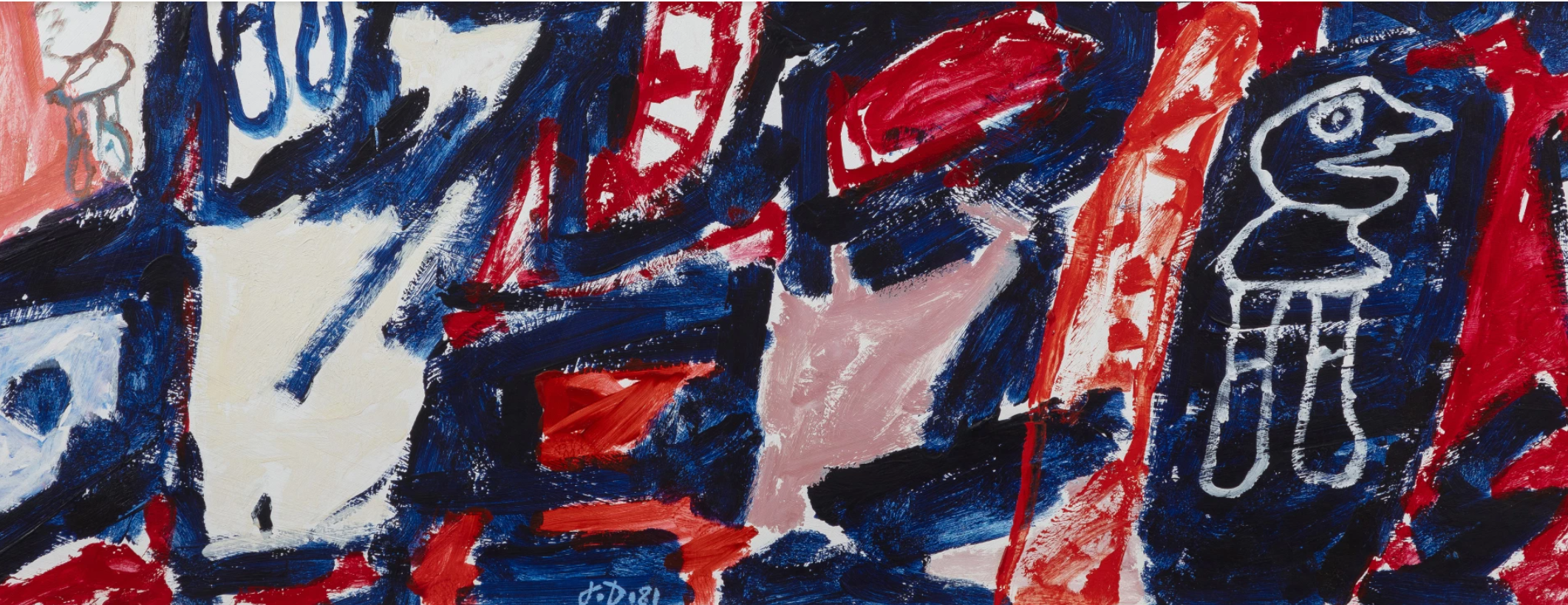
The energy that emanates from this composition is indicative of the fulfillment of Jean Dubuffet’s career, as he continued to develop his production until 1985. While retaining the characteristics of post-war abstraction, of which he was one of the leading contributors, he continued to experiment, producing singular works with a constantly renewed vocabulary.
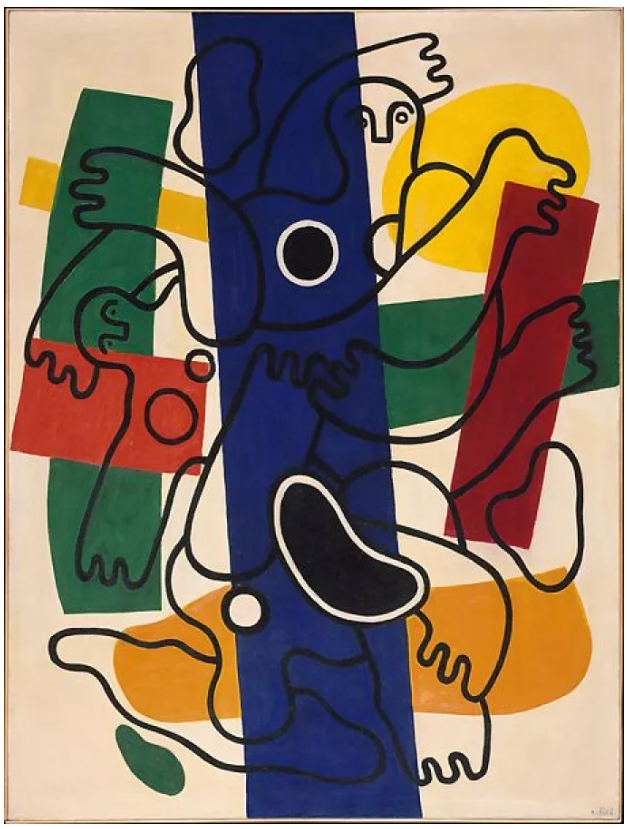
FERNAND LÉGER, DIVERS, BLUE AND BLACK, OIL ON CANVAS, METROPOLITAN MUSEUM OF ART COLLECTION,
© 2024 ARTISTS RIGHTS SOCIETY (ARS), NEW YORK
Partitions
Le cours promenade, 1980
Sotheby’s Paris: 23 April 2024
DUBUFFET: IMPORTANT WORKS FROM THE MARY AND GEORGE BLOCH COLLECTION
Estimated: EUR 300,000 – 500,000
EUR 355,600 / USD 378,890
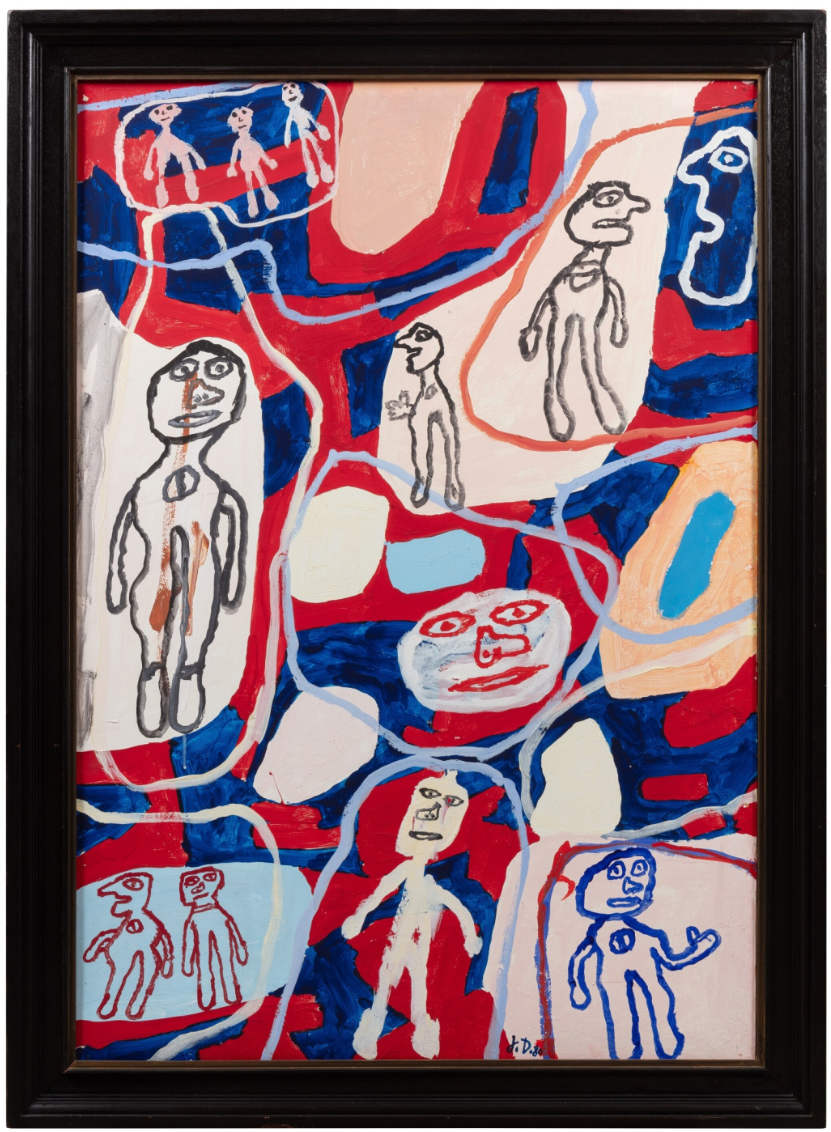
JEAN DUBUFFET (1901 – 1985)
Le cours promenade, 1980
Acrylic on paper laid down on canvas
102×70 cm (40 1/8 x 27 1/2 inches)
Signed with the initials and dated 80 (towards lower right)
Executed on November 12th, 1980
Le cours promenade was painted in November 1980 at a very particular time in Jean Dubuffet’s life. While the 1980s were a prolific period for the artist, marked by intense artistic creation, the Partitions series, to which this work belongs, represented a new series produced after four months of inactivity for the artist. Jean Dubuffet had been severely unwell and was forced to make recurrent hospital stays, putting the brakes on his creative impetus.
These months of hiatus were nevertheless used to engage in theoretical reflection on reality and its perception. The brief Partitions series, comprising just 66 works, was the culmination of these intense reflections, and marked a change in the artist’s style in which he began to adopt acrylics and larger formats. As we can see in Le cours promenade, the forms are even more raw, the lines more diffuse, and the strong contrasts between black, white and bright colours allow for a complete rethinking of the pictorial space.
“I am delighted that the paintings in the “Partitions” series, now in your hands, do not disappoint you. As you quite rightly feel, they proceed, in the same way as the music you mentioned, from a counterpoint to traditional aesthetics. They are the result of an effort to break free from the habits of pictorial means and thereby open up new fields of thought. For this reason, they can only be of interest to people who aspire to renewal.”
The term “Partitions” means, in Jean Dubuffet’s own words, “to share, to divide into parts”. He fragments his sheet to create dimensionless spaces where the figures no longer have scale. Sometimes full-length, sometimes limited to a face, the figures are placed in partitioned areas, but the space is not enclosed. The boundaries of the lines extend beyond the field of the paper. In this way, he engages with the viewer in a profound reflection on the codes by which reality is represented. Jean Dubuffet, the founder and theoretician of Art Brut, was obsessed with breaking codes and escaping the conventionalism of art that he had always rejected.
Lieu de ressouvenance, 1980
Phillips London: 30 June 2023
Estimated: GBP 350,000 – 450,000
GBP 438,150 / USD 554,260
https://www.phillips.com/detail/jean-dubuffet/UK010423/27
JEAN DUBUFFET
Lieu de ressouvenance, 1980
Acrylic on paper laid down on canvas
102.5 x 71.2 cm (40 3/8 x 28 inches)
Signed with the artist’s initials and dated ‘j.D. 80’ lower right
Full of all the energy and noisy vitality of a bustling city street, Jean Dubuffet’s Lieu de Ressouvenance is a paradigmatic example from the artist’s celebrated Partitions series – one of the interconnected cycles of work that occupied the artist during the ‘exceptionally productive’ last years of his life. Featuring simplified figures that appear to float alone and in groups within flat, interlocking cells, the 92 works from the Partitions series combined the spontaneity of drawing with a concentrated sense of color, generating an intoxicating joie de vivre in works that seem almost musical in their compositional arrangement. Following an extended period in the French countryside during which the human figure disappeared almost entirely from his canvases, with its flattened, vertiginous perspective, tangled, brightly colored lines, and simply rendered yet highly animated figures, Lieu de Ressouvenance highlights the evolution of Dubuffet’s practice following his return to Paris in 1961 and the commencement of his Paris Circus series. As with the slightly later Hourloupe cycle, Dubuffet here retuned to one of his most consistent motifs with renewed force: that of the figure in urban space and the city as a site of psychological intensity.
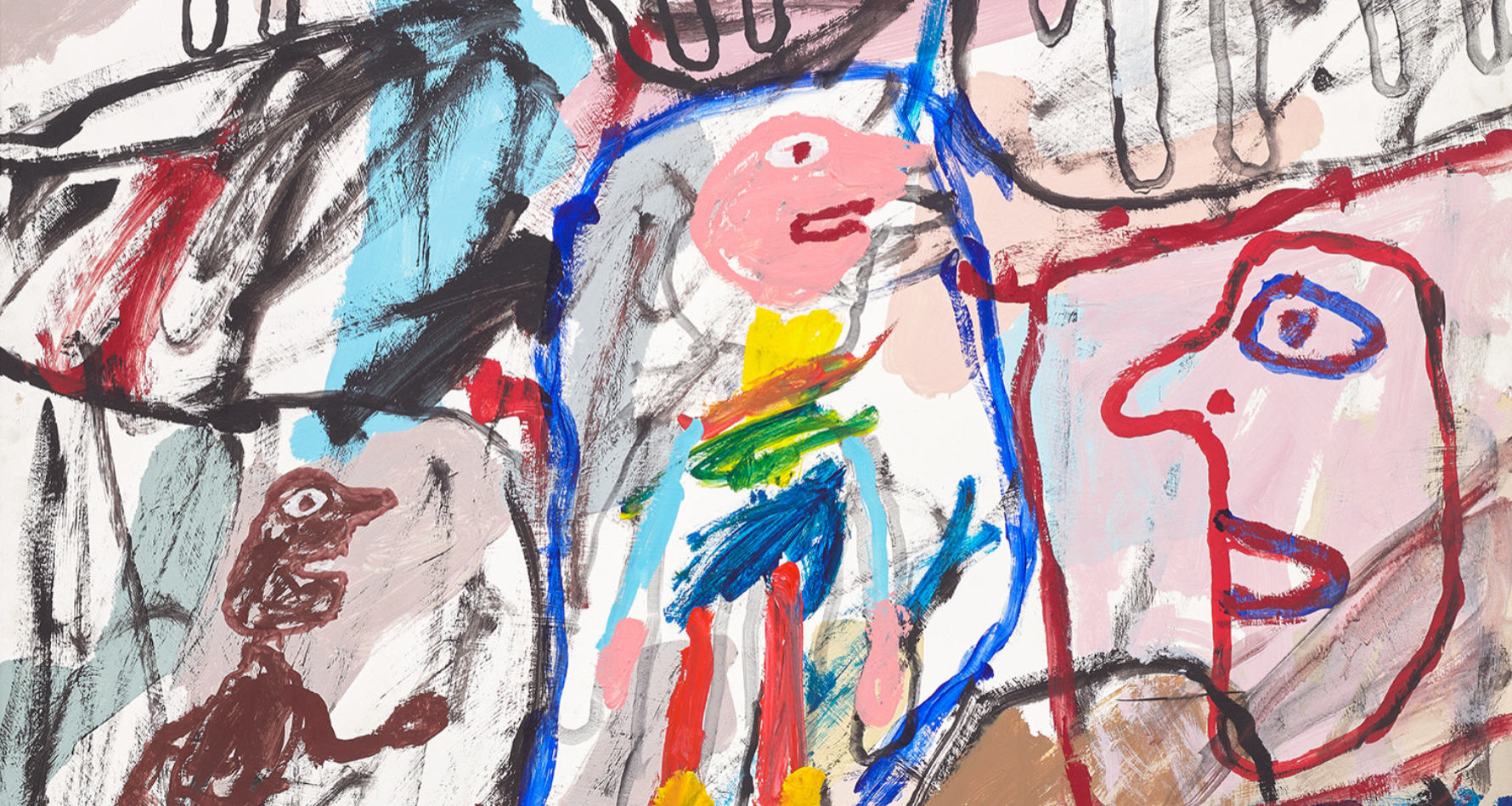
Its title translated to ‘place of remembrance’, Dubuffet’s Lieu de Ressouvenance deftly captures the essence of the artist’s work during this period, combining our perceptions of physical and psychological space, the frantic pace and simultaneity of the city acting as a rich metaphor for the workings of memory and the mind. As the artist explained in more detail, ‘One must not confuse what the eyes apprehend with what happens when the mind takes it in. In any single instant the eyes see only a side facing them, they converge on a small field. The mind totalizes; it recapitulates all the fields; it makes them dance together […] Perhaps we live in a world invented by ourselves.’
Sculptures
Tour Turbulente, 1973-81
Sotheby’s New-York: 25 February 2026
Estimated: USD 1,800,000 – 2,500,000
WITHDRAWN
Tour Turbulente | Contemporary Curated | 2026 | Sotheby’s
JEAN DUBUFFET (1901 – 1985)
Tour Turbulente, 1973-81
Polyurethane paint on polyester resin
228.6 x 121.9 x 111.8 cm (90x48x44 inches)
Signed with the artist’s initials and date 73/81 (at base)
Interlocking forms of red, white, and blue coalesce into a pulsating structure of geometry in Jean Dubuffet’s Tour Turbulente. The present work is an outstanding example of the artist’s celebrated Sites tricolores series, a towering monument to the artist’s radical and enduring investigation of form, texture, and human expression. With its striking palette and monumental presence, towering at 90 inches in height, Tour Turbulente encapsulates the raw energy and graphic force that defined the artist’s final decade. Resonant with sister works at celebrated institutional collections—such as Study for Tower with Figures at the sculpture garden in The Museum of Modern Art, New York—Tour Turbulente gallantly speaks to Jean Dubuffet’s passionate and revolutionary artistic vision.
“I believe that in all my works I have been concerned with representing what makes up our thoughts—to represent not the objective world, but what it becomes in our thoughts.”
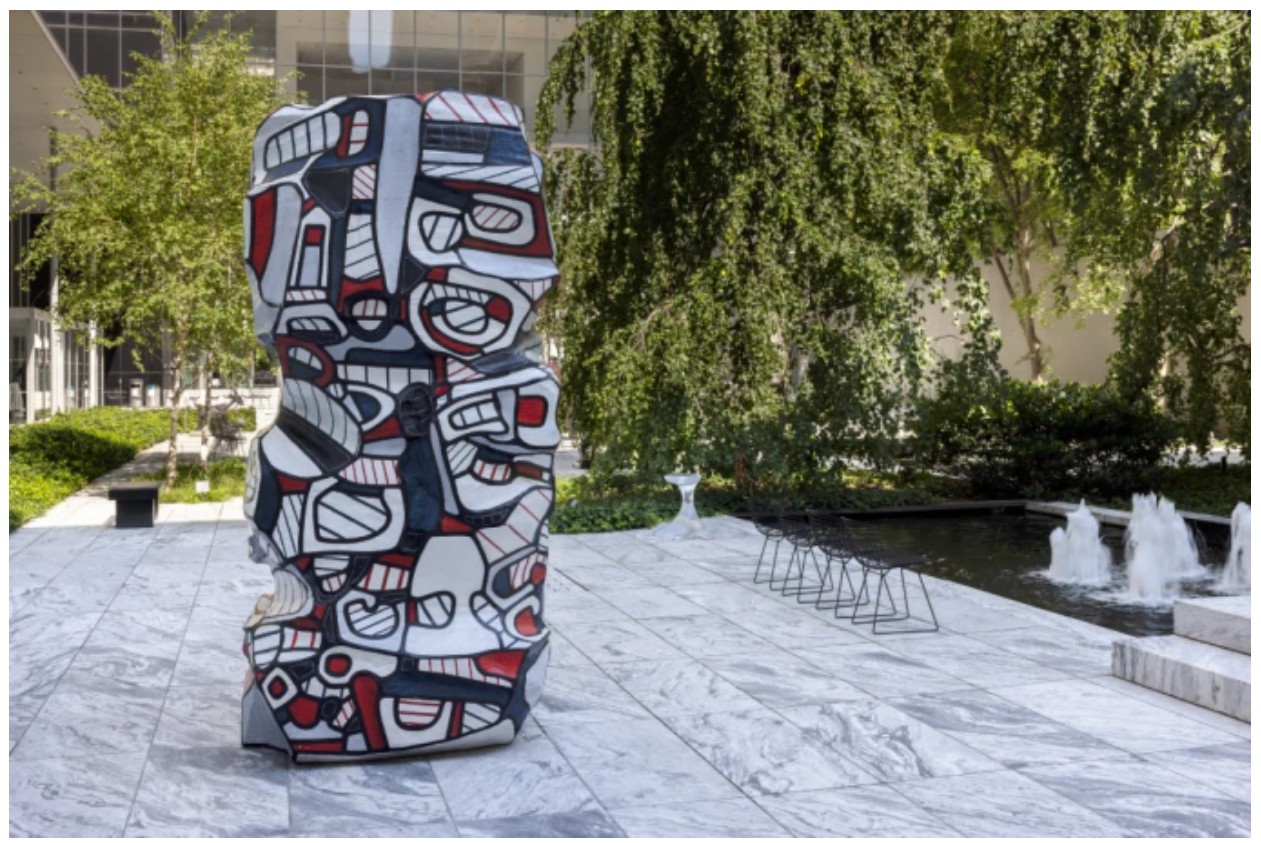
Jean Dubuffet, Study for Tower with Figures, 1968. The Museum of Modern Art, New York.
Art © 2026 Artists Rights Society (ARS), New York / ADAGP, Paris
Emerging from the anarchic terrain of postwar Europe, Dubuffet dedicated his practice to subverting conventional aesthetics. Rejecting academic refinement and bourgeois tastes, he aligned himself with the aesthetics of outsider art, or Art Brut, a category he coined to describe the unfiltered, instinctual creations of the mentally ill, the incarcerated, and the untrained. By the 1970s, however, Dubuffet was channeling these raw principles into increasingly refined and ambitious formal experiments, with works like Tour Turbulente revealing the full maturity of his idiom. Particularly poignant were his L’Hourloupe and Sites tricolores series, where the artist forged a new technique inspired by curved biomorphic cellular forms with a dramatically reduced palette of black, blue, red, and white, at once recalling the industrial roots of the hues and the tricolors of the French flag. Here, Dubuffet’s distinct visual lexicon maintains, as author and essayist Gaëtan Picon explains, “a true system, a net in which everything is caught, a grille through which everything is seen, in fact an alphabet, letters and punctuation, with which everything is said: a set of preconditions for imaginative perception, within which it is possible to see everything, and outside which it is not possible to see anything.” (Gaëtan Picon quoted in: Exh. Cat., London, Waddington Galleries, Jean Dubuffet, June – July 1972, p. 39)
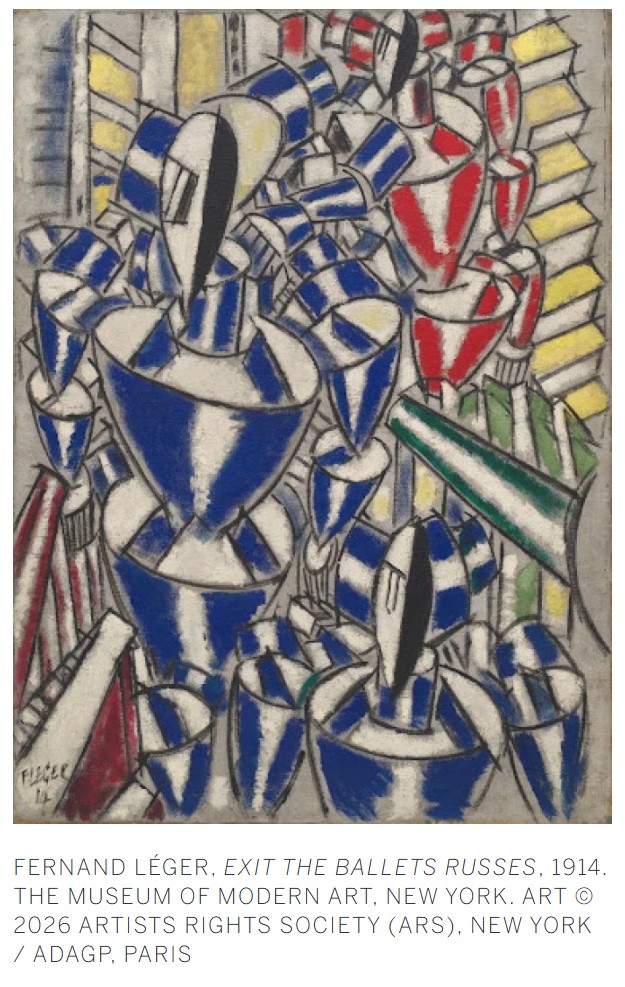
As the title Tour Turbulente (Turbulent Tower) implies, the present work can be understood as a fundamentally architectonic project in its labyrinthine surface and jagged silhouette. By the 1970s, Dubuffet found himself engaging with large scale public works and even architecture such as the Villa Falbala in Périgny in the Ile-de-France. Though it may seem at first odd that an artist who has consistently championed resistance against art historical norms would find himself in an art form so inextricably linked to structure, tradition, and permanence, Dubuffet through this new medium sought to “inspire architecture to explore rich possibilities where we would begin to see new structures from which symmetry, rectilinear elements, and right angles would be excluded.” (the artist quoted in: Kent Minturn, “Jean Dubuffet: architect without walls,” Architectural Review, 29 August 2015 (online)) Through Tour Turbulente, the artist proposes a fictitious tower of interwoven forms and bold motifs; oscillating between the flat interlocking forms of its surface and the imposing presence of its sculptural volume, the present work blurs the boundaries between drawing and sculpture, figuration and abstraction, whimsy and rationality.
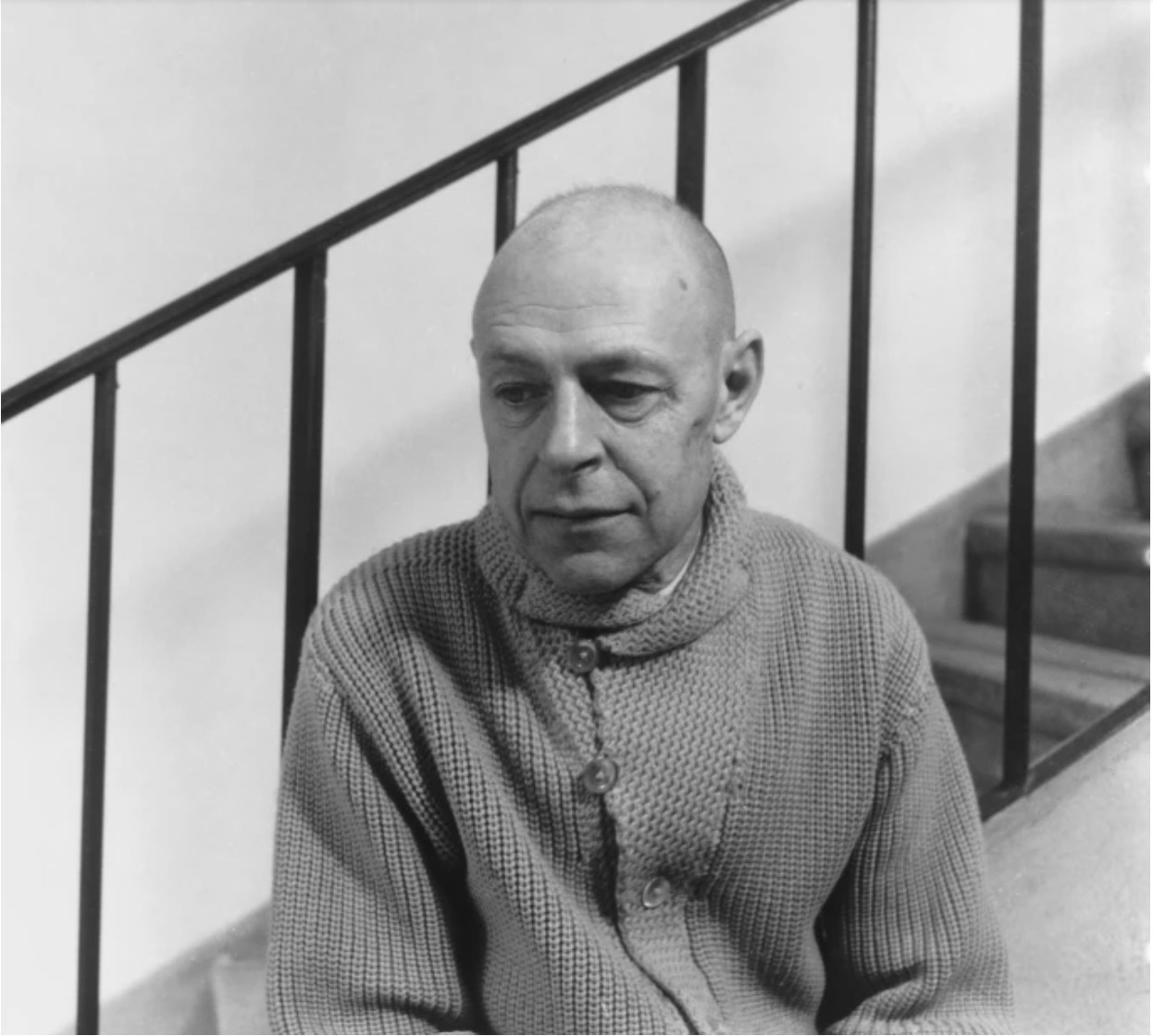
The artist in his studio, 1954. Photo by Denise Colomb
While the formal exuberance of Tour Turbulente is undeniable, it is also a profoundly humanistic work as the sculpture suggests a presence both comic and noble, anonymous yet universal. In its whimsical contours and vibrant graphic quality, the sculpture channels the energy of urban graffiti, children’s drawings, and vernacular signage yet its scale and composition imbue it with an almost totemic presence. Like an ancient stele reimagined through the lens of modernity, the present work both commemorates and questions the human impulse to build, represent, and define. Thus, Tour Turbulente encapsulates Dubuffet’s philosophy of perception as a fluid and subjective experience that becomes destabilized and reinvented in the face of great art. Through a radical visual language at once democratic and sophisticated, it beckons its viewers into a world of ambiguity, delight, and unrelenting invention.
Amoncellement à l’épi, 1970
Christie’s New-York: 20 November 2024
Estimated: USD 250,000 – 350,000
USD 504,000
JEAN DUBUFFET (1901-1985), Amoncellement à l’épi | Christie’s
JEAN DUBUFFET (1901-1985)
Amoncellement à l’épi, 1970
Epoxy paint on polyurethane
91 x 72.9 x 55.1 cm (35 7/8 x 28 3/4 x 21 3/4 inches)
Signed with initials and dated ‘J.D. 70’ (lower right edge)
Dubuffet’s elegant and captivating Amoncellement à l’épi emerges out of the artist’s iconic L’Hourloupe cycle as a three-dimensional construction adorned with uniform black lines embodying a graphic message articulated within an undifferentiated universe. The eight variously shaped disparate elements of this construction expand this universe, offering a multiplicity of picture planes. The artist stated that rather than sculpture, works from this series “should be considered drawings which extend and expand in space,” and the intricate integration of the different elements into a singular form offers the artist ample surface area to explore illusionary effects.
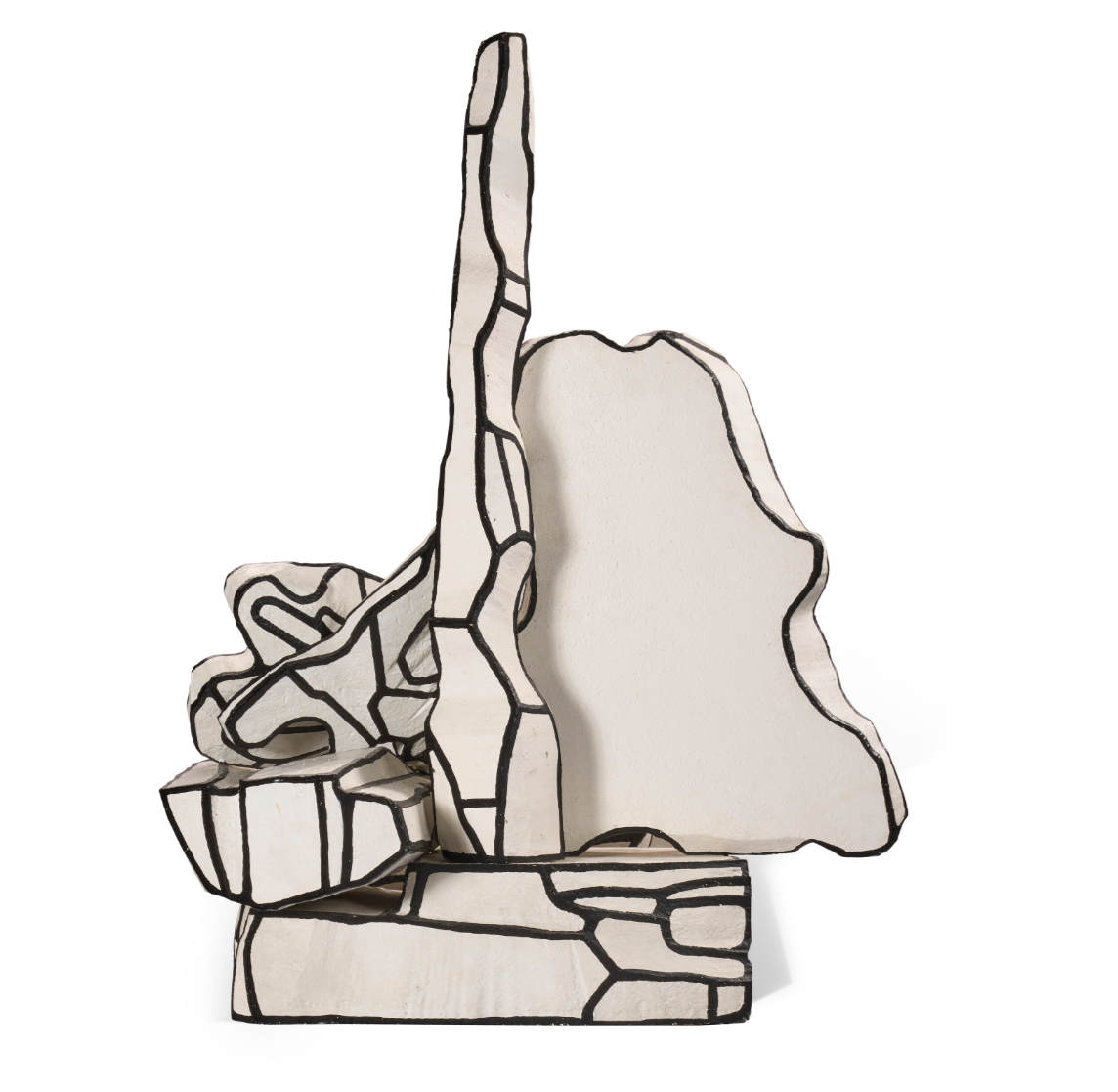
The present work exemplifies Dubuffet’s long study of art brut—works created by artists without academic training, seen in street art and outsider art as well as the work of children. Dubuffet saw in these works powerful raw expressions of emotion unrestrained by the art historical canon or visual tradition. Embracing these outsider artists, Amoncellement à l’épi belongs more to a mental than to a physical register, its almost phantasmatic quality conjured by the unsteady illusion of depth producing an unreal semblance for which Dubuffet describes works from this period as simulacres. The fruit of this effort, Amoncellement à l’épi, is a constituent of the black-and-white works which Dubuffet created between 1969-1970. Always attuned to materiality, Dubuffet carved the work with a heated wire and painted with epoxy paint. His reliance on industrial materials comes from his rejection of Occidental culture and his perception of how Western artistic production suffocates divergent practices and styles in its pursuit of a predetermined monoculture: “Western thought is polluted by its thirst for coherence, its illusion of coherence”. The present work articulates the artist’s rebellion against this crisis of Western culture by revealing the “arbitrary and specious character” of what he saw as the orthodox artistic logos, reinterpreting the world through a different logos which Dubuffet coins as “logogriph,” with griph—a puzzle or riddle—emphasizing the enigmatic nature of his constructions and the various interpretative paths they create.
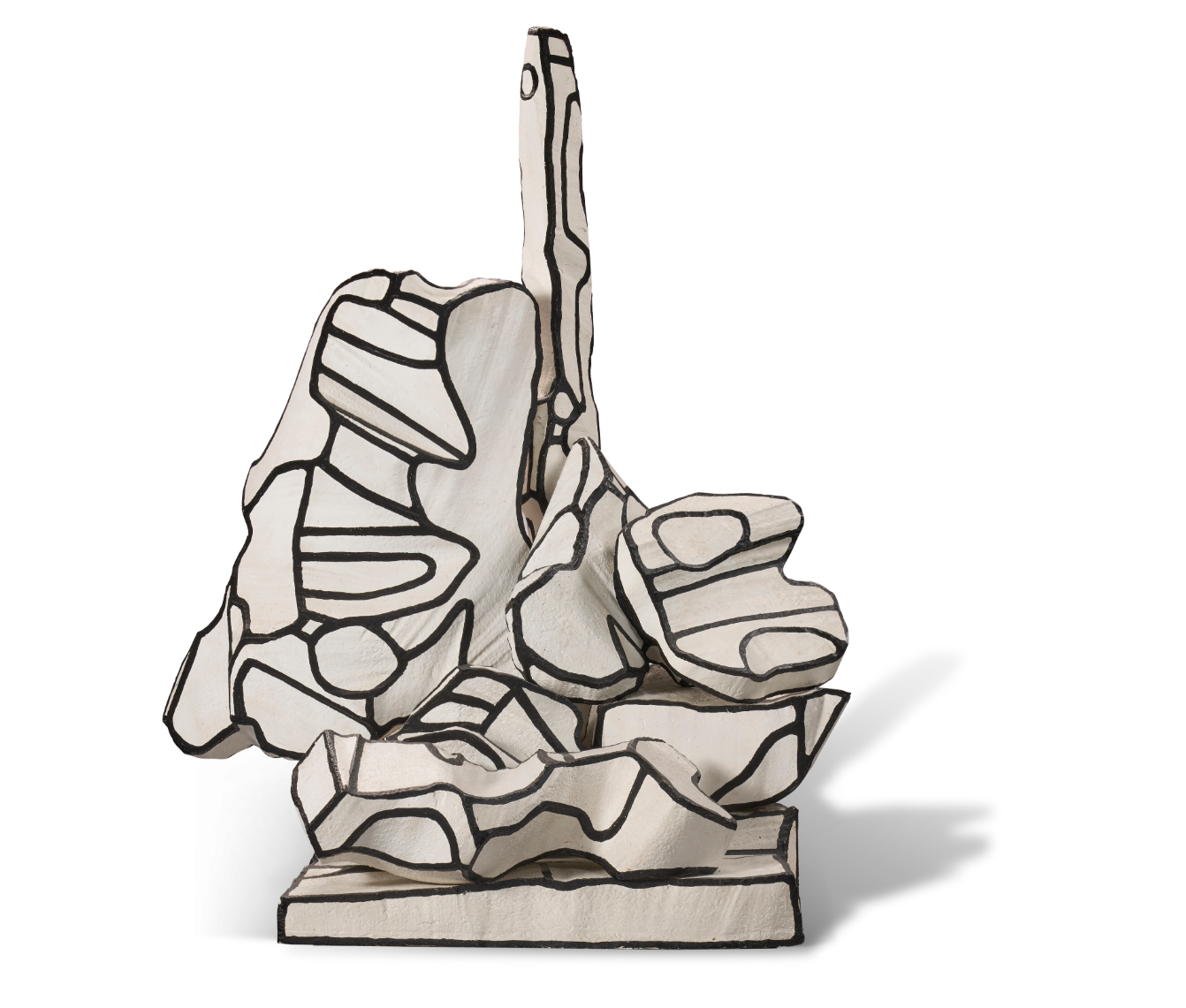
Dubuffet’s highly individualized artistic practice sought to eschew traditional aesthetics in favor of a more authentic vision. While Dubuffet’s interest in deconstructing the picture plane and constantly reorienting perspectival points is attuned to the legacy of artists such as Piet Mondrian and Paul Klee, the artist remains in his own league among fellow twentieth century artists in terms of his ability to construct and articulate a profoundly personal visual vocabulary. Amoncellement à l’épi is testament to Dubuffet’s defining individualism, an exceptional work which prefigures by decades the institutional critique and interest in outsider art explored in this year’s Venice Biennale, Foreigners Everywhere.
Arbre bleu à l’éploiement, 1969
Sotheby’s Paris: 23 April 2024
Estimated: EUR 120,000 – 180,000
EUR 336,550 / USD 358,590
JEAN DUBUFFET (1901 – 1985)
Arbre bleu à l’éploiement, 1969
Transfer on polyester
67.9 x 43.2 x 48.3 cm (26 3/4 x 17 x 19 inches)
Signed and dated 69 (on the stem)
Arbre bleu à l’éploiement, a unique work by Jean Dubuffet executed in 1969, testifies to his ability to merge sculpture and painting in a revolutionary way. Using the characteristic visual language of his “L’Hourloupe” series, Dubuffet brought three-dimensional objects to life from 1966 onwards, using polyester as his material of choice. The artist emphasizes that this new body of work represents three-dimensional drawings and paintings rather than sculptures in the traditional sense.
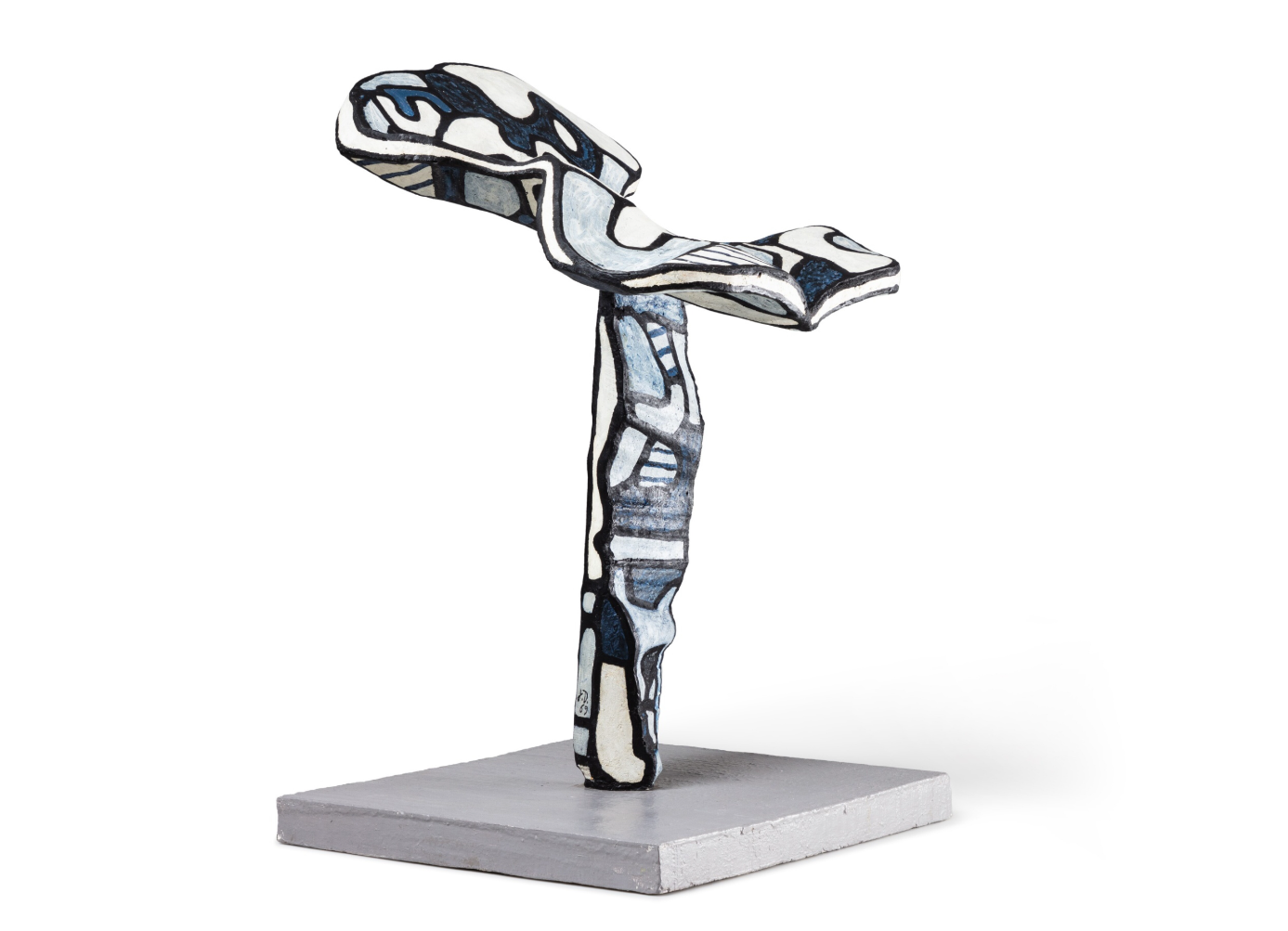
With Arbre bleu à l’éploiement, the artist pushes the boundaries of traditional sculpture by introducing striking pictorial elements into a monumental form. His vegetal forms, reminiscent of his historical achievements such as the Groupe de quatre arbres commissioned the same year by David Rockfeller and installed in New York on the Chase Manhattan Plaza in Wall Street, unfold with striking dynamism. The black contours and white surfaces, characteristic of his style, imbue the work with palpable visual energy, all in a remarkable range of blues. Through his bold lines and expressive planes, Dubuffet manages to capture the very essence of the tree-like form, oscillating between the organic and the abstract.
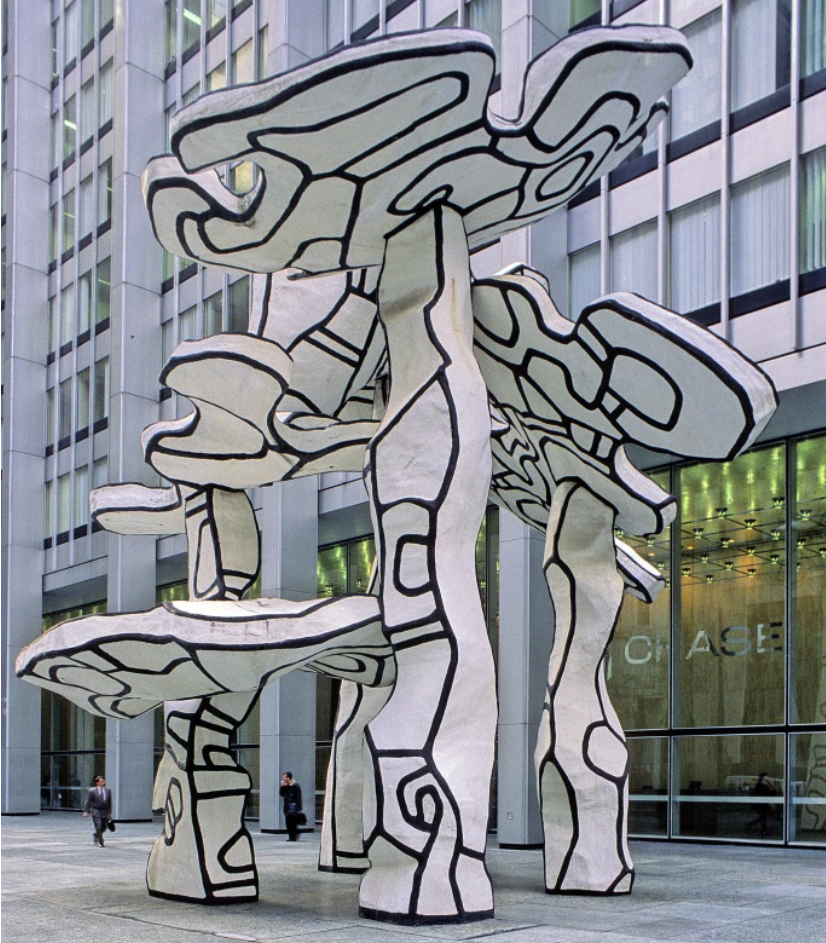
THE GROUP OF FOUR TREES, SCULPTURE OF 1972 BY JEAN DUBUFFET, ON THE CHASE MANHATTAN PLAZA, NEW YORKÆ, UNITED STATES. PHOTOGRAPH 10/04/03. © COLLECTION ARTEDIA / BRIDGEMAN IMAGES
Dubuffet’s artistic legacy, infused with influences from Mondrian and Klee, manifests in his manner of deconstructing and reinterpreting the visual landscape. By exploring the possibilities of form and line, Dubuffet challenges Western aesthetic conventions, thus asserting his commitment to authentic and provocative artistic expression. With Arbre bleu à l’éploiement, Dubuffet renews his own visual language, inviting the viewer to reassess their relationship to art and their environment.
Buste aux envols, 1972
Phillips London: 7 March 2024
Estimated: GBP 400,000 – 600,000
GBP 444,500 / USD 563,626
Jean Dubuffet – 20th Century & Contemp… Lot 25 March 2024 | Phillips
JEAN DUBUFFET
Buste aux envols, 1972
Polyurethane paint on epoxy resin
111.8 x 73.7 x 48.3 cm (44x29x19 inches)
Signed with the artist’s initials and dated ‘J.D. 72’ lower right edge
Executed on 13 May 1972
Created in 1972 and evolving from the artist’s highly celebrated L’Hourloupe cycle, Buste aux envols is one of the Statuaire du vêtement costumes produced by the artist as part of his animated painting or ‘spectacle’ Coucou Bazar, bringing the wildly imaginative and immersive world of Jean Dubuffet’s graphic universe into striking, three-dimensional reality. Executed in the same year as Dubuffet’s monumental public sculpture Group of Four Trees, installed in Manhattan’s financial district and commissioned by American banker and philanthropist David Rockefeller, and the year before his premiere of Coucou Bazar at the Solomon R. Guggenheim Museum, the present work exemplifies the artist’s desire to extend his ‘unleashed graphisms’ beyond the two-dimensional picture plane and into public space.
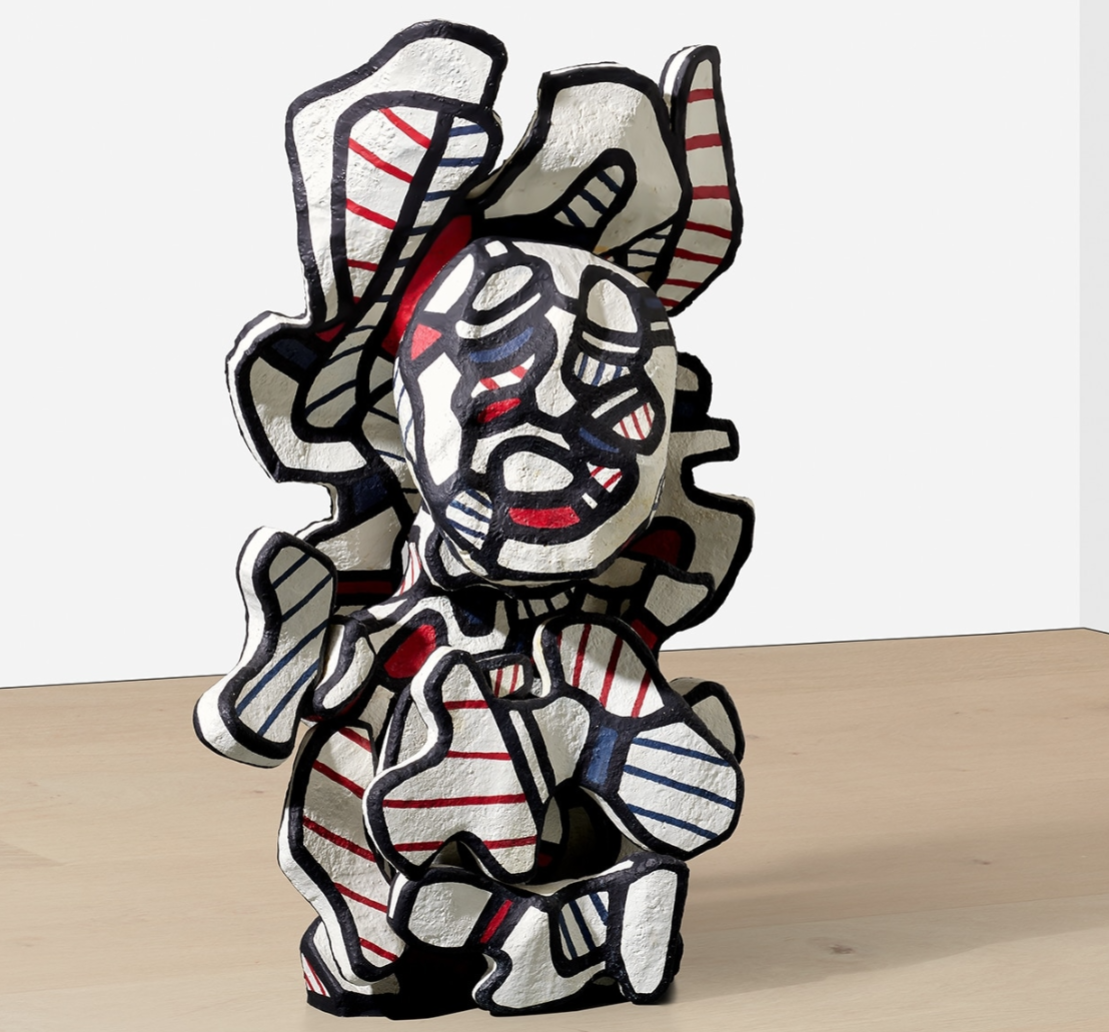
Characterized by a frenetic, wandering lines set against a crisp white ground and animated by bold sections of primary color, Dubuffet first embarked on the L’Hourloupe cycle in 1962 in what would prove to be his longest-running body of work. Recalling Surrealist experiments in automatic drawing, the distinctive visual qualities of the series arose by chance, their origins found in the absent-minded doodles, Dubuffet found himself making in a four-colour ballpoint pen while on the telephone. Starting off as drawings, these ‘fluid shapes and figures, which he embellished with blue and red stripes and then cut out and placed against a black backdrop […] became the gateway for an all-consuming series – featuring paintings, sculptures, architectural environments and performances – that would occupy him for more than twelve years, making it his longest continuous period of work
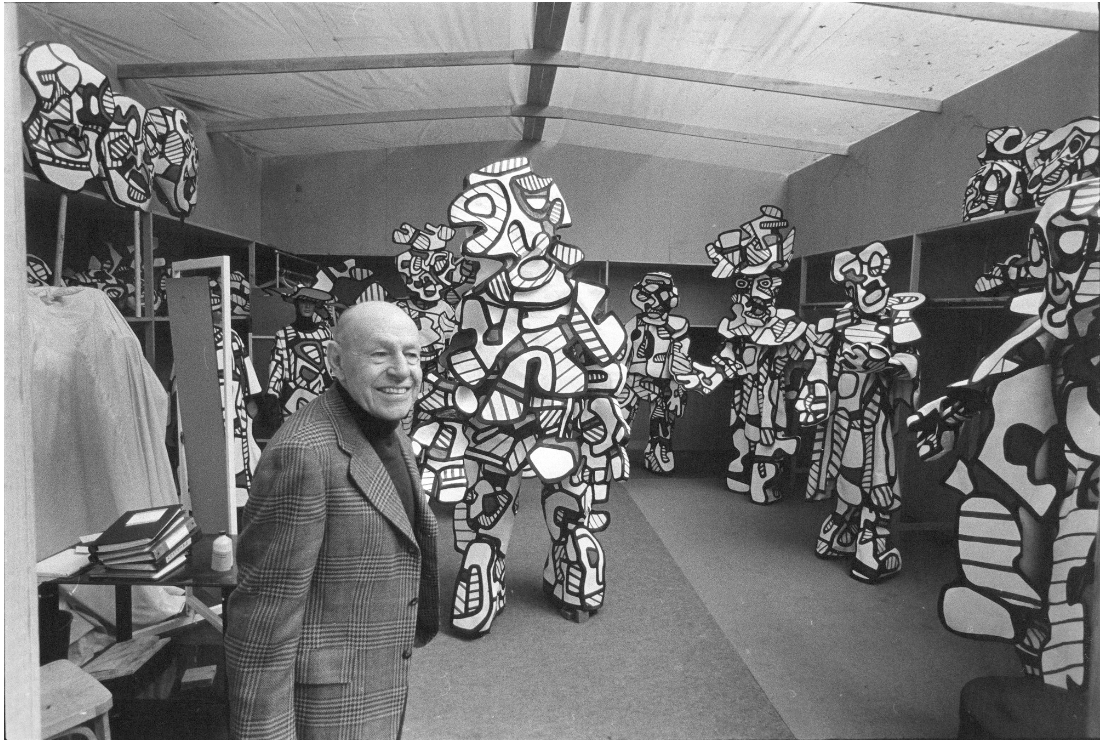
Jean Dubuffet in front of costumes from Coucou Bazar, Périgny-sur-Yerres, France, 1977. Image/Artwork: © ADAGP, Paris and DACS, London 2024
Rejecting the restraints of representational painting, the interlocking forms move well beyond the limits of their own compositions to connect with one another in an expansive, all-encompassing Gesamtkunstwerk. As the artist explained, ‘The works connected with the Hourloupe cycle are linked closely to one another in my mind: each of them is an element intended for insertion into a whole. That whole aims to be the depiction of a world unlike ours, a world parallel to ours, if you like; and this world bears the name l’Hourloupe.” The desire to move beyond modes of expression proscribed by Western art historical canons had long formed a major focus of Dubuffet’s practice and his pioneering of Art Brut – work by self-taught or otherwise socially marginalized artists whose seemingly crude renderings and restless experimentation more genuinely captured the raw texture of real life. In his war on official ‘high culture’ Dubuffet challenged the received notion that art could only be made within the limitations of the academy, aligning with the anti-bourgeois aims and intentions of the international Dada movement and their rejection of so-called ‘civilised values’ in the wake of the horrors of the First World War. Tellingly, while Dadaists produced a wide variety of work across a range of mediums, the roots of the movement were in performance, concentrated in Zurich’s Cabaret Voltaire under the guidance of Hugo Ball and Emmy Hennings following its founding in 1916. Iconoclastic, irreverent and virulently anti-war, anti-bourgeois, and anti-nationalistic, performances typically involved cacophonous, sensorial sound poems delivered by artists dressed in costumes constructed of cardboard and other assemblage elements that combined a 19th century tradition of tableaux vivants with non-western performative modes. Rejecting the rational, these soirées both reflected the chaos of the era and radically opened up new expressive modes of artmaking, embracing the immediacy and affect of performance to challenge and destabilize established artistic and social codes.
Ji la grosse tête, 1971
Sotheby’s New-York: 16 November 2023
Estimated: USD 700,000 – 1,000,000
USD 762,000
Ji la grosse tête | Contemporary Day Auction | 2023 | Sotheby’s (sothebys.com)
JEAN DUBUFFET (1901 – 1985)
Ji la grosse tête, 1971
Acrylic on Klegecell
Overall: 185.1 x 81.9 x 3.2 cm (72 7/8 x 32 1/4 x 1 1/4 inches)
Signed with the artist’s initials and dated 71 (lower right); titled and inscribed 16 (on the reverse)
An enchanting fusion of form and fantasy, Ji la Grosse Tête is a remarkable example of the exhilarating vibrancy, vitality, and unbridled creativity that defines the very best of Jean Dubuffet’s celebrated oeuvre. Executed in 1971, at the height of Dubuffet’s most significant and enduring L’Hourloupe cycle of works, Ji la Grosse Tête abandons the constraints of representational painting. Instead, amorphous colors and shapes meticulously intertwine to form a perpetual maze. The L’Hourloupe series exclusively occupied Dubuffet’s artistic output from 1962 to 1974, amounting to his largest cycle of works ever produced. Inspired by absent-minded telephone doodles in ballpoint pen, the compulsive geometric patterns and compositional dynamism of L’Hourloupe represented a brilliant formal shift in the artist’s pictorial language. In Dubuffet’s words: “This cycle of work was characterized by a much more seriously arbitrary and irrational mood than anything I had done before. This was a plunge into fantasy, into a phantom parallel universe. My renewed interest in outsider art was no doubt not unconnected with this sudden new development” (Jean Dubuffet quoted in: Exh. Cat., Salzburg, Museum de Moderne (and traveling), Jean Dubuffet: Trace of an Adventure, 2003, p. 174). In the present work, Dubuffet introduced a sculptural component to the L’Hourloupe series, reimagining his curious doodles in the three-dimensional realm; “They do not belong to the realm of sculpture,” the artist declared. “But, rather, to that of painting, … which, in this instance, has been, … endowed with a body, that is, corporealized, objectivated painting.” (Jean Dubuffet quoted in: Mildred Glimcher, “Jean Dubuffet: Towards an Alternative Reality”, Letter to Arnold Glimcher, 1969, included in this volume, New York, Pace Publications, 1987, p. 16).
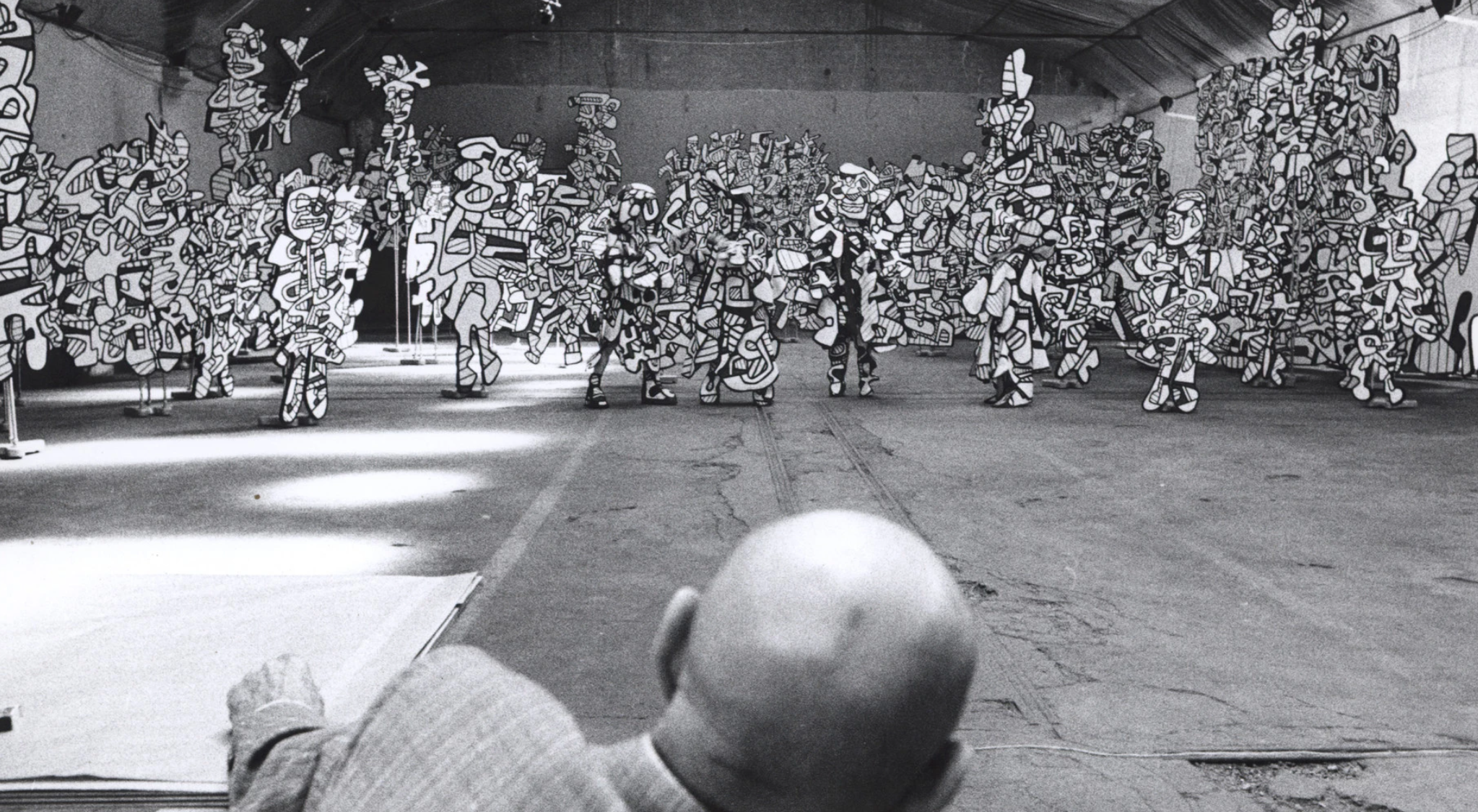
It was in 1971 that Jean Dubuffet conceptualized and began rendering such figures. Affectionately designated “animated paintings,” these sculpted constructions were designed for Dubuffet’s Coucou Bazar–a modern, majestic interpretation of the tableaux vivants from the 19th century. Pulsating with mesmeric energy, Ji la Grosse Tête playfully evokes the spirited Coucou Bazar performance for which it was created. Emerging from L’Hourloupe cycle, the seminal theatrical spectacle debuted in the summer of 1973 during Dubuffet’s retrospective at the Solomon R. Guggenheim Museum in New York, and subsequently toured to venues in Paris in 1974 and Turin in 1978. The present work was crafted in Dubuffet’s Vincennes studio as one of 178 total Practicables: the three-dimensional props that would be animated by concealed cast members to accompany actors adorned in costumes. While lending itself to the artist’s famed event, Ji la Grosse Tête–constructed from acrylic on klégécell panel sculpture–stands resolutely firm in its distinct, independent stature. Palpably materializing Dubuffet’s subconscious imagination, Ji la Grosse Tête became a living work that not only blurred the boundaries between painting, sculpture, performance, but also the perceptive boundaries between art and life; as the artist lightheartedly mused, “one wonders if it is for theater lovers or for painting lovers!”. In truth, Coucou Bazar engaged both forms, existing as a liberation from any confined and preconceived principles of artmaking. Ambiguous and uncategorizable, the installation event was unprecedented in both its elaborate, fantastical scale and its artistic ingenuity. Creating the sensation of complete visual and physical absorption within its painted surface, the present work remains a personified celebration of the absurdist world of Coucou Bazar.
By radically reducing his palette to saturated zones of red and blue, contoured by sinuous black lines against a luminous white ground, Ji la Grosse Tête embodies a masterful maelstrom of kaleidoscopic line and form. Yet, while Dubuffet’s sculptural forms are rendered with exacting, almost mechanical precision, the overall impact is one of swirling, frenetic chaos. Anthropomorphic in its composition, the present construction furthers the artist’s examination of the perceived world. A corporal form emerges through the restricted use of color that, paired with the work’s title, produces the semblance of an almost-identifiable character. The result is, as maintained by Gaëtan Picon, “a true system, a net in which everything is caught, a grille through which everything is seen, in fact an alphabet, letters and punctuation, with which everything is said: a set of preconditions for imaginative perception, within which it is possible to see everything, and outside which it is not possible to see anything” (Gaëtan Picon in Exh. Cat., London, The Waddington Galleries, Jean Dubuffet, 1972, p. 39). Implicit in this evaluation is the notion of utter absorption and mesmerizing webs of pattern that characterizes the very essence of the enduringly important L’Hourloupe cycle and Coucou Bazar spectacle. Exemplifying the vital, jubilant and spontaneous spirit of the artist’s mature style, Ji la Grosse Tête is a triumphant testament to Dubuffet’s desire for pure, unbridled creativity.
Arbre biplan (Version 1), 1968
Christie’s New-York: 9 November 2023
Estimated: USD 1,800,000 – 2,500,000
USD 3,317,000
JEAN DUBUFFET (1901-1985), Arbre biplan (Version 1) | Christie’s (christies.com)
JEAN DUBUFFET (1901-1985)
Arbre biplan (Version 1), 1968
Epoxy paint on polyurethane
180x153x119 inches (457.2 x 388.6 x 302.3 cm)
Incised with the artist’s initials, title, number and date ‘Arbre biplan (Version 1) 1968-2020 2⁄3 J.D.’ (lower edge)
Conceived in 1968 and executed in 2020
This work is number two from an edition of three
Jean Dubuffet’s Arbre biplan (Version 1) is a towering example of the artist’s ability to render sculpture and painting in striking and revolutionary ways. By doing so, he elicited a new reaction from his audience that allowed for both a reassessment of their physical surroundings, in addition to their relationship with art at large. The present work is an imposing example of Dubuffet’s turn toward monumental sculpture that occurred during the latter part of his career. Its arboreal forms presage those of the iconic Group of Four Trees (1972) which sprout from the pavement between Nassau Street and Pine Street in Manhattan’s Financial District. Like that shady copse, Arbre biplan is also rendered in black lines and white planes, its surface strewn with bold, smooth marks that both accentuate and confuse the edges of the sculptural forms. The central trunk is a maze of even markings that meander seemingly without purpose up and down its sides. Two-thirds of the up, a horizontal plane emerges from one side like a massive shelf. The edges are defined in black and the surfaces are covered in the same wandering lines. At the top, another heart-shaped plane acts as the uppermost plane and continues the organic illusion that flits somewhere between a cartoon forest and a calcified topiary.
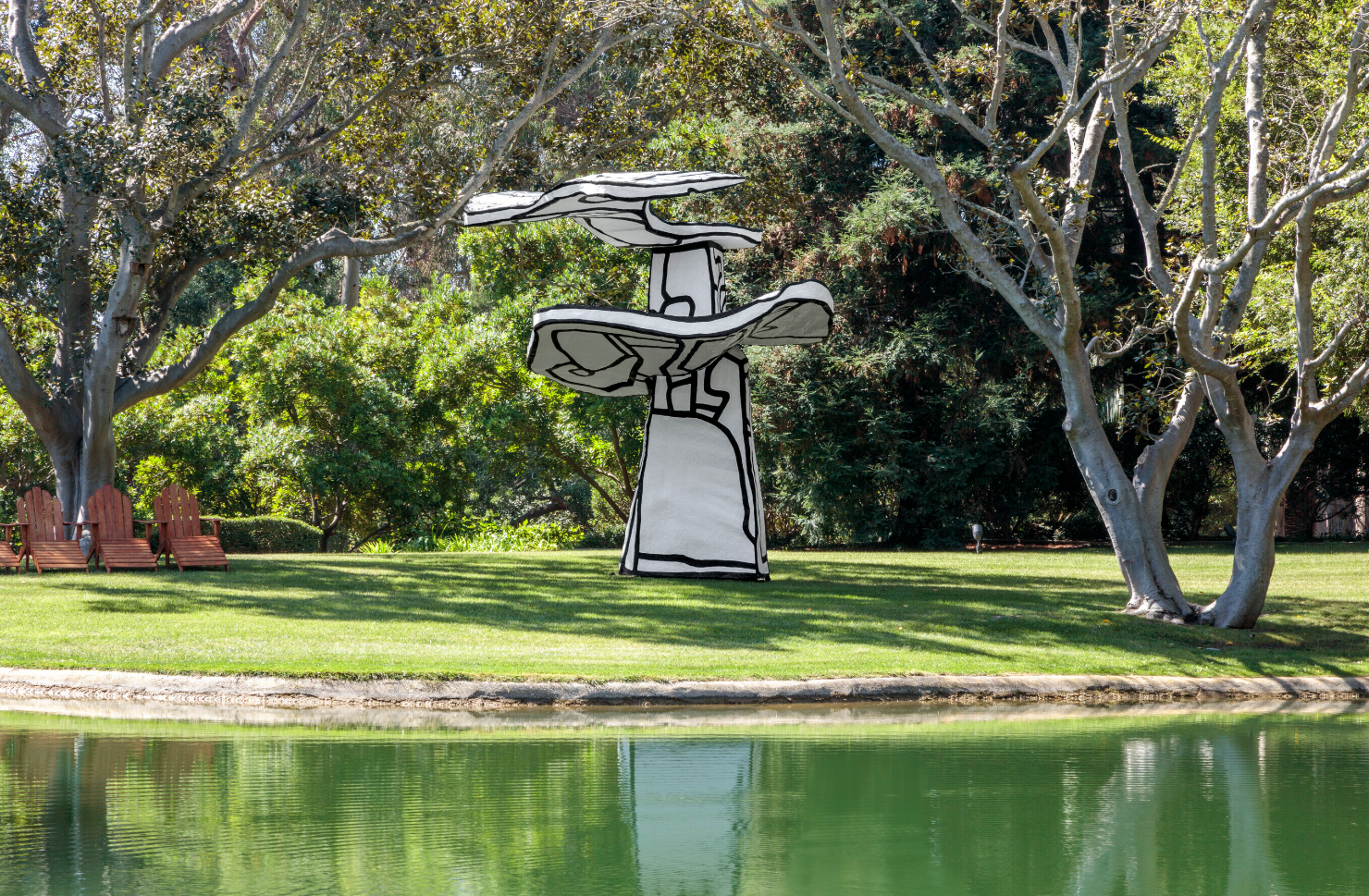
Sculptural forms like the present example emerged from Dubuffet’s rich painting practice as he began to give real life to his two-dimensional works. Early on, his use of nontraditional materials and textured surfaces was at odds with the smooth oil paints of his predecessors. As he progressed, this examination of what painting could be became a driving force for the artist. The principles of Art Brut, of which Dubuffet was the main proponent, reveled in a certain rawness and even a perceived ugliness to some Western eyes.
“For most western people, there are objects that are beautiful and others that are ugly; there are beautiful people and ugly people, beautiful places and ugly ones. But not for me. Beauty does not enter into the picture for me. I consider the western notion of beauty completely erroneous. I absolutely refuse to accept the idea that there are ugly people and ugly objects. Such an idea strikes me as stifling and revolting.”
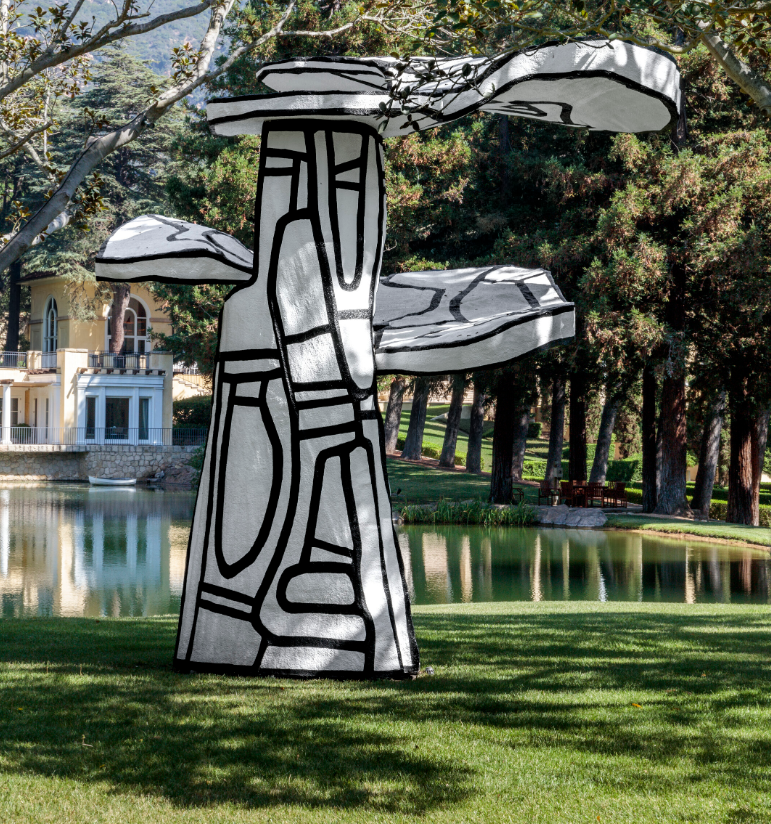
Not content to work within the limitations of categorically accepted beauty standards championed by the long tradition of Western art, Dubuffet rebelled wholeheartedly. Even his sporadically changing oeuvre reflects this need for pictorial insurgency as he continuously grew and developed as an artist so as to keep the audience on their toes. It is clear that the legacy of artists like Piet Mondrian and Paul Klee is intertwined in Dubuffet’s deconstruction of the picture plane and the way he examines the world from various angles. Turning and twisting his doodles in preparation for their commitment to canvas or sculptural substrate, the lines began to form an illusionistic depth that purposefully confused the dimensionality of the final piece. With the Hourloupe series, this codified mutation of form was fully realized. Indeed, the mixture of automatic drawing and bold, calligraphic lines was so different from anything being produced at the time that Dubuffet’s pieces may have come as a shock to the audience and critics alike. Though he was clearly aware of the innovations being made by the American Pop artists and the Abstract Expressionists in New York during the mid-century, the highly individual French artist nonetheless stuck to his personal visual vocabulary in an attempt to diverge from the mainstream.
Other Series
Donnée H5, 1984
Sotheby’s Paris: 24 April 2024
Estimated: EUR 100,000 – 150,000
EUR 165,100 / USD 176,690
Donnée H5 | Art Moderne et Contemporain Day Auction | 2024 | Sotheby’s
JEAN DUBUFFET (1901 – 1985)
Donnée H5, 1984
Acrylic on paper laid down on canvas
68×100 cm (26 5/8 x 39 3/8 inches)
Signed and dated 84 (lower right)
Jean Dubuffet’s 1984 work Donnée H5 marks a decisive turning point in the artist’s career, symbolizing his total commitment to abstraction. This fascinating work is characterized by arabesques dancing on a dense black background, where sumptuous reds, yellows, blues, and whites intermingle, creating a captivating visual symphony and revealing the depth of Dubuffet’s artistic research.
“The Non-lieux series follows on from the Mires series. In them, the abrupt application of thick, pure white on a black background is insisted upon; some of the paintings don’t even use any other color. Of course, they are experimental and very haphazard. They should be seen as daily exercises.”
Donnée H5 is part of Dubuffet’s “Non-lieux” series, the culmination of his earlier experiments with “Mires”. While the “Mires” already offered a new take on the representation of the world, the “Non-lieux” go even further, deconstructing traditional frameworks of understanding and meaning. The series is marked by a deliberate rejection of spatial and temporal points of reference, underscoring the ambiguity and uncertainty inherent in human experience. For Dubuffet, these non-places with no clear meaning challenge the conventional division of the world and open up new possibilities of interpretation.
“They proceed from the idea that our vision of the world – the division we make of it into nameable things – is erroneous”
Art thus becomes an escape, a means of transcending the limits imposed by society and discovering new perspectives on reality. In Donnée H5, Dubuffet continues his quest to represent things as we think them, rather than as we see them, exploring the multiple facets of human experience through a metamorphosed visual language. This work embodies both the radical joy of artistic expression and the depth of Dubuffet’s philosophical reflection on the nature of reality. Dubuffet stopped painting after completing this series, ending an extraordinary chapter of over two hundred paintings, including “Donnée H5,” that testify to his artistic genius and his relentless exploration of the frontiers of abstraction.
L’homme au papillon, 1954
Christie’s New-York: 10 November 2022
Visionary: The Paul G. Allen Collection
Estimated: USD 2,500,000 – 3,500,000
USD 4,860,000
JEAN DUBUFFET (1901-1985), L’homme au papillon | Christie’s (christies.com)
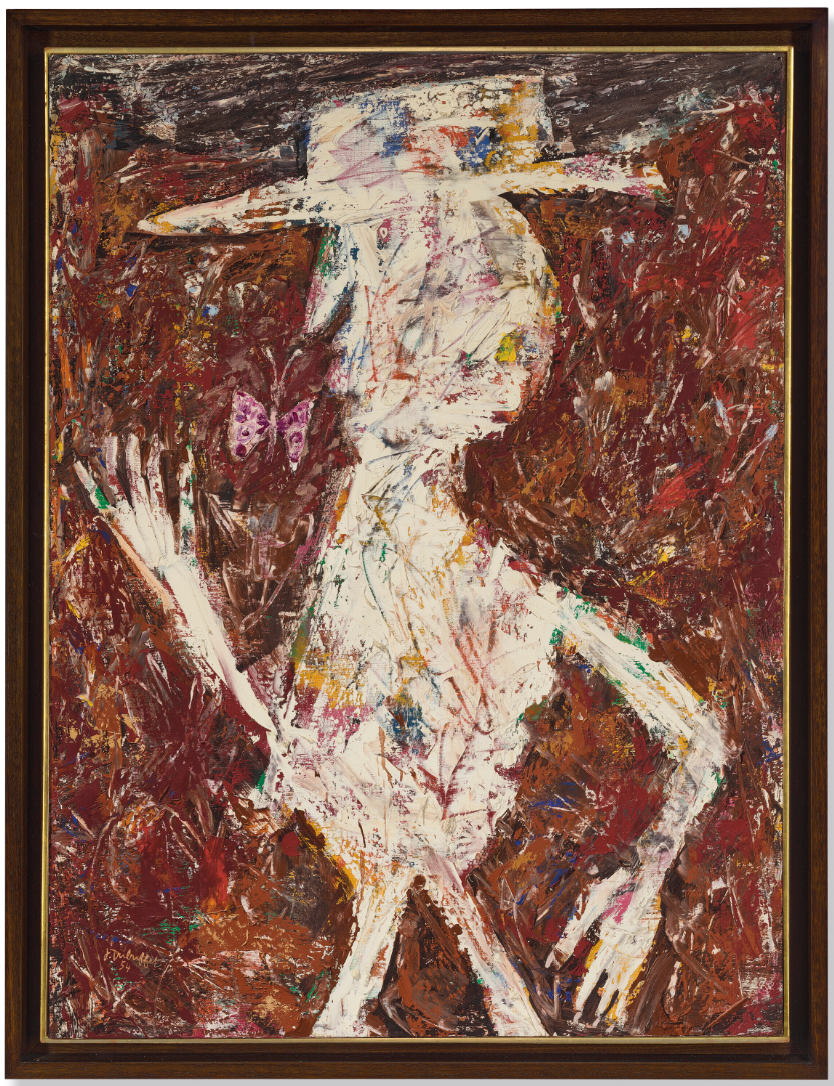
JEAN DUBUFFET (1901-1985)
L’homme au papillon, 1954
Oil on canvas
129.5 bx 97 cm (51 x 38 1/8 inches)
Signed and dated ‘J. Dubuffet 54’ (lower left)
Signed again, titled and dated again ‘L’homme au papillon J. Dubuffet octobre 54’ (on the reverse)
Agiant of twentieth-century painting, Jean Dubuffet was an artist who redefined what was considered to be mainstream art in an effort to disrupt the status quo and force his medium into a state of reckoning. L’homme au papillon is an undoubted masterwork in the context of the artist’s oeuvre, and displays his stylistically innovative talents at their peak. Embodying the furious energy of Art Brut, Dubuffet tempers his highly gestural paint application with an idyllic subject. The butterfly was a central motif in the painter’s work of the 1950s, and this example is surely one of the best representations of man and insect created during this period. Throughout his career, he insisted on being as forthright in his methods and compositions as possible. Not merely a depiction of a man and a butterfly, L’homme au papillon is a treatise on the artist’s mental state at that moment in time. Relying on a visceral, raw presentation that sprang directly from his spirited method of painting, Dubuffet embraced the less polished aspects of painting in an effort to more fully understand the art form.
Filling the canvas with multicolored strokes in textural, rich impasto, Dubuffet depicts an abstracted male figure in profile, his jaunty hat prominent upon his rounded head. One arm extends backward and is bent at the elbow while the other reaches up with outstretched fingers toward the spotted rendering of a pink and purple butterfly. Hovering close to the man’s pursed lips and long nose, it seems to transfix his gaze and freeze his motion for a split second. Like Picasso, Dubuffet intentionally eschews any realistic three-dimensional illusion in his portrayal so that the butterfly man interacts directly with his surroundings. The artist places the pale figure on a field of burnt umber. At the top, near the hat, a darker brown is used that creates a divide between ground and sky. Throughout all of these areas, Dubuffet adds in brighter reds, yellows, and the occasional blue and green with a special attention paid to creating a varied surface that highlights the palette knife and thick brushstrokes that were used in its creation. Emphasis on the very materials and the almost crude rendition of the subject were important to Dubuffet throughout his career as he purposefully pushed against established norms and traditions of beauty in art. Infusing his work with the same fervor found in the Abstract Expressionist compositions of his American colleagues, Dubuffet looked to expand on the vitality of action painting and push the avant-garde further into new territories.
Visiteur au chapeau bleu, 1955
Jubilation: A Private Collection
Sotheby’s Paris: 18 October 2024
Estimated: EUR 3,500,000 – 4,500,000
EUR 6,880,000 / USD 7,450,585
Visiteur au chapeau bleu | Modernités | 2024 | Sotheby’s
JEAN DUBUFFET (1901 – 1985)
Visiteur au chapeau bleu, 1955
Oil on canvas
116×89 cm (45 5/8 x 35 inches)
Signed and dated 55 (upper right)
Signed, titled, located Vence and dated avril 55 (on the reverse)
Executed in April 1955
Le Visiteur au Chapeau Bleu is a work of great rarity that has been part of several prestigious collections. Initially with the Galerie Rive Gauche in Paris, which represented the artist in the 1950s, the work was then acquired by E.J. Power. This prominent British collector of contemporary art began his collection in 1951 and quickly became interested in the work of Jean Dubuffet and Nicolas de Staël, both still relatively unknown in Great Britain at the time, owning eighty works by the former and nineteen by the latter. Le Visiteur au Chapeau Bleu then entered the collection of the legendary London dealer Leslie Waddington in the 1980s and remained there for over three decades, until his death in 2015, demonstrating his constant and passionate interest in Jean Dubuffet’s work. The sale of Leslie Waddington’s personal collection shed light on his judicious acquisition choices, which included major works by Dubuffet.
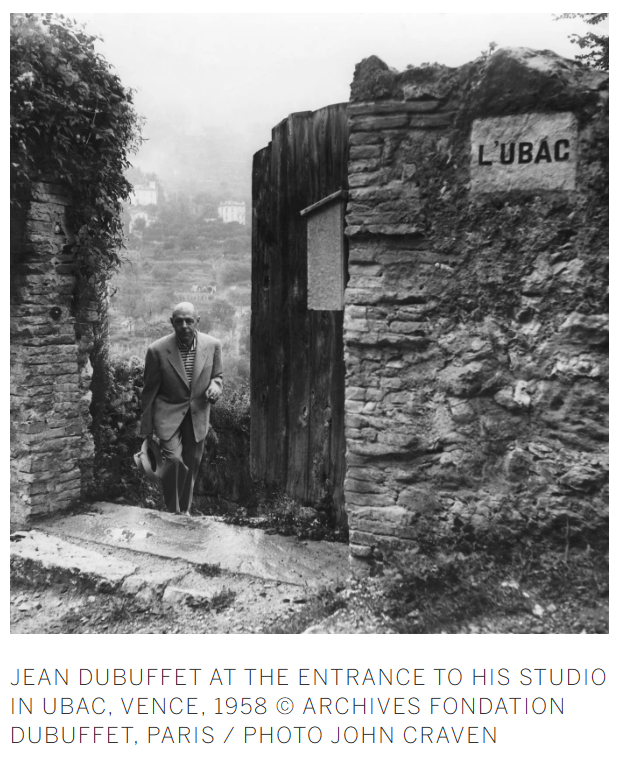
In many respects, the year 1955 stands out as a pivotal moment in Jean Dubuffet’s career. He moved to Vence with his wife Lili, renewed his artistic practice by forming imprints of objects, rethought his vision of the landscape, and inaugurated his first exhibition at the Institute of Contemporary Art in London on March 29. From January to March, the artist had to adapt to a cramped studio by focusing on a series of assemblages of imprints. His activity truly flourished starting in April, thanks to a spacious studio where he could dedicate himself to creating large-format paintings using a variety of creative tools. It is within this context of profound artistic changes that Jean Dubuffet’s Le Visiteur au Chapeau Bleu, measuring 116 x 89 cm, was executed in April 1955. It now epitomizes this period of transformation.
Le Visiteur au Chapeau Bleu is part of the series of paintings “Charrettes, jardins, personnages monolithes” begun in April 1955 with Paysage aux Jeunes Filles and ending in August 1955 with Bon Espoir (Paysage avec Personnages). As the artist explained in his memoir on the development of his works, the subjects of April 1955 “converged towards a new theme, that of soils planted with botanical elements: tufts of grass, wild star-shaped plants pressed to the ground such as plantains, thistles, or dandelions growing among small stones on terrain that seems to be poorly maintained roadsides or mountainous areas with infertile soil, as found around Vence.”
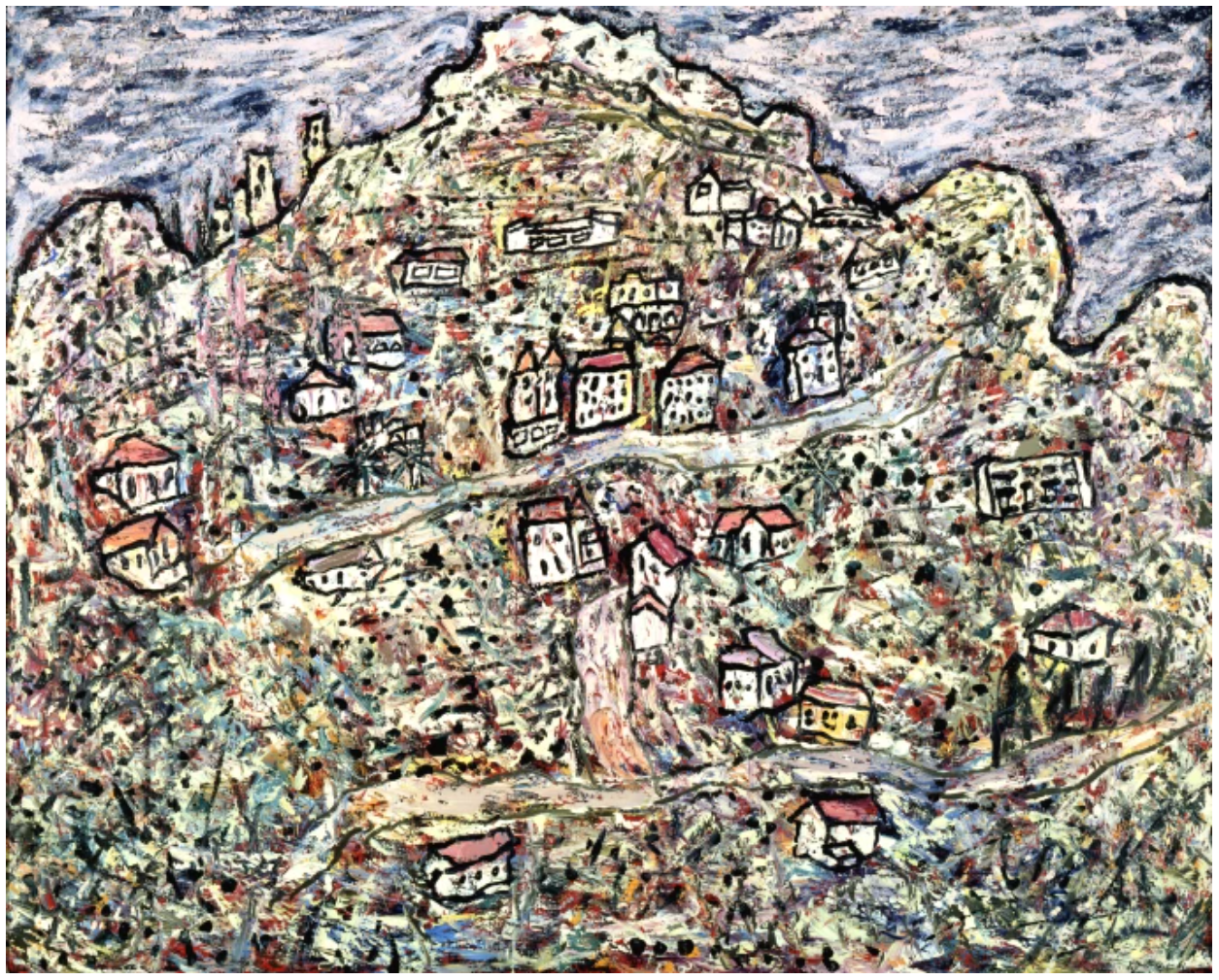
Jean Dubuffet, La vue sur l’Adret, 1961 © Fondation Dubuffet, Paris / ADAGP, Paris, 2024
The landscape of the South of France inspires Dubuffet as it previously inspired the greatest artists: Cézanne, Matisse, Dufy, Picasso, and de Staël. Unlike these artists, it is however not only the light and color of the Alpes Maritimes that interest him, but primarily its richly varied topography. At first glance, the viewer sees a seemingly simple picturesque scene: a visitor, characterized by a blue hat, converses in the foreground with another figure, while a third character is visible in the background, at the window of his whitewashed house. The only other figurative elements are the sun, two birds, and a tree. However, while the characters appear vertical and hieratic, nature seems lively and vibrant. This everyday life scene also closely relates to a key work from the “Pâtes Battues” series of August 1953: La Vie affairée, housed at Tate Modern in London. Both works share a similar color palette and common motifs: a bright sun with characters wearing hats in a rural setting. In both works, the importance of the earth is paramount: the landscape character is not merely treated as a pictorial background but is part of a non-hierarchical whole, as is also evident in the work Mon Char, Mon Jardin, executed in June 1955. The pictorial treatment of the earth is developed in a textured manner. This thick, irregular surface intrinsically extends the series of “Pâtes Battues” initiated in 1953.
“Sometimes I also happen to resort accidentally, for a painting, to a technique belonging to some earlier series that I feel like reusing. This is true not only regarding the technique but also the mood that emerges in the painting, which, as always, is very much linked to the technique used.”
In Le Visiteur au Chapeau Bleu, the pictorial surface reveals itself as alternately massive, delicate, and slashed and incised in its flesh. The characters seem to be traced directly onto the canvas, and it is this animated technique that endows the work with its vibrant essence.
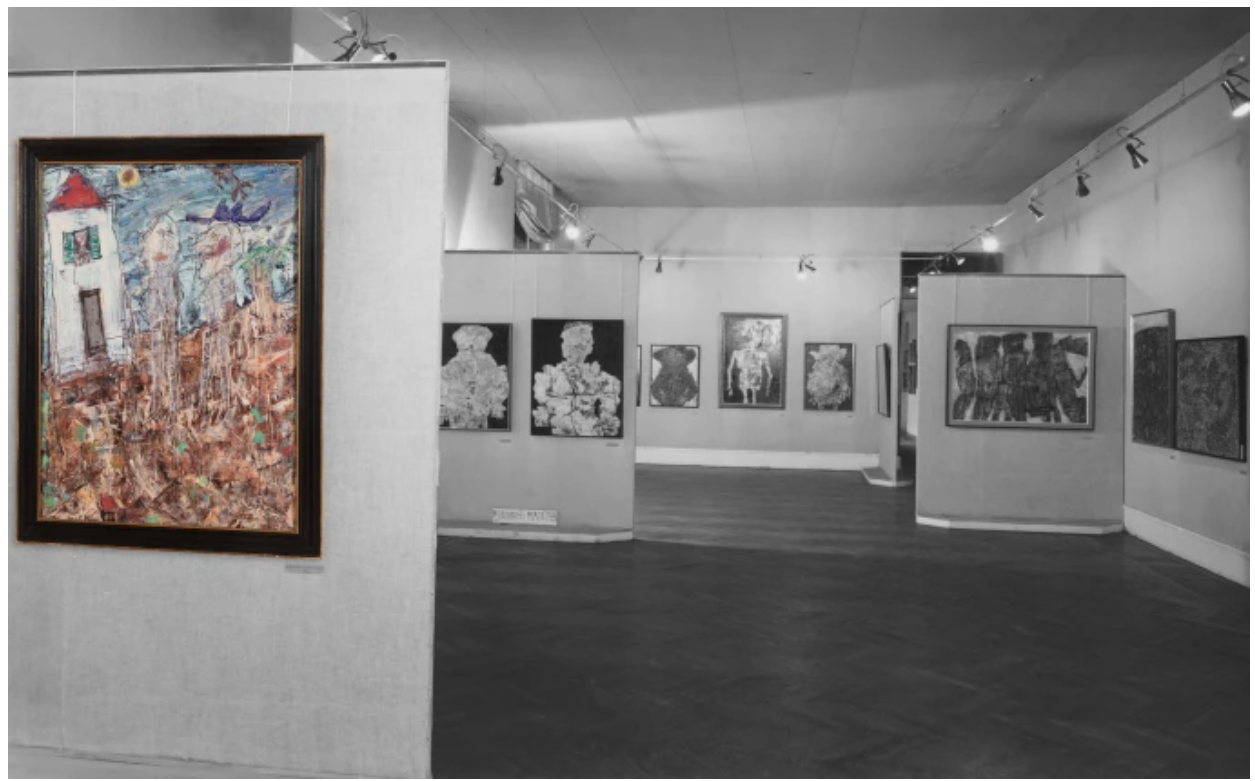
Visiteur au chapeau bleu in “Rétrospective Jean Dubuffet: 1942-1960”, Musée des Arts Décoratifs, paris, 1961 © Archives Fondation Dubuffet, Paris / DR © ADAGP, Paris, 2024
The technical richness is further accentuated by the variety of the color palette, which is executed through highlights and jagged flat areas. The horizontality of the blue sky’s flat areas contrasts sharply with the earth treated both vertically and horizontally in brown tones, enhanced by vivid green-blue patches forming tufts of grass in places.
“The color in the same spirit as the tracings are made, in a hasty and excessively careless manner, not only in the way the colors (supposed to be those of the objects) are thrown on in great haste and without concern for placing them in their true place (for the colors as for the tracings there is an ambiguity between the colors deliberately placed and those found there inadvertently).”
Whilst based in the south of France, where he stayed until 1961, Jean Dubuffet elevates his oeuvre through this work from April 1955 by reusing the generous technique of the “Pâtes Battues”. Within the series “Herbes, Charrettes et Terres Herbeuses” from spring 1955, Le Visiteur au Chapeau Bleu stands out as one of the brightest and most accomplished compositions. It has been featured in major exhibitions dedicated to Jean Dubuffet: at the Musée des Arts Décoratifs in 1960, at the Tate Gallery in London in 1966, and at the Smithsonian Institute in Washington in 1993.
Francis Ponge Jubilation, 1947
Jubilation: A Private Collection
Sotheby’s Paris: 18 October 2024
Estimated: EUR 5,000,000 – 7,000,000
EUR 6,000,000 / USD 6,497,605
Francis Ponge Jubilation | Modernités | 2024 | Sotheby’s
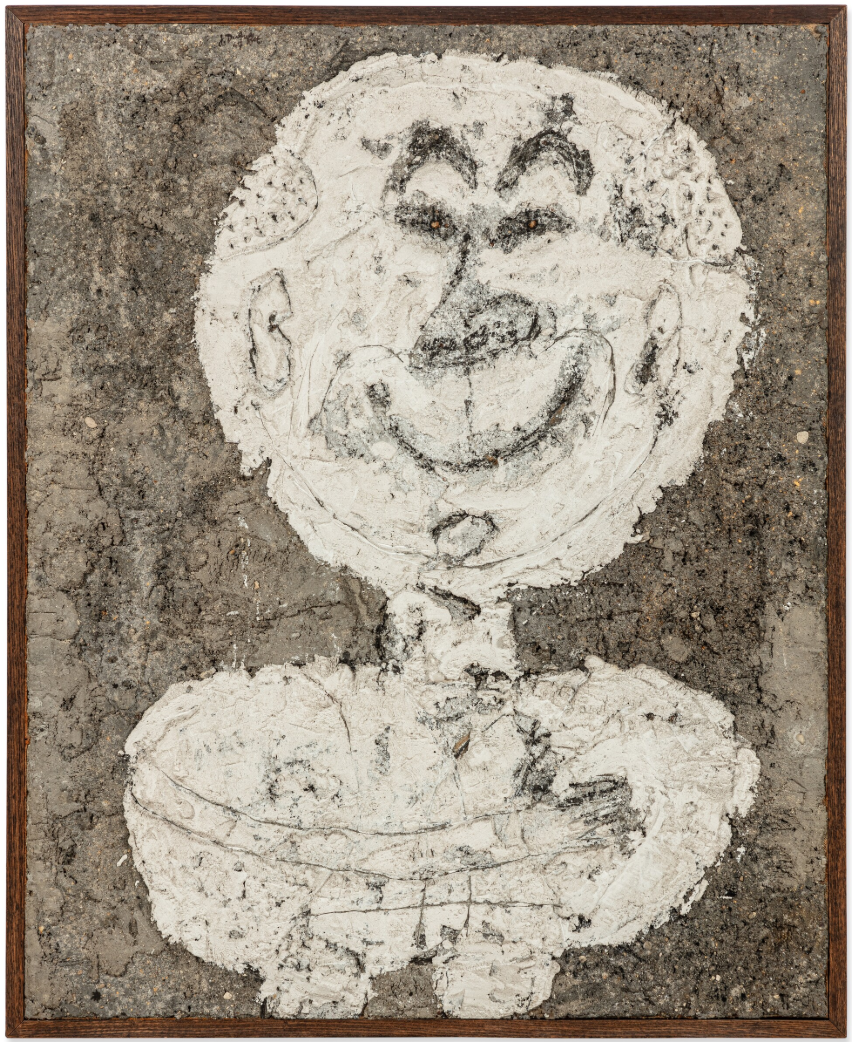
JEAN DUBUFFET (1901 – 1985)
Francis Ponge Jubilation, 1947
Whitewash and plaster on isorel
110×88 cm (43 1/4 x 34 5/8 inches)
Signed and dated 47 (upper left)
Executed in July-August 1947
Executed in July-August 1947, Francis Ponge Jubilation stands out as one of the masterpieces of Jean Dubuffet’s early career. The “Hautes Pâtes” series – executed between May 1945 and July 1946 – is the origin of the artist’s first portraits. These resolutely modern works challenge the classical representation of the portrait in Western painting thus marking a significant departure from the canon. The artist breaks away from figurative codes in a revolutionary manner. The forms are simplified, facial features are reduced to the essential, and depth is abolished. The usual oil paint is replaced by everyday materials such as gravel, cement, earth, lime, and plaster. Through the uniqueness of both the materials used and the representation itself, this painting is infused with an undeniable sense of presence.
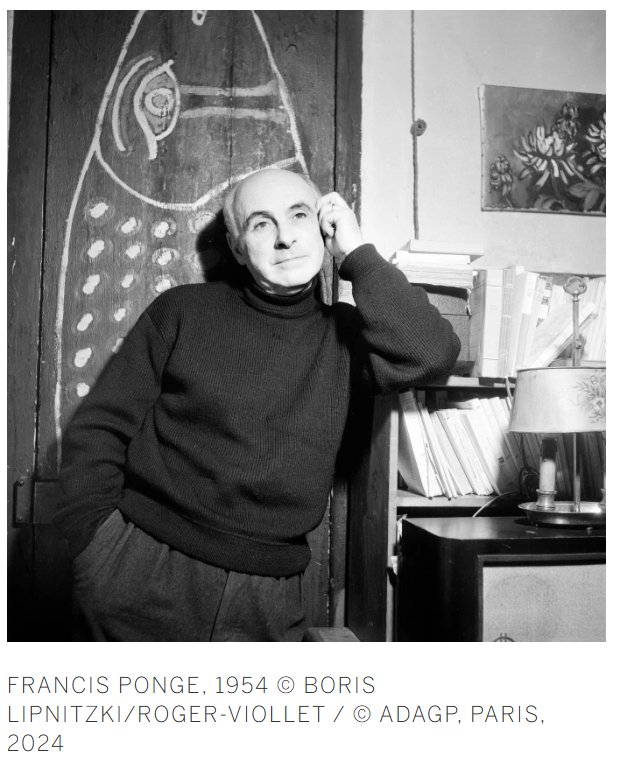
Dubuffet’s use of unconventional materials began in May 1945 with Archétype, the first painting in the “Hautes Pâtes” series, and Volonté de Puissance, housed at the Guggenheim Museum in New York, both of which are over a meter in size. To achieve new textures and effects, the so-called “mural” materials consist of building debris. On his base layer, composed of tar, asphalt, or even mud, often enriched with cement, plaster, or varnish, he adds sand, coal dust, pebbles, string, pieces of glass, or straw. This unique choice is accompanied by an equally innovative approach: using a trowel, the painter scratches, digs, and slashes his figures into the material.
Francis Ponge’s friendly disposition is revealed in this portrait. One of Jean Dubuffet’s most loyal friends, the poet was alone with André Breton to support Dubuffet during his first exhibition in 1944 at the René Drouin gallery. Each of his portrayal by the artist are marked by a zest for life, as also evidenced in “Personnage Hilare (Portrait of Francis Ponge)” – from the same year – preserved at the Stedelijk Museum in Amsterdam. Like the painter, Francis Ponge made the everyday poetic in “Le parti pris des choses,” published in 1942, by using objects which are not typically found in poetry: bread, a candle, a crate.
To paint the poet, Dubuffet used lime – both luminous and powdery, it highlights the portrait against a background of elegant cement color. The layering of materials creates vitality in this portrait. The smile and the arched eyebrows are manifestations of the lively and expansive joy that Jean Dubuffet aims to express in this work. This representation reveals the essence of the model, rather than a static and realistic depiction. As Antonin Artaud put it, the model appears “Never real and always true.” Jean Dubuffet’s portraits thus become part of a broader truth. Much like in the representations of the human figure by Giacometti and Bacon, the face reveals itself without compromise, exposing a human model that tends towards universality.
“The portraits appear as doodles, certainly full of life; but in the end, they are also prototypes of the human race, essential prototypes, transcribed with acute mediumistic sense by a painter who believes primarily in the magic of the image, and knows that man measures himself against the yardstick of his own sign.” [2] The idea of a depersonalized model type allows Jean Dubuffet to trigger […] I do not know what mechanisms of imagination or provocation greatly enhancing the power of the effigy.”
It was at Florence Gould’s initiative, a woman of letters, that Jean Dubuffet painted the portrait of Paul Léautaud before embarking on a series of portraits titled “Les gens sont bien plus beaux qu’ils croient – Vive leur vraie figure – Portraits à ressemblance extraite, à ressemblance cuite et confite dans la mémoire, à ressemblance éclatée dans la mémoire de M. Jean Dubuffet” between August 1946 and August 1947 for the exhibition at the René Drouin gallery from October 7 to 31, 1947. Henri Michaux, Georges Limbour, Jean Fautrier, Michel Tapié, and Francis Ponge were among those portrayed. This departure from traditional figuration laid bare the depicted character: “It is when things are put in extreme peril that their goodness begins to sing. I like to put things in peril. It is when one is about to lose something that it illuminates.” Unlike the artist, the press of the time did not look on these portraits favorably. Following the 1947 exhibition, Francis Ponge Jubilation was exhibited at the Jean Dubuffet retrospective at the Solomon R. Guggenheim Museum of Art in 1973, at the retrospective in 1985 at the Fondation Maeght in Saint-Paul-de-Vence, and at the Musée d’Art Moderne de Paris – Centre Pompidou in 2001. Owing to the alchemy between background and form that Francis Ponge Jubilation stands out as one of the flagship paintings in the series ‘Les gens sont bien plus beaux qu’ils croient – Portraits’
Gambade à la rose, 1950
Sotheby’s New-York: 8 November 2023
The Emily Fisher Landau Collection: An Era Defined
Estimated: USD 3,000,000 – 4,000,000
USD 3,000,000
JEAN DUBUFFET (1901 – 1985)
Gambade à la rose, 1950
Oil on canvas
129.5 x 161.9 cm (51 x 63 3/4 inches)
Signed and dated 50 (lower right)
An early and quintessential manifestation of Jean Dubuffet’s inimitable aesthetic revolution, Gambade à la rose demonstrates the raw and textured tactility that characterizes his most important work. Executed on an imposing scale, the present work is one of a group of ten canvases described in the artist’s catalogue raisonné as “mind-blowing and visionary” (Max Loreau, Catalogue des travaux de Jean Dubuffet: Corps de dames, Fascicule VI, Paris, 1965). Painted in 1950, the same period during which he developed his now iconic Corps de Dames series, these works are celebrated for their revolutionary approach to the female form. Indeed, the titular rose, with its blooming head and prominent thorns, acts as a visual metaphor for the challenges of idealized standards of feminine beauty. Like ancient hieroglyphs carved into coarse stone, Dubuffet’s crudely etched monochrome figures seem to float in an undefined landscape, their anti-aesthetic forms swelling in protest against traditional standards of artistry and convention. Gambade à la rose further manifests the narrative of artistic development in the Post-War era, having been held in the esteemed collection of artist Alfonso Ossorio, a close friend of Dubuffet. Acquired by Emily Fisher Landau in 1981, the present work has remained in her distinguished collection for over forty years, attesting to its lasting importance.
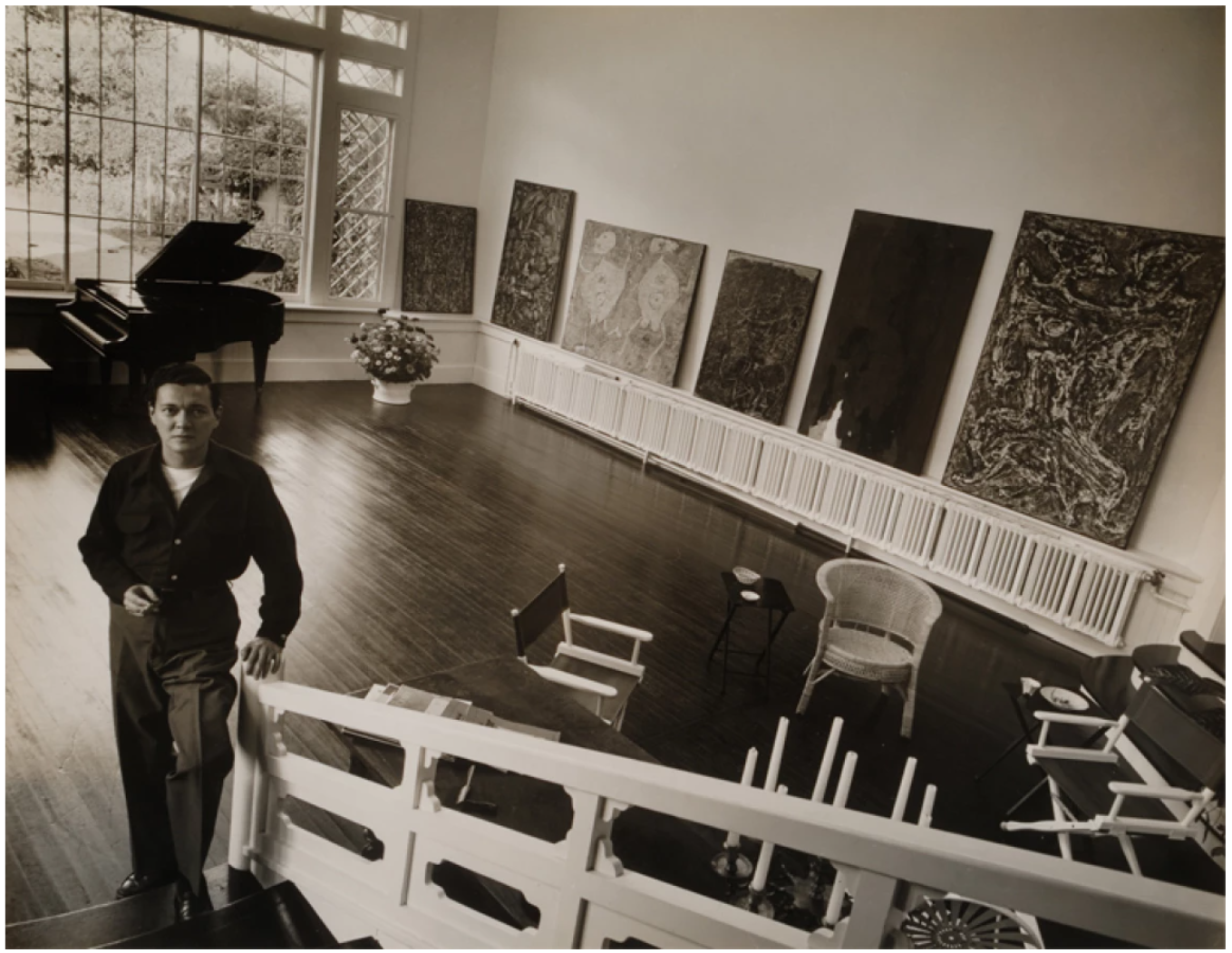
ALFONSO OSSORIO IN HIS HOME IN EAST HAMPTON, WITH THE PRESENT WORK FEATURED BEHIND HIM, ALONGSIDE OTHER WORKS BY JEAN DUBUFFET AND CLYFFORD STILL, C. 1952. PHOTO ©1991 HANS NAMUTH ESTATE, COURTESY CENTER FOR CREATIVE PHOTOGRAPHY. ART © 2023 ARTISTS RIGHTS SOCIETY (ARS), NEW YORK / ADAGP, PARIS; 2023 CLYFFORD STILL / ARTISTS RIGHTS SOCIETY (ARS), NEW YORK
Dubuffet pursued the idea that art should be a direct reflection of emotion and instincts, without being sullied by the distorting effects of what he called art culturel—academic training and historical conventions. As he explained, “Nothing seems to me more false, more stupid, than the way students in an art class are placed in front of a completely nude woman standing motionless on a table, and stare at her for hours. The normal conditions under which a man has seen unclothed bodies are thus disregarded in a perfectly insane fashion, and insane too is the idea that under such conditions anyone could possibly reconstruct anything resembling the image of a naked woman as it exists normally in an ordinary man’s memory” (the artist cited in Exh. Cat., Washington, D.C., Hirshhorn Museum and Sculpture Garden, Jean Dubuffet 1943-1963: Paintings Sculptures Assemblages, 1993, p. 74). Influenced by Hans Brinzhorn’s book Artistry of the Mentally Ill, Dubuffet coined the term Art Brut, meaning “raw” or “outsider” art, to classify a mode of creation that functioned outside the aesthetic norm and celebrated, instead, the quotidian and the commonplace.
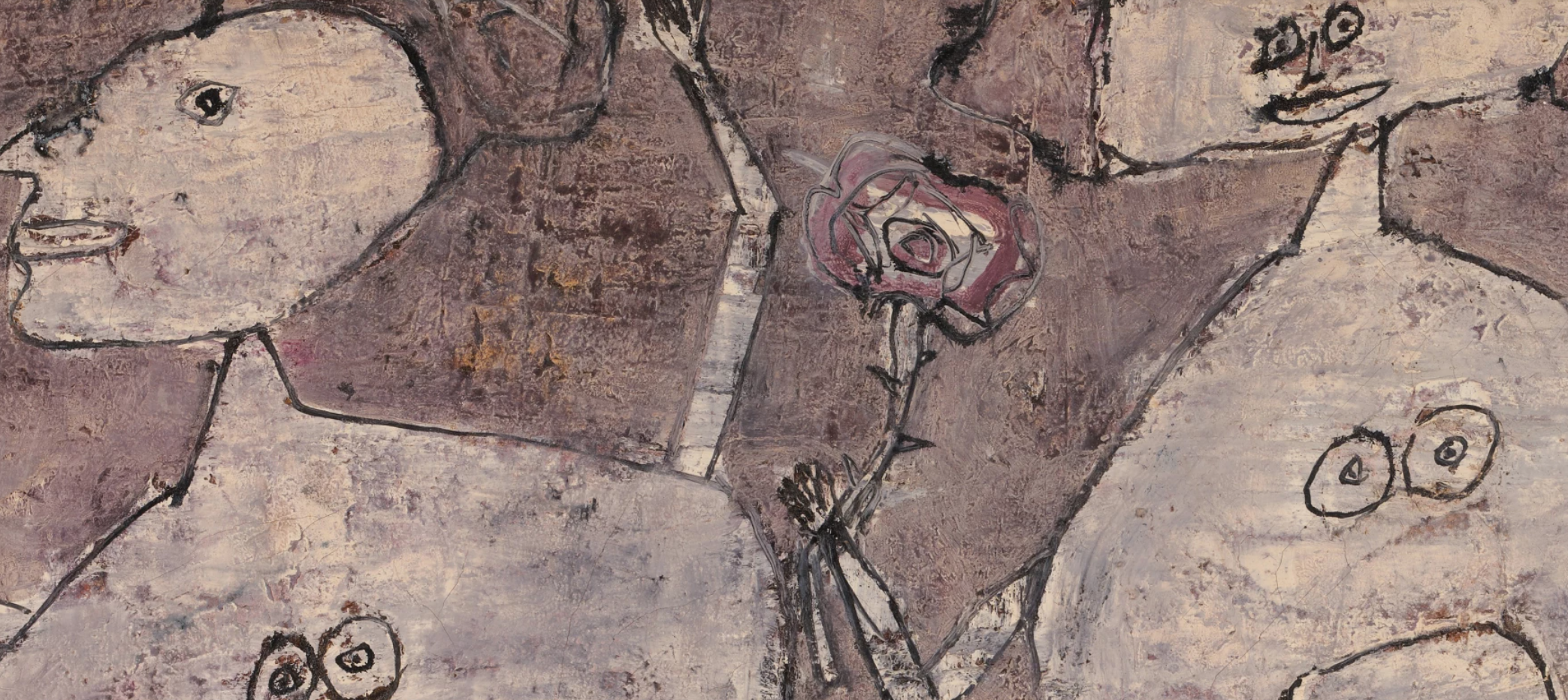
In Gambade à la rose, Dubuffet irreverently disarms the accepted traditional deception of naturalistic perspective, accentuating his figures’ two-dimensionality through a linear syntax of reductive and simplified forms. Filling the entire picture plane, their cavorting bodies command, stretch and expand to fill the space they occupy, a far cry from the elegant classicism of ancient Greece, or the idealized goddesses of nineteenth century salon painting. Dubuffet’s radically distorted women are further emphasized by his treatment of pigment: the scored, scraped, and carved surface, thickly rendered in viscous oil paint, accentuates the raw, distorted lines of the flattened figures.
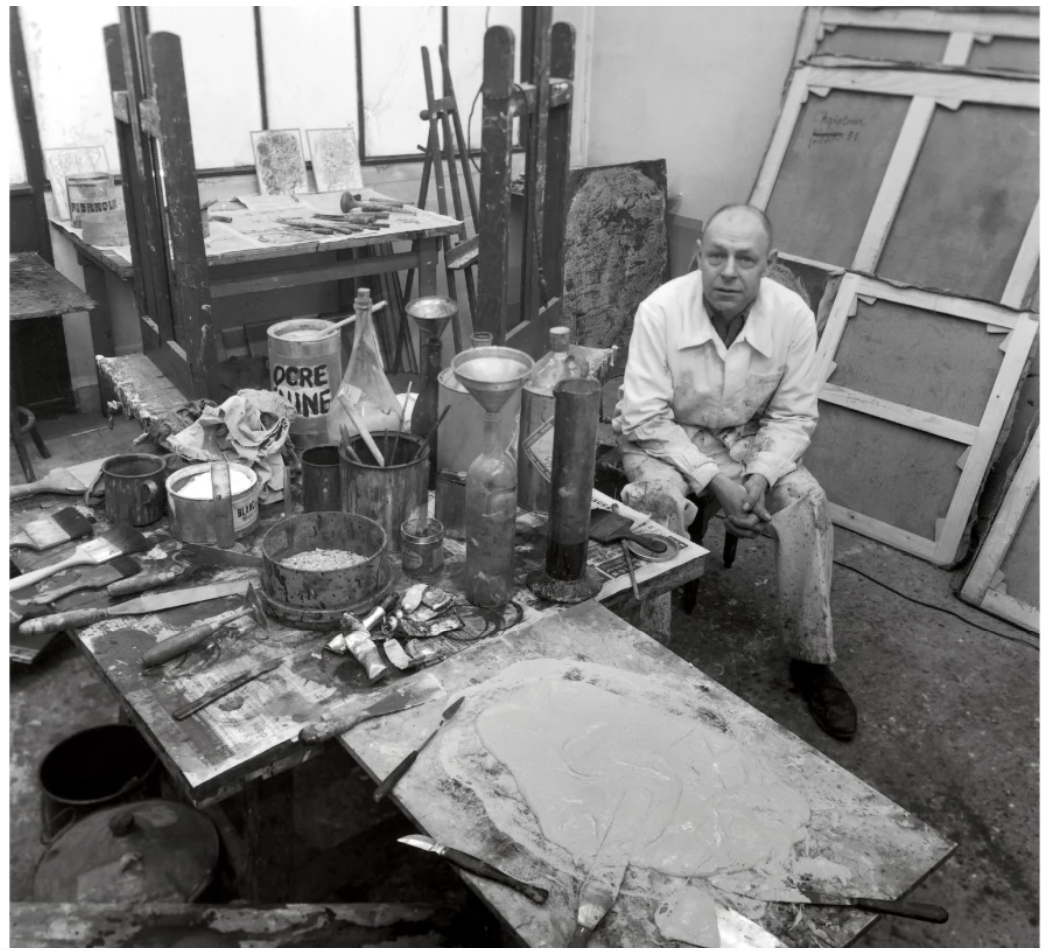
JEAN DUBUFFET IN HIS PARIS STUDIO, 1951. PHOTO © ROBERT DOISNEAU / GAMMA-RAPHO / GETTY IMAGES. ART © 2023 FONDATION DUBUFFET, PARIS / ARTISTS RIGHTS SOCIETY (ARS), NEW YORK
Alongside Pablo Picasso’s Les Demoiselles d’Avignon and Willem de Kooning’s Woman paintings, Dubuffet’s women stand as some of the most important renditions of the female figure in the twentieth century. These radically different interpretations were the artists’ response to the classical tradition which had dominated art for centuries, but Dubuffet’s paintings went much further.
Migration (L46), 1984
Sotheby’s Paris: 23 April 2024
DUBUFFET: IMPORTANT WORKS FROM THE MARY AND GEORGE BLOCH COLLECTION
Estimated: EUR 180,000 – 250,000
EUR 330,200 / USD 351,830
JEAN DUBUFFET (1901 – 1985)
Migration (L46), 1984
Acrylic on paper laid down on canvas
100×134 cm (39 3/8 x 52 3/4 inches)
Signed with the initials and dated 84 (lower left)
Executed on November 15th, 1984
With its vibrant surface, sinuous lines and bubbling, colorful textures, Migration (L46) belongs to the Non-lieux series that marked Dubuffet’s turn towards non-figurative painting in the early 1980s. Migration (L46) combines the spontaneity of drawing with a concentrated effect of color, naturally generating an intoxicating joy.
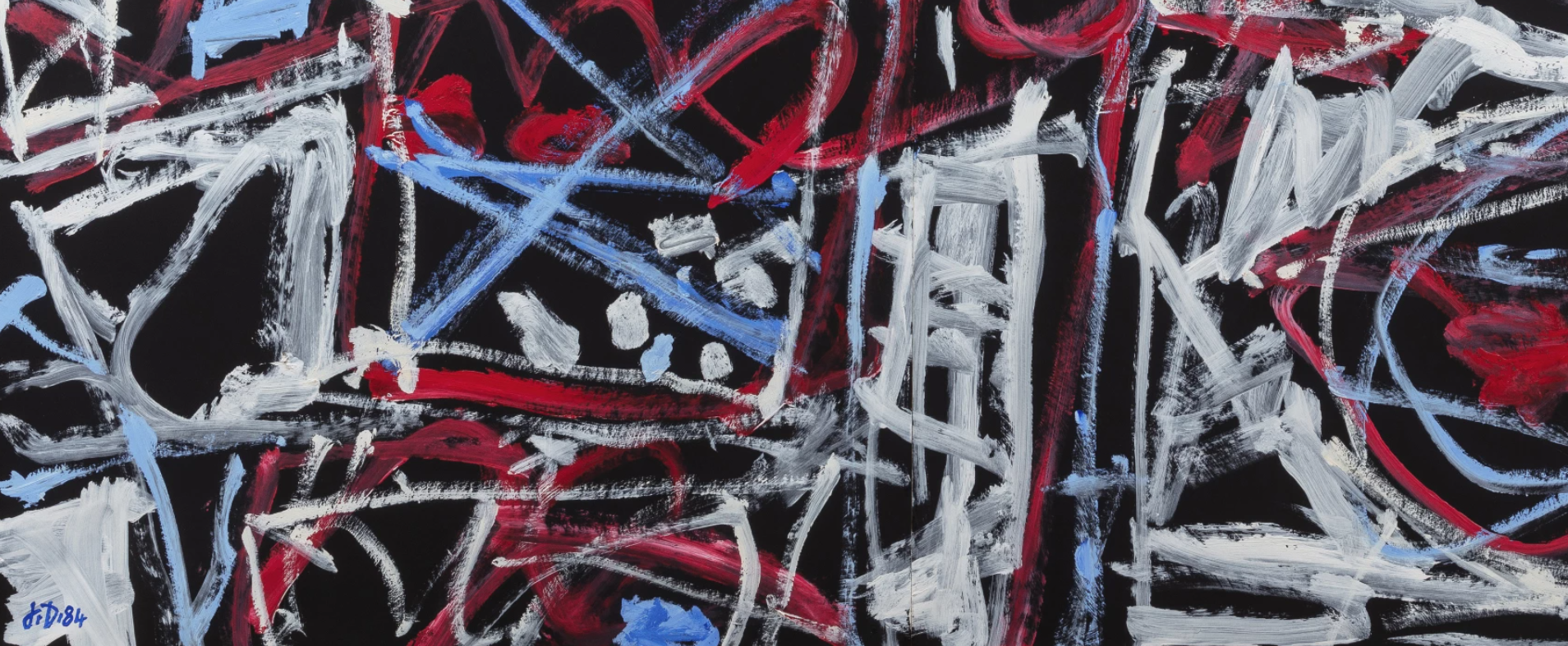
The last series of Jean Dubuffet’s prolific career, Les Non-lieux deliberately rejects any notion of time and place in favor of a raw pictorial sensation. In the twilight of his life, in Migration (L46) the artist returns with renewed force to one of his most enduring pursuits: the field of pure thought, the free imagination. Starting from an empty space, he deploys powerful white, red and yellow curves that question the relevance of our vision and understanding. Indeed, Dubuffet was the first of a group of post-war artists to reject convention and nurture the concept of Art Informel, a spontaneous art that rejects any effect of harmony or beauty in order to break free from tradition. As Migration (L46) sumptuously illustrates, Dubuffet saw no limits to the expressive potential of painting: the lines are woven together but remain completely isolated, forcing the viewer to explore and re-explore the dynamic scenario unfolding before his or her eyes.
Danse brune (Brown Dance), 1959
Christie’s London: 29 June 2023
Estimated: GBP 250,000 – 350,000
GBP 327,600 / USD 414,414
https://www.christies.com/en/lot/lot-6435966
JEAN DUBUFFET (1901-1985)
Danse brune (Brown Dance), 1959
Banana skin, papier-mâché and oil on panel, in artist’s frame
68.9 x 45.9 cm (27 1/8 x 18 1/8 inches)
Signed and dated ‘J. Dubuffet 59’ (upper right)
Titled and dated ‘Danse brune Decembre 59’ (on the reverse)
Acquired one year after its creation, and unseen in public since its inclusion in Jean Dubuffet’s major retrospective at the Tate Gallery, London in 1966, Danse brune (Brown Dance) is a magnificent and rare example of his Éléments Botaniques (Botanical Elements). Executed between August and December 1959, the series comprises a group of small-scale assemblages made up of vegetable matter, their raw, visceral surfaces transporting the viewer into an underworld of foliage. Here, set against a backdrop of papier-mâché on board, Dubuffet presents a biomorphic figure composed entirely of banana skins: the only example in the series to feature this medium. With outstretched arms and a shock of hair, the charming, primordial creature is at one with its environment, blending seamlessly into what appears to be moss or lichen behind it. A vision of organic splendor, Danse brune marks a striking new chapter in Dubuffet’s career-long exploration of Art Brut: a self-defined concept which championed a primitive, unschooled visual language, free from the trappings of Western cultural tradition.
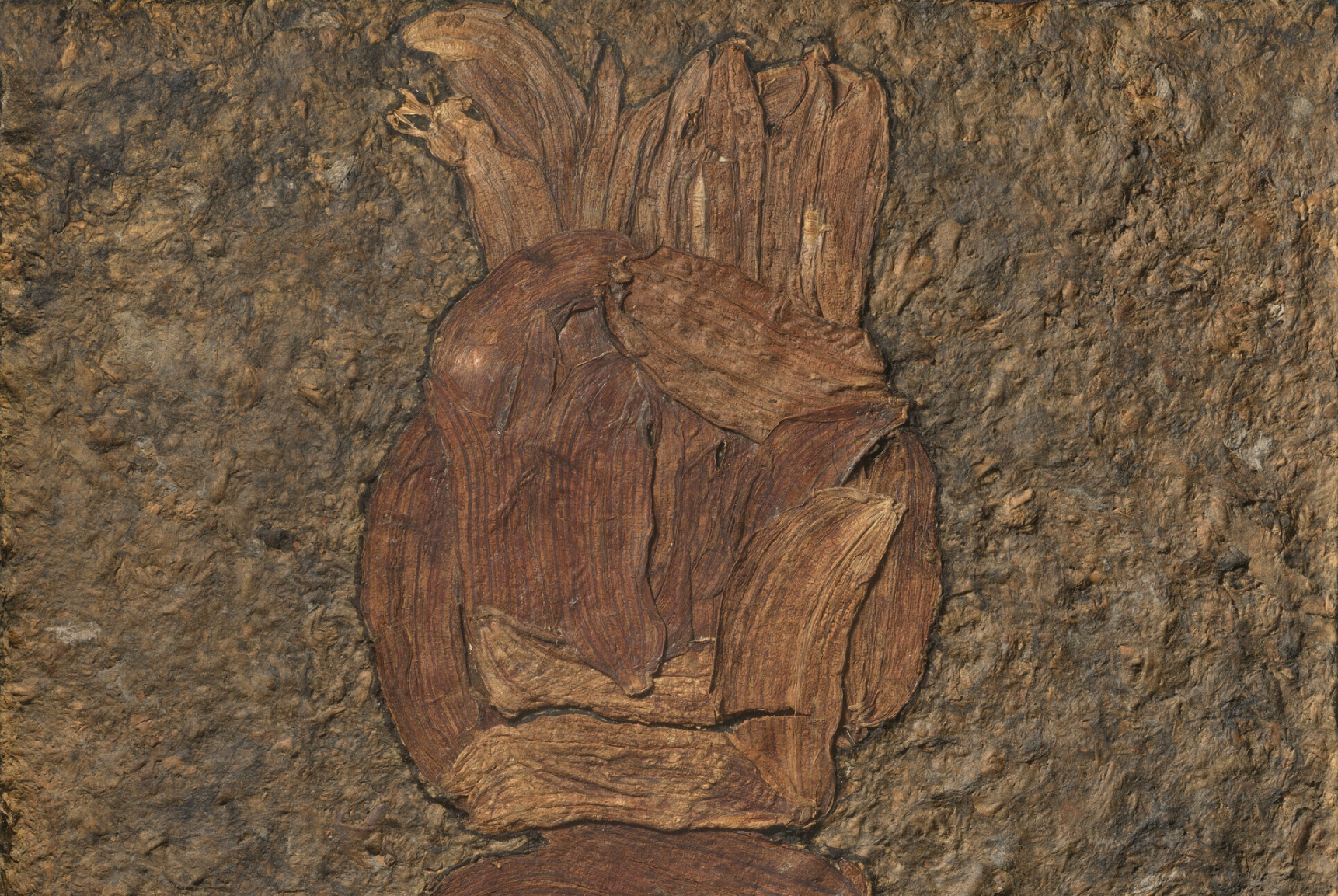
In his search for an unfettered mode of artistic expression, Dubuffet repeatedly isolated himself from the confines of mainstream society, making frequent trips to the Sahara Desert in the 1940s, before finally exiling himself in the rural idyll of Vence in 1955. During his time in the Southern French region, he developed a great enthusiasm for the botanical world, leading him to embark on an encyclopaedic study of the nature that surrounded him. Extending his butterfly-wing pictures of 1953, as well as the mimetic Texturologies series he began in 1957, Dubuffet eventually began to insert vegetal matter directly into his picture planes, employing botanic forms in their raw, unmodified state. Thus, the Éléments Botaniques were born, marking the apotheosis of his engagement with the natural world. Danse brune was acquired directly from the exhibition of Éléments Botaniques held at Arthur Tooth & Sons in 1960: one of Dubuffet’s earliest London shows. Reading like a botanist’s list, with their contents spanning dried leaves and tree bark to roots and flowers, orange peel and rhubarb stems, the Éléments Botaniques extended Dubuffet’s fascination with the relationship between the body and the landscape. Just as his early Corps de dames (Bodies of Women) had transformed the female figure into sprawling, textured topographies, the present work posits its subject as a direct product of the earth. Its jubilant, dancing form, meanwhile, anticipates the ecstatic figures of his Paris Circus paintings, begun the following year, whose writhing bodies would merge seamlessly with the rhythms of the urban landscape.
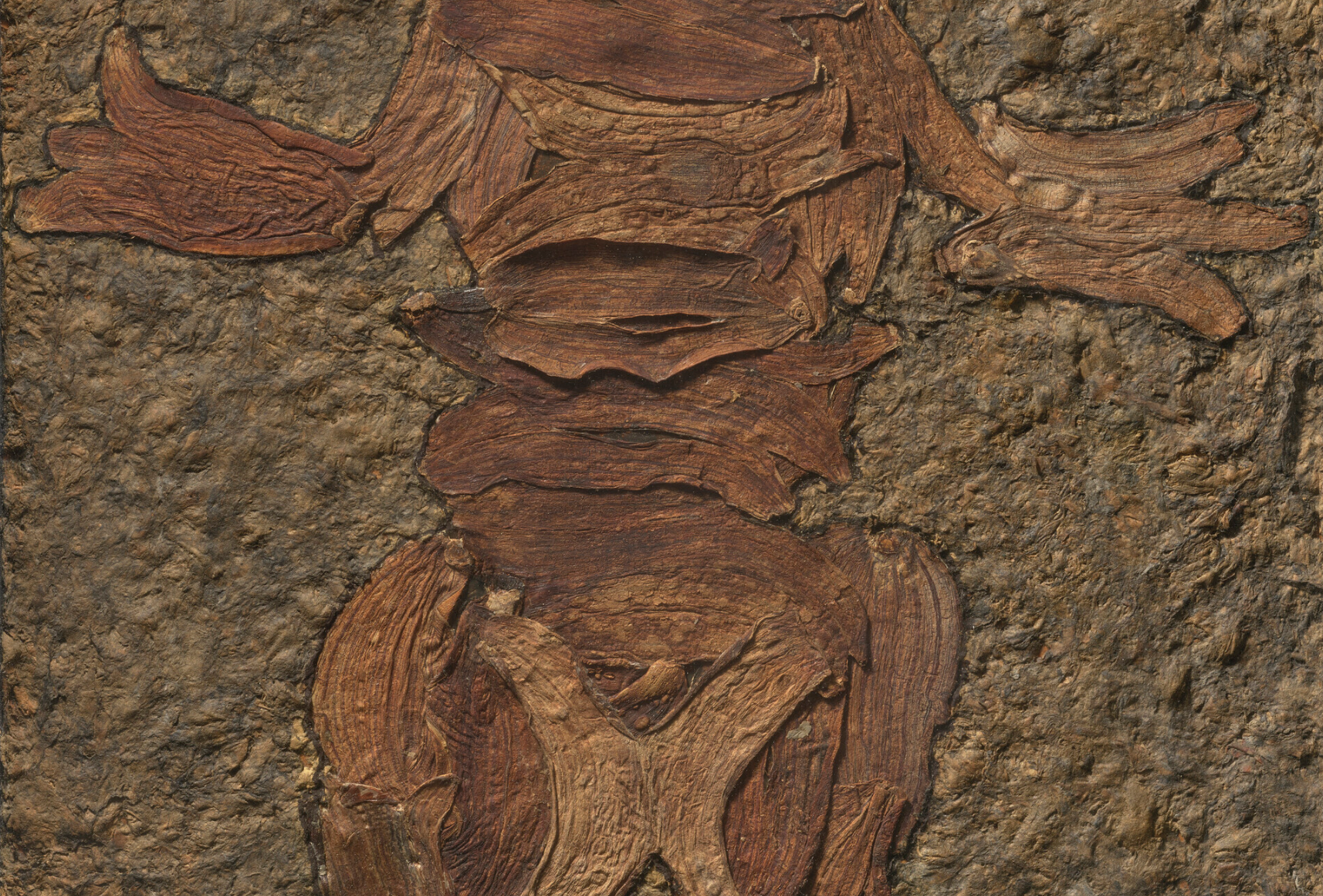
Danse brune demonstrates the wide-ranging scope of Dubuffet’s visual imagination during this period. On one hand, its thick, textured background closely aligns with development of Art Informel taking place in Europe, led by the likes of Antoni Tàpies, Jean Fautrier, Alberto Burri and Pierre Soulages. At the same time, its mottled background recalls the canvases of American Abstract Expressionism, particularly the gestural, all-over surfaces of Jackson Pollock: the Museum of Modern Art’s landmark exhibition The New American Painting, notably, toured Europe during this period. The work also conjures Dubuffet’s fascination with primitive art, its idiosyncratic figure reminiscent of ancient graffiti, cave painting and archaeological ruins. A splendid synergy of his artistic influences, and a glorious instance of his whimsical aesthetic, Danse brune is alive with the joys of creation itself.
La liquidité du monde, 1952
Phillips New-York: 16 May 2023
Estimated: USD 300,000 – 500,000
USD 444,500
https://www.phillips.com/detail/jean-dubuffet/NY010423/139
JEAN DUBUFFET
La liquidité du monde, 1952
Oil and mixed media on plywood on Masonite
130.2 x 161.9 cm (51 1/4 x 63 3/4 inches)
Signed and dated “J. Dubuffet 52” upper and lower left
Signed, titled and dated “La liquidité du monde J. Dubuffet 1952” on the reverse
Jean Dubuffet’s La liquidité du monde, 1952, belongs to a discrete group of works which redefined the genre of landscape painting. One of nearly 40 paintings in the groundbreaking series, Landscaped Tables, Landscapes of the Mind, Stones of Philosophy, painted between 1951 and 1952, the present work depicts an abstracted landscape with no particular landmarks. The textured earth red field at the lower part of the canvas suggests an otherworldly or ancient land, its specific location left to interpretation by the viewer. A distinct break from the landscape tradition of his predecessors, the present work beautifully illustrates Dubuffet’s pioneering Art Brut style and his fascination with the relationship between humans and their land that would become essential to his work.
“I see my landscapes as a marriage between the conceptual and the concrete. Here are the forms of the earth, the terrain under your feet, the landscape which is everywhere.”
Created shortly after the artist’s three trips to the Sahara Desert beginning in 1947, La liquidité du monde resembles an expansive deserted landscape. With no unique signifiers of place, the rocky terrain becomes more imagined than physical. Dubuffet chooses to represent the earth with a rough, mortar-like paste created from an amalgamation of natural materials such as sand, zinc oxide, and coal powder called “spot putty” which is then scraped and incised to create a textured variation. An uneven band of white mixed with the putty occupies the very top of the composition. The aesthetic qualities of the medium add a three-dimensional element to the traditional genre, and the omission of any figures among the topography helps to emphasize the earth in its uninhabited beauty. The result is a vast expanse of land born from various mediums found in the places which inspired him. Not choosing to represent the landscape dutifully, La liquidité du monde, translating to “the world’s liquidity,” captures the spirit of the world we inhabit, rather than focuses on any kind of likeness, thus shifting away from the French landscape traditions of direct observation.
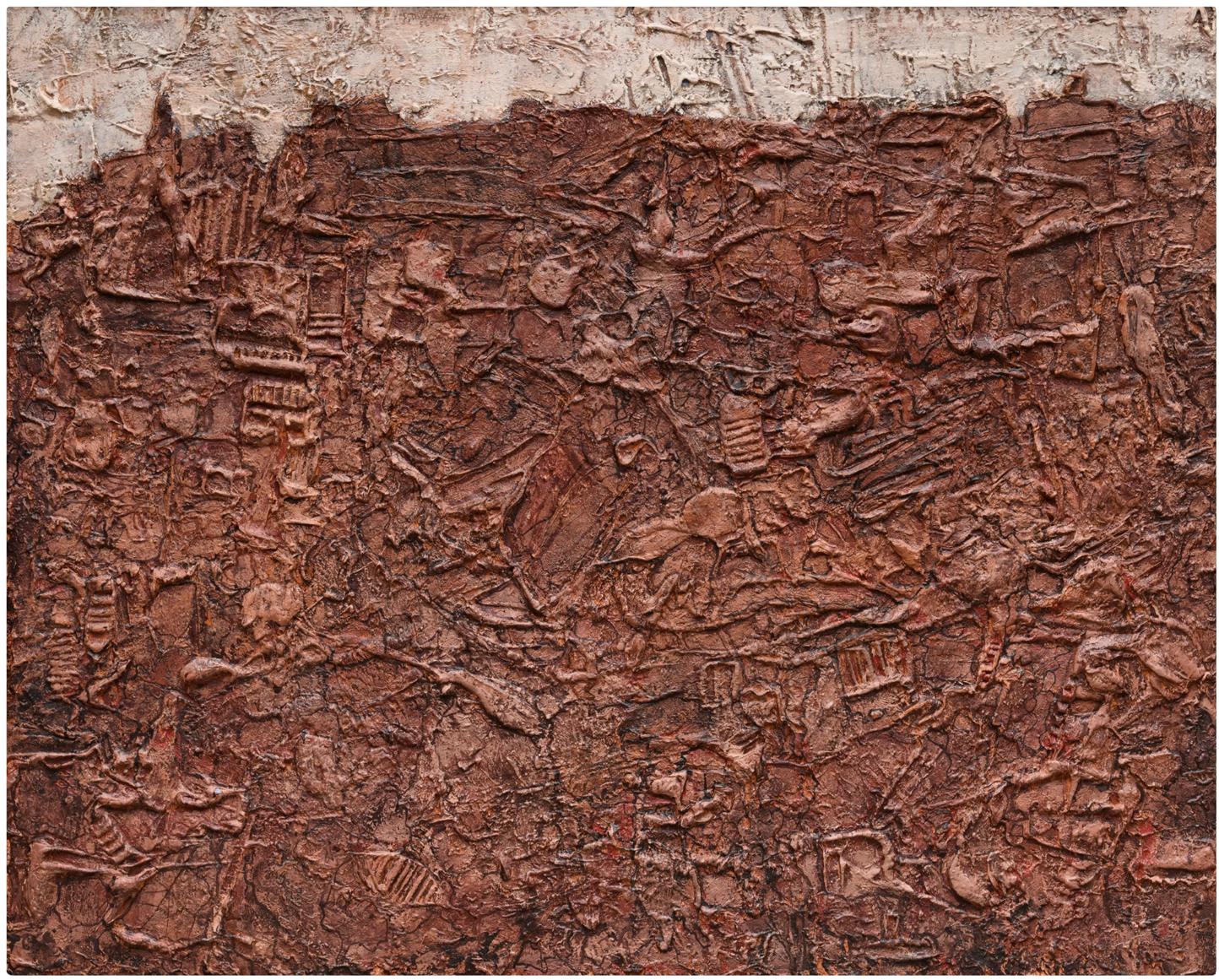
A pioneer of Art Brut and the Outsider Art movement, Dubuffet rejected the traditional art historical canon in favor of a more “raw” or primitive style of production. The movement took inspiration from the art of children, prisoners and psychiatric patients, finding beauty in mundane, human experience and attracting artists such as André Breton and Adolf Wölfli. La liquidité du monde explores the notions found in Outsider Art, and utilizes simple, inexpensive materials. By highlighting the variations in these mediums rather than disguising them as something other, Dubuffet pays a unique respect to his craft, similar to how he himself treated his natural surroundings. Close inspection of the red earth in Dubuffet’s masterwork reveals what could be skeletons, insects, hieroglyphics, ceramics, and other prehistoric wonders. As such, Dubuffet’s La liquidité du monde illustrates what is either a pre-human or post-apocalyptic world, encouraging us as viewers to cherish the world we are lucky enough to live in—a sentiment all the more powerful today.