PRELIMINARY DRAFT
WORK IN PROGRESS
2026 Auction Results
#1. Nu assis au collier, 1917-18
Masterpieces from the Lewis Collection
Sotheby’s London: 24 June 2026
Estimate upon Request
GBP 48,235,000 / USD 63,667,160
Amedeo Modigliani | Nu assis au collier | Masterpieces from the Lewis
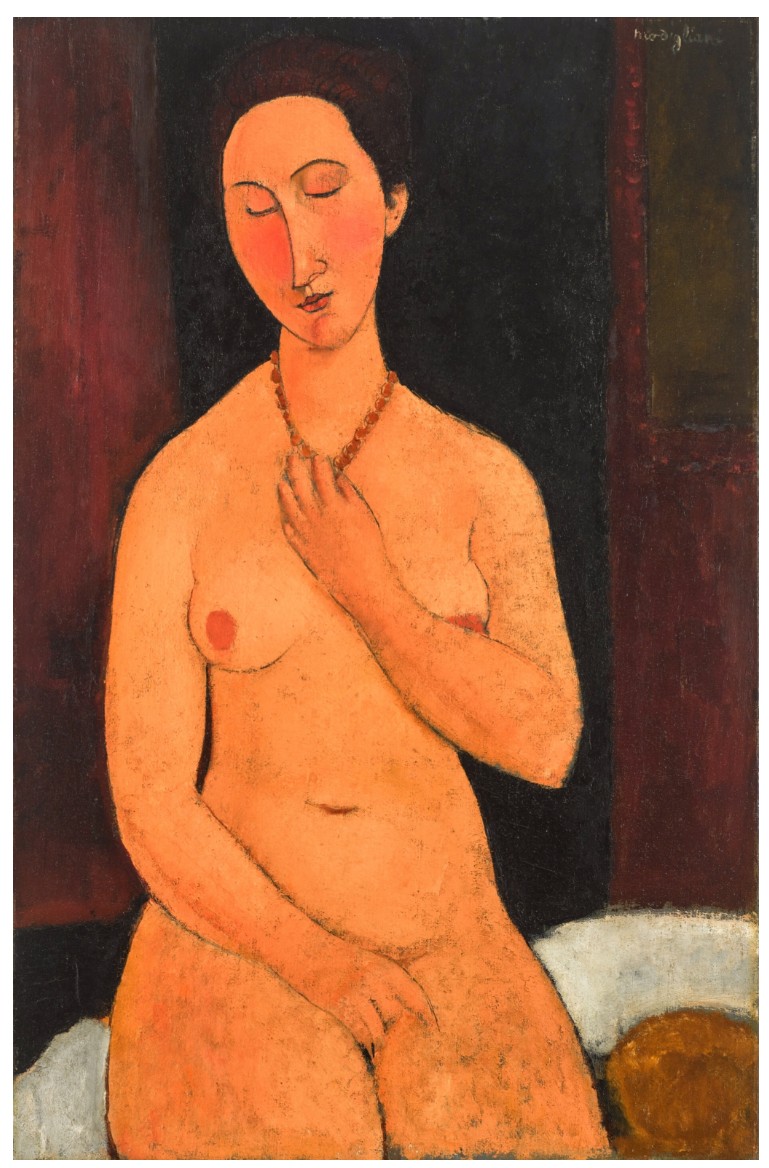
AMEDEO MODIGLIANI (1884 – 1920)
Nu assis au collier, 1917-18
Oil on canvas
91.5 x 59.7 cm (36 x 23-1/2 inches)
Signed Modigliani (upper right)
#2. Homme à la pipe (Le Notaire de Nice), 1918-19
Masterpieces from the Lewis Collection
Sotheby’s London: 24 June 2026
Estimated: GBP 12,000,000 – 18,000,000
GBP 23,280,000 / USD 30,728,135
Amedeo Modigliani | Homme à la pipe (Le Notaire de Nice) |
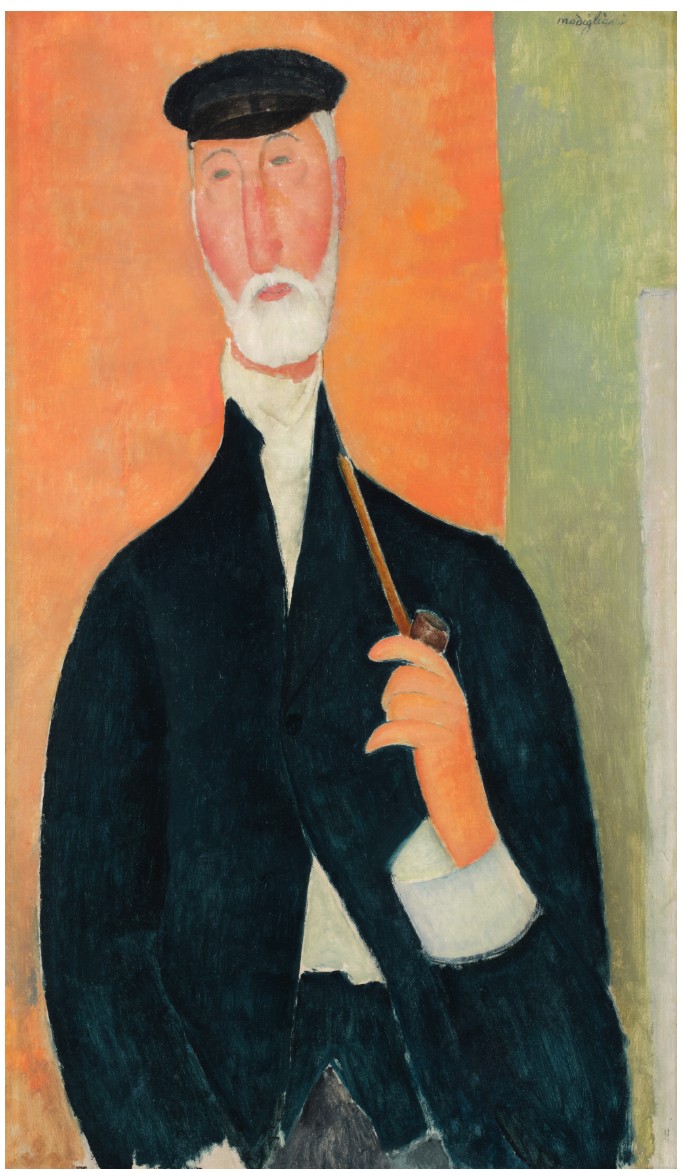
AMEDEO MODIGLIANI (1884 – 1920)
Homme à la pipe (Le Notaire de Nice), 1918-19
Oil on canvas
92.1 x 54.3 cm (36-1/4 x 21-3/8 inche)
Signed Modigliani (upper right)
2025 Auction Results
#1. Elvire en buste, circa 1918-1919
Property from a Private Collection
Sotheby’s Paris: 24 October 2025
Estimated: EUR 5,500,000 – 7,500,000
EUR 26,982,500 / USD 31,399,185
Amedeo Modigliani | Elvire en buste | Modernités | 2025 | Sotheby’s
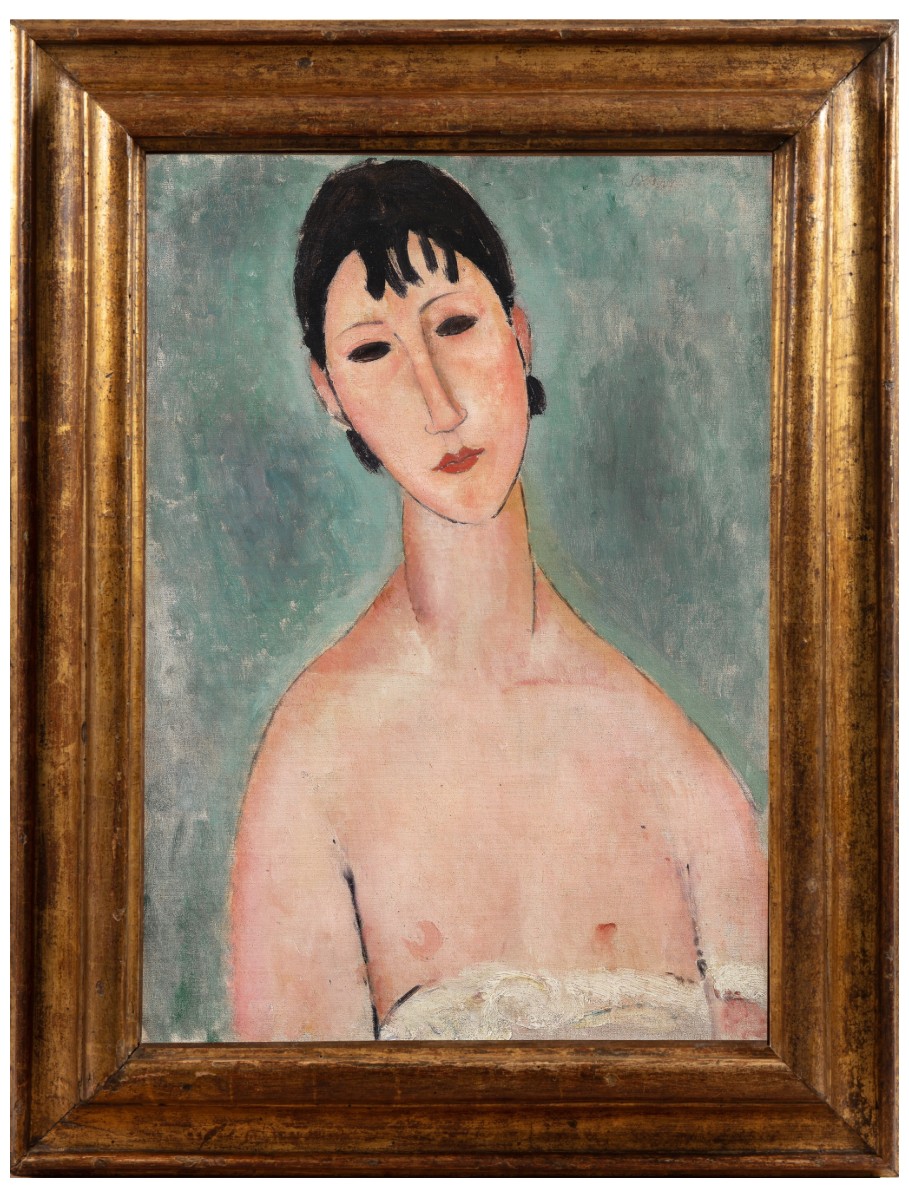
AMEDEO MODIGLIANI (1884-1920)
Elvire en buste, circa 1918-1919
Oil on canvas
65.2 x 46.5 cm (25-5/8 x 18-1/4 inches)
Indistinctly signed (upper right)
#2. Raymond, 1915
Property from a Prestigious European Collection
Sotheby’s Paris: 24 October 2025
Estimated: EUR 5,500,000 – 7,500,000
EUR 10,652,500 / USD 12,396,175
Amedeo Modigliani | Raymond | Modernités | 2025 | Sotheby’s
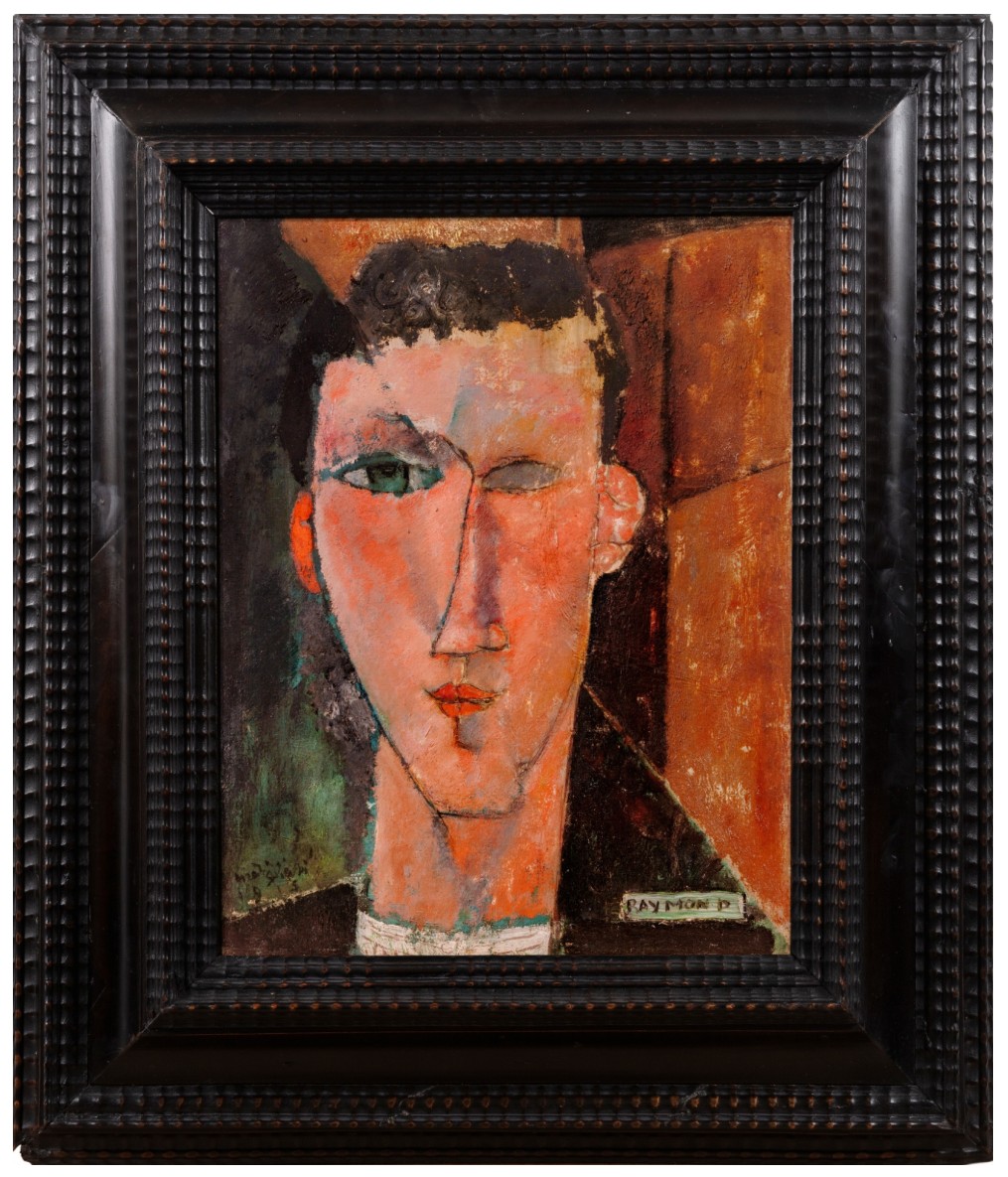
AMEDEO MODIGLIANI (1884-1920)
Raymond, 1915
Oil on canvas
36.7 x 28.7 cm (14-1/2 x 11-1/4 inches)
Signed Modigliani and dated 1915 (lower left)
Titled Raymond (lower right)
USD 10 million
#3. Portrait de Lunia Czechowska, circa 1917-1918
PROPERTY FROM AN IMPORTANT PRIVATE EUROPEAN COLLECTION
Christie’s London: 5 March 2025
Estimated: GBP 4,000,000 – 7,000,000
GBP 6,290,000 / USD 8,088,460
AMEDEO MODIGLIANI (1884-1920), Portrait de Lunia Czechowska | Christie’s
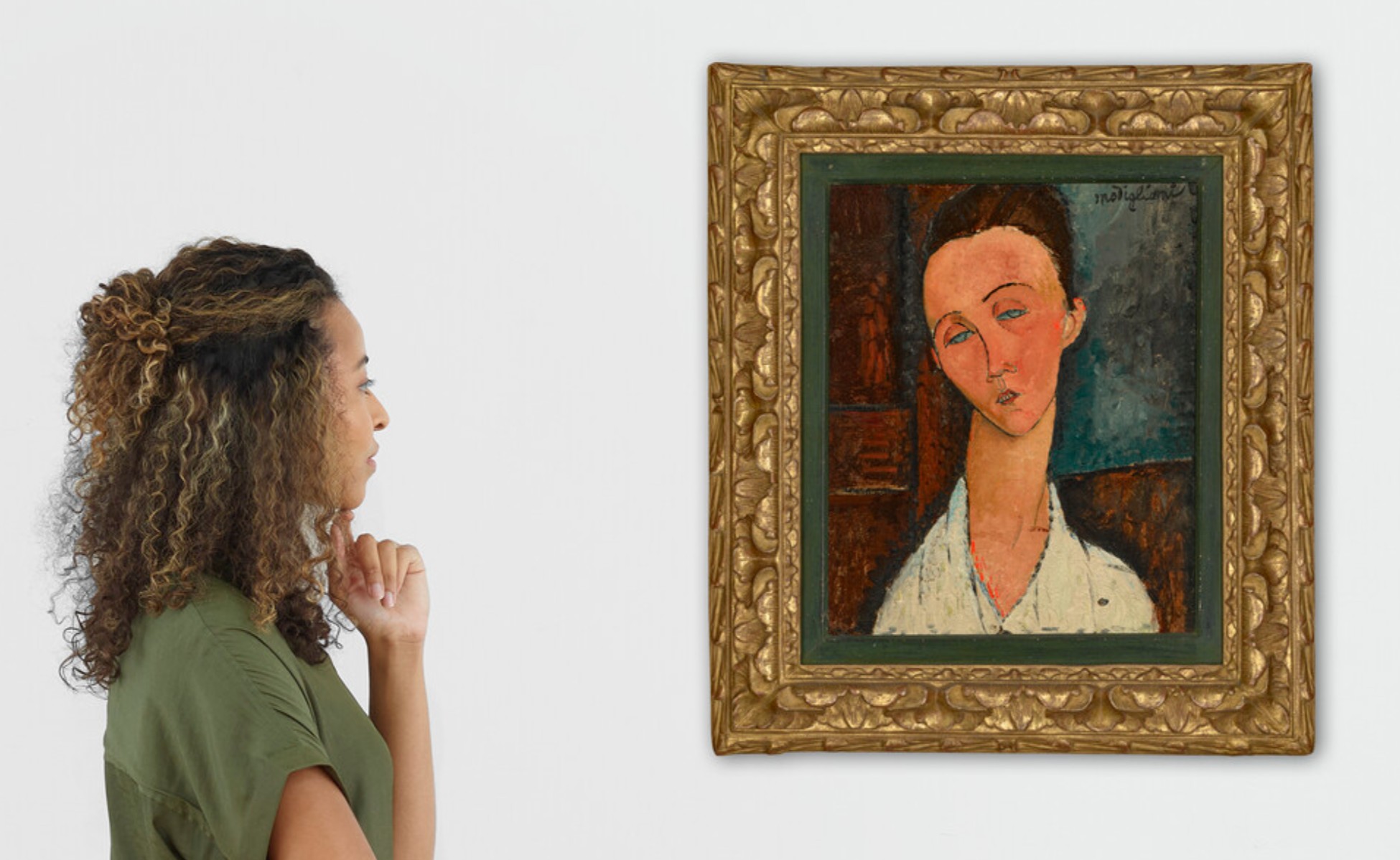
AMEDEO MODIGLIANI (1884-1920)
Portrait de Lunia Czechowska, circa 1917-1918
Oil on canvas laid on board
46 x 37.8 cm (18-1/8 x 14-7/8 inches)
Signed ‘Modigliani’ (upper right)
Nudes
Nu assis au collier, 1917-18
Masterpieces from the Lewis Collection
Sotheby’s London: 24 June 2026
Estimate upon Request
GBP 48,235,000 / USD 63,667,160
Amedeo Modigliani | Nu assis au collier | Masterpieces from the Lewis
AMEDEO MODIGLIANI (1884 – 1920)
Nu assis au collier, 1917-18
Oil on canvas
91.5 x 59.7 cm (36 x 23-1/2 inches)
Signed Modigliani (upper right)
Painted in an extraordinary burst of inspiration and creativity in a small, poorly furnished Parisian room in Montparnasse, during the darkest days of the First World War, Nu assis au collier is one of Amedeo Modigliani’s legendary nudes – the works for which the Italian artist is today best known. Just as Édouard Manet had confounded contemporary audiences of the previous generation with his Olympia, Modigliani’s provocatively modern take on the timeless subject of the reclining female nude would have a profound impact on twentieth century art. As the art historian Werner Schmalenbach has written of these famous paintings, “the name of Modigliani is almost synonymous with his nudes. No other painter, in our century or any other, has painted the human female body as he did […]. A symptom of Modigliani’s position between tradition and Modernism […] they shocked the contemporary public [and yet] they are a continuation of a great tradition of European painting, […] a celebration of beauty, immaculateness and perfection” (Exh. Cat., Dusseldorf, Kunstsammlung Nordrhein-Westfalen, Amedeo Modigliani, Paintings, Sculptures, Drawings, 1991, p. 47).
With its tender, almost reverential depiction of a young woman sitting on the edge of a chaise, lost in a private reverie and affectionately fondling the coral necklace around her neck, Nu assis au collier is one of the most subtle and intimate of these famous and warmly erotic works. Seated in a pose that knowingly echoes the Venus pudica of classical antiquity, and wearing a coral necklace reminiscent of those worn in the Italian Renaissance portraits that Modigliani so admired, this painting of an unknown woman sitting in an otherwise nondescript, early twentieth century Parisian apartment is a timeless fusion of ancient tradition and Modernist innovation.
Radical Nudes Through Art History
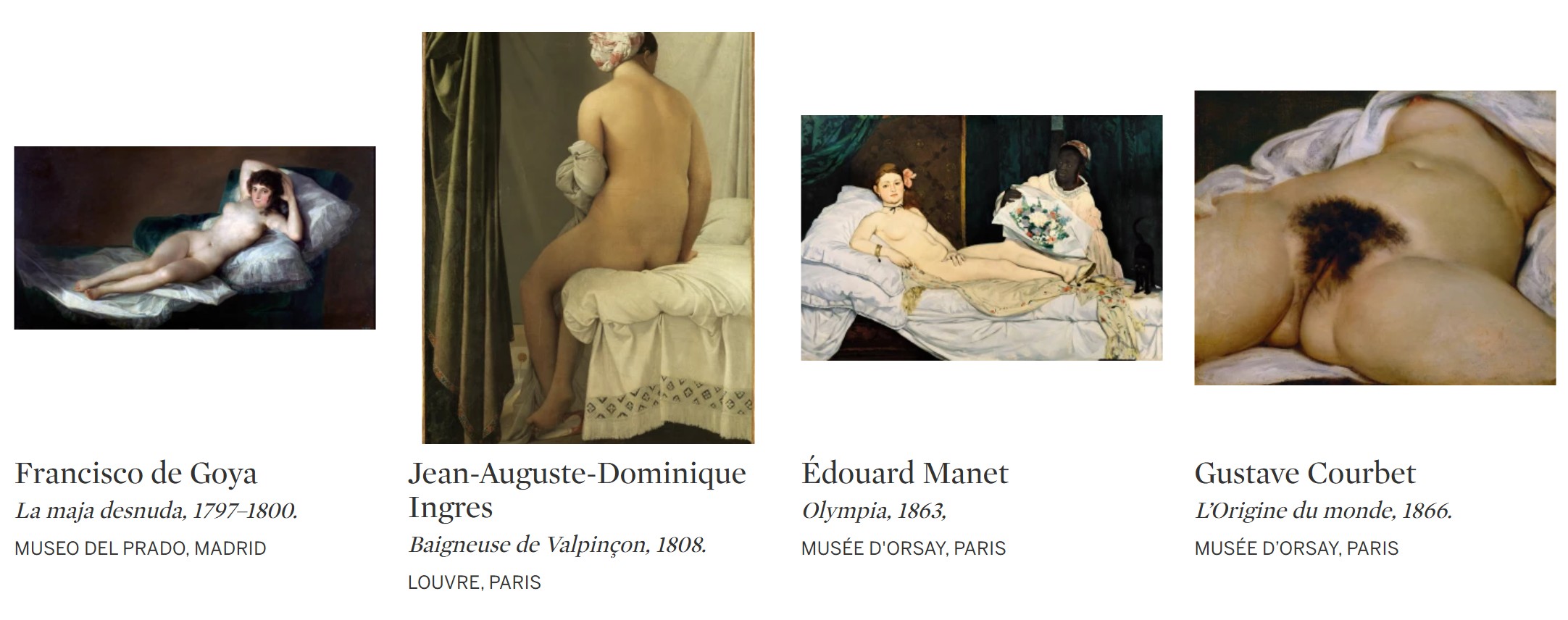
As in all his great series of nudes, Modigliani treats his sitter here as a kind of goddess, subtly modifying the forms of her body and her features into elegant but stylized lines and curves that both capture her individuality and at the same time elevate her into the idealized figure of a modern-day Venus. This is not to say that Modigliani fetishizes his subject into a cold or impersonal icon or statue; far from it. As a result of his extraordinary mastery of his medium, Modigliani generates a powerful sense of the living, breathing warmth of the human body through the simplest and most eloquent of painterly marks, subtle color variation and an intrinsic understanding of the fleshy, material nature of the paint itself. In this way, Modigliani’s nudes are not typical life-studies or naked portraits, but much more ambitious works. They are paeans to the combined ideal of “truth, life, beauty and art” that Modigliani had first stated as the aim of his art during his student days in Rome and which he had passionately pursued ever since. This quest to create his truth of “life, beauty and art” was one that Modigliani had first attempted to realize on a grand scale between the years 1910 and 1914 in the extensive series of carved-stone sculptures of women he had made with the intention of forming them into one, great, eternal, “Temple of Beauty.” This elaborate project involving numerous stylized stone-carved female heads and caryatids had to be abandoned after repeated exposure to the stone dust exacerbated his already chronic tubercular condition. In the war-torn winter of 1916-17, however, the idea for an extensive series of painted nudes provided him with the opportunity to attempt in paint the creation of a second “Temple of Beauty.” Drawing upon all the experience he had now gained in the fields of both oil painting and sculpture, Modigliani jumped at this opportunity to create an extensive body of work on a single theme that also stood as a direct counter to the dark times in which they were made.
Like Claude Monet, deliberately immersing himself in the painting of his waterlilies while the guns roared in the distance, Modigliani too, in a Paris then undergoing privations and bombardment, threw himself into the creation of a series of paintings that epitomised the essence of his life-long aesthetic vision. He sought in these works to invoke the eternal, life-affirming power of Eros by transforming each of his individually chosen sitters into a modern-day Venus. Desirous figures of feminine beauty and allure, they personified the ideals of his abandoned sculptures for a “Temple of Beauty” as well as his nostalgia for his homeland, for Italian art and culture and also, and perhaps most poignantly, the preciousness and vitality of life itself. In short, these famous paintings are collectively a defiant statement of Modigliani’s continuing faith in life, beauty and art – a kind of “Triumph of Eros” – made in the midst of the all-pervasive force of Thanatos which in 1914 had swept across Europe and erased so much of the earlier optimism of the Parisian avant-garde.
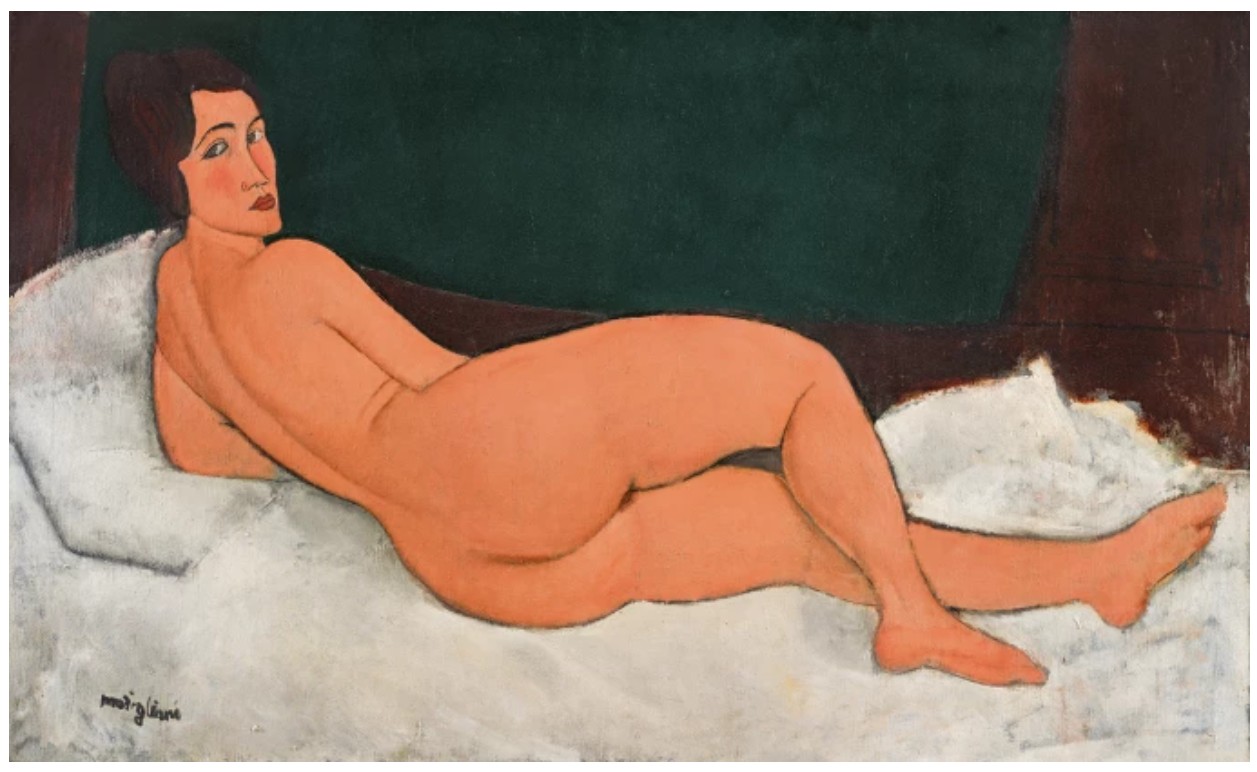
Amedeo Modigliani, Nu couché (sur le côté gauche), 1917, oil on canvas. Sold Sotheby’s New York, May 2018, for $157 million
The idea for painting a series of nudes is believed to have first been suggested to Modigliani by the Polish émigré Leopold Zboroswki, whom the artist met in late 1916. Although Zborowski had few contacts and knew less about the art world than many of Modigliani’s earlier patrons and supporters, what he did have was an unswerving devotion to the Italian’s unique genius. Over the last three years of Modigliani’s life, Zborowski was to work tirelessly on the artist’s behalf, keeping the notoriously bohemian artiste maudit busy working, and supplying him with food, alcohol, models and all the artistic materials he required while also trying to promote his art to anyone willing to listen. Zboroswki may have suggested the idea of creating a prolonged series of these paintings as a way of instilling in the tubercular and alcoholic artist a healthier and more disciplined routine. What is clear is that Modigliani immediately poured himself into this project with a passion unseen since the days of his focus on sculpture. The first paintings in the series were made in December 1916 and at the end of that year Zborowski and his wife Hanka moved into an apartment at 3, rue Joseph Bara, where they turned over one of their rooms specifically for Modigliani to use as a studio. It was there that many of the finest of this great series of nudes were painted in a sequence of prolonged single sessions alone with the model. Vehemently refusing any interruptions and working feverishly, or even “orgasmically” as the painter Foujita recalled, rumors soon abounded that Modigliani slept with all his models. Certainly, the post-coital look of several of the resultant paintings, and statements that Modigliani himself made, did little to assuage such rumors.
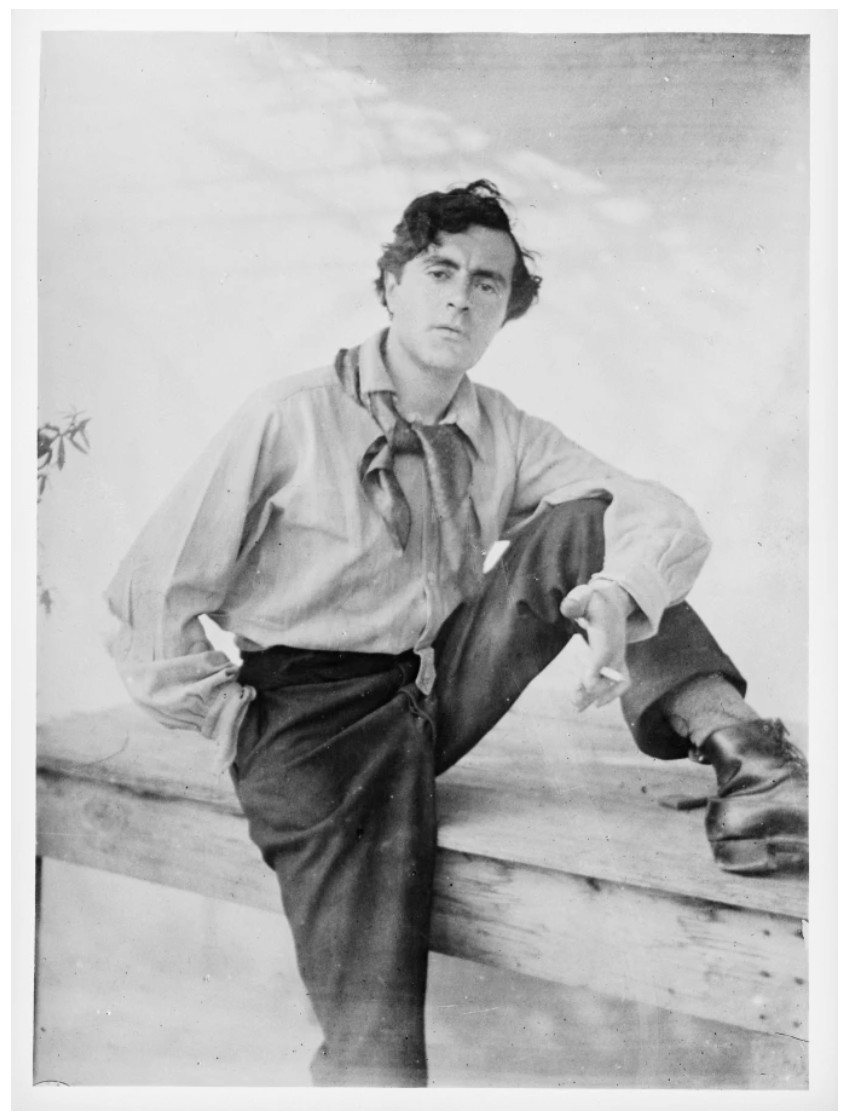
Amedeo Modigliani by an unknown photographer.
Nevertheless, it is possible to see Modigliani’s claim that “to paint a woman is to possess her” as a sincere statement of his artistic intent. “What I am searching for,” Modigliani had once noted to himself, “is neither the real nor the unreal, but the Subconscious, the mystery of what is Instinctive in the human Race” (artist quoted in Noël Alexandre, The Unknown Modigliani. Drawings from the Collection of Paul Alexandre, New York, 1993, p. 91). Modigliani, was in this regard, no advocate of Surrealism, but instead referring to a search for the inner forces and drives that he, as a devotee of Nietzsche, believed defined humanity. As the painter Léopold Survage, who sat for Modigliani in 1918, noted, Modigliani was able to “read the character of someone near him very accurately and swiftly. This psychological gift was such that you could say his sitters resembled their portraits rather than vice versa. He underlined and exaggerated characteristics of his sitters and brought out what was hidden by secondary and subsidiary features […] It was human beings that interested him and the invisible forces that were at work in them. Behind the physical appearance he imagined a mysterious world” (Werner Schmalenbach, Modigliani Paintings, Sculptures Drawings, Munich, 1990, p. 202).
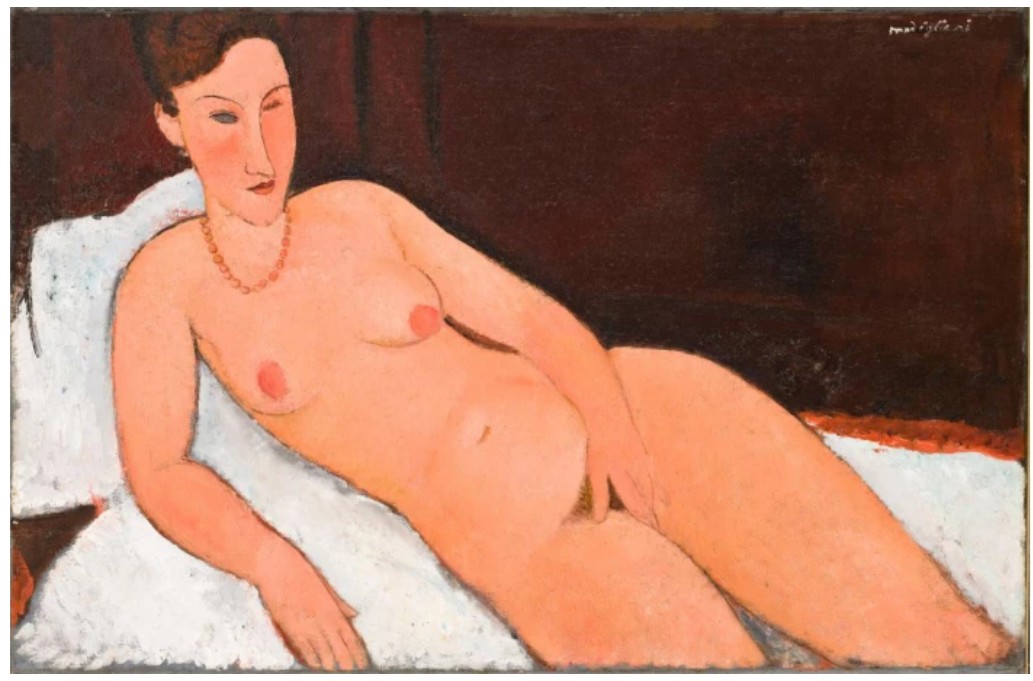
Amedeo Modigliani, Nu au collier de corail, 1917, oil on canvas. Allen Memorial Art Museum, Oberlin College Ohio
Nu assis au collier is one of three magnificent nudes that Modigliani painted showing the same sitter wearing a red coral necklace. As John Russell was to write in the 1963 Tate Gallery exhibition of Modigliani’s work, “these three paintings form a group quite on its own among Modigliani’s late nudes” (Exh. Cat., London, Tate Gallery, Modigliani, 1963, p. 19). The other two paintings are Nu au collier (1917; Allen Memorial Art Museum, Oberlin College, Ohio) and Nu aux yeux clos (1917; Solomon R. Guggenheim Museum, New York). Each of these three paintings depicts the same model in a markedly different pose: each one reflective of different aspects of Modigliani’s central aims for the series as a celebration of modern-day woman as Venus. In the Oberlin College picture Modigliani presents his model reclining in the classic pose of Titian’s Venus of Urbino, and, perhaps even more specifically, with her necklace and open eyes directly confronting the viewer, of Édouard Manet’s scandalous take on this painting, his Olympia of 1863. In the Guggenheim painting, the same woman is shown, eyes closed and reclining with her arms raised behind her head. Yet it is Nu assis au collier that offers the most tender depiction.
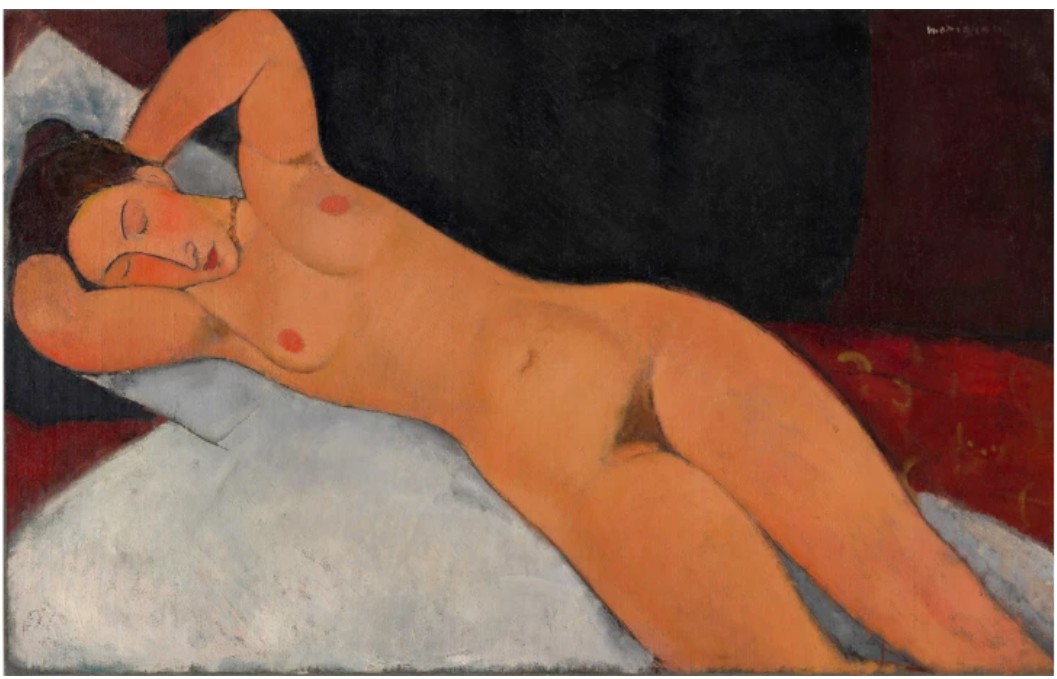
Amedeo Modigliani, Nu, 1917, oil on canvas, Solomon R. Guggenheim Museum, New York
Portraying his model seated in a position of elegant and imposing verticality, with her eyes closed and head slightly tilted, this work is the most classically Venus-like of these three different presentations of the subject. Here, Modigliani has set his model into a pose indicative of the Venus pudica, her right hand modestly covering her sex – while at the same time drawing attention to it – and her left raised over her left breast clutching at her necklace, her touch emphasizing the erotic tactility of the composition (again, in a probable nod to Manet). This traditional, classical, but also classicizing, pose would have been known to Modigliani as an antiquated formal device from his art school days, from the studies of the Medici Venus that he had made in Florence and most pertinently from the Italian Renaissance icon of female beauty, Botticelli’s Birth of Venus.
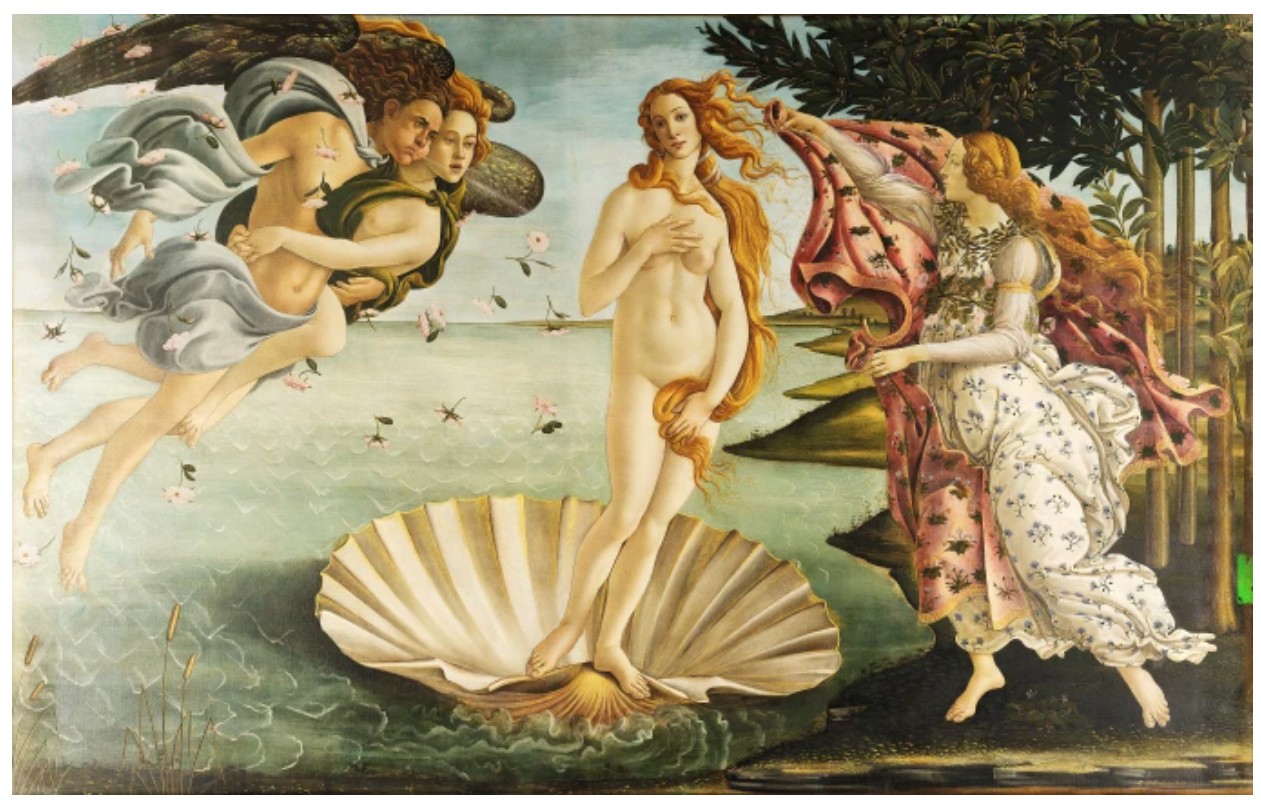
Sandro Botticelli, Nascita di Venere (The Birth of Venus), circa 1484-86, tempera on canvas. Uffizi, Florence
Botticelli’s graceful use of line and gentle, feminizing distortion of his figures, was a feature of the Renaissance master’s style that Modigliani had both admired and adopted early on in his own work. He combined it to unique effect with the refined simplifications of the African sculpture he knew from Paul Guillaume’s collection and from visits to the Trocadero. As can be seen in the elegant elongated curves of the face of the girl in Nu assis au collier, Modigliani combines the refined simplicity of these masks and heads with what Katherine Kuh describes as “Botticelli’s fluid line and urbane individualism… [to create] a [new] language of his own as authentic as those he combined” (K. Kuh, “Italy’s ‘New’ Renaissance: An Inquiry,” Saturday Review, vol. XLIV, no. 6, New York, 11 February 1961, p. 32).
Another distinctive reference to the past made in Nu assis au collier is Modigliani’s prominent use of the red coral necklace. Coral necklaces of this kind, while not really in fashion in Modigliani’s time, were a common feature of Italian Renaissance art. They appear as charms and amulets in paintings of the Madonna and Child by Andrea Mantegna and Piero della Francesca and are also a frequent feature of female portraits of the same period. Red coral was in regular use as a talisman during the Renaissance period in Italy as it was believed to have powers that warded off the negative force of evil spirits. Indeed, Modigliani may have deliberately included the red coral necklace as a way of enhancing the life-affirming presence of his figures.
Modigliani’s utilisation of such traditional themes and motifs in paintings like Nu assis au collier mark him as almost unique among his avant-garde contemporaries. Anticipating the “return to order” that was soon to engulf the Parisian avant-garde in the aftermath of the war, paintings such as Nu assis au collier fly directly in the face of the Italian Futurists’ demand, in 1910, that all painting of the nude should be banned on the grounds that it was regressive and backwards-looking. They also stand apart from the work of his Parisian contemporaries Henri Matisse, Pablo Picasso and Marcel Duchamp, all of whose celebrated nudes from this period were, in different ways, pictorial assaults upon the holistic integrity of the female figure. In direct contrast to these avant-garde artists’ attacks on the nude and the academic tradition that it seemed to represent, Modigliani saw his art, much like that of his friend and fellow sculptor Constantin Brancusi, as establishing a timeless bridge between the ancient and the modern.
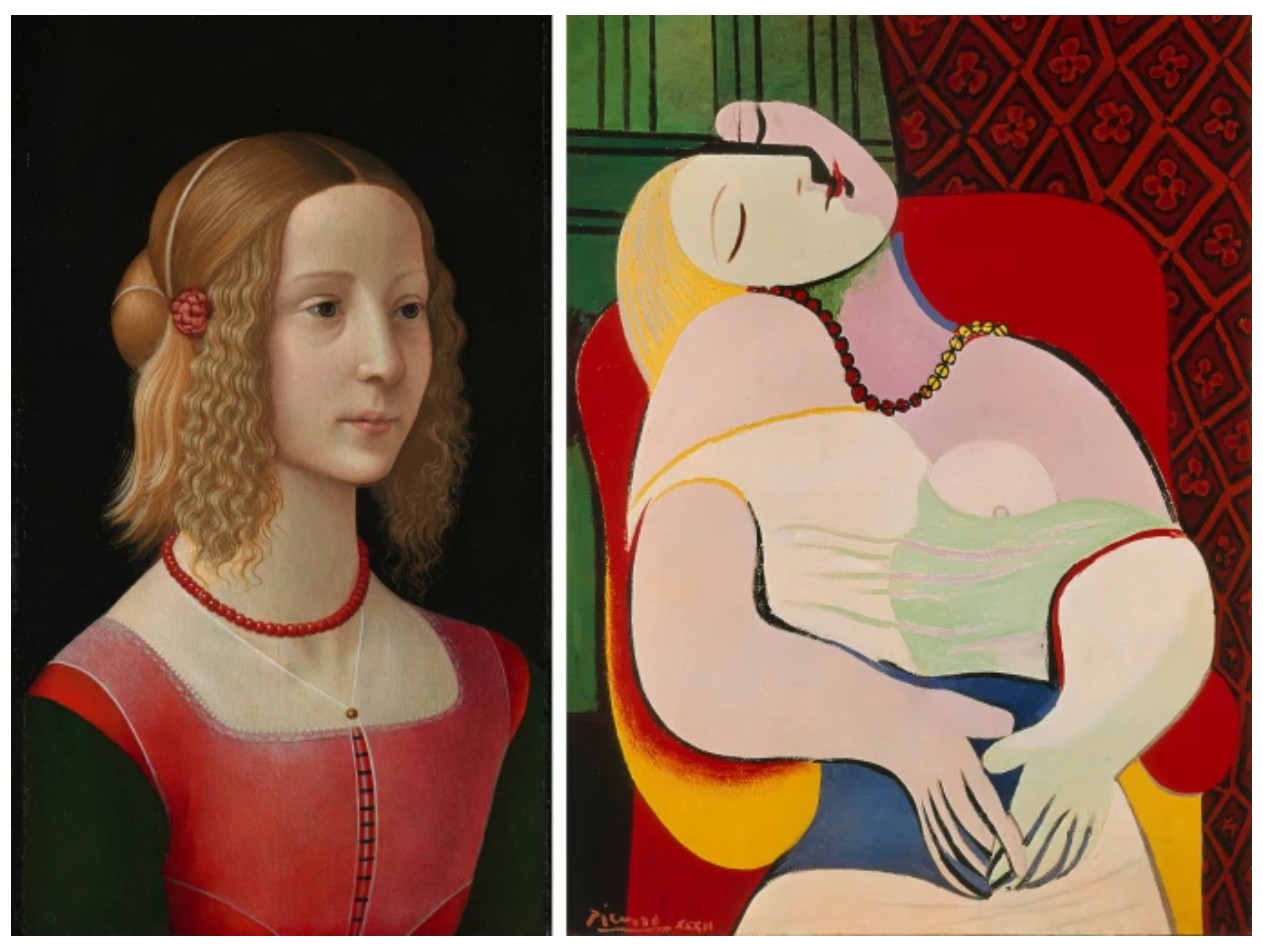
Left: Workshop of Domenico Ghirlandaio, Portrait of a Girl, circa 1490, egg tempera on wood. National Gallery, London
Right: Pablo Picasso, Le rêve, 1932, oil on canvas. Private Collection © 2026 Succession Picasso/DACS, London
Modigliani’s Modernist distortions do not dismantle the integrity of the figure but rather emphasise and celebrate it as the vehicle and container of positive and erotic energy. Nowhere is this often highly sensual aspect of his nudes more noticeable than in his handling of paint. Modigliani had a genius for painting the subtle changes of light and shadow on the human skin and for conveying its surface as a soft, warm, living entity. “An air comes off his nudes,” wrote the poet Francis Carco, “which is the very breath of life” (F. Carco, Le Nu dans la peinture moderne 1863-1920, Paris, 1924). Modigliani achieved this “air” through a specific technique. Eschewing the steady build-up of volume through the traditional method of applying numerous thin layers of oil paint to create a sense of depth and mass, he worked with more immediacy by juxtaposing a second opaque layer of dry paint in a subtly different tone over a single sketchy underlayer.
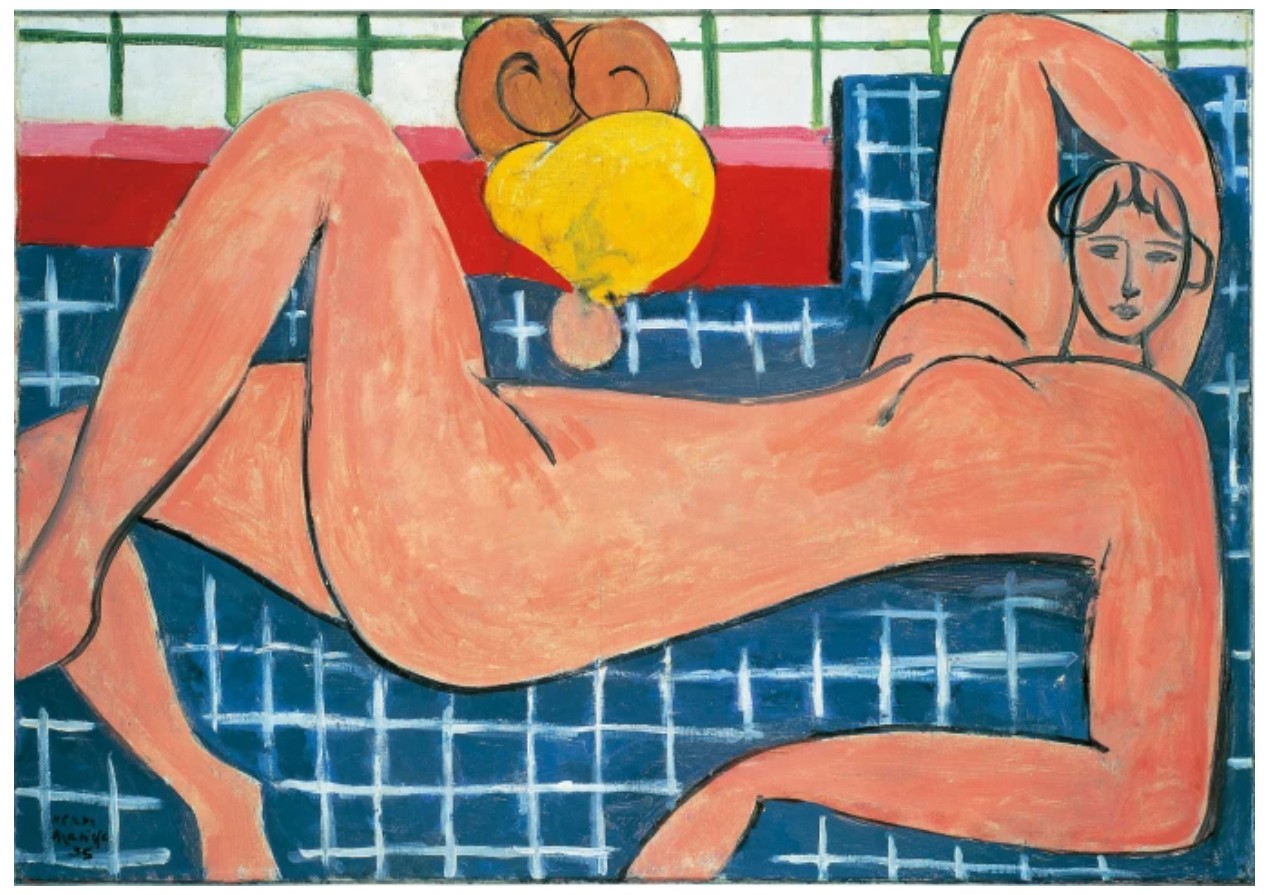
Henri Matisse, Nu rose, 1935, oil on canvas.
Baltimore Museum of Art © 2026 Succession H. Matisse / Artists Rights Society (ARS), New York
Not only did this technique allow Modigliani to work more swiftly – his nudes were all famously completed in single sessions – but also, as in Nu assis au collier, it encouraged a bravura style of painting; one where the most impressive details are often those achieved through the addition of an intuitive and bold colour accent. Modigliani’s technique also allowed him to exploit the corpulence that paint acquires when diluted in such little oil, turning the scumbled traces left by the brush into a poetic means. In the subtle daubs across the figure’s lower torso and thighs, the creases and veins left by Modigliani’s brush generate a magnetic evocation of that soft, warm reflection of light so specific to the human skin.
It was in part this “realness” that provoked scandal when at least four of them were exhibited for the very first time at the Galerie Berthe Weill in December 1917. This – now infamous – exhibition was the only one-man show that Modigliani held during his lifetime and the notoriety surrounding its enforced closure played an important role in establishing the “myth of Modigliani.” The strength of reaction to his now-celebrated nudes was indicative of their central role in establishing him as one of the great voices in the history of twentieth century art. Following the artist’s death in January 1920, a swiftly organized mini-retrospective was made as part of the Venice Biennale of 1922 and later the major Exposition Modigliani held at the Galerie Bing in Paris in 1925, did much to champion Modigliani’s growing reputation throughout the 1920s as perhaps the leading avant-garde genius of his generation. As early as 1920, André Salmon had begun to proclaim of Modigliani that “there is only one painter of the modern nude,” he is our sole “painter of women from life” (A. Salmon, L’art vivant, Paris, 1920, quoted in Ambrogio Ceroni, op. cit., 1972, p. 70). Francis Carco, too, who had bought one of the contentious nudes from the Berthe Weill show of 1917 and then gone on to acquire five more, went so far as to claim that Modigliani’s nudes represented the pinnacle of a tradition he was now outlining in a book dedicated to the theme of the nude in modern painting. “The more I lived with the Modigliani nude I had bought,” he wrote, “the more I liked it: but none of my friends did. They laughed at it and said I was a fool, a cretin. But all the same, I saved up to buy more from Zborowski, who delightedly shouted the fact from the rooftops. Often I would gaze at the beauty and music of his work and imagine his awful life and his absorbing passion to paint, and I’d close my eyes. He was there standing before me, half drunk, asking, ‘you like my painting, eh? But why? You understand it? […] You love it – as you do women? Ah!, ah!, ah!..Yes, that’s the way’” (F. Carco quoted in Pierre Sichel, Modigliani: A Biography of Amedeo Modigliani, London, 1967, no. 8, p. 374).
Nu assis au collier was acquired in 1949 by the legendary collector Ralph F. Colin. A lawyer by training, Colin and his wife started collecting art shortly after they married in 1931 and amassed one of the pre-eminent private collections of art in the twentieth century. Their tastes ranged widely and they always eschewed any notion of ‘building’ a collection, placing an importance on seeing art rather recognising it in a canonical sense. Buying according to their own tastes, they never sold or swapped a painting, and their collection was sold following his wife’s death in one of the most important single-owner sales ever held. It was at this legendary sale that Joe Lewis acquired the present work – along with Chaim Soutine’s Portrait du garçon en bleu (lot 17) – and it has been in his collection ever since.
Female Portraits
Portrait de Lunia Czechowska, circa 1917-1918
PROPERTY FROM AN IMPORTANT PRIVATE EUROPEAN COLLECTION
Christie’s London: 5 March 2025
Estimated: GBP 4,000,000 – 7,000,000
GBP 6,290,000 / USD 8,088,460
AMEDEO MODIGLIANI (1884-1920), Portrait de Lunia Czechowska | Christie’s
AMEDEO MODIGLIANI (1884-1920)
Portrait de Lunia Czechowska, circa 1917-1918
Oil on canvas laid on board
46 x 37.8 cm (18-1/8 x 14-7/8 inches)
Signed ‘Modigliani’ (upper right)
Rendered in soft, expressive brushstrokes, Amedeo Modigliani’s Portrait de Lunia Czechowska was painted circa 1917-1918, and is a depiction of one of the artist’s most loyal and cherished friends. Known in his day and admired among his circle of friends primarily as a portraitist, Modigliani prided himself on his skill as an acute observer of the variety and nuances of human character, and his ability to evoke the serene, beatific beauty of l’éternel féminin in his paintings of women. ‘To do any work, I must have a living person,’ he explained to the painter Léopold Survage, ‘I must be able to see him opposite me’ (quoted in J. Modigliani, Modigliani: Man and Myth, New York, 1958, p. 82). Modigliani constantly sought to capture the essence of his sitter, not as a naturalistic likeness, but as an abstract, depersonalized representation stemming from his own pictorial synthesis of seeing and style.
Born Ludwika Makowska in Prague in 1894, Lunia’s father was a Polish patriot who actively opposed the Russian and Austrian partition of the Polish homeland. In 1907, after serving two years of a fifteen-year prison sentence for his role in a workers’ strike in Warsaw, Makowski moved his family to Krakow in the Austrian zone. Upon graduating from the gymnasium in 1913, Lunia followed her father’s wishes and moved to Paris. There she met Kazimierz Czechowski, another recent Polish émigré, also a patriot, with whom she fell in love; they married on 21 June 1915. Czechowski was a childhood friend of Léopold Zborowski, who was to become Modigliani’s devoted dealer and friend from 1916 until the end of the artist’s life. It was the painter Moïse Kisling who introduced Zborowski to Modigliani, and the aspiring dealer first saw the Italian artist’s paintings later that year, in a group show at the Lyre et Palette, the Montparnasse atelier of the Swiss painter Émile Lejeune.
According to Les Souvenirs – Lunia’s autobiographical recollections of Modigliani that she wrote in 1953 and was published in Ambrogio Ceroni’s 1958 monograph on the artist – this 1916 event at the Lyre et Palette was where the artist and muse met. In an interview with William Fifield in the 1970s she recalled: ‘We went to the exhibition,’ she recalled for Fifield, ‘it was the Lyre et Palette, and Modigliani was present… He said he hadn’t time for Léopold, but seeing that we women were with him he returned and said we should perhaps meet in an hour. And we went to the Rotonde’ (quoted in W. Fifield, Modigliani: The Biography, New York, 1976, pp. 222 and 274).
‘He came and sat next to me,’ Lunia wrote in Les Souvenirs. ‘I was struck by his distinctiveness, his luminosity, and the beauty of his eyes. He was at once very simple and very noble’ (‘Les Souvenirs de Lunia Czechowska,’ in A. Ceroni, Amedeo Modigliani, Peintre, Milan, 1958, pp. 20, 21). Modigliani began to sketch Lunia. ‘I was quite young and very shy,’ she continued ‘and I became frightened, when Modigliani asked, after several minutes, in the presence of my husband, to go out with me that very night. Because to Modigliani, I was alone. He felt so strongly towards me he would have liked me to abandon everything to follow him. Confused, I responded that I was not free. Poor dear friend, what seemed so natural to him seemed to me so strange! Zborowski came to my rescue, saying that plans for the evening had already been made, and he invited Modigliani to join us. He refused. Turning towards me, he asked, while offering the drawing he had made of me, to come pose the next day for a portrait’ (ibid.).
Despite all signs that she would remain faithful to her marriage with Czechowski, the artist persisted in seeking a romantic liaison with Lunia. ‘I was always the mysterious woman to him,’ Lunia told Fifield, ‘the Sphinx, Cleopatra, there were things he did not know’ (op. cit., p. 222). Modigliani must have felt especially encouraged in 1917, when in the wake of the February Revolution in Russia, which resulted in the abdication of Tsar Nicholas II, Czechowski decided to return to his homeland and agitate for independence. He joined Lenin’s Red Army following the October Bolshevik Revolution, making arrangements for Lunia to stay with Zborowski and his partner Anna (“Hanka”). Now that she lived with the artist’s dealer, Modigliani saw Lunia often, regularly coming to the apartment to paint during the afternoon, as it was at Zborowski’s that Modigliani had his studio. Czechowski did not live to see Poland freed from foreign hegemony, however. In 1918, while in a hospital recovering from wounds, his Russian comrades learned he was a Polish revolutionary – someone who would eventually turn against and fight them – and had him summarily shot. Lunia did not learn of her husband’s fate until 1921.
‘Happiness is an angel with a serious face,’ Modigliani wrote to Paul Alexandre, his earliest patron, on a postcard from Livorno, dated June 1913 (quoted in D. Krystof, Modigliani: The Poetry of Seeing, Cologne, 2006, p. 88). Lunia’s ethereal features perfectly suited the artist’s fascination with this type; her serious demeanour and youthfully lithe, feminine figure lent themselves well to the primary influences the artist liked to incorporate and show off in his portraits. The plunging ‘V’ of Lunia’s cylindrical neckline and her blade-like décolleté, stark against her white shirt in the present painting, allude to the hallmark swan-like neck and tilted head in the works of the Italian Mannerists of the Sixteenth Century, such as Parmigianino and Pontormo.
Between 1916 and 1918, Modigliani painted a small number of fully-clothed portraits of Lunia (Ceroni, nos. 169-172), including the present work, and completed another series of her in 1919 (Ceroni, nos. 317-322). Fifield stated that Lunia ‘almost certainly’ posed for Le grand nu (Ceroni, no. 200; The Museum of Modern Art, New York), ‘though she would never admit it’ (op. cit., 1976, p. 160). Among the named portraits of Lunia, the artist depicts his sitter in a variety of stances and poses – painting her standing and seated, in profile and square on. In the present work her head is softly tilted, and she regards the viewer with a collected gaze. Modigliani explored the geometry of her form with gestural brushstrokes, masterfully varying the lengths of his strokes to imbue the composition with a dynamic vitality. A powerful sense of élan vital emanates from Lunia, conveyed by the rich colour palette of the composition – accentuated by the vibrant highlights of carmine and deep blue that skirt her features. Her physicality is also emphasised by the impasto effect of the medium, where on her cheeks and neck the artist delicately tapped the oil paint onto the canvas with his fingers. With this meticulous eye for detail in play, Modigliani endowed Portrait de Lunia Czechowska with the loving admiration he held for Lunia herself. As Simonetta Fraquelli has noted, Modigliani’s portraits of Lunia differed from those of his other sitters during this time: ‘with an understanding and inquisitive air, she appears more at one with herself than the other women and Modigliani would seem to be implying that she is his equal’ (‘A Personal Universe: Modigliani’s Portraits and Figure Paintings,’ in Modigliani and His Models, exh. cat., Royal Academy of Arts, London, 2006, p. 36).
Lunia and Modigliani remained close friends after the artist met his young muse and the future mother of his child, Jeanne Hébuterne in 1917. Modigliani had relocated to the South of France in April 1918 as the Germans approached Paris, while Lunia had remained in the city. Following the artist’s return in May 1919, they resumed their close relationship and Lunia recalled: ‘after dinner, we would go for a walk in Le petit Luxembourg; it was very hot that summer. Sometimes we would go to the movies, other nights we would leisurely stroll the streets of Paris… He had so much to say that it was difficult to separate when we arrived home’ (op. cit., 1958, pp. 28-29). When Jeanne returned to Paris that summer with her and Modigliani’s infant daughter, Lunia stepped in to care for the child, her support for her friend unwavering. Though Lunia had to move south later that year for her health, the two remained inextricably intertwined, and Lunia wrote in Les Souvenirs that she dreamt of Modigliani’s death, the night before she found out about it from a friend.