Post-Millenium Evening Sale
28 May 2023
Post-Millennium Evening Sale (christies.com)
1. Auction Statistics
32 Lots
Low Estimate: HKD 90,730,000
High Estimate: HKD 164,530,000
——–
Total Turnover:
HKD 163,453,800 / USD 10,866,798
# Lots withdrawn: 1
# Lots sold: 28
Sell-Through Rate: 90.3%
———-
Top Lot:
HKD 39,095,000 / USD 4,990,936
4 Lots sold over HKD 10 million
Turnover: HKD 95,880,000 (58.7% of total)
———–
Above Estimates: 19 Lots (61%)
Within Estimates: 8 Lots (26%)
Below Estimates: 1 Lot (3%)
Unsold: 3 Lots (10%)
2. Top 5 Lots
#1. Nicolas Party
Christie’s Hong-Kong: 28 May 2023
Estimated: HKD 26,000,000 – 36,000,000
HKD 39,095,000 / USD 4,990,936
NICOLAS PARTY (B. 1980) (christies.com)
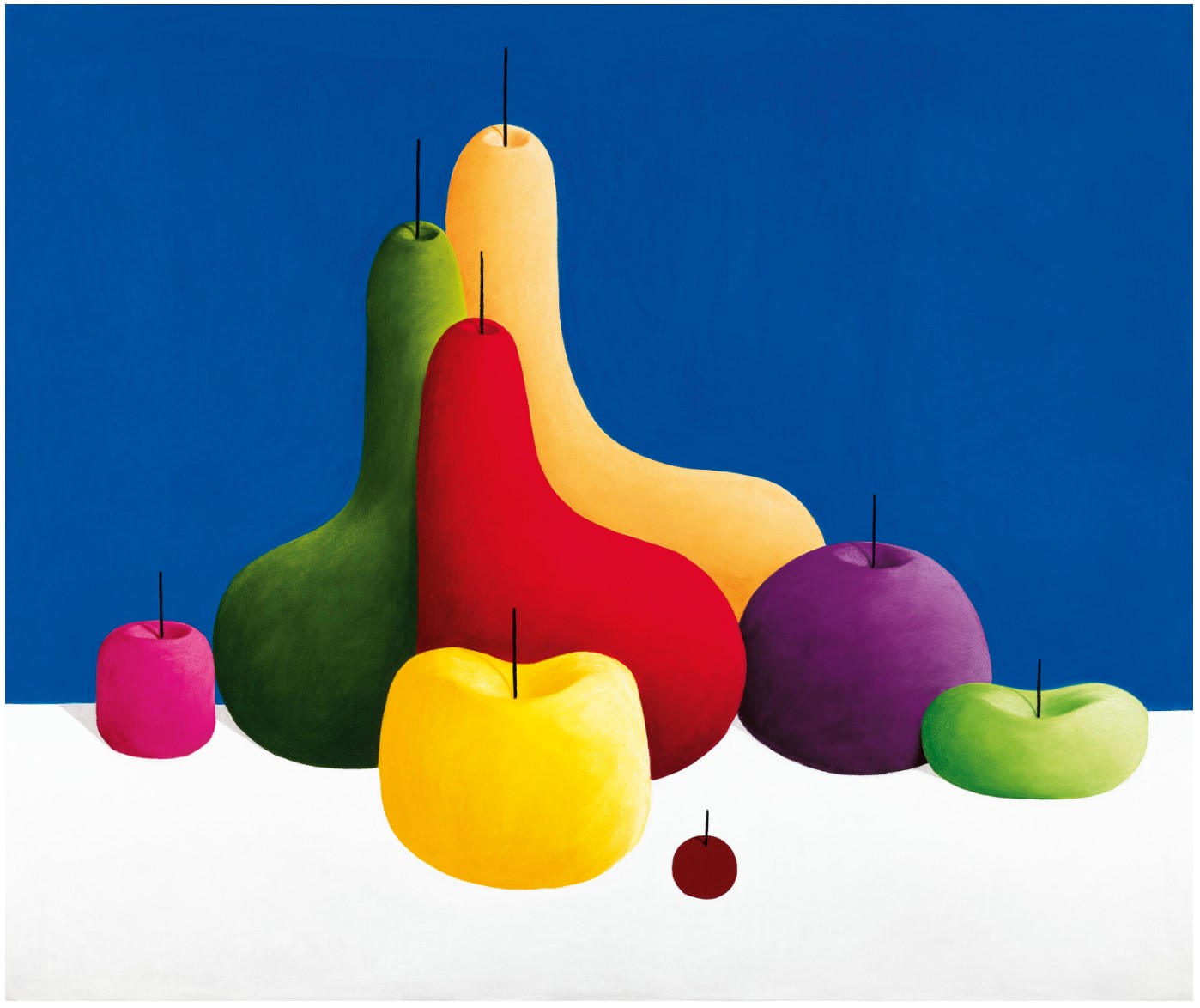
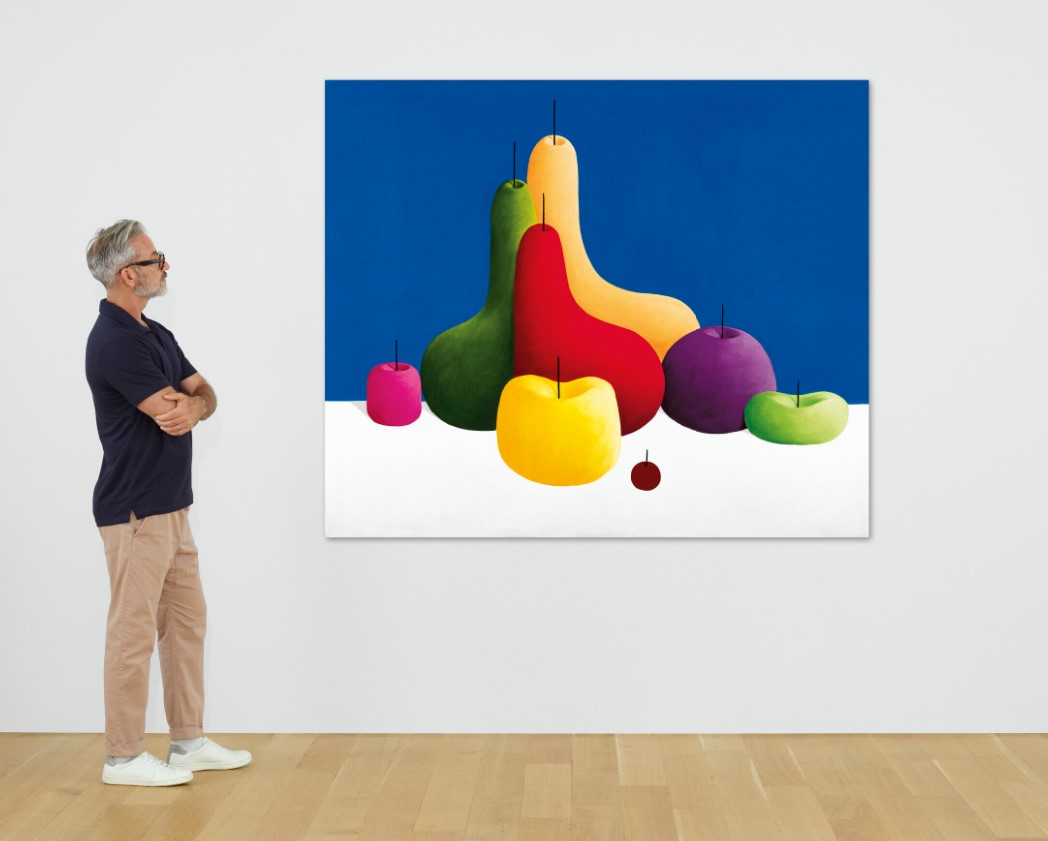
NICOLAS PARTY (B. 1980)
Still Life, 2015
Soft pastel on linen
150×180 cm (59 x 70 7/8 inches)
#2. Avery Singer
Christie’s Hong-Kong: 28 May 2023
Estimated: HKD 15,000,000 – 20,000,000
HKD 31,835,000 / USD 4,064,112
AVERY SINGER (B. 1987) (christies.com)
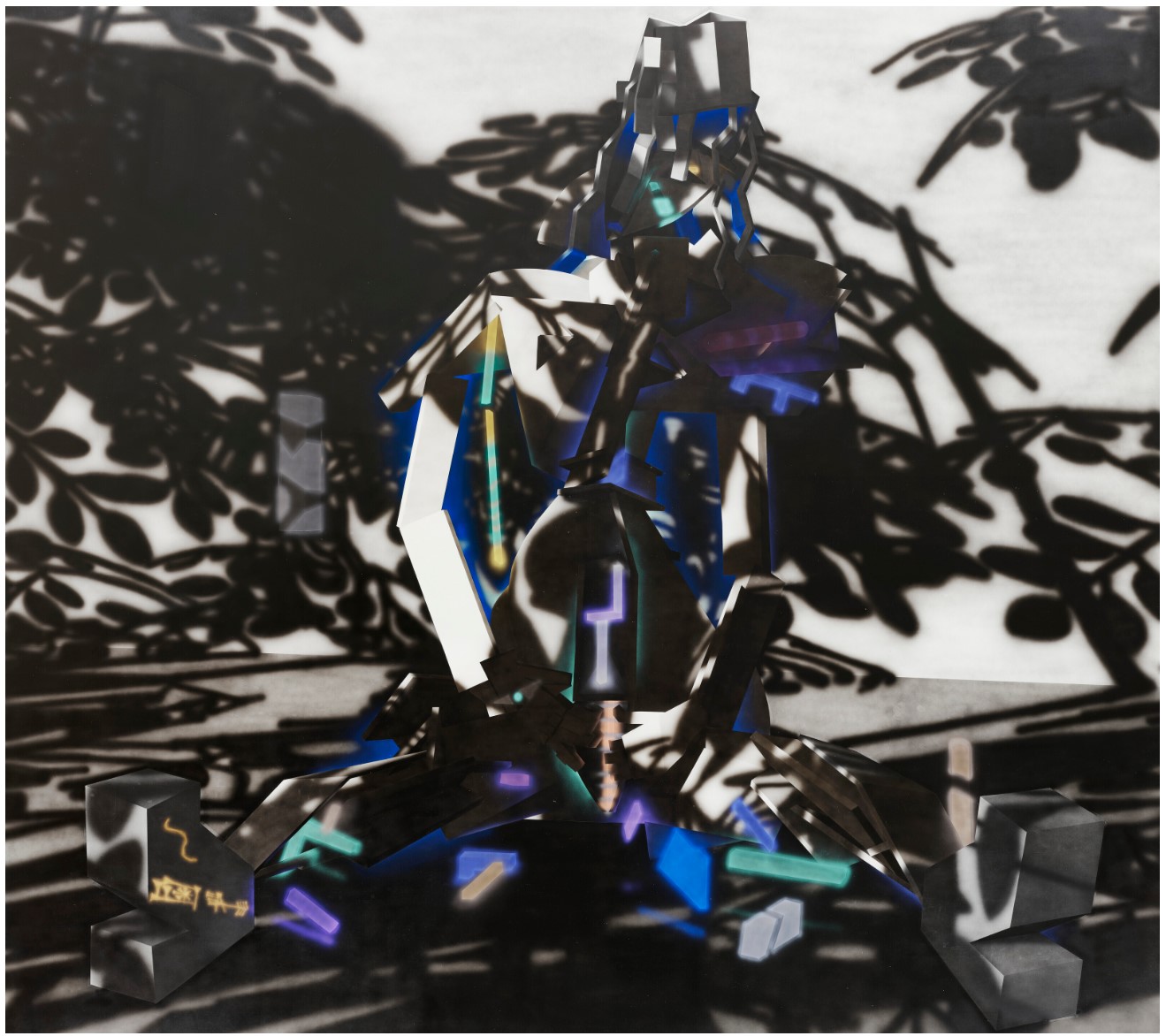
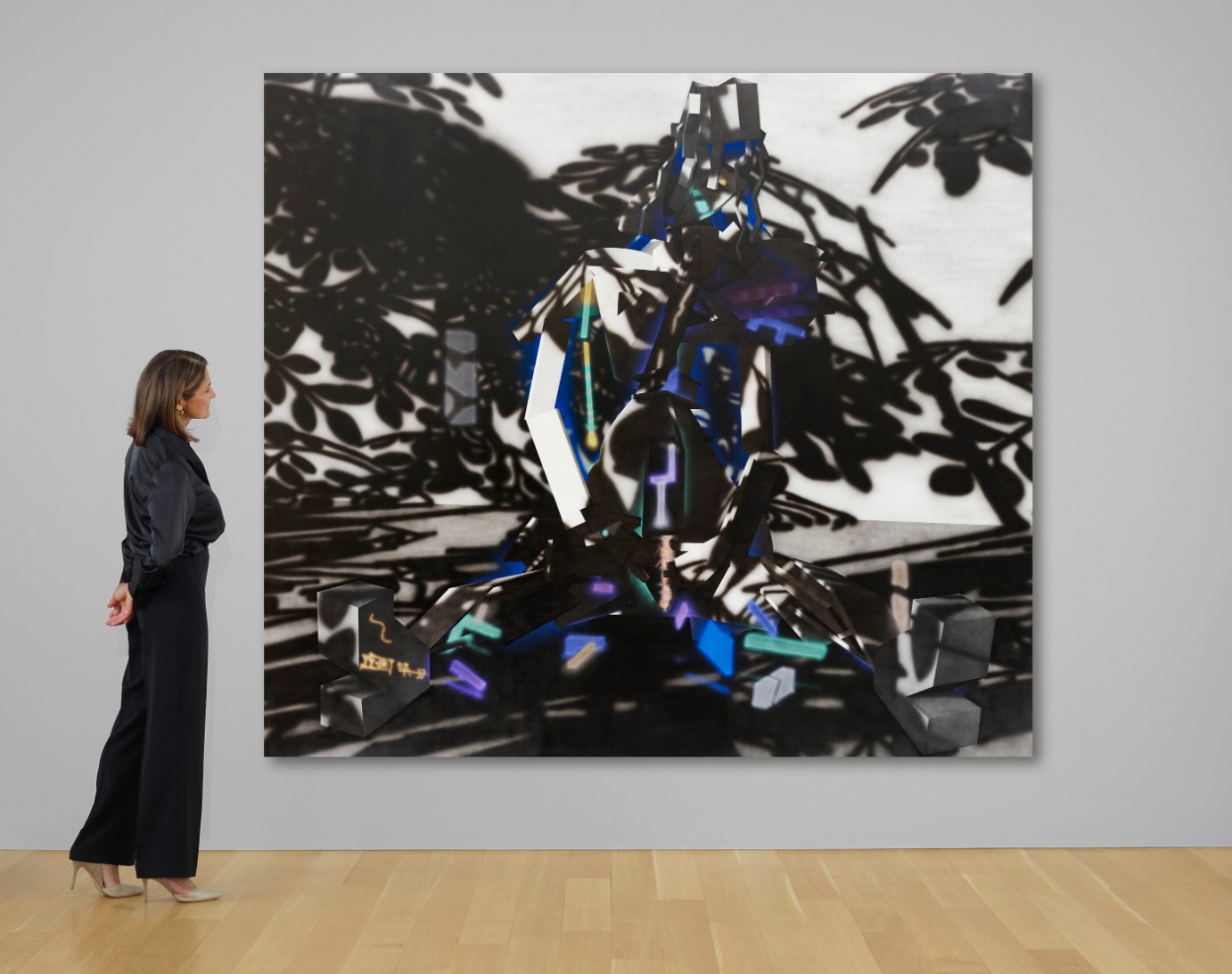
AVERY SINGER (B. 1987)
Untitled, 2016
Acrylic on canvas
80×90 inches (203.2 x 228.6 cm)
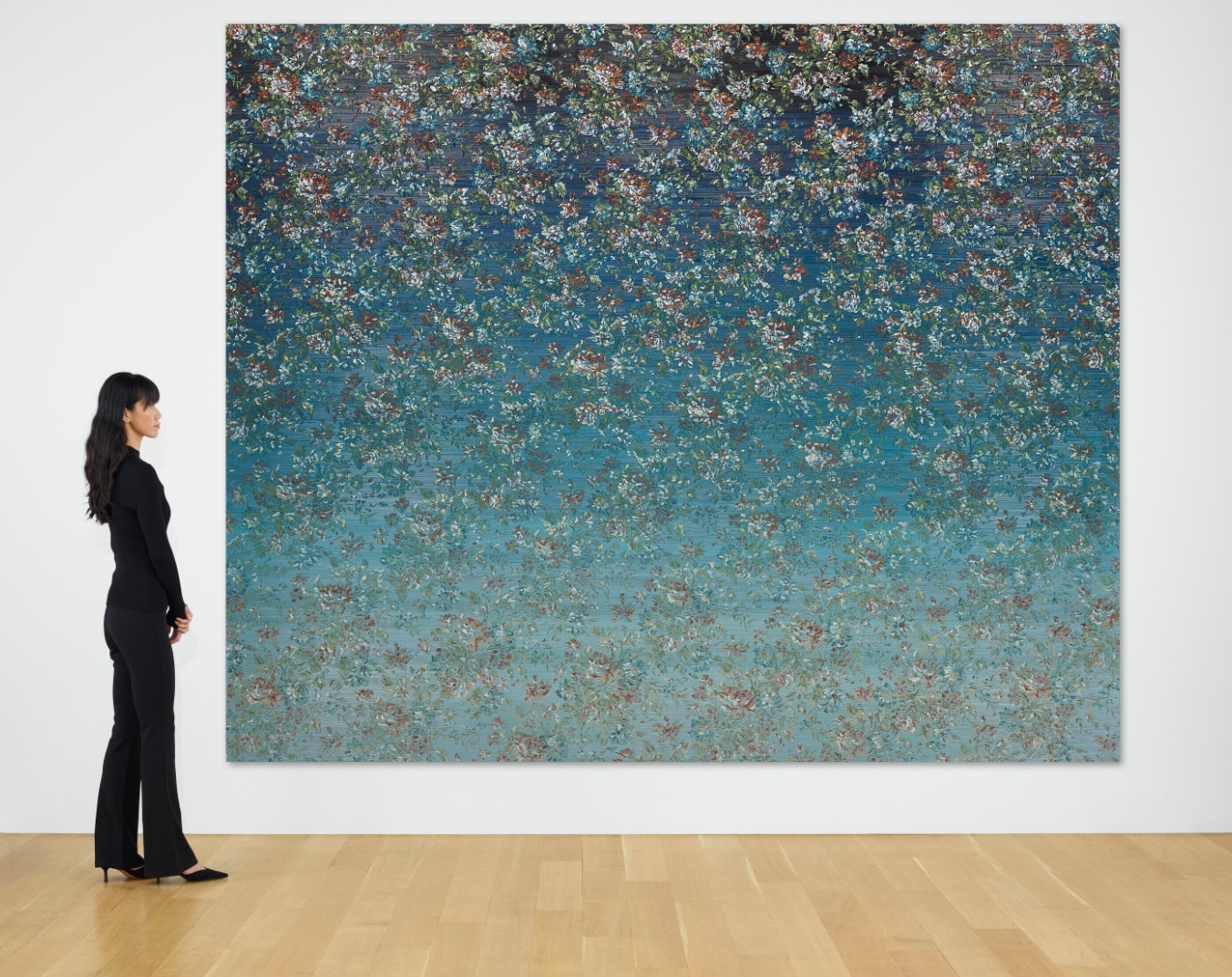
#3. Liang Yuanwei
Christie’s Hong-Kong: 28 May 2023
Estimated: HKD 10,000,000 – 15,000,000
HKD 14,895,000 / USD 1,901,522
LIANG YUANWEI (B.1977) (christies.com)
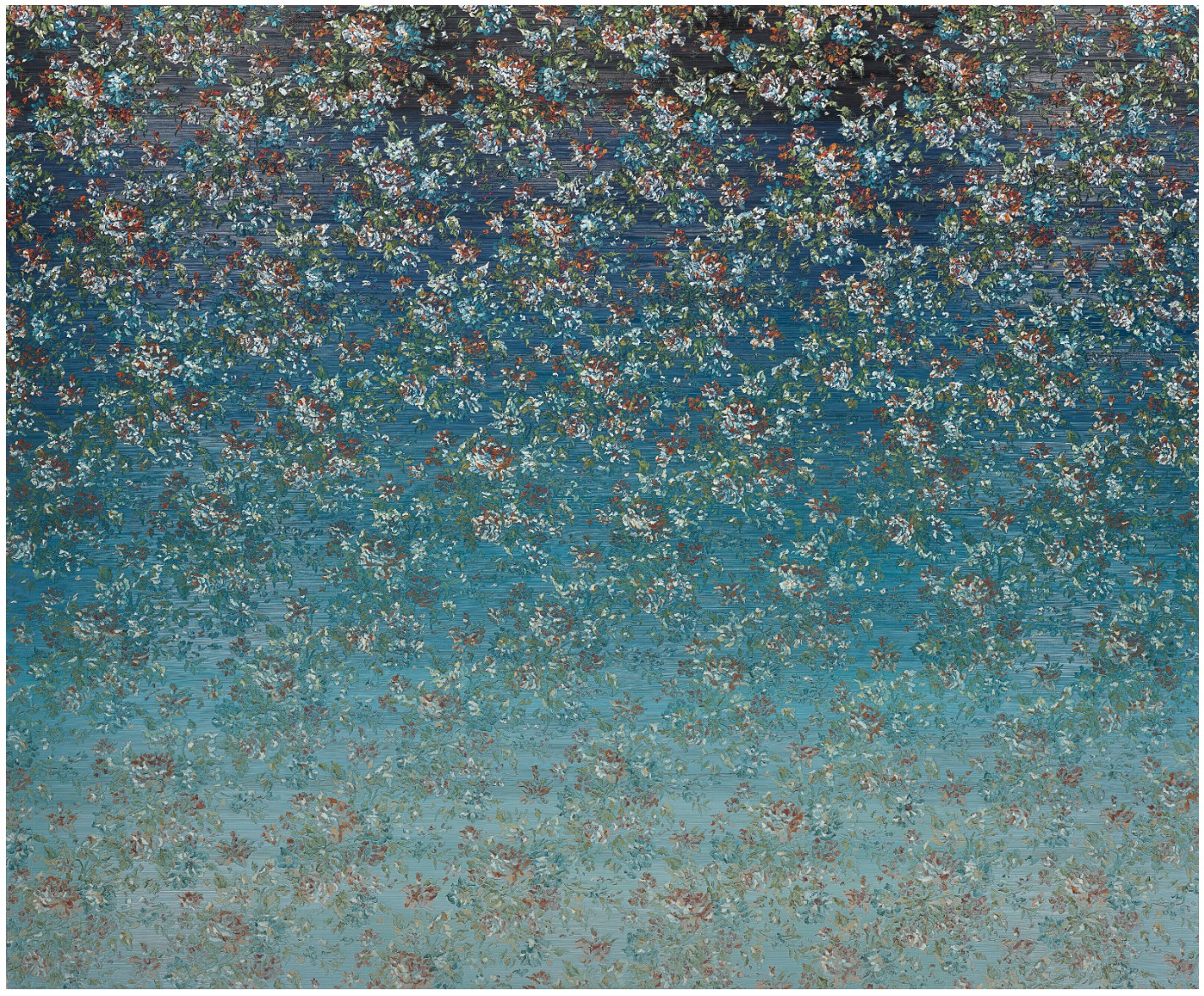
LIANG YUANWEI (B.1977)
Styx River, 2009
Oil on canvas
250 x 299.7 cm (98 1/2 x 118 inches)
Signed, titled and dated ‘Styx River L.Y. W. 2009’ (on the reverse)
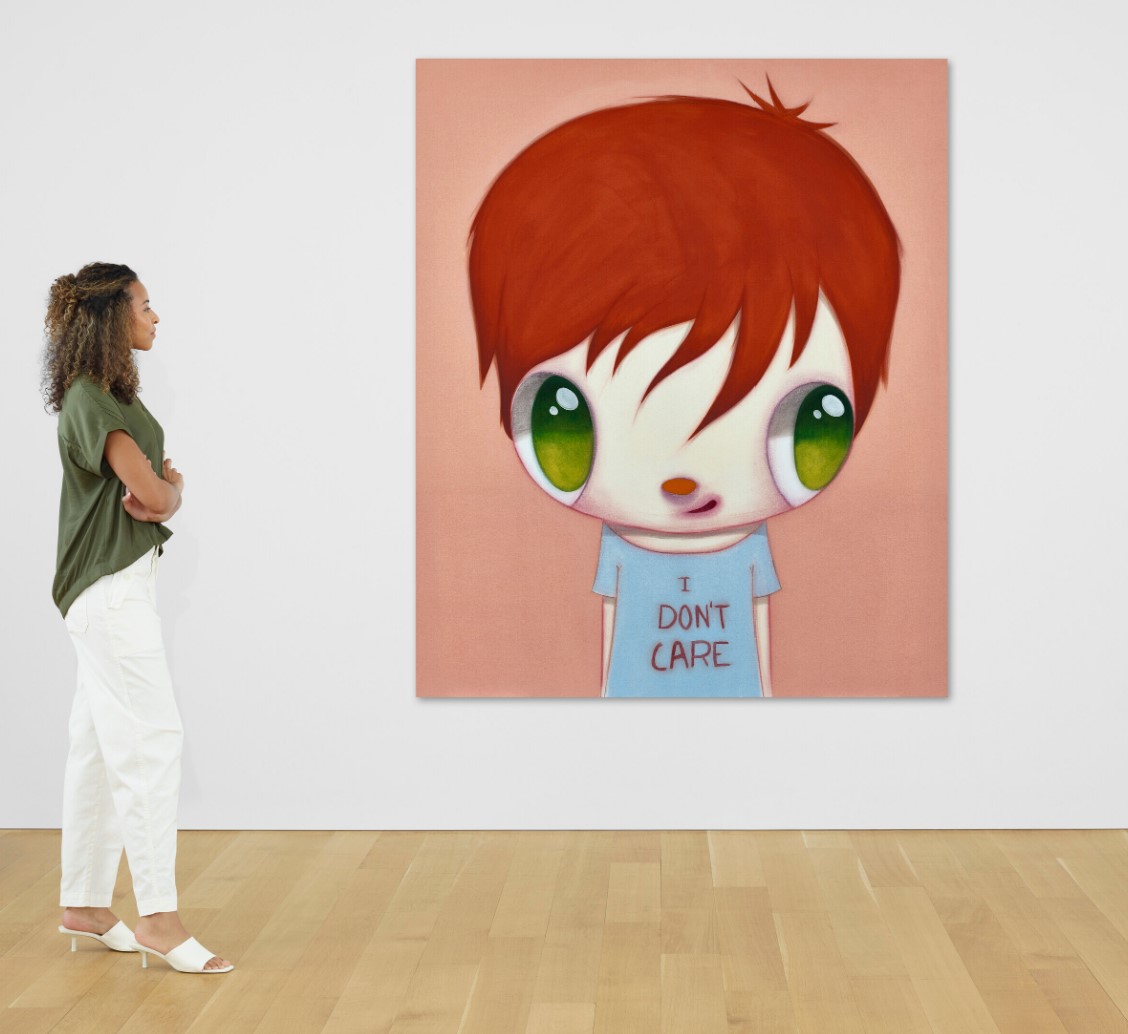
#4. Javier Calleja
Christie’s Hong-Kong: 28 May 2023
Estimated: HKD 4,000,000 – 6,000,000
HKD 10,055,000 / USD 1,283,639
JAVIER CALLEJA (B.1971) (christies.com)

JAVIER CALLEJA (B.1971)
I DON’T CARE, 2020
Acrylic on canvas
195×162 cm (76 2/3 x 63 2/3 inches)
Signed with artist’s signature and titled ‘I DON’T CARE’ (on the overlap)
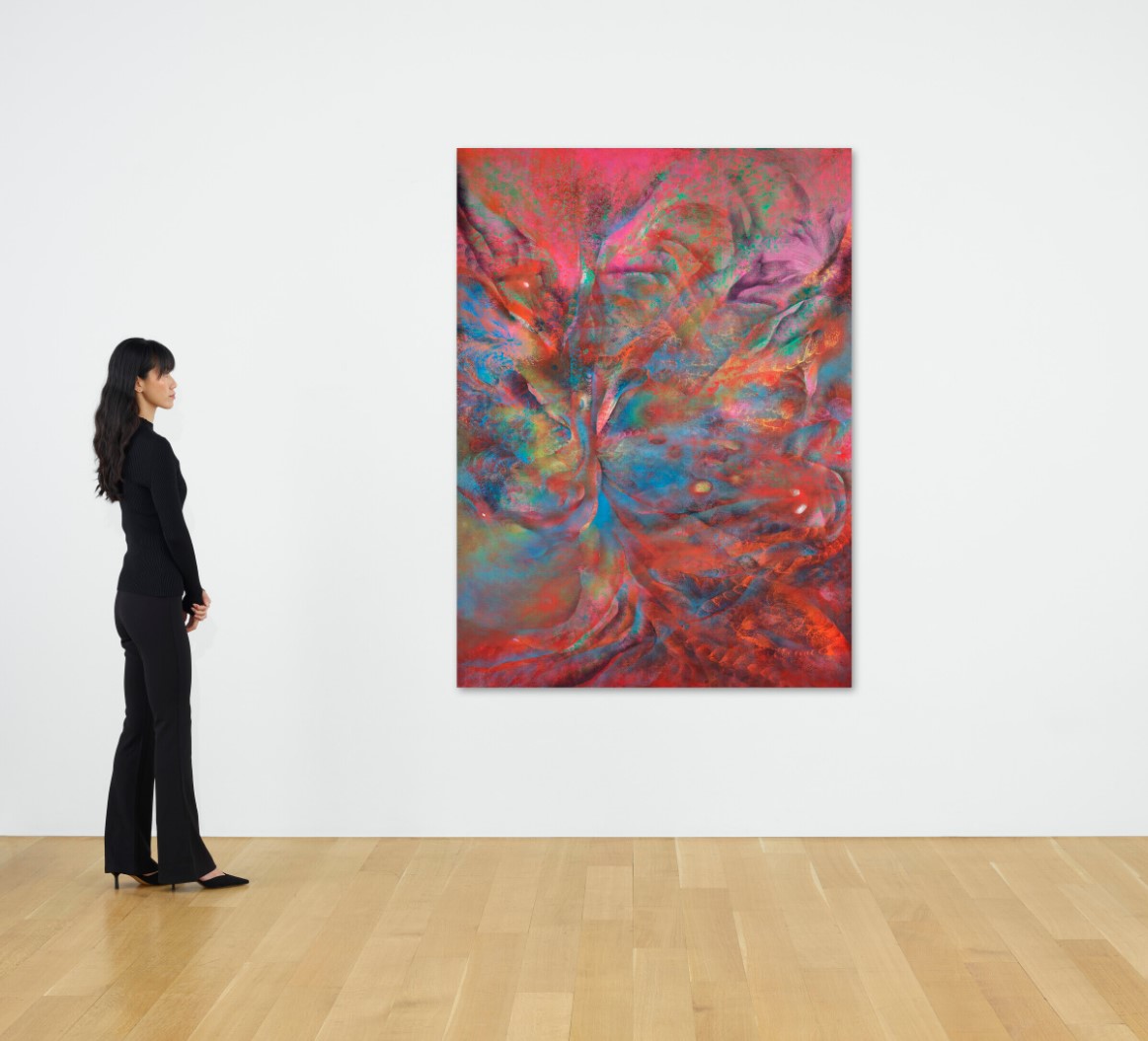
#5. Lucy Bull
Christie’s Hong-Kong: 28 May 2023
Estimated: HKD 7,000,000 – 12,000,000
HKD 9,450,000 / USD 1,206,404
LUCY BULL (B. 1990) (christies.com)
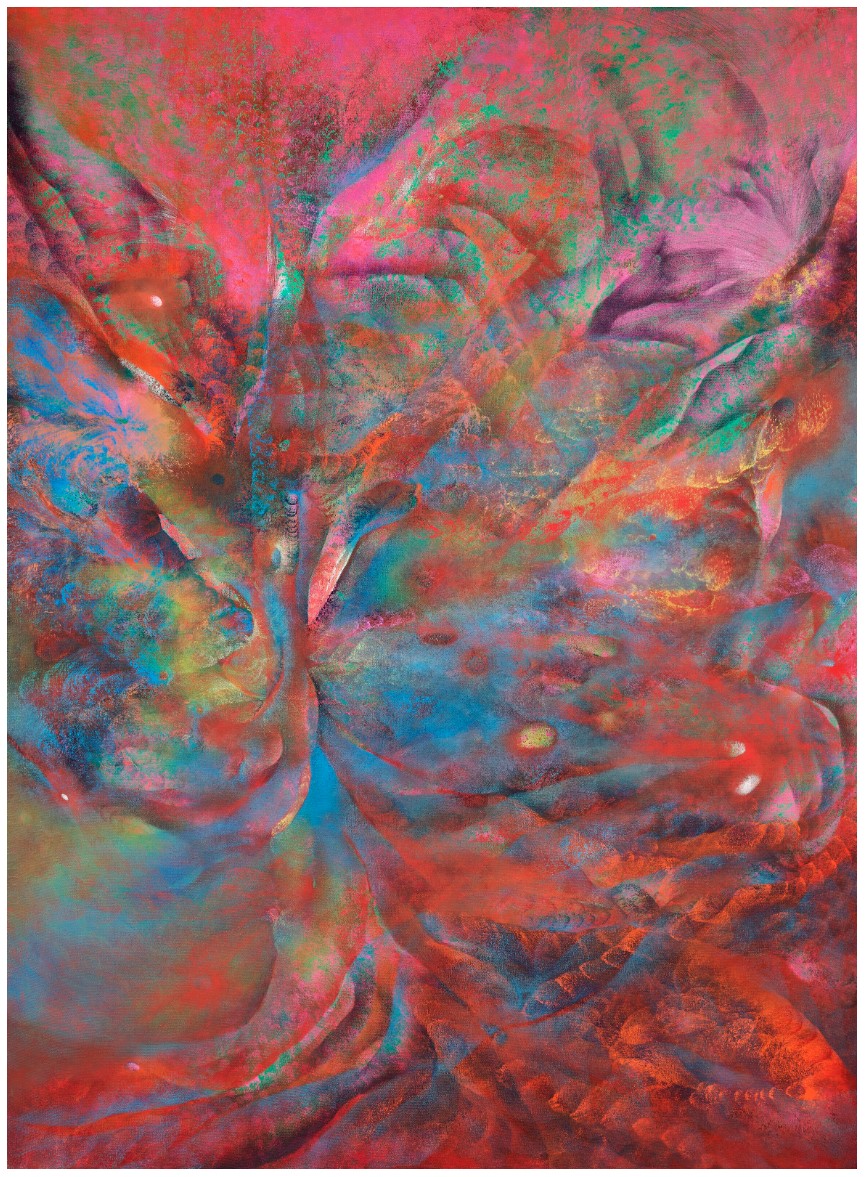
LUCY BULL (B. 1990)
Thin Skin, 2019
Oil on linen
70×50 inches (178 x 127.5 cm)
Signed with artist’s initials, titled and dated ‘LB 19 Thin Skin’ (on the reverse)
3. Other Highlights
Caroline Walker
Christie’s Hong-Kong: 28 May 2023
Estimated: HKD 600,000 – 800,000
HKD 2,520,000 / USD 321,708
CAROLINE WALKER (B. 1982) (christies.com)
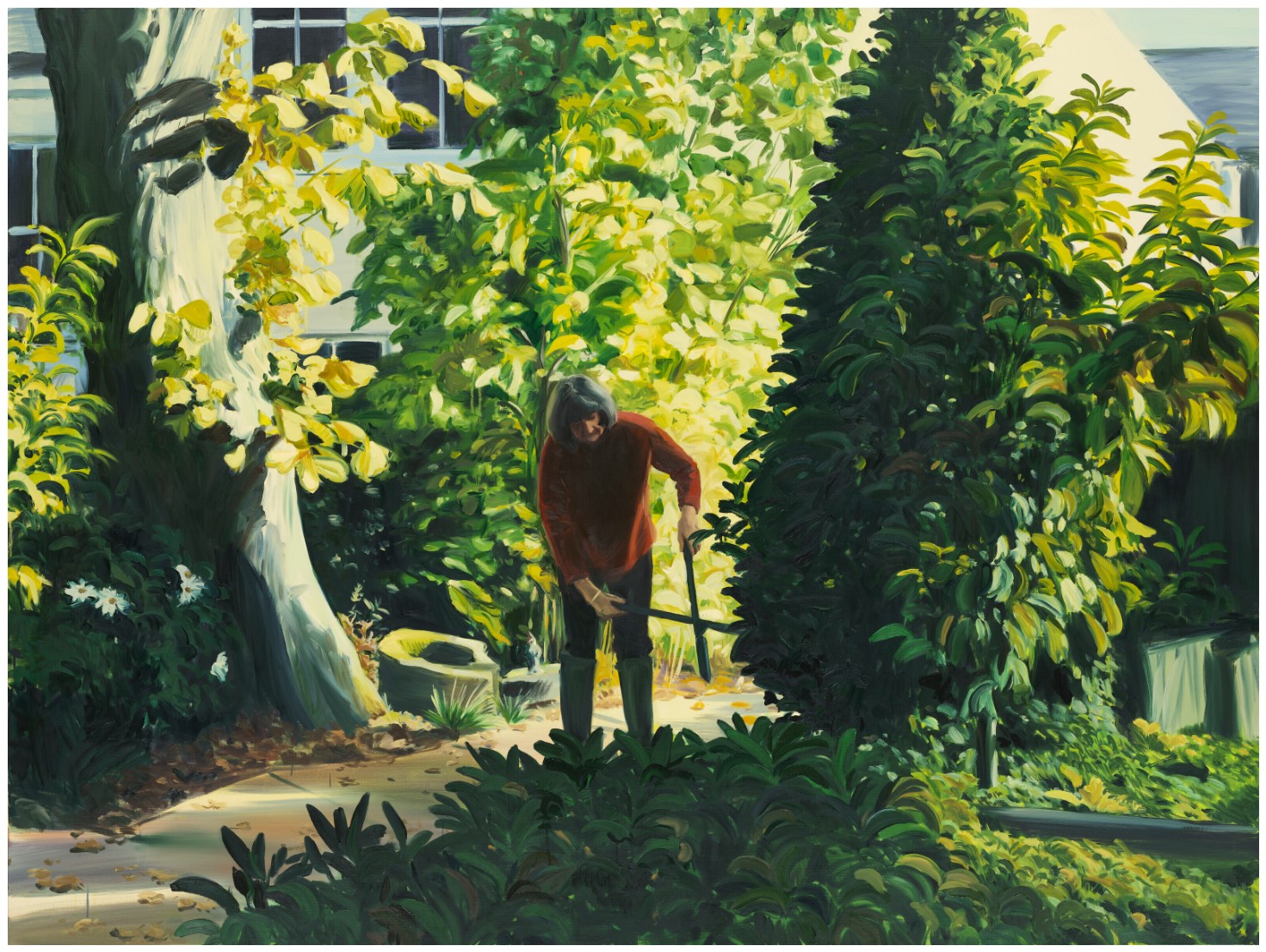
CAROLINE WALKER (B. 1982)
Cutting Back, Late Afternoon, October, 2021
Oil on linen
70 7/8 x 94 1/2 inches (180.5 x 240 cm)
Signed, dated and titled ‘CUTTING BACK, LATE AFTERNOON OCTOBER 2021’ (on the reverse)
Painted in 2021, Cutting back, late afternoon, October belongs to Caroline Walker’s pivotal series Janet which turns away from painting quotidian moments of other women at work and their lives in the city to looking up-close at the real life of someone the artist is close with and knowing the longest—her mother Janet. Over the course of a year amid the pandemic, Walker armed with a camera following and capturing her mother’s daily domestic routine around the family house in Dunfermline—a home where she grew up in and where her parents have lived for four decades. Rendering in lustrous gold from early sunset and profuse greens in Walker’s skillful loose brushstrokes, the present work captures one of the trivial moments where her mother was alone trimming the bushes and was surrounded by the vivacious vegetation in the tranquil backyard at an early fall afternoon.
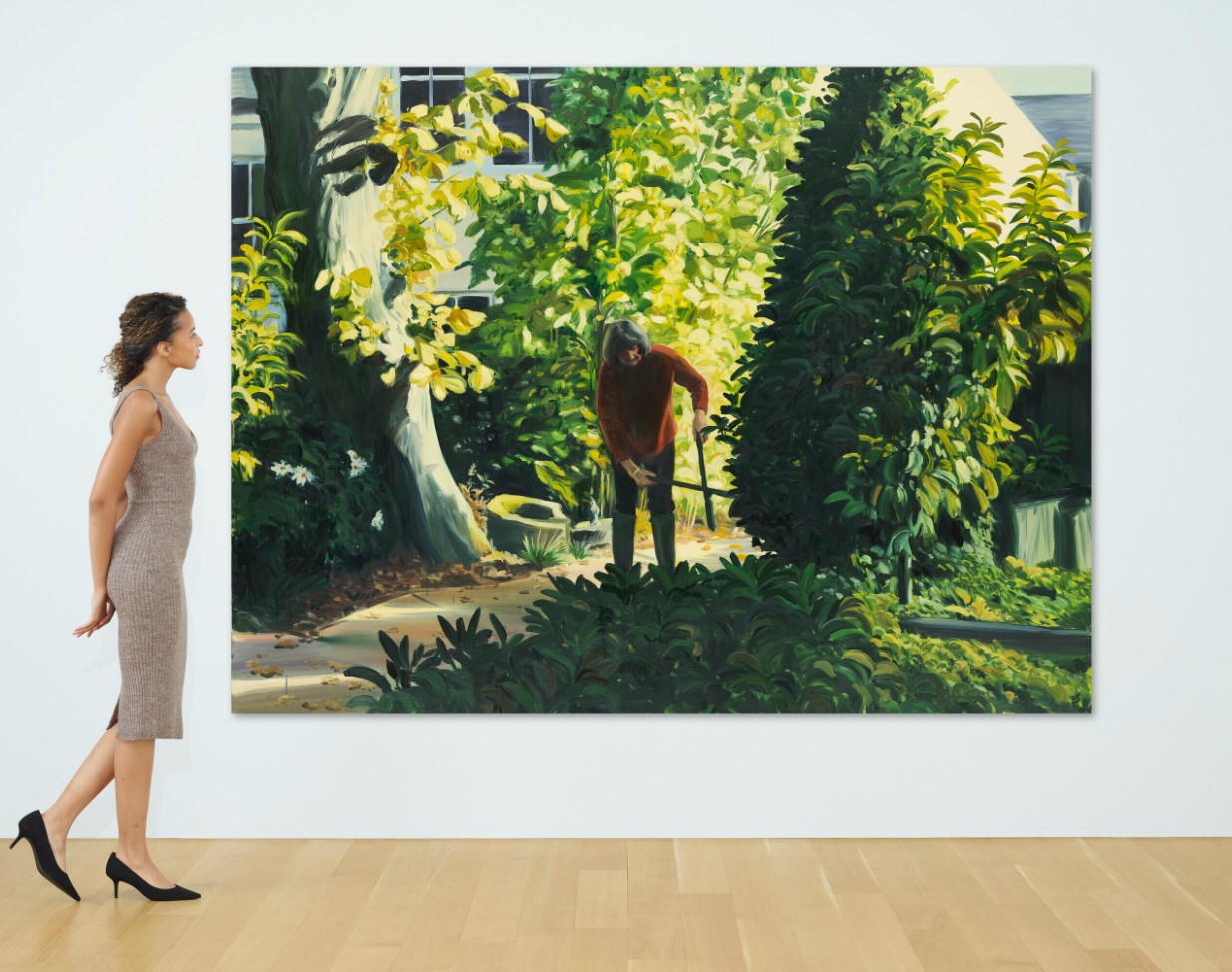
Here in the middle of the canvas, Janet was geared with a grass shear tending the garden in broad daylight, a manly task unlike her other household activities like cooking, cleaning, and tidying that are taken place within an enclosed domestic interior. Against the verdant foliage backdrop gently illuminated by the sunlight stream from the side and distanced from the Victoria-style Fife house emerged from the top corner, Walker brings her mother’s invisible forty years of devoted toil forefront of the canvas. Indeed, what emerges from the present work is more than just an austere portrait of domestic labour, it is a tribute and recognition of the unconditional love any mothers have had towards a place called home.
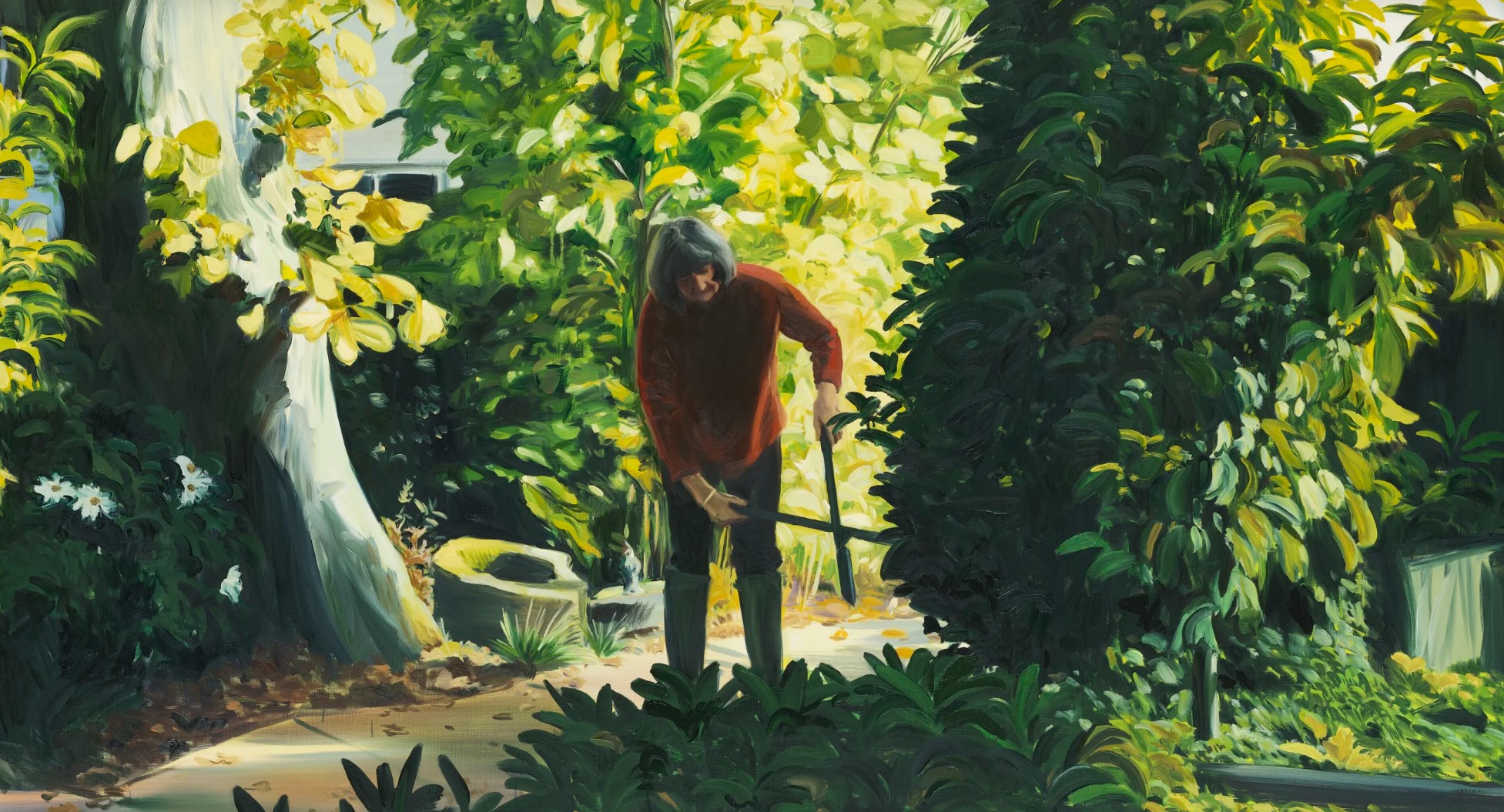
Using light as a great apparatus to envelop the sense of time passing like Dutch Golden Age master Vermeer, Walker not only gives the characters she portrayed luminosity but also reveals the psychological depth beneath their everyday gestures that she has been acutely observed. The interplay of light and shadow with segmented views in Walker’s paintings not only unfolds the cinematic quality, but also the instrumental role photography plays in her practices. Majored in painting at Glasglow School of Art and completed her MA at Royal College of Art by 2009, Walker has since developed her paintings from the photographs taken by her. From the early works that are fictional with staged scenarios enacted by hired models through the angles of upscale modern architecture, to her latest first-hand observation of day-to-day activities of working-class women, Walker is able to, through photography, discern the primary experiences and memories as an author while reading them anew as a spectator.
20th/21st Century Art Evening Sale
28 May 2023
20th/21st Century Art Evening Sale (christies.com)
1. Auction Statistics
58 Lots
Low Estimate: HKD 570,620,000
High Estimate: HKD 878,080,000
——–
Total Turnover:
HKD 725,713,800 / USD 92,645,892
# Lots withdrawn: 1
# Lots sold: 48
Sell-Through Rate: 84.2%
———-
Top Lot:
HKD 62,600,000 / USD 7,991,625
26 Lots sold over HKD 10 million
Turnover: HKD 644,910,000 (58.7% of total)
———–
Above Estimates: 20 Lots (34%)
Within Estimates: 27 Lots (47%)
Below Estimates: 1 Lot (2%)
Unsold: 10 Lots (17%)
2. Top 5 Lots
#1. Jean-Michel Basquiat
Christie’s Hong-Kong: 28 May 2023
Estimated: HKD 55,000,000 – 75,000,000
HKD 62,600,000 / USD 7,991,625
JEAN-MICHEL BASQUIAT (1960-1988) (christies.com)
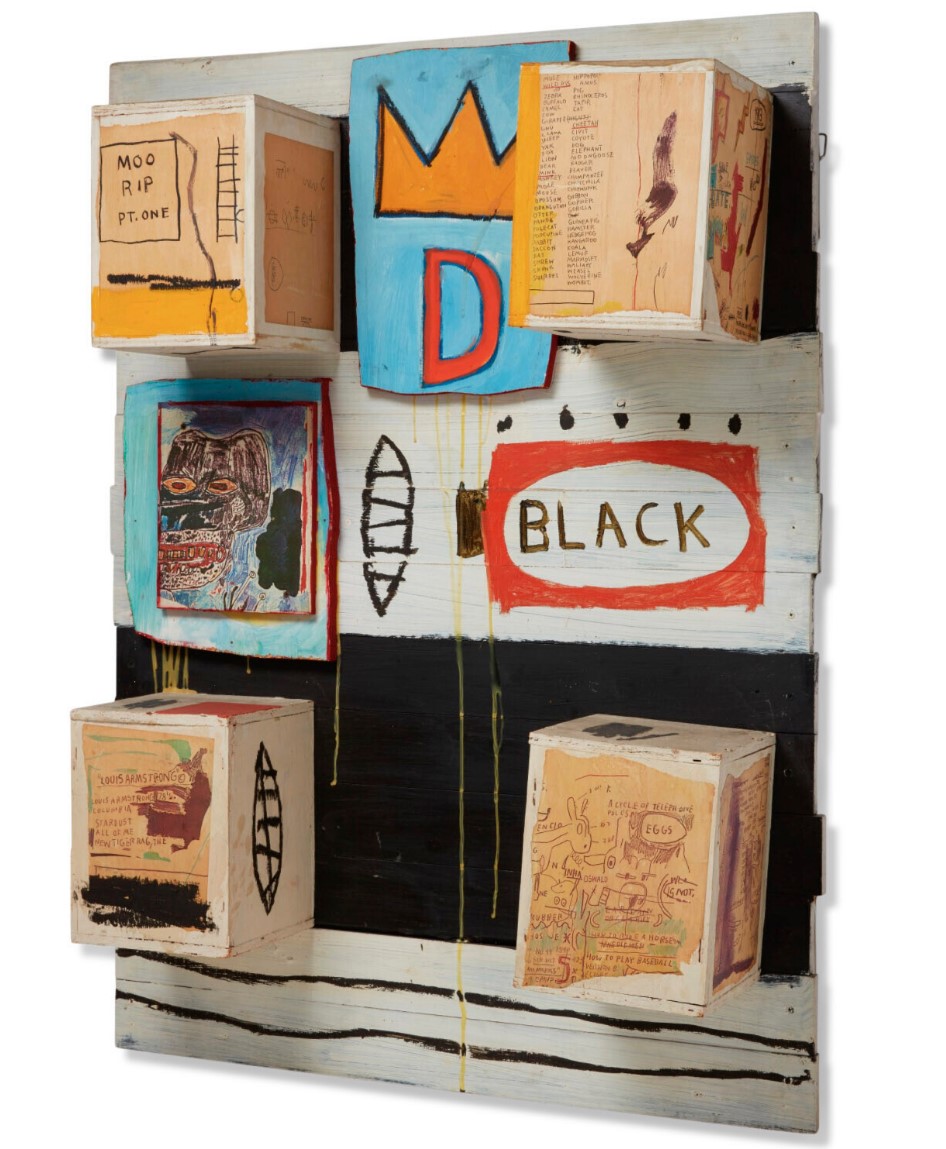
JEAN-MICHEL BASQUIAT (1960-1988)
Black, 1986
Acrylic, oil, graphite, oilstick and Xerox on wood
126.4 (H) x 92.7 x 29.2 cm (49 3/4 x 36 1/2 x 11 1/2 inches)
An important work from the latter years of the artist’s short life, Jean-Michel Basquiat’s Black is a prime example of his revolutionary body of work. Once owned by the eminent Basquiat scholar and collector Enrico Navarra, and prominently featured on the slipcover of his seminal monograph on the artist’s work, Black demonstrates Basquiat’s insatiable desire to innovate. It incorporates many of the ideas and motifs which he had spent much of his career developing, but deployed in an entirely new and exciting way. Thus, in Black we see the inclusion of many signature motifs: his three-pointed crown, a heroic head, and an encyclopedic display of words and images which together represent one of the most original and prodigious artistic talents of late twentieth-century art.
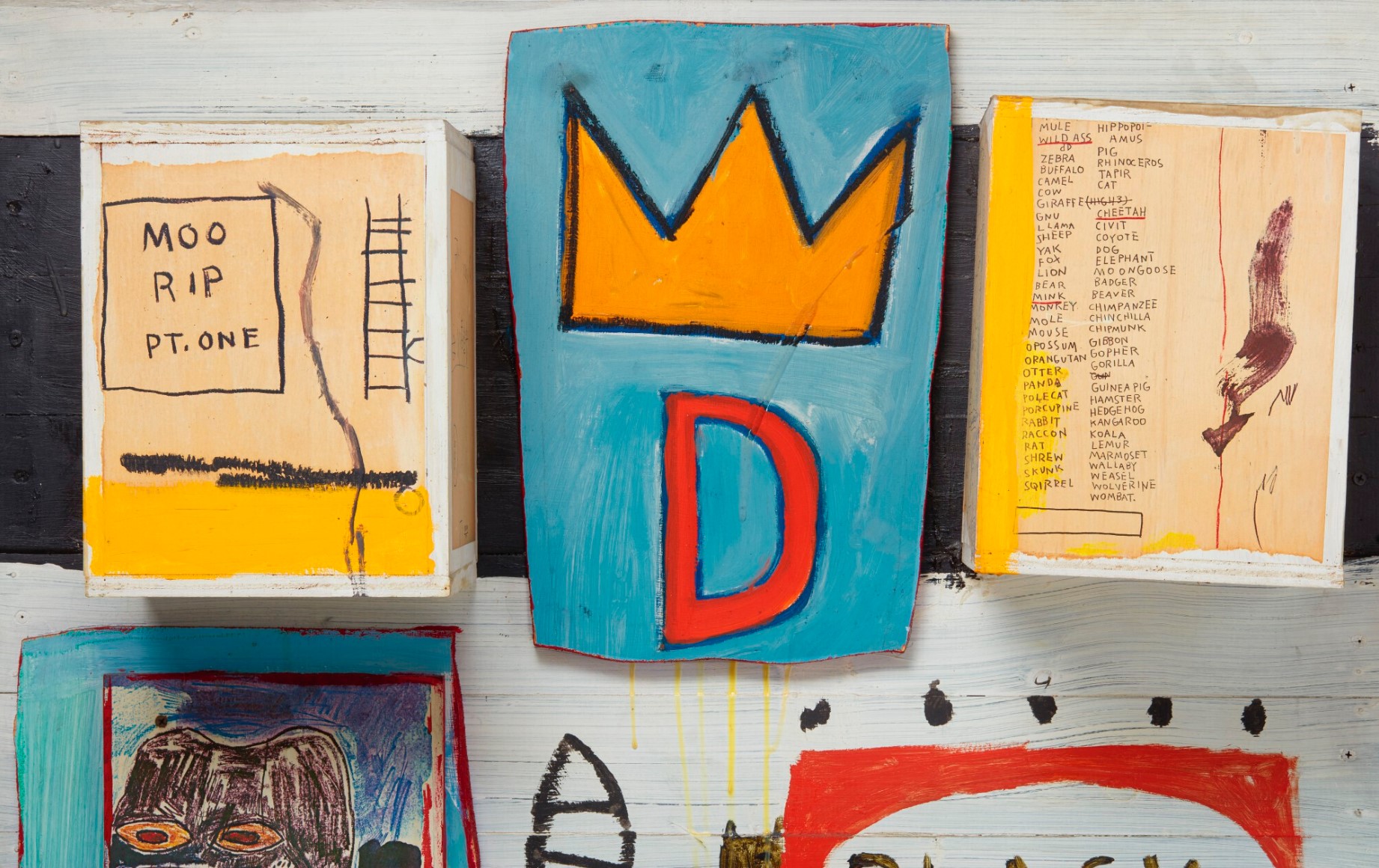
Occupying the space traditionally ignored by painters (that which sits between the picture plane and the viewer), Basquiat uses the three-dimensional nature of this work to present many more examples of his graphic style than would be possible with a traditional flat canvas. On a support constructed by the artist himself, Basquiat attaches four wooden boxes, together with a series of plaques. On each of these, he has mounted a series of xeroxed drawings that encompass his entire oeuvre. Thus, there are homages to the famous jazz musician Louis Armstrong (a particular hero of the artist and the subject of many paintings, including King Zulu (1986); also visible is a comprehensive list of animal names (including rat, pig, cheetah and lion), drawings of animals, along with titles of books and the names of songs as found on old vinyl records.
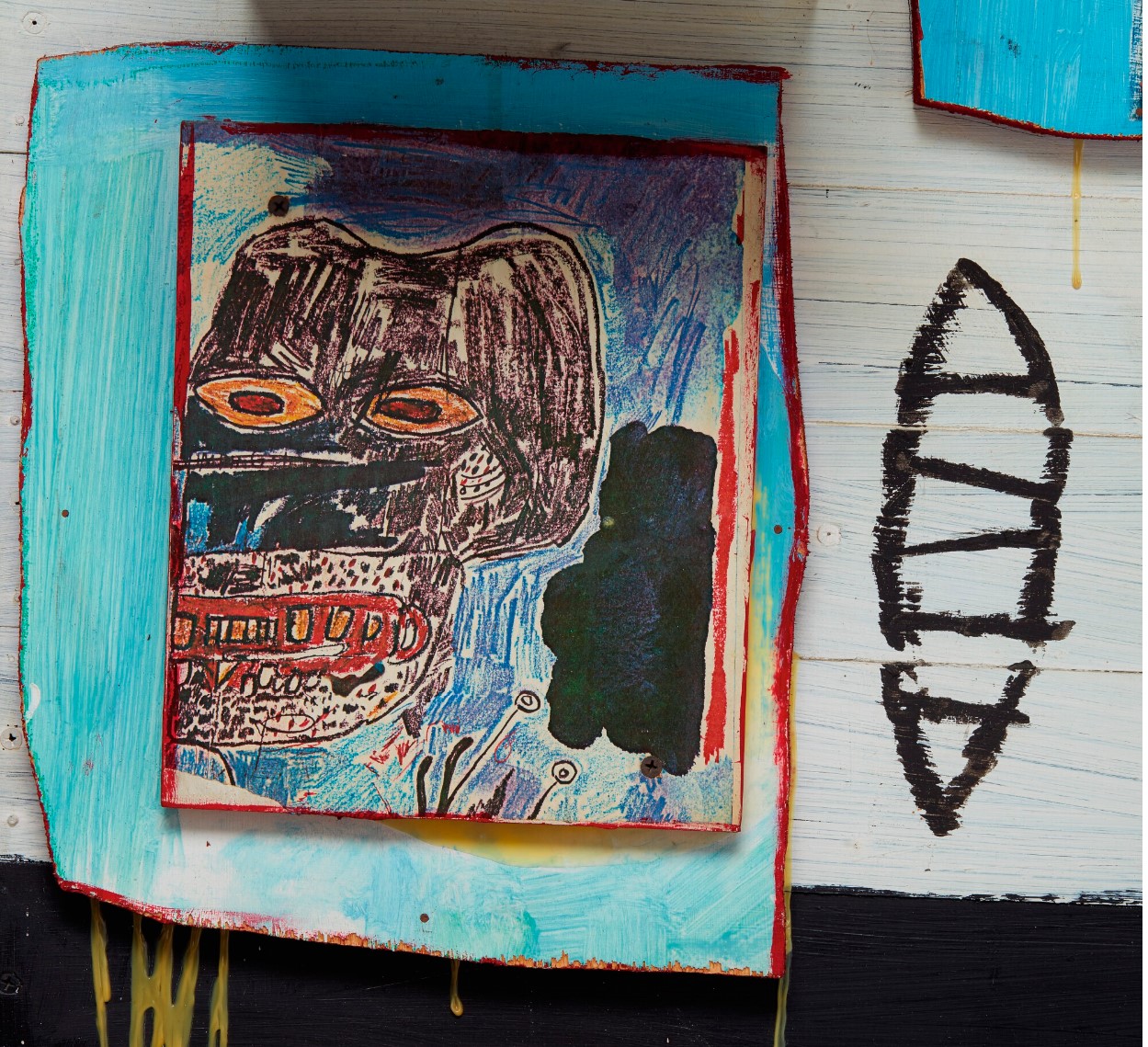
Dominating the composition, however, are three elements which are central to Basquiat’s art. On the left is an image of a singular head with fiery red eyes and a striking grin. Executed with a series of rapidly applied marks, this figure demonstrates the artist’s accomplished draftsmanship, as facial features, depth and tone all emerge from this flurry of activity. This form resembles the African masks that so enthralled Pablo Picasso and which the Spanish artist then appropriated for some of his earliest works such as Head of a Sleeping Woman (Study for Nude with Drapery) (1907). Basquiat was a big admirer of Picasso’s work and once said of his relationship with the Spanish artist ‘Picasso arrived at primitive art to give of its nobility to western art. And I arrived at Picasso to give his nobility to the art called “primitive”‘ (J. Basquiat, Basquiat, exh. cat., Museo Revoltella, Trieste, 1999, p. 126). This ‘reappropriation’ of African Art from the Western canon would become a theme that occupied Basquiat throughout much of his career, resulting in some of his most accomplished paintings such as Untitled (1981).
#2. Jeff Koons
Christie’s Hong-Kong: 28 May 2023
Estimated: HKD 50,000,000 – 70,000,000
HKD 60,875,000 / USD 7,771,409
JEFF KOONS (B. 1955) (christies.com)
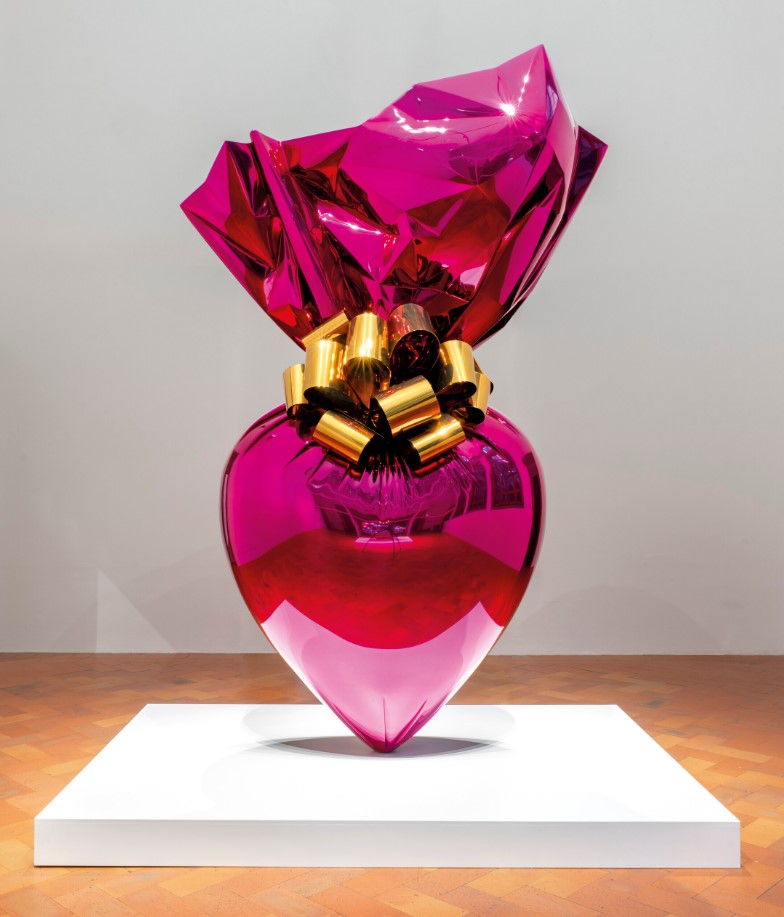
JEFF KOONS (B. 1955)
Sacred Heart (Magenta/Gold), 1994-2007
Mirror-polished stainless steel with transparent color coating sculpture
356.9 (H) x 218.4 x 121 cm (140 1/2 x 86 x 47 5/8 inches)
Signed and dated ‘JEFF KOONS 1994-2007’ (inside the bow)
This is one of five unique versions
Jeff Koons’s Sacred Heart (Magenta/Gold) is the ultimate example of contemporary sculpture. Bringing together familiar iconography with extraordinary workmanship, the artist presents a work of both conceptual depth and dazzling beauty; the present work is ablaze with passion and optimism. With a luxurious combination of rich hues, Sacred Heart (Magenta/Gold), a unique version from an edition of five, is a massive gift to the viewer from Koons’s characteristically generous spirit. It is reminiscent of a magenta sapphire, among the rarest colors of the gemstone, or Botticelli’s use of gold leaf in The Birth of Venus (c. 1484-1486). Sacred Heart (Magenta/Gold) is simultaneously reverential and opulent, and it epitomizes Koons’s appreciation of Asian art and culture. He observes that all of his sculptures ‘have these universal aspects, these qualities that we celebrate in our aesthetics, both Eastern and Western…How can we reach a higher level of transcendence, a level of total consciousness? These interests are at the base of Eastern philosophy. All the works participate in the affirmation of the self and they also stimulate the viewer, so that the viewer is aware that art is the essence of their own potential. At the end of the day, it’s all metaphor for self-acceptance, and that you accept other people’ (J. Koons, quoted in S. Short, ‘Jeff Koons Talks Art Basel Hong Kong and China vs. the West’, #Legend, March 1, 2018).
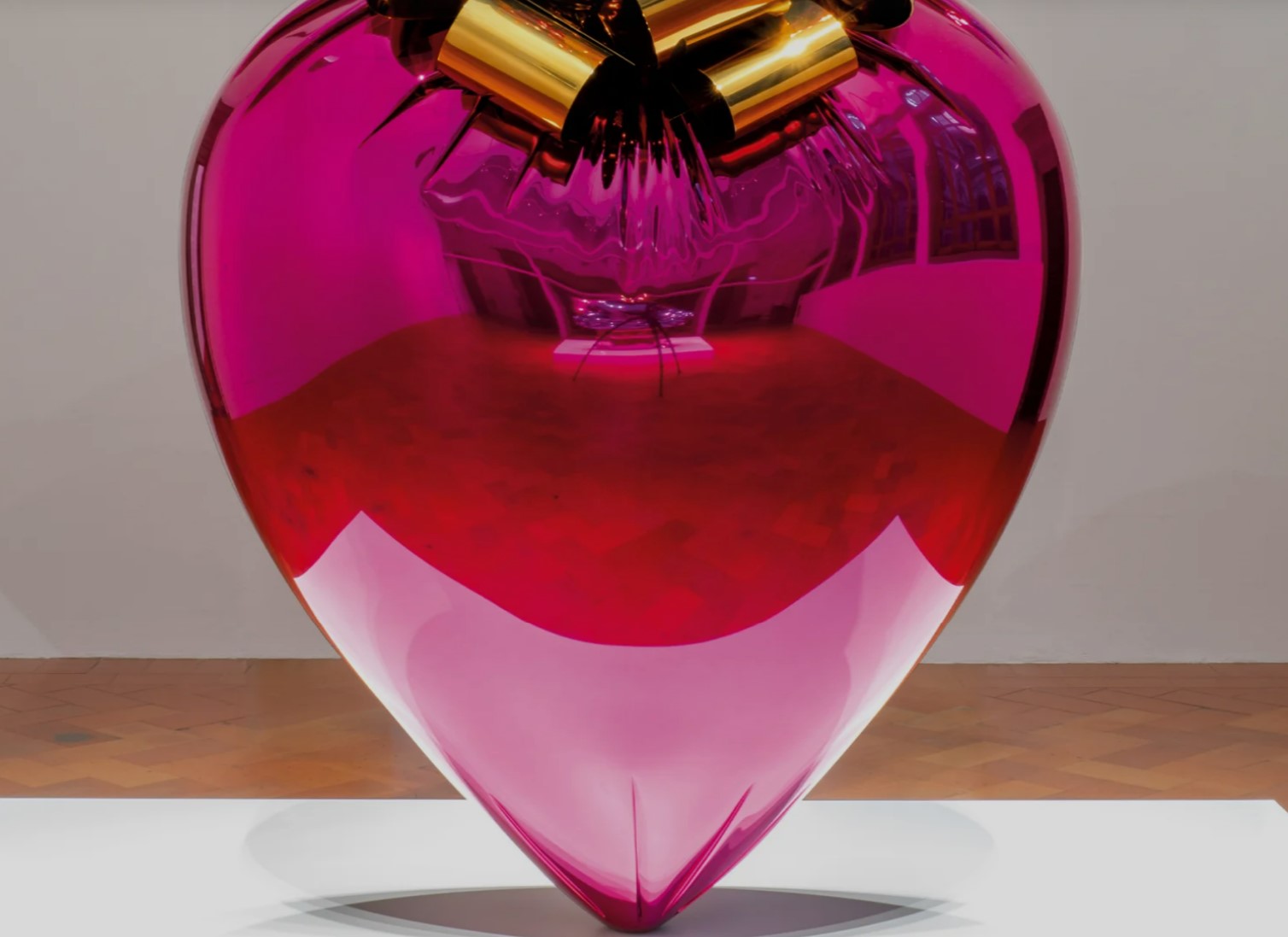
Sacred Heart (Magenta/Gold) is a key work in Koons’s iconic Celebration series (1994-), which also includes Balloon Dog (1994-2000), Balloon Flower (1995-2000), and Tulips (1995-2004). The Celebration series embraces the acceptance and openness to the world that we have in childhood, but also it taps into archetype and mythology. The work encompasses joy while at the same time maintaining other connections that parallel our live experience. It draws the viewer to it through its transparent colors, and the sculpture’s mirrored reflective surface along with its reflective gleaming bow, and presentation as a gift. While at one moment exposing itself through its highly reflective seductive surface, there is also an awareness that there is something internal within this gift that is present and mysterious. The colors of red and gold have always been symbols of seduction, power, and magnificence.
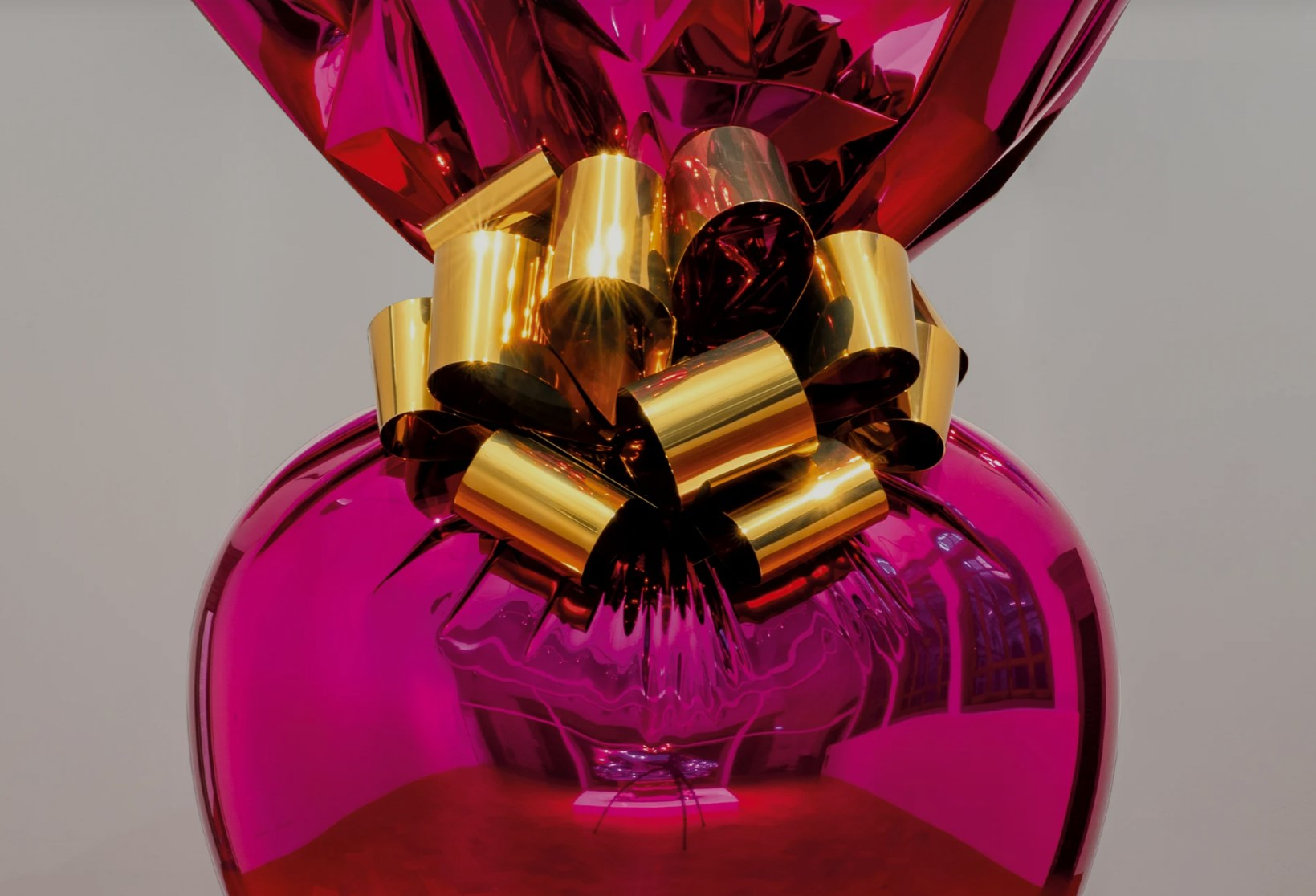
Sacred Heart (Magenta/Gold) is furthermore a product of intense technical skill and craftsmanship. The highly finished stainless steel is a labour-intensive, exacting process that is also apparent in the legendary Rabbit (1986). The pristine metallic shine of Sacred Heart (Magenta/Gold) is filled with desire, and the radiant sheen exudes a playful energy. Koons’s formal innovations connect him to sculptors like Constantin Brâncuși, whose Sleeping Muse (1910) is a bronzed manifestation of intimacy, not unlike the romantic connotations of Sacred Heart. Koons’s and Brâncuși’s focus on discrete parts of the body also has a Surrealist element, which sought to investigate the multifariousness of the body. As Koons notes, ‘I have always felt an affinity for Duchamp and his objects, but I also wanted my sculptures to be closer to Brâncuși’s objects, to his finish, to the sensuality of his forms’ (J. Koons, quoted in Phaidon Editors, ‘Jeff Koons on his teenage meeting with Salvador Dalí’, Phaidon, June 24, 2019).
#3. Yayoi Kusama
Christie’s Hong-Kong: 28 May 2023
Estimated: HKD 32,000,000 – 55,000,000
HKD 58,455,000 / USD 7,462,467
YAYOI KUSAMA (B. 1929) (christies.com)
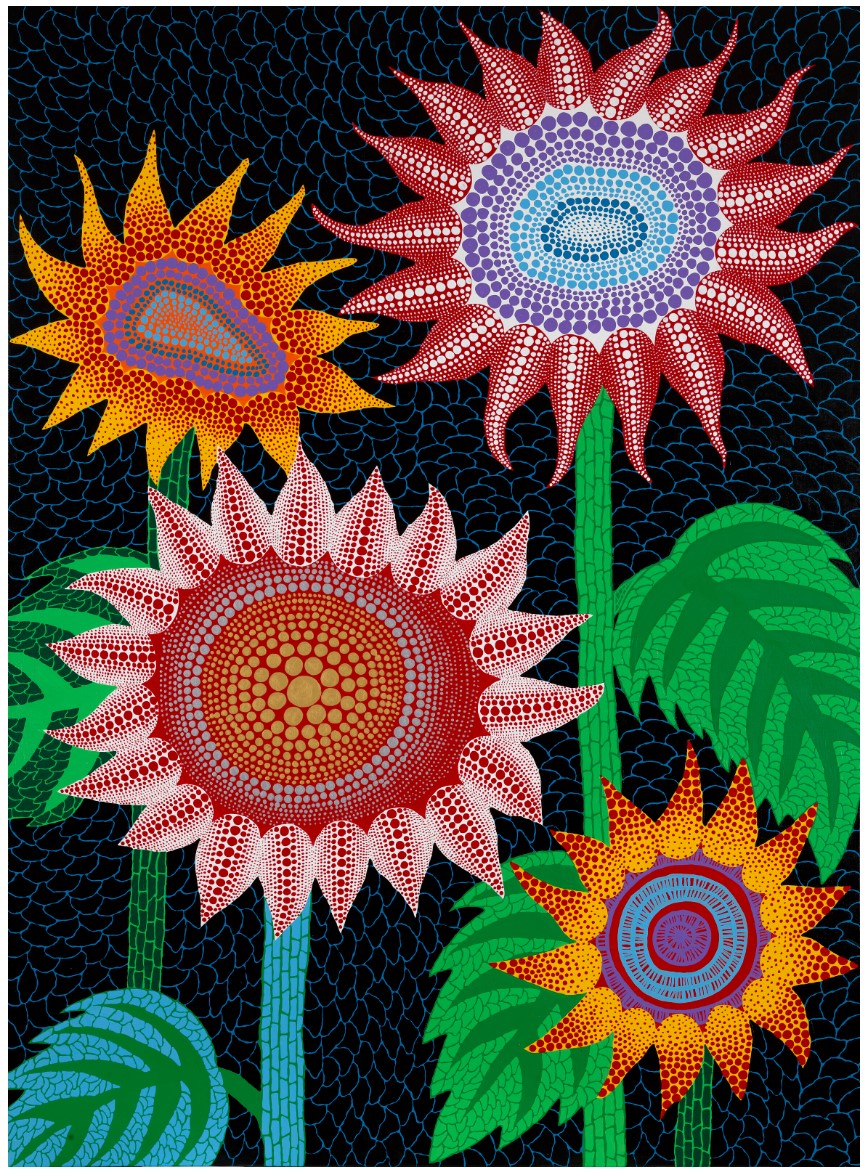
YAYOI KUSAMA (B. 1929)
Flowers, 2015
Acrylic on canvas
130.3 x 97 cm (51 1/3 x 38 1/5 inches)
Signed, titled and dated ‘FLOWERS 2015 YAYOI KUSAMA’ (on the reverse)
#4. Rene Magritte
Christie’s Hong-Kong: 28 May 2023
Estimated: HKD 24,000,000 – 35,000,000
HKD 51,195,000 / USD 6,535,643
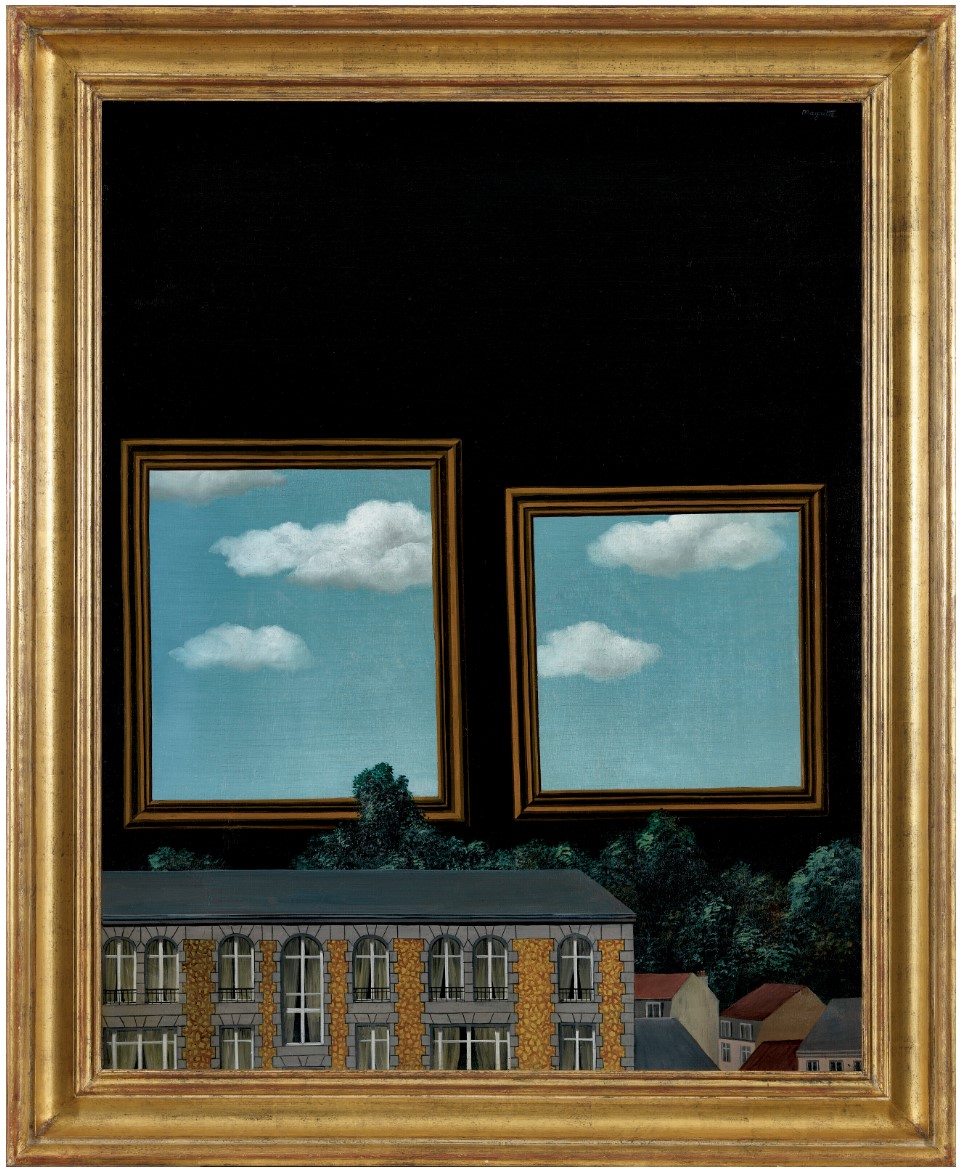
RENE MAGRITTE (1898-1967)
Le promenoir des amants, 1929-1930
Oil on canvas
93 x 74.3 cm (36 5/8 x 29 1/4 inches)
Signed ‘Magritte’ (upper right)
Painted during René Magritte’s final months in Paris, Le promenoir des amants is a captivating composition that emerged during one of the most productive and innovative periods of the artist’s career. Magritte and his wife Georgette had moved from Brussels to Paris in the autumn of 1927, drawn to the French capital’s lively art scene and in particular, the hive of artists and writers active in the city’s Surrealist circles. Thanks to his close friend Camille Goemans, who had arrived in Paris shortly before Magritte, the artist came to personally know the leading figures of the Surrealist group, including André Breton, Joan Miró, Max Ernst, Jean Arp, and later, Salvador Dalí. Exposure to their different approaches to image-making and ways of thinking stimulated Magritte’s creativity, resulting in a period of intense artistic evolution that would solidify the direction and style of his distinctive approach to Surrealism.
#5. Yayoi Kusama
Christie’s Hong-Kong: 28 May 2023
Estimated: HKD 28,000,000 – 38,000,000
HKD 40,305,000 / USD 5,145,407
YAYOI KUSAMA (B. 1929) (christies.com)
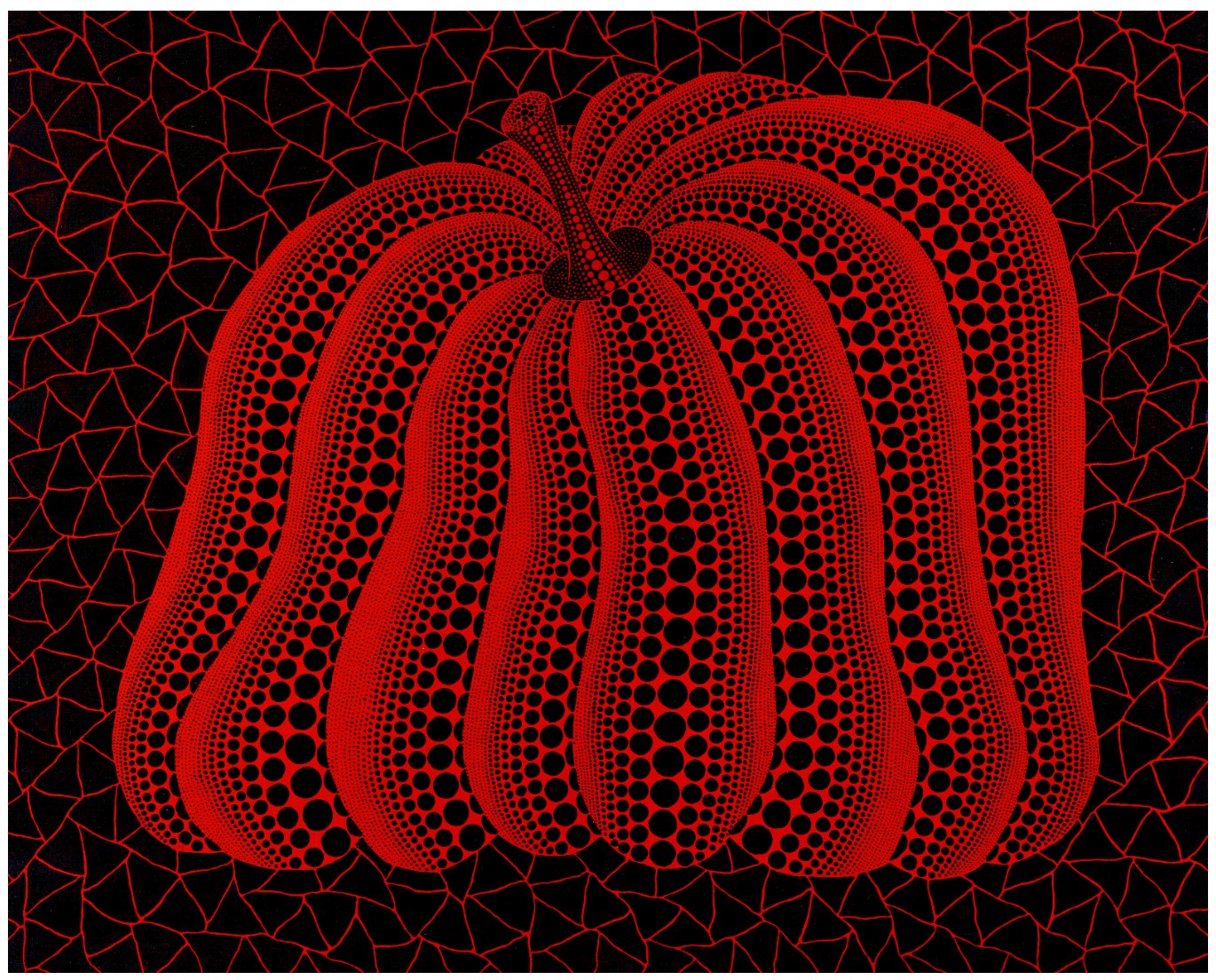
YAYOI KUSAMA (B. 1929)
Pumpkin, 2000
Acrylic on canvas
73 x 90.8 cm (28 3/4 x 35 3/4 in)
Titled in Japanese, signed and dated ‘YAYOI KUSAMA 2000’ (on the reverse)
3. Other Highlights
Yayoi Kusama
Christie’s Hong-Kong: 28 May 2023
Estimated: HKD 19,000,000 – 25,000,000
HKD 23,365,000 / USD 2,982,817
YAYOI KUSAMA (B. 1929) (christies.com)
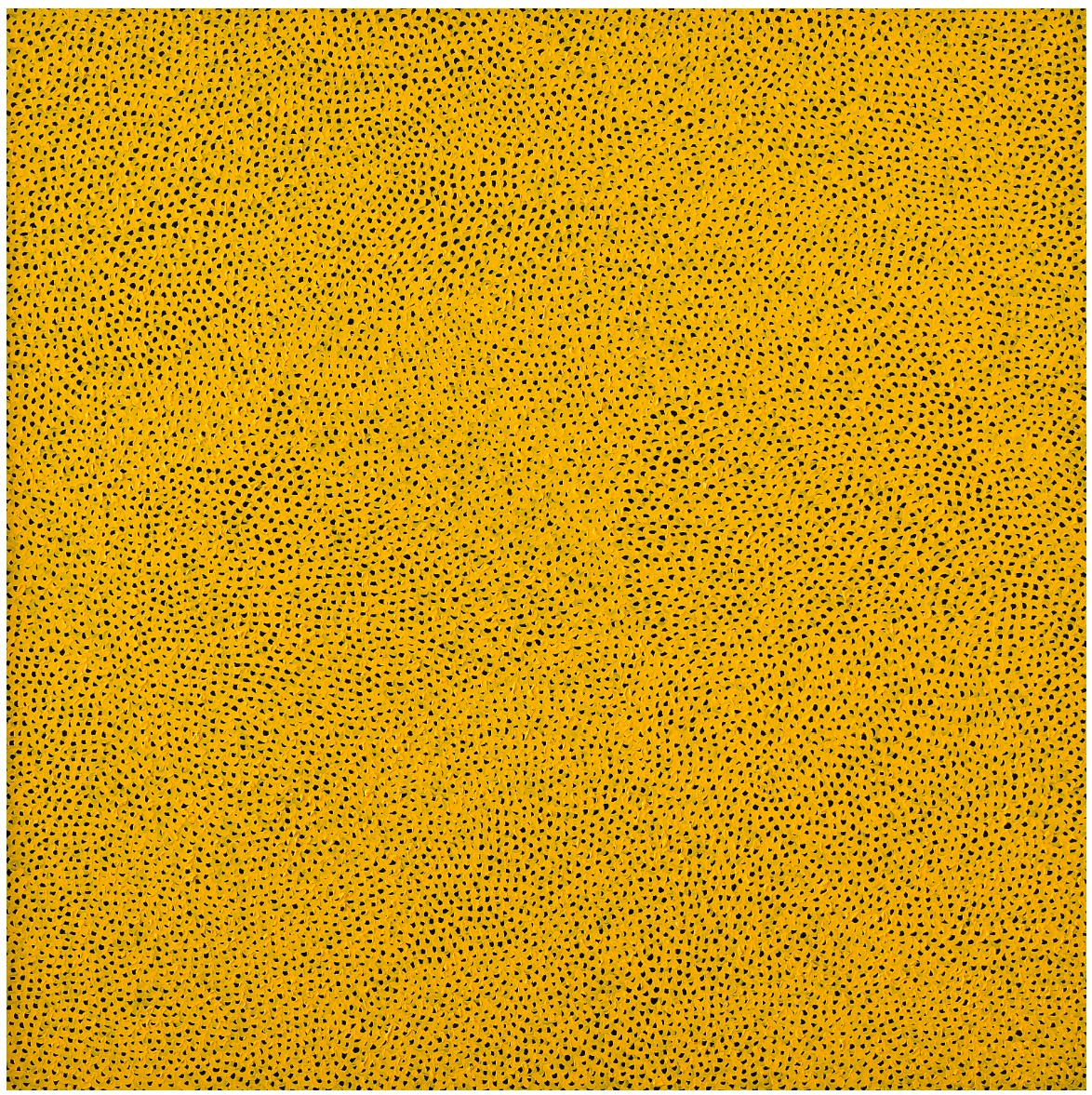
YAYOI KUSAMA (B. 1929)
INFINITY-NETS (BAJO), 2013
Acrylic on canvas
145.5 x 145.5 cm (57 1/4 x 57 1/4 inches)
Signed, titled and dated ‘INFINITY-NETS 2013 YAYOI KUSAMA BAJO’ (on the reverse)
Yoshitomo Nara
Christie’s Hong-Kong: 28 May 2023
Estimated: HKD 18,000,000 – 28,000,000
HKD 22,155,000 / USD 2,828,348
YOSHITOMO NARA (B.1959) (christies.com)
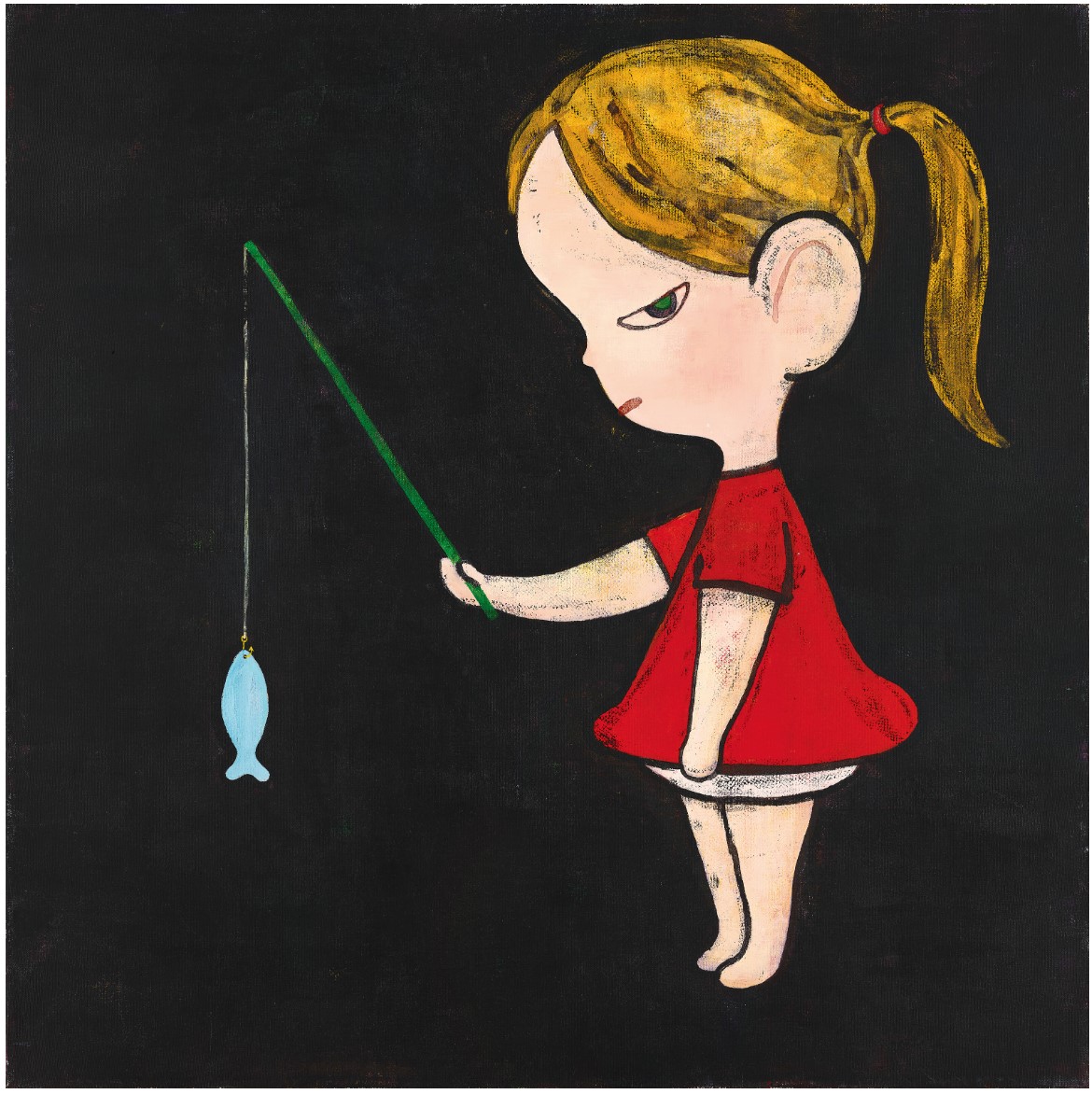
YOSHITOMO NARA (B.1959)
Night Fishing, 1995
Acrylic on canvas
100×100 cm (39 3/8 x 39 3/8 inches)
Signed, titled and dated ‘Night Fishing ’95’ (on the reverse)
Despite its pitch-black background, Night Fishing grasps viewers’ eyes with an inexplicable glow. It was painted in 1995, the first pinnacle in Yoshitomo Nara’s career marked by his first solo exhibition at SCAI the Bathhouse in Tokyo. His iconic motif of big-headed girls—entering his oeuvre just a few years ago by then—is present here with golden ponytails sporting a scarlet-red dress. Holding in her right hand a fish rod with a blue fish biting the bait at the end, she stands in the darkness calmly, as if a spotlight sheds on her, or she is luminous herself. Nara painted his first nocturnal painting with the iconic big-headed girl in 1993, and such stark treatment began to make regular appearances in the late 1990s. The density and darkness of the background in Night Fishing situates the girl in deep introspection and extended solitude that resonate with the artist’s own experience of living alone in Germany at that time. Meanwhile, it brings out the lustre and richness of the colors in a striking contrast, elevating the palette with a jewel-like radiance.
Yayoi Kusama
Christie’s Hong-Kong: 28 May 2023
Estimated: HKD 7,000,000 – 16,000,000
HKD 20,340,000 / USD 2,596,640
YAYOI KUSAMA (B. 1929) (christies.com)
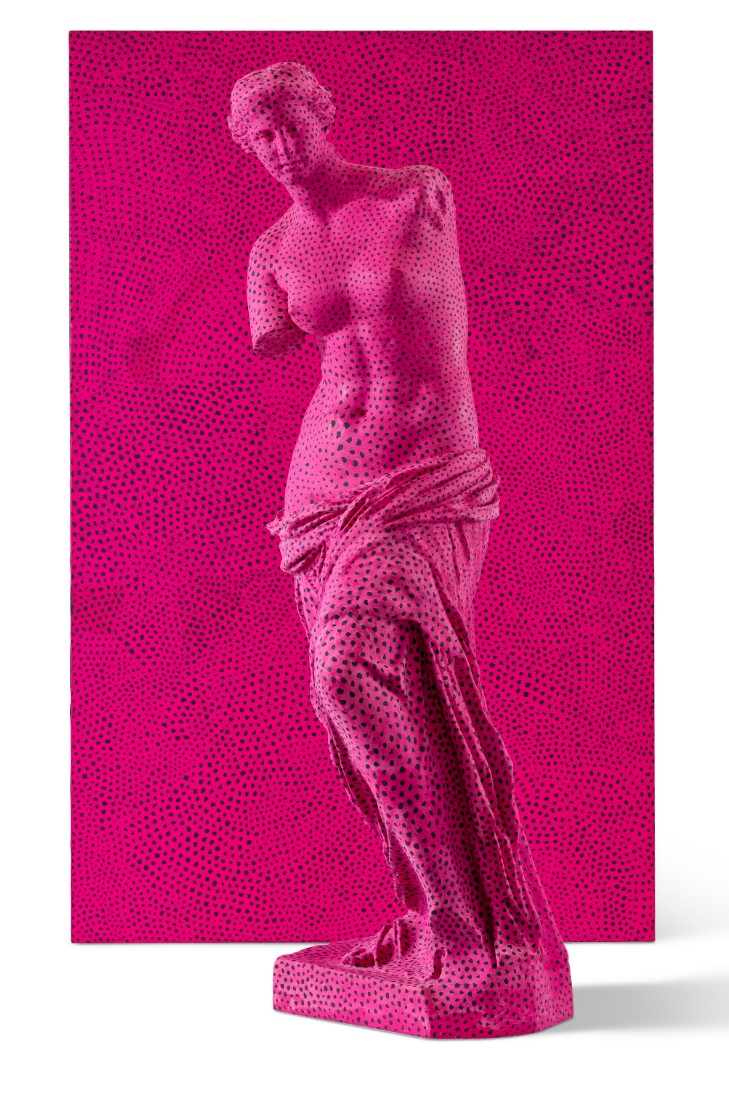
YAYOI KUSAMA (B. 1929)
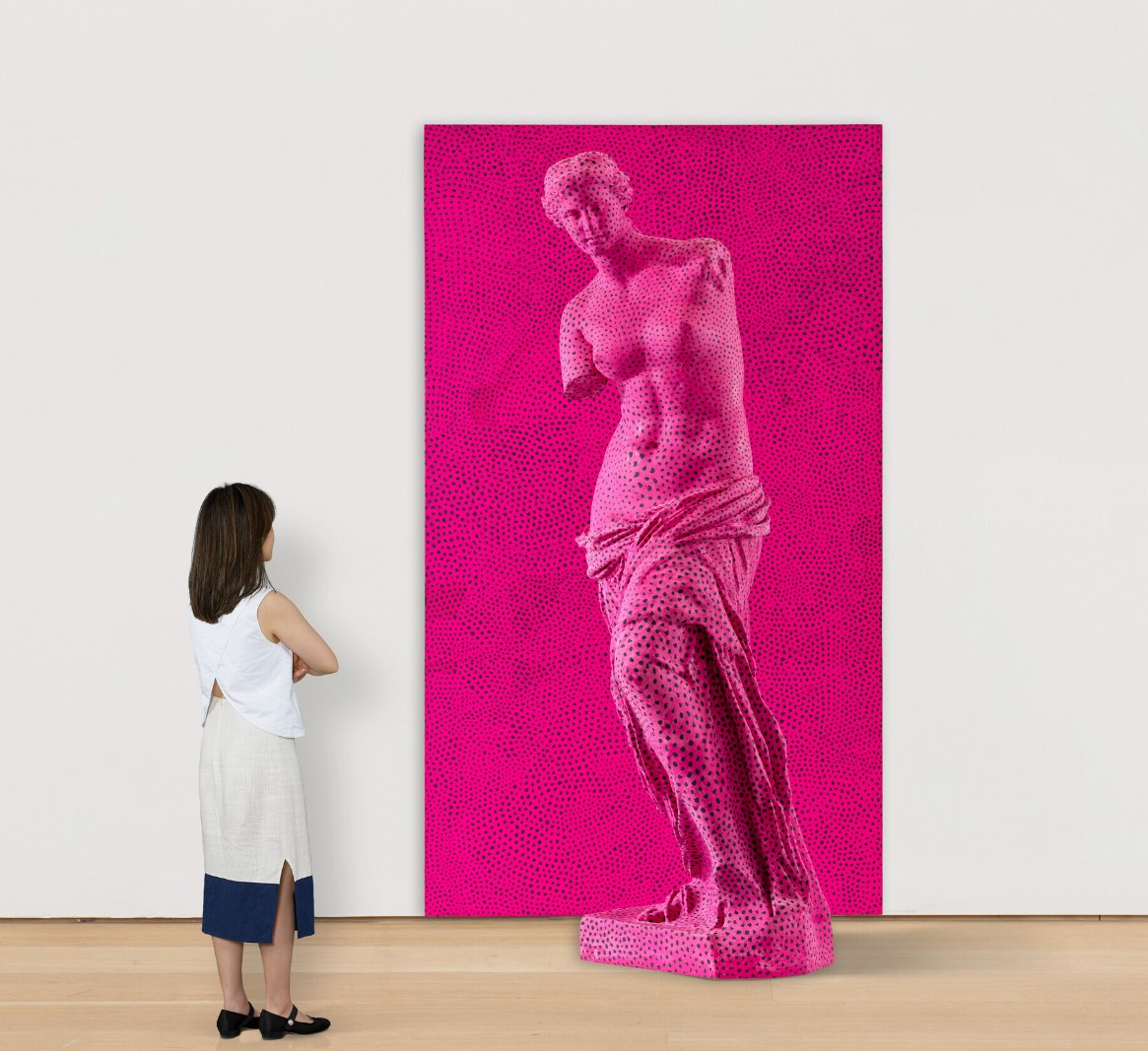
Statue of Venus Obliterated by Infinity Nets, 1998
Acrylic on fiberglass and canvas
Statue: 216 (H) x 64 x 70 cm (85 x 25 1/4 x 27 1/2 inches)
Canvas: 227.5 x 145.8 cm. (89 5/8 x 57 3/8 inches)
Statue: signed, titled, numbered and dated ‘YAYOI KUSAMA STATUE OF VENUS OBLITERATED BY INFINITY NETS 9/10 1998’ (on the lower side)
Canvas: signed, titled and dated ‘Yayoi Kusama 1998 Nets No.9 (Venus)’ (on the reverse)
Edition: 9/10 (unique color variant)
Over two metres tall, Statue of Venus Obliterated by Infinity Nets debuted in 1998 at the exhibition YAYOI KUSAMA: NOW at Robert Miller Gallery, New York. Created in the pivotal year when Kusama concurrently had her momentous institutional retrospectives Love Forever: Yayoi Kusama, 1958-1968 at the Los Angeles County Museum of Art and Museum of Modern Art, the present work is one of the ten editions that Kusama amalgamates her iconic Infinity Nets painting with a life-size statue.
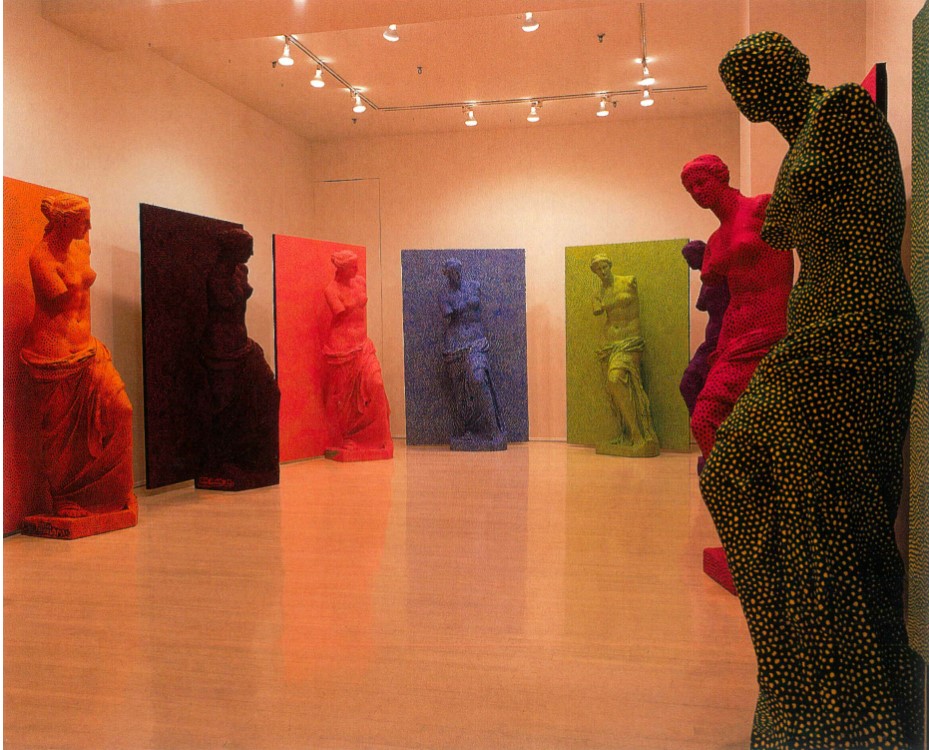
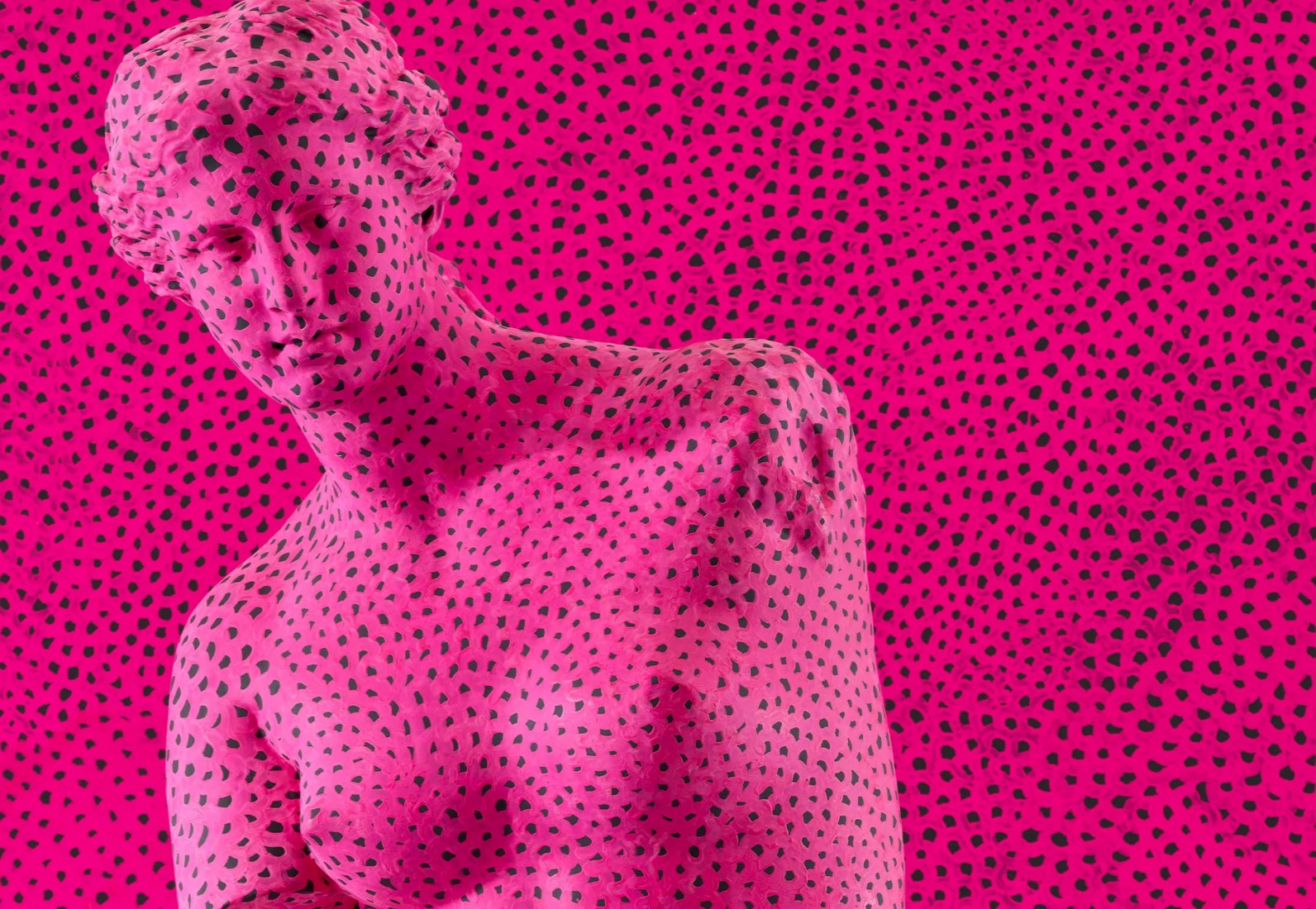
Among each unique edition that disguises the goddess statue in different palettes of Infinity Nets, the present work is the only edition rendered in vibrant magenta, a tint that is neither cool nor warm, and that stands for universal love and courage. Subjugating the divine statue of Venus de Milo with her signature hypnotic open loops, Kusama camouflaged the fluid and elegant contours of the Greek goddess against the dazzling infinity net canvas in the background. Here in myriad magenta loops sprawling across an underlayer of midnight black is an avant-garde intervention on a classical ideology through ‘obliteration’, a concept Kusama has spent her whole life exploring in many and various ways. ‘Polka dots can’t stay alone. When we obliterate nature and our bodies with polka dots we become part of the unity of our environments,’ Kusama famously affirmed.
Kusama’s Infinity Nets remains one of the most arresting visual lexicons that shapes the discourse of post-war and contemporary art, and its formation can be traced back to the ongoing hallucinations the artist has suffered since childhood. Born in 1929 to a well-to-do family that runs a plant nursery business in Matsumoto, Nagano Prefecture, Kusama began to experience hallucinations of seeing multiplying patterns on everything around her at the age of ten. Coping with this illness throughout her life, Kusama painted her vision in order to fight against her fear, which she later acknowledged as a process of ‘self-obliteration’. Kusama described her first experience of ‘self-obliteration’ in an interview, ‘when I was a child, one day I was walking the field, then all of a sudden, the sky became bright over the mountains, and I saw clearly the very image I was about to paint appear in the sky. I also saw violets which I was painting multiply to cover the doors, windows and even my body. It was then I learned the idea of self-obliteration. I immediately transferred the idea onto a canvas. It was hallucination only the mentally ill can experience” (Y. Kusama, quoted in Yayoi Kusama: Now, New York, 1998, n.p). By 1959 Kusama moved to New York and painted her seminal net-like painting titled Pacific Ocean, an archetype of her career-defining white Infinity Nets series that garnered modest praises by artists and critics. Kusama channels her ongoing hallucinations through perseveringly drawing those tiny loops with a discrete movement of her wrist, a gesture that is both obsessive and therapeutic. As Kusama further expanded her Infinity Nets in various scales, such repetitive paradigm evolves into the forms of mirrored installation, soft accumulated sculptures, self-obliteration mannequins as well as the notorious happenings she staged on the streets of New York City, all with one single goal: to unite with the universe through the means of obliteration.
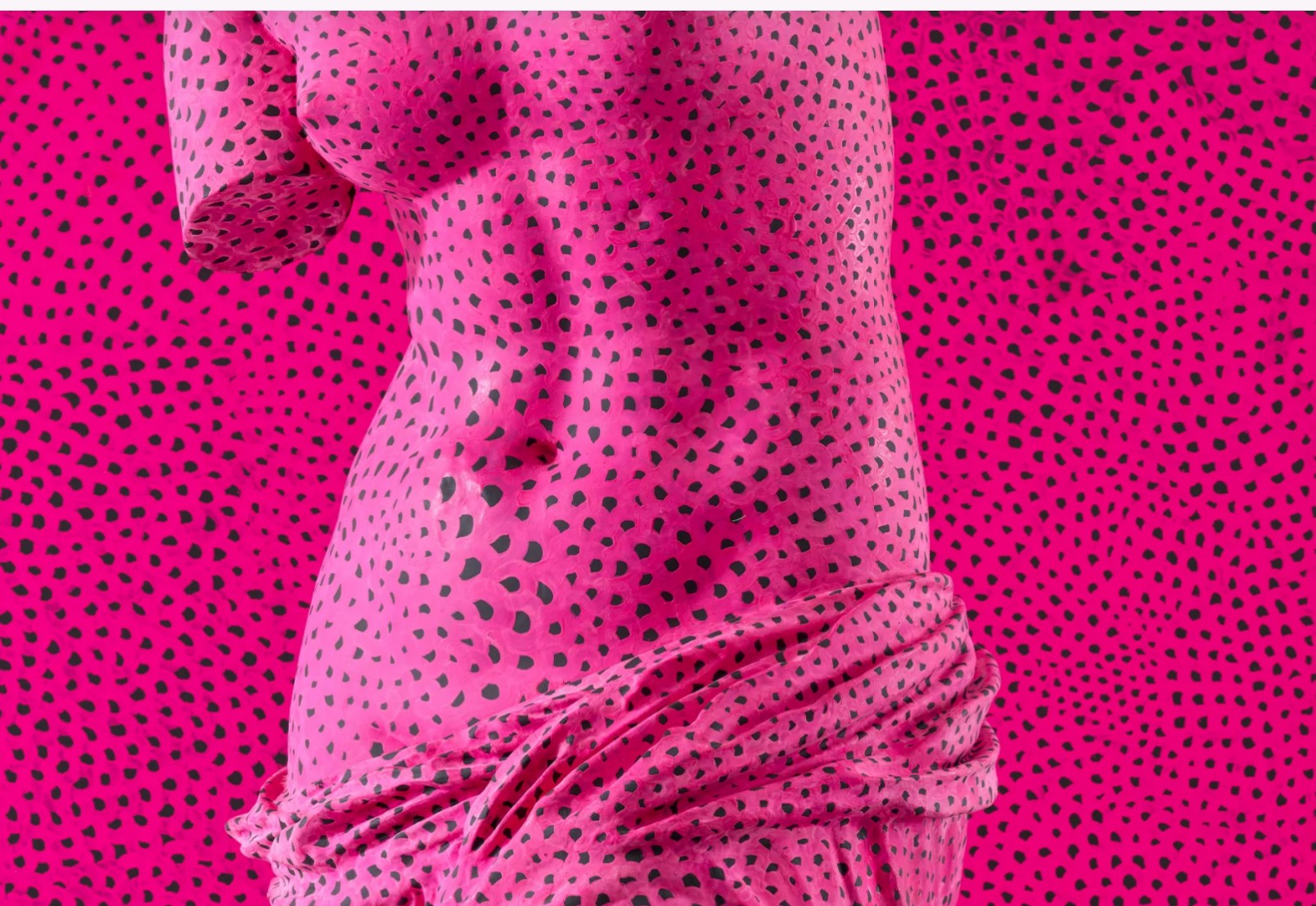
Burgeoning from the artist’s pioneering self-obliterating body collages and happenings from the 60s, Statue of Venus Obliterated by Infinity Nets marks an unrivalled breakthrough as Kusama introduced an iconic cultural artefact into her ‘self-obliteration’ practices. By masking the timeless marble statue of Venus de Milo that symbolizes infinite beauty and love with her signature Infinity Nets, Kusama went from delineating her own ‘psycho-somatic art’ to probing into the historical paradox of this famous Greek statue housed in The Louvre since the early 19th century. First branded as a classical Greek sculpture of Venus by great sculptor Praxiteles to the public, it has successfully become an emblem of national pride when France was still recovering from Napoleonic wars. Though only by the 1950s has the museum revealed the statue was, in fact, a statue of Aphrodite made under the hands of little-known Hellenistic sculptor Alexandros of Antioch.
For Kusama who struggled her way in New York during the 60s in the realm of a male-dominated art world, Venus de Milo is not merely an emblem of Western divine art as it also exposes, though indirectly, the prejudices in the history of art connived by institutions. Such dimension of Venus de Milo resonates with Kusama as a female artist that fought hard to be treated the same during her early years. The saturated magenta pigment on the dark background reminisces the intimate tone that dominated an early Kusama’s self-portrait in a form of prickly pink seed, making the present work an aptly self-reflection of the artist at the pinnacle of her career where she is no longer the footnote but the subject in the discourse of contemporary art. Like the Venus in the present work, Kusama surrendered herself to her art by standing in front of her works in her polka-dot outfits. Here, an immortal figure of universal love and beauty that shields from the outer world in the Infinity Nets, is at once ‘herself’ and the universe. Statue of Venus Obliterated by Infinity Nets is a testimony of Kusama’s enduring avant-garde spirit that will continue to conquer our world with the self-manifesting power of Infinity Nets.
Jonas Wood
Christie’s Hong-Kong: 28 May 2023
Estimated: HKD 12,500,000 – 18,500,000
HKD 17,920,000 / USD 2,287,698
JONAS WOOD (B. 1977) (christies.com)
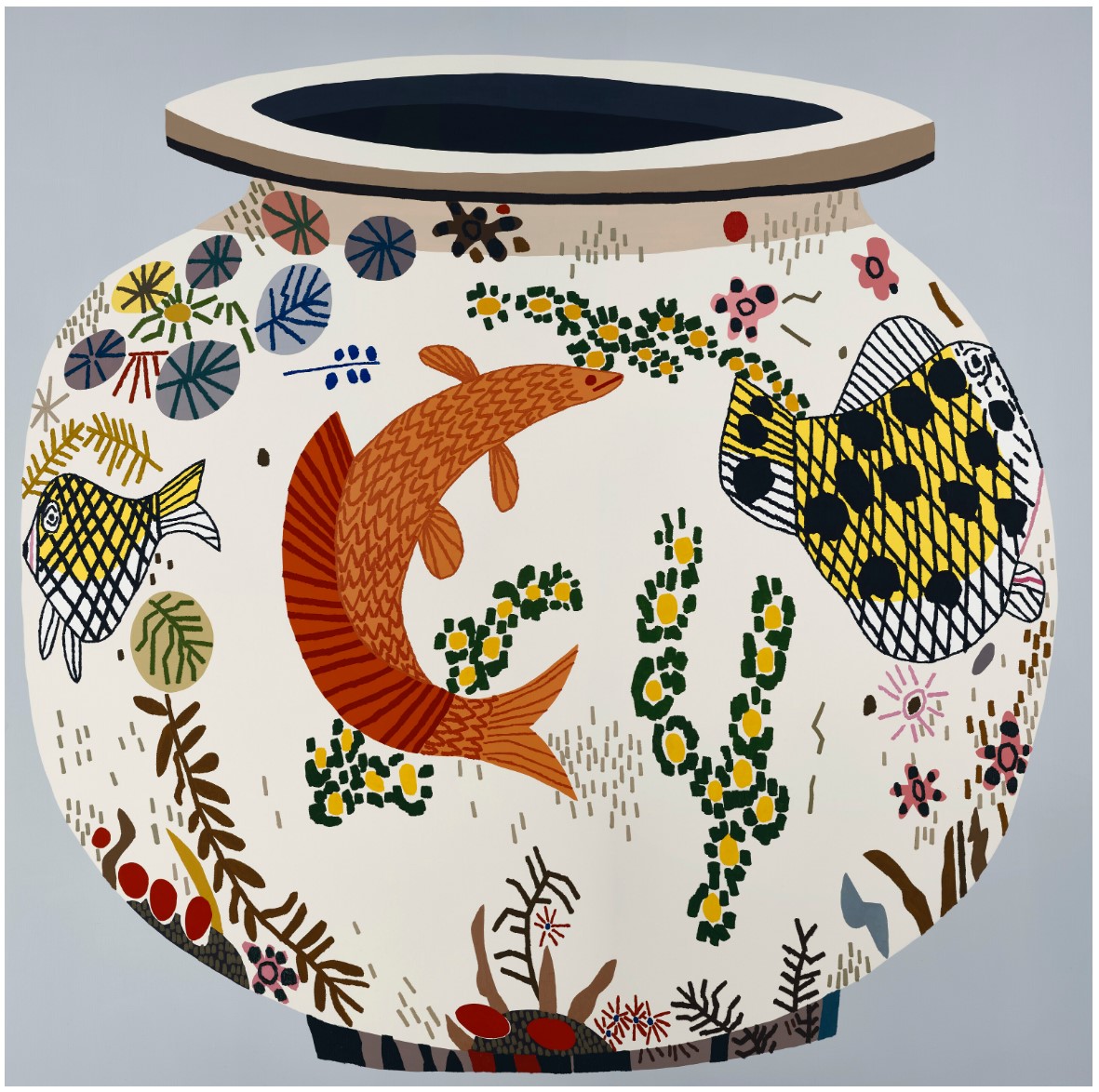
JONAS WOOD (B. 1977)
M.S.F. Fish Pot #7, 2016
Oil and acrylic on canvas
72×72 inches (182.8 x 182.8 cm)
Signed with the artist’s initials, titled and dated ‘JBRW 2016 M.S.F. FISH POT #7’ (on the reverse)
Liu Ye
Christie’s Hong-Kong: 28 May 2023
Estimated: HKD 8,000,000 – 15,000,000
HKD 14,286,000 / USD 1,824,286
LIU YE (B. 1964) (christies.com)
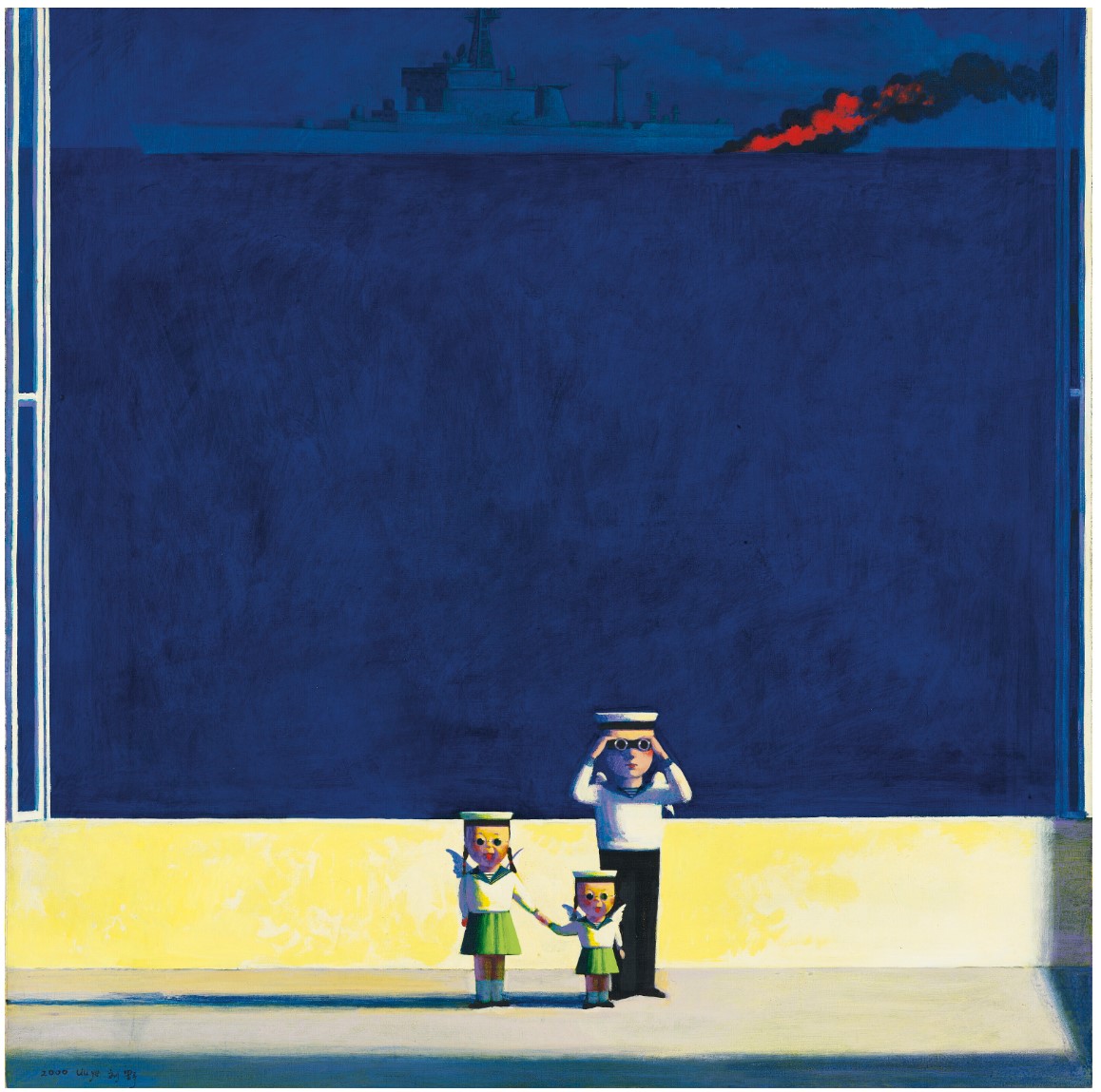
LIU YE (B. 1964)
Room of the Sea, 2000
Acrylic and oil on canvas
90×90 cm (35 3/8 x 35 3/8 inches)
Signed in Chinese; signed again and dated ‘2000 Liu Ye’ (lower left)
Painted in 2000, Room of the Sea is the finale to Liu Ye’s sailor and the sea series. It is also a perfect end note to Silence of the Sea, the earliest work from the same series which is resided in the M+ Sigg Collection. In line with Liu’s iconic fairytale-like narratives, the composition of Room of the Sea resonates with both ambiguity and personal feelings. Tapping into symbols and mythological images that he collected throughout his creative journey, he continued to explore various personal subjects and social issues on the canvas by drawing on his unique perspectives and sense of humor. While an imaginary scenery lies outside the window, a serene horizon divides the small figures wearing sailor suits and sunglasses and the burning battleship in the distance, situating them in two spaces that appear almost entirely separate. Unlike the artist’s early works in which he pays tribute to masters of Eastern and Western art by appropriating their visual languages, Liu seamlessly merges the artistic languages of the East and the West in Room of the Sea. The distinct foreground, middle ground, and background have the resonance of traditional Chinese landscape painting, while they are rendered in contemporary and minimalist lines. It alludes Dutch De Stijl master Mondrian’s palette of three primary colors and geometric lines, which lend structure to the composition. It is accentuated by lighting that is reminiscent of Vermeer’s use of light, and it is proof of Liu’s flair for blending Eastern and Western art techniques. As Liu skirts between the artistic expressions of Baroque, Neoplasticism, and even Surrealism, his work is at once a homage to and an audacious challenge against the languages of Western art.
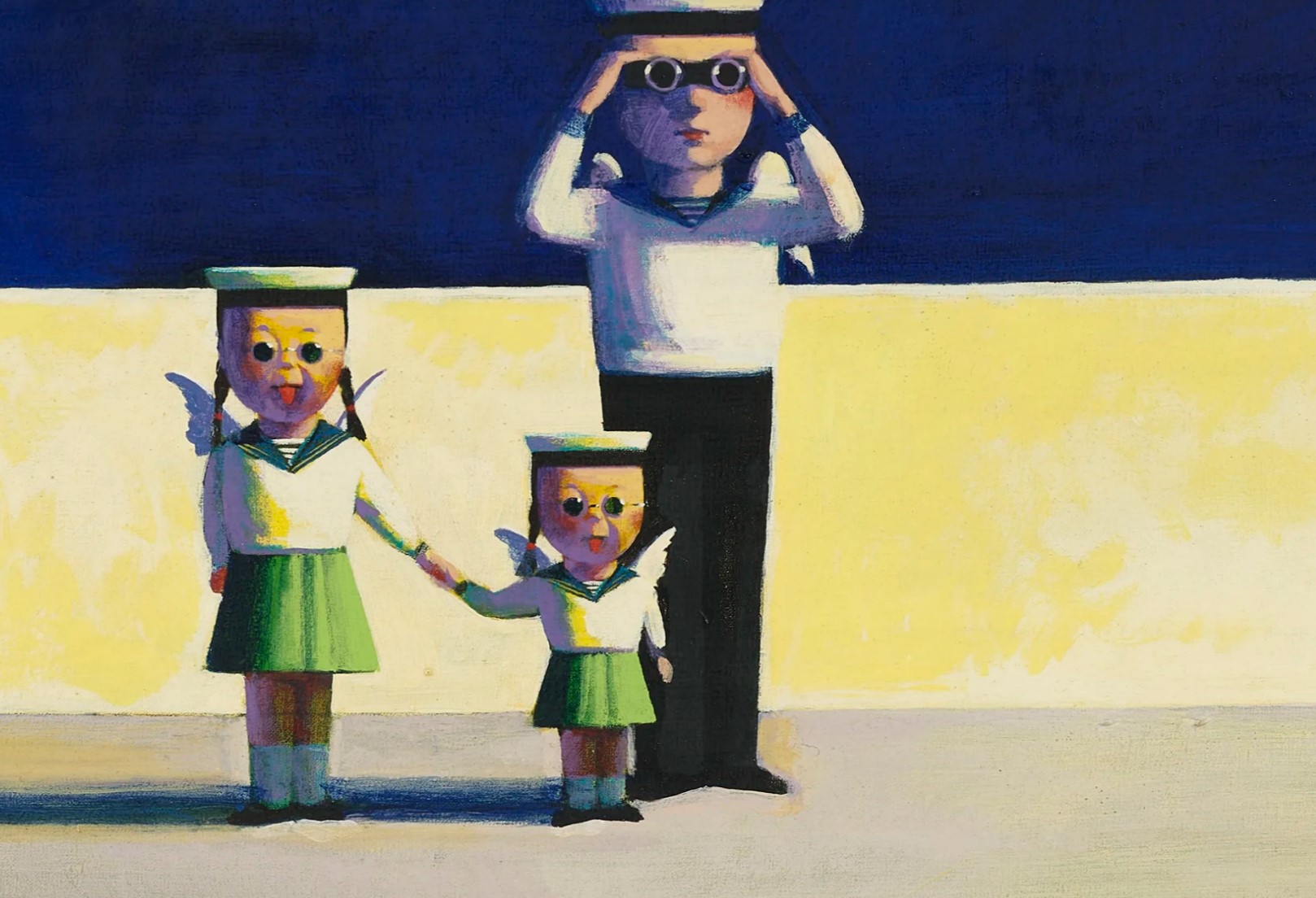
In Liu’s world of fairytale-like imagery, the sailor is a prominent and recurrent character, as it is the artist’s persona. The conception of the character is deeply influenced by the Soviet film Lenin in October. As emblems of revolutionary and heroic spirits, the battleship and the sailor are symbols endowed with personal meanings in Liu’s paintings. After living in Europe for years, Liu returned to Beijing in the mid-1990s when China was rapidly evolving into a modernized and consumerism-driven society. At the time, a colloquial phrase for joining the entrepreneurial class was to ‘xia hai’ (‘to dive into the sea’). This double entendre manifests itself as visual puns on capitalism in Liu’s paintings featuring the battleship and the sailor. In Room of the Sea, the artist projects himself onto the character in a sailor suit and holding a pair of binoculars. His outfit and props are similar to those of the two smaller figures, who have angels’ wings in Renaissance art and are wearing round sunglasses, too. The latter not only calls to mind the Minguo period, but it also reveals Liu’s cynical attitude towards life. In the earliest work from the series, the sailor with the binoculars has his back to the viewer, while he is watching the battleship under attack in the distance. In this present work, the sailor looks at the viewer through his binoculars, and he appears oblivious to the battleship being engulfed in flames in the distance. The image has a touch of Charlie Chaplin-inspired black humour, and it spells the artist’s doubts about the new era. Through his revisits to and immersion in the same subject, Liu developed a distinctive quality in his composition that transcends social ideology. As the finale to the series, Room of the Sea has a stunningly compact and forceful composition that reflects the confusion and passivity of the masses in the face of a new era. It is a window to the artist’s mind, and a call to the viewer to explore the possibilities in adventures and dreams.
Fernando Botero
Christie’s Hong-Kong: 28 May 2023
Estimated: HKD 5,000,000 – 8,000,000
HKD 5,292,000 / USD 675,586
Fernando Botero (B. 1932) (christies.com)
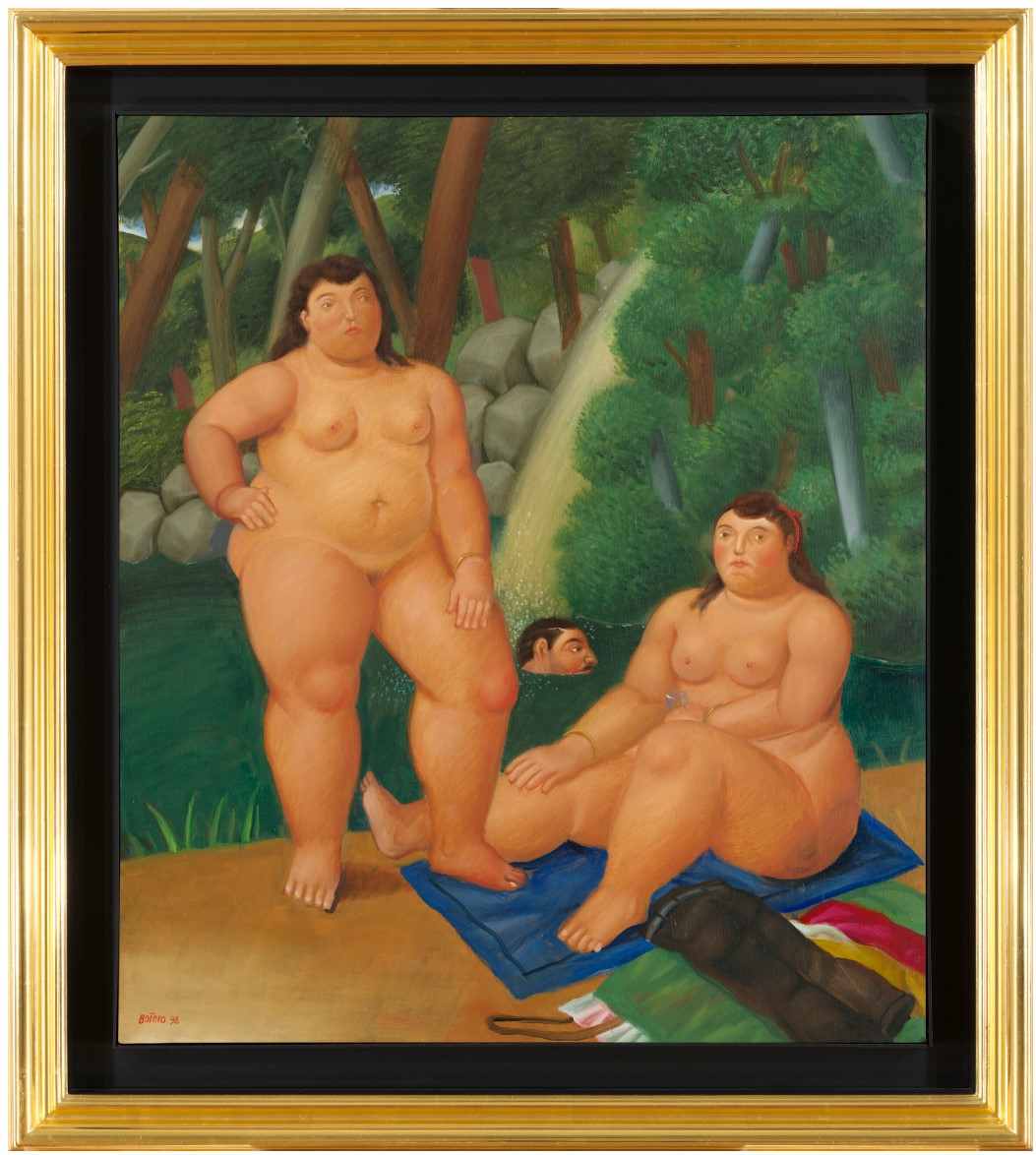
Fernando Botero (B. 1932)
Waterfall, 1998
Oil on canvas
93×81 cm (36 5/8 x 31 7/8 inches)
Signed and dated ‘Botero 98’ (lower left)
21st Century Art Day Sale
29 May 2023
21st Century Art Day Sale (christies.com)
1. Auction Statistics
Total Turnover:
HKD 180,725,500 / USD 23,071,733
# Lots: 103
# Lots sold: 97
Sell-Through Rate: 94.2%
———-
Top Lot:
HKD 16,710,000 / USD 2,133,228
3 Lots sold over HKD 10 million
Turnover: HKD 39,542,500 (21.9% of total)
———–
Above Estimates: 37 Lots (36%)
Within Estimates: 48 Lots (47%)
Below Estimates: 12 Lots (12%)
Unsold: 6 Lots (6%)
2. Top 10 Lots
#1. Nicolas Party
Christie’s Hong-Kong: 29 May 2023
Estimated: HKD 11,000,000 – 18,000,000
HKD 16,710,000 / USD 2,133,228
NICOLAS PARTY (B. 1980) (christies.com)
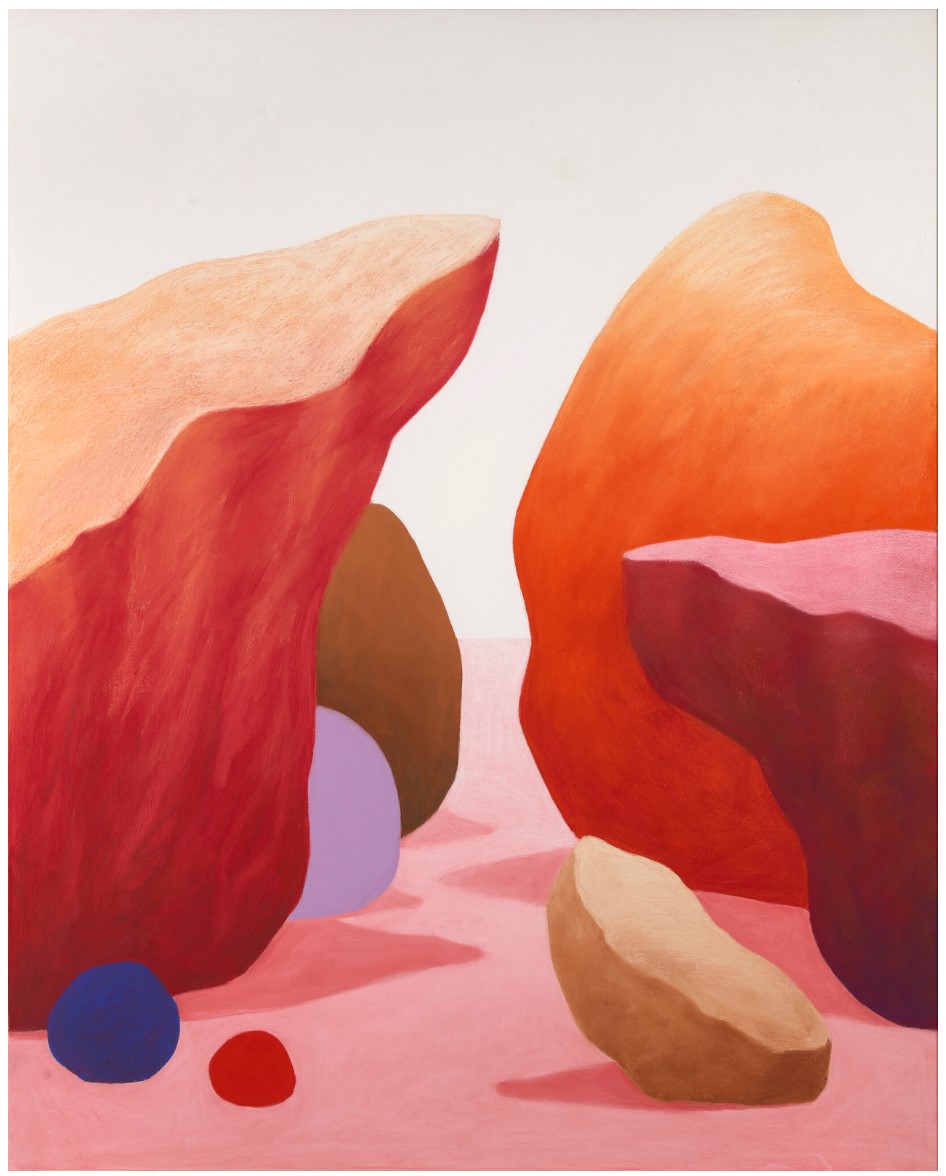
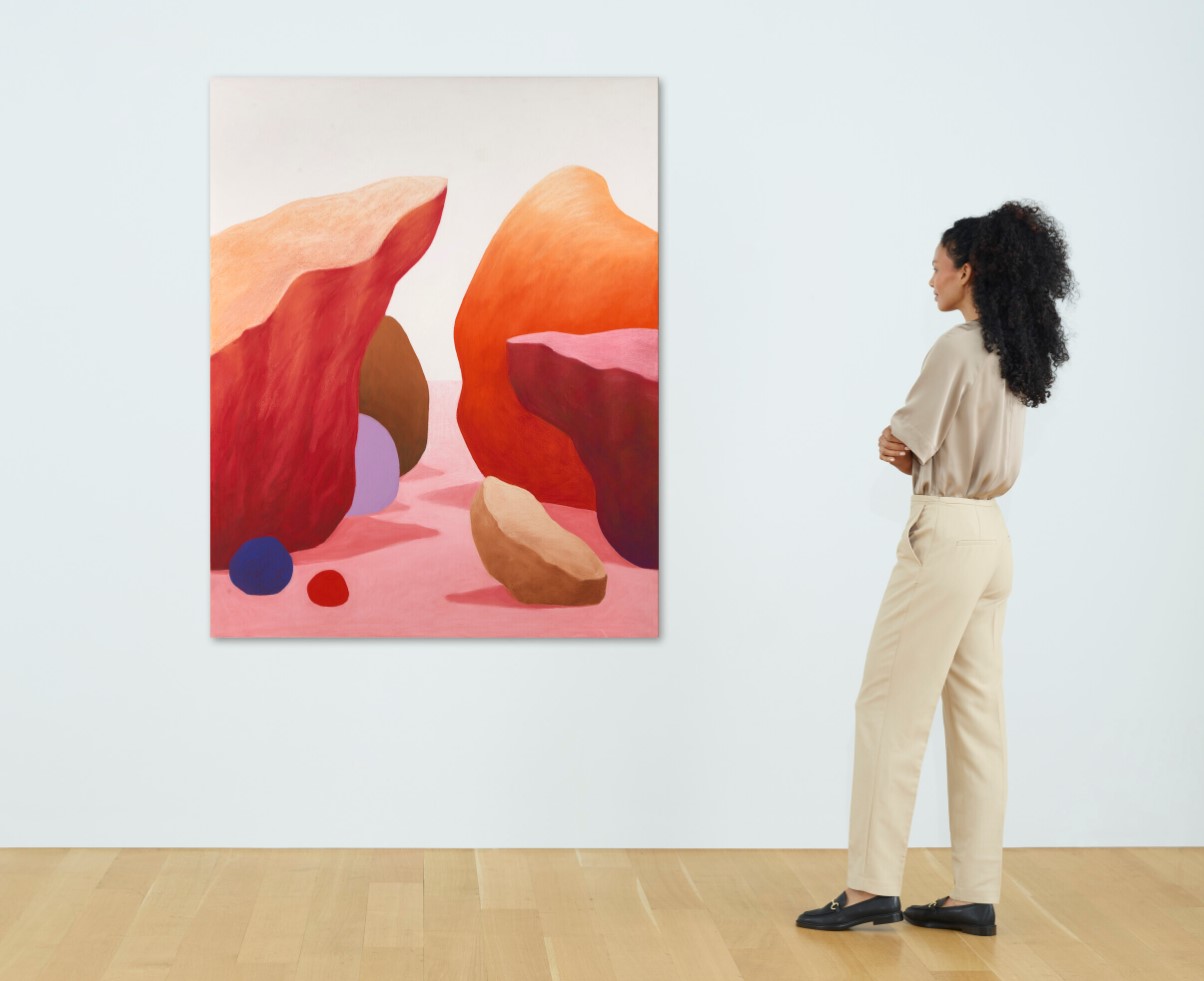
NICOLAS PARTY (B. 1980)
Rocks, 2014
Soft pastel on linen
150×120 cm (59 x 47 1/4 inches)
“I paint an environment that belongs either to a time before or long after humanity, a time when human culture doesn’t affect the landscape.”
#2. Yayoi Kusama
Christie’s Hong-Kong: 29 May 2023
Estimated: HKD 10,000,000 – 15,000,000
HKD 12,7177,500 / USD 1,631,398
YAYOI KUSAMA (B. 1929) (christies.com)
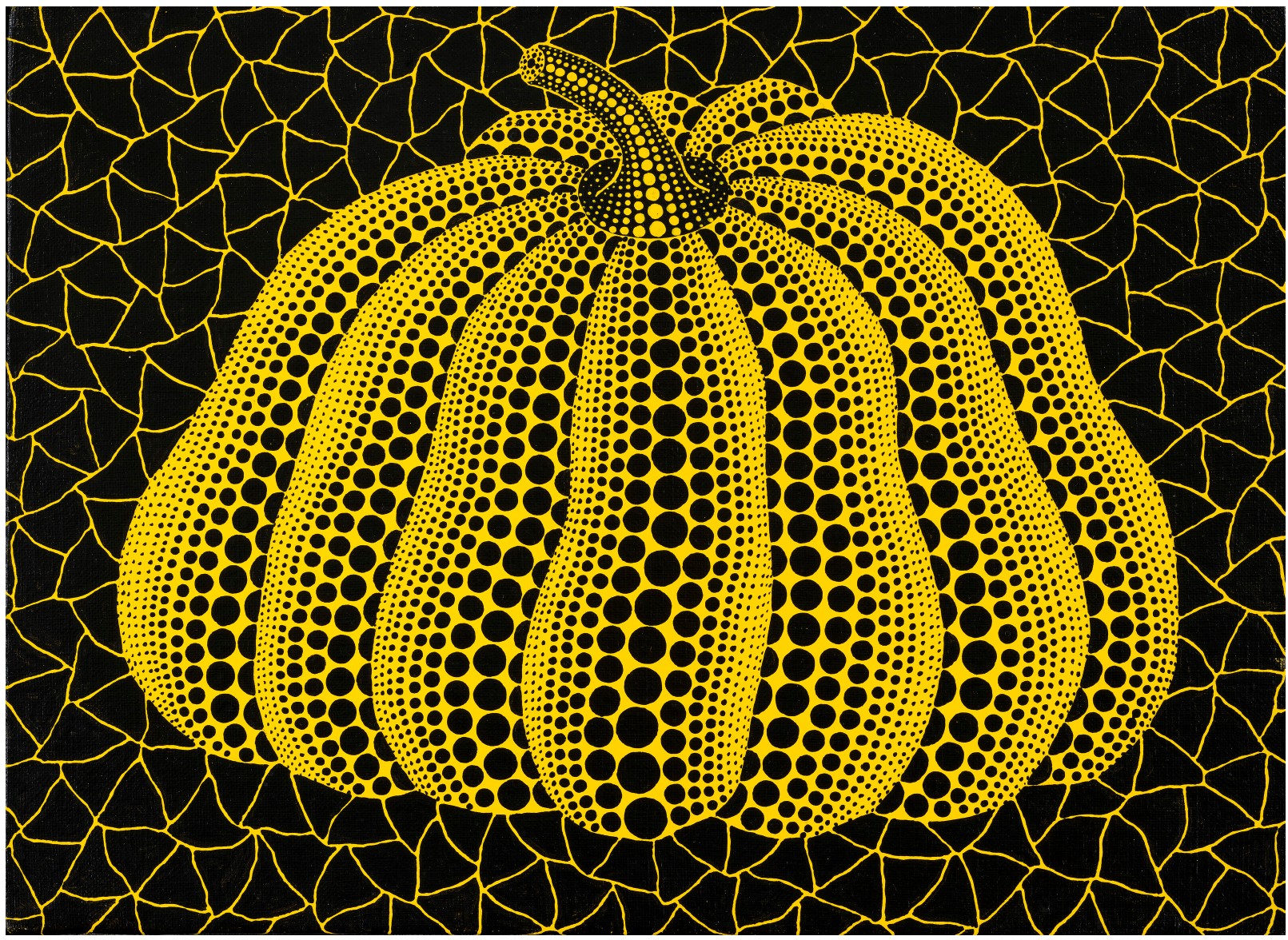
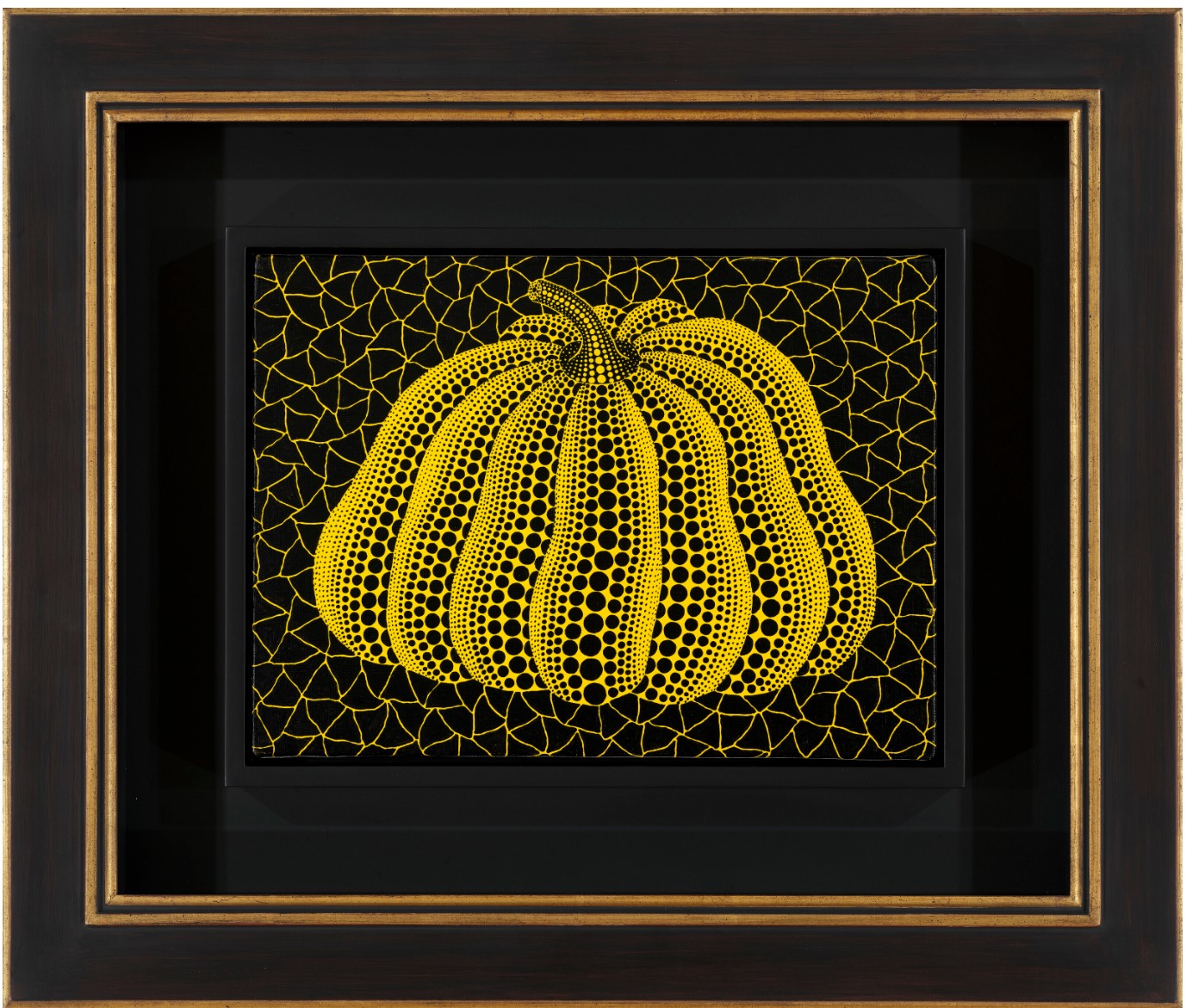
YAYOI KUSAMA (B. 1929)
Pumpkin, 2005
Acrylic on canvas
24.5 x 33.3 cm. (9 5/8 x 13 1/8 in.)
signed, titled and dated ‘PUMPKIN 2005 Yayoi Kusama’; signed and titled in Japanese (on the reverse)
#3. Yayoi Kusama
Christie’s Hong-Kong: 29 May 2023
Estimated: HKD 7,000,000 – 9,000,000
HKD 10,055,000 / USD 1,283,639
YAYOI KUSAMA (B. 1929) (christies.com)
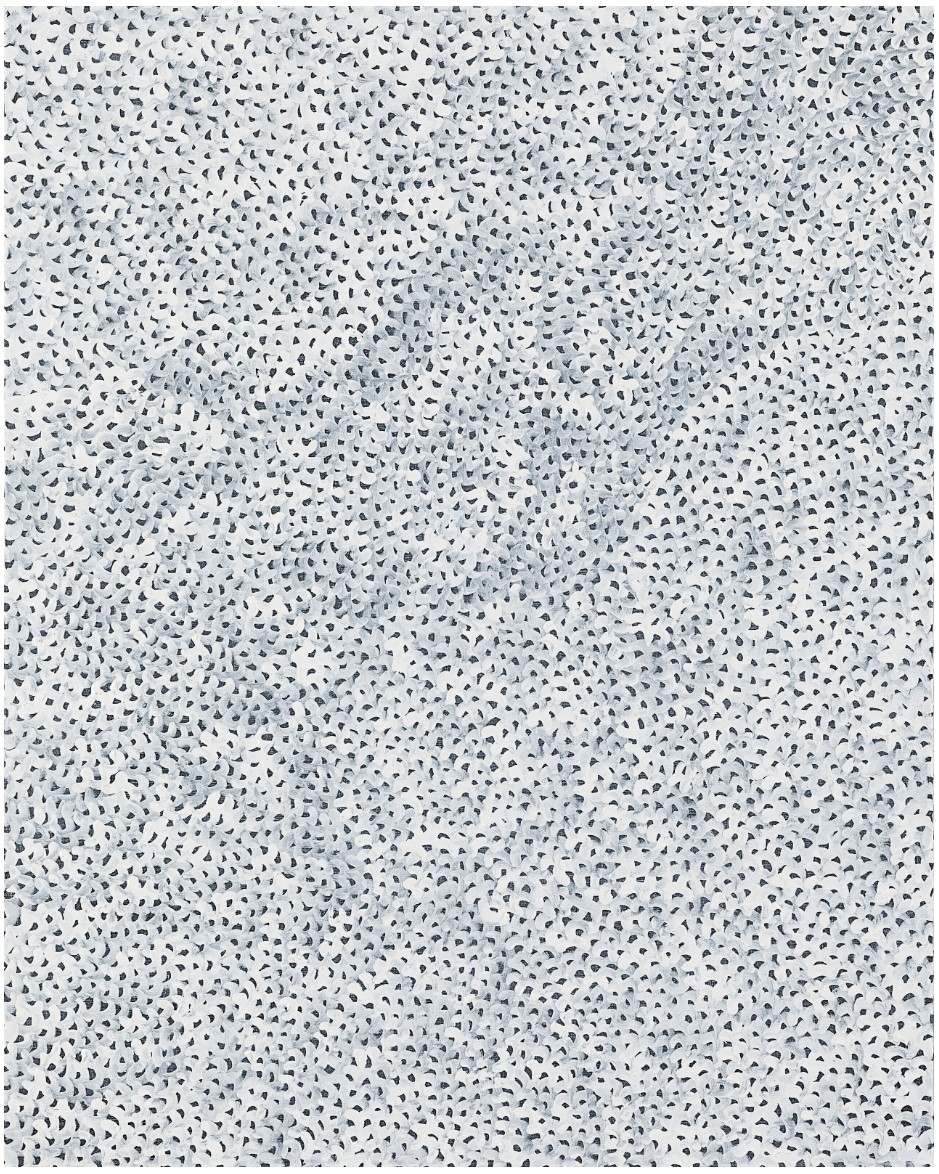
YAYOI KUSAMA (B. 1929)
INFINITY-NETS (OTQWAZ), 2007
Acrylic on canvas
91 x 72.7 cm (35 7/8 x 28 5/8 inches)
Signed, titled, and dated ‘Yayoi Kusama 2007 INFINITY-NETS OTQWAZ’ (on the reverse)
#4. Yayoi Kusama
Christie’s Hong-Kong: 29 May 2023
Estimated: HKD 7,200,000 – 9,200,000
HKD 9,450,000 / USD 1,206,404
YAYOI KUSAMA (B. 1929) (christies.com)
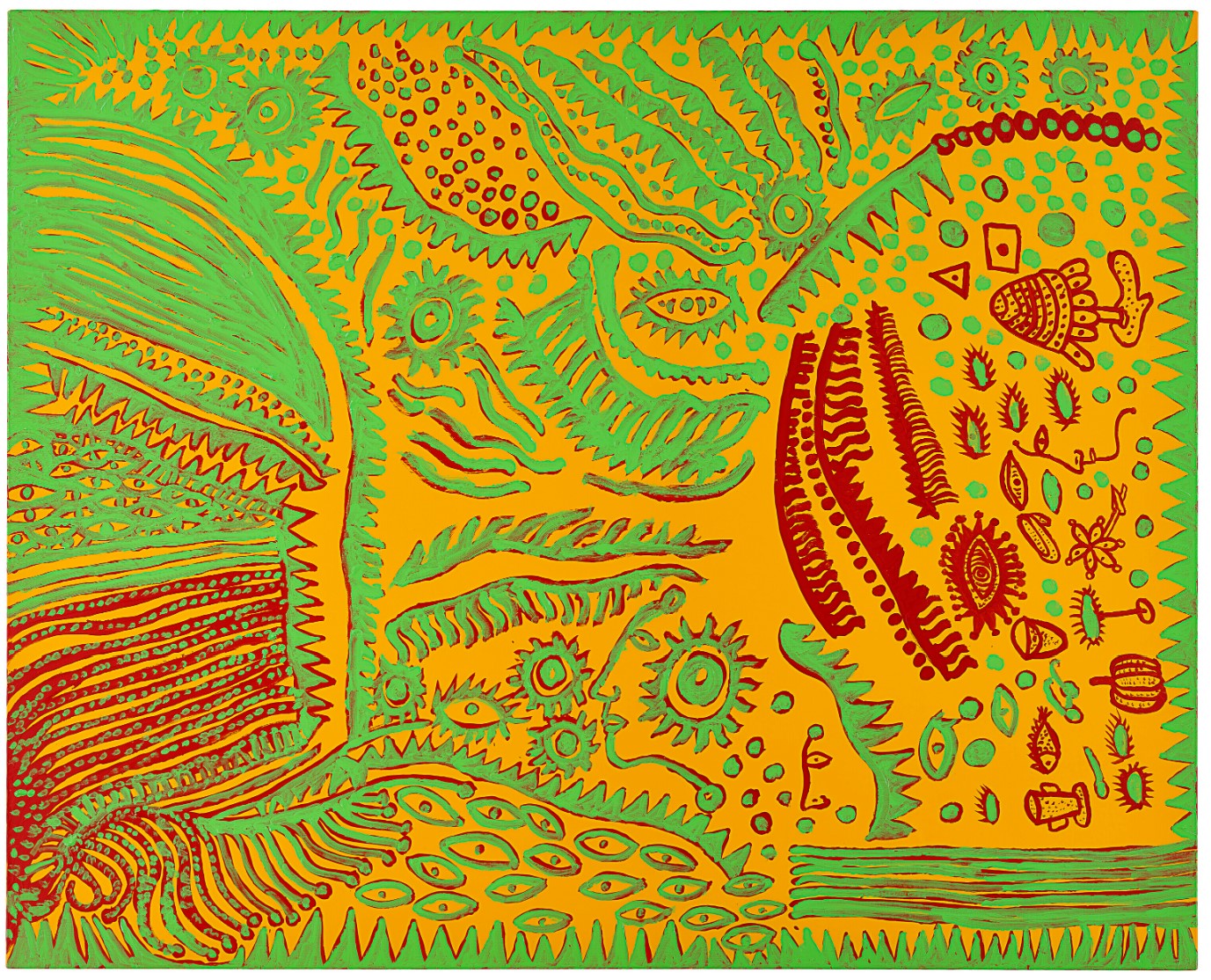
YAYOI KUSAMA (B. 1929)
VERDANT EARLY SPRING, 2012
Acrylic on canvas
130.3 x 162 cm (51 1/8 x 63 3/4 inches)
Signed, titled and dated ‘VERDANT EARLY SPRING Yayoi Kusama 2012’; titled again in Japanese
(on the reverse)
“Nature never grows old, endlessly unfurling her infinite beauty through the seasons.”
#5. Yayoi Kusama
Christie’s Hong-Kong: 29 May 2023
Estimated: HKD 6,800,000 – 9,800,000
HKD 8,820,000 / USD 1,125,977
YAYOI KUSAMA (B. 1929) (christies.com)
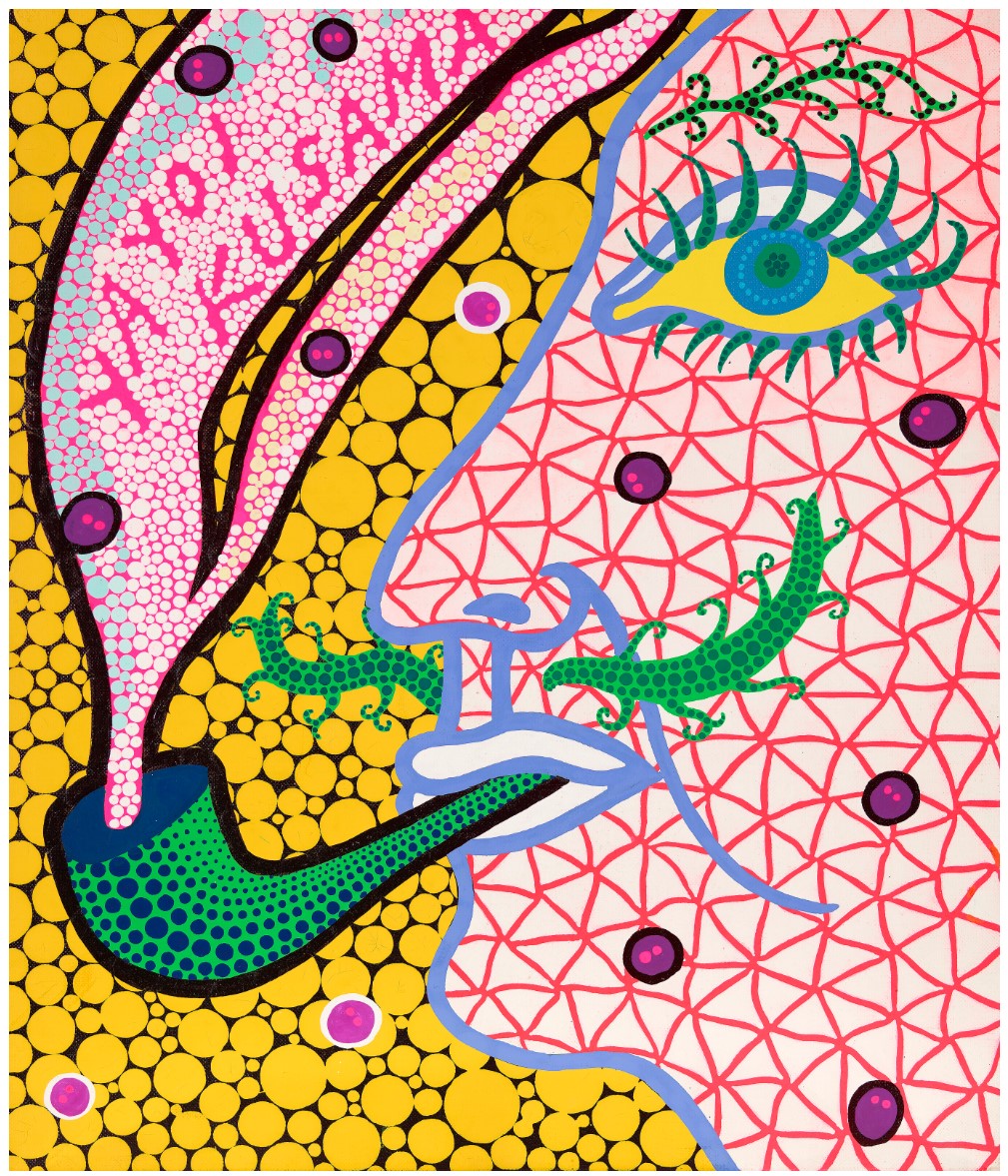
YAYOI KUSAMA (B. 1929)
Fantasizing in the Smoke, 1989
Acrylic on canvas
45.6 x 38.3 cm (18 x 15 1/8 inches)
Signed and titled in Japanese, signed and dated ‘yayoi kusama 1989’ (on the reverse)
#6. Yoshitomo Nara
Christie’s Hong-Kong: 29 May 2023
Estimated: HKD 6,800,000 – 9,800,000
HKD 8,820,000 / USD 1,125,977
YOSHITOMO NARA (B.1959) (christies.com)
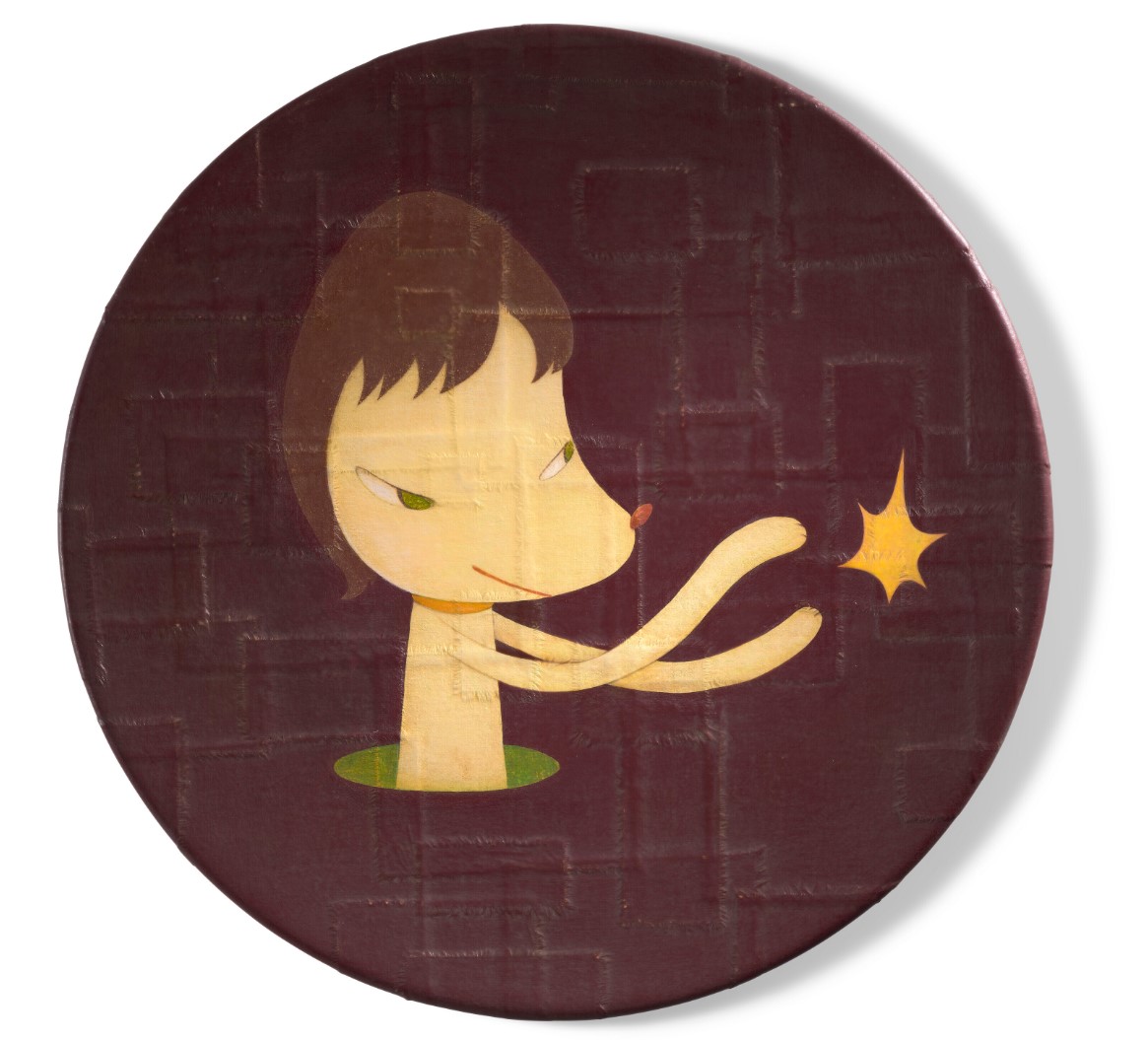
YOSHITOMO NARA (B.1959)
KAMEHAME – HA, 2004
Acrylic on cotton mounted on FRP
Diameter: 55.2 cm (21 3/4 inches)
Signed in Japanese, titled and dated ‘KAMEHAME – HA 2004’ (on the reverse)
“And that beyond-words appeal is, for me, the power of the imagery that the story delivers.”
#7. Yayoi Kusama
Christie’s Hong-Kong: 29 May 2023
Estimated: HKD 3,200,000 – 4,800,000
HKD 5,796,000 / USD 739,927
YAYOI KUSAMA (B. 1929) (christies.com)
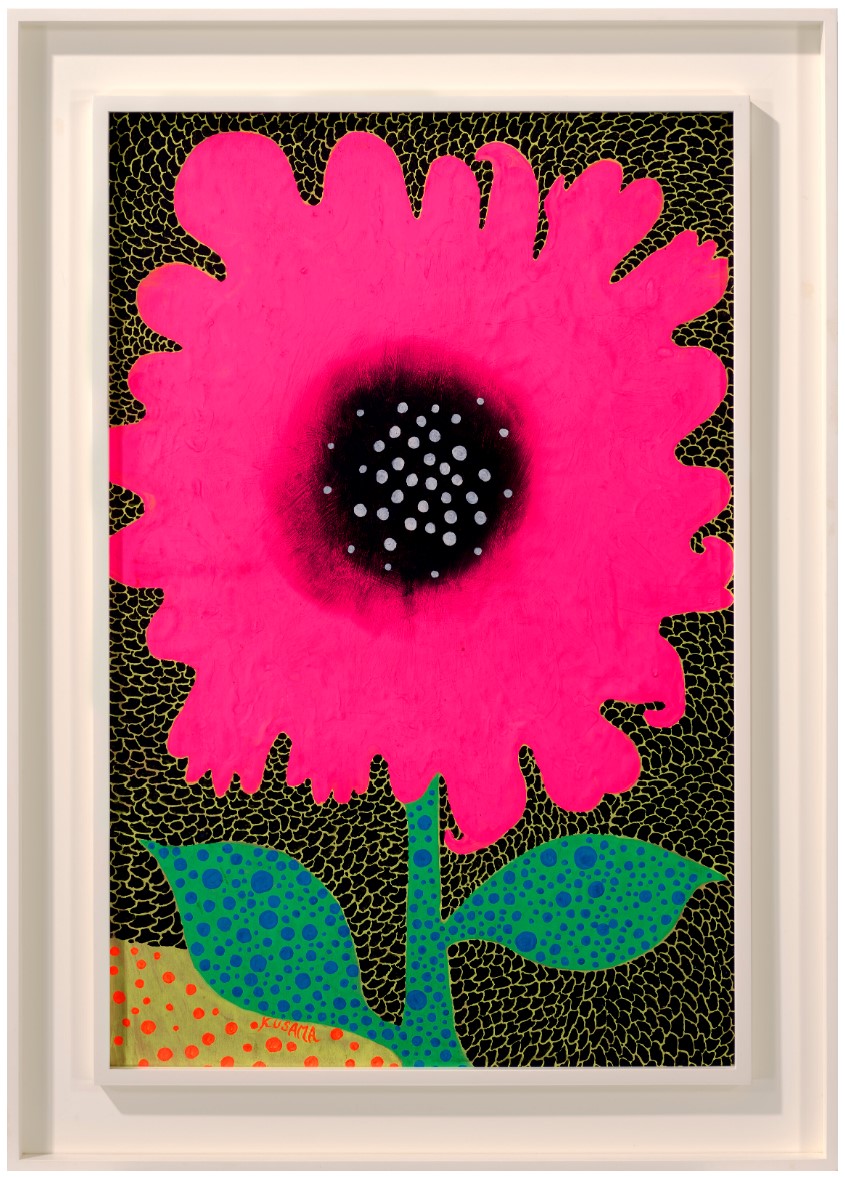
YAYOI KUSAMA (B. 1929)
Untitled, circa 1970
Gouache and mixed media on paperboard
80.6 x 53 cm (31 3/4 x 20 7/8 inches)
Signed ‘Kusama’ (lower edge)
“Born into this world of people, parting to me is like silent footprints in the path of flowers.”
#8. Yayoi Kusama
Christie’s Hong-Kong: 29 May 2023
Estimated: HKD 2,000,000 – 3,000,000
HKD 4,662,000 / USD 595,159
YAYOI KUSAMA (B. 1929) (christies.com)
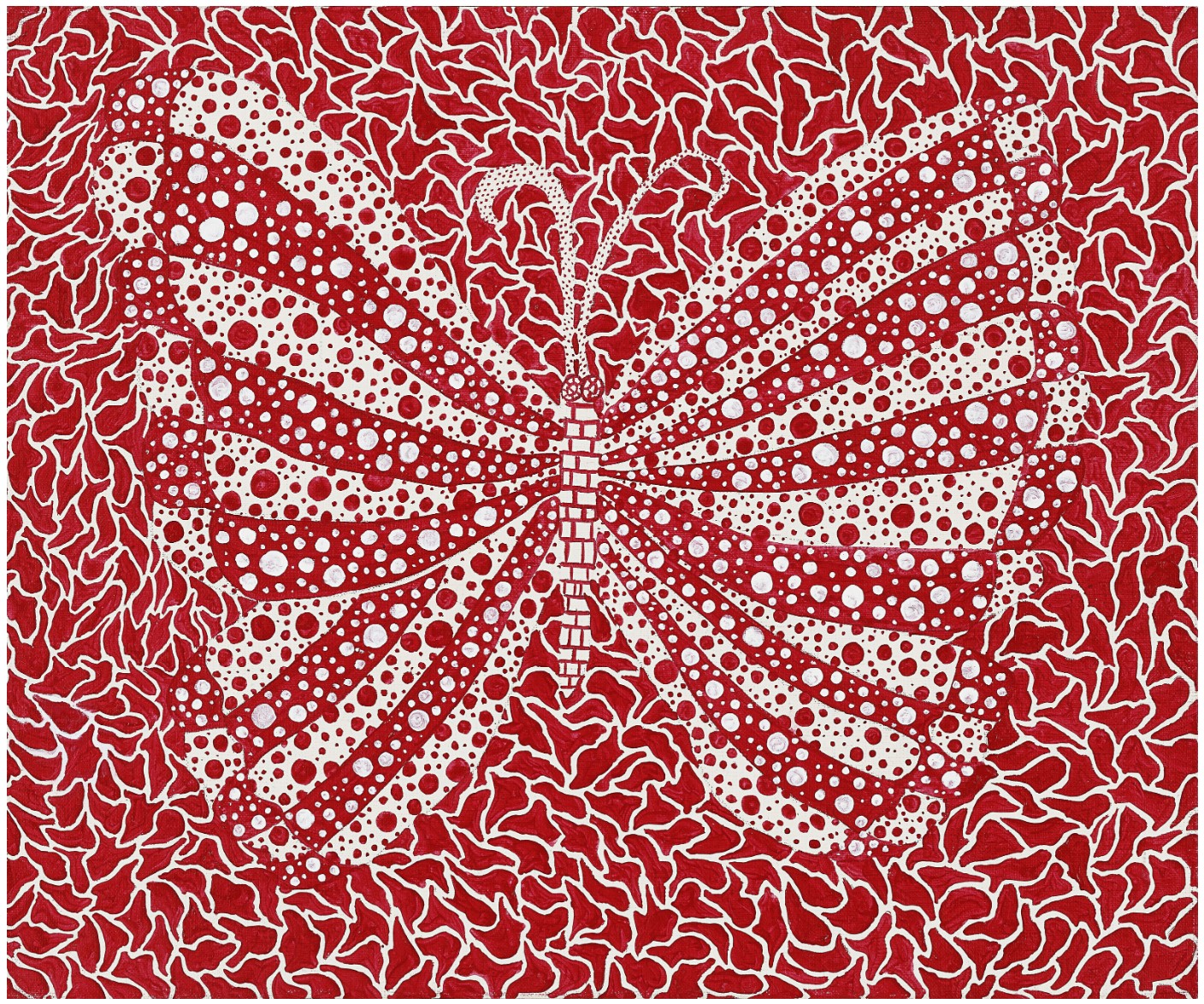
YAYOI KUSAMA (B. 1929)
Butterfly, 1982
Acrylic on canvas
38×46 cm (15 x 18 1/8 inches)
Signed and dated ‘1982 Yayoi Kusama’, titled in Japanese (on the reverse)
“I’m like a butterfly fluttering over hills and fields in search of a place to die… All I want is for human beings of every era to breathe the spirit and energy of their times and to face the future undaunted, with crimson flowers blooming.”
#9. Hernan Bas
Christie’s Hong-Kong: 29 May 2023
Estimated: HKD 3,000,000 – 5,000,000
HKD 4,410,000 / USD 562,988
HERNAN BAS (B. 1978) (christies.com)
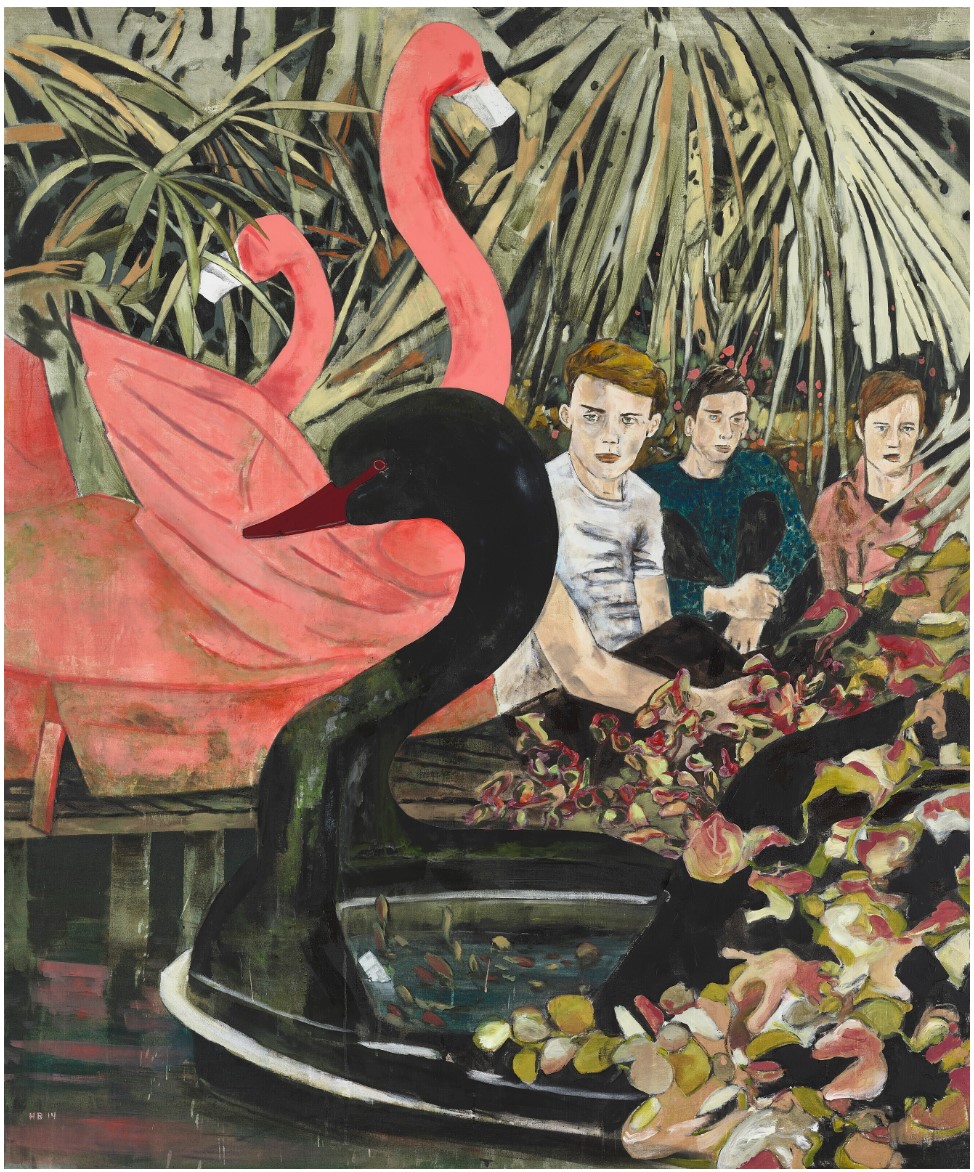
HERNAN BAS (B. 1978)
Secret Hideout of the Flamingo Gang (Abandoned Paddle Boats), 2014
Acrylic on linen
72×60 inches (182.9 x 152.4 cm)
Signed with artist’s initials and dated ‘HB 14’ (lower left)
#10. Yoshitomo Nara
Christie’s Hong-Kong: 29 May 2023
Estimated: HKD 900,000 – 1,200,000
HKD 4,284,000 / USD 546,903
YOSHITOMO NARA (B. 1959) (christies.com)
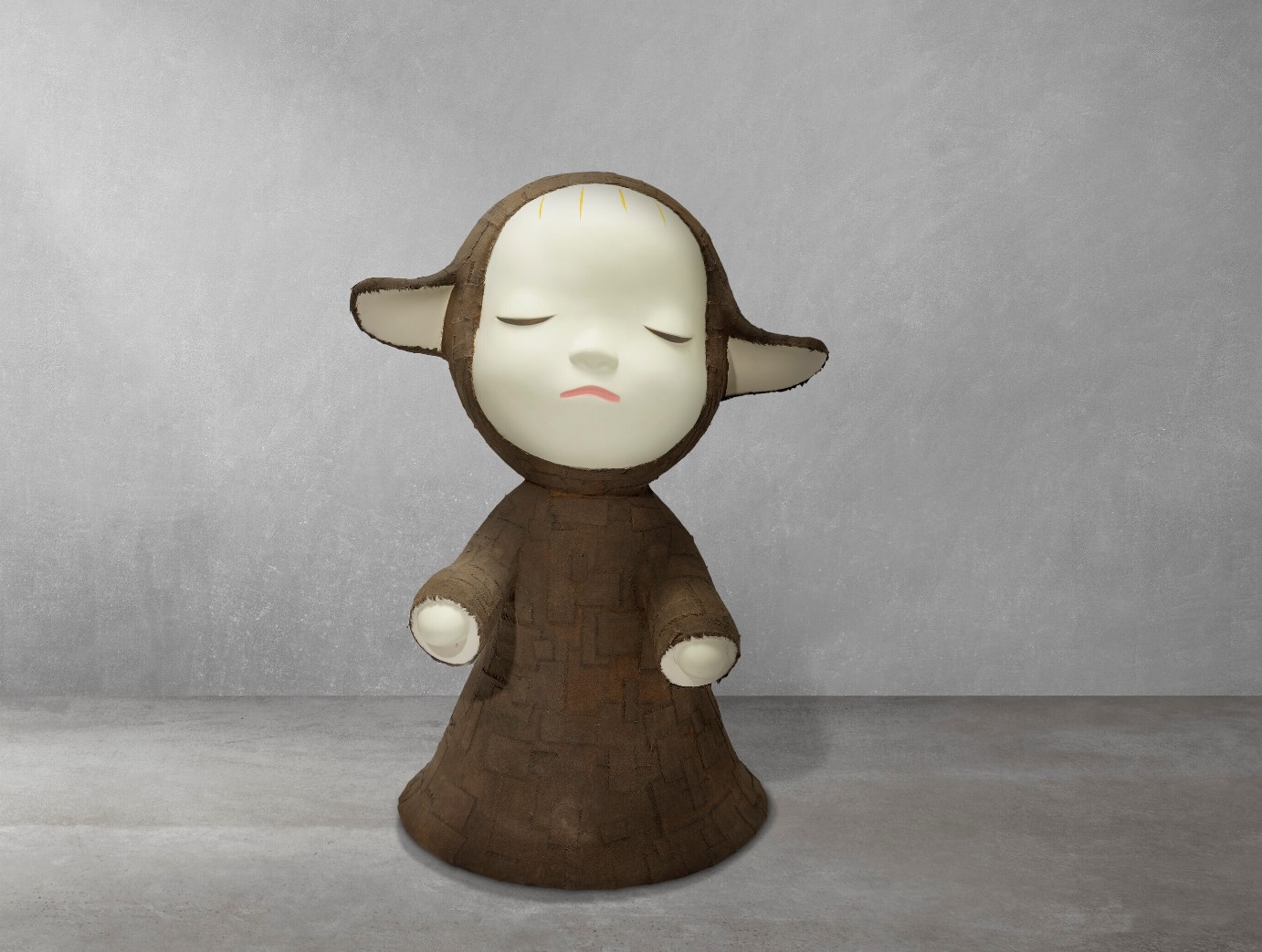
YOSHITOMO NARA (B. 1959)
The Little Pilgrims (Night Walking), 1999
Acrylic, lacquer, and cotton on FRP, sculpture
72 (H) x 50 x 42.5 cm (28 3/8 x 19 5/8 x 16 3/4 inches)
Edition: 9/10
3. Other Highlights
Nicolas Party
Christie’s Hong-Kong: 29 May 2023
Estimated: HKD 1,200,000 – 2,200,000
HKD 3,024,000 / USD 386,049
NICOLAS PARTY (B.1980) (christies.com)
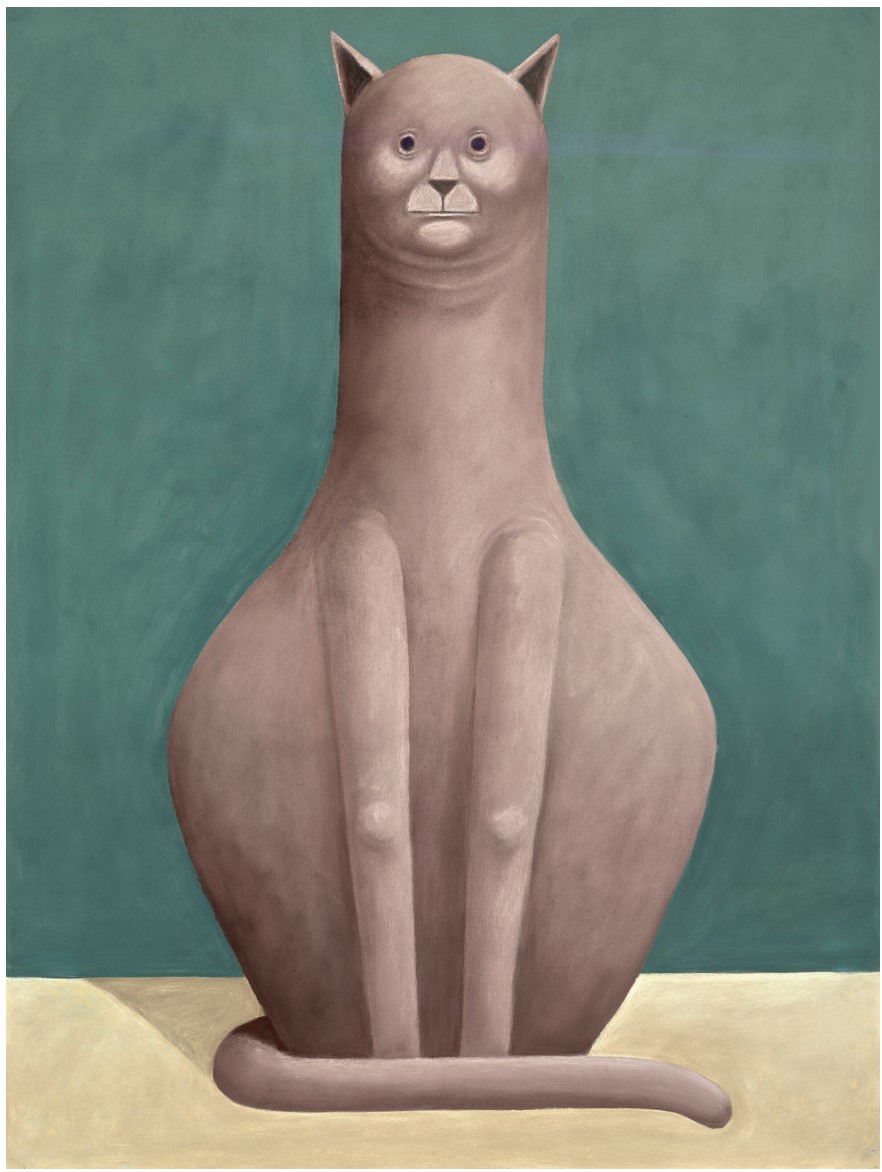
NICOLAS PARTY (B.1980)
Cat, 2016
Soft pastel on pastel card
79.8 x 59.8 cm (31 3/8 x 23 1/2 inches)
Scott Kahn
Christie’s Hong-Kong: 29 May 2023
Estimated: HKD 800,000 – 1,200,000
HKD 3,024,000 / USD 386,290
SCOTT KAHN (B. 1946) (christies.com)
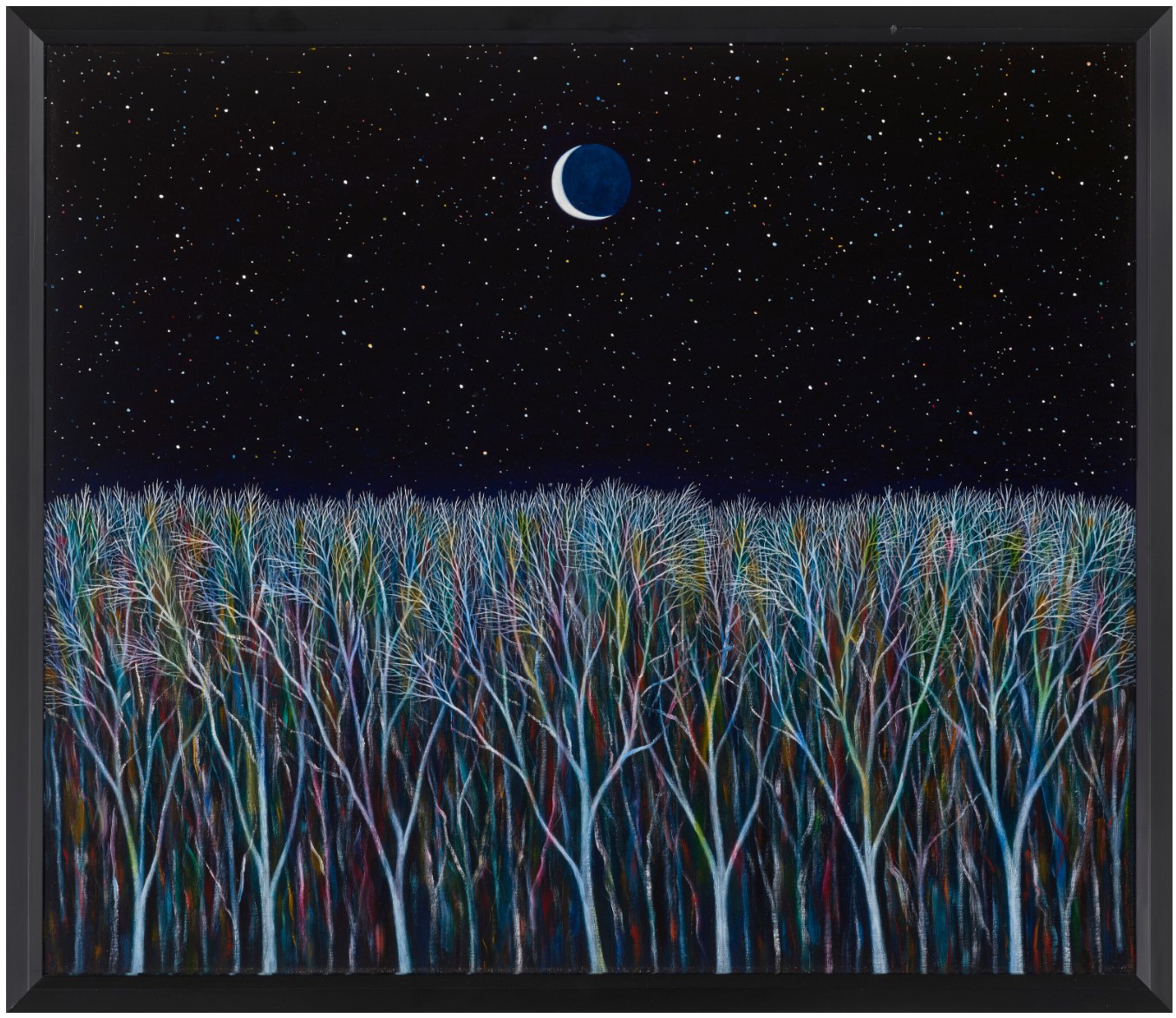
SCOTT KAHN (B. 1946)
New Moon, 2013
Oil on linen
24×28 inches (60.9 x 71.1 cm)
Signed, titled, inscribed and dated ‘NEW MOON KAHN 2013 2013 Scott Kahn all rights reserved’
(on the overlap)