YAYOI KUSAMA (B.1929)
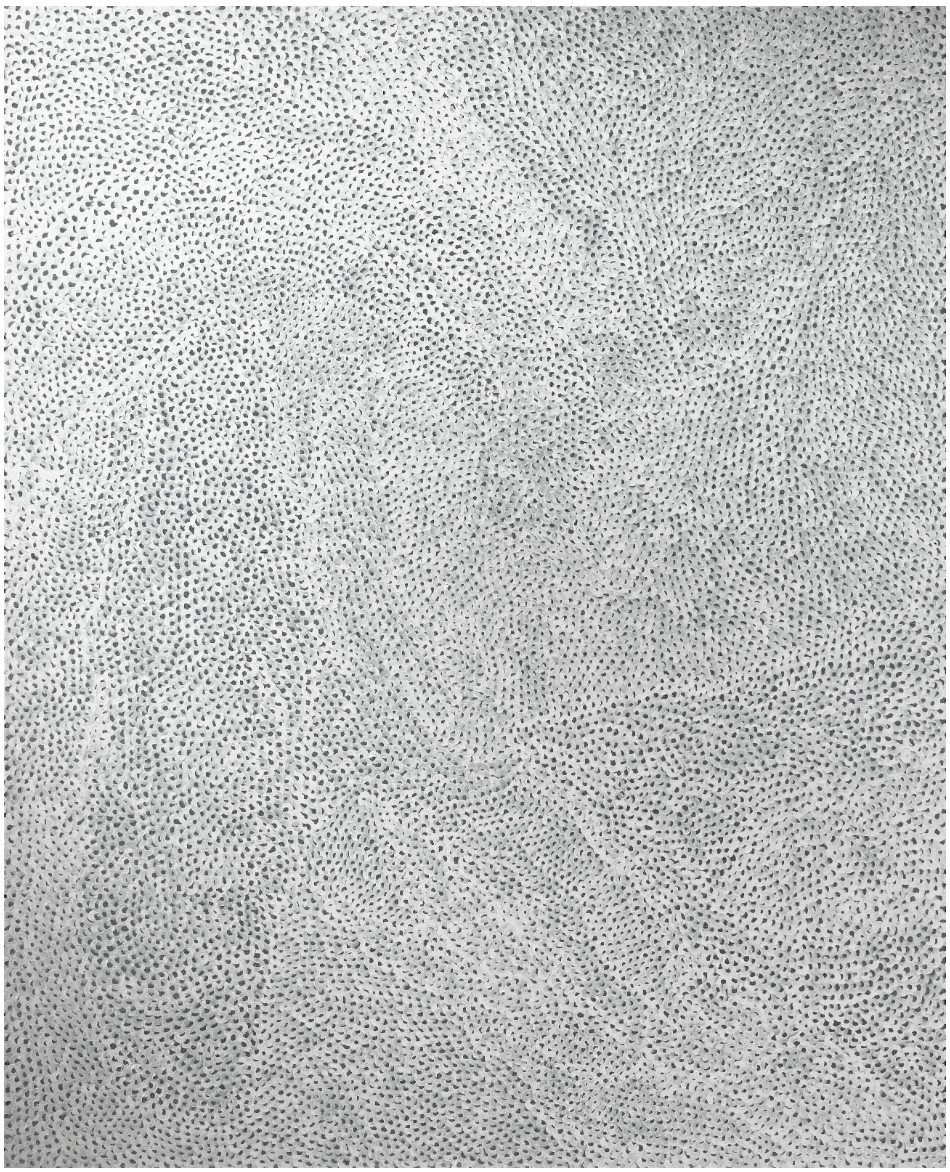
Infinity-Nets (OXTERAL), 2008
Acrylic on canvas
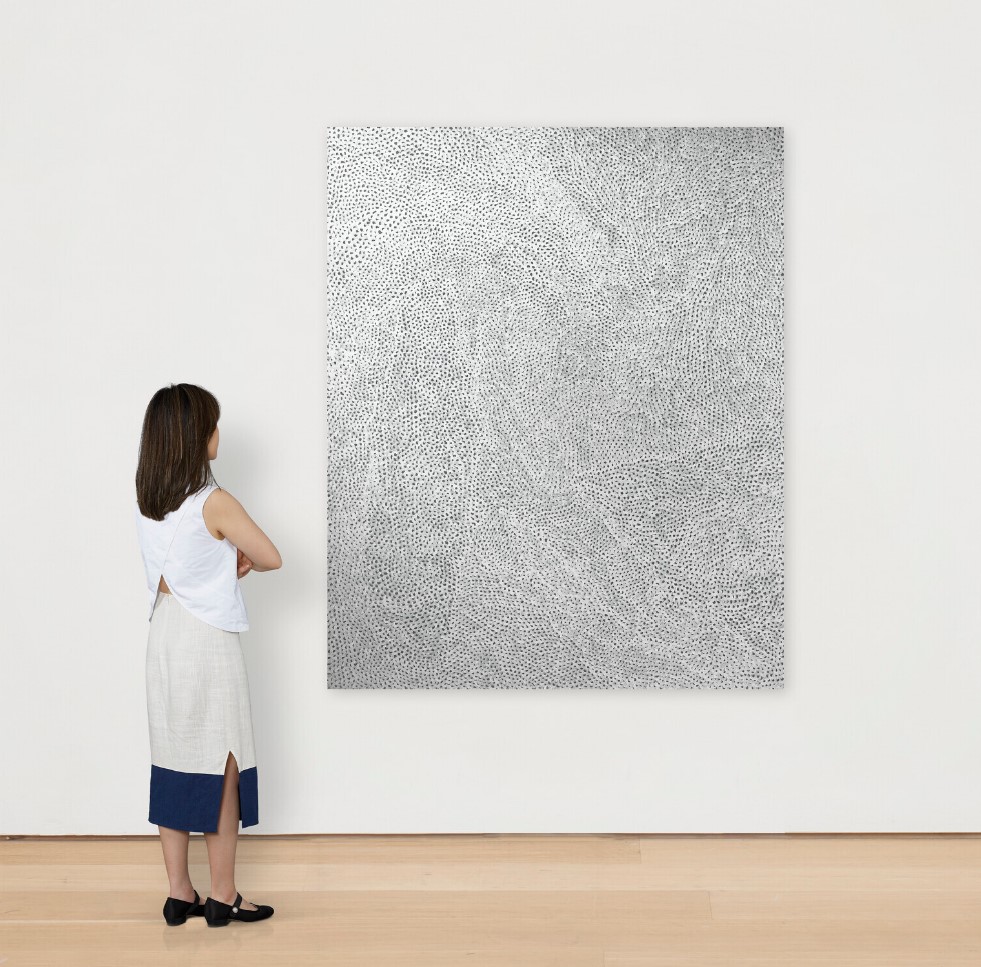
160.3 x 130.2 cm. (63 x 51 3/4 inches)
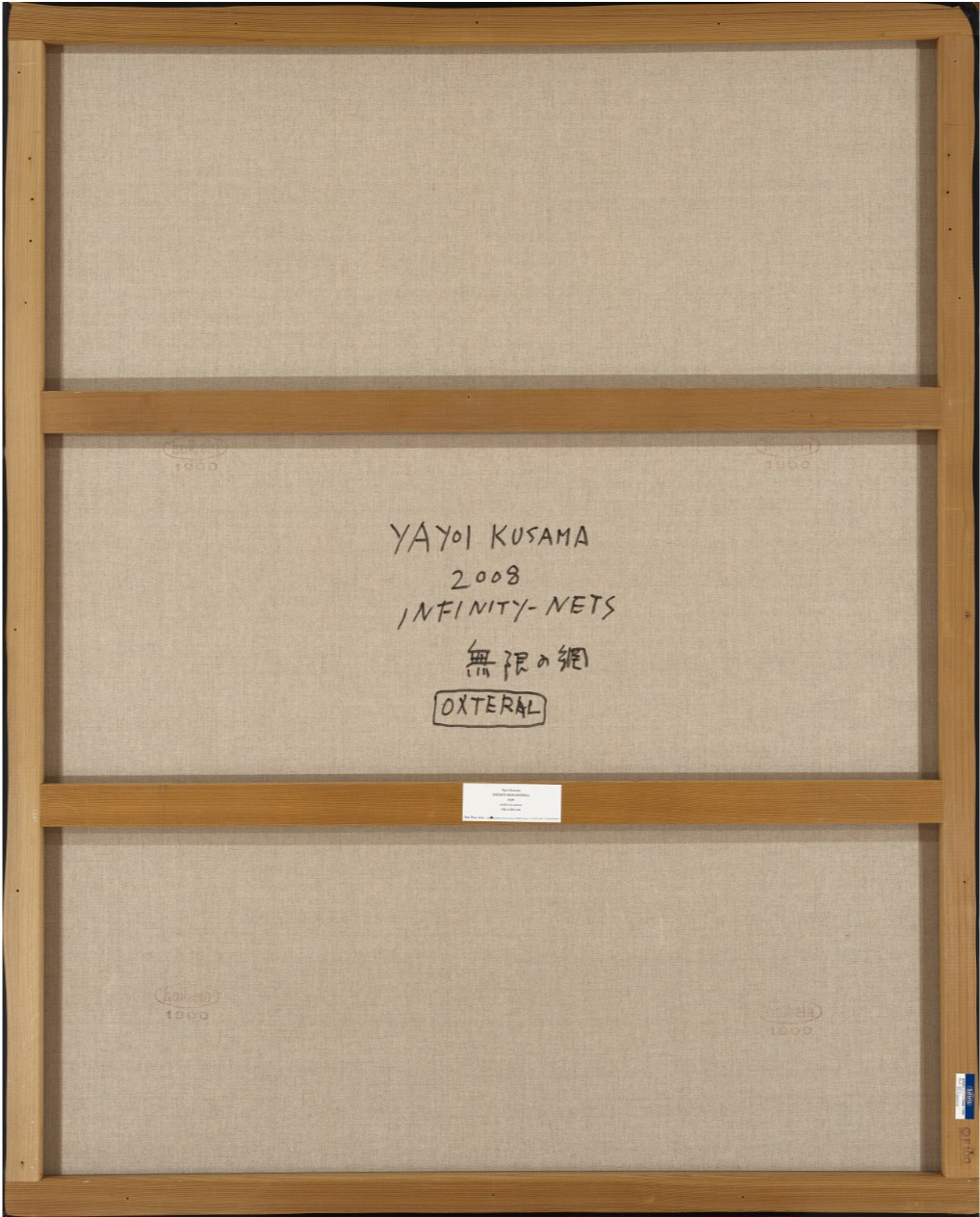
Signed and dated ‘YAYOI KUSAMA 2008′
Titled in English ‘INFINITY-NETS OXTERAL’ and Japanese (on the reverse)
Provenance
Ota Fine Art, Tokyo
Acquired from the above by the present owner
Auction History
Christie’s Hong-Kong: 30 November 2022
Estimated: HKD 22,000,000 – 28,000,000
HKD 25,650,000 / USD 3,286,355
YAYOI KUSAMA (B.1929) (christies.com)
Executed in 2008, Infinity Nets OXTERAL is the salient example of the artist’s visually complex and psychologically laden Nets series. Subjugating the entire canvas, the hypnotic white open loops tie across an underlying wash of grey-blue, like a finely-woven net floating on the ocean. The emanating darkness below the nets invites the viewer to contemplate each brush stroke even as they interweave in a dazzling symphony. Her distinct lace-like patterning shifts capriciously throughout the present work, and to look at and comprehend the painting is to be brought along for an unpredictable journey of ocular discovery. Merging the perceptible and the spiritual, she deliberately obliterates the picture plane, and with each stroke of the brush.
“How deep was the mystery? Did infinite infinities exist beyond our own universe?”
In contrast to the gestural and at times explosive practices of Action painters, Kusama fixes a single, undivided space on the canvas to ensure that each element of the work is given as much physical structure as possible. She often works with the canvas placed flat on a tabletop, making it impossible to see the whole of the composition while she is painting. In other words, Kusama restricts herself to respond to or alter the composition of the work during the process, and as a result, neglects any attempt to fully control the whole picture plane.
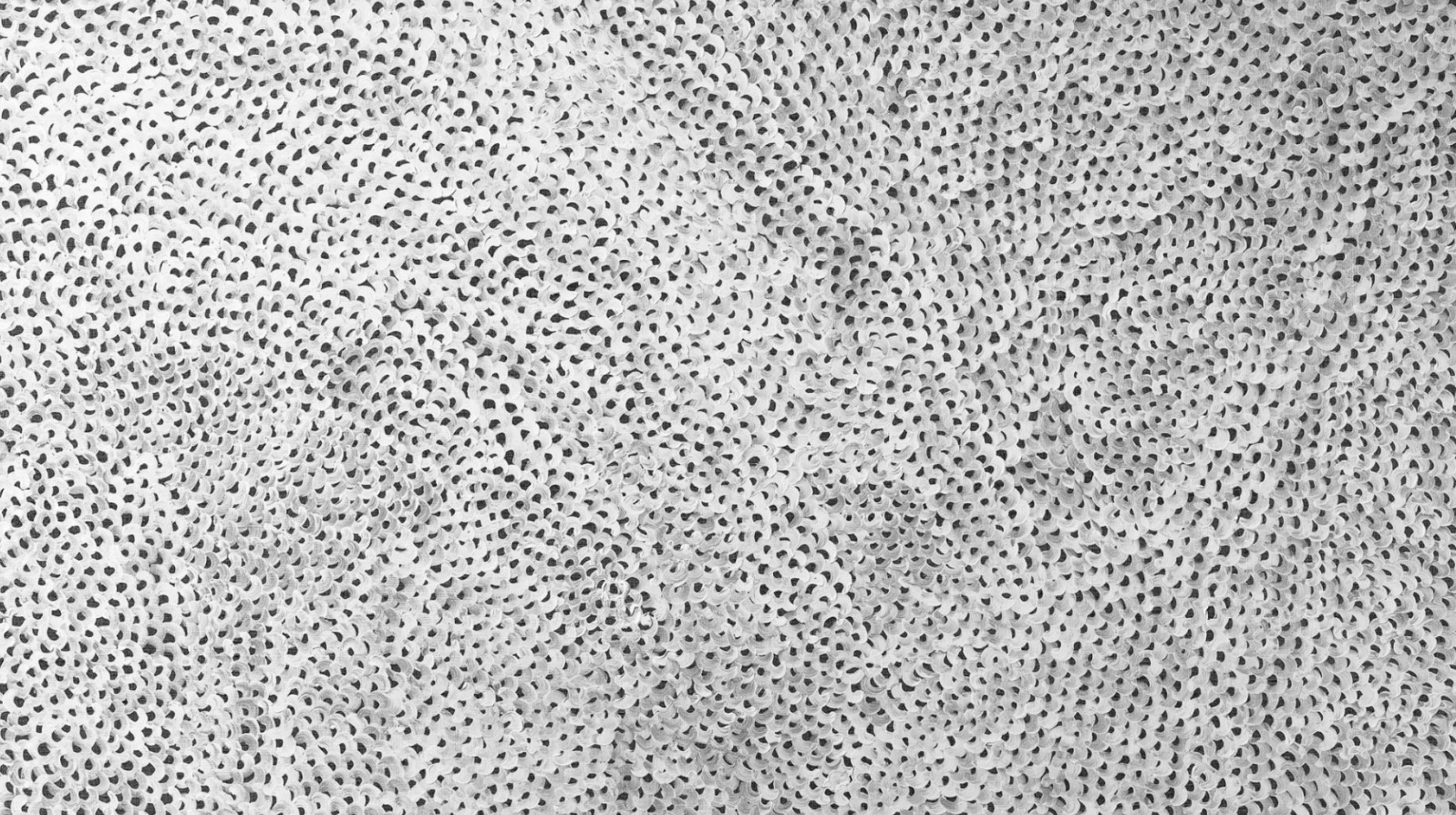
Painted in lustrous acrylic, Infinity Nets OXTERAL accentuates a key transition Kusama undertook in the late 1970s on the medium. The fast-drying nature of the water-soluble medium not only favors Kusama’s relentless practice but also speaks to her foundational training in nihonga, a reinvented, modern form of traditional Japanese painting. For Kusama, art is a means of ‘self-obliteration’ in which she ‘is reduced and returned to the infinity of eternal time and the absolute of space’ (Y. Kusama, quoted in L. Hoptman, Yayoi Kusama, London 2000, p. 36). Executed at the pinnacle of Yayoi Kusama’s career, this present work illustrates the artist’s tenacious quest to express the infinity of the universe while coming to terms with her own reality.