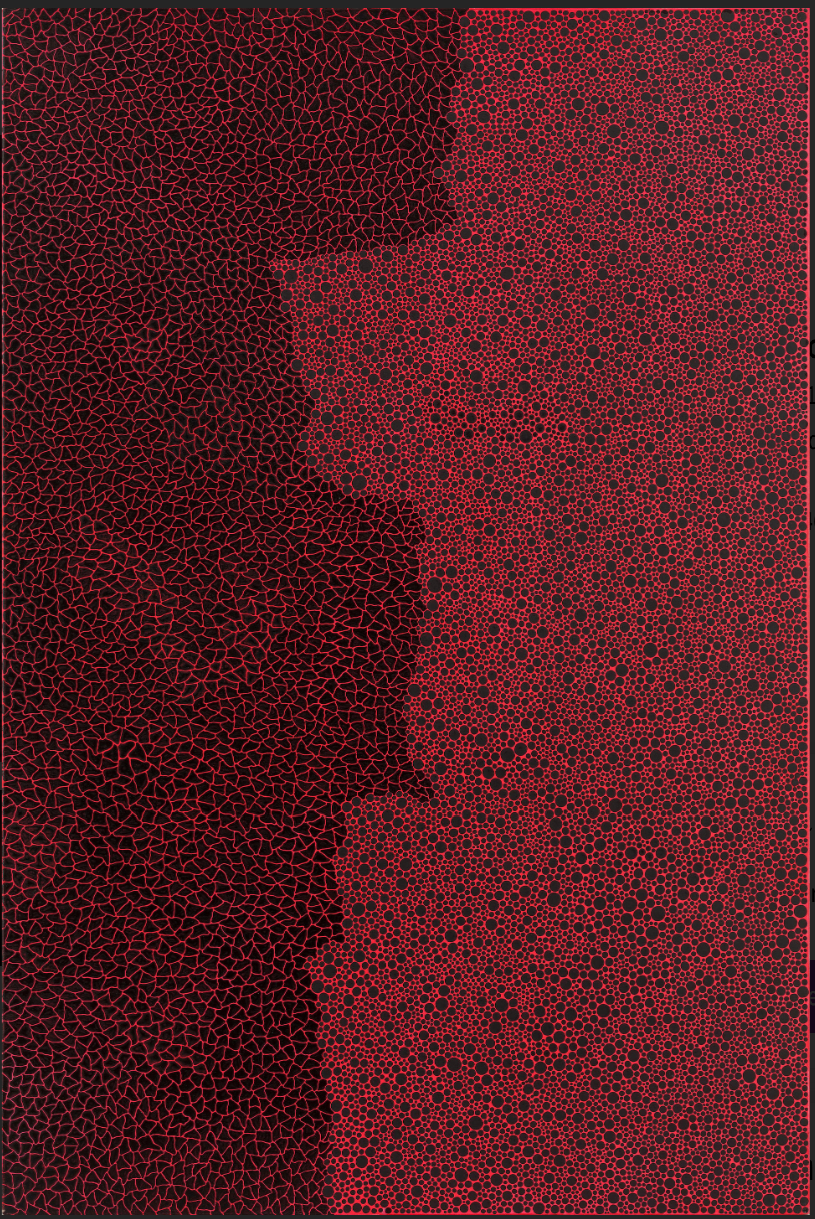
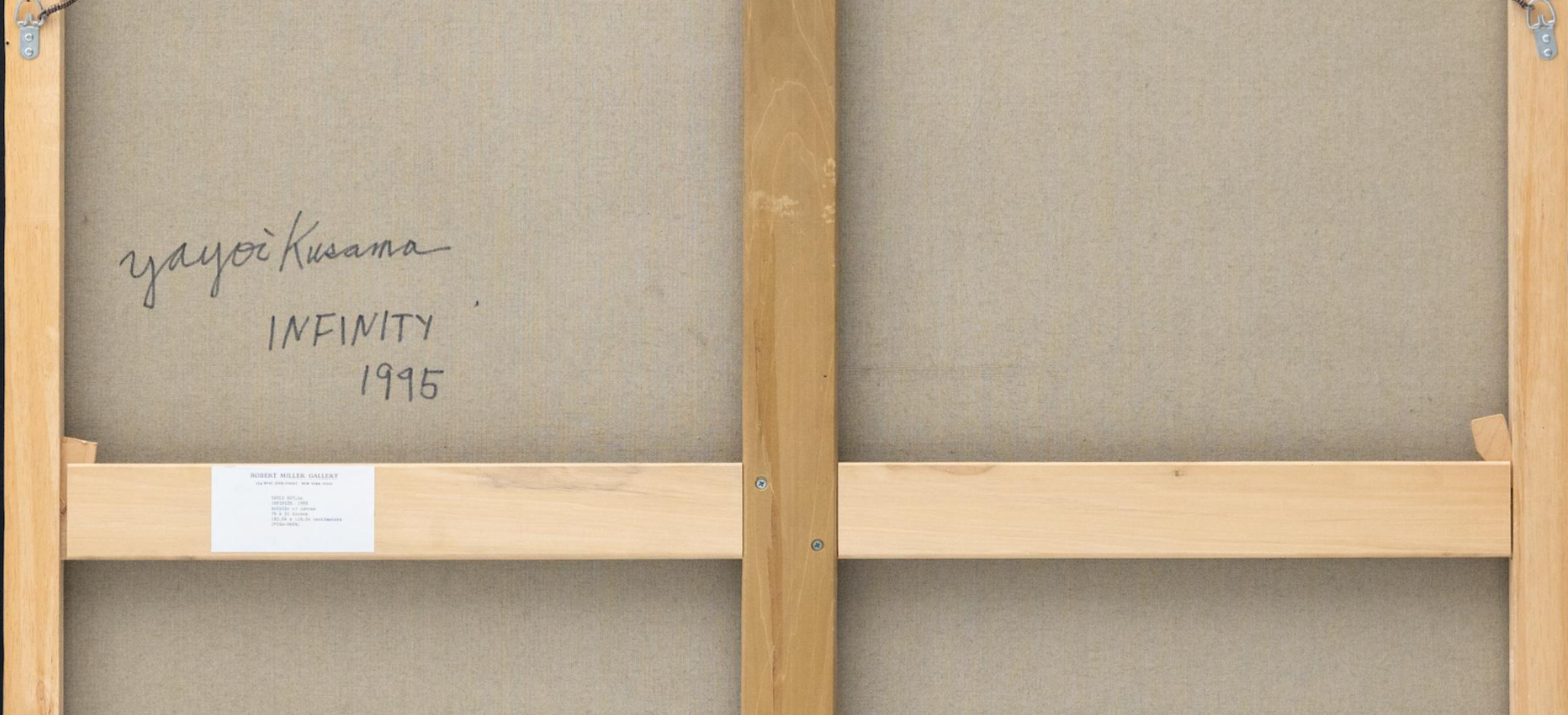
Acrylic on canvas
193 x 129.5 cm (76×51 inches)
Robert Miller Gallery, New York, USA
Private Collection, USA
Acquired from the above by the present owner
Auction History
Bonhams Hong-Kong: 25 May 2024
Estimate on Request
HKD 46,434,000 / USD 5,946,977
Since the Renaissance period in the 15th century, many artists used self-portraits as a means to assert their existence. For instance, even though Michelangelo’s The Last Judgment was commissioned by the church, the artist inserted an image of his own face next to Christ in the fresco.
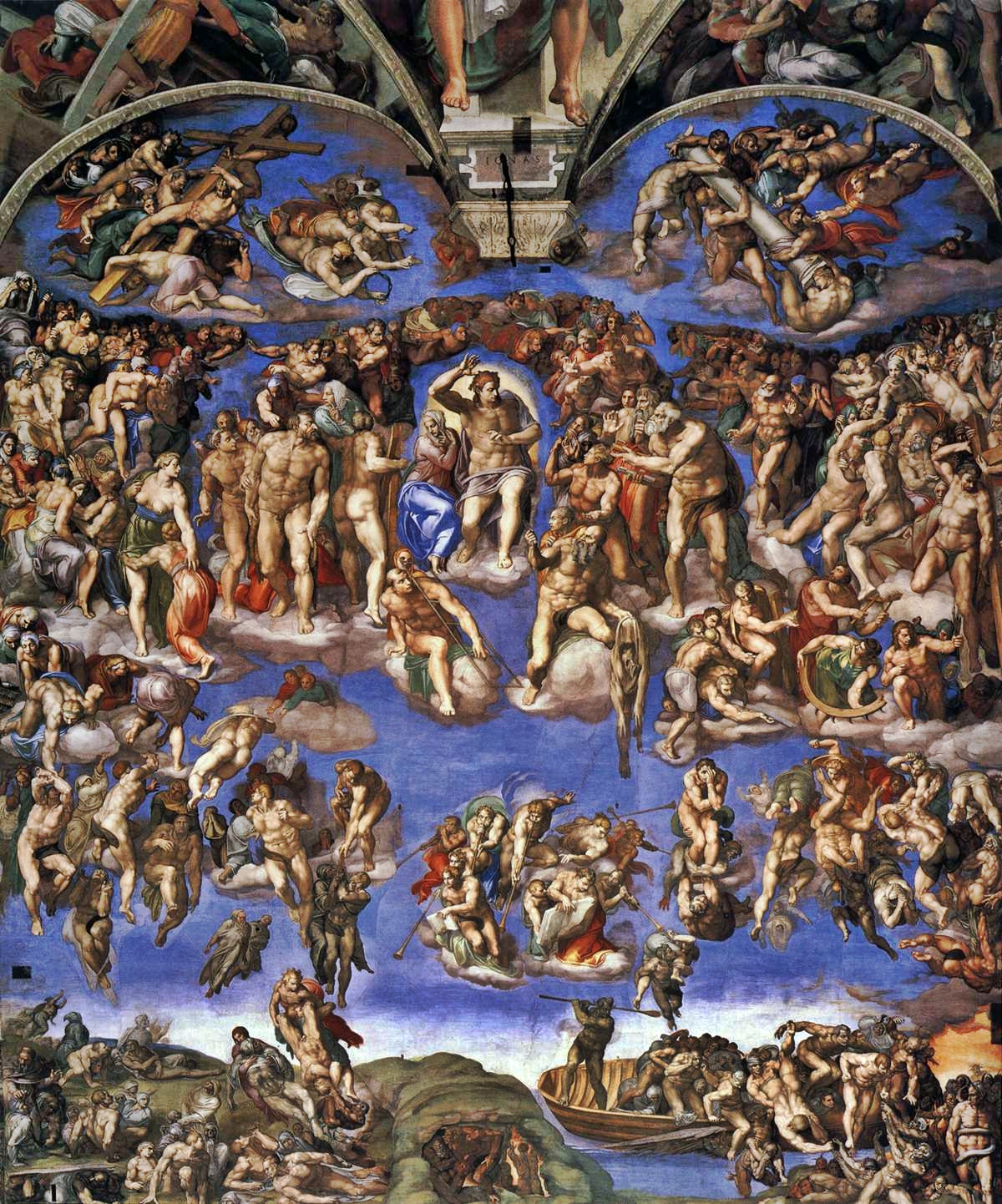
Michelangelo, The Last Judgment, Sistine Chapel, Vatican City
In The School of Athens, Raphael painted his own likeness amongst the great thinkers. Jan van Eyck painted himself as a witness in the convex mirror at the center of the painting The Arnolfini Wedding. Since then, artists such as Rembrandt, Van Gogh, Schiele, Frida Kahlo, Cindy Sherman, and others repeatedly use self-portraits to declare to the world the vital message “My life is the core of my art”. Instead of depicting facial features as an objective reality, artists are more concerned with highlighting their mental states and attitudes towards life when they paint self-portraits. Appearances are visible, but the psyche is not. It can only be discovered and experienced through empathy. As such, the highest state of artistic achievement is when one can convey both the form and the spirit in their works. At the advanced age of 95, Yayoi Kusama is without a doubt one of the most iconic and influential artists in contemporary art. With a career straddling two centuries, Kusama painted numerous self-portraits. The cover of her 2012 catalogue published by Rizzoli New York is one of such self-portrait works. However, there is an abstract work included the book that can better serve as a self-portrait in a metaphysical way. Infinity thoroughly illustrates Kusama’s mental states, personal experiences, as well as her complete worldview. Not only is it an invaluable self-portrait of Kusama’s lived experience, but it is also an autobiography written in symbols and colours instead of words.
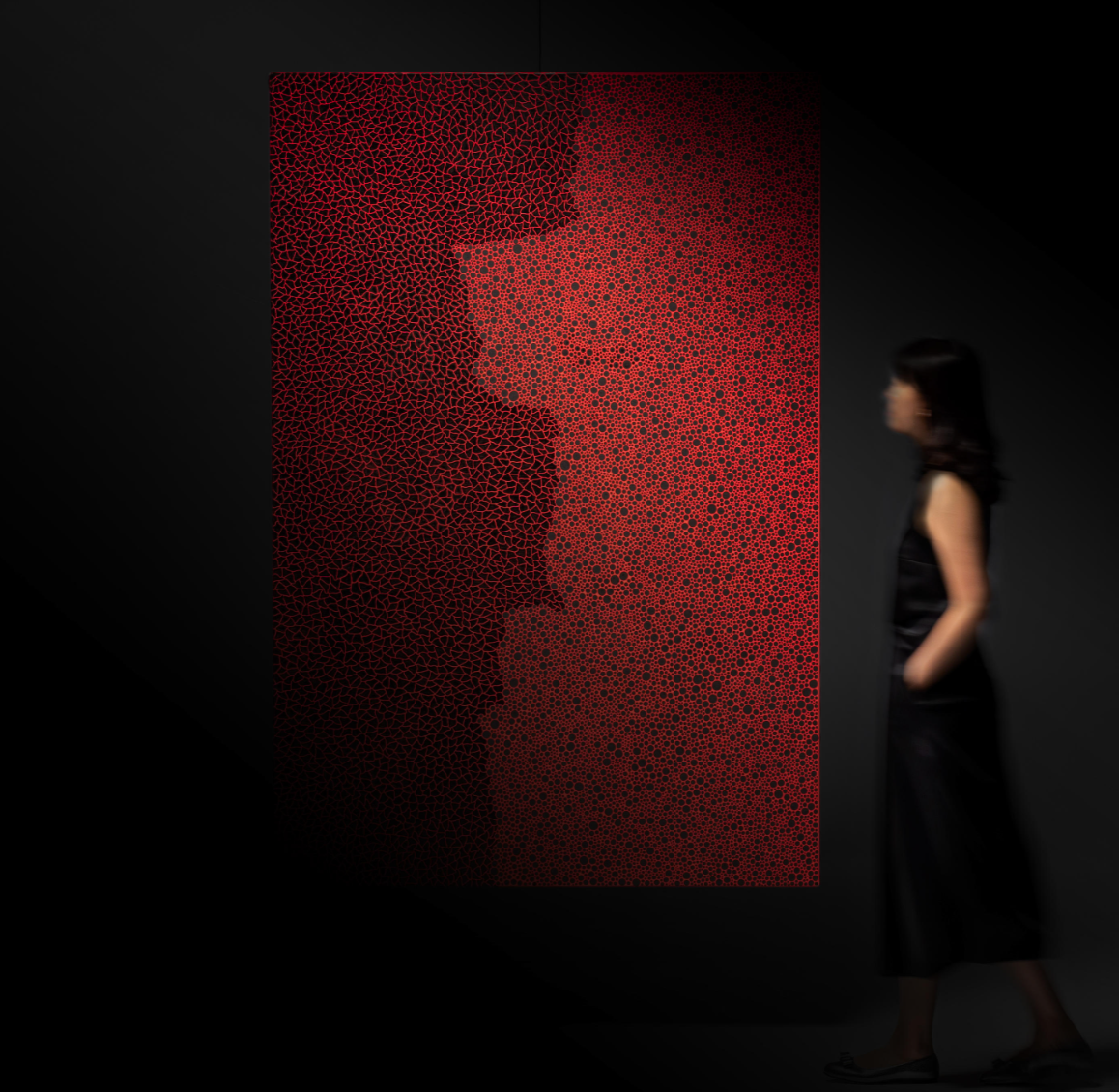
Infinity is singular in its artistic style. Kusama employed two of the most crucial symbols from her repertoire in this work—polka dots and infinity nets. For over half a century since the 1950s, she had been choosing only either one of the two symbols as the subject in her pure abstract works. Towering at nearly two meters, Infinity was completed using only the two hues of red and black. Its specific size and palette are typical of works from the Infinity Nets series that were completed in New York in the 1960s—the importance of this particular palette is only second to her black and white works. Viewing from a distance, this large-scale vertical work is clearly divided into two halves—the left and right pieces in different shades of dark red distinctly meet at the barrier. Upon closer inspection, viewers can identify the polka dots on the right half and the infinity nets on the left. The line at which the two halves meet is full of twists and turns. This fills the otherwise serene picture with a strong sense of rhythm and a unique temperament. Compositionally speaking, works with this left-right division are exceptionally rare in Kusama’s oeuvre. Similar works have yet to be seen in the auction market. As a result, it is extremely hard to find works in the same category to serve as reference points for comparison. Thus, the collection value of Infinity cannot be overstated. The symbols of polka dots and infinity nets are both inextricably tied to Kusama’s upbringing and life. Despite being born into an affluent family in Japan in 1929, Kusama began experiencing hallucination since the age of ten as a result of the oppression she received from her mother.
“One day I was looking at the red flower patterns of the tablecloth on a table, and when I looked up I saw the same pattern covering the ceiling, the windows and the walls, and finally all over the room, my body and the universe. I felt as if I had begun to self-obliterate, to revolve in the infinity of endless time and the absoluteness of space”.
As an adult, Kusama continued to suffer from hallucinations, so much so that she contemplated suicide. Yet, by persistently painting polka dots and infinity nets, she found peace and the strength to live. When viewers gaze upon Kusama’s dots and nets, they are looking at records of her sensory experience and the genuine face of her spiritual self. Accessing this deeper understanding that transcends superficial depiction is akin to viewing the self-portrait of the artist’s life itself.
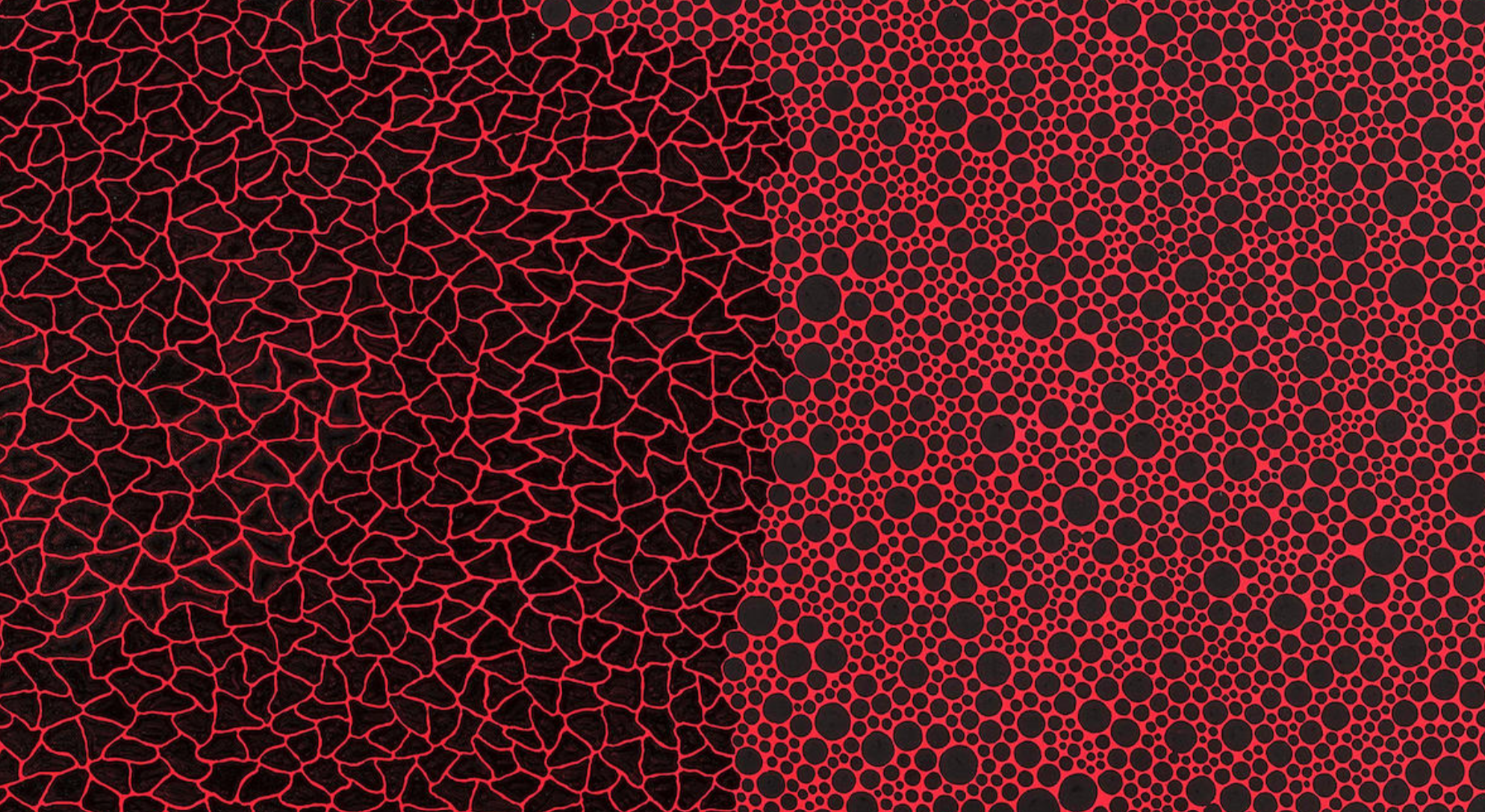
The way in which the composition of Infinity is split into two halves infuses this work with intrigue and openness. It enables viewers to interpret this work from a diversity of perspectives when they try to decipher its meaning. As the two opposing forces in Infinity attempt to negotiate the picture space, it is hard to tell whether they are harmoniously seeking a compromise or ambitiously trying to devour each other. This work serves as a visual biography that chronicles Yayoi Kusama’s tireless struggles against fate: from her authoritarian mother, the conservative Japanese art education system, the white-male dominated art scene when she first arrived in New York, the American public and media who ostracised her, to the Japanese society who villainised her in the 1980s, Yayoi Kusama has always been an outsider working alone. Nevertheless, she responded to criticism by persistently creating works that are true to herself, and her artistic achievements are widely recognized by the world today.
By solely relying on visual elements, Infinity is able to deeply resonate with viewers on a spiritual level. This powerful expression echoes the principles of furyūmonji (rejecting dependence on words and letters) and ishin-denshin (heart-to-heart communication) in Zen Buddhism. Yayoi Kusama insists that she wishes to bring infinite love to the world through her works. Love can have many different manifestations, and the embrace is one of the most direct and simple expressions. The binary composition of Infinity can be interpreted as a conflict, but it can also be read as an intimate relationship between two constituents. The way in which the two halves of dots and nets interlock with each other is reminiscent of a deep emotional bond between two people. Kusama had two special relationships in her life: she was briefly involved with artist and art critic Donald Judd in the 1960s in New York. But it was not until 1962 did she got to close relationship Surrealist painter Joseph Cornell who was 20 years her senior. The unprecedented support and admiration she received from Cornell solidified a lifelong bond. As such, Kusama was devastated when Cornell passed away in 1972. The composition of Infinity appears to symbolize the yin and yang nature between a man and a woman, obliquely referencing her platonic relationship with Cornell. The universe is permeated with matter and energy that are dualistic in nature. In addition to the aforementioned dualities of East and West, yin and yang, as well as men and women, Infinity inspires further contemplations on subjects such as fullness versus emptiness, tangible versus intangible, lightness versus weightiness, positive versus negative, as well as other dichotomous phenomena. Infinity perfectly embodies the concept of how objective representations are limiting, but subjective symbolic imageries are limitless.