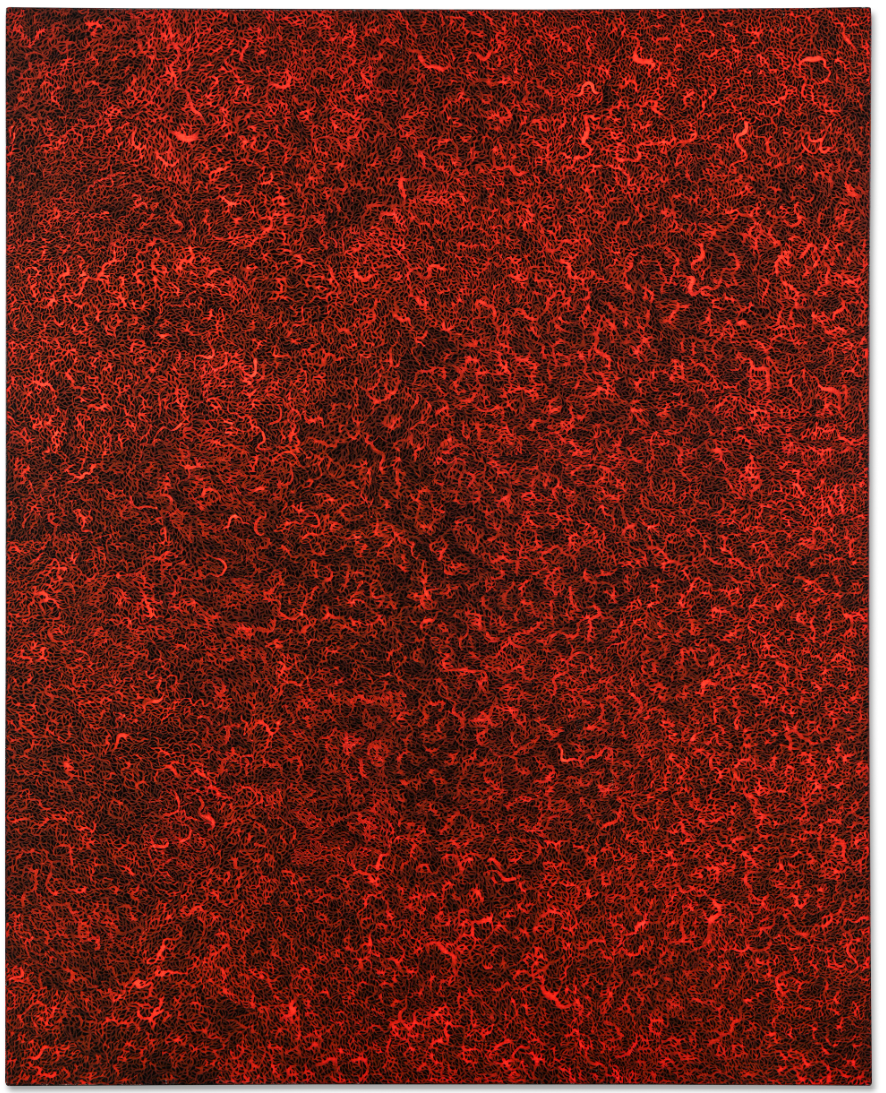
YAYOI KUSAMA (b. 1929)
The Sea in the Evening Glow (B) Facing the Imminent Death, 1990
Acrylic on canvas
161.5 x 130.5 cm (63 5/8 x 51 3/8 inches)
Signed, titled in Japanese and dated 1990 (on the reverse)
Provenance
Fuji TV Gallery, Tokyo
Private Collection, Japan
Sotheby’s, New York, 18 November 1998, lot 303 (consigned by the above)
Acquired from the above by the present owner
Sotheby’s London: 25 June 2024
Estimated: GBP 900,000 – 1,200,000
GBP 1,140,000 / USD 1,445,520
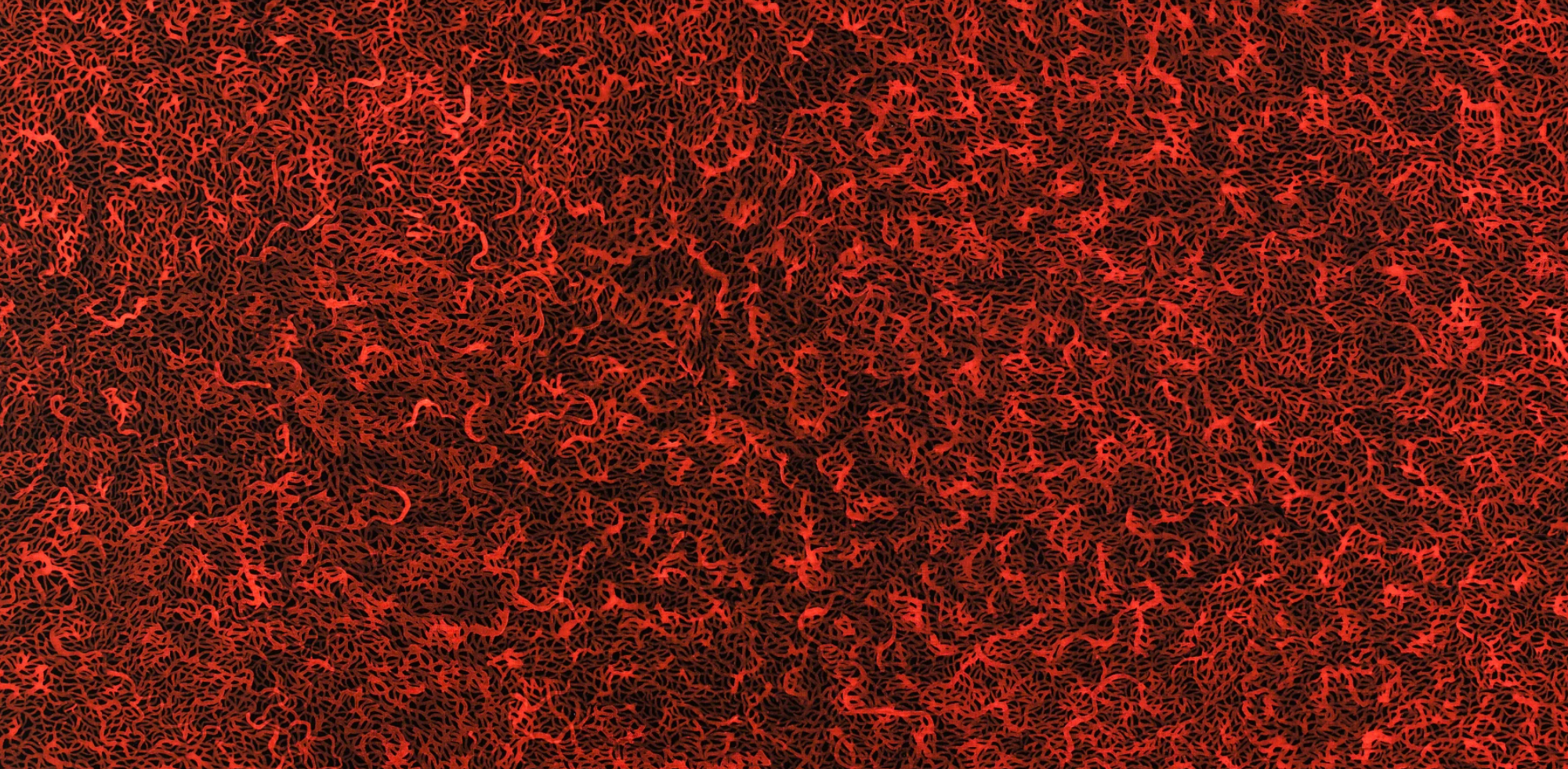
The scintillatingly complex surface of The Sea in the Evening Glow (B) Facing the Imminent Death is seemingly quintessential Yayoi Kusama, yet there is a singularity reverberating from the dizzying crimson picture plane. Executed in 1990, the present work emerges as a profound extension of Kusama’s renowned Infinity Net series, adjacent in its repetitive and obsessive rendering of lines that never connect. This marked a pivotal time in which Kusama embraced acrylic paint, a medium that allowed her to explore and highlight contrasting hues with greater fluidity and precision.
This transition in medium paralleled a thematic evolution in Kusama’s work in which she began to incorporate organic imagery – star dust, trees, the sea, and other natural elements – drawing direct inspiration from the natural world. Venerating the sea and sun, and the rhythmic and repetitive nature of the solar system in bringing about life, which inevitably results in death, the present work connects with nature to convey a message of regeneration. An auspicious color in Japanese culture, red symbolizes the healing lifeforce of the sun, while symbolizing notions of authority, strength and sacrifice. This period of experimentation and growth resulted in works that, while new in their subjects and techniques, retained the stylistic essence of the Infinity Net series. (B) Facing the Imminent Death thus stands as a testament to Kusama’s dynamic exploration of form and color, bridging her past innovations alongside her unique and evolving artistic enterprises.
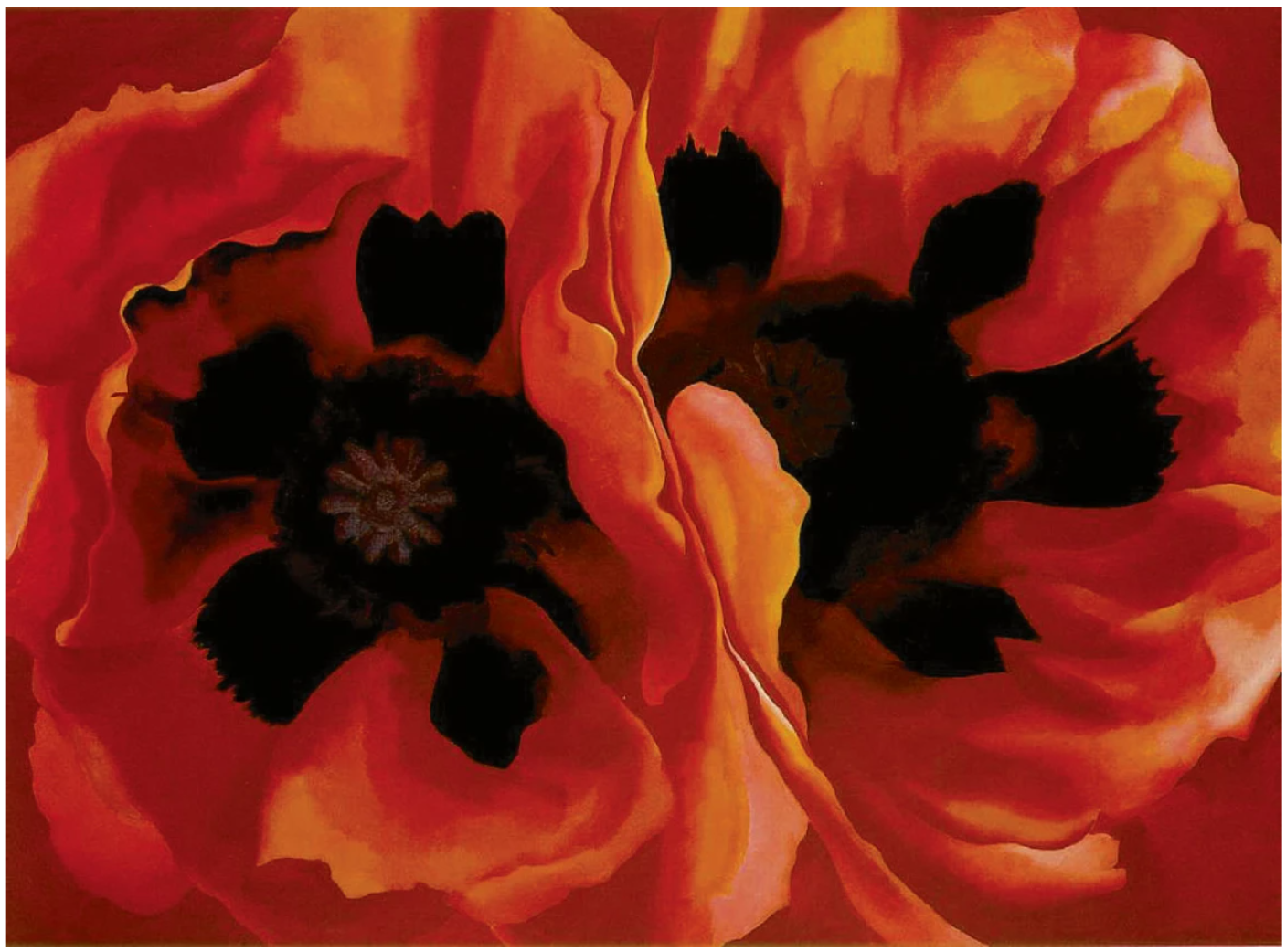
GEORGIA O’KEEFE, ORIENTAL POPPIES, 1928 / ARTWORK: © GEORGIA O’KEEFFE MUSEUM / DACS 2024
References to the sea found in Kusama’s Sea in the Evening Glow series, and particularly her 1950-60s net paintings, memorialize the artist’s crossing over the pacific to the United States. Before moving to New York in the late 1950s, Kusama sought the advice of American abstract artist Georgia O’Keeffe: she sent O’Keeffe examples of her early work – surreal yet anthropomorphic watercolor pieces – and the two artists began a correspondence that would last until the end of O’Keeffe’s life; indeed, for Kusama, their exchange was the deciding factor in her choice to emigrate in late 1957. Indeed Kusama’s life has been a journey between two worlds, Japan and the United States, marked by personal upheaval and enduring psychiatric challenges. Despite these adversities, her unparalleled oeuvre has remained remarkably cohesive and visionary. When Kusama relocated to New York in 1958, the artist plunged into the pulsating centre of the city’s art scene. Her immersive white paintings quickly garnered attention and acclaim, evolving into the iconic Infinity Nets series that would define a significant part of her career.
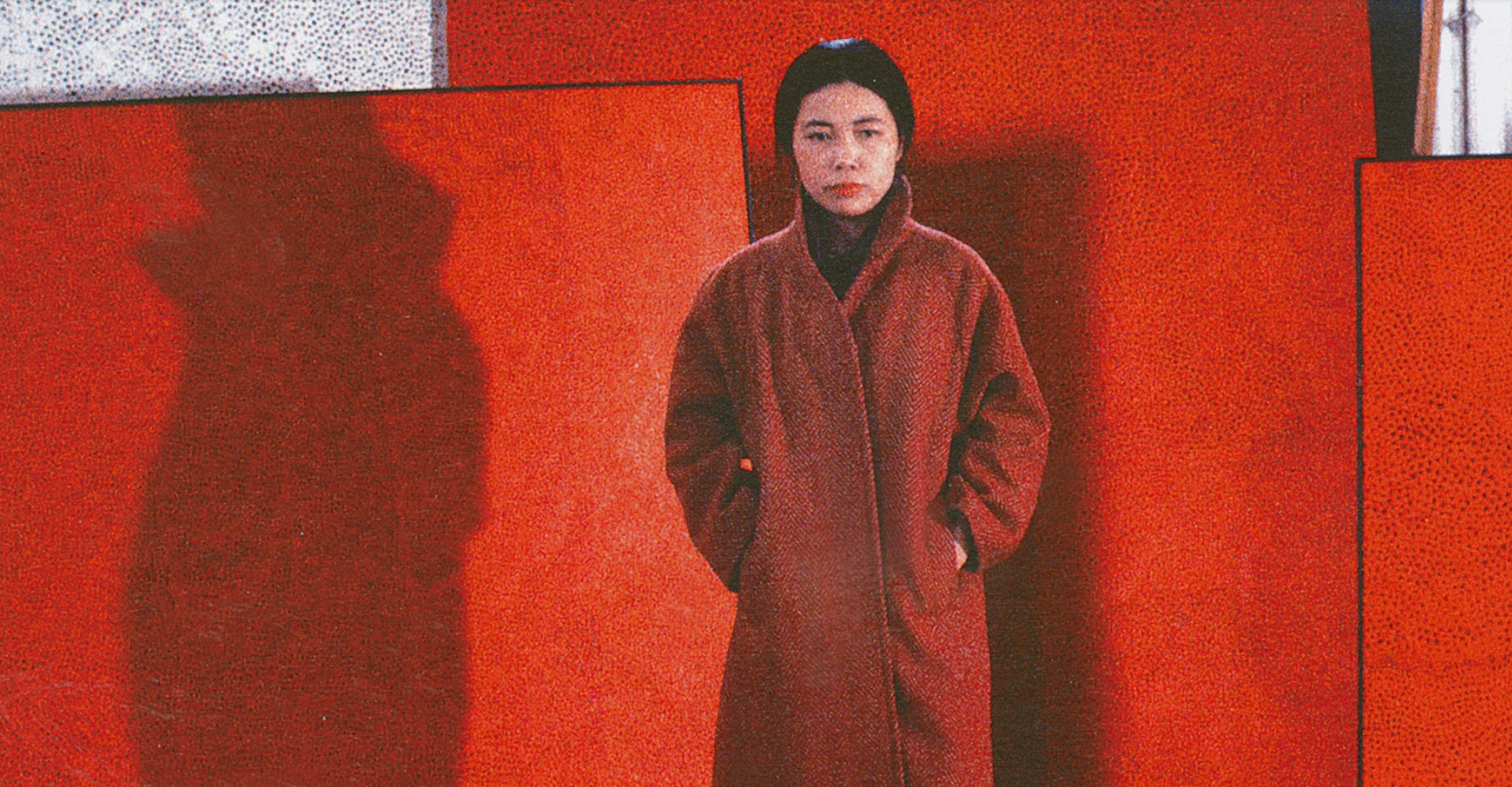
This period in New York was transformative for Kusama. Immersed in the avant-garde milieu, she forged a unique path, blending influences from her Japanese heritage with the cutting-edge developments of the Western art world. The Infinity Nets, characterized by their meticulous repetition and hypnotic rhythms, reflect Kusama’s profound engagement with themes of infinity and self-obliteration. These works not only solidified her reputation but also laid the foundation for her continuing exploration of immersive environments and organic forms.
In the late 1960s, Kusama began orchestrating public Happenings across New York. These performances, often explicit and involving nudity, catapulted Kusama into the limelight, cementing her sudden notoriety. However, by the early 1970s, Kusama chose to return to Japan, aiming to introduce her radical performance art to her homeland. The hypersexual Happenings she staged in Tokyo in 1970 and 1971 were met with condemnation and indifference from the Japanese public. Over the following years, Kusama found herself oscillating between Japan and the United States, feeling a profound sense of estrangement from both cultures. Despite her extensive time in each location, the artist never fully belonged to either. This pervasive sense of otherness and cultural alienation profoundly shaped her existence in both countries. In 1973, Kusama left New York permanently. Struggling with persistent hallucinations and mental health conditions, she admitted herself to a psychiatric hospital in Tokyo, where she continues to reside. This environment provided the stability and security she needed, fostering a prolific and vigorous period of art-making. Within this secure setting, Kusama revisited many themes and series from her 1960s oeuvre, including the iconic Infinity Nets. Her time at the hospital marked a renaissance in her creativity, underscoring her resilience and enduring influence in the art world.
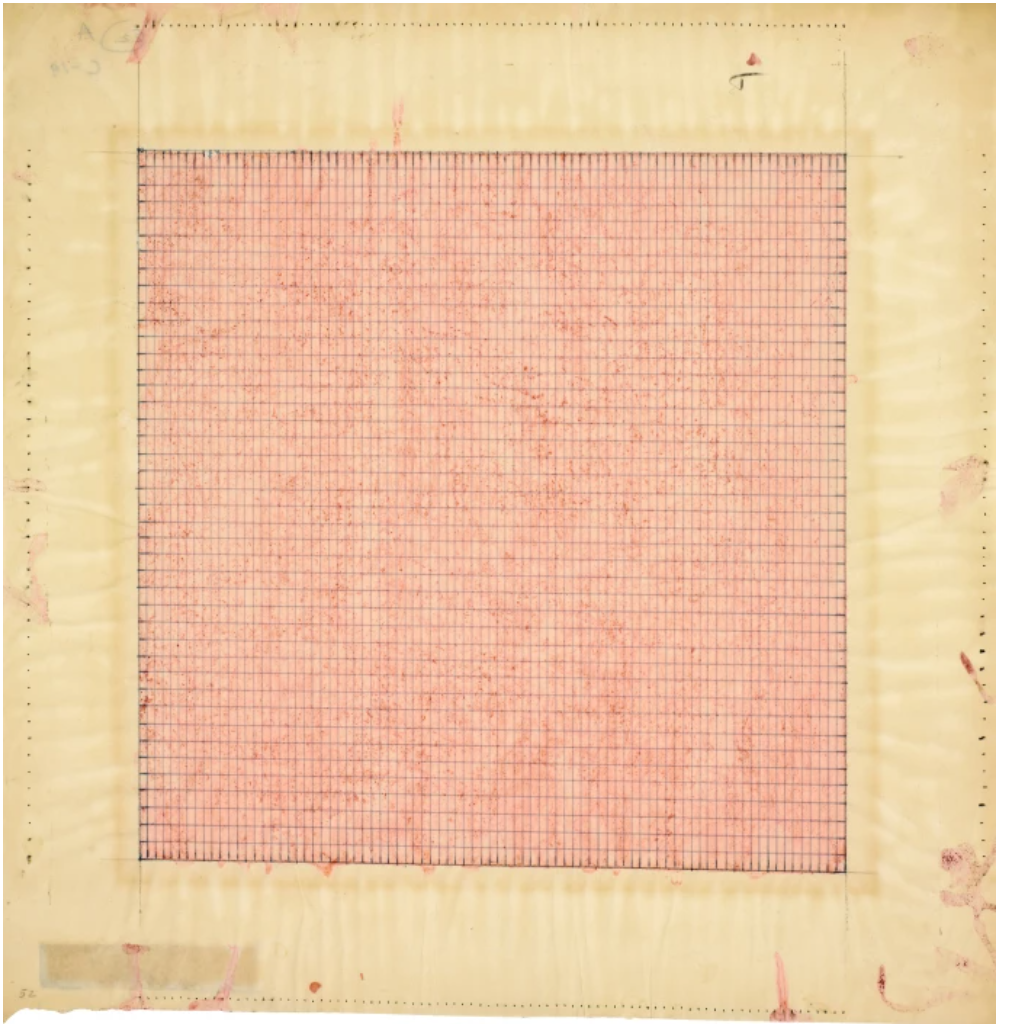
AGNES MARTIN, UNTITLED, 1964 / PRIVATE COLLECTION
IMAGE: © THE ART INSTITUTE OF CHICAGO / ART RESOURCE, NY
ARTWORK: © AGNES MARTIN FOUNDATION, NEW YORK / DACS 2024
1988, two years prior to the inception of The Sea in the Evening Glow (B) Facing the Imminent Death, marked a turning point for the artist when she was honored with a retrospective at Fukuoka’s Kitakyushu Municipal Museum of Art, followed by another major exhibition in 1989 at the Center for International Contemporary Arts in New York. These exhibitions revitalized Kusama’s international acclaim, a stature she has maintained and thrived in over the subsequent decades. The Sea in the Evening Glow (B) Facing the Imminent Death thus heralds Kusama’s re-emergence at the forefront of the art world.