The Black & White paintings were created by Andy Warhol in the mid 1980s. The series is based on scraps of advertisement matter like classified ads and illustrations from flyers, of which Warhol had amassed a collection. Appealing to him because of its banality, Warhol successfully elevates a quotidian advertisement into a space of high art. In Warhol’s late works, themes of consumer culture are powerfully represented, signifying a return to the subject matter that established his reputation.
Introduction
In this series of late silkscreen paintings, Andy Warhol re-visited the advertising imagery and black-and-white palette of his earliest Pop canvases of the ’60s. The roughhewn edges, loosely rendered imagery, and unpolished aesthetic of many of those silkscreens recall the hand-painted canvases he produced at the start of his career, such as his seminal Coca Cola [2] (1961).
For the graphically bold and visually striking paintings in the Black and White Ads series, Warhol brought together the mechanically produced silkscreen technique he had become so famous for, in combination with a free application of paint on canvas applied by hand. “Warhol’s freehand draftsmanship and fluid brushwork enliven the surface of these works, which are essentially silkscreened reproductions of his original drawings. The duality of the hand and the machine are at work here. …[They are] a remarkable group of paintings that exemplify his exploration of the dialectic between hand painting and mechanical reproduction. …In these Ads, Warhol toys mischievously with the illusory potential of hand and mechanical processes, putting a new spin on trompe-l’oeil painting” (J. Ketner, Andy Warhol: The Last Decade, Milwaukee, 2009, p. 33).
The subjects in this series ranged quite broadly in topic and in time period, from advertisements for items such as motorcycles and Campbell’s Soup to bodybuilding and alternative medicines, to political topics such as the US federal deficit and global militarism. Warhol raided his past work for mass culture media images, these images reflecting both larger social events and trends as well as seeming to have personal resonance for Warhol in these the last few years of his life. References to high culture and low culture subjects abound in this series, as in much of Warhol’s entire body of work. The series revisits, in subject matter and in concept, some of Warhol’s earliest fine art works, in particular his paintings of advertisements from the period1960-1961.
During this period of the mid-80s Warhol had been collaborating on paintings with the much younger emerging painter Jean-Michel Basquiat, and working with Basquiat may have encouraged the older artist to apply paint by hand. In selecting the ads that he would use, Warhol looked for those with hand-painted illustrations and lettering. The Black & White Ads series revisits the limitless cultural repository of signs and symbols to be found in the media world of commodities, celebrity culture, and, specific to the current work, popular music. Ready-mades in the manner of Marcel Duchamp, the advertising images represent the culture speaking back to us, by way of the artist.
Auction Results
U.S. Weather Map/GE, 1985-86
Christie’s New-York: 20 November 2025
Estimated: USD 70,000 – 100,000
USD 215,900
ANDY WARHOL (1928-1987), U.S. Weather Map/GE | Christie’s
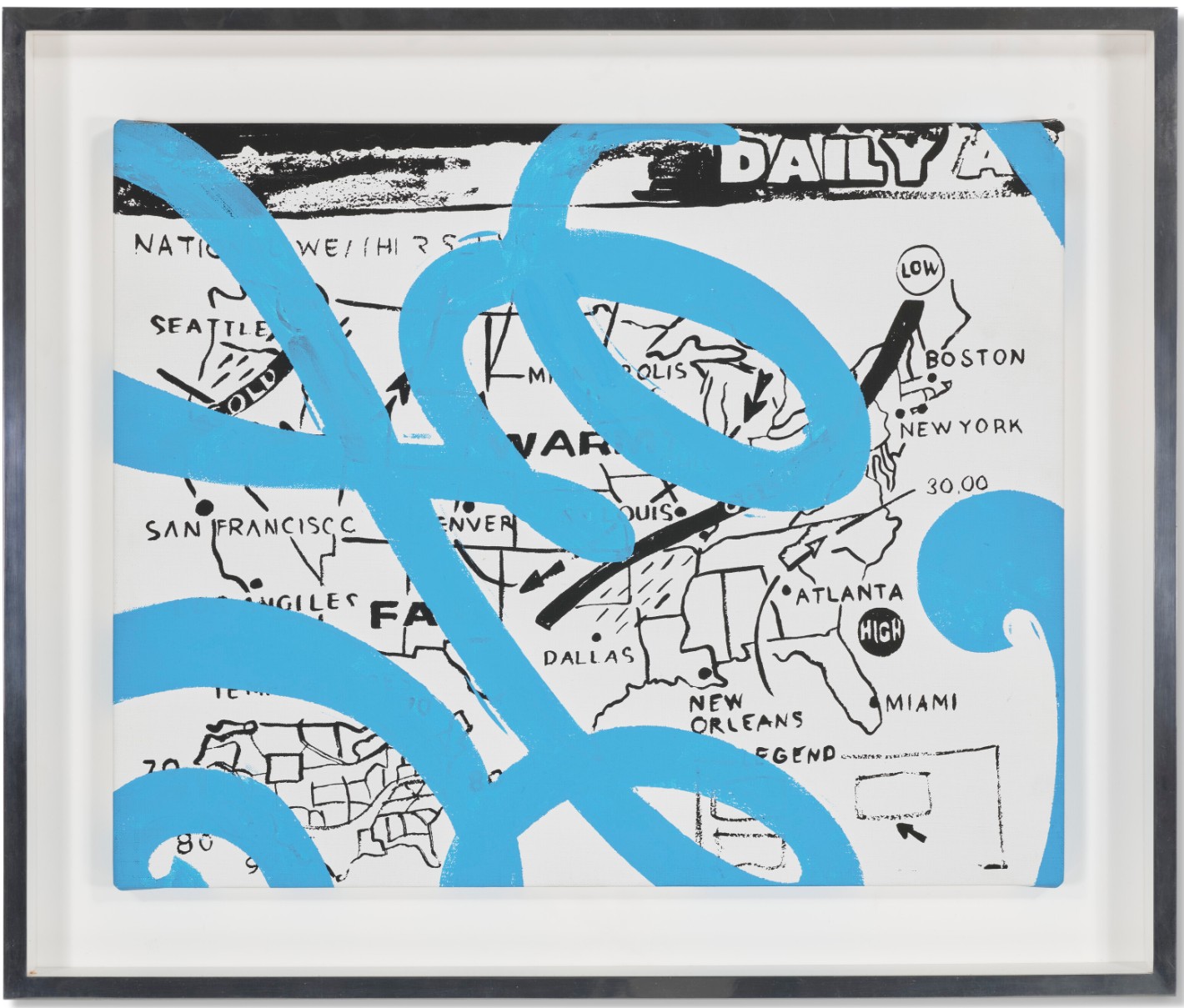
ANDY WARHOL (1928-1987)
U.S. Weather Map/GE, 1985-86
Acrylic and silkscreen ink on canvas
16×20 inches (40.6 x 50.8 cm)
Stamped with the Estate of Andy Warhol and the Andy Warhol Foundation for the Visual Arts, Inc. stamps
Numbered ‘PA10.302 VF’ (on the overlap)
Numbered again ‘PA10.302 (on the stretcher)
Mineola Motorcycle, circa 1985-1986
Christie’s New-York: 15 May 2025
Estimated: USD 80,000 – 120,000
USD 138,600
ANDY WARHOL (1928-1987), Mineola Motorcycle | Christie’s
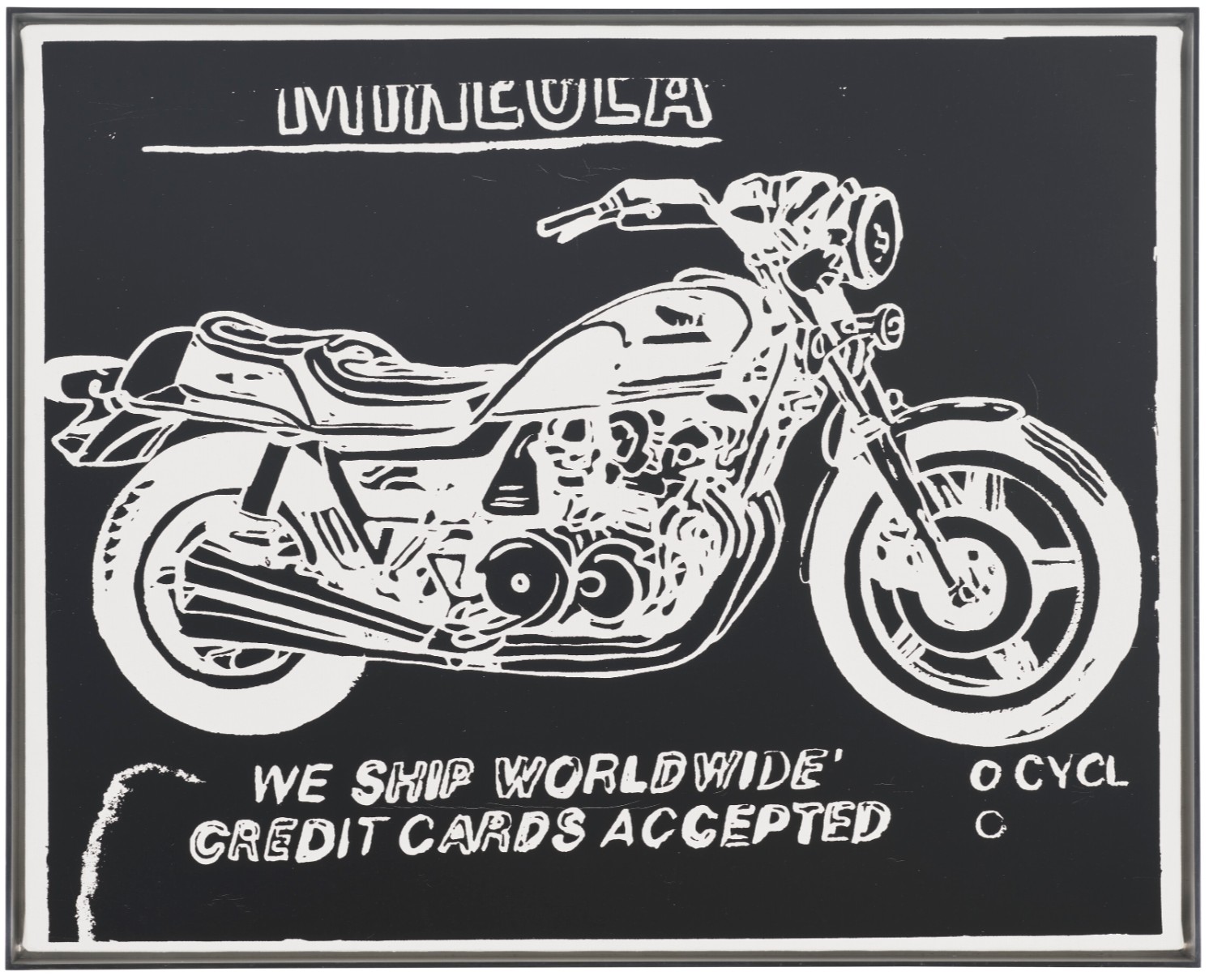
ANDY WARHOL (1928-1987)
Mineola Motorcycle, circa 1985-1986
Acrylic and silkscreen ink on canvas
16×20 inches (40.6 x 50.8 cm)
Stamped with the Estate of Andy Warhol and the Andy Warhol Foundation for the Visual Arts, Inc. stamps
Numbered ‘VF PA10.328 (on the overlap)
Numbered again ‘PA10.328’ (on the stretcher)
Paratrooper Boots (Positive), circa 1985-1986
Heritage Auctions: 10 December 2024
USD 50,000
Andy Warhol (1928-1987). Paratrooper Boots (Positive), circa | Lot #77091 | Heritage Auctions
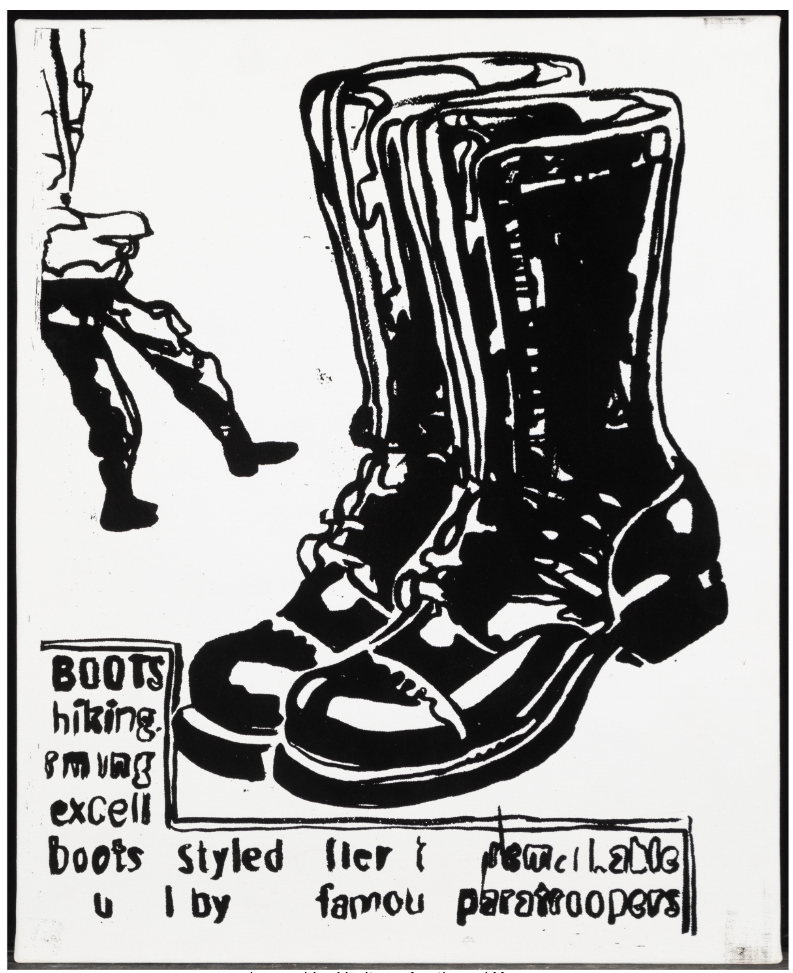
ANDY WARHOL (1928-1987)
Paratrooper Boots (Positive), circa 1985-1986
Synthetic polymer and silkscreen ink on canvas
20×16 inches (50.8 x 40.6 cm)
Inscribed and with the Estate of Andy Warhol and the Andy Warhol Foundation for the Visual Arts Inc. stamps on the overlap: PA10.447
Paratrooper Boots, 1985-86
Sotheby’s New-York: 16 November 2023
Estimated: USD 400,000 – 600,000
USD 495,500
Paratrooper Boots | Contemporary Day Auction | 2023 | Sotheby’s
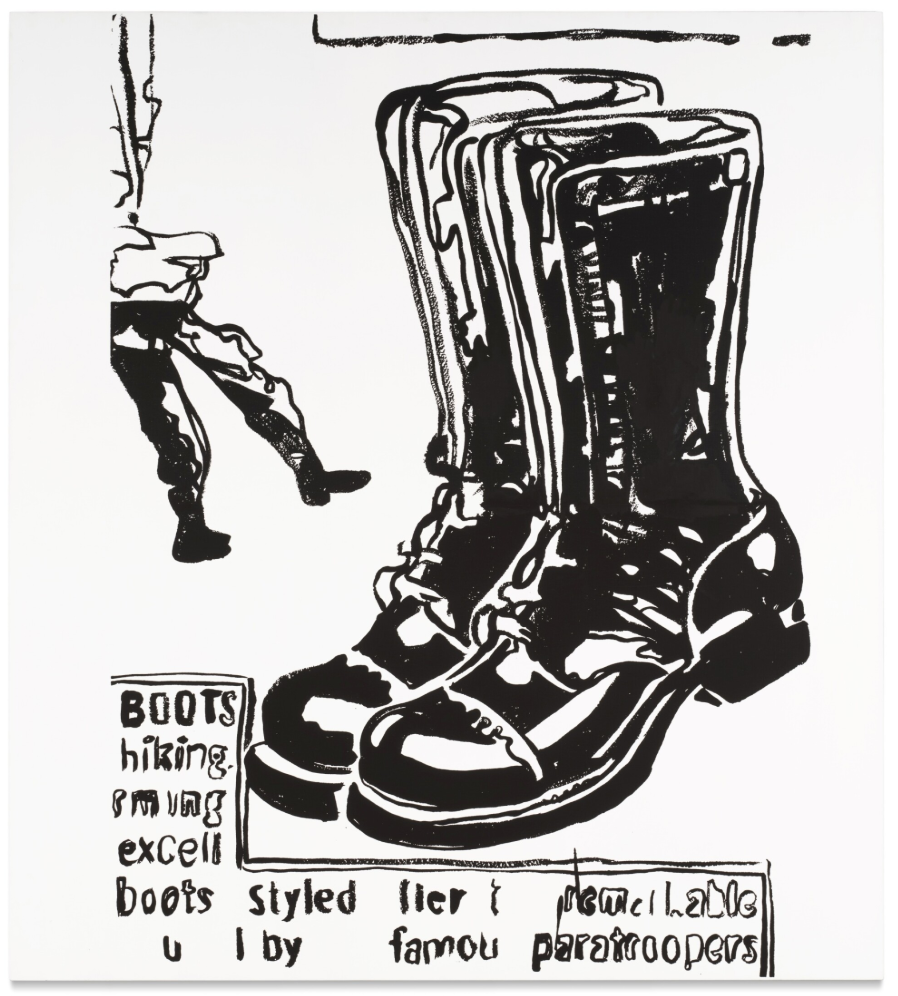
ANDY WARHOL (1928 – 1987)
Paratrooper Boots, 1985-86
Acrylic and silkscreen ink on canvas
80×72 inches (203 x 183 cm)
Stamped twice by the Estate of Andy Warhol
Stamped twice by the Andy Warhol Foundation for the Visual Arts, Inc.
Numbered PA10.586 VF on the overlap
Work Boots (Positive), 1985
Christie’s New-York: 10 November 2023
Estimated: USD 300,000 – 500,000
USD 365,400
ANDY WARHOL (1928-1987), Work Boots (Positive) | Christie’s
REPEAT SALE
Christie’s New-York: 27 May 2020
Estimated: USD 250,000 – 350,000
USD 435,000
Andy Warhol (1928-1987), Work Boots (Positive) | Christie’s
ANDY WARHOL (1928-1987)
Work Boots (Positive), 1985
Acrylic and silkscreen ink on canvas
54 1/4 x 80 inches (137.8 x 203.2 cm)
Stamped twice with the Estate of Andy Warhol and the Andy Warhol Foundation for the Visual Arts, Inc. stamps
Numbered twice ‘VF PA10.581’ (on the overlap)
Numbered again ‘PA10.581’ (on the stretcher)
Be a Somebody With a Body, 1985
Sotheby’s New-York: 19 May 2023
Estimated: USD 50,000 – 70,000
USD 82,550
Be a Somebody With a Body | Contemporary Day Auction | 2023 | Sotheby’s
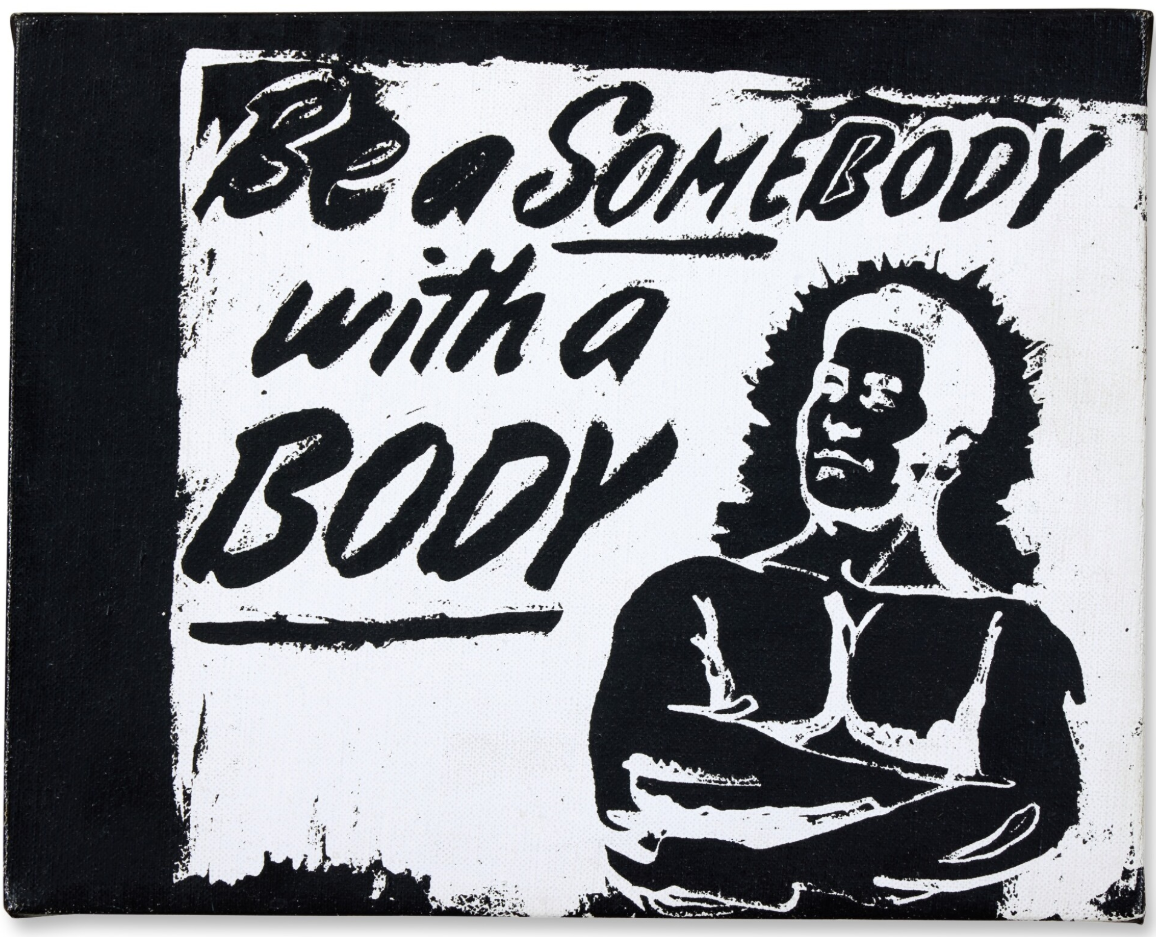
ANDY WARHOL (1928 – 1987)
Be a Somebody With a Body, 1985
Acrylic and silkscreen ink on canvas
8×10 inches (20.3 x 25.4 cm)
Signed, dated 85 and dedicated Tommy (on the overlap)
Stamped by the Andy Warhol Art Authentication Board, Inc. and numbered A108.113 on the overlap
Repent and Sin No More! (Negative), 1985-86
Christie’s New-York: 7 March 2023
Estimated: USD 70,000 – 100,000
USD 214,200
ANDY WARHOL (1928-1987), Repent and Sin No More! (Negative) | Christie’s
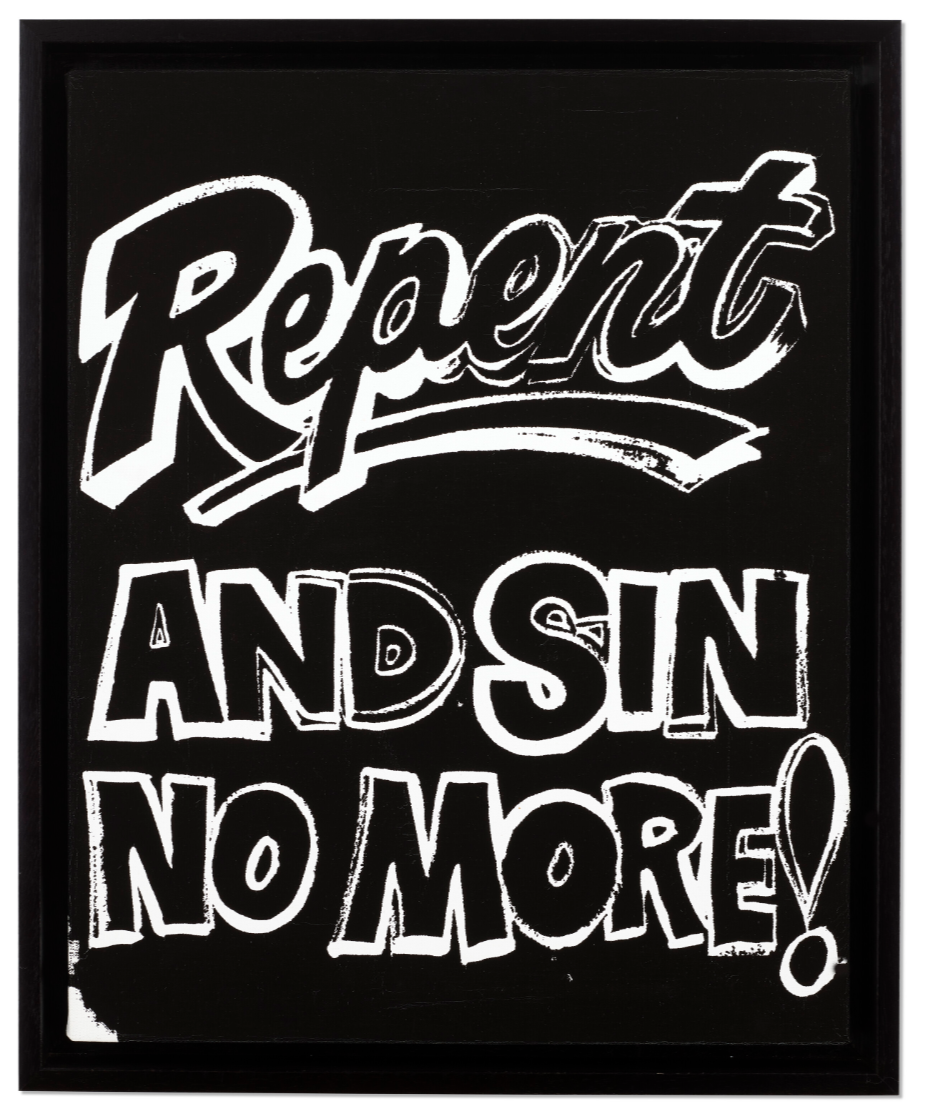
ANDY WARHOL (1928-1987)
Repent and Sin No More! (Negative), 1985-86
Acrylic and silkscreen ink on canvas
20 x 16 1/8 inches (50.8 x 41 cm)
Stamped with the Estate of Andy Warhol and the Andy Warhol Foundation for the Visual Arts, Inc. stamps
Numbered ‘PA10.514’ (on the reverse)
Numbered again ‘PA10.514’ (on the stretcher)
BE A SOMEBODY WITH A BODY, 1985
Phillips London: 3 March 2023
Estimated: GBP 70,000 – 90,000
GBP 86,360
Andy Warhol – 20th Century & Contempo… Lot 152 March 2023 | Phillips
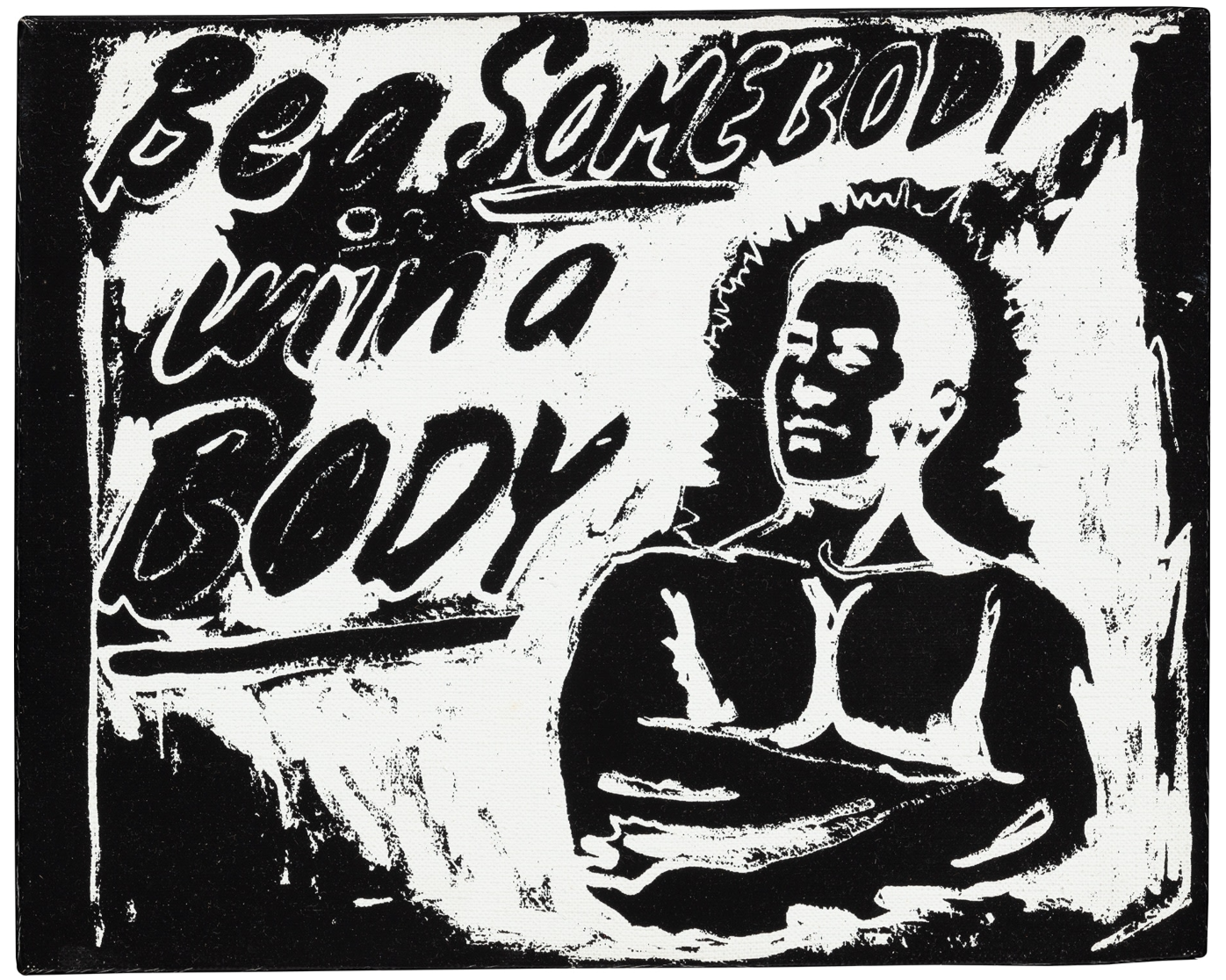
ANDY WARHOL
BE A SOMEBODY WITH A BODY, 1985
Synthetic polymer and silkscreen ink on canvas
7 7/8 x 9 7/8 inches (20.3 x 25.1 cm)
Signed, stamped with the Andy Warhol Foundation for the Visual Arts, Inc. and the Estate of Andy Warhol stamps
Numbered and dated ‘PA 10.614 Andy Warhol 85 A157.0310’ on the reverse
Numbered ‘PA 10.614’ on the stretcher
Be a Somebody with a Body, 1985
Christie’s London: 1 March 2023
Estimated: GBP 100,000 – 150,000
GBP 163,800
ANDY WARHOL (1928-1987), Be a Somebody with a Body | Christie’s
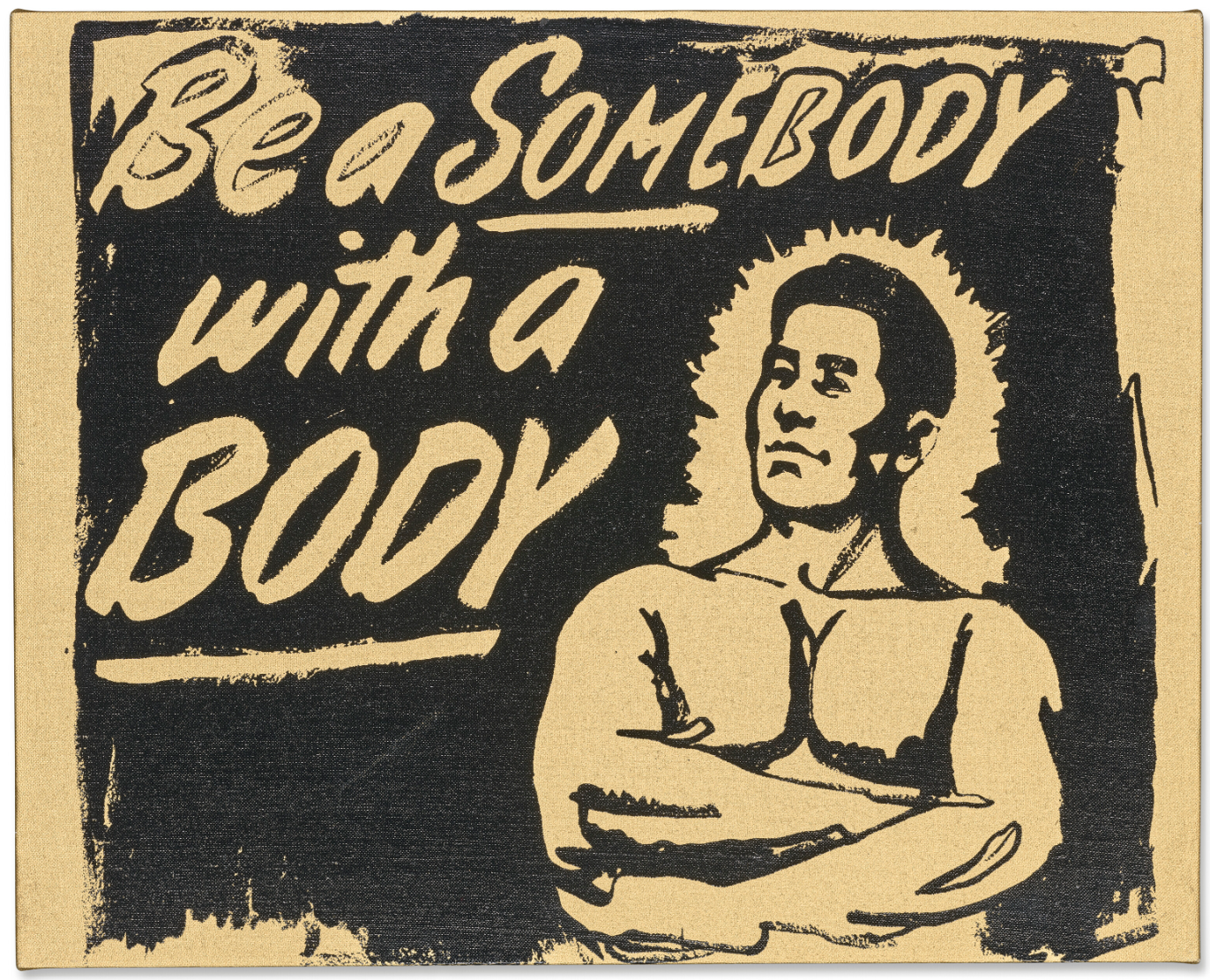
ANDY WARHOL (1928-1987)
Be a Somebody with a Body, 1985
Acrylic and silkscreen ink on canvas
16 1/8 x 19 7/8 inches (40.8 x 50.5 cm)
Signed, stamped with the Andy Warhol Foundation for the Visual Arts, Inc. and the Estate of Andy Warhol stamps
Numbered and dated ‘PA 10.615 Andy Warhol 85 A158.0310’ (on the overlap)
Stamped with the Estate of Andy Warhol stamp (on the reverse)
Numbered ‘PA 10.615’ (on the stretcher)
Be a Somebody with a Body, 1985-86
Sotheby’s New-York: 20 May 2022
Estimated: USD 100,000 – 150,000
USD 201,600
Be a Somebody with a Body | Contemporary Day Auction | 2022 | Sotheby’s
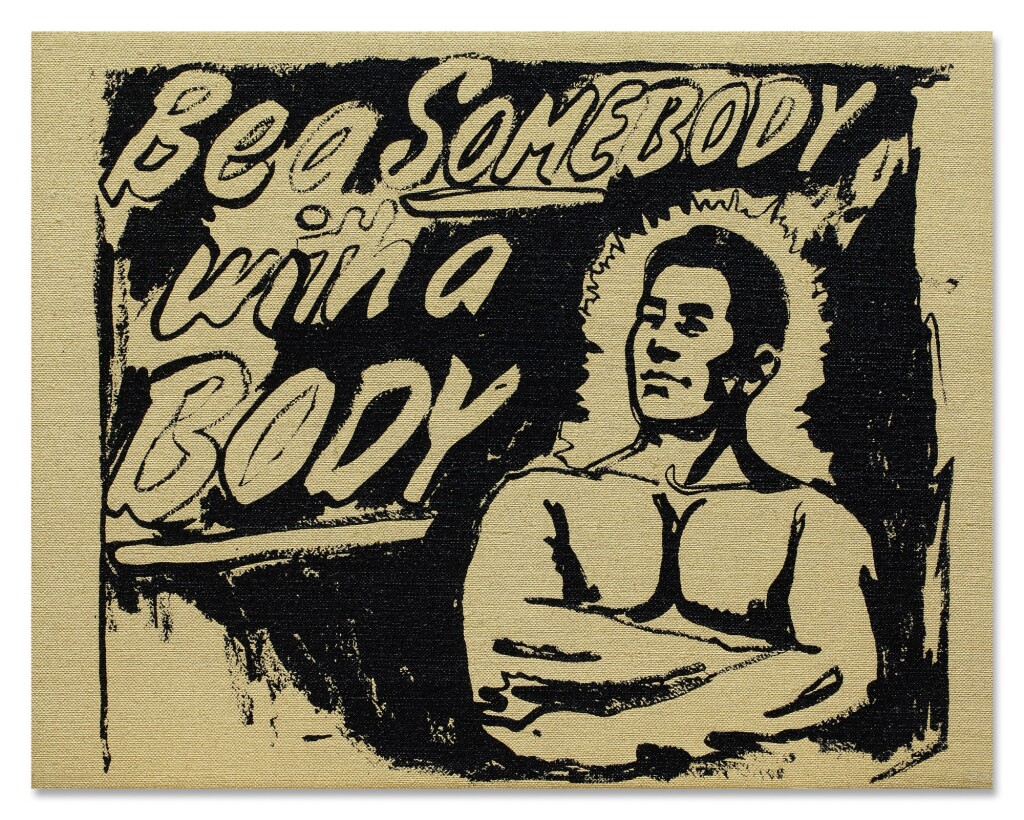
ANDY WARHOL
Be a Somebody with a Body, 1985-86
Acrylic and silkscreen ink on canvas
11×14 inches (27.9 x 35.6 cm)
Reagan Budget (Positive), 1985-86
Christie’s New-York: 13 May 2022
Estimated: USD 50,000 – 70,000
USD 75,600
ANDY WARHOL (1928-1987), Reagan Budget (Positive) | Christie’s
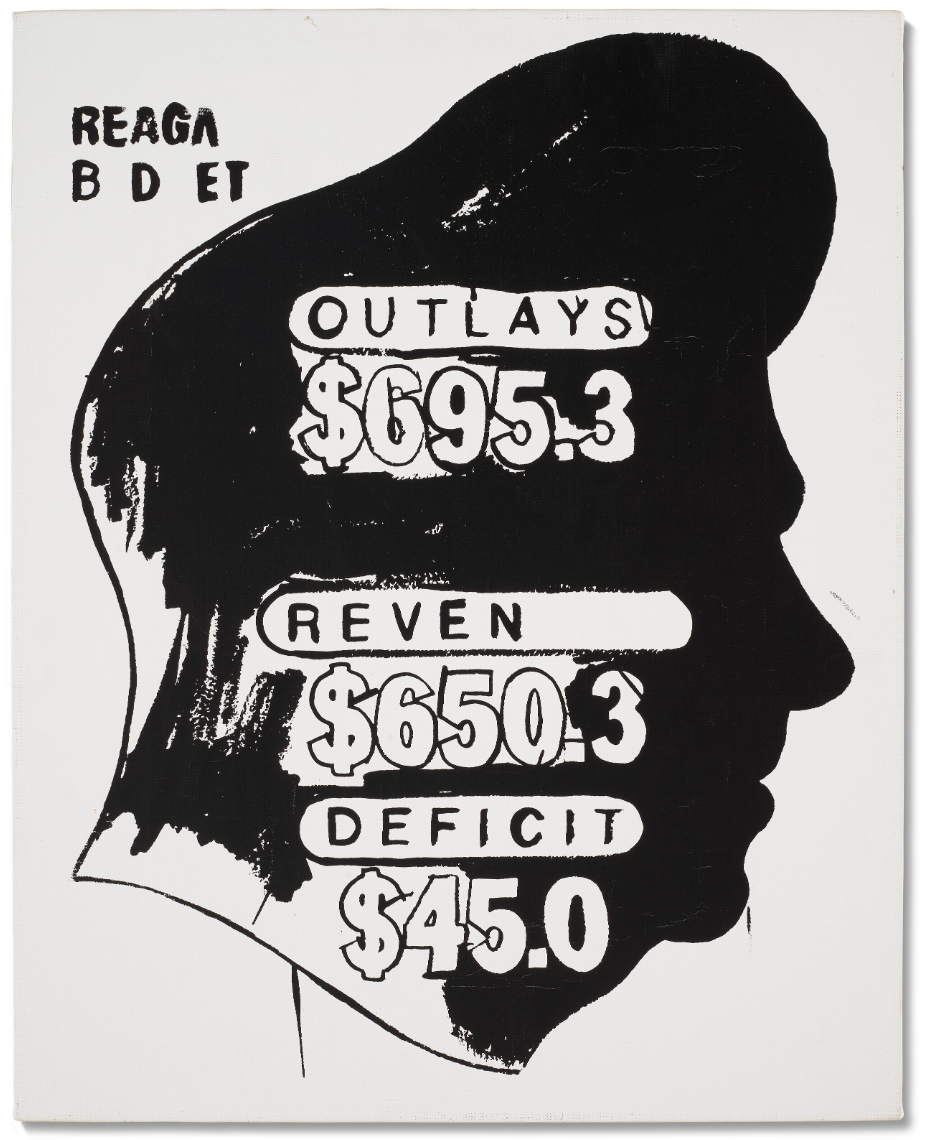
ANDY WARHOL (1928-1987)
Reagan Budget (Positive), 1985-86
Acrylic and silkscreen ink on canvas
20×16 inches (50.8 x 40.6 cm)
Stamped with the Andy Warhol Foundation for the Visual Arts, Inc., the Estate of Andy Warhol and the Andy Warhol Art Authentication Board Inc. stamps
Numbered ‘VF PA.10.400’ and ‘A111.103’ (on the overlap)
Be a Somebody with a Body, 1986
Sotheby’s New-York: 19 November 2021
Estimated: USD 50,000 – 70,000
USD 226,800
Be a Somebody with a Body | Contemporary Day Auction | 2021 | Sotheby’s
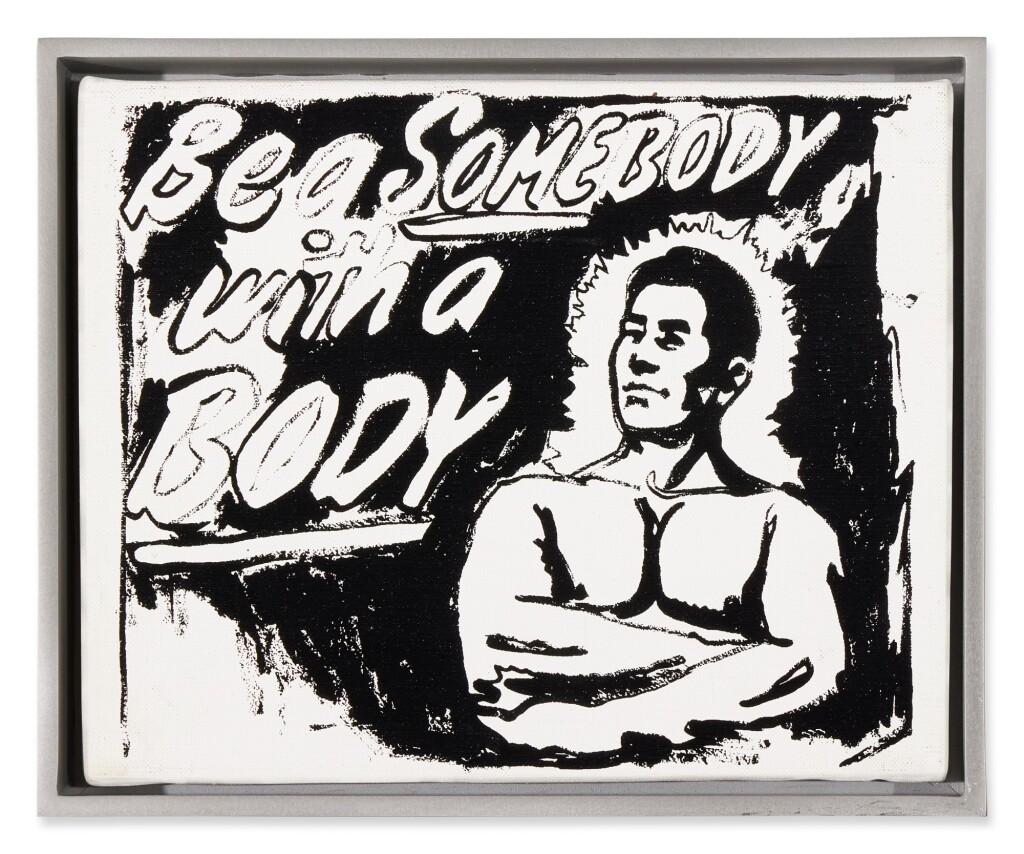
ANDY WARHOL
Be a Somebody with a Body, 1986
Acrylic and silkscreen ink on canvas
8×10 inches (20.3 x 25.4 cm)
Signed Andy Warhol and dated 86 (on the reverse)
The Last Supper/Be a Somebody with a Body, 1986
Phillips New-York: 17 November 2021
Estimated: USD 6,000,000 – 8,000,000
USD 6,806,000
Andy Warhol – 20th Century & Contem… Lot 33 November 2021 | Phillips
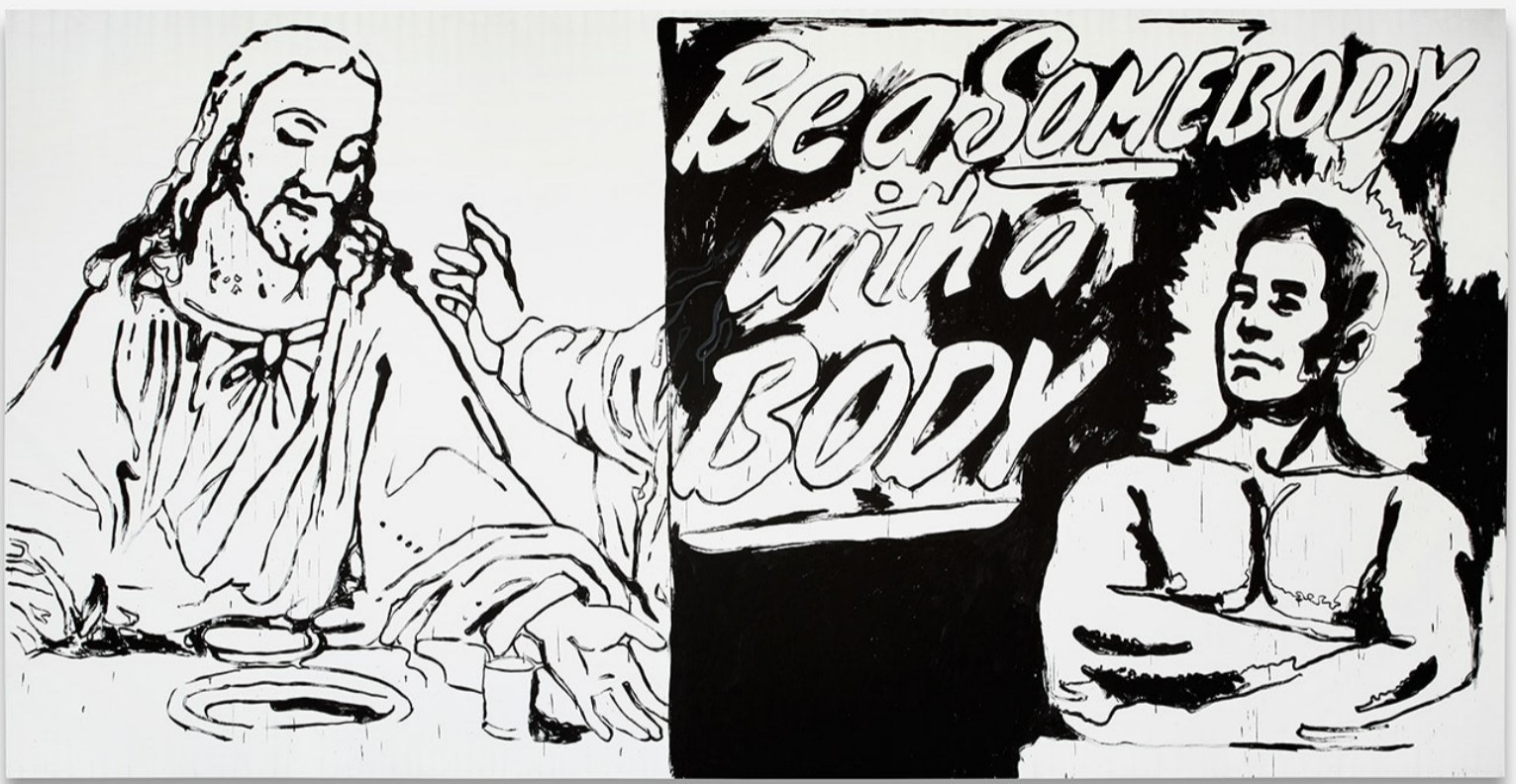 ANDY WARHOL
The Last Supper/Be a Somebody with a Body, 1986
Acrylic and silkscreen ink on canvas
118.1 x 231.1 inches (300 x 587.1 cm)
Last Supper / Be Somebody with a Body
The Last Supper/Be a Somebody with a Body, 1986
Phillips New-York: 17 November 2021
Estimated: USD 6,000,000 – 8,000,000
USD 6,806,000
Andy Warhol – 20th Century & Contem… Lot 33 November 2021 | Phillips
ANDY WARHOL
The Last Supper/Be a Somebody with a Body, 1986
Acrylic and silkscreen ink on canvas
118.1 x 231.1 inches (300 x 587.1 cm)
Executed in 1986, The Last Supper/Be a Somebody with a Body is a magnum opus of Andy Warhol’s continued investigations on his final and most comprehensive series that ultimately coalesces his lifelong concerns with the human body and the pursuit of beauty. Initially conceived in 1984 as a commission for the gallerist Alexandre Iolas, the Last Supper series traces Warhol’s transformation of Leonardo Da Vinci’s masterpiece, The Last Supper at the rectory of the Santa Maria Stella Grazie in Milan, into reflections of his own vernacular through appropriation, repetition, and seriality. Juxtaposing the figure of Christ with the image of a bodybuilder frequently rendered in his oeuvre, the present work “crowns the series of this title,” as expressed by Jane Dillenberger, by exemplifying a striking extension of Warhol’s epic series whilst self-referencing his own imagery with dual impact.
Reimagining da Vinci was not a new endeavor for Warhol. Having riffed off the Italian master’s Mona Lisa in the 1960s, he had more recently returned to Leonardo in that same year with his series of Details in Renaissance Paintings. Exceeding the demands of Iolas’ commission—which entailed 22 paintings displayed at his January 1984 exhibition in Milan—Warhol would continue to engage with the subject through the end of his life. Producing over 100 variations on the theme within the span of just two years, Warhol would ultimately create the largest series of religious-themed works with The Last Supper, not just within his own oeuvre, but for any artist in the United States.
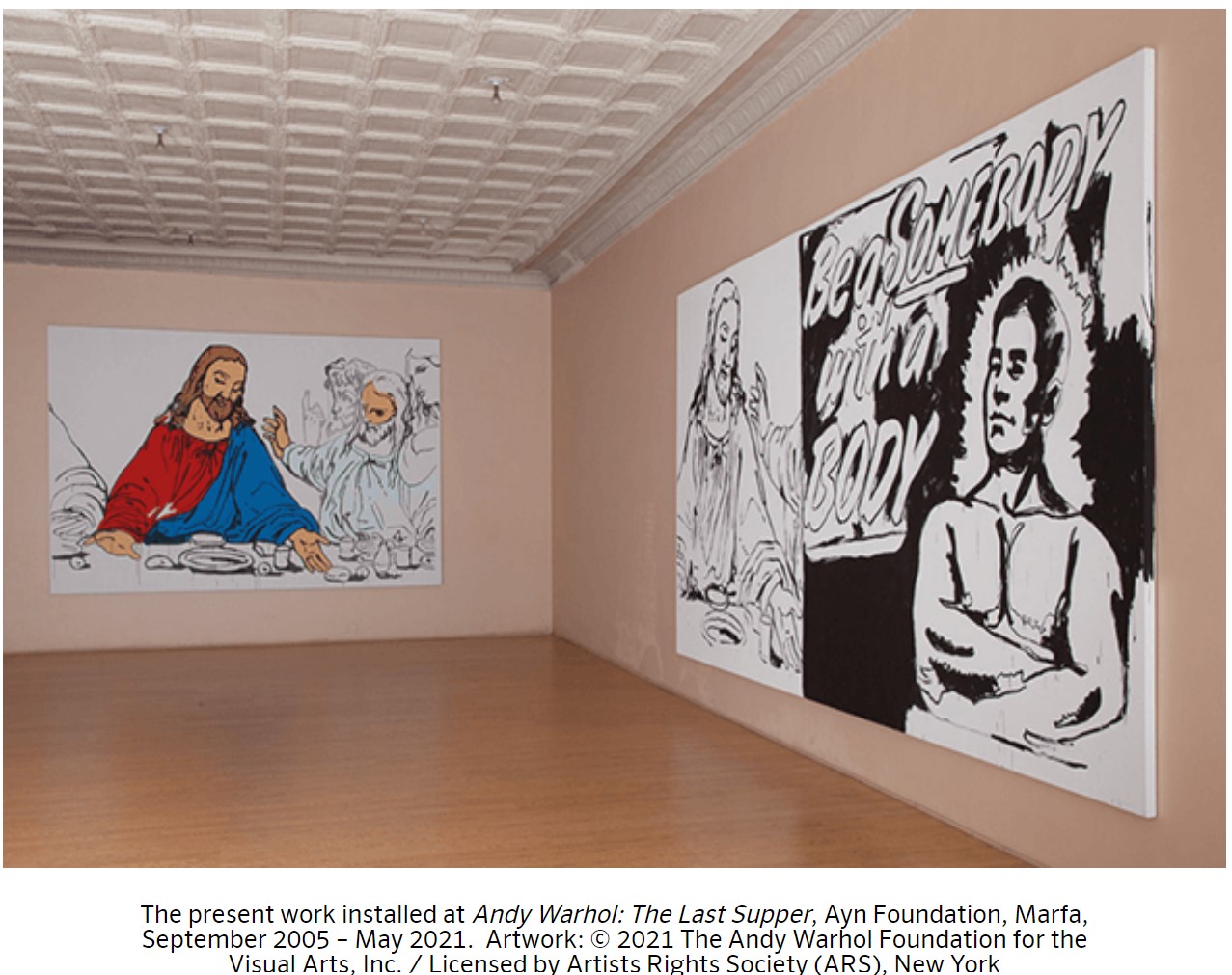
Enraptured with his new subject, Warhol executed two series based on two distinct sources.
The first was a series of silkscreens derived from a 19th century reproduction of the da Vinci which comprise works such as Sixty Last Suppers and The Last Supper (Pink) (Andy Warhol Museum, Pittsburgh), as well as The Camouflage Last Supper (Menil Collection, Houston).
The second series encompasses hand-painted works molded after a line drawing, including The Last Supper (Museum of Modern Art, New York), The Last Supper / Be Somebody with a Body (Andy Warhol Museum, Pittsburgh), and the present work.
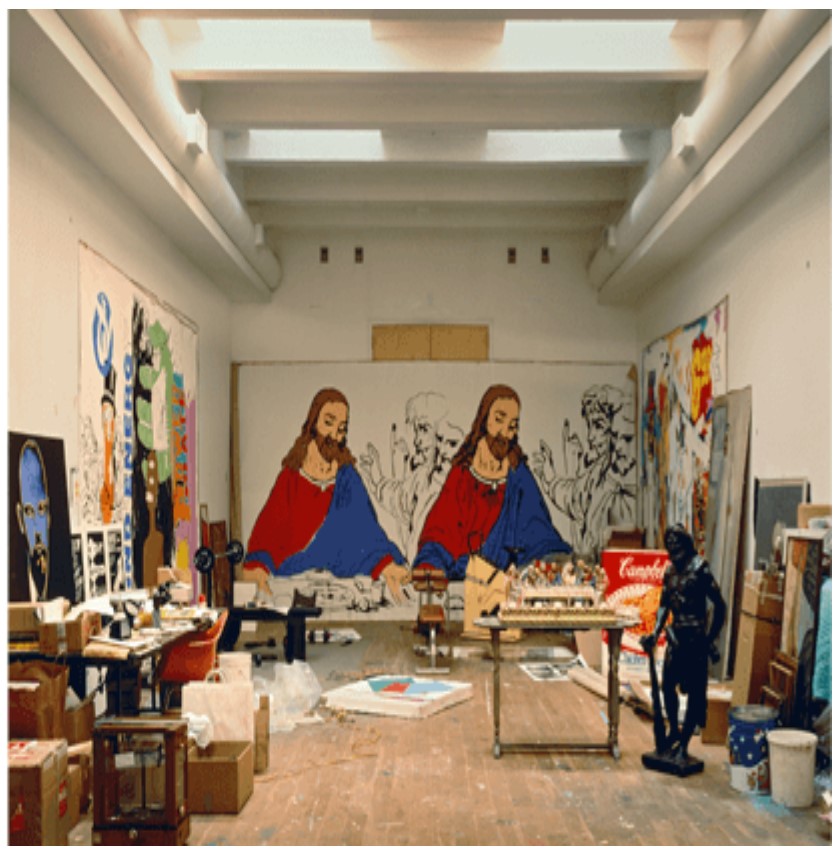
In The Last Supper/Be a Somebody with a Body, Warhol homes in on the protagonist as seen in Leonardo’s original, thereby obscuring the scene wherein Christ is offering the bread—his flesh—in the Eucharist. Here, Warhol himself offers the flesh instead by compositionally cropping out Christ’s bread of life and juxtaposing the image of the brawny bodybuilder in its place.
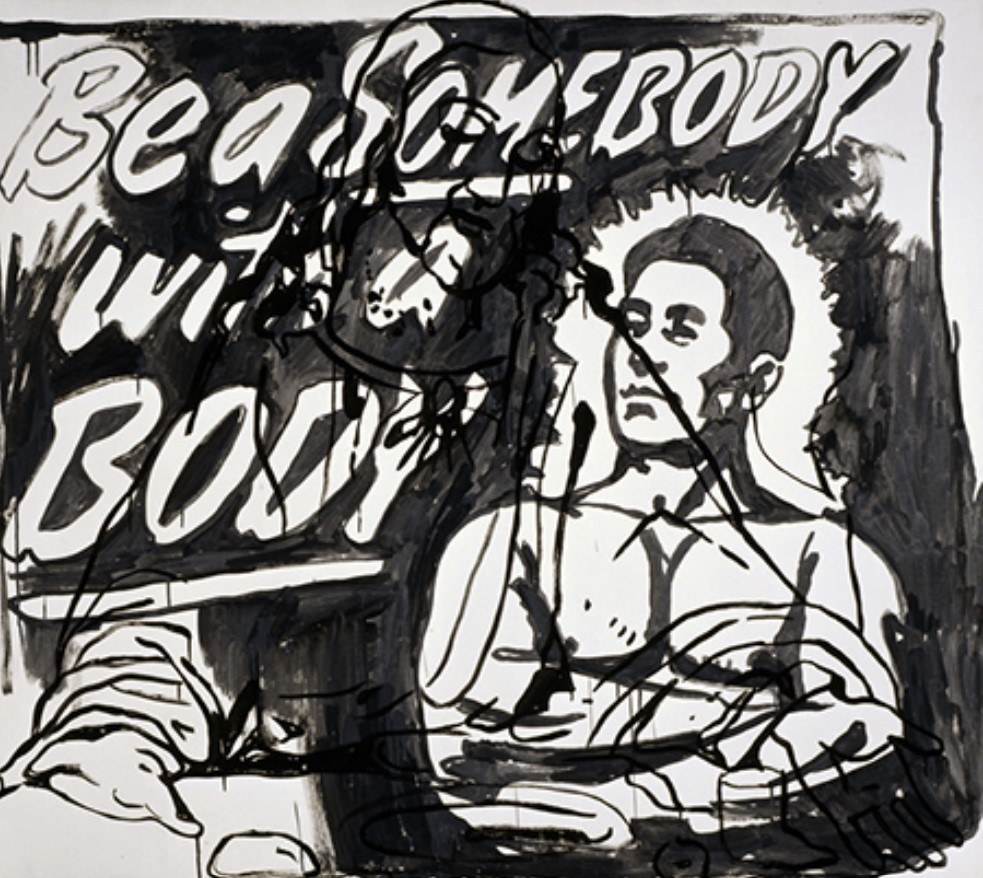
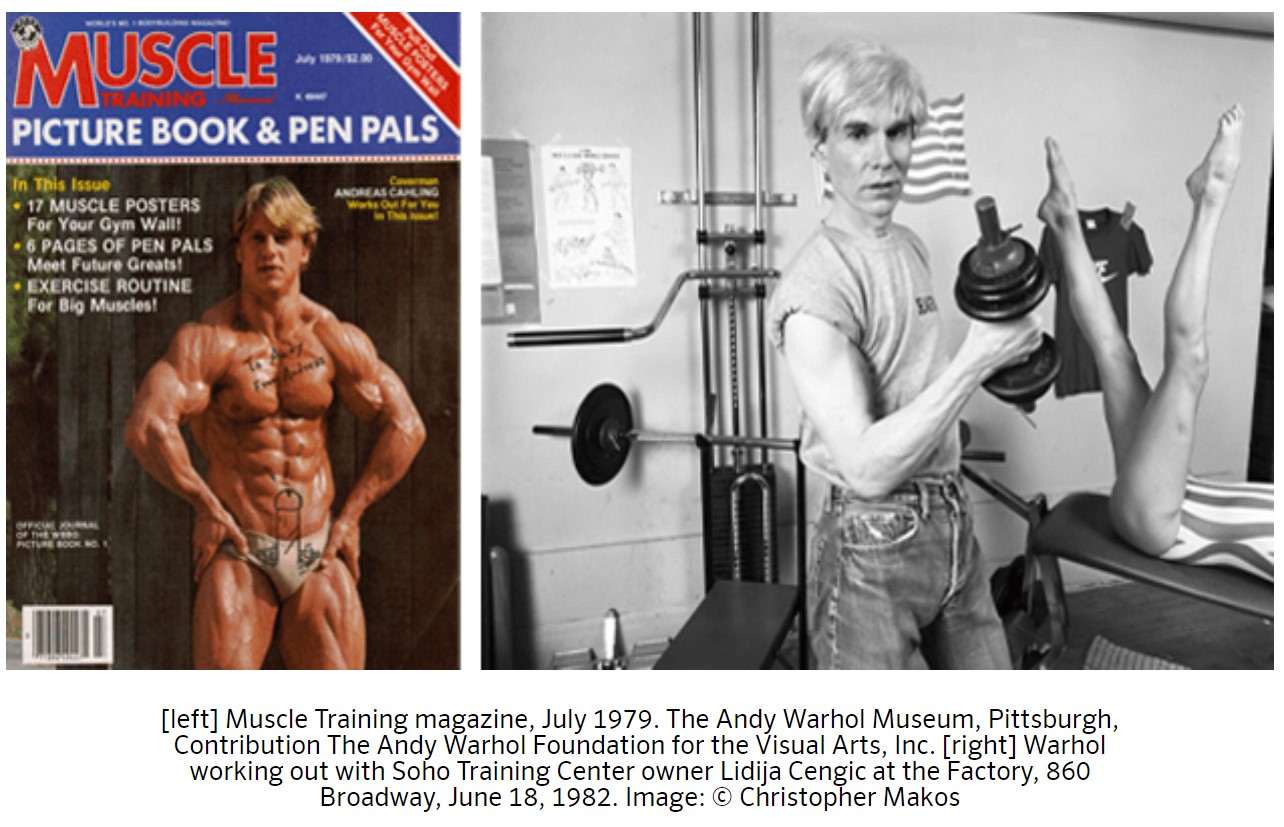
The latter half of the work’s title references Warhol’s familiar, stand-alone compositions of the bodybuilder, often believed to represent the famous actor Sylvester Stallone, likely due to his well-known series of the famous actor at the turn of the 1980s. Ultimately, the artist’s bodybuilder began as an adaptation of an advertisement on the back of a muscle magazine. Since the beginnings of his career, Warhol perpetually reflected his perpetual fascination with presentation, appearances, and beauty through his explorative treatments of the human body.
Warhol’s romanticized rendering of the muscular young body oscillates between irony and desire, reality and representation, interiority and exteriority. Here, the artist colligates this reflexive relationship across the canvas with the image of Christ, the two figures in a dialectical opposition with conceptual and visual force—religious and secular, black and white.
The Last Supper (Camel/57)
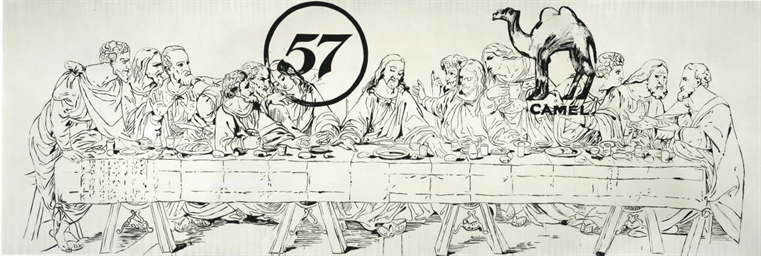
The Last Supper (Camel/57), 1987
Christie’s New-York: 13 May 2009
Estimated: USD 400,000 – 600,000
USD 4,002,500
Andy Warhol (1928-1987) , The Last Supper (Camel/57) | Christie’s
ANDY WARHOL
The Last Supper (Camel/57), 1987
Synthetic polymer and acrylic ink on canvas
118×348 inches (300 x 883.9 cm)
Andy Warhol painted The Last Supper (Camel/57) in 1986. This monumental picture, which is almost ten meters long, shows a line-drawing version of Leonardo da Vinci’s famous mural of the same name. The painting, and indeed this subject, allows Warhol to participate in a range of conceptual and artistic somersaults. This picture invokes an industrial, print aesthetic yet is largely hand-painted and therefore unique. It is at once religious and sacrilegious, deferential and irreverent, religious and brazenly commercial. The Last Supper (Camel/57) presents the viewer with a colossal enigma, which is only apt in the work of Warhol, an artist who made it constantly impossible to be pinned down or trapped by one meaning or interpretation. Was this an attack on the act of painting, by which Warhol reduced the toil of his famous predecessor to a series of lines painted with the use of a projector, or was it an act of worship that showed his debt to the great da Vinci? The presence of the logos on the surface might be an attack on organized religion, or is the practicing worshipper Warhol (who attended church on a regular basis) breathing new life into contemporary religious painting, which John Richardson suggested in his eulogy to the artist the following year?
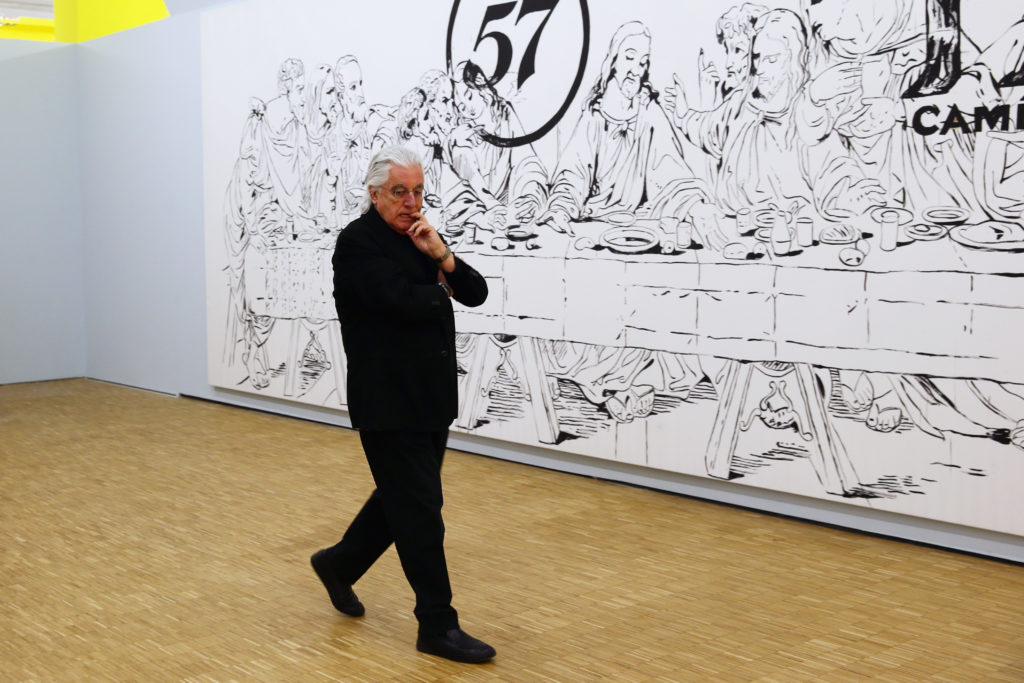
Of Warhol’s various different versions of the Last Supper, the present work is one of the most striking, not least for the one-upmanship by which he has made this work larger than the original. This magnification of the line-drawing source has resulted in the complete removal of da Vinci’s celebrated sfumato and of the delicately-handled features, which are here replaced by almost schematic, illustration-like, comic-book style faces and expressions. Warhol has deliberately created a mass-media version of the The Last Supper (Camel/57) that is big, brash and bold. He has created his The Last Supper (Camel/57) on an industrial scale, with an industrial look, and yet it has been painted in a technique that paradoxically reveals the traces of brushwork, of the artist’s touch.
“Oh, Italian culture- I only know really the spaghetti but they are fantastic!”
While on the one hand Warhol has expanded upon da Vinci’s original, perhaps in some form of oblique homage, he has also superimposed the number 57 and the image of a camel, introducing the deliberately crass realm of advertising to the realm of the holy. Is this a critique of Capitalism, and its inclusion in a formerly too-hallowed realm? He is ever-evasive, conceals layers of meaning behind the faux-ingenuous persona he so carefully cultivated. Similarly, Warhol’s manoeuvers in Italy when the Last Supper exhibition opened early in 1987 show his deliberate denial of any cultural tribute or even knowledge belying his clear acquaintance with Leonardo and Italian art at large. Daniella Morera recalled: We had a press conference in the morning before the show.
Be Somebody with a Body
From its examination of the confluence of art and advertising culture, its analysis of American beauty standards, to its exploration into the tools of painting, Be Somebody With a Body lays bare many of the central questions that dominated Andy Warhol’s career. As in many of the most iconic works of his oeuvre, Warhol queries his nation’s obsession with celebrity culture, superficiality, and the many ways that advertisements and popular culture influences the masses. Warhol, while subliminally critiquing the icons of consumer culture that he depicted throughout his work, also reveled in these things himself, an ironic contradiction at the very heart of his life and work. Painted with black paint on a gold canvas, Be Somebody With a Body depicts a cartoon-ish bodybuilder with his arms crossed over his chest, his chiseled, muscular body and near-heroic look standing with a bold air of confidence as a halo emerges from the space around his head. Ripped directly from an advertisement likely found in a muscle magazine from the era, the figure and the declarative phrase emblazoned beside him encapsulates decades of Warhol’s obsession with the self and his enduring fascination with physical appearances as a means of exploring the undercurrents of American popular culture.
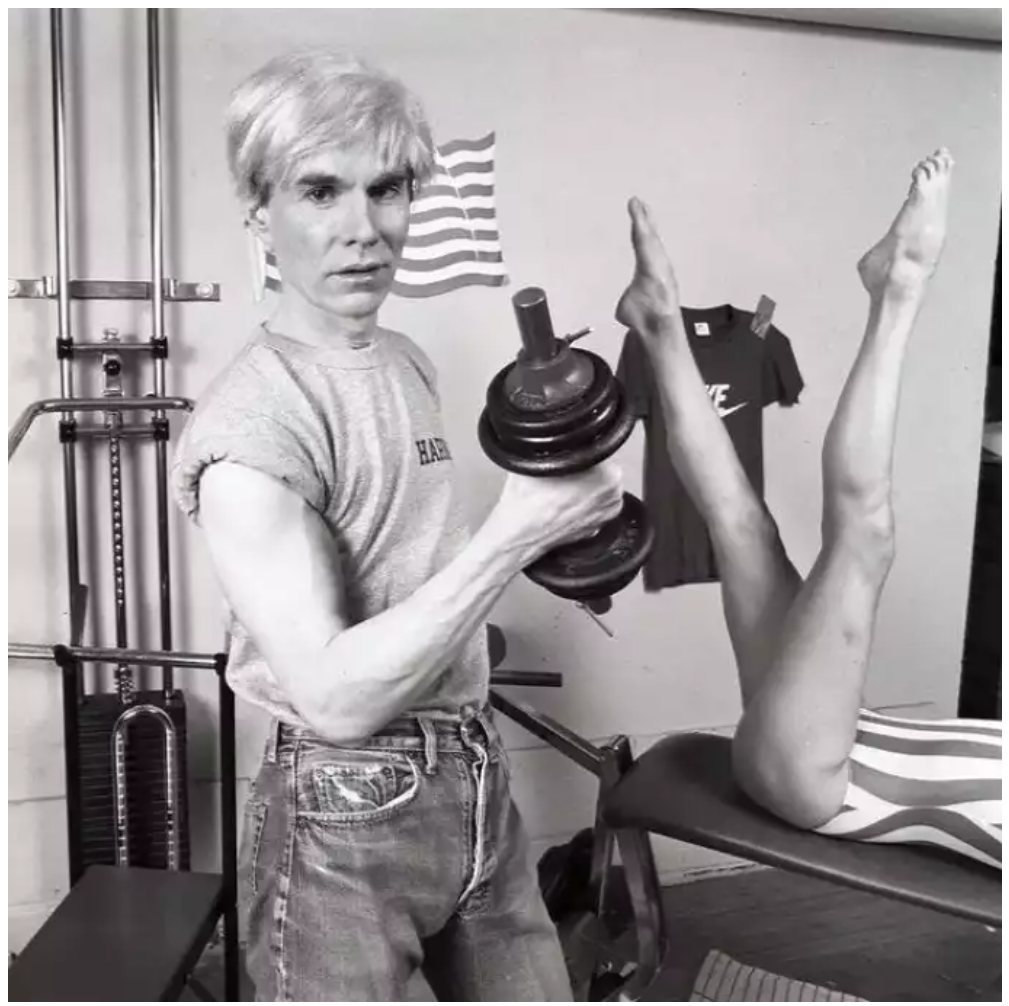
Christopher Makos, Andy Warhol Weightlifting, 1982
Warhol’s explorations of the human body in his work began with the artist’s anxieties about his own, an insecurity that plagued him until his death. From his sickly childhood, his misshapen nose that he tried to surgically repair, to the gunshot wounds that would leave him permanently scarred, Warhol’s self consciousness about physical imperfections were prominent throughout his life, and helped to inspire much of his own explorations into the vanity of American consumer and celebrity culture. As Warhol’s friend and ex-lover John Giorno remarked of the artist, “he always thought he was ugly. He always thought everybody else was beautiful… He always thought everybody else’s ugly body was beautiful” (Jessica Beck quoted in “My Perfect, Imperfect Body,” Carnegie Magazine, Fall 2016). Many of Warhol’s own most distinctive physical traits stemmed from his desire to cover up his body, from the wig and glasses he wore to the leather jackets that enabled him to disguise himself. Early on in his career, Warhol used the body as a means of exploring American vanity. As curator Jessica Beck remarks,“his connection to Pop art starts with the body” (Jessica Beck quoted in “My Perfect, Imperfect Body,” Carnegie Magazine, Fall 2016). This can especially be seen in his 1960s series Before and After, depicting the silhouette of a figure before and after a nose surgery that was taken after the advertising pages in the back of a magazine. These early explorations continued throughout the artist’s artistic and personal career, and can especially be seen in Be Somebody with a Body and its commentary on the pressures of modern society to conform to social standards through its depiction of everything a 1980s man should strive to be.
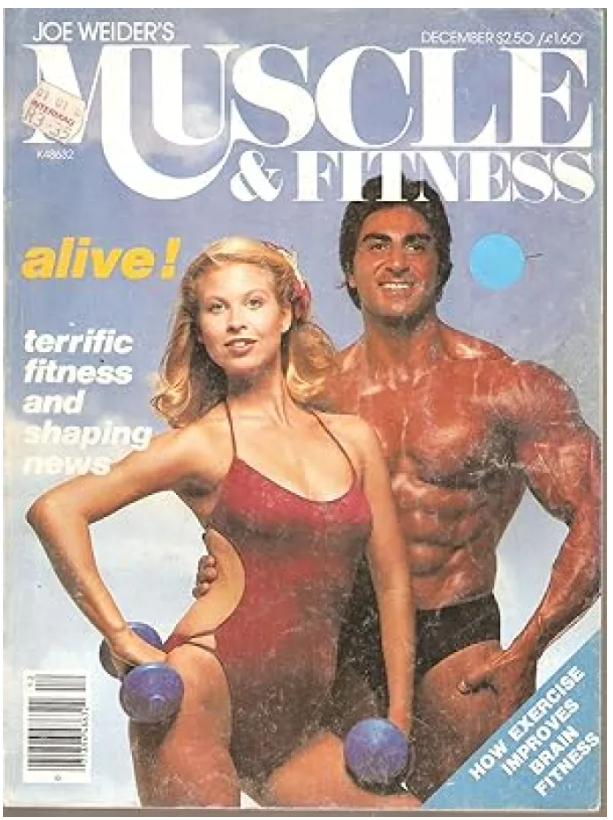
Joe Weider’s Muscle & Fitness Magazine, December 1980
From his earliest depictions of Coca-Cola bottles, Warhol held an obsession with advertising culture and the myriad of ways that companies pushed their products and agendas onto the consumer. Appropriating images taken directly from newspapers and magazines, Warhol found in their reproduction a daring, subversive means at translating the bold new era of visual communication through the medium of painting. Be Somebody with a Body, depicting a bodybuilder and the distinctive, bold text of the painting’s title, was taken from the back of an advertising campaign in a muscle magazine of the 1980s. Its reproduction onto the canvas in black ink is both an immediately underhanded take on the American obsession with artificial beauty, yet also a commentary on the artist’s concerns over his own body and his desire to take part in the very processes that he was critiquing. Indeed, in the 1970s and 80s, Warhol began increasingly working out as a means of protecting his body after surviving an assassination attempt and as a means of conforming to newly-found notions of the ideal gay body, transformed from thin and delicate into often exaggeratedly masculinized figures. The figure in Be Somebody with a Body, often likened to Sylvester Stallone – whom Warhol photographed often in the 1980s – is both a caricature of the perfect body that dominated American discourse in the era, as figures like Arnold Schwarzenegger came to represent its apex, yet also a commentary on the never-ending pressure that Warhol felt to conform to these ideals, presenting an entirely unattainable body for the artist himself.
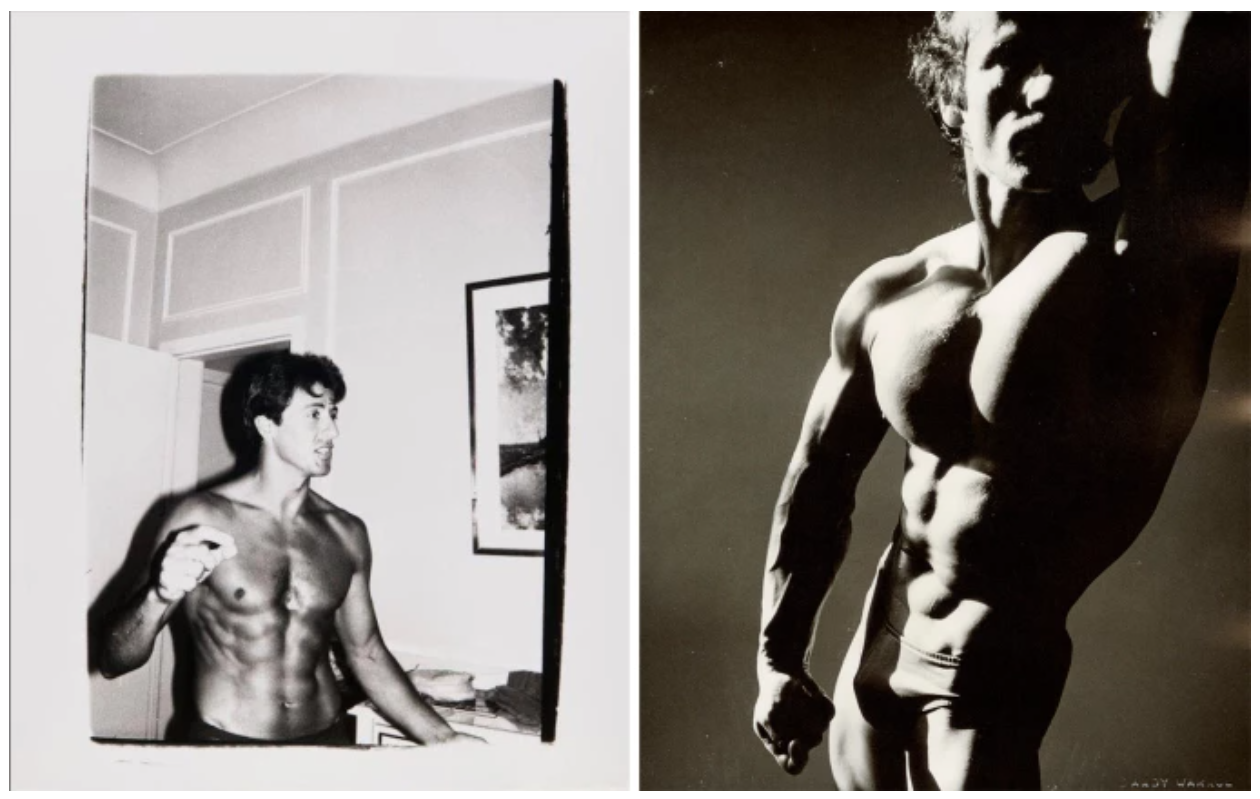
Left: Andy Warhol, Sylvester Stallone, c. 1975. Art © 2025 Andy Warhol Foundation for the Visual Arts / Artists Rights Society (ARS), NY
Right: Andy Warhol, Bodybuilder, 1982. Art © 2025 Andy Warhol Foundation for the Visual Arts / Artists Rights Society (ARS), NY
Painted in black and white, eschewing the bold colors and vivid, often facsimiled imagery that had characterized the artist’s career, Be Somebody with a Body immediately eliminates all distractions and draws viewers into its bold text, its underlining and double capitalization of the word “body” foregrounding the central question of the painting. By preaching to viewers that they “Be Somebody,” Warhol underscores both his and his era’s desire for validation through appearances, creating a distinctly Warholian assertion on consumer culture’s radical ability to influence the masses with simple, bold-faced commentary. The painting, also departing from the polished aesthetic of much of his earlier work, features loosely rendered edges and imperfections that give some sense of his hand behind the work, commenting on the very nature of his manual and mechanically combined processes of painting which forged a new era of contemporary art. A masterful combination of the delicately crafted and underhanded social commentary that lay at the heart of Warhol’s practice throughout his career, Be Somebody with a Body is a simultaneous celebration and critique of consumer culture, celebrity heroization, and the distinctly American fixation on unreachable beauty standards. Reflecting the artist’s own insecurities of his image, the painting illustrates the kinds of ways that consumer culture came to dominate American life in the 1980s, its heroic depiction of the bodybuilder suggesting that a perfect body is a necessary condition of being somebody.
Be a Somebody with a Body (1985) is a magnificent example of the vivid dialogue with advertising culture that lay at the heart of Andy Warhol’s practice. A bodybuilder, arms crossed over his chest, looks up at the slogan ‘Be a Somebody with a Body’. Confident and heroic, he flashes us a proud smile, his contoured, athletic physique a testament to his remarkable strength. Surrounding his head, a dazzling halo appears, a device which lends the figure a Christ-like presence, highlighting his power and masculinity. The boldface text, which capitalizes, underlines and enlarges the word ‘Body’, emphasizes the declarative language of modern advertising, stressing its promotion of accessible yet elusive goals. While it borrows its imagery from a bodybuilding ad, the figure—often likened to action superstar Sylvester Stallone, whom Warhol photographed during the 1980s—can also be considered as a stand-in for the artist himself, referencing the obsessive daily exercise he was completing with his personal trainer at the time. Warhol’s romanticized rendering of his subject presents us with a whimsical ideal, a physical embodiment of aspiration and desire. Through its emphasis on the modern phenomenon of the bodybuilder, a figure popularized through magazines such as Muscle Training, the work also foregrounds Warhol’s longstanding and complex fascination with the human body. Beginning with his depiction of a plastic surgery patient in Before and After (1961), a work which recalls his experience having his own nose re-shaped at the age of 29, Warhol used his practice as a means of communicating anxieties about his body image.
“If you want to know about Andy Warhol, then just look at the surface of my pictures, and there I am; there’s nothing in between.”
In Be a Somebody with a Body, Warhol’s insecurities manifest most poignantly in the exaggerated ideal of the bodybuilder, his hulky torso inviting the promise of transformation.
Be a Somebody With a Body, 1985
Sotheby’s New-York: 19 May 2023
Estimated: USD 50,000 – 70,000
USD 82,550
Be a Somebody With a Body | Contemporary Day Auction | 2023 | Sotheby’s
ANDY WARHOL (1928 – 1987)
Be a Somebody With a Body, 1985
Acrylic and silkscreen ink on canvas
8×10 inches (20.3 x 25.4 cm)
Signed, dated 85 and dedicated Tommy (on the overlap)
Stamped by the Andy Warhol Art Authentication Board, Inc. and numbered A108.113 on the overlap
BE A SOMEBODY WITH A BODY, 1985
Phillips London: 3 March 2023
Estimated: GBP 70,000 – 90,000
GBP 86,360
Andy Warhol – 20th Century & Contempo… Lot 152 March 2023 | Phillips
ANDY WARHOL
BE A SOMEBODY WITH A BODY, 1985
Synthetic polymer and silkscreen ink on canvas
7 7/8 x 9 7/8 inches (20.3 x 25.1 cm)
Signed, stamped with the Andy Warhol Foundation for the Visual Arts, Inc. and the Estate of Andy Warhol stamps
Numbered and dated ‘PA 10.614 Andy Warhol 85 A157.0310’ on the reverse
Numbered ‘PA 10.614’ on the stretcher
Be a Somebody with a Body, 1985
Christie’s London: 1 March 2023
Estimated: GBP 100,000 – 150,000
GBP 163,800
ANDY WARHOL (1928-1987), Be a Somebody with a Body | Christie’s
ANDY WARHOL (1928-1987)
Be a Somebody with a Body, 1985
Acrylic and silkscreen ink on canvas
16 1/8 x 19 7/8 inches (40.8 x 50.5 cm)
Signed, stamped with the Andy Warhol Foundation for the Visual Arts, Inc. and the Estate of Andy Warhol stamps
Numbered and dated ‘PA 10.615 Andy Warhol 85 A158.0310’ (on the overlap)
Stamped with the Estate of Andy Warhol stamp (on the reverse)
Numbered ‘PA 10.615’ (on the stretcher)
Rendered in jet black polymer paint on a gold canvas half a meter across, a rare color and large scale among Warhol’s versions of this image, is a bodybuilder, arms crossed over his chest as he looks up at the slogan ‘Be a Somebody with a Body’. Confident and heroic, he flashes us a proud smile, his contoured, athletic physique a testament to his remarkable strength. Surrounding his head, a dazzling halo appears, a device which lends the figure a Christ-like presence, highlighting his power and masculinity.
Be a Somebody with a Body, 1985-86
Sotheby’s New-York: 20 May 2022
Estimated: USD 100,000 – 150,000
USD 201,600
Be a Somebody with a Body | Contemporary Day Auction | 2022 | Sotheby’s
ANDY WARHOL
Be a Somebody with a Body, 1985-86
Acrylic and silkscreen ink on canvas
11×14 inches (27.9 x 35.6 cm)
Be a Somebody with a Body, 1986
Sotheby’s New-York: 19 November 2021
Estimated: USD 50,000 – 70,000
USD 226,800
Be a Somebody with a Body | Contemporary Day Auction | 2021 | Sotheby’s
ANDY WARHOL
Be a Somebody with a Body, 1986
Acrylic and silkscreen ink on canvas
8×10 inches (20.3 x 25.4 cm)
Signed Andy Warhol and dated 86 (on the reverse)
Be a Somebody with a Body, 1985
Sotheby’s New-York: 27 September 2017
Estimated: USD 60,000 – 80,000
USD 118,750
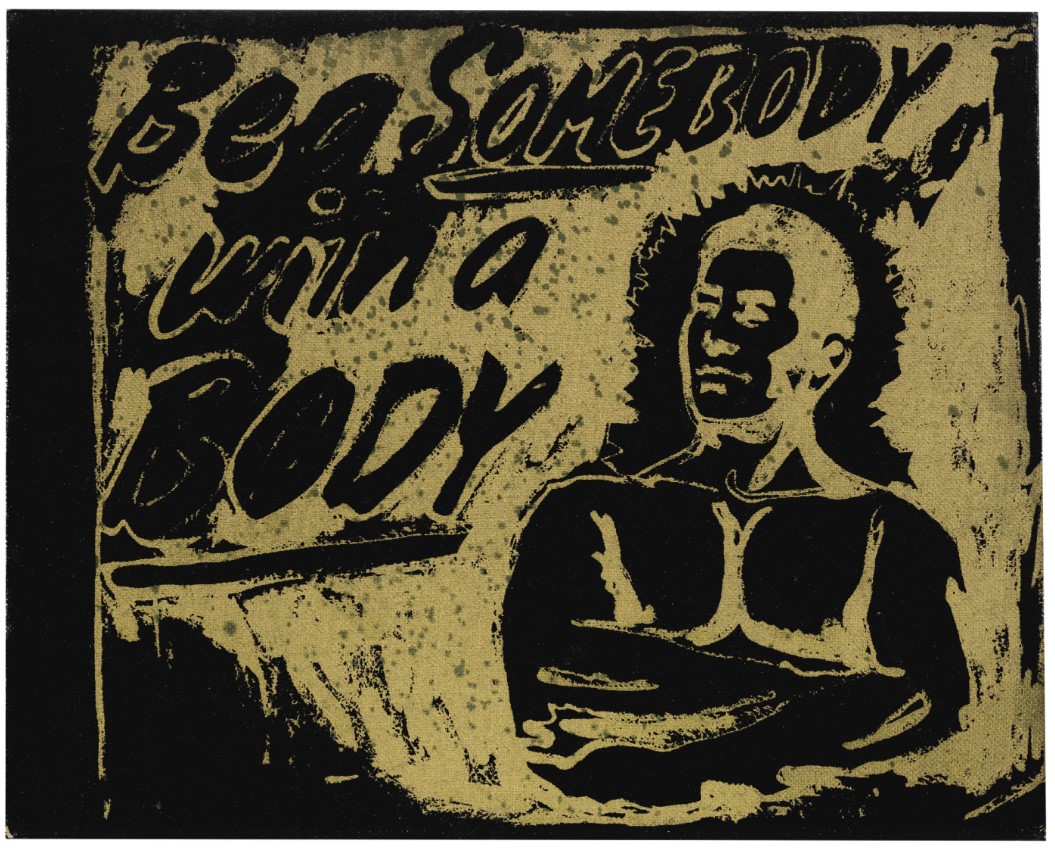 ANDY WARHOL
Be a Somebody with a Body, 1985
Acrylic and silkscreen ink on canvas
8×10 inches (20.3 x 25.4 cm)
Signed and dated 85 on the overlap
Be a Somebody with a Body, 1985
Sotheby’s New-York: 15 May 2014
Estimated: USD 80,000 – 120,000
USD 100,000
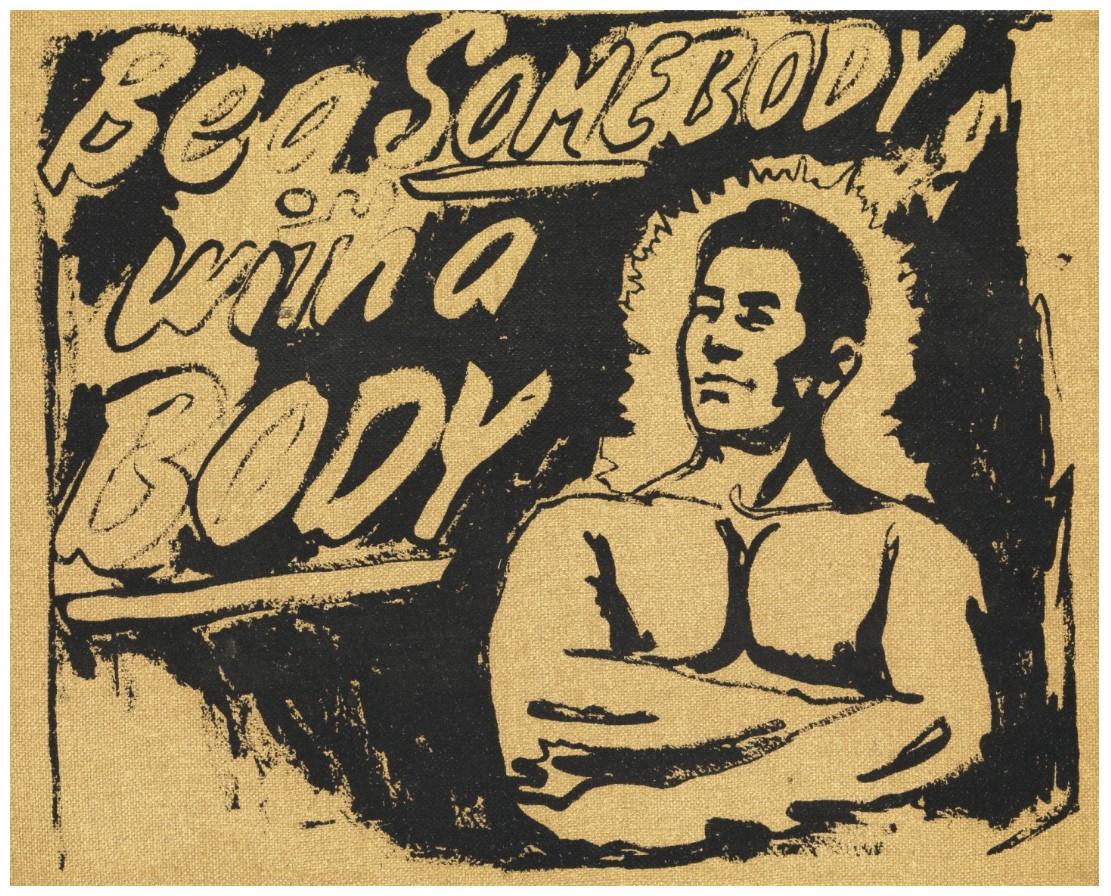 ANDY WARHOL
Be a Somebody with a Body, 1985
Acrylic and silkscreen ink on canvas
8×10 inches (20.3 x 25.4 cm)
Signed, dated 85 and dedicated Paige on the overlap
Stamped by the Andy Warhol Art Authentication Board
Numbered A101.122 on the overlap
Repent and Sin No More!
Repent and Sin No More! (Negative), 1985-86
Christie’s New-York: 7 March 2023
Estimated: USD 70,000 – 100,000
USD 214,200
ANDY WARHOL (1928-1987), Repent and Sin No More! (Negative) | Christie’s
ANDY WARHOL (1928-1987)
Repent and Sin No More! (Negative), 1985-86
Acrylic and silkscreen ink on canvas
20 x 16 1/8 inches (50.8 x 41 cm)
Stamped with the Estate of Andy Warhol and the Andy Warhol Foundation for the Visual Arts, Inc. stamps
Numbered ‘PA10.514’ (on the reverse)
Numbered again ‘PA10.514’ (on the stretcher)
Repent and Sin No More!
Sotheby’s New-York: 12 November 2015
Estimated: USD 600,000 – 800,000
USD 820,000
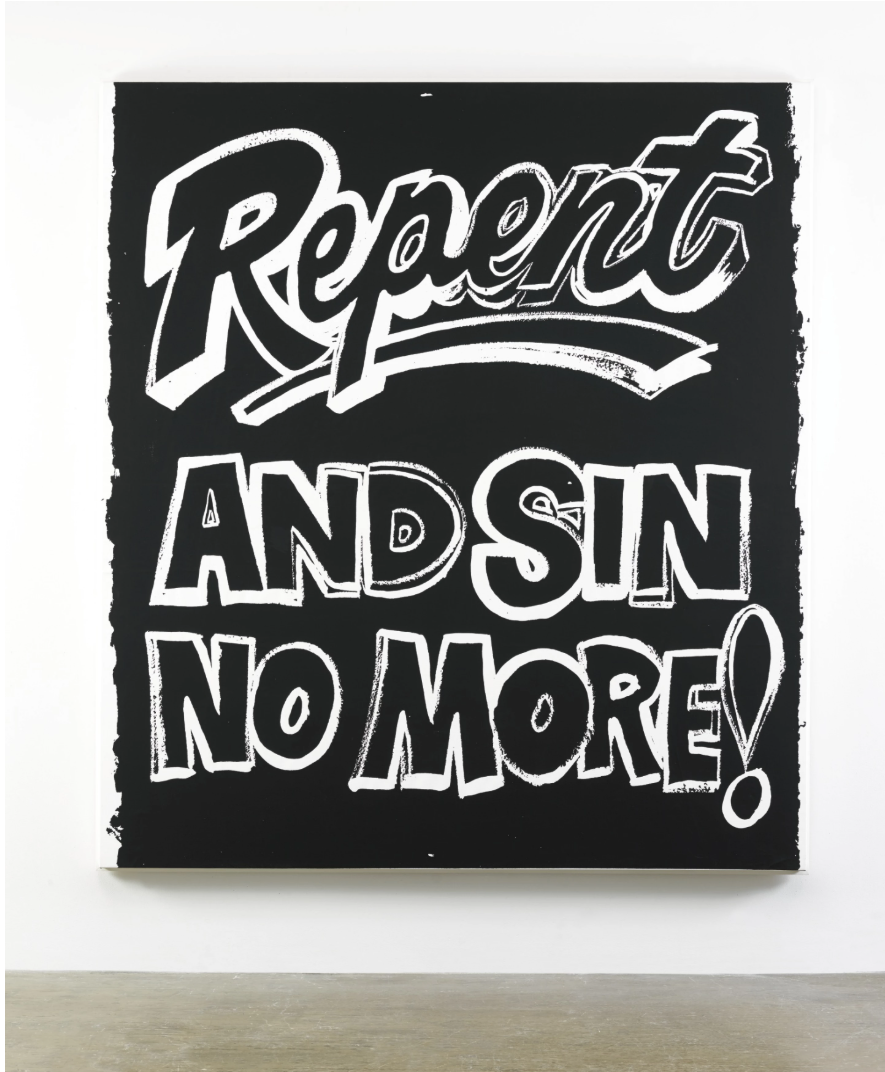
ANDY WARHOL
Repent and Sin No More!
Acrylic and silkscreen ink on canvas
80×72 inches (203.2 x 182.9 cm)
Born into a fervently Catholic family, Andy Warhol began his relationship with religion at an early age. Religion continued to play a significant role throughout the artist’s life as he attended mass every week, even when his popularity (and subsequently, social calendar) increased. While piety is not the first word one would associate with the artist who socialized with New York’s glamorous elite, Warhol and religion do share a common interest: death. This became truer towards the end of Warhol’s career as his subject matter shifted from commercial soup cans and celebrities to ominous weapons and skulls. The relationship between Christianity and Warhol’s paintings extend beyond his morbid work that depicted scenes and instruments of death. He incorporated many religious icons and symbols into his work, most famously his Last Supper paintings, a series of colorful silkscreens that reapproriate da Vinci’s infamous scene.
Warhol began his career making drawings for advertisers, and it is fitting that near the end of his life he returned to the advertising format and style to make this series of works. The concept of commercialization was a major theme throughout Warhol’s canon, and with his elevation of generic ads into fine art he calls into question whether art is just another form of advertisement. In this painting we see a religious slogan written in a cartoonish font that belies the serious message. One could imagine an evangelical protest populated by signs that look exactly like this one. Although Andy was religious, the purpose of the work is not so much spiritual as it is a wry comment on the nature of public relations; in a world where marketing has taken off like never before, even heaven needs an advertisement.
Heaven and Hell Are Just One Breath Away!
Produced just one year prior to his death in 1987, Warhol’s eerily titled Heaven and Hell Are Just One Breath Away is a hauntingly compelling work on canvas which speaks to the moment in the artist’s career in which it was made. Composed in stark black and white and exemplifying the artist’s stylistic tendency of dramatic contrast, Heaven and Hell Are Just One Breath Away was created as a two-part work: Positive and Negative, in which white letters stand illuminated against a black background. This white version appears less visually ominous, although textually just as uncanny. Perhaps most uncanny is Warhol’s choice of font; with jaunty block letters and an exclamation point, the rendering is reminiscent of a supermarket special offering a limited-time offer, appearing in stark contrast with the cryptic message displayed. At the same time, however, the simplicity and hand-drawn nature of Heaven and Hell seems to recall 1960’s protest signs. Thus, Warhol collapses commercialism, consumerism, mortality and politics in one to create a work which mirrors American society as a whole in the mid-1980s.
Heaven and Hell is not the first time the artist experimented with macabre themes. Warhol began his Death and Disaster series in 1962 and became more interested in tragic events in his later Race Riot and Ambulance Disaster series. When asked for the reason behind making these series, which appalled the art world, Warhol stated that “When you see a gruesome picture over and over again, it doesn’t really have an effect.” In this manner, Warhol’s works from this time onwards can be seen as a commentary on the American public’s desensitization to violence. Perhaps most tangible in this work are the echoes of Warhol’s own fear of death, and near-death experiences. On June 3rd, 1968, Valerie Solanas, a former employee of Warhol’s, went to his studio the ‘Factory’ and shot him. Although the artist survived, the psychological trauma left lasting repercussions, causing Warhol to become a recluse; he spent much of the rest of his life in fear of a second attack. The emotional and psychological scars left by this attempted assassination seemed to hover over the last series of works in the artist’s career.
As a Catholic, Warhol’s Heaven and Hell could also be seen to have religious connotations – perhaps influenced by the artist’s visit to Rome in April of 1980, and his subsequent receival of a blessing from the Pope. Warhol’s unexpected illness and death in February of 1987 would come as a blow to the art world. Yet, Heaven and Hell could perhaps be seen as a last message from the artist; combining ‘word art’, faith, artistry, and pop art all in one, this work is a testament to Warhol’s ability to coalesce genres, and his prescient realization of the fragility of life.
Heaven and Hell Are Just One Breath Away (Positive), circa 1985-1986
Phillips New-York: 12 March 2024
Estimated: USD 100,000 – 150,000
USD 222,250
Andy Warhol – New Now New York Lot 31 March 2024 | Phillips
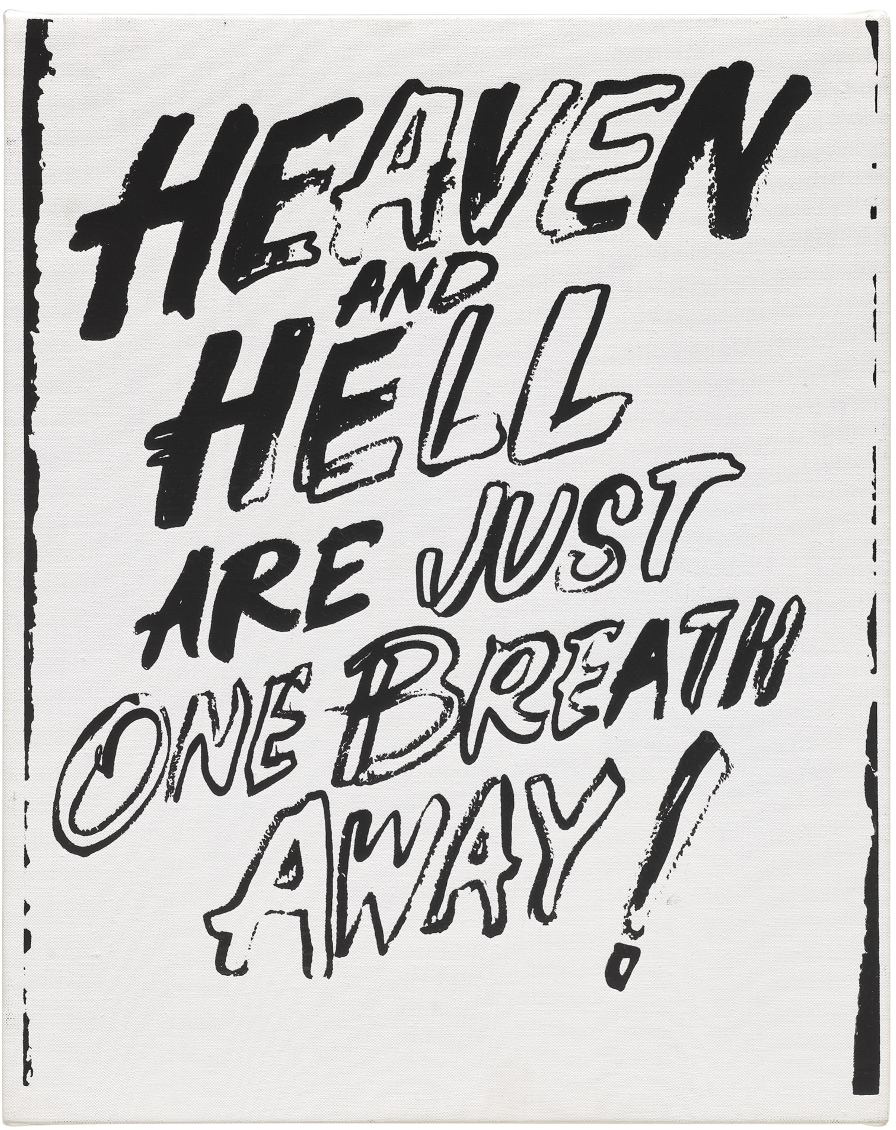
ANDY WARHOL
Heaven and Hell Are Just One Breath Away (Positive), circa 1985-1986
Synthetic polymer paint and silkscreen ink on canvas
20×16 inches (50.8 x 40.6 cm)
Stamped by the Estate of Andy Warhol and twice by the Andy Warhol Foundation for the Visual Arts, Inc., New York
Numbered “VF PA10.256” on the overlap
Christ
Christ, $9.98 (Negative), 1985-86
Sotheby’s New-York: 22 May 2022
Estimated: USD 60,000 – 80,000
USD 138,600
Christ, $9.98 (Negative) | Contemporary Day Auction | 2022 | Sotheby’s
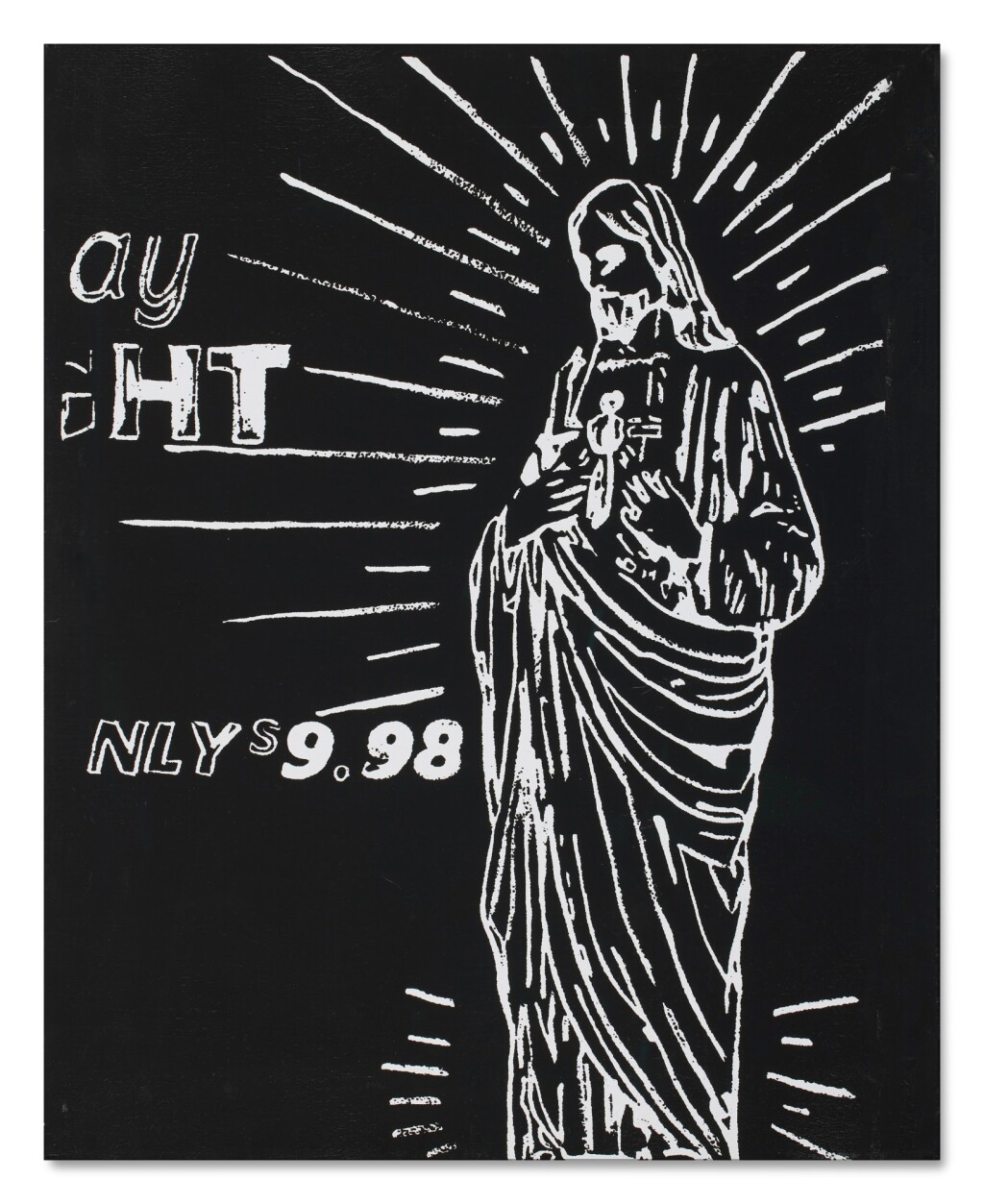
ANDY WARHOL
Christ, $9.98 (Negative), 1985-86
Acrylic and silkscreen ink on canvas
20×16 inches (50.8 x 40.6 cm)
Christ $9.98 (Positive), 1985-1986
Sotheby’s New-York: 12 November 2009
Estimated: USD 80,000 – 120,000
USD 92,500
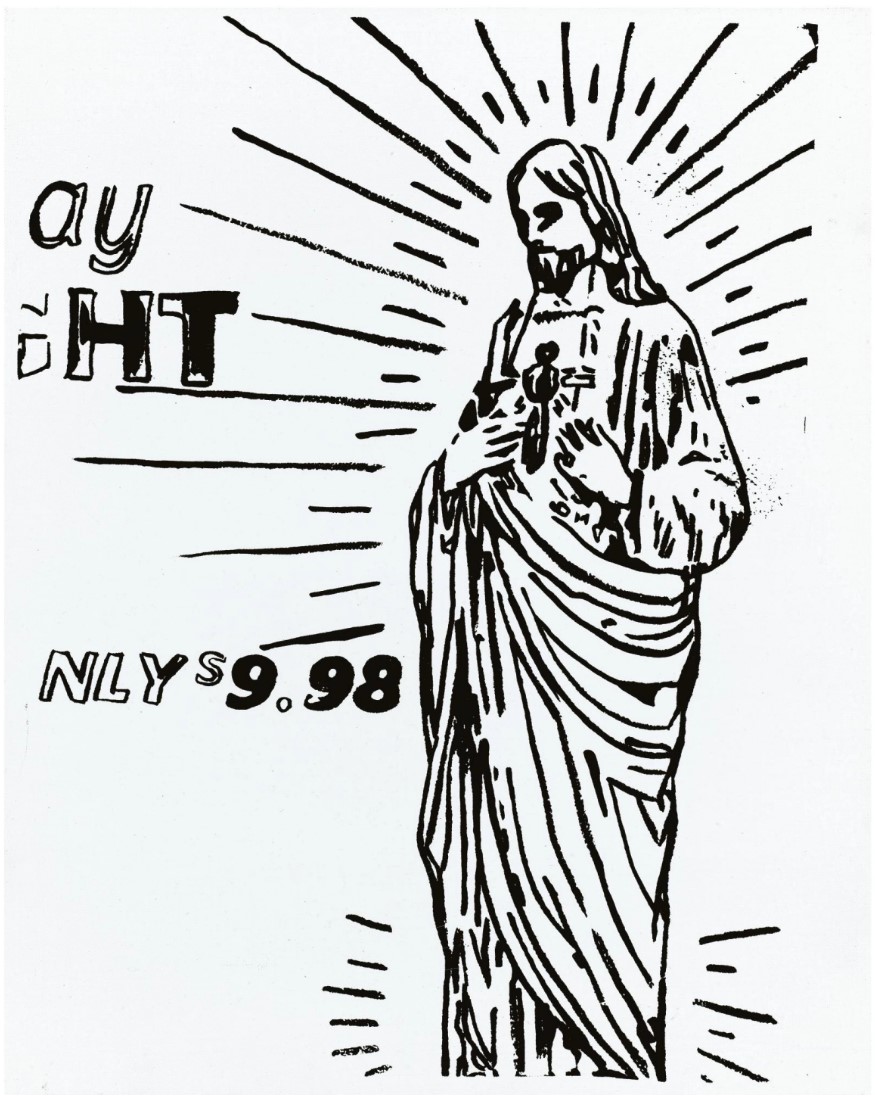 ANDY WARHOL
Christ $9.98 (Positive), 1985-1986
Synthetic polymer paint and silkscreen ink on canvas
20×16 inches (50.8 x 40.6 cm)
Stamped by the Estate of Andy Warhol and the Andy Warhol Foundation for the Visual Arts, Inc. Numbered PA10.397 on the overlap.
Mineola Motorcycle
Mineola Motorcycle, circa 1985-1986
Christie’s New-York: 15 May 2025
Estimated: USD 80,000 – 120,000
USD 138,600
ANDY WARHOL (1928-1987), Mineola Motorcycle | Christie’s
ANDY WARHOL (1928-1987)
Mineola Motorcycle, circa 1985-1986
Acrylic and silkscreen ink on canvas
16×20 inches (40.6 x 50.8 cm)
Stamped with the Estate of Andy Warhol and the Andy Warhol Foundation for the Visual Arts, Inc. stamps
Numbered ‘VF PA10.328 (on the overlap)
Numbered again ‘PA10.328’ (on the stretcher)
Mineola Motorcycle (positive), 1985-1986
Phillips New-York: 16 November 2022
Estimated: USD 600,000 – 800,000
USD 816,500
Andy Warhol – 20th Century & Conte… Lot 123 November 2022 | Phillips
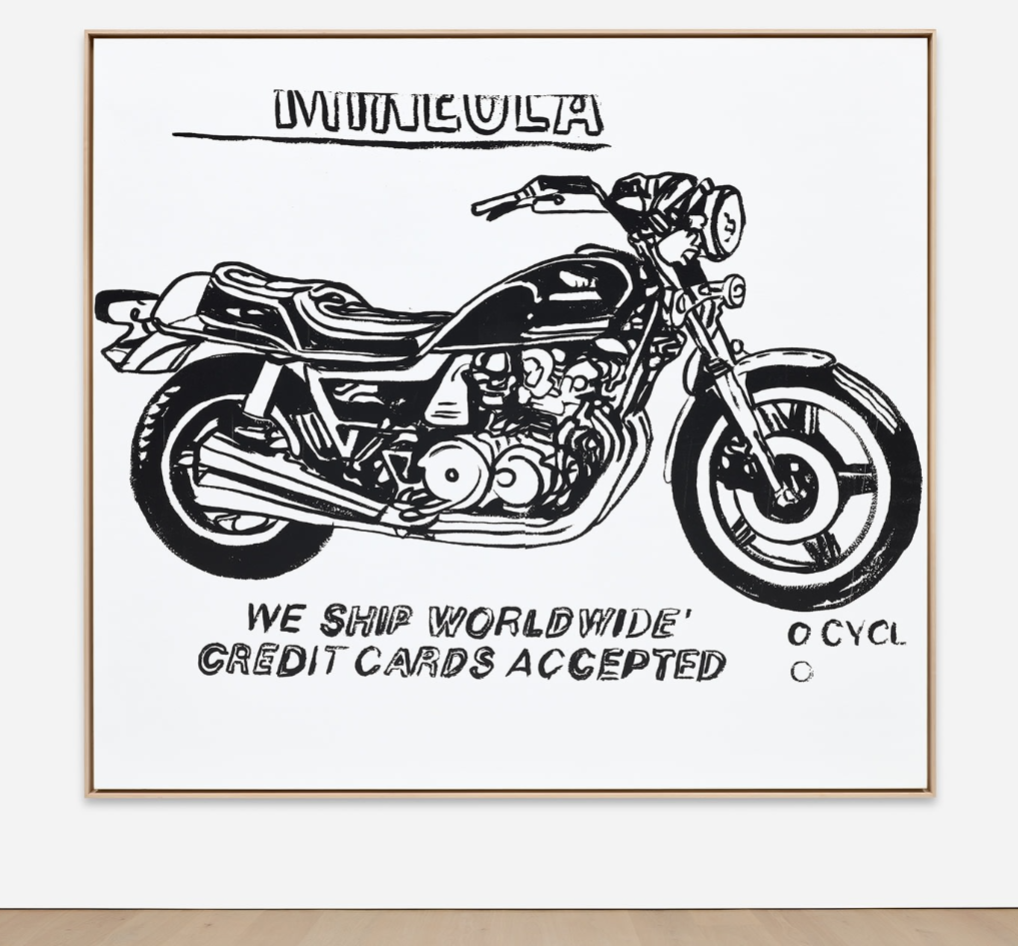
ANDY WARHOL
Mineola Motorcycle (positive), 1985-1986
Synthetic polymer paint and silkscreen ink on canvas
72×80 inches (182.9 x 203.2 cm)
Numbered “PA 10.236” on the stretcher
Painted between 1985 and 1986, Andy Warhol’s Mineola Motorcycle (positive) presents his iconic pop vernacular in large scale. Presumably one of just two paintings of the subject matter executed in this size, the work’s presence alone nods to that of a billboard, aiding in the artist’s appropriation of advertised imagery. In this particular work, Warhol employs a minimal palette of black and white to illustrate the ad for a motorcycle. In contrast to Warhol’s colorful Maos and Marilyns, the monochrome nature of the work recalls some of the artist’s earliest explorations with projected imagery onto canvas such as Typewriter (1) and Bathtub, each from 1961 and both housed in the Andy Warhol Museum, Pittsburgh. More than two decades later and in the last of his life, Warhol’s Mineola Motorcycle transcends these earlier paintings, elevating the branded imagery to a larger-than-life icon—a symbol of post-war American subculture.
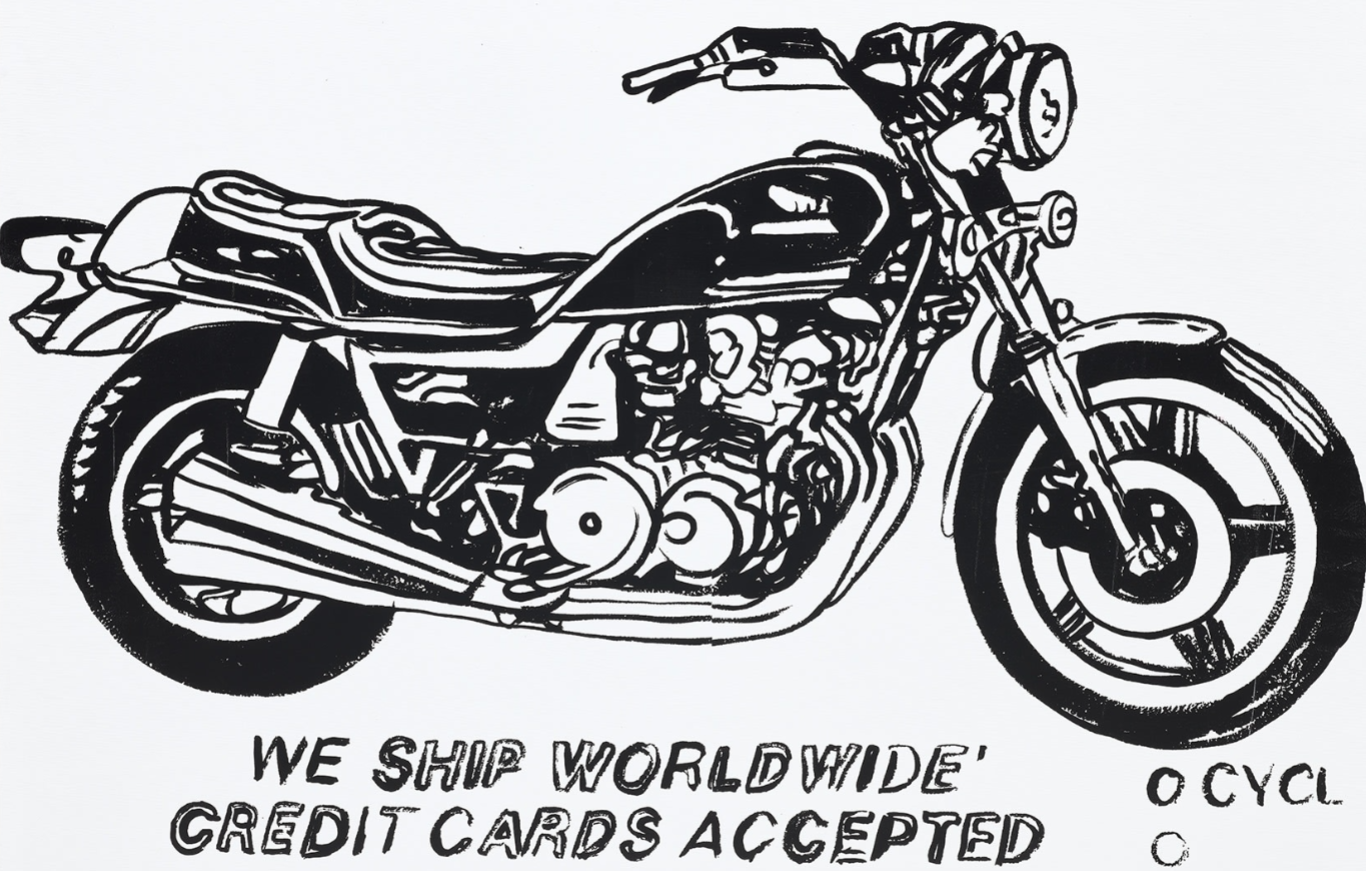
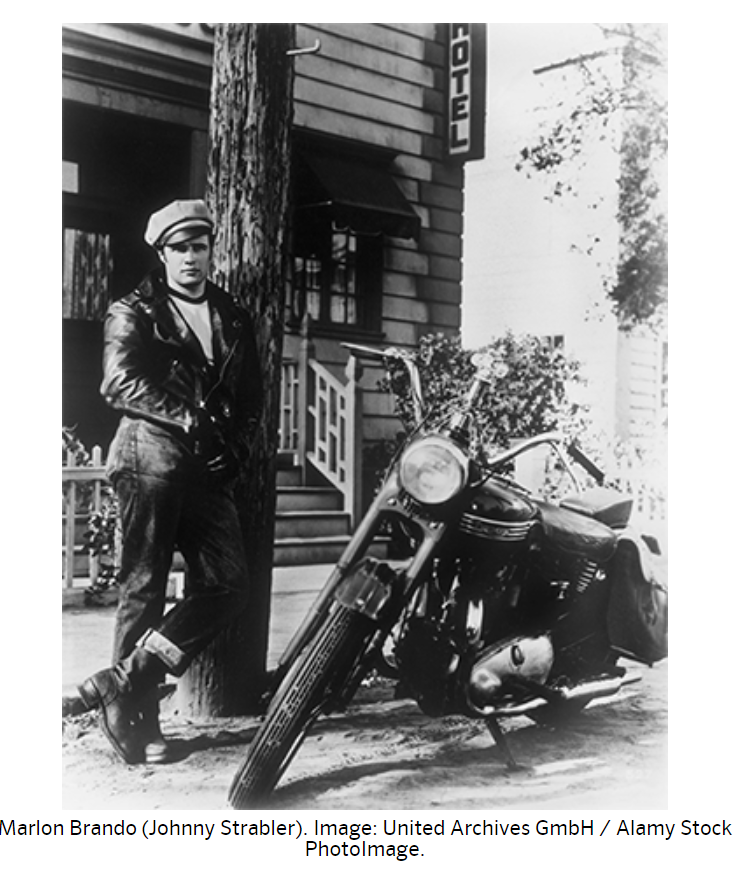
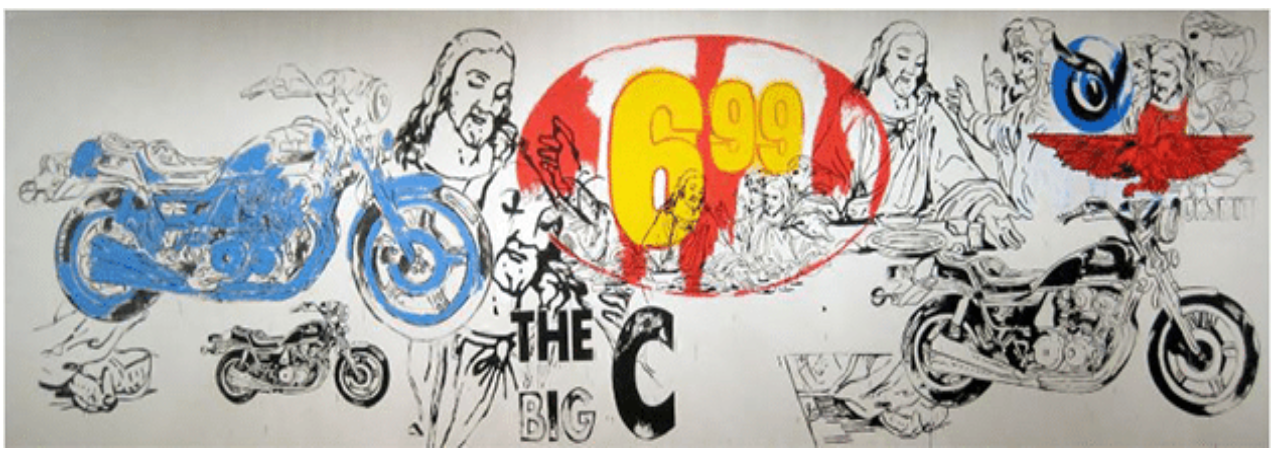
Mineola Motorcycle (positive), like many of the works Warhol made towards the end of his life, is thus a culmination of some of his best techniques and concepts. One of Warhol’s late masterworks, The Last Supper, also known as “The Big C,” Andy Warhol Museum, Pittsburgh, from the same year of the present work, is quite literally a “greatest hits” homage to Warhol’s practice. Here, we see his renewed interest in figure painting, coalesced with branded imagery, including the trademark Mineola motorcycles in various sizes and a “6.99” price tag emblazoned in the center of the canvas in red and yellow. The combination of these elements illustrates Warhol’s own reinventions in this defining decade of the 1980s. Works such as Mineola Motorcycle (positive) and The Last Supper showcase Warhol’s unmatched ability to combine appropriated imagery with his own hand, while simultaneously commenting on the brand-obsessed consumer culture he was living in—a model that has lived on in today’s contemporary art world.
Mineola Motorcycle, 1985-86
Sotheby’s London: 12 March 2015
Estimated: GBP 40,000 – 60,000
GBP 97,500
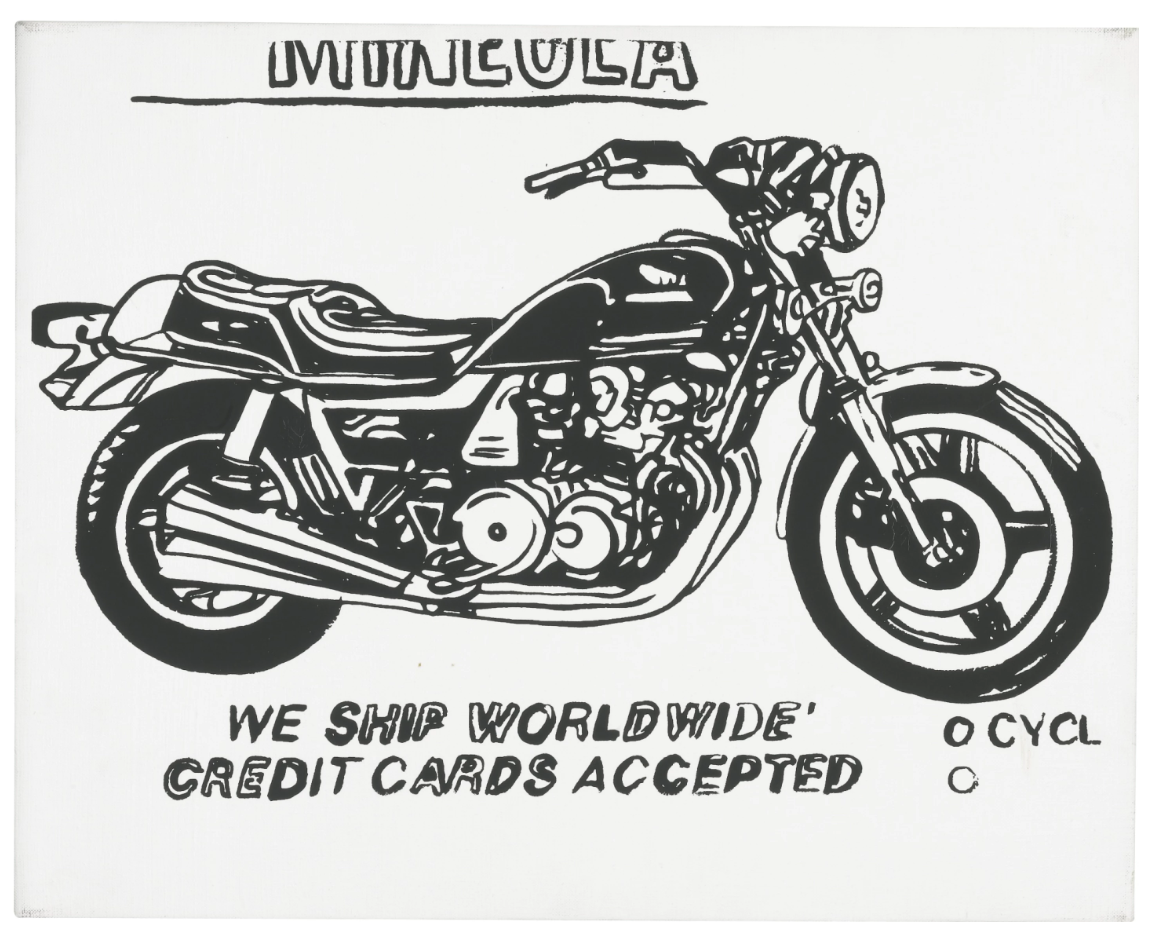
ANDY WARHOL
Mineola Motorcycle, 1985-86
Acrylic and silkscreen ink on canvas
16 x 19 7/8 inches (40.5 x 50.5cm)
Stamped twice by The Estate of Andy Warhol, The Andy Warhol Foundation for the Visual Arts
Numbered PA10.152 on the overlap
Felix the Cat
Felix the Cat, 1985-1986
Sotheby’s New-York: 13 May 2021
Estimated: USD 800,000 – 1,200,000
USD 988,000
Felix the Cat | Contemporary Art Day Auction | 2021 | Sotheby’s (sothebys.com)
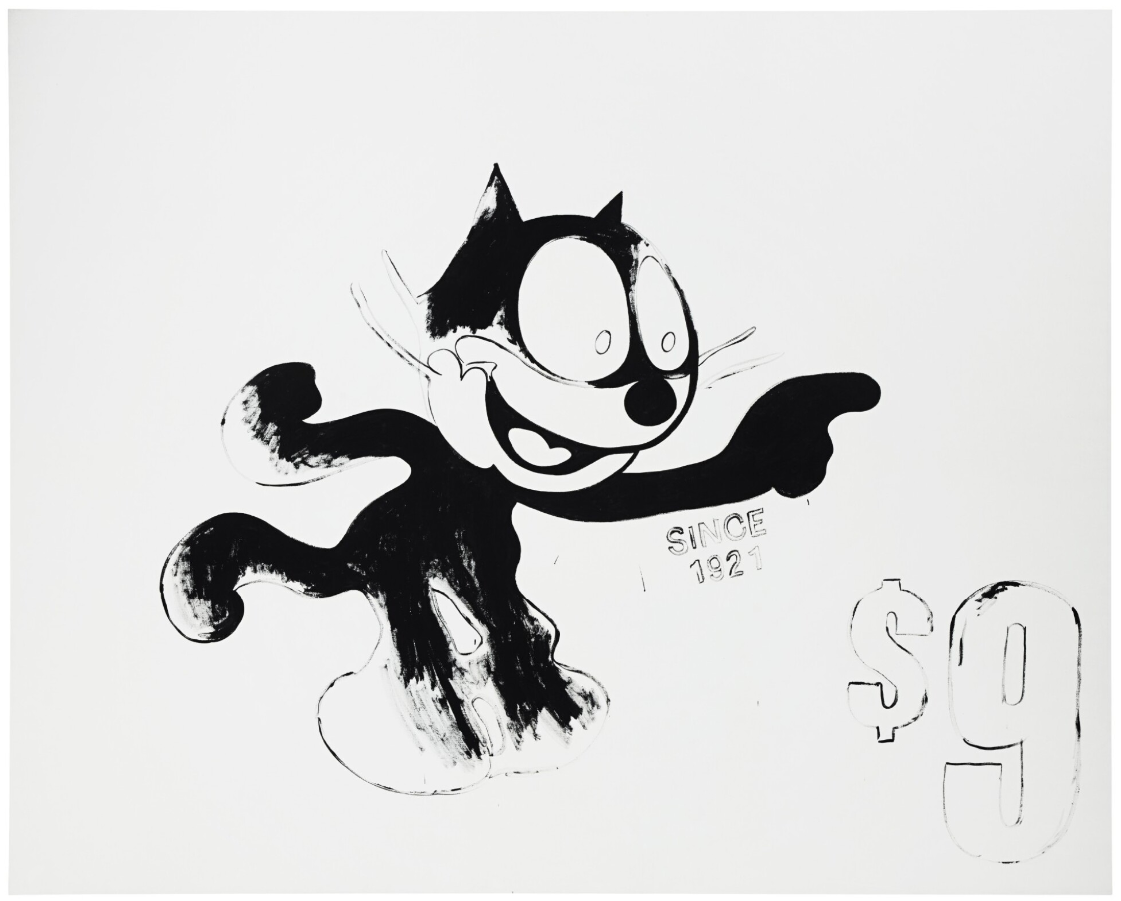
ANDY WARHOL (1928 – 1987)
Felix the Cat, 1985-1986
Acrylic and silkscreen ink on canvas
90×112 inches (228.6 x 284.5 cm)
Stamped by the Estate of Andy Warhol and twice by The Andy Warhol Foundation for the Visual Arts, Inc.
Numbered VF PA64.019 on the overlap
Executed a year before his death, Andy Warhol’s Felix the Cat exemplifies the artist’s fascination with the aesthetic of pop culture that has placed him at the apex of art history. A portrait of the internationally recognized anthropomorphic black cat, the present work renders a comic book ad of Felix the Cat laughing and pointing outside the margins of the canvas. Running on television from 1923 to 1966, Felix the Cat became one of the first and most famous cartoon characters in comic strip and T.V. history. Warhol, who was born in 1928, was part of the first generation of children that grew up watching and reading cartoons. This would prove to be extremely influential in Warhol’s later life; his artistic career began as a commercial illustrator and cartoonist. Paying homage to his early youth while also honoring American consumerism and celebrity culture, the present work demonstrates Warhol’s ethos as a Pop Art icon.
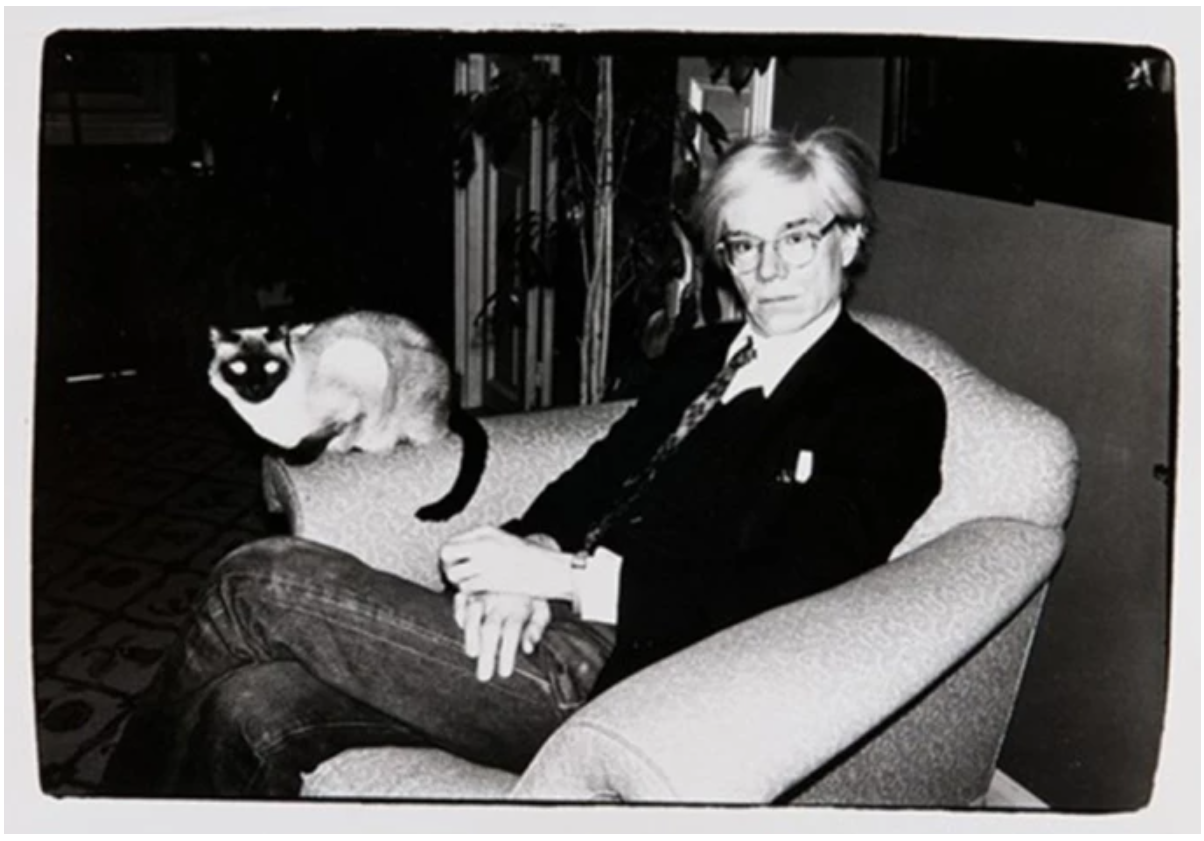
ANDY WARHOL WITH CAT © 2021 ANDY WARHOL FOUNDATION FOR THE VISUAL ARTS / ARTISTS RIGHTS SOCIETY (ARS), NEW YORK
As a child, Warhol suffered from Sydenham chorea, a neurological disorder characterized by involuntary movements. When the disorder occasionally kept him home from school, Warhol would read comics and watch daytime T.V. as a form of entertainment. Fueling his imagination, Warhol found himself lost in the world of fictitious characters, among them Felix the Cat. In his early twenties, Warhol moved to New York City and became a freelance illustrator, creating cartoons for Glamour magazine, Columbia Records, and I Miller. Evidently influenced by the cartoon world that surrounded him as a child, Warhol launches his career through this genre of illustration for which he is now internationally revered.
In the 1980s, Warhol had a re-emergence of critical and financial success. During this time, his works primarily consisted of reproductions of images of popular culture like the Chanel Number 5 perfume bottle, Santa Clause, Queen Elizabeth II, Superman, among others. These items, and specifically Felix the Cat, serve as fragments of Warhol’s psyche and his obsession with all things fame. Moreover, part of Warhol’s re-emergence in the 1980s was largely due to his friendships with a younger generation of artists, including Jean-Michel Basquiat. In one of his many collaborations with the artist, Warhol included Felix the Cat as one of his contributions to the joint painting. Undoubtedly, Warhol felt a deep fascination with this nostalgic cartoon character of his childhood.
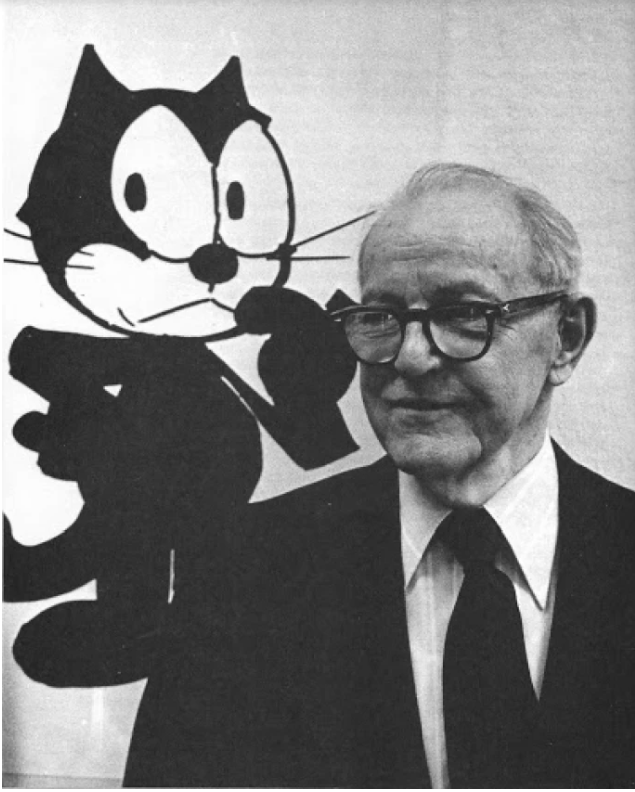
OTTO MESSMER STANDING IN FRONT OF HIS DESIGN FOR FELIX THE CAT, CIRCA 1920S.
A television star in his own right, Felix the Cat was one of the most famous cartoon characters of its time. Designed and written by the American master animator Otto Messmer, Felix was a mischievous yet good-hearted black cat that captured the heart of American children. Widely considered the world’s first animated film star, Felix the Cat revolutionized television and quickly became an international success, becoming the first cartoon to sell plush toys and other merchandise. Warhol, forever enamored by all things fame, was keenly aware of this fact and was fascinated by the mere existence of a fictional, imaginary drawing being one of the most famous personalities of the twentieth century.
Works Boots
Work Boots (Positive), 1985
Christie’s New-York: 10 November 2023
Estimated: USD 300,000 – 500,000
USD 365,400
ANDY WARHOL (1928-1987), Work Boots (Positive) | Christie’s
REPEAT SALE
Christie’s New-York: 27 May 2020
Estimated: USD 250,000 – 350,000
USD 435,000
Andy Warhol (1928-1987), Work Boots (Positive) | Christie’s
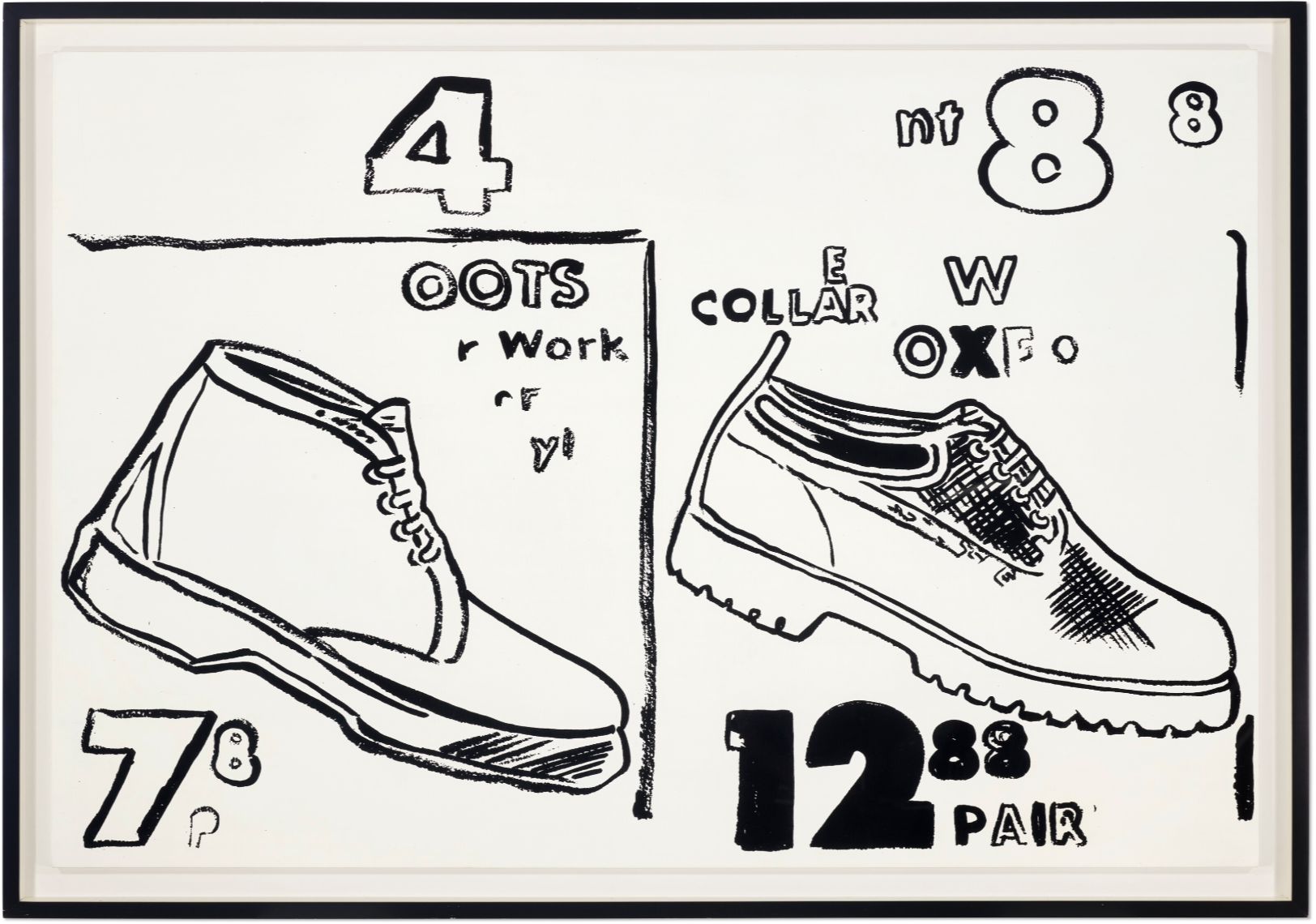
ANDY WARHOL (1928-1987)
Work Boots (Positive), 1985
Acrylic and silkscreen ink on canvas
54 1/4 x 80 inches (137.8 x 203.2 cm)
Stamped twice with the Estate of Andy Warhol and the Andy Warhol Foundation for the Visual Arts, Inc. stamps
Numbered twice ‘VF PA10.581’ (on the overlap)
Numbered again ‘PA10.581’ (on the stretcher)
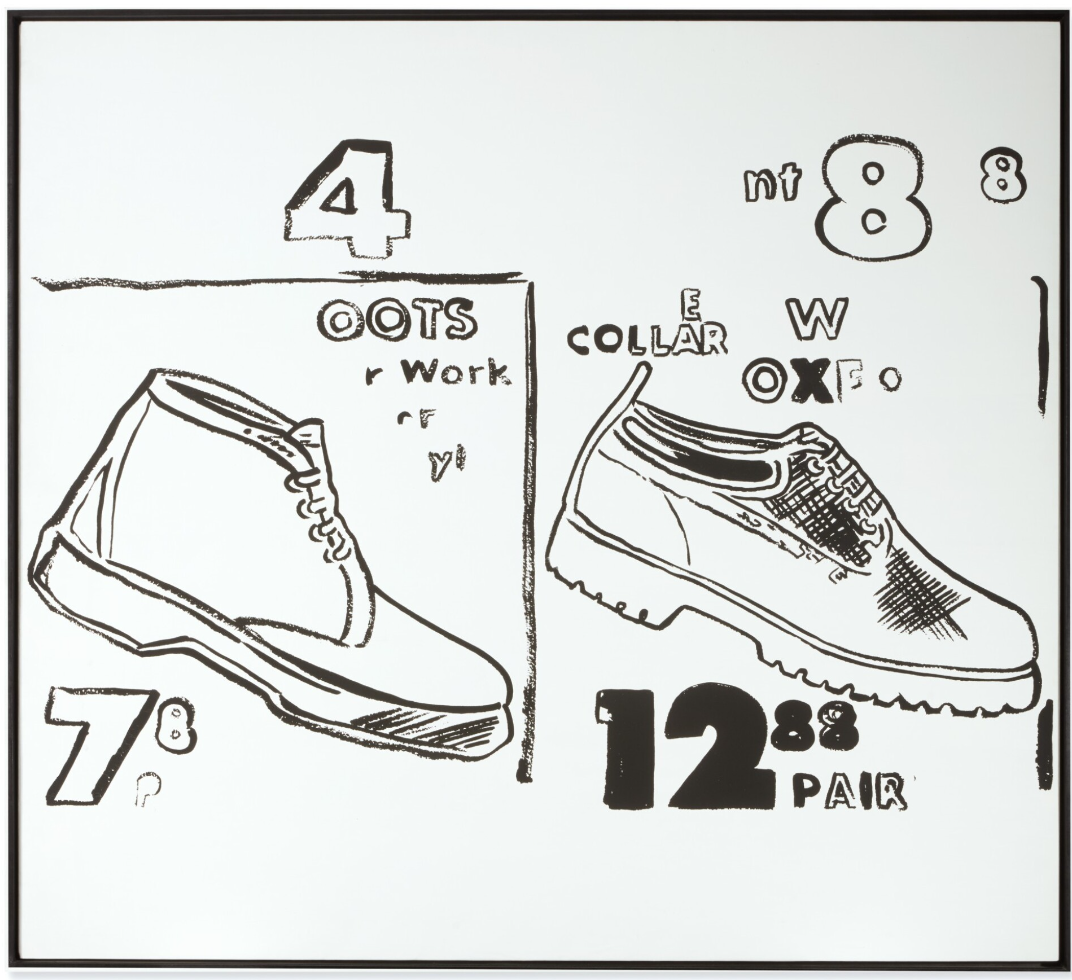
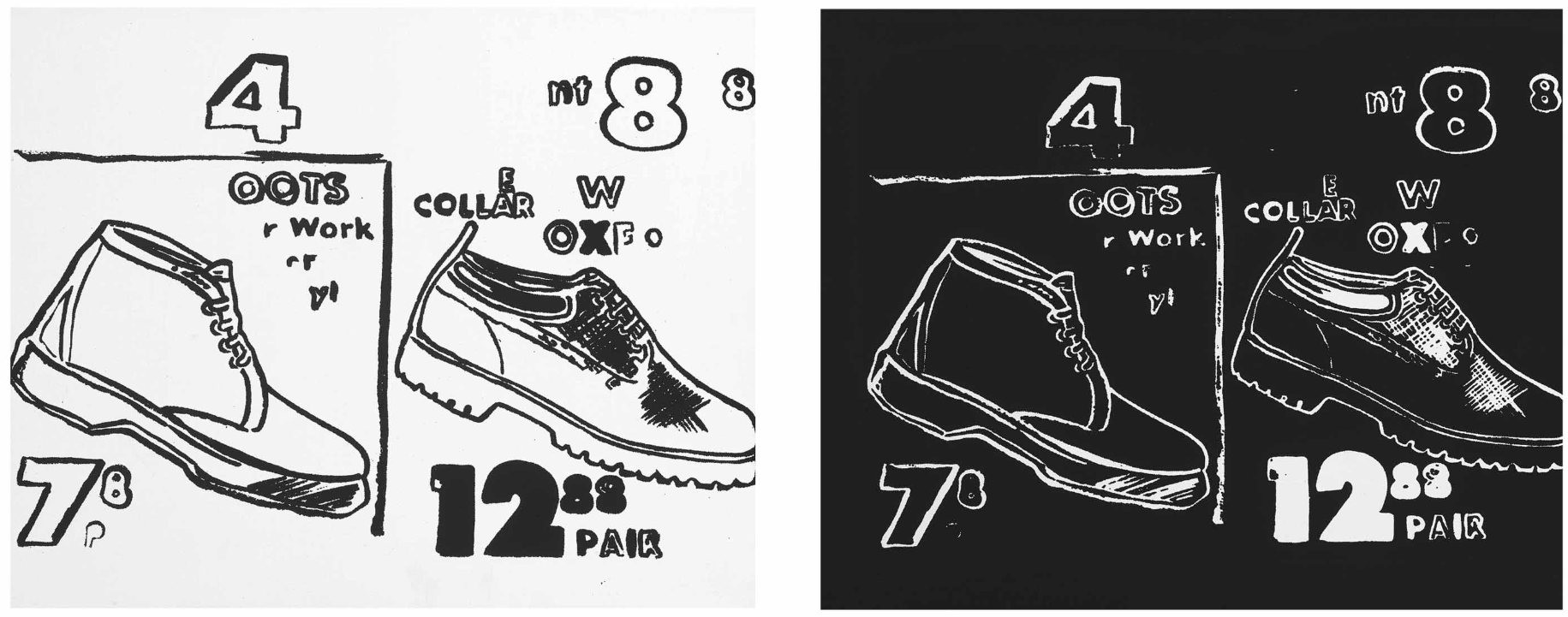
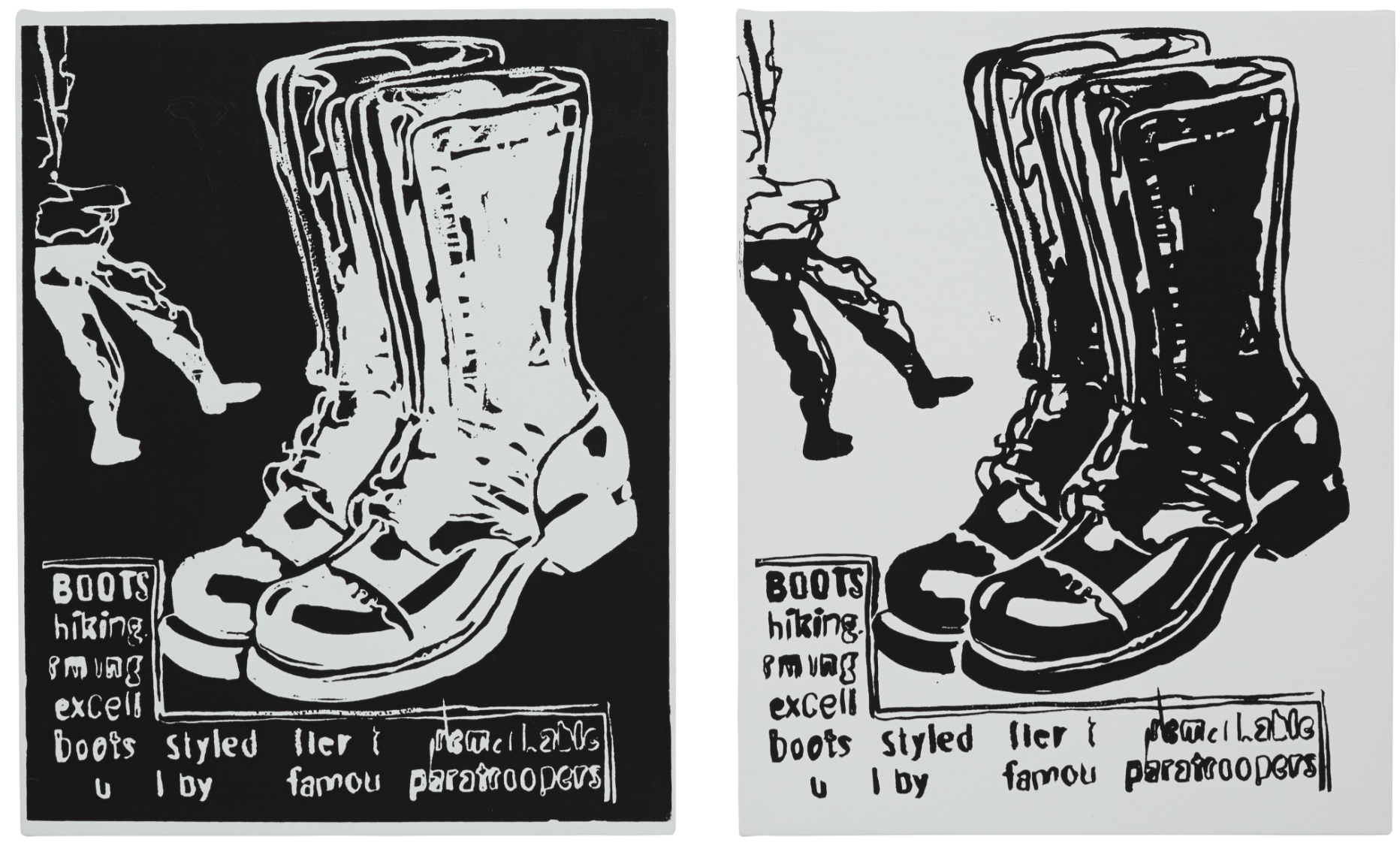
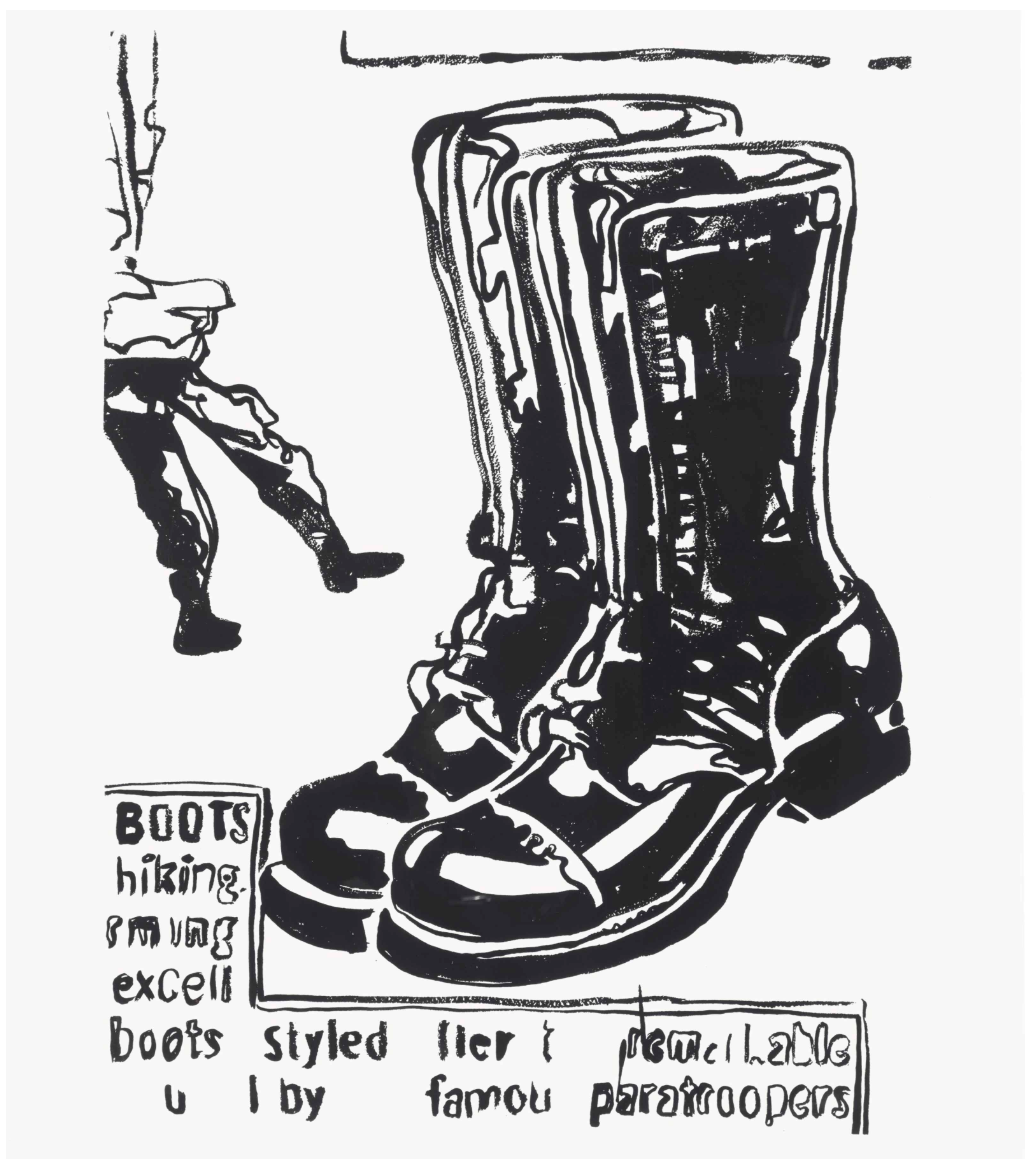
Like his Campbell’s Soup Cans, Warhol’s Work Boots (Positive) elevates a quotidian, commodified object, one made for working class people, and introduces it into the realm of fine art. Work Boots (Positive) is from the artist’s ‘black and white’ painting series, which dates from the early/mid-1980s and is based on advertising materials that Warhol had collected over the years. Visually similar to the artist’s proto-pop black and white ad paintings from 1960, such as Water Heater (Museum of Modern Art, New York) and Icers’ Shoes (Estate of Andy Warhol), here Warhol enlarges an advertisement, cropping and redacting the image as he renders it on canvas, ultimately depicting an image that is once familiar and obscure. The (positive) in the title of the painting refers to the ‘color positive’ version of the painting, while the (negative) version is a total color inversion, in which the light areas appear dark.
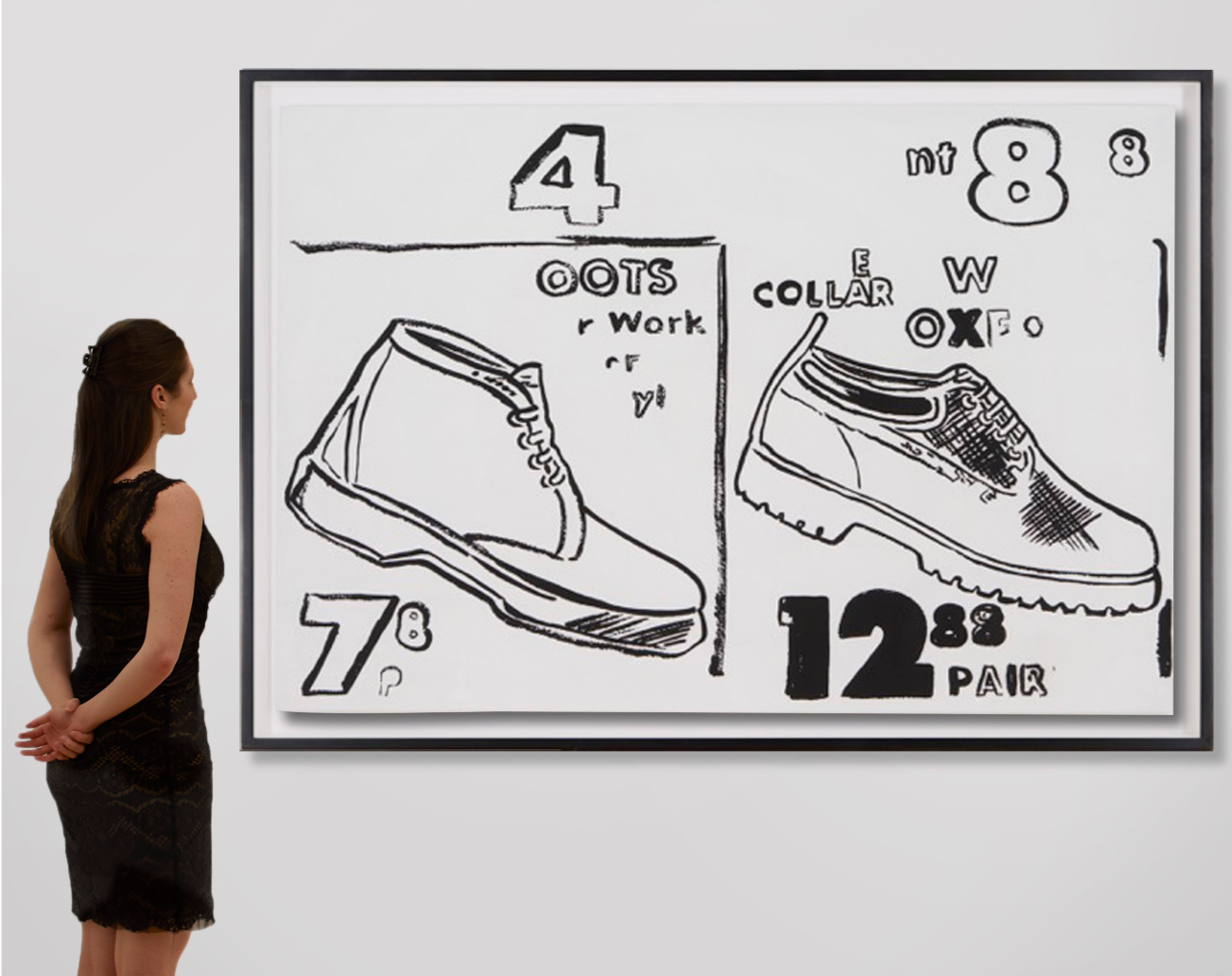 Beginning with the artist’s early work as a commercial fashion illustrator in the 1950s, through his years of pop art stardom and to the end of his career, Warhol has made a tradition of depicting footwear. “He made the shoes larger than life and gave them a personality,” Donna De Salvo, former chief curator at the Whitney Museum of American Art, has said. “He makes them into portraits without a face and turns them into objects of desire.” Indeed, in considering the ‘Boot’ paintings from this series – Work Boots, Beatle Boots, and Paratrooper Boots—each boot is personified and instilled with personality, and the viewer finds themselves choosing which boot best represents them, just as they did with Warhol’s Soup Cans and colored Marilyn paintings, picking which flavor is their favorite, and thus participating in Warhol’s most ingenious artistic innovation: the communion of capitalism, commercialism and fine art.
Work Boots (Positive), 1985-1986
Sotheby’s New-York: 13 May 2021
Estimated: USD 300,000 – 400,000
USD 478,800
Work Boots (Positive) | Contemporary Art Day Auction | 2021 | Sotheby’s (sothebys.com)
ANDY WARHOL (1928 – 1987)
Work Boots (Positive), 1985-1986
Acrylic and silkscreen ink on canvas
72 1/2 x 80 inches (184.2 x 203.2 cm)
Stamped by the Estate of Andy Warhol and The Andy Warhol Foundation for the Visual Arts, Inc.
Numbered PA10.298 on the overlap
Work Boots is an important, dynamic painting from a series known as the Black & White paintings, created by Andy Warhol in the mid 1980s. The series is based on scraps of advertisement matter like classified ads and illustrations from flyers, of which Warhol had amassed a collection. Appealing to him because of its banality, Warhol successfully elevates a quotidian advertisement into a space of high art. In Warhol’s late works, themes of consumer culture are powerfully represented, signifying a return to the subject matter that established his reputation.
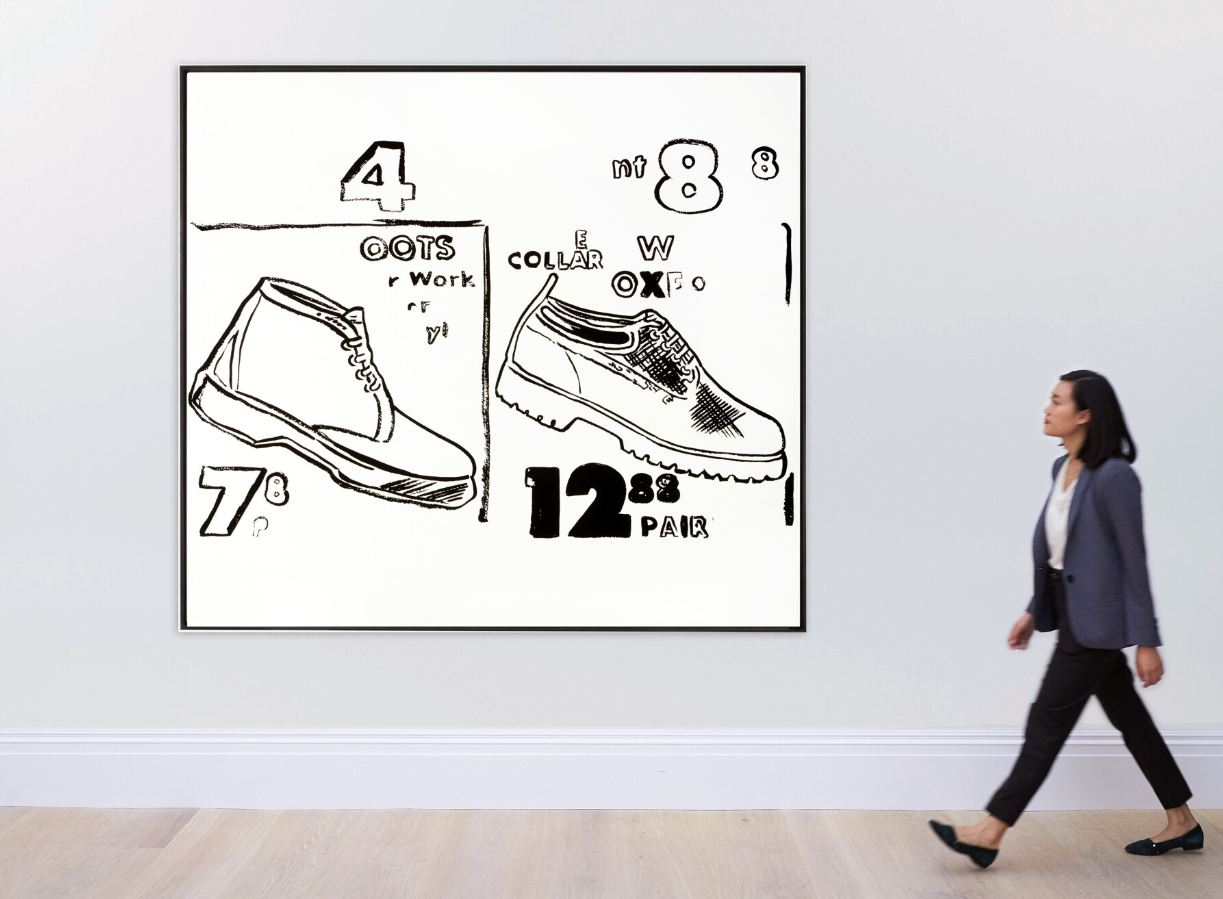
Moreover, this series is contemporary with the various collaborations Warhol had with Jean-Michel Basquiat and Francesco Clemente, revitalizing his interest in painting that he had paused during the 1970s. The present work, comprising humble source material, monochrome palette, and virtuoso painting, is a dramatic example of Andy Warhol at the pinnacle of his creative life.
Work Boots (Positive) and Work Boots (Negative), 1985-86
Christie’s New-York: 14 May 2014
Estimated: USD 100,000 – 150,000
USD 137,000
Andy Warhol (1928-1987) , Work Boots (Positive) and Work Boots (Negative) | Christie’s
ANDY WARHOL (1928-1987)
Work Boots (Positive) and Work Boots (Negative), 1985-86
Synthetic polymer and silkscreen ink on canvas
Each: 16×20 inches (40.6 x 50.8 cm)
Positive:
Stamped with the Estate of Andy Warhol stamp
Stamped twice with the Andy Warhol Foundation for the Visual Arts, Inc. stamps
Numbered ‘PA10.520’ (on the overlap)
Numbered again, ‘PA10.520’ (on the stretcher)
Negative:
Stamped three times with the Estate of Andy Warhol stamps
Stamped twice with the Andy Warhol Foundation for the Visual Arts, Inc. stamps
Numbered twice ‘PA10.197’ (on the overlap)
Numbered again ‘PA10.197’ (on the stretcher)
Paratrooper Boots
Paratrooper Boots (Positive), circa 1985-1986
Heritage Auctions: 10 December 2024
USD 50,000
Andy Warhol (1928-1987). Paratrooper Boots (Positive), circa | Lot #77091 | Heritage Auctions
ANDY WARHOL (1928-1987)
Paratrooper Boots (Positive), circa 1985-1986
Synthetic polymer and silkscreen ink on canvas
20×16 inches (50.8 x 40.6 cm)
Inscribed and with the Estate of Andy Warhol and the Andy Warhol Foundation for the Visual Arts Inc. stamps on the overlap: PA10.447
Paratrooper Boots, 1985-86
Sotheby’s New-York: 16 November 2023
Estimated: USD 400,000 – 600,000
USD 495,500
Paratrooper Boots | Contemporary Day Auction | 2023 | Sotheby’s
ANDY WARHOL (1928 – 1987)
Paratrooper Boots, 1985-86
Acrylic and silkscreen ink on canvas
80×72 inches (203 x 183 cm)
Stamped twice by the Estate of Andy Warhol
Stamped twice by the Andy Warhol Foundation for the Visual Arts, Inc.
Numbered PA10.586 VF on the overlap
Paratrooper Boots: Positive and Negative, circa 1985-1986
Sotheby’s New-York: 10 November 2015
Estimated: USD 80,000 – 120,000
USD 110,000
Andy Warhol – 20th Century & Conte… Lot 235 November 2015 | Phillips
ANDY WARHOL
Paratrooper Boots: Positive and Negative (Diptych), circa 1985-1986
Synthetic polymer and silkscreen ink on canvas
Each 20 1/8 x 16 in. (51.1 x 40.6 cm)
Stamped by the Andy Warhol Foundation for the Visual Arts, Inc.
Further stamped twice by the Estate of Andy Warhol along the overlap
Numbered “PA10.452” along the overlap and stretcher of Positive
Stamped by the Andy Warhol Foundation for the Visual Arts, Inc. and Estate of Andy Warhol
Numbered “PA10.458” along the overlap of Negative
Paratrooper Boots, 1985-86
Christie’s New-York: 12 May 2015
Estimated: USD 400,000 – 600,000
USD 509,000
Andy Warhol (1928-1987), Paratrooper Boots | Christie’s
ANDY WARHOL (1928-1987)
Paratrooper Boots, 1985-86
Synthetic polymer and silkscreen ink on canvas
80×72 inches (203.2 x 182.8 cm)
Stamped with the Estate of Andy Warhol and the Andy Warhol Foundation for the Visual Arts, Inc. stamps
Numbered twice ‘PA.10587’ (on the overlap)
Beatle Boots
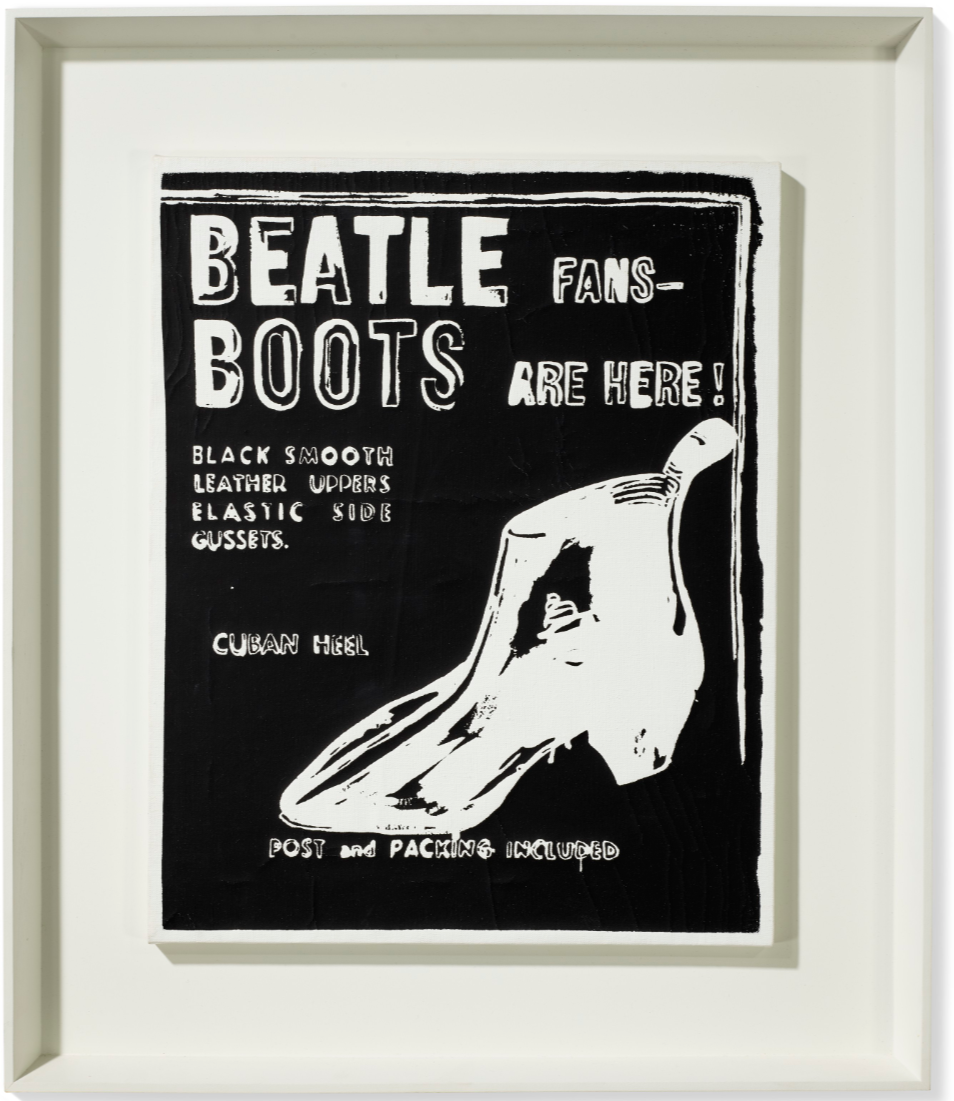
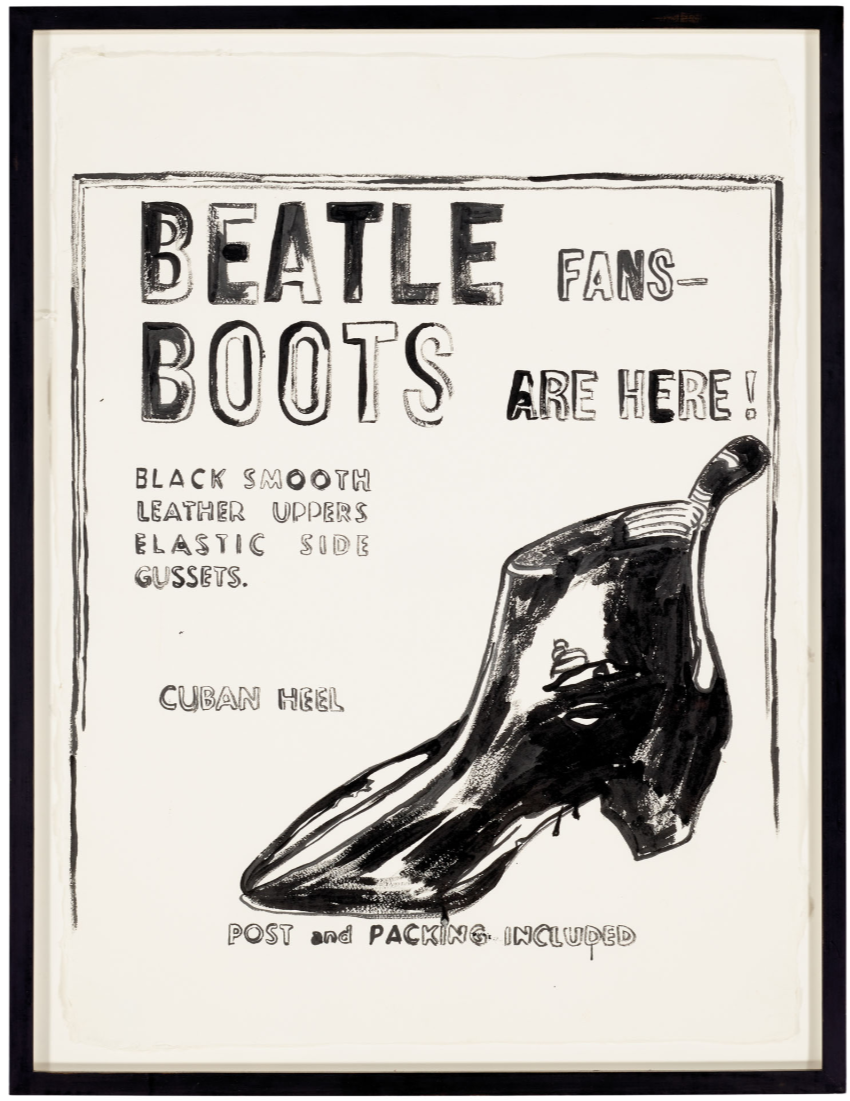
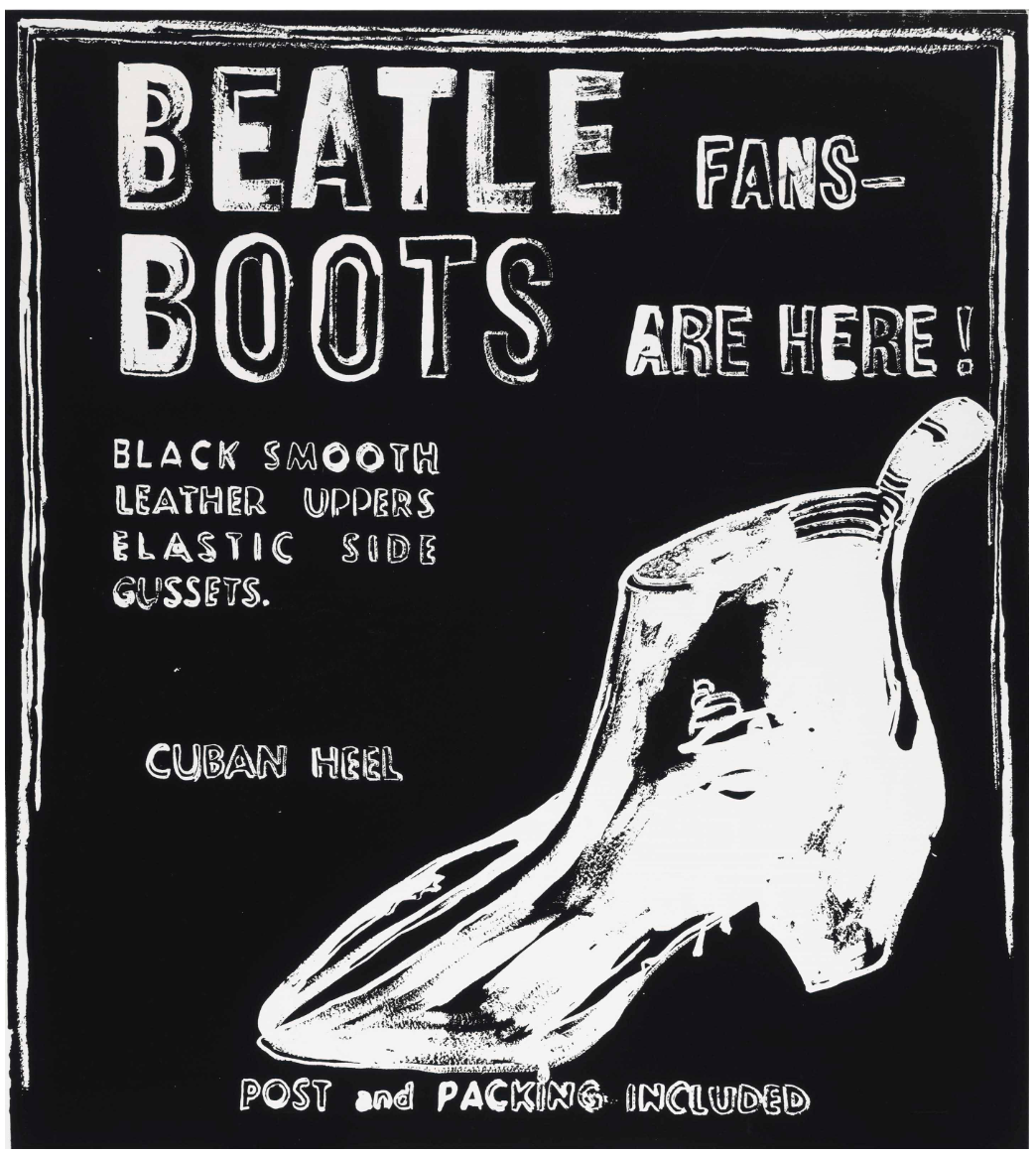
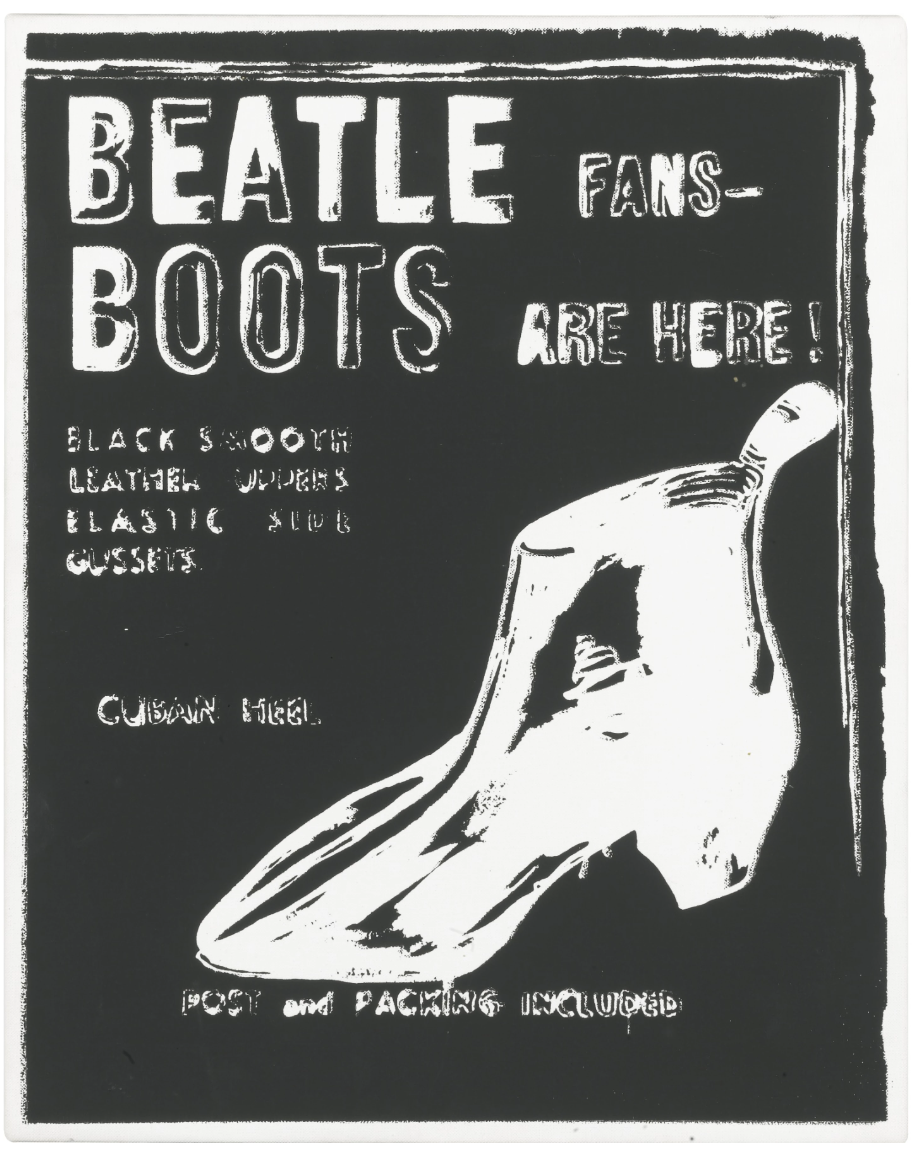
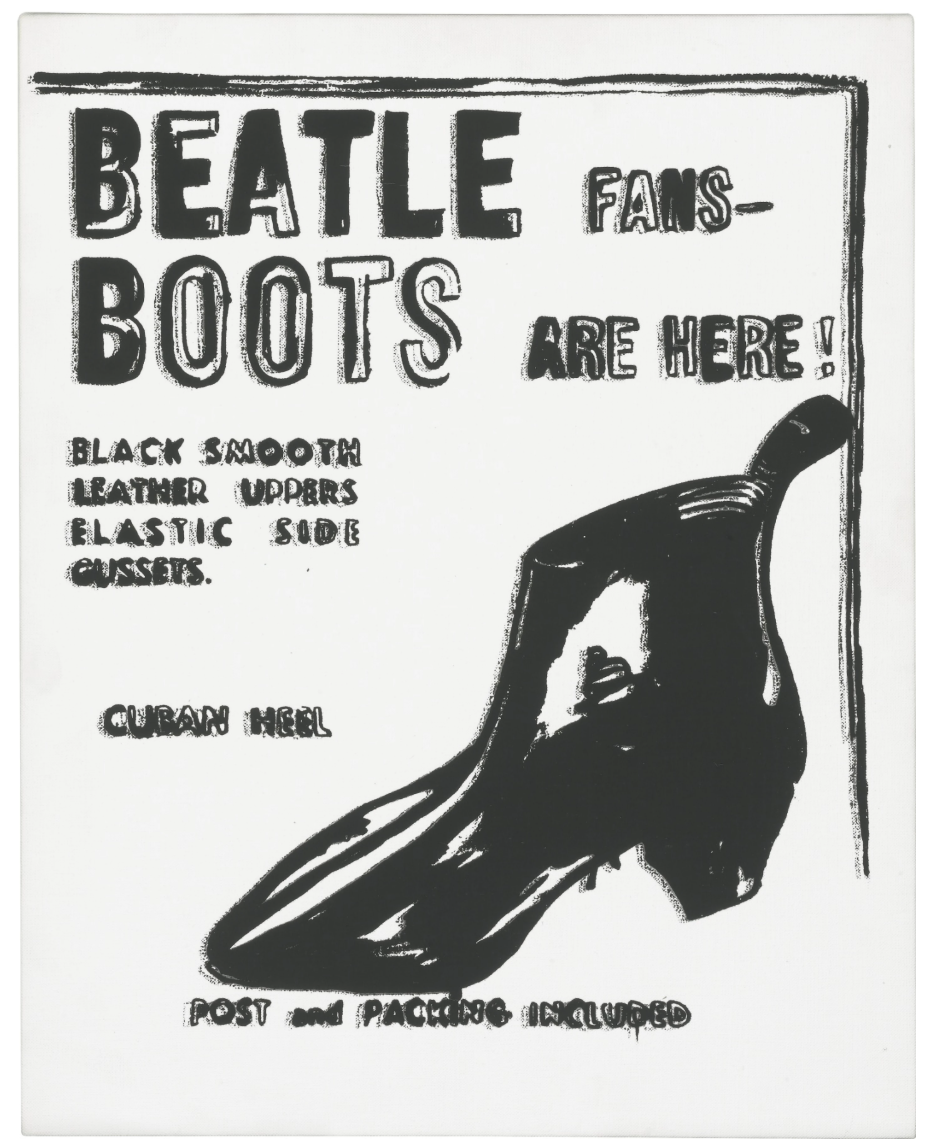
Beatle Boots makes reference to and originates from a simple, low-budget print advertisement that probably appeared in a newspaper sometime in the mid-1960s at the height of the Beatlemania years. Warhol’s painting itself, however, was created many years after the original ad was placed, Warhol having created the present work in the years following shortly after John Lennon’s assassination in the mid-80s. Thus Warhol presents the appropriated image in an entirely different and far less innocent light from that which the original advertisement would have been perceived.
The choice of shoes as a subject for Beatle Boots is not coincidental; Warhol had been drawing shoes as subjects from his early years as a commercial artist, and he had continued to include shoes as a motif right up through his work of the 1980s. Shoes encompass the same high/low culture as so many other subjects of Warhol’s. They reference commercial culture, street culture, and the shoe as fetish object.
Beatle Boots (Negative), 1985-86
Christie’s New-York: 21 July 2021
Estimated: USD 40,000 – 60,000
USD 87,500
ANDY WARHOL (1928-1987), Beatle Boots (Negative) | Christie’s
ANDY WARHOL (1928-1987)
Beatle Boots (Negative), 1985-86
Acrylic and silkscreen ink on canvas
20×16 inches (50.8 x 40.6 cm)
Stamped twice with the Estate of Andy Warhol stamp
Stamped once with the Andy Warhol Foundation for the Visual Arts Inc. stamp
Numbered twice ‘VF PA10.061’ (on the overlap)
Untitled (Beatle Boots), 1984-85
Christie’s Paris: 5 December 2020
Estimated: EUR 15,000 – 20,000
EUR 35,000
Andy Warhol (1928-1987), Sans titre (Beatle Boots) | Christie’s
ANDY WARHOL (1928-1987)
Untitled (Beatle Boots), 1984-85
Acrylic on paper
31 7/8 x 23 3/4 inches (81 x 60.3 cm)
Stamped with the Estate of Andy Warhol and the Andy Warhol Foundation for the Visual Arts, Inc. stamps
Numbered ‘VF 91.038’ (on the reverse)
Beatle Boots (Negative), 1985-86
Christie’s New-York: 16 November 2016
Estimated: USD 500,000 – 700,000
USD 595,500
Andy Warhol (1928-1987), Beatle Boots (Negative) | Christie’s
ANDY WARHOL (1928-1987)
Beatle Boots (Negative), 1985-86
Synthetic polymer and silkscreen ink on canvas
80×72 inches (203.2 x 182.9 cm)
Stamped twice with the Estate of Andy Warhol and the Andy Warhol Foundation for the Visual Arts, Inc. stamps
Numbered twice ‘PA10.557’ (on the overlap)
Numbered again ‘PA10.557’ (on the stretcher)
Numbered again ‘PA10.557’ (on the backing board)
Painted by the grandmaster of the Pop art movement, Andy Warhol, Beatle Boots (Negative), contrasts the innocence and enthusiasm of the early Beatles’ years against the sad fact of Lennon’s untimely death—the art work having been created just a few years after Lennon was killed, resonating in an entirely different way than the subject would have if created before Lennon’s demise. The original advertising image source material is presented in reverse register, the original light areas appearing dark, as a photographic negative does. Warhol’s decision to present a tonally reversed image was consistent with an earlier series the artist had pursued in the late 1970s, where he looked back on his earlier Marilyn Monroe portraits, presenting her face as a ghostly negative image. Black dominates the entire surface area of the canvas of Beatle Boots (Negative), underscoring the retrospectively somber tone that the image would assume. The original advertisement had a hand-drawn quality, and Warhol chose to emphasize that look. The result is a work in contrast with the smooth surfaced, mechanically produced screen print work that Warhol often created. Here, the surface of the work and the touch of paint and brush upon it are clearly visible.
Beatle Boots, 1985-86
Sotheby’s London: 12 March 2015
Estimated: GBP 40,000 – 60,000
GBP 81,250
ANDY WARHOL
Beatle Boots, 1985-86
Acrylic and silkscreen ink on canvas
20 1/8 x 16 inches (51 x 40.5 cm)
Stamped by The Estate of Andy Warhol, The Andy Warhol Foundation for the Visual Arts
Numbered PA10.338 on the overlap
Beatle Boots, 1985-86
Sotheby’s London: 12 March 2015
Estimated: GBP 40,000 – 60,000
GBP 87,500
ANDY WARHOL
Beatle Boots, 1985-86
Acrylic and silkscreen ink on canvas
20 1/8 x 16 inches (51 x 40.5 cm)
Stamped by The Estate of Andy Warhol, The Andy Warhol Foundation for the Visual Arts
Numbered PA10.337 on the overlap
Puma Invader
Puma Invader (Negative), 1985-1986
Heritage Auctions: 14 November 2023
USD 65,625
Andy Warhol (1928-1987). Puma Invader (Negative), 1985-1986. | Lot #77014 | Heritage Auctions
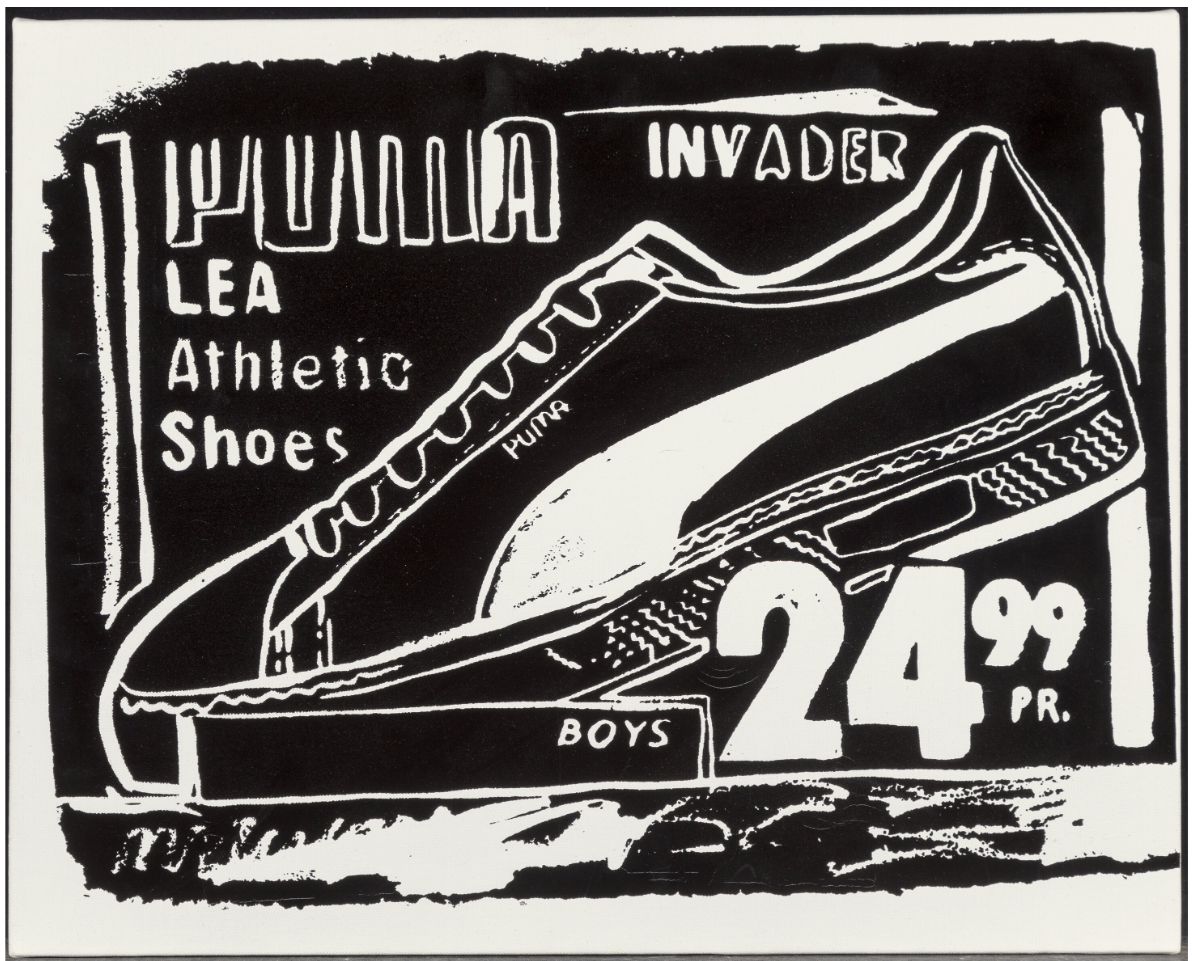
ANDY WARHOL (1928-1987)
Puma Invader (Negative), 1985-1986
Synthetic polymer and silkscreen ink on canvas
16×20 inches (40.6 x 50.8 cm)
Estate of Andy Warhol and Andy Warhol Foundation for the Visual Arts stamps on the overlap
Inscribed on stretcher: PA10.469
Puma Invader, circa 1985-86
Phillips New-York: 8 December 2020
Estimated: USD 40,000 – 60,000
USD 138,600
Andy Warhol – 20th c. and Contempo… Lot 125 December 2020 | Phillips
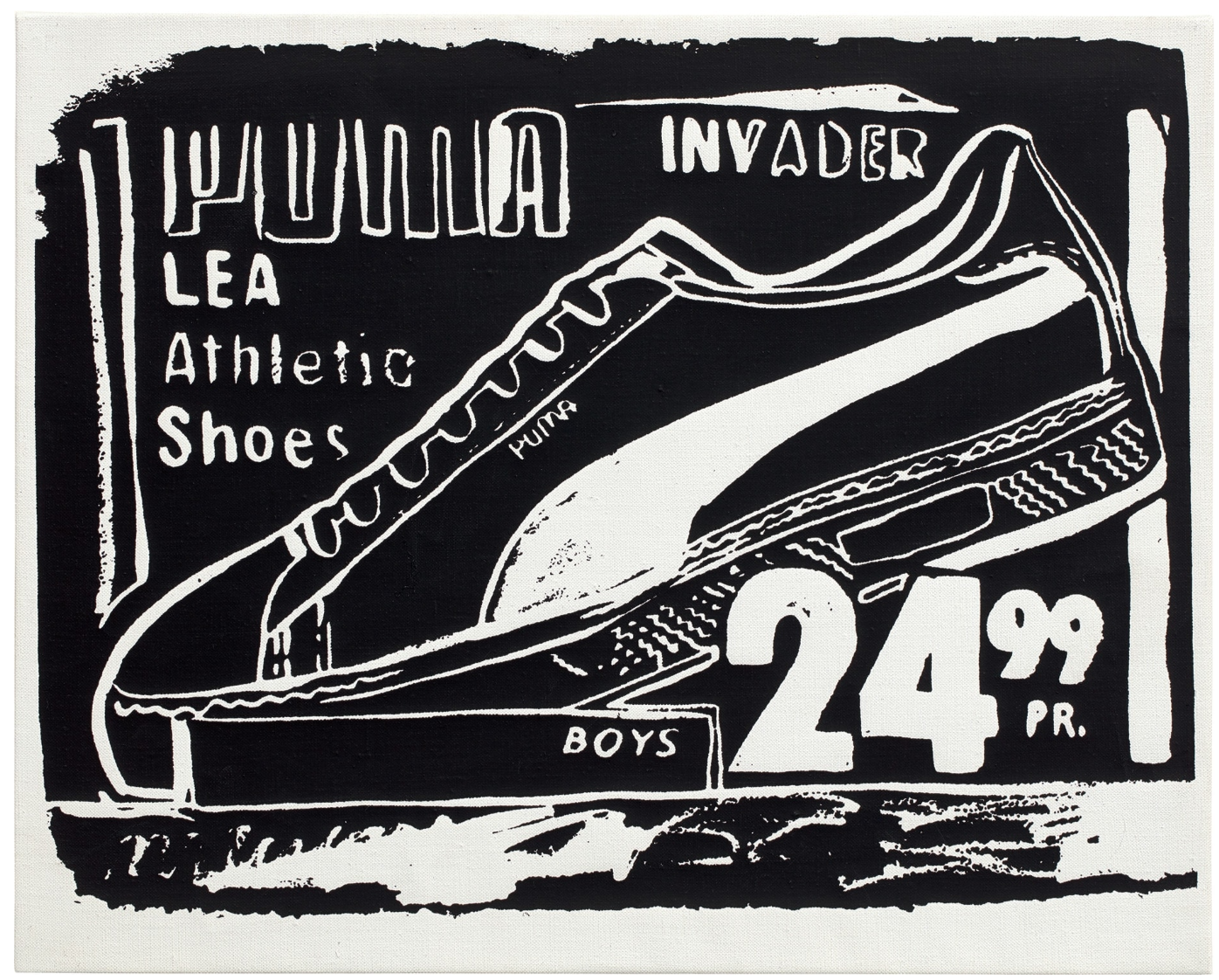
ANDY WARHOL
Puma Invader, circa 1985-86
Synthetic polymer paint and silkscreen ink on canvas
16×20 inches (40.6 x 50.8 cm)
Stamped by the Estate of Andy Warhol and the Andy Warhol Foundation for the Visual Arts, Inc., New York
Initialed and numbered “VF PA10.474” twice on the overlap
Map of Eastern U.S.S.R. Missile Bases
Map of Eastern U.S.S.R. Missile Bases (Negative), 1985-86
Hindman Chicago: 28 September 2023
Estimated: USD 50,000 – 70,000
USD 50,400
Map of Eastern U.S.S.R. Missile Bases (Negative), 1985-86 Lot 96
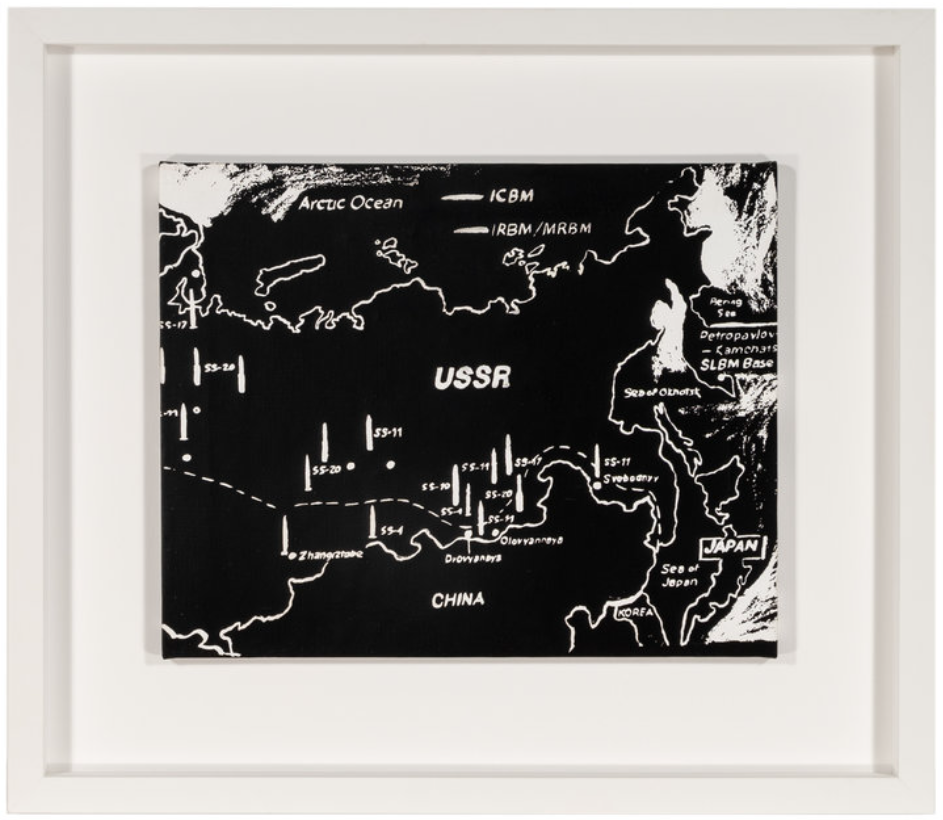
ANDY WARHOL (American, 1928-1987)
Map of Eastern U.S.S.R. Missile Bases (Negative), 1985-86
Synthetic polymer and silkscreen ink on canvas
16×20 inches
Stamped by the Estate of Andy Warhol and the Andy Warhol Foundation for the Visual Arts, Inc., New York
Initialed “VF” and numbered “PA10.173” on the reverse
Map of Eastern U.S.S.R. Missile Bases (positive), 1985-86
Phillips New-York: 8 December 2020
Estimated: USD 40,000 – 60,000
USD 88,200
Andy Warhol – 20th c. and Contempo… Lot 126 December 2020 | Phillips
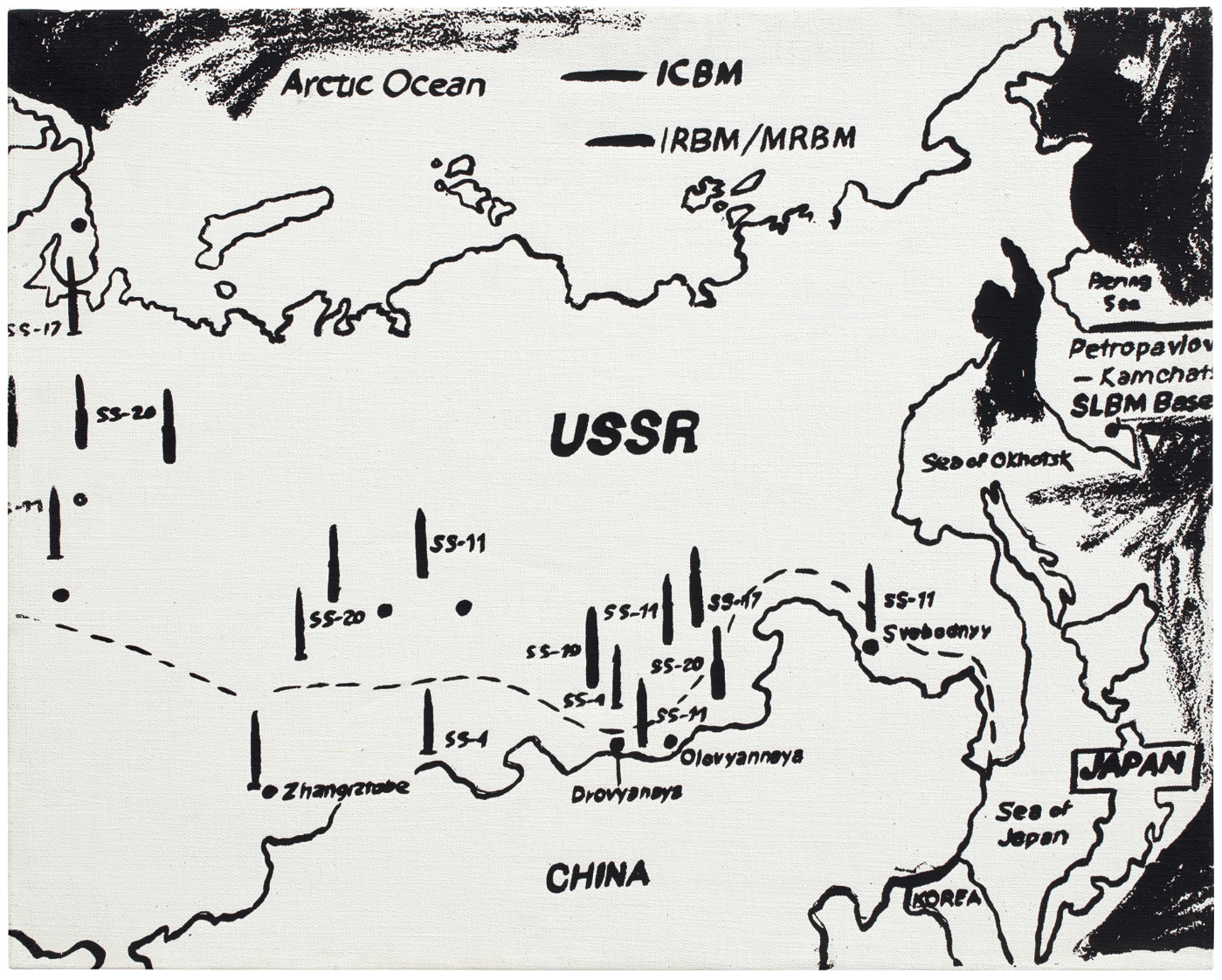
ANDY WARHOL
Map of Eastern U.S.S.R. Missile Bases (positive), 1985-86
Synthetic polymer paint and silkscreen ink on canvas
16×20 inches (40.6 x 50.8 cm)
Stamped by the Estate of Andy Warhol and the Andy Warhol Foundation for the Visual Arts, Inc., New York
Initialed and numbered “VF PA 10.129” on the overlap
Map of Eastern U.S.S.R. Missile Bases (negative), 1985-86
Phillips New-York: 8 December 2020
Estimated: USD 40,000 – 60,000
USD 85,680
Andy Warhol – 20th c. and Contempo… Lot 127 December 2020 | Phillips
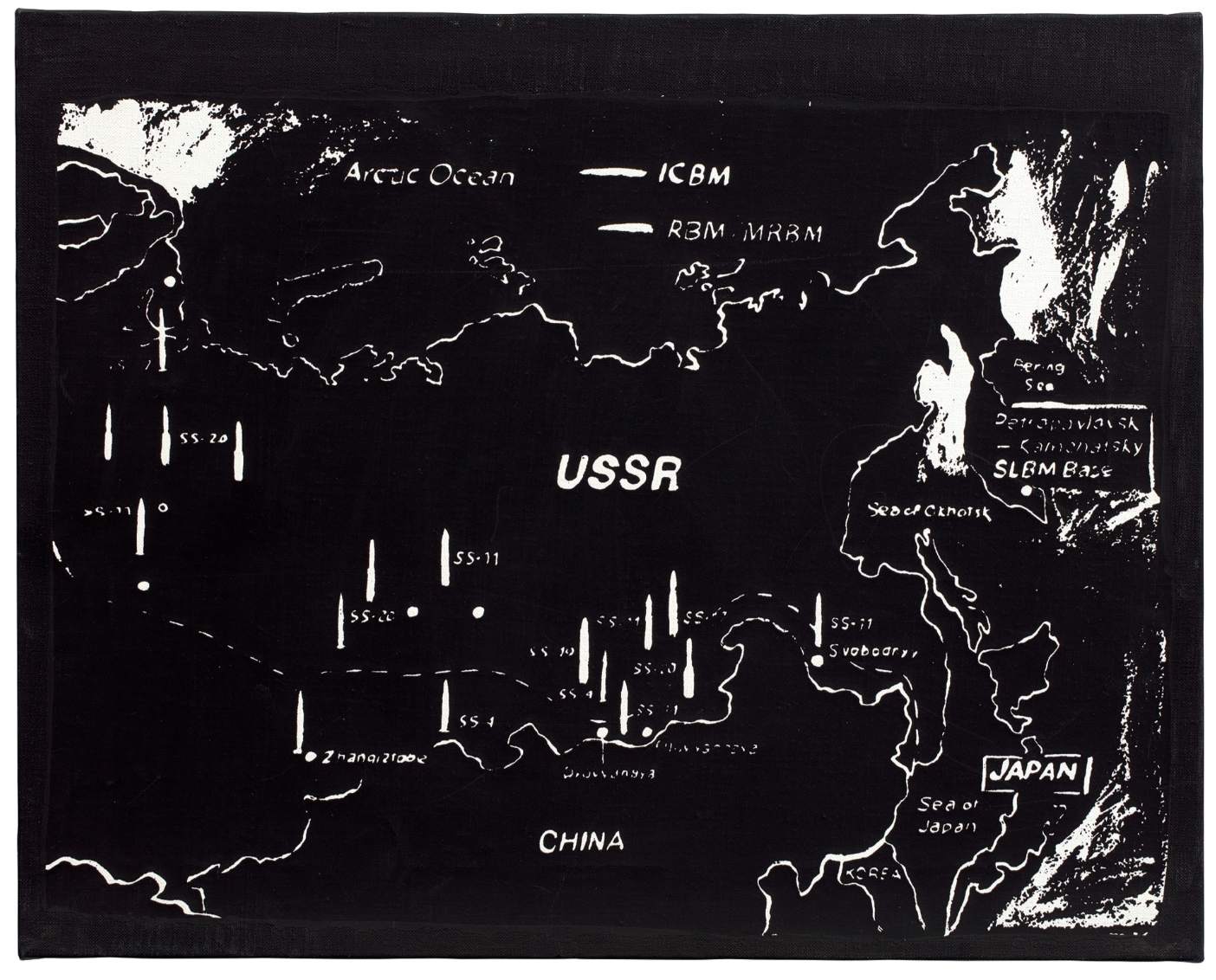
ANDY WARHOL
Map of Eastern U.S.S.R. Missile Bases (negative), 1985-86
Synthetic polymer paint and silkscreen ink on canvas
16×20 inches (40.6 x 50.8 cm)
Stamped by the Estate of Andy Warhol and the Andy Warhol Foundation for the Visual Arts, Inc., New York
Initialed and numbered “VF PA 10.170” on the overlap
Somebody Wants to Buy Your Apartment Building!
Somebody wants to Buy Your Apartment Building! (Negative), 1985-86
Sotheby’s New-York: 19 November 2021
Estimated: USD 120,000 – 180,000
USD 163,800
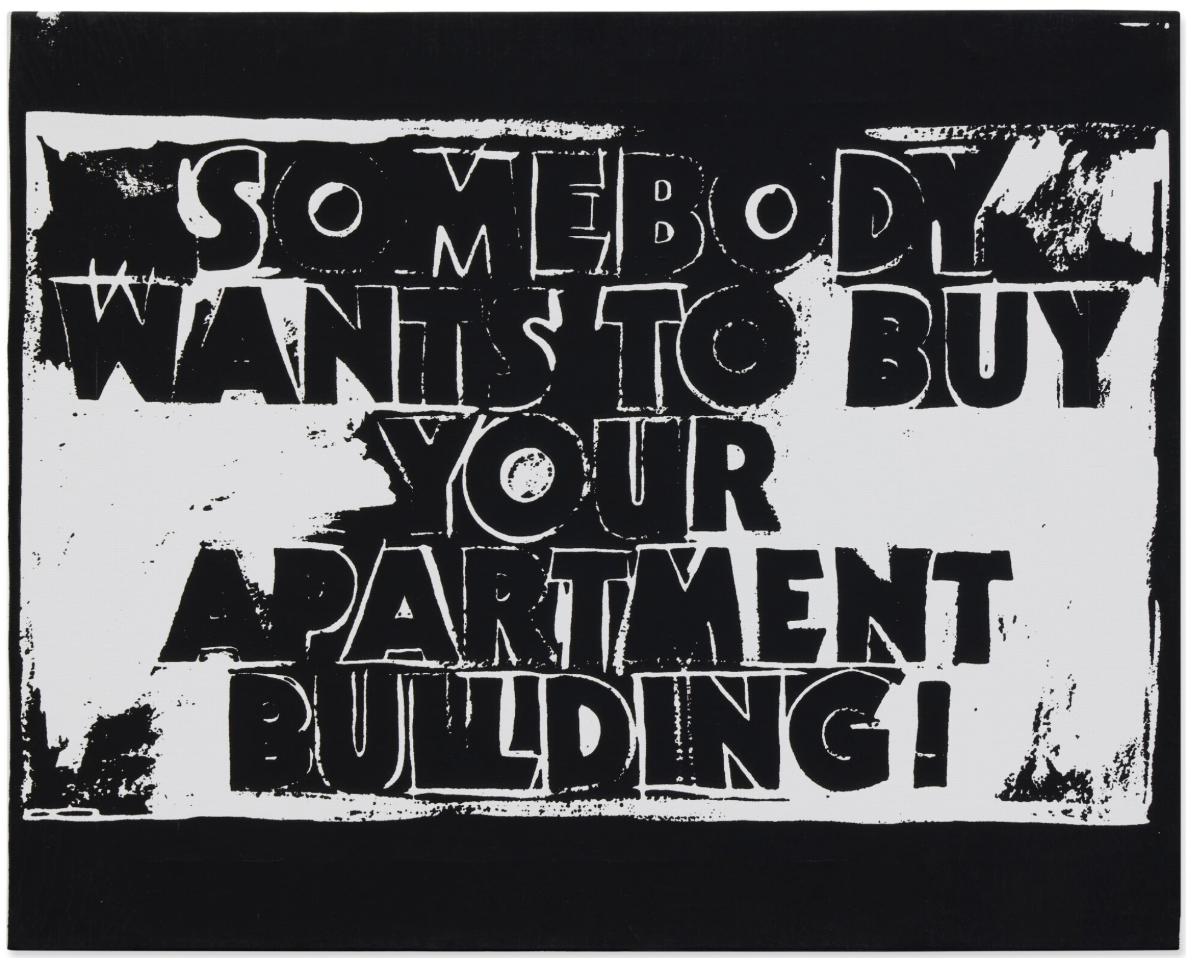
ANDY WARHOL (1928 – 1987)
Somebody wants to Buy Your Apartment Building! (Negative), 1985-86
Acrylic and silkscreen ink on canvas
16 1/8 x 20 inches (41 x 50.8 cm)
Stamped by the Estate of Andy Warhol and The Andy Warhol Foundation for the Visual Arts, Inc.
Numbered PA10.083 on the overlap
Numbered PA10.083 on the stretcher
Somebody Wants to Buy Your Apartment Building! (Positive), 1985-86
Christie’s New-York: 7 October 2020
Estimated: USD 100,000 – 150,000
USD 150,000
Andy Warhol (1928-1987), Somebody Wants to Buy Your Apartment Building! (Positive) | Christie’s
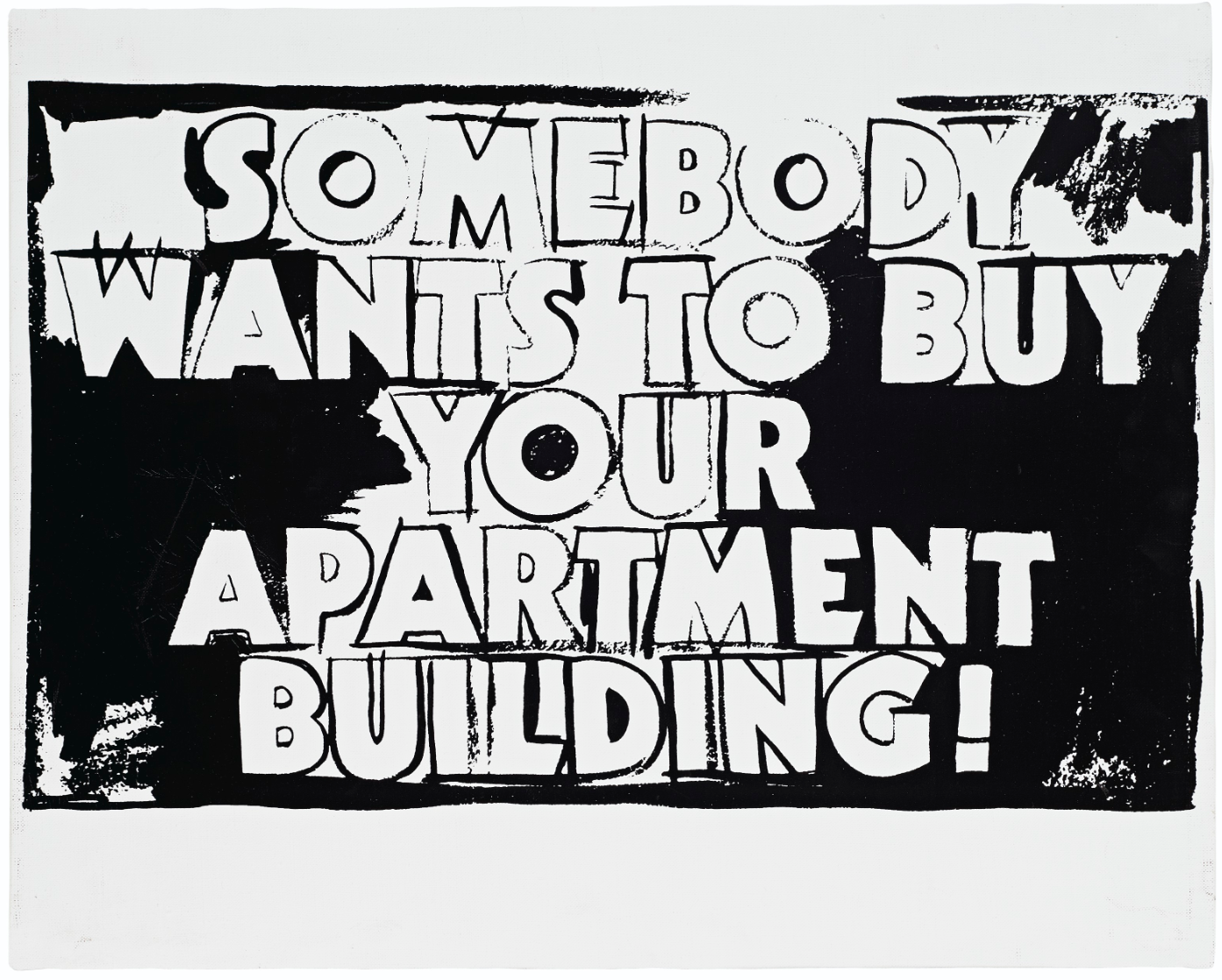
ANDY WARHOL (1928-1987)
Somebody Wants to Buy Your Apartment Building! (Positive), 1985-86
Acrylic and silkscreen ink on canvas
16×20 inches (40.6 x 50.8 cm)
Stamped with the Estate of Andy Warhol and the Andy Warhol Foundation for the Visual Arts, Inc. stamps
Numbered ‘VF PA10.063′ (on the overlap)
Somebody Wants to Buy Your Apartment Building, 1985-86
Sotheby’s New-York: 15 May 2014
Estimated: USD 600,000 – 800,000
USD 725,000
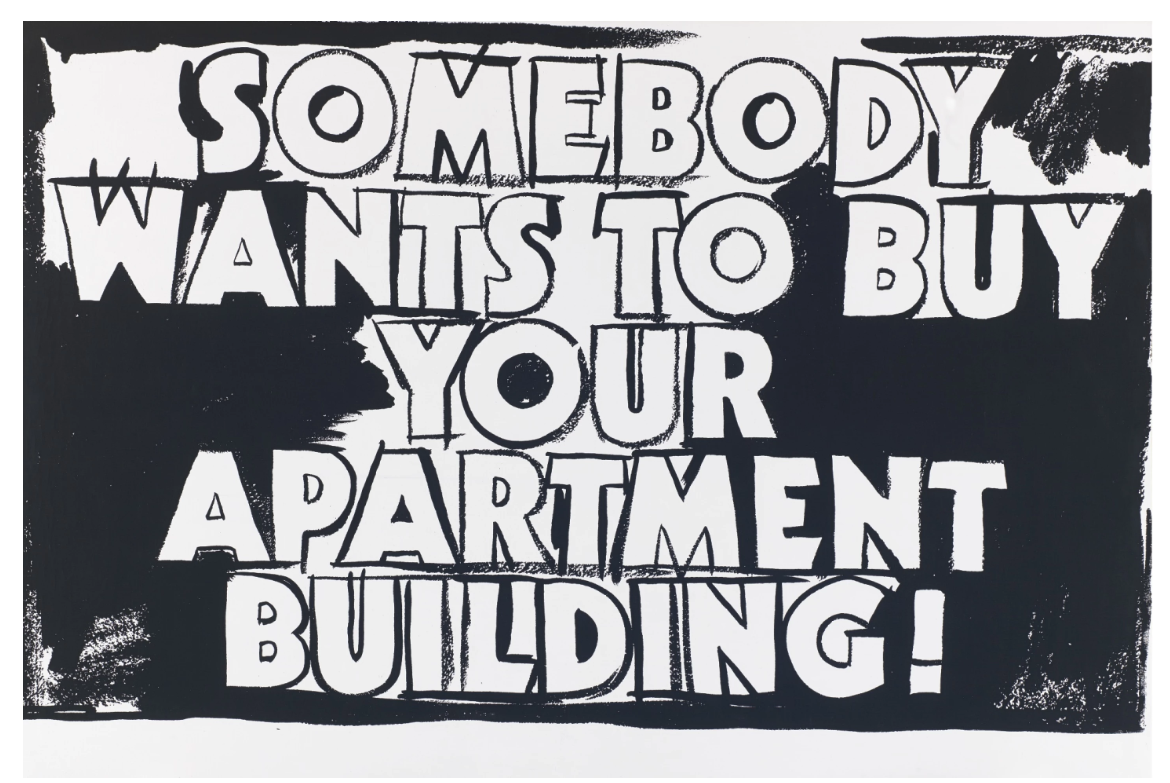
ANDY WARHOL
Somebody Wants to Buy Your Apartment Building, 1985-86
Acrylic and silkscreen ink on canvas
54×80 inches (137.2 x 203.2 cm)
Reagan Budget
Reagan Budget (Positive), 1985-86
Christie’s New-York: 13 May 2022
Estimated: USD 50,000 – 70,000
USD 75,600
ANDY WARHOL (1928-1987), Reagan Budget (Positive) | Christie’s
ANDY WARHOL (1928-1987)
Reagan Budget (Positive), 1985-86
Acrylic and silkscreen ink on canvas
20×16 inches (50.8 x 40.6 cm)
Stamped with the Andy Warhol Foundation for the Visual Arts, Inc., the Estate of Andy Warhol and the Andy Warhol Art Authentication Board Inc. stamps
Numbered ‘VF PA.10.400’ and ‘A111.103’ (on the overlap)
Are You Different?
B/W Ads (Are You “Different?”), 1985/86
Koller Zurich: 4 July 2020
Estimated: CHF 50,000 – 70,000
CHF 61,300
ANDY WARHOL B/W Ads (Are You “Different?”). 1985/86.
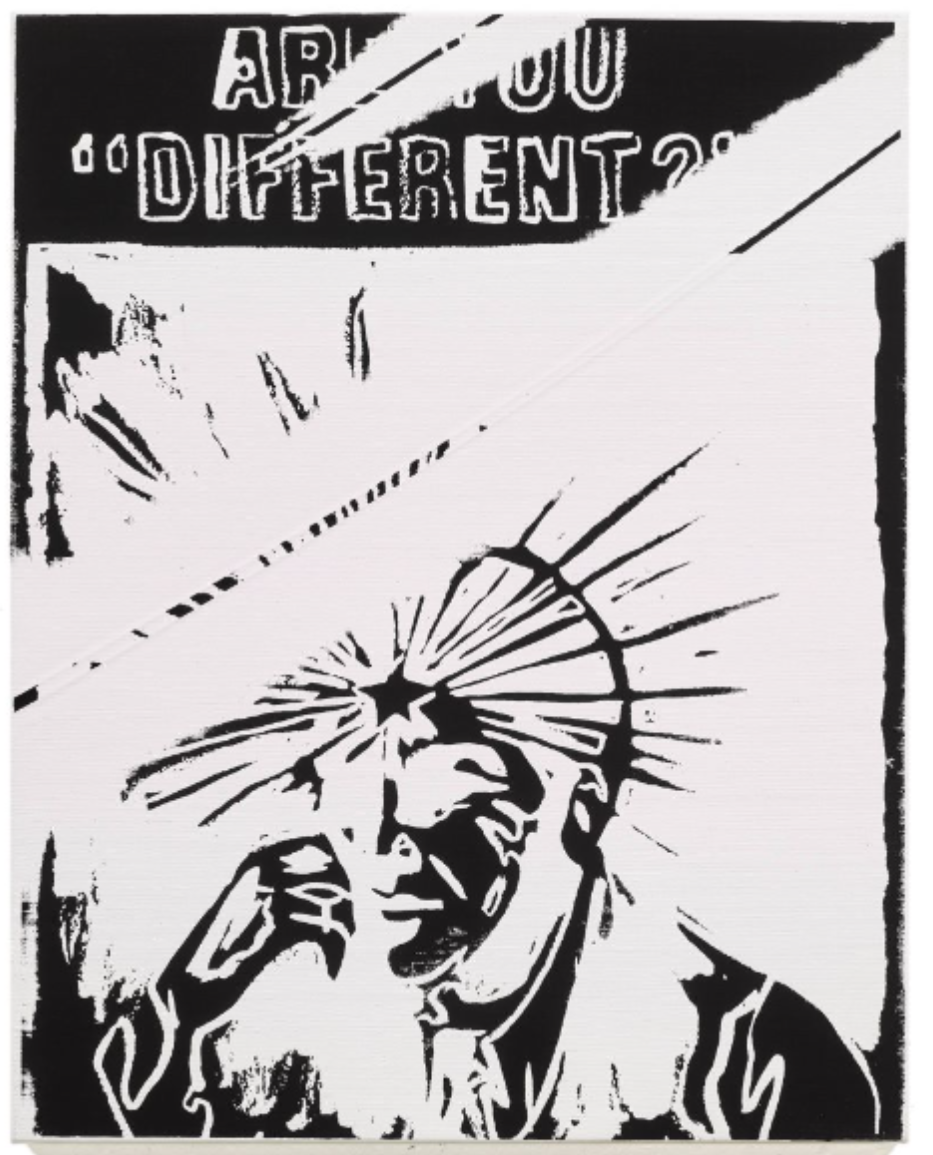
ANDY WARHOL (Pittsburgh 1928–1987 New York)
B/W Ads (Are You “Different?”), 1985/86
Acrylic and silkscreen ink on canvas
50.9 x 40.3 cm
On the overlap with the stamps: The Andy Warhol Foundation for the Visual Arts und The Estate of Andy Warhol
Also on the stretcher and on the overlapp with the archive number: PA10.424
Are You “Different?” (Positive), circa 1985
Christie’s New-York: 27 September 2019
Estimated: USD 30,000 – 50,000
USD 90,000
Andy Warhol (1928-1987), Are You “Different?” (Positive) | Christie’s
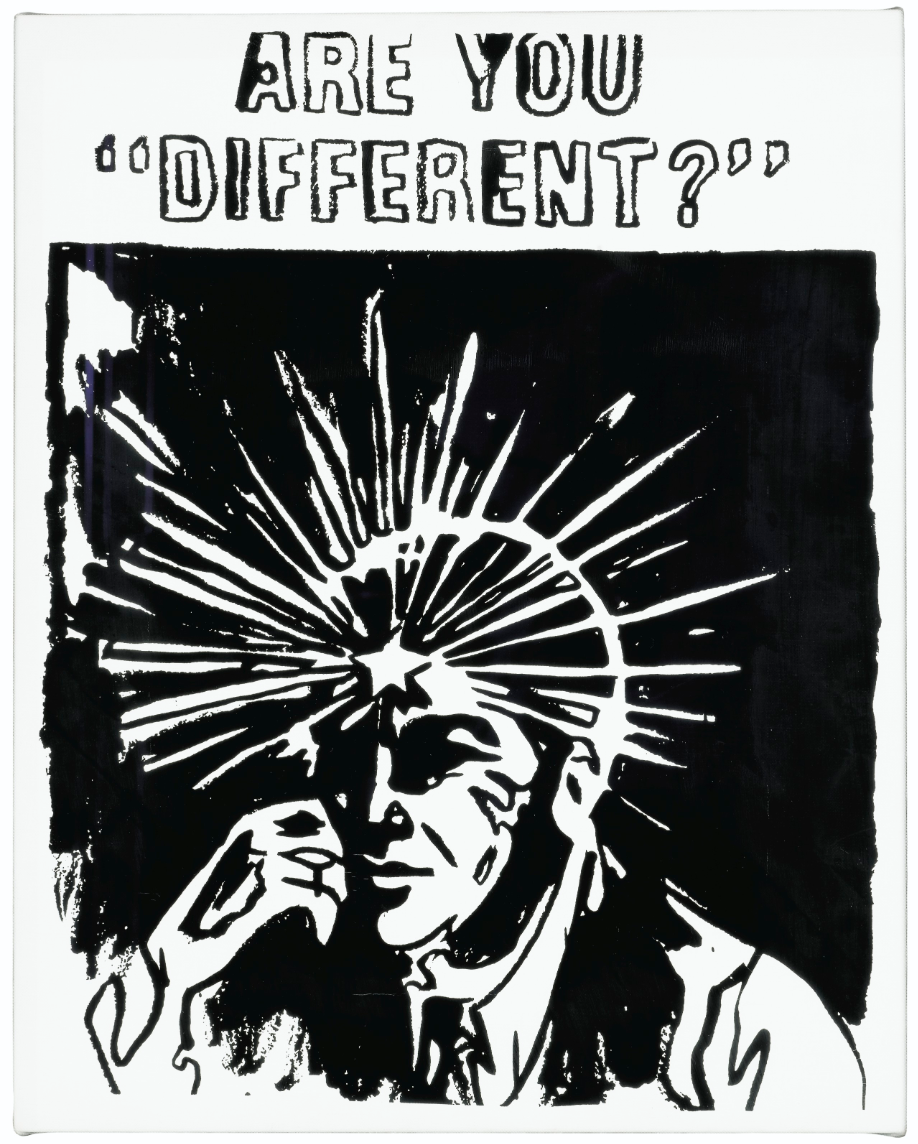
ANDY WARHOL (1928-1987)
Are You “Different?” (Positive), circa 1985
Acrylic and silkscreen ink on canvas
20 1/8 x 16 inches (51.1 x 40.6 cm)
Stamped with the Estate of Andy Warhol and the Andy Warhol Foundation for the Visual Arts, Inc. stamps
Numbered ‘VF PA10.268’ (on the overlap)
Are you different, 1985-86
Christie’s London: 21 June 2007
Estimated: GBP 80,000 – 120,000
USD 96,000
Andy Warhol (1928-1987) , Are you different | Christie’s
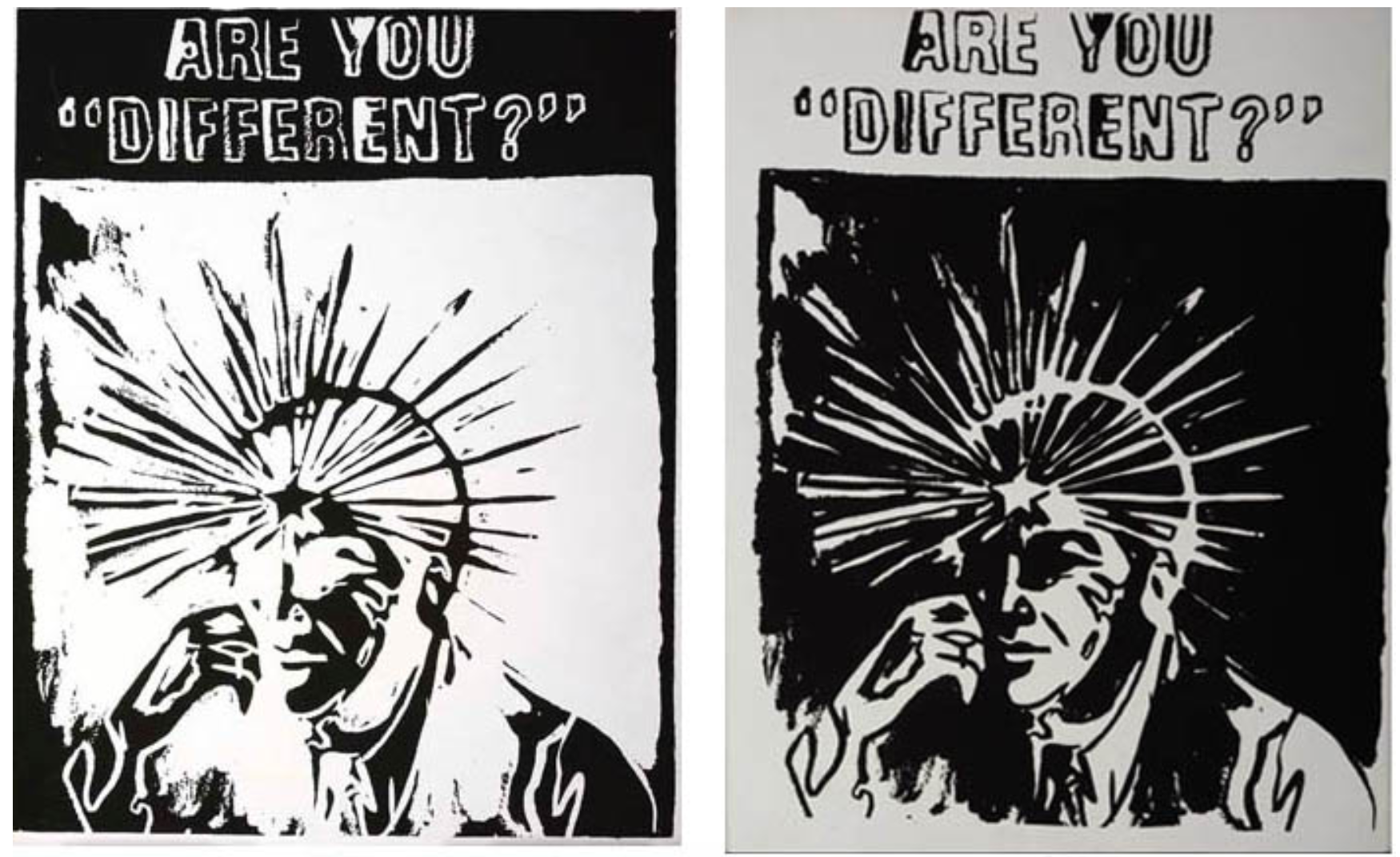
ANDY WARHOL (1928-1987)
Are you different, 1985-86
Synthetic polymer paint and silkscreen inks on canvas
Each: 20 1/8 x 16 1/8 inches (51.1 x 40.8 cm)
(i) With the Estate of Andy Warhol stamp; with the Andy Warhol Foundation for the Visual Arts stamp and numbered ‘PA10.404’ (on the overlap)
(ii) With the Estate of Andy Warhol stamp; with the Andy Warhol Foundation for the Visual Arts stamp and numbered ‘PA10.274’ (on the overlap)
Self-Defense
Self-Defense (Negative), 1985-86
Christie’s New-York: 17 September 2019
Estimated: USD 60,000 – 80,000
USD 62,500
Andy Warhol (1928-1987), Self-Defense (Negative) | Christie’s
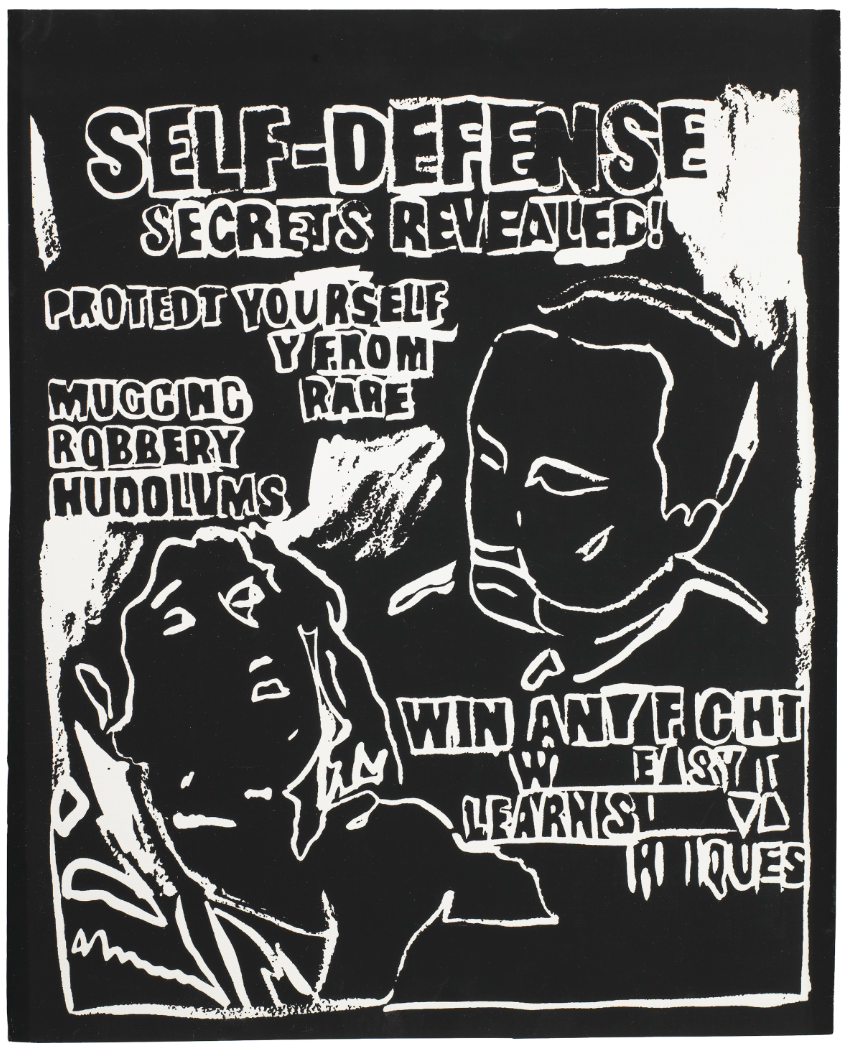
ANDY WARHOL (1928-1987)
Self-Defense (Negative), 1985-86
Acrylic and silkscreen ink on canvas
20×16 inches (50.8 x 40.6 cm)
Stamped with the Estate of Andy Warhol and the Andy Warhol Foundation for the Visual Arts, Inc. stamps (on the reverse)
Stamped again with the Estate of Andy Warhol and the Andy Warhol Foundation for the Visual Arts, Inc. stamps
Numbered ‘PA10.403 VF’ (on the overlap)
Numbered again ‘PA10.403’ (on the stretcher)
Self-Defense (Positive), 1985-86
Christie’s New-York: 12 November 2012
Estimated: USD 400,000 – 600,000
USD 386,500
Andy Warhol (1928-1987) , Self-Defense (Positive) | Christie’s
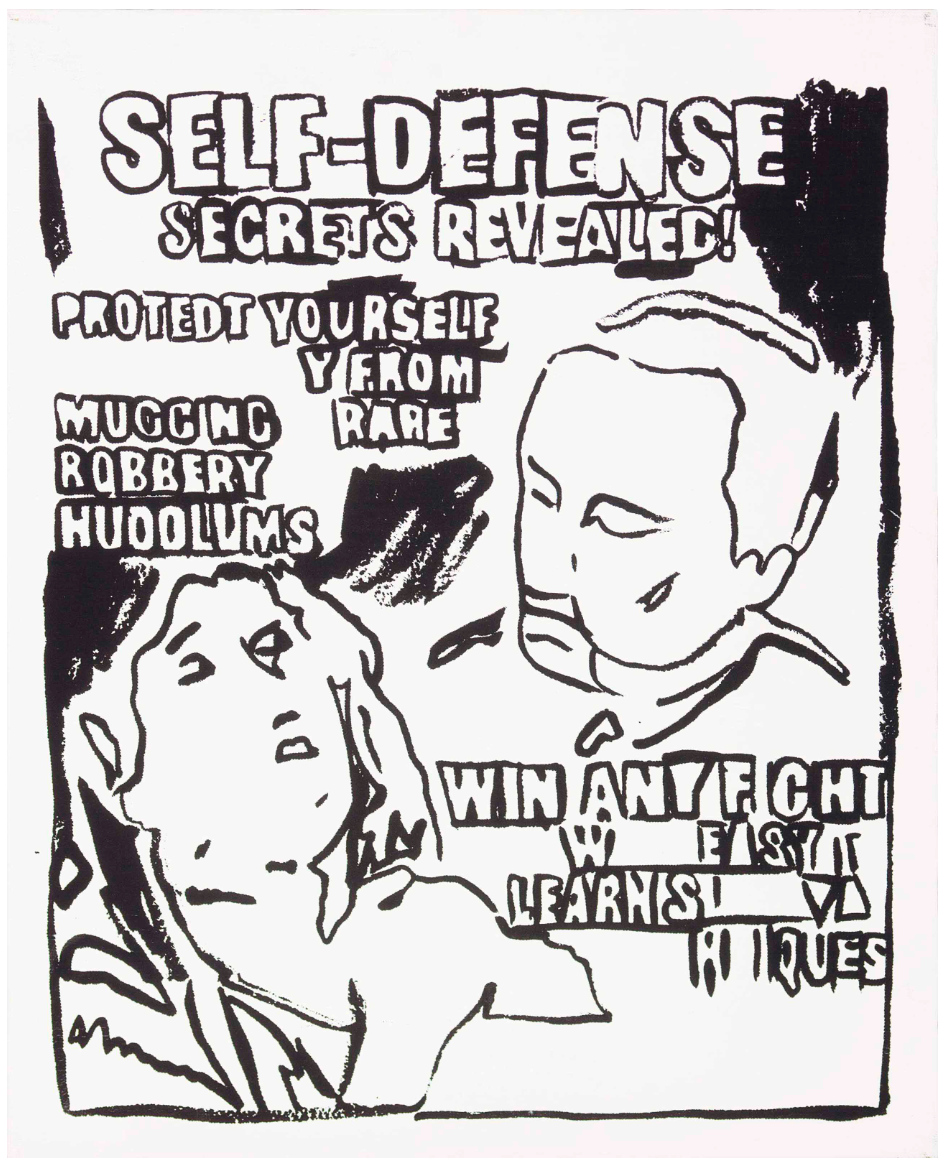
ANDY WARHOL (1928-1987)
Self-Defense (Positive), 1985-86
Synthetic polymer and silkscreen ink on canvas
80 1/4 x 72 inches (203.8 x 182.8 cm)
Stamped with the Estate of Andy Warhol and the Andy Warhol Foundation for the Visual Arts, Inc. stamps
Numbered ‘PA10.553’ (on the overlap)
With the same razor sharp insight that animated his early Ad paintings from 1960-61, Andy Warhol returned to the reduced palette of black and white in 1985 and 1986. His ability to reveal the deep truths hidden in plain sight through elevating the everyday is exemplified in the appropriated advertisement, ‘Self-Defense (Positive)’. The uncertainties and anxieties of modern society are laid bare in the hands of the Pop master. His serially printed graphics drawn from religious tracts, pop-music fan magazines, daily news and advertising produces an unsettling vision of the recent past. Not one to shy away from the dark and macabre, Warhol also hints at violence by appropriating an ad with the text reading: ‘Self-Defense Secrets Revealed’ and ‘Mugging Robbery Hoodlums.’ We are reminded of the tangled limbs of his ‘Car Crash’ paintings, his ‘Most Wanted Men’, and ‘Guns’ series as part of the disasters of contemporary living. Warhol’s black and white double images unmistakably demonstrate the ethical and political dimensions of his take on variation. Because we traditionally associate white with goodness and black with evil, the aesthetic choice between the white and black variations on the picture informs a certain ethical and political implication.
And while much of Warhol’s work–through a greater or lesser extent–examines notions of death and mortality, Warhol himself was at pains to distance himself from the perceived glamour of violence:
“Some people, even intelligent people, say that violence can be beautiful. I can’t understand that, because beautiful is some moments, and for me those moments are never violent.”
As such, the question of authorship becomes the prominent idea within Warhol’s black and white ad paintings.
“I’m confused about who the news belongs to. I always have it in my head that if your name’s in the news, then the news should be paying you. Because it’s your news and they’re taking it and selling it as their product. But then they always say that they’re helping you, and that’s true too, but still, if people didn’t give the news their news, and if everybody kept their news to themselves, the news wouldn’t have any news. So I guess you should pay each other. But I haven’t figured it out fully yet.”
This questioned authorship and hidden truths of Warhol’s black and white paintings demonstrates the artist’s unsurpassed skill in illuminating zeitgeists in stark and beautiful terms with his practice of elevating the everyday language of advertising to iconography.
Other Series
Over 40 (How You Can), 1986
Sotheby’s New-York: 14 May 2024
Estimated: USD 50,000 – 70,000
USD 114,300
Over 40 (How You Can) | Contemporary Day Auction | 2024 | Sotheby’s (sothebys.com)
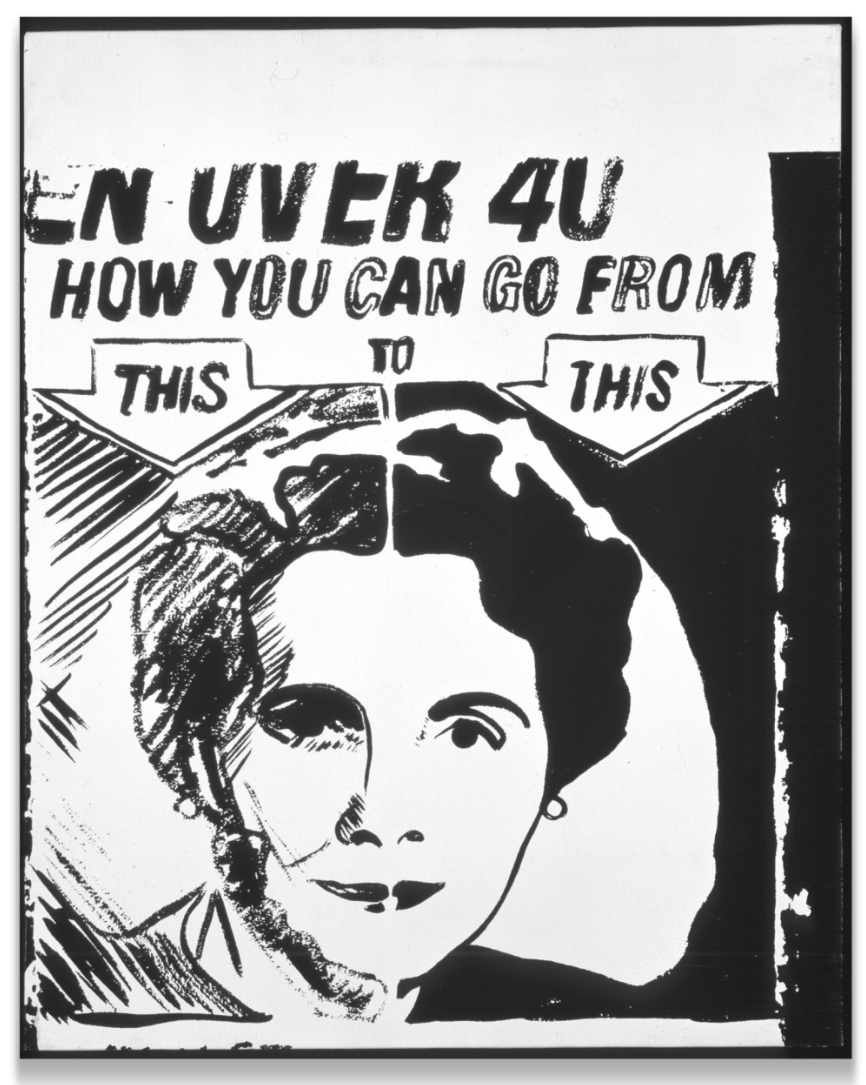
ANDY WARHOL (1928 – 1987)
Over 40 (How You Can), 1986
Acrylic and silkscreen ink on canvas
20×16 inches (50.8 x 40.6 cm)
Stamped by the Estate of Andy Warhol and the Andy Warhol Foundation for the Visual Arts
Numbered PA 10.096 on the overlap