Through its subjective nature, the Rorschach test has become an image that transcends both time and place. Though primarily functioning as Warhol’s investigations of the history of Abstract Expressionism and Color Field Painting, they remain as integrated into popular culture as never before. The viewer of the Rorschach today is met with the flawless beauty and enigmatic psyche of the artist’s original intent, now permeated with an element of Warhol’s pioneered Pop movement. The powerful lyricism and stark elegance of Andy Warhol’s Rorschach hovers over the viewer like a mysterious totem, presenting a pictorial marriage of beauty and precision in one of the final and most triumphant paintings of his career.
Introduction
Warhol’s Rorschach is based on the synonymous inkblot test developed by the Swiss psychiatrist Hermann Rorschach just after World War I. A striking arrangement of two monumentally scaled paintings, this diptych displays a fundamental pictorial balance in which the opposing forces of black and white complement each other in a dialectical relationship.
“Nothing can always be the subject of something. I mean, what’s nice about those paintings is you could do them every five years…anytime you wanted to, when you had the time…because there’s nothing to read into them…Because even if the paints stayed the same, everything else, and everyone else, would have changed”
As an artist, Warhol has long sought imagery laden with meaning, and in Rorschach, he appropriates the genre of abstraction in his endless search for new and meaningful images. The towering paintings easily integrate the lyricism of Matisse, the spontaneity of Pollock and the cool brashness of Christopher Wool. Though they appear purely abstract, the works are charged with subliminal meaning. Like the inkblot tests upon which they are based, the true significance of each painting requires the viewer’s imagination to decipher it, so that beneath the beauty of its surface imagery, the painting is loaded with private mysteries and hidden desires. Created during the last decade of his life, Warhol’s Rorschach paintings are some of the most compelling and intellectual of his career.
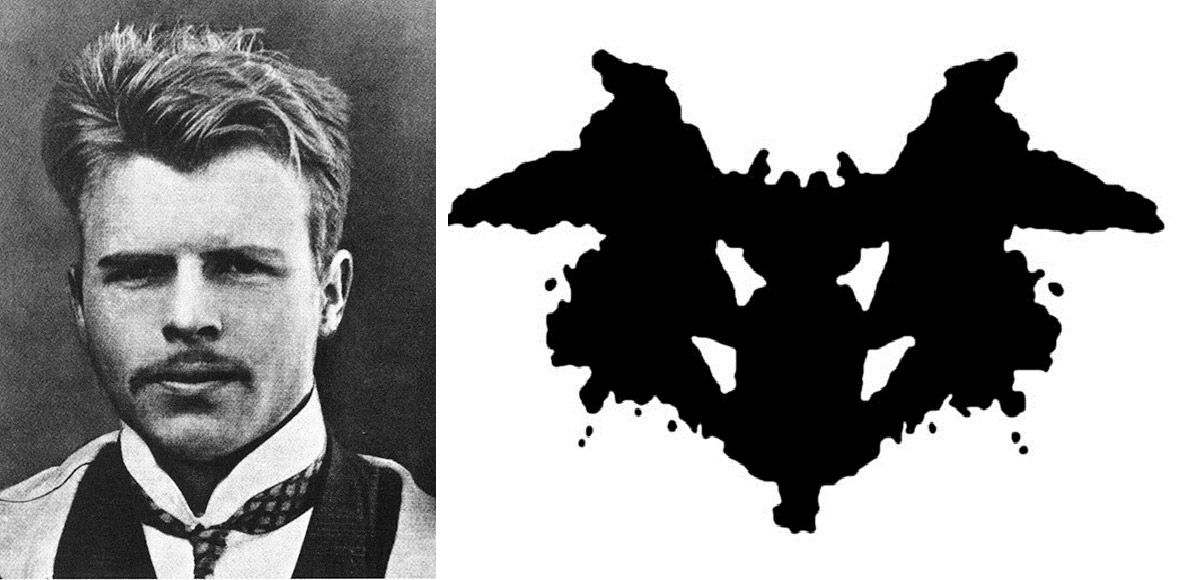
Unaware that Rorschach’s psychological evaluations were based on a set of ten standardized tests, Warhol had originally believed that the ink blot was the creation of the patient to be read as part of a mystic process of self-revelation. Intrigued by his own perception of the Rorschach, as well as its intention to push the boundaries between abstraction, representation, and meaning, Warhol initially intended to record his readings of the Rorschach paintings he had created. As the Rorschach paintings transform from beautiful abstracts to loose figurations of our own imaginations, we are simultaneously exploring the inner psyche of the artist’s mind during the time of their creation—Warhol psychological self-portrait.
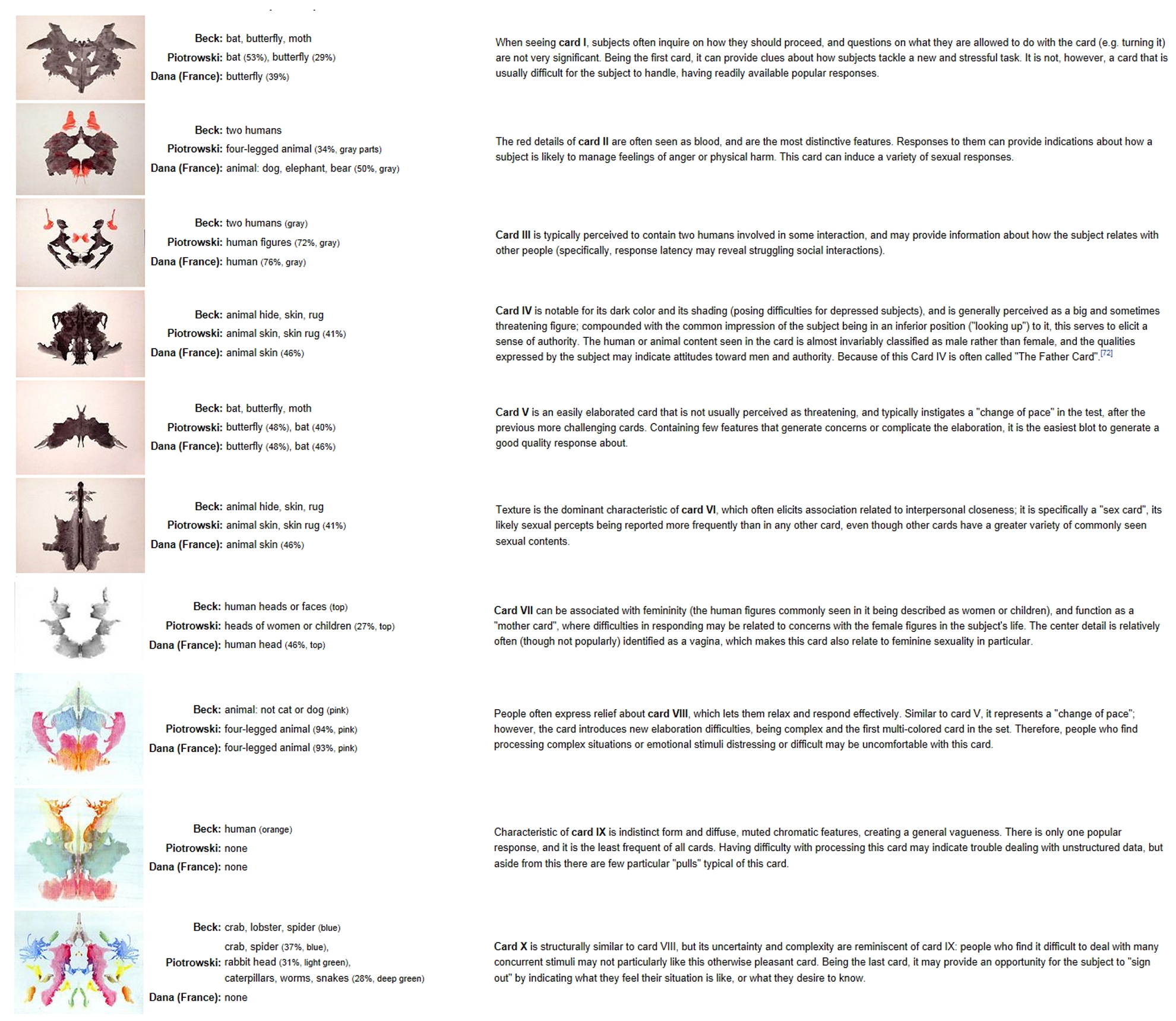
These Rorschach paintings, by nature of their monolithic proportions, dominate the room. In the black-on-white canvas, Warhol’s totemic forms unfurl from the surface with vigor and abundance through the deep, inky black paint that has been spread and compressed, dripped and dragged over a vast field of creamy white. Warhol draws directly from the Rorschach test, which provides ten different standardized blots of ink on paper for patients to decipher under the premise that their interpretations provide key insight into the inner workings of their consciousness. Warhol, however, had misunderstood how these tests were proctored, believing it was the patient who created these images as opposed to simply interpreting them.
“I thought that when you went to places like hospitals, they tell you to draw and make the Rorschach Tests. I wish I’d known there was a set. I was trying to do these to actually read into them and write about them, but I never really had the time to do that.
So I was going to hire somebody to read into them, to pretend that it was me, so that they’d be a little more…interesting. Because all I would see would be dog’s face or something like a tree or a bird or a flower.
Somebody else could see a lot more.”
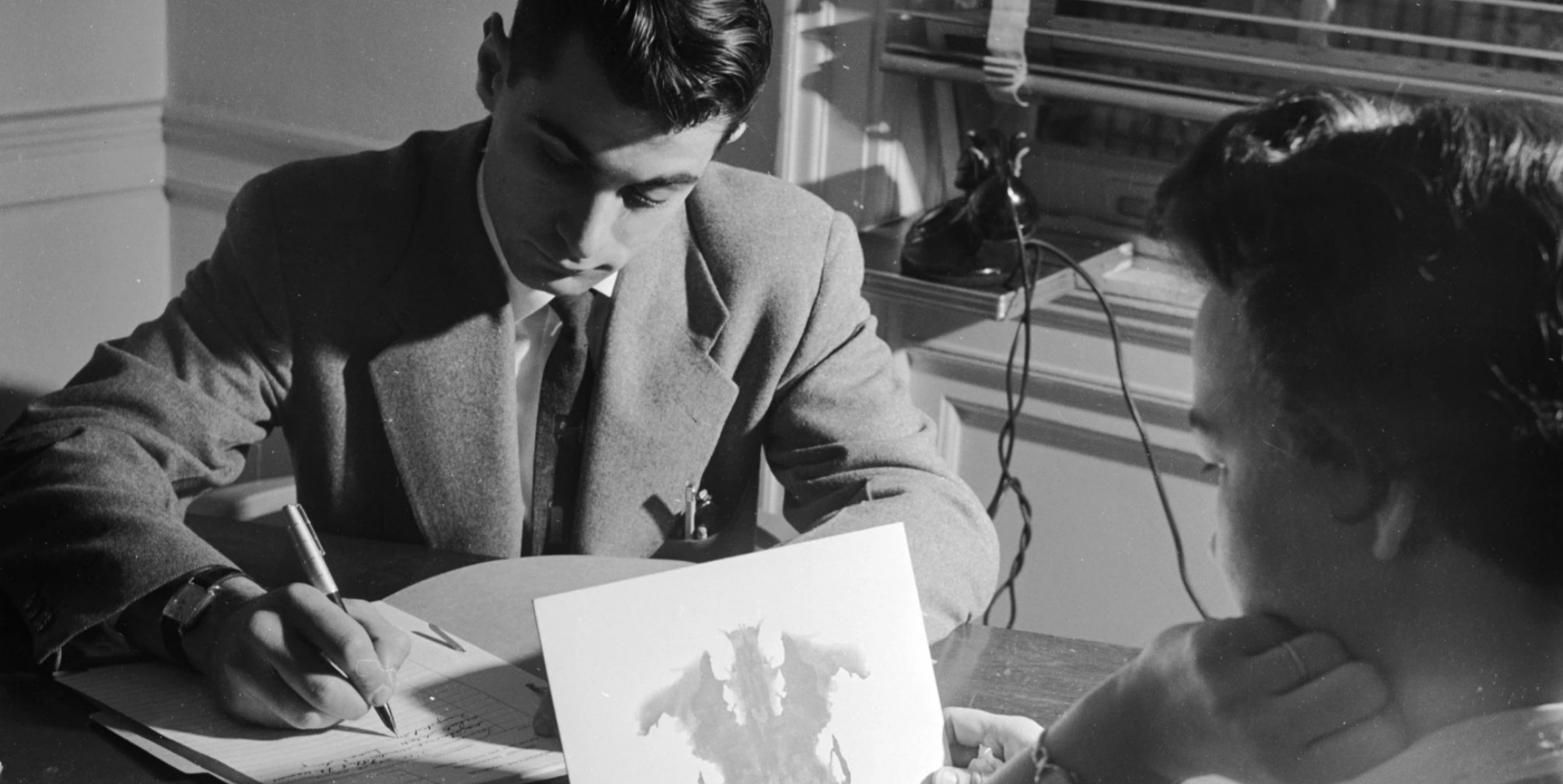
RORSCHACH INK BLOT TEST AT HEADACHE CLINIC IN MONTEFIORE HOSPITAL, C. 1950. PHOTO BY ORLANDO /THREE LIONS/GETTY IMAGES
Intrigued by the Rorschach test’s serial repetitiveness and formulaic impersonality, the artist invented his own painterly version: in a stylized and dynamic performance not dissimilar to Jackson Pollock’s iconic drip dance, Warhol poured paint onto one side of a canvas before folding it vertically to imprint the other half. As Warhol’s assistant Jay Shriver recalls about the Rorschach Paintings, “Andy painted the big ones, and that’s why he was having so much fun. … We had these huge canvases that we had to fold over and press together so that the paint was evenly distributed on both halves of the canvas…The physical energy spent laboring over these massive canvases generated a great deal of excitement in the studio.” (Jay Shriver quoted in J.D. Ketner II, “Warhol’s Last Decade: Reinventing Painting” in Exh. Cat., Milwaukee Art Museum, Andy Warhol: The Last Decade, 2009, p. 45)
The compositions that Warhol used to create his Rorschach were totally improvised. He was not aware that he could simply copy Hermann Rorschach’s set of ten inkblot designs, so he asked his assistant Jay Shriver to create a small set of four inkblots. Though the original inkblots developed by Rorschach included colored ink, Warhol deliberately limited his palette in order to enhance the subliminal and emotive content of his inky black forms.
“I didn’t want to go into color because then you go crazy and you have to think about color. You have one more thing to think about.”
The inkblots were enlarged to a previously unheard-of scale that resulted from Warhol’s recent acquisition of an abandoned Con Edison power plant that took up five stories and included a 14,000-square-foot-loft. The Rorschachs were among the first works created in this new studio, which was in fact the first factory space that Warhol actually owned, having purchased the building for 1.2 million dollars. Ironically, its location was only a few blocks from the old apartment he had shared with his mother in the 1950s at 242 Lexington Avenue. This space signaled a serious new era for the artist. ing was labor-intensive, creative and spontaneous. After rolling the raw canvas onto the floor, a center line was marked with graphite that divided the canvas in half vertically. This would become the fold line. Warhol then poured black pigment onto the canvas in abstract arrangements that appear to have been made by chance but actually resulted from great control. After he was satisfied with the image, he and the studio assistants would fold the empty half of the canvas on top of the painted one, pressing and squeezing so that a mirror-image would result, producing a symmetrical design.
“Andy painted the big ones, and that’s why he was having so much fun. … We had these huge canvases that we had to fold over and press together so that the paint was evenly distributed on both halves of the canvas. We took some of the huge dowels, on which the canvas was shipped, and Andy, Augusto [Bugarin], Benjamin [Liu], and myself would get on our hands and knees, rolling the dowels and patting the canvas to get an even pressure across the entire surface. … The physical energy spent laboring over these massive canvases generated a great deal of excitement in the studio. Warhol would duck away from appointments in the “office” to work in the back studio because he was having so much fun”
(J. Shriver, quoted in J. D. Ketner II, ibid., p. 45).
Warhol instructed his assistant Jay Schriver, who initially suggested the idea of Rorschach blots, to make a series of ink blot studies from which he would model his large-scale paintings. Echoing the original blotted-line method that Warhol had applied in his drawings of the 1950s and early 60s, his new mirrored abstractions were achieved through a fundamental print making technique, folding an empty canvas over a freshly painted surface. “All my shoe drawings were done that way, with a blotted line,” Warhol recalled. “You could blot them together and get a repeat on the other side…The Rorschach tests were hard to do. I love [the] idea that they don’t have a ‘look’ to them. They should actually look terrible. But I really worked hard to make them look interesting. It wasn’t easy” (A. Warhol, quoted in R. Nickas, “Andy Warhol’s Rorschach Test,” Arts Magazine, October, 1986).
During the last decade of his life, Warhol increasingly searched for newer, more meaningful imagery. Increasingly, he turned to abstraction as a means of pictorial design, which he first explored in the Oxidation paintings of the late 70s, and continued with the Shadows, Rorschachs and Camouflage paintings.
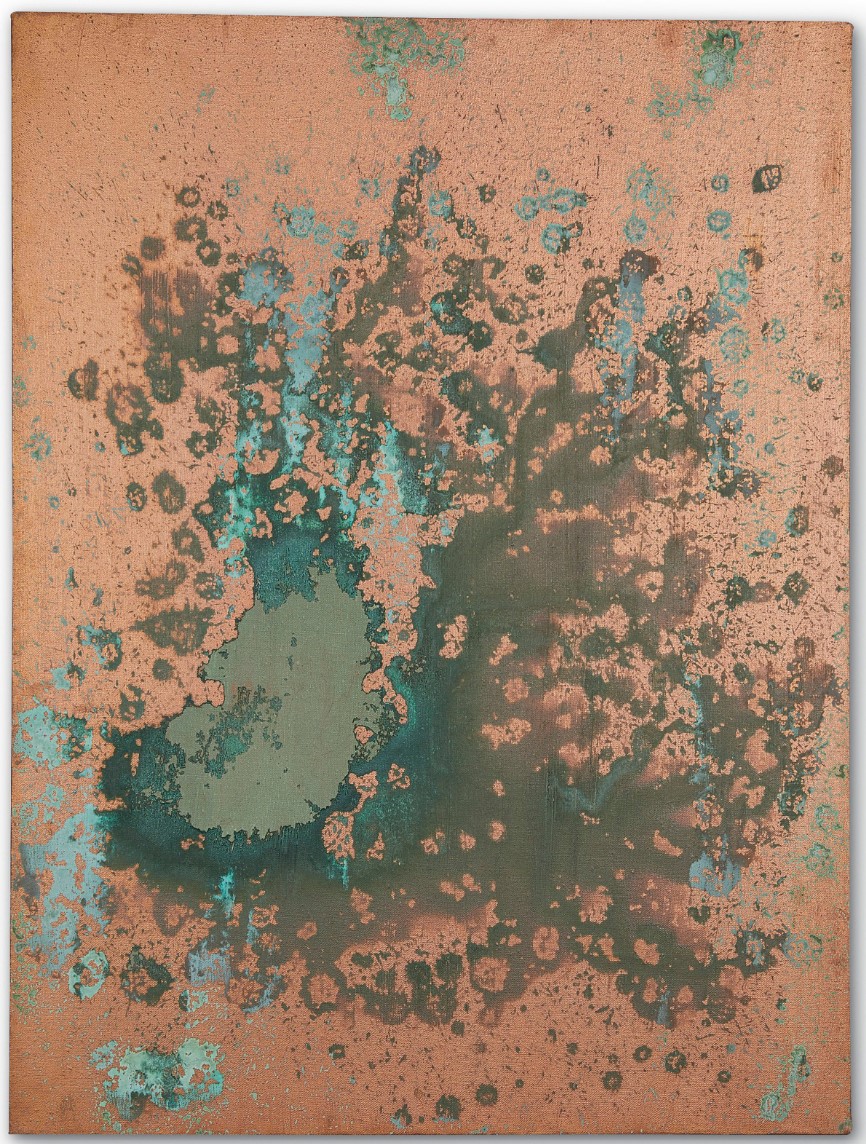
Indeed, the Rorschach canvases emulate the “participatory aesthetics” of Pollock, and it is tempting to imagine Warhol stepping into and out of his raw piece of un-stretched canvas, unrolled on the floor of his new studio, methodically pouring black pigment and alternatively splattering and throwing drops of paint, much like Pollock as captured in Hans Namuth’s 1950 film. Warhol had always had a sneaking admiration for the power and audacity of Abstract Expressionism and longed to emulate the same degree of emotive power in his work. The Rorschachs recall the Abstract Expressionist’s fascination with the collective unconscious and the type of automatic writing espoused by the Surrealists. Even Jackson Pollock was said to have undergone Rorschach testing himself.
Auction Results (Chronological)
Rorschach, 1984
Works from the Collection of Byron R. Meyer
with Partial Proceeds to Benefit the San Francisco Museum of Modern Art
Sotheby’s New-York: 19 November 2025
Estimated: USD 80,000 – 120,000
USD 203,200
Rorschach | Contemporary Day Auction | 2025 | Sotheby’s
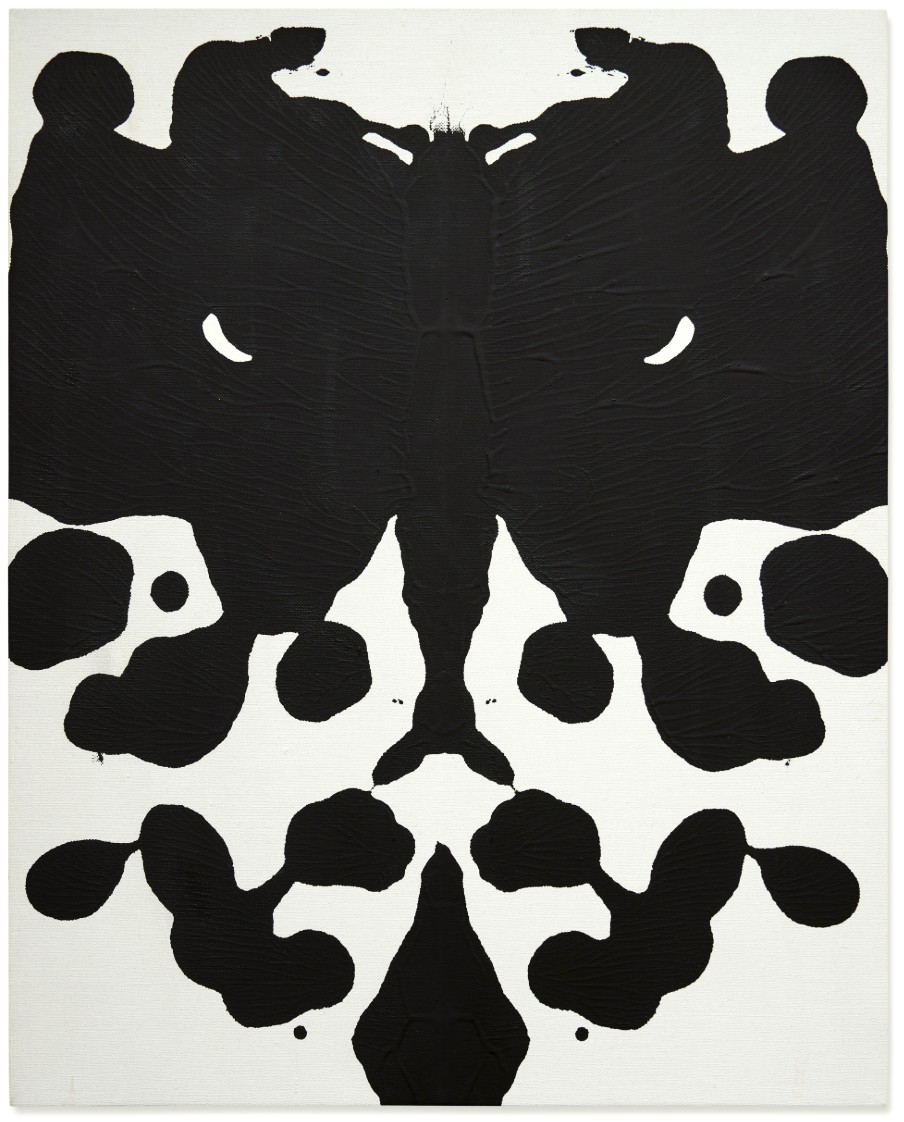
ANDY WARHOL (1928 – 1987)
Rorschach, 1984
Acrylic on canvas
20×16 inches (50.8 x 40.6 cm)
Stamped by the Estate of Andy Warhol and the Andy Warhol Foundation for the Visual Arts
Numbered PA 75.033 on the overlap
Rorschach, 1982
Sotheby’s New-York: 16 November 2023
Estimated: USD 150,000 – 200,000
USD 406,400
Rorschach | Contemporary Day Auction | 2023 | Sotheby’s (sothebys.com)
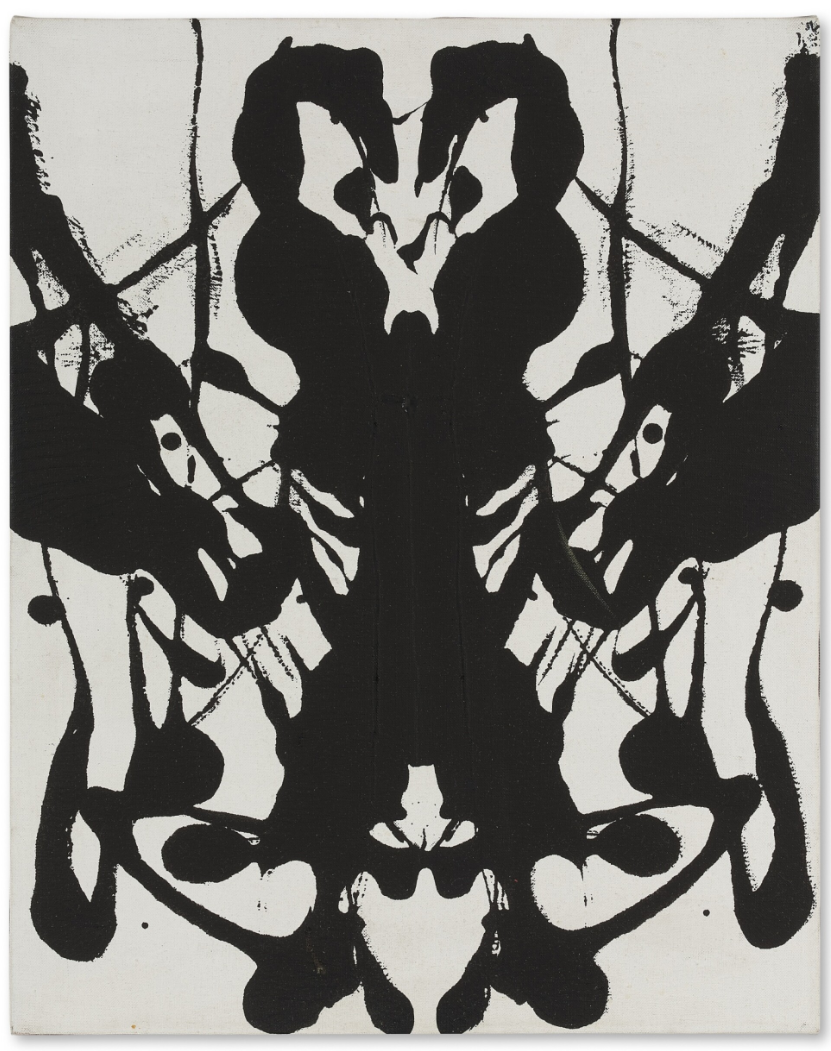
ANDY WARHOL (1928 – 1987)
Rorschach, 1982
Acrylic on canvas
20×16 inches (50.8 x 40.6 cm)
Signed, dated ’82 and inscribed Jon (on the reverse)
Rorschach, 1984
Sotheby’s New-York: 15 November 2023
Estimated: USD 2,500,000 – 3,500,000
USD 2,601,000
Rorschach | Contemporary Evening Auction | 2023 | Sotheby’s (sothebys.com)
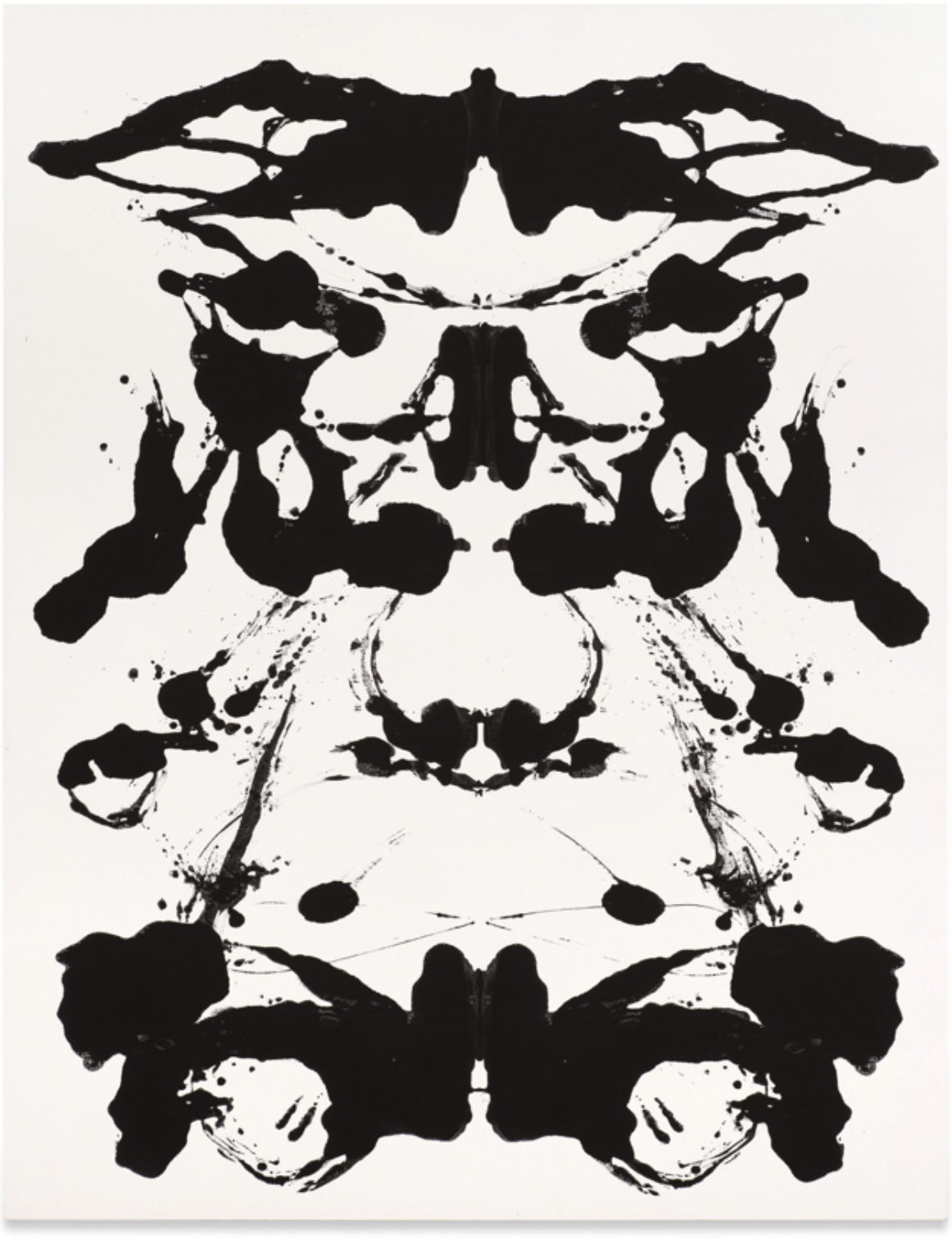
ANDY WARHOL (1928 – 1987)
Rorschach, 1984
Acrylic on canvas
90×70 inches (228.6 x 177.8 cm)
Numbered by The Andy Warhol Foundation for the Visual Arts PA 75.083 (on the overlap)
Rorschach, 1984
Christie’s New-York: 11 November 2021
Estimated: USD 70,000 – 100,000
USD 150,000
ANDY WARHOL (1928-1987), Rorschach | Christie’s
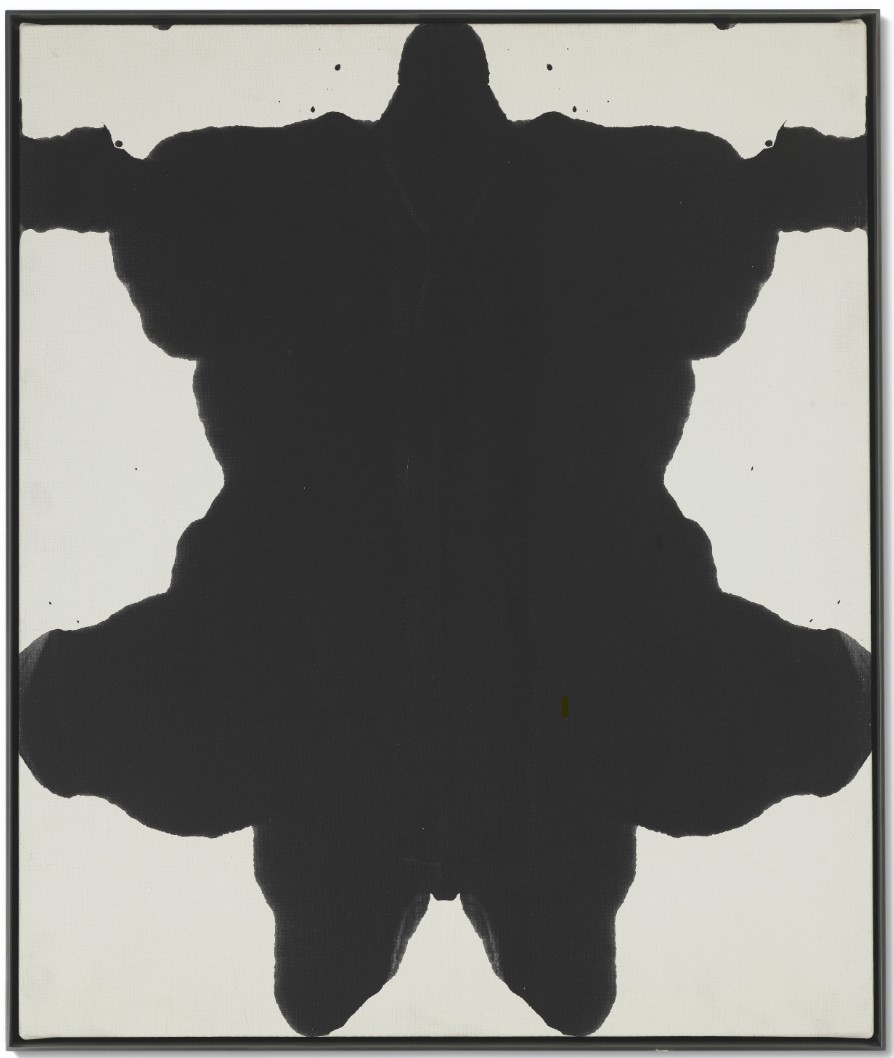
ANDY WARHOL (1928-1987)
Rorschach, 1984
Acrylic on canvas
25 1⁄8 x 21 1⁄8 inches (63.8 x 53.7 cm)
Stamped with the Andy Warhol Foundation for the Visual Arts, Inc. and the Andy Warhol Estate
Numbered VF PA75.064′ (on the overlap)
Numbered again ‘PA75.064’ (on the stretcher)
Monumental Rorschach
Rorschach, 1984
Christie’s New-York: 13 November 2012
Estimated: USD 2,500,000 – 3,500,000
USD 2,770,500
Andy Warhol (1928-1987) (christies.com)
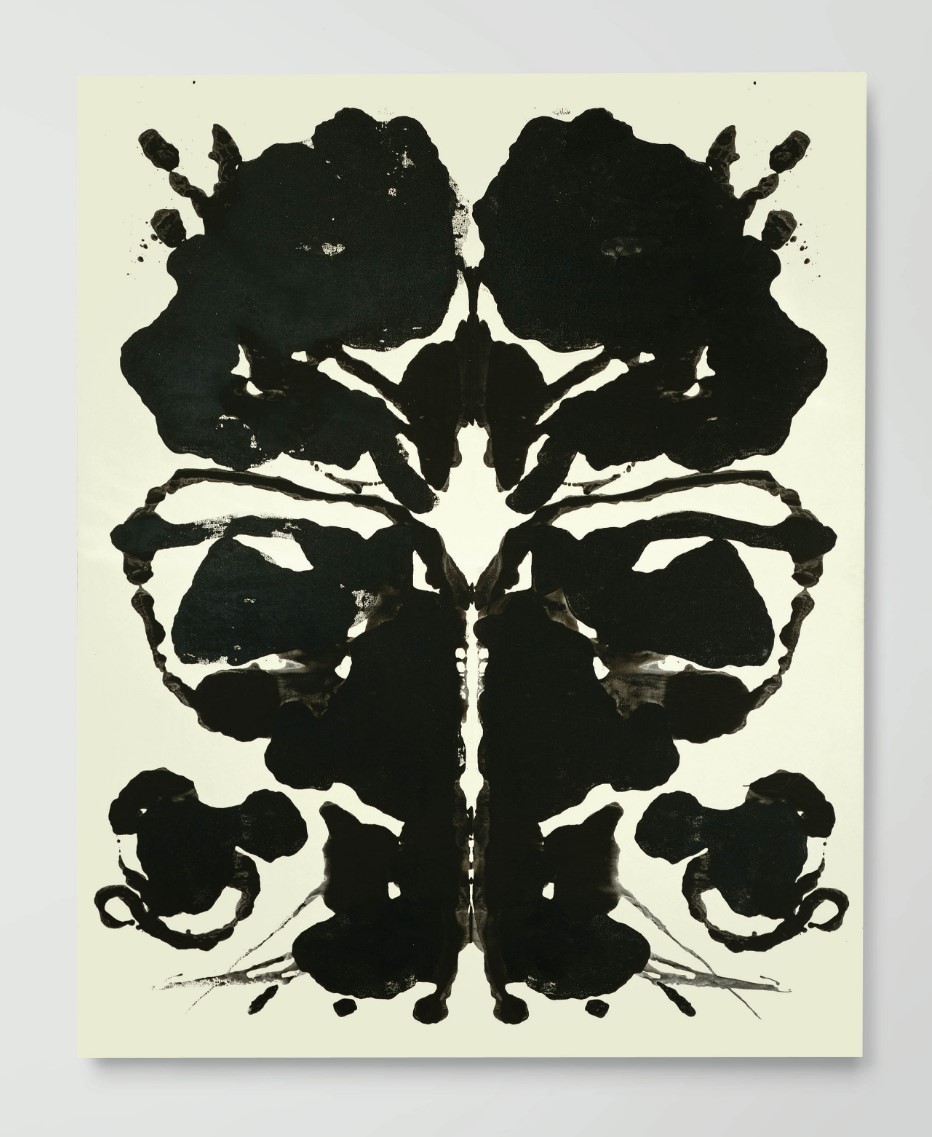
ANDY WARHOL
Rorschach, 1984
Silkscreen ink on canvas
120×96 inches (304.8 x 243.8 cm)
Stamped twice with the Andy Warhol and Andy Warhol Foundation for the Visual Arts stamps and numbered ‘PA75.048’ (on the overlap)
One of the few large-scale paintings in the series, with its blooming liquescent forms, Andy Warhol’s commanding Rorschach sends the viewer on a journey of visual and conceptual complexity. The scale and fluidity, combined with the element of chance, were all key themes in Warhol’s later work, and nowhere do they come together with such beauty and precision as they do in his Rorschach canvases. These free-flowing forms were inspired by the amorphous ink blots developed by the Swiss psychiatrist, Hermann Rorschach for psychological testing in the early twentieth century. A rare foray into the realm of abstraction, Warhol’s Rorschach series marks the return to a concept Warhol had first investigated in his Oxidation paintings of the mid-1970s.
Untitled (Rorschach Series), 1984
Christie’s New-York: 12 November 2002
Estimated: USD 800,000 – 1,200,000
USD 834,500
Andy Warhol (1928-1987) (christies.com)
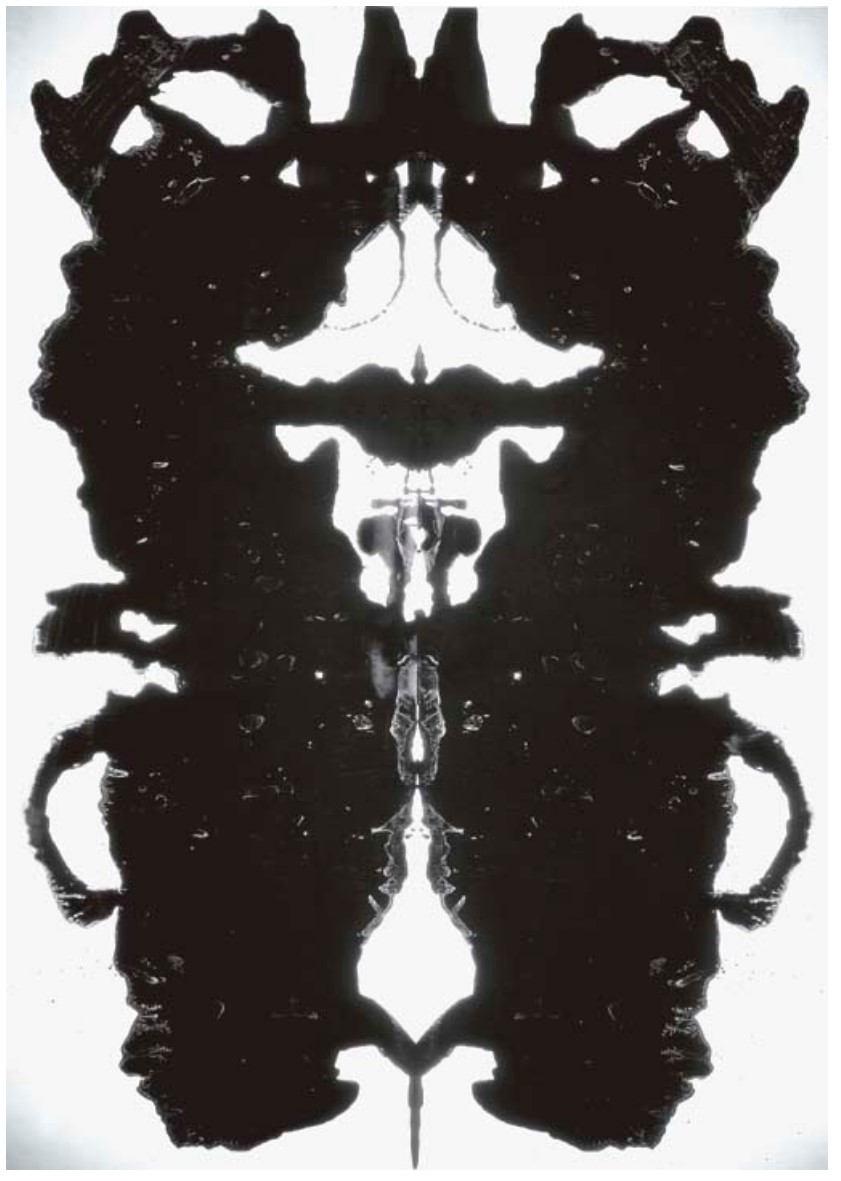
ANDY WARHOL
Untitled (Rorschach Series), 1984
Liquitex on canvas
162×115 inches (411 x 292.1 cm)
Rorschach (90×70)
Rorschach, 1984
Sotheby’s New-York: 15 November 2023
Estimated: USD 2,500,000 – 3,500,000
USD 2,601,000
Rorschach | Contemporary Evening Auction | 2023 | Sotheby’s (sothebys.com)
ANDY WARHOL (1928 – 1987)
Rorschach, 1984
Acrylic on canvas
90×70 inches (228.6 x 177.8 cm)
Numbered by The Andy Warhol Foundation for the Visual Arts PA 75.083 (on the overlap)
Mercurial, enigmatic and seductively experimental, Andy Warhol’s Rorschach envelopes the viewer in a mirage of black liquescent forms, unfolding across the monumental canvas with visual, conceptual and psychological complexity. The symmetric matrices of rich, inky paint produced by Warhol’s pour-and-fold technique in Rorschach show an artist who is as experimental as he is productive, constantly looking for new directions and once more returning to flirt with the potential of Abstract Expressionism. Testifying to its significance within Warhol’s career, the present work was exhibited at Andy Warhol: Rorschach Paintings, the first comprehensive exhibition dedicated to this timeless corpus of paintings held at Gagosian Gallery in New York in 1996.
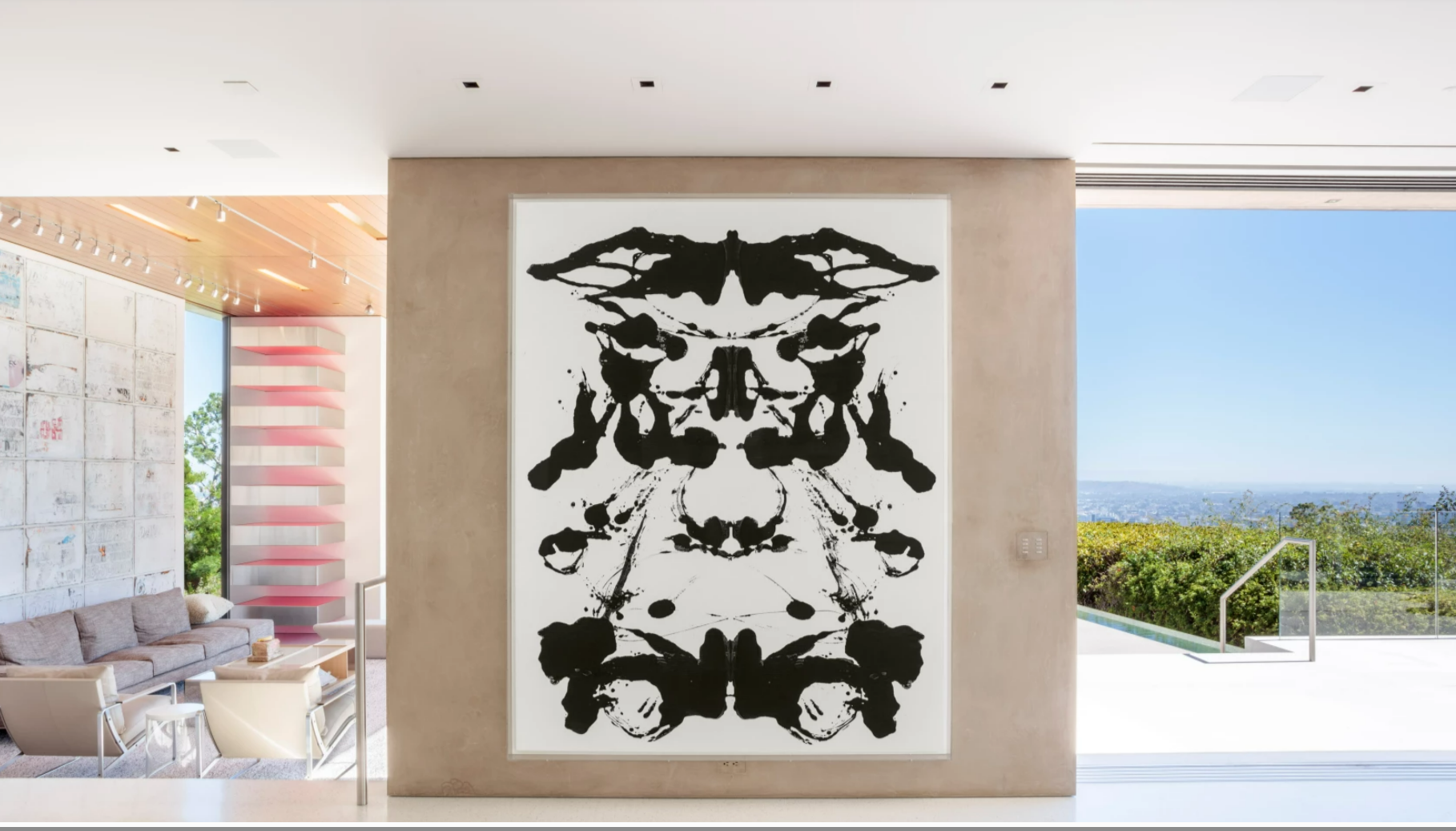
In the present work, the latticework of shadowy black paint unfurls in a pictorial marriage of fluidity and abstraction that indexes this chance method of splattering and compressing, dripping and dragging paint across an open field of creamy white. Divided into symmetrical quadrants, Rorschach reveals the resulting mirrored image that emanates from the center point in silhouettes of black paint, viscous and opaque in certain areas, feathery and light in others. Imprecise and unpredictable, the totemic forms remain open to any form of interpretation, reminiscent of an inkblot test that creates enigmatic imagery onto which the viewer can project their own desires and fantasies.
Rorschach, 1985
Christie’s New-York: 12 May 2015
Estimated: USD 6,000,000 – 8,000,000
USD 6,437,000
Andy Warhol (1928-1987) (christies.com)
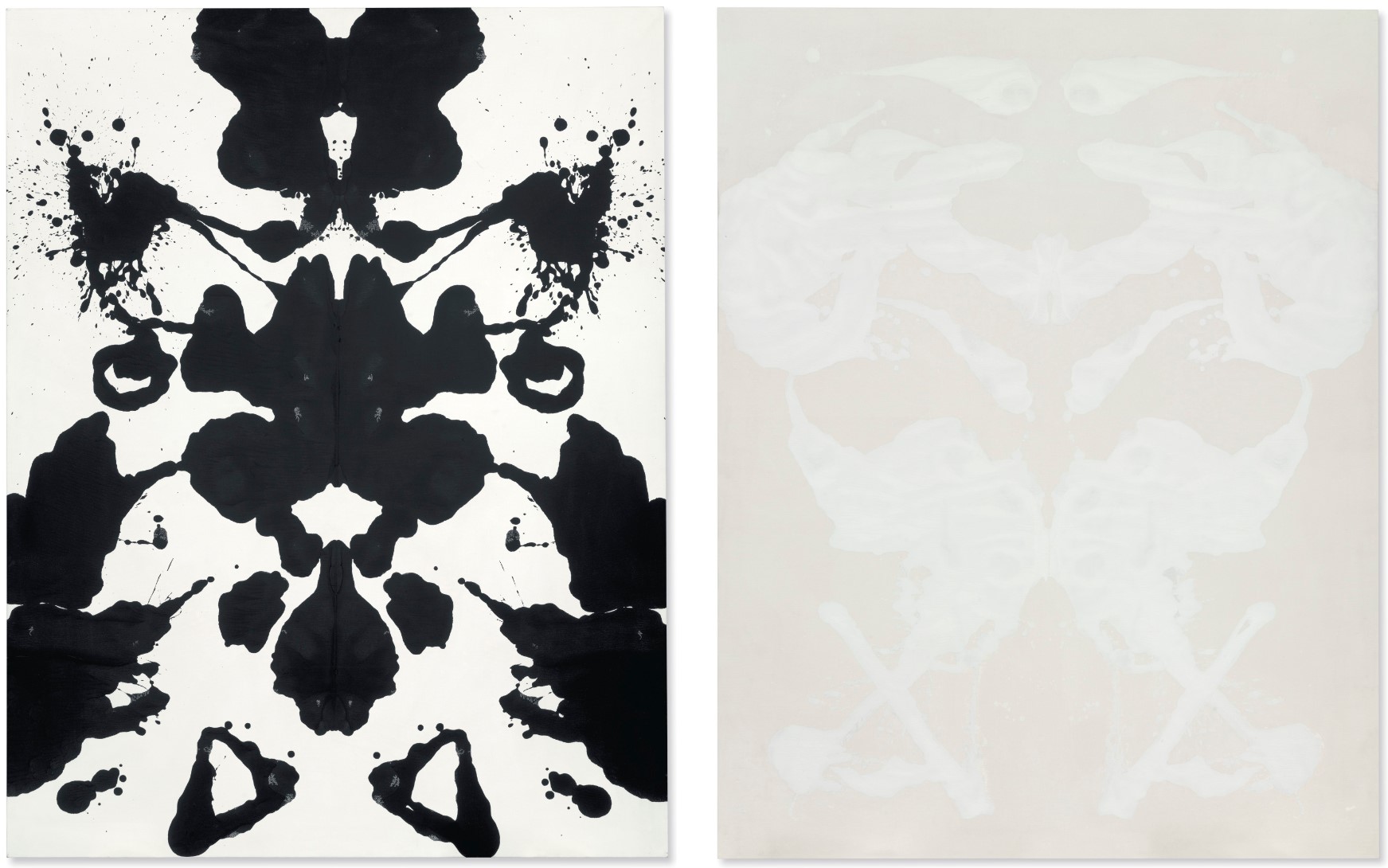
ANDY WARHOL
Rorschach, 1985
Acrylic and silkscreen ink on canvas (diptych)
Each: 90×70 inches (228.5 x 177.8 cm)
Signed and dated ‘Andy Warhol 85’
(on the overlap of each element)
The harmonious balance of Warhol’s Rorschach diptych results from the dynamic interrelationship between the two paintings, one rendered in black Liquitex, the other in white. Warhol’s subtle play of white on white allows each form to slowly emerge before our eyes like a surprise discovery. Rendered in white paint upon a white background, the canvas may at first act like a blank, calling to mind the diptychs of the 60s, such as Mustard Race Riot in which he used a blank canvas as a foil to the graphic imagery of its painted counterpart. Upon further examination, the contrast between the white pigment of the painted Rorschach design and the primed canvas is subtle but real, and its mysterious imagery slowly materializes. This ghosted Rorschach beseeches its viewer in further analysis, to delve into the symbolic properties of the color white. As the opposite of black, white often represents light in contrast to darkness, having long been associated in Western civilization with innocence, purity and virtue. Conversely, in Eastern religions white is often worn in funeral ceremonies, where it is more closely aligned with death, but also reincarnation. Warhol himself was secretly devout, making daily visits to St. Vincent Ferrer, a Roman Catholic Church in midtown Manhattan. In the last years of his life, it is possible that Warhol might have imbued these paintings—already so laden with deep-seated subliminal imagery—with larger concepts of the divine, perhaps hinting at a sublime vision that sought to remedy the eternal unanswerable questions surrounding life and death.
Rorschach, 1984
Christie’s New-York: 13 May 2015
Estimated: USD 3,500,000 – 4,500,000
USD 3,861,000
Andy Warhol (1928-1987) (christies.com)
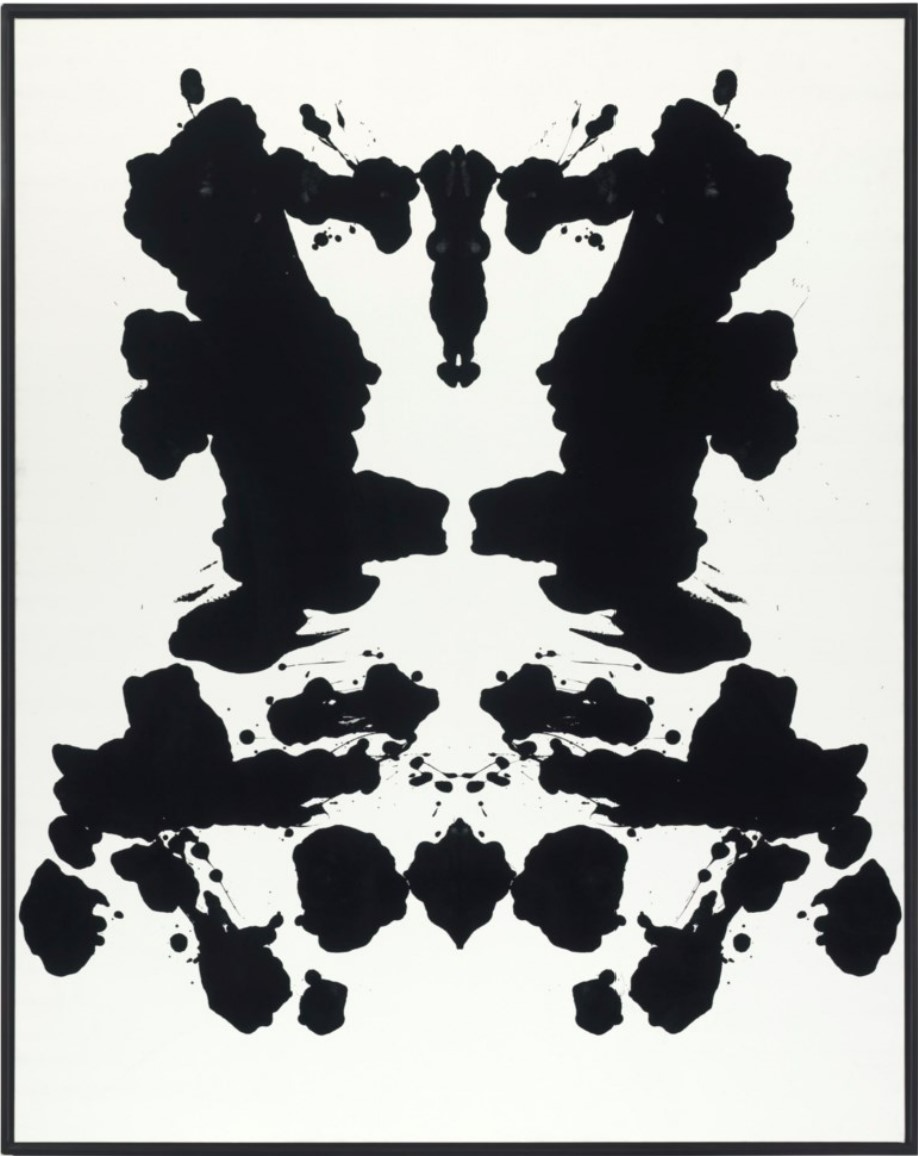
ANDY WARHOL
Rorschach, 1984
Synthetic polymer and silkscreen ink on canvas
96 x 75.9 inches (243.8 x 192.7 cm)
Stamped twice with the Estate of Andy Warhol stamp and the Andy Warhol Foundation for the Visual Arts stamp and numbered three times ‘PA75.079’ (on the overlap)
Across a vast expanse of canvas standing eight feet tall, the amorphous forms of Andy Warhol’s striking Rorschach propels the viewer into a pictorial and psychosomatic contemplation. Inspired by the ink blot test developed in the 1920s by the Swiss psychiatrist, Hermann Rorschach for psychological testing, Rorschach is a rare venture for the artistic into the world of abstraction. It is also a masterful rendering of Warhol’s exploration of chance, scale and fluidity which was to become an important aspect of his later work. A glorious transmogrifying shape evolves across the surface of the canvas as Rorschach’s figure alters meaning and representation with each onlooker. The intricate flourishes of reflected black pools and bold silhouettes, painted and then printed on a monumental scale, confront each viewer individually. Weaving its elaborate silhouettes throughout the canvas, the black ink possesses an almost ominous force. The viewer of the Rorschach concurrently becomes Warhol’s patient and psychiatrist. An echo of our own yearnings, fantasies, and dreams, the composition can only ever be fully realized through the individual eyes of the observer. In their brilliant drips, splashes and animated forms, the Rorschach paintings can be perceived as sophisticated parodies of Abstract Expressionism, much like the Oxidation paintings of the late 1970s. Warhol’s Oxidations and Rorschachs, accompanied by his Shadow and Camouflage paintings aim to encompass the same degree of shock and awe found within the canvases of the great Abstract Expressionists. As part of his unremitting challenging of artistic boundaries and his examination of the intrinsic dualities of abstraction and representation, this series is regarded as being among some of the most thoughtful and intellectual of his career. The uninhibited methods by which he created this important series testify to his perpetual desire to experiment with other types of art, even if he was railing against the conventional foundations of the very genre that he pioneered.
Rorschach (20×16)
Rorschach, 1984
Works from the Collection of Byron R. Meyer
with Partial Proceeds to Benefit the San Francisco Museum of Modern Art
Sotheby’s New-York: 19 November 2025
Estimated: USD 80,000 – 120,000
USD 203,200
Rorschach | Contemporary Day Auction | 2025 | Sotheby’s
ANDY WARHOL (1928 – 1987)
Rorschach, 1984
Acrylic on canvas
20×16 inches (50.8 x 40.6 cm)
Stamped by the Estate of Andy Warhol and the Andy Warhol Foundation for the Visual Arts
Numbered PA 75.033 on the overlap
Rorschach, 1982
Sotheby’s New-York: 16 November 2023
Estimated: USD 150,000 – 200,000
USD 406,400
Rorschach | Contemporary Day Auction | 2023 | Sotheby’s (sothebys.com)
ANDY WARHOL (1928 – 1987)
Rorschach, 1982
Acrylic on canvas
20×16 inches (50.8 x 40.6 cm)
Signed, dated ’82 and inscribed Jon (on the reverse)
“I thought that when you went to places like hospitals, they tell you to draw and make the Rorschach Tests. I wish I’d known there was a set”
Enveloping the viewer in a mirage of black liquescent forms, Andy Warhol’s Rorschach evokes a beguilingly hypnotic aura that encourages the viewer to impose their own interpretations and visions upon the open-ended symmetrical “ink blot.” The symmetric matrices of rich, inky paint produced by Warhol’s pour-and-fold technique in Rorschach show an artist who is as experimental as he is productive, constantly looking for new directions and once more returning to flirt with the potential of Abstract Expressionism. Executed in 1982, Rorschach acts as an effervescent gateway with the basis for the series rooted in inkblot tests of psychological study. Warhol draws directly from the Rorschach test–named after the famed Swiss psychiatrist Hermann Rorschach–which provides ten different standardized blots of ink on paper for patients to decipher under the premise that their interpretations provide key insight into the inner workings of their consciousness. As such, the Rorschach Paintings sees the artist masterfully balance the profound dialectic between psychological introspection and collective imagination.
Rorschach, 1984
Christie’s New-York: 11 November 2021
Estimated: USD 70,000 – 100,000
USD 150,000
ANDY WARHOL (1928-1987), Rorschach | Christie’s
ANDY WARHOL (1928-1987)
Rorschach, 1984
Acrylic on canvas
25 1⁄8 x 21 1⁄8 inches (63.8 x 53.7 cm)
Stamped with the Andy Warhol Foundation for the Visual Arts, Inc. and the Andy Warhol Estate
Numbered VF PA75.064′ (on the overlap)
Numbered again ‘PA75.064’ (on the stretcher)
Rorschach, 1984
Sotheby’s London: 27 June 2018
Estimated: GBP 70,000 – 90,000
GBP 122,500 / USD 160,925
(#108) ANDY WARHOL | Rorschach
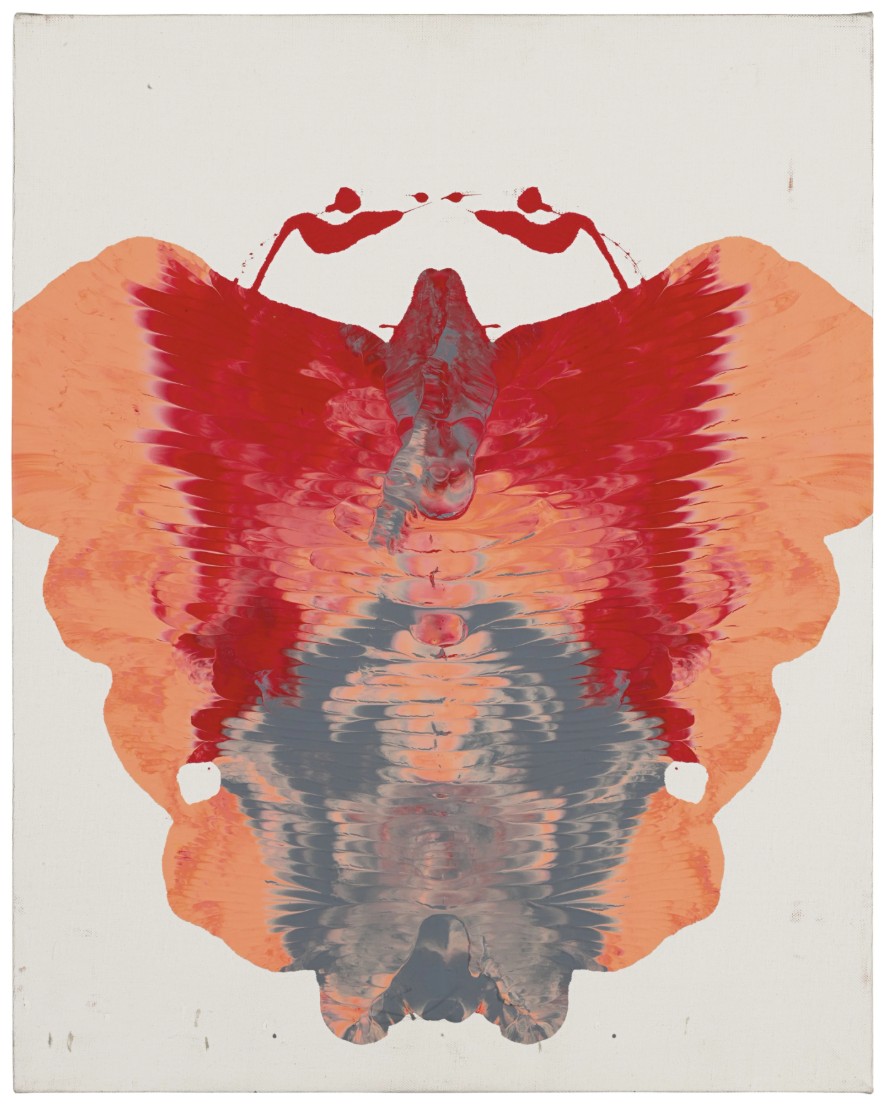
ANDY WARHOL
Rorschach, 1984
Acrylic on canvas
20×16 inches (50.8 x 40.6 cm)
Stamped by the Estate of Andy Warhol and the Andy Warhol Foundation for the Visual Arts
Numbered PA75.001 on the overlap
Rorschach is a stunning example of Andy Warhol’s eponymous series, which mirrors the methods of the famous ‘inkblot’ test. The test, which was invented by the Swiss psychiatrist Hermann Rorschach, provided ten different standardised blots of ink on paper which the patient was encouraged to decipher. Dr Rorschach believed that the patient’s interpretations were an insight into the inner workings of their consciousness. Warhol originally misunderstood the clinical process, believing that the patients created the inkblots and doctors used their creations to discover the patterns and traits of the human mind. Undeterred from his mistake and intrigued by the test’s serial repetitiveness and formulaic impersonality, Warhol invented his own version. Achieved in a stylised performance not dissimilar to Jackson Pollock’s drip dance, paint was poured onto one side of a canvas and then folded vertically to imprint the other half. The resulting liquescent beings were open to any form of interpretation, where the viewer projects their own desires and fantasies onto the imagery. Warhol believed that much abstract painting functioned in a similar way to Rorschach’s ink test. Instead of artists communicating their objectives through abstract form, Warhol believed the flow of thought ran the opposite way with the viewer beaming their deeply personal emotions back onto the canvas. As he expanded, “I was trying to do these to actually read into them and write about them, but I never really had the time to do that. So I was going to hire somebody to read into them, to pretend it was me, so that they’d be a little more… interesting” (Andy Warhol in conversation with Robert Nickas, in: ‘Andy Warhol’s Rorschach Test’, Arts Magazine, October 1986, p. 28). The entire series of Warhol’s Rorschach Paintings, many of which had never been on view before, were exhibited in at Gagosian in 1996. The show not only promoted the larger monochrome works but included an entire floor of the intensely vibrant multicoloured works, displaying butterfly-like blots in brilliant tones of pink, yellow, sea-green, violet and cobalt blue, such as the present work. Indeed, Rorschach is a seductively experimental piece, favouring a symmetrical network of thick, syrupy veins of paint left behind by Warhol’s pour-and-fold technique. With the basis for the series rooted in psychological study, the Rorschach Paintings develop a strong connection with the conscious mind. The creative aftermath of these works gives way to a spectrum of conceptual translation and emotional understanding, conjuring a deep variety of response and conversation.
Sotheby’s New-York: 3 March 2016
USD 272,500
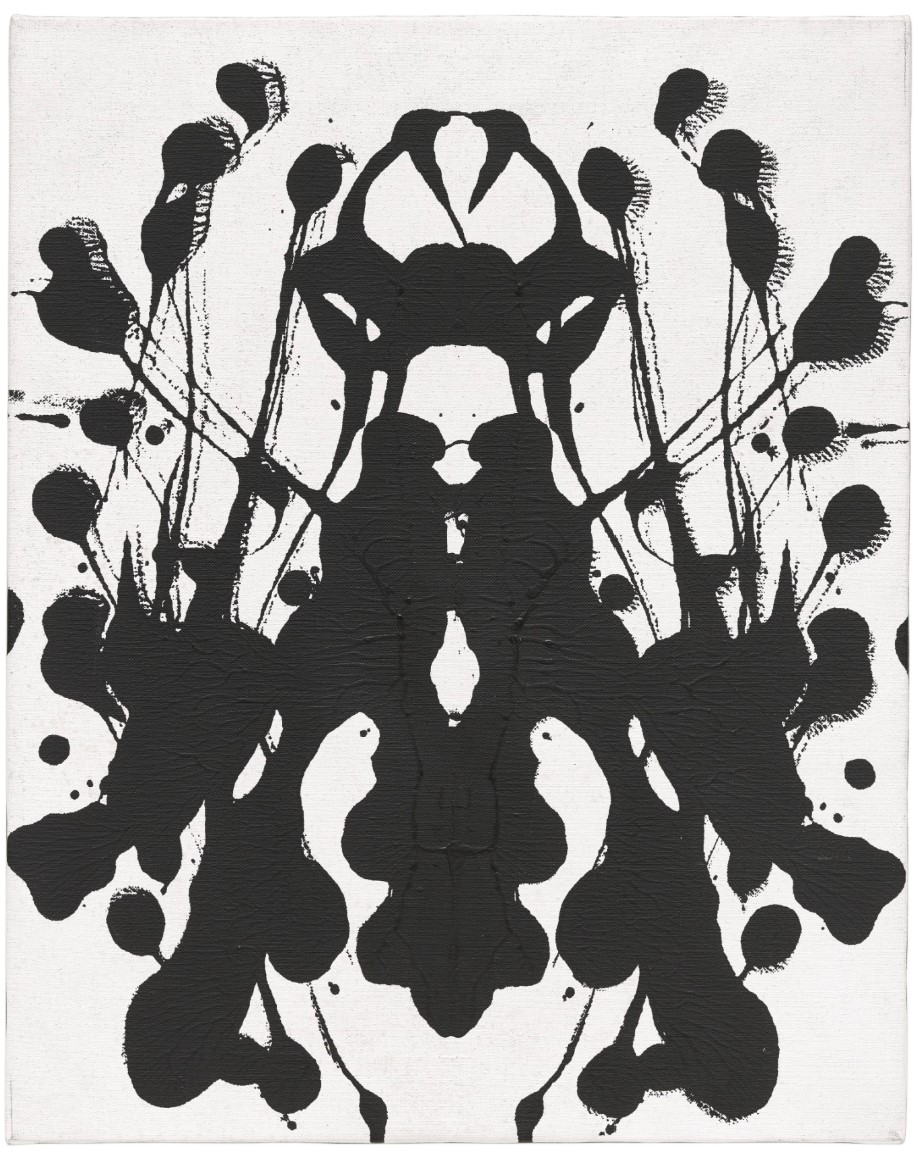
ANDY WARHOL
Rorschach
Acrylic on canvas
20×16 inches (50.8 x 40.6 cm)