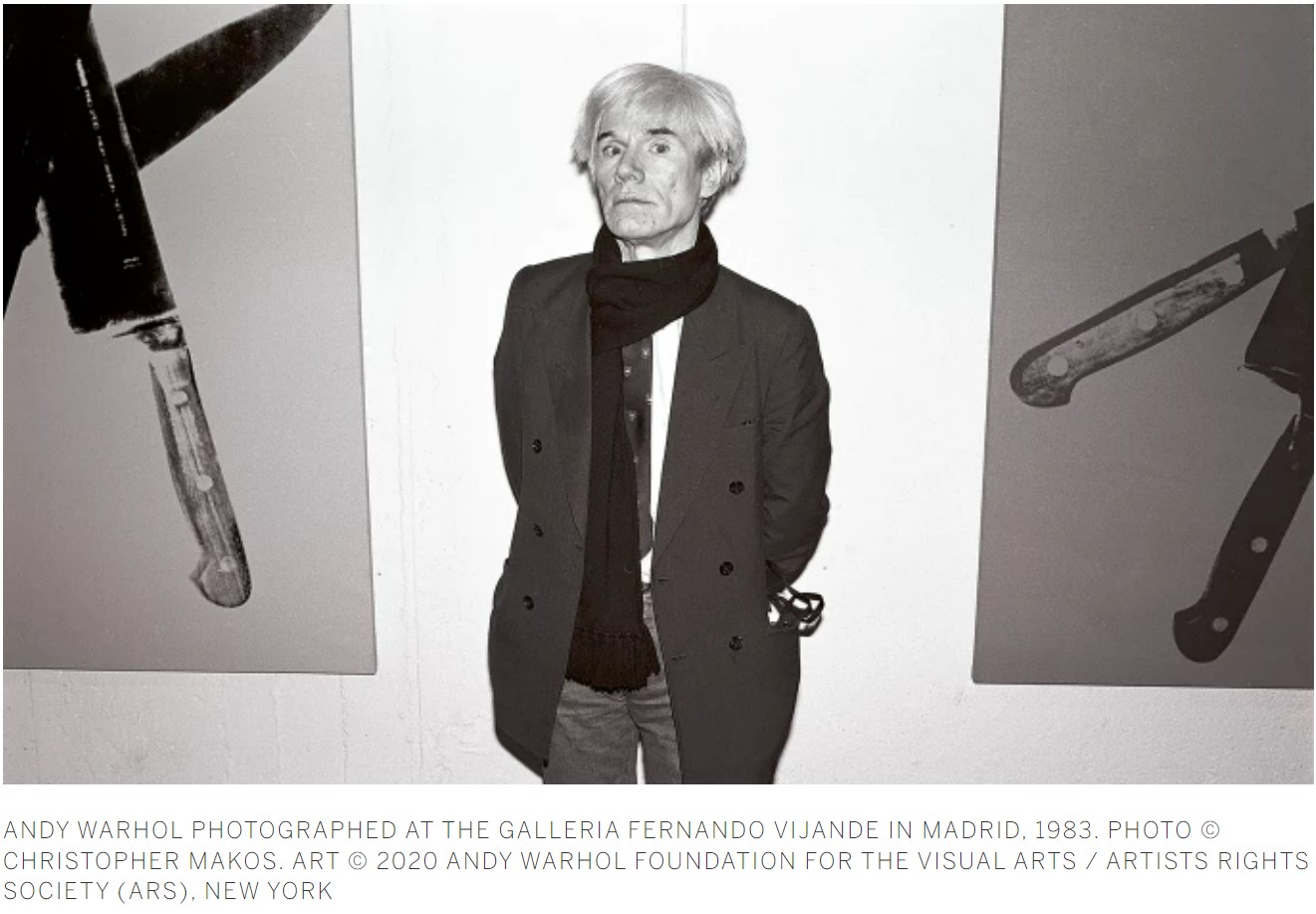
No series demonstrates this fascination with the drama and proximity of death so clearly as Andy Warhol’s Guns and Knives paintings from 1981-82, the body of work which also heralded the artist’s triumphant return to painting in his studio full-time. Warhol’s choice of weapons as subjects with which to reignite his late career was particularly poignant and was charged with the artist’s acute awareness of these objects’ potential for destruction following the attempt on his life by Valerie Solanas in 1968.
Introduction
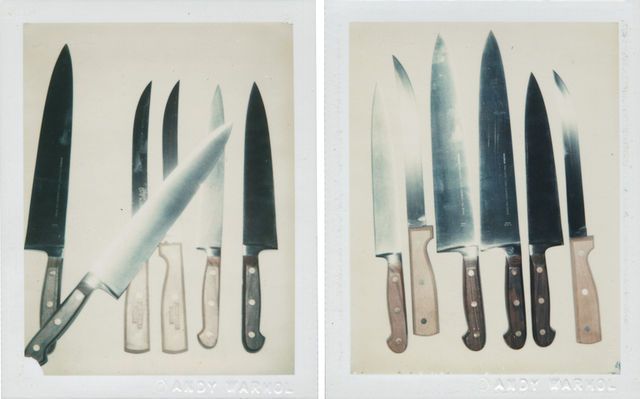
As is typical of his still life paintings, Warhol began from Polaroid photographs. Studio manager Vincent Fremond recalls that originally, “Andy wanted to photograph exotic knives and daggers. We knew that Chris Stein from Blondie collected handmade knives and unusual daggers. Chris brought some to the studio for Andy to photograph. But after reviewing the pictures, Andy asked Jay Shriver, his new art assistant, to buy some ordinary kitchen knives from a Bowery restaurant supply store. Jay came back with some Galaxy 8-inch slicers and, of course, a receipt. Andy photographed the ordinary knives in various formations and they were chosen.” (Vincent Fremont, quoted in: Cast a Cold Eye: The Late Work of Andy Warhol, Exh. Cat., New York, Gagosian Gallery, 2006, p. 157)

Sleek and seductive, Warhol’s signature monochrome silkscreen both elevates and fetishizes the knife as an object, culminating in a composition that confronts the viewer with a startingly sinister intensity. Enlarged and mechanically repeated in six overlapping impressions across the canvas, the black silhouetted forms hover menacingly against a silvery white background. In their careful arrangement, the blades appear to coalesce into a single, cavernous black apex, the tonal polarization of the silkscreen impression and lack of depth inherent to the medium amplifying their intrigue And yet, the Warholian brilliance of this chosen subject matter is that Warhol’s knives are, in fact, a domestic household utensil, as universal as his consumerist Coca-Cola bottles or Campbell soup cans. Warhol transforms the familiarity and dull ubiquity of this quotidian object into the sleek bladed, heavy handled subject of high art, endowing these standard kitchen utensils with a startling, seductive grandeur and menacing threat. And further, through serial repetition, Warhol both neutralizes the subject matter and amplifies its threat. He reminds us of the proximity of our own mortality, while also showcasing the anesthetizing power of the mechanical reproduction of images. With devastating efficiency, Warhol’s Knives both seduces and chills with a stunning aesthetic and sinister macabre.
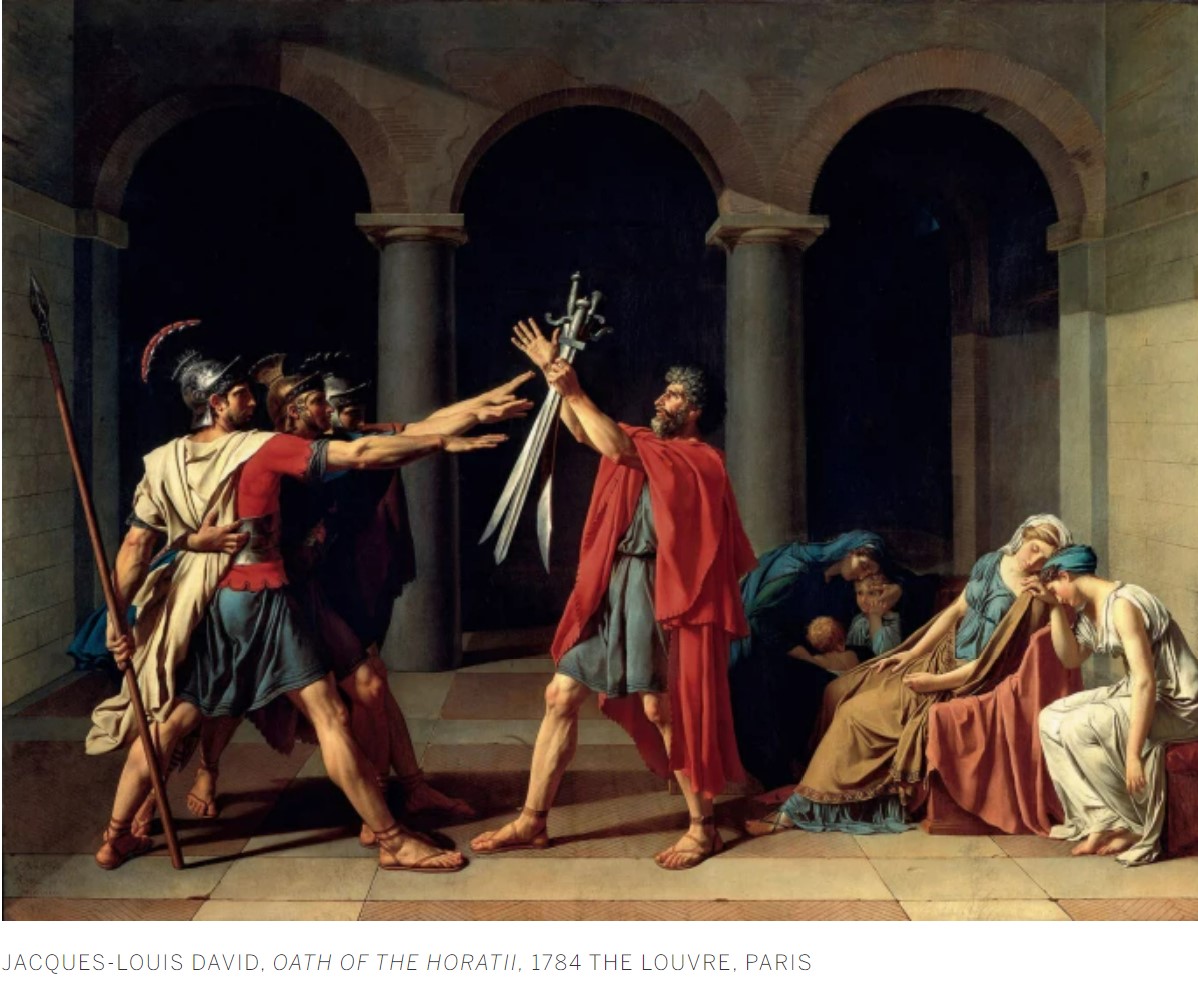
From the outset, Warhol’s artistic practice has been driven by his obsession with the spectacle of death: both as explicit horror in the Death and Disaster series, and as implicit tragedy in Electric Chairs, Marilyns and Jackies. Beginning before his first silkscreens with his earliest Pop paintings such as 129 Die in Jet! from 1962, Warhol has been keenly aware of and fascinated by death, disaster, and the ability of the media to both sensationalize and normalize such tragedy. Turning ubiquity and banality into high art, Warhol’s practice monumentalizes the ordinary while simultaneously acknowledging through its own production how the media generates images of violence through a framework that divorces the image from the aggression and cruelty of the event. Nevertheless, the raw power of this confrontational image remains urgently accosting, despite our immersion in supposedly desensitizing mass-media representations of weapons of violence.
Warhol’s paintings of Knives and Guns in the early 1980s present an extension of this fascination, yet while Warhol’s previous investigations focus on the moments surrounding death – frozen on the faces and postures of his subjects – Warhol here shifts away from such specificity and instead hones in on the object itself. This unflinching obsession with the weapon endows it with an uncompromising universality and betrays the intense awareness of his own mortality that overtook Warhol during the final decade of his life.
Large Knives (90×70)
Knives, 1982
Christie’s London: 28 June 2023
Estimated: GBP 1,500,000 – 2,000,000
GBP 2,097,000 / USD 2,672,780
ANDY WARHOL (1928-1987) (christies.com)

ANDY WARHOL (1928-1987)
Knives, 1982
Acrylic and silkscreen ink on canvas
70 1/8 x 52 1/8 inches (178 x 132.4 cm)
Signed, stamped twice with the Andy Warhol Art Authentication Board, Inc. stamp
Numbered and dated ‘Andy Warhol 82 A114.995’ (on the overlap)
Held in the same private collection for almost twenty-five years, Knives (1982) is a monumental work from one of Andy Warhol’s most important late series. Over a backdrop of brightly painted blocks of color, an image of three knives is silkscreened twice in stark black ink. Their silhouettes are dynamically arranged. One doubled knife aligns with the chromatic grid, handle and blade split between quadrants of green and orange. Another overlaps diagonally, slicing across the picture at forty-five degrees. The work might almost be mistaken for a bold abstract composition. It takes on a sharp edge of menace, however, as the knives’ forms become clear. Photographed by Warhol, they are both charged symbols and real objects: the screenprint captures the woodgrain of their handles, fingerprints on their blades, and the manufacturer’s ‘high carbon no stain’ assurance stamped into the metal. The present work debuted in Andy Warhol: Guns, Knives, Crosses, Warhol’s first solo show in post-Franco Spain, at Madrid’s Galería Fernando Vijande in 1982.

The Technicolor beauty of Warhol’s work, however, had been laced with the macabre long before his own brush with mortality. He made his 1962 portraits of Marilyn Monroe in the weeks immediately following her death, and silkscreened Jackie Kennedy’s image after her husband was assassinated one year later. He paid keen attention to the ghoulish obsessions of the print media, where starlets and plane accidents alike made front-page news. His 1960s Death and Disaster series, which depicted electric chairs and fatal car crashes, were unflinchingly morbid. For Warhol, the danger and glamour of the American dream always went hand in hand. The present work captures this duality, its vivid rainbow hues cut through with a razor-sharp thrill of darkness.
Knives, 1981-82
Sotheby’s New-York: 29 June 2020
Estimated: USD 1,800,000 – 2,500,000
USD 2,180,000
ANDY WARHOL | KNIVES | Contemporary Art Evening Auction | 2020 | Sotheby’s (sothebys.com)
ANDY WARHOL
Knives, 1981-82
Acrylic and silkscreen ink on canvas
90×70 inches (228.6 x 177.8 cm)
Stamped twice by The Estate of Andy Warhol and The Andy Warhol Foundation for the Visual Arts and numbered PA95.033 on the overlap
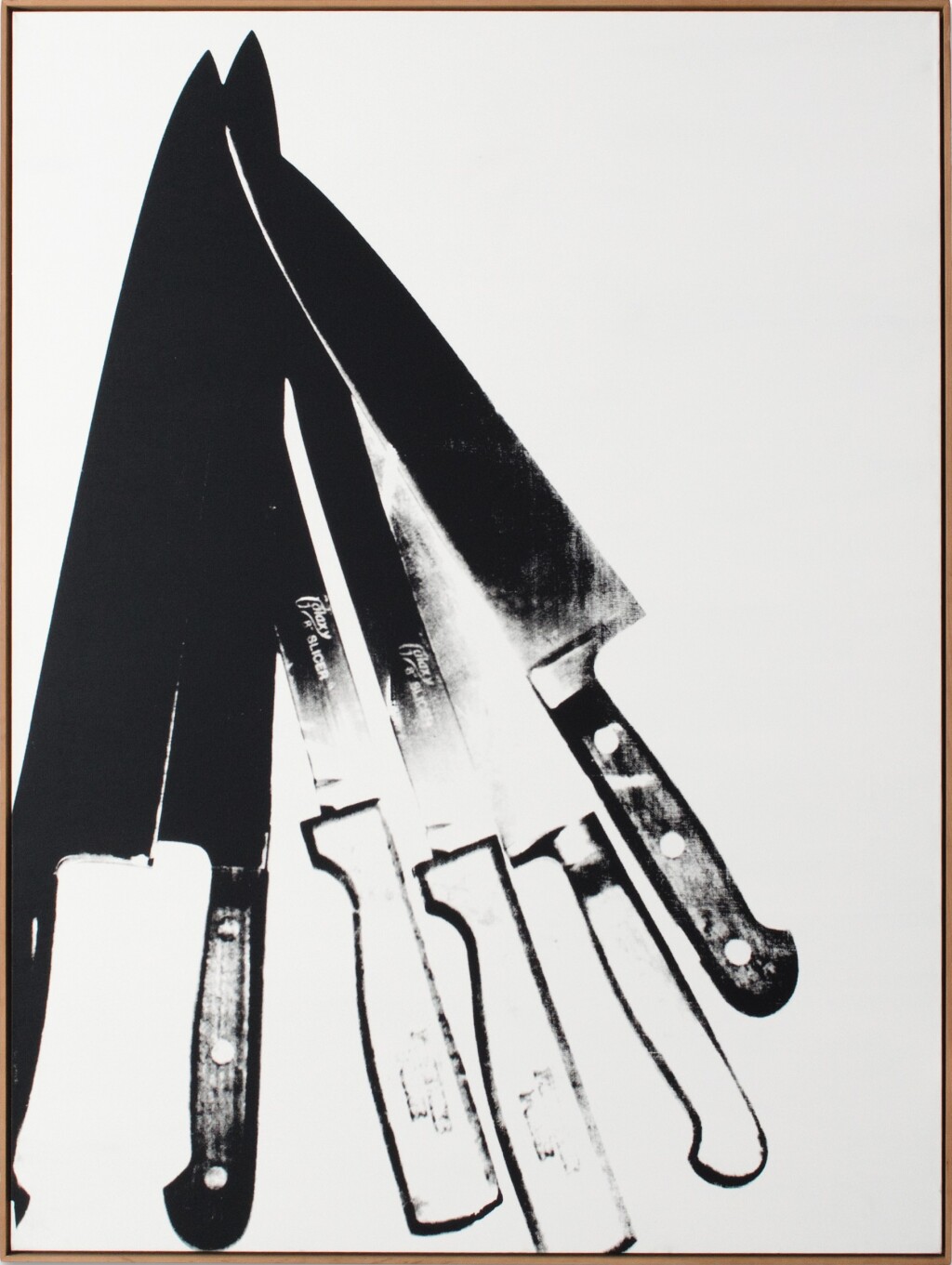
Thrumming with drama and haunting intensity, the veiled silhouette of six kitchen knives in the present work confronts the viewer with stark, menacing immediacy. While Warhol’s fascination with the spectacle of death was a recurrent motif throughout his career, it was in the 1980s that Warhol’s growing concerns over his own impending mortality became a subject of his work more explicitly. Sleek and seductive, Warhol’s signature monochrome silkscreen both elevates and fetishizes the knife as an object, culminating in a composition that confronts the viewer with a startingly sinister intensity. Enlarged and mechanically repeated in six overlapping impressions across the canvas, the black silhouetted forms hover menacingly against a silvery white background. In their careful arrangement, the blades appear to coalesce into a single, cavernous black apex, the tonal polarization of the silkscreen impression and lack of depth inherent to the medium amplifying their intrigue And yet, the Warholian brilliance of this chosen subject matter is that Warhol’s knives are, in fact, a domestic household utensil, as universal as his consumerist Coca-Cola bottles or Campbell soup cans. Warhol transforms the familiarity and dull ubiquity of this quotidian object into the sleek bladed, heavy handled subject of high art, endowing these standard kitchen utensils with a startling, seductive grandeur and menacing threat. And further, through serial repetition, Warhol both neutralizes the subject matter and amplifies its threat. He reminds us of the proximity of our own mortality, while also showcasing the anesthetizing power of the mechanical reproduction of images. With devastating efficiency, Warhol’s Knives both seduces and chills with a stunning aesthetic and sinister macabre.
Knives, 1981-82
Christie’s New-York: 13 November 2019
Estimated: USD 1,600,000 – 2,000,000
USD 3,015,000
Andy Warhol (1928-1987) (christies.com)
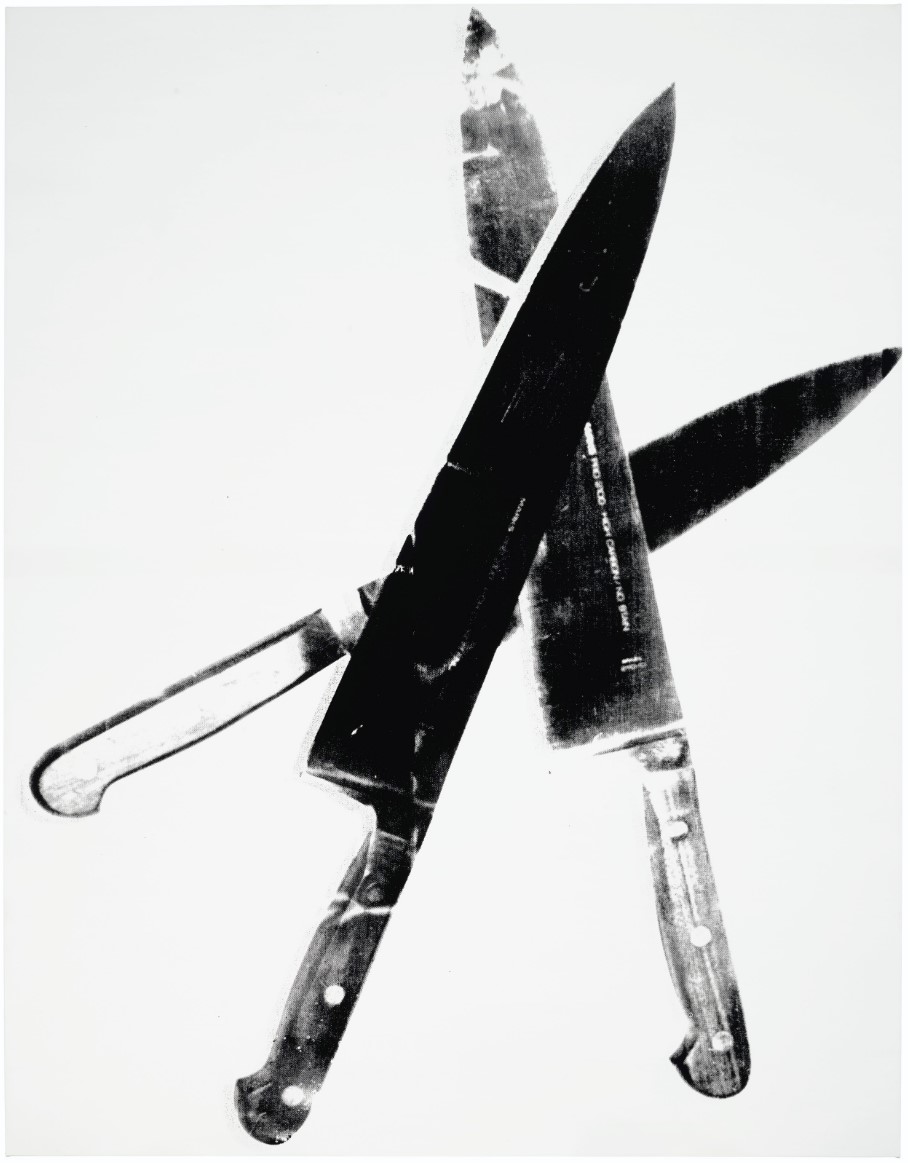
ANDY WARHOL
Knives, 1981-82
Acrylic and silkscreen ink on canvas
90×70 inches (228.6 x 177.8 cm)
Stamped twice with the Estate of Andy Warhol and the Andy Warhol Foundation for the Visual Arts, Inc. stamps and numbered twice ‘Andy Warhol VF PA95.052’ (on the overlap)
Andy Warhol’s Knives is a haunting, yet riveting black and white acrylic and silkscreen painting that dynamically depicts three overlapping perpendicular kitchen knives. The commonplace knives are transformed into a glorified object that takes on a sinister and menacing character; a macabre feeling emphasized by the sharp contrast of black against white background. The black ink is applied to the canvas in silkscreened layers, creating complex gradients between the knives that generate a cinematic appearance, alluding to Warhol’s influence of film and printmaking. These monochromatic layers that shift from dark to light suggest a sense of movement, accentuating the theatrical violent and threatening aspect of the subject. Despite reproducing an appropriated image of a banal object, Warhol’s Knives constructs a narrative that triggers associations of knives as more than just a domestic utility object – it elevates their ascribed definition to an ambiguous and threatening characters.
Knives (70×52)
Knives, 1982
Christie’s London: 13 February 2020
Estimated: GBP 2,500,000 – 3,500,000
GBP 2,771,250 / USD 3,612,015
Andy Warhol (1928-1987) (christies.com)
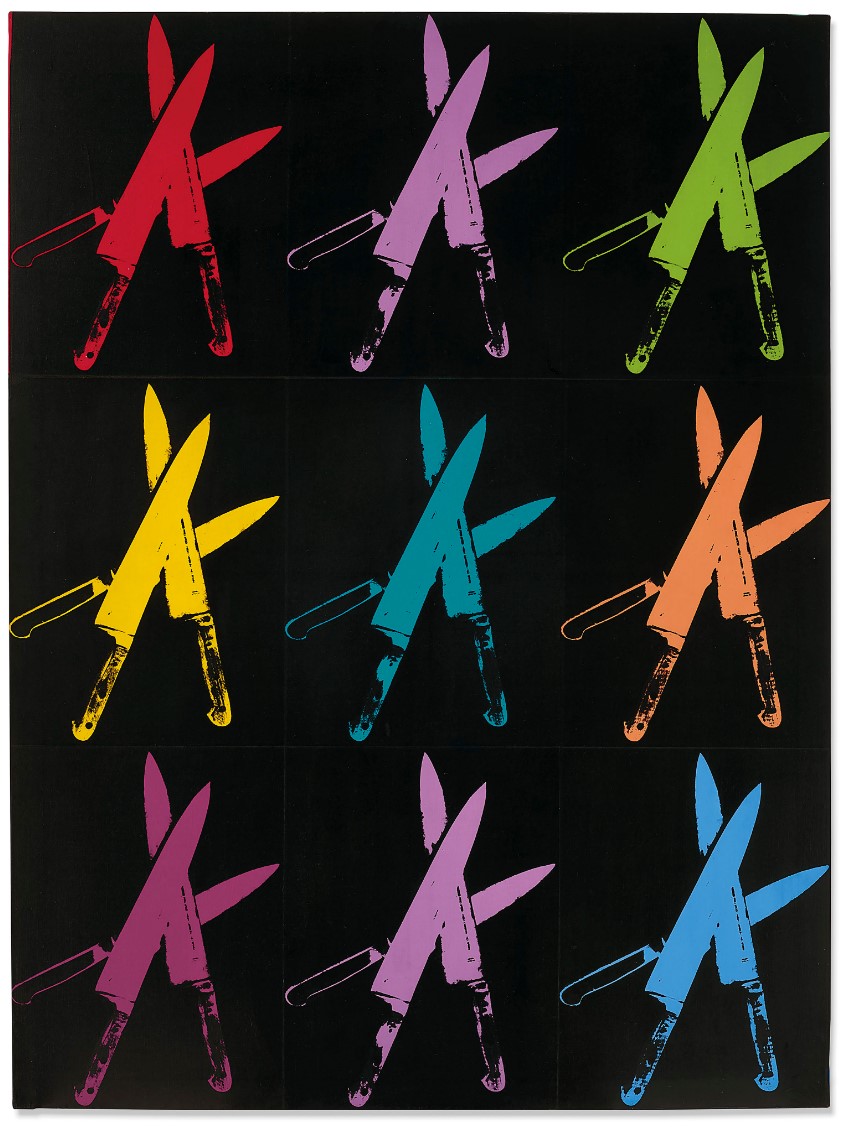
ANDY WARHOL
Knives, 1982
Acrylic and silkscreen on canvas
70 x 52.4 inches (177.6 x 133 cm)
Signed and dated ‘Andy Warhol 82’ (on the overlap)
A razor-sharp chorus of beauty and menace, Knives (1982) is a monumental work from one of Andy Warhol’s most important late series. A trio of kitchen knives is silkscreened nine times in vibrant colour against a deep, black ground. Violet, green, lilac, orange, turquoise, yellow, blue and a vivid, bloody red light up the blades like fireworks in a night sky. Created towards the end of Warhol’s life, the knife pictures were made alongside his iconic Gun works, and witness an artist increasingly preoccupied with mortality. The present work debuted with a suite of Gun and Cross paintings in Warhol’s first solo show in post-Franco Spain, at Madrid’s Fernando Vijande Galeria in 1982. In concert with the Crosses, the knives’ cruciform echoes would have been striking. In their bright tones and grid-like repetition, they verge on becoming abstract motifs; indeed, the almost two-metre-high canvas has the scale of an Abstract Expressionist painting. As their forms become clear, however, the work takes on a scintillating danger.
Knives, 1982
Phillips New-York: 6 October 2017
Estimated: GBP 2,000,000 – 3,000,000
GBP 2,649,000 / USD 3,463,655
Andy Warhol – 20th Century & Contemp… Lot 21 October 2017 | Phillips
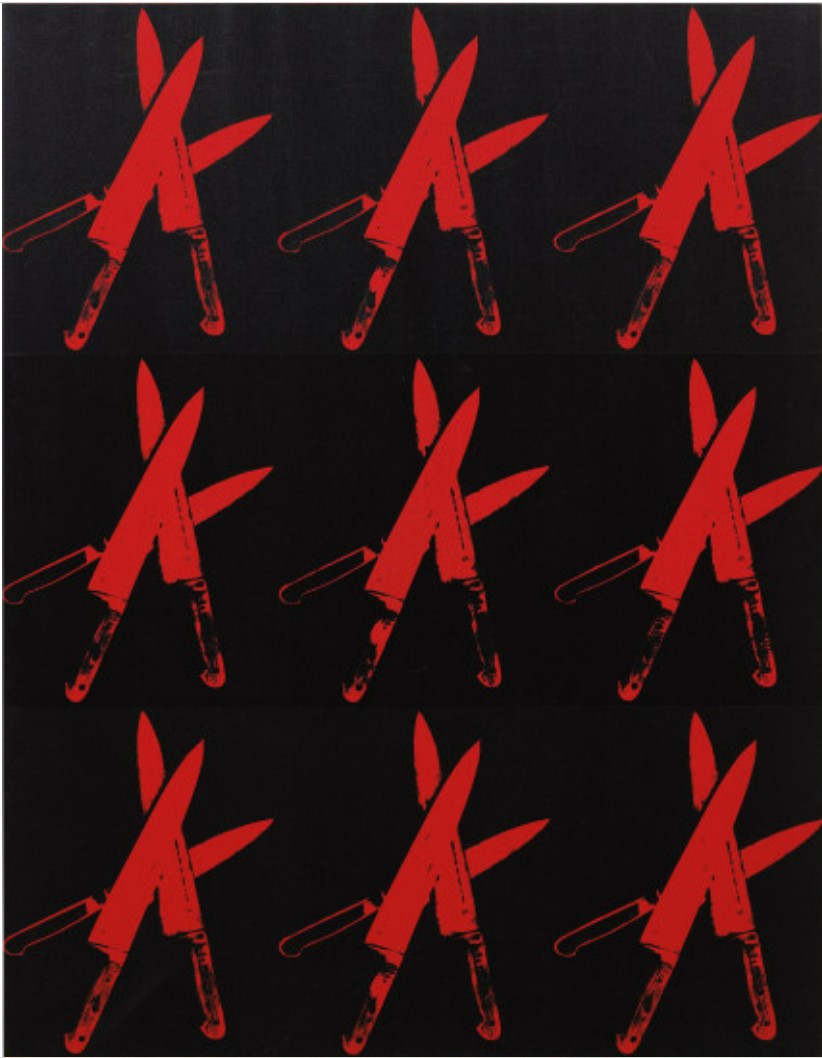
ANDY WARHOL
Knives, 1982
Silkscreen ink and synthetic polymer on canvas
70 7/8 x 52 inches (180 x 132.1 cm)
Signed and dated ‘Andy Warhol ’82’ on the overlap
Monumental in scale and pulsating in repeated bands of red and black, Knives, a dramatic and poignant composition by Andy Warhol, the master of American Pop Art, presents the viewer with an eminently recognizable symbol: the commonplace kitchen knife. Astutely identifying the more sinister themes in the American consciousness, for Warhol the kitchen knife came to symbolise the underbelly of popular culture. Serving as a memento mori, in the present work, through stark and shocking imagery, Warhol highlights the disparity between symbolic connotations and artistic aesthetics. By using the silkscreen as a means to mechanically repeat the lurid image of the knife across the broad swathe of canvas, Warhol not only delves into the domain of mortality but also seamlessly intensifies the painting’s menacing undertone into a compelling aesthetic experience.
Knives, 1982
Christie’s New-York: 14 November 2012
Estimated: USD 1,500,000 – 2,000,000
USD 2,434,500
Andy Warhol (1928-1987) (christies.com)
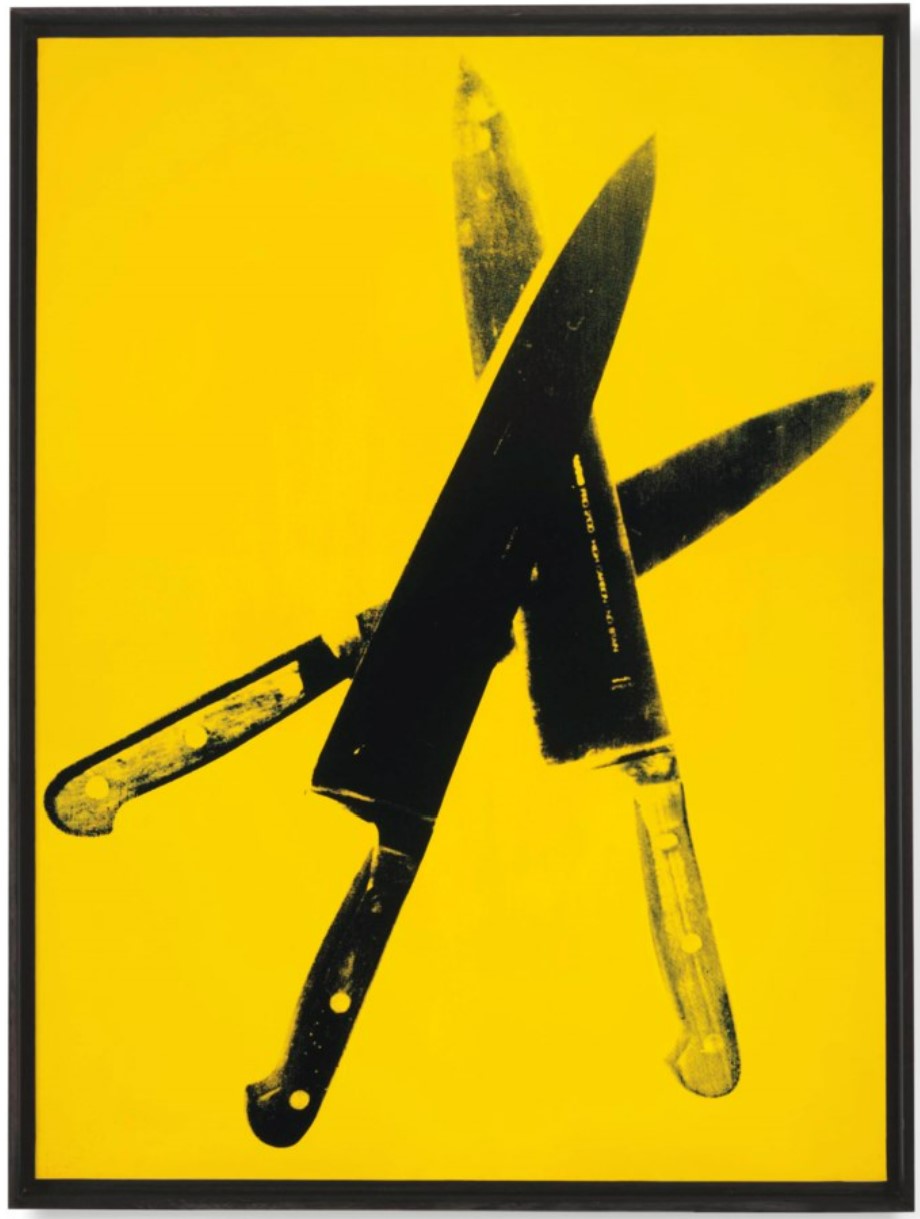
ANDY WARHOL
Knives, 1982
Acrylic and silkscreen ink on canvas
70.9 x 52.1 inches (180 x 132.4 cm)
Signed and dated ‘Andy Warhol 82’ (on the overlap)
Commanding a sinister respect, Warhol’s ordinary eight-inch kitchen knives are transformed into a violent weapon. Contrasted against an alarming yellow background, the graphic black knives evoke an ominous palette of warning signs and foreboding caution tape, giving Knives a mischievous edge. A powerful visual statement, the knives are grouped with their three blades overlapping, the metallic surfaces becoming larger as each progressive knife is placed atop the one below it. A carefully arranged cluster of blades, the multiplicity of the treacherous object resembles a more monstrous group of scissors–a wicked superweapon. The multiplicity of these lethal objects makes their presence even more fearsome, an embodiment of the vulnerability that we feel in the face of hidden violence.
Small Knives (20×16)
Knives, circa 1981-82
Sotheby’s New-York: 19 November 2025
Estimated: USD 180,000 – 250,000
USD 279,400
Knives | Contemporary Day Auction | 2025 | Sotheby’s
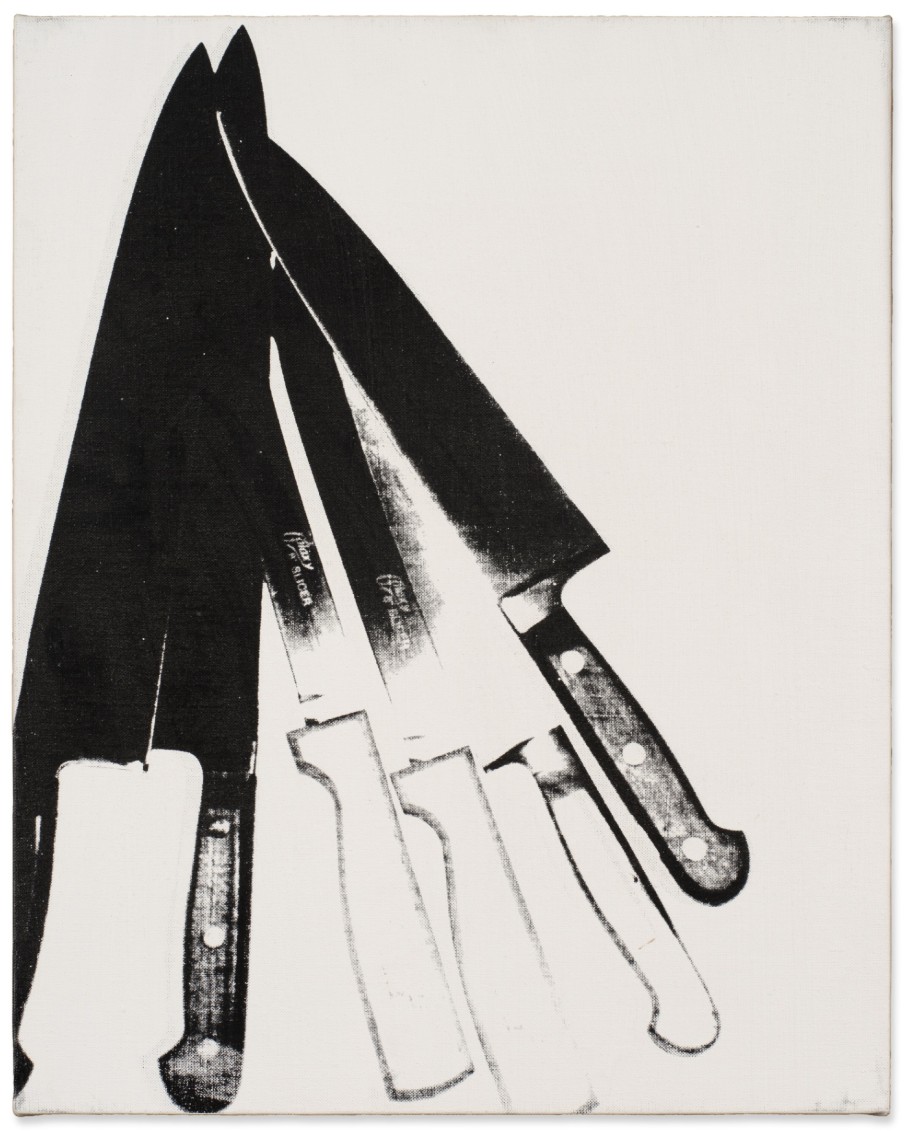
ANDY WARHOL (1928 – 1987)
Knives, circa 1981-82
Acrylic and silkscreen ink on canvas
20×16 inches (50.8 x 40.6 cm)
Stamped by the Estate of Andy Warhol twice and the Andy Warhol Foundation for the Visual Arts, Inc.
Numbered PA 95.007 on the overlap and stretcher
Knives, 1981-82
Sotheby’s London: 1 July 2021
Estimated: GBP 100,000 – 150,000
GBP 201,600 / USD 277,380
Knives | Contemporary Art Day Auction | 2021 | Sotheby’s (sothebys.com)
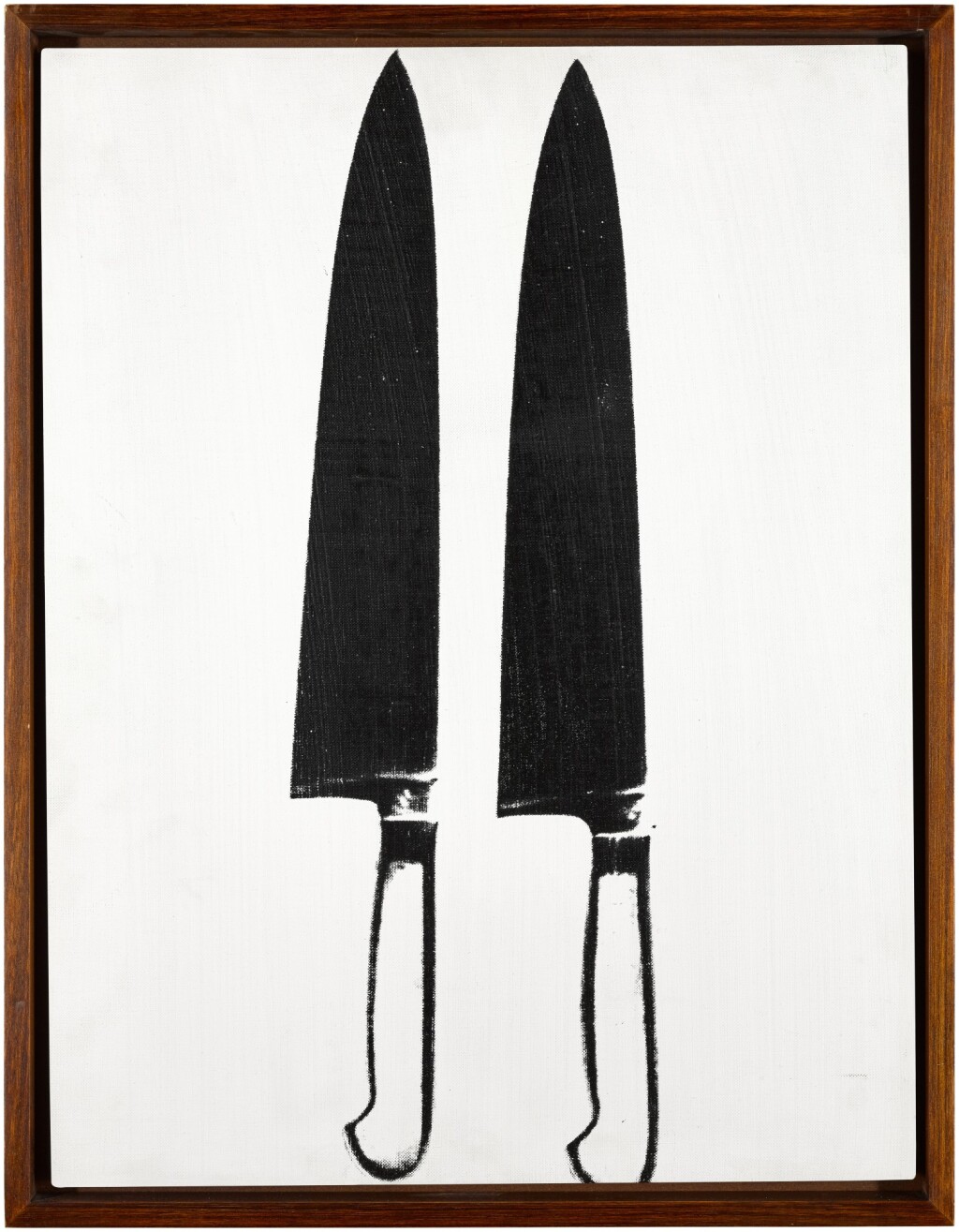
ANDY WARHOL (1928-1987)
Knives, 1981-82
Acrylic and silkscreen ink on canvas
20×16 inches (50.8 x 40.6 cm)
Stamped by the Estate of Andy Warhol and the Andy Warhol Foundation for the Visual Arts, Inc. Numbered PA 95.035 on the overlap
Numbered PA 93.035 on the stretcher
Thrumming with drama and haunting intensity, the veiled silhouette of two kitchen knives in the present work confronts the viewer with stark, menacing immediacy. From the outset, Warhol’s artistic practice has been driven by his obsession with the spectacle of death: both as explicit horror in the Death and Disaster series, and as implicit tragedy in Electric Chairs, Marilyns and Jackies. While Warhol’s fascination with the spectacle of death was a recurrent motif throughout his career, it was in the 1980s however that Warhol’s growing concerns over his own impending mortality became a subject of his work more explicitly. No series demonstrates this fascination with the drama and proximity of death so clearly as his Gun and Knives paintings from 1981-82, the body of work which also heralded Warhol’s triumphant return to painting in his studio full-time. Warhol’s choice of weapons as subjects with which to reignite his late career was particularly poignant and was charged with the artist’s acute awareness of these objects’ potential for destruction following the attempt on his life by Valerie Solanas in 1968.
Knives, 1981-82
Christie’s London: 13 February 2020
Estimated: GBP 180,000 – 250,000
GBP 200,000 / USD 260,680
Andy Warhol (1928-1987) (christies.com)
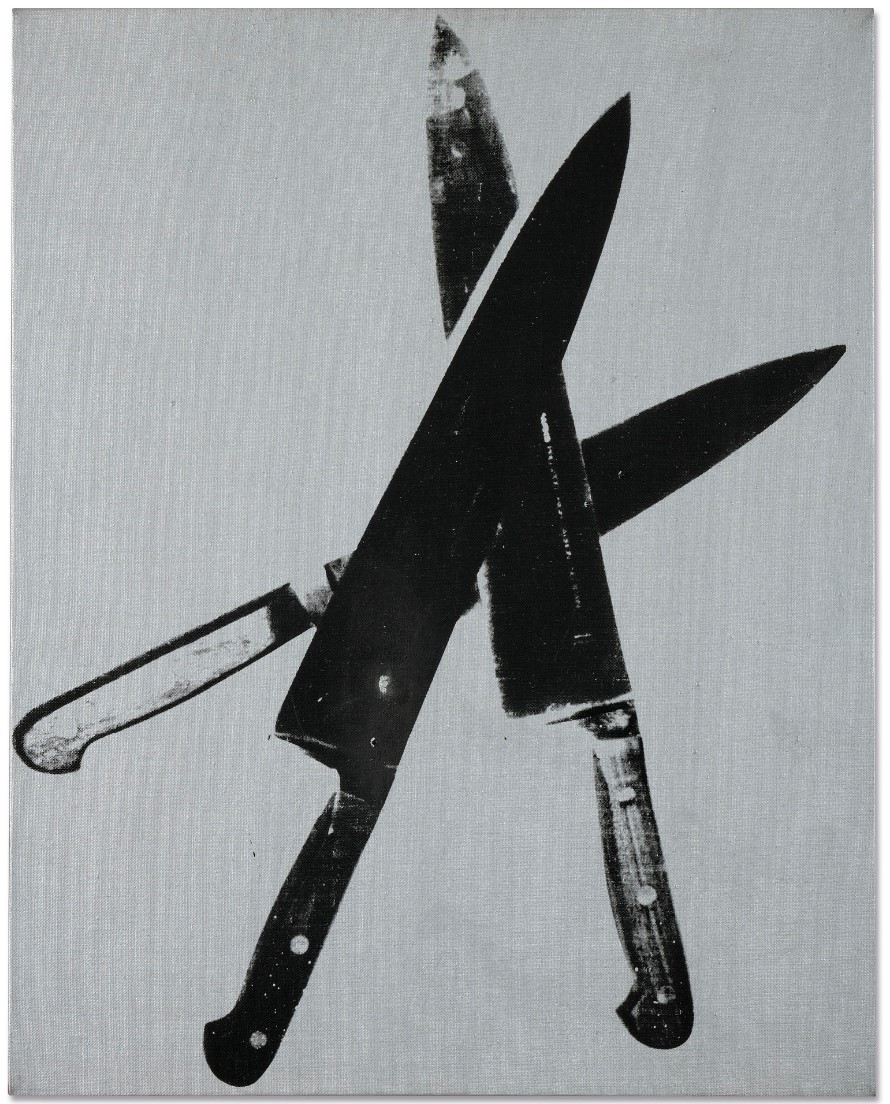
ANDY WARHOL (1928-1987)
Knives, 1981-82
Synthetic polymer paint and silkscreen inks on canvas
20 1/8 x 15 ¾ inches (51×40 cm)
Stamped with the Andy Warhol Authentification Board and the Andy Warhol Estate stamps Numbered ‘PA95.002’ (on the overlap)
Created in 1982, Knives features a shadowy pile of menacing chef knives, set against a shimmering silver ground. Printed through a screen, the flat forms of the knives are blurred, their soft outlines recalling the artist’s earlier abstract compositions. Indeed, the capacity for misregistration by the silkscreening process greatly appealed to Warhol, and he actively exploited every distorted impression and blotch. If the mechanised image negates the details of the knives, it heightens the painting’s ominous tones, by mimicking the mass production techniques used by newspapers and magazines. Evidence of an uncommitted crime, the work screams out for a headline.
Knives
Sotheby’s New-York: 13 May 2015
Estimated: USD 150,000 – 200,000
USD 322,000
(#240) Andy Warhol (sothebys.com)
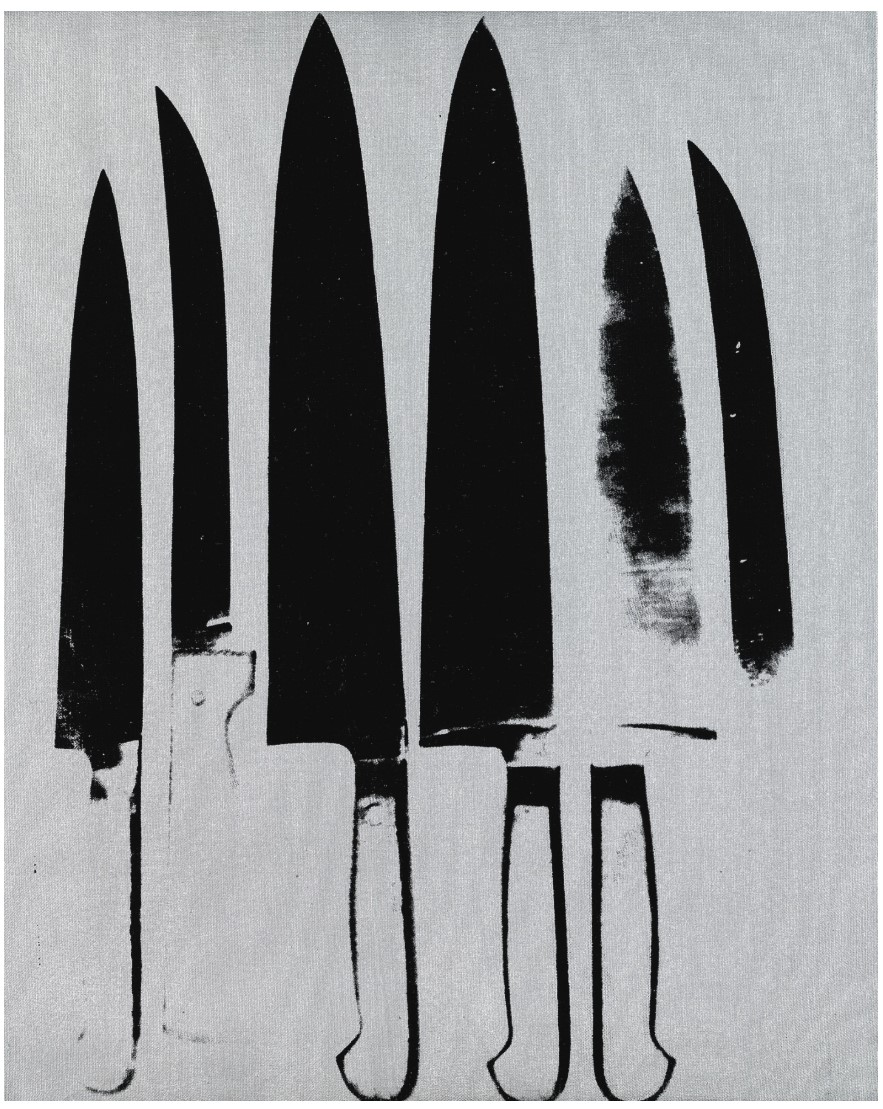 ANDY WARHOL
Knives, 1981
Acrylic and silkscreen ink on canvas
20×16 inches (50.8 x 40.5 cm)
Knives, 1981-82
Sotheby’s London: 27 June 2012
Estimated: GBP 200,000 – 300,000
GBP 241,250 / USD 375,740
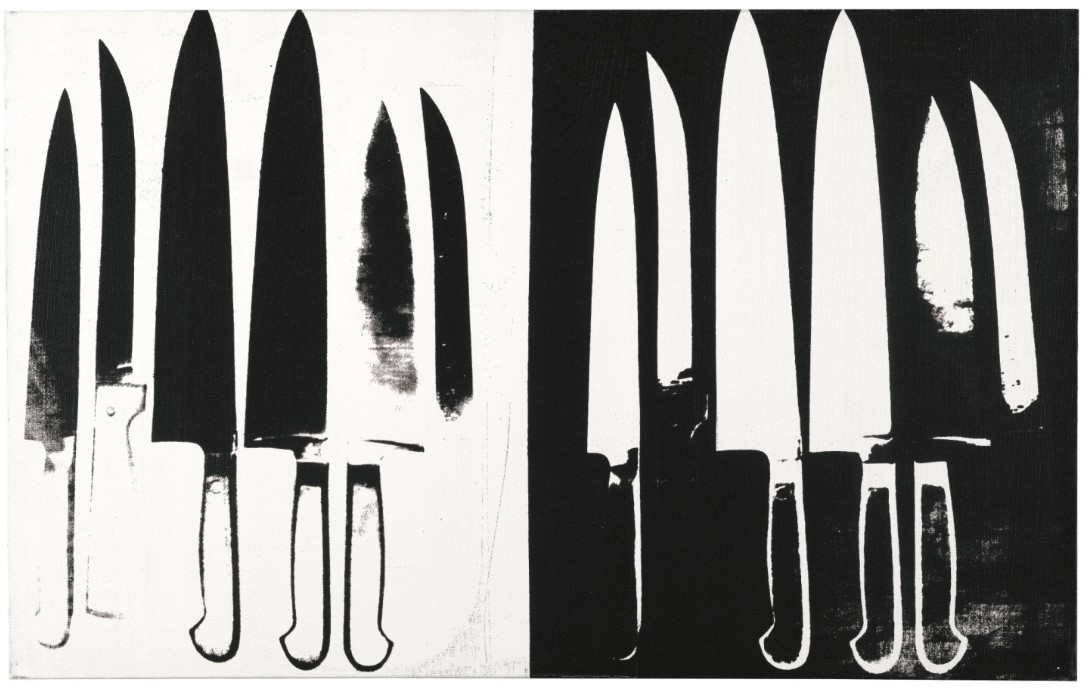
ANDY WARHOL
Knives, 1981-82
Acrylic and silkscreen ink on canvas
20 1/8 x 31 7/8 inches (51x81cm)
Stamped by The Estate of Andy Warhol
Twice with The Andy Warhol Foundation of the Visual Arts Inc.
Numbered PA95.041 on the overlap
Knives, 1981-82
Sotheby’s London: 26 February 2011
Estimated: GBP 180,000 – 250,000
GBP 241,250 / USD 387,640
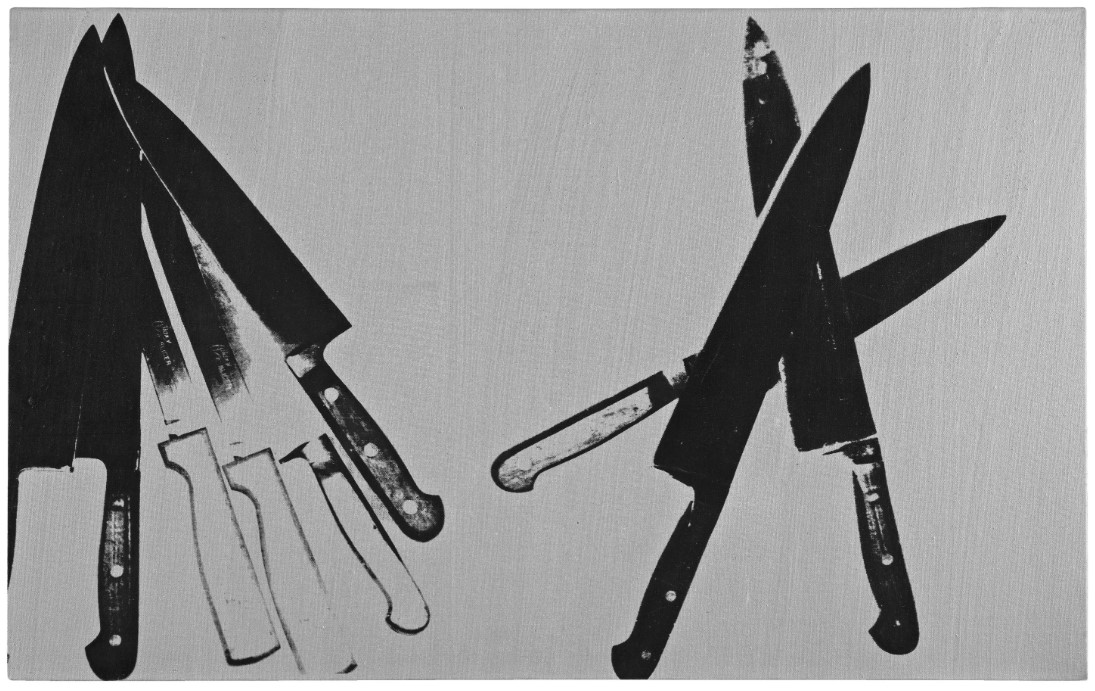 ANDY WARHOL
Knives, 1981-82
Acrylic and silkscreen ink on canvas
20×32 inches (50.8 c 81.3cm)
Stamped by The Estate of Andy Warhol (twice)
Stamped by the Andy Warhol Foundation for the Visual Arts, Inc.
Numbered PA 95.040 (twice) on the overlap
Polaroids
Knives, 1981
Christie’s New-York: 15 December 2021
Estimated: USD 4,000 – 6,000
USD 6,000
ANDY WARHOL (1928-1987), Knives | Christie’s
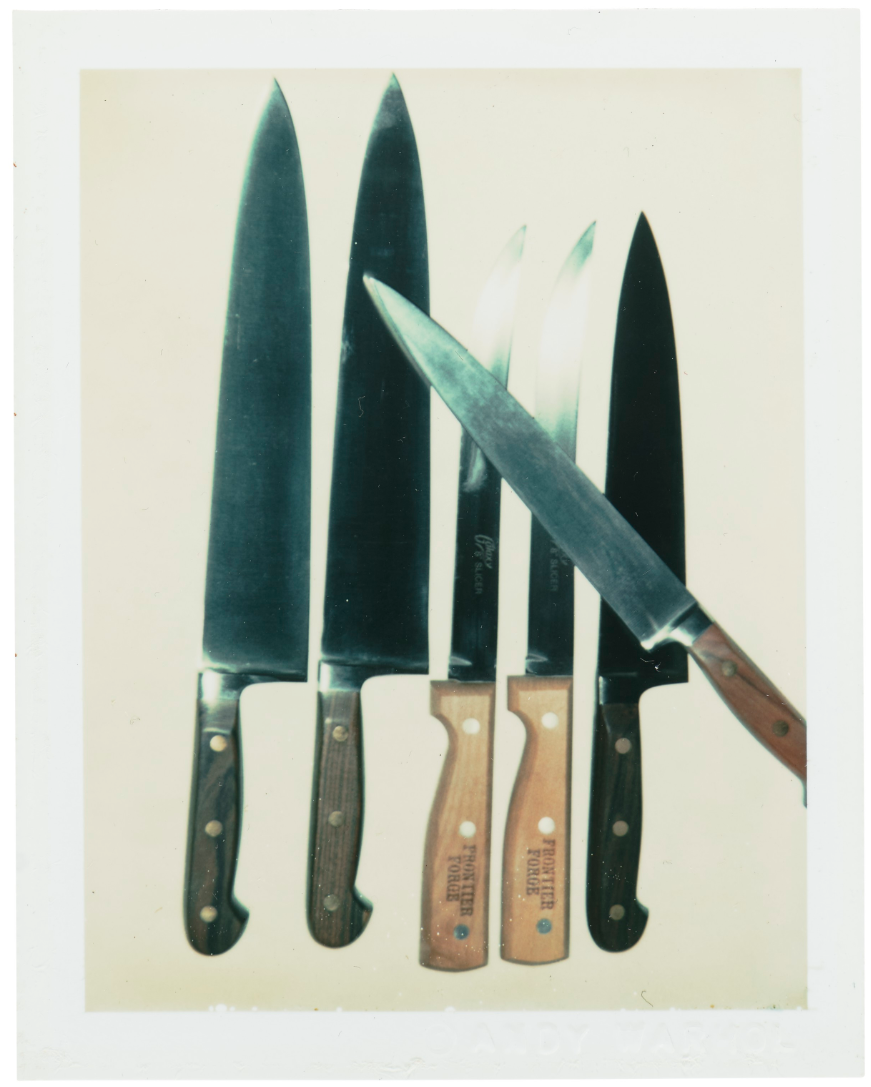
ANDY WARHOL (1928-1987)
Knives, 1981
Unique Polaroid print
4 1/4 x 3 1/2 inches (10.8 x 8.9 cm)
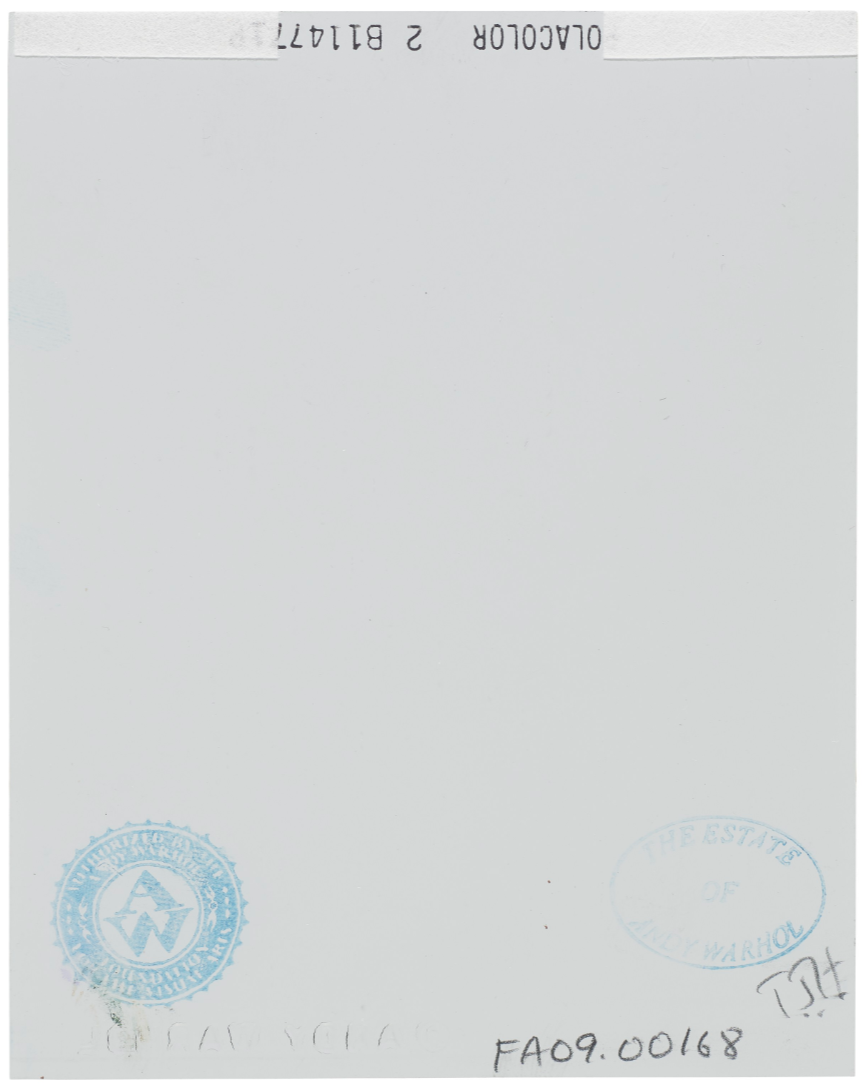
Stamped with the Andy Warhol Foundation for the Visual Arts and the Estate of Andy Warhol stamps
Numbered ‘FA09.00168’ (on the reverse)
Knives, 1981
Christie’s New-York: 21 July 2021
Estimated: USD 3,000 – 5,000
USD 4,000
Andy Warhol (1928-1987), Knives | Christie’s
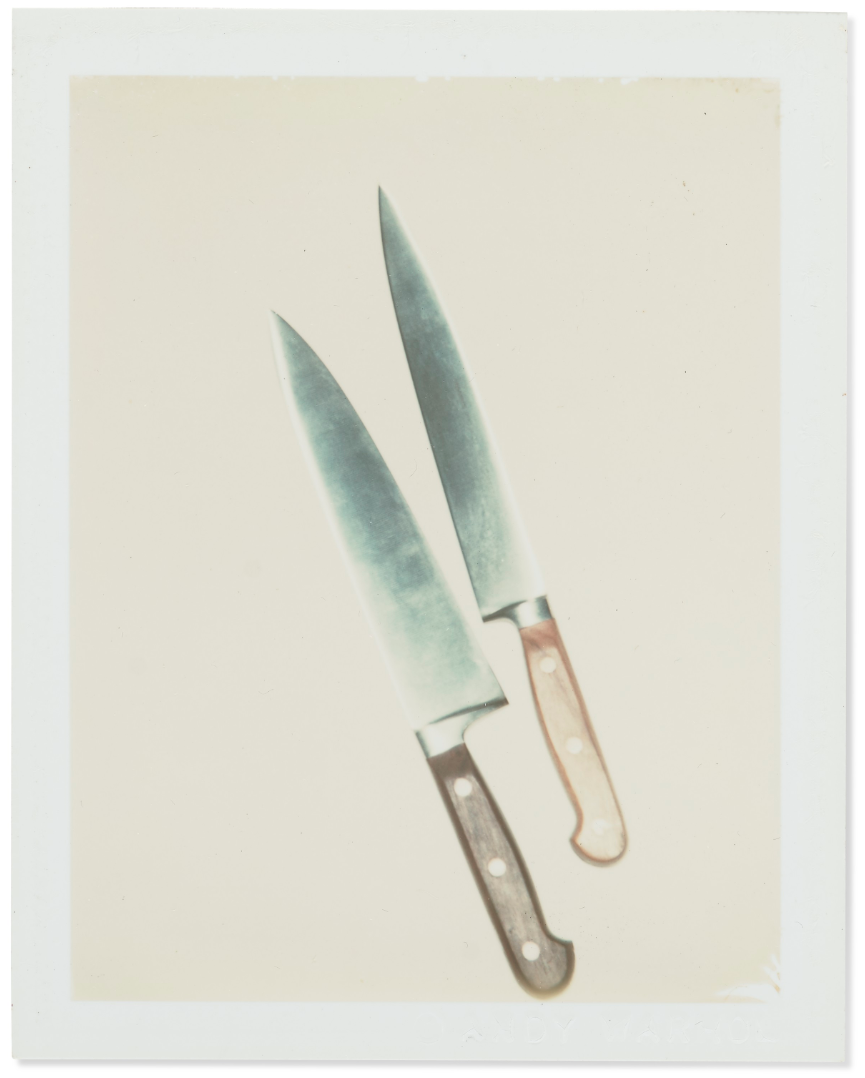
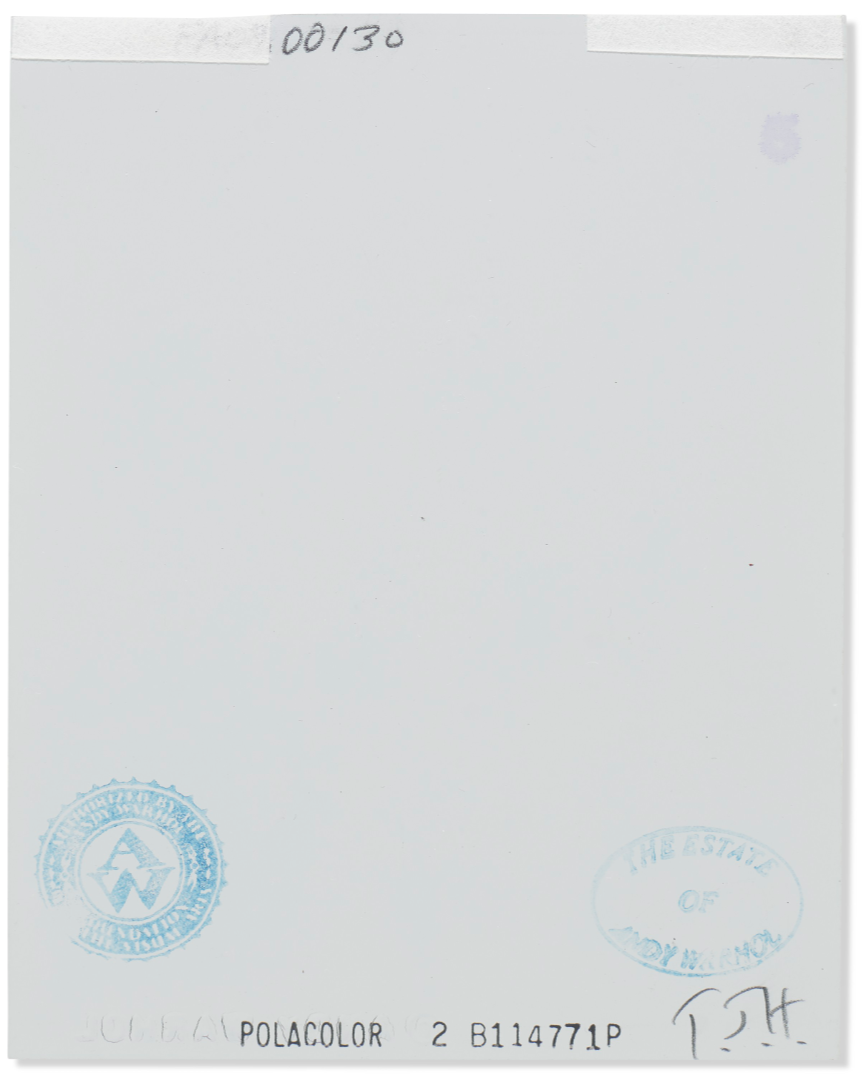
ANDY WARHOL (1928-1987)
Knives, 1981
Unique Polaroid print
4 1/4 x 3 1/2 inches (10.8 x 8.9 cm)
Stamped with the Andy Warhol Foundation for the Visual Arts and the Estate of Andy Warhol stamps
Numbered ‘FA04.00013’ (on the reverse)