Introduction
Warhol’s use of heart motifs follows lineage of his earlier engagement with the discussion on desire and human emotion- a sustained and reoccurring theme of Warhol’s oeuvre. His engagement with the heart motif can be traced back to his early drawings in the 1950s. Hearts often appeared as whimsical, romantic, or erotic attributes in his art. For instance, in his self-published book Love is a Pink Cake (1953), a heart on a string is carried by a cavalier, illustrating the blend of playful sentimentality and graphic simplicity that characterizes Warhol’s style.
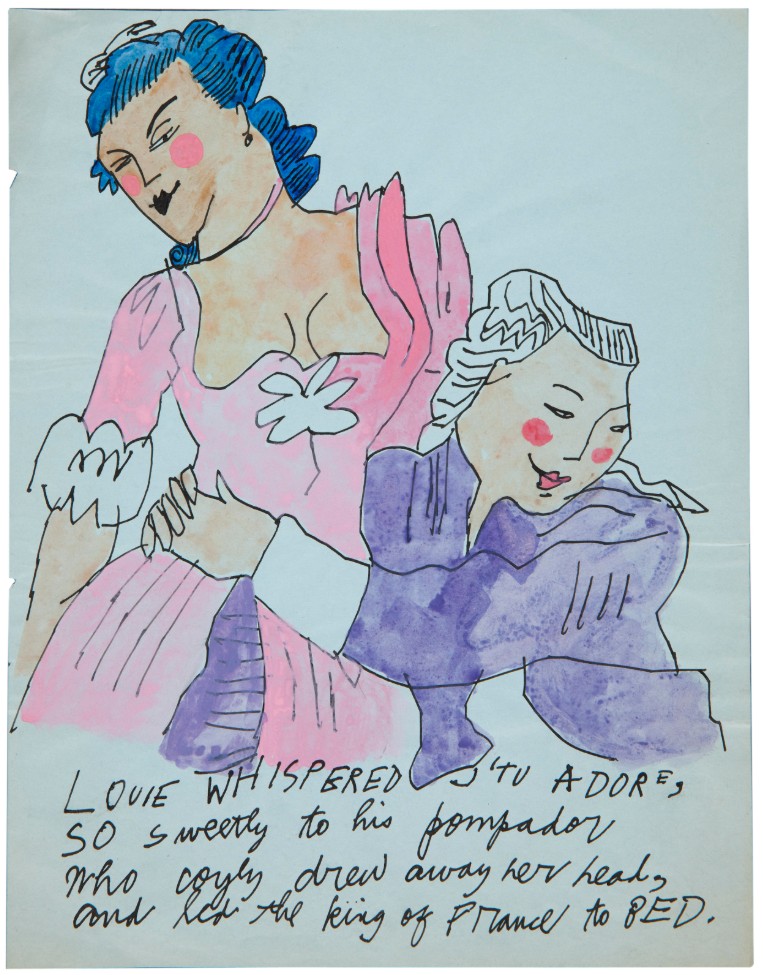
ANDY WARHOL (1928-1987), Love is a Pink Cake, circa 1953
Ink and watercolor on paper, 10 7/8 x 8 3/8 inches (27.6 x 21.3 cm)
During the late 1950s, hearts became more prevalent in his drawings, particularly those associated with an unrealized project known as The Boy Book. In these works, tiny hearts flutter beside the mouths of figures, mirroring the silhouette of lips or adorning strategic parts of the body, such as the chest and erogenous zones. This use of hearts not only added an element of charm but also hinted at deeper themes of desire and intimacy.
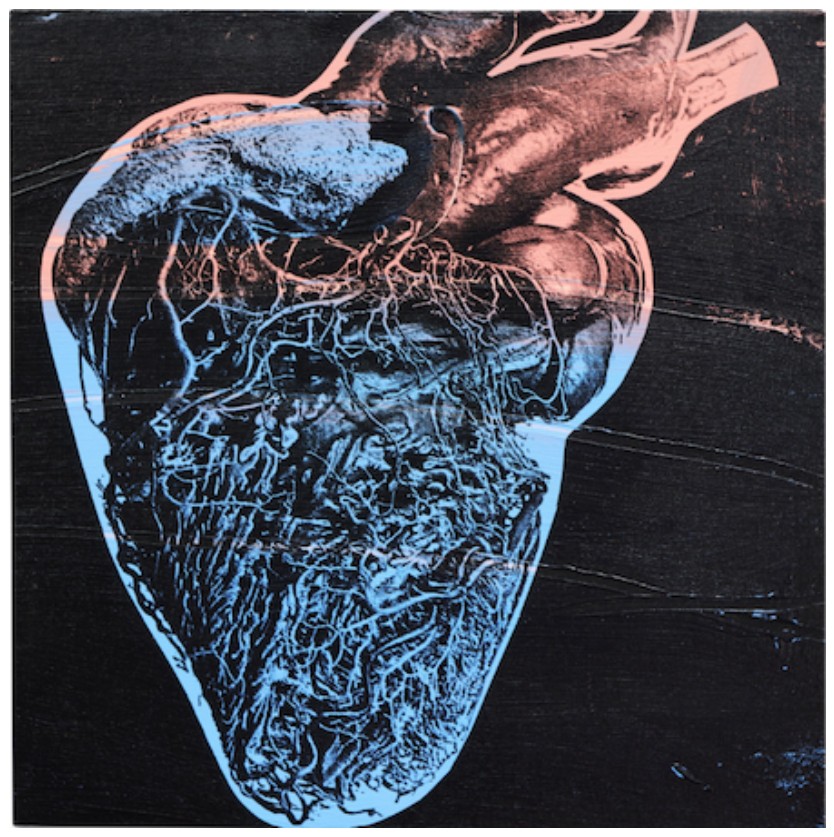
Andy Warhol, Human Heart, 1979.
Artwork: © 2025 The Andy Warhol Foundation for the Visual Arts, Inc. / Licensed by Artists Rights Society (ARS), New York
In a contrasting approach, Warhol’s Human Hearts series (1979) presents the human heart in a realistic manner, diverging from the whimsical representations of earlier works. This series features a linear pattern of the human heart, set against a monochrome black background, with spontaneous, painterly color gradients that resonate between the foreground and background. The inversion of elements is also seen in Hearts Pink, where a monochrome heart contrasts with a vibrant, painterly background.
This technique echoes Warhol’s practice in his renowned Reversal Series (1979-1986). As explained in volume 6B of Warhol’s Catalogue Raisonné, “The abstract look that Warhol was ‘beginning to use’ in his Human Heart paintings is a conspicuous feature in the painted backgrounds in his contemporaneous Reversal series, especially the mural-sized canvases of Marilyn. Multicolored, all-over backgrounds may also be noted among the smaller, serial compositions of the Reversal series”. In the Reversal series, which is characterized by innovative silkscreen printing and layering techniques, familiar images are inverted, creating striking contrasts that transform their meanings. The inversion of images in the Reversal Series explores the duality of public and private personas, as well as the complexities of self-representation in the age of mass media. Warhol’s engagement with recognizable subjects interrogates the nature of fame and the constructed identities of both the artist and his subjects.
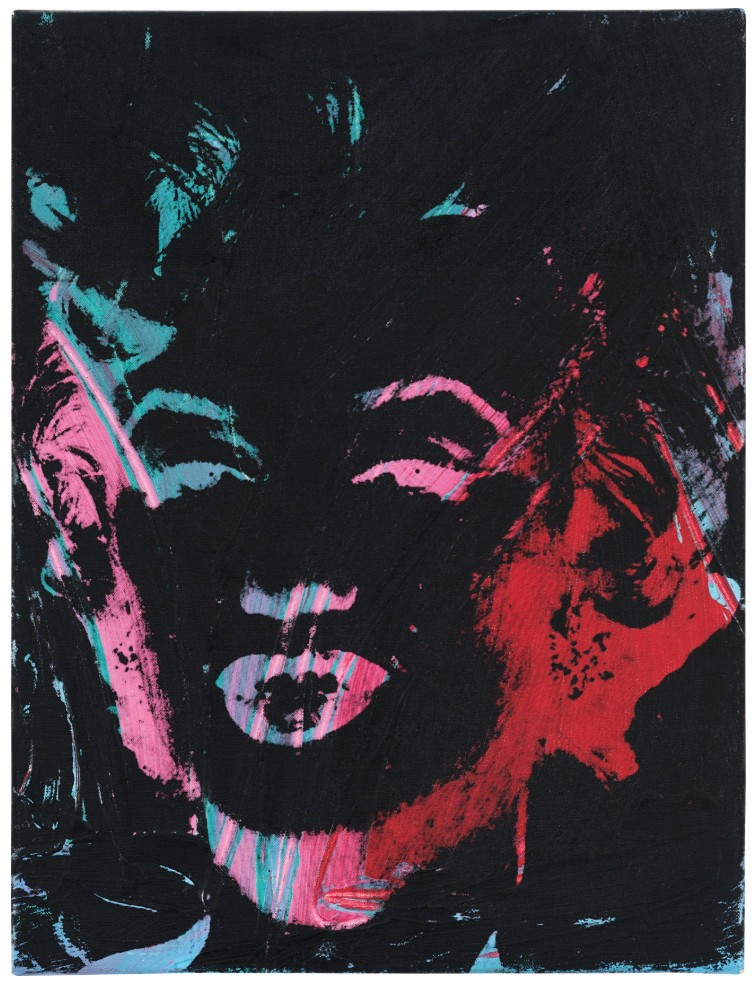
Andy Warhol, 1 Colored Marilyn (reversal series), 1979.
Artwork: © 2025 The Andy Warhol Foundation for the Visual Arts, Inc. / Licensed by Artists Rights Society (ARS), New York
The Andy Warhol Catalogue Raisonné points out that the Heart paintings for his ’54 friends’ are linked Studio 54 Complimentary Drinks Ticket paintings he had produced as Christmas gifts for the Halston family, as they could both me broadly grouped into ‘social’ paintings for Warhol’s friends. The present lot stood out amongst the broader group of works Warhol produced for his friends as the Heart series presents much more human and painterly details in comparison to the other silk screen works, and this is not without significance:
“I tried doing them by hand, but I find it easier to use a screen. This way, I don’t have to work on my objects at all. One of my assistants or anyone else, for that matter, can reproduce the design as well as I could…the reason I’m painting this way is that I want to be a machine”
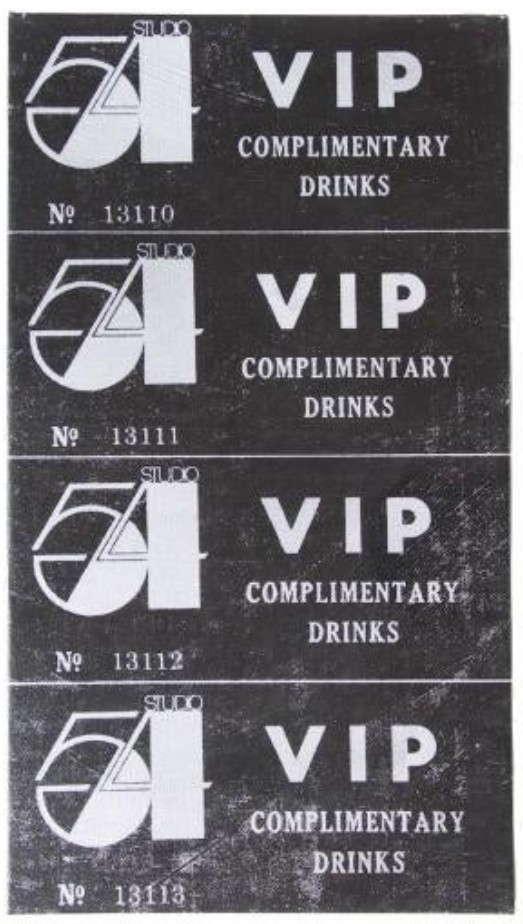
Andy Warhol, VIP ticket-Studio 54, c.a. 1978.
Artwork: © 2025 The Andy Warhol Foundation for the Visual Arts, Inc. / Licensed by Artists Rights Society (ARS), New York
In a 1962 interview Warhol responded, as above, when asked about the reason behind his repeated employment of the silk screen medium. The reproducibility introduced by new advancement in methods of art and image making was seen by some as a disgrace by standards of traditional art practice, but for others, including Warhol, the triumph of modernity. The response triggered by those advancements have left important marks in the trajectory of the history of art. Benjamin Walter’s seminal essay “The Work of Art in the Age of Mechanical Reproduction” (1936) has started a century-long debate within the Fine Art discipline regarding whether reproducible processes of art making would lead to, in Walter’s words, “a loss of the objects original ‘aura’”. The group of Pop Artists in the 1960s, spearheaded by Warhol, emerged as a direct, and oppositional, response to such arguments. Those artists exploit the reproducible and mechanical nature of photography and printing processes and employs them as quintessential manifestations of their ideology: a satirical and poignant commentary on the artificial and commercial nature of art and society in the latter half of the 20th century. Within this context, Warhol’s choice to introduce manual, painterly strokes into the Heart paintings becomes profoundly significant. It represents a conscious move away from mechanical satire toward a more genuine expression of human connection. The application of diamond dust in Hearts Pink furthers this reinterpretation. A material often used by Warhol as a sarcastic metaphor for the glittering superficiality of capitalist spectacle is here transformed. In this intimate, personal gift, the diamond dust may instead symbolize the precious, enduring strength of friendship.
Auction Results
Heart Shaped Candy Box (True Love), 1984
Christie’s Hong-Kong: 29 March 2025
Estimated: HKD 800,000 – 1,200,000
HKD 3,150,000 / USD 404,755
ANDY WARHOL (1928-1987), Heart Shaped Candy Box (True Love) | Christie’s
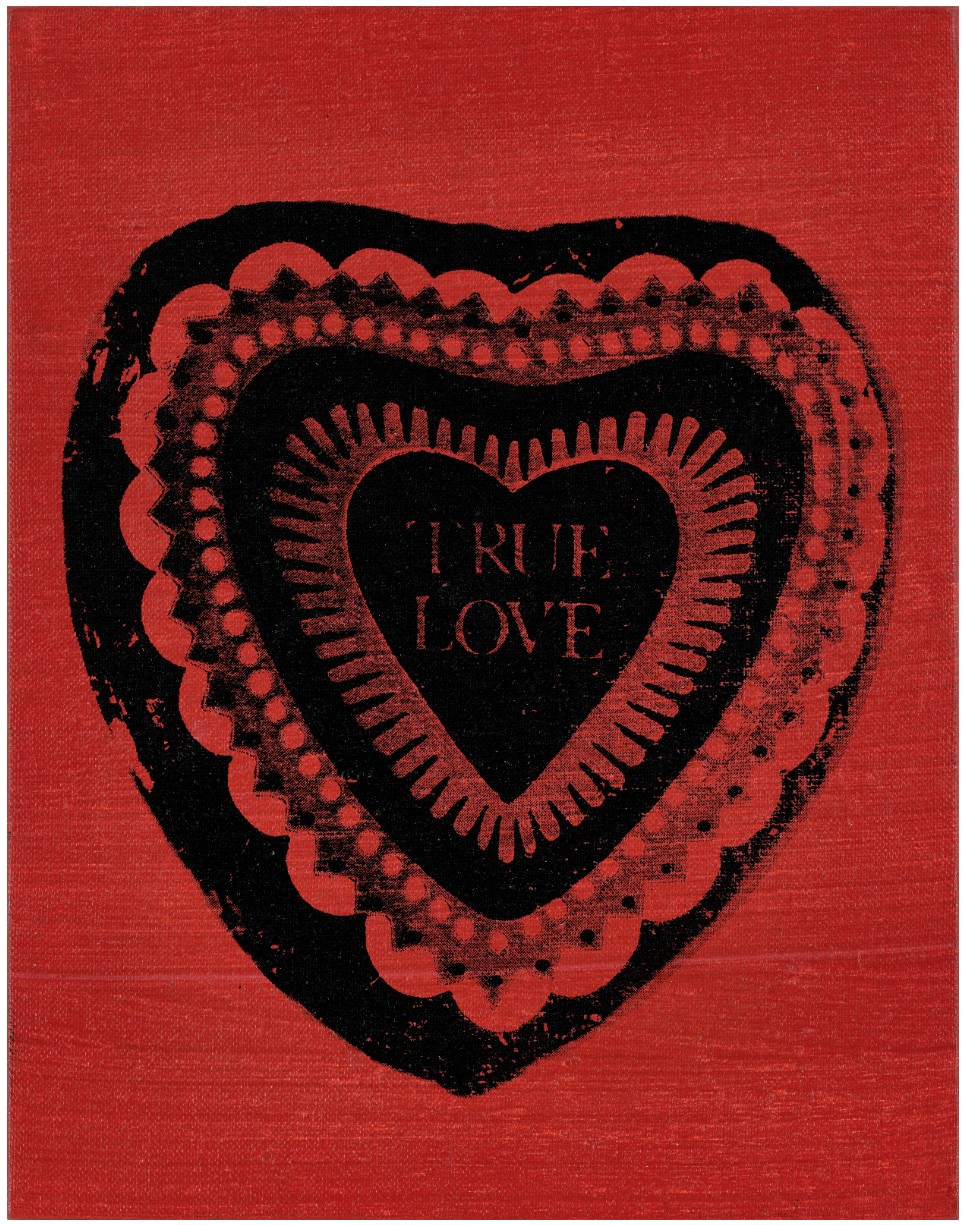
ANDY WARHOL (1928-1987)
Heart Shaped Candy Box (True Love), 1984
Synthetic polymer and silkscreen ink on canvas
10 1/8 x 8 inches (25.7 x 20.3 cm)
Signed, inscribed, dedicated and dated ‘TO LIZA H.B. March 12 Andy Warhol 84’ (on the overlap)
Hearts Pink, 1982
Phillips Hong-Kong: 27 September 2025
Estimated: HKD 1,600,000 – 2,400,000
HKD 2,193,000 / USD 281,920
Andy Warhol Modern & Contemporary Art Evening Sale
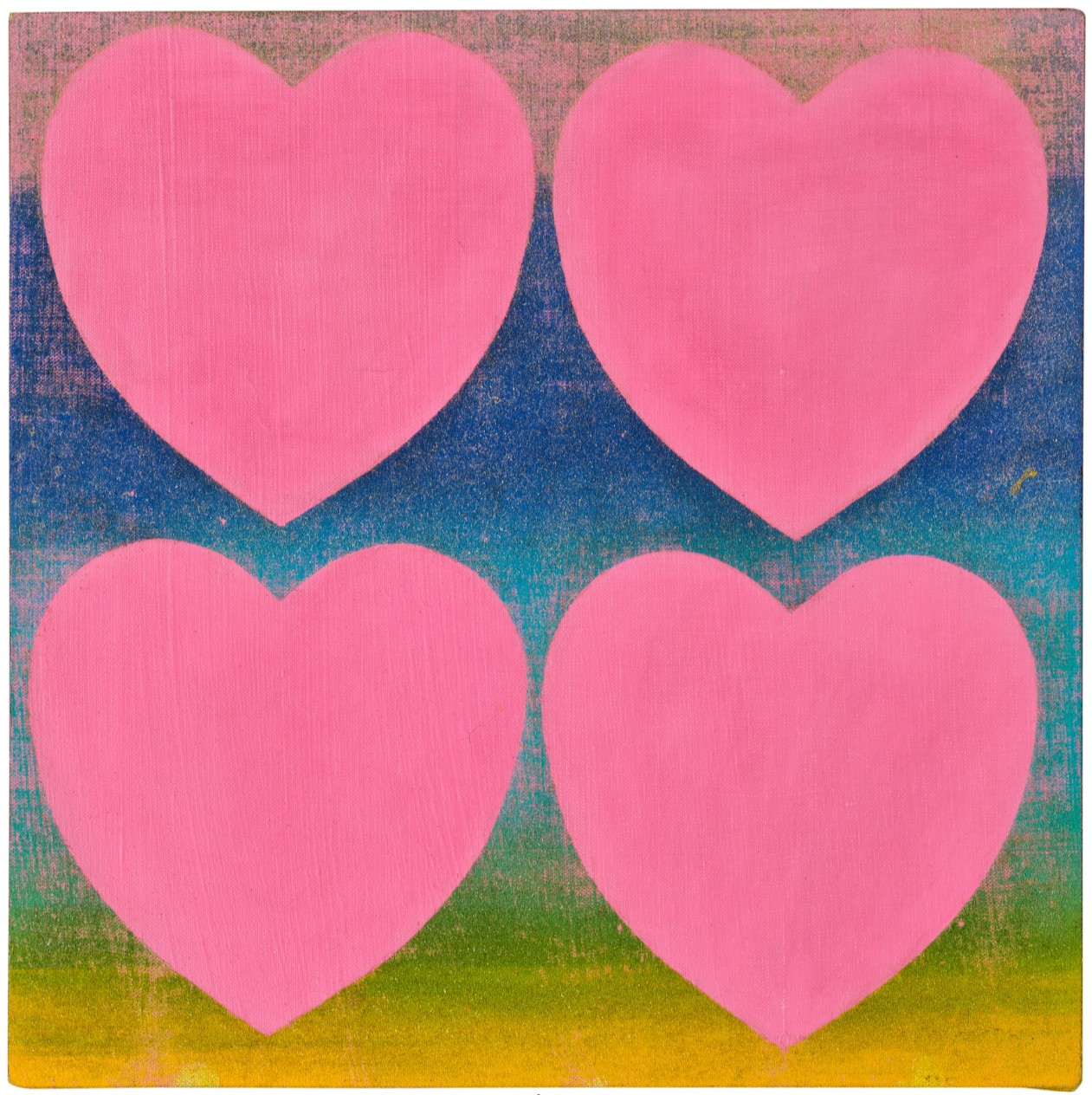
Hearts Pink, 1982
Acrylic, silkscreen ink and diamond dust on canvas
Further dedicated ‘to J. & M’ on the stretcher
Burning Heart, 1981
Christie’s New-York: 16 December 2025
Estimated: USD 120,000 – 180,000
USD 152,400
ANDY WARHOL (1928-1987), Burning Heart | Christie’s
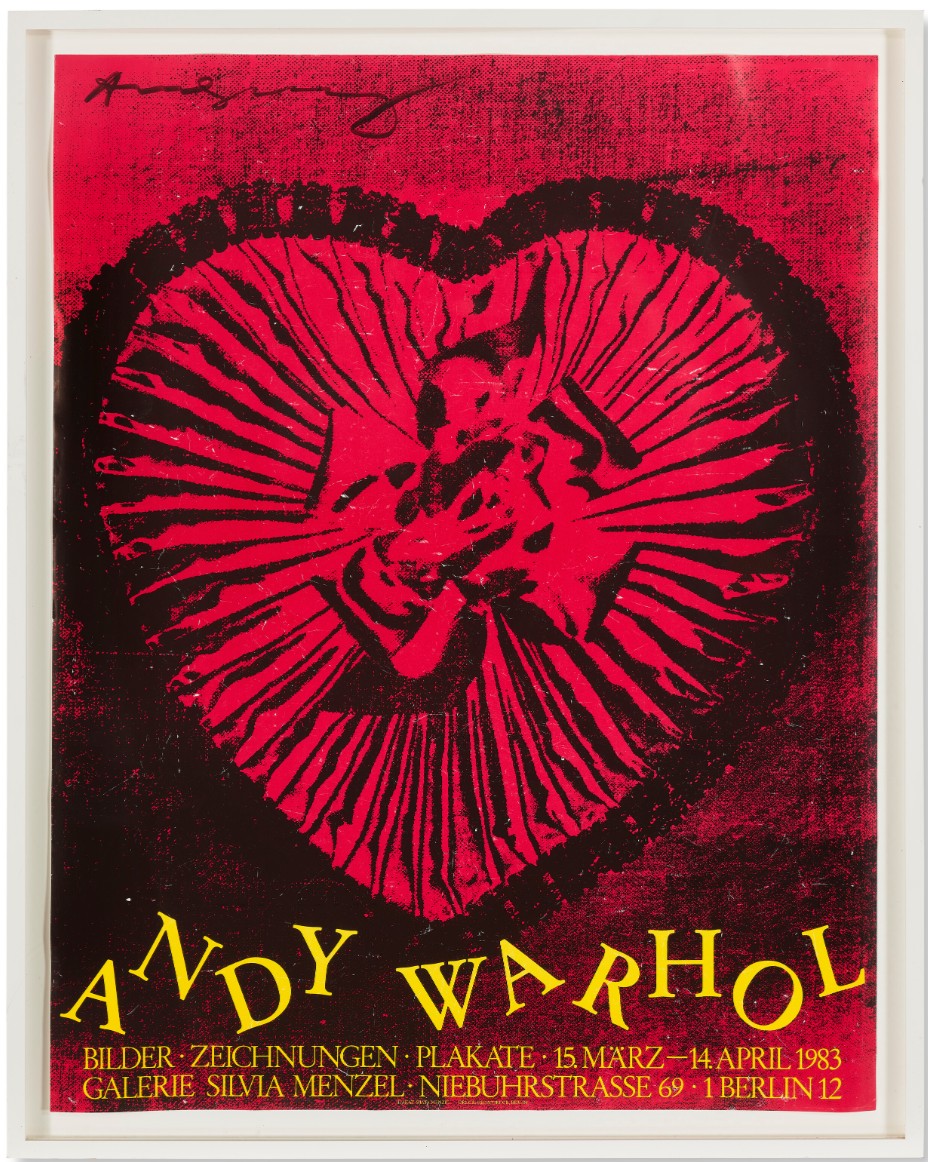
ANDY WARHOL (1928-1987)
Burning Heart, 1981
Synthetic polymer paint and silkscreen ink on canvas
14×11 inches (35.6 x 27.9 cm)
Signed and dated ‘Andy Warhol 81’ (on the overlap)
Untitled (Four Hearts), 1982
Sotheby’s New-York: 14 May 2024
Estimated: USD 120,000 – 180,000
USD 203,200
Untitled (Four Hearts) | Contemporary Day Auction | 2024 | Sotheby’s (sothebys.com)

ANDY WARHOL (1928 – 1987)
Untitled (Four Hearts), 1982
Acrylic, silkscreen ink and diamond dust on canvas
14×14 inches (35.6 x 35.6 cm)
Signed and dated 82 (on the reverse)
Hearts, 1982
Sotheby’s Milan: 20 April 2023
Estimated: EUR 100,000 – 150,000
EUR 165,100 / USD 181,110
Hearts | Contemporary Auction | 2023 | Sotheby’s (sothebys.com)
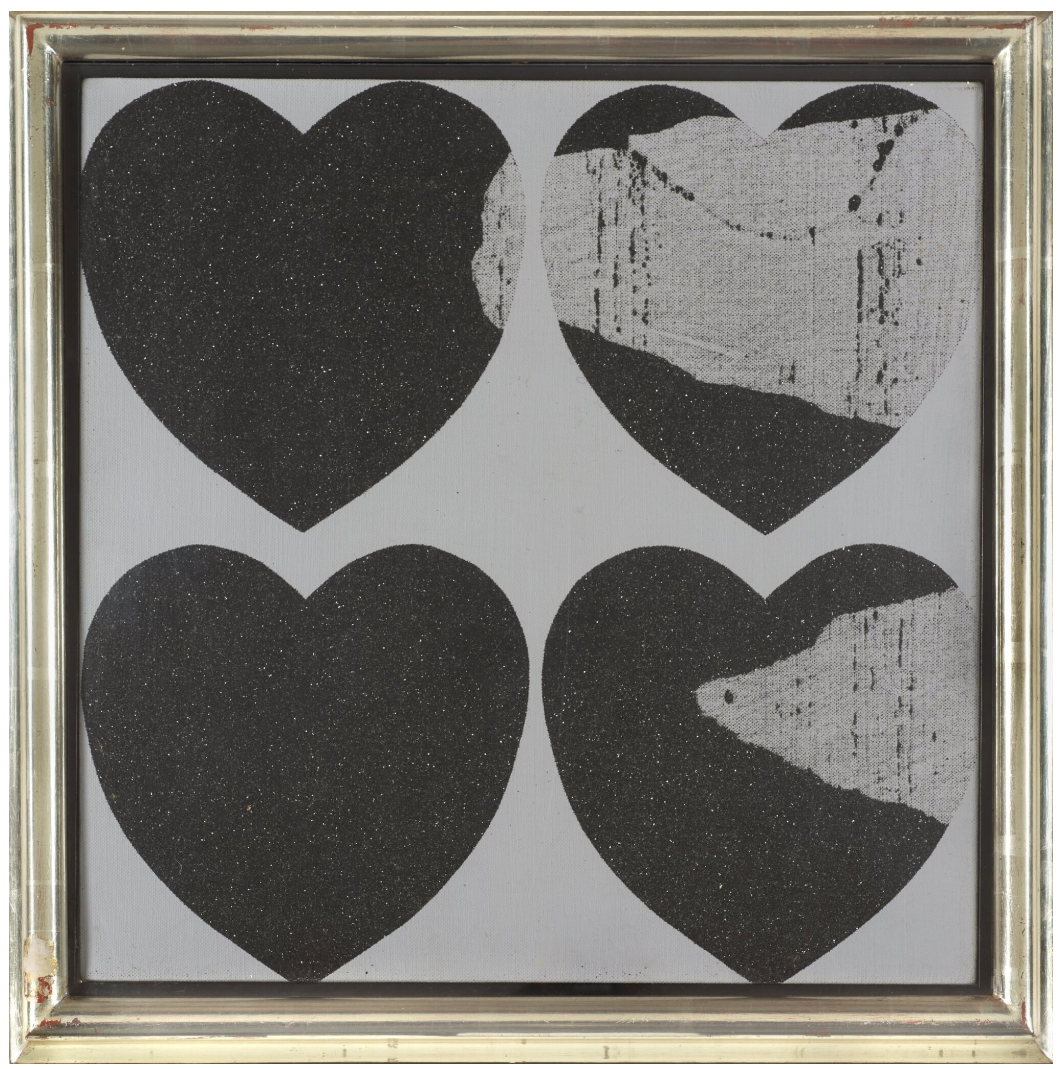
ANDY WARHOL (1928 – 1987)
Hearts, 1982
Synthetic polymer, silkscreen ink and diamond dust on canvas
14×14 inches (35.5 x 35.5 cm)
Signed and dated 1982 on the overlap
4 Hearts
Hearts Pink, 1982
Phillips Hong-Kong: 27 September 2025
Estimated: HKD 1,600,000 – 2,400,000
HKD 2,193,000 / USD 281,920
Andy Warhol Modern & Contemporary Art Evening Sale
Hearts Pink, 1982
Acrylic, silkscreen ink and diamond dust on canvas
Further dedicated ‘to J. & M’ on the stretcher
Hearts, 1981
Property from the Foundation Mireille and James Levy
Christie’s New-York: 3 December 2020
Estimated: USD 120,000 – 180,000
USD 187,500
Andy Warhol (1928-1987), Hearts | Christie’s
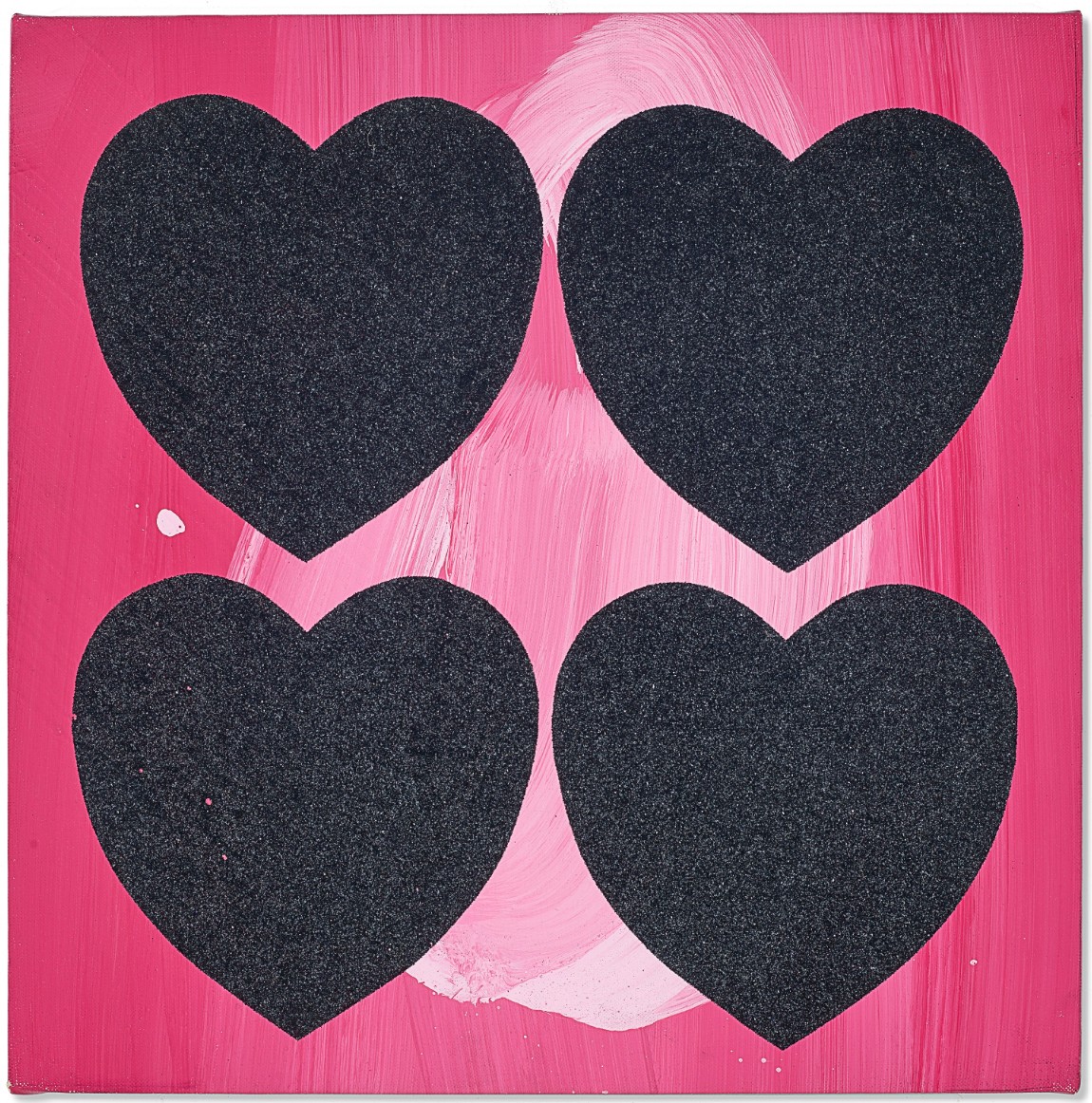
ANDY WARHOL (1928-1987)
Hearts, 1981
Acrylic, silkscreen ink and diamond dust on canvas
16×16 inches (40.7 x 40.7 cm)
Signed and dedicated ‘H.B. Jon I Love You Andy’ (on the reverse)
Hearts, 1981
Property from the Foundation Mireille and James Levy
Christie’s New-York: 3 December 2020
Estimated: USD 120,000 – 180,000
USD 187,500
Andy Warhol (1928-1987), Hearts | Christie’s
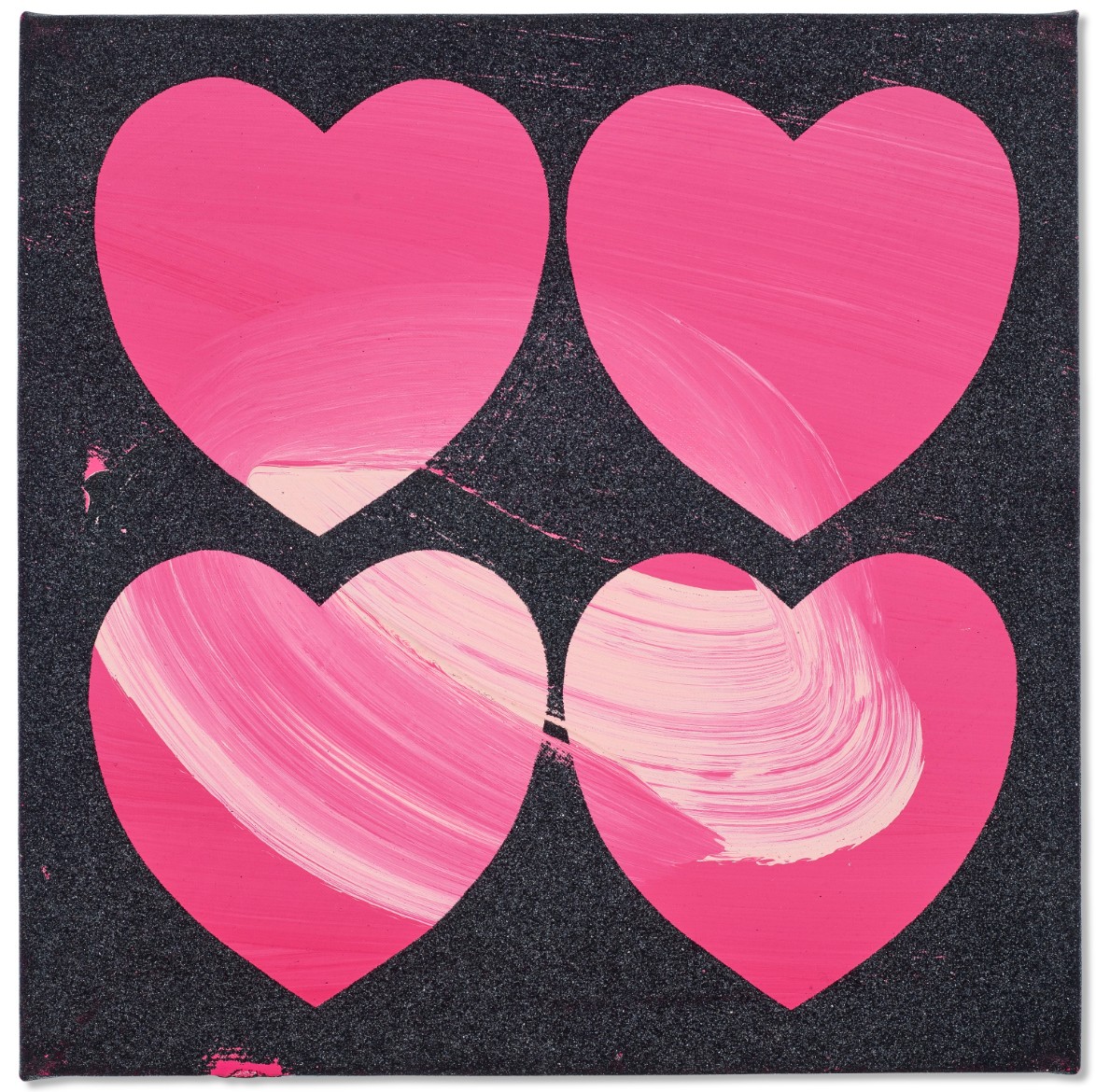
ANDY WARHOL (1928-1987)
Hearts, 1981
Acrylic, silkscreen ink and diamond dust on canvas
16×16 inches (40.7 x 40.7 cm)
Signed and dedicated ‘H.B. Jon I Love You Andy’ (on the reverse)
Hearts (Four), 1979-84
Sotheby’s London: 11 February 2016
Estimated: GBP 50,000 – 70,000
GBP 125,000 / USD 180,645
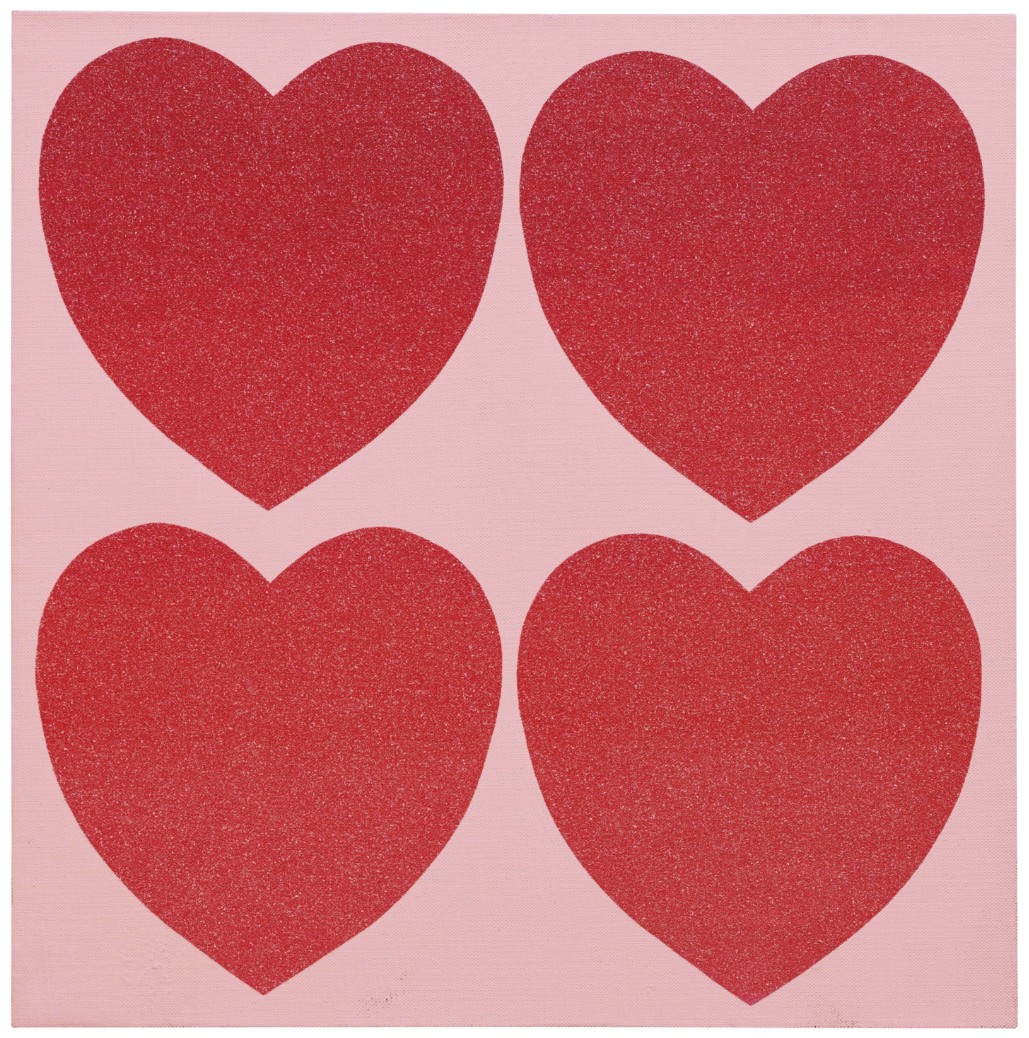
ANDY WARHOL
Hearts (Four), 1979-84
Acrylic, diamond dust and silkscreen ink on canvas
15×15 inches (38×38 cm)