Begun in 1975, Andy Warhol’s celebrated Ladies and Gentlemen series was the first major thematic group of works based on his use of Polaroid photographs. Unlike his portraits from the 1960s, Warhol’s portraits of the 1970s and 80s were made primarily using photographs he had taken himself and reveal his first experimentations with the Polaroid camera. A perfect vehicle for capturing his parading circus of Factory groupies, celebrities and socialites, these snap-shots would allow Warhol to capture hundreds of the expressions, gestures and moments he sought to reveal in his subjects.
“We would ask them to pose for ‘a friend’ for $50 an hour. The next day, they’d appear at the Factory and Andy, whom we never introduced by name, would take their Polaroids. And the next time we saw them at the Gilded Grape, they invariably would say, “Tell your friend I do a lot more for fifty bucks.”
Bob Colacello
Introduction
As Warhol’s clever title implies, these subjects are ladies in terms of gender and gentlemen in terms of sex. His sitters in this series consisted of drag queens and transvestites who had been prominent in his Factory crowd and were featured in many of his films. As Vincent Fremont reflects, “Even though Andy’s portrait sittings were relatively short in the classic sense, I think most people came away from the sittings interested in Andy, the artist. He made it exciting and special to pose for him. When Andy was working on a series of paintings entitled “Ladies and Gentlemen,” a number of transvestites were invited up to the studio to be photographed. Bob Colacello found most of them at a club called The Gilded Grape. After the photo session, I would hand the subjects a check and send them over to the bank. Usually they would not have any identification, so the bank would call me and ask if I knew a Helen or a Harry Morales! I do not remember if they knew who Andy was, but the photo sessions were wonderful for every one of them. They were able to do their favorite poses and act glamorous for Andy’s camera.”
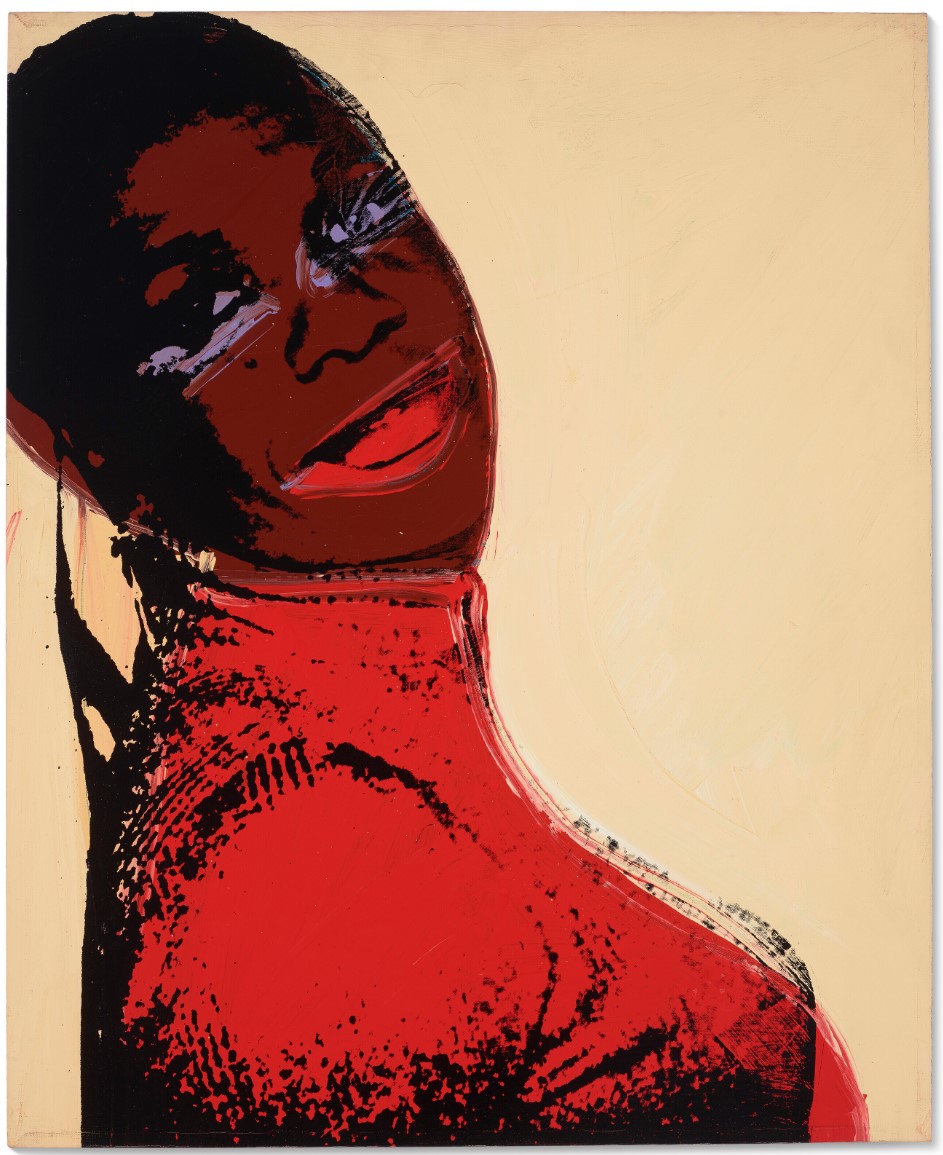
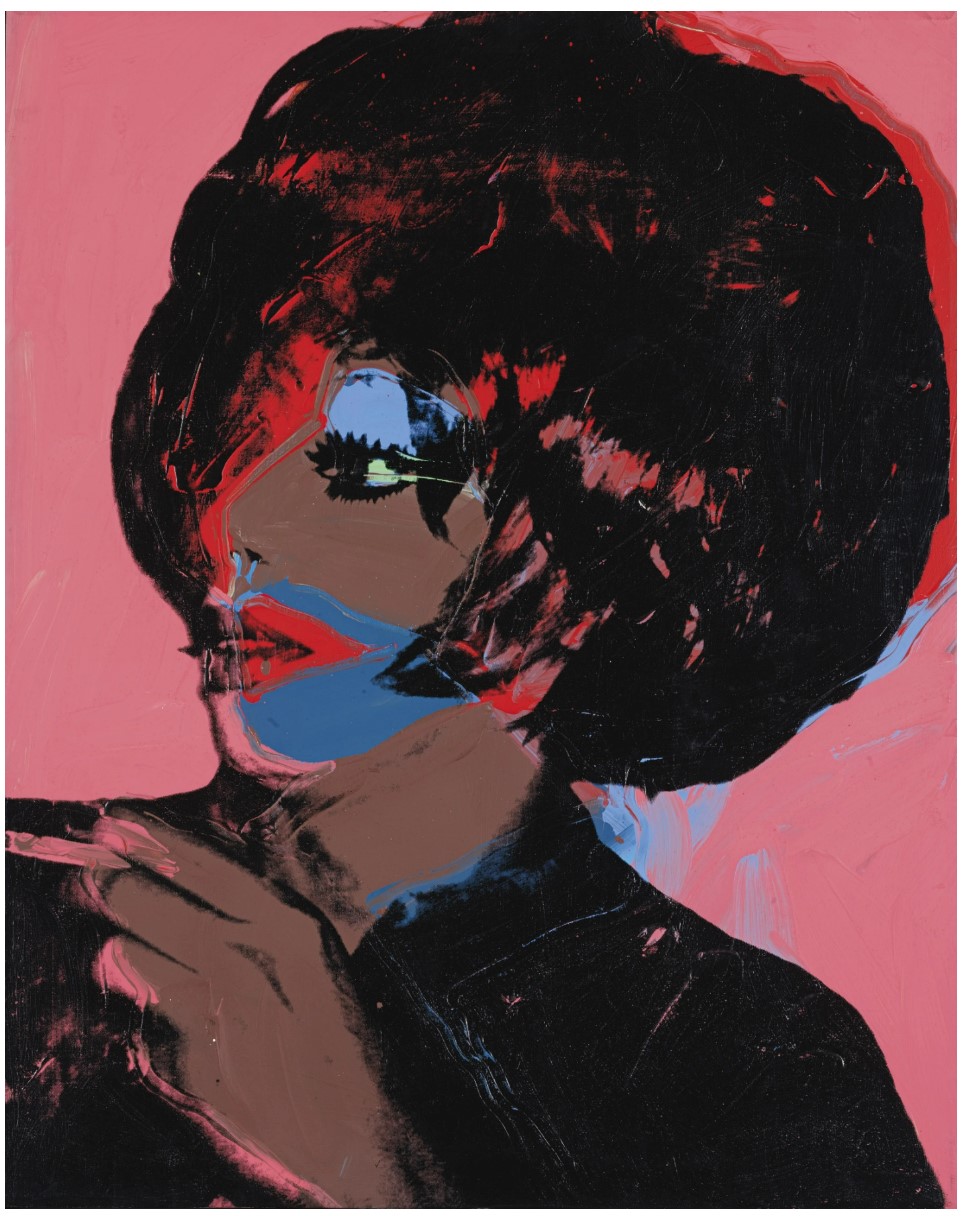
The Ladies and Gentlemen paintings are among Warhol’s most abstract portraits. A general feature these works share is the sweeping zones of intense, clashing color. The figure-ground relation is pushed to new extremes and the dissonance between silk-screened and painted ground implies a further abstraction of the self. These glamorous portraits at once created an illusion of the celebrity. Yet, they are far from Warhol’s earlier iconic Jackie or Marilyn portraits. In Ladies and Gentlemen, their striking poses, tousled hair and lavish make-up and accessories immediately elevated their status from drag queen to icon. In true Warhol fashion, he believed anyone could become identical to the stars. Warhol’s Ladies and Gentlemen pictured have no proper names. In the absence of specific names, they remain nobodies. Attaining fame necessarily involves making a name for oneself, and these sitters will never be stars. Instead, these ladies and gentlemen represent the abstract notion of celebrity.
ANDY WARHOL
Ladies and Gentlemen, 1975
Ladies and Gentlemen is an astute examination of the nature of celebrity and glamour, as Andy Warhol combines the heady atmosphere of the 1970s New York club scene with a sharp critique on our obsession with fame and fortune. Inspired by his own legacy of iconic paintings of female celebrities including Marilyn Monroe and Elizabeth Taylor (figures held up by our culture as the epitome of beauty and glamor), in this series Warhol turned to the Hispanic and African American drag queens that populated the underground bars and clubs of New York.
“Drags are ambulatory archives of ideal movie star womanhood. They perform a documentary service, usually consecrating their lives to keeping the glittering alternative alive and available for (not-too-close) inspection”
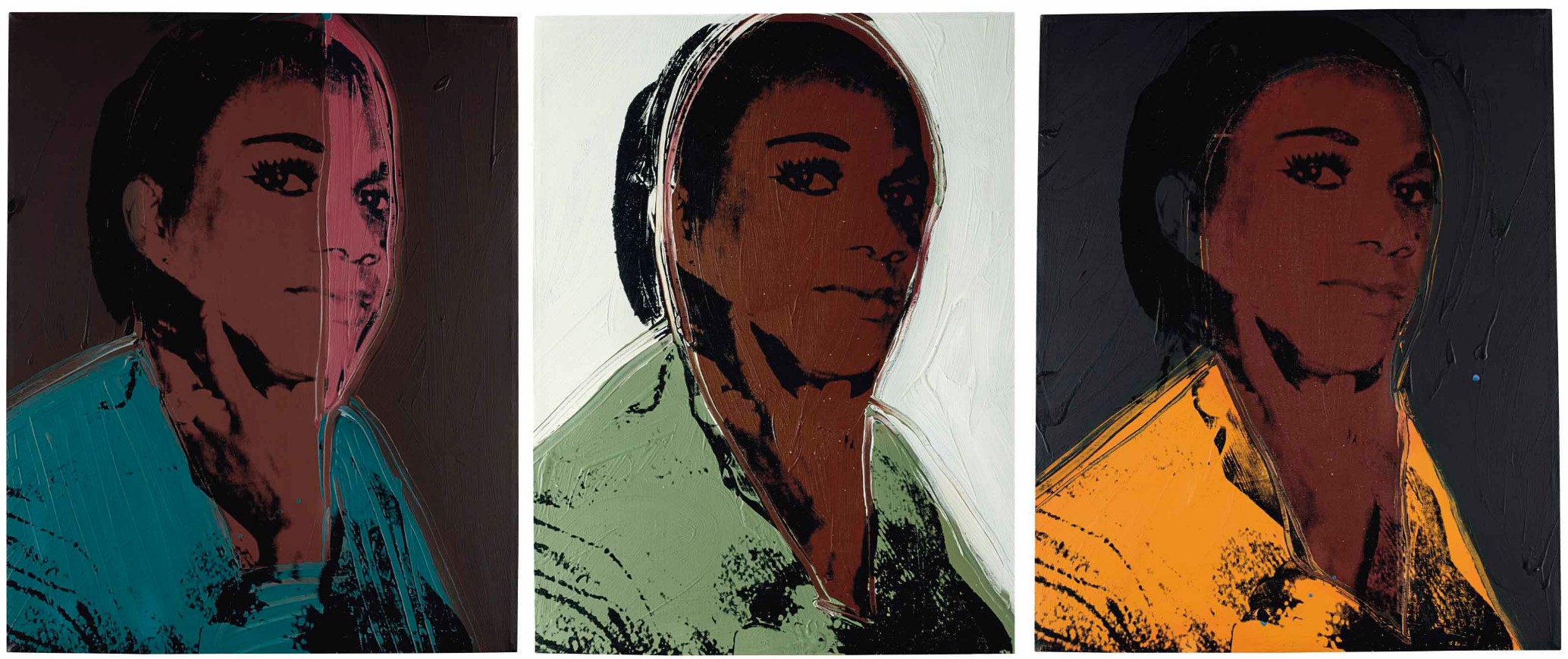
Ladies and Gentlemen also shows the artist working with seriality and the repetition of a single image to dramatic effect, the sitter’s coquettish visage appearing in triplicate across the canvases, seemingly caught in mid-conversation. Playing with notions of masculinity and femininity, kitsch and stardom, Warhol’s treatment of his sitter bestows the same mix of reverence and irony as his best loved celebrity portraits.
Unlike his early ‘60s paintings of Hollywood celebrities, which made use of existing publicity stills that conveyed a sense of distance from the viewer, Warhol took the Polaroid photographs for this series himself, the proximity to his sitters affording him a greater degree of creative control as he composed the photos from the neck up and in three-quarter angle, asking the drag queens to “vogue” in a variety of expressions from femme fatale to coquette. Warhol skillfully managed the photo sessions so as to make the sitters feel glamorous and special, and to bring out their best poses. After enlarging the images for the silk-screening process, Warhol prepared his canvases with bold blocks of color to echo the contours of their face and clothes. By treating these drag queens with the same impersonal distance that he approaches all his subjects, Warhol presents their aspiration for beauty and glamour without judgment. In the photos Warhol created for this series, he captured a tension between the artifice of the gender façade and the earnest expression of the sitter, which belies an underlying vulnerability.
“I’m fascinated by boys who spend their lives trying to be complete girls, because they have to work so hard – double-time – getting rid of all the tell-tale male signs and drawing in all the female signs… It’s hard work to look like the complete opposite of what nature made you and then to be an imitation woman of what was only a fantasy woman in the first place.”
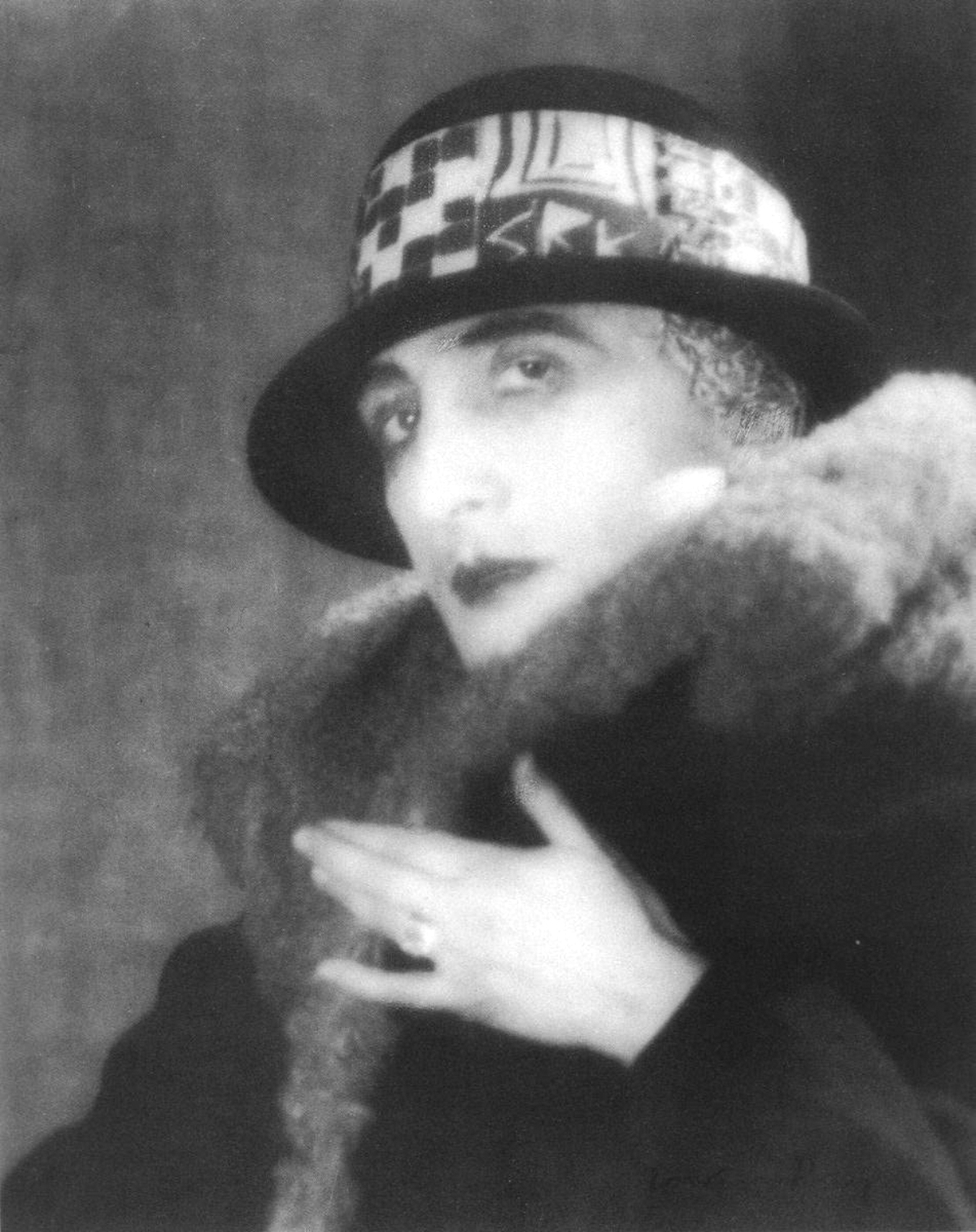
The genesis of the Ladies and Gentlemen series lay in Warhol’s own longstanding interest in drag culture, and his enthusiasm for the work of avant-garde photographer Man Ray. Warhol himself dressed in drag for his own series of Polaroid self-portraits in 1981. The images were homage to Man Ray’s 1920s portrait of Marcel Duchamp as his female alter ego, Rrose Sélavy.
Bold and glamorous, the sitters for Andy Warhol’s Ladies and Gentlemen exist in a unique category of the artist’s famed silkscreen portraits. Neither famous celebrities nor wealthy socialite patrons, they differ from the artist’s previous subjects in that they are complete strangers, all found by his assistants in local hangouts and paid a small modeling fee to pose for the artist. Yet, they are perhaps the most intimate of all his portraits, evoking glamor as well as embodying the art of disguise, they struck a chord with the Warhol and remain one of the most unique and poignant series within the artist’s oeuvre.
“I wonder whether it’s harder for 1) a man to be a man, 2) a man to be a woman, 3) a woman to be a woman, or 4) a woman to be a man. I don’t really know the answer, but from watching all the different types, I know that the people who think they’re working the hardest are the men who are trying to be women…”
“Drag Queens are reminders that some stars still aren’t like you and me. … real girls we knew couldn’t seem to get excited about anything, and the drag queens could get excited about everything.”
The series, which was never exhibited in the United States during Warhol’s lifetime, bears striking structural and compositional similarities to his celebrity portraiture. However, it was the choice of models for the Ladies & Gentlemen series that made the works so subversive and original. Rather than select readily available drag queens who hung around the Factory, Warhol’s assistants approached potential candidates at the infamous Gilded Grape nightclub, which had become a magnet for transvestites who held nightly “conventions in front of their shrine. Warhol had them pose while he photographed them with his preferred Polaroid “Big Shot” camera. Regardless of their marginalized status, Warhol treated these visitors like his celebrity sitters.
Auction Results
2024 Auction Results
#1. Ladies and Gentlemen, 1975
Estimated: USD 120,000 – 180,000
USD 226,800

Ladies and Gentlemen, 1975
Acrylic and silkscreen ink on canvas
14×11 inches (35.5 x 27.9 cm)
Stamped twice with the Estate of Andy Warhol and the Andy Warhol Foundation for the Visual Arts, Inc. stamps
Numbered ‘VF PA35.046’ (on the overlap)
Stamped again with the Andy Warhol Foundation for the Visual Arts Inc. stamp (on the reverse)
Numbered again ‘PA35.046’ (on the stretcher)
#2. Ladies & Gentlemen (Wilhelmina Ross), 1975
Phillips London: 8 March 2024
Estimated: GBP 120,000 – 180,000
GBP 139,700 / USD 177,140
Andy Warhol – 20th Century & Contempo… Lot 130 March 2024 | Phillips
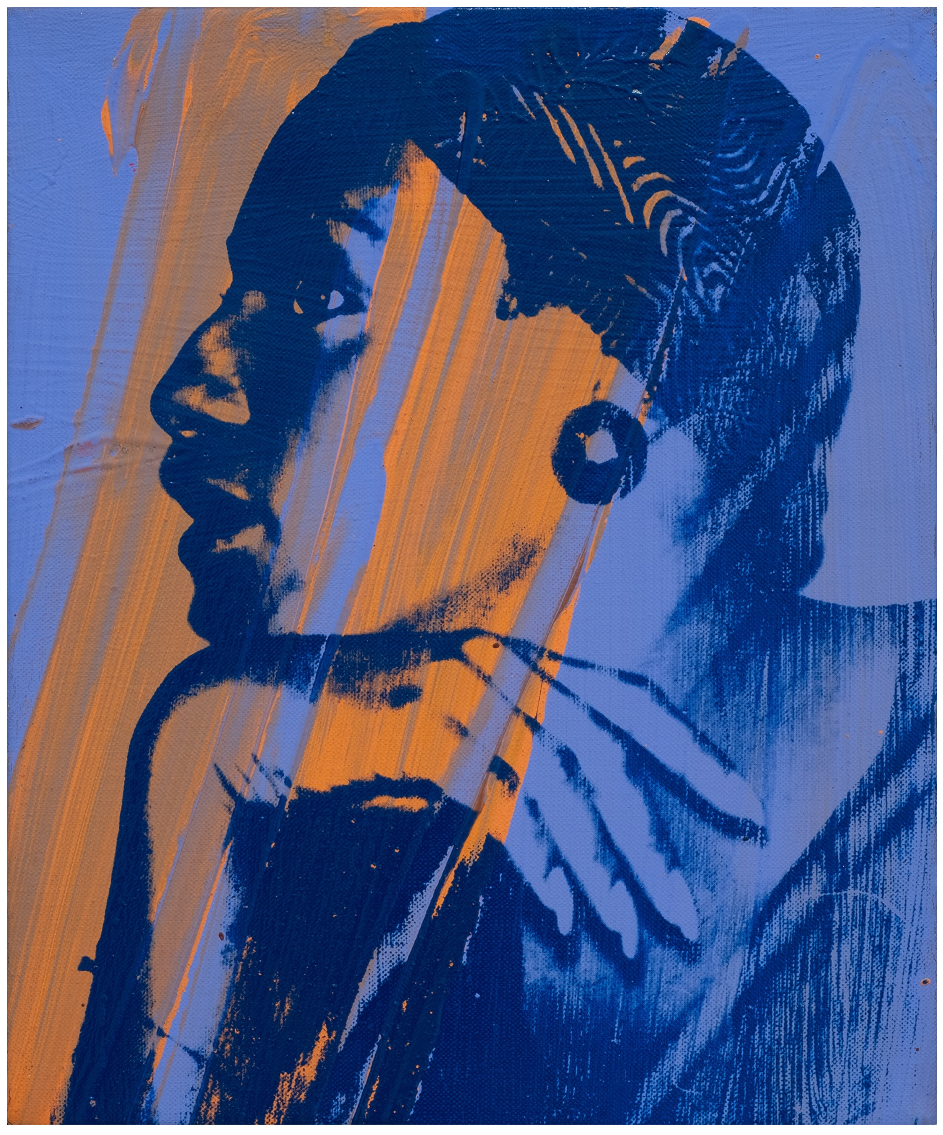
ANDY WARHOL
Ladies & Gentlemen (Wilhelmina Ross), 1975
Acrylic and silkscreen on linen
12×10 inches (30.5 x 25.4 cm)
Stamped by the Estate of Andy Warhol and the Andy Warhol Foundation for the Visual Arts, Inc. on the overlap
Stamped by the Andy Warhol Foundation for the Visual Arts, Inc. on the reverse
Numbered ‘PA.35.087’ on the stretcher
2023 Auction Results
#1. Ladies and Gentlemen (Alphanso Panell), 1975
Sotheby’s New-York: 19 May 2023
Estimated: USD 400,000 – 600,000
USD 730,250
Ladies and Gentlemen (Alphanso Panell) | Contemporary Day Auction | 2023 | Sotheby’s (sothebys.com)
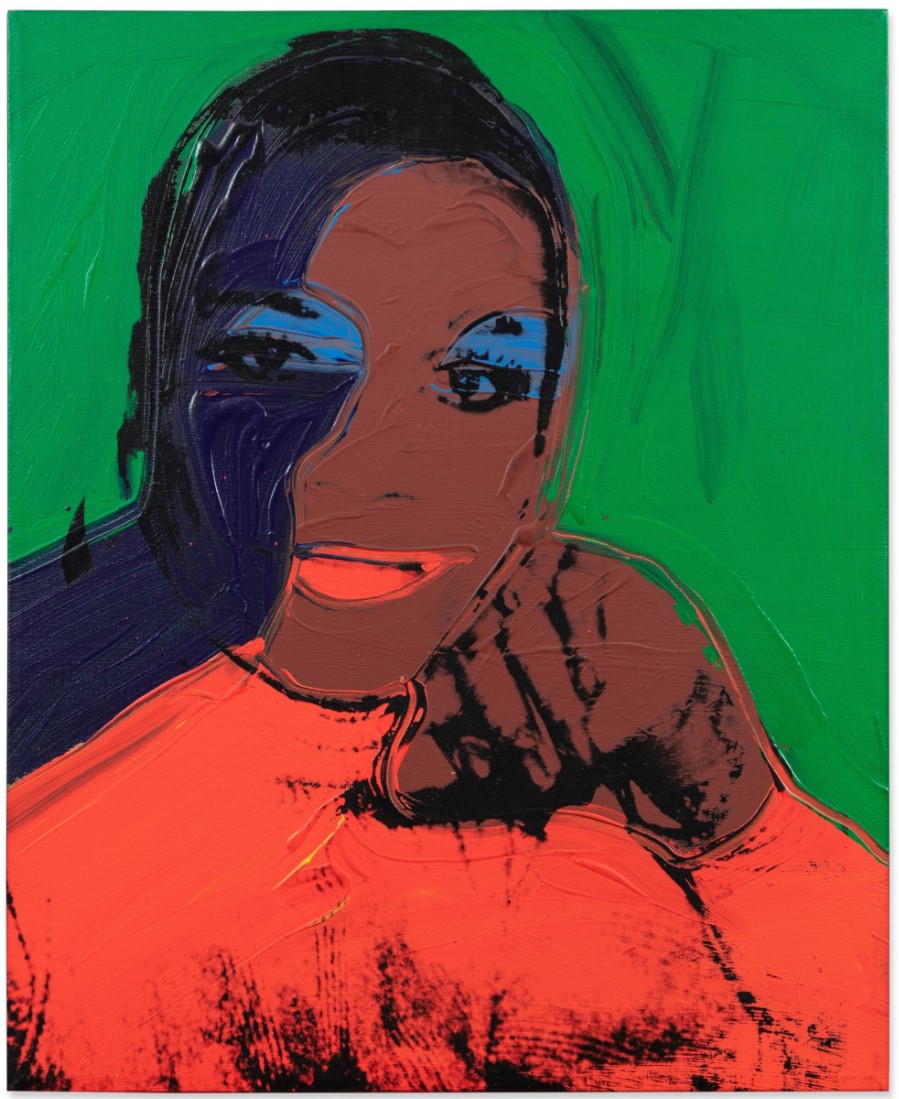
ANDY WARHOL (1928 – 1987)
Ladies and Gentlemen (Alphanso Panell), 1975
Acrylic and silkscreen ink on canvas
32×26 inches (81.3 x 66 cm)
Stamped twice by the Estate of Andy Warhol and stamped twice by the Andy Warhol Foundation for the Visual Arts, Inc. and numbered PA 35.001 VF on the overlap and on the stretcher.
#2. Ladies and Gentlemen, 1975
Sotheby’s New-York: 16 November 2023
Estimated: USD 400,000 – 600,000
USD 482,600
Ladies and Gentlemen | Contemporary Day Auction | 2023 | Sotheby’s (sothebys.com)
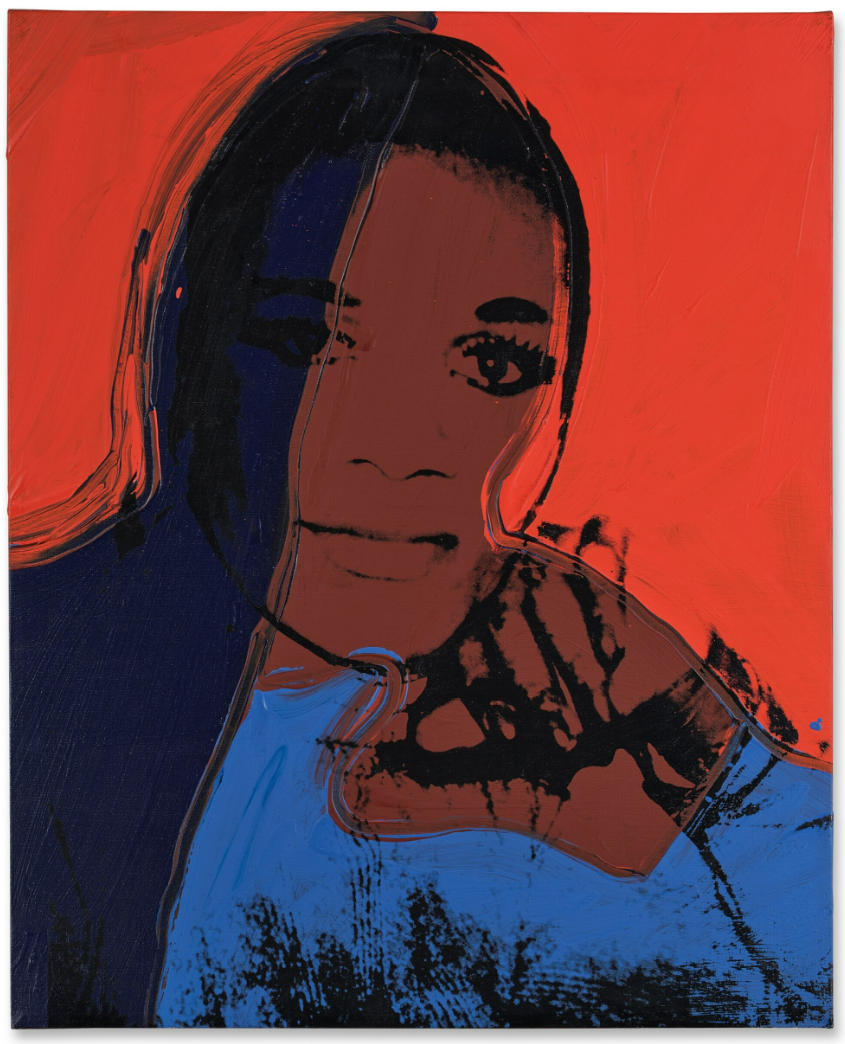
ANDY WARHOL (1928 – 1987)
Ladies and Gentlemen, 1975
Acrylic and silkscreen ink on canvas
32×26 inches (81.3 x 66 cm)
Stamped twice by the Estate of Andy Warhol
Stamped twice by the Andy Warhol Foundation for the Visual Arts, Inc.
Numbered PA35.003 on the stretcher
2022 Auction Results
Ladies and Gentlemen (Alphanso Panell), 1975
Christie’s New-York: 13 May 2022
Estimated: USD 400,000 – 600,000
USD 604,800
ANDY WARHOL (1928-1987), Ladies and Gentlemen (Alphanso Panell) | Christie’s (christies.com)
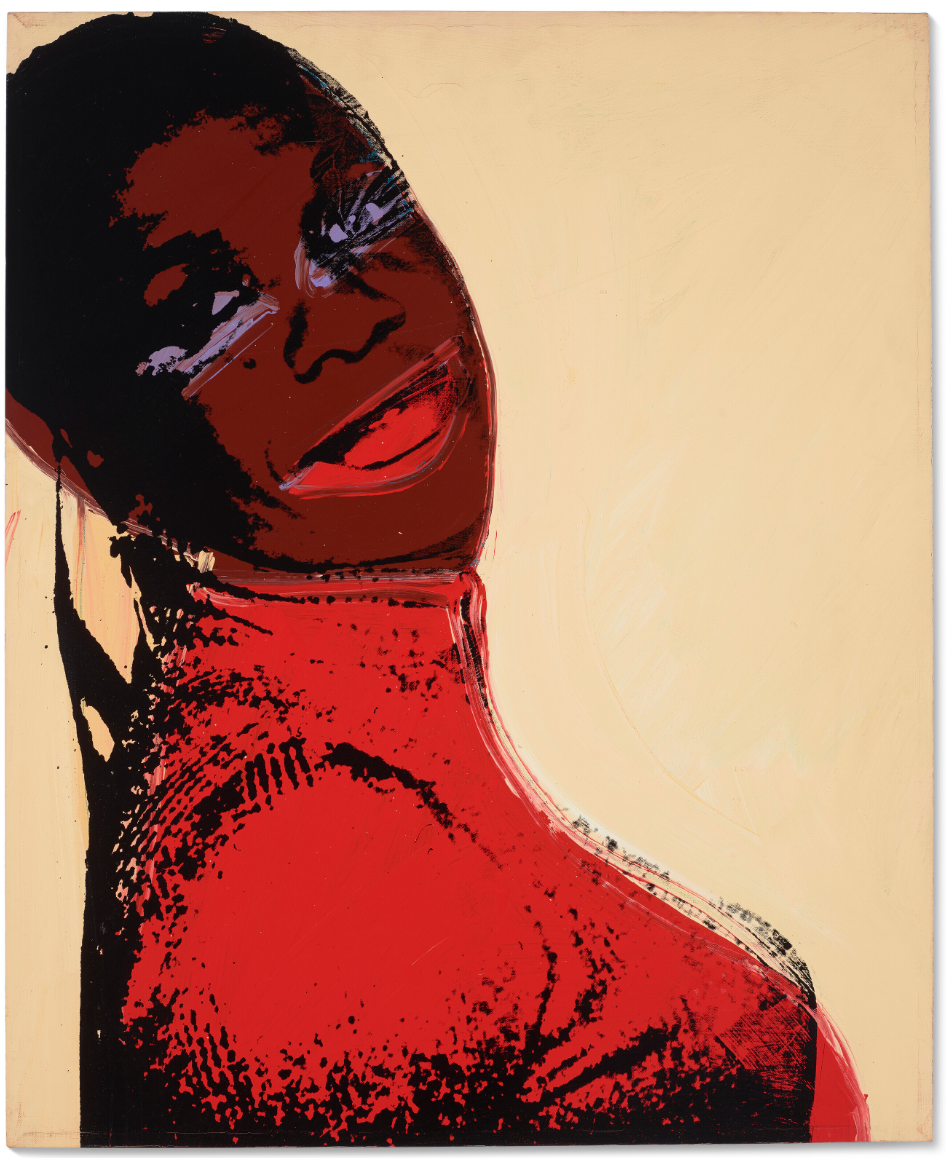
ANDY WARHOL (1928-1987)
Ladies and Gentlemen (Alphanso Panell), 1975
Acrylic and silkscreen ink on canvas
32×26 inches (81.3 x 66.0 cm)
Signed and dated ‘Andy Warhol 75’ (on the overlap)
Ladies and Gentlemen (50×40)
Ladies and Gentlemen (Wilhelmina Ross), 1975
Sotheby’s New-York: 18 November 2016
Estimated: USD 1,000,000 – 1,500,000
USD 1,452,500
(#201) Andy Warhol (sothebys.com)
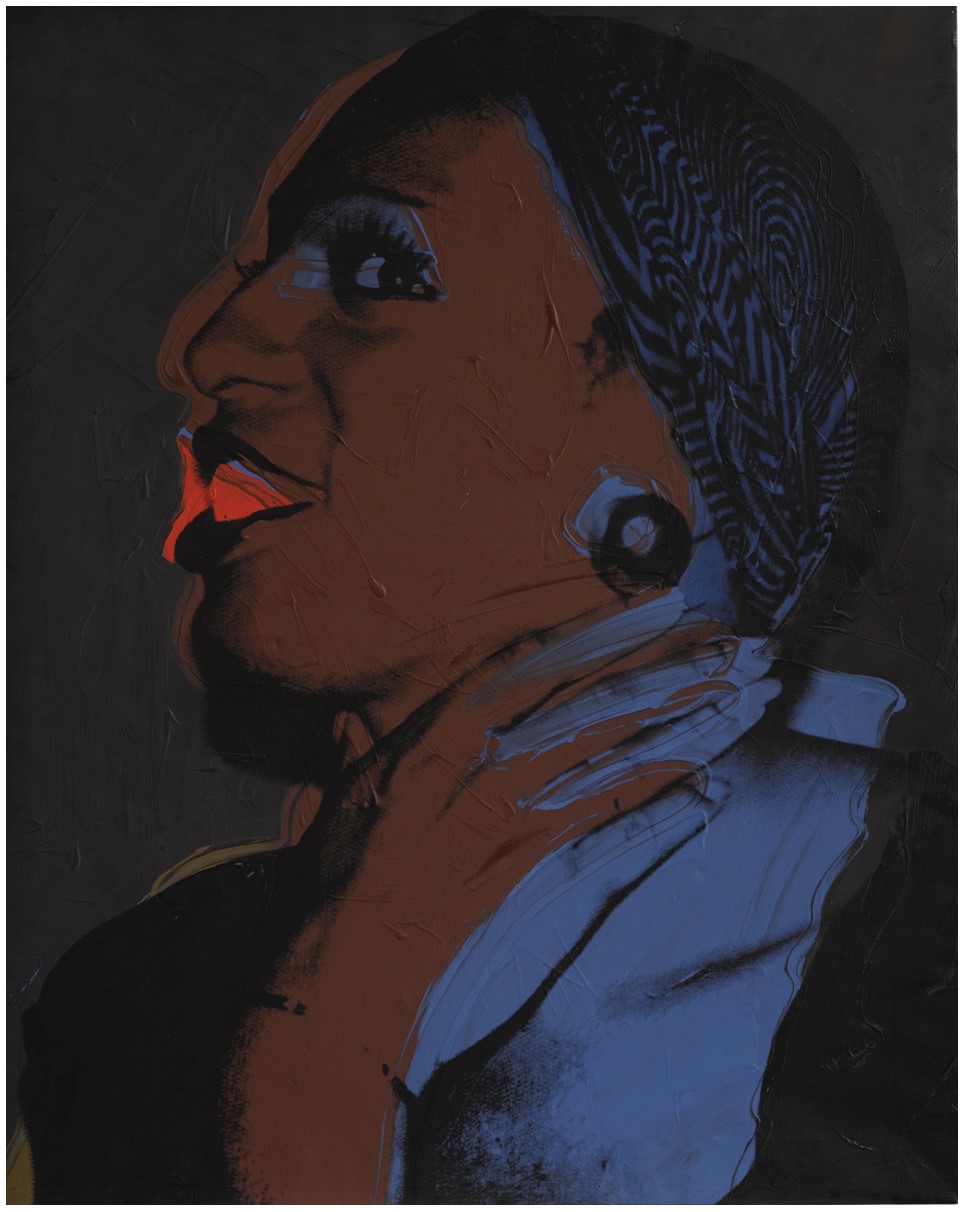 ANDY WARHOL
Ladies and Gentlemen (Wilhelmina Ross), 1975
Acrylic and silkscreen ink on canvas
50×40 inches (127 x 101.6 cm)
The present work is a portrait of Wilhelmina Ross, a local drag queen and actress, who appears in 73 of Warhol’s portraits—more than any other drag queen from the series. She embodies the glamour that Warhol so intently sought to capture in these works. Ross’s portrait evokes Warhol’s early portrayals of ‘superstars’ in its quintessentially ‘Pop’ aesthetic, only replacing the industrial magnates, movie stars, and rock musicians of his early work with new depictions of glamour and femininity. Warhol endeavored to redefine perceptions of gender while calling attention to a significant yet marginalized community. Ladies and Gentlemen asserts the ‘drag queens’ of lower Manhattan as integral subjects within Warhol’s oeuvre of portraiture, rendering virtually anonymous individuals as equally worthy of his time and careful attention. In the present work, Warhol’s process for applying the paint mirrored the sitter’s overdetermined cosmetic construction of sexual identity. Warhol quickly poured on layers of paint and then adjusted borders with his fingers. The lowest stratum of Alice blue is revealed around the eyes upon which he applied a field of steel blue. Broad splashes of chocolate brown, crimson, and minty green followed, crisscrossing regions and with ripples frozen in time. Using a heavy finger stroke, Warhol created rough delineations where the colors overlapped, for example, to reinforce the edge of her nose, lips and jaw. The present example’s elaborations, perhaps more than any other work in the Ladies and Gentlemen series, reveal Warhol’s painterly sensibilities, which he typically held in abeyance. Indeed, the gestural strokes almost belie his pre-1970s oeuvre of mechanically-produced silkscreen paintings that bore almost no record of the artist’s hand. With this series, Warhol mirrors the painterly techniques of his artistic predecessors, the Abstract Expressionists, yet mocks their exalted abstract canvases with his taboo choice of model.
Ladies and Gentlemen (Wilhemina Ross), 1975
Sotheby’s Paris: 4 December 2014
Estimated: EUR 1,000,000 – 1,500,000
EUR 2,337,500
(#9) Andy Warhol (sothebys.com)
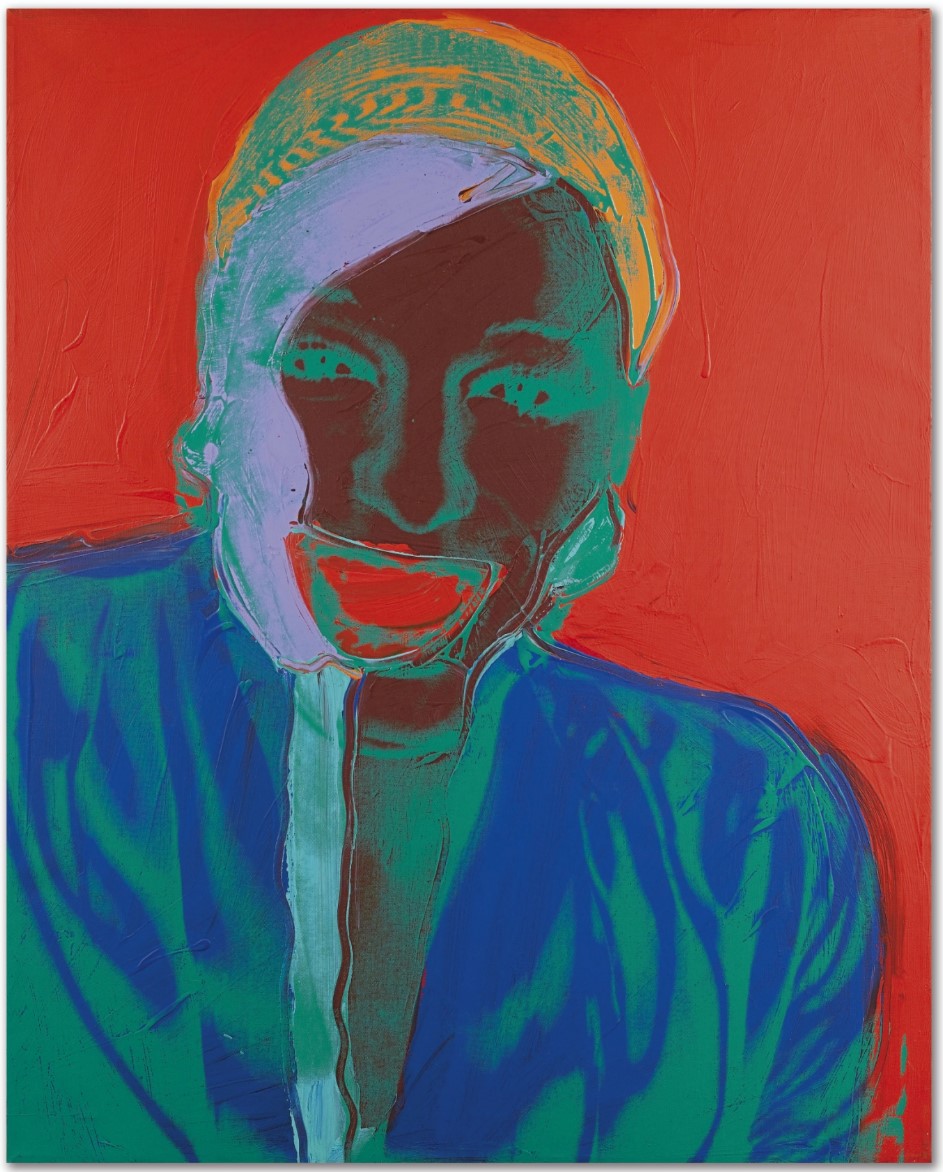
ANDY WARHOL
Ladies and Gentlemen (Wilhemina Ross), 1975
Acrylic and silkscreen ink on canvas
50×40 inches (127 x 101,5 cm)
Signed and dated 75 on the overlap
As with the thirteen other models in the series Wilhemina Ross, recognizable by the headband that emphasizes, not without elegance, the oval shape of her face, was recruited by Warhol’s assistants (Colacello, Cutrone and Tippin) at the Gilded Grape, a bar near Times Square. Unlike the famous Club 82 patronized by genre figures, veritable sexual and social phenomenon, the ladies of the night at the Gilded Grape were strangers to the Warholian, certainly heterodox, nebula. Flamboyant and show off, ostensibly combining masculine and feminine attributes, (make up, jewelry, hats and big wigs), these transvestites were chosen for their vivid mannerisms and their attire, where vulgarity gives way to an authentic originality. Providing Warhol with a means of avoiding incessant discussions with the Factory drags (Candy Darling, Jackie Curtis or Holly Woodlawn among others) who would have claimed fees as soon as they heard of the sale of a painting, the anonymous models of Ladies and Gentlemen additionally overcame the ethereal and civilized Factory drags’ lack of theatricality.
Ladies and Gentlemen, 1976
Sotheby’s New-York: 13 May 2014
Estimated: USD 1,000,000 – 1,500,000
USD 1,685,000
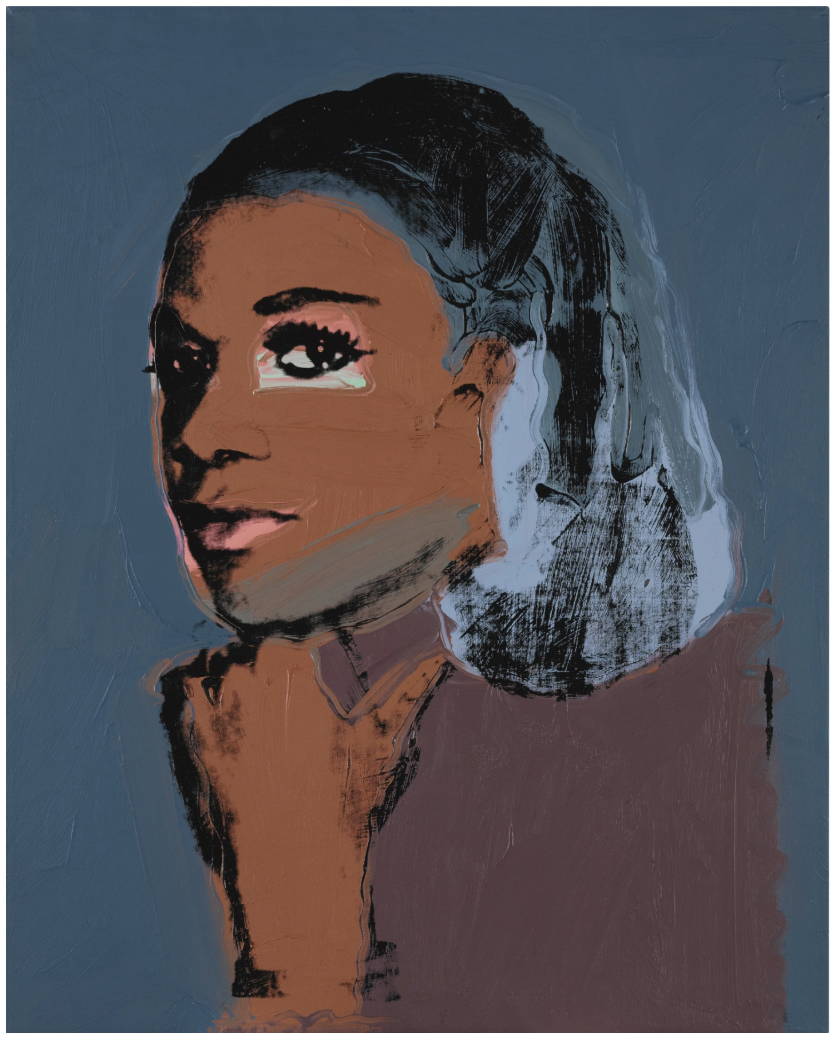
ANDY WARHOL
Ladies and Gentlemen, 1976
Acrylic and silkscreen ink on canvas
50×40 inches (127 x 101.5 cm)
Signed and dated 1976 on the overlap
Unlike the thin translucency of the majority of Warhol’s earlier silkscreens, the surface of the present work is thickly painted in lush sweeps of gestural brushstrokes, evocative of his earlier hand-painted pictures. Vibrant swathes of blue and pink color the image screened from Warhol’s initial Polaroid, leaving dense impasto that abstractly emphasizes the mask worn by drag queens to adopt their feminine personas. This formal exaggeration mirrors the artifice of the larger than life subjects who costume themselves in stereotypical signs of feminine beauty. The expressionistic ribbons of pigment contouring the figure’s eye and lips recall the drag queen’s embellished make-up, conceptually advancing Warhol’s treatment of paint beyond its basic capacity as a representational mechanism. Emanating a stately grace that successfully conceals her true biology as a man, the artist’s subject seductively grasps at her collar and rests her chin in her elegantly flexed fingers to conjure refinement and class. Warhol was drawn to drag culture for its embodiment of gender performance, and the work’s title explicitly draws attention to the figure’s dual sexual identity. However, any visual clues that would alert to this cross-dressing are subsumed behind the magnetic screen of fantasy. Under Warhol’s admiring gaze, his models morphed into the perfect iterations of Liz, Jackie, and Marilyn that they molded themselves after, and achieved the fifteen minutes of fame that Warhol famously believed we were all destined for.
Ladies and Gentlemen, 1975
Sotheby’s New-York: 14 November 2012
Estimated: USD 1,000,000 – 1,500,000
USD 1,650,500
(#179) Andy Warhol (sothebys.com)
ANDY WARHOL
Ladies and Gentlemen, 1975
Synthetic polymer paint and silkscreen ink on canvas
50×40 inches (127 x 101.5 cm)
Signed and dated 75 on the overlap
In the present work, Warhol’s process for applying the paint mirrored the sitter’s overdetermined cosmetic construction of sexual identity. Warhol quickly poured on layers of paint and then adjusted borders with his fingers. The lowest stratum of Alice blue is revealed around the eyes upon which he applied a field of steel blue. Broad splashes of chocolate brown, crimson, and minty green followed, crisscrossing regions and with ripples frozen in time. Using a heavy finger stroke, Warhol created rough delineations where the colors overlapped, for example, to reinforce the edge of her nose, lips and jaw. The present example’s elaborations, perhaps more than any other work in the Ladies and Gentlemen series, reveal Warhol’s painterly sensibilities, which he typically held in abeyance. Indeed, the gestural strokes almost belie his pre-1970s oeuvre of mechanically-produced silkscreen paintings that bore almost no record of the artist’s hand. With this series, Warhol mirrors the painterly techniques of his artistic predecessors, the Abstract Expressionists, yet mocks their exalted abstract canvases with his taboo choice of model. Many figures in the series appear joyful and unguarded, while others, such the present example, appear pensive and project a feeling of subdued tragedy. With her carefully shaped bouffant wig and heavy make-up, she stares towards an off-camera distraction; she is caught between poses with a cigarette as her only defense. Her pose recalls Warhol’s earlier Screen Test series where unremitting sessions in front of stationary video cameras invariably led the subjects to seek relief from off camera stimuli.
Ladies and Gentlemen, 1976
Sotheby’s New-York: 15 May 2008
Estimated: USD 1,000,000 – 1,500,000
USD 2,169,000
(#200) Andy Warhol (sothebys.com)
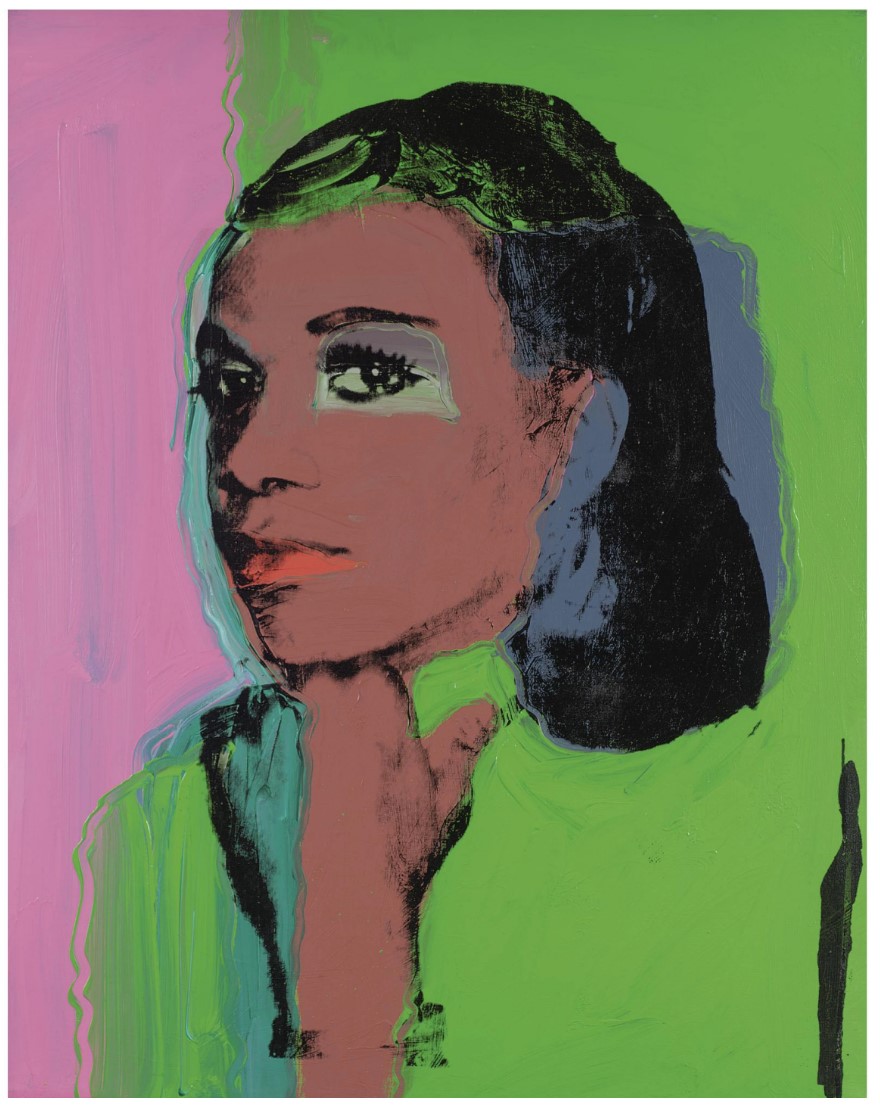 ANDY WARHOL
Ladies and Gentlemen, 1976
Acrylic and silkscreen ink on canvas
50×40 inches (127 x 101.6 cm)
Signed and dated 1976 on the overlap
The present work from 1976 is a striking example from the series exhibiting vibrant color and bold shape. Using watermelon colors of pink and green for his backdrop, Warhol compartmentalizes his color, creating large geometric sections of strong, flat color. His subject emerges from this painterly ground in a dramatic pose, her chin resting tenderly on her hand and gazing seductively from out under her long, dark eyelashes out toward the viewer. Her dramatic eye make-up and bright red lipstick further create a sense of glamour and intrigue.
Ladies and Gentlemen (32×26)
Ladies and Gentlemen, 1975
Sotheby’s New-York: 16 November 2023
Estimated: USD 400,000 – 600,000
USD 482,600
Ladies and Gentlemen | Contemporary Day Auction | 2023 | Sotheby’s (sothebys.com)
ANDY WARHOL (1928 – 1987)
Ladies and Gentlemen, 1975
Acrylic and silkscreen ink on canvas
32×26 inches (81.3 x 66 cm)
Stamped twice by the Estate of Andy Warhol
Stamped twice by the Andy Warhol Foundation for the Visual Arts, Inc.
Numbered PA35.003 on the stretcher
Unlike the mechanical, rotely produced surfaces of many of Warhol’s earlier silkscreens, the surface of the present work is thickly painted in lush sweeps of pigment, evocative of his earlier hand-painted pictures. Vibrant swathes of blue and red color the image screened from Warhol’s initial Polaroid, leaving dense impasto that abstractly emphasizes the mask worn by drag queens to adopt their feminine personas. This formal exaggeration mirrors the artifice of the larger-than-life subjects who costume themselves in stereotypical signs of feminine beauty.
Ladies and Gentlemen (Alphanso Panell), 1975
Sotheby’s New-York: 19 May 2023
Estimated: USD 400,000 – 600,000
USD 730,250
Ladies and Gentlemen (Alphanso Panell) | Contemporary Day Auction | 2023 | Sotheby’s (sothebys.com)
ANDY WARHOL (1928 – 1987)
Ladies and Gentlemen (Alphanso Panell), 1975
Acrylic and silkscreen ink on canvas
32×26 inches (81.3 x 66 cm)
Stamped twice by the Estate of Andy Warhol and stamped twice by the Andy Warhol Foundation for the Visual Arts, Inc. and numbered PA 35.001 VF on the overlap and on the stretcher.
In the present work, Warhol arrestingly captures the visage of drag queen Alphanso Panell with the same penetrating examination into public persona that he previously reserved for the most quintessential grandes-dames of glamor. Like many of Warhol’s most renowned series, the genesis of the Ladies and Gentlemen—first commissioned in 1975 by Warhol’s Turin-based dealer, Luciano Anselmino—has become legend. Warhol’s friend and the future editor of Interview magazine, Bob Colacello, made repeated trips to The Gilded Grape at 8th Avenue and West 45th Street in Hell’s Kitchen, recruiting primarily black and Hispanic drag queens to pose for Polaroids back at the studio. Dolled up and carefully modeled before Warhol’s watchful lens for a scant fee of fifty dollars, the anonymous transvestites fashioned themselves after iconic chanteuses ranging from Diana Ross to Lena Horne. Unlike the mechanical, untouched surfaces of many of Warhol’s earlier silkscreens, the surface of the present work is thickly painted in lush sweeps of pigment, evocative of his earlier hand-painted pictures. Vibrant swathes of green and red color the image screened from Warhol’s initial Polaroid, leaving dense impasto that abstractly emphasizes the mask worn by drag queens to adopt their feminine personas. This formal exaggeration mirrors the artifice of the larger-than-life subjects who costume themselves in stereotypical signs of feminine beauty.
Ladies and Gentlemen (Alphanso Panell), 1975
Christie’s New-York: 13 May 2022
Estimated: USD 400,000 – 600,000
USD 604,800
ANDY WARHOL (1928-1987) (christies.com)
ANDY WARHOL
Ladies and Gentlemen (Alphanso Panell), 1975
Acrylic and silkscreen ink on canvas
32×26 inches (81.3 x 66 cm)
ndy Warhol’s series Ladies and Gentlemen is one of his largest, most visually enticing, and least known bodies of work. Amidst 1974, Italian art dealer and collector Luciano Anselmino commissioned Warhol to paint one hundred and five portraits and ten prints of cross-dressers in four varying sizes. The primary purpose for these works was for an exhibition and, later, a book project. Luciano Anselmino titled the series Ladies and Gentlemen deriving from the world of theater. The revelation of these works proceeded with Warhol’s Death and Disaster series, which portray horrific scenes of car crashes, electric chairs, race, riots, and suicide. Unlike his Death and Disaster series, Ladies and Gentlemen exhibit a rare repetition of people who are not as evident in society through media and technology as celebrities Warhol’s usual oeuvre consist of. Instead, Warhol puts on display in this series a ‘politically charged’ America that few had been able to investigate at the time. The series was fostered and established through Warhol exploring the idea of gender as a disguise and simultaneously gender being a means of identity beyond his own experience. Warhol made a critical shift in his formation of works amongst this series. Within the painted portraiture of Ladies and Gentlemen, Warhol superimposed his colors in layers in order to display the application of paint directly on top of each newfound layer and a continued application of the background color. Warhol likely reinvented his form for two reasons: as a means for further self-expression as well as to differentiate this new series of portraits from his eminent celebrity portraits. In comparison to his preceding works, the local colors and background colors coincided on the primed ground and were more transparent. This collection of primarily unknown drag queens strays from being translucent and strives to be bold. Warhol welcomes imperfections of the coated paint and generates new ‘imperfections’ within the work through color layering and sheer experimentation. Warhol even noted he spent a vast majority of time rendering imperfections to celebrate and invent a new persona from the intimate polaroids he is drawing from. Additionally, the thick layers of paint mirror the disguise Warhol occasionally takes when making himself up. Thick layers of paint mimic the thick layer of makeup that Warhol constantly artfully fashions to make up his own features readily displayed in the polaroid. After initially declining the offer to be commissioned, Warhol produced more than twice that number of originally commissioned works due to strong ties to the composition and connection to the motif. The pieces are based on five hundred Polaroids of fourteen models recruited from the streets of West Village, the environs of the Chelsea Piers, and bars such as Gilded Grapes in Hell’s Kitchen. Although the models were billed as anonymous when the portraits were first shown in Italy, models such as Wilhelmina Ross, a prominent member of the West Village community, and drag scene were quickly recognized once the works appeared in the United States. Warhol’s mark on intimate scenes both in protest of freedoms and self-expression has reexhibited unanimously in the past five years. Both glimpses of the Death and Disaster series and the Ladies and Gentlemen series have been reexhibited in a retrospective show broadcasted at The Whitney Museum of Art organized in 2018.
Ladies and Gentlemen (Alphanso Panell), 1975
Christie’s London: 1 July 2015
Estimated: GBP 350,000 – 550,000
GBP 362,500
Andy Warhol (1928-1987), Ladies and Gentlemen (Alphanso Panell) | Christie’s
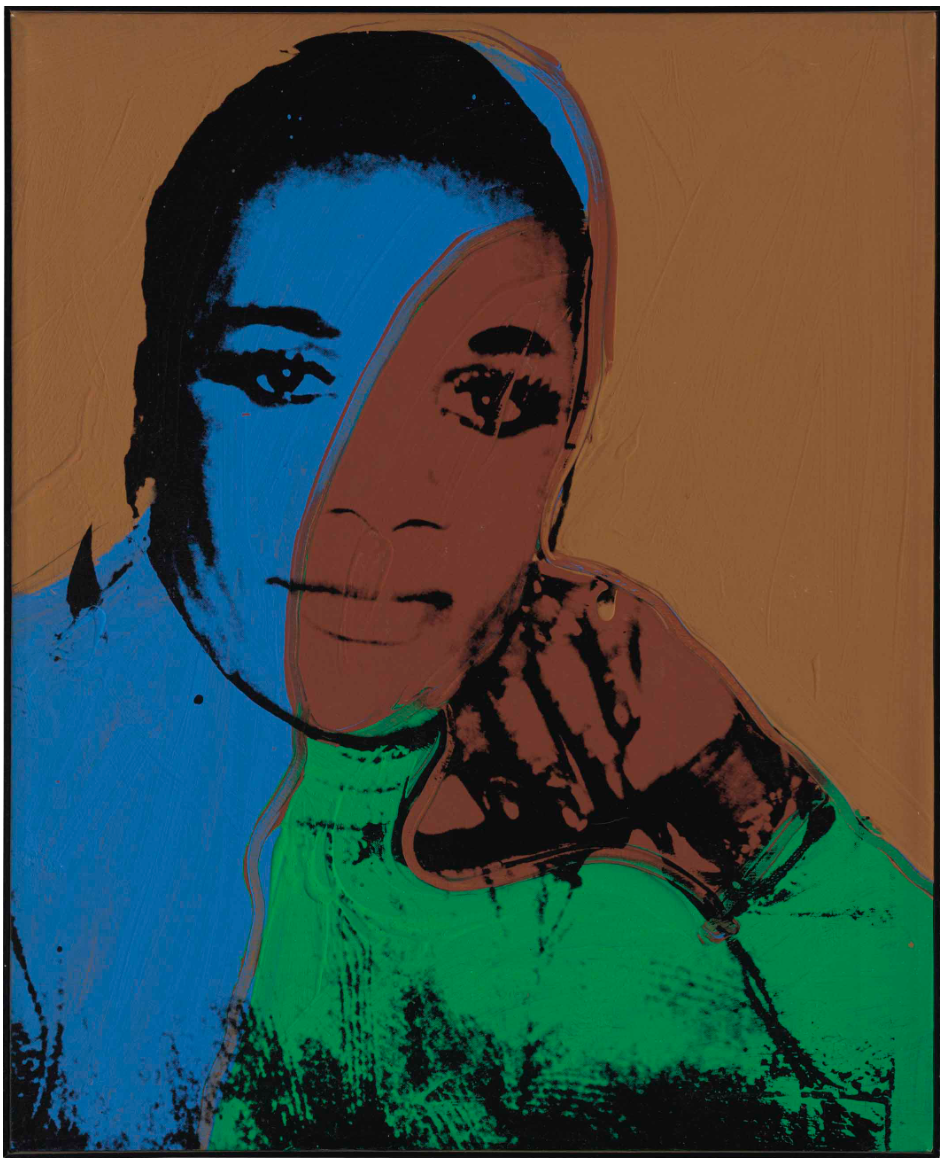
ANDY WARHOL (1928-1987)
Ladies and Gentlemen (Alphanso Panell), 1975
Acrylic and silkscreen ink on canvas
32×26 inches (81.3 x 66 cm)
Stamped with the Estate of Andy Warhol stamp and numbered ‘A1194.404’ (on the reverse)
Exuding glamour and mimicking the celebrity aura embodied in his famous portraits of the 1960s, Andy Warhol’s Ladies and Gentlemen is a powerfully expressive work depicting the drag queen Alphanso Panell. With her head resting elegantly upon a carefully manicured hand, the sitter gazes at us with eyes beautifully accentuated with black mascara. Rendered in broad, gestured swathes of acrylic paint, Warhol mirrors the vibrant character and glamorous makeup of his sitter in electric blue, bright green and brown. Against the muted mustard background, the sumptuously rendered drag queen seems to jumps off the surface of the canvas, and engages directly with the viewer. Commissioned by Turin-based art dealer Luciano Anselmino, the series Ladies and Gentlemen was exhibited only once during Warhol’s lifetime at the Palazzo di Diamante in Ferrara, Italy in 1975.
Ladies and Gentlemen, 1975
Sotheby’s London: 12 October 2012
Estimated: GBP 400,000 – 600,000
GBP 397,250
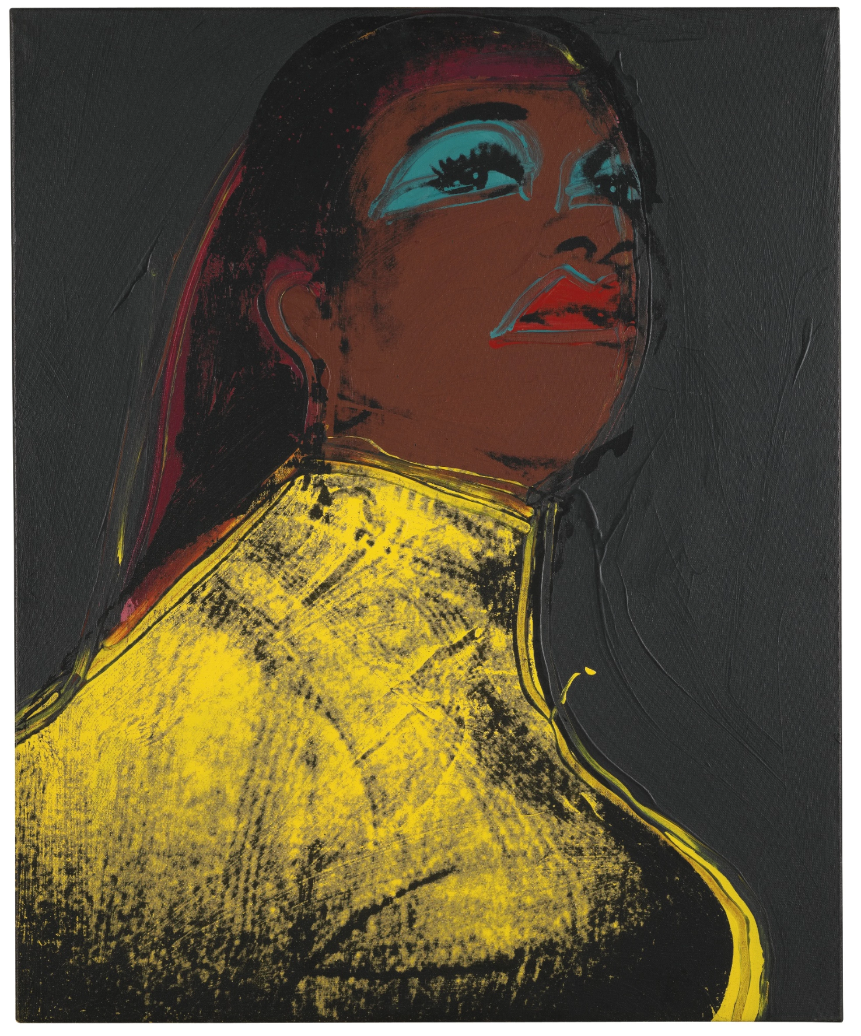
ANDY WARHOL
Ladies and Gentlemen, 1975
Acrylic and silkscreen ink on canvas
32×26 inches (80×65 cm)
Signed on the reverse
The present work is undoubtedly one of the most visually impressive examples of the series. The variations of colour are truly striking: the darkness of the black background contrasts dramatically with the bright yellow of the high collared dress and the shocking pink highlights within the flowing tresses of the wig. Vivid, electric blue encircling the eyes accentuates the profusion of false eyelashes; in a playful touch, Warhol has even highlighted the curves of the vibrantly red lips in the same tone. A remarkable exercise in painterly control, extensive brushstrokes adorn the canvas: a magnificent sweep of yellow follows the contours of the subject’s body, intermingling with the layers of darker background pigment to create a paint surface that is almost three-dimensional in its tactility. It is as though Warhol has placed his subject in the glare of an ultraviolet light within a haunt such as the Gilded Grape, arrested in the process of turning to gaze upon the viewer. The lift of the head is proud, the expression almost disdainful, imbuing the subject with a sense of immense dignity despite the lurid colour tones. Warhol’s Ladies and Gentlemen ultimately succeeds in transcending the confines of gender, elevating the drag queen to the status of true New York icon, a powerful symbol of a city in which creativity and diversity remain inextricably linked.
Ladies and Gentlemen (14×11)
Ladies and Gentlemen, 1975
Estimated: USD 120,000 – 180,000
USD 226,800
Ladies and Gentlemen, 1975
Acrylic and silkscreen ink on canvas
14×11 inches (35.5 x 27.9 cm)
Stamped twice with the Estate of Andy Warhol and the Andy Warhol Foundation for the Visual Arts, Inc. stamps
Numbered ‘VF PA35.046’ (on the overlap)
Stamped again with the Andy Warhol Foundation for the Visual Arts Inc. stamp (on the reverse)
Numbered again ‘PA35.046’ (on the stretcher)
Ladies and Gentlemen (Wilhelmina Ross), 1975
Christie’s New-York: 1 October 2021
Estimated: USD 120,000 – 180,000
USD 250,000
ANDY WARHOL (1928-1987), Ladies and Gentlemen (Wilhelmina Ross) | Christie’s (christies.com)
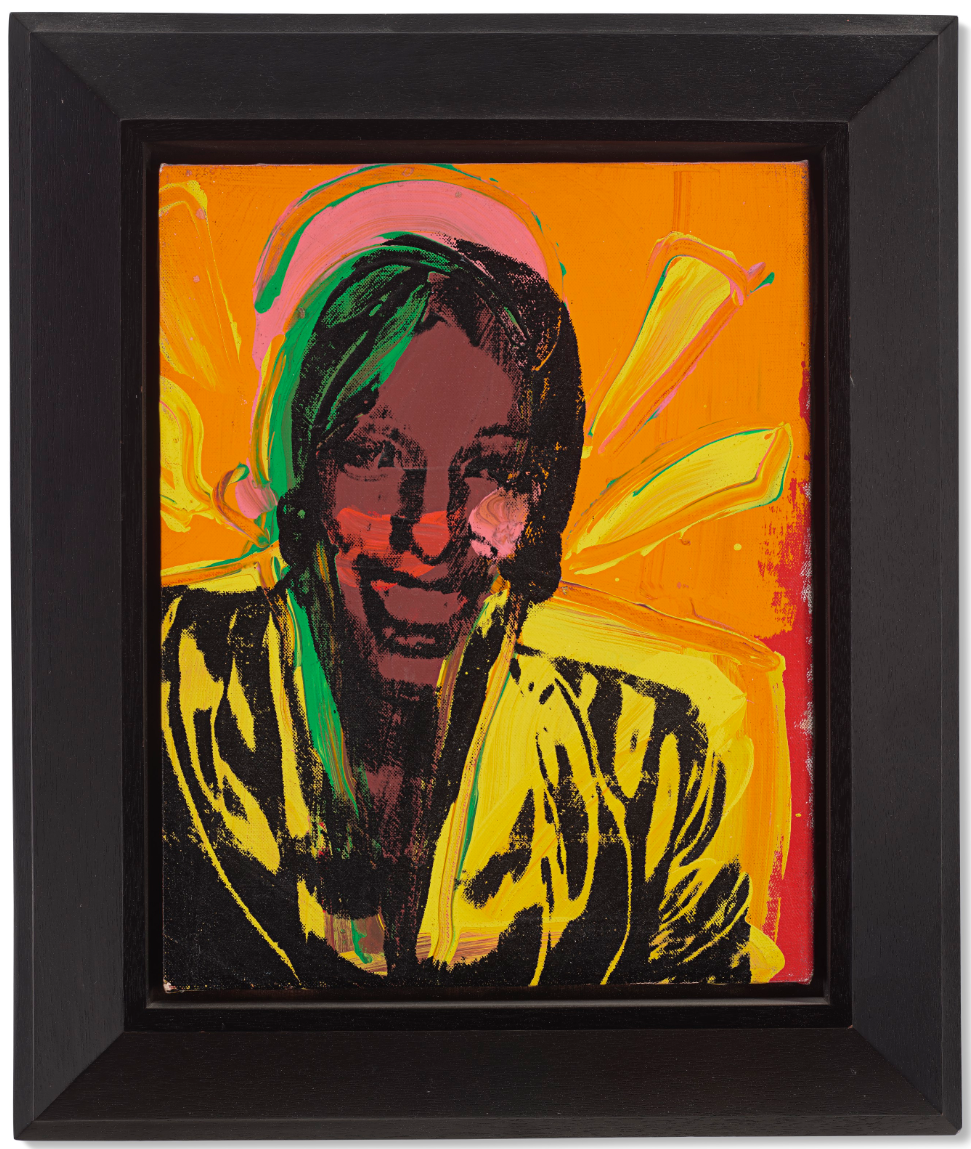
ANDY WARHOL (1928-1987)
Ladies and Gentlemen (Wilhelmina Ross), 1975
Acrylic and silkscreen ink on canvas
14×11 inches (35.6 x 27.9 cm)
Stamped with the artist’s signature (on the overlap)
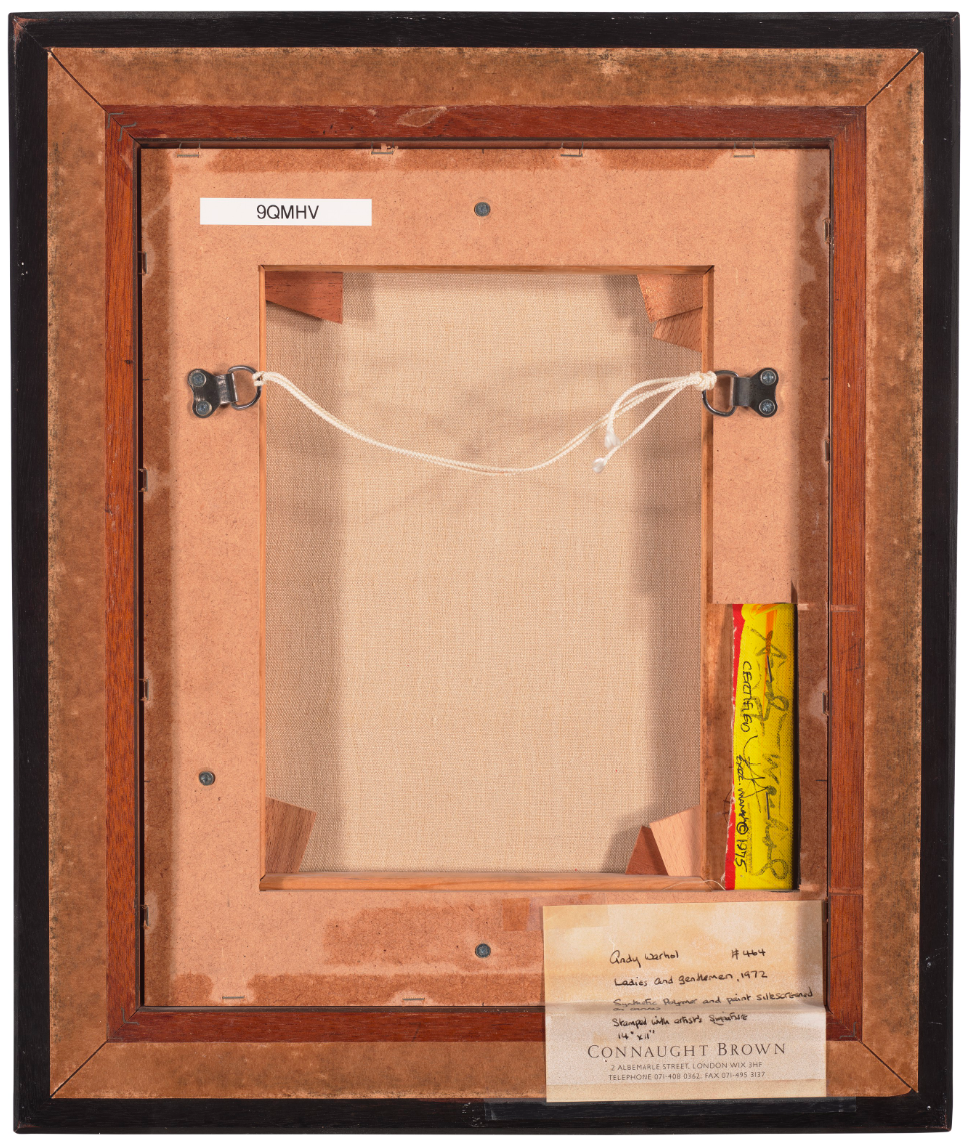
LADIES AND GENTLEMAN, 1975
Sotheby’s New-York: 14 May 2020
Estimated: USD 70,000 – 100,000
USD 118,750
ANDY WARHOL | LADIES AND GENTLEMAN | Contemporary Art Day: An Online Auction | 2020 | Sotheby’s
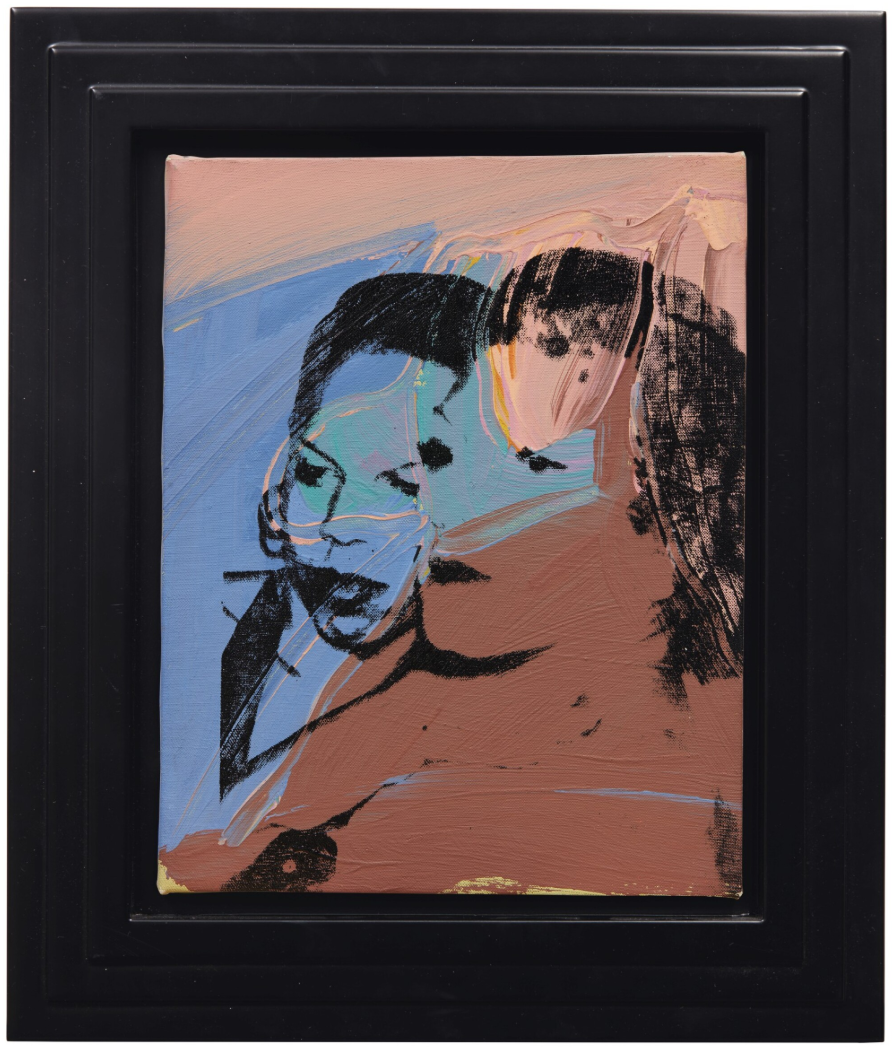
ANDY WARHOL (1928 – 1987)
LADIES AND GENTLEMAN, 1975
Acrylic and silkscreen ink on canvas
14×11 inches (35.6 x 27.9 cm)
Stamped by the Estate of Andy Warhol and The Andy Warhol Foundation for the Visual Arts, Inc.
Numbered PA 35.069 on the overlap
Andy Warhol was relentlessly attracted to superstar luster. In his portraits, he sought to relay the processes by which ‘celebrity,’ ‘beauty,’ and ‘identity’ are manufactured in a commercial world. His iconic Ladies and Gentlemen series from 1975 cites his earlier iconic silkscreen portraits of Liz, Jackie, and Marilyn that radiate the allure of a highly constructed ideal. Here, in the present work, Warhol arrestingly captures the visage of two drag queens with the same penetrating examination into public persona that he previously reserved for the most quintessential grandes-dames of glamour. Unlike the thin translucency of the majority of Warhol’s earlier silkscreens, the surface of the present work is thickly painted in lush sweeps of gestural brushstrokes, evocative of his earlier hand-painted pictures. Vibrant swathes of blue and pink color the image screened from Warhol’s initial Polaroid, leaving dense impasto that abstractly emphasizes the mask worn by drag queens to adopt their feminine personas. This formal exaggeration mirrors the artifice of the larger than life subjects who costume themselves in stereotypical signs of feminine beauty.
Ladies and Gentlemen, 1974
Sotheby’s New-York: 17 May 2019
Estimated: USD 120,000 – 180,000
USD 243,750
(#216) ANDY WARHOL | Ladies and Gentlemen
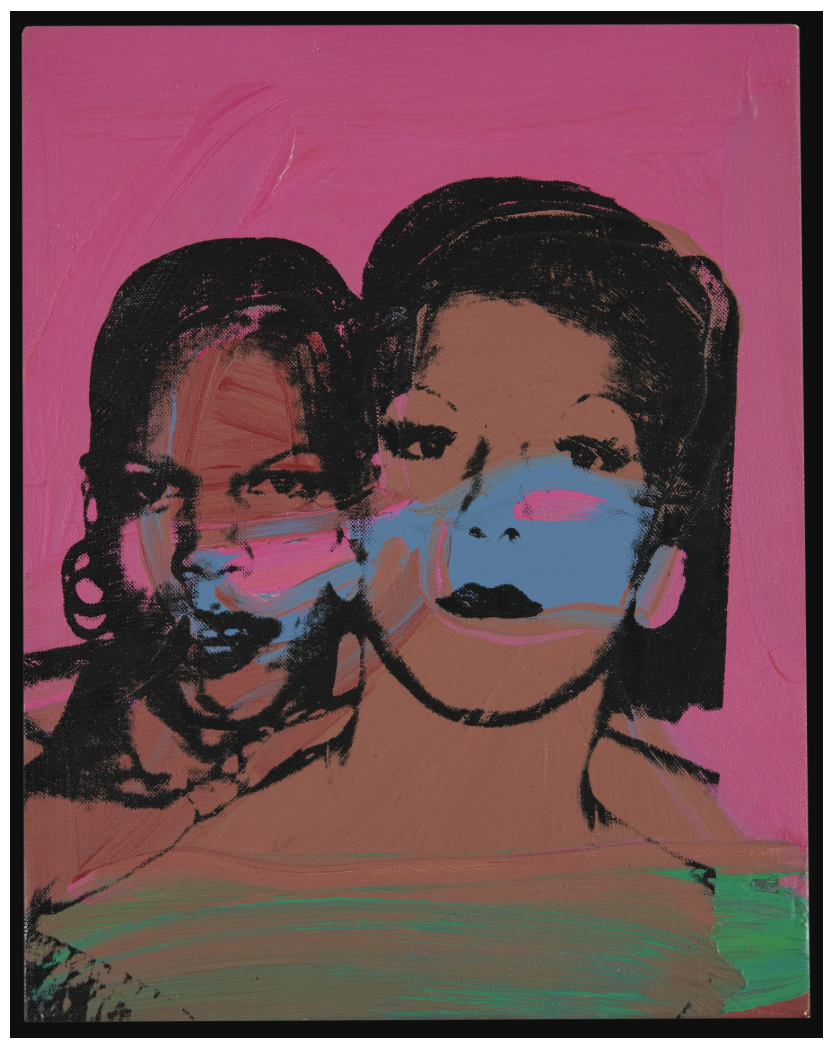
ANDY WARHOL
Ladies and Gentlemen, 1974
Acrylic and silkscreen ink on canvas
14×11 inches (35.6 x 27.9 cm)
Signed and dated 74 on the overlap
Ladies and Gentlemen, 1975
Sotheby’s New-York: 15 November 2018
Estimated: USD 150,000 – 200,000
USD 225,000
(#173) ANDY WARHOL | Ladies and Gentlemen
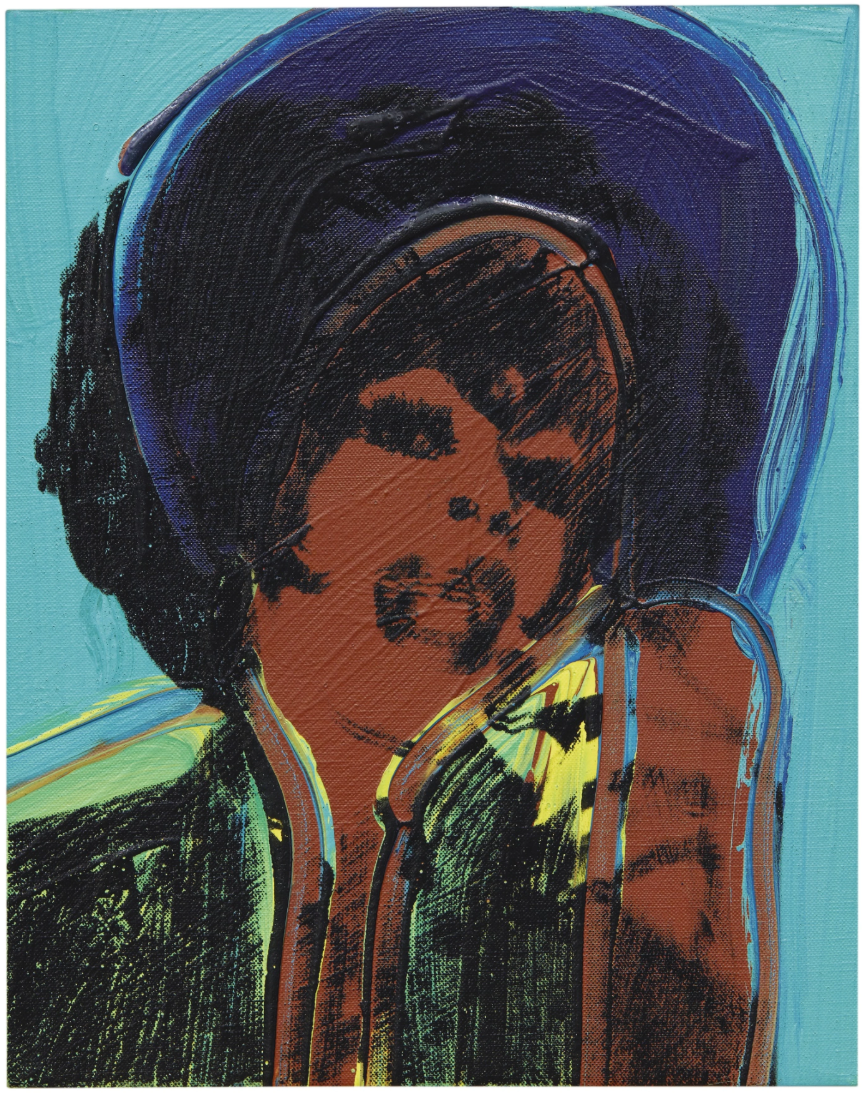
ANDY WARHOL
Ladies and Gentlemen, 1975
Acrylic and silkscreen ink on canvas
14×11 inches (35.6 x 27.9 cm)
Ladies and Gentlemen (Ivette and Lurdes), 1975
Christie’s New-York: 1 March 2018
Estimated: USD 180,000 – 250,000
USD 225,000
Andy Warhol (1928-1987), Ladies and Gentlemen (Ivette and Lurdes) | Christie’s
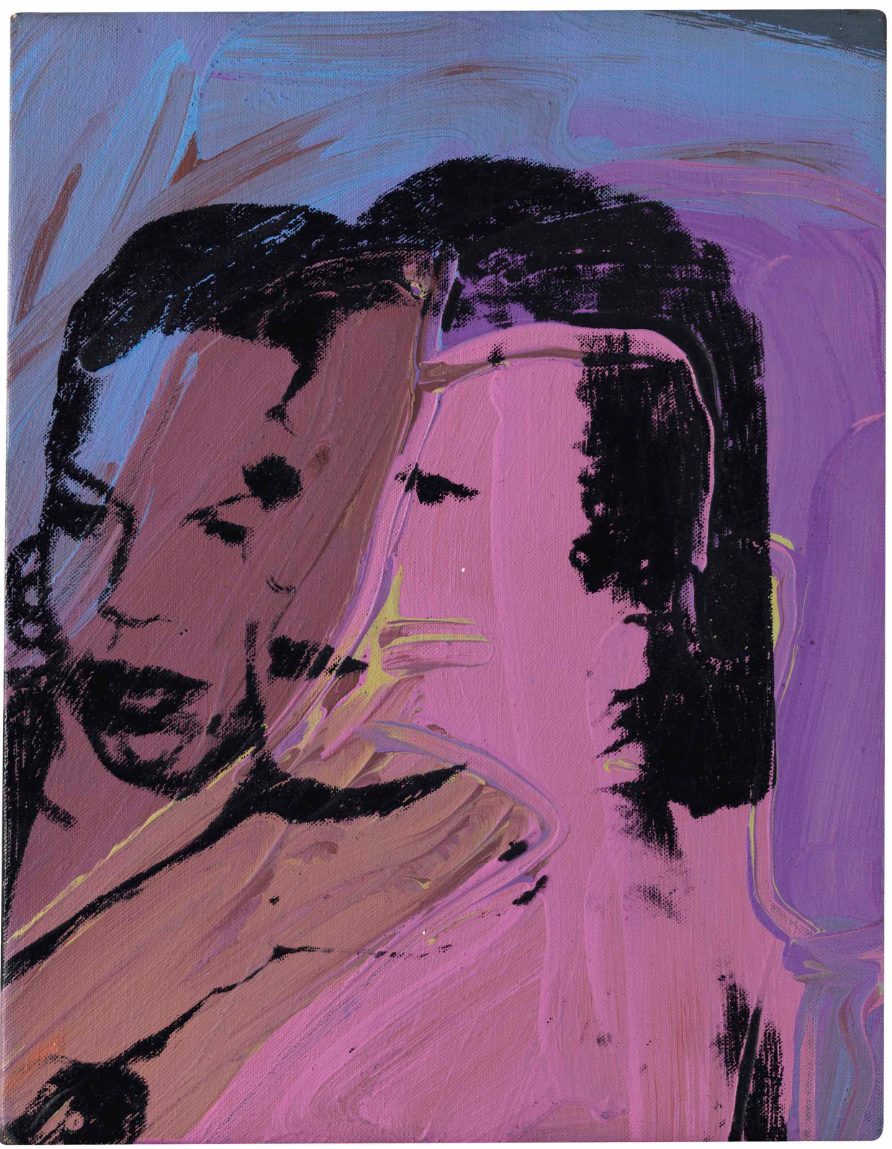
ANDY WARHOL (1928-1987)
Ladies and Gentlemen (Ivette and Lurdes), 1975
Acrylic and silkscreen ink on canvas
14×11 inches (35.6 x 27.9 cm)
Signed and dated ‘Andy Warhol 1975’ (on the overlap)
Rendered in classic Warholian silkscreen and gestural sweeps of acrylic paint, the artist mirrors on canvas the vibrant character and glamorous makeup of his sitters. Playing with notions of masculinity and femininity, kitsch and stardom, Warhol’s treatment of his sitters bestows the same mix of reverence and irony as his best loved celebrity portraits. Unlike his early 1960s paintings of Hollywood celebrities, which made use of existing publicity stills that conveyed a sense of distance from the viewer, Warhol took the Polaroid photographs for this series himself, the proximity to his sitters affording him a greater degree of creative control as he composed the photos from the neck up and in three-quarter angle, asking the drag queens to “vogue” in a variety of expressions from femme fatale to coquette.
Ladies and Gentlemen (12×10)
Ladies & Gentlemen (Wilhelmina Ross), 1975
Phillips London: 8 March 2024
Estimated: GBP 120,000 – 180,000
GBP 139,700 / USD 177,140
Andy Warhol – 20th Century & Contempo… Lot 130 March 2024 | Phillips
ANDY WARHOL
Ladies & Gentlemen (Wilhelmina Ross), 1975
Acrylic and silkscreen on linen
12×10 inches (30.5 x 25.4 cm)
Stamped by the Estate of Andy Warhol and the Andy Warhol Foundation for the Visual Arts, Inc. on the overlap
Stamped by the Andy Warhol Foundation for the Visual Arts, Inc. on the reverse
Numbered ‘PA.35.087’ on the stretcher
Warhol’s series Ladies & Gentlemen is distinguished among his prolific oeuvre for being one of the largest, most ambitious, and most lucrative commissions in his career. The series was originally commissioned by Italian dealer Luciano Aselmino in 1974, and in time would consist of 268 paintings, approximately 65 drawings and collages. Yet for its extensive account of over 14 sitters, the Ladies & Gentlemen series is among Warhol’s least-known body of work. This can arguably be attributed to the unprecedented and under-represented identity of the sitters, giving voice to a largely marginalised sub-culture that had blossomed in New York.
“Drag queens are living testimony to the way women used to be, the way some people still want them to be, and the way some women will actually want to be. Drags are ambulatory archives of ideal movie star womanhood. They perform a documentary service, usually consecrating their lives to keeping the glittering alternative alive and available for (not-too-close) inspection”
The present work Ladies & Gentlemen (Wilhelmina Ross), depicts a portrait of Wilhelmina Ross, who was originally left unnamed. Warhol appears to have been the most captivated by Ross as she appears to be the subject in 52 of his original Polaroids and 73 paintings. As part of the broader Polaroid portrait series, this work stands as an empowering example of Warhol’s investigation into contemporary femininity and is in line with the iconic portraits of Marylin Monroe and Liz Taylor. Ross’ name was revealed by chance after Gagosian’s 1997 exhibition of Ladies & Gentlemen works. The Warhol Foundation received a call from Jimmy Camicia, who was the founder of the underground drag theatre company Hot Peaches, informing them that Ross, one of their most popular performers, is depicted in the present work. Wilhelmina Ross was originally born Douglas Mitchell Hunter in Kansas City, Missouri, and changed her name to be a mix of the modelling agency Wilhelmina and Warhol’s friend Diana Ross.
Ladies and Gentlemen (Multiple)
Ladies and Gentlemen, 1975
Christie’s New-York: 16 November 2017
Estimated: USD 1,200,000 – 1,800,000
USD 2,172,500
Andy Warhol (1928-1987) (christies.com)
ANDY WARHOL
Ladies and Gentlemen, 1975
Acrylic and silkscreen inks on canvas, in three parts
Each: 32×26 inches (81.2 x 66 cm)
Ladies and Gentlemen also shows the artist working with seriality and the repetition of a single image to dramatic effect, the sitter’s coquettish visage appearing in triplicate across the canvases, seemingly caught in mid-conversation. Playing with notions of masculinity and femininity, kitsch and stardom, Warhol’s treatment of his sitter bestows the same mix of reverence and irony as his best loved celebrity portraits. Proudly posed, the subject’s vibrant features leap off the dark surface of the painting with immediate intensity, her gaze directly engaging the viewer. Rendered in classic Warholian silkscreen and gestural sweeps of acrylic paint, the artist mirrors on canvas the vibrant character and glamorous makeup of his sitter, highlighting her skin, lips, and eyes with broad fields of burnished brown, turquoise, mint green and glowing orange.
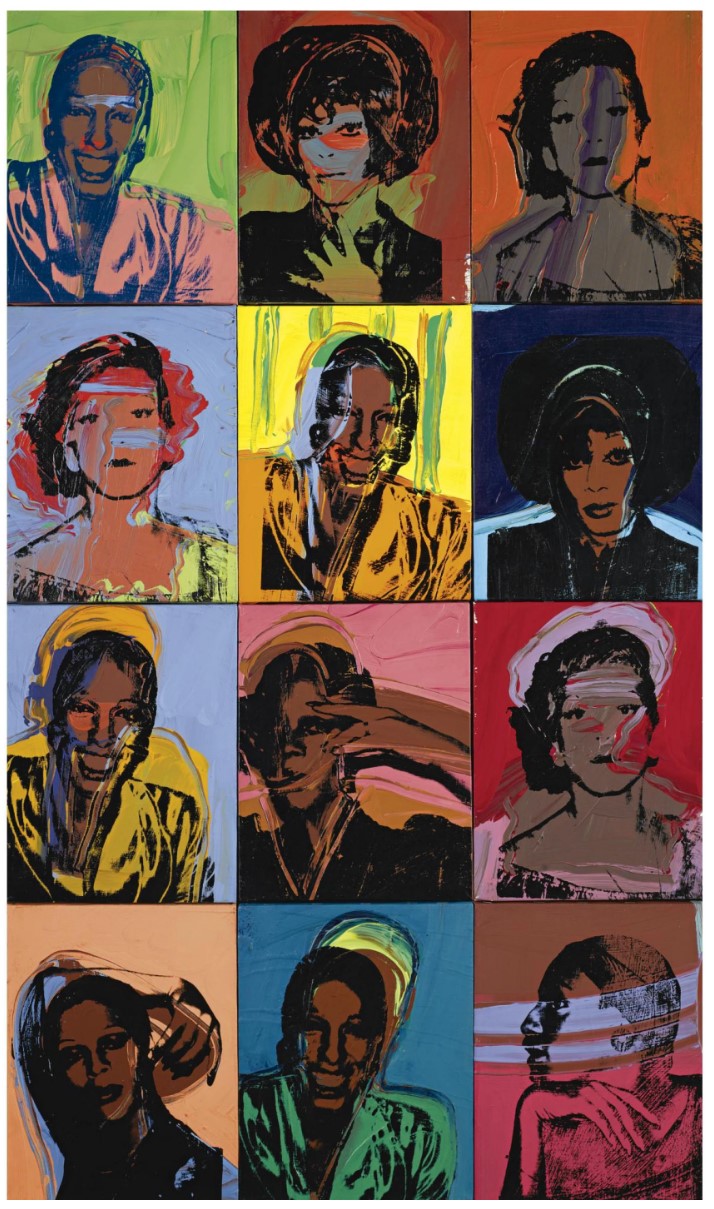
Ladies and Gentleman, 1975
Sotheby’s New-York: 14 May 2008
Estimated: USD 2,500,000 – 3,500,000
USD 3,513,000
(#66) Andy Warhol (sothebys.com)
ANDY WARHOL
Ladies and Gentleman, 1975
Acrylic and silkscreen ink on canvas in 12 panels
56.6 x 33.2 inches (143.8 x 84.5 cm)
Signed and dated 1975 on the overlap of 2 panels and inscribed To Todd Brasner on the overlap of another panel
Works on Paper
Ladies and Gentlemen, 1975
Sotheby’s New-York: 12 December 2023
Estimated: USD 40,000 – 60,000
USD 53,340
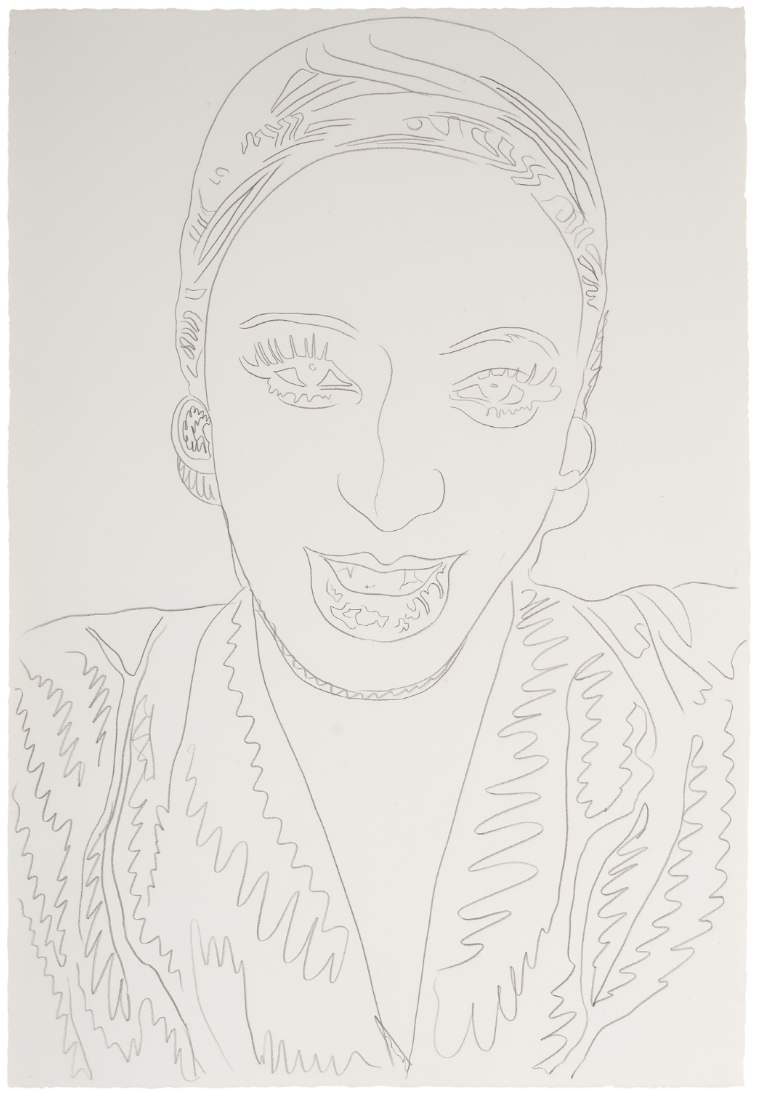
ANDY WARHOL (1928 – 1987)
Ladies and Gentlemen, 1975
Graphite on paper
40 1/4 x 27 5/8 inches (102.2 x 70.2 cm)
Stamped by the Estate of Andy Warhol, stamped by the Andy Warhol Foundation for the Visual Arts, Inc.
Numbered 53.005 on the verso
Ladies and Gentlemen, 1975
Sotheby’s New-York: 12 December 2023
Estimated: USD 40,000 – 60,000
USD 38,100
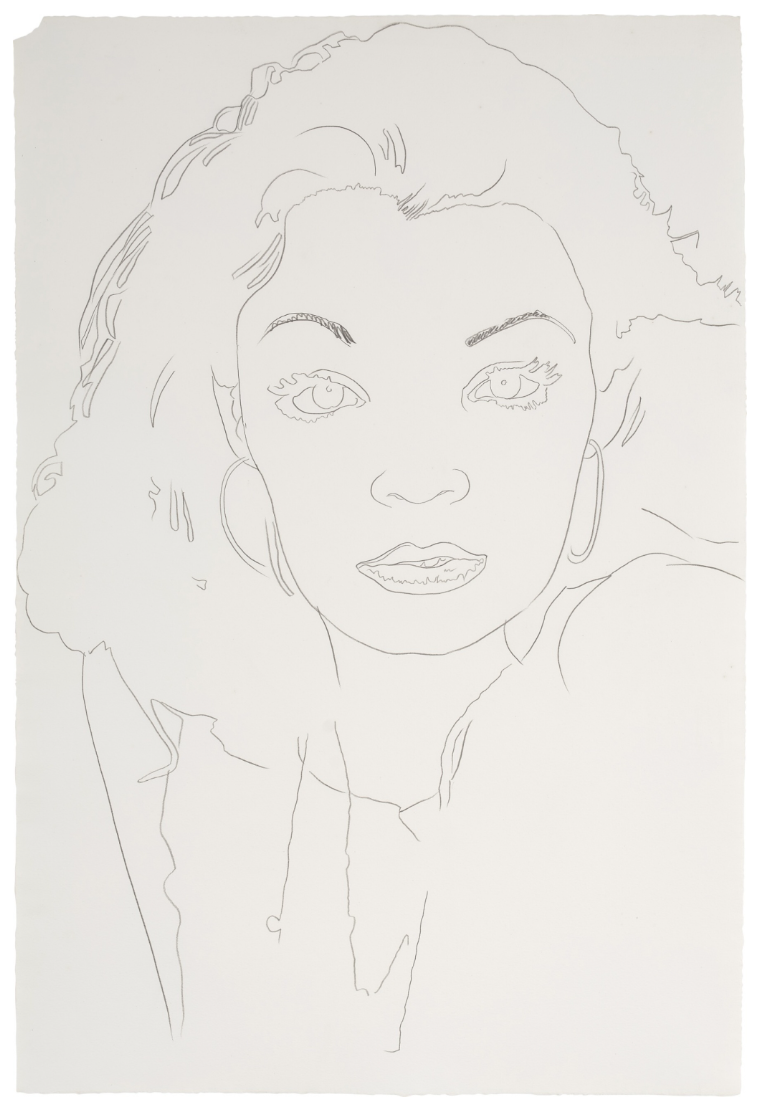
ANDY WARHOL (1928 – 1987)
Ladies and Gentlemen, 1975
Graphite on paper
40 3/4 x 27 1/4 inches (103.5 x 69.2 cm)
Stamped by the Estate of Andy Warhol, stamped by the Andy Warhol Foundation for the Visual Arts, Inc.
Numbered 53.032 on the verso
Ladies and Gentlemen, 1975
Christie’s London: 16 October 2021
Estimated: GBP 25,000 – 35,000
GBP 46,250
ANDY WARHOL (1928-1987), Ladies and Gentlemen | Christie’s
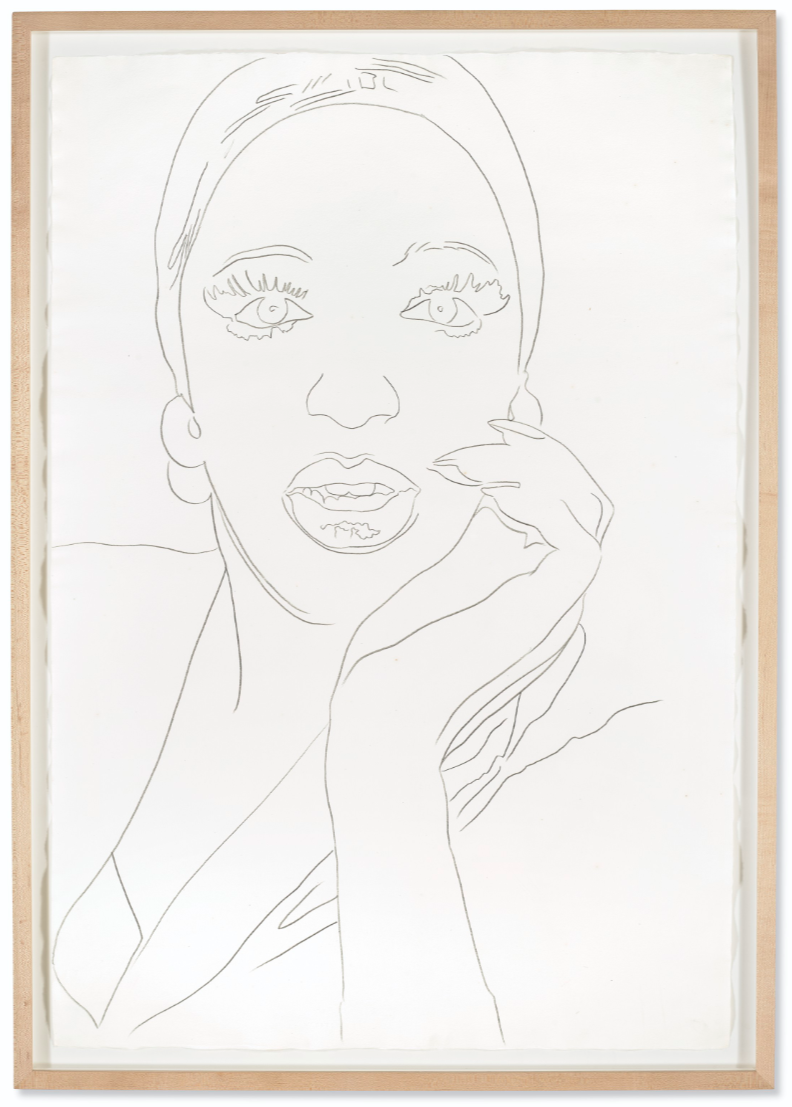
ANDY WARHOL (1928-1987)
Ladies and Gentlemen, 1975
Graphite on paper
40 1/4 x 27 1/2 inches (102.2 x 69.9 cm)
Stamped with the Andy Warhol Foundation for the Visual Arts and the Andy Warhol Art Authentication Board stamps and numbered ‘VF 53.011’ (on the reverse)