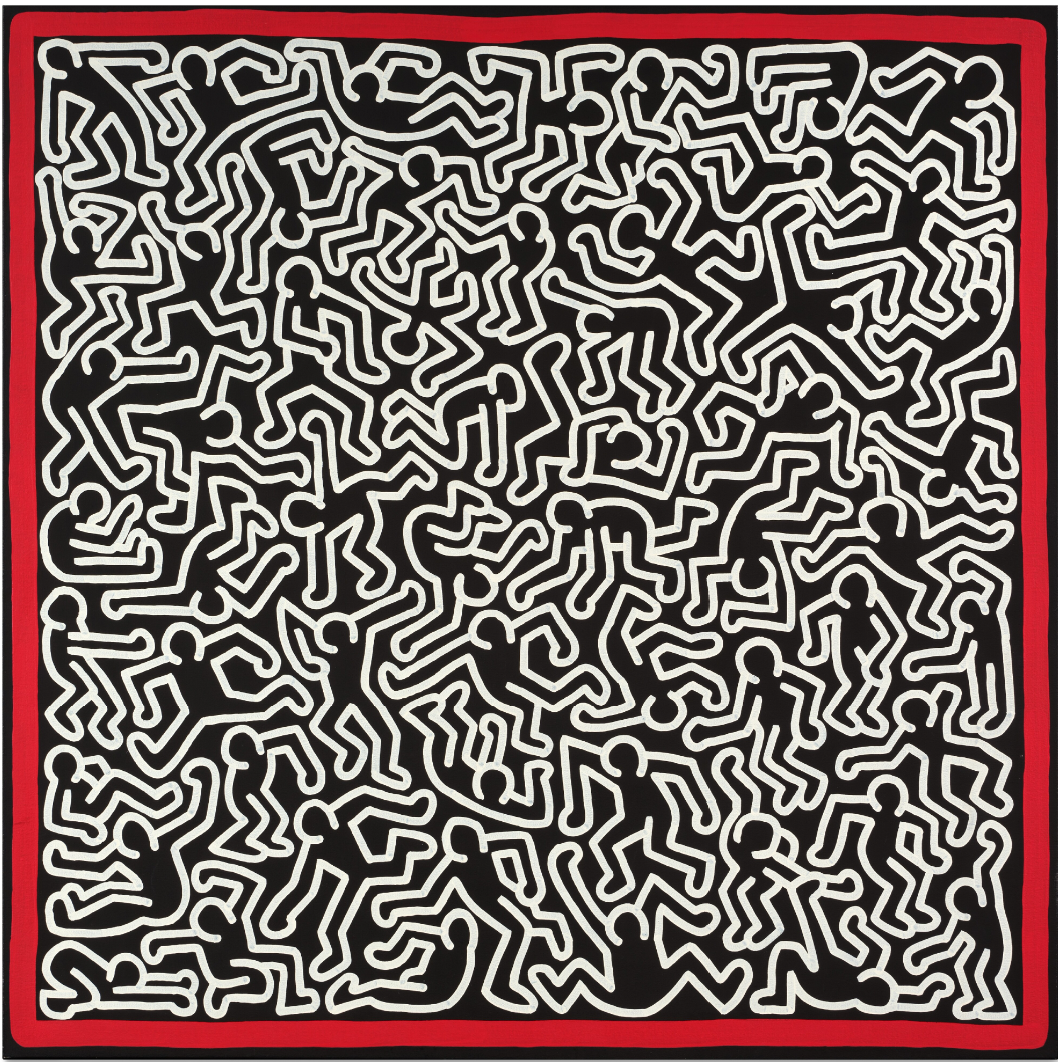
KEITH HARING
Untitled, 1986
Acrylic on canvas
60×60 inches (152.4 x 152.4 cm)
Signed and dated JAN. 22 1986 on the overlap
Provenance
Suzanne Slesin and Michael Steinberg, New York
Edward Tyler Nahem Fine Art, New York
Private Collection, Europe (acquired from the above in December 2012)
Sotheby’s New York, 12 May 2021, lot 106 (consigned by the above)
Acquired from the above sale by the present owner
Auction History
Sotheby’s New-York: 13 May 2024
Estimated: USD 4,000,000 – 6,000,000
USD 4,470,000
Untitled | Contemporary Evening Auction | 2024 | Sotheby’s (sothebys.com)
REPEAT SALE
Sotheby’s New-York: 12 May 2021
Estimated: USD 4,000,000 – 6,000,000
USD 5,779,200
Untitled | Contemporary Art Evening Auction | 2021 | Sotheby’s (sothebys.com)
Dazzlingly vibrant and brimming with graphic force, Keith Haring’s Untitled from 1986 is a brilliant celebration of Haring’s distinct painterly style. The artist’s instantly recognizable pop iconography of the dancing figures is here rendered in a graphic monochrome palette of black and white acrylic paint, with a thick band of rich red paint encircling the composition. Created in the final years of Haring’s tragically short life, Untitled is a seminal example of the artist’s celebration of music and movement despite the overwhelming challenges of the decade. Across the present work, Haring’s dancing figures are carefully placed such that none overlaps with another, the precise organization yet chaotic contortion of their bodies lending the composition a kinetic clarity that bursts with the effusive spirit so resolutely associated with Haring’s work.
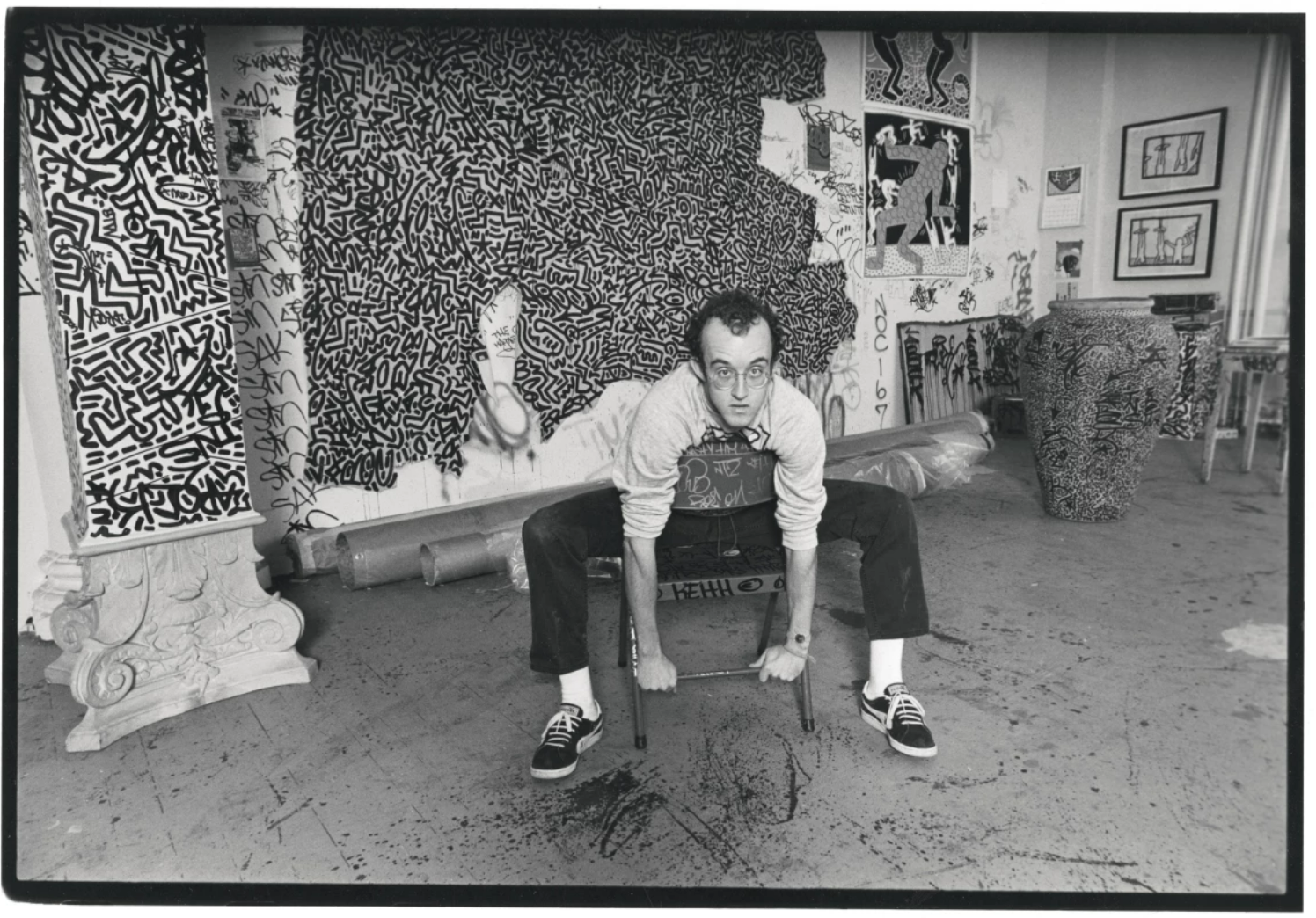
The bold chromatic choice of color and the figures’ nearly grid-like formation are at once lyrical and balanced, conveying a potent energy that enlivens the picture with strong emotive power. For Haring, dance was symbol of life and coexistence. As Robert Farris Thompson described, “spider-moves define beauty in relation to design and shared space. When b-boys [street dancers] combine in the spider-move pattern, they are not merely dancing. They are living a principle: work with your brother, share space in relation to time. Haring expands on that. It turns into an emblem.” (Robert Farris Thompson, Haring and the Dance, Keith Haring, New York, 1997, p. 218)
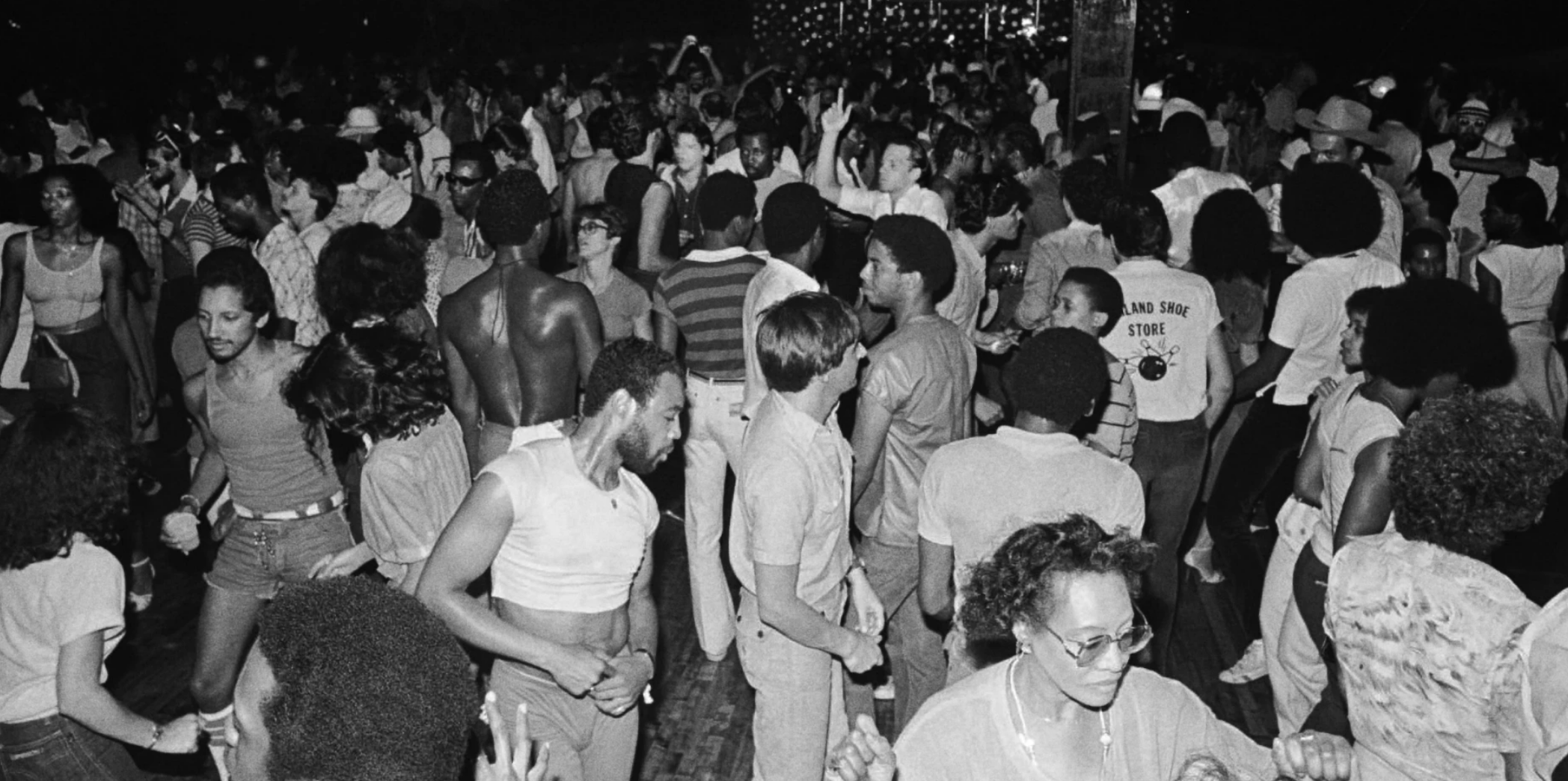
Arriving in New York City in 1978, Haring was immediately drawn to the urban music and graffiti scene, working alongside other artists who were also to become legends of their time, such as Jean-Michel Basquiat. Music and the urban culture surrounding it proved to be a major source of inspiration for the artist early on: “All kinds of new things were starting. In music, it was the punk and New Wave scenes… And there was the club scene – the Mudd Club and Club 57, at St. Mark’s Place, in the basement of a Polish church, which became our hangout, a clubhouse, where we could do whatever we wanted.” (the artist in conversation with David Sheff, Rolling Stone, August 1989, n.p.) The extraordinary sensation of rhythm that pervades the present work and others from this year can be connected to the artist’s deep understanding and love of this alternative and highly original music scene. Untitled demonstrates the ways in which Haring’s work developed in expressive scope from the first half of the 1980s, indicating a new aesthetic maturity and creative profundity that signify the work of an artist at the height of his powers.
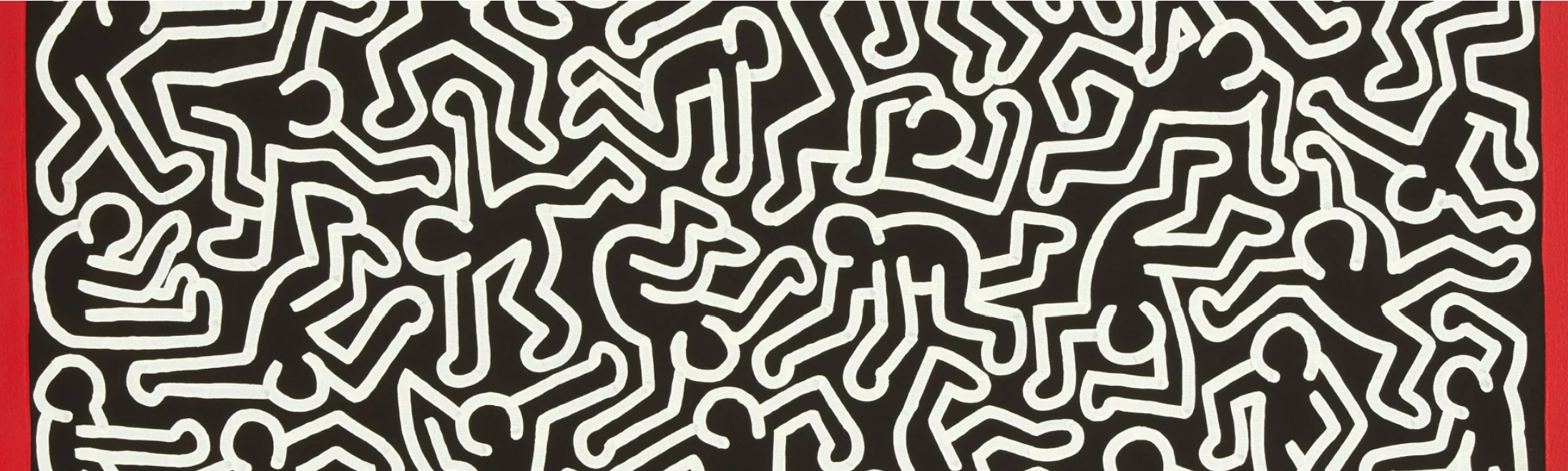
Three years prior to the execution of the present work, the arts community in New York was ravaged by the tragic development of the AIDS epidemic in New York. Even in the face of AIDS, a disease to which Haring himself succumbed in 1990, the present work retains the artist’s distinct positive energy; rather than devolving into injury, misery, or anxiety, Untitled illustrates Haring’s unique appreciation of human relationships and intense, receptive embrace of all walks of life. As Henry Geldzahler observed, “It was in the face of this tragic dimension that Keith’s generosity and love of his audience was played out, above all in the spontaneity and high energy of his work right up to the end; Keith produced a tuneful art that sets us humming.” (Henry Geldzahler cited in: Exh. Cat., St. Louis, Philip Samuels Fine Art, Keith Haring, 1990)
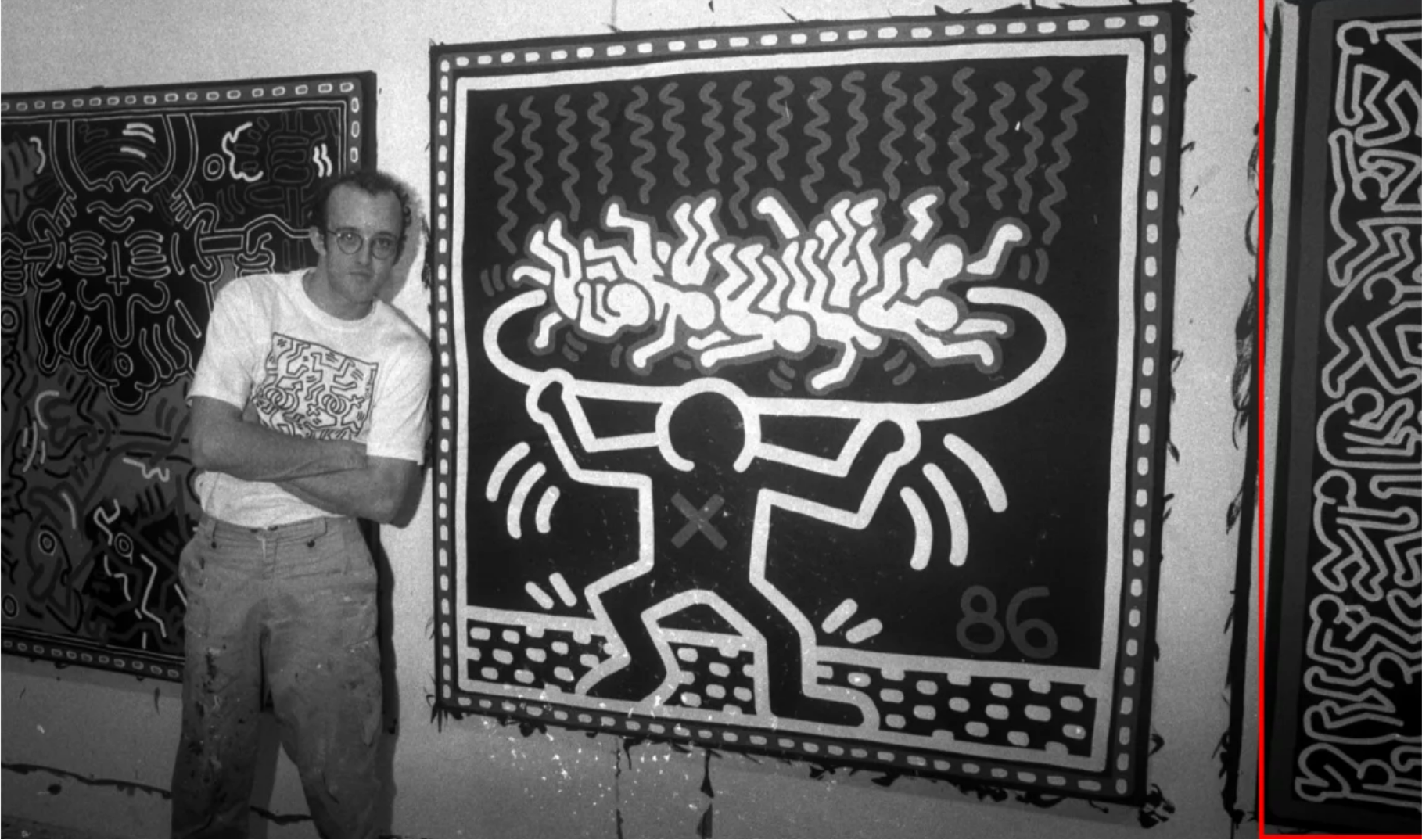
In its astonishingly assured compositional structure and astounding candor, Untitled stands as s a work of immense significance within Haring’s oeuvre, embodying the dizzying energy and sense of possibility that existed within the New York cultural scene for a brief but heady period in the 1980s. Ultimately, the present work superbly encapsulates the sensation that Haring declared he was striving for within his art when he stated, “When I paint, it is an experience that, at its best, is transcending reality.” (Keith Haring, quoted in: David Sheff, “Keith Haring: Just Say Know,” Rolling Stone, August 1989) In its creation of a powerfully distinctive dreamscape, Untitled not only transcends reality, but exceeds it.