KEITH HARING (1958 – 1990)
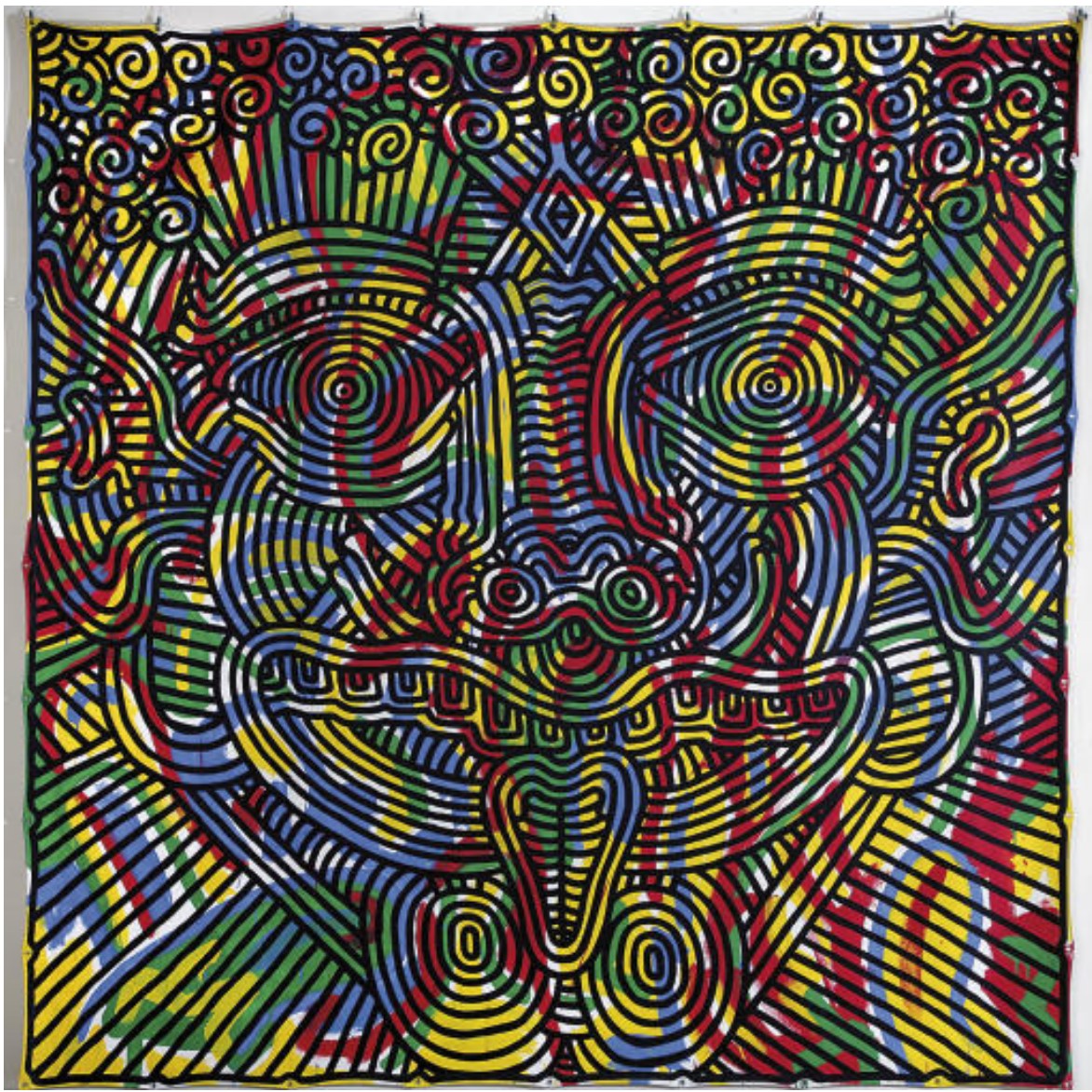
Untitled (Sept. 6 1986), 1986
Vinyl paint on canvas
95 3/8 x 94 1/4 inches (242.3 x 239.4 cm)
Signed K. Haring, dated Sept. 6 1986 and inscribed NYC (on the reverse)
Provenance
Galerie Frans Wachters, Knokke
Private Collection
Christie’s London, 16 October 2007, lot 554 (consigned by the above)
Acquired from the above by the present owner
Auction History
Sotheby’s London: 1 March 2023
Estimated: GBP 1,500,000 – 2,000,000
GBP 2,226,000 / USD 2,679,000
Untitled (Sept. 6 1986) | Modern & Contemporary Evening Auction | | Sotheby’s (sothebys.com)
REPEAT SALE
Christie’s London: 15 October 2007
Estimated: GBP 400,000 – 600,000
GBP 535,700
Keith Haring (1958-1990) (christies.com)
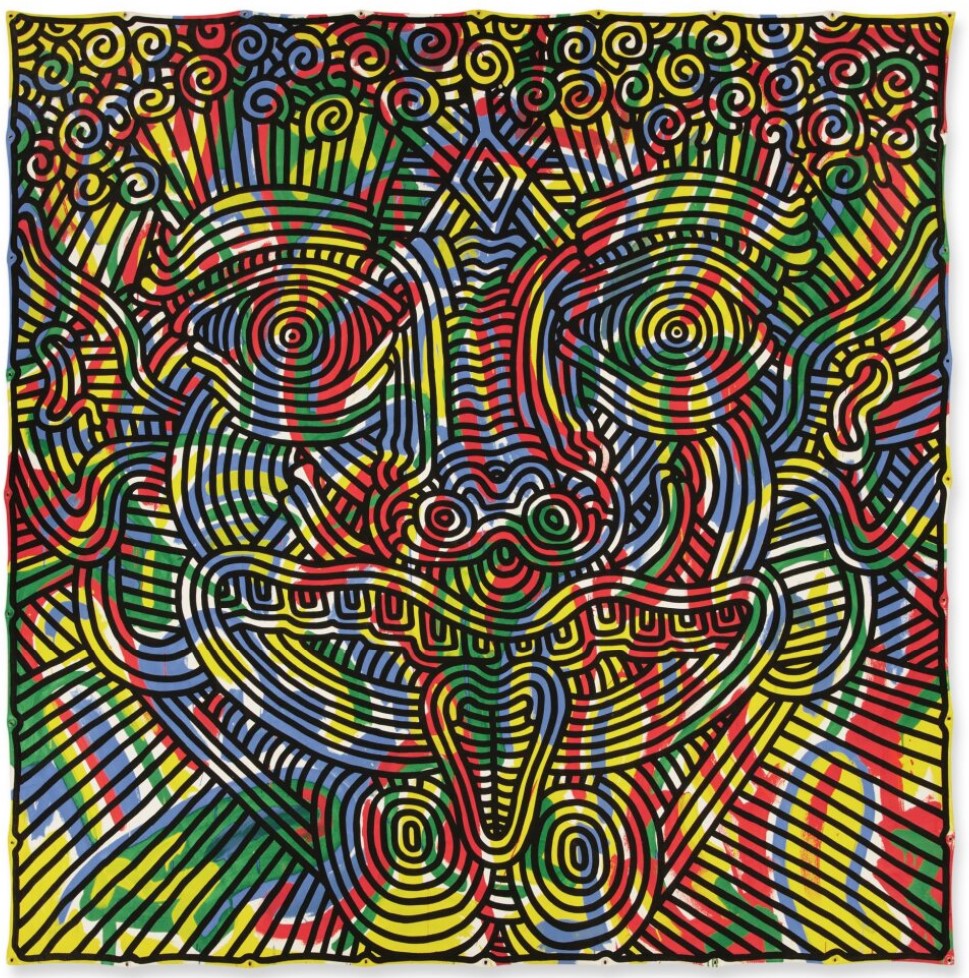
Vibrant and briming with graphic energy, Keith Haring’s Untitled of 1986 emblematizes the compositional dynamism and iconic figuration signature to one of the most innovative and influential artists of the Twentieth Century. Across this monumental works on industrial canvas, the artist’s instantly recognizable pop iconography of flat line and bold color here articulates the face of an imperial guardian lion. Executed at the height of his artistic powers, Untitled is a seminal example of the artist’s distinct, idiosyncratic visual language and his tireless determination to celebrate the interconnectedness of the human spirit through art.
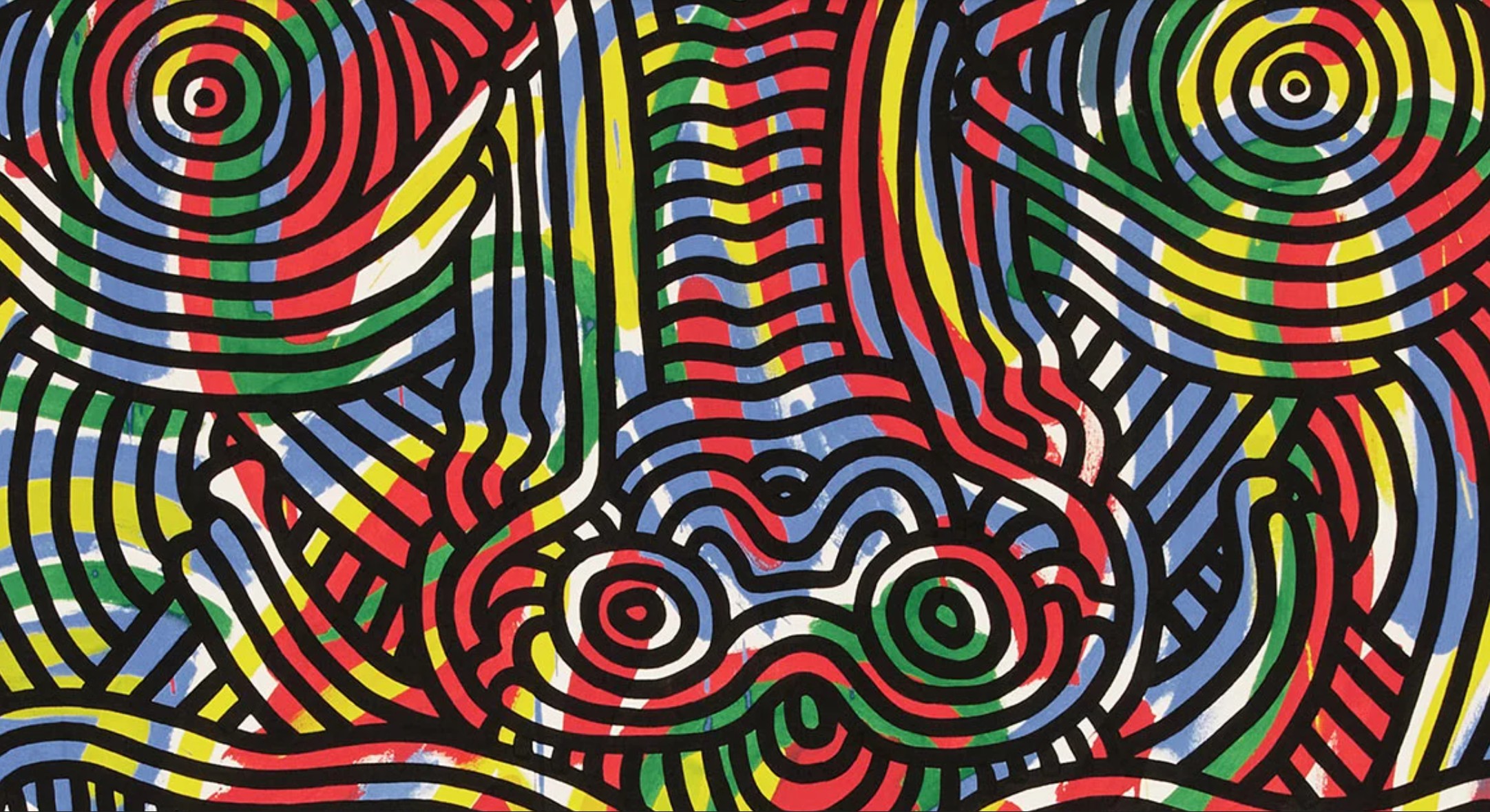
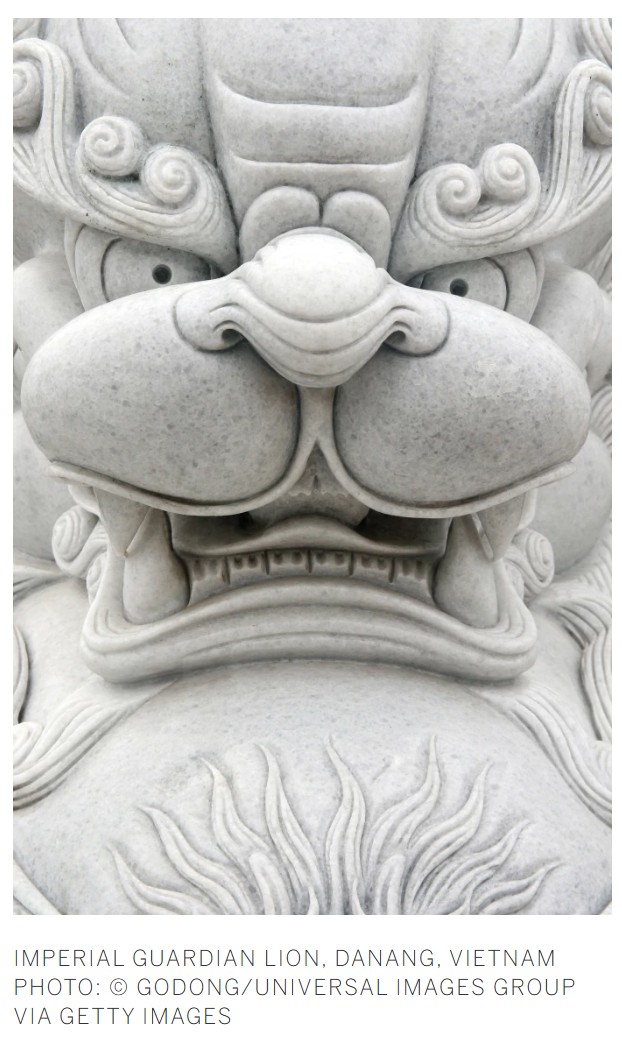
Combining vivid, primary color with bold, articulative lines, Untitled conveys an image enlivened with potent energy and strong emotive power. Throughout his career, Haring studied a range of visual cultures from Egyptian hieroglyphics to Japanese, Chinese and Mayan pictograms. Seeking to reduce form and concept into primary elements of line, looking to cultures outside of his own enabled Haring to develop a means of formal communication through a syntax of signs as exemplified in the present work. Originating in Chinese Buddhism, Imperial Guardian Lions or Feng Shui Fu Dogs are a type of sculpture typically placed at the entrance to homes and important buildings as a protection symbol. Traditionally made of marble, granite or cast from iron and bronze, these figures are believed to ward off harmful spiritual influences and individuals. The eyes of Imperial Guardian Lions are typically wide open as are their mouths, seemingly roaring with ferocity. In the chaos of concentric lines and swirling color, Haring has translated the fierce vitality of this ancient icon into two-dimensional form. In Untitled, the face of the lion boldly emerges from the surface of the work as if moving into the space of the viewer. Haring’s images belie a visual language of totemic symbols that do not seek to appropriate reality, as Pop art had done, but rather birthed a new succinct and direct vernacular which resonated with the hearts of a generation.
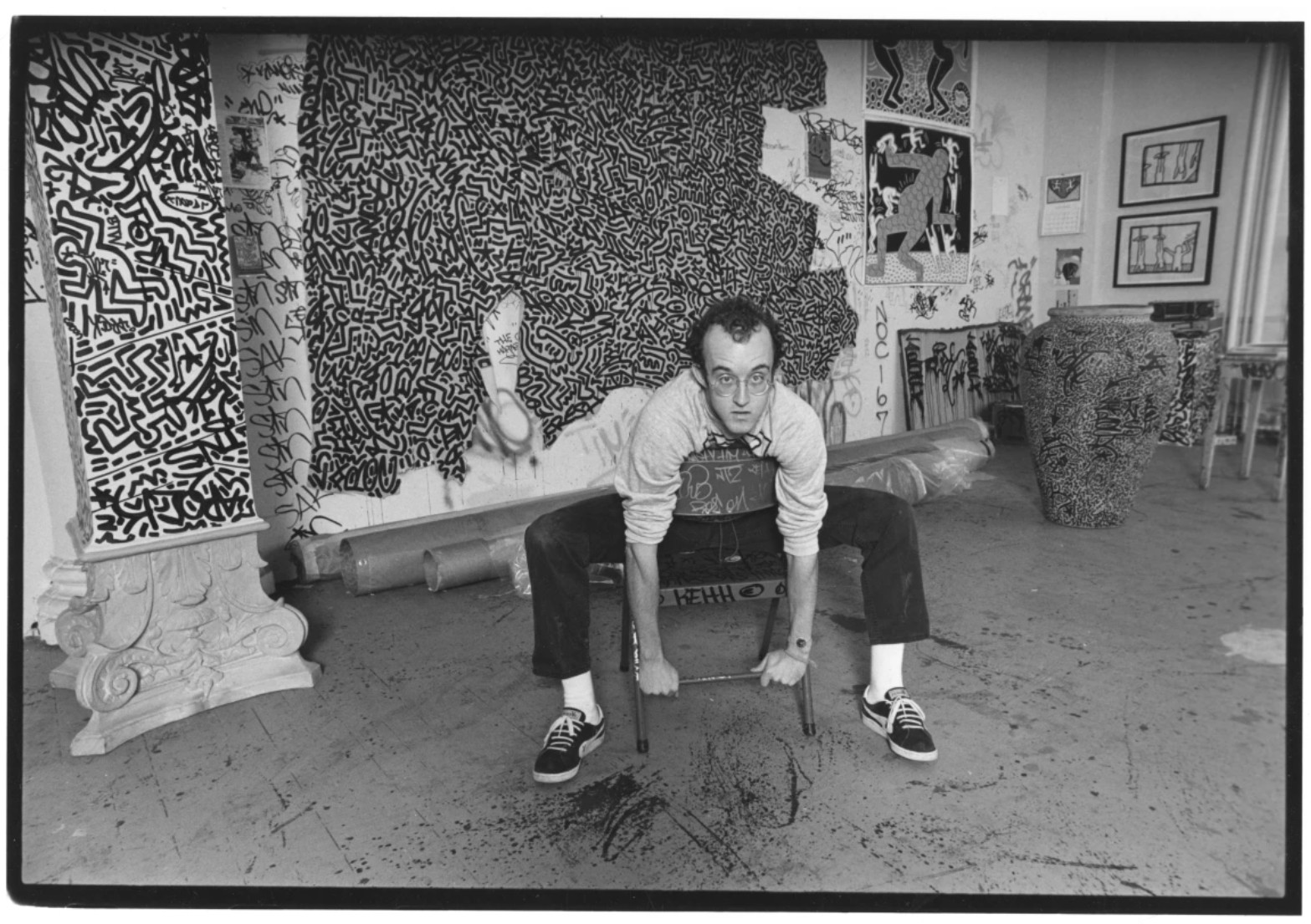
Keith Haring in his studio / Image: © Laura Levine/Contributor via Getty Images / Art: © The Keith Haring Foundation 2023
Arriving in New York in 1978, Haring was immediately inspired by the urban scene of the city. Just as he found himself magnetically drawn to the idea of scrawling figures across the walls of New York City’s subway tunnels, his seminal works on unstretched industrial canvas and tarpaulin were similarly derived from a chance encounter above-ground.
“One day, I observed some Con Edison men working on the street, and they were covering their equipment with these vinyl tarpaulins, which had these little metal grommets in them… I go to this place by subway.. and they show me all these many-colored tarpaulins—and they can make them up to size—and I order a whole batch of them, and I tell them how to space the grommets. I then investigate which medium will bite into the surfaces, and discover it has to be a kind of silk-screening ink that’s made for plastic…”
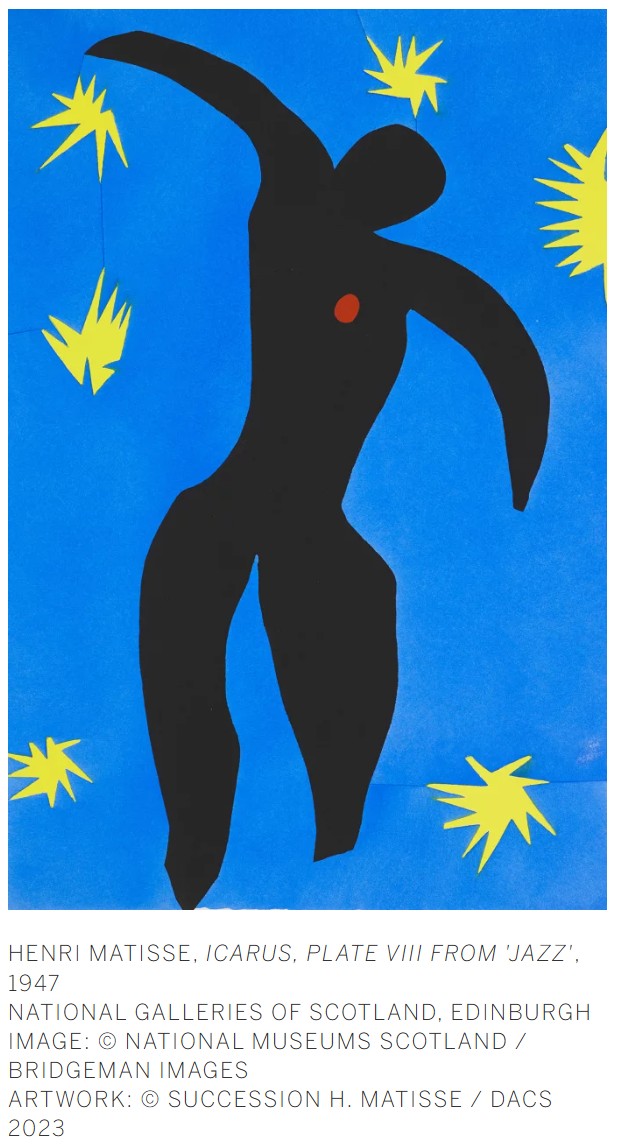
This chance revelation led to the creation of a seminal body of works unpretentious in their fabrication and evocative of the grit and creative potential of the Street. Flouting the limitations and historical connections of painting, the tarpaulin works provided art that was accessible to the masses both in its visual language and through its conceptualisation, a mission which Haring actively sought in his creative process throughout the course of his life. In 1985, the year prior to when the present work was created, Haring replaced tarpaulin with canvas and thus supplying the foundation for which the present work would be created in 1986. Exhibiting one of the artist’s most celebrated pictorial formats, the present work is exceptional for its dense and visually rich imagery, vibrant colour palette, and linear acuity. Untitled is a culmination of Haring’s practice, encompassing the various visual strategies he employed in previous drawings and paintings to coalesce into a singularly accomplished work. While Haring’s clean, labyrinthine lines recall the bold, crisp, concision of the graffiti figures belonging to his early career, his bold use of flat color and decomposition of pictorial planes take inspiration Henri Matisse’s oeuvre including works such as Icarus, plate VIII from Jazz, held in the National Galleries of Scotland. Moreover, it was particularly through Matisse’s inspiration that Haring was able to paint by drawing and draw by painting.
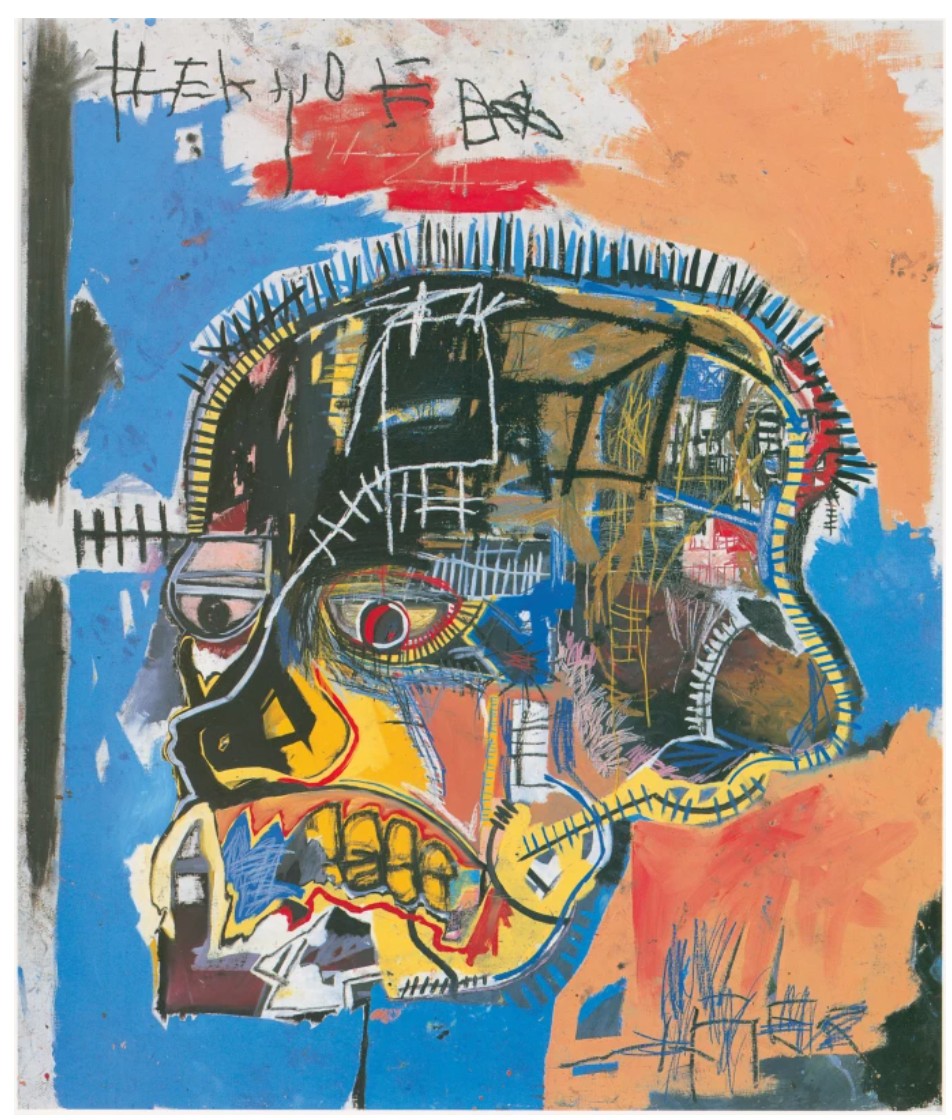
Jean Michel Basquiat, Untitled, 1981 / The Broad, Los Angeles
Image: © The Broad, Los Angles
Artwork: © The Estate of Jean-Michele Basquiat/ADAGP, Paris and DACS, London
Within Haring’s career, 1986 is retrospectively a pivotal moment for the young artist. Not only was it the year in which Haring had his first solo museum exhibition at the Stedelijk Museum in Amsterdam and opened his Pop Shop in downtown New York, but in 1986 Haring was arguably at the height of his political engagement. In June, he created his Crack is Wack mural in East Harlem, visible from New York’s FDR Drive. Originally considered vandalism by the New York Police Department, Haring was arrested for an act that would create one of the most renowned works of his career, a work of powerful anti-drug activism. To commemorate Haring’s strong socio-political presence as an artist, the work remains a part of New York City’s repertoire of iconic public art. In October of that year, Haring created a mural on the Berlin Wall for the Checkpoint Charlie Museum. The mural was 300 meters long and depicted red and black interlocking human figures against a yellow background. The colours were a representation of the German flag and symbolized hope of unity between East and West Germany.
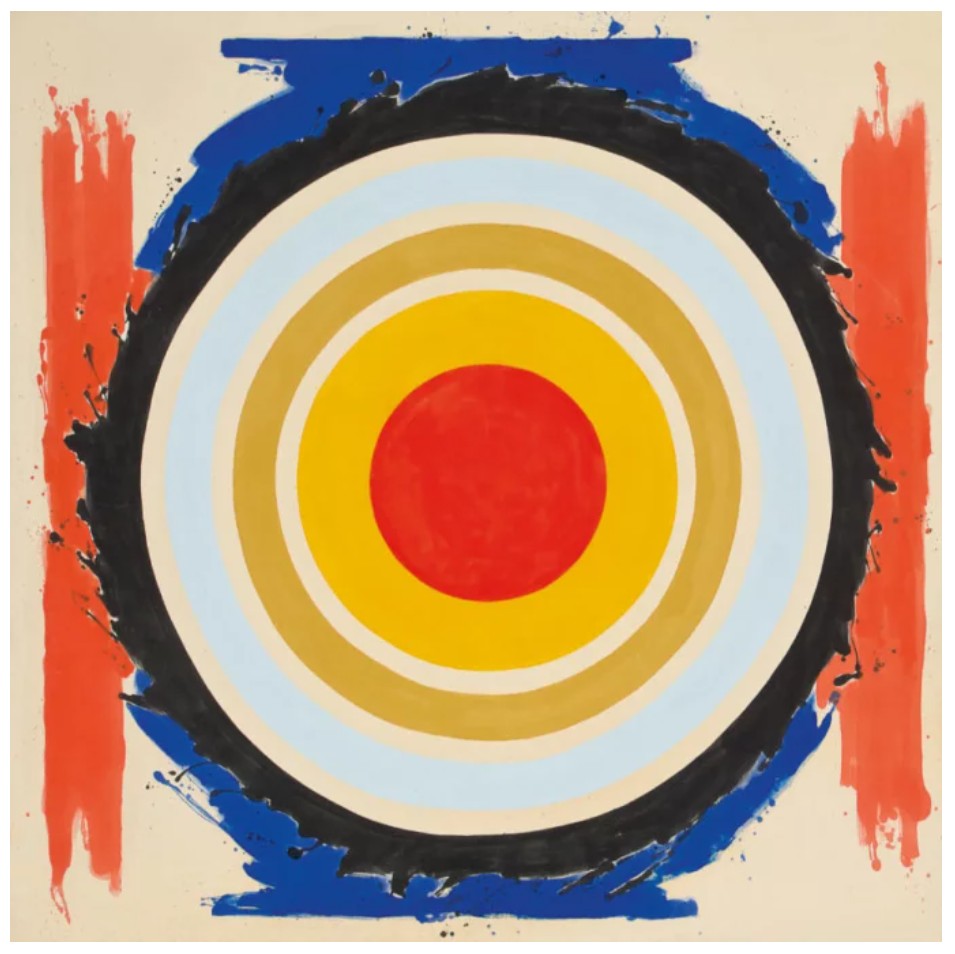
Kenneth Noland, Circle, 1958 / Private Collection
Image: © Bridgeman Images / Artwork: © Estate of Kenneth Noland/VAGA at ARS, NY and DACS, London 2023
Exploring universal concepts of birth, death, love, sex, and war through the primacy of his line and the directness of his imagery, Haring was able to attract a deeply dedicated audience over the course of only ten years. The universally recognized visual language of Haring’s oeuvre today not only attests to the accessibility and staying power of his visual vernacular, but also the continued importance of his work as an artist. In a period – the eighties – that consciously rejected the grand narratives that had guided human action over the last two centuries, Haring represented the zeitgeist, the spirit of the time. Embodying the dizzying energy and sense of possibility that existed within the New York cultural scene of the 1980s, the present work superbly encapsulates the sensation that Haring declared he was striving for within his art.
“When I paint, it is an experience that, at its best, is transcending reality.”