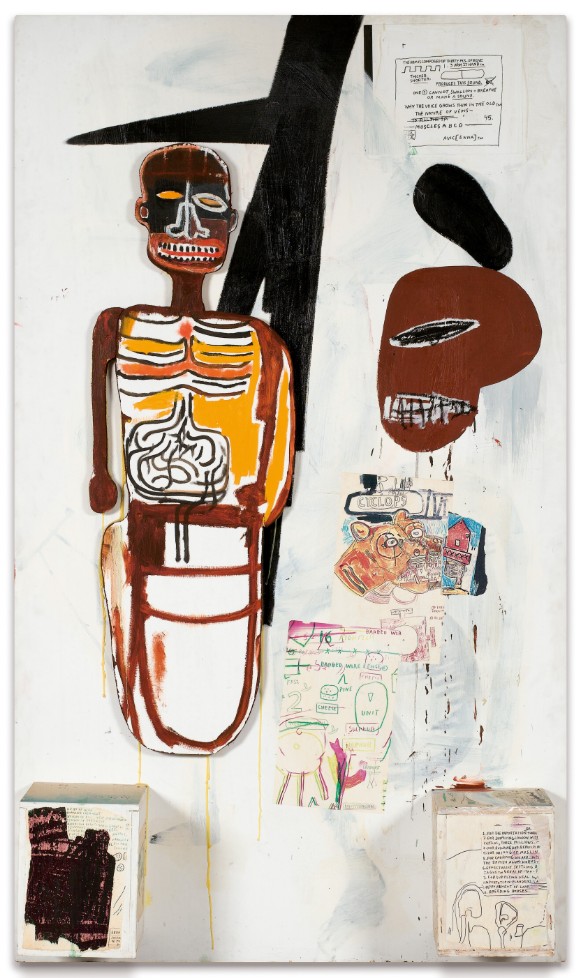
JEAN-MICHEL BASQUIAT (1960 – 1988)
Thin in the Old, 1986
Acrylic, oil and Xerox collage on panel
71-7/8 x 42-1/8 x 9-1/2 inches (182.5 x 107 x 24 cm)
Signed, titled and dated 86 (on the reverse)
Provenance
Galerie Bruno Bischofberger, Zurich
Akira Ikeda Gallery, Tokyo
Kantor Gallery, Beverly Hills
Sotheby’s, New York, 18 November 1998, lot 179 (consigned by the above)
Private Collection, Europe
Private Collection, Italy
Sotheby’s, Paris, 6 December 2017, lot 54 (consigned by the above)
Acquired from the above sale by the present owner
Auction History
Sotheby’s London: 4 March 2026
Estimated: GBP 6,000,000 – 8,000,000
GBP 4,543,000 / USD 6,068,995
Thin in the Old | Modern & Contemporary Evening Auction | 2026 | Sotheby’s
REPEAT SALE
Sotheby’s Paris: 6 December 2017
Estimated: EUR 3,000,000 – 5,000,000
EUR 3,650,900 / USD 4,304,350
Monumental in presence and unflinching in spirit, Thin in the Old from 1986 crystallizes the visual and intellectual urgency that defines Jean-Michel Basquiat’s mature practice. Dominated by a skeletal protagonist rendered with stark linearity and raw chromatic contrasts, the composition confronts the viewer with a body reduced to its most essential signs: ribcage, organs, and mask-like visage articulated with a language that oscillates between diagram and effigy. The figure appears both fragile and defiant, suspended within a field of layered marks, painterly erasures, and architectural fragments that embody Basquiat’s singular ability to merge autobiographical reflection with cultural critique.
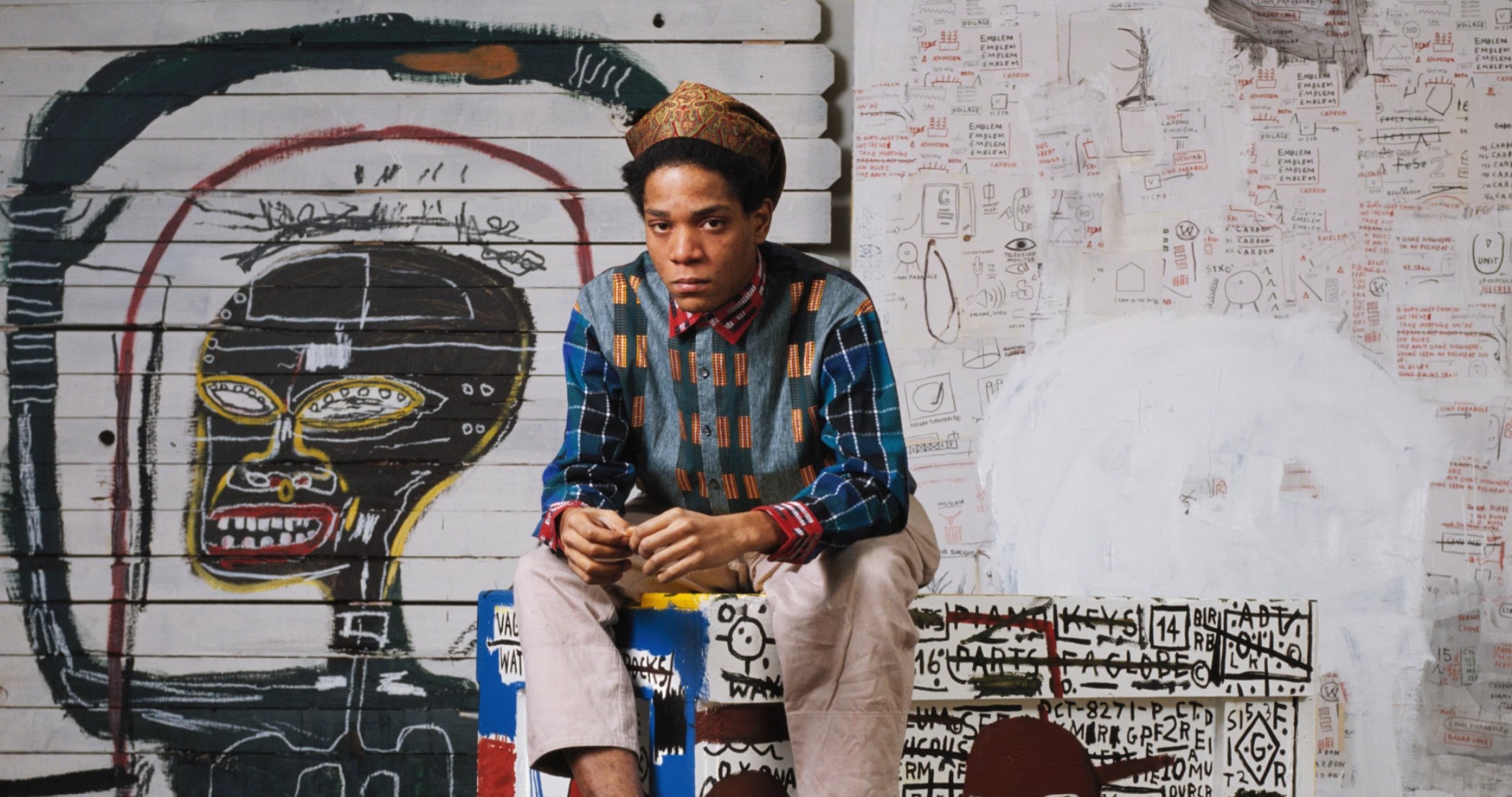
Jean-Michel Basquiat, Great Jones Street studio. © Lizzie Himmel 1985
Thin in the Old unfolds as a carefully orchestrated assemblage in which figure, sign, and object occupy a shallow yet charged pictorial space. A skeletal protagonist — rendered on a cut-out support and affixed to the ground — hovers between painting and relief, its mask-like face articulated in burnt umber, chalk white, and flashes of cadmium yellow that illuminate the ribcage and exposed viscera. The anatomical lines, drawn with graphic immediacy, recall both medical illustration and ritual carving, while drips of diluted pigment descend from the body, suggesting a sense of dissolution. Behind the figure, a sweeping black diagonal interrupts the pale ground like a scythe or architectural beam, introducing a dramatic spatial tension that fractures the composition. To the right, a second disembodied head — flattened and reduced to a single eye and clenched teeth — appears as a spectral echo of the central figure, reinforcing Basquiat’s recurrent dialogue between mask and self-portrait. Collaged drawings and Xeroxed fragments punctuate the surface: a “Cyclops” image, schematic diagrams, and handwritten notations that oscillate between childlike invention and coded reference, embedding language within the pictorial field. At the lower edge, two box-like constructions project outward from the panel, transforming the painting into a hybrid object that blurs the boundary between canvas and assemblage. Their presence anchors the composition physically while evoking reliquaries or talismanic containers, reinforcing the work’s synthesis of ritual, memory, and urban detritus. Together, these disparate elements coalesce into a dynamic visual rhythm, where negative space, gesture, and material layering heighten the sense of a body — and a psyche — held in precarious suspension.
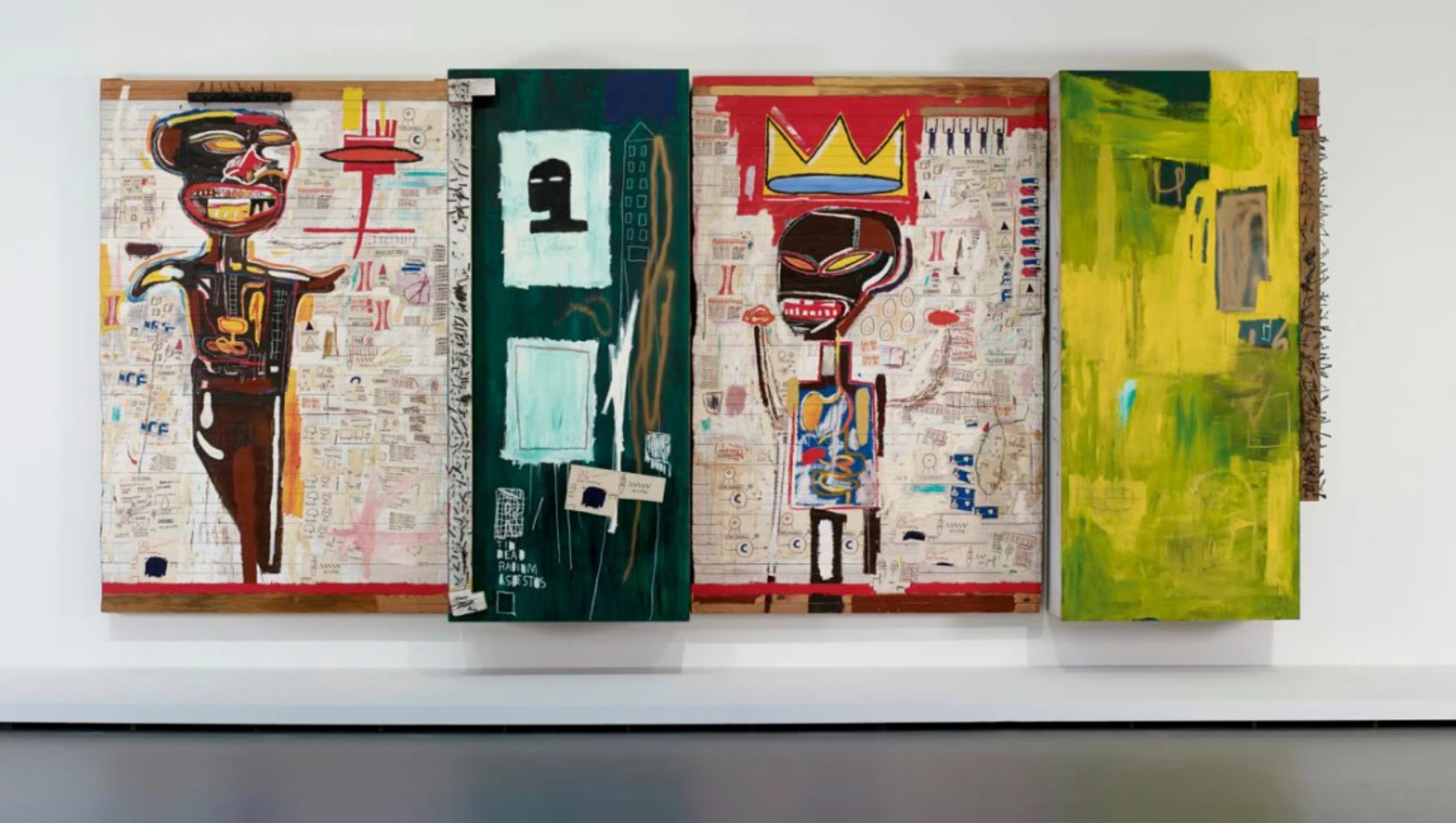
Jean-Michel Basquiat, Grillo, 1984. Fondation Louis Vuitton, Paris. © The Estate of Jean-Michel Basquiat, ADAGP, Paris, 2026
Basquiat’s fixation on anatomy — rooted in his formative encounter with Gray’s Anatomy, the nineteenth-century medical compendium gifted by his mother during childhood convalescence — permeates the painting’s visual logic. Throughout his oeuvre, skeletal limbs and exposed organs function less as clinical illustrations than as metaphors for psychic intensity and lived experience. In Thin in the Old, the body becomes a charged site of vulnerability and agency: an X-ray-like presence that recalls the artist’s enduring fascination with the human form as both instrument and battleground. This anatomical vocabulary situates the work within a broader lineage that extends from the gestural figuration of Willem de Kooning and Jean Dubuffet to the raw immediacy of Neo-Expressionist painting.
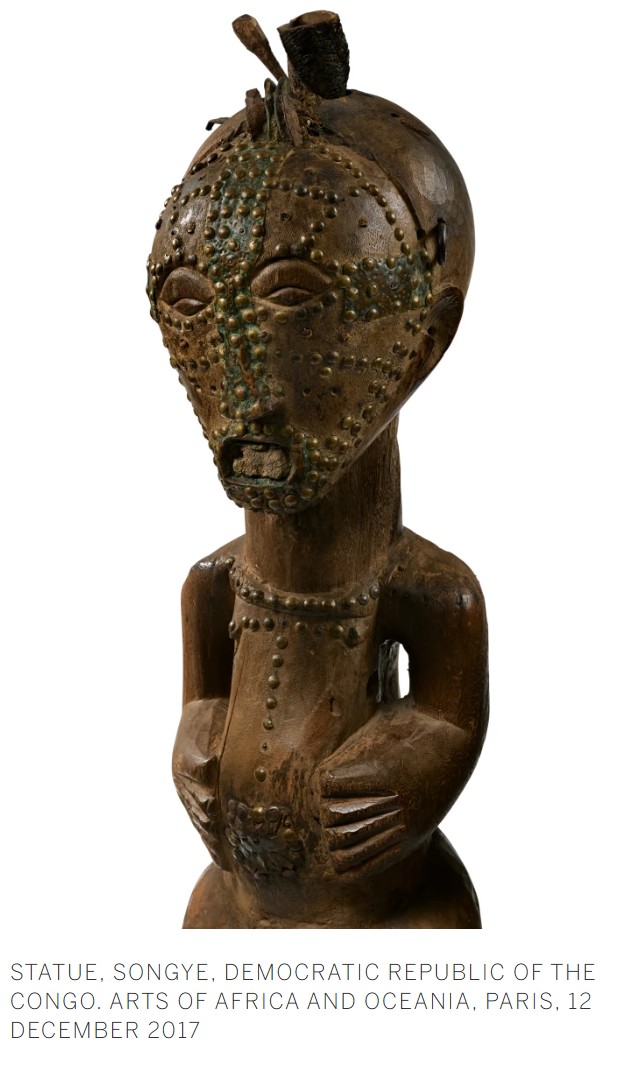
Executed in 1986, shortly after Basquiat’s journey to the Ivory Coast, the painting reflects a renewed engagement with African visual traditions and diasporic identity. The hieratic posture of the skeletal figure evokes ancestral statuary and ceremonial masks, while the flattened frontal presentation recalls both West African sculpture and Byzantine icon painting. Such references reveal the artist’s deep awareness of art history, forged through years of self-directed study and frequent visits to the Metropolitan Museum of Art, where he absorbed the strategies of artists such as Jasper Johns and Cy Twombly — figures who, like Basquiat, collapsed the boundaries between language and image. Within this lineage, the skeletal protagonist emerges as both archetype and self-portrait, a conduit through which Basquiat inscribes himself into a transhistorical dialogue spanning antiquity, Renaissance portraiture, and modernist experimentation.
Themes of mortality and impermanence course through the composition. The skeletal anatomy invokes the long iconographic tradition of the memento mori, linking Basquiat’s urban visual language to medieval danse macabre imagery and the allegorical bodies of early modern painting. Yet death here is neither distant nor allegorical; it is visceral and immediate, embedded within the social realities of race, capitalism, and identity that shaped the artist’s lived experience. The exposed ribs and restless linework convey a sense of existential urgency, transforming the figure into a psychic register of the artist’s internal landscape.
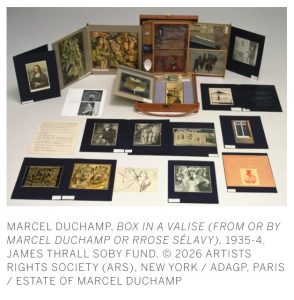
Equally significant is the work’s engagement with the boundaries between high and low culture. Architectural motifs and boxed forms within the composition subtly recall Marcel Duchamp’s Boîte-en-valise and the commodity-based interventions of Andy Warhol, whose influence encouraged Basquiat to interrogate the mechanisms of value and authorship. These elements resonate with African fetish boxes containing protective amulets, fusing spiritual symbolism with the aesthetics of consumer packaging. Such strategies reflect Basquiat’s broader practice of bricolage — a method rooted in his early years in downtown New York, where he moved fluidly between music, poetry, and graffiti under the pseudonym SAMO, translating the energy of the street into a painterly language of exceptional immediacy.
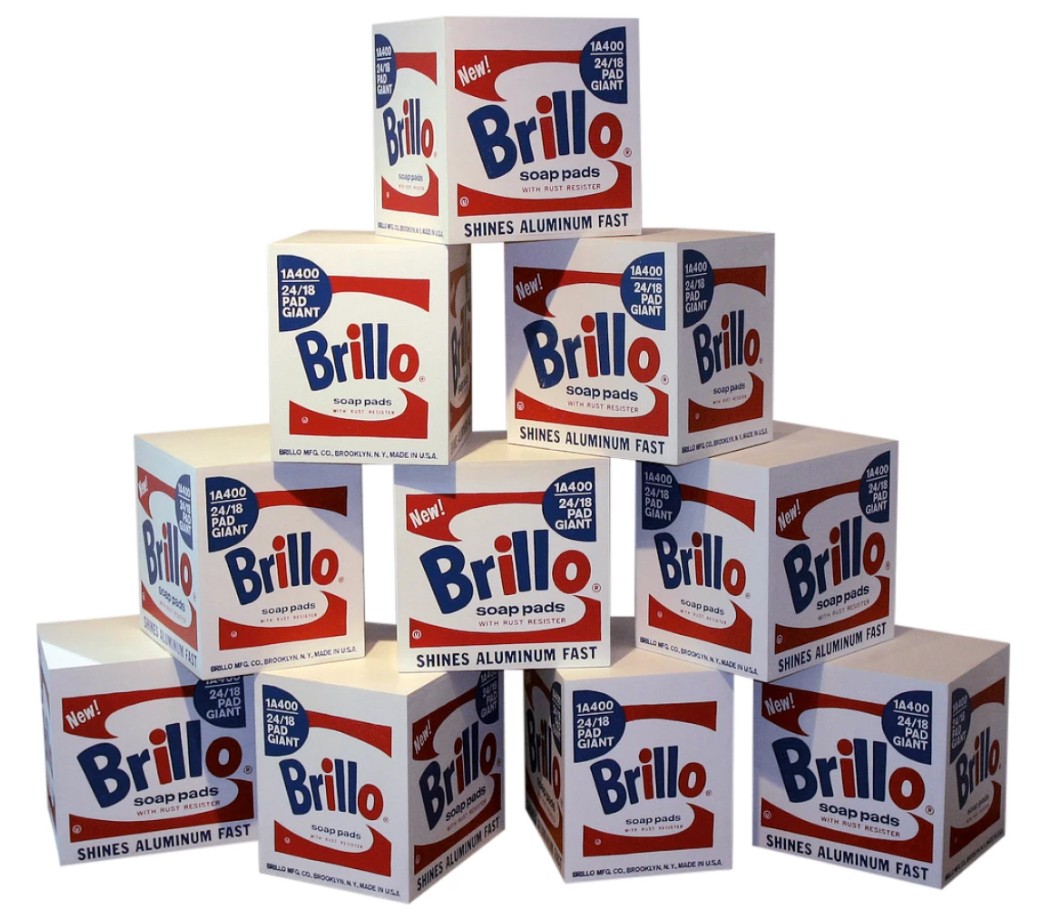
Andy Warhol, Brillo Boxes, 1964. Private Collection. © The Andy Warhol Foundation
Born in Brooklyn in 1960 to a Haitian father and Puerto Rican mother, Basquiat emerged as one of the defining voices of a generation that reshaped the international art market during the early 1980s. By the mid-decade, following landmark exhibitions including Documenta and a succession of critically acclaimed solo shows, his work had achieved a level of recognition unprecedented for an artist of his age. Within this context, Thin in the Old embodies the heightened confidence and intellectual ambition of his later practice, synthesizing diverse sources — from African sculpture and Renaissance anatomy to Pop art and street culture — into a visual language that is at once poetic and confrontational.
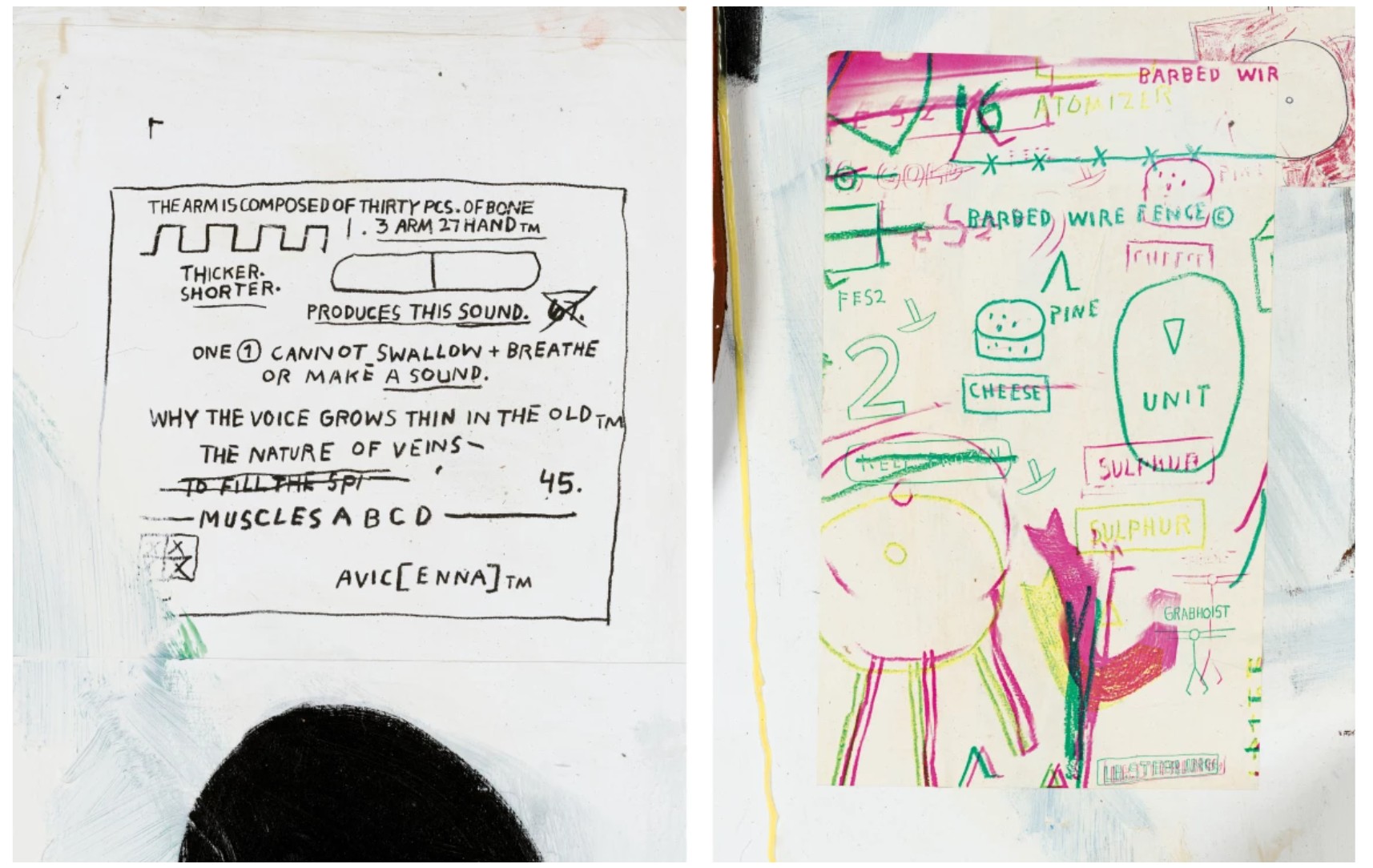
DETAILS OF THE PRESENT WORK
Ultimately, Thin in the Old stands as a powerful testament to Basquiat’s role as both painter and poet. The skeletal protagonist anchors a composition that addresses artistic lineage, mortality, and social struggle with uncompromising clarity, while the layered surface reveals an artist continually negotiating the boundaries between history and contemporaneity. In its fusion of raw immediacy and profound art-historical awareness, the painting exemplifies Basquiat’s enduring capacity to transform the most elemental imagery into a vehicle of cultural memory and expressive force.