JEAN-MICHEL BASQUIAT
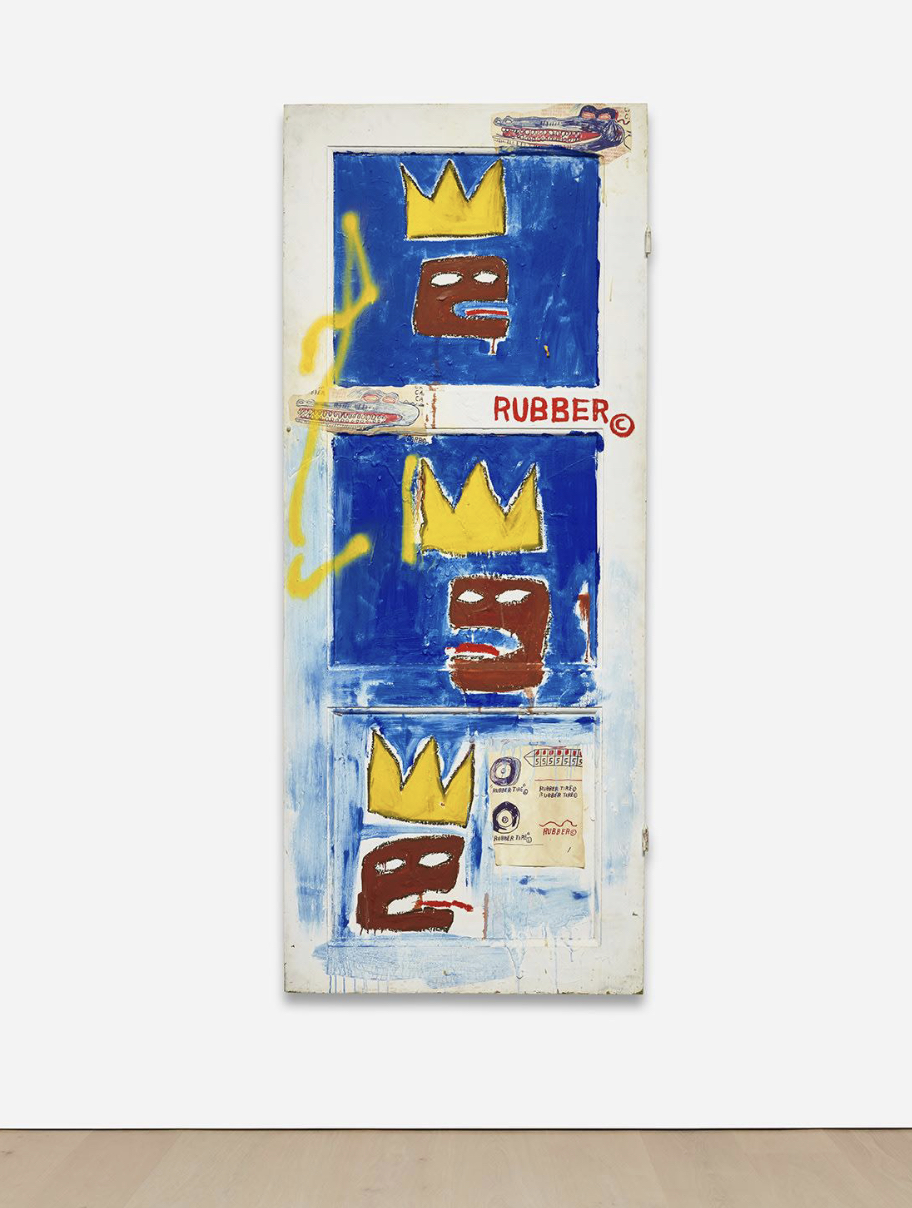
Untitled (The Door), 1984
Acrylic, oil and Xerox collage on wooden door
81.5 x 33.2 inches (207 x 84.5 cm)
Signed with the artist’s initials and dated “JMB ’84” on the reverse
Provenance
Raymond and Patsy Nasher, Dallas (acquired directly from the artist in 1985; titled as Rubber)
Stellan Holm, New York
Private Collection
Phillips de Pury & Company, New York, May 13, 2010, lot 116
Acquired at the above sale by the present owner
Auction History
Phillips New-York: 17 November 2021
Estimated: USD 6,000,000 – 8,000,000
USD 8,549,500
Jean-Michel Basquiat – 20th Century… Lot 27 November 2021 | Phillips
Executed in 1984, Untitled (The Door) exemplifies Jean-Michel Basquiat’s gestural, painterly prowess with his transcendent ability to amalgamate seemingly incoherent themes. Showcasing his distinctive iconography including the crown, textual devices, animal imagery, and popular culture references, the present work is richly infused with the artist’s biographical symbolism whilst also signaling to his collaborations with Warhol from 1984 to 1985. Part painting, part sculptural object, the work’s wooden support situates Untitled (The Door) within the year when he conceived some of his most iconic works, such as Flexible, Private Collection; Gold Griot, The Broad, Los Angeles; and Grillo, Fondation Louis Vuitton, Paris.
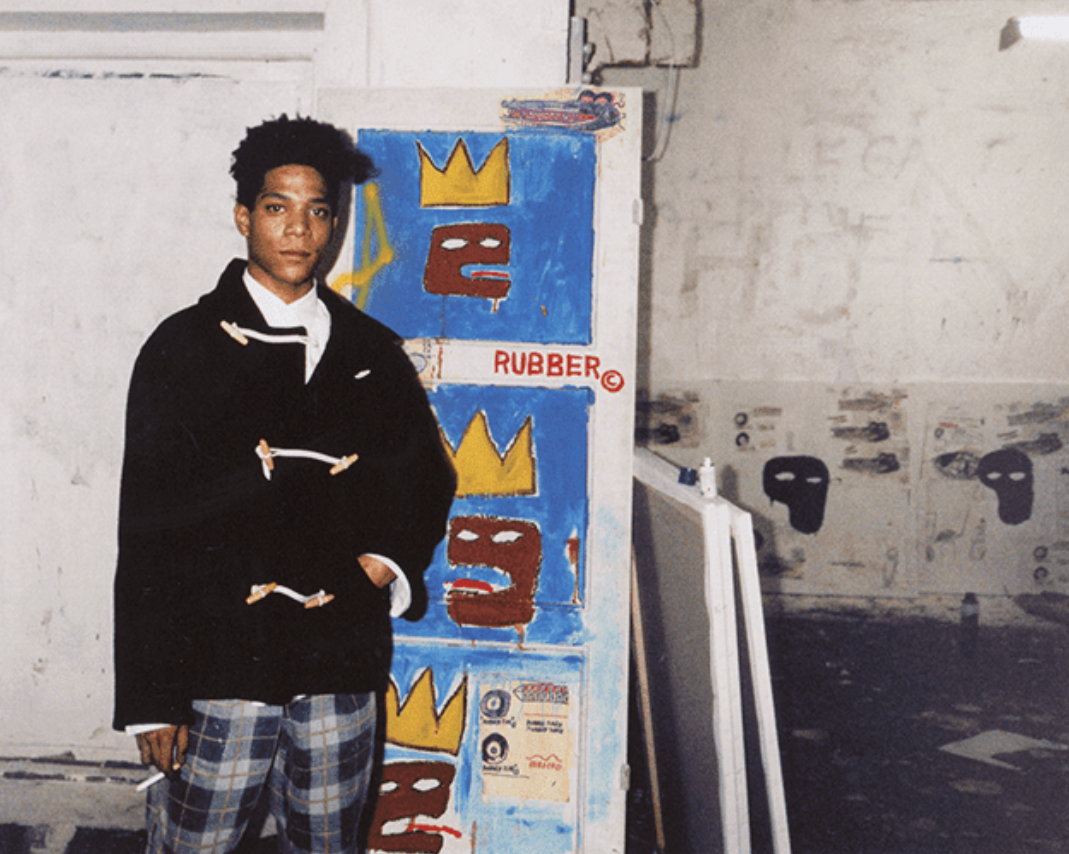
Jean-Michel Basquiat with the present work, Stockholm, 1984.
Image: Stellan Holm, Artwork: © 2021 Estate of Jean-Michel Basquiat. Licensed by Artestar, New York
Visually divided into three distinct sections by a triad of blue squares, the wood panel bears the illusion of a vertical triptych. The most central element in these layers—and perhaps of the artist’s artistic lexicon overall—is the human figure, which Basquiat used as an iconographic device to coalesce art history, pop culture, and the Black experience. The heads float in an ambiguous space, punctuated by the oversized yellow crowns that made their first appearance in his homage to Picasso, Red Kings, 1981.
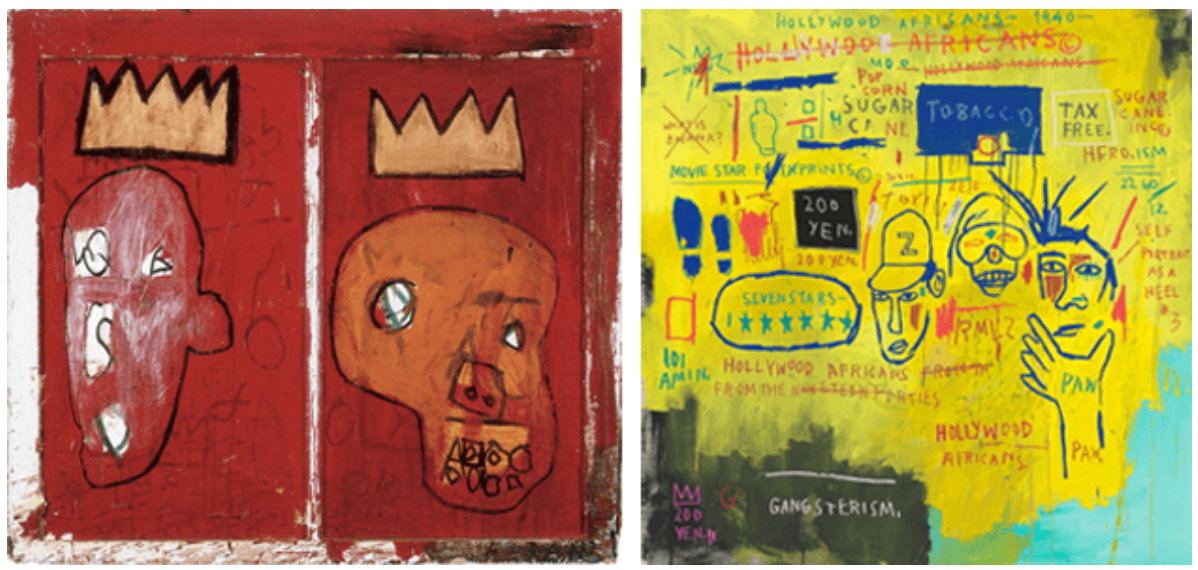
[left] Jean-Michel Basquiat, Red Kings, 1981. Private Collection, Artwork: © 2021 Estate of Jean-Michel Basquiat. Licensed by Artestar, New York [right] Jean-Michel Basquiat, Hollywood Africans, 1983. Whitney Museum of American Art, New York, Image: © Whitney Museum of American Art / Licensed by Scala / Art Resource, NY, Artwork: © 2021 Estate of Jean-Michel Basquiat. Licensed by Artestar, New York
The present work is emblematic of the same vigor and immediacy that harkens back to Basquiat’s years as a “street poet” in the late 1970s when he emerged behind his pseudonym SAMO. Here, streaks of electric yellow and blocks of brilliant blue sharply contrast against neutral tones of gray, creams, and browns in a dual tension—much like that of the quick-drying acrylic and slow-setting oil paint fighting the materiality of Xeroxed transparencies. Having bonded with Keith Haring and Kenny Scharf during his time at the School of Visual Arts over their interest in Xerox, Basquiat would invest in his own color Xerox machine in 1983, reflecting his fascination with modern technology and ever employing collage as an integral element in his practice.
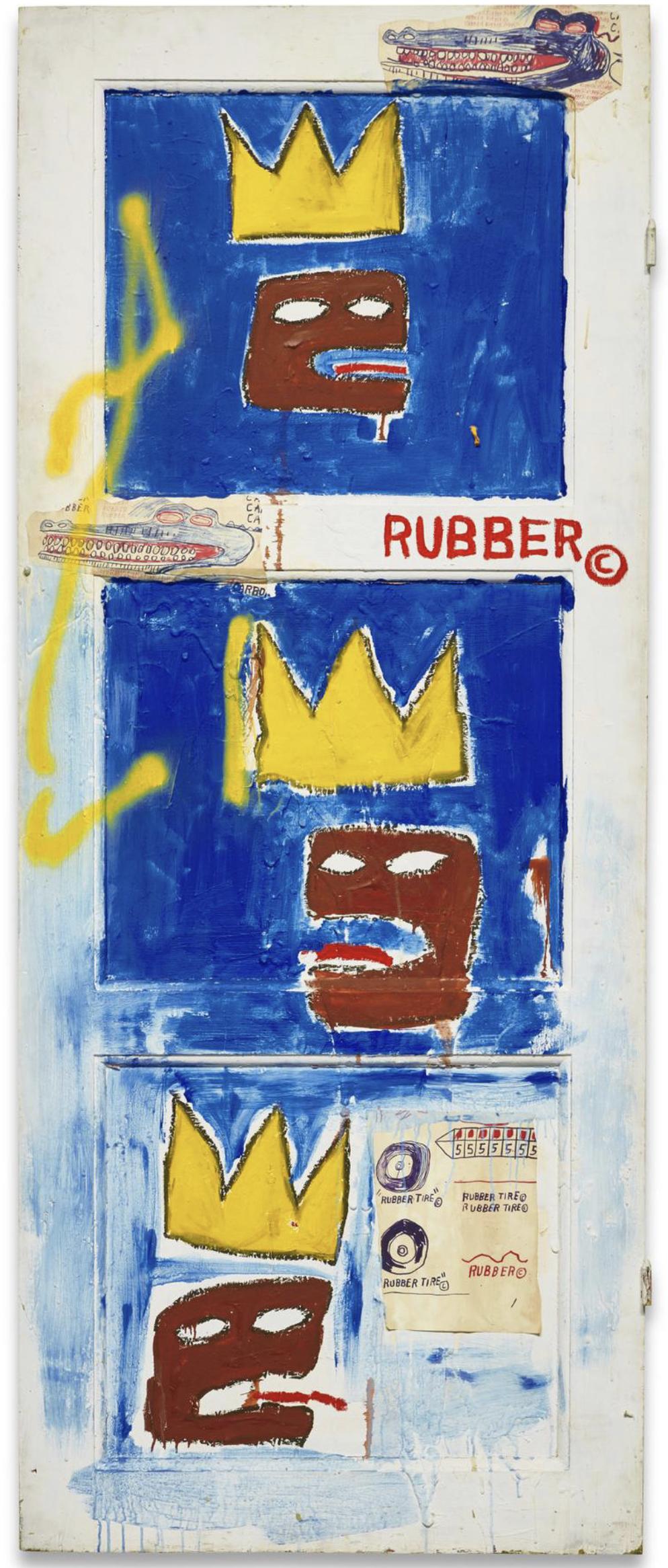
Incorporating the trademark copyright logo from his SAMO days, Basquiat tags the words “RUBBER,” “RUBBER TIRE,” and “CARBON” throughout the composition with varying repetition and visibility, demonstrating his lifelong practice of collecting words from the world around him, including street signs, shop advertisements, songs, and books. Similarly seen in his Izod and Untitled of the same year, these references recur throughout the artist’s works from this period alongside the crocodile motif, and “reveal Basquiat’s interest in aspects of commerce—trading, selling and buying. Basquiat is scrutinizing man’s seizure and monopolization of the earth’s animal and material resources, and questioning why and how these resources, that are ideally owned by all of the world’s inhabitants, have become objects of manipulation, power, and wealth at the expense of the well-being of all mankind.
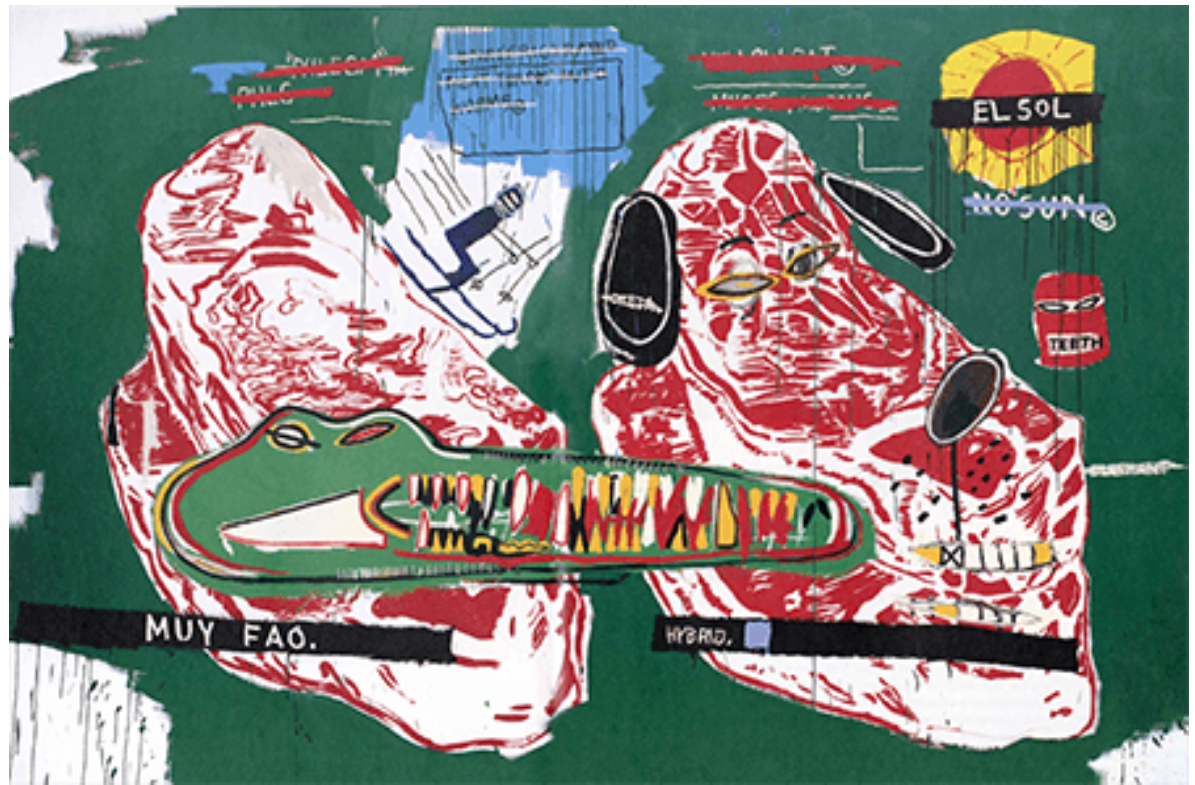
Andy Warhol and Jean-Michel Basquiat, Crocodile, 1987. Private Collection, Artwork: © 2021 Estate of Jean-Michel Basquiat. Licensed by Artestar, New York
The nefarious and skeletal crocodile heads—like the human heads visually functioning as masks in their cut-out eyes—conjure Voodoo forms that allude to Basquiat’s Haitian roots and African tribal culture. They quite literally command themselves as mysterious ancient ciphers resurfacing in a modern context, also functioning as a possible reference to the crocodile logo of the men’s clothing brand Izod Lacoste, which reached its peak in the late 1970s and early 1980s. Characteristic of Basquiat’s hybridizing sensibility, the crocodiles ultimately reflect the artist’s merging of classical references and popular culture and are also seen in his collaborative work with Andy Warhol, Crocodile, of the same year.
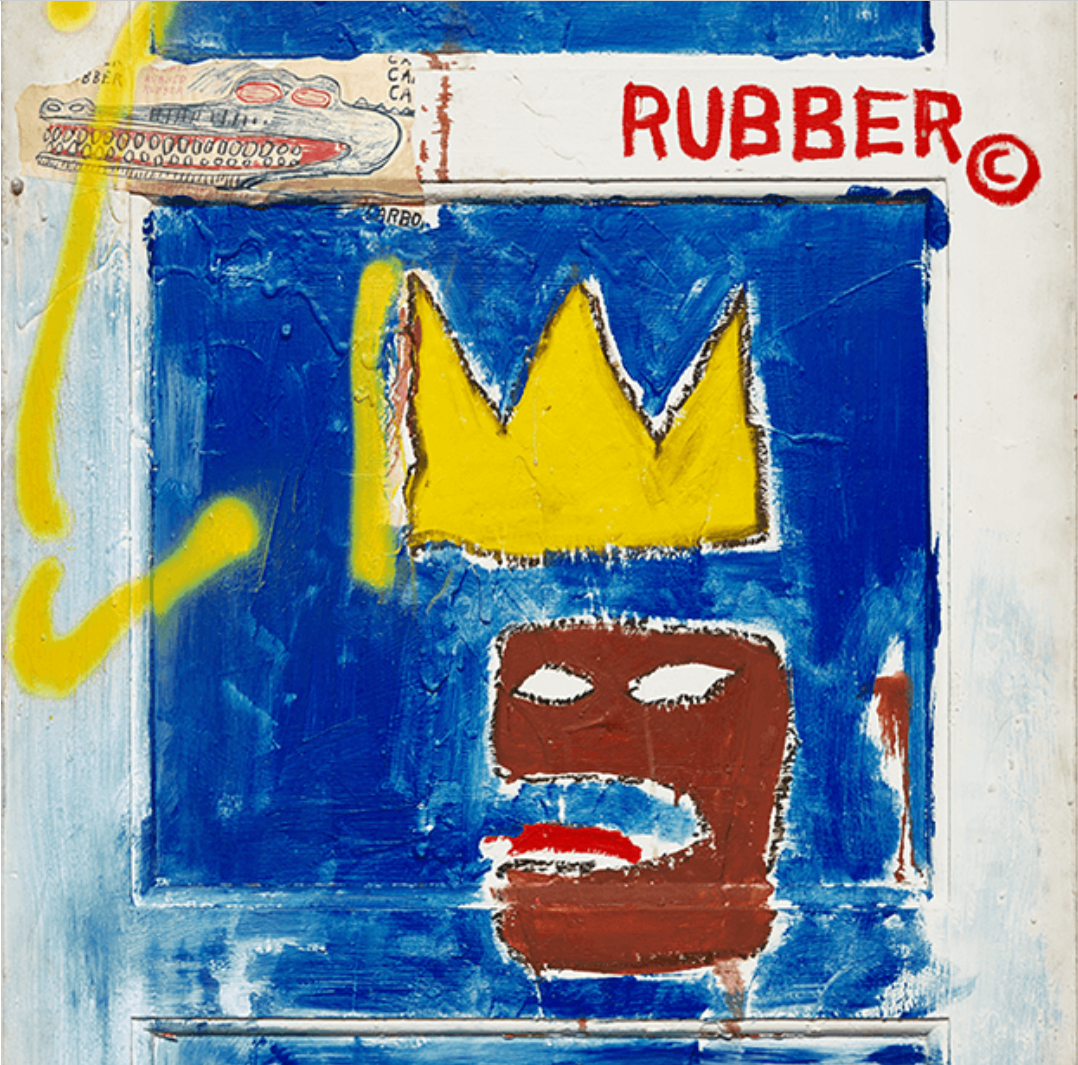
Throughout Basquiat’s career, wooden doors, along with wood-slat fences and windows, would become a preferred object of support for his artistic visions. Explaining his early works, he recalled, “I used the window shape as a frame and I just put the painting on the glass part and on doors I found on the street.” In many ways owing to the work of Robert Rauschenberg, the senior artist’s ability to take materials from daily life, objects with no artistic significance, and transform them into forms laden with aesthetic content and value, was of enormous importance to Basquiat as he moved from the street into the studio. By the time he created Untitled (The Door), Basquiat fully embodied the interrogation of “low” and “high” culture that would ultimately typify the rest of his too-brief oeuvre.