KEITH HARING (1958 – 1990)
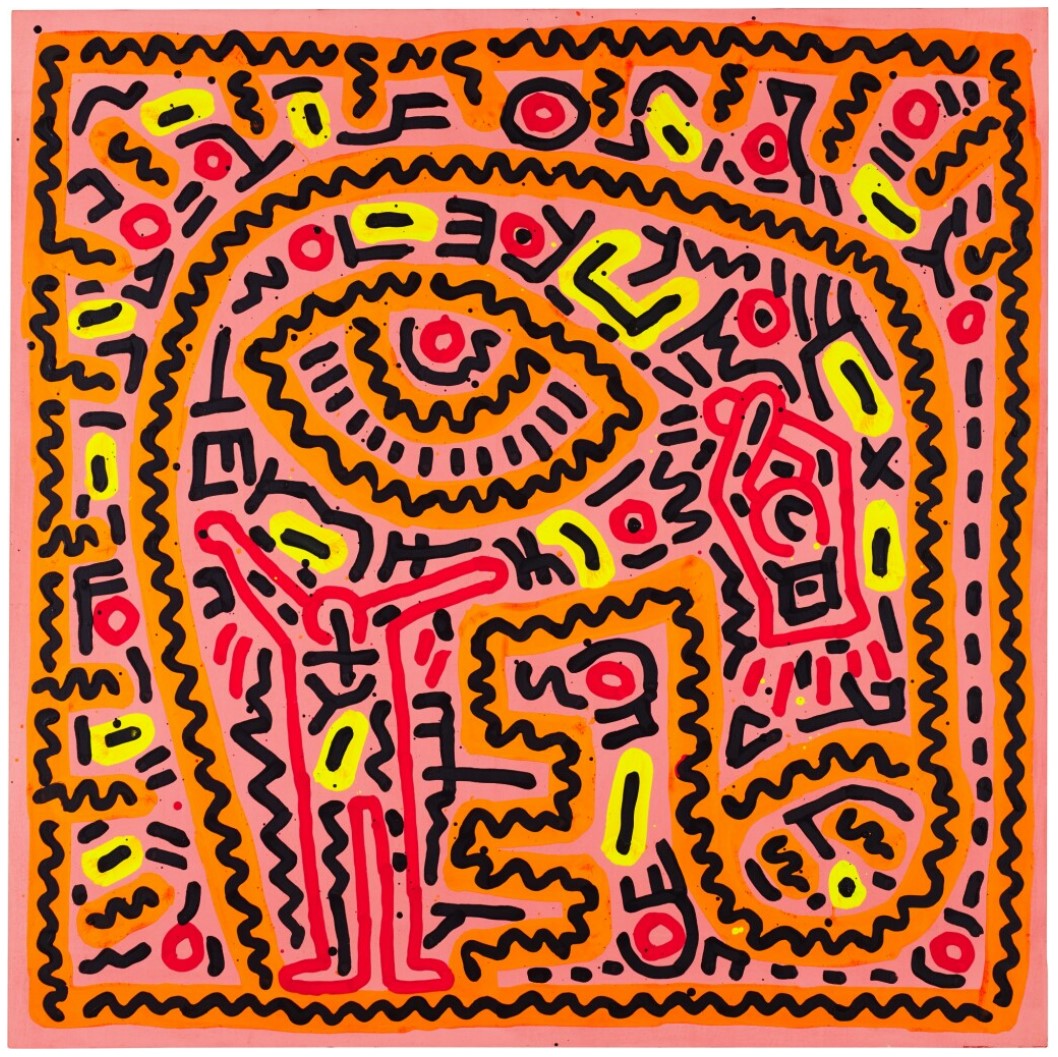
Untitled, 1984
Acrylic on canvas
100×100 cm (39 3/8 x 39 3/8 inches)
Signed and dated JUNE 11-84 MILANO on the overlap
Provenance
Galleria Salvatore Ala, Milan
Private Collection, Italy (acquired from the above in 1985)
Thence by descent to the present owner
Auction History
Sotheby’s London: 2 March 2023
Estimated: GBP 1,000,000 – 1,500,000
GBP 952,500 / USD 1,137,177
Untitled | Modern & Contemporary Day Auction | 2023 | Sotheby’s (sothebys.com)
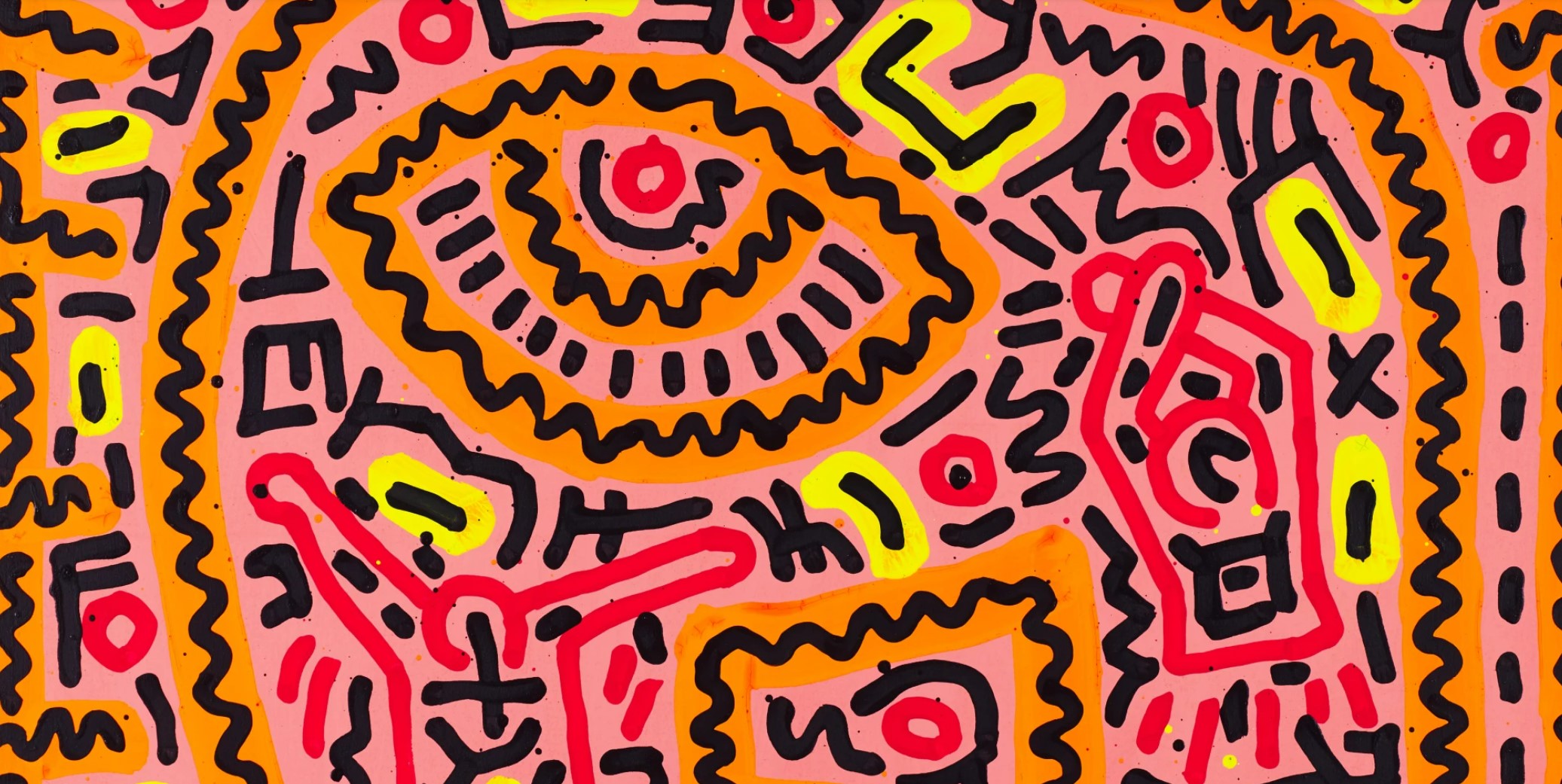
Rendered in a vibrant mix of bright orange, pink, red, yellow and black, the present work epitomizes the frenetic energy and visual exuberance of Haring’s instantly recognizable style. Dancing figures, zig-zagging lines and dashes of paint bounce across the canvas to form a psychedelic pattern infused with vitality and optimism. The painting dates from Haring’s momentous exhibition at Galleria Salvatore Ala in June 1984 and was completed in the weeks prior during a whirlwind of making.
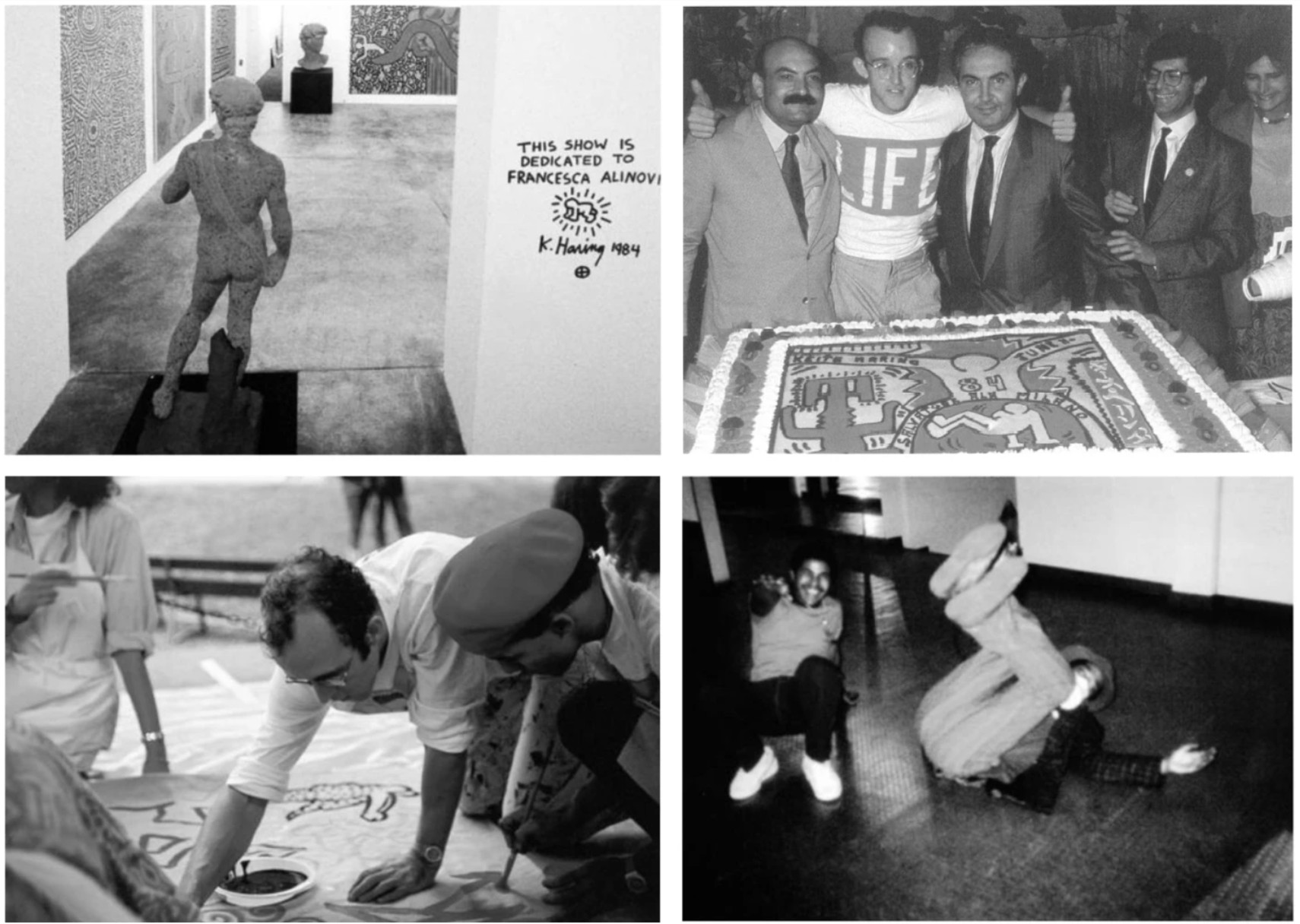
Upper left: The entrance to the Keith Haring exhibition at Galleria Salvatore Ala, Milan in 1984.
Upper right: Keith Haring with Salvatore Ala and Tony Shafrazi at the opening of the 1984 Milan exhibition.
Image: © Roberto Tomasin
Lower left: Keith Haring painting at Rotonda della Besana, Milan, 12 October 1986.
Lower right: Jean-Michel Basquiat break dancing at the opening party at Fiorucci, in Galleria Passarella, Milan, 11 October 1983.
Haring spent three weeks in Milan preparing for the exhibition, working in the gallery on via Mameli as well as studios and workshops throughout the city. By the opening, Haring had completed twenty paintings alongside terracotta vases, wooden works and plaster sculptures. A restless sense of discovery bounds through this collection, and as the Milanese critic Alessandra Galasso notes, the exhibition allowed Haring to “broaden his iconographical repertoire and to experiment with new techniques and materials” (Alessandra Galasso, Keith Haring a Milano, Milan 2005, p. 25). The present work is a compelling example; painted with Day-Glo acrylic on muslin, it is one of first instances of these materials in Haring’s oeuvre. Executed at a seminal moment in his career, the painting is emblematic of the Haring’s artistic experimentation during his stay in Milan.
The exhibition at Galleria Salvatore Ala and the intense interest it provoked is indicative of the expanding influence of the New York art scene during the 1980s. Haring was emblematic of the city’s eclectic, hedonistic cultural landscape, with Andy Warhol, Jean-Michel Basquiat and Madonna amongst his friends. Arriving in New York in 1978 to study at the School of Visual Arts, Haring was immediately inspired the music and graffiti scene. Appearing first as chalk drawings on the subway, Haring adopted a singular graphic style that developed into the radiant colours of the present work. Across mediums and materials, Haring prioritized a primacy of line and direct imagery to explore universal themes of birth, death, love, sex and war. The ubiquity of his distinctly idiosyncratic style attests to the artist’s importance and continuing relevance today. In just ten years, until his tragic death from AIDS-related complications in 1990, Haring created a lasting imagery that has been embraced around the world. This was evident in Milan, and for Salvatore Ala, “the exhibition in via Mameli was one of the finest he ever had in his career, Keith Haring’s gift to Milan” (Salvatore Ala quoted in: ibid., p. 18). The present work is exceptional as a celebration of movement, dance and vivid color, capturing the effusive spirit of Haring’s celebrated oeuvre.
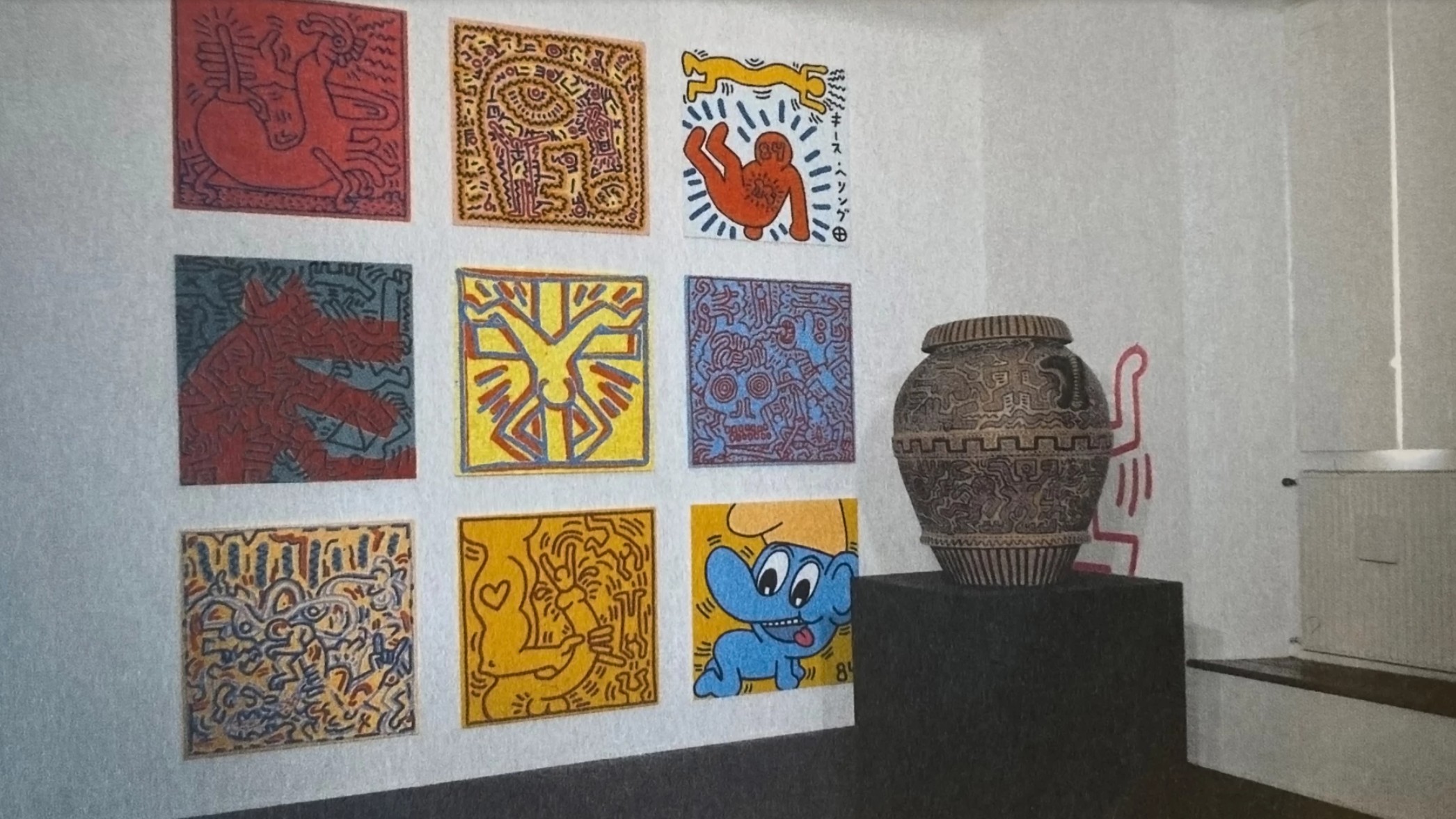
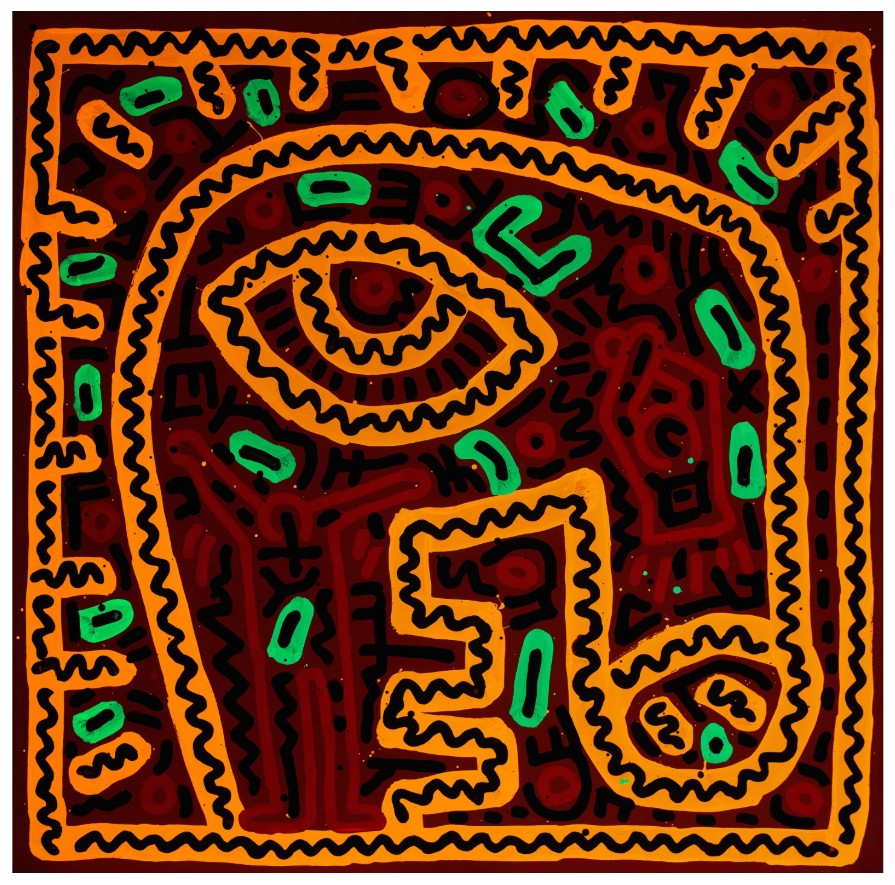
The present work exhibited at Galleria Salvatore Ala in 1984. / Artwork: © THE KEITH HARING FOUNDATION
Haring arrived in Milan aged 26 already as a recognized artistic phenomenon. More than three-thousand people arrived for the exhibition opening and in the preceding weeks a constant flow of friends and visitors gravitated to the gallery to witness Haring at work. Salvatore Ala recalled “Keith had this power to daw the crowds, to attract young people and adults alike; he always drew the crowds, like a pied piper” (Salvatore Ala quoted in: ibid., p. 18). Accounts abound of Haring working non-stop for hours, listening to deafening music and painting with remarkable precision and speed. Ala described Haring as “like a human dynamo, he painted without making any corrections, his gestures were fluid, and he never did any preparatory sketches, always preferring to work directly on the supports” (Salvatore Ala quoted in: ibid., p. 19).
“The paintings, which made up the main body of the show, were my release. These paintings were some of my first with acrylic paint on stretched muslin. I chose to begin painting with acrylic because of the wide range of color I had been ignoring in my previous works on vinyl. I think I also just wanted to prove that I could paint, or do anything, if I wanted to.”
Music and clubbing were formative to the Milan works and the influence especially visible in heady atmosphere of the present work. In an interview at the time Haring explained, “I work surrounded by music. My companion in New York is a disc jockey. Music in New York is part of daily life, it’s everywhere. And for me, it’s freedom: anyone can listen to it, you don’t have to pay for it, it makes you feel good, it inspires you, it uplifts you. For me this is art’s role” (Keith Haring quoted in: ibid., p. 26). In Milan, Haring frequented the infamous Milan nightclub Plastic, becoming good friends with the DJ Nicola Guiducci: “I stayed in the gallery late every night, painting until my hands hurt from holding the brush, and then I went to Plastic to unwind. Plastic is my favorite club in Europe, Nicola plays music that made me feel like I was in New York” (Keith Haring quoted in: Ibid., p. 29). For Haring, music and dance were a celebration of interconnectedness and the human spirit, a symbol of life and coexistence. With its clash of neon tones and kinetic mark-making, the present work mirrors the nightclub’s euphoria and dizzying energy.
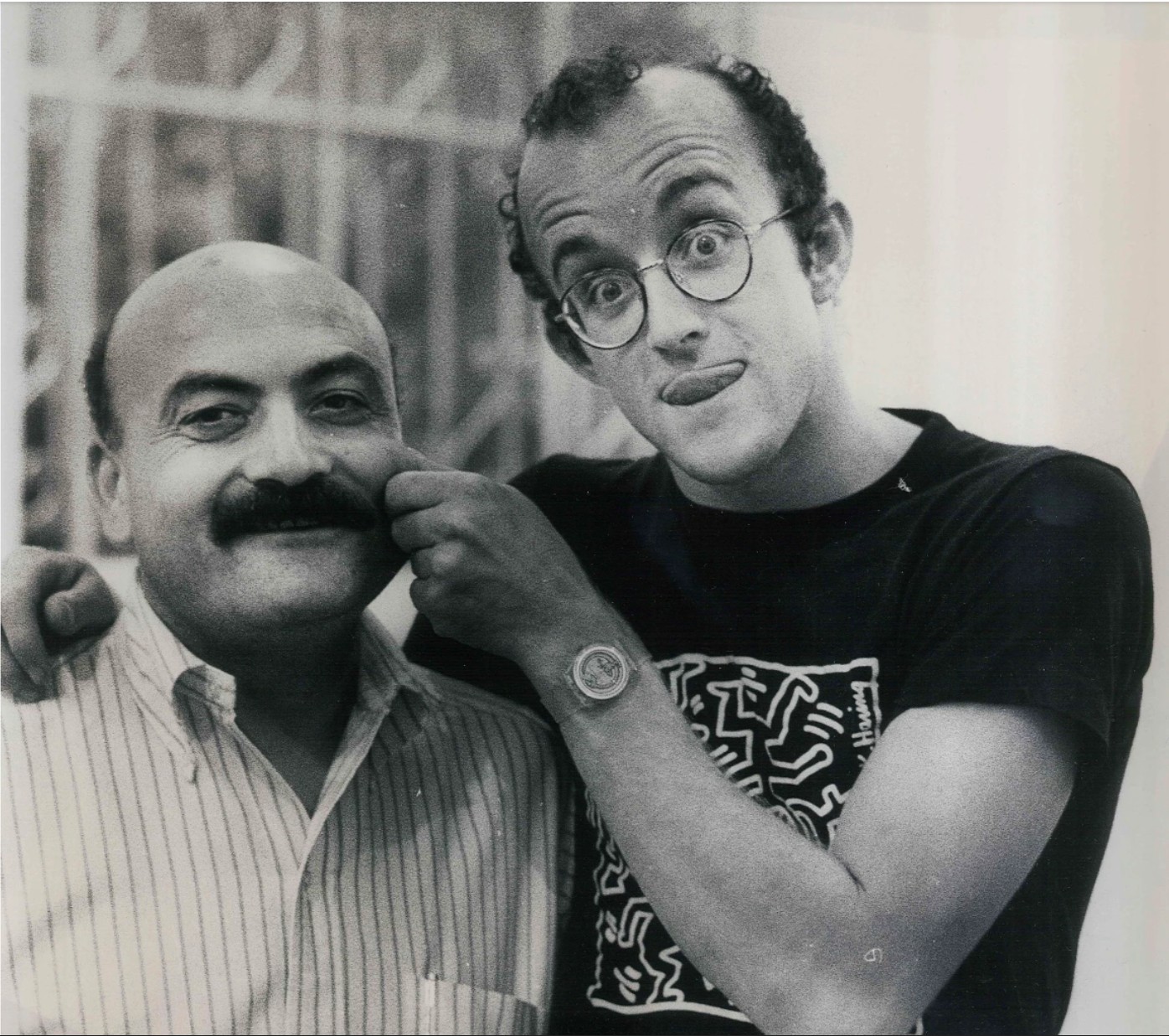
Salvatore Ala and Keith Haring in Milan / Image: © Maria Mulas. All rights reserved 2023 / Bridgeman Images
The exhibition at Galleria Salvatore Ala and the intense interest it provoked is indicative of the expanding influence of the New York art scene during the 1980s. Haring was emblematic of the city’s eclectic, hedonistic cultural landscape, with Andy Warhol, Jean-Michel Basquiat and Madonna amongst his friends. Arriving in New York in 1978 to study at the School of Visual Arts, Haring was immediately inspired the music and graffiti scene. Appearing first as chalk drawings on the subway, Haring adopted a singular graphic style that developed into the radiant colours of the present work. Across mediums and materials, Haring prioritized a primacy of line and direct imagery to explore universal themes of birth, death, love, sex and war. The ubiquity of his distinctly idiosyncratic style attests to the artist’s importance and continuing relevance today. In just ten years, until his tragic death from AIDS-related complications in 1990, Haring created a lasting imagery that has been embraced around the world. This was evident in Milan, and for Salvatore Ala, “the exhibition in via Mameli was one of the finest he ever had in his career, Keith Haring’s gift to Milan” (Salvatore Ala quoted in: ibid., p. 18). The present work is exceptional as a celebration of movement, dance and vivid color, capturing the effusive spirit of Haring’s celebrated oeuvre. The painting embodies a restless energy that accompanies the Milan works, wonderfully described by the great American Pop-Artist, Roy Lichtenstein, who visited Haring at Galleria Salvatore Ala:
“I once met Keith at the Milan, Italy, airport. He was in MiIan for his show at the Salvatore Ala Gallery. I stopped by the gallery a couple of days before the opening, and there was Keith creating his show right there, on the spot! I mean, the gallery had stretched all these canvases for him, and he was painting a show that would open in two days! It was extraordinary! Keith composes in an extraordinary way. I mean, it’s as if he dashes the painting off – which in a way he does – but it takes enormous control, ability, talent and skill to make works that become whole paintings. They’re not just arbitrary writings. He really has a terrific eye! And he doesn’t go back and correct – this is in itself amazing – and his compositions are of a very high level” … “What I like best about Haring’s work is that when he’s finished a piece, there’s nothing you could think if that you’d want to change. Even if he did something all at once – without standing back and changing anything – there just isn’t a false move. It’s all so beautifully drawn – and there’s such a sense of relatedness. The stuff is beautiful! He’s really done some gorgeous things!”