(ii) 89 1/8 x 45 inches (226.4 x 114.3 cm)
Overall: 89 1/8 x 90 3/8 inches (226.4 x 229.6 cm)
Estate of the Artist
Bill T. Jones
Christie’s, Los Angeles, June 7, 2000, lot 98
Private Collection, Rotterdam (acquired at the above sale)
Sotheby’s, New York, May 11, 2006, lot 568
Galleria Seno, Milan
Private Collection (acquired from the above)
Sotheby’s, New York, May 15, 2013, lot 287
Private Collection
Acquired from the above by the present owner
Estate of the Artist
Bill T. Jones
Private Collection, New York
Private Collection, Switzerland
Private Collection, New York
Acquired from the above by the present owner
Auction History
Phillips New-York: 14 May 2025
Estimated: USD 700,000 – 1,000,000
USD 698,500
Keith Haring Modern & Contemporary Art Day Sale, Morning Session
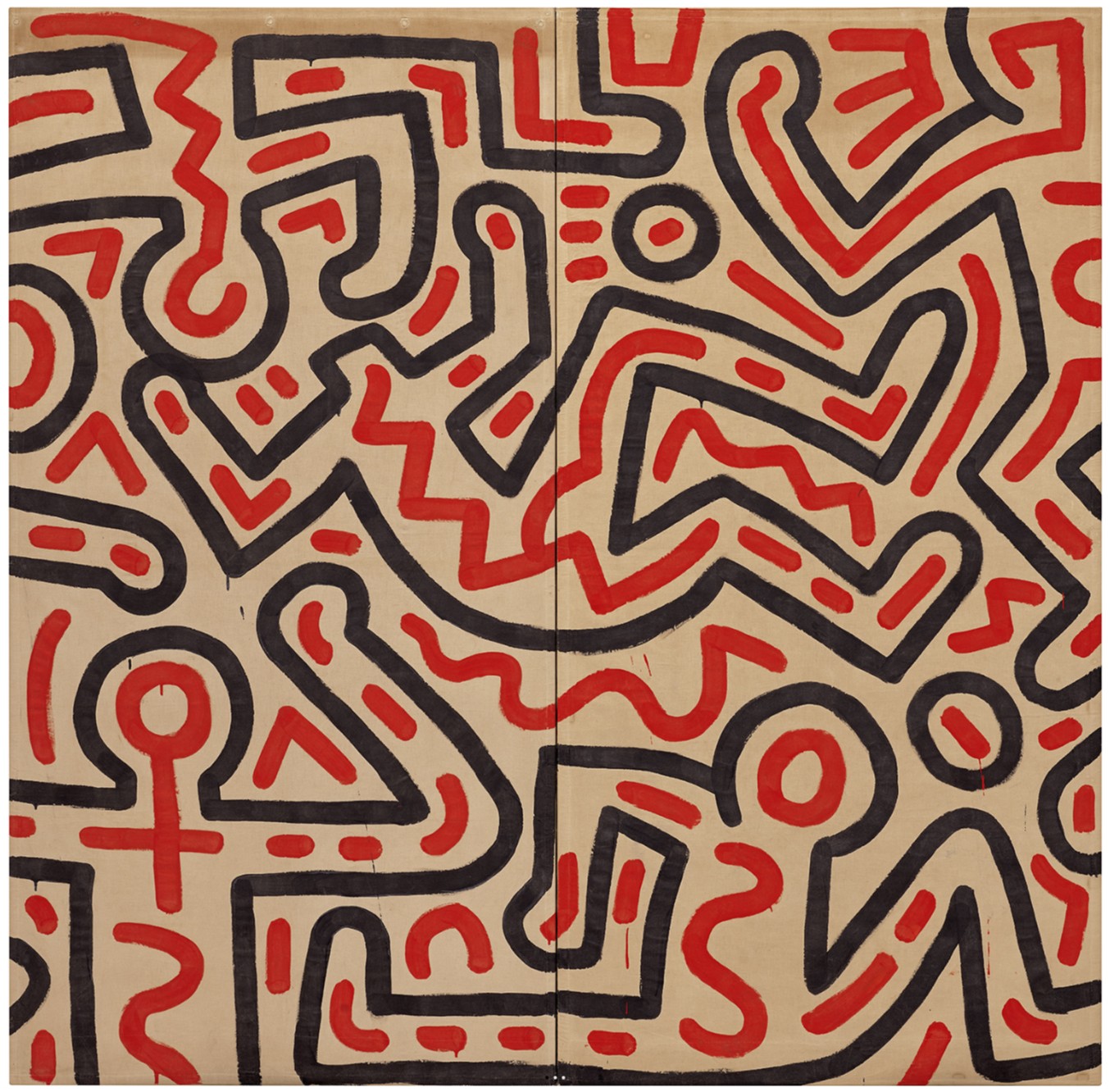
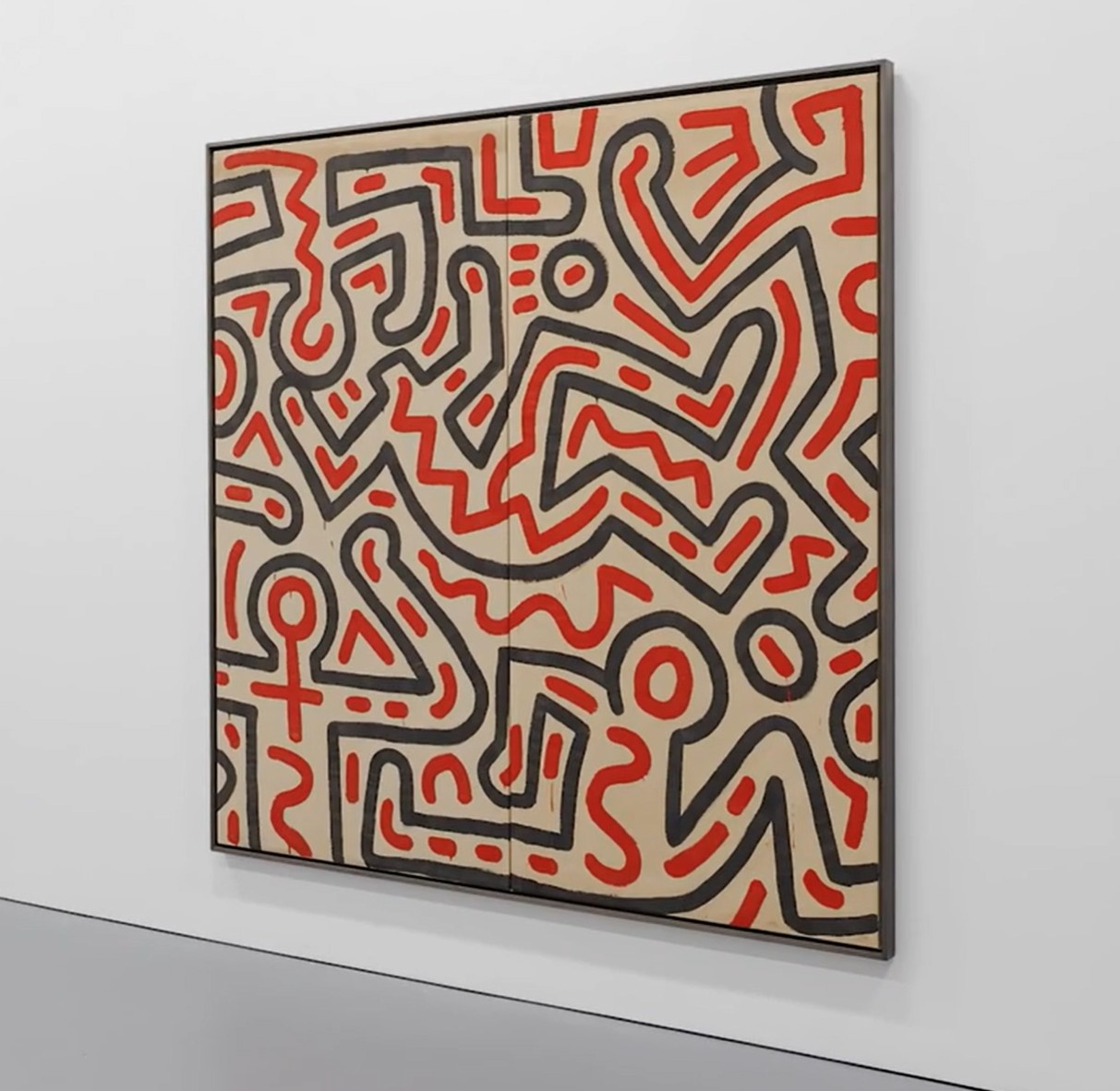
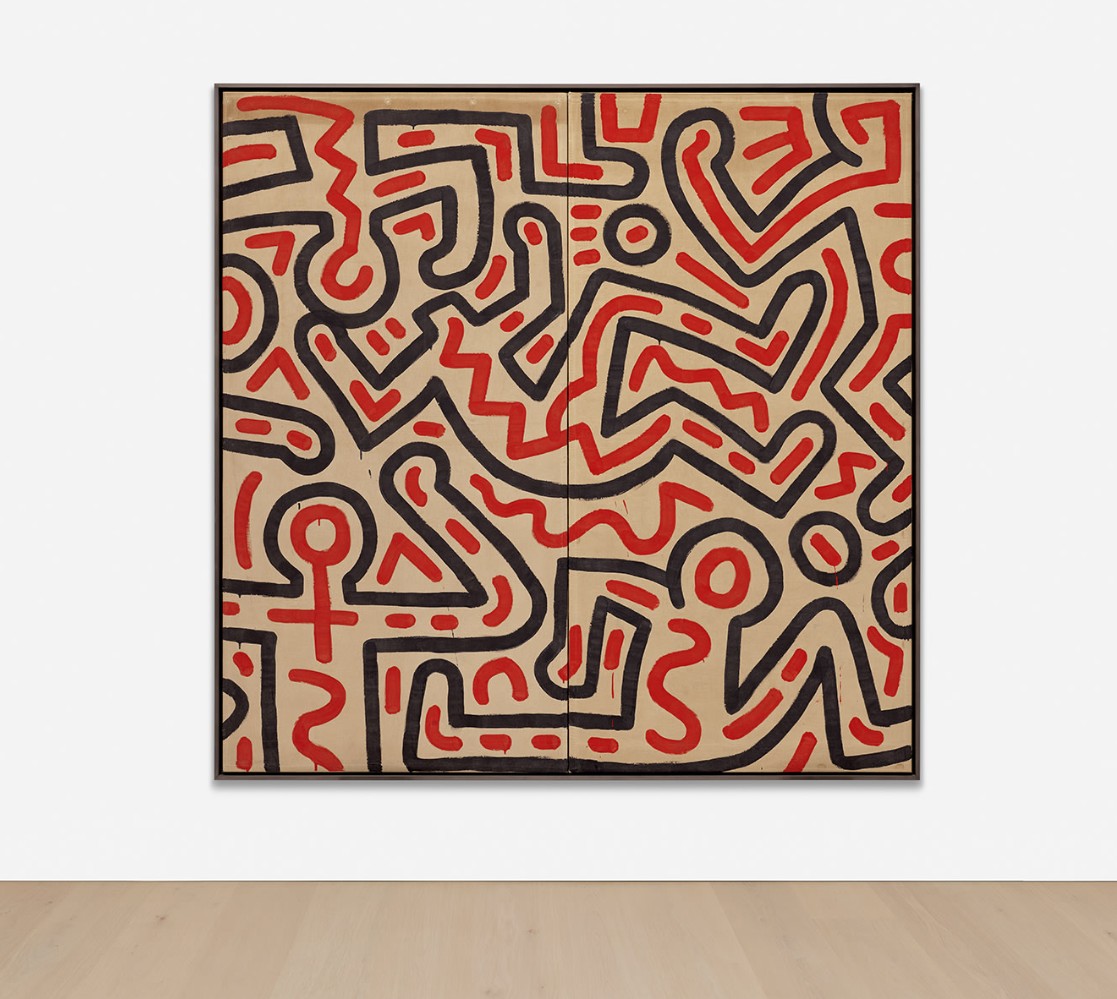
Jumbled together in a kind of jigsaw puzzle, Keith Haring’s iconographic compositions create their own dynamic mode of visual choreography. Outlined in bold, inky black lines and filled with energetic red zigzags, the figures in these two Untitled works from 1984, recall a fast-paced music score, embodying the power of dance and performance. The present works hail from a commission Haring took on to do the set design for Secret Pastures, a ballet piece produced by Bill T. Jones and Arnie Zane. Rendered in a larger-than-life scale, the two panels originally formed a tent-like structure on the stage, which the dancers wove in and out of as it spun and rolled across the performance. These works are uniquely vivid examples of Haring’s connection to dance and its relationship to the human body, expressed through his instantly recognizable visual language. United again, the two works now form a large-scale diptych. Another diptych from the commission is housed in the Nakamura Keith Haring Collection, Hokuto.
A renowned figure in 1980s New York and a celebrated choreographer and dancer still today, Bill T. Jones collaborated with Haring multiple times throughout the artist’s short career. Their first collaboration was for a series of photographs by Tseng Kwong Chi, in which Haring painted directly onto Jones’ body with broad, gestural brushstrokes. Their partnership deepened with the 1982 performance Long Distance, where Jones danced to the rhythms and sounds of Haring’s brushstrokes while he painted the backdrop live on stage. This success resulted in their collaboration in November of 1984 for Secret Pastures, a dance performance at the Brooklyn Academy of Music. Choreographed by Jones and Arnie Zane, with costume design by Willi Smith and set design by Haring, the performance explored themes of race, sexuality, and the AIDS epidemic – all subjects that were central to Haring’s artistic practice. Beyond its striking visual impact, these two paintings document a key moment of interdisciplinary collaboration that would mark Haring’s already successful career.
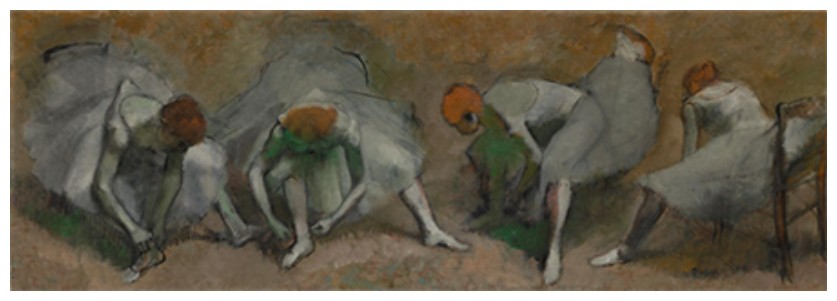
Edgar Degas, Frieze of Dancers, circa 1895. The Cleveland Museum of Art
Image: The Cleveland Museum of Art, Gift of the Hanna Fund, 1946.83
The figures in the present work seem to be dancing themselves – arms lifted, bodies in motion, and one figure in the lower right even stretching into a full split. Frozen mid-dance, the figures mimic the “angular, sharp, and sexually evocative movements” of the dancers in Secret Pastures. Here, dance not only provides the context for the work, but also becomes embedded within the figures themselves, creating a “dance within a dance.” Distorting themselves into seemingly impossible angles, Haring’s figures in the present works evoke the movements of breakdancing and voguing; forms rooted in the hip-hop and queer communities which surrounded the artist and his contemporaries. Reflecting on these inspirations, Haring noted “a lot of my inspiration was coming out to watching breakdancers, so my drawings started spinning on their heads and twisting and turning all around.” The dancers in the two Untitled works, like those throughout his oeuvre, reflect a connection to the vibrancy of the music and dance cultures of New York in the 1980s, merging Haring’s graphic style with the pulse of the city’s music and dance scenes.