KEITH HARING (1958 – 1990)
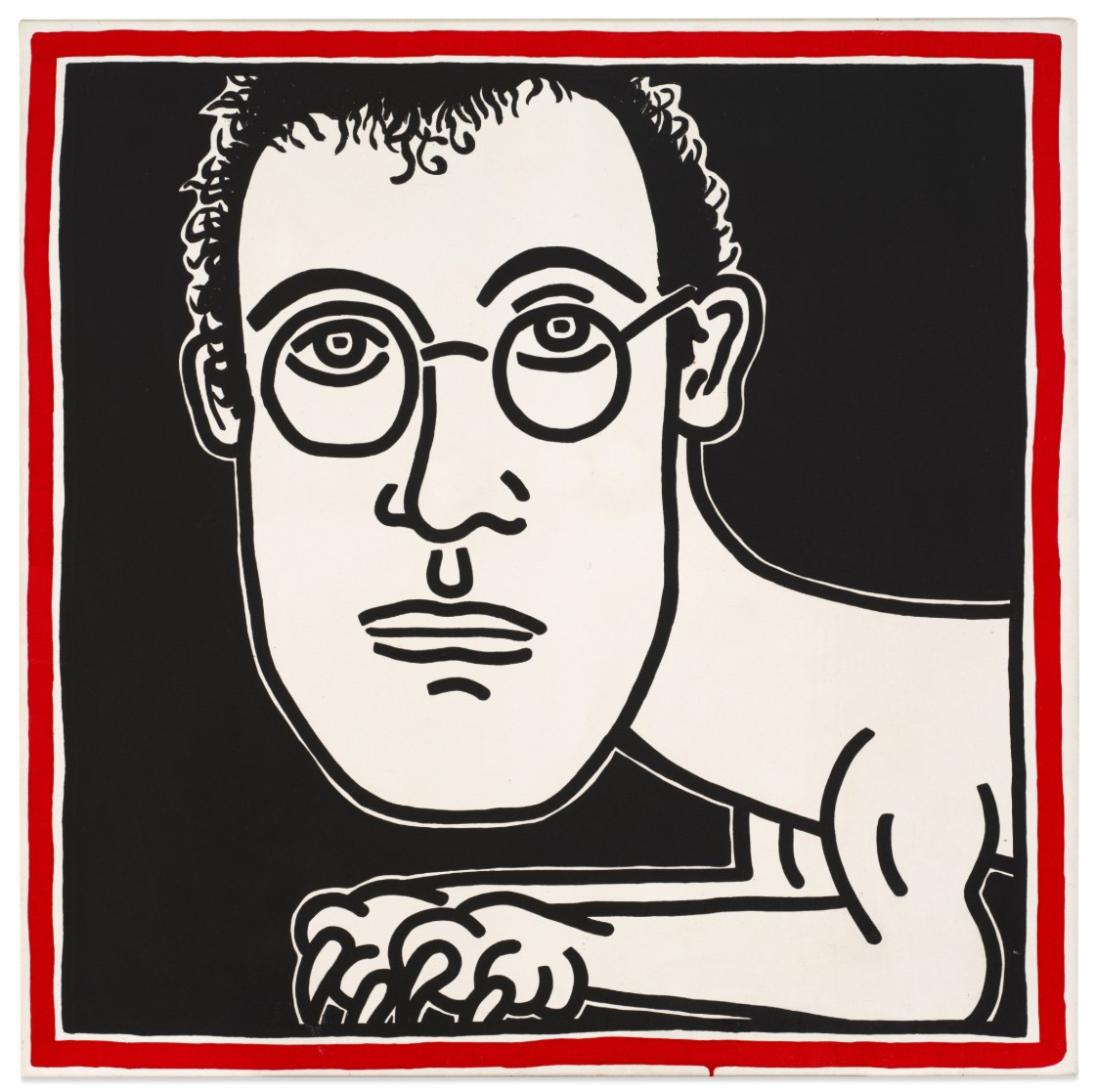
Self-Portrait, 1985
Acrylic on canvas
48X48 inches (121.9 x 121.9 cm)
Signed, titled, dated FEB. 4 – 85 and dedicated HAPPY BIRTHDAY – FOR KERMIT (on the overlap)
Provenance
Acquired directly from the artist in 1985 by the present owner
Auction History
Haring’s House: Works from the Collection of Kermit Oswald
Sotheby’s New-York: 14 May 2026
Estimated: USD 3,000,000 – 5,000,000
USD 4,340,000
Keith Haring | Self-Portrait | The Now & Contemporary Evening Auction
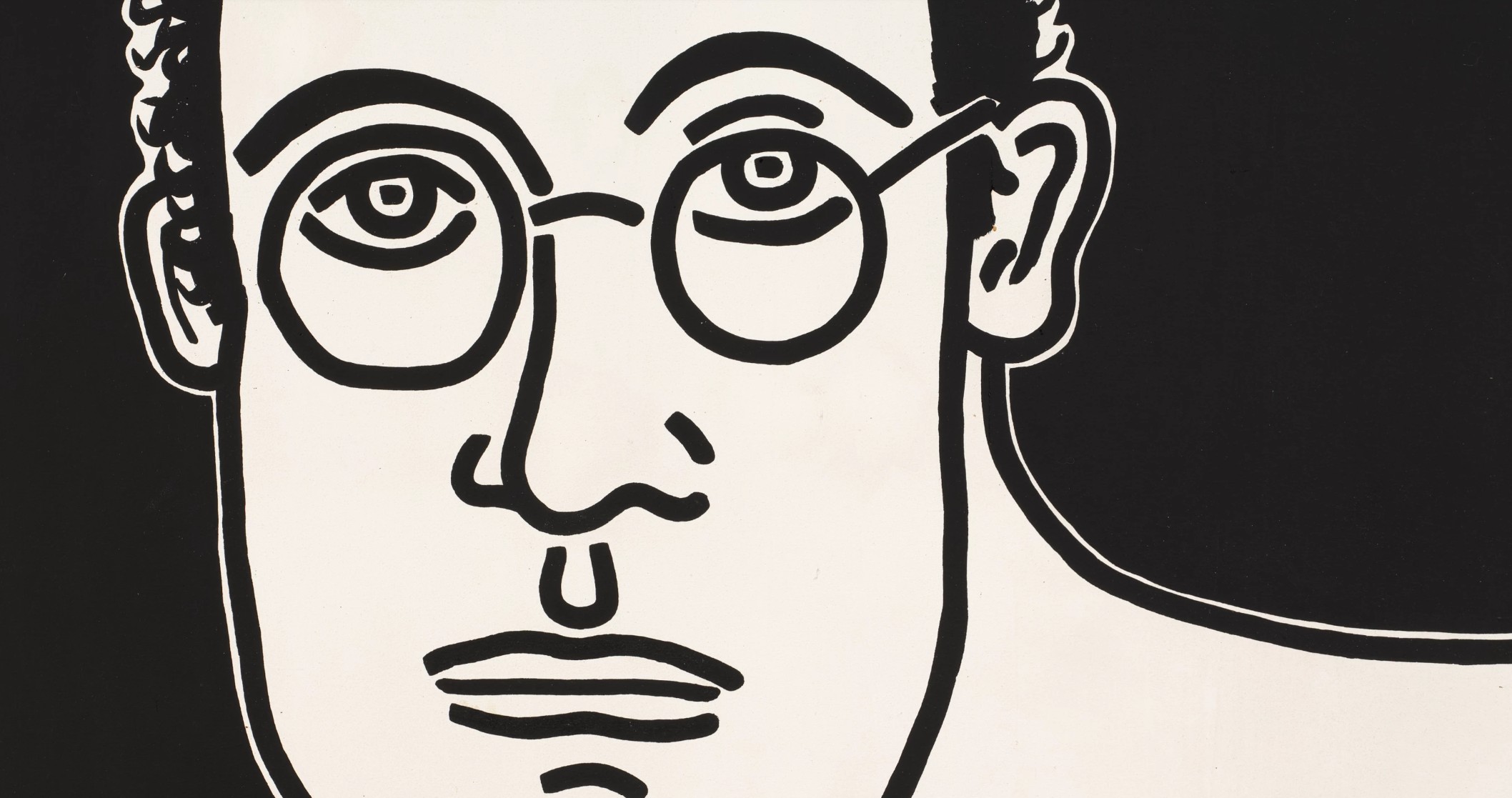
In Keith Haring’s Self-Portrait, he renders himself as a sphinx-human hybrid, playfully emboldening his legacy as part myth, part man, while underscoring his engagement with themes of authorship and artistry. Distinguished by its bold, saturated coloration, emphatic framing device, and exceptional pictorial resolution, the present work is remarkably rare within Haring’s oeuvre.
“It takes enormous control, ability, talent, and skill to make works that become whole paintings… [Haring] really has a terrific eye! And he doesn’t go back and correct—this is in itself amazing.”
ROY LICHTENSTEIN
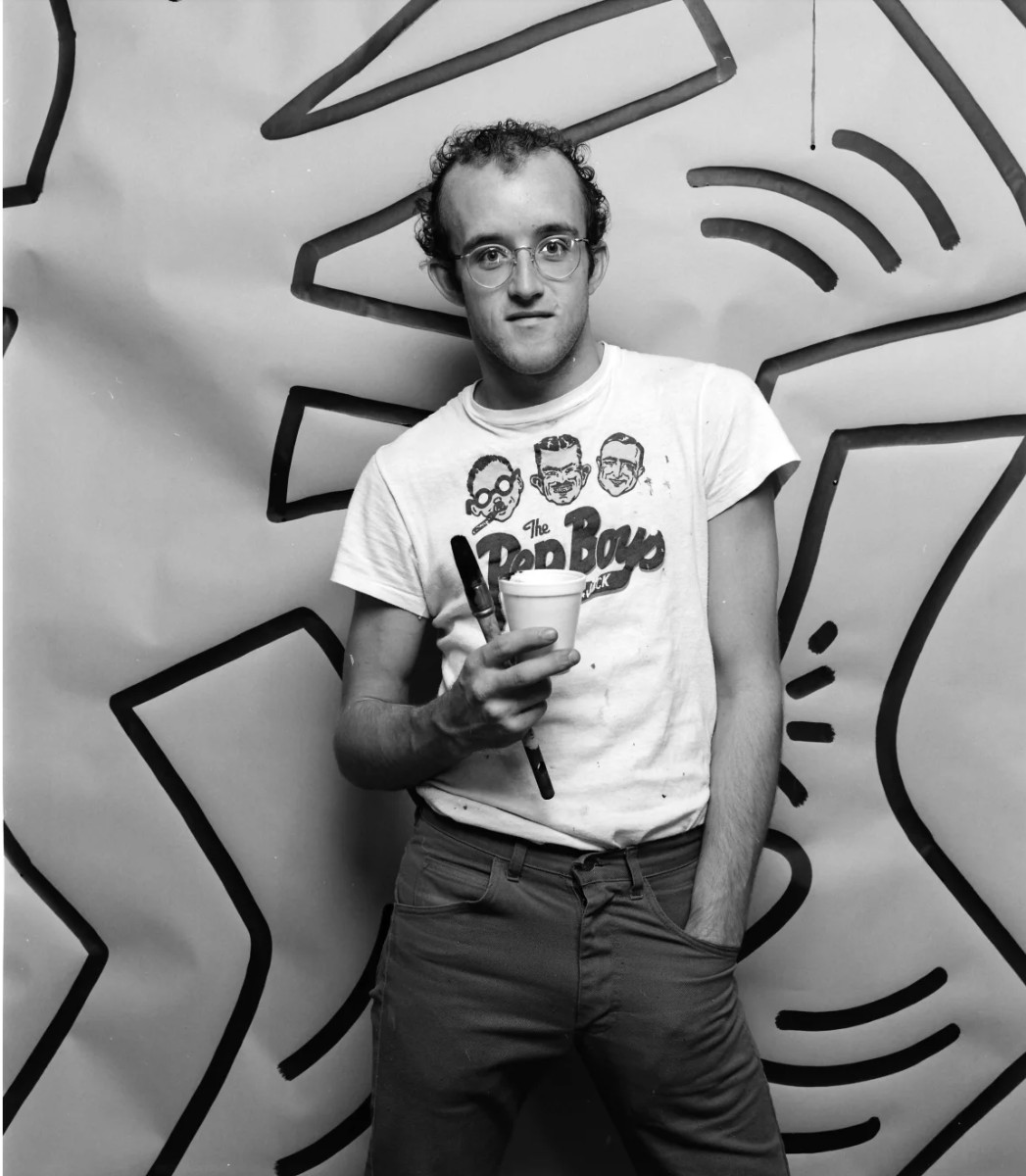
Keith Haring in April 1984. Photo by Jack Mitchell/Getty Images. Art © 2026 Keith Haring Foundation
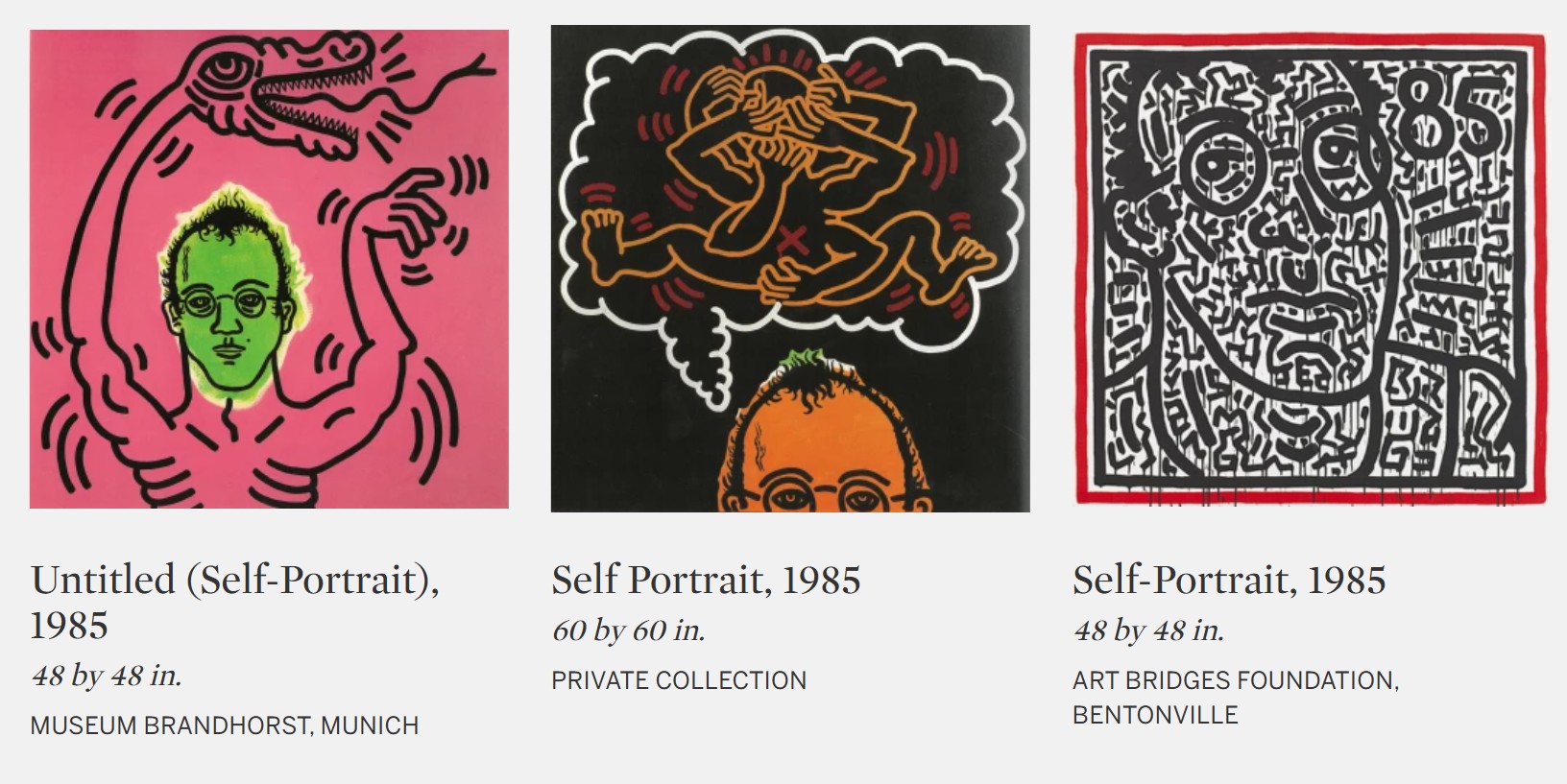
Our research indicates that Haring produced only six self-portraits on canvas, making this image an unusually introspective departure for an artist more often associated with collective symbols than self-representation. The invocation of the sphinx reflects Haring’s long-standing fascination with Egyptology, mythology, and the timeless authority of ancient forms—here conflated with his own image to assert both artistic authorship and enduring cultural presence. Harings’s figures are instantly recognizable precisely because they resist individuality; they are iconic, universal, genderless figures. The present work, in turn, is a radical act of self-representation, in which Haring aligns himself with a mythological creature above the mortal plane.
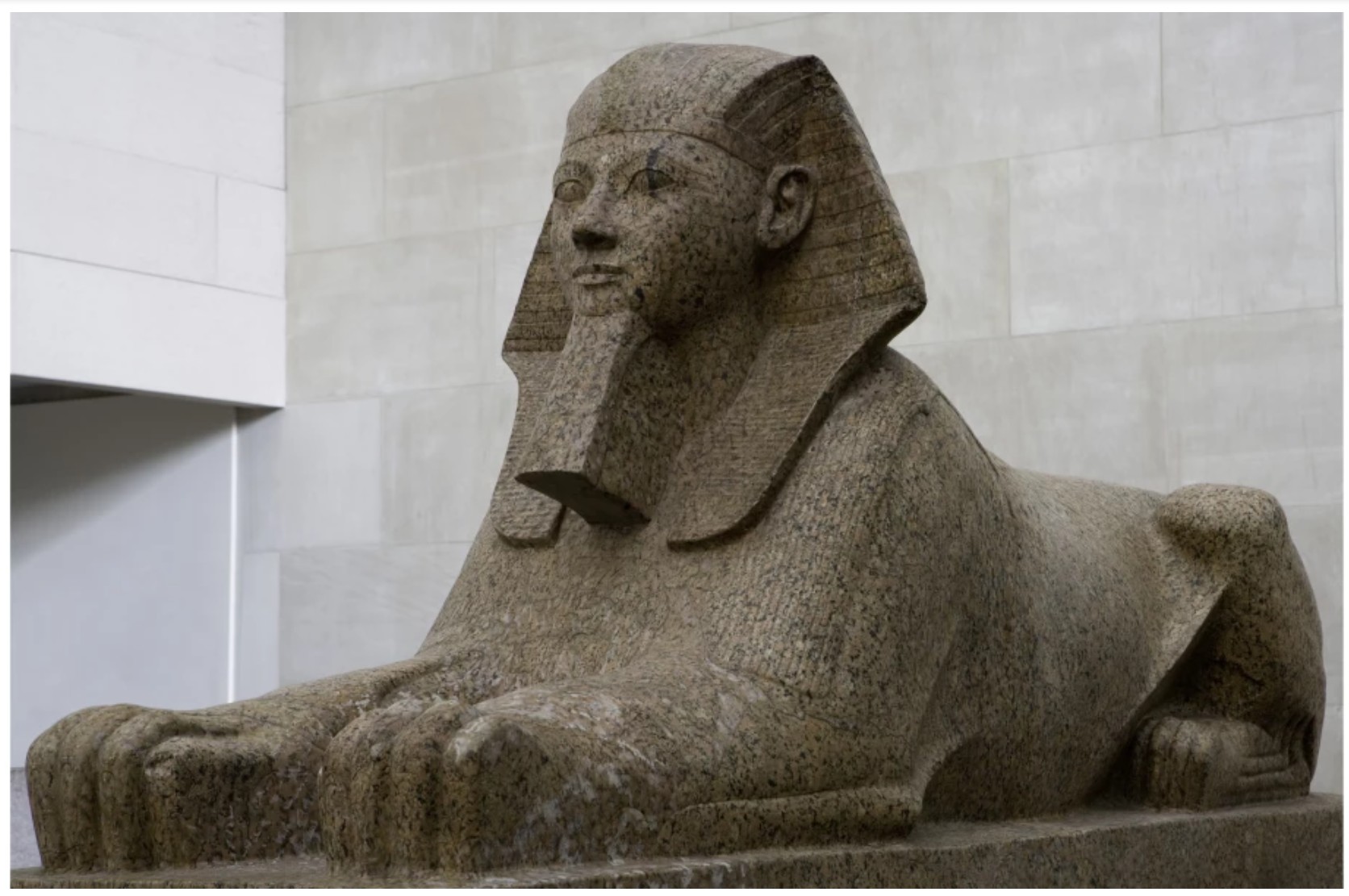
Sphinx of Hatshepsut, Egyptian, ca. 1479-458. The Metropolitan Museum of Art, New York.
Image © The Metropolitan Museum of Art. Image source: Art Resource, NY
Haring has produced a clear, iconic style that reaches its apex in Self-Portrait. Haring rarely depicted a recognizable likeness in his work; he dissolved himself into the collective beat of New York City. In 1985, he produced a handful of self-portraits, all on square 48-inch canvases, three of which feature the distinctive red outline in the present work. In this work, Haring has stepped outside of his universal visual lexicon in favor of an intimate depiction and reflection of himself. He initially used this work as an invitation to a dinner hosted at the Michael Todd Room at the Palladium in his honor, which was co-hosted by gallerists Tony Shafrazi and Leo Castelli. By using a rare stripped-down reflection of himself on a public scale, Haring became intimately introduced to his guests, stepping out of his confident line work and mythical worlds to reveal his present state.
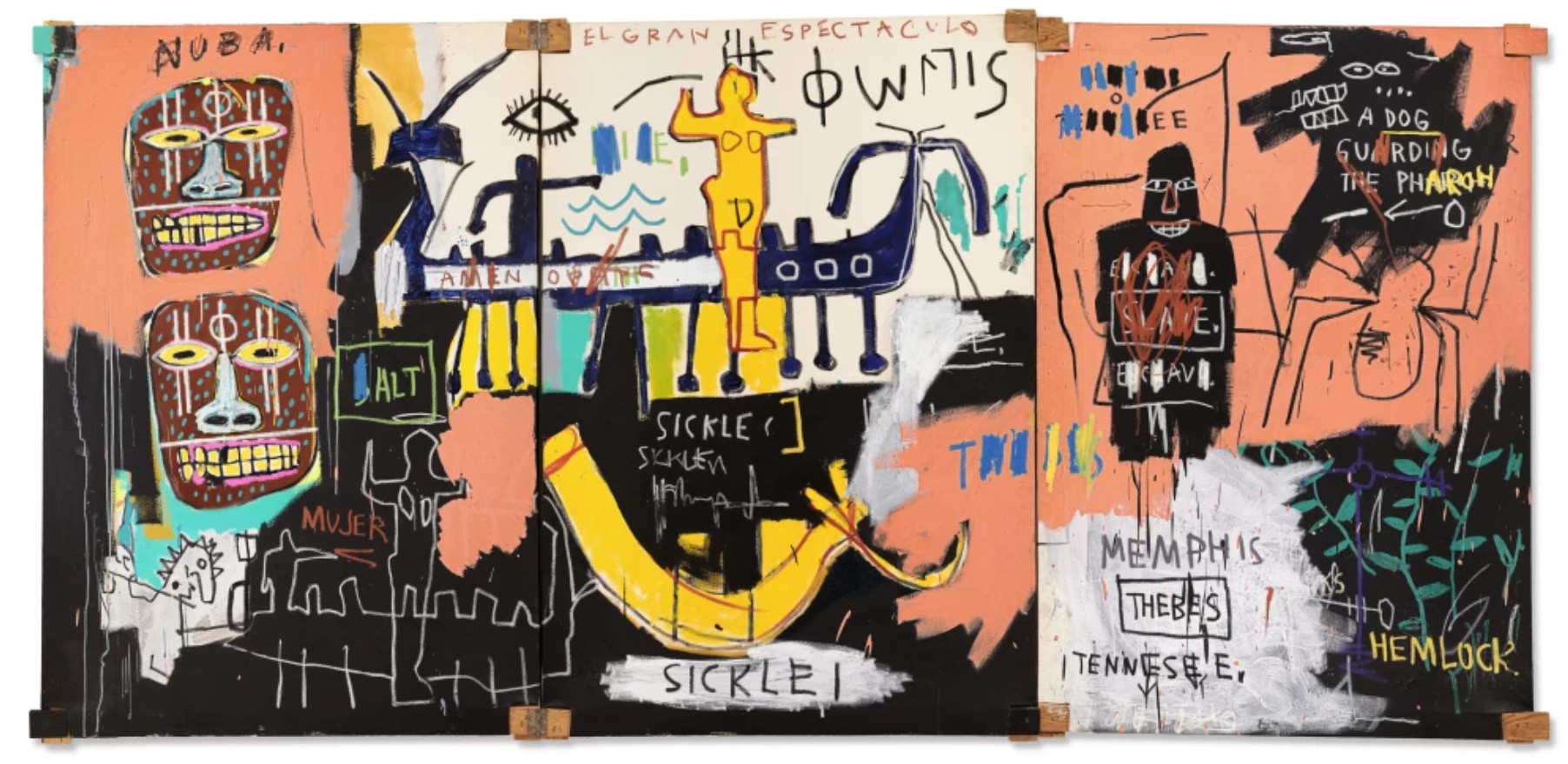
Jean-Michel Basquiat, El Gran Espectaculo (The Nile), 1983.
Private Collection. Art © 2026 Estate of Jean-Michel Basquiat. Licensed by Artestar, New York
Enrolling at the School of Visual Arts and plunging headfirst into the downtown underground of music, clubs, and street culture, Keith Haring discovered all that New York had to offer and its never-ending possibilities for artistic expression. Within a few years of his arrival, he began his immersive Subway Drawings, using chalk to cover the blank black panels of empty subway advertising space and fill them with his active, moving figures.
Those subway drawings, produced obsessively between 1980 and 1985, form the foundational layer of his corpus. They were a genuine proposition to the art world; he was exploring the power of art outside a gallery or museum, bringing it to millions of commuters and into people’s everyday environments. The present work dates to a period that bridges Haring’s start as a street artist, his fame working with the gallerist Tony Shafrazi starting in 1982, and finally his grappling with mortality after his AIDS diagnosis in 1987.
“I always knew, since I was young, that I would die young…
I live every day as if it were the last.”
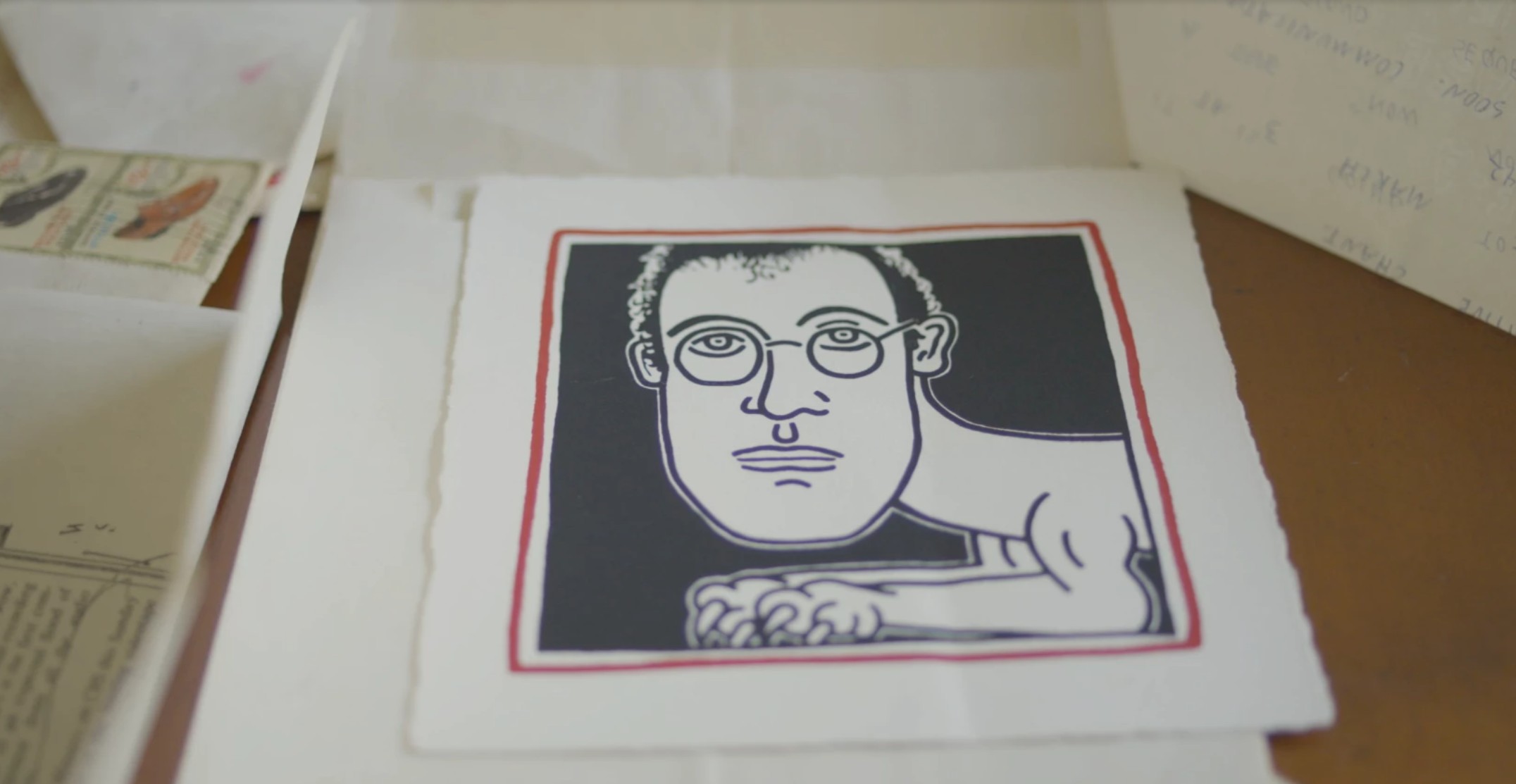
Letters exchanged between Keith Haring and Kermit Oswald, including a print based on the image of the present work.
Art © 2026 Keith Haring Foundation
The over-enlargement of his face to dominate the canvas is reminiscent of works by Haring’s contemporary and friend, Andy Warhol. In Warhol’s Self-Portrait (Fright Wig) (1986), his face is the composition; he stares at the viewer with an uncomfortable intensity. Haring painted himself in a monochrome composition, his skin a stark, bright white, with his outline and the composition’s background a deep, piercing black. The juxtaposition of the two extremes makes all of Haring’s features captivating and exaggerated; it intensifies his gaze from behind his glasses and focuses the viewer’s attention. The portrait has a bright red outline, a color more familiar to his other compositions. His jaw juts comically low, almost perched on his ‘paws,’ and his neck is rubbery as it curves and extends into an inhuman posture. Despite the lack of human hands, Haring included overly defined biceps muscles.
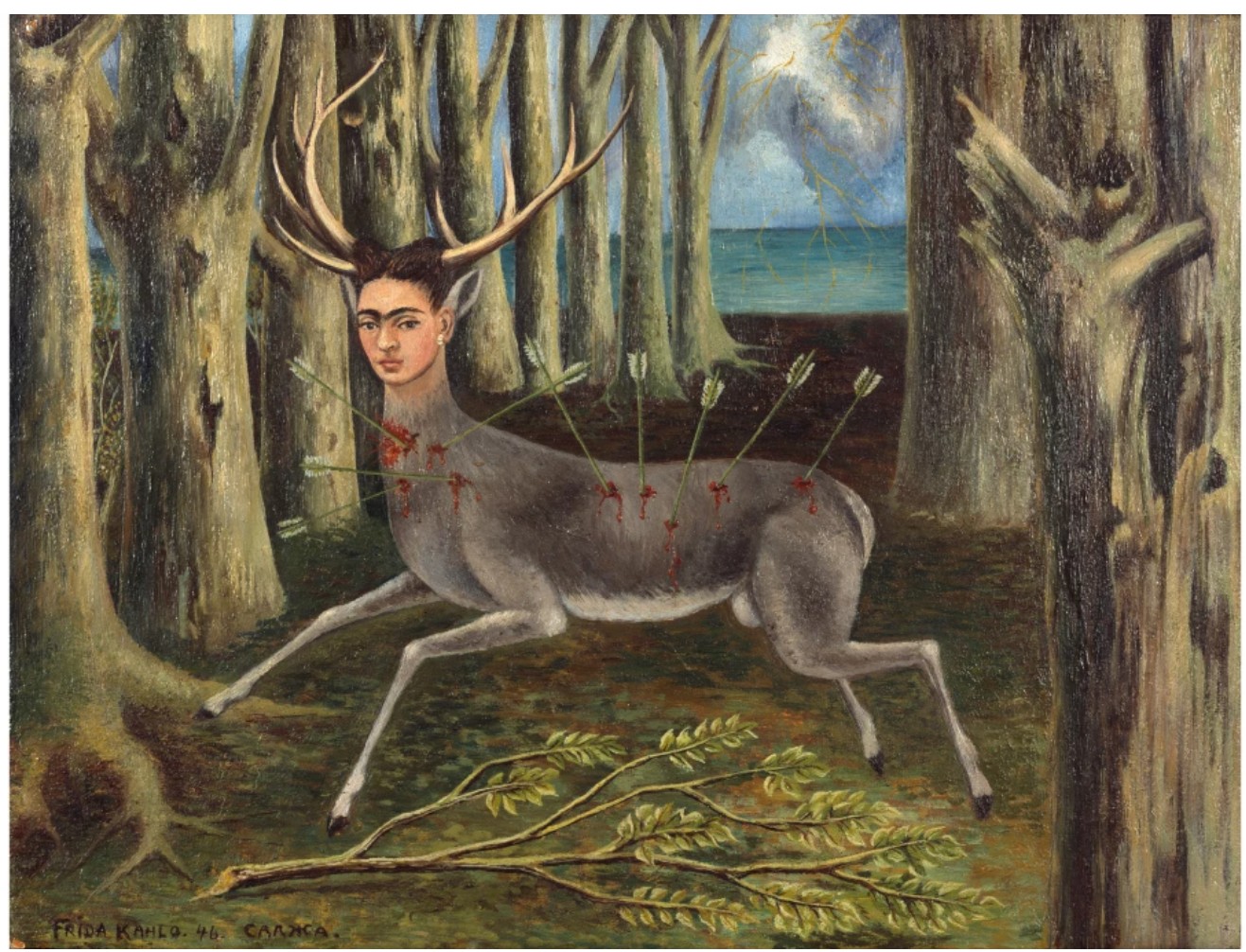
Frida Kahlo, El venado herido, 1946. Private Collection. Image © Fine Art Images / Bridgeman Images. Art © 2026 Banco de México Diego Rivera Frida Kahlo Museums Trust, Mexico, D.F. / Artists Rights Society (ARS), New York
Despite Haring’s tragic passing at just 32 and the brief span of his artistic career, he made an oeuvre of profound importance and enduring significance. In this pivotal part of his career, as his commercial success was skyrocketing, Haring felt it was important to differentiate himself from his work. The present work is profoundly evocative and perhaps the most insistent and intimate portrait of the artist’s oeuvre, Self Portrait, which illustrates the artist’s unique appreciation of human relationships and intense celebration of life.