This enigmatic self-portrait of Andy Warhol provides a rare glimpse into the mind of one of the 20th century’s most famous artists. Self-Portrait displays Warhol’s growing sense of self-assurance, both in his fixing gaze and in his use of a vibrant color palette, which captures the artist’s growing sense of self-confidence. Yet, despite his increasing public persona, Warhol remained a notoriously shy person and his reticence to truly open himself up to the public gaze is reflected in this work as the right side of his face remains resolutely hidden from view, cast in deep shadow. Executed in 1966, this painting was produced the same year as Warhol seemingly decided to take a hiatus from painting to concentrate on filmmaking. The cinematic qualities of Self-Portrait can be seen in the artist’s use of strong light and recessed shadows, which echos the evocative spirit and atmosphere of the great film noir classics such as Angels with Dirty Faces and The Third Man.
“If you want to know about Andy Warhol, then just look at the surface of my pictures, my movies and me and there I am;
there’s nothing in between.”
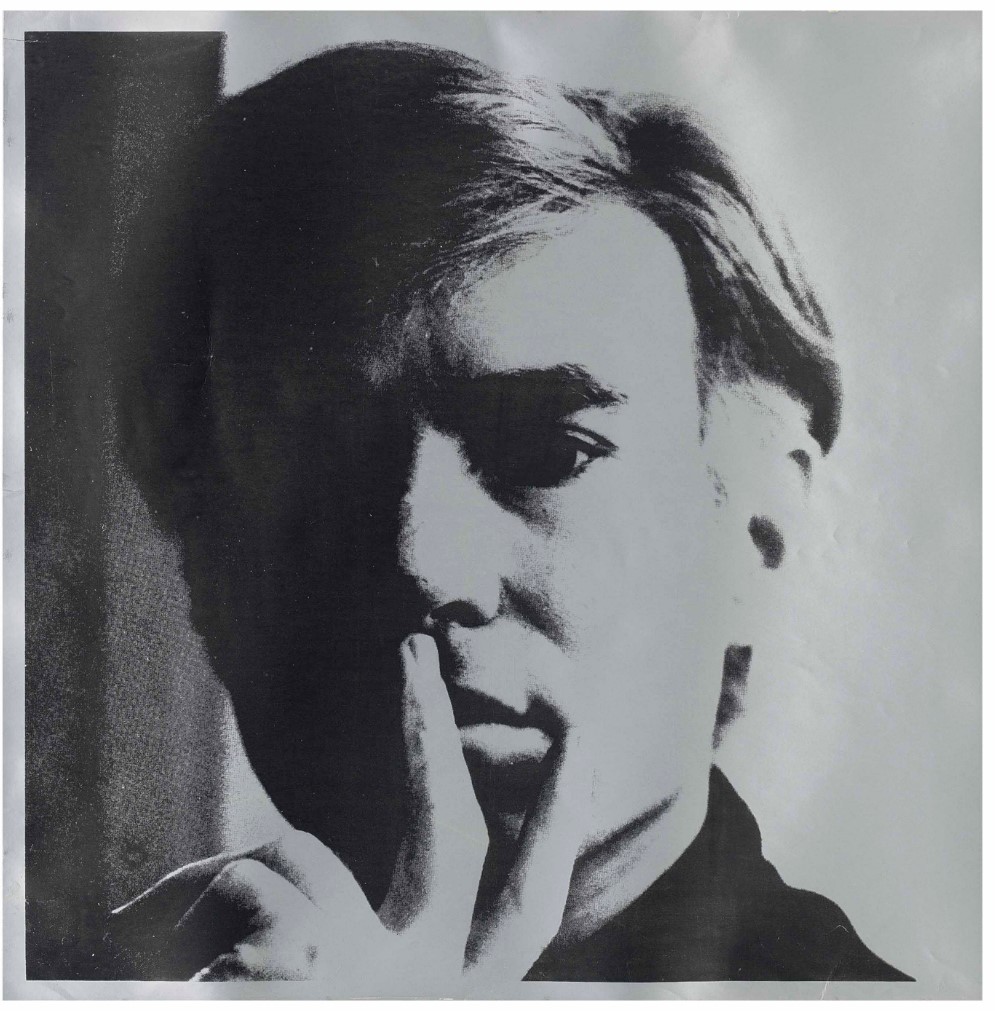
ANDY WARHOL
Self-Portrait, 1966
Offset lithograph on silver-coated paper
Introduction
Leaning on the palm of his hand, his index and middle fingers extended on either side of his pursed lips, Warhol portrays himself in a moment of assured regard. The artist’s gaze engages the viewer with great attention, acknowledging as it beckons the voyeuristic exchange. The carefully fashioned image the artist constructed of himself marked an important departure from the earlier self-portraits in which he was either shielded from the public gaze behind dark sunglasses, or posed with an affectless, blank stare, a tabula rasa for self-projection by the viewer.
“I’d prefer to remain a mystery; I never like to give my background and, anyway, I make it different all the time I’m asked.”
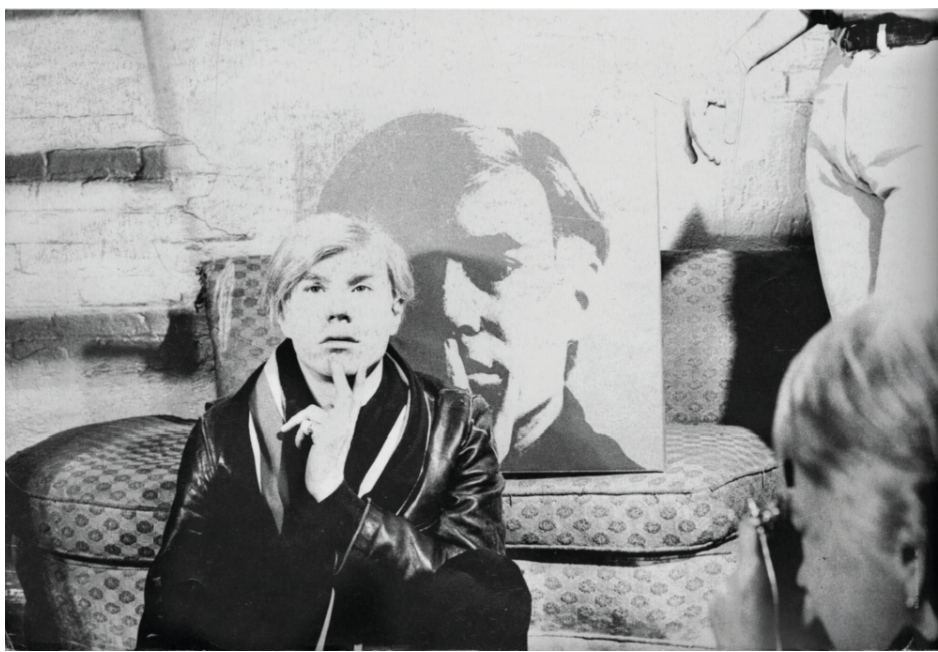
Andy Warhol, 1967. Photo: © Billy Name Estate. Artwork: © 2023 The Andy Warhol Foundation for the Visual Arts, Inc. / Licensed by Artists Rights Society (ARS).
“Warhol’s 1966 Self-Portrait is probably the most well-known of the three versions he produced during the 1960s and, with his Self-Portrait of 1986, one of the most representative and iconic images of the artist.”
(Georg Frei and Neil Printz, eds., The Andy Warhol Catalogue Raisonné: Paintings and Sculptures 1964-1969, Vol. 02B, New York, 2004, p. 227) .
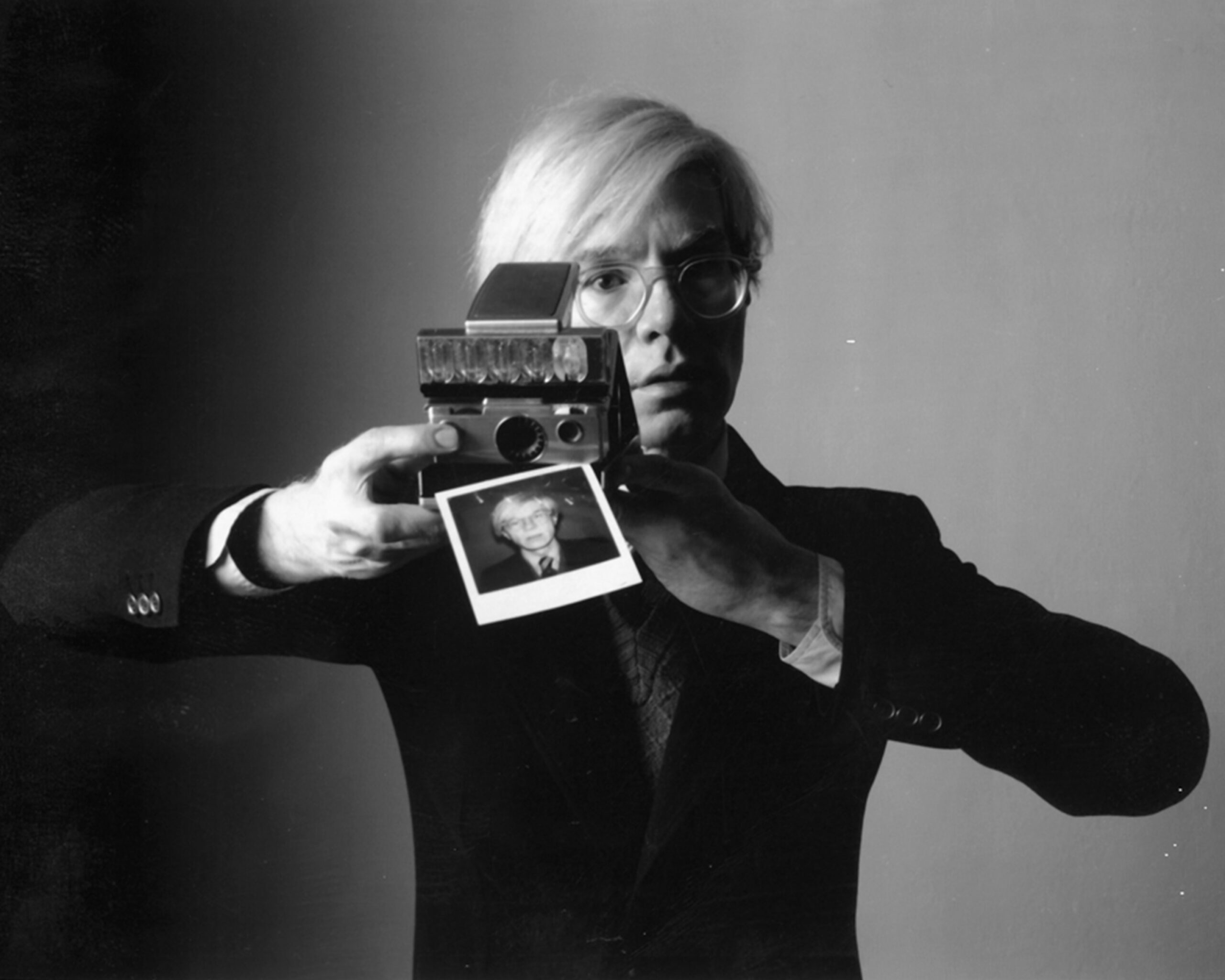
By 1966, Warhol had decided to concentrate on his film making and–in public at least–he claimed to have ‘retired’ from painting.
“I don’t paint anymore. I gave it up about a year ago and just do movies now. I could do two things at the same time, but movies are more exciting.”
At that time, Warhol’s constructed public persona was almost as famous as his artistic production. Propelled into the public limelight, the world now bestowed on him the same degree of celebrity status that he found so intriguing and captivating in those that he chose to depict. For these Self-Portraits, Warhol abandoned the photo booth source images which, with their rapidly timed exposures, encouraged the kind of spontaneous mugging poses seen in his earliest series. Instead, he used a print photograph of himself in a pose that appears carefully calculated and fine-tuned. Warhol’s direct gaze pierces through this striking image. The simple black turtleneck that he wears places strong visual emphasis on his face and his left hand, which is purposefully positioned so that his middle and index fingers create a V-shape at his mouth. The masking function of the sunglasses in his 1963 Self-Portrait is here replaced by the dark shadow that obscures nearly the entirety of the proper right side of his face, shrouding him in an aura of mystery and preventing us from any complete reading of his visage. This shadow, when reproduced on a halftone screen as in the present work, reads as an essentially opaque field, and the perfect compositional contrast to the highlights that appear in the hair on the opposite side of his head. Warhol’s abounding interest in engaging a wide spectrum of colors in his 1960s silkscreened paintings reaches a spectacular apex in these works, and Self-Portrait is exemplary of the innovations that he exacted in this most influential of his Self-Portrait series.
The 1966 self-portraits became a turning point for Warhol. Finally, amongst the images of the rich and famous or the press images of death and disaster, he had become a celebrity in his own right, an element in his own visual repertoire. By this time Warhol was the central figure in both the New York art world and the wider social scene, and had become an icon, a constant and glamorous figure who frequented the city’s art galleries, celebrity parties and nightclubs. Self-Portrait is as much about self-presentation, and self-celebration, as anything else. Here, he gazes out of the picture with an intense driven air. His pose tells of the thinker, the intellectual. This is a man who single-handedly turned preconceptions upside down, a revolutionary, the pioneer of Pop. With this legendary series of self-depiction, Warhol intently pursued the pure effects of color: the various layers comprising the instantly familiar schematic of his features becoming the vehicle to deliver startling chromatic effects. The surreal vibrance of the canvas’s colors contrasts with the realism ushered in by Warhol’s use of a flesh tone for his face. He is both of our world and a vision of a dreamlike elsewhere. Like Titian’s 16th century portrait of Archbishop Filippo Archinto, who is partially obscured by a magnificent semi-transparent veil to symbolize his political biography, Warhol’s ‘Self-Portrait’ also reveals a character whose image is prolific yet unknowable.
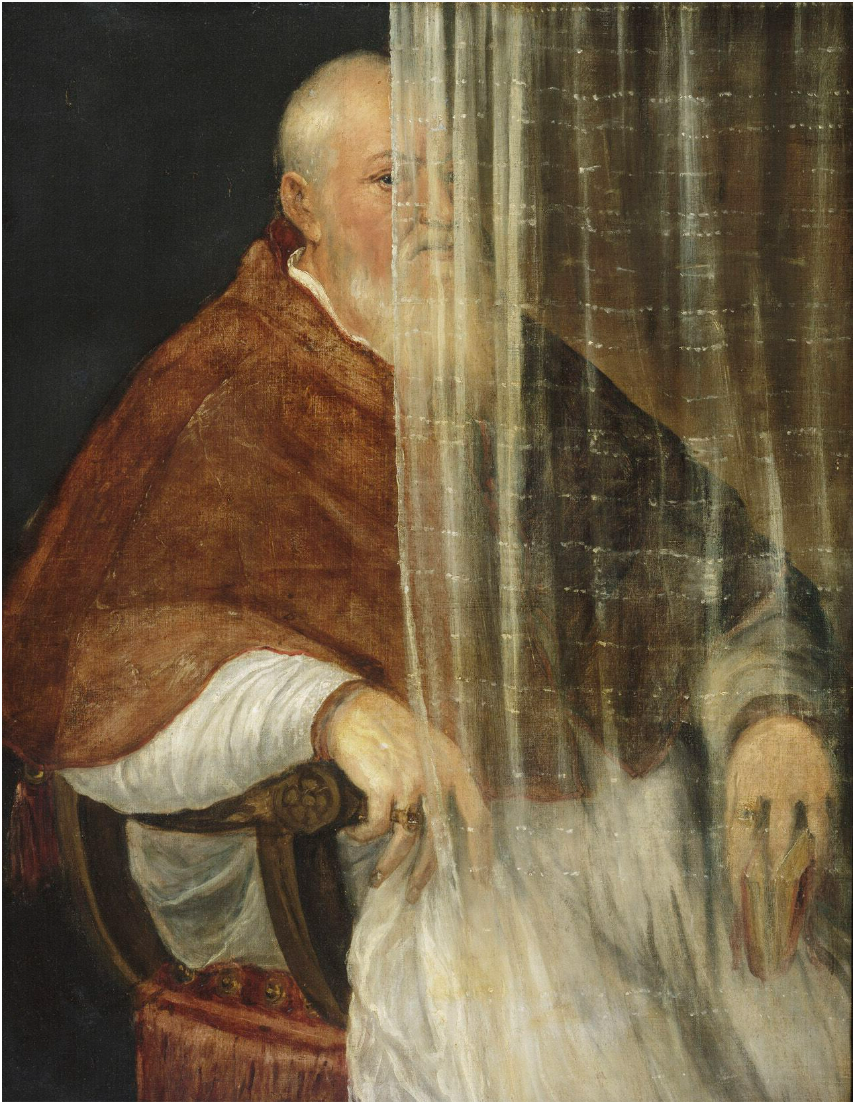
Titian, Portrait of Cardinal Filippo Archinto, 1558. Philadelphia Museum of Art. Photo: The Philadelphia Museum of Art / Art Resource, NY.
Warhol began his self-portrait paintings in the early 1960s and continued them until his death. The present work epitomizes his most iconic series of self-portraits from 1966-1967, which are exuberant and colorful, as opposed to his rather somber later paintings. Begun as a commission for the American Pavilion at the 1967 International and Universal Exposition in Montreal, this series uses a single image, rather than a multiplied, repeated face that became a Warholian trademark. Each canvas in the 1966-1967 self-portraits utilizes new combinations of primary and secondary colors, with fascinating gradations in between that lends fabulous details.
Self-Portrait (22×22)
Self-Portrait, 1966
Christie’s New-York: 12 May 2025
Estimated: USD 4,000,000 – 6,000,000
USD 4,285,000
ANDY WARHOL (1928-1987), Self-Portrait | Christie’s
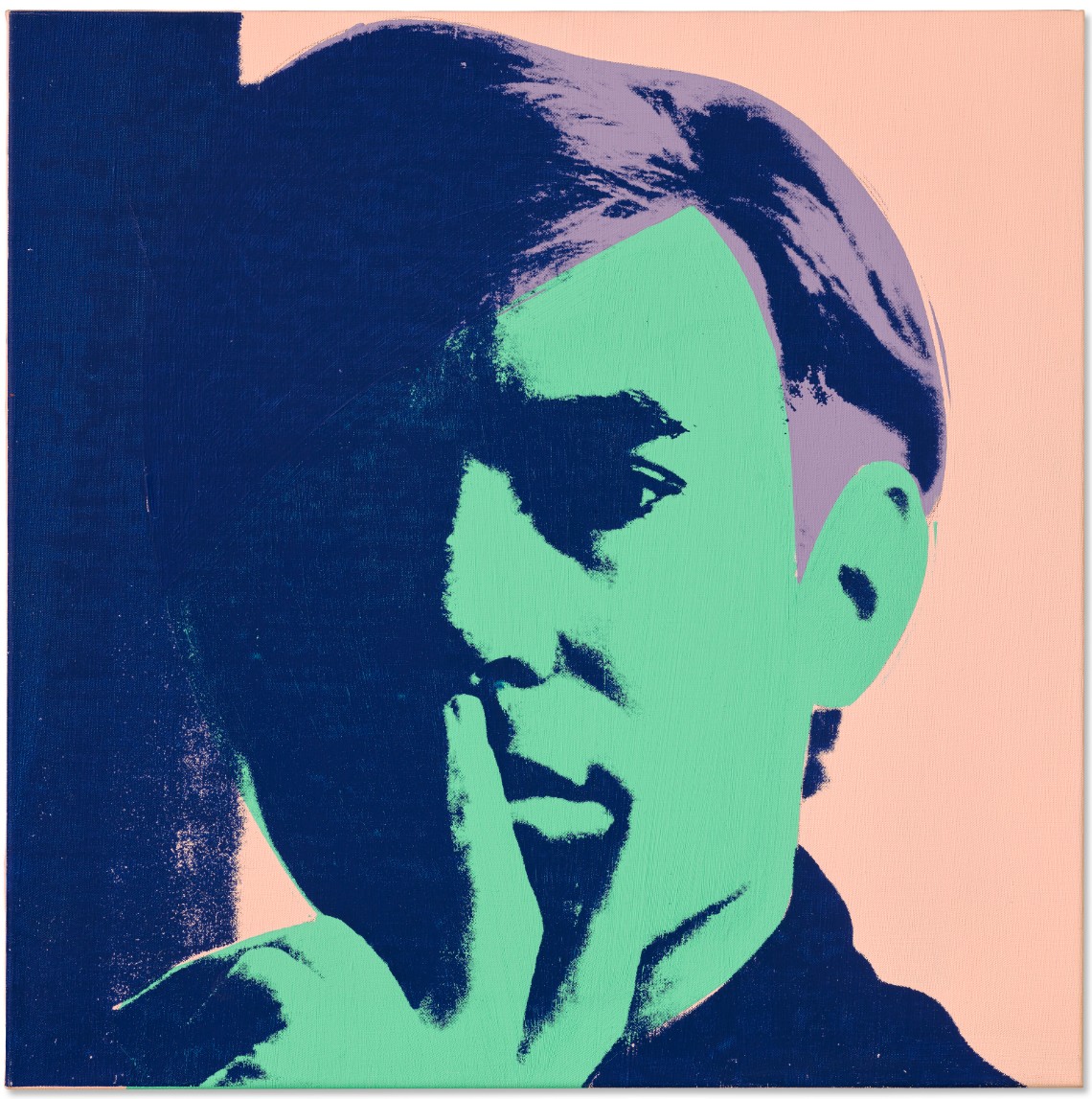
ANDY WARHOL (1928-1987)
Self-Portrait, 1966
Acrylic, silkscreen ink and graphite on linen
22 1/8 x 22 1/8 inches (56.2 x 56.2 cm)
Signed and dated ‘Andy Warhol 66’ (on the reverse)
Signed again and dated again ‘Andy Warhol 1966’ (on a canvas strip affixed to the stretcher)
Andy Warhol stares out from the surface of the canvas in this striking self-portrait from 1966. With his features partly hidden by the veil of dark shadow that falls across his face, the present work becomes the ultimate rendition of an artist who much preferred being behind the camera than in front of it. Belonging to arguably his most well-known series of his self-portraiture, it shows Warhol at the height of his artistic powers. It belongs to the third series of self-portraits that the artist had completed up to this point, and is the most complex in its daring and complex use of color. The alternating layers of bold pigments cause the surface to resonate with visual intensity, and it is with these self-portraits that Warhol finally harnesses the supremacy of color with thrilling effect.
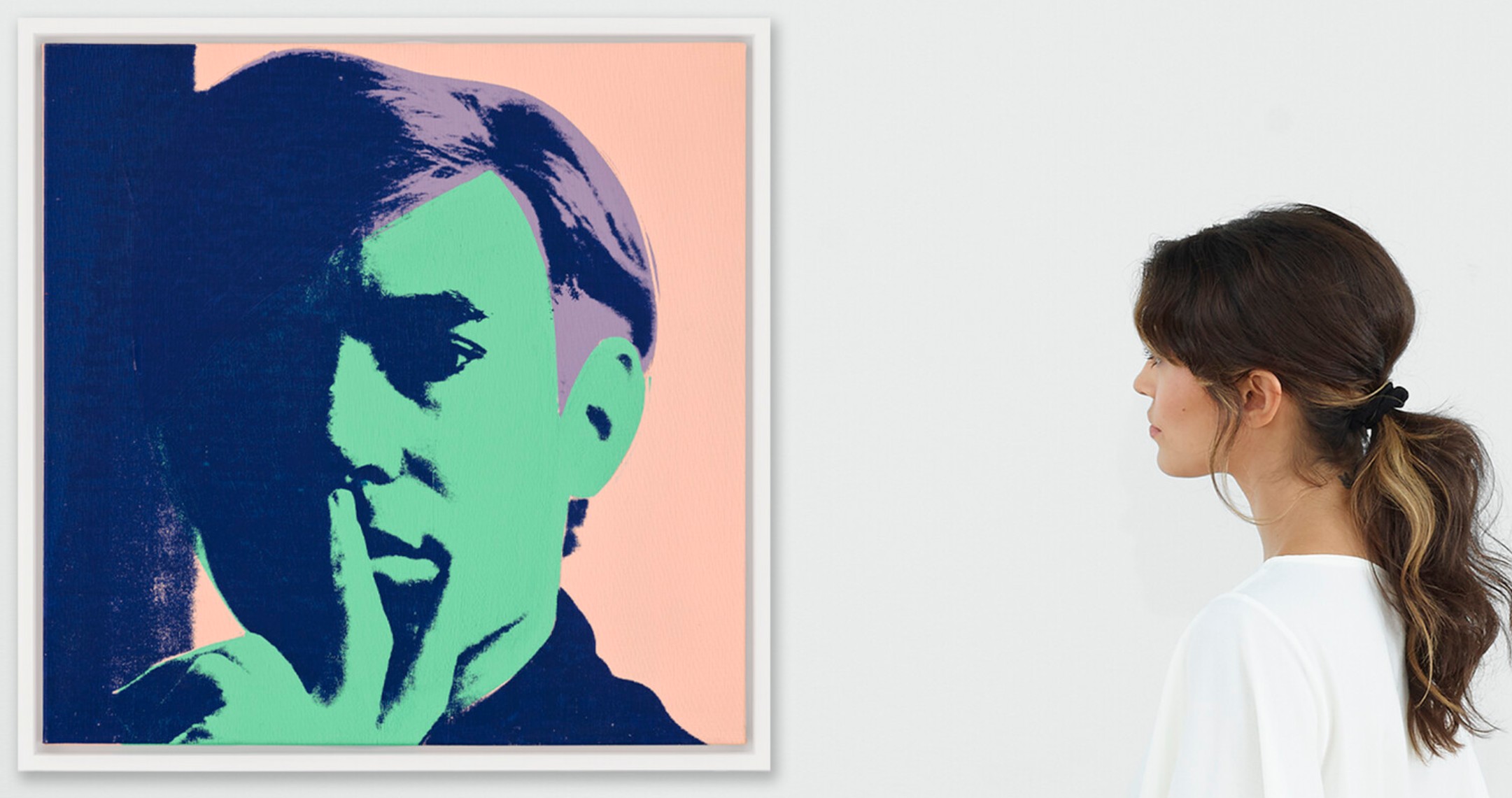
With his chin resting on the palm of his hand, Warhol appears to be caught in a moment of deep reflection, yet his direct stare engages the audience directly. Unlike his previous two series of self-portraits, in which a younger Warhol appears to avoiding this direct form of engagement, in the present work he appears to have gained enough confidence to accept a degree of self-reflection. As the critic and Warhol scholar David Bourdon points out, this series was pivotal in marking the maturity of the artist: “They marked a new development in his portraiture with increased emphasis on garish, non-natural color and avoidance of flesh tones… The bold, jarring colors called attention to this face while simultaneously cancelling out most of his recognizable features. The self-portraits offered no detailed information about either his physiognomy or his psychological state; instead, they present him as a detached, shadowy, and elusive voyeur” (D. Bourdon, Warhol, New York, 1995, p. 250).
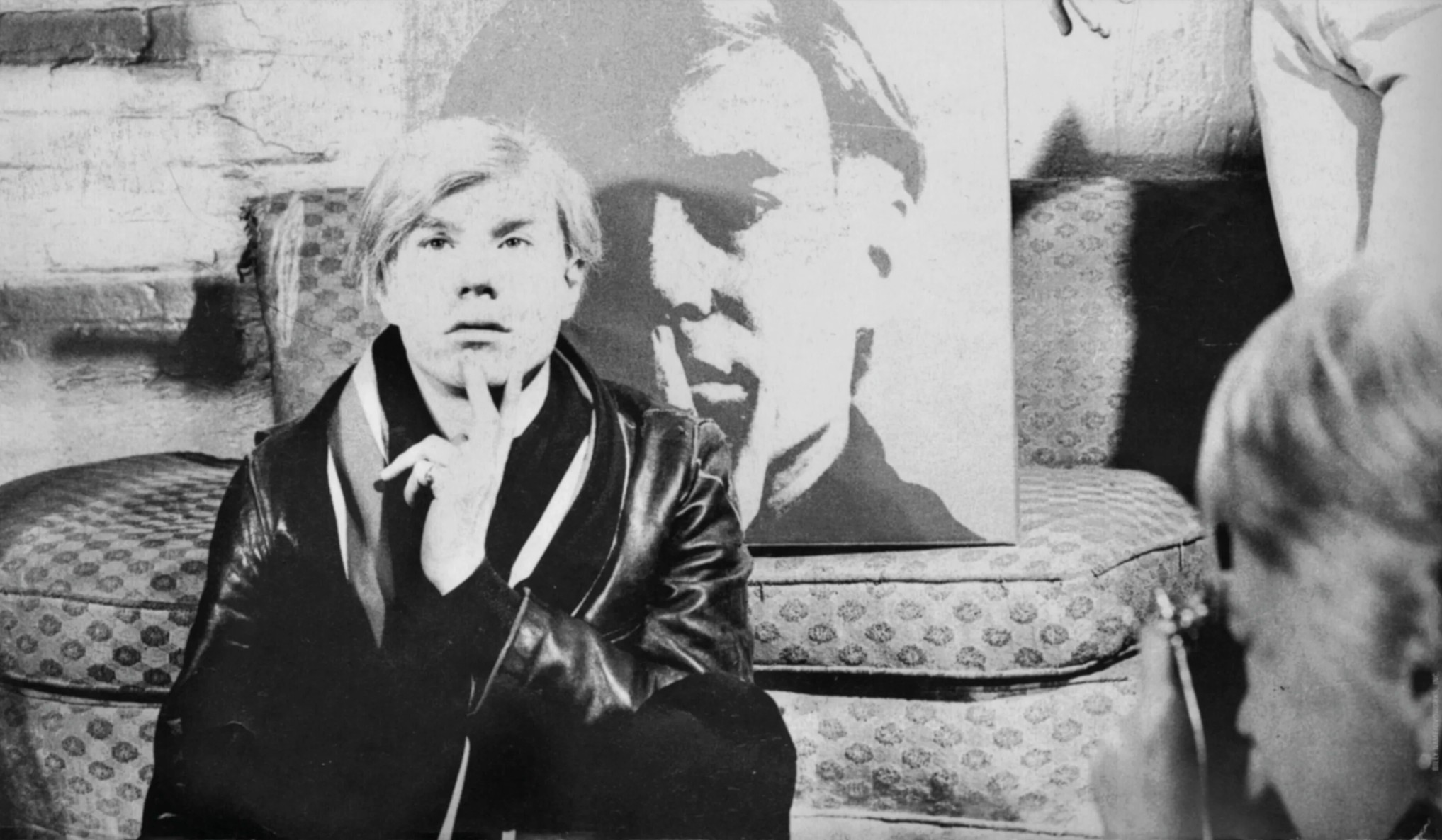
Andy Warhol with Self-Portrait (1967). Photo: Billy Name © 2025 Billy Name Estate / Artists Rights Society (ARS), New York. Artwork: © 2025 The Andy Warhol Foundation for the Visual Arts, Inc. / Licensed by Artists Rights Society (ARS).
Self-Portrait also displays Warhol’s increasingly sophisticated use of color. Here, he employs planes of light and dark blues, a soft purple and a pigment described in the catalogue raisonné as Napthol red light (a pale pink) to heighten the drama inherent in this particular self-portrait. Thus, it is not only the dramatic lighting, but also the juxtaposition of these different tones that adds to the visual tension. The critic John Coplans writes: “Warhol’s instinct for color is not so much vulgar as theatrical. He often suffuses the whole surface of a canvas with a single color to gain an effect of what might be termed colored light. It is difficult to use any of the traditional categories in discussing Warhol’s usage, which bends toward `non-art’ color… It is sometimes inert, always amorphous, and pervades the surface… In other paintings Warhol moves into what may best be described as a range of psychedelic coloration. For the most part his color is bodiless and flat and is invariably acted on by black, which gives it a shrill tension. Further, the color is often too high-keyed to be realistic, yet it fits into a naturalistic image. This heightens the unreality of the image, though the blacks he so often uses roughen the color and denude it of sweetness” (J. Coplans, Andy Warhol, New York, 1970, pp. 51-52).
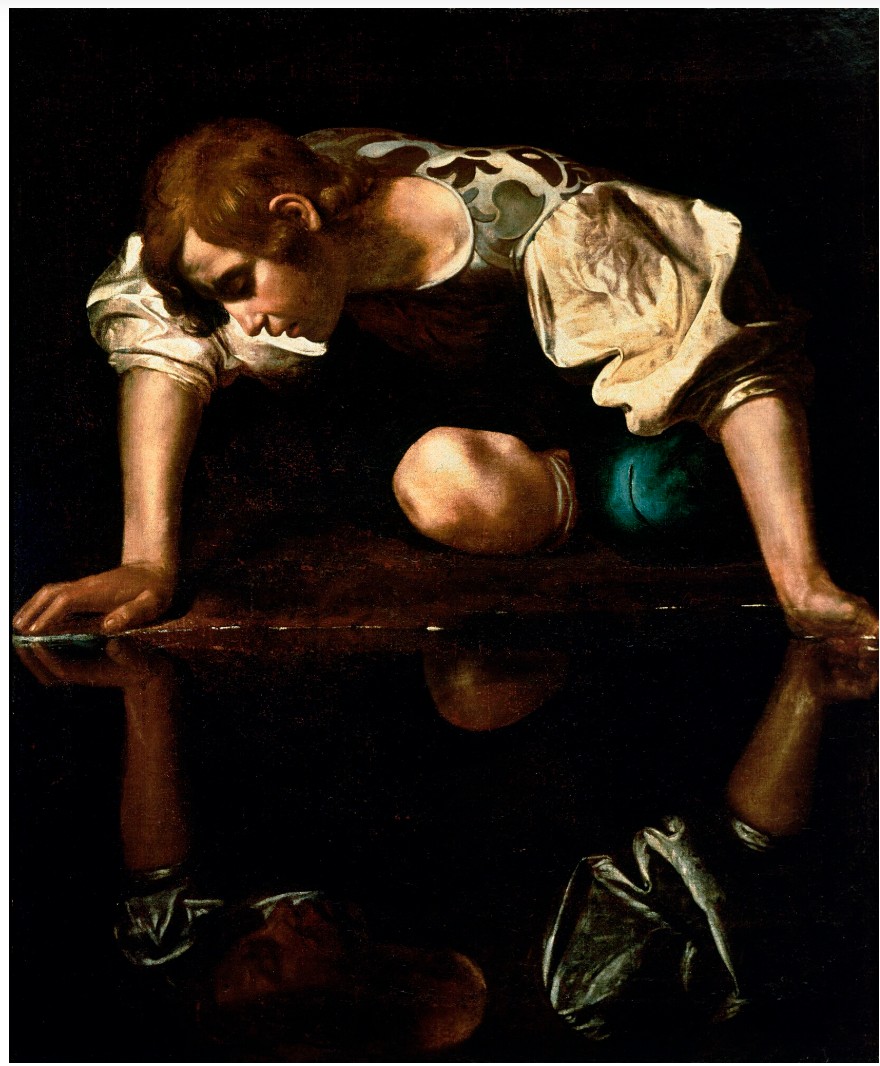
Caravaggio, Narcissus, circa 1597-1599. Galleria Nazionale d’Arte Antica, Rome.
The 1966 self-portraits became a turning point for Warhol. Finally amongst the images of the rich and famous or the press images of death and disaster, he had become a celebrity in his own right, an element in his own visual repertoire. By this time, Warhol was the central figure in both the New York art world and the wider social scene and had become an icon, a constant and glamorous figure who frequented the city’s art galleries, celebrity parties, and nightclubs. Self-Portrait is as much about self-presentation—and self-celebration—as anything else. Here, he gazes out of the picture with an intense driven air. His pose tells of the thinker, the intellectual. This is a man who was single-handedly turning preconceptions upside down, a revolutionary, the pioneer of Pop. Beginning in 1964, and lasting until 1984, Warhol’s self-portraits bookended his career, and now that he was known, a recognized face, it was only fitting that he should have enshrined himself amongst his pantheon of cultural gods. Not only does Self-Portrait capture Warhol, but it also captures the spirit of the age. The incongruous colors that he has used harness a mixture of the darkness of the Velvet Underground’s music and the psychedelia of the 1960s. The presentation of the image reminds us of billboards. High culture and popular culture are being combined to create a contemporary cocktail of an image. Thus, Self-Portrait resonates with the brooding energy and life of its age.
Self-Portrait, 1967
Christie’s New-York: 9 November 2023
Estimated: USD 5,000,000 – 7,000,000
USD 5,495,000
ANDY WARHOL (1928-1987) (christies.com)
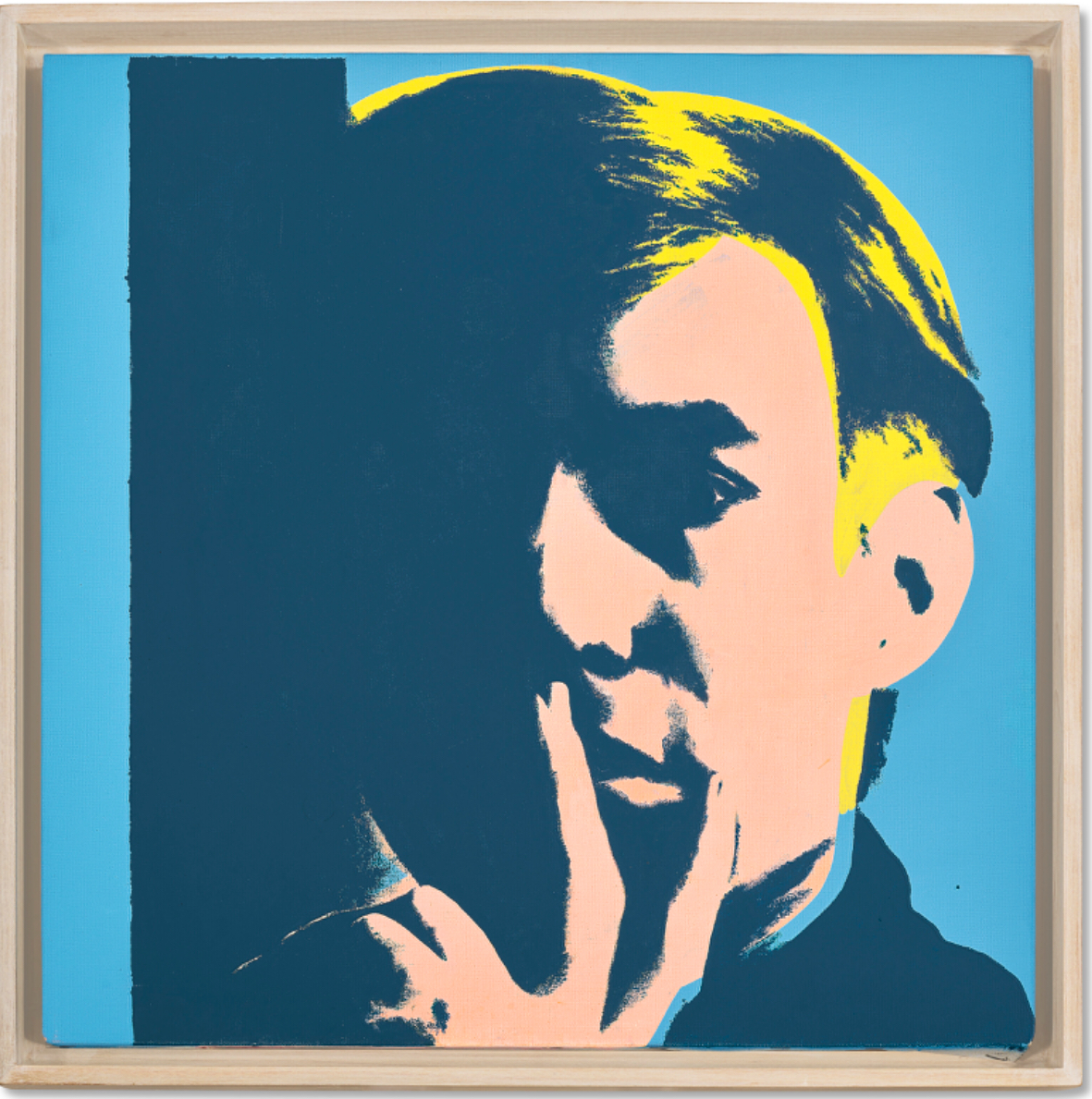
ANDY WARHOL (1928-1987)
Self-Portrait, 1967
Acrylic and silkscreen ink on canvas
22×22 inches (55.9 x 55.9 cm)
Signed and dated ‘Andy Warhol 67’ (on the overlap)
Bold, opulent, and surreal, Andy Warhol’s Self-Portrait is arguably one of the most enigmatic paintings of his prolific career. While he often used appropriated images of celebrities like Marilyn Monroe, Elvis, and Jackie Kennedy, this Self-Portrait is exemplary of his coextensive autobiographical process. Intimately scaled at about twenty-one inches square, the canvas is a portal into the artist’s mind. He brings us into his interior world, making us a part of his famed circle of glamorous confidants. Emerging from the shadows and bathed in shades of blue, Warhol gazes upon us in a characteristically inscrutable fashion. He is self-confident and introspective. His hair is highlighted with yellow, and blue acrylic flows boldly onto his graceful fingers as they frame his lips. This bleeding is not an error, but rather a trademark effect of Warhol’s use of silkscreen, a medium that aims to reproduce, but evolves with each impression. The surreal vibrance of the canvas’s colors contrasts with the realism ushered in by Warhol’s use of a flesh tone for his face. He is both of our world and a vision of a dreamlike elsewhere.
Self-Portrait, 1966
Christie’s New-York: 14 November 2016
Estimated: USD 4,000,000 – 5,000,000
USD 6,519,500
Andy Warhol (1928-1987) (christies.com)
ANDY WARHOL
Self-Portrait, 1966
Acrylic and silkscreen ink on canvas
22×22 inches (55.9 x 55.9 cm)
Signed and dated ‘Andy Warhol 66’ (on the reverse)
Signed again, dedicated and dated again ‘Andy Warhol 66’ (on the overlap)
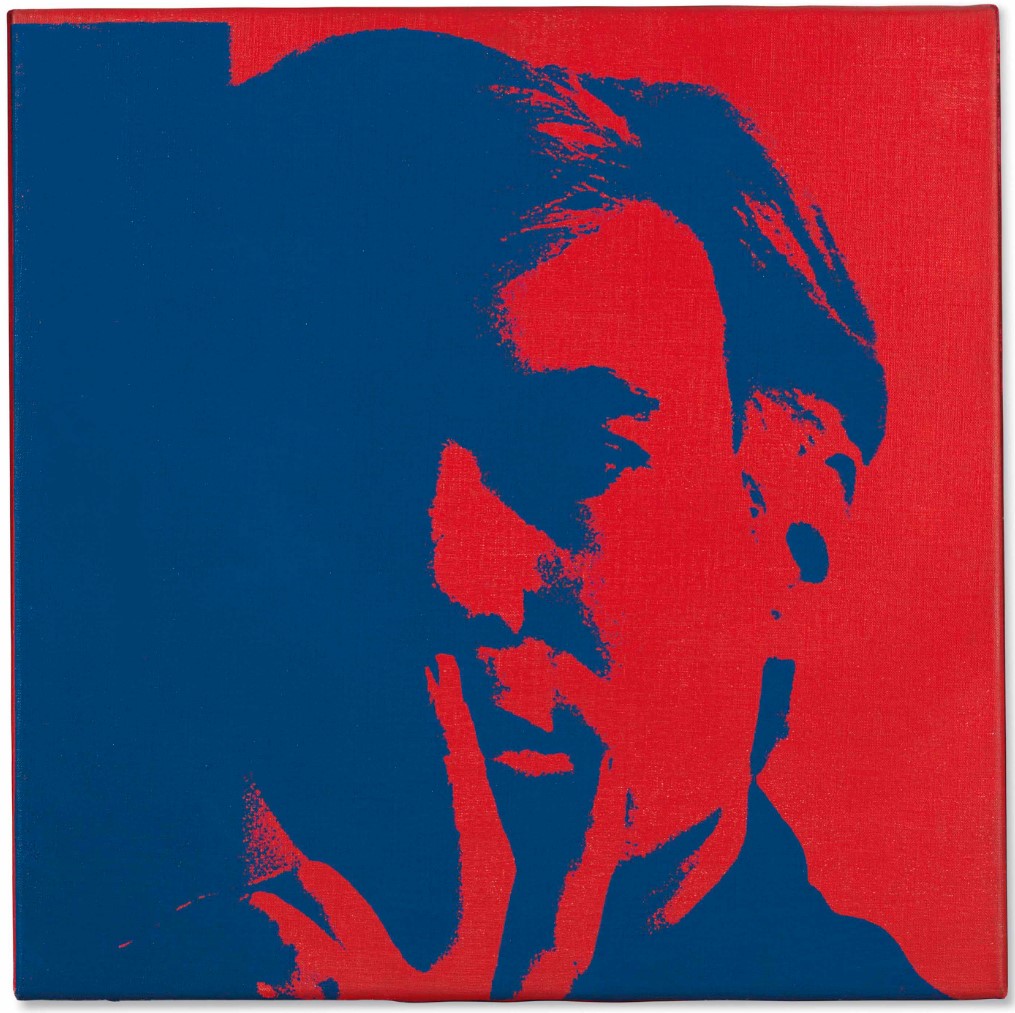
Against a background of fiery red, Andy Warhol stares out from the surface of the canvas, engaging the viewer directly with the intensity of his gaze. With his head resting on the palm of his right hand, supported by two fingers pointing up towards his pursed lips, Warhol appears deep in thought. The right half of Warhol’s face is shrouded in a solid layer of intense, dark blue silkscreened ink. By contrast, the left side of the face is bathed in the lustrous hues of blistering red, accentuating his features whilst simultaneously same expunging the blemishes that marked Warhol’s face in real life and which made him supremely self-conscious. Appearing confident, yet still holding something back, the result is a powerful image of a man trying to project an image to the world, even if he is ultimately unsure of what that image should be. Self-Portrait of 1966-67 is the truly superb archetype of Andy Warhol’s most famous self-representation of the 1960s.
Self-Portrait, 1966
Sotheby’s New-York: 11 November 2014
Estimated: USD 3,000,000 – 4,000,000
USD 3,245,000
(#7) Andy Warhol (sothebys.com)
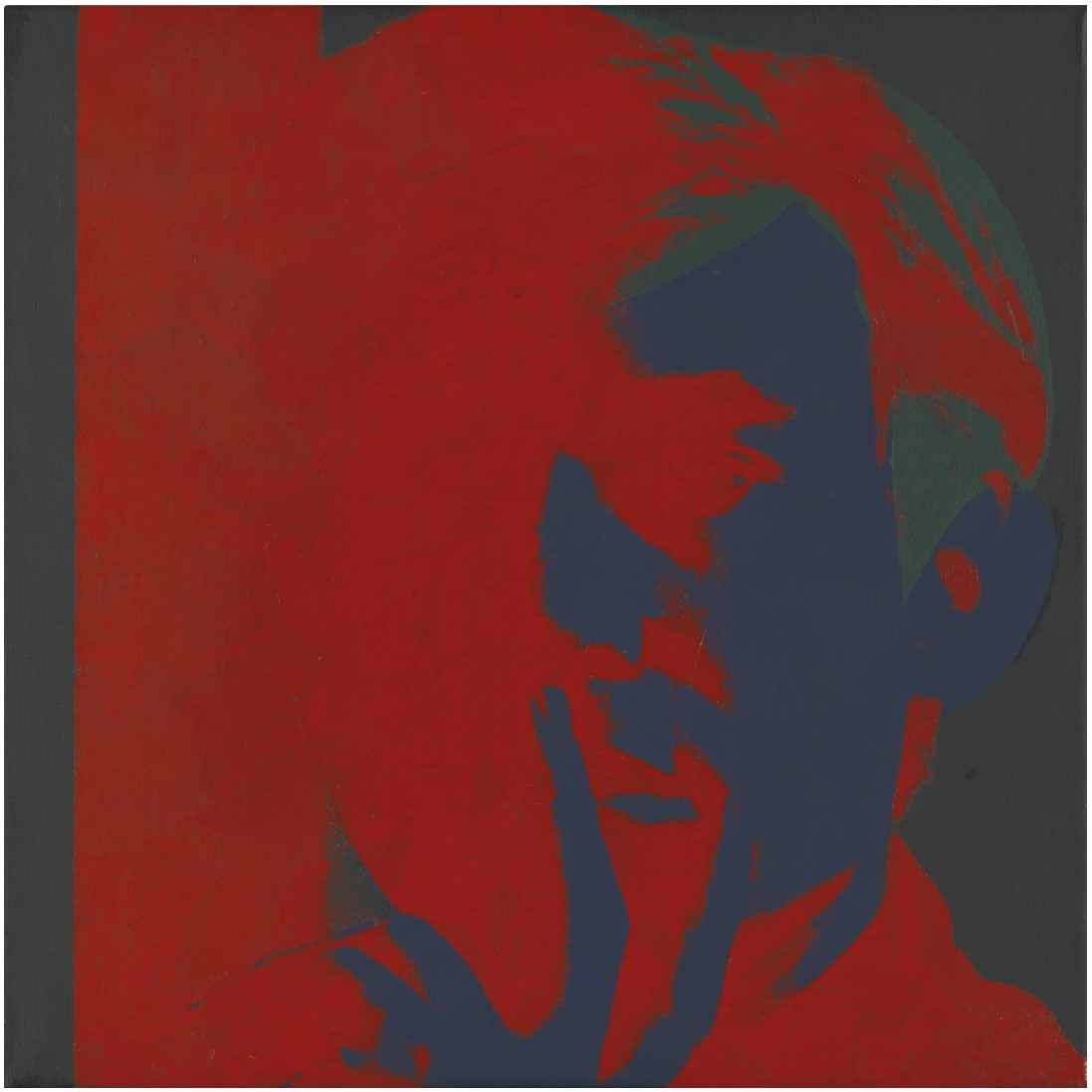 ANDY WARHOL
Self-Portrait, 1966
Acrylic and silkscreen ink on canvas
22×22 inches (55.8 x 55.8 cm)
In the present work, the physical composition of Warhol’s face is difficult to distinguish, with physiognomic features and abstracted zones of silkscreened color merging completely. Yet, despite only trace outlines that arise out of the interplay between the midnight dark tones on the right and the blaring red on the right which serve to delineate his features, the resounding power of the source image immediately evinces our unquestioning recognition. The present work is a particularly resonant exemplar of this essential ambition; adopting a deliberately staged pose that at once monumentalized and mythologized the vision of himself that he broadcast to the world, Warhol adamantly and categorically denied any insight into his true character, banishing all possible trace of shyness or vulnerability from the composition, and leaving us only with an enigma.
Self-Portrait, 1966-1967
Sotheby’s New-York: 13 May 2014
Estimated: USD 4,000,000 – 6,000,000
USD 4,645,000
(#21) Andy Warhol (sothebys.com)
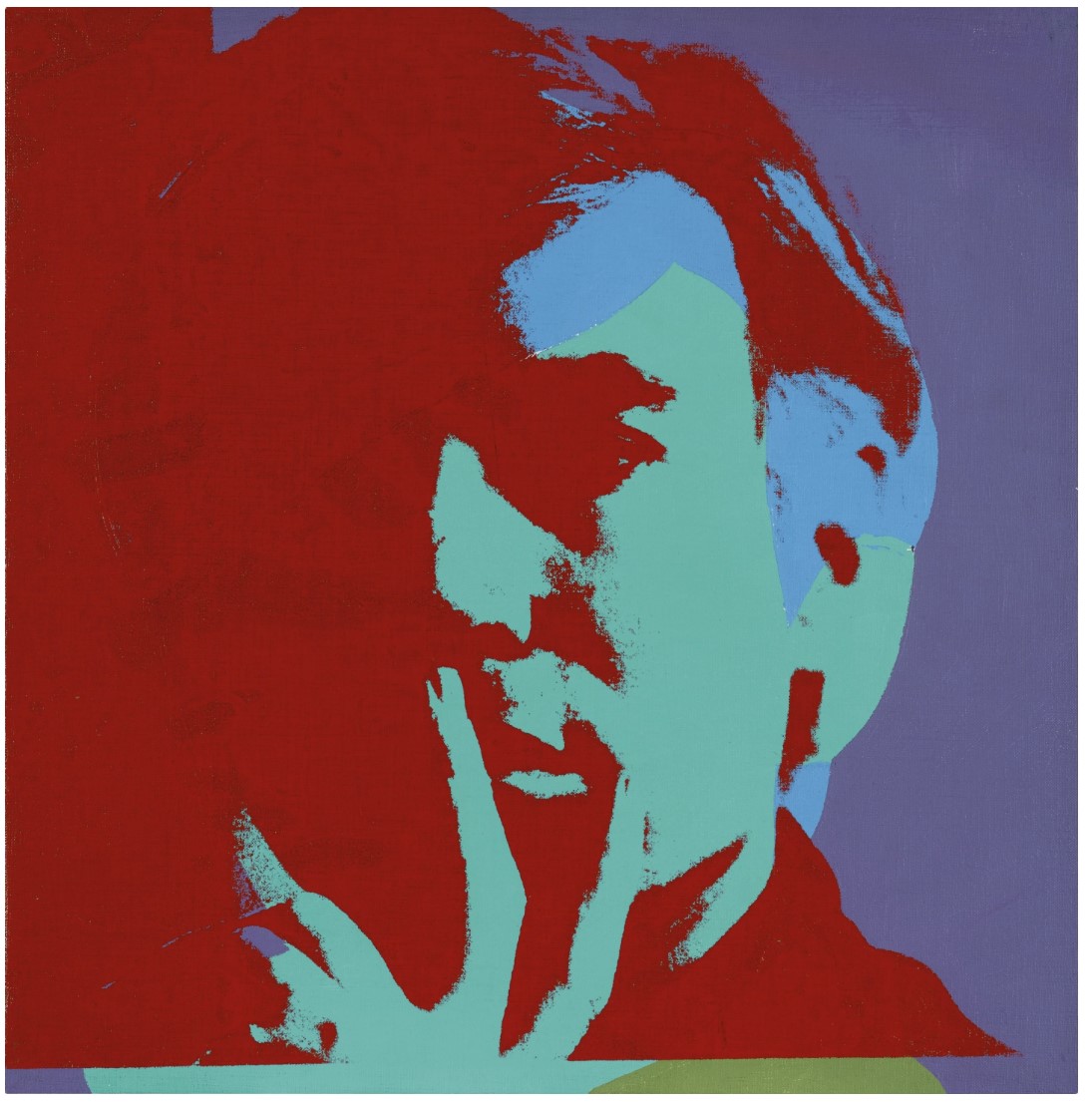
ANDY WARHOL
Self-Portrait, 1966-1967
Acrylic and silkscreen ink on canvas
22×22 inches (55.9 x 55.9 cm)
The above version is an outstanding paradigm of the corpus, incorporating five regions of sensational acrylic color: a field of Dioxazine purple is dominated by a flood of brilliant scarlet red, which overlies areas of pure cyan, deep turquoise and golden ochre. These sharply demarcated zones of color were meticulously organized by Warhol’s application of paint through acetate stencils, with the final silkscreen applying the red that defines the form. With his face partially shrouded in darkness and the other half bathed in a warm, rich glow of golden light, this luxuriant self-portrait of Andy Warhol is one of the artist’s most enigmatic and memorable canvases.
Self-Portrait, 1966
Christie’s London: 11 February 2015
Estimated: GBP 2,500,000 – 3,500,000
GBP 3,666,500
Andy Warhol (1928-1987) (christies.com)
Christie’s New-York: 15 May 2013
Estimated: USD 4,000,000 – 6,000,000
USD 5,219,750
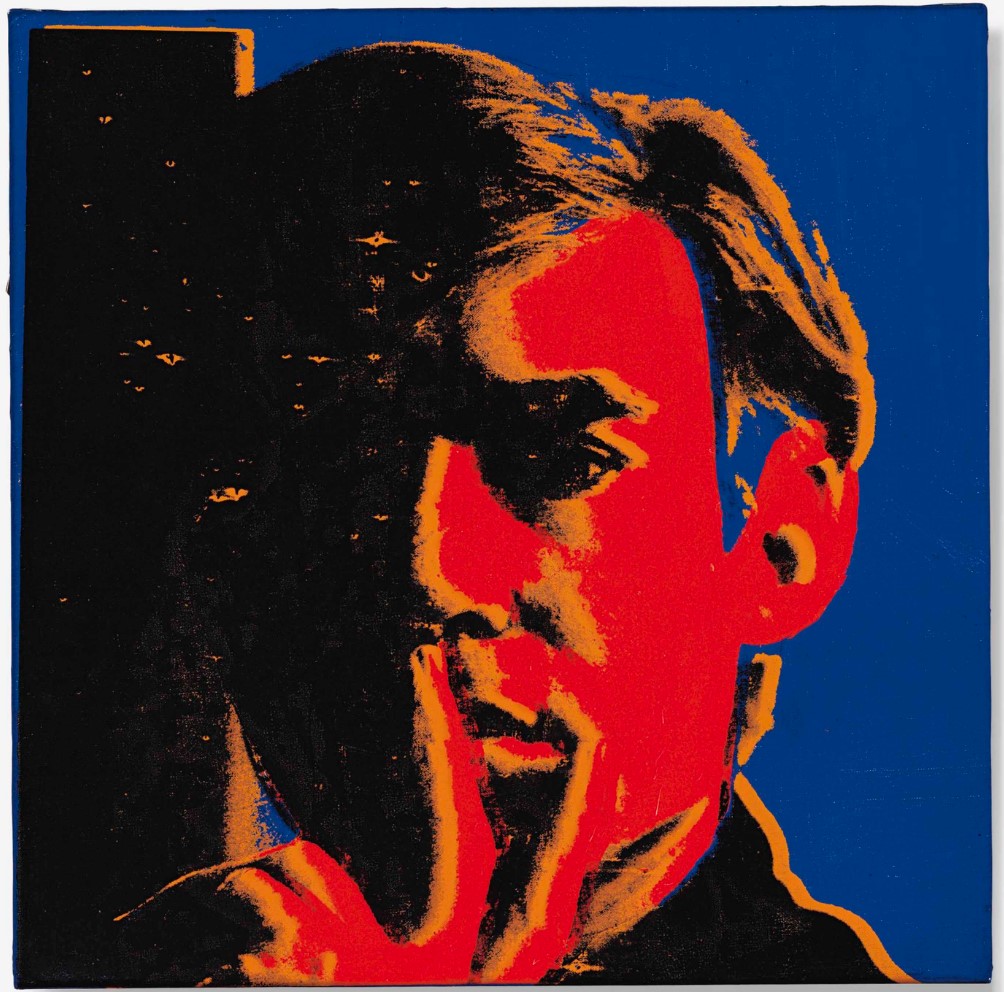
ANDY WARHOL
Self-Portrait, 1966
Synthetic polymer and silkscreen inks on canvas
22×22 inches (55.9 x 55.9 cm)
Against a background of sumptuous royal blue, Andy Warhol stares out from the surface of the canvas, engaging directly with the viewer with the intensity of his gaze. With his head resting on the palm of his left hand with two fingers pointing up towards his pursed lips, Warhol appears deep in thought, as if caught in mid-conversation trying to compose his thoughts. The left half of Warhol’s face is shrouded in a layer of black silkscreened ink, except for slivers of the underlying layer of red and golden pigment that shines through, like flecks of blond hair caught in the evening sunlight. By contrast, the right side of the face is strongly bathed in warm tones, accentuating his features whilst at the same expunging the blemishes that pockmarked Warhol’s face in real life and which made him supremely self-conscious. Appearing confident, yet still holding something back, the result is a powerful image of a man trying to project an image to the world, even if he is ultimately unsure of what that image should be.
Self-Portrait, 1966
Christie’s New-York: 8 November 2011
Estimated: USD 2,800,000 – 3,800,000
USD 3,106,700
Andy Warhol (1928-1987) (christies.com)
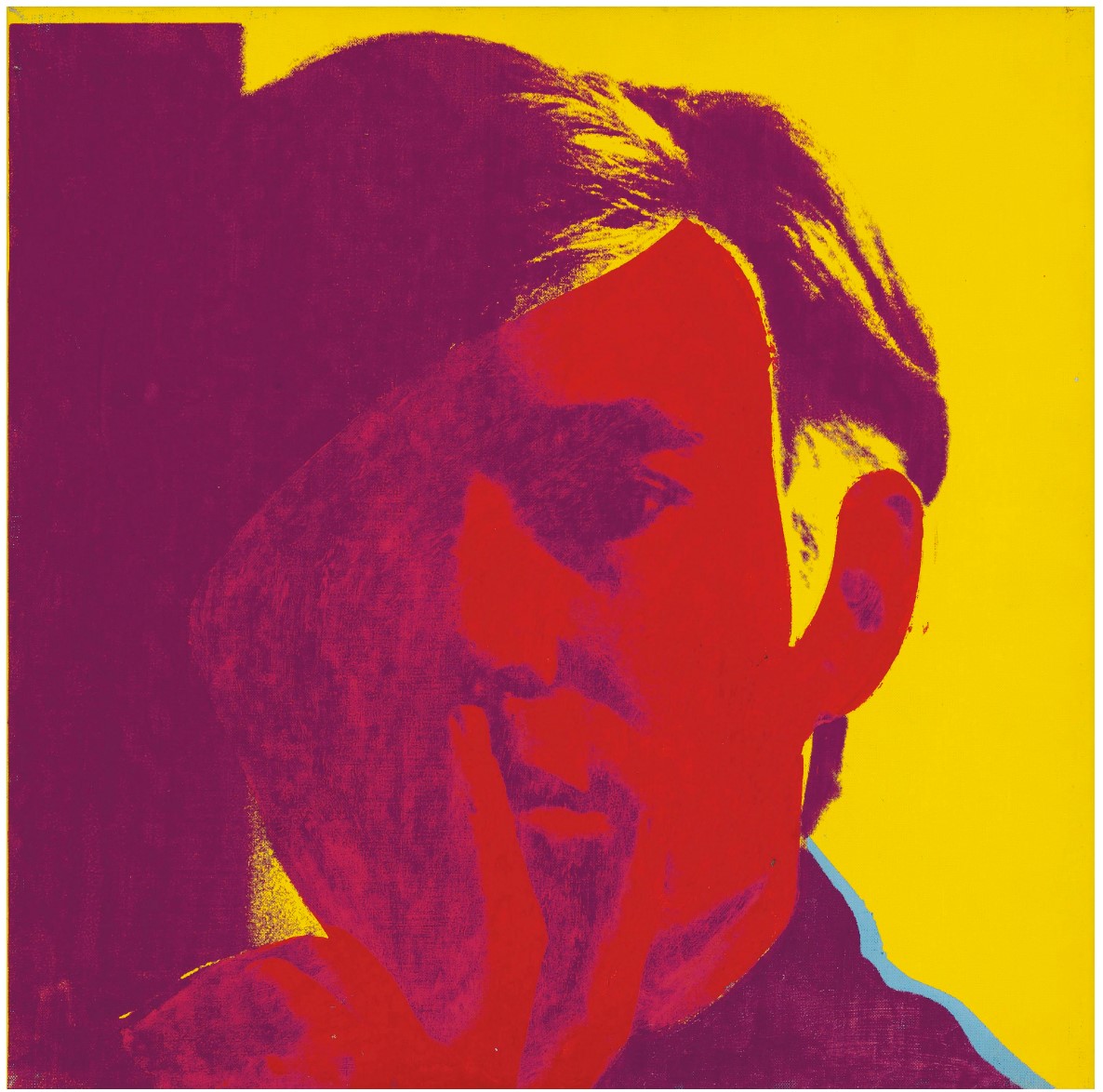
ANDY WARHOL
Self-Portrait, 1966
Acrylic and silkscreen ink on canvas
22.5 x 22.5 inches (57.2 x 57.2 cm)
Signed, inscribed and dated ‘Andy Warhol 66 Sidney Lewis’ (on the overlap)
Leaping off the canvas with a dramatic sense of pulsating color, this 1966 self-portrait of Andy Warhol is one of the most vibrant and iconic images that the artist created. The alternating layers of blood red, papal purple, and vibrant yellow pigments cause the surface of the particular work to resonate with psychedelic power; it is with these self-portraits that Warhol finally harnesses the supremacy of color with thrilling effect.
Self-Portrait, 1966
Sotheby’s New-York: 11 November 2009
Estimated: USD 1,000,000 – 1,500,000
USD 6,130,500
(#24) Andy Warhol (sothebys.com)
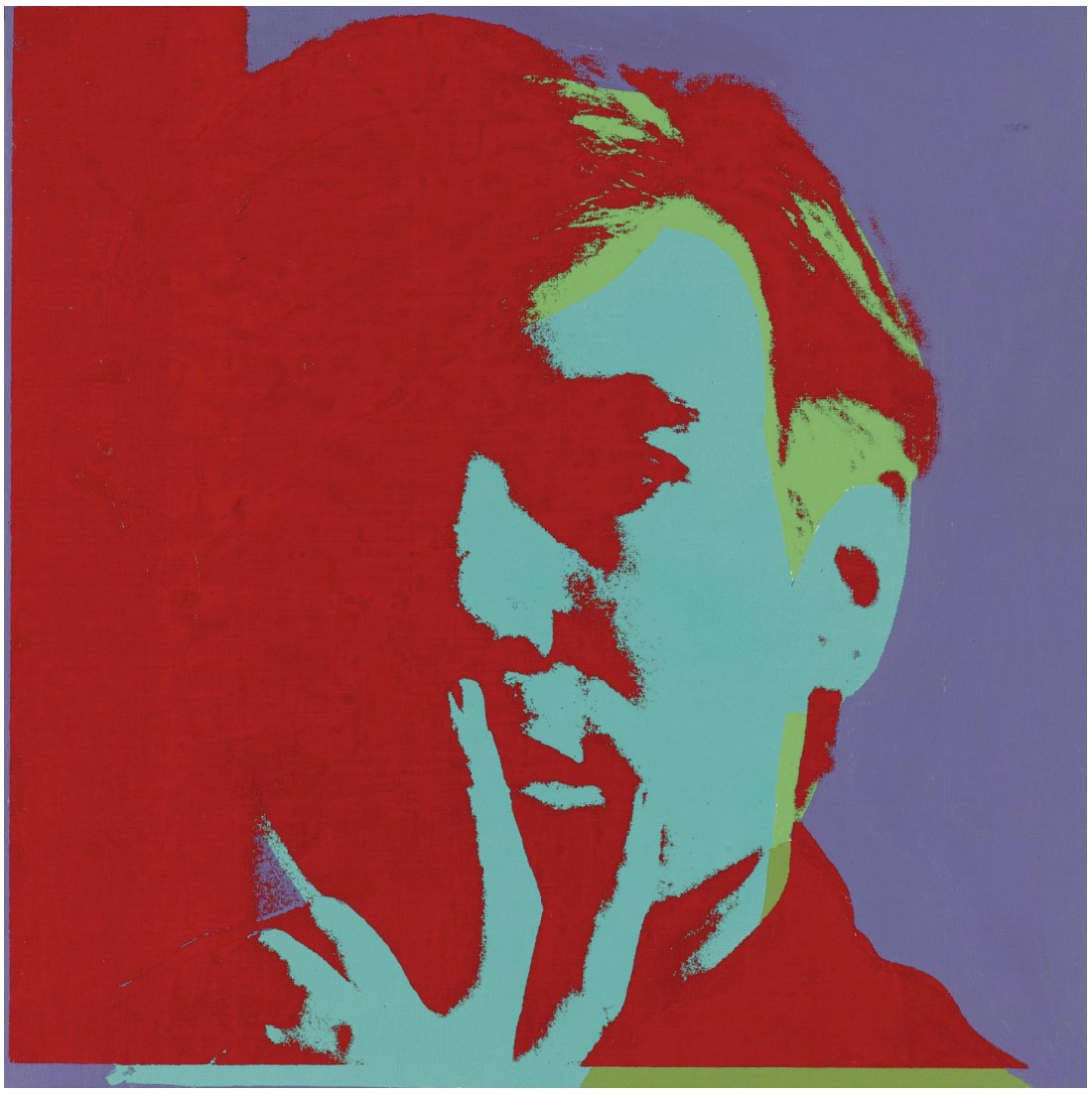
ANDY WARHOL
Self-Portrait, 1966
Acrylic and silkscreen ink on canvas
22.5 x 22.5 inches (57.2 x 57.2 cm)
Signed, dated 1965 and inscribed to Cathy (2 years late) on the overlap
Sotheby’s London: 27 February 2008
GBP 636,500
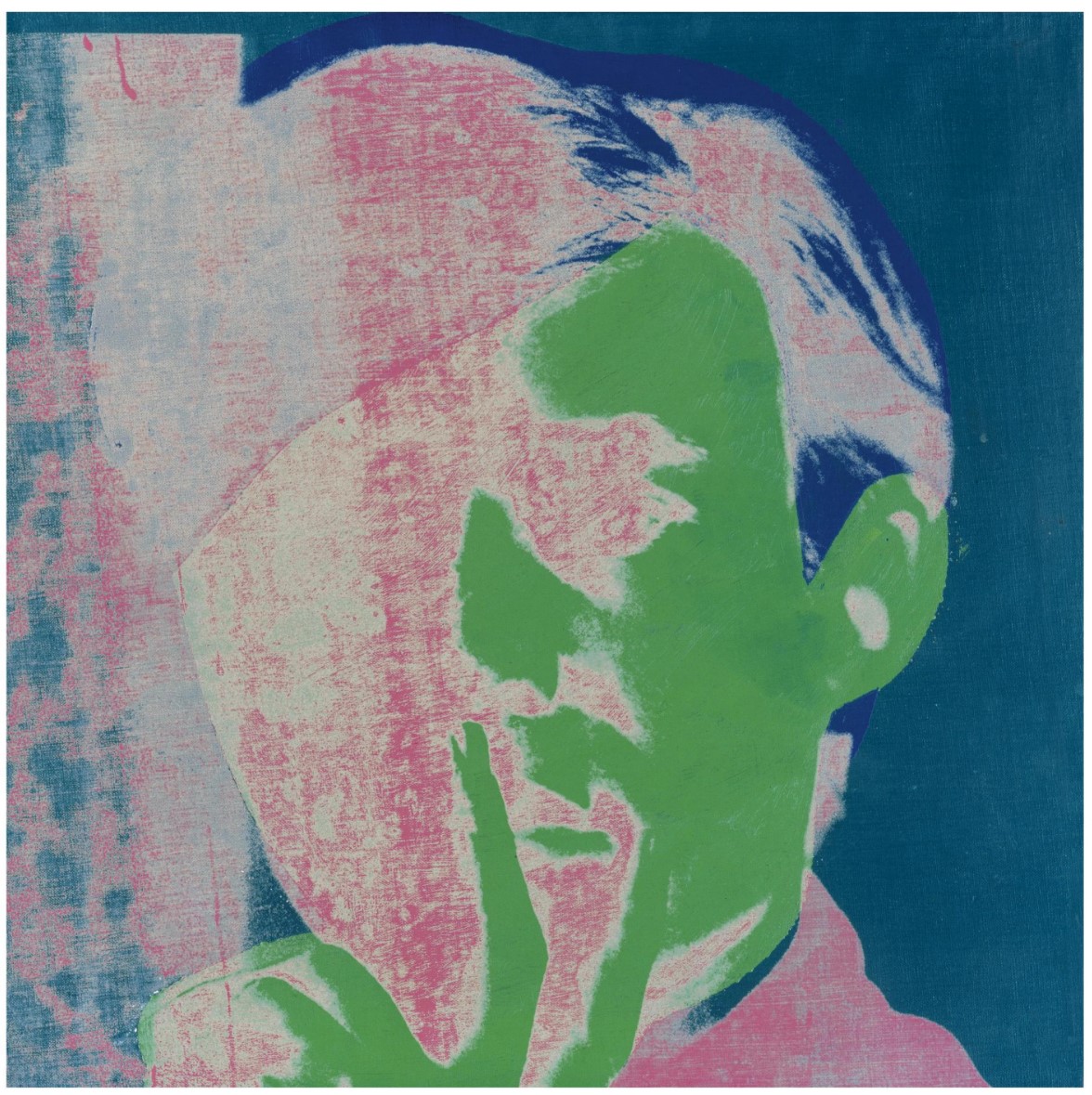
ANDY WARHOL
Self-Portrait, 1966
Acrylic and silkscreen ink on canvas
22.5 x 22.5 inches (57.2 x 57.2 cm)
Christie’s New-York: 15 May 2007
USD 8,216,000
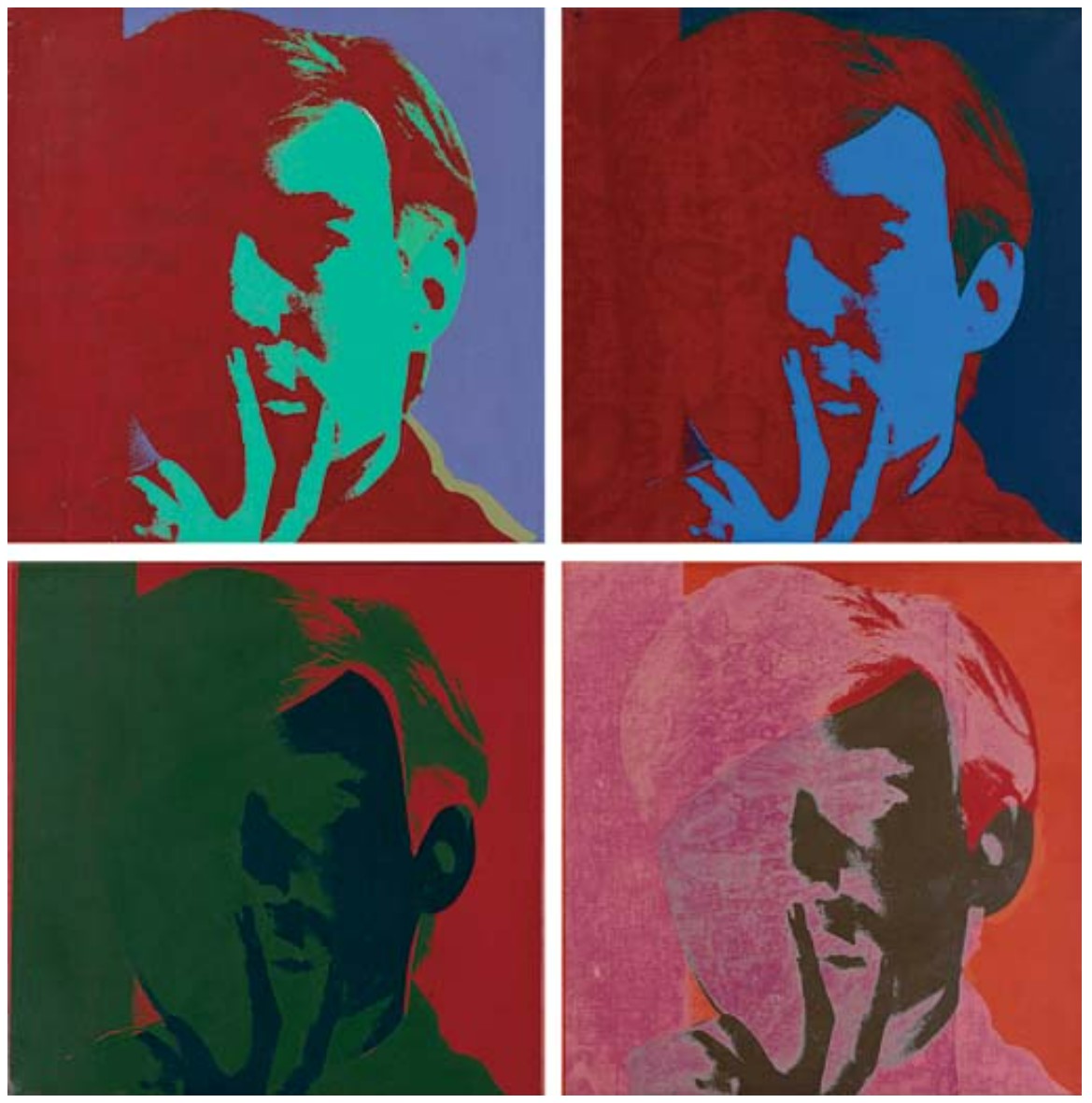
ANDY WARHOL
Self Portrait, 1966-1967
Synthetic polymer, acrylic and silkscreen inks on linen, in four parts
Each: 22×22 inches (55.9 x 55.9 cm)
Signed, inscribed and dated ‘to Iris Andy Warhol 67’
(on the overlap of the lower left panel)
Christie’s London: 8 February 2005
GBP 466,500
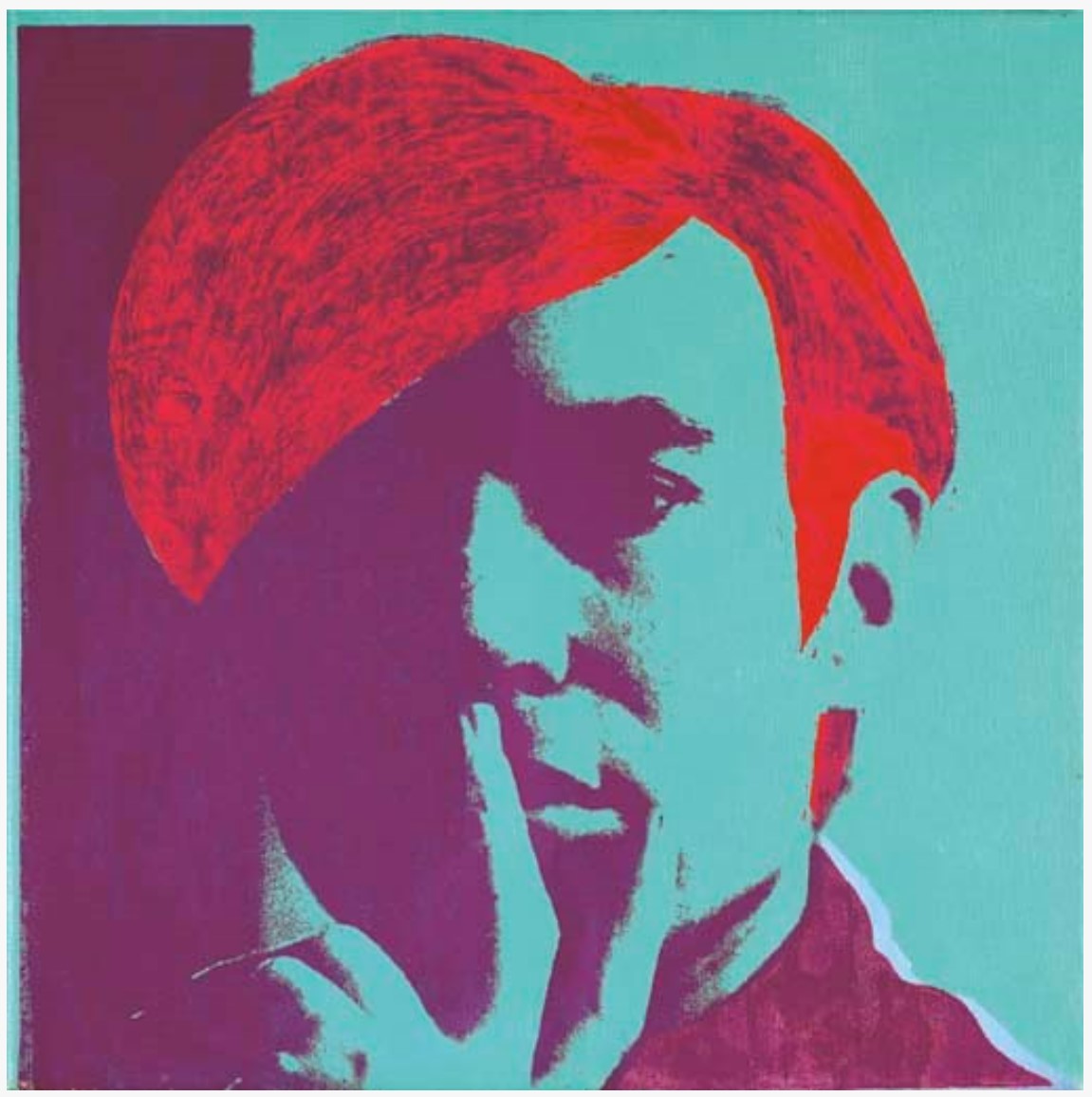
ANDY WARHOL
Self-Portrait, 1966
Synthetic polymer paint and silkscreen inks on canvas
22.5 x 22.5 inches (57.2 x 57.2 cm)
Self-Portrait (72×72)
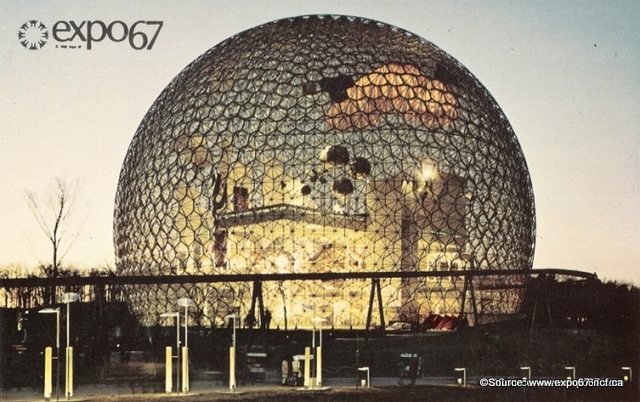
The Self-Portrait series of 1967, originally made for the American Pavilion (a huge geodesic dome designed by Buckminster Fuller) at Expo ’67 in Montreal, constitutes the images by which Warhol is best known to the public. They came at the point in his career when he had the confidence to accept his status as star and celebrity, as their large, six-foot-by-six-foot scale confirms.
Christie’s London: 15 February 2011
Estimated: GBP 3,000,000 – 5,000,000
GBP 10,793,250
Andy Warhol (1928-1987) (christies.com)
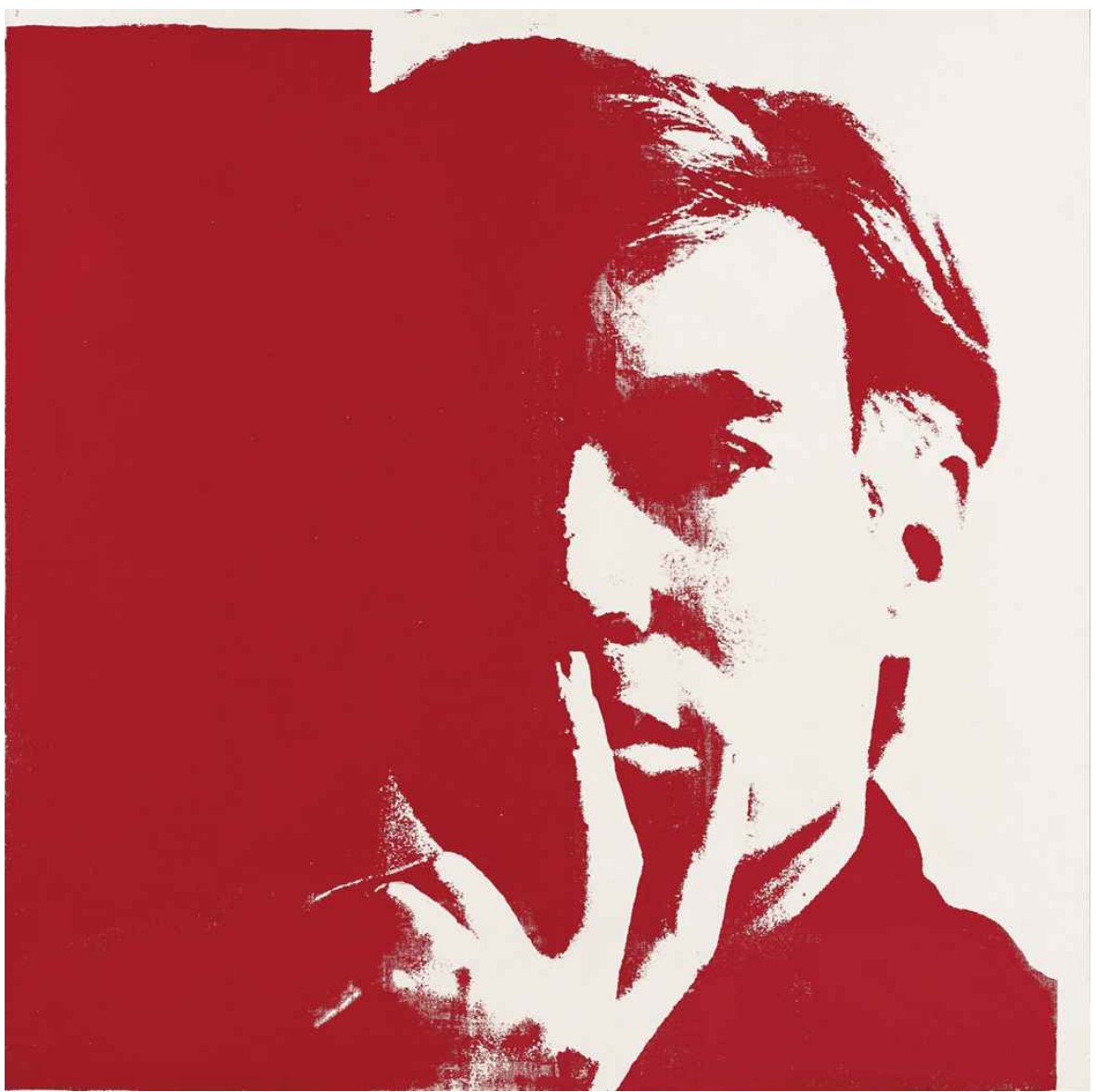
ANDY WARHOL
Self-Portrait, 1967
Acrylic and silkscreen ink on canvas
72×72 inches (182.9 x 182.9 cm)
With the Andy Warhol Art Authentication Board, Inc., stamp and numbered ‘A102.103’
(on the overlap)
Exploding from the canvas with the intense contrast between the bold thick intensity of red and the stark white of the background, Andy Warhol’s monumental, six-foot-by-six-foot 1967 Self-Portrait is a highly important picture from a series of only eleven works, five of which are in museums. It shows one of the most celebrated of Warhol’s images of himself, with his hand held to his mouth in a contemplative pose, at a time when his fame as a towering figure in the American art scene had reached a new peak, when he had achieved a position of dominance over a new generation of the avant-garde. This picture is all the more exciting as it is an historic rediscovery. It is not in the catalogue raisonné but has been approved by the Andy Warhol Art Authentication Board and is an addition to the ten known self-portraits of this type and on this scale which was acquired from Warhol’s dealer Leo Castelli in 1974. It is a mark of the incredibly important nature of this series that of those ten previously known large self-portraits, five are in museums: examples are held by Tate, London, The Staatsgalerie Moderne Kunst, Munich, the San Francisco Museum of Modern Art, and two by the Detroit Institute of Arts. As with many works of the time, the crisp, deliberately restrained palette of Self-Portrait thrusts the image into relief, heightening its abstract qualities, making the mass of red with the various intricacies that delineate Warhol’s shadowed features and hands resemble the gestural paintings of, say, Franz Kline. This effect is accentuated by Warhol’s thick application of red paint – the same color which Warhol employed in many of these large-scale self-portraits – which articulates the luscious surface and lends it a substantial physical presence. Kynaston McShine included eight of Warhol’s vast 1967 self-portraits in the 1989 retrospective dedicated to the artist which he curated, the first major review of the artist’s work following his death two years earlier, reflecting their seminal position in his work.
Christie’s New-York: 10 May 2004
USD 6,951,500
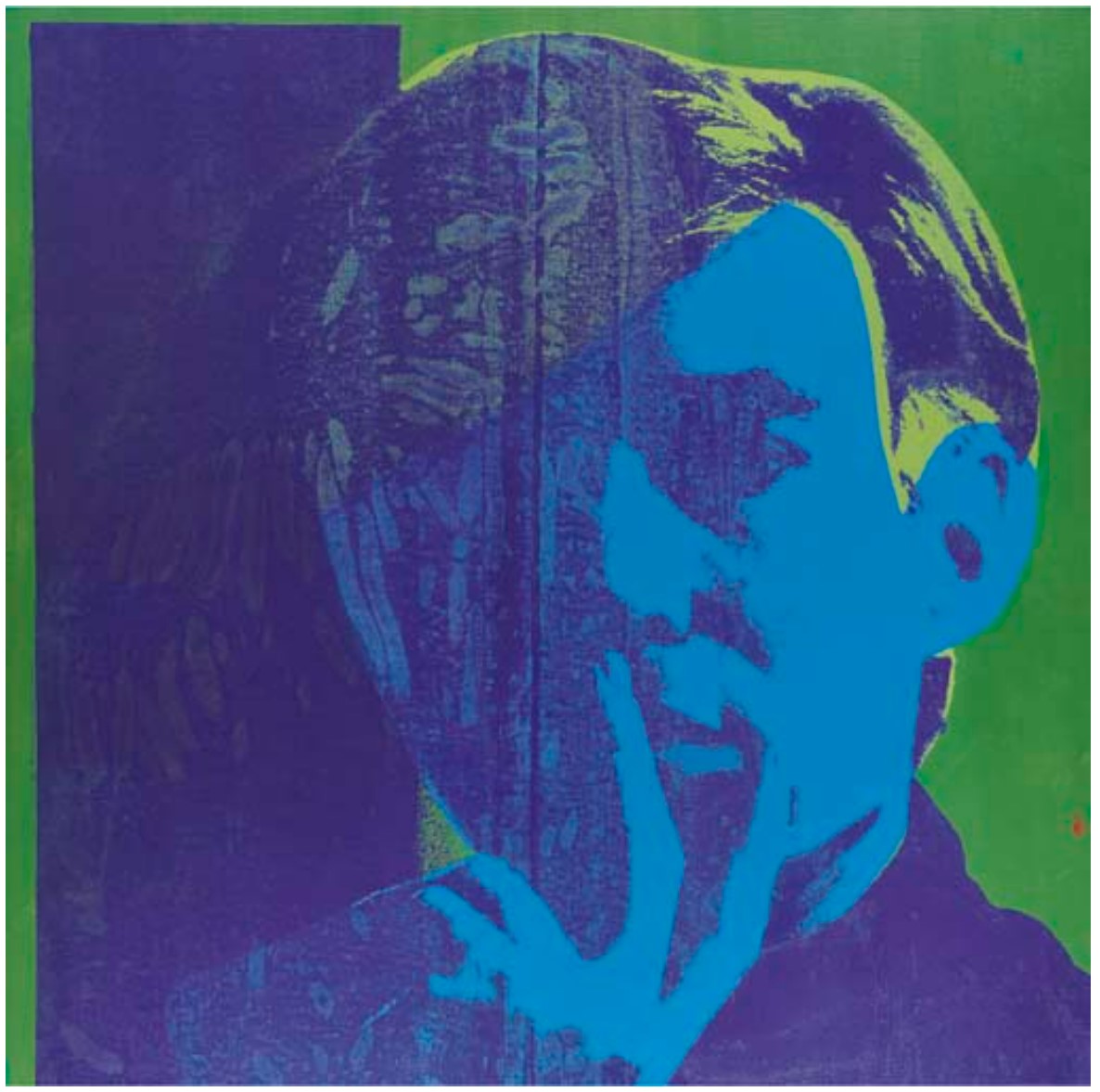
ANDY WARHOL
Self-Portrait, 1967
Synthetic polymer, silkscreen inks and graphite on canvas
72×72 inches (183×183 cm)