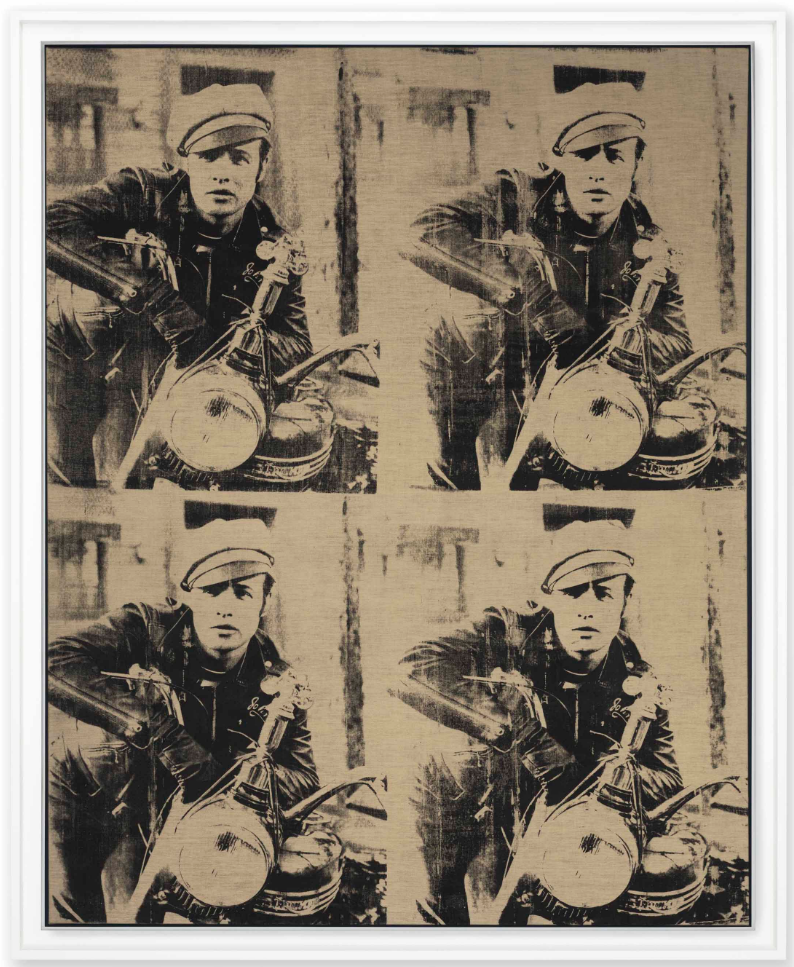
This dramatic rendition of Marlon Brando, his dark inscrutable eyes staring out nonchalantly from underneath his peaked cap, provides an unrivaled portrayal of one of the greatest 20th century cultural icons. Displayed here at the peak of his fame, Brando’s appearance in the 1953 film The Wild One (from which Warhol took this source image), captured a rebelliousness that, in the mind of the public, had consumed the previously acquiescent American teenager and became something of an anti-hero for an entire generation of misunderstood youth.
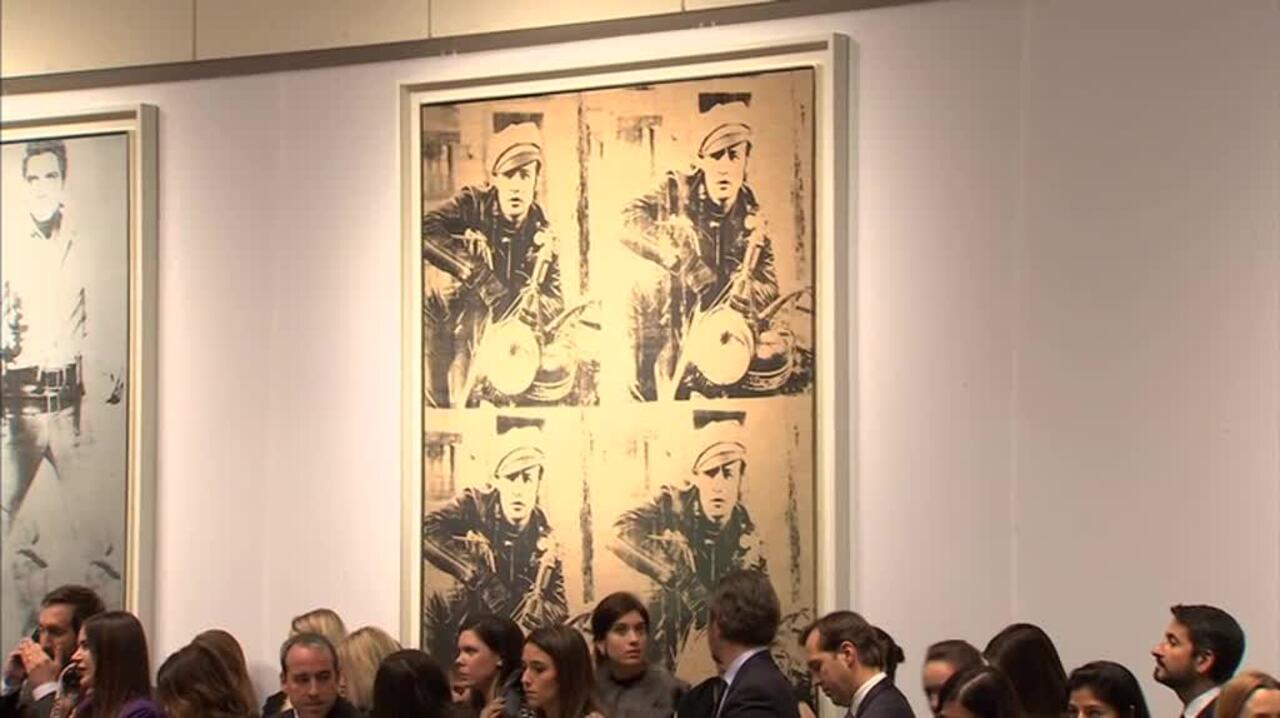
Andy Warhol took a publicity still from the movie and rendered it four times across a vast expanse of raw canvas, creating a larger-than-life portrayal of Brando and his character Johnny Strabler. This combination has become so potent that, more than fifty years after the film’s release, the image is used in contemporary movies and advertisements around the world, with posters featuring the character still adorning the bedroom walls of countless disaffected teenagers around the world.
Warhol first used an image of Marlon Brando in 1963, in Silver Marlon, in which he screened this publicity shot onto a large-scale canvas painted with a silver ground in recognition of its cinematic origins. In 1966 he returned to the subject, this time with a select series of eight canvases and unlike his earliest incarnation, here Warhol screens the foreboding image directly onto unprimed canvas, giving the painting a raw, foreboding feeling and therefore playing directly on the nature of the subject matter itself. Only three of the eight canvases feature a repeated image, and in this particular example, Warhol screens the image four times in a two by two grid that fills the entire canvas—the only example from the series to do so. Referencing Warhol’s love of cinema, the image of Marlon is repeated over and over and “projected” onto a large “screen.” It is also recognition of the belief that Warhol had in the power of the image, and how their resonance can cross generations to last for decades.
Warhol’s decision to render his images on raw, unprimed canvas was, in part, his response to the wider art historical debate that was raging at the time about the continued relevance of painting within modern art. Through the exposed canvas and the carefully controlled image of Brando, Warhol combines disparate elements in a way that manages to mock the culture of Abstract Expressionism. Both in terms of artistic process and personal interaction, Abstract Expressionism and Pop were diametrically opposed. Here, the canvas reminds the viewer of the myriad artistic acts that could have taken place on this support. However, instead of the drips of a Pollock or some other abstract product of manly exertions, there is the controlled print image of Marlon Brando. Warhol has removed himself as much as possible from the artistic process and yet the bare canvas is an explicit reference to it. At the same time, the leather-clad troublemaker pictured is a reminder of the culture of machismo that was so intertwined with the Abstract Expressionists, and which Warhol would later satirize. The raw canvas also evokes the appearance of gold, a color long associated with the glitz and glamor of Hollywood—the “golden age” of cinema, the golden Oscar statuette, the Golden Globe awards etc. This color also had a deeply personal resonance for Warhol as it evoked the shimmering gold icons of his Eastern European Catholic upbringing. The Warhola family often worshiped at the Saint John Chrysostom Byzantine Church in Pittsburgh, a building distinguished by a glittering iconostasis made up of dozens of shimmering golden icons looking down from the heavens of the gathered congregation.
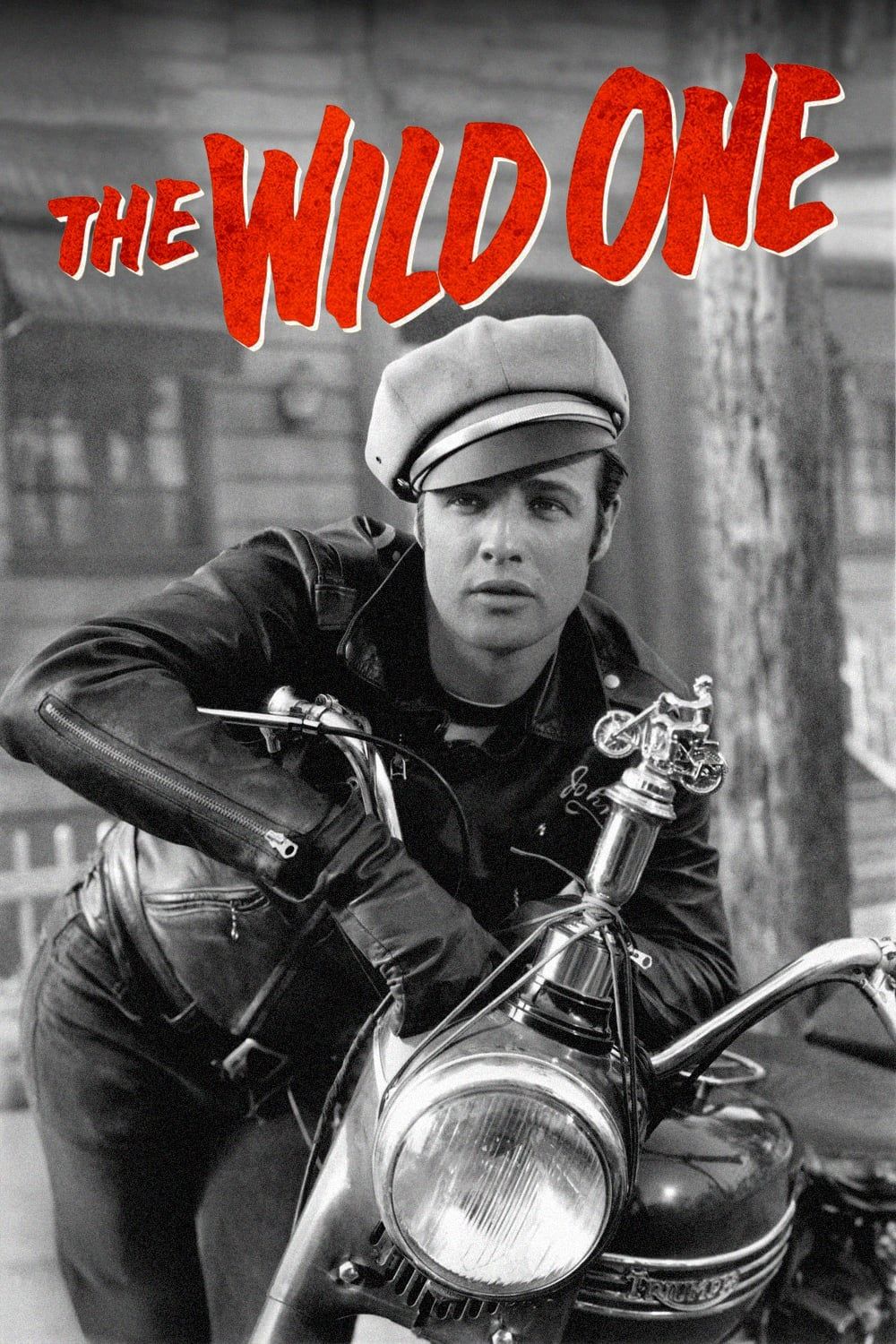
When compared with the classic beauty of Liz Taylor or Marilyn Monroe, the raw grittiness of Brando and The Wild One seems an unexpected departure from Warhol’s other gods and goddesses of the silver screen. His arrival in The Wild One is heralded by the deafening sound of a dozen motorcycles at full throttle, as the leather-clad members of the Black Rebels Motorcycle Club roar into the sleepy town of Wrightsville, California (a name chosen with delicious irony to emphasize the “wrongness” of Brando’s character and his gang), ready to wreak havoc on its unsuspecting population. With this dramatic opening sequence, Lázsló Benedek’s 1953 film The Wild One became a classic of American movie-making and confirmed Marlon Brando as one of the industry’s greatest young stars. Brando played “Johnny,” the leader of a brutal biker gang that terrorizes this small Californian town. He falls for Kathie, an all-American girl whose father just happens to be the town policeman. Together with James Dean’s Rebel Without a Cause (released two years later in 1955), The Wild One cemented an entire genre of Hollywood movies that depicted the troubled and misunderstood American teen, rebelling against the status quo and desperately searching for their place in the new postwar society. While the film was well received by critics, it was viewed with concern by others; British Board of Film Censors banned it for 14 years over fears that Brando’s character was an unsuitable role model for impressionable youngsters. Yet it was exactly for this reason that “Johnny,” along with his iconic leather jacket, distinctive peaked cap and Ray-Ban sunglasses, became the icon for an entire generation of disaffected youth—the generation that created the culture of “cool.”
Just as Elvis broke the mold in the world of popular music, Brando re-wrote the acting rule book. His immersive style influenced generations of young actors, among them many of the most iconic names working today, including Jack Nicholson, Robert De Niro, Al Pacino, Sean Penn, Johnny Depp and Daniel Day Lewis. Brando was an actor who worked notoriously hard at his craft. He was just nineteen when he began taking acting lessons with Stella Adler at the New School for Social Research in New York in 1943. A disciple of the Russian actor and director Constantin Stanislavsky, Adler was a pioneer of a new style of acting. This technique was to revolutionize stage and film with a new sense of rawness and realism. With his intense emotion and raw improvisation, Brando outperformed his classmates, who included Elaine Stritch, Harry Belafonte and Rod Steiger. James Dean was said to have worshipped Brando, copying everything that the older actor did right down to his stance and even his particular way of speaking.
Warhol’s decision to immortalize Brando, alongside his other pantheons of the silver screen, was both a prophetic and a personal one. Obsessed with the movies from an early age, Warhol had long looked to Hollywood for his heroes as well as his artistic inspiration. Some of his most celebrated images are those stars who found themselves part of Warhol’s hallowed beatification-like process. So it was only natural that, in 1963, Warhol should turn to Marlon Brando to induct into his Hollywood Hall of Fame. Warhol’s decision to use the canvas in its natural state adds to the subversive nature of the painting, enhancing the feeling of masculinity and edginess and adding another layer to the depiction of the counter-culture that is already contained within the image itself.
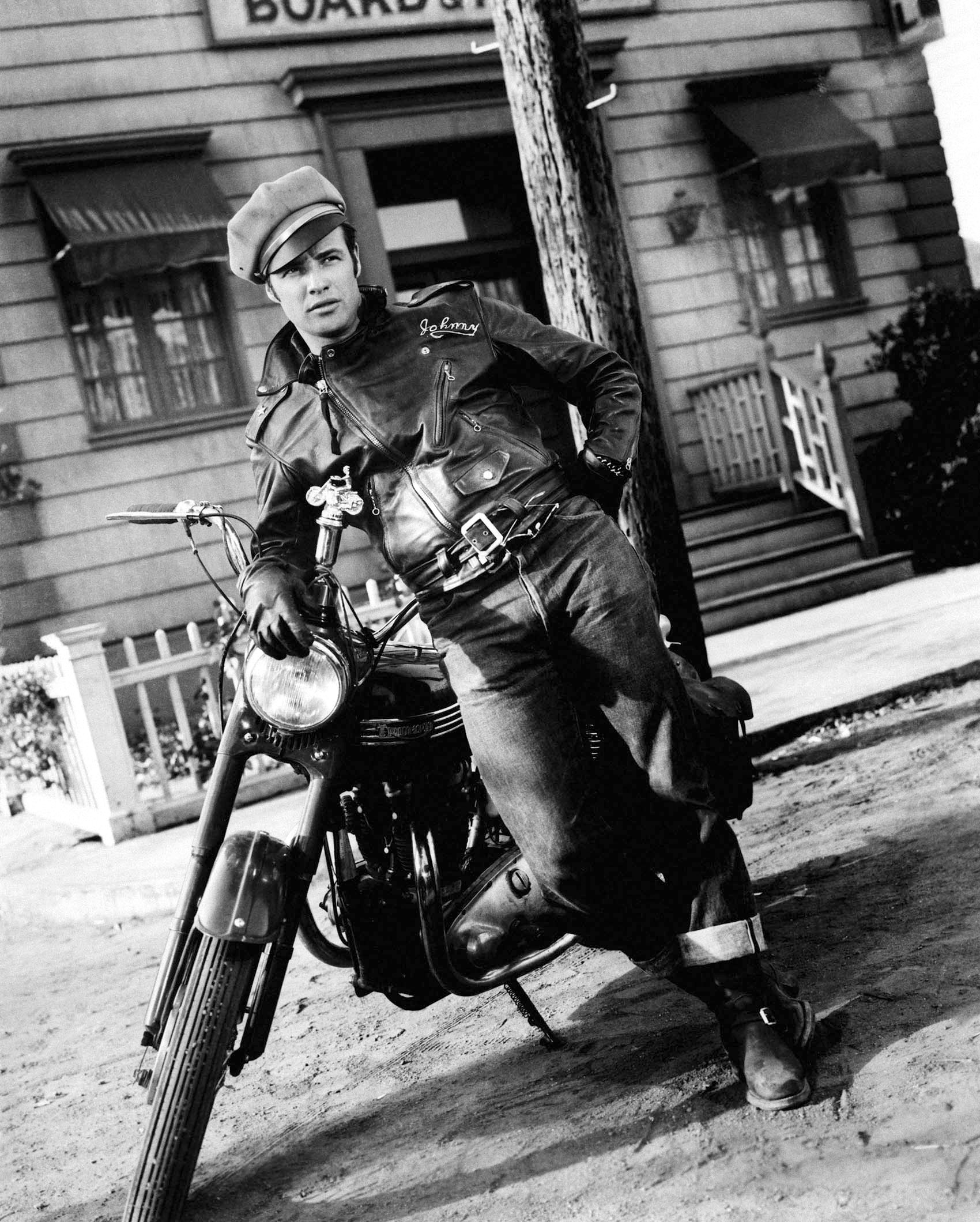
The almost palpable sense of desire with which Warhol has portrayed Marlon, accentuated by the earthiness of this raw canvas, reflects a sense of acquisitiveness that can be seen to some extent as a common background to all his works. Warhol desires Brando here and convinces the viewer to join him in this desire. Thus, Brando is transformed into an object of desire in a sense that echoes capitalism. On the one hand, Warhol’s use of this movie-poster image has become a work of devotion, a modern equivalent to the religious paintings of the Old Masters featuring one of the new gods, and yet at the same time the very act of taking this commercial image becomes a wry criticism of the capitalist process and of the factory era. By taking the circulated publicity picture of an actor, someone who has adopted a guise, Warhol has commented on the superficiality of the world of sales, on the importance and hollowness of appearances. The image Warhol appropriated was a commercial object in its own right, part of the same process that characterizes the United States, which is embodied in Coke bottles, dollar bills, Campbell’s soup cans and celebrity.
Four Marlons, 1966
Christie’s New-York: 11 November 2014
USD 69,605,000
ANDY WARHOL
Four Marlons, 1966
Silkscreen ink on unprimed linen
81 x 65 inches (205.7 x 165.1 cm)
Signed and dated ‘Andy Warhol 66’ (on the overlap)
In Four Marlons, Warhol screens the foreboding image directly onto unprimed canvas, giving the painting a raw, foreboding feeling and therefore playing directly on the nature of the subject matter itself. Warhol screens the image four times in a two by two grid that fills the entire canvas—the only example from the series to do so. Referencing Warhol’s love of cinema, the image of Marlon is repeated over and over and “projected” onto a large “screen.” It is also recognition of the belief that Warhol had in the power of the image, and how their resonance can cross generations to last for decades.
Double Marlon, 1966
Christie’s New-York: 12 May 2008
Estimate on Request
USD 32,521,000
Andy Warhol (1928-1987) , Double Marlon | Christie’s
ANDY WARHOL
Double Marlon, 1966
Silkscreen ink on unprimed linen
84 x 95.7 inches (213.4 x 243.2 cm)
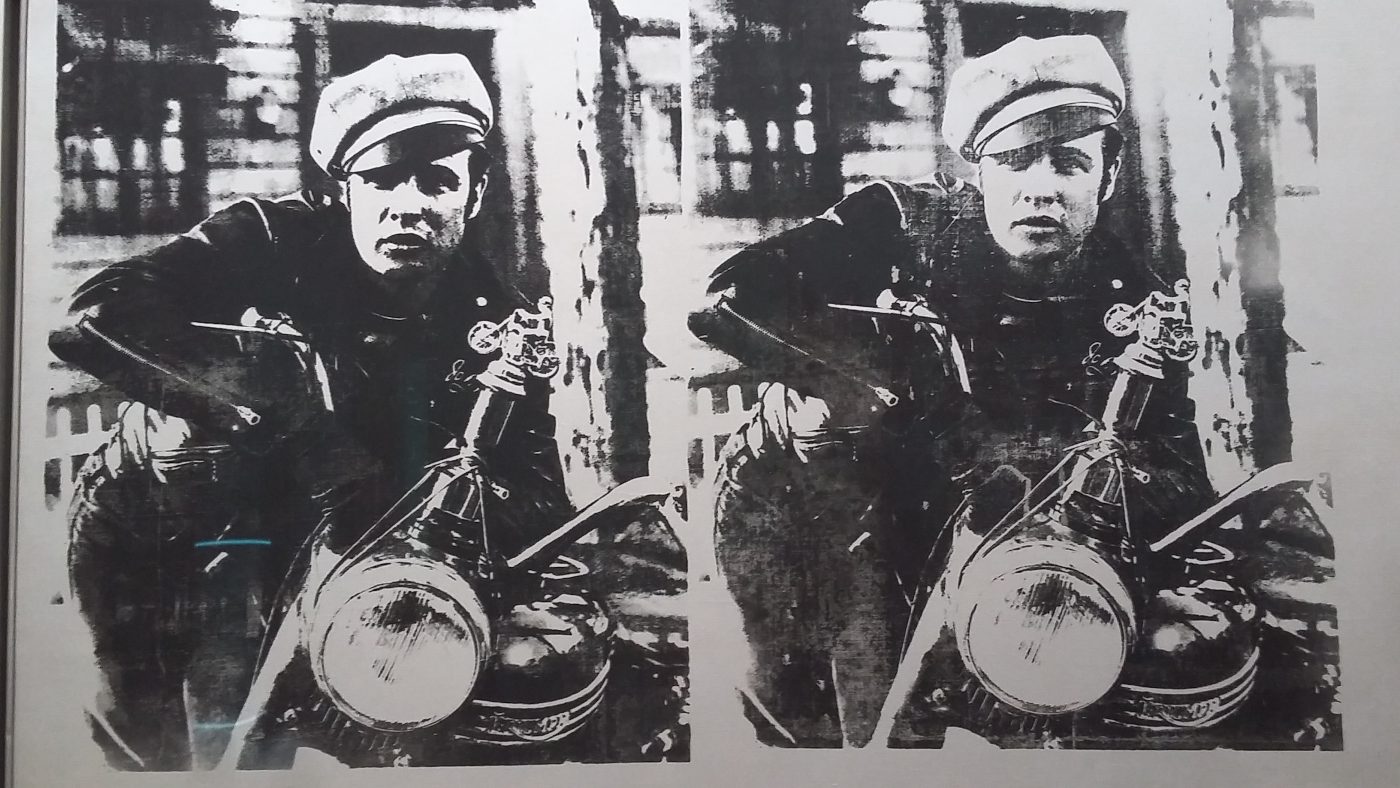
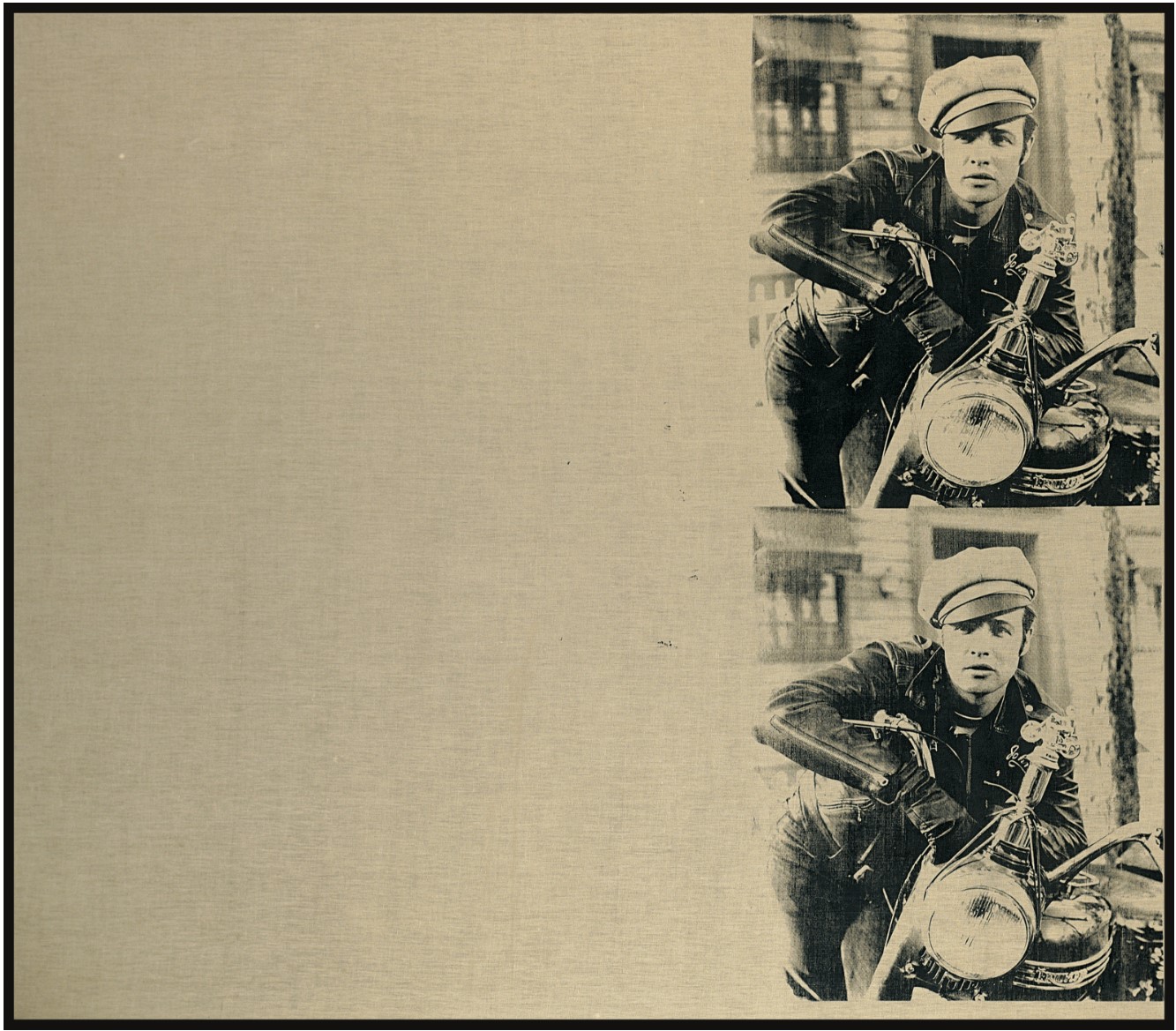
Executed in 1966, Double Marlon celebrates a male icon. Warhol placed the double image of Marlon Brando, taken from his highly influential and controversial 1953 movie The Wild One, at the right-hand edge of a vast, deliberately unprimed canvas. Leaning languidly on his motorcycle’s handlebars, dressed in the leather of his role as the menacing and rebellious biker gang leader, Brando is here presented as an equal to Warhol’s other favored screen idols, be it Marilyn Monroe, Elizabeth Taylor or Elvis Presley. And as in his works showing those stars, Double Marlon has a dark undercurrent. Where Marilyn had died, Liz was rumored to be at death’s door and Elvis was shown as a gun-toting cowboy, Brando oozes violence, volatility and antiestablishment subversion. Where Warhol celebrated those other stars in an array of works, he created only eight images of Marlon in 1966, and a single example on silver in 1963. Warhol accentuates Brando’s own sensuality, so evident in The Wild One and in this picture with the warm hues of the canvas itself. Double Marlon is exceptional in terms of depicting Brando, in terms of its scale, and also in terms of the experimental technique of its execution. Using the same screen he had used to create a silver image of the actor three years earlier, Warhol applied the inks to a raw, unprimed canvas, resulting in the unique visual effect of Double Marlon and its handful of sister pictures. In this picture, the effect is emphasized by the deliberate use of a large swath of canvas which has been left in reserve. This serves both to thrust the image’s black inks into relief and to heighten awareness of the sensual texture of the canvas itself. Warhol celebrated the raw materials of painting, as well as the image, in Double Marlon.
Marlon, 1966
Christie’s New-York: 14 November 2012
Estimated: USD 15,000,000 – 20,000,000
USD 23,714,500
Andy Warhol (1928-1987) , Marlon | Christie’s
ANDY WARHOL
Marlon, 1966
Silkscreen ink on canvas
41 x 46.2 inches (104.2 x 117.1 cm)
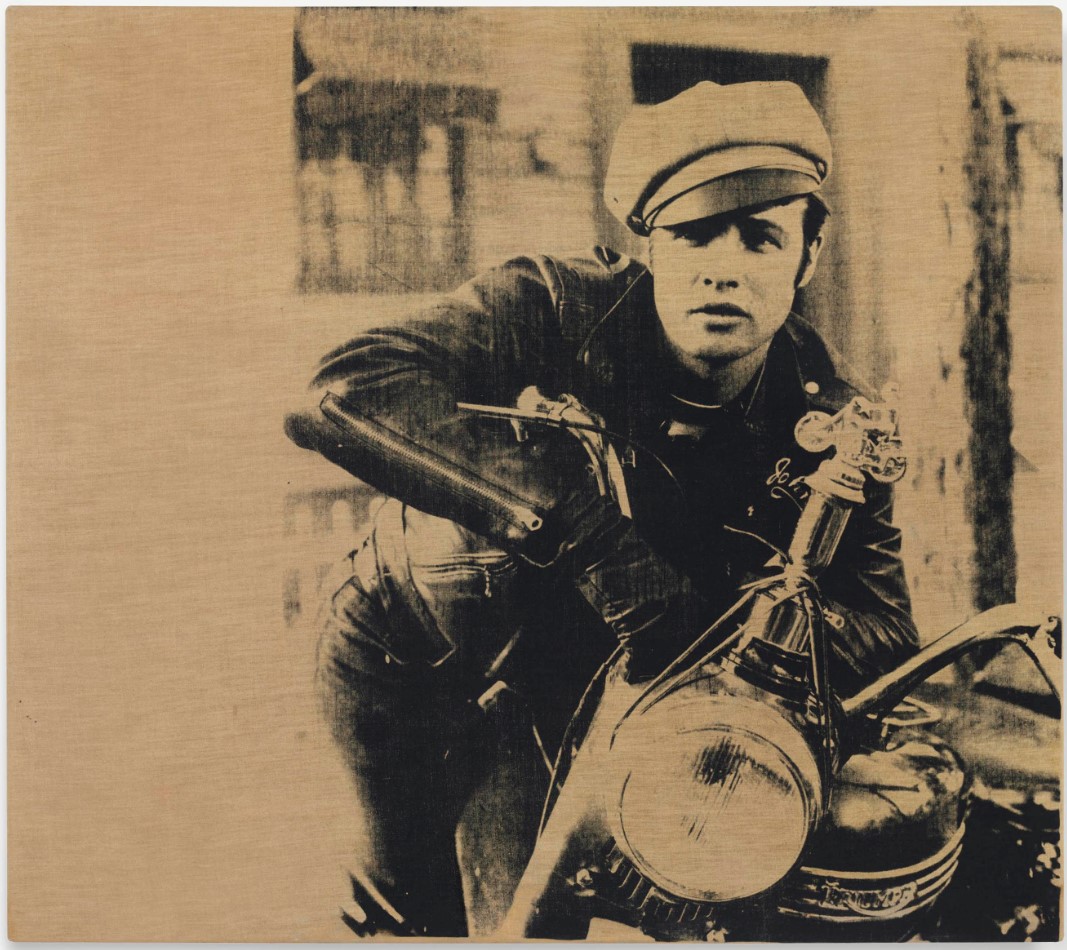
Leaning languidly on his motorcycle’s handlebars and dressed in the iconic leather jacket of his role as the menacing and rebellious biker-gang leader Johnny Strabler in The Wild One, Andy Warhol’s portrait of Marlon Brando celebrates the brooding image of the actor that set the style for an entire generation. Taken from a publicity still of Brando for this highly influential and controversial 1953 film, Warhol’s appropriated figure occupies the right-hand edge of the deliberately unprimed canvas. Adopting the dark undercurrent of Warhol’s other celebrity portraits, Brando personifies violence, volatility and anti-establishment subversion. As exemplified in Marlon, Brando’s machismo is reflected in Warhol’s use of the unprimed canvas. The inherent rawness of his chosen support combined with the clarity of this particular screen produces an image that, after nearly five decades, still has unrivalled power and presence. Through the terseness of his own dialogue, Brando’s character embodies some of his own Warholian traits. Evident none so much as in perhaps the film’s most famous line, when Kathie (the film’s heroine) asks, “What are you rebelling against?” to which Brando’s ‘Johnny’ opaquely replies, “What’ve you got?” Johnny’s all-out, motiveless, empty war on the status quo has parallels in the gauntlet that Warhol himself would take up with Pop almost a decade later. With this painting, Warhol not only celebrates the glamour and excitement of the silver screen but also taps into an intoxicating age during which time the phenomenon of the American teenager was born.