JEAN-MICHEL BASQUIAT
Untitled (from Famous Negro Athlete Series), 1981
Xerox, graphite, gouache and oilstick on canvas board
23 7/8 x 36 inches (60.6 x 91.4 cm)
Provenance
Kai Eric (gifted by the artist)
Annina Nosei Gallery, New York (on consignment)
Mary Boone Gallery, New York
Acquired from the above by the present owner in May 1984
Auction History
Phillips New-York: 17 November 2021
Estimated: USD 750,000 – 1,100,000
USD 2,750,000
Jean-Michel Basquiat – 20th Century… Lot 25 November 2021 | Phillips
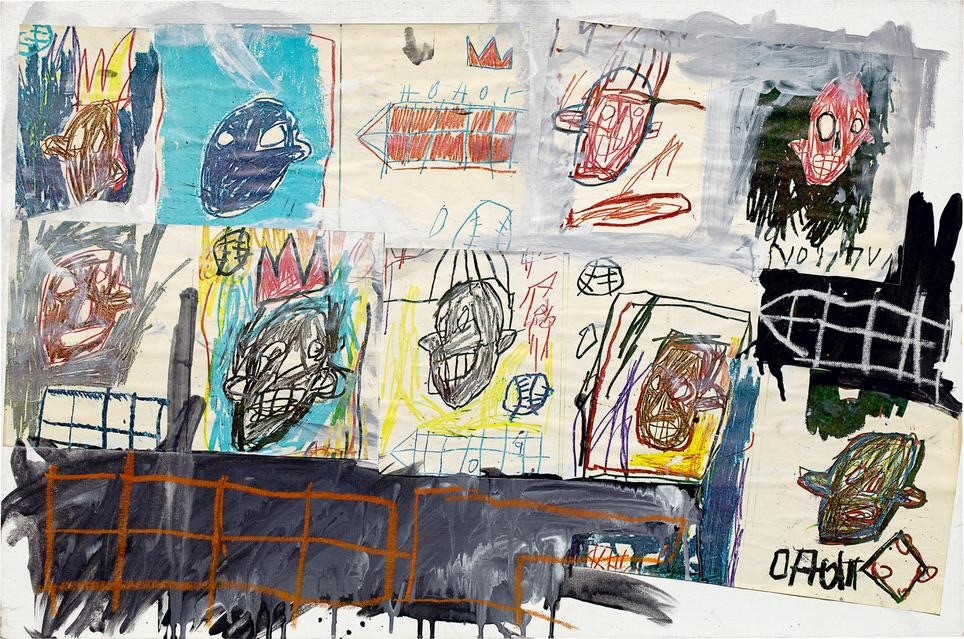
With its gestural vigor and electric immediacy, Untitled (from Famous Negro Athlete Series) epitomizes the unbridled fervor that characterizes Jean-Michel Basquiat’s early work and his singular graphic language. Executed in 1981, the work marks the pivotal moment at the cusp of Basquiat’s meteoric rise to international acclaim and was notably a gift to his dear friend, Kai Eric, who had befriended Basquiat several years before his claim to fame and shared his apartment with the artist for a time. During the artist’s lifetime, Eric temporarily consigned Untitled (from Famous Negro Athlete Series) to Basquiat’s legendary art dealer Annina Nosei, and ultimately brought it to Mary Boone just before her first Basquiat show. Having been acquired by the present owner soon after, the present work arrives to the public for the first time in nearly four decades.
A significant conceptual anchor throughout Basquiat’s oeuvre, the theme of the Black athlete appears in myriad paintings and works on paper especially during his early years, often referencing renowned contemporaneous figures including Cassius Clay (Muhammad Ali), Joe Louis, Jersey Joe Walcott, Hank Aaron, and Jackie Robinson. In Untitled (from Famous Negro Athletes Series), Basquiat brings together his own kind of Hall, or Wall, of Fame, scrawling baseball imagery alongside his well-known crayon hopscotch squares and ambulances. Here, Basquiat’s signature three-pointed crowns thereby potently showcase their trademark symbolism of autobiographically alluding to himself as well as recognizing the regal stature of his heroes.
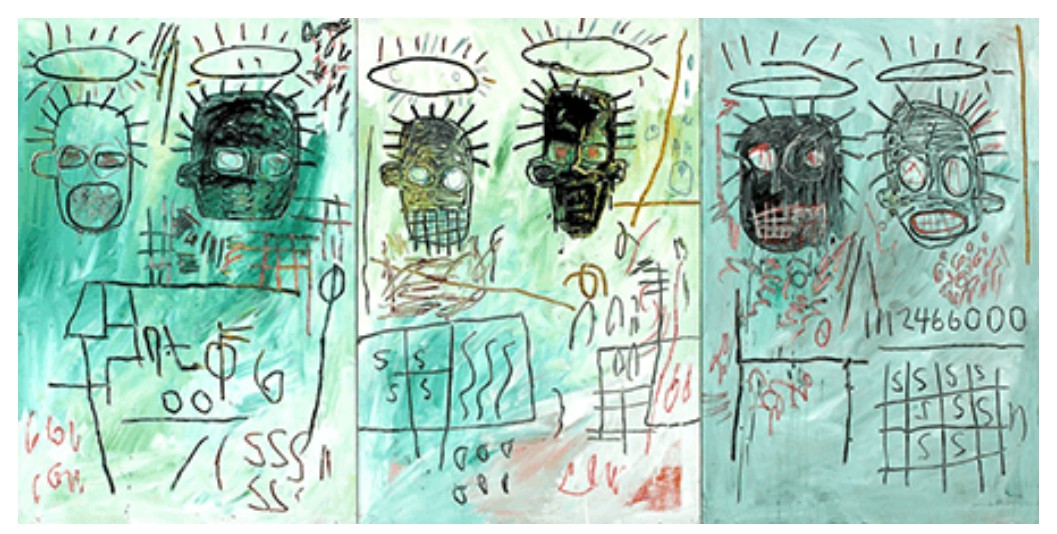
Jean-Michel Basquiat, Six Crimee, 1982. Museum of Contemporary Art, Los Angeles,
Artwork: © Estate of Jean-Michel Basquiat. Licensed by Artestar, New York
For the present work, Basquiat xeroxed nine individual drawings he had made, pasting each onto the canvas and overpainting the collage like a downtown city wall at his disposal. With the vernacular dynamism of his street-poet, alter-ego SAMO©, the “HO”s and “OA”s at once evoke his frequent allusions to Hank Aaron’s name—as seen in works such as Orange Sports Figure, 1982—and the sounds of sirens that reflected the artist’s deep sensitivity to his environment. The suggested baseball diamonds at the lower right also recall boxing rings, further featuring Basquiat’s classic manipulation of his now-iconic signs and symbols through his exhilarating graphic intensity and unapologetic artistic sensibility that has come to define his extraordinary artistic legacy.
Through his graphic lexicon, Basquiat at once transforms these respectable figures into canonized icons and renders their faces inscrutable, inciting a commanding statement about prejudicial stereotypes in society by “present[ing] so simply how society expected black people to be athletes and not painters.” In the present work, Basquiat’s searing handling of the archetypal, mask-like countenances is as explosive as his gestural Franz Kline-esque brushwork in gouache. The free-flowing, liberal expression of energy seen in Untitled (from Famous Negro Athletes Series) is striking testament to Fred Hoffman’s words, “These images are…in an ecstatic state. Freed from worldly constraint, whether human or bird, they are an expression of freedom.”
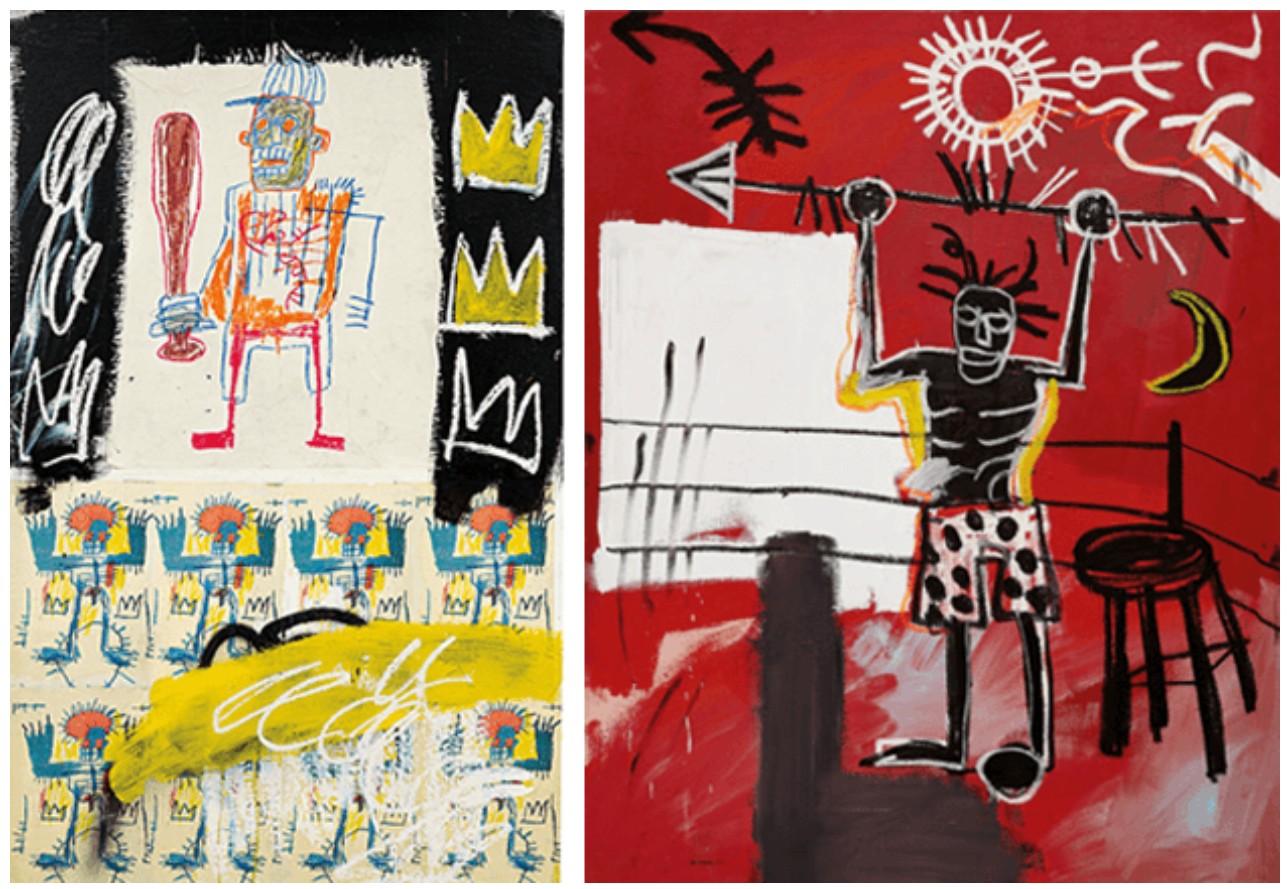
[left] Jean-Michel Basquiat, Untitled, 1981. Private Collection, Artwork: © Estate of Jean-Michel Basquiat. Licensed by Artestar, New York [right] Jean-Michel Basquiat, The Ring, 1981. Private Collection, Artwork: © Estate of Jean-Michel Basquiat. Licensed by Artestar, New York
Untitled (from Famous Negro Athlete Series) is one of two from the artist’s titular series that Basquiat left for Kai Eric among a number of pieces. Eric first met the artist on a pre-winter morning in the late 1970s as he wandered the streets of Lower Manhattan, when he encountered a figure in the middle of the block. “I had started to see these oblique pieces of poetry around the city,” Eric recalled “This figure I saw was Jean-Michel—he was standing there in an overcoat and I had caught him with a spray paint can in his hand. He was in mid tag. Al Diaz was with him. I had recognized his work from the streets and it caught my attention.” Soon after, the two would meet again at a punk rock concert at CBGB in East Village where their friendship solidified. “Jean-Michel walked in, sat in a corner, and we just talked. It was there we realized we were very like-minded and from there became best friends.”
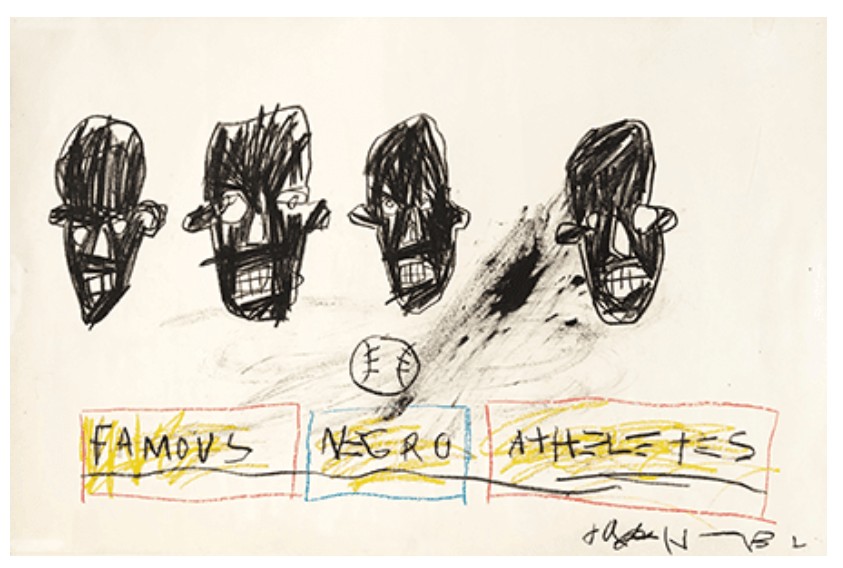
Jean-Michel Basquiat, Famous Negro Athletes, 1981. Former Collection of Glenn O’Brien,
Artwork: © Estate of Jean-Michel Basquiat. Licensed by Artestar, New York
Basquiat’s street poetry was as nomadic as his living situations, and he would eventually live with Eric for about eight months in the latter’s place on Canal Street. In typical Basquiatian nature, the apartment became both a crash pad and studio, where he created, entertained, and produced a sea of work. Eric recalled, “Jean was prolific and would leave my apartment littered with his output. Every day I would come home to find a new array of works large and small. It was there that Henry Geldzahler first visited, bought a canvas which propelled Jean into his art career. Those are bittersweet memories.” The year that Basquiat made and gave the present work to Eric would profoundly transform the course of the artist’s life as he joined Annina Nosei’s gallery and held his first solo show at the Galleria d’Arte Emilio Mazzoli in Modena, Italy. “When he first signed to Annina Nosei’s gallery in 1981,” Eric said, “his life changed practically overnight.”