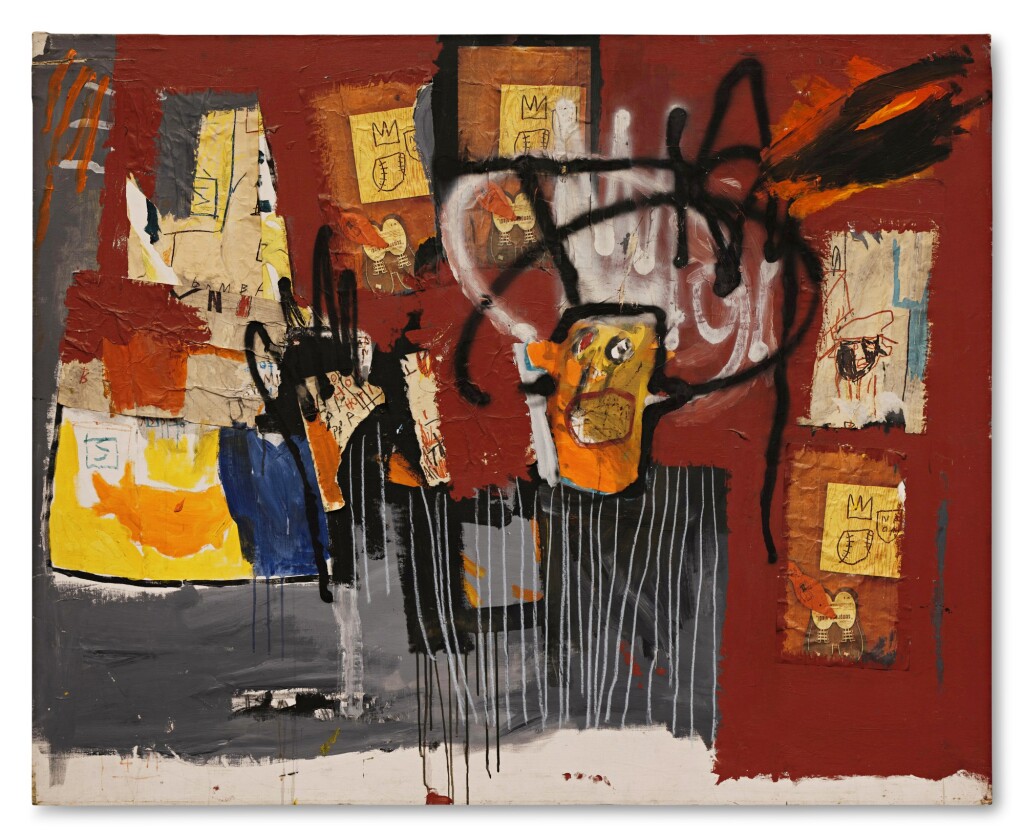
JEAN-MICHEL BASQUIAT
Untitled, 1981
Acrylic, spray paint, oilstick and Xerox collage on canvas
48×60 inches (122.6 x 152.4 cm)
Signed NAEJBASMICHIQUT and dated 81 (on the overturn edge)
Provenance
Gracie Mansion Gallery, New York
Private Collection, New York
Drouot – C. Charbonneaux Paris, 15 June 1988, lot 39
Private Collection, Europe (acquired from the above)
Christie’s London, 9 February 2005, lot 6 (consigned by the above)
Private Collection, Europe
Phillips London, 16 October 2013, lot 13 (consigned by the above)
Acquired from the above by the present owner
Sotheby’s London: 2 March 2022
GBP 3,302,000
Source: Sotheby’s
Untitled | Modern & Contemporary Evening Auction | | Sotheby’s (sothebys.com)
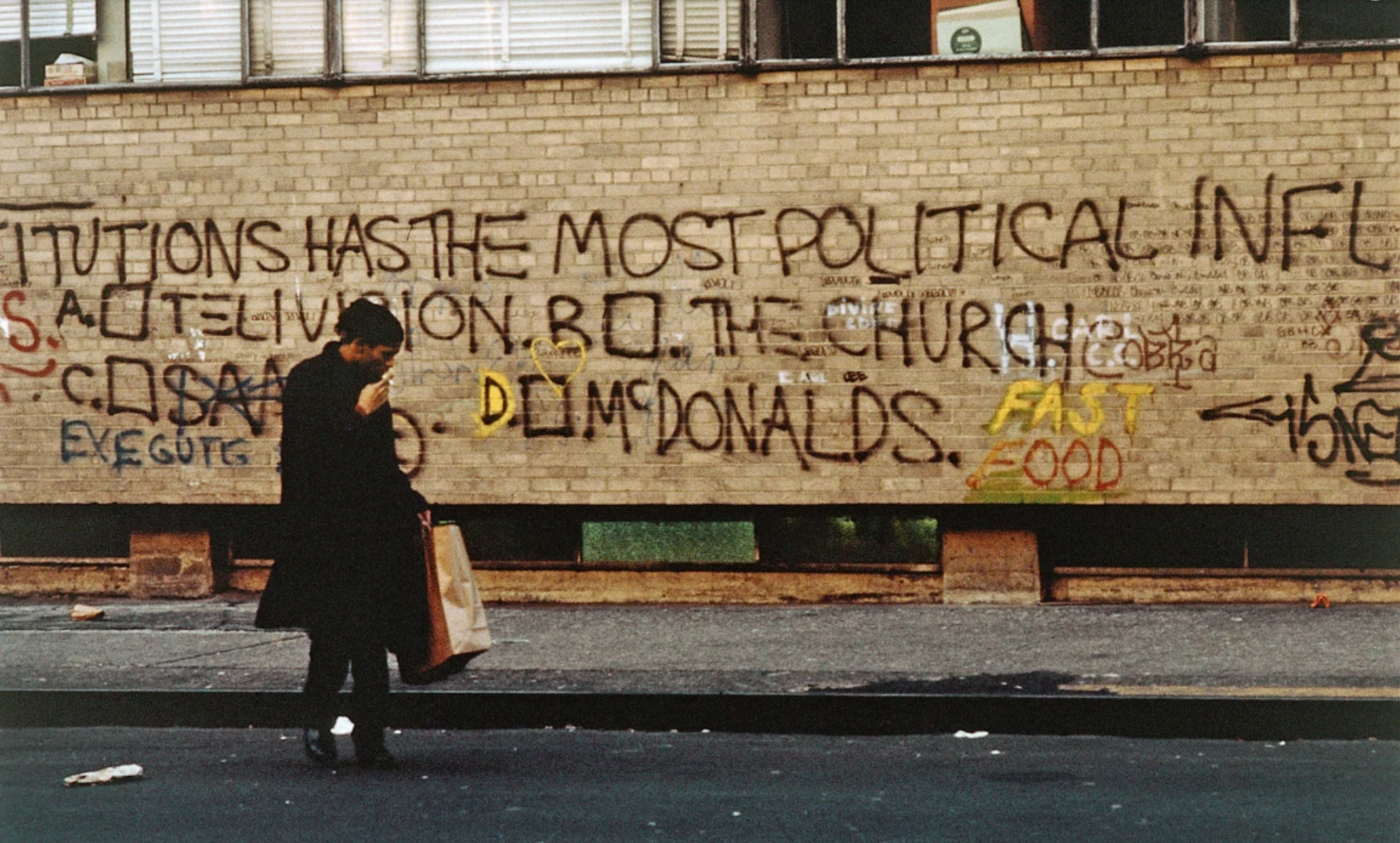
Executed in 1981, Untitled narrates a breakthrough year within Jean-Michel Basquiat’s iconic oeuvre. Covered in vigorously applied red, orange and yellow pigment accented by black and white dripping spray paint, the present work is replete with urban iconography, and heady with references to the artist’s graffiti origins on the streets of New York City. A spectacular celebration of the dual powers of iconography and expressionism, this painting incites a visceral response from its viewer. It is a prime example of Basquiat’s early style at its rampant best, characterised by raw expressionistic force and unbridled creative energy. The frenetic composition, swathed with expressive image-making, harnesses a myriad of references that evoke the language of a city in glorious disarray. As Glenn O’Brien wrote of New York during the late 1970s and early ‘80s: “New York was cheap, poor, run-down and dangerous. In its own fabulous way of course” (Glenn O’Brien, “SAMO©’s New York” in: Exh. Cat., London, Barbican Centre, Basquiat: Boom for Real, 2017, p. 101).
1981 was a ground-breaking year for Basquiat. Never before had his work been considered in a formal setting and in January he participated in the now infamous multi-disciplinary show New York/New Wave at the alternative gallery space, P.S.1. Even against the eclectic background of this exhibition, which celebrated the hip-hop, graffiti, and break-dancing cultures of New York, Basquiat’s work stood out. In 1981, Annina Nosei invited Basquiat to join her gallery, and he subsequently occupied her basement as a studio for the majority of that year. In December, Artforum published Rene Ricard’s landmark essay The Radiant Child, defining Basquiat as one of the most important artists of his generation and shedding light on the East Village gallery scene of the early 1980s. Thus in Untitled we join Basquiat’s narrative on the cusp of a grandiose paradigm shift: From streets and subway trains to galleries and museums, from spray cans to brushes, and from brickwork to canvas. It is a rare example of the confidence and dynamism with which the young artist, at only twenty-one years old, asserted his entry to the international art world.
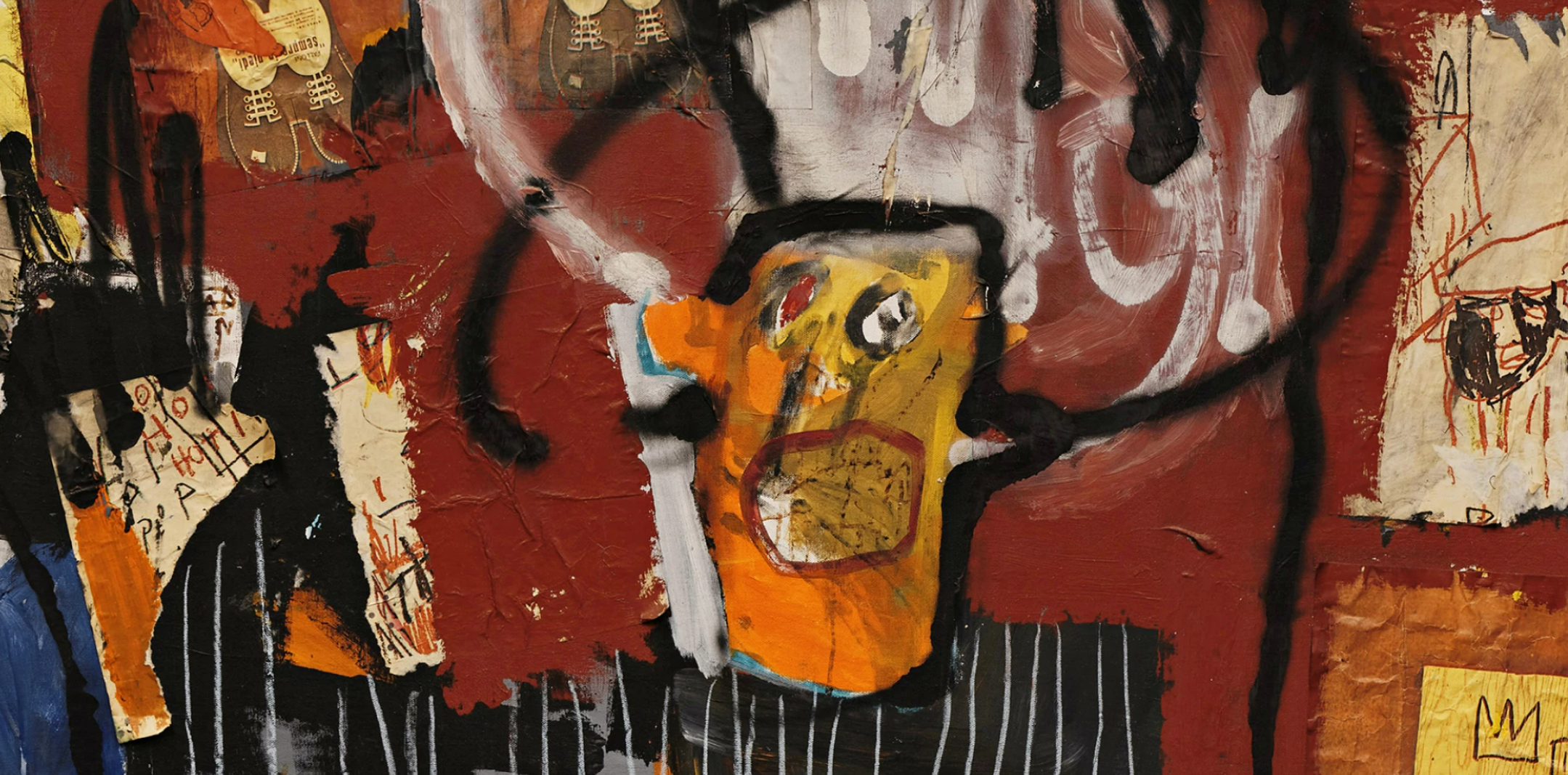
An anonymous figure with a visage-like mask as a head punctuates the centre of Untitled, rendered alongside two of the most seminal motifs of Basquiat’s oeuvre: A halo and a crown executed in frenetic lines of black and white spray paint. The white painted crown is offset by the serially reproduced crown motif on the Xerox sheets surrounding the figure, which are in turn accompanied by the repeated form of a crudely drawn baseball. One can conclude that the figure at the centre of the composition is a baseball player, the halo and crown indeed positioning him as a hero of American athleticism. Untitled therefore sits alongside some of Basquiat’s greatest works from this early period that depict sports stars; baseball players, sprinters, and boxers such as Jackie Robinson, Hank Aaron, Jersey Joe Walcott and Cassius Clay (Muhammad Ali). Enduring as both idiosyncratic commentary and skull-like talismanic icon, the central figure thus evokes the image of the ‘black athlete’ which dominates Basquiat’s early output and appears as a key conceptual anchor throughout the entirety of his oeuvre. Within his graphic lexicon, the familiar names and images of these figures function as quasi-canonized icons of popular culture. As much celebratory tributes as poignant reflections on the pitfalls of contemporary society, paintings such as the present contend with some of the most profound themes explored throughout Basquiat’s tragically curtailed yet tremendously prolific career: Race and racism, high art and ‘low’, history and mythology, celebrity and the marginalised, exuberance and the ephemerality of mortal existence. Examining Basquiat’s iconography, his friend the artist Francesco Clemente would later state: “The athlete becomes an emblem for the prolonged repression and exploitation of African Americans and evokes commodification, commerce and modern slavery” (Francesco Clemente quoted in: Exh. Cat., Ontario, Art Gallery of Ontario, Jean-Michel Basquiat: Now’s the Time, 2015, p. 16). With its vibrant, energetic and impulsive iconography, Untitled encapsulates Basquiat’s unique pictorial lexicon which wavers between the vivaciously dynamic and the quietly unsettling.