JEAN-MICHEL BASQUIAT
Untitled, 1981
Acrylic, spray-paint, oilstick and paper collage on canvas
48×56 inches (122×142 cm)
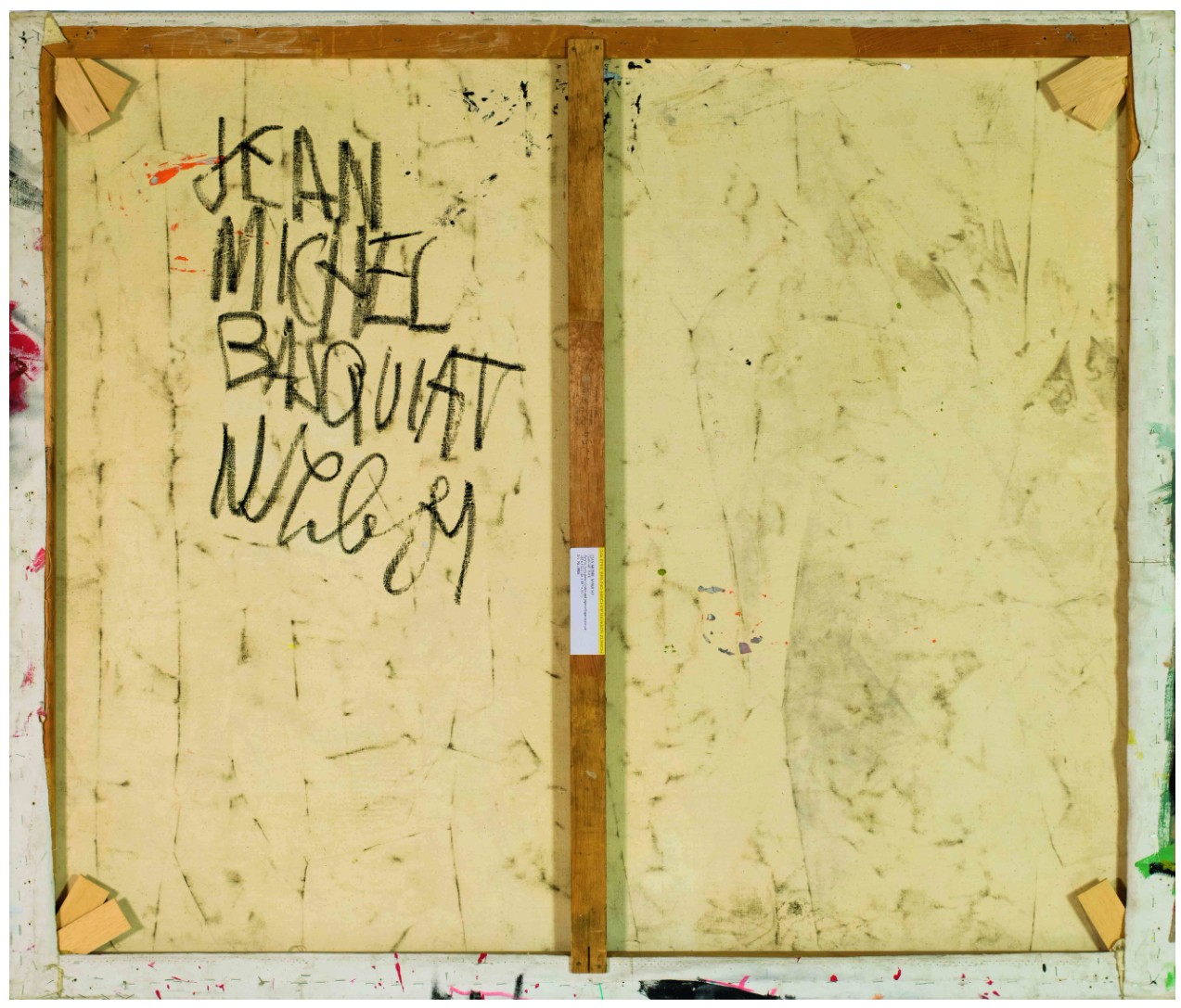
Signed and titled ‘JEAN MICHEL BASQUIAT Untitled’ (on the reverse)
Provenance
Didier Imbert Fine Art, Paris, France
Annina Nosei Gallery, New York, USA
Christie’s London, 27 June 2000, Lot 42
Private Collection
Auction History
Poly Auction Hong-Kong: 12 July 2022
Estimate on Request
HKD 105,600,000 / USD 13,452,745
Untitled|Poly Auction Hong Kong
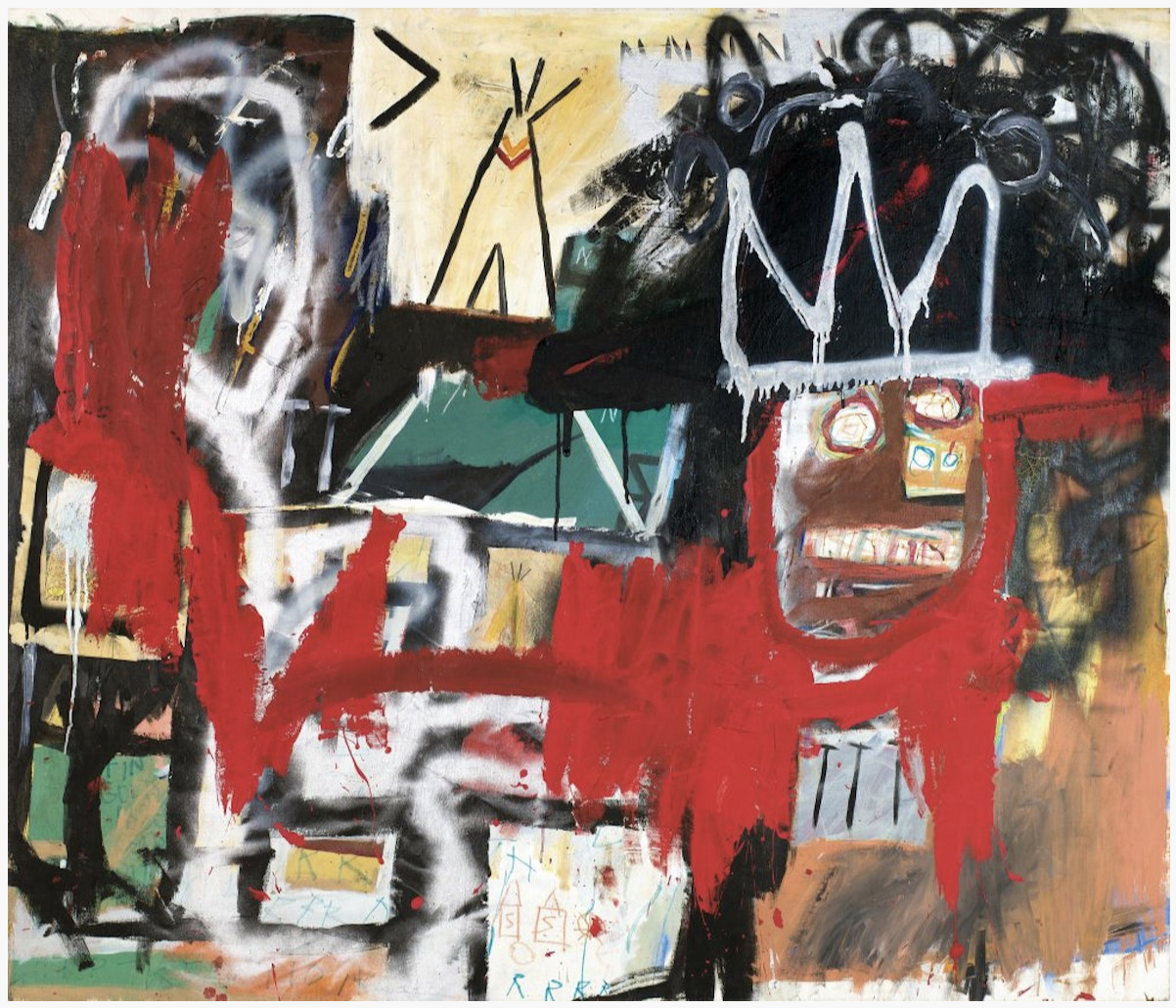
After a 22-year absence from the auction market, Untitled (Lot 8) returns to the forefront of Asian auctions as a manifestation of the legendary Jean-Michel Basquiat’s frank and enigmatic charm. This 1981 masterpiece, with its combative, African mask-like Black figures at its heart, is the very first, fundamental Black figures as a symbol of his early collage-based paintings. It is also a symbol that has remained with Basquiat throughout his career life as his most personal visual language. Untitled depicts a heroic, enigmatic figure with symbolic symbols full of semantic meaning. Images from primitive tribes such as Africa and Egypt, materials drawn from comic children’s drawings, American pop culture, or masters of different periods such as Cy Twombly, Picasso and Jean Dubuffet are all presented in this work. The distillation of these images demonstrates Basquiat’s ease of extraction and mastery of stylised visual elements and his extraordinary artistic talent. It is a collection of art historical collisions under Basquiat’s brush that, as the American art critic Robert Stoll has said, “Basquiat draws with speed and determination. The images behind the scenes are like speeding trucks dragging a wild display of fireworks, setting the scene alight”.
With its large blocks of red and black, Untitled is a powerful and rampant portrait of Basquiat’s bloodlust and wildness at the age of 20. The painting is dominated by a Black man wearing his iconic ‘triple-tipped crown’. Protagonists of Basquiat’s paintings are often drawn from Black celebrities whom he admired for their hard work and success in an unjust society, such as boxers Jersey Joe Walcott and Joe Louis, baseball star Hank Aaron and jazz musicians Charlie Parker and Miles Davis. The ‘crown’ is the most famous personal symbol of the artist. He began to use it as his iconic motif in his early works on the doors of the SoHo Art Gallery in New York, describing his subject matter as ‘royalty, heroism and the street’. The figure in Untitled is a combination of a hero and the crown, a symbol of warrior and conqueror. The head of the Black king looks like he’s being pierced by an x-ray, his face and features are penetratingly multi-layered. His head is high, his posture is firm, and his expression is energetic with anger. The three iron spikes on his chest are a symbol of the energy spikes of the Congo, and they suggest the pain and anguish of his heart, expressing a great emotional tension between heroism and martyrdom. Basquiat’s ability to distil the leaden history of Black oppression into a symbolic language allows for a wider scope of reflection. For example in Untitled, the spiked tent symbolic of Native American culture, the square of black lines at the bottom of the painting, the game ‘skelly’ are often played by children in African American neighborhoods, and the appearance of baseballs also demonstrate his mischievous and whimsical side. Through Untitled, Basquiat portrays a lone hero and proclaims his determination to stand in solidarity with the Black identity, and so this work is also like a self-portrait of himself as the Black King, as if he were holding a sword, like a lone warrior piercing through chaos and darkness, determined to stand up for himself and his beliefs, vowing to conquer his opponents and achieve supreme glory.

In 1978, at the age of 18, Basquiat and his friend Al Diaz painted the streets of Lower Manhattan under the signature ‘SAMO’ (short for ‘same old shit’). Jeffrey Deitch commented in Art in America that “SAMO painting is a perfect combination of Willem de Kooning’s style and the art of underground spray street art”. A year later, Basquiat wrote ‘SAMO is dead’ on the streets to announce the end of his street art work with Deitch and marked the beginning of his solo work. (Basquiat said, “I wrote SAMO IS DEAD all over the place. And I started painting.”) Although Basquiat had created street art in his early days, he never considered himself a ‘street art artist’ and clearly has a much larger and deeper conception and pursuit of art.
Despite the fragmented street art and collage that dominated the early years of his career, his work by now reveals a fanciful, yet highly creative, vision of images, alphabetic symbols and the patchwork of everyday notes. In June 1980, Basquiat’s work was selected for exhibition in “The Times Square Show”, alongside works by Kenny Scharf and Keith Haring. This exhibition, hailed by The Village Voice as ‘the first radical art show of the 1980s’, helped to establish Basquiat’s presence in the art world. The year 1981 was the year when Basquiat was poised to make a significant move from the initial fragmented collage to the integration of his own identity and cultural background into his painting. Thus, this was a period when he not only built up a great deal of creative energy but was also the prelude to what now seems to be a legendary explosion of artistic achievements under the spotlight. That year, he was invited by the renowned curator Diego Cortez to participate in the “New York/New Wave” group show at MoMA PS1, which attracted the attention of many leading art dealers of the time. At the end of the year, he had his first solo exhibition at the Emilio Mazzoli Gallery in Modena, Italy. At the end of the same year, art critic Rene Richard published an essay in Art Forum, in which Basquiat’s work was examined and discussed by academics in print for the first time. The following year, gallery owner Annina Nosei held a sold-out solo exhibition for him in New York, transforming him from an emerging artist into one of the most talked-about art stars of the time. It was against this backdrop that Untitled was created, representing not only Basquiat’s debut as a star of tomorrow in the heart of both the New York and European art scenes, but also setting the stylistic language of his subsequent paintings and their continuation. An early masterpiece of a legendary artist, it opened and witnessed the era of American Neo-Expressionism, symbolizing not only the pinnacle of Basquiat’s personal art achievements, but also his challenge to the Western mainstream art that meant to open up a new chapter in the history of art.