JEAN-MICHEL BASQUIAT (1960 – 1988)
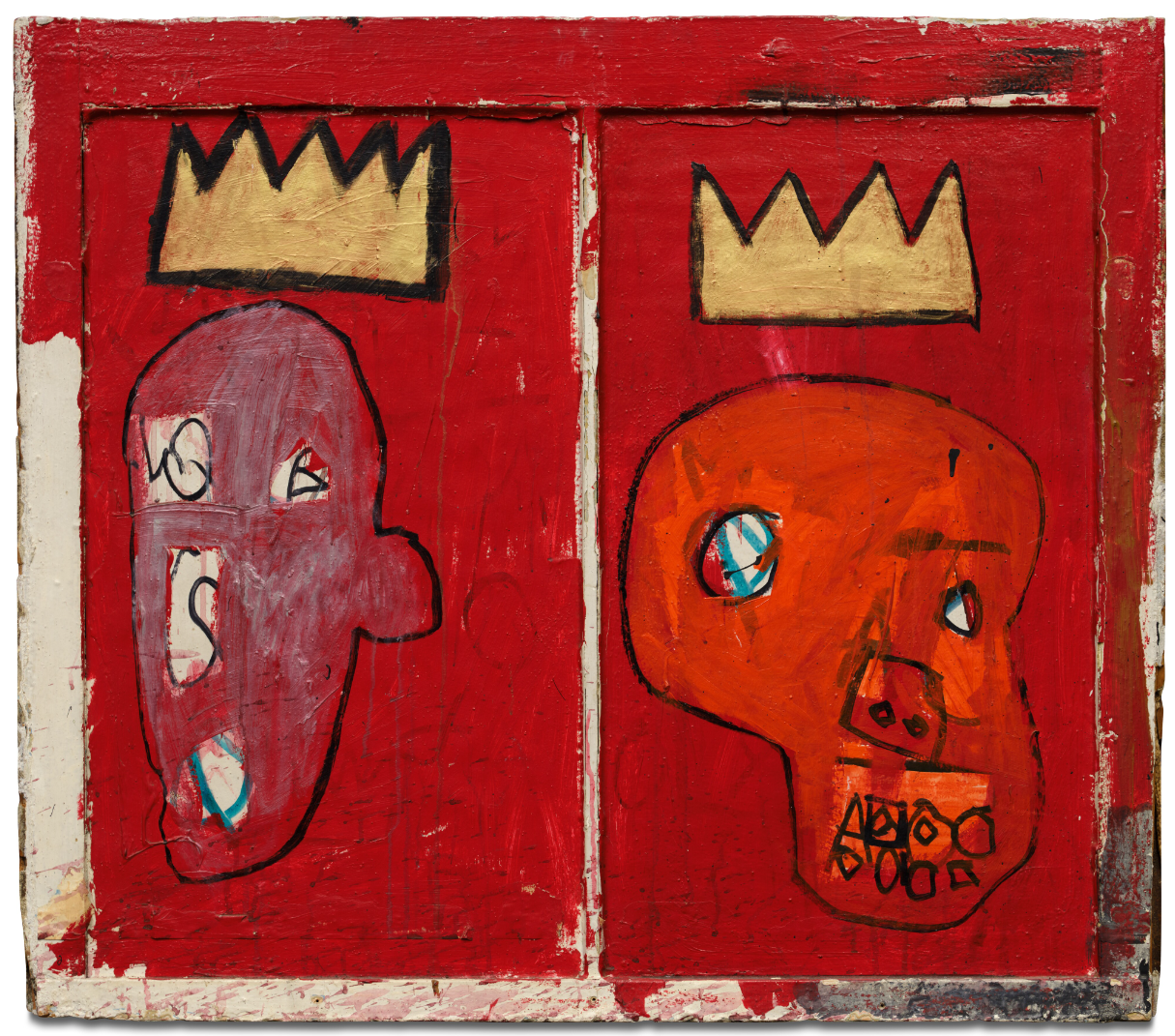
Red Kings, 1981
Acrylic on wood and glass
32×37 inches (81.3 x 94 cm)
Signed, dated 1981 and inscribed NYC (on the reverse)
Provenance
Stephen and Lilly Lack, New York (acquired from the artist directly in 1981)
Private Collection, New York (by 1999)
Acquired from the above in May 2008 by the present owner
Auction History
Sotheby’s New-York: 20 November 2024
Estimated: USD 6,000,000 – 8,000,000
USD 7,200,000
Red Kings | The Now and Contemporary Evening Auction | 2024 | Sotheby’s
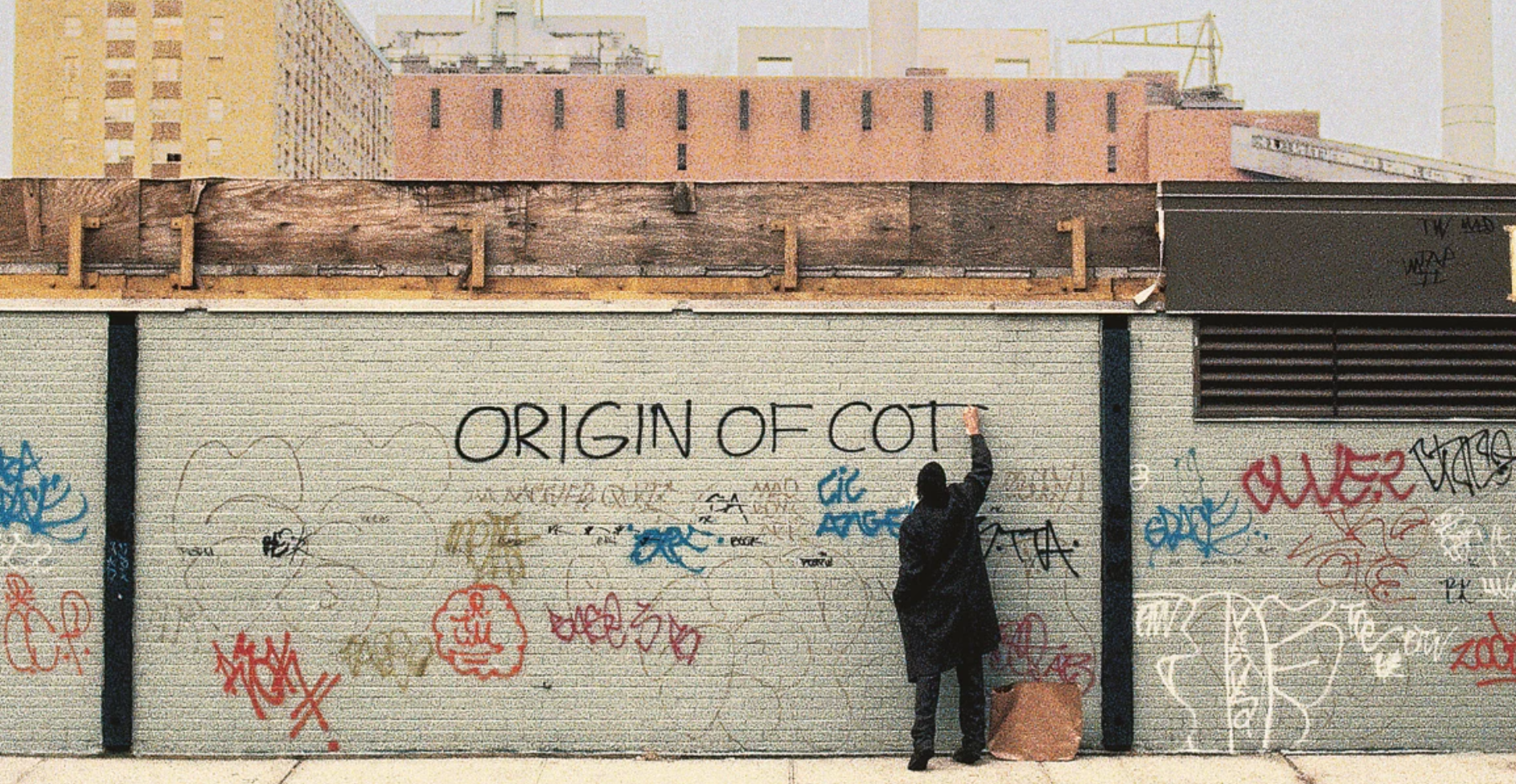
Executed in 1981, the year when Jean-Michel Basquiat began producing artworks under his own name and transposing his visual language from the city walls to new media, Red Kings is a masterful exemplar of the vital, energetic execution and art historical acumen that characterizes the best of Basquiat’s revolutionary body of work. By the late 1970s, Basquiat had solidified his New York alter-ego SAMO, tagging his infamous pseudonym and collection of iconic symbols on walls throughout Manhattan, and established a ubiquitous presence at the vanguard of graffiti art. Often utilizing found objects as his supports, the works of this moment demonstrated an undaunted and radical reassertion of figuration through a bold new language which synthesizes sign, symbol, and abstracted figurative expression.
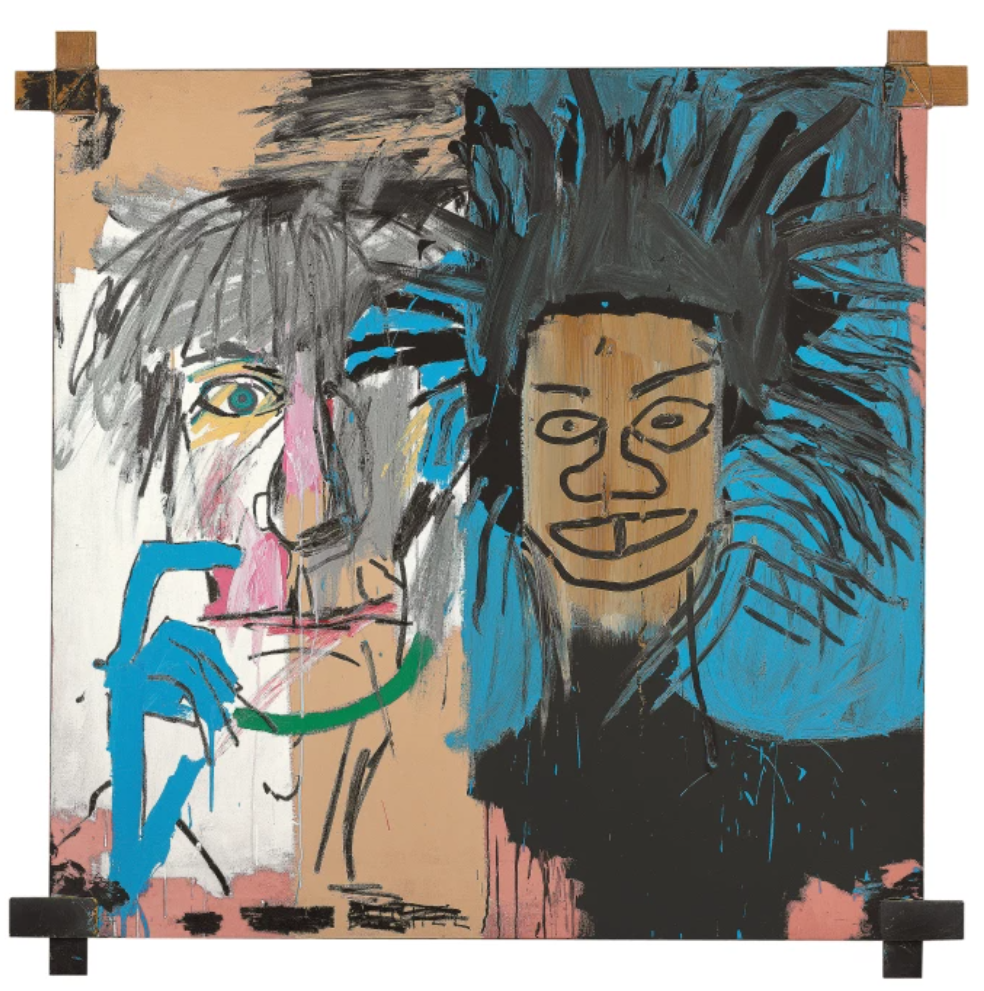
Jean-Michel Basquiat, Dos Cabezas, 1982. Private Collection.
Image © Christie’s Images / Bridgeman Images. Art © 2024 Estate of Jean-Michel Basquiat. Licensed by Artestar, New York
Employing the framing device of an existing window support in Red Kings, Basquiat emblazons two prominent crowned skulls, his most iconic motif, against a vibrant and impassioned red background. Marked with three letters from the artist’s surname—B, S, and Q—the figure at left in the composition may operate as an early and formative self-portrait, a subject matter which the artist would revisit in his most iconic works over the forthcoming years. (Frances Negrón-Mutaner, Sovereign Acts: Contesting Colonialism Across Indigenous Nations and Latinx America, Arizona, 2017, p. 343)
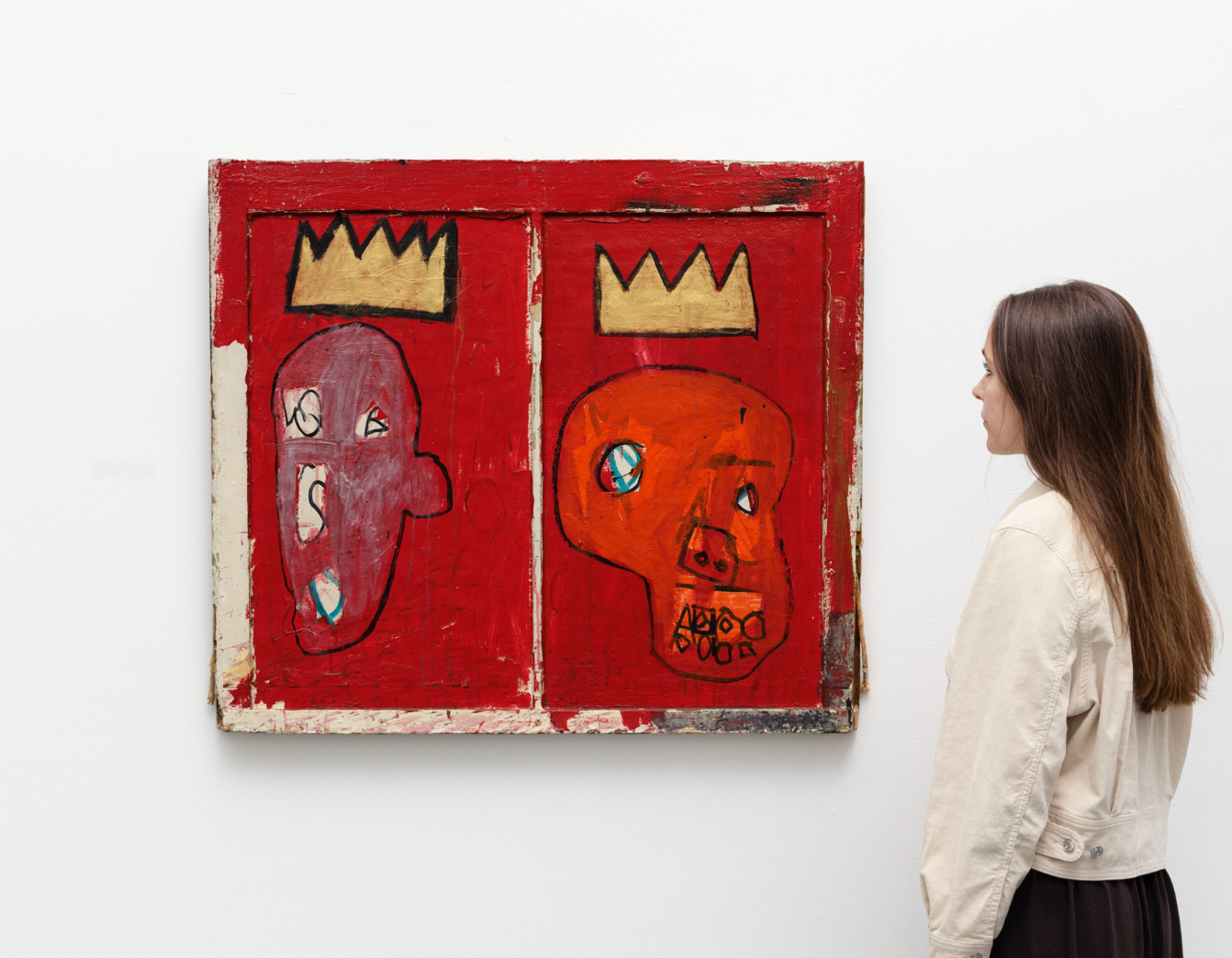
Channeling the explosive energy and electric charge of downtown New York, Red Kings represents a novel embodiment of a profoundly contemporary form of representation. Eclipsing his other early works, Red Kings prefigures the basis of his mature practice, combining frenetic gesture and an idiosyncratic language of symbols. Testament to the caliber of Red Kings, the work has been featured in numerous exhibitions, including presentations at the Fondation Beyeler, Musée d’art modern de la ville de Paris, and Museum Würth, among others.
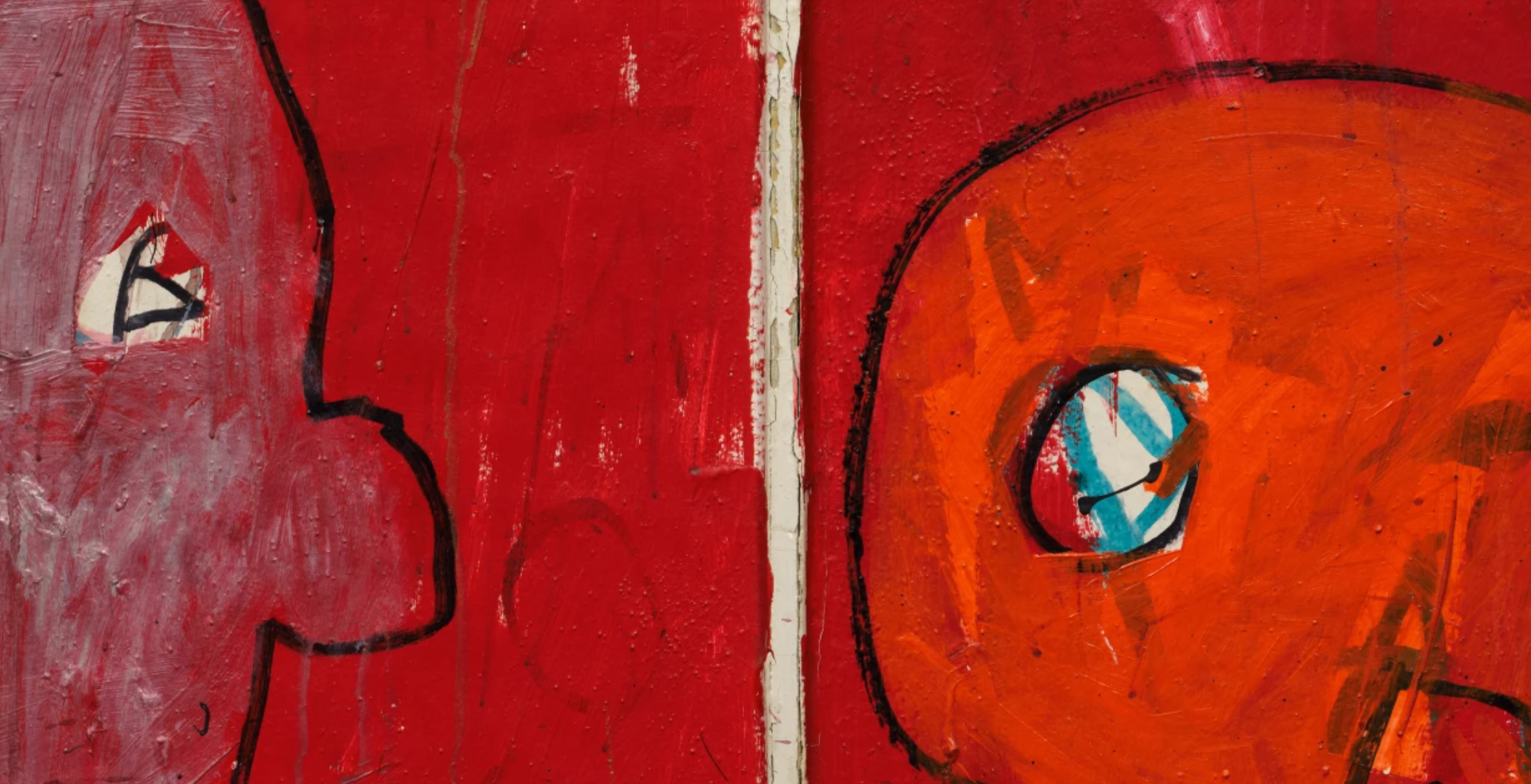
Harnessing the palpable fervor of his expressive language as SAMO and translating it into a visual lexicon as Basquiat, Red Kings presages the artist’s works on canvas from the second half of 1981 and 1982, at which time he executed among the most emblematic and best-known paintings of his oevure. The kings, or rather crowned skulls, in Basquiat’s composition also operate as kinds of memento mori—the perennial reminder of the impermanence of mortal existence. The motif first appears in medieval depictions and persists through the Renaissance, typified in paintings such as Hans Holbein the Younger’s The Ambassadors (1533) —a double portrait in which the artist incorporates an anamorphic skull which operates a both a symbol of looming death and counsel of humility. Rendered in black outline atop a fiery red background, the heads in Red Kings are hollowed, skeletal; they are symbols of our inevitable mortality and the constant threat of death. Richard D. Marshall writes of these early works from 1981: “Basquiat used painterly gesture on canvas, most often depicting skeletal figures and masklike faces that signal his obsession with mortality, and imagery derived from his street existence…” (Richard Marshall, “Repelling Ghosts,” in: Exh., Cat., New York, Whitney Museum of American Art (and traveling), Jean-Michel Basquiat, 1992, p. 15)
Basquiat’s figures of the early 1980s function as self-portraits, but perhaps more conspicuously, nuanced explorations of self-reflection in the dominating narrative of a white and Western history of representation. Furthermore, beneath the surface layers of the composition in Red Kings, underneath veils of red, emerges as a barely discernible head and crown, perhaps symbolizing the passage of time and the transience of power. Consistent with the best examples from Basquiat’s oeuvre, such as Versus Medici or Dos Cabezas, Red Kings is radical in its execution and invention, and yet deeply entrenched in art historical allusion and the canon of portraiture. While Basquiat develops his own idiosyncratic language of figuration, representing heroes and martyrs of his moment, he is equally responsive to and in dialogue with canonical art historical representations of the figure. Red Kings, specifically, calls to mind the history of noble portraiture. The framing device created by the windowpanes operates as a sort of diptych, suggesting famous double portraits such as Piero della Francesca’s The Duke and Duchess of Urbino Federico da Montefeltro and Battista Sforza, at the Uffizi Gallery, in which the two subjects face each other in profile—resolute and stone-like, symbols rather than individuals.
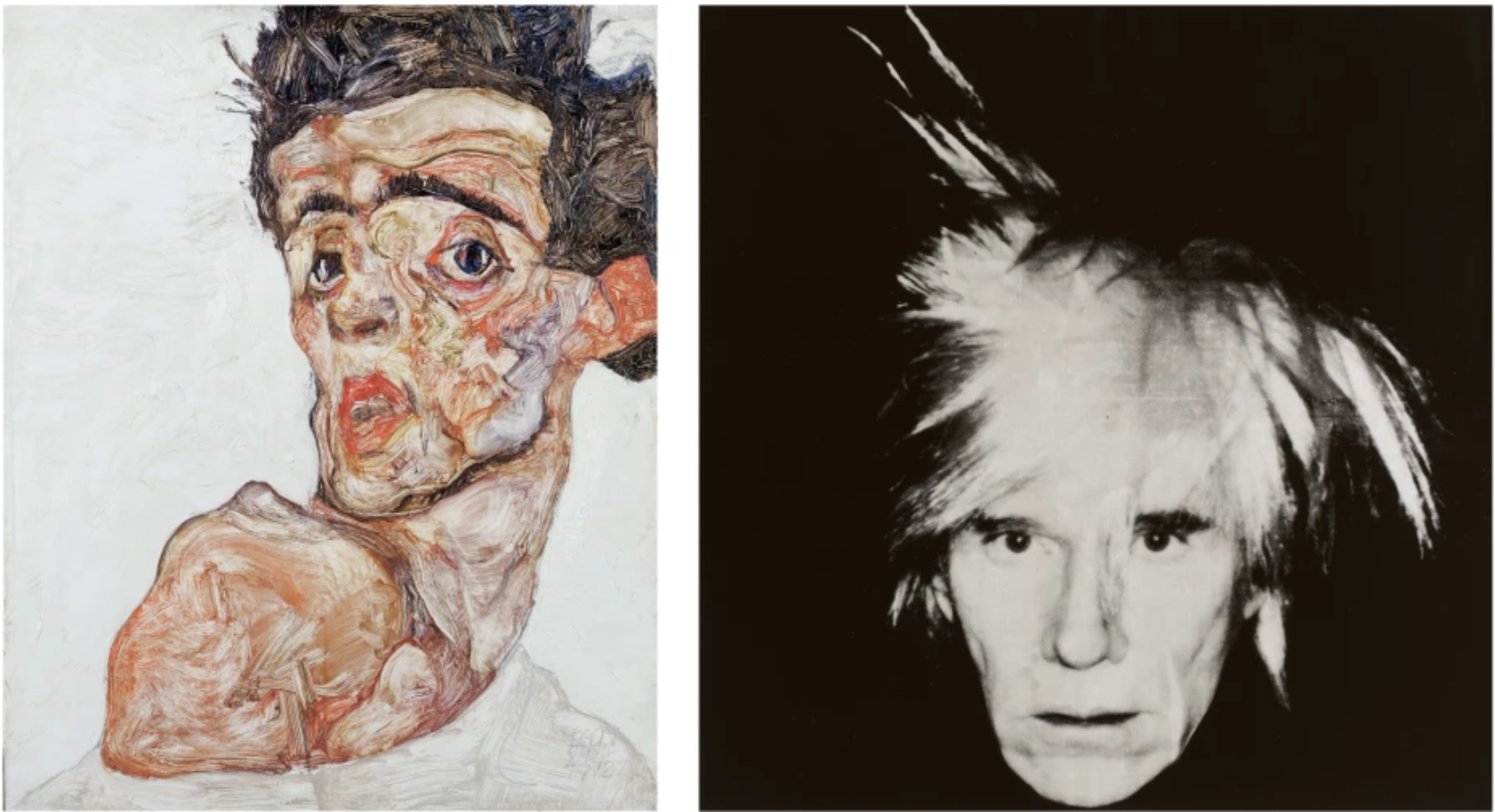
Left: Egon Schiele, Self-Portrait with Raised Bare Shoulder, 1912. Leopold Museum, Vienna. Image © PVDE / Bridgeman Images. Right: Andy Warhol, Self Portrait, 1986. Carnegie Museum of Art, Pittsburgh. Image © Carnegie Museum of Art, Pittsburgh, PA / Art Resource, NY. Art © 2024 Andy Warhol Foundation for the Visual Arts / Artists Rights Society (ARS), New York
In 1981, Basquiat transitioned from renderings on city walls to painting and drawing on found objects—doors, a refrigerator, and in the case of the present work, a window. Among these works, those which incorporate a window are among the most successful as they constitute inherent and self-contained framing devices, inviting a metaphor of artwork as a portal. Red Kings is an archetype of this pivotal moment, as the artist was forming and defining his distinctive style—one which actively contended with the artists before him and asserted a radically new artistic vernacular. A paragon of Basquiat’s iconic pentimento technique, Red Kings is an evocative and early example of the artist’s process of compositional development. Uncovering the layered meanings of Basquiat’s iconography is a process of excavation; in the present work, Basquiat masterfully layers symbols and his personal iconography underneath semi-translucent coats of unbridled chromatic intensity, creating a sense of both immediacy and history on the work’s surface. Capturing the gestural passion and pulsating force characteristic of his practice, he renders two resolute, crowned heads in thick black outlines, obscuring the sub layers of the composition. The vibrant red surface of the work is punctured by two multi-point gold crowns, some of the earliest instances of the crown appearing in his discrete works as Basquiat, rather than SAMO.
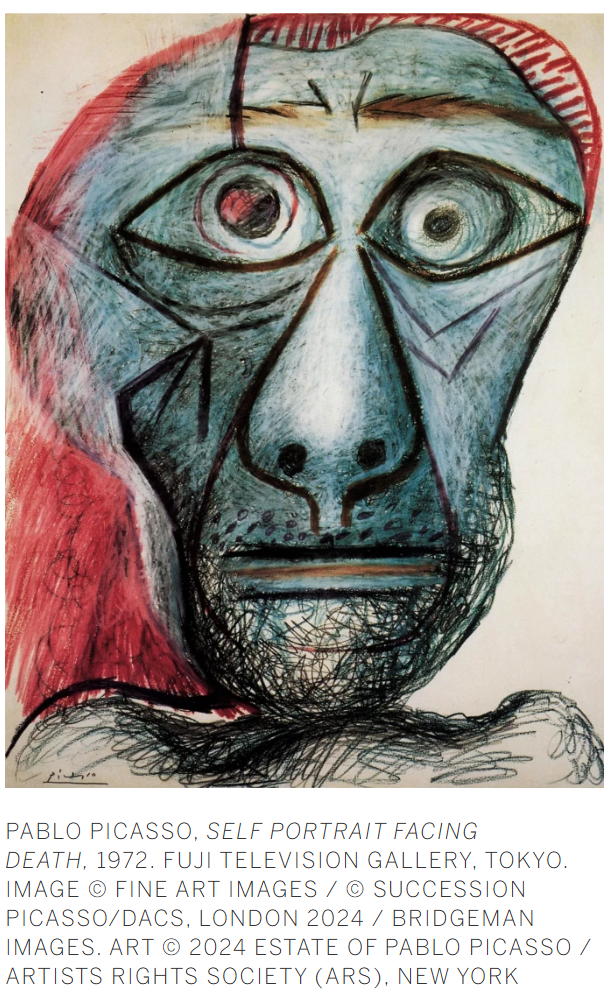
Scholarship further suggests that Red Kings is among the earliest of the artist’s self-portraits: “[Red Kings] comprises two crowned and simply drawn skull-like faces against a red background. Within the eyes and nose of the face to the left, Basquiat places the letters Q, B, and S, suggesting that the image may refer to Basquiat himself and perhaps allude to his New York origins: all three letters correspond to city subway lines, including one that connects east and west, and two Brooklyn routes.” (Frances Negrón-Mutaner, Sovereign Acts: Contesting Colonialism Across Indigenous Nations and Latinx America, Arizona, 2017, p. 343) Negrón-Mutaner further propounds that Basquiat’s self-portrait in Red Kings may invoke Pablo Picasso’s Self-Portrait (1972) and the figure at right may represent a proxy for Picasso himself, who was influential to Basquiat’s own artistic development. Situating the two artists alongside one another in a double portrait prefigures seminal paintings such as Dos Cabezas (1982), in which Basquiat renders his self-portrait alongside that of Andy Warhol. Through the gritted teeth of the skull to the right, a proxy for Picasso, emerges the letters “Aa.” Appearing in some of Basquiat’s greatest paintings, “Aa” signifies the concept of an onset or the beginning—perhaps establishing Picasso as Basquiat’s art historical predecessor.
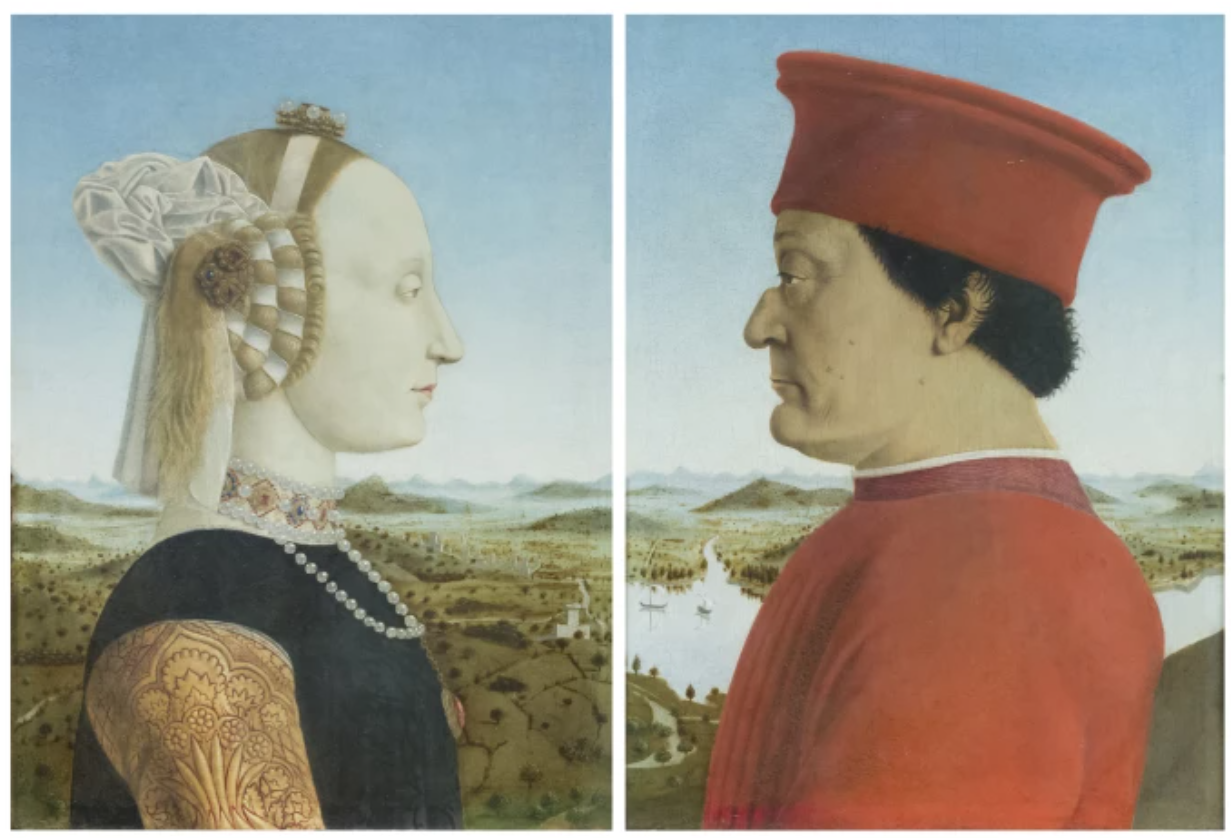
Piero della Francesca, The Duke and Duchess of Urbino Federico da Montefeltro and Battista Sforza, c. 1473-1475. Uffizi Gallery, Florence. Image © Stefano Baldini / Bridgeman Images
Basquiat’s early works build upon the exploration of media and representation central to Jasper Johns’ Neo-Dada works and Robert Rauschenberg’s Combines. Like Johns and Rauschenberg, Basquiat dissolved the arbitrary boundaries between painting and sculpture, recontextualizing found materials within his compositions. But unlike his predecessors who operate with subversive intentions to recontextualize the mundane, Basquiat’s use of found supports derives from an essential and irrepressible need for expression. While the framing device in Red Kings invokes the compartments of Johns’ Target with Four Faces (1955) and the painted over nails and rope recall Rauschenberg’s Collection (1954-55), in Red Kings Basquiat employs the window as a vehicle for expression rather than intentionally disrupting its ostensible meaning. Red Kings, alongside Pork (1981) and Untitled (Refrigerator) (1981) epitomize Basquiat’s idiosyncratic method of utilizing found materials to develop his compositions, transgressing the arbitrary boundaries of materiality in Contemporary art.
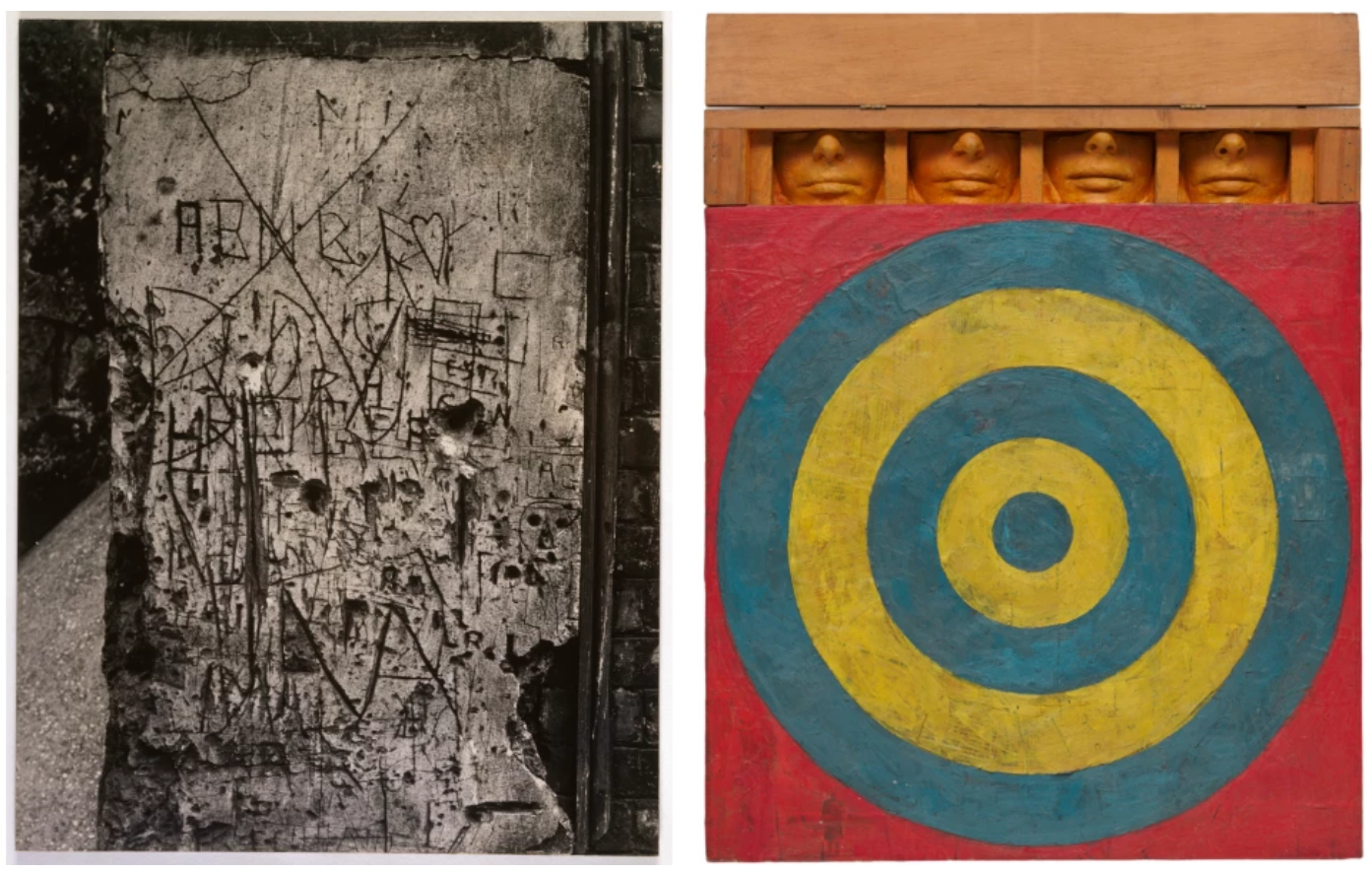
Left: BRASSAÏ, Sense títol. Graffiti. Sèrie II: “Langage du mur”, c. 1930. Museu d’Art Contemporani de Barcelona. ART © ESTATE BRASSAÏ-RMN. Right: Jasper Johns, Target with Four Faces, 1955. The Museum of Modern Art, New York. Image © The Museum of Modern Art/Licensed by SCALA / Art Resource, NY. Art © 2021 Jasper Johns / Licensed by VAGA at Artists Rights Society (ARS), NY
Furthermore, utilizing a discarded window as his support, Basquiat alludes to the art historical implications of an artwork as a window, a lens through which to interpret the world. Red Kings invites the viewer to consider the canonical ways in which a painting can function as a portal, as an (invented) vantage point which captures and crystallizes our human experience. In using the window as his vehicle for creation, painting over its transparent glass with opaque red paint, Basquiat asserts its alternative function as a palimpsest, a leger of a shared history. Conceiving the two crowned figures as a self-portrait of Basquiat alongside his legendary predecessor, Picasso, the window further as a portal between art history’s past and present. The symbols comprising Basquiat’s vernacular are enigmatic and searing, immediate and simple, yet bold and forceful. Red Kings is a masterful exemplar of Basquiat’s engagement with art historical precedents and allusions, referential to the history of the memento mori, Renaissance portraiture, and even Johns and Rauschenberg’s experimentations with materiality. A paragon of the defining moment in Basquiat’s artistic development, in which he transitioned from the city streets as SAMO to the studio as Basquiat, Red Kings is an evocative and vital self-portrait, a harbinger of the artist’s canonical import.