WORK IN PROGRESS
Painted just months after the assassination of John F. Kennedy on 22 November 1963, Andy Warhol’s Jackie Series remains one of his greatest and most iconic paintings.
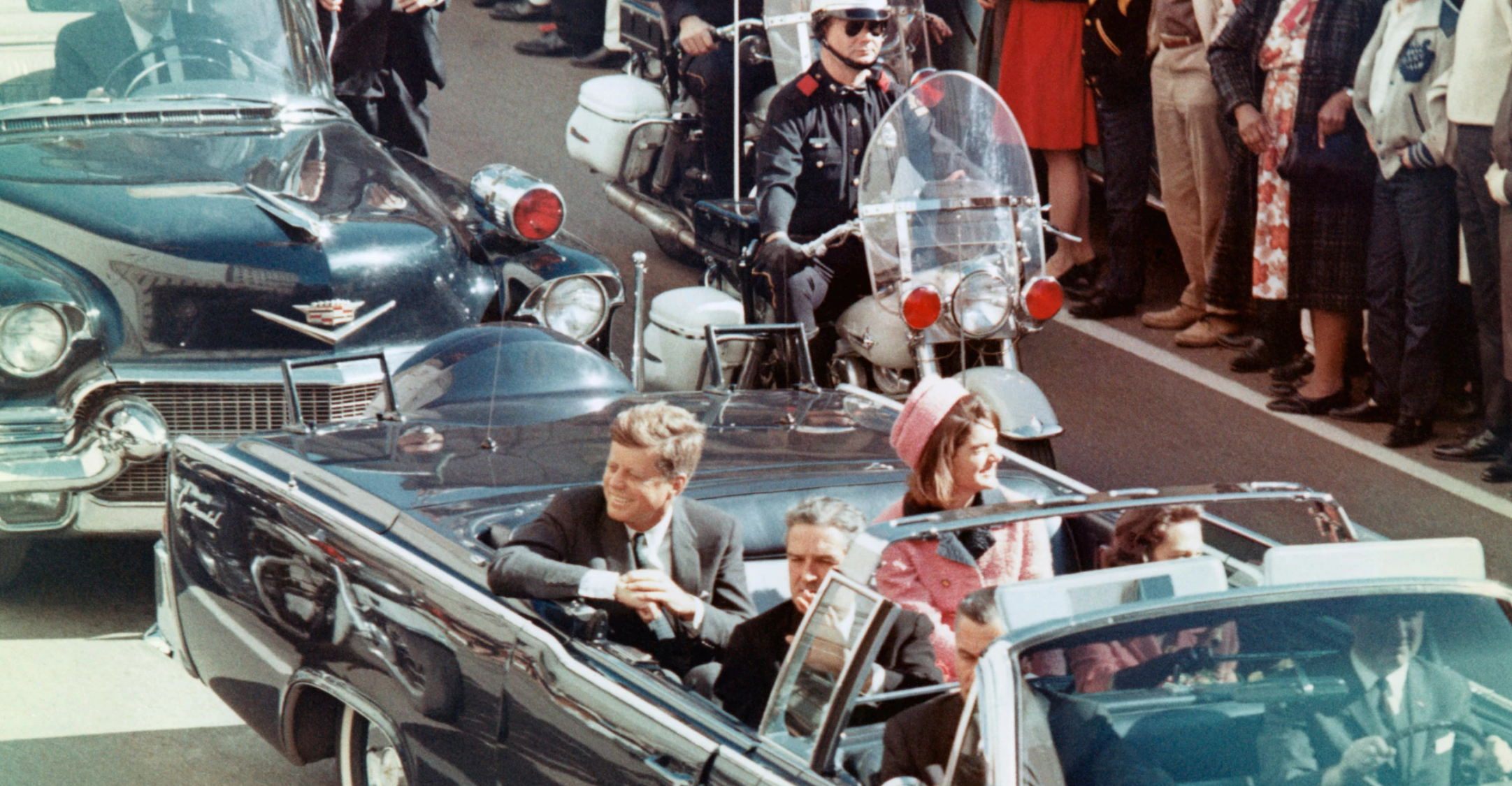
Warhol was keenly attuned to the barrage of photographs and videos that were endlessly repeated throughout the news cycle as the American public came to terms with Kennedy’s death. The three major networks stayed on the air for seventy hours in a row (a news event marathon only surpassed by coverage of the 911 Terror Attacks).
Introduction
Warhol, along with the nation at large, relied upon Mrs. Kennedy as their “emotional barometer” in the days following the assassination, and indeed her displays of public mourning are some of the most remarkable images of the twentieth century. Whether standing grimly beside Lyndon B. Johnson on Air Force One or shrouded behind a black veil at the president’s funeral a few days later, Jackie Kennedy mourned her husband while in full display of the entire world. In many ways, Kennedy’s death enshrined Jackie as a secular saint, and Warhol almost immediately perceived the power and gravitas of her position.
“When President Kennedy was shot that fall, I heard the news over the radio while I was alone painting in my studio… I’d been thrilled having Kennedy as president; he was handsome, young, smart—but it didn’t bother me that much that he was dead. What bothered me was the way the television and radios were programming everybody to feel so sad… It seemed like no matter how hard you tried, you couldn’t get away from the thing.”
Warhol had famously remarked after the president’s death. But his callous comment stemmed from the media’s handling of the event. Their constant barrage of photographs and video were essentially repeated in a 24-hour loop. The same few images were run over and over in a mind-numbing succession. In response, Warhol created literally hundreds of Jackies, and when he displayed them later that year at the Castelli gallery, nearly one year to the day of Kennedy’s assassination, he showed 42 of them in a grid-like arrangement, as if to parallel the media saturation.
“The more you look at the same exact thing, the more the meaning goes away and the better and emptier you feel.”
The assassination of President John F. Kennedy on 22 November 1963 marked the death of an American icon and the end of a political era. The youth, vitality and optimism that had defined JFK’s administration had been cut short. In the words of the widowed Jacqueline Kennedy, the days of Camelot were over. From the moment of the gunshots in Dallas to the funeral procession in Washington DC four days later, the major television networks in the United States suspended commercials and aired wall-to-wall coverage of the proceedings. Throughout the world, the media was flooded with images of the fateful day and its aftermath.
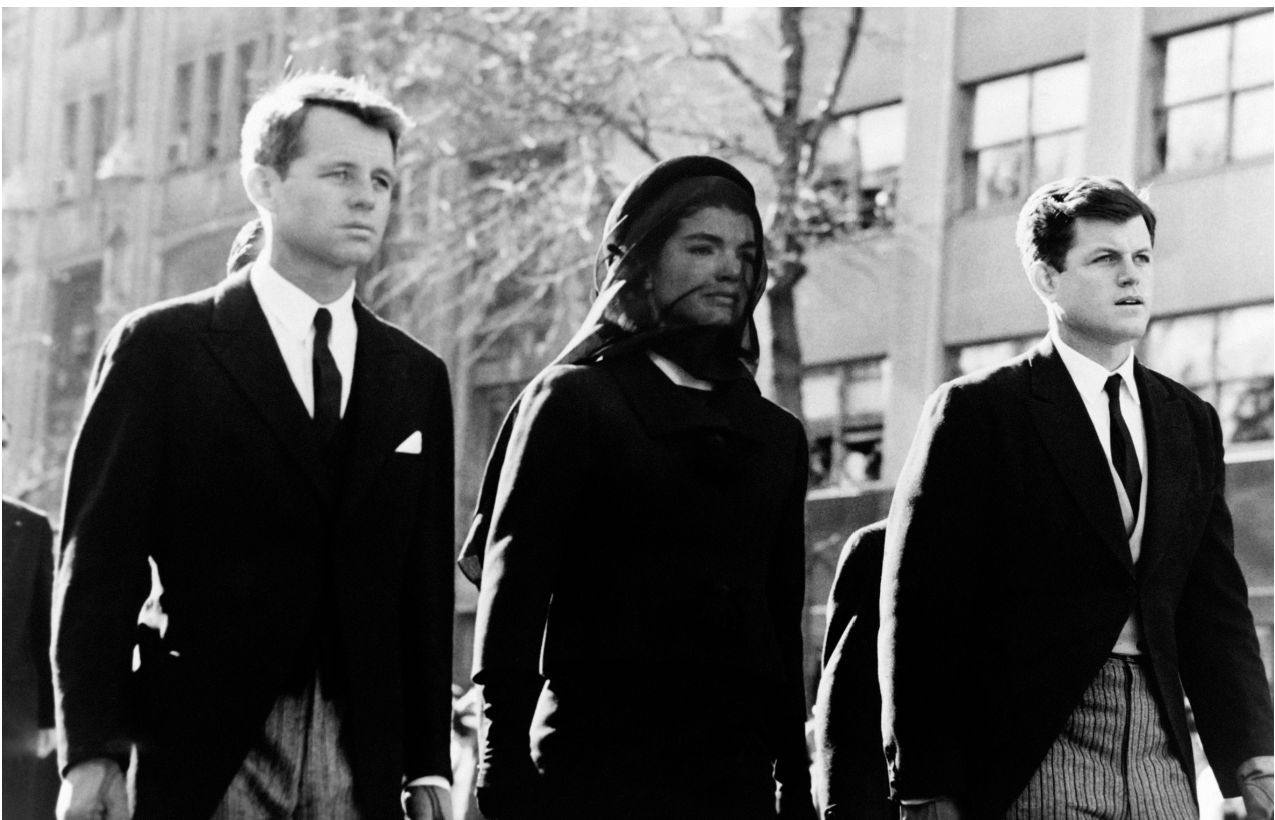
Robert Kennedy and Edward Kennedy with Jacqueline Kennedy during the funeral of President John F. Kennedy on 25 November 1963, Washington DC. Photo by Keystone-France/Gamma-Keystone via Getty Images
All eyes were on Jackie, who became an icon of a nation in mourning. Amongst those watching was Andy Warhol who had made his reputation as an artist responding to mass media spectacle. According to Warhol’s friend and studio assistant Gerard Melanga, as soon as the tragic news reached them, Warhol’s only response was ‘Let’s go to work!’ In the weeks following the assassination, Warhol began sifting through and collecting images of Jackie that had been published in newspapers and tabloids. The resulting series of paintings, which meditated on these widely disseminated images of the former First Lady, became an essential chapter in the artist’s Death and Disaster body of work.
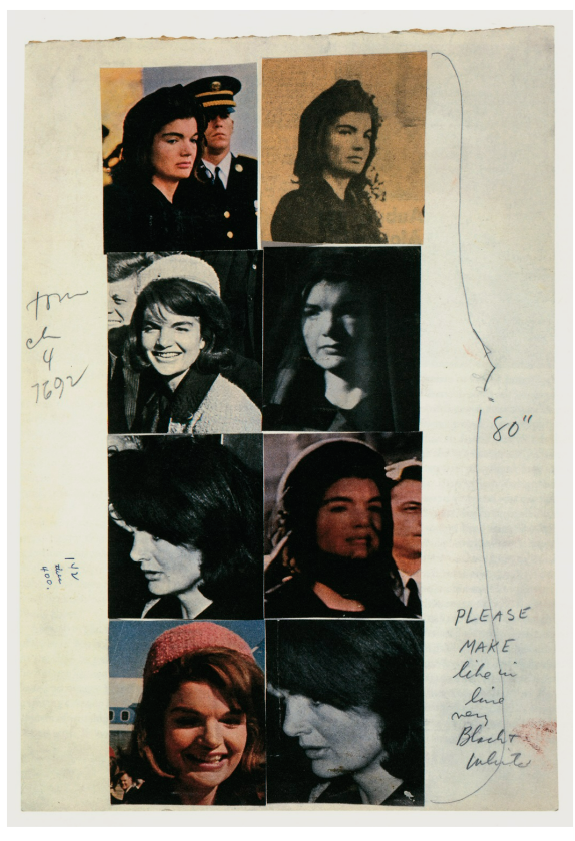
Source for Andy Warhol’s Jackie Series, 1963-1964. Collection of the Andy Warhol Museum, Pittsburgh. © 2023 The Andy Warhol Foundation for the Visual Arts, Inc. / Licensed by Artists Rights Society (ARS). Photo credit, clockwise from top left: Fred Ward for Life Magazine, December 6, 1963; Photographer Unknown; George Silk for Life Magazine, December 6, 1963; Henri Dauman for Life Magazine, December 6, 1963; Keystone Hulton Archive; Art Rickerby for Life Magazine, December 14, 1963; Keystone (Hulton Archive); Photographer Unknown.
Of the eight different photographs that Warhol selected for the Jackie series, only two of them depict a smiling, youthful Jackie. The others are taken from photographs of a stunned and somber woman aboard Air Force One as Lyndon B. Johnson was sworn in as president, and then at the funeral of John F. Kennedy three days later. In the weeks and months following Kennedy’s assassination, Warhol and his assistant Gerard Malanga carefully monitored the news, gathering materials from newspapers and magazines. By the end of February of 1964 (just over two months after the assassination), Warhol had selected the final eight images that would define the Jackie series. These included photographs from the New York Daily News (November 25, 1963), Life magazine (December 6, 1963) and a special commemorative magazine called Four Dark Days (Special Publications, Los Angeles, 1963). The cinematic images that Warhol selected have a storytelling aspect to them, essentially functioning as “bookends” to the assassination. While they never actually reveal the moment when the president was shot, the attest to the moments of terror, anxiety and grief that collectively gripped the nation.
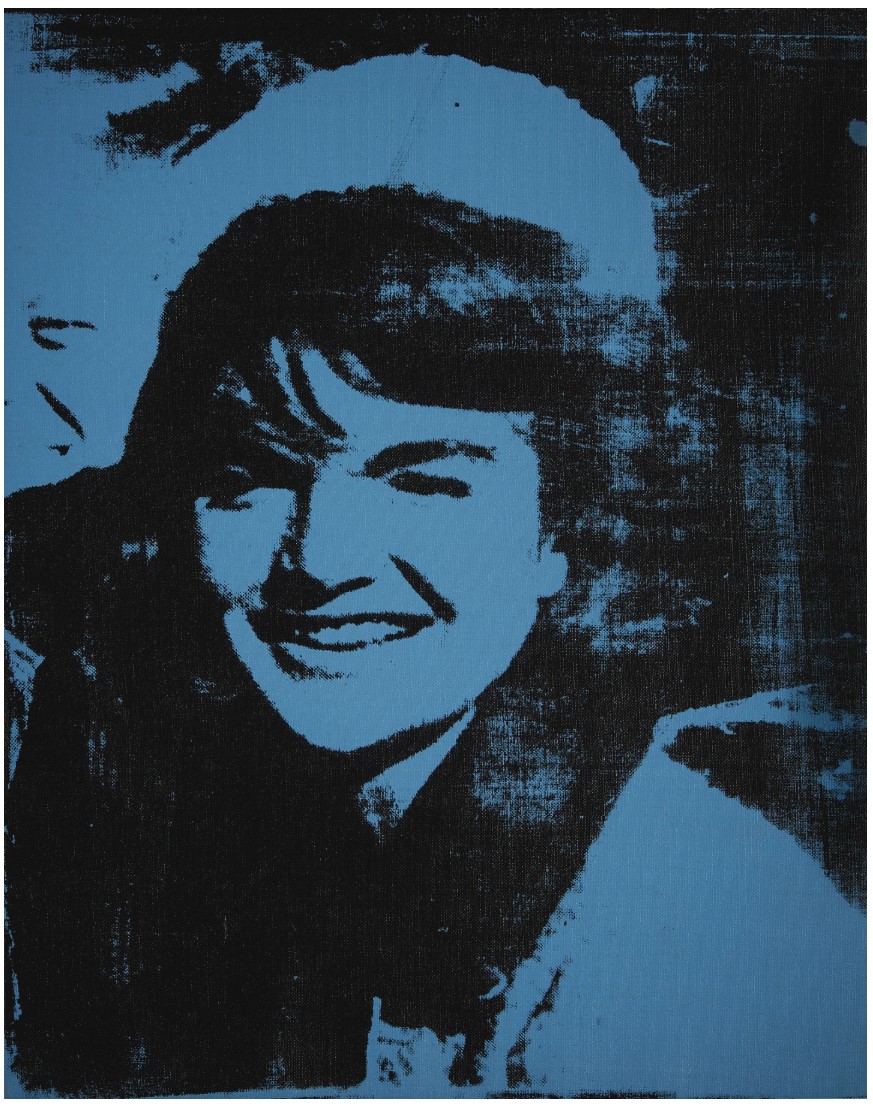
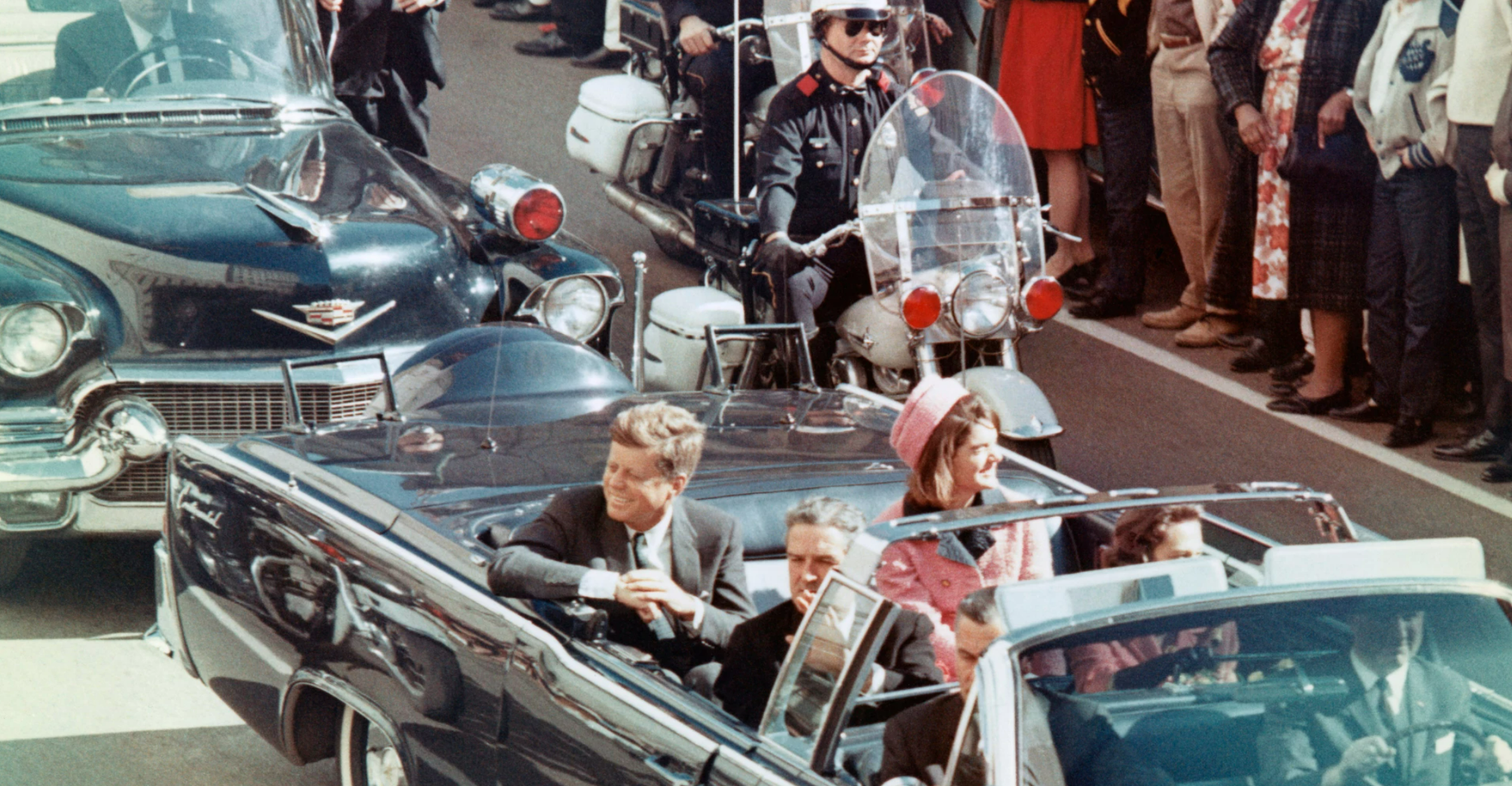
Andy Warhol’s Jackie is a compelling work of exceptional quality: a tour de force of the artist’s singularly ability for re-appropriation while simultaneously manipulating a silkscreen to convey an underlying message. Here, First Lady Jacqueline Kennedy Onassis beams into the camera after arriving at Dallas Love Field airport on November 22nd, 1963: the day that her husband, United States President John F. Kennedy was assassinated. Moments after this photograph was taken, the couple would begin a limousine journey that would be interrupted by the most significant assassination of the Twentieth Century. The most striking aspect of this work is the vibrant smile that adorns the face of the First Lady. The innocence of her happiness fills us with dread; her radiance suffuses the work with an inescapable mood of impending morbidity and portentous doom. This is only heightened by the almost illegible rendering of J.F.K. in the upper left of the canvas. Only the faintest outlines of his facial features in profile can be made out, casting him with a ghostlike quality: a foreshadowing of the tragic event just on the horizon.
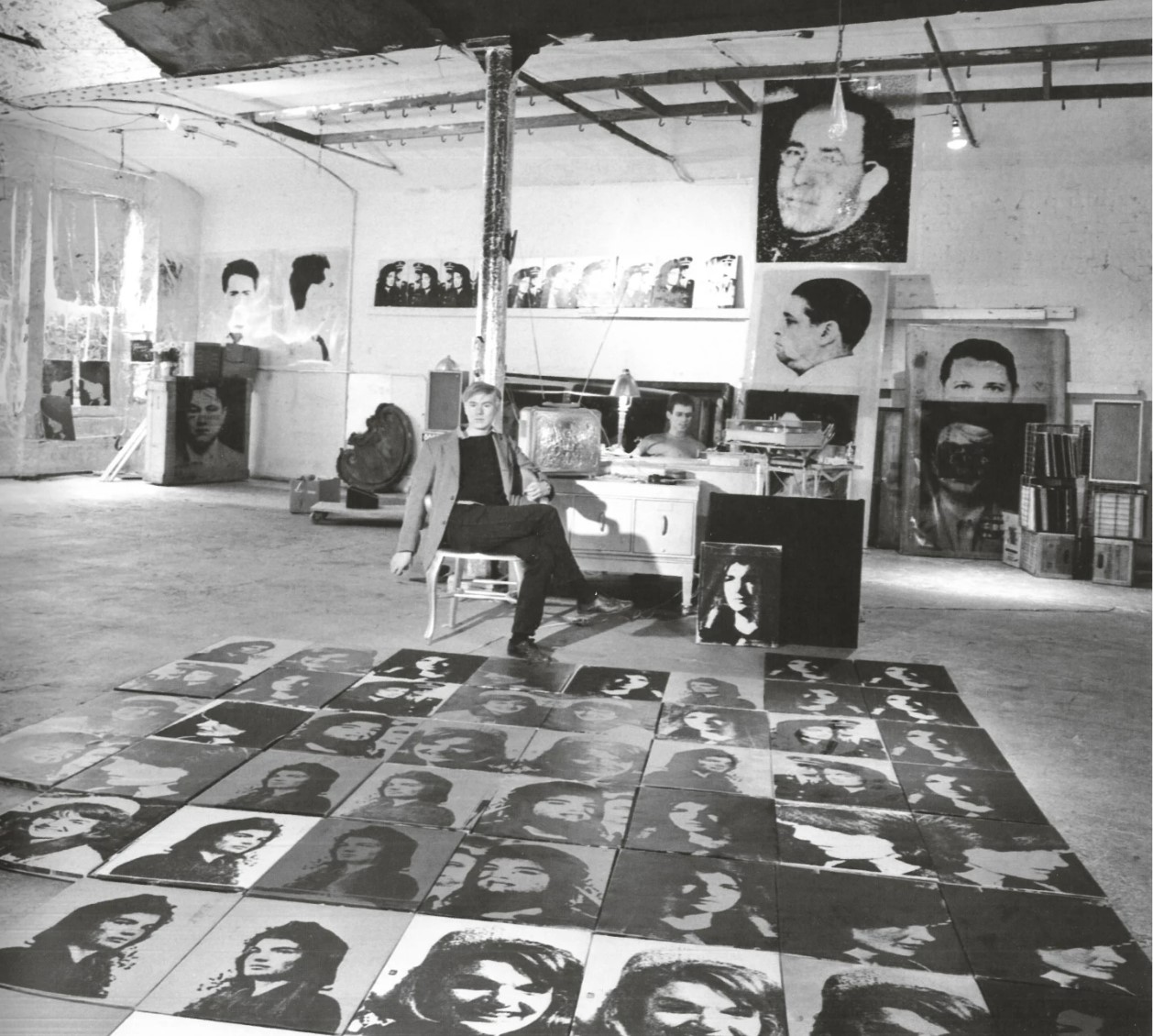
With the Jackie paintings, Warhol for the first time created numbers of small panels which he could later assemble into larger compositions. Against backgrounds of blues, white, and gold, Warhol screened eight source images that follow Jackie from her arrival at Dallas Love Field, through the motorcade, to the administration of the oath for the new President Johnson and finally to the funeral in Washington, D. C. Beginning with The Week That Was I which inaugurated the series known as “Multiplied Jackies,” Warhol now had the freedom to combine, repeat and invert selected canvases from the original eight Jackie images into a grid, frieze, triptych or diptych format, initially changing some of the earliest large arrangements from one installation to the next, as with the largest of the multiple paintings, Thirty-Five Jackies (Museum für Moderne Kunst, Frankfurt). In The Week That Was I, Warhol originated the format of 4 x 4 panels and employed all eight Jackie images, with their mirror reversals, and his full palette of blue, white and gold. The Week That Was II is the only “Multiplied Jackie” to also use all eight images, but this time all in tones of blue. The subsequent four Sixteen Jackies, configured in the 1960s and 1970s, experimented with different serializations from a single image up to six images, and with a single color or a combination of two or even three as in the Sixteen Jackies in the Gallery of Modern Art, Iwaki.
Warhol’s enduring fascination with the fragility of life extends beyond these celebrity subjects, as illustrated by his 1963 Death and Disasters series. In Jackie, however, Warhol was fully engrossed with both the public broadcasting of the assassination and the following events, as well as the former First Lady’s existence beyond her husband’s death. The President’s funeral was one of the first national events to be extensively covered by the American media; TV networks went live with wall-to-wall coverage and news editors documented every twist and turn. Onassis’s life became a commodity as her face lined newspaper covers, magazines articles, and television screens. Indeed, her facial expressions were recapitulated in the media “to such an extent that no better historical monument on the exhibitionism of American emotional value is conceivable” (Rainer Crone, Andy Warhol, New York 1970, p. 29).
Captivated by the tragic nature of Jackie Kennedy’s fame, between February and November 1964 Warhol realized 302 portraits of Jackie, reaffirming her status as a modern-day icon. Advancing themes initiated in the preceding Death and Disaster series, in the Jackie portraits Warhol investigates the tensions between the contrasting inner feelings and outer appearance of all celebrities, bringing his artistic research to a whole new level. Recounting one of the most defining moments of recent American history, Warhol’s silkscreens of Jackie stand today as highly important historical documents and have found their way into such prestigious public collections as the Metropolitan Museum of Art and the Whitney Museum of American Art in New York.
Beyond the purely narrative nature of the image lies Warhol’s critique of the manipulative power and replicating effects of mass-media. Having used in the past photographs appropriated from the media as the basis for his portraits, Warhol used for the first-time portraits culled from the newspapers in his Jackie series, subverting and imitating the emotional conditioning inherent to photo-journalism. Accepting photography “as the driving force in modern life – a tool of both the factual recording of reality and the romantic projection of magic and make-believe”, Jackie summates Warhol’s aptitude to seize the most potent images of his time and deliver the perfect twentieth-century history painting (Tony Shafrazi, Ed., Andy Warhol Portraits, London and New York 2007, p. 16).
2025 Auction Results
Jackie, 1964
de Vuyst: 17 May 2025
Estimated: EUR 550,000 – 800,000
EUR 520,000 (Hammer)
EUR 650,000 / USD 725,650
Contemporary, Modern and Old Masters | Kunstgalerij De Vuyst
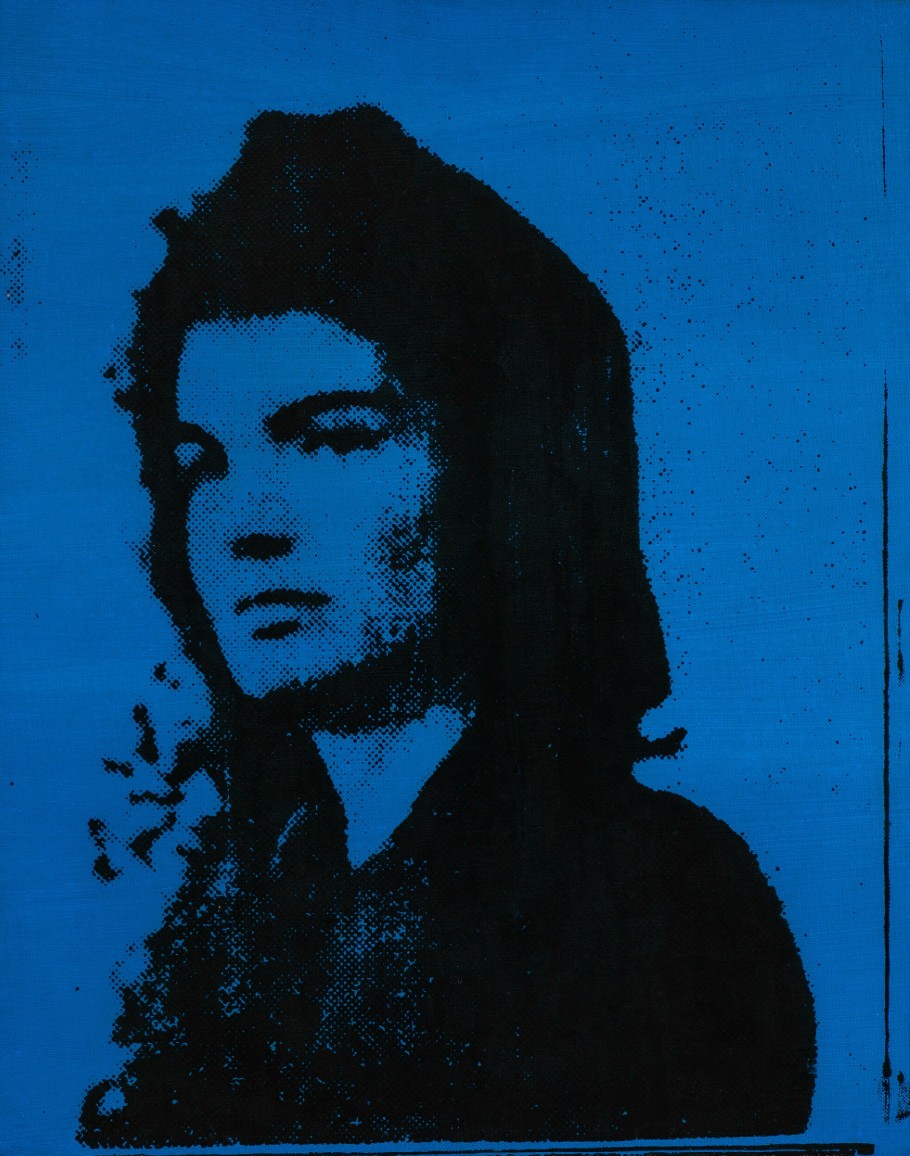
ANDY WARHOL (1928–1987)
Jackie, 1964
Acrylic and silkscreen ink on linen
20×16 inches (50.8×40.6 cm)
Signed and dated to verso ‘Andy Warhol 64’
Jackie, 1964
Rago: 12 March 2025
Estimated: USD 600,000 – 800,000
USD 673,100
118: ANDY WARHOL, Jackie < Post War & Contemporary Art, 12 March 2025 < Auctions | Rago Auctions
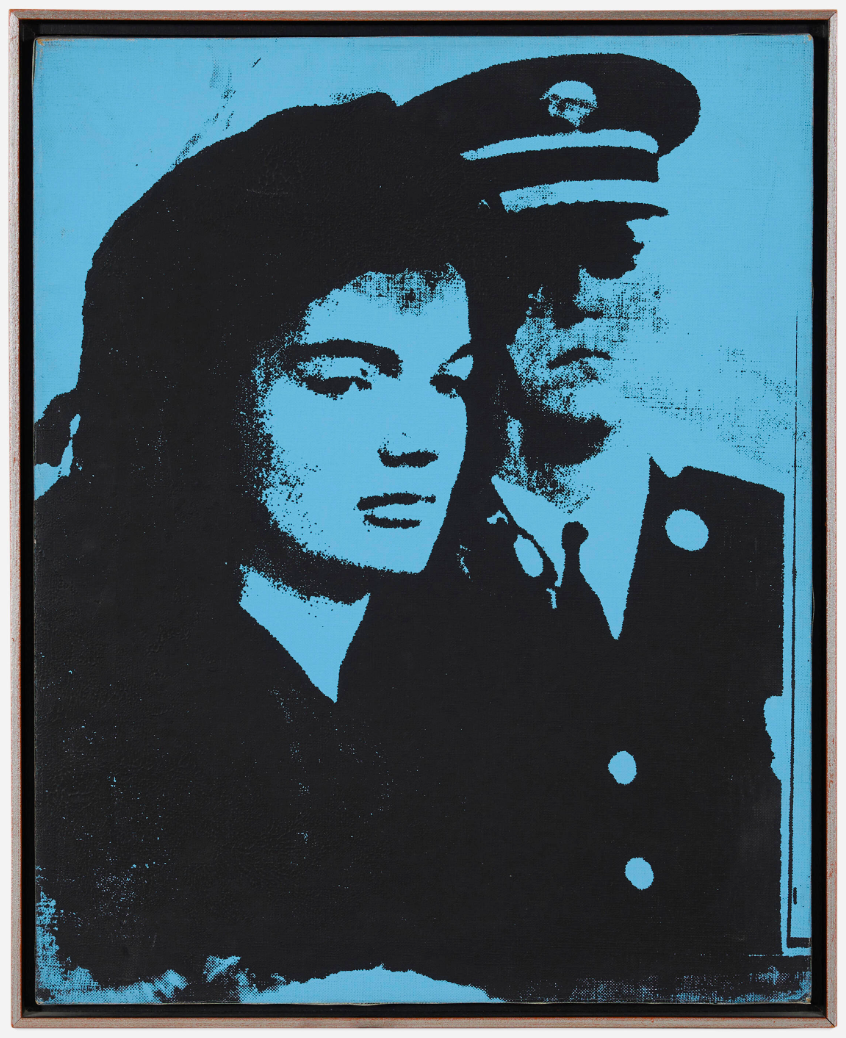
ANDY WARHOL (1928–1987)
Jackie, 1964
Synthetic polymer and silkscreen ink in colors on canvas
20 1/8 x 16 1/8 inches (51×41 cm)
Signed and dated to verso ‘Andy Warhol 64’
2023 Auction Results
Sixteen Jackies, 1964
Christie’s New-York: 9 November 2023
Estimated: USD 25,000,000 – 35,000,000
USD 25,940,000
ANDY WARHOL (1928-1987) (christies.com)
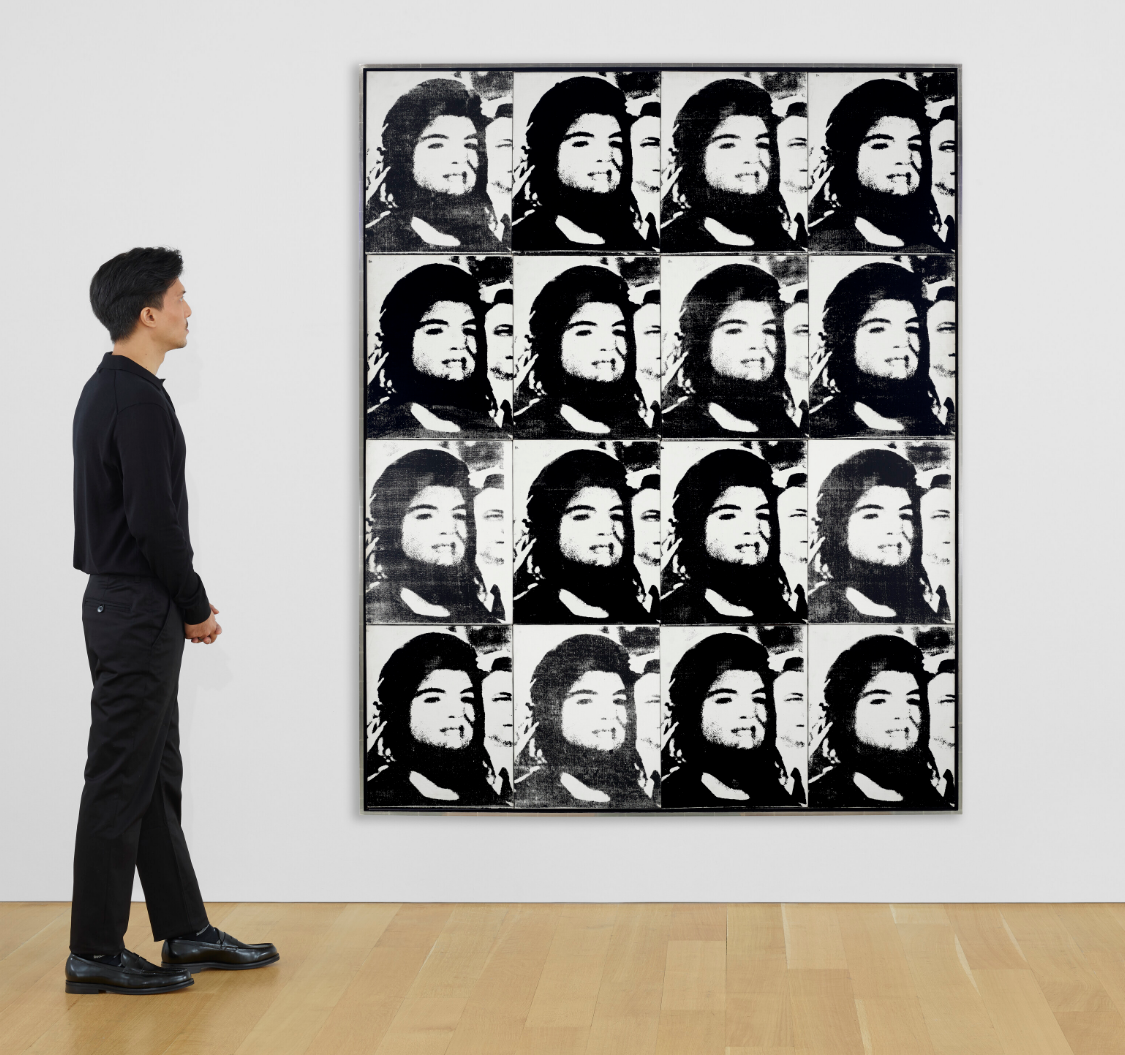
ANDY WARHOL (1928-1987)
Sixteen Jackies, 1964
Silkscreen ink on linen, in sixteen parts
Overall: 80×64 inches (203.2 x 162.6 cm)
Signed ‘Andy Warhol’ (on the overlap of four canvases)
Jackie, 1964
Sotheby’s New-York: 16 November 2023
Estimated: USD 800,000 – 1,200,000
USD 666,750
Jackie | Contemporary Day Auction | 2023 | Sotheby’s (sothebys.com)
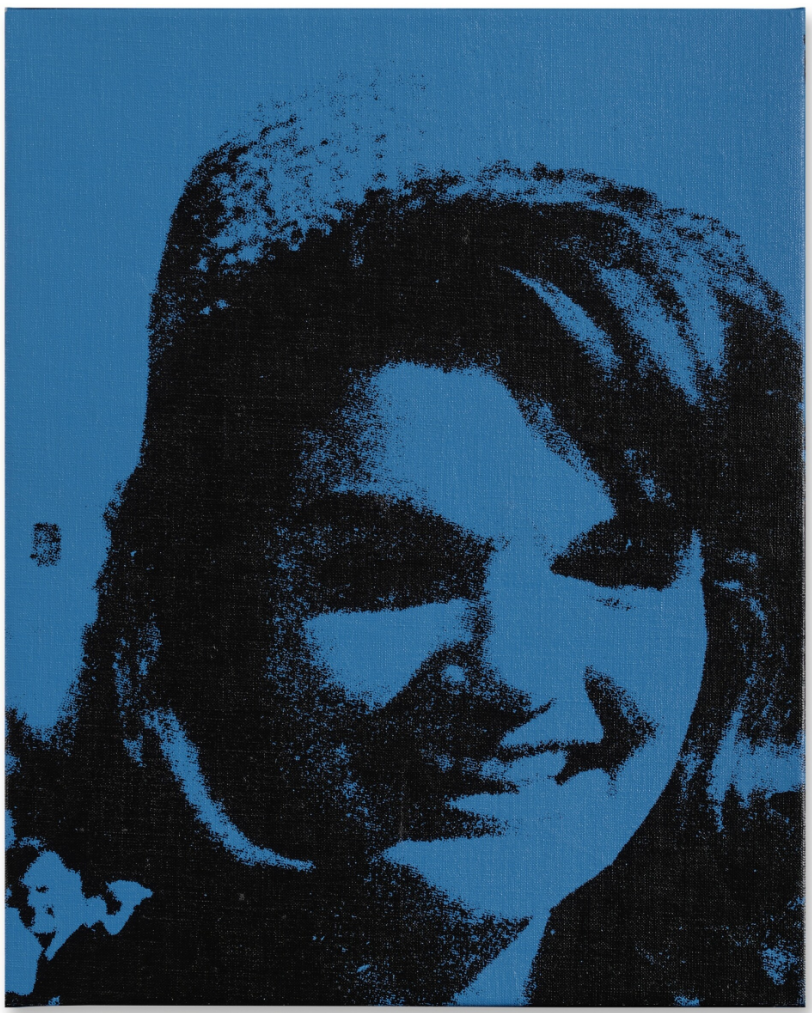
ANDY WARHOL (1928 – 1987)
Jackie, 1964
Acrylic and silkscreen ink on canvas
20×16 inches (50.8 x 40.6 cm)
Jackie, 1964
Estimated: USD 500,000 – 700,000
USD 630,000
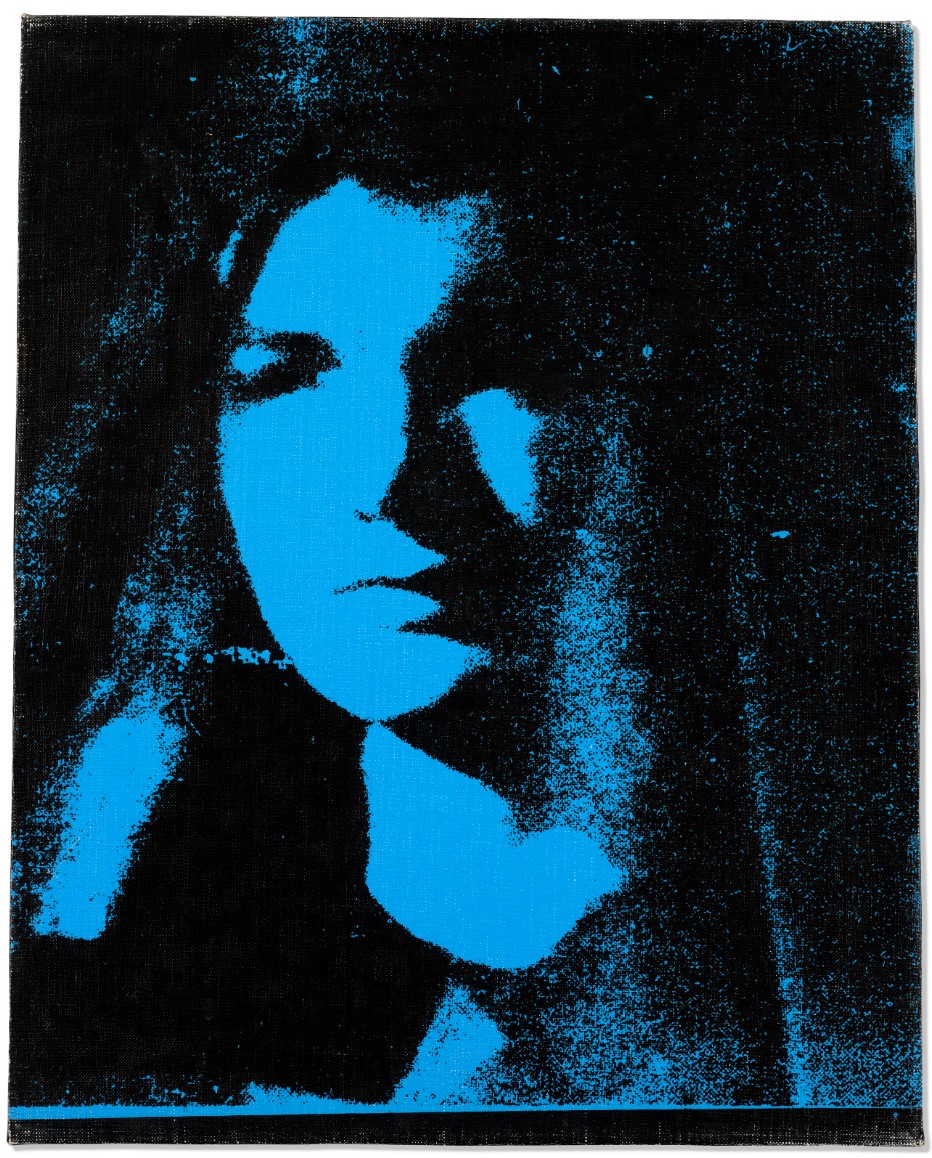
Jackie, 1964
Acrylic and silkscreen ink on canvas
20×16 inches (50.8 x 40.6 cm)
Signed, numbered and dated ‘Andy Warhol 1964 A690.1’ (on the overlap)
2022 Auction Results
Jackie, 1964
Sotheby’s Paris: 17 February 2022
Estimated: EUR 700,000 – 1,000,000
EUR 920,000 / USD 1,107,899
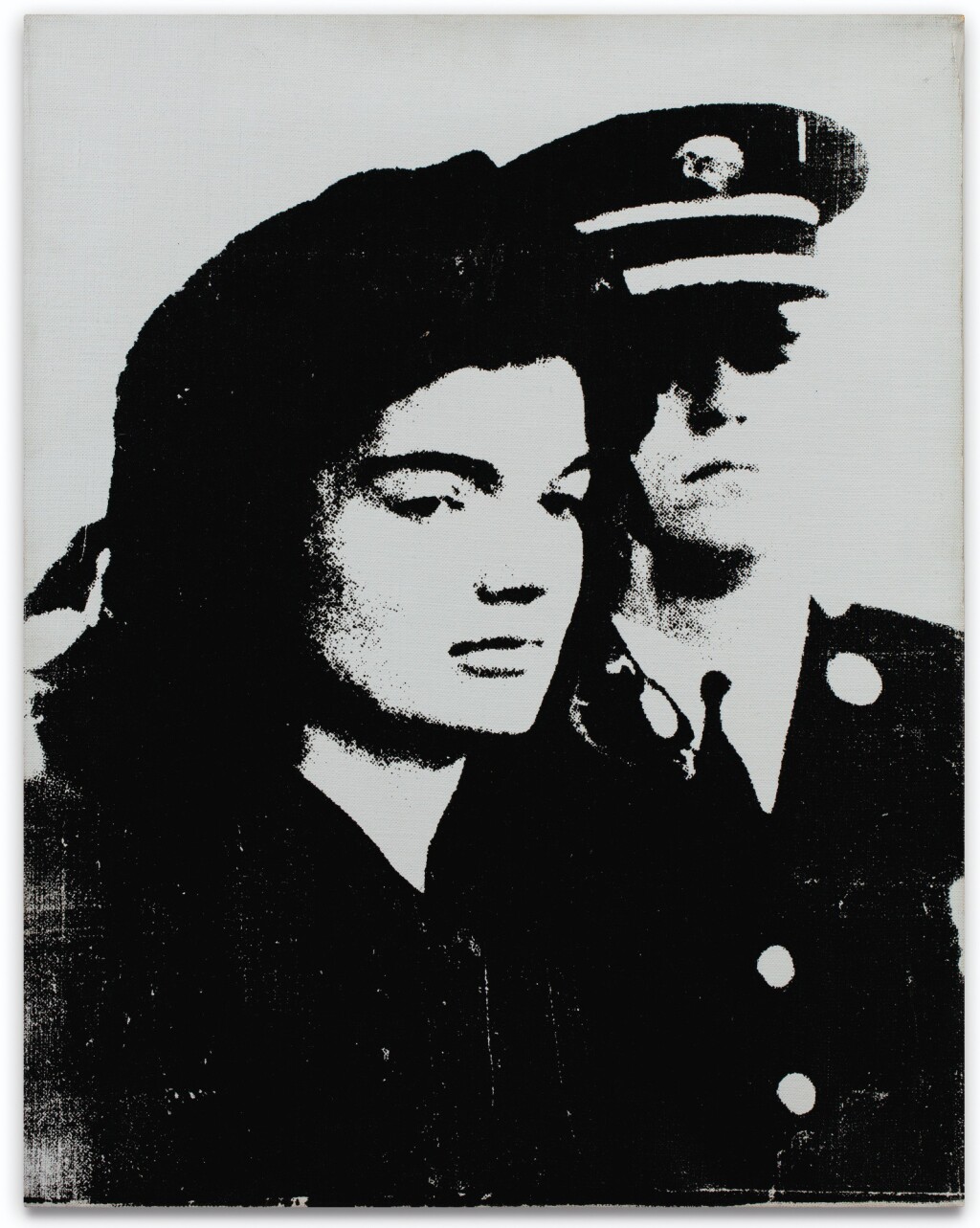
ANDY WARHOL (1928 – 1987)
Jackie, 1964
Silkscreen ink on linen
20×16 inches (50.8 x 40.6 cm)
Signed and inscribed David Bourdon Andy Warhol on the overlap
2021 Auction Results
Sixteen Jackies, 1964
Sotheby’s New-York: 15 November 2021
Estimated: USD 15,000,000 – 20,000,000
USD 33,872,250
Sixteen Jackies | The Macklowe Collection | 2021 | Sotheby’s (sothebys.com)
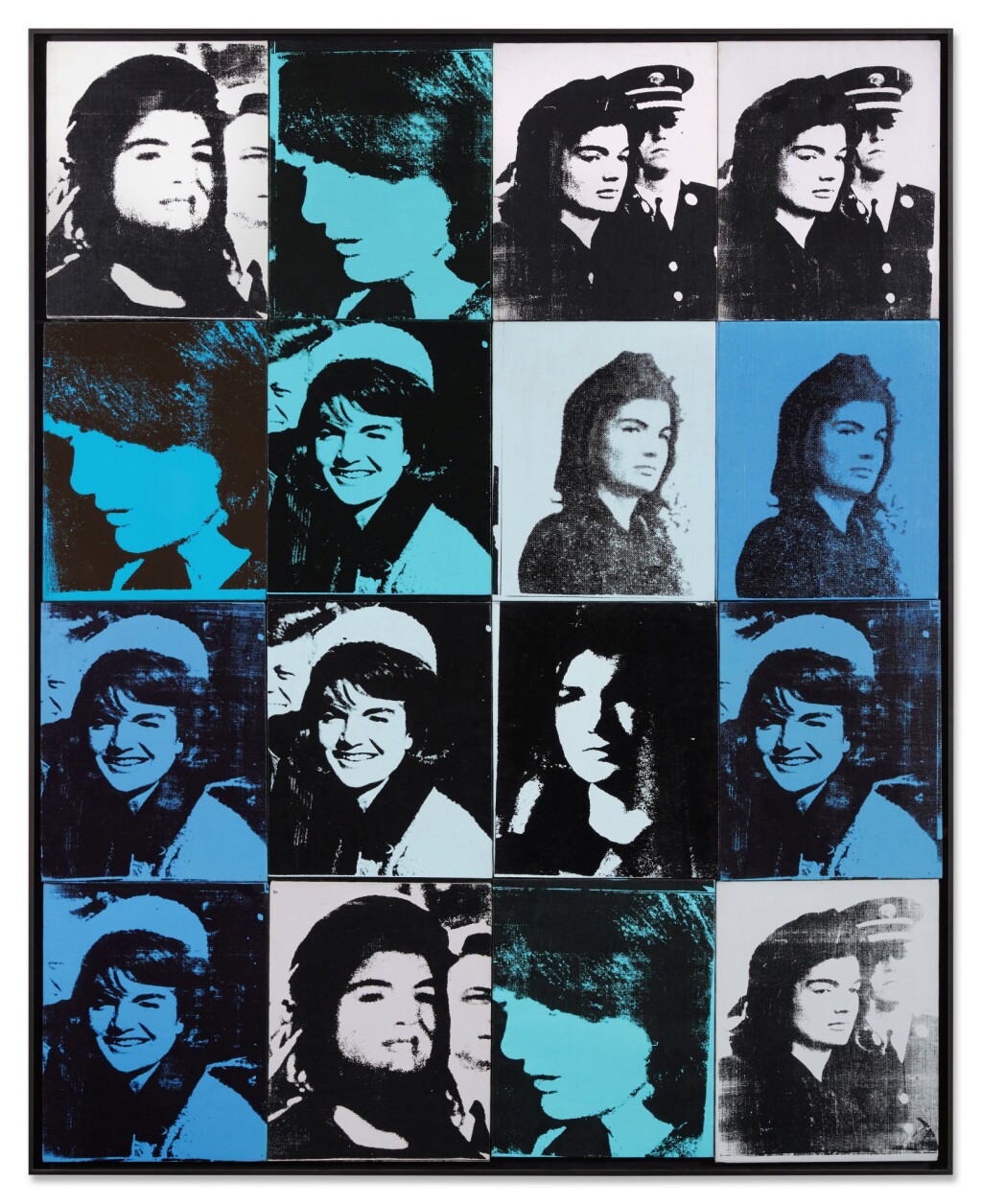
ANDY WARHOL
Sixteen Jackies, 1964
Acrylic and silkscreen ink on canvas, in sixteen parts
Each: 20×16 inches (50.8 x 40.6 cm)
Overall: 81×65 inches (205.7 x 165.1 cm)
Jackie, 1964
Sotheby’s New-York: 19 November 2021
Estimated: USD 600,000 – 800,000
USD 842,800
Jackie | Contemporary Day Auction | 2021 | Sotheby’s (sothebys.com)
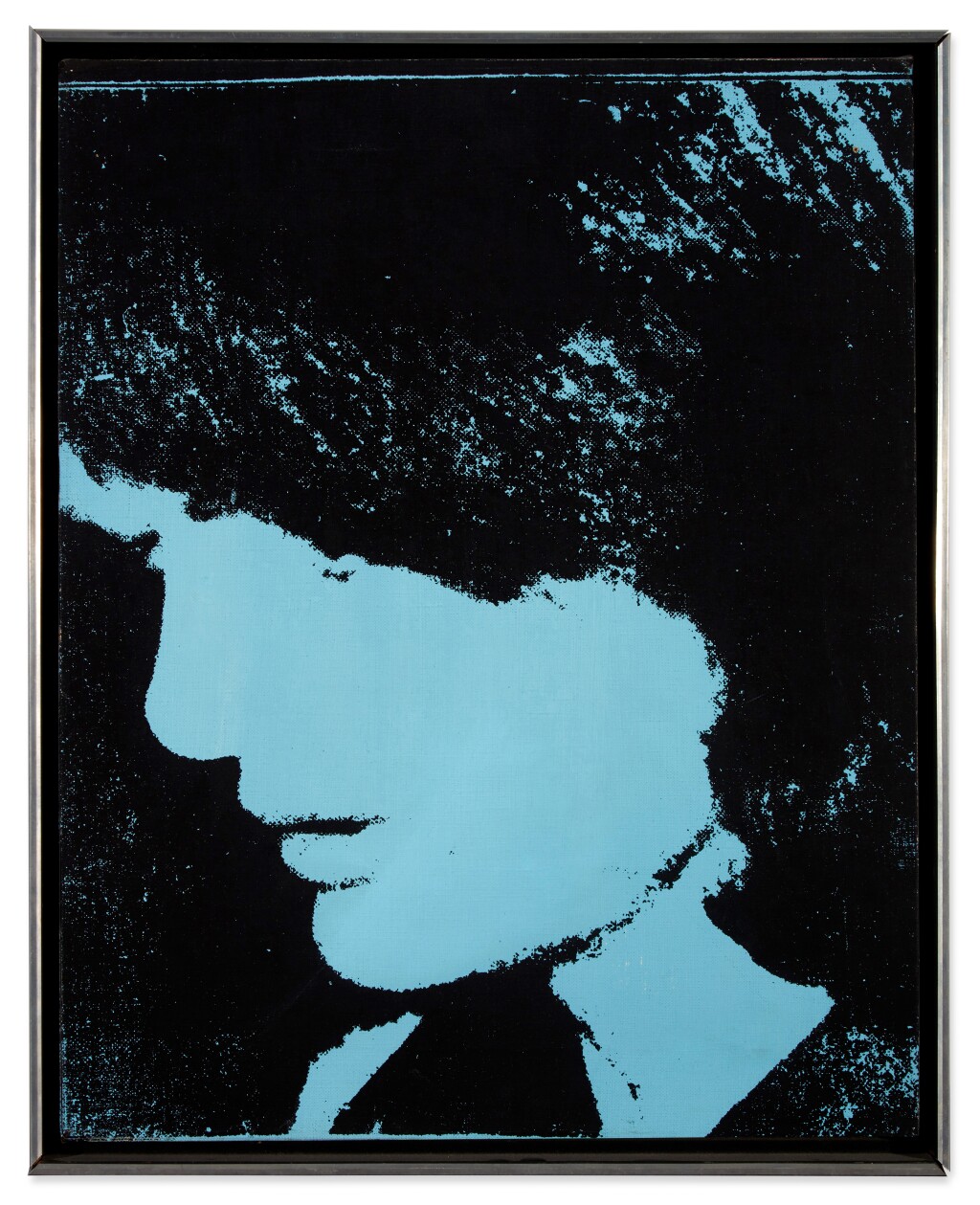 ANDY WARHOL
Jackie, 1964
Acrylic and silkscreen ink on linen
20×16 inches (50.8 x 40.6 cm)
Jackie, 1964
Sotheby’s New-York: 19 November 2021
Estimated: USD 600,000 – 800,000
USD 842,800
Jackie | Contemporary Day Auction | 2021 | Sotheby’s
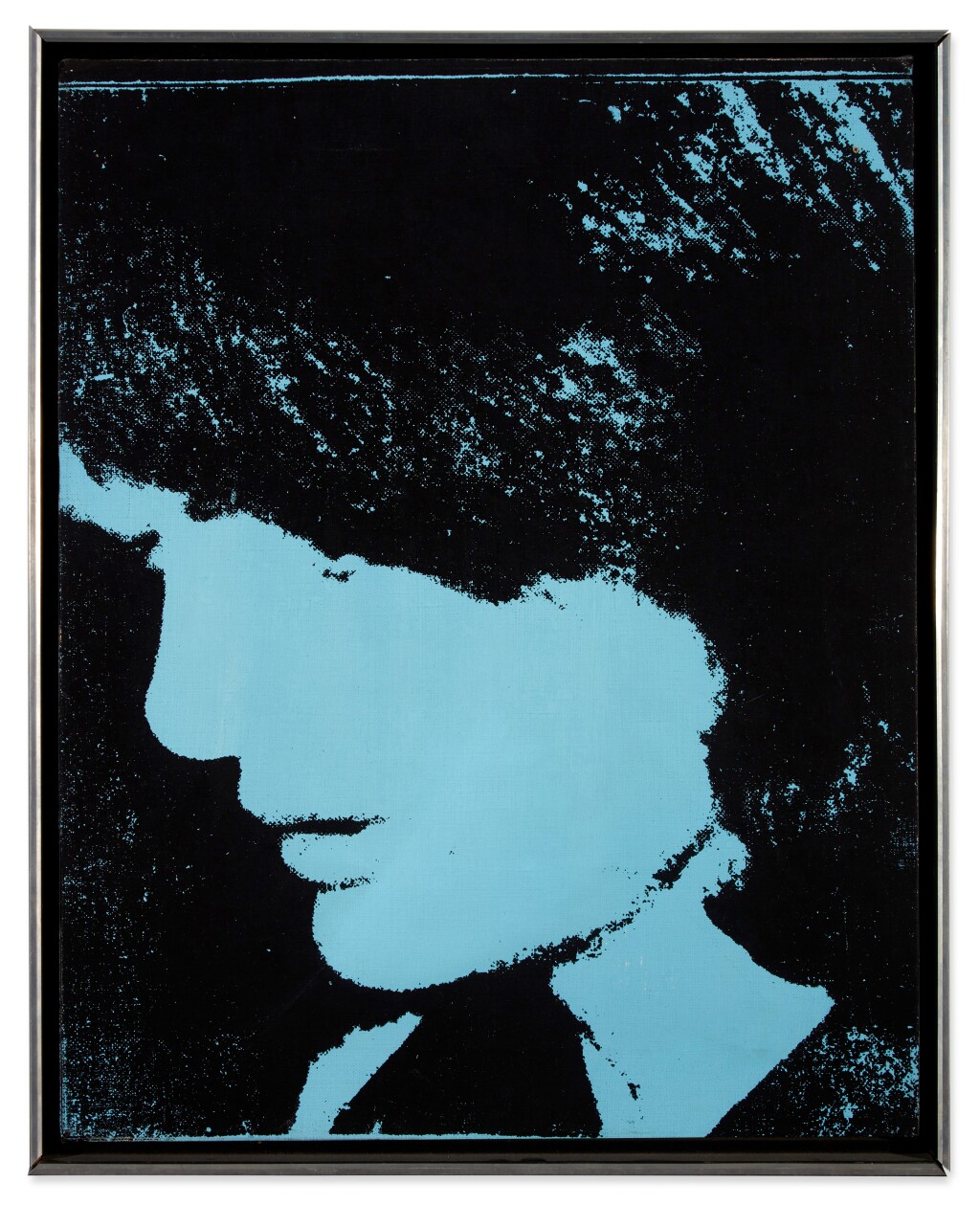
ANDY WARHOL
Jackie, 1964
Acrylic and silkscreen ink on linen
20×16 inches (50.8 x 40.6 cm)
Jackie, 1964
Sotheby’s Paris: 17 February 2021
Estimated: EUR 700,000 – 1,000,000
EUR 920,000 / USD 1,108,300
Jackie | Unwrapped, Part I: The Hidden World of Christo and Jeanne-Claude | 2021 | Sotheby’s
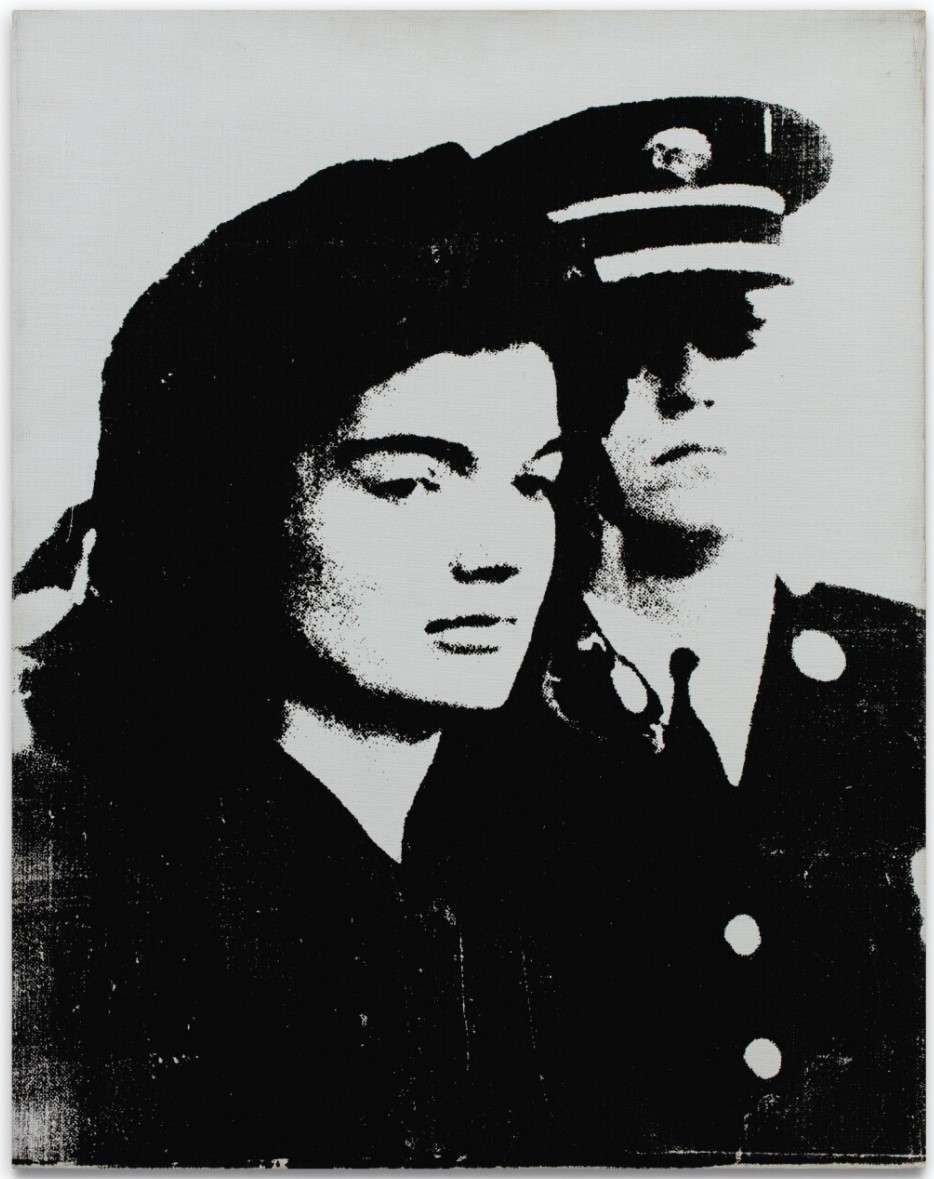
ANDY WARHOL
Jackie, 1964
Silkscreen ink on linen
20×16 inches (50.8 x 40.6 cm)
2020 Auction Results
Jackie, 1964
Christie’s New-York: 4 March 2020
Estimated: USD 600,000 – 800,000
USD 615,000
Andy Warhol (1928–1987), Jackie | Christie’s
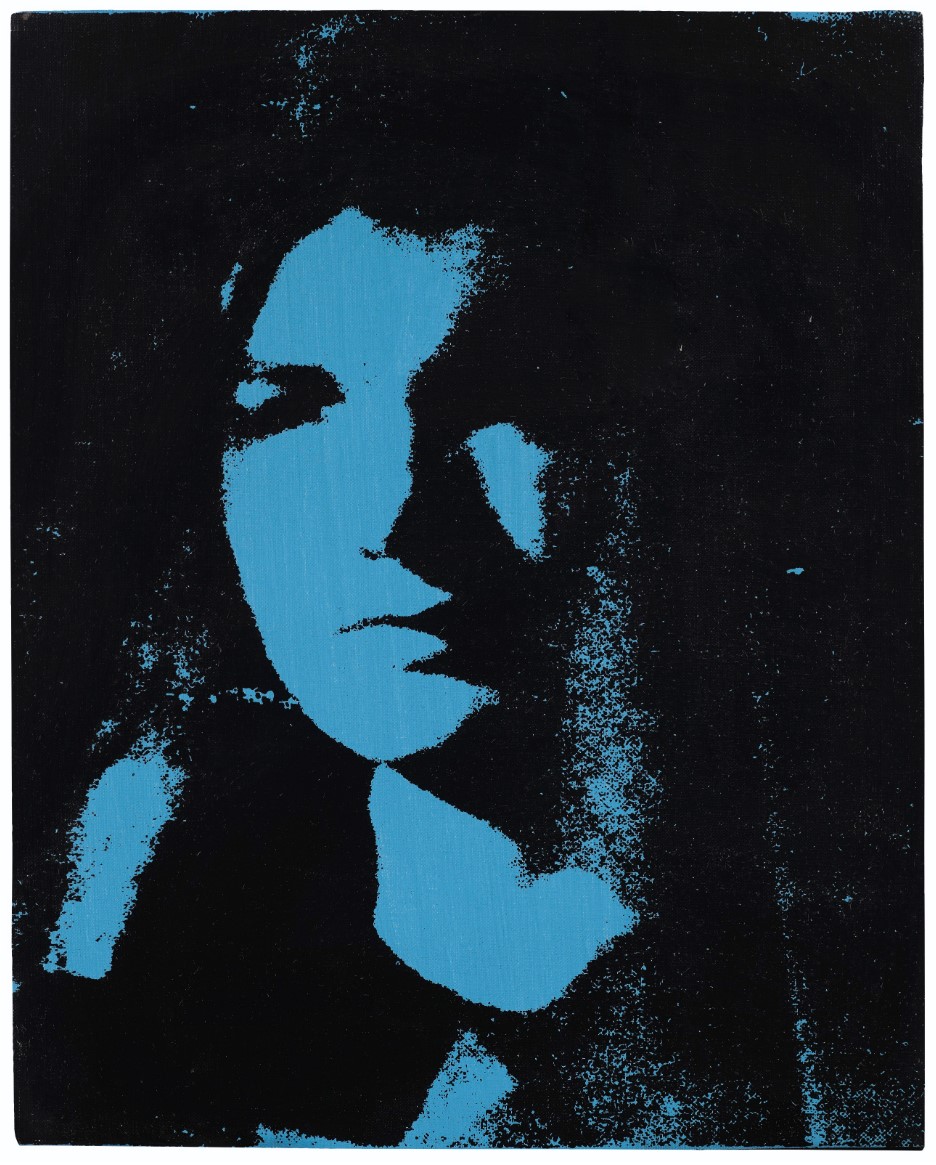
ANDY WARHOL
Jackie, 1964
Acrylic and silkscreen ink on canvas
20×16 inches (50.8 x 40.6 cm)
2019 Auction Results
Jackie, 1964
Sotheby’s New-York: 15 November 2019
Estimated: USD 500,000 – 700,000
USD 500,000
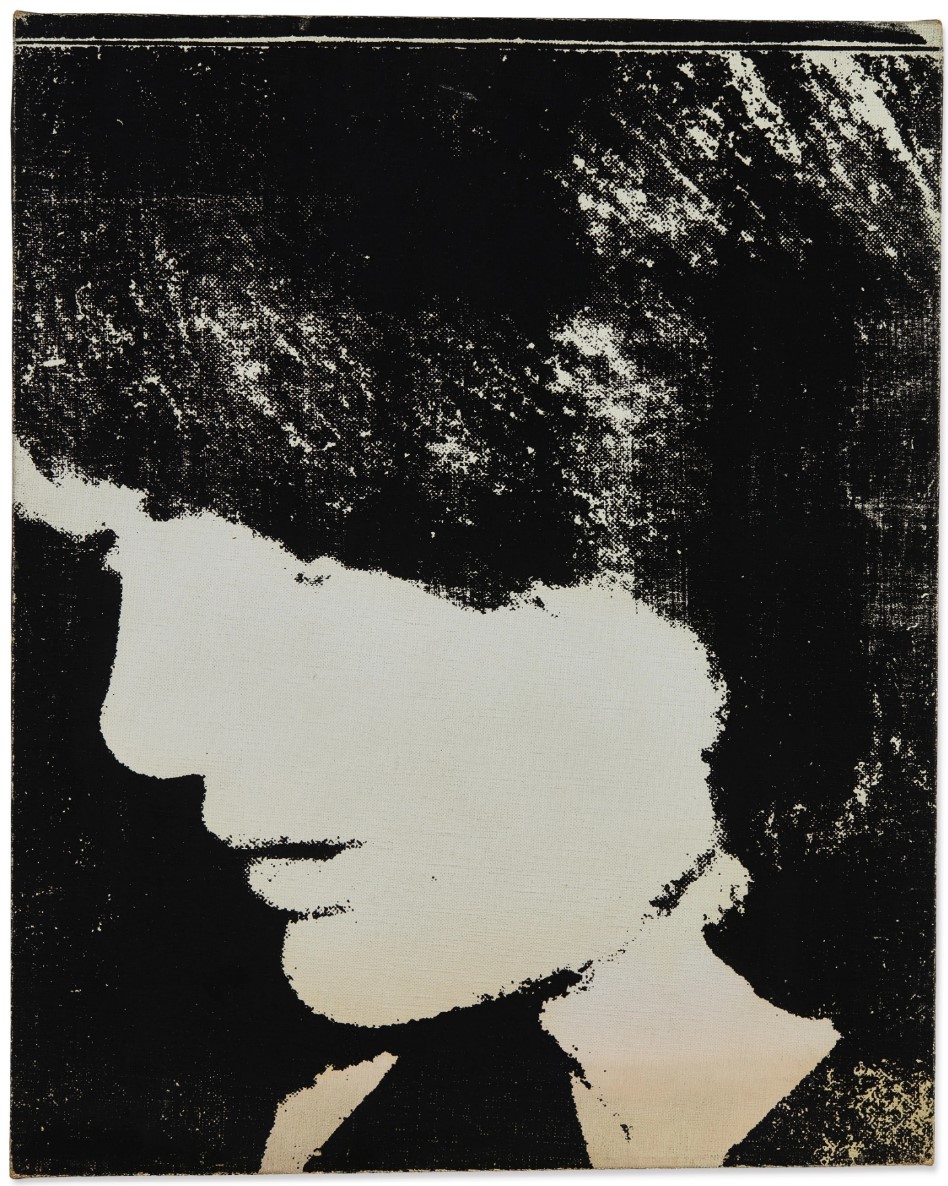 ANDY WARHOL
Jackie, 1964
Acrylic and silkscreen ink on canvas
20 x 16.1 inches (50.8 x 41 cm)
Jackie, 1964
Christie’s New-York: 14 November 2019
Estimated: USD 500,000 – 700,000
USD 675,000
Andy Warhol (1928–1987), Jackie | Christie’s
ANDY WARHOL
Jackie, 1964
Acrylic and silkscreen ink on canvas
20×16 inches (50.8 x 40.6 cm)
Jackie, 1964
Sotheby’s New-York: 17 May 2019
Estimated: USD 1,000,000 – 1,500,000
USD 1,160,000
 ANDY WARHOL
Jackie, 1964
Acrylic and silkscreen ink on canvas
20×16 inches (50.8 x 40.6 cm)
Jackie (Gold), 1964
Christie’s New-York: 16 May 2019
Estimated: USD 600,000 – 800,000
USD 734,000
Andy Warhol (1928-1987), Jackie (Gold) | Christie’s
ANDY WARHOL
Jackie (Gold), 1964
Spray enamel and silkscreen ink on canvas
20×16 inches (50.8 x 40.6 cm)
Sixteen Jackies
Sixteen Jackies, 1964
Christie’s New-York: 9 November 2023
Estimated: USD 25,000,000 – 35,000,000
USD 25,940,000
ANDY WARHOL (1928-1987) (christies.com)
ANDY WARHOL (1928-1987)
Sixteen Jackies, 1964
Silkscreen ink on linen, in sixteen parts
Overall: 80×64 inches (203.2 x 162.6 cm)
Signed ‘Andy Warhol’ (on the overlap of four canvases)
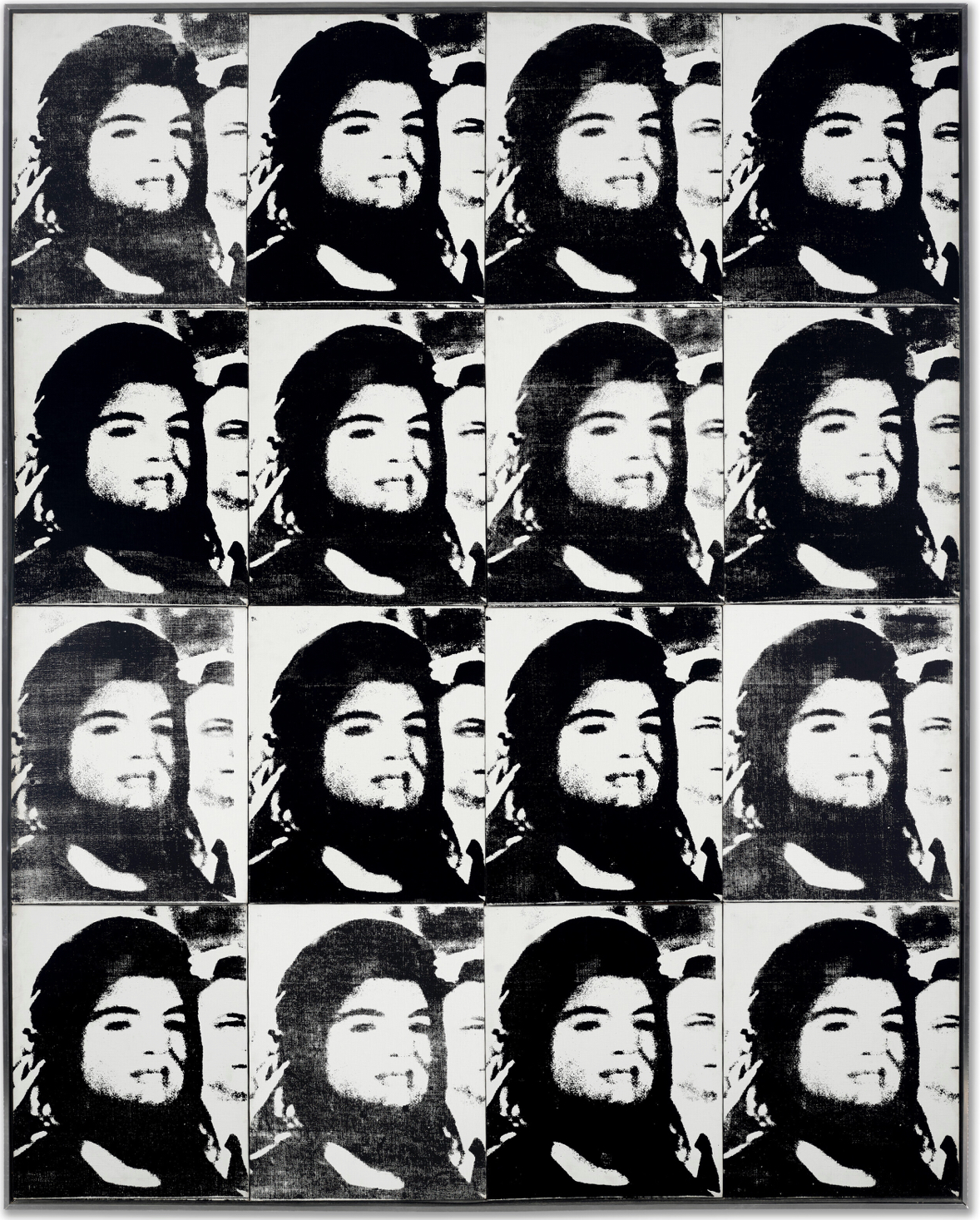
Sixteen Jackies, a monumental painting, made up of 16 joined canvases, represents the pinnacle of Warhol’s examination into the soul of America. In 1963 Warhol had only recently begun to realize his transformation from successful commercial illustrator to renowned Pop artist. After a couple years making paintings inflected by popular culture from Batman to Campbell’s Soup, in 1962 he began incorporating photographic silkscreen printing, elaborating on his critique of mass culture by adopting the commercial tools of reproduction into his painting process. The Jackie paintings would solidify his status as the foremost artist of American pop culture and celebrity. Warhol was drawn to the iconic visage of Jackie Kennedy, ubiquitous throughout media coverage of the event. As First Lady she had epitomized beauty and glamour, known for her Chanel suits and pillbox hats in cheerful pastels. After the tragedy she came to personify the nation’s grief, stepping off Air Force One dressed in all black.
Warhol selected eight news photographs of Mrs. Kennedy as the basis for a number of works in his Jackie series. Painted in 1964, the offered Sixteen Jackies is the only work from the series that repeats the same image in a 4-by-4 grid in a monochromatic palette. The painting captures Jackie’s personal grief, together with the shock of the entire world. The image that Warhol chose to repeat 16 times in this composition, is particularly powerful. Clipped from a photo of Jackie during the funeral procession for Kennedy, it crops into her stoic facial expression beneath a dark organdie veil. By isolating her image and further abstracting it through the silkscreen process, Warhol highlights the dichotomy of her iconic public image and her unknowable private grief. Warhol’s Sixteen Jackie sits at the pinnacle of the group of works that became known as his Death and Disaster paintings. From 1962 to 1965, the artist appropriated tabloid images of car crashes, nuclear explosions, electric chairs, race riots, poisonings and other violent events in popular culture, exploring the death and disaster that pervaded commercial messaging and mass media. In reproducing the images, often repeatedly, Warhol drew attention to the proliferation of brutal iconography in a growing multimedia world.
Sixteen Jackies, 1964
Sotheby’s New-York: 15 November 2021
Estimated: USD 15,000,000 – 20,000,000
USD 33,872,250
Sixteen Jackies | The Macklowe Collection | 2021 | Sotheby’s (sothebys.com)
ANDY WARHOL
Sixteen Jackies, 1964
Acrylic and silkscreen ink on canvas, in sixteen parts
Each: 20×16 inches (50.8 x 40.6 cm)
Overall: 81×65 inches (205.7 x 165.1 cm)
The sixteen canvases that comprise the present work together impart a nuanced and complex rendering of Jackie Kennedy, and furthermore offer a meditation on a country reeling from the loss of a political and cultural icon. Notably, the canvases that comprise Sixteen Jackies were originally included as part of the twenty-four Jackies that Warhol included in his legendary solo exhibition at the Institute of Contemporary Art in Philadelphia in 1965. That same year, Sixteen Jackies was acquired by celebrated Philadelphia collectors David and Gerry Pincus who, as important early supporters of the ICA, had been introduced to Warhol during the exhibition. Sixteen Jackies remained in the Pincus Collection until 2006, when it was acquired by the Macklowe Collection.
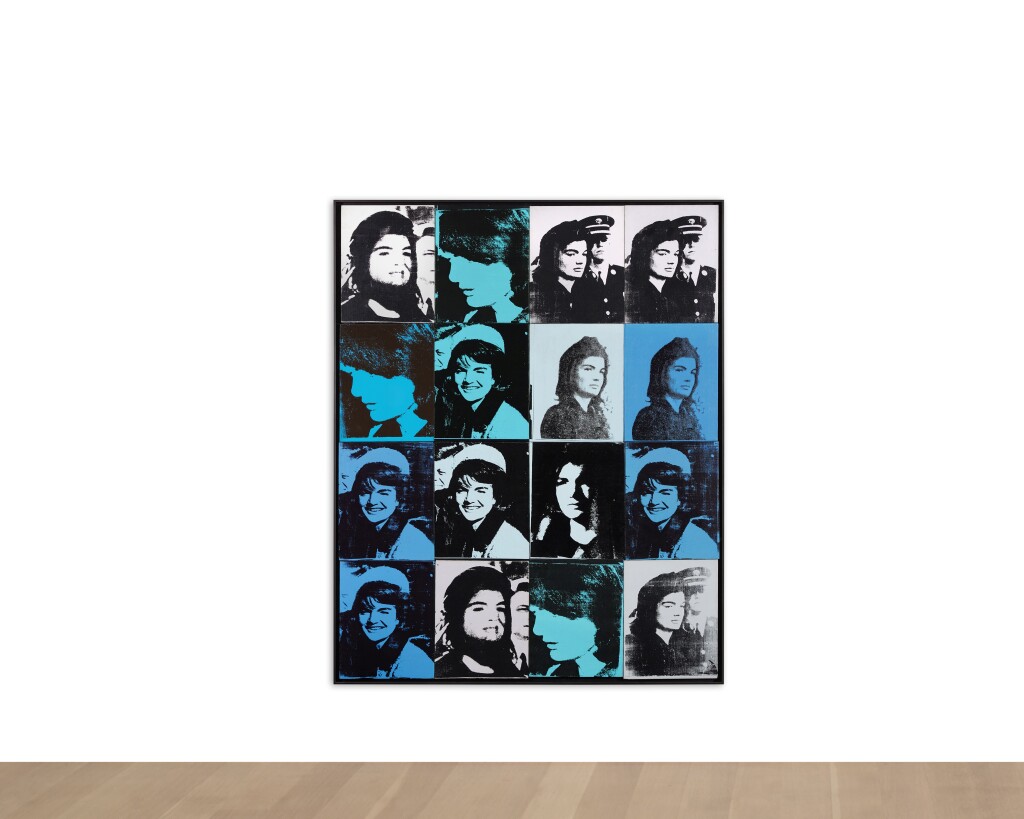
At once immediate and elusive, intimate and inaccessible, beloved yet haunting, the face of Jacqueline Kennedy—repeated sixteen times across the canvases of the present work—elicits an immediate emotive effect rivaled by few other famed visages of the modern era. A masterwork of Andy Warhol’s celebrated oeuvre, Sixteen Jackies powerfully exemplifies Warhol’s singular ability to appropriate and manipulate familiar imagery to examine greater cultural currents and moments—and the staggering power those moments can hold, decades later. Dating from the height of the artist’s groundbreaking career, Sixteen Jackies combines two of Warhol’s most sustained thematic fascinations: the shadowed tragedy of death and of the immortality of celebrity. The sixteen canvases that comprise the present work together impart a nuanced and complex rendering of Jackie Kennedy, and furthermore offer a meditation on a country reeling from the loss of a political and cultural icon. Notably, the canvases that comprise Sixteen Jackies were originally included as part of the twenty-four Jackies that Warhol included in his legendary solo exhibition at the Institute of Contemporary Art in Philadelphia in 1965. That same year, Sixteen Jackies was acquired by celebrated Philadelphia collectors David and Gerry Pincus who, as important early supporters of the ICA, had been introduced to Warhol during the exhibition. Sixteen Jackies remained in the Pincus Collection until 2006, when it was acquired by the Macklowe Collection.
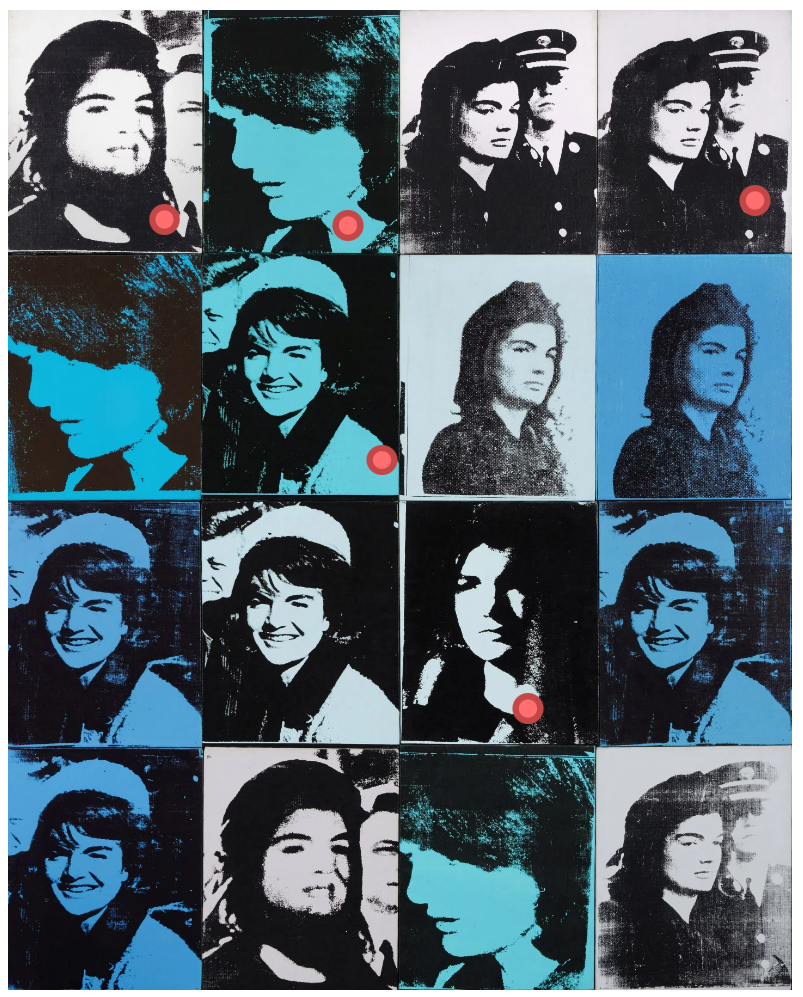
The square grid composition of Sixteen Jackies asserts a sense of formal structural order which is countered by the continuously shifting and evolving landscape: colors change, expressions shift, and the subject may seem intimately close to the picture plane or set back and psychologically withdrawn. But in all cases Mrs. Kennedy is fulfilling her responsibilities as a public figure, regardless of whether she is a sunny presence on her husband’s official tours or a grieving widow symbolically holding the United States together during a catastrophe. The manner in which these various images refuse to settle down into coherence is an indication of Warhol’s great talents. There is no obvious narrative, only sixteen snapshot moments presented in isolation.
Captivated by the notions of celebrity and death, Warhol desensitized the overwhelming feelings of national loss through replication and multiplication, underscoring the manipulative potentiality of mass media. Warhol was fully engrossed in the public broadcasting of John F. Kennedy’s assassination and the events that followed and disturbed by the media’s ability to manipulate and yet simultaneously celebrate the power of the icon. The President’s funeral was one of the first national events to be extensively covered by the American media; TV networks went live with wall-to-wall coverage and news editors documented every twist and turn. Jackie’s life became a commodity as her face lined newspaper covers, magazines articles, and television screens. Indeed, her facial expressions were recapitulated in the media “to such an extent that no better historical monument on the exhibitionism of American emotional value is conceivable” (Rainer Crone, Andy Warhol, New York 1970, p. 29). As an entire population sank into the shared psychosis of bereavement, the media’s carefully choreographed reaction precipitated the Jackie corpus: one of the most prodigious critiques of mass communication ever conceived. This deft appropriation of a national icon perfectly encapsulates Warhol’s subversive style. It is no surprise that when Warhol first painted Jackie in 1962, he used the same full-frontal movie-star format in which he had originally depicted Marilyn Monroe and Elizabeth Taylor. He treated Jackie just as he treated them, not as a true portrait subject, but rather as an icon: an image that had become entirely ubiquitous with the American media.
Sixteen Jackies collectively comprises an immensely evocative catalogue of images that remain to this day a seminal treatise on the emotional conditioning inherent to mass culture. For Warhol, the genre of portraiture became a form of biography. The distilled emotions of America’s first lady are enshrined on canvas in an image which captures the private side of a very public event. Jackie is immortalized as a timeless and tragic heroine whose very image recalls one of the twentieth century’s defining moments. In keeping with his very best work, celebrity, tragedy and the spectacle of death inhabit every pore of this iconic painting.
Sixteen Jackies, 1964
Sotheby’s New-York: 10 May 2011
Estimated: USD 20,000,000 – 30,000,000
USD 20,242,500
(#21) Andy Warhol (sothebys.com)
ANDY WARHOL
Sixteen Jackies, 1964
Acrylic and silkscreen ink on canvas in 16 panels
Each: 20×16 inches (50.8 x 40.6 cm)
Overall: 80×64 inches (203.2 x 162.6 cm)
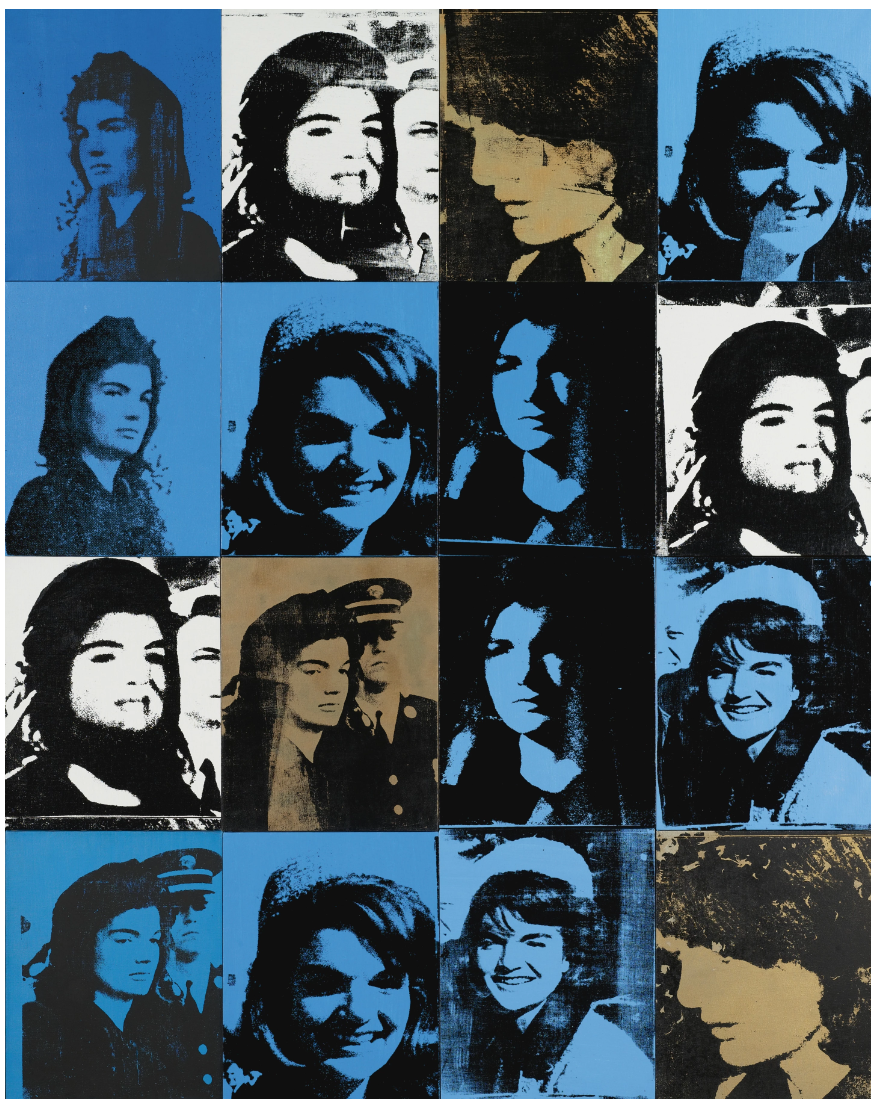
Painted in 1964 at the heart of Andy Warhol’s most historic period, Sixteen Jackies is a complex and extraordinarily rare declaration of the twin pedestals on which Warhol’s artistic genius rest: ubiquitous public icons and serial imagery. A tour-de-force presentation of one of Warhol’s most poignant images – his well-known series of portraits of the First Lady, Jacqueline Kennedy, as seen by millions through the press coverage surrounding her husband’s assassination – Sixteen Jackies is also a powerful celebration of Warhol’s inspired use of multiple image repetition as a thematic device.
Nine Jackies
Nine Jackies
Phillips New-York: 15 November 2012
USD 12,402,500
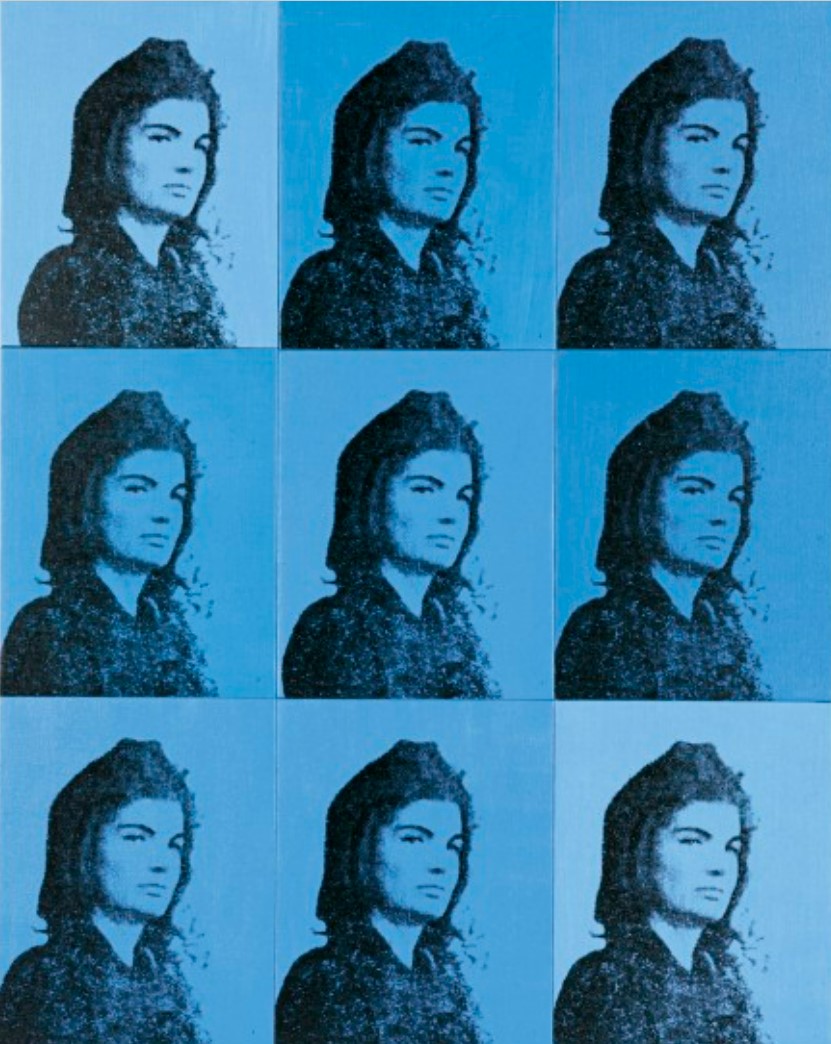
ANDY WARHOL
Nine Jackies, 1964
Acrylic and silkscreen ink on linen, on nine canvases
Overall: 60×48 inches (152.4 x 121.9 cm)
Four Jackies
Jackies, 1964
Christie’s London: 1 July 2014
Estimated: GBP 1,500,000 – 2,000,000
GBP 1,426,500
ANDY WARHOL(1928-1987) (christies.com)
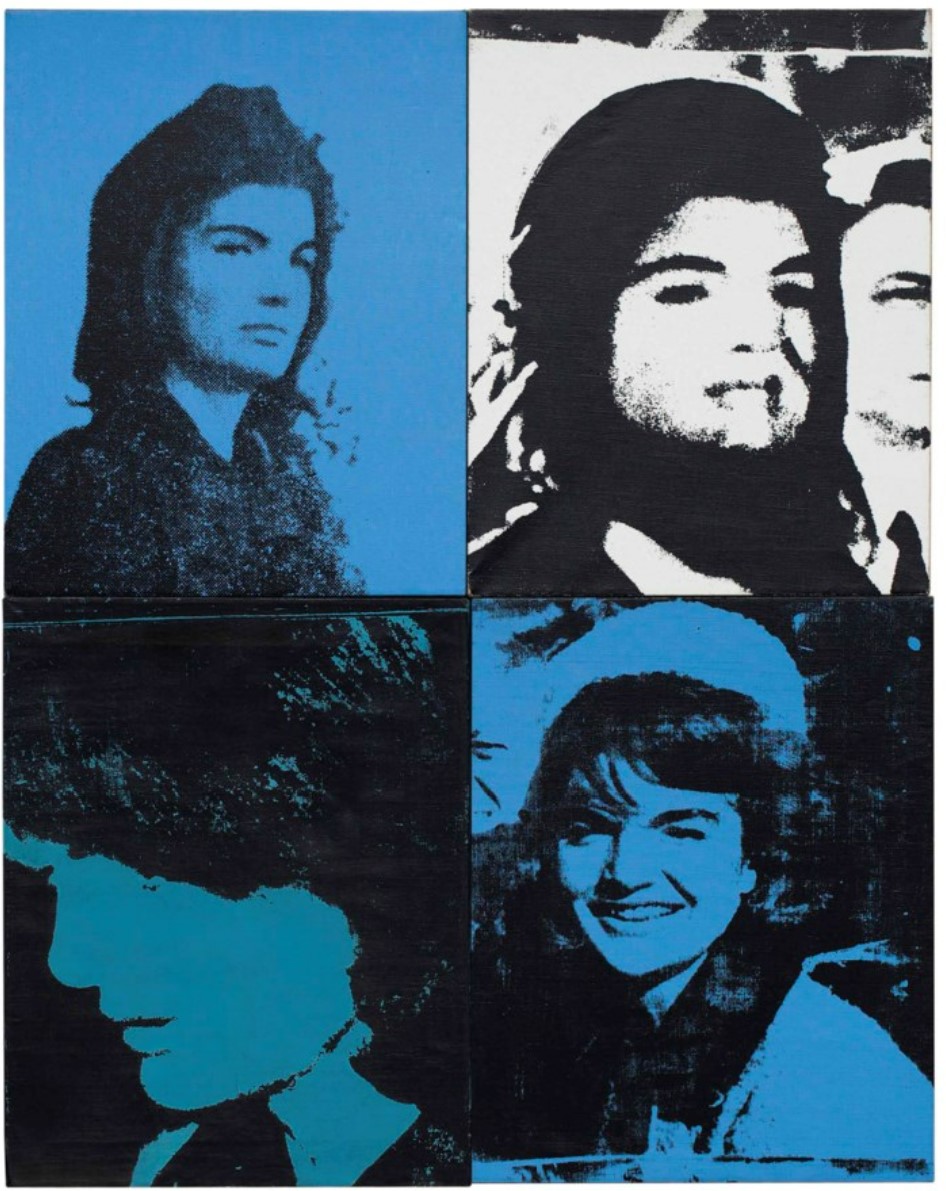
ANDY WARHOL
Jackies, 1964
Acrylic and silkscreen ink on linen, in four parts
Each: 20×16 inches (50.8 x 40.6 cm)
Overall: 40×32 inches (101.6 x 81.2 cm)
The images flash as though introducing the top of the news hour: ‘woman smiling’, flickers to ‘woman grieving’. In Four Jackies, Andy Warhol offers the spectre of glamour, tragedy and celebrity in his closely cropped images of Jacqueline Kennedy. Executed in 1964, Warhol based his series of Jackie paintings on the press coverage in the immediate aftermath of the assassination of John F. Kennedy in Dallas on November 22, 1963. Warhol controversially juxtaposes the smiling First Lady relaxed and glamorous first lady against images of the grieving Jackie after the most famous gunshots in 20th century American history.
Four Jackies
Sotheby’s New-York: 14 November 2007
USD 5,641,000
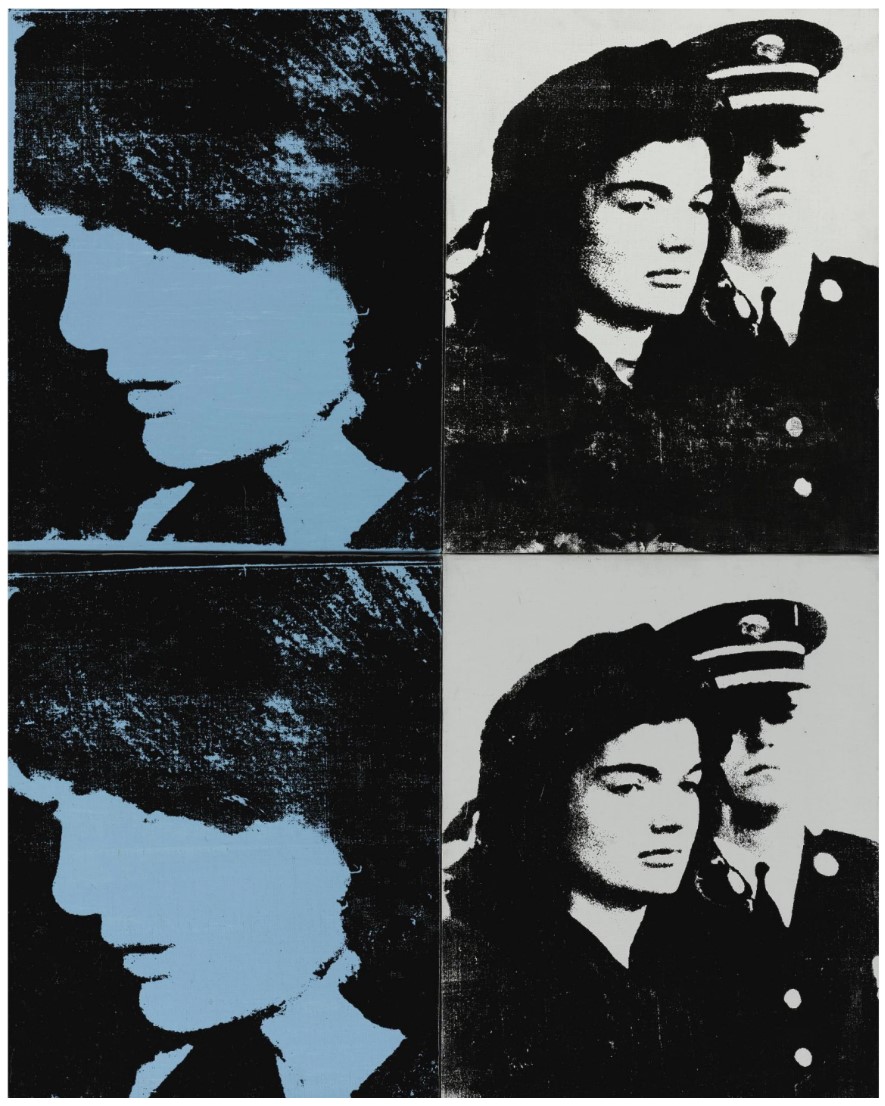 ANDY WARHOL
Four Jackies, 1964
Acrylic and silkscreen ink on canvas in four parts
40×32 inches (101.6 x 81.3 cm)
Three Jackies
Three Jackies
Sotheby’s New-York: 11 November 2011
USD 2,882,500
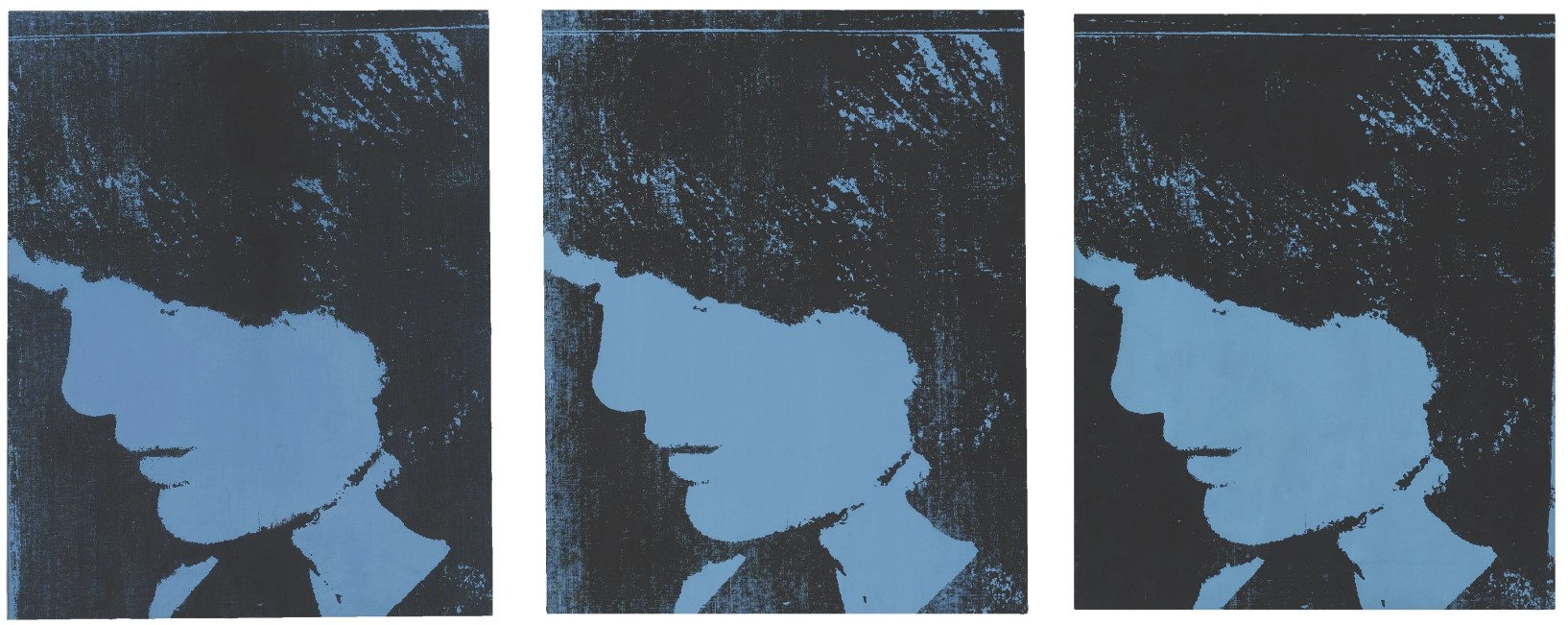
ANDY WARHOL
Three Jackies, 1964
Acrylic and silkscreen ink on canvas in three parts
Each: 20×16 inches (50.8 x 40.6 cm)
Each signed and dated 64 on the overlap
Jackie (Smiling)
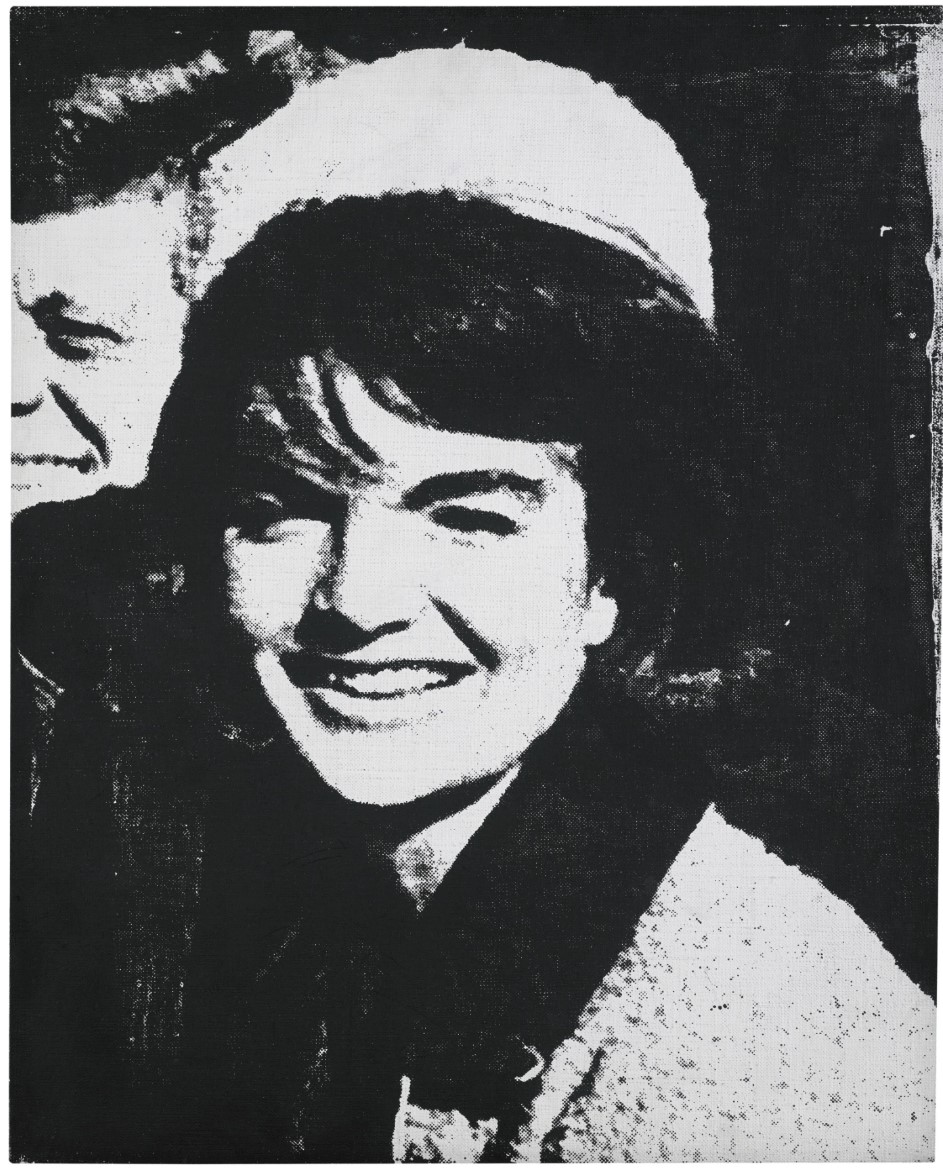
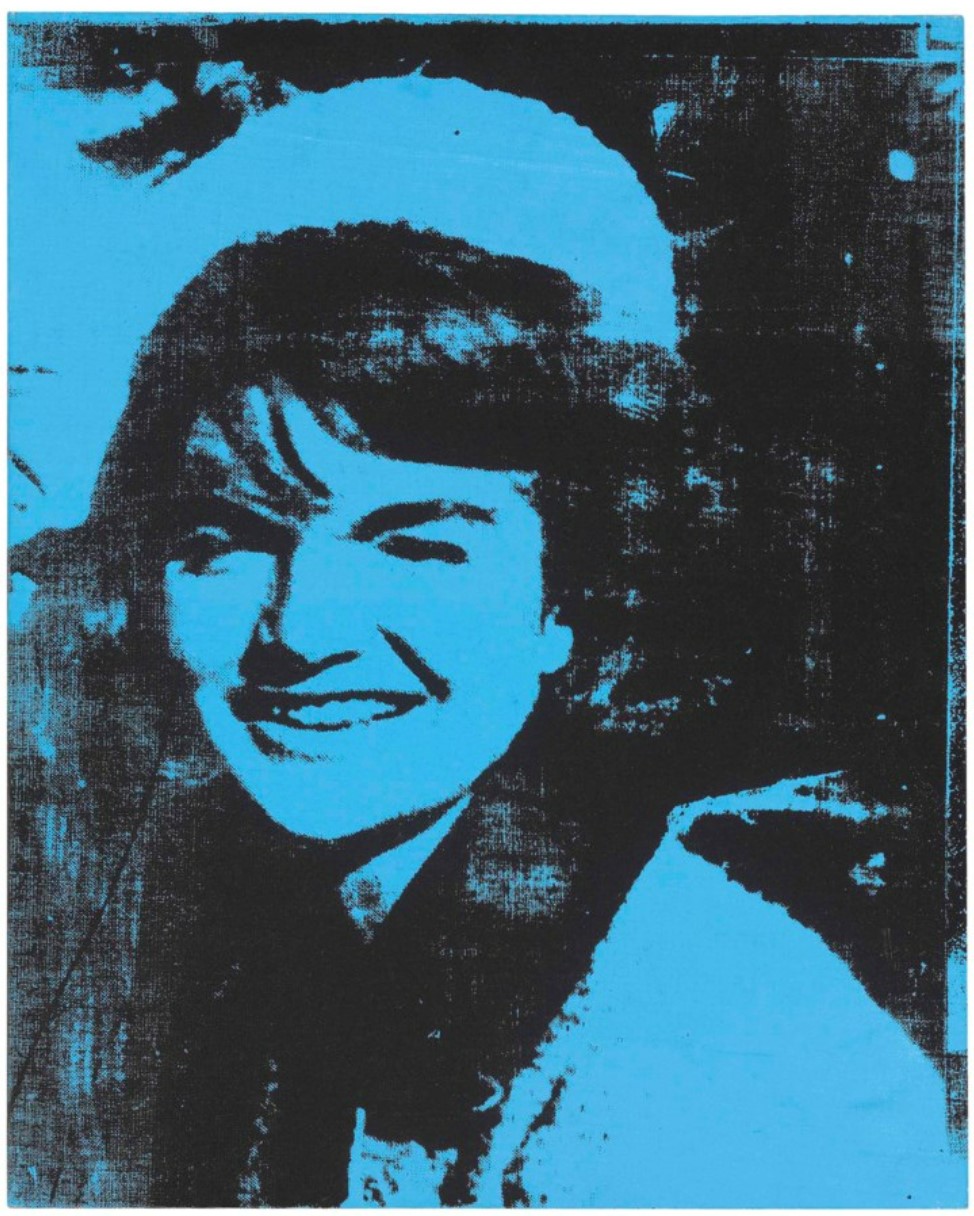
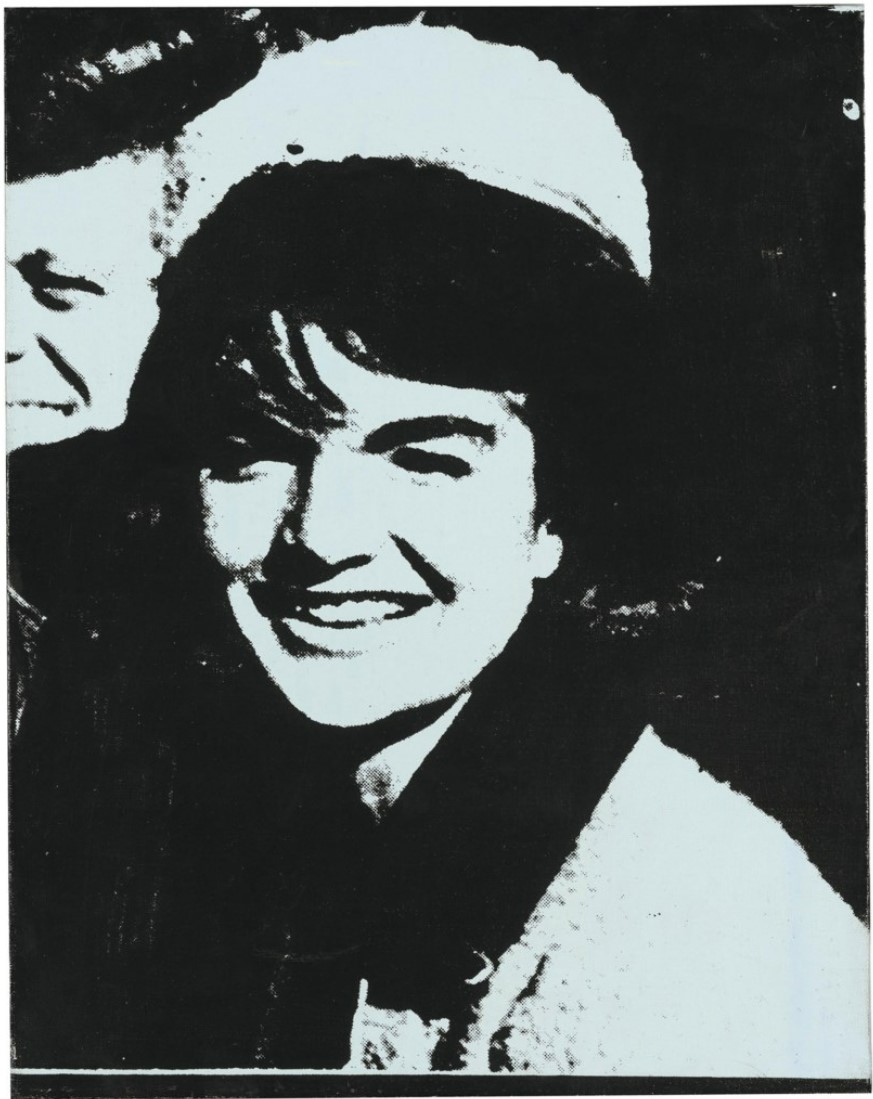
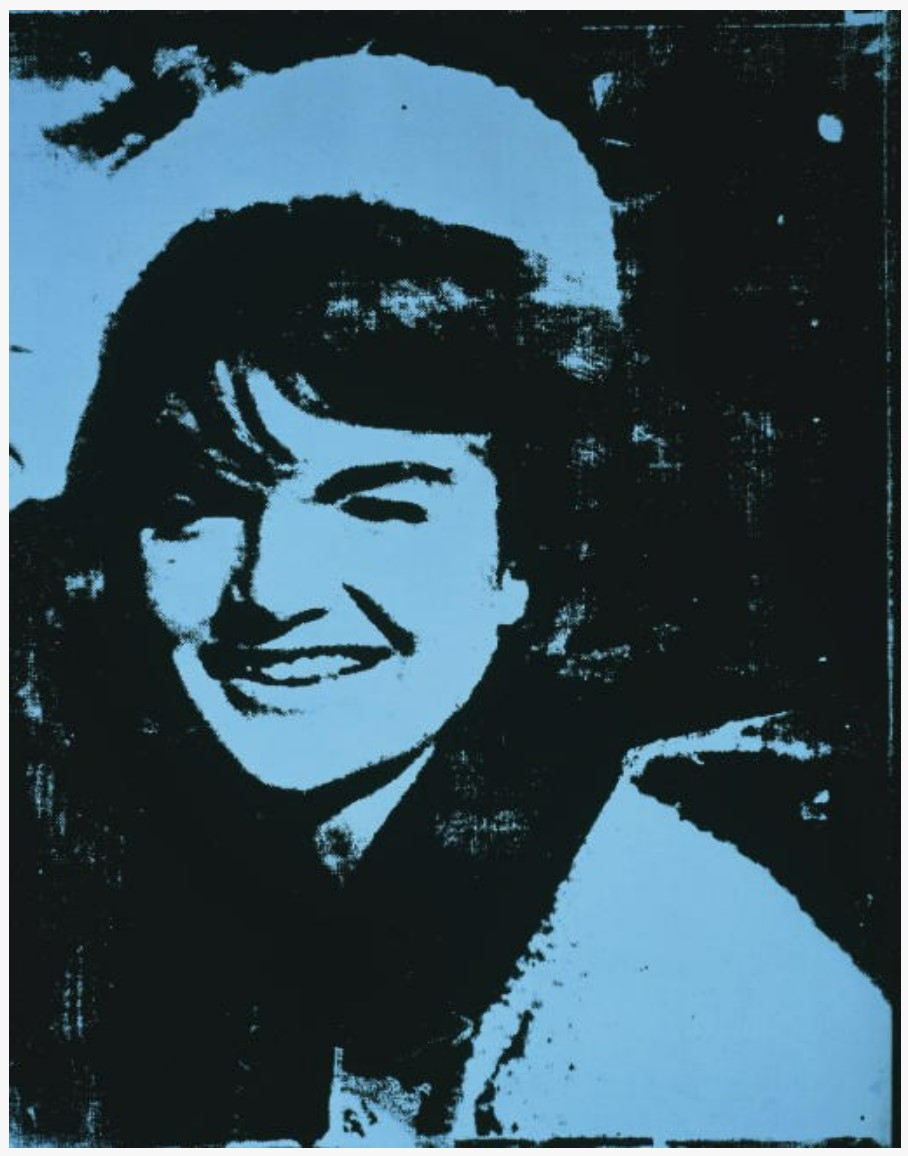
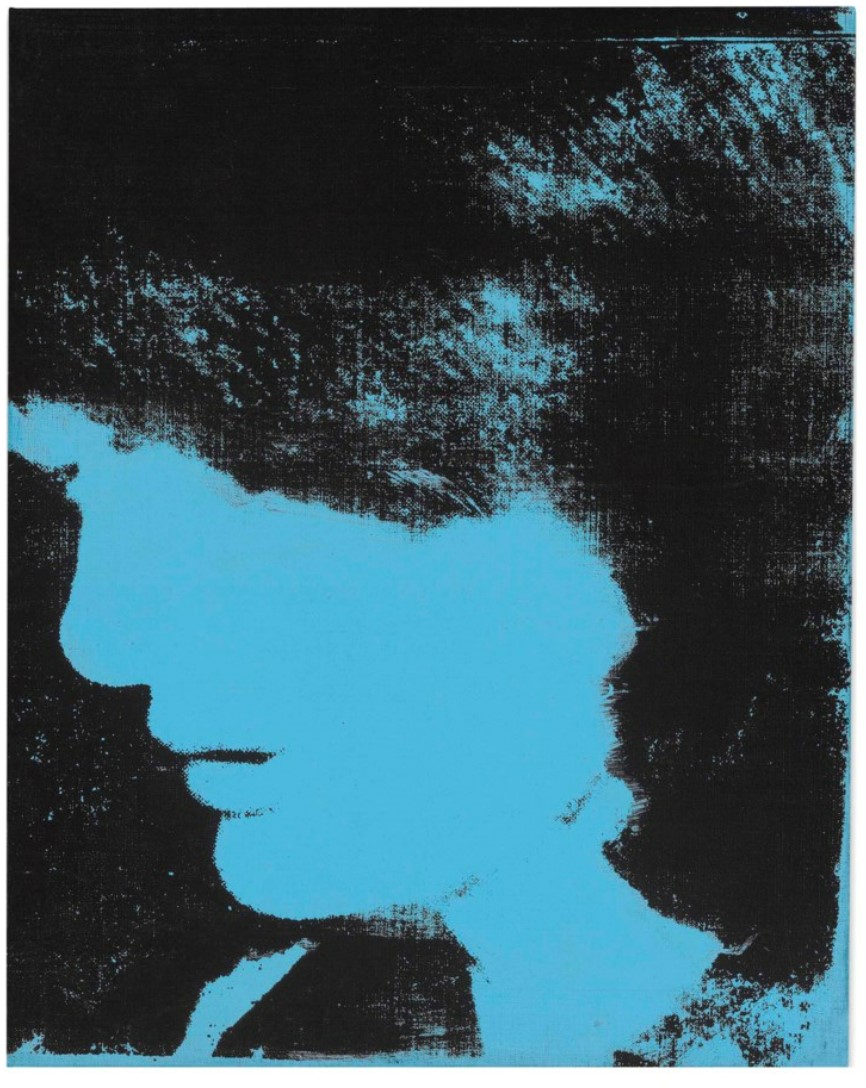
In Jackie, Warhol immortalizes the moment before the president’s death on that chilly autumn afternoon in Dallas, Texas. Clad in her fashionable pink Chanel suit and coordinating pillbox hat, with her hair slightly tousled by the wind, Jackie is caught in a frozen smile as she arrives with the president at Love Field. Warhol forces attention towards Jackie’s face, closely cropping the original news photograph that’s become synonymous with the event itself. In this particular example, one also clearly glimpses the unmistakable profile of John F. Kennedy himself in the upper left corner, flashing a beaming smile just before the motorcade began its fateful journey toward Dealey Plaza. The relaxed air of nonchalance of the presidential couple that Warhol highlights in Jackie remains all the more chilling considering the harrowing events that inevitably followed. Cloaked in an ethereal veil of pale cerulean blue, Jackie is a poignant snapshot that lingers with the calculating mix of tragedy, glamour and celebrity that pervades Warhol’s best work. Like his portraits of Marilyn and Liz, Warhol highlights the tragic beauty of Camelot’s queen, seizing upon the media frenzy that dominated nearly every major news outlet in the hours and days following Kennedy’s death.
In Jackie, Warhol celebrates an American archetype, presenting a stylish and youthful first lady. This is the “Jackie” so beloved by the American public. A venerable fashion icon, her effortless elegance and classic sense of style galvanized the nation during the early years of the 1960s. In Jackie, she epitomizes the youth, vitality and glamour of Camelot. She wears the pink Chanel suit and matching pillbox hat with her hair done in a fresh flip, and her face displays a casual and effortless smile. The pink Chanel suit that Jackie wore on that fateful day, made from a strawberry-colored wool bouclé, was one of the president’s favorites, and has become synonymous with the event itself. (Jackie famously refused to take it off despite it being stained with the president’s blood). Rather than depict the image in full color, however, Warhol turns the image into its ghostly opposite, rendering the scene in a wash of pale blue acrylic that he hand-painted with a wide brush.
Jackie, 1964
Sotheby’s New-York: 16 November 2023
Estimated: USD 800,000 – 1,200,000
USD 666,750
Jackie | Contemporary Day Auction | 2023 | Sotheby’s (sothebys.com)
ANDY WARHOL (1928 – 1987)
Jackie, 1964
Acrylic and silkscreen ink on canvas
20×16 inches (50.8 x 40.6 cm)
Depicting one of the most beloved first ladies in American history, Andy Warhol’s Jackie is the ultimate expression of Warhol’s deep understanding of the American media landscape and an astute commentary on its perpetuation of fame. Executed in 1964, at the very height of Warhol’s most celebrated period, Jackie is a poignant and brilliantly rendered distillation of the core tenets of his aesthetic focus: death and celebrity. Here, First Lady Jacqueline Kennedy Onassis beams into the camera after arriving at Dallas Love Field airport on November 22nd, 1963: the day that her husband, United States President John F. Kennedy was assassinated. Moments after this photograph was taken, the couple would begin a limousine journey that would be interrupted by the most significant assassination of the Twentieth Century. Jackie is immediately striking for its vibrant blue coloring and the beaming smile which adorns the face of the First Lady. The innocence of her happiness invokes an emotional poignancy and sense of dread; her radiance suffuses the work with an inescapable mood of impending morbidity and portentous doom. This is only heightened by the completely veiled rendering of Kennedy Onassis’ eyes, which foreshadow the tragic event just on the horizon. Brimming with artistic genius and conceptual economy, Jackie encapsulates the allure of unlimited celebrity, critiques the manipulative power and replicating effects of mass-media, and is a groundbreaking response to one of the most devastating moments of recent American history.
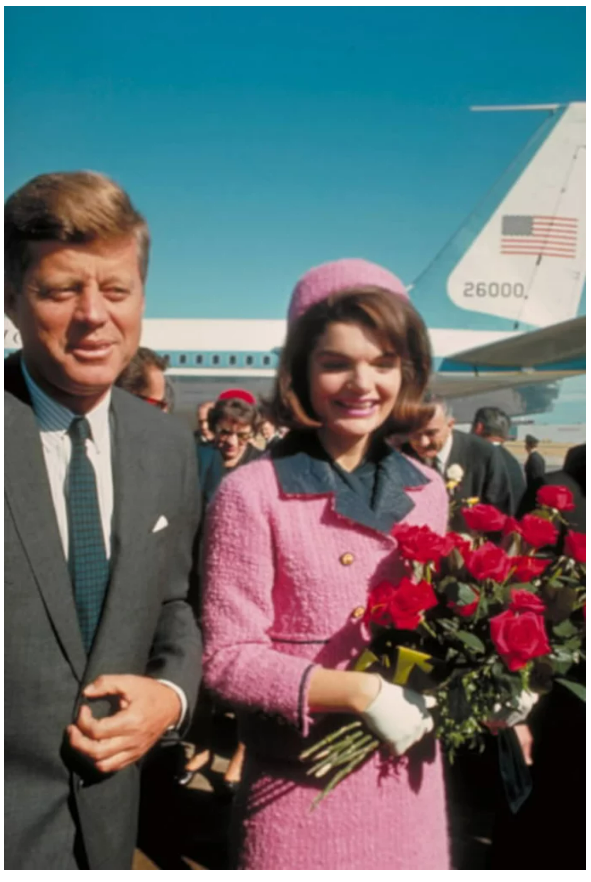
JOHN AND JACKIE KENNEDY AT LOVE FIELD IN DALLAS ON NOVEMBER 22, 1963. PHOTO © ART RICKERBY TIME & LIFE PICTURES/SHUTTERSTOCK
Warhol traces the media’s exposé of Jackie’s emotional journey by selecting source images from both before and after the assassination. As the media callously reported the catastrophe through photographs and speculation from its closest and most affected witness, Warhol emphasizes Jackie’s courage and resilience by purposefully recounting the president’s assassination through the candid expressions of Jackie as she was left to represent her family in the face of a grieving nation. In the original LIFE Magazine photograph of the President and First Lady’s arrival, we see just how infatuated with the Kennedy’s America truly was: hundreds of civilians lined the tarmac just to get a glimpse of the pair and the always-poised Jackie gracefully cradles a bouquet of red roses just gifted to her by the mayor’s wife. An emblem of youth, beauty, and style, Jackie became the ultimate feminized American dream. Warhol, aware of America’s infatuation for the First Lady, has closely cropped his image to reveal just her face, glowing with a pure and now-ironic sense of ease, allowing the viewer’s mind to complete the picture.
Jackie (Smiling) #1
Jackie, 1964
Sotheby’s New-York: 16 November 2023
Estimated: USD 800,000 – 1,200,000
USD 666,750
Jackie | Contemporary Day Auction | 2023 | Sotheby’s (sothebys.com)
ANDY WARHOL (1928 – 1987)
Jackie, 1964
Acrylic and silkscreen ink on canvas
20×16 inches (50.8 x 40.6 cm)
Jackie, 1964
Christie’s New-York: 18 May 2017
Estimated: USD 400,000 – 600,000
USD 595,500
Andy Warhol (1928-1987) (christies.com)
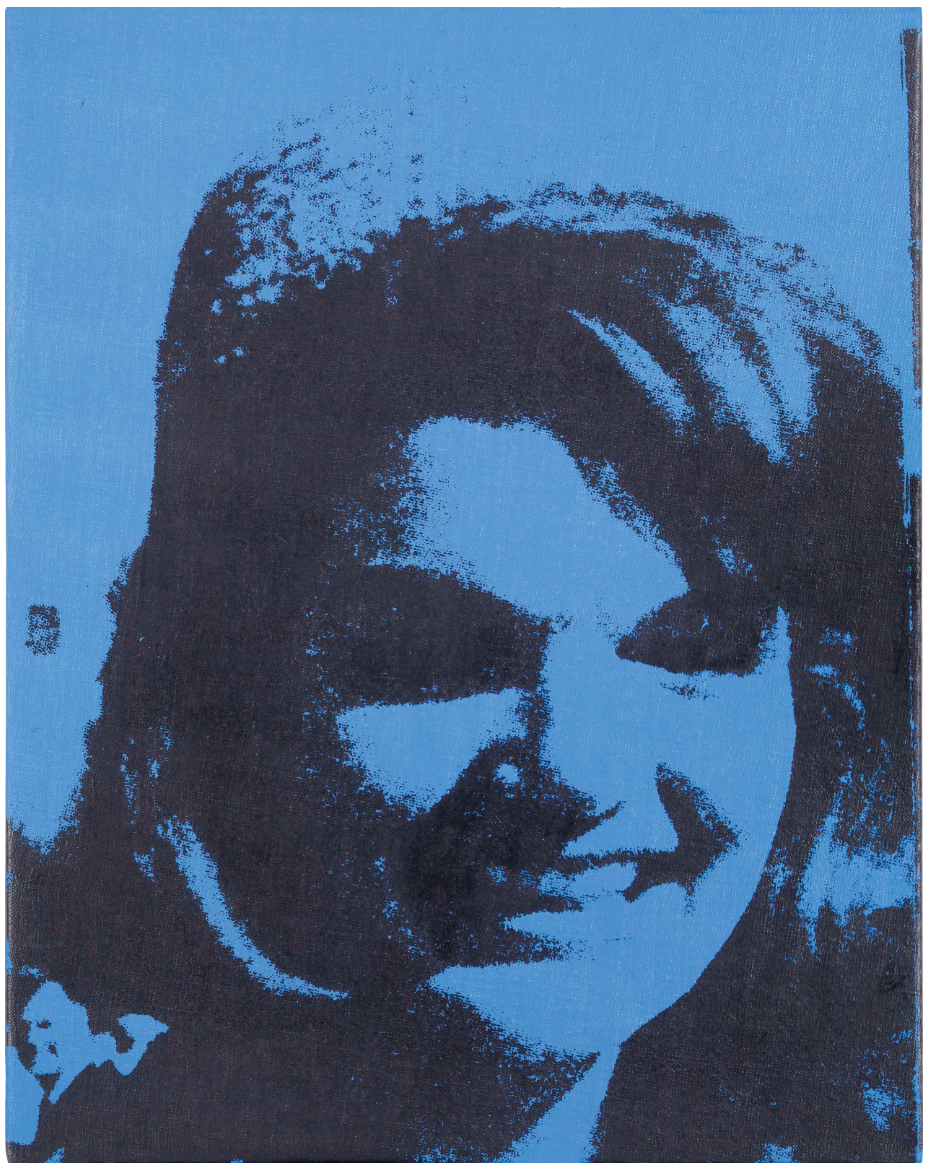
ANDY WARHOL (1928-1987)
Jackie, 1964
Synthetic polymer and silkscreen ink on canvas
20×16 inches (50.8 x 40.6 cm)
Jackie, 1964
Christie’s New-York: 12 May 2011
Estimated: USD 700,000 – 1,000,000
USD 1,482,500
Andy Warhol (1928-1987) (christies.com)
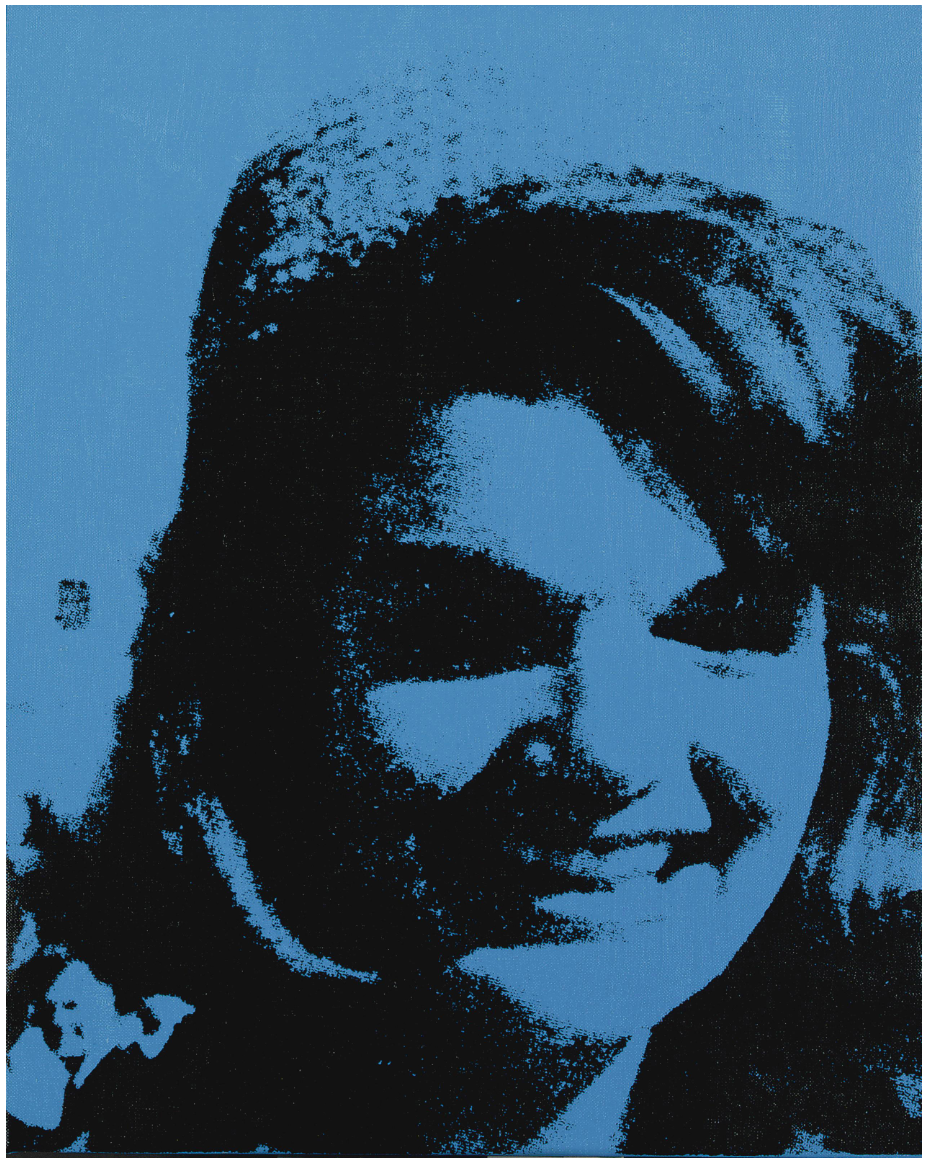
Andy Warhol (1928-1987)
Jackie, 1964
Synthetic polymer and silkscreen ink on canvas
20×16 inches (50.8 x 40.6 cm)
Stamped with the Andy Warhol Art Authentication Board, Inc. stamp
Numbered ‘A100.0410’ (on the reverse)
Jackie (Smiling) #2
Jackie, 1964
Sotheby’s New-York: 17 May 2019
Estimated: USD 1,000,000 – 1,500,000
USD 1,160,000
ANDY WARHOL
Jackie, 1964
Acrylic and silkscreen ink on canvas
20×16 inches (50.8 x 40.6 cm)
Christie’s New-York: 14 November 2018
USD 1,302,500
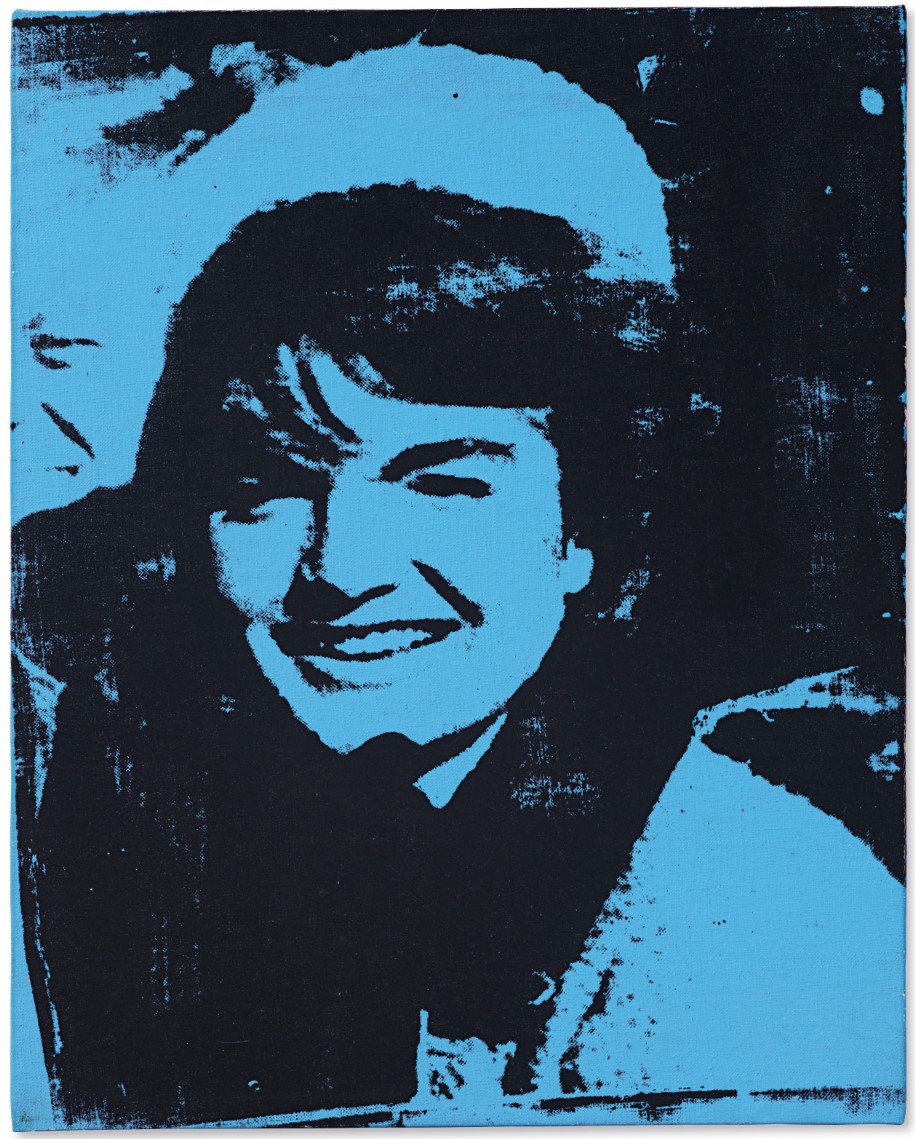
ANDY WARHOL
Jackie, 1964
Synthetic polymer and silkscreen ink on canvas
20×16 inches (50.5 x 40.6 cm)
Signed ‘Andy Warhol’ (on the reverse)
Signed again twice ‘Andy Warhol’ (on the overlap)
Jackie, 1964
Sotheby’s London: 28 June 2016
Estimated: GBP 1,200,000 – 1,800,000
GBP 1,445,000 / USD 1,905,530
 ANDY WARHOL
Jackie, 1964
Acrylic and silkscreen ink on canvas
20×16 inches (50.7 x 40.7 cm)
Christie’s New-York: 10 November 2015
USD 1,355,000
ANDY WARHOL
Jackie, 1964
Synthetic polymer paint and silkscreen inks on canvas
20×16 inches (50.8 x 40.6 cm)
Christie’s New-York: 10 May 2011
USD 1,986,500
ANDY WARHOL
Jackie, 1964
Acrylic and silkscreen ink on canvas
20.5 x 16 inches (52.1 x 40.6 cm)
Christie’s New-York: 13 November 2007
USD 1,889,000
ANDY WARHOL
Jackie, 1964
Acrylic and silkscreen ink on canvas
20×16 inches (50.8 x 40.6 cm)
Sotheby’s New-York: 10 May 2011
USD 3,722,500
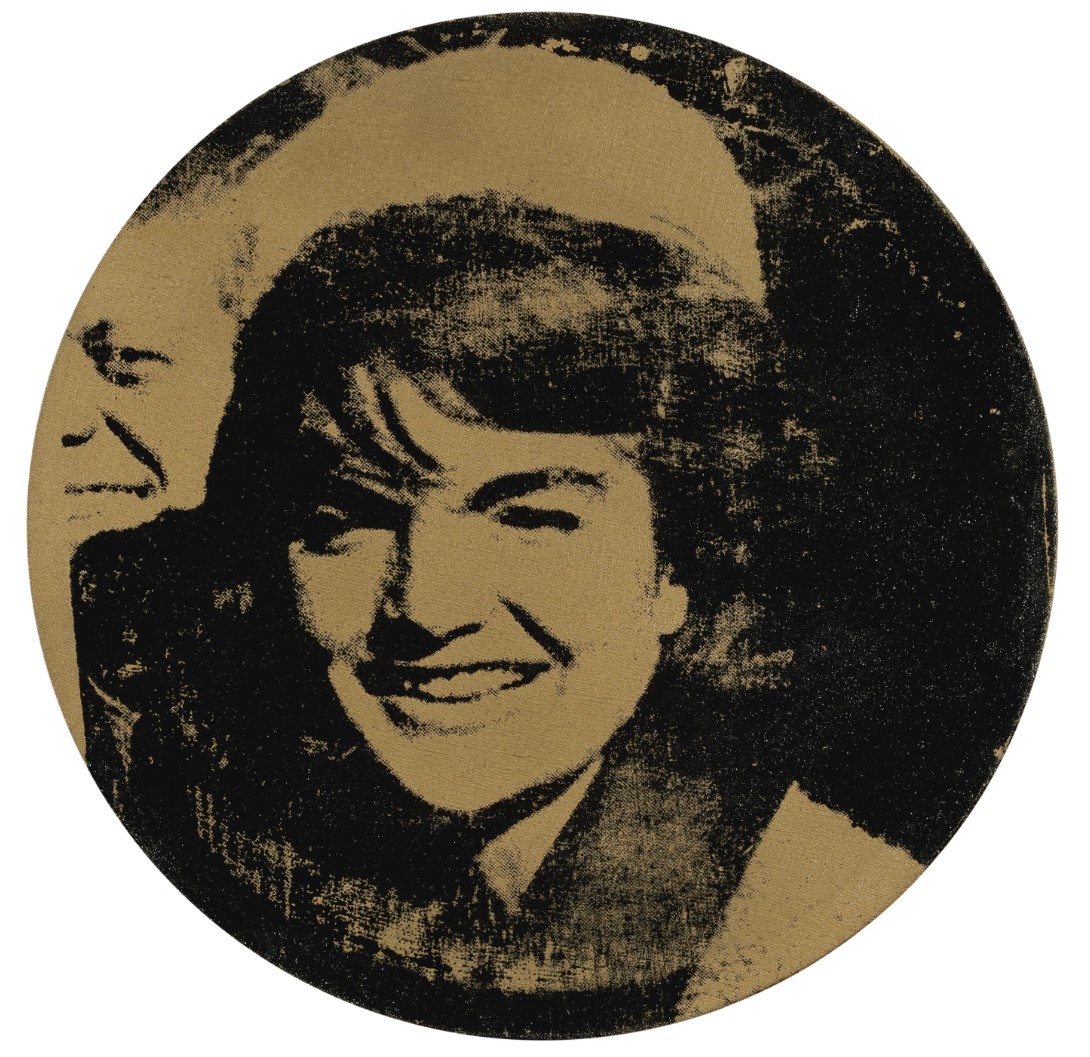
ANDY WARHOL
Round Jackie, 1964
Gold paint and silkscreen ink on canvas
Diameter: 17.7 inches (45.1 cm)
Jackie (The Widow)
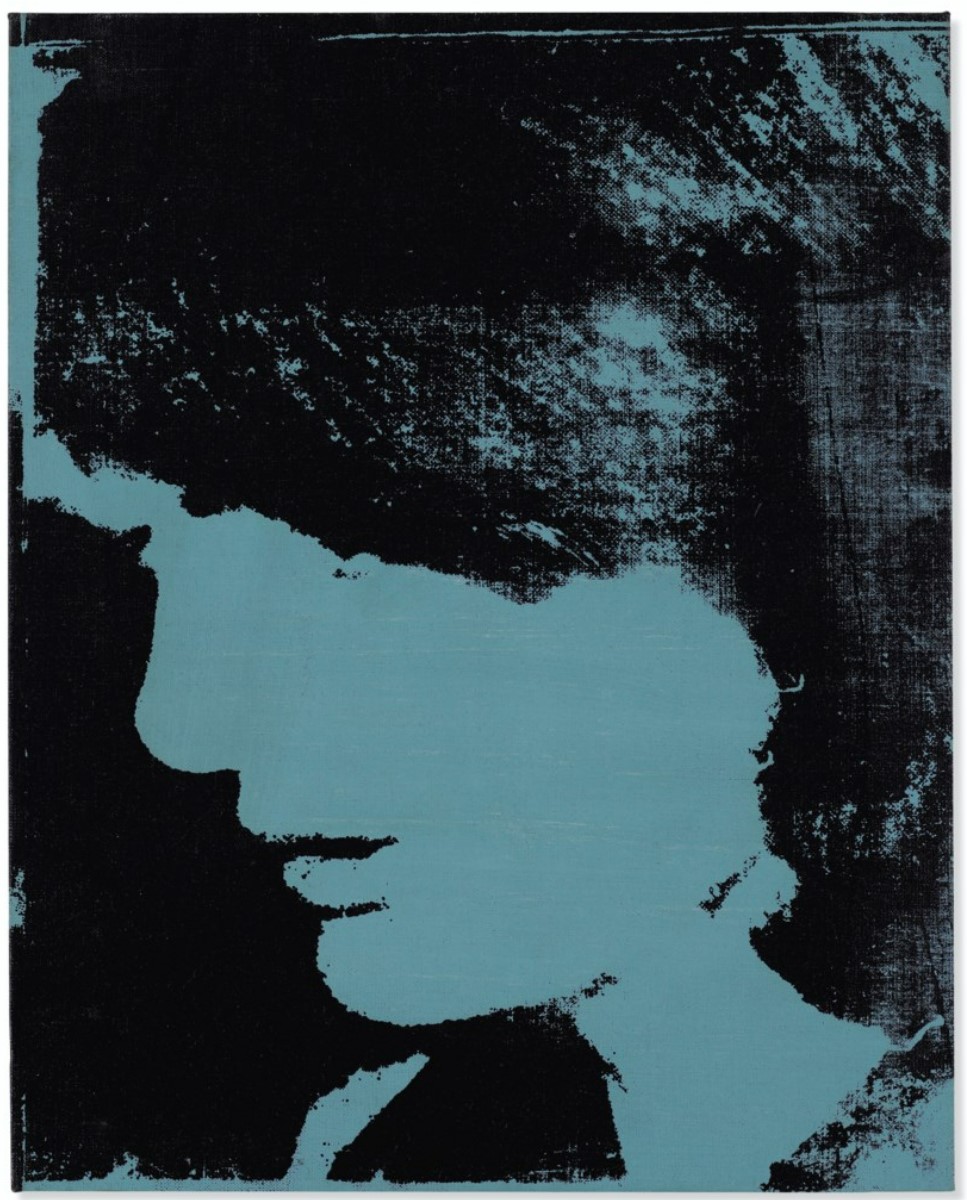
Those paintings feature the newly widowed First Lady at her husband’s funeral, poignantly embodying the devastating, somber mood of the nation in the aftermath of the assassination. Though reminiscent of the stark Pop format that so often appealed to Warhol, here there is no sense of irony, no sense of distance. Warhol has created a dark yet heartfelt memorial to the First Lady’s suffering and strength. The funeral veil in the source image here appears as a nondescript dark cloud around her face. Jackie perfectly captures her calm dignity; the composition of the picture, which closes in on the head to the exclusion of the outside world, increases the sense of tender intimacy. This sense of proximity is heightened by the scale of the work, with Jackie’s head essentially in life-size, increasing the directness and immediacy of this absorbing image. In his Jackie series, Warhol added Kennedy’s widow to his pantheon of female stars, alongside Marilyn Monroe and Elizabeth Taylor. Rather than depict the image in full color, Warhol transforms the image into its ghostly opposite, rendering the scene in a wash of blue acrylic that he hand-painted with a wide brush. Warhol reserved only three colors for the Jackie series—blue, white and gold—and critics have compared his portrayal to the religious icons of the artist’s youth. The contrast of the original source image is heightened to create a more dramatic effect, and the background of the painting is utterly steeped in darkness. The First Lady’s image is locked into place by silkscreen ink, captured in photographic precision and frozen in time.
Although Warhol created several variations in different colors, his blue Jackies are arguably the most iconic. The register of the brilliant blue background against the crispness of the black screen results in an image of extraordinary clarity. In addition, by allowing her face, left bright in comparison with the darker backgrounds, to occupy the large part of each work, Warhol foregrounds the emotional intensity. Like some Orthodox icons, her almost Madonna-like face occupies the large part of each area. Warhol’s picture is thereby filled with her pain, the images becoming a modern-day Pietà, a meditative exploration of grief. This is emphasized by Warhol’s choice of blue as the main color, cold, yet simultaneously absorbing. It is also no coincidence that blue is traditionally the color of the Madonna in Renaissance paintings, where her gown was red, representing the earth, and her robe was blue, indicating the heavens—Madonna thus representing a crucial link between Heaven and earth.
Jackie, 1964
Estimated: USD 500,000 – 700,000
USD 630,000
Jackie, 1964
Acrylic and silkscreen ink on canvas
20×16 inches (50.8 x 40.6 cm)
Signed, numbered and dated ‘Andy Warhol 1964 A690.1’ (on the overlap)
Jackie, 1964
Christie’s New-York: 4 March 2020
Estimated: USD 600,000 – 800,000
USD 615,000
Andy Warhol (1928–1987), Jackie | Christie’s
ANDY WARHOL
Jackie, 1964
Acrylic and silkscreen ink on canvas
20×16 inches (50.8 x 40.6 cm)
In the present work, Warhol chose to use a photograph of the First Lady at her husband’s funeral—veiled and in mourning—that took place two days after his assassination. Rather than depict the image in full color, Warhol transforms the image into its ghostly opposite, rendering the scene in a wash of blue acrylic that he hand-painted with a wide brush. Warhol reserved only three colors for the Jackie series—blue, white and gold—and critics have compared his portrayal to the religious icons of the artist’s youth. The contrast of the original source image is heightened to create a more dramatic effect, and the background of the painting is utterly steeped in darkness. The First Lady’s image is locked into place by silkscreen ink, captured in photographic precision and frozen in time.
Although Warhol created several variations in different colors, his blue Jackies are arguably the most iconic. The register of the brilliant blue background against the crispness of the black screen results in an image of extraordinary clarity. In addition, by allowing her face, left bright in comparison with the darker backgrounds, to occupy the large part of each work, Warhol foregrounds the emotional intensity. Like some Orthodox icons, her almost Madonna-like face occupies the large part of each area. Warhol’s picture is thereby filled with her pain, the images becoming a modern-day Pietà, a meditative exploration of grief. This is emphasized by Warhol’s choice of blue as the main color, cold, yet simultaneously absorbing. It is also no coincidence that blue is traditionally the color of the Madonna in Renaissance paintings, where her gown was red, representing the earth, and her robe was blue, indicating the heavens—Madonna thus representing a crucial link between Heaven and earth.
Jackie (Gold), 1964
Christie’s New-York: 16 November 2016
Estimated: USD 400,000 – 600,000
USD 355,500
Andy Warhol (1928-1987), Jackie (Gold) | Christie’s
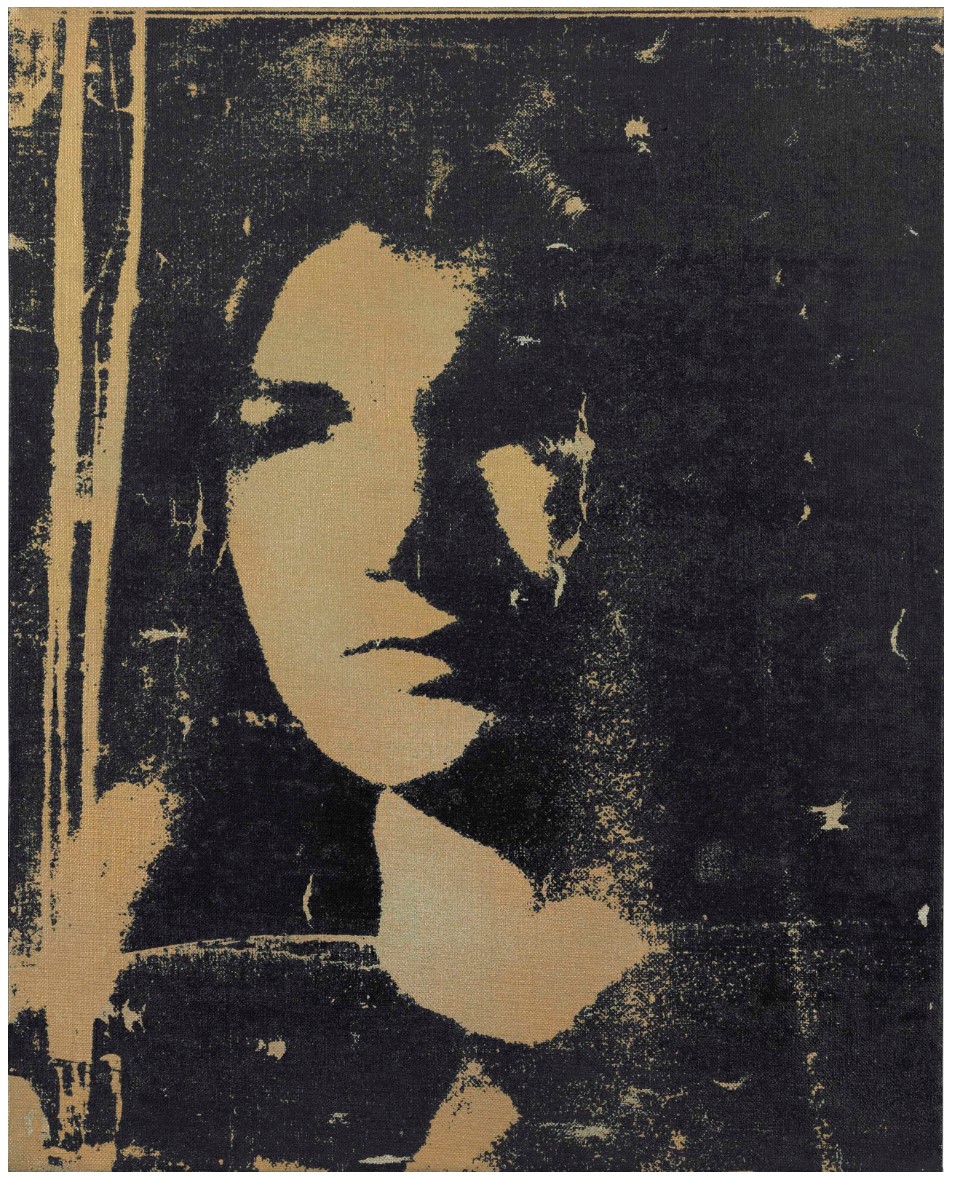
ANDY WARHOL
Jackie (Gold), 1964
Gold paint and silkscreen ink on canvas
20×16 inches (50.8 x 40.6 cm)
Sotheby’s London: 15 October 2015
GBP 605,000
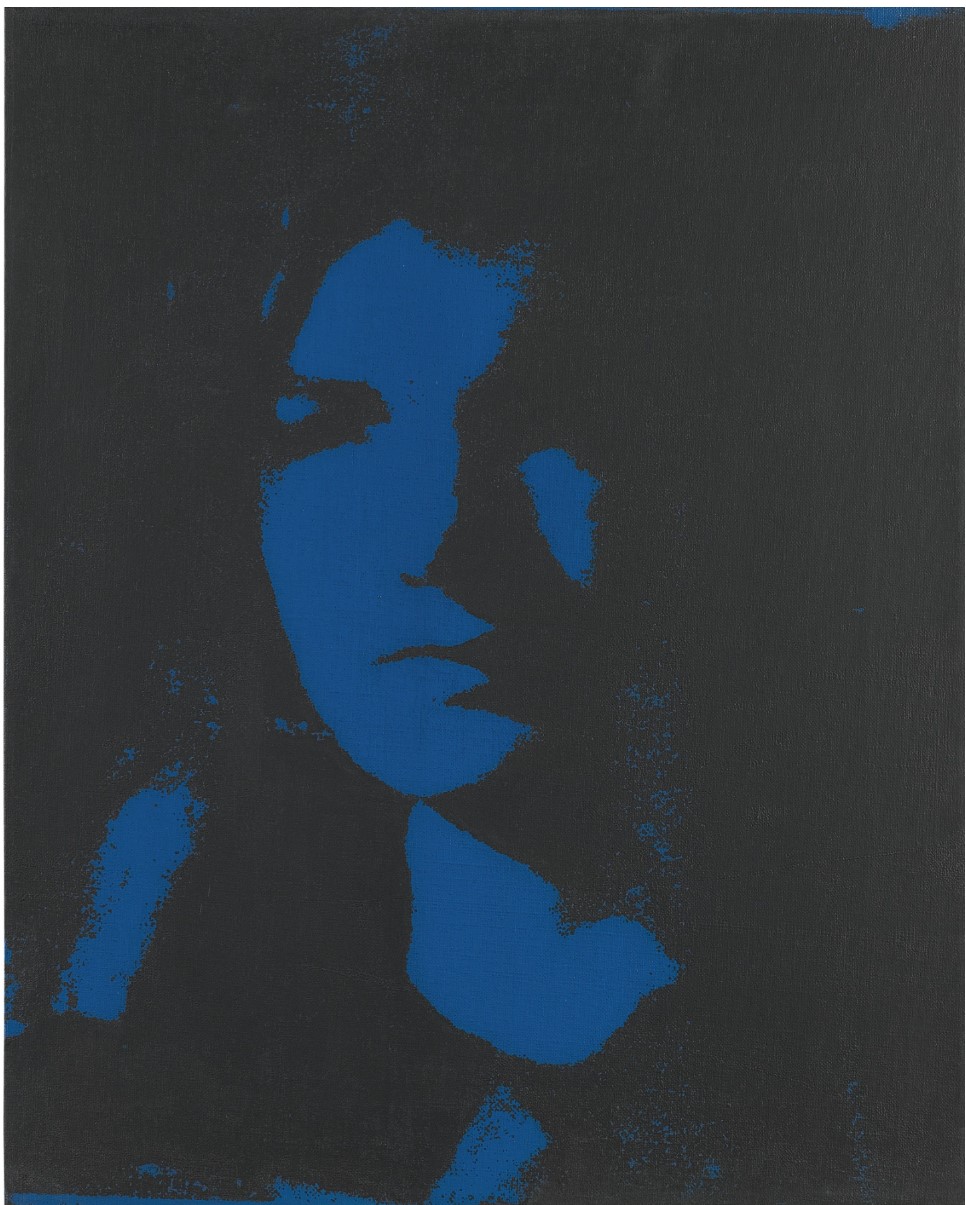
ANDY WARHOL
Jackie, 1964
Acrylic and silkscreen ink on canvas
20.1 x 16.1 inches (51.8 x 40.8 cm)
Christie’s London: 13 October 2010
GBP 481,250
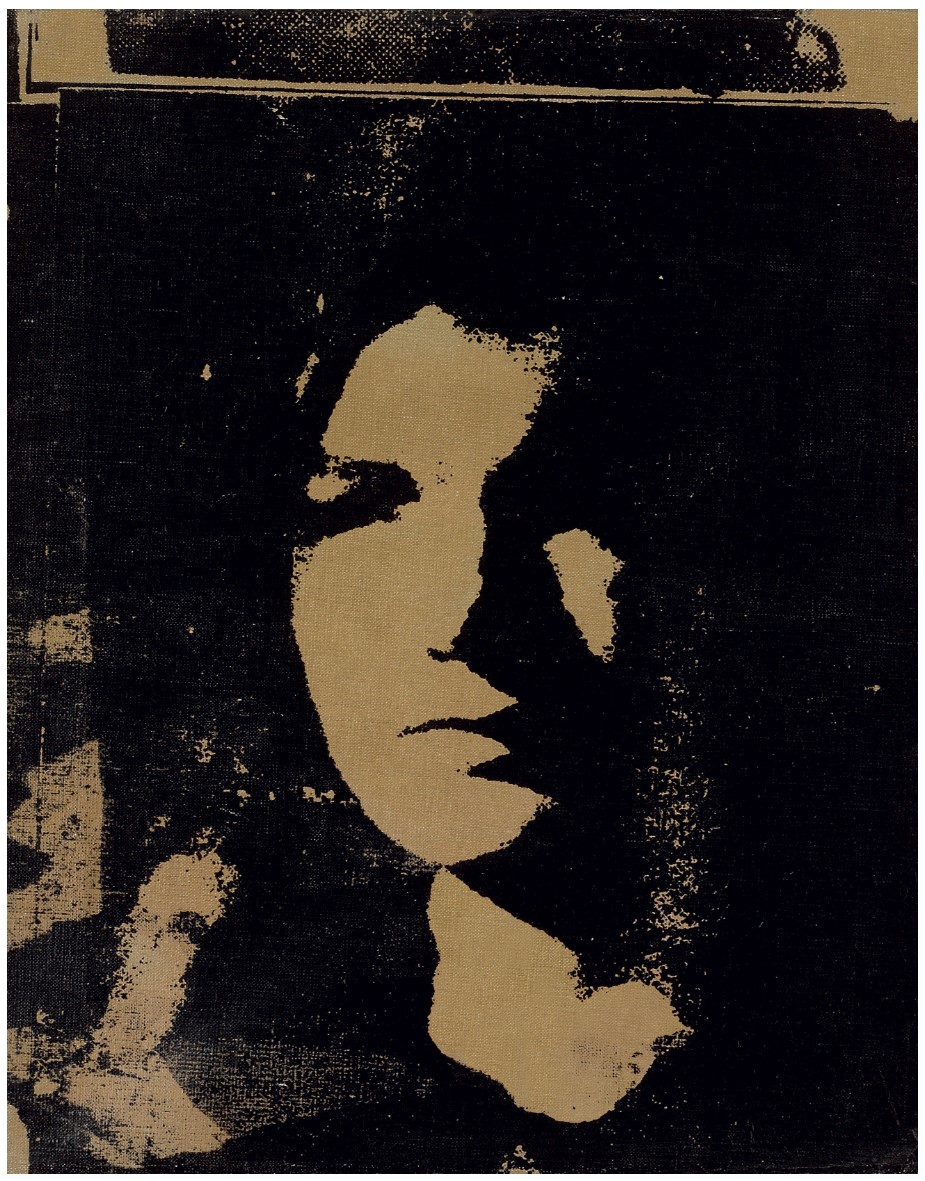
ANDY WARHOL
Jackie, 1964
Synthetic polymer paint and silkscreen ink on canvas
20×16 inches (50.8 x 40.6 cm)
Jackie (First Lady)
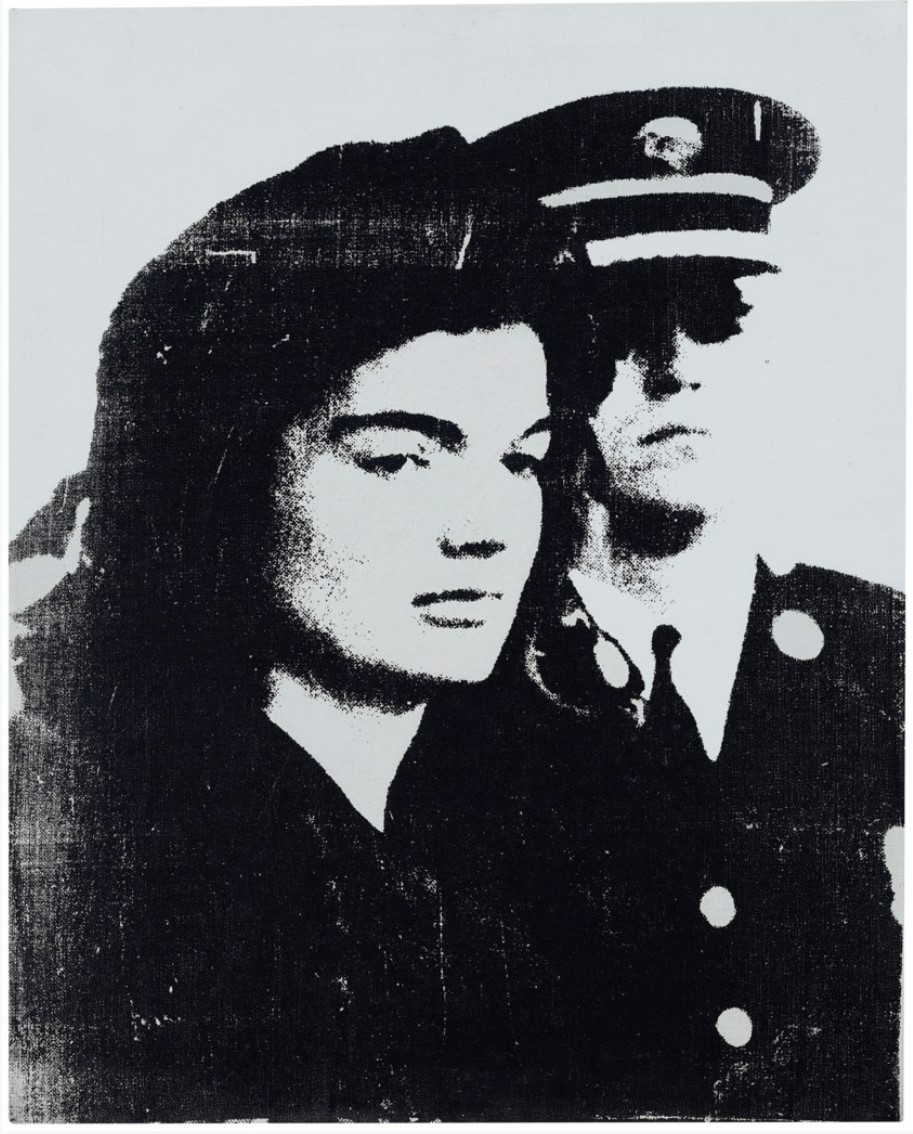
The present work showcases Jackie Kennedy, forlorn with her head bowed, attending the swearing-in of Vice-President Lyndon Johnson aboard Air Force One on 22 November 1963, immediately following the assassination of her husband President John F. Kennedy. Enraptured by grief and despair, the new widow is seen with a blank, shocked expression. The image is part of a group of eight original black and white photographs Warhol selected from a variety of printed sources first published in the weeks following the assassination. As an entire population sank into grief and bereavement, Warhol began to explore the discrepancies in the media’s presentation of events – ultimately illustrating the tension between public and private perception.
Warhol’s Jackie symbolizes the currency of celebrity, an icon deserving of reverential adoration and the consummate deity of Pop Art. Perfectly embodying Warhol’s unparalleled ability to capture the essence of a generation with his signature economy of means, these iconic silkscreens “brought [Jackie] into close-up, making her the dramatic focus and emotional barometer of the Kennedy assassination, shifting the historical narrative into a series of affective moments” (Georg Frei and Neil Printz, Eds., The Andy Catalogue Raisonné, Vol. 2A, Paintings and Sculptures 1964-1969, London and New York 2004, p. 103).
Jackie, 1964
Sotheby’s New-York: 19 November 2021
Estimated: USD 600,000 – 800,000
USD 842,800
Jackie | Contemporary Day Auction | 2021 | Sotheby’s (sothebys.com)
ANDY WARHOL
Jackie, 1964
Acrylic and silkscreen ink on linen
20×16 inches (50.8 x 40.6 cm)
Dating from his most celebrated period of production in the mid-1960s, Andy Warhol’s Jackie mines the groundbreaking themes of his Death and Disaster series alongside his contemporaneous fascination with celebrity culture. Catapulted to stardom with her husband’s election as President of the United States in November 1960, Jackie Kennedy became an inspirational heroine to millions in the optimistic climate of a newly rejuvenated post-war America. The present work showcases Jackie Kennedy, forlorn with her head bowed, attending the swearing-in of Vice-President Lyndon Johnson aboard Air Force One on November 22, 1963, immediately following the assassination of her husband President John F. Kennedy. Enraptured by grief and despair, the new widow is seen with a blank, shocked expression. The image is part of a group of eight original black and white photographs Warhol selected from a variety of printed sources first published in the weeks following the assassination. As an entire population sank into grief and bereavement, Warhol began to explore the discrepancies in the media’s presentation of events – ultimately illustrating the tension between public and private perception.
Warhol’s enduring fascination with the fragility of life extends beyond known celebrity subjects, as illustrated by his 1963 Death and Disasters. In his depictions of Jackie, however, Warhol was fully engrossed in both the public broadcasting of the assassination as well as the former First Lady’s existence beyond her husband’s death. The President’s funeral was one of the first national events to be extensively covered by the American media; TV networks went live with wall-to-wall coverage and news editors documented every moment of the tragedy with excruciating detail. Onassis’s life became a commodity as her face lined newspaper covers, magazines articles, and television screens.
Jackie, 1964
Sotheby’s New-York: 19 November 2021
Estimated: USD 600,000 – 800,000
USD 842,800
Jackie | Contemporary Day Auction | 2021 | Sotheby’s
ANDY WARHOL
Jackie, 1964
Acrylic and silkscreen ink on linen
20×16 inches (50.8 x 40.6 cm)
Jackie, 1964
Sotheby’s New-York: 15 November 2019
Estimated: USD 500,000 – 700,000
USD 500,000
ANDY WARHOL
Jackie, 1964
Acrylic and silkscreen ink on canvas
20 x 16.1 inches (50.8 x 41 cm)
Jackie, 1964
Christie’s New-York: 14 November 2019
Estimated: USD 500,000 – 700,000
USD 675,000
Andy Warhol (1928–1987), Jackie | Christie’s
ANDY WARHOL
Jackie, 1964
Acrylic and silkscreen ink on canvas
20×16 inches (50.8 x 40.6 cm)
Christie’s New-York: 10 November 2015
USD 677,000
ANDY WARHOL
Jackie, 1964
Synthetic polymer and silkscreen ink on canvas
20×16 inches (50.8 x 40.6 cm)
Jackie (Life Magazine)
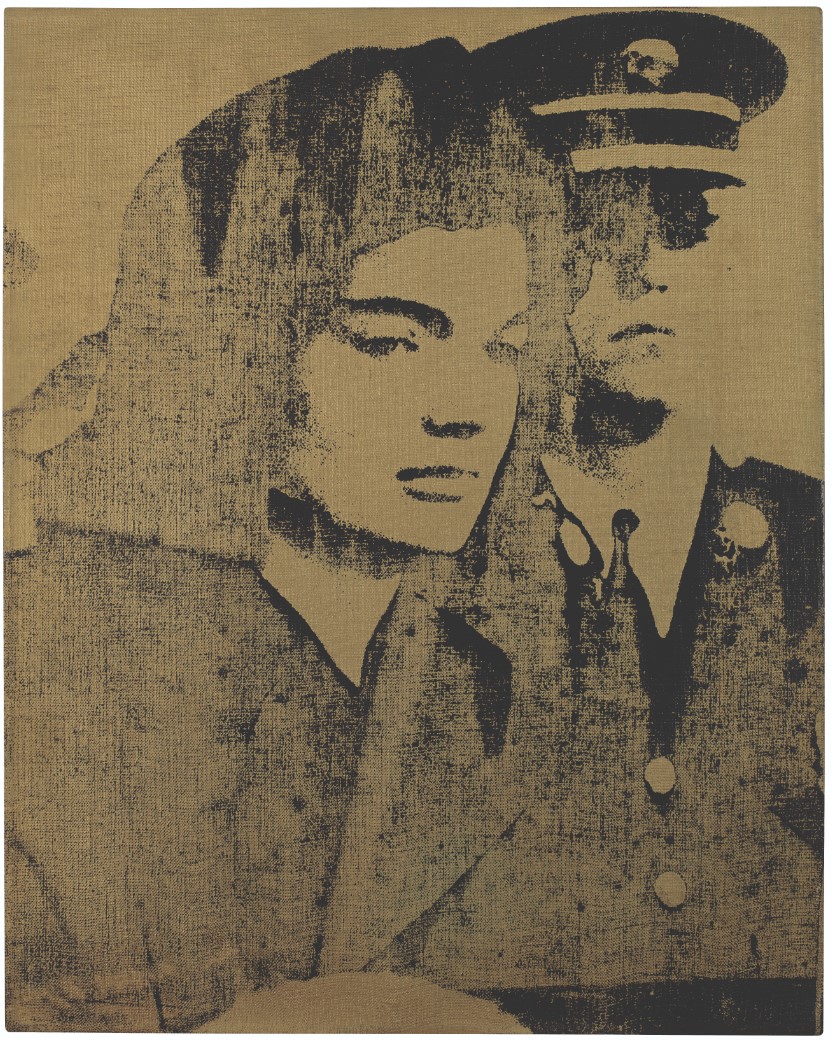
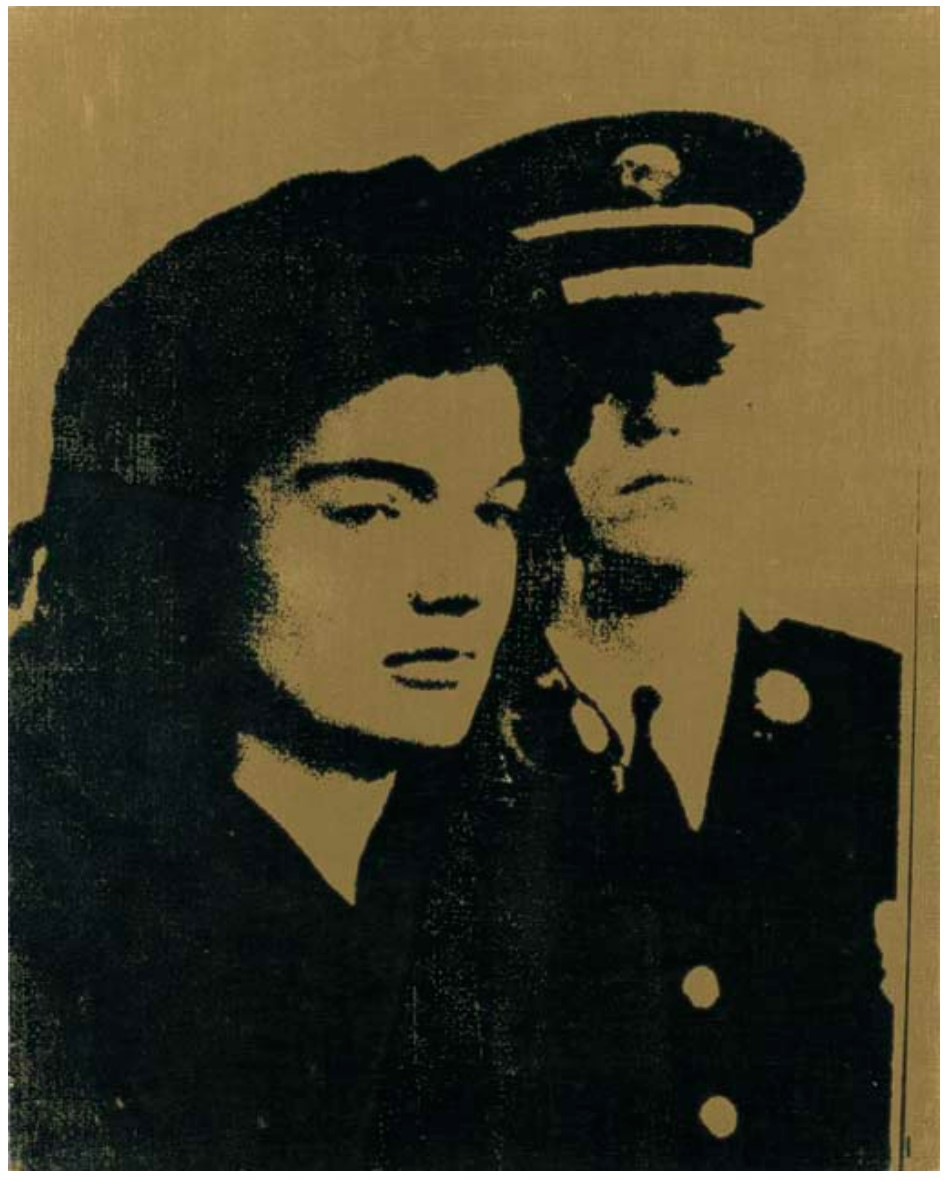
In the 1964 Jackie, inspired by the cover of the Life Magazine issue dated 6 December 1963, the First Lady is portrayed as an icon of grief. The 1964 Jackie is an emblem of Warhol’s subversive style. The format is frontal, and the framing is tight, in order to focus on the protagonists’ stylized features. The canvas is no longer treated as if it was a plain photographic reproduction, but it reveals an active intervention of the artist’s hand in a variation of black color fields of different intensities. It is through the gradient of monochromatic contrasts that the artist appropriates the image of a national icon. The First Lady’s afflicted face is thus expressed as a solemn moment, yet in all its intensity. Thanks to the objectivity of the silkscreen printing, the image becomes art, creating a distance between the original media image and Warhol’s appropriation of it. Jackie Kennedy is thus immortalized in this mournful portrait that recalls one of the moments that scarred the 20th century. bEmphasizing the private nature of Jackie’s experience, Warhol uses portraiture for this series – traditionally a family affair that enabled ancestral likeness to pass down from generation to generation. Though the source photograph includes Jackie and her children flanked by two soldiers before a passing crowd, Warhol cut the image and isolates the widow’s great pain against the soldier’s great stoicism. Jackie is recognizable; her features retained in focus, yet the man behind her could be anyone. In this way, Warhol offers an elegiac portrait to reinforce the familial relationship between the First Family and the public. The Kennedys’ suffering was America’s suffering, and only together could they be bold enough to forge forward. As Warhol transposes the silkscreened image of Jackie against a gold background, he also references historical paintings of religious icons painted against gold leaf during the Renaissance. He commodifies the First Lady, transforming her into a secular saint for an increasingly agnostic America—a figure who endured great trial, yet emerged an emblem of hope for those in need of comfort.
Jackie, 1964
Rago: 12 March 2025
Estimated: USD 600,000 – 800,000
USD 673,100
118: ANDY WARHOL, Jackie < Post War & Contemporary Art, 12 March 2025 < Auctions | Rago Auctions
ANDY WARHOL (1928–1987)
Jackie, 1964
Synthetic polymer and silkscreen ink in colors on canvas
20 1/8 x 16 1/8 inches (51×41 cm)
Signed and dated to verso ‘Andy Warhol 64’
Jackie, 1964
Sotheby’s Paris: 17 February 2022
Estimated: EUR 700,000 – 1,000,000
EUR 920,000 / USD 1,107,899
ANDY WARHOL (1928 – 1987)
Jackie, 1964
Silkscreen ink on linen
20×16 inches (50.8 x 40.6 cm)
Signed and inscribed David Bourdon Andy Warhol on the overlap
The 1964 Jackie is an emblem of Warhol’s subversive style. The format is frontal, and the framing is tight, in order to focus on the protagonists’ stylized features. The canvas is no longer treated as if it was a plain photographic reproduction, but it reveals an active intervention of the artist’s hand in a variation of black color fields of different intensities. It is through the gradient of monochromatic contrasts that the artist appropriates the image of a national icon. The First Lady’s afflicted face is thus expressed as a solemn moment, yet in all its intensity. Thanks to the objectivity of the silkscreen printing, the image becomes art, creating a distance between the original media image and Warhol’s appropriation of it. Jackie Kennedy is thus immortalized in this mournful portrait that recalls one of the moments that scarred the 20th century.
Jackie, 1964
Sotheby’s Paris: 17 February 2021
Estimated: EUR 700,000 – 1,000,000
EUR 920,000 / USD 1,108,300
Jackie | Unwrapped, Part I: The Hidden World of Christo and Jeanne-Claude | 2021 | Sotheby’s
ANDY WARHOL
Jackie, 1964
Silkscreen ink on linen
20×16 inches (50.8 x 40.6 cm)
Jackie (Gold), 1964
Christie’s New-York: 16 May 2019
Estimated: USD 600,000 – 800,000
USD 734,000
Andy Warhol (1928-1987), Jackie (Gold) | Christie’s
ANDY WARHOL
Jackie (Gold), 1964
Spray enamel and silkscreen ink on canvas
20×16 inches (50.8 x 40.6 cm)
Christie’s New-York: 15 November 2018
USD 960,500
ANDY WARHOL
Jackie, 1964
Synthetic polymer and silkscreen ink on canvas
20 x 16.1 inches (50.8 x 41 cm)
Christie’s New-York: 15 November 2006
USD 2,256,000
ANDY WARHOL
Jackie, 1964
Spray enamel and silkscreen ink on linen
20×16 inches (50.8 x 40.6 cm)
Robert Kennedy
Flash (Robert Kennedy), 1968
Christie’s New-York: 22 November 2024
Estimated: USD 500,000 – 700,000
USD 541,800
ANDY WARHOL (1928-1987), Flash (Robert Kennedy) | Christie’s
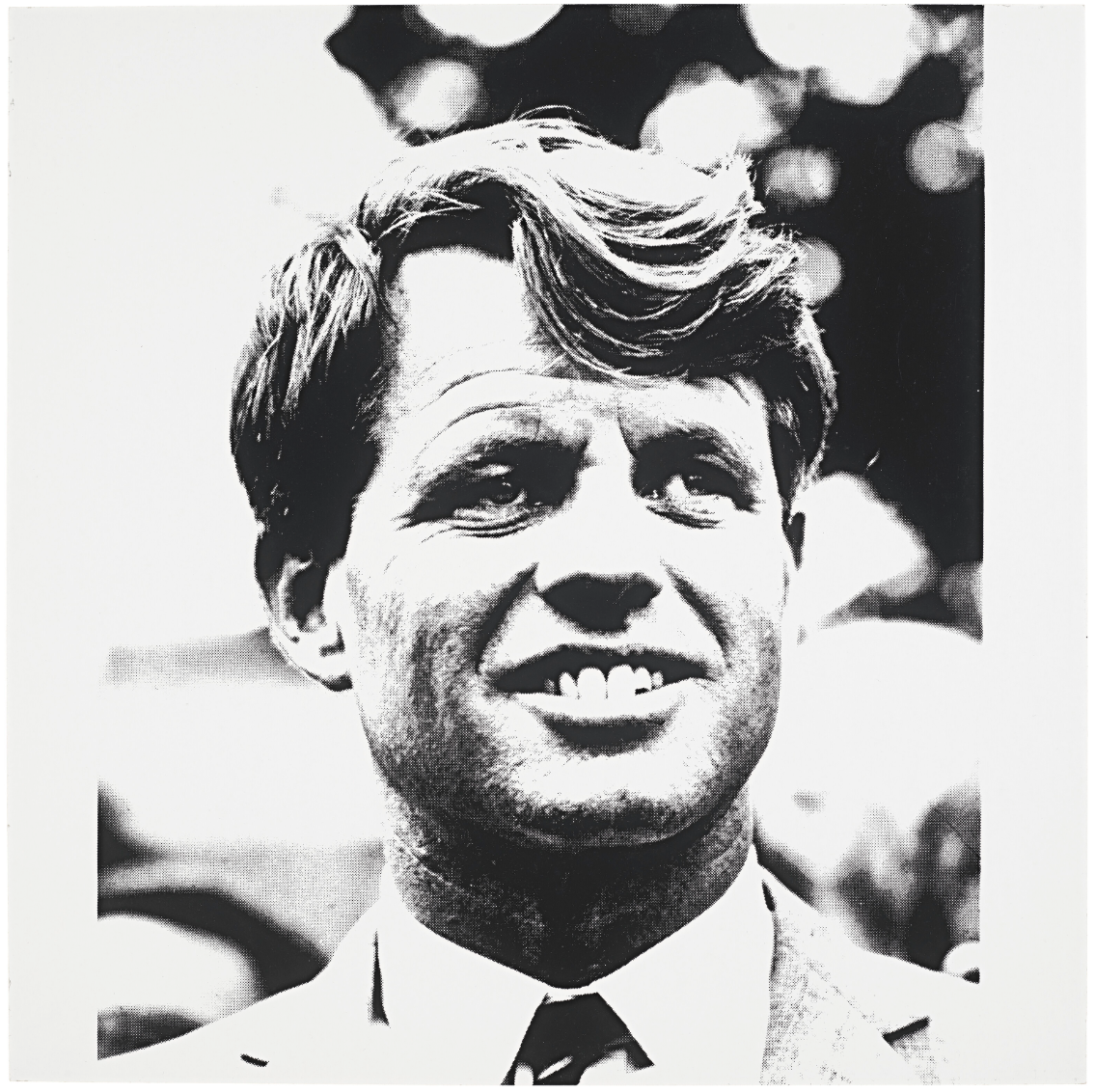
ANDY WARHOL (1928-1987)
Flash (Robert Kennedy), 1968
Screenprint on paperboard
21×21 inches (53.3 x 53.3 cm)
Stamped with the Estate of Andy Warhol and the Andy Warhol Foundation for the Visual Arts, Inc. stamps
Numbered ‘T.J.H 033+UT.001’ (on the reverse)
Executed in 1968, Flash (Robert Kennedy) is the only work by Andy Warhol to feature the man who was one of the most prominent political figures in modern American history. This work was painted at a pivotal point in Warhol’s career; in addition to his Pop images of Coca-Cola bottles and Campbell’s Soup cans, it was during this period that Warhol also began to examine the underbelly of American culture. Robert F. Kennedy was the youngest member of the country’s leading political dynasty, and having served as Attorney General in his late brother’s administration, he was undertaking his own run for presidential office when he was assassinated on June 5th, 1968. Warhol had known Kennedy and been a supporter of his political ambitions, so his death had affected him, much as it affected the rest of the country. In an added twist, Warhol heard the news as he was in hospital, recovering from having been shot by the feminist activist Valerie Solanas. Flash (Robert Kennedy) becomes an important work from Warhol’s early oeuvre; it conflates the main tenets of his career, that of investigating the power of image and celebrity, while at the same time probing the darker side of the American Dream.
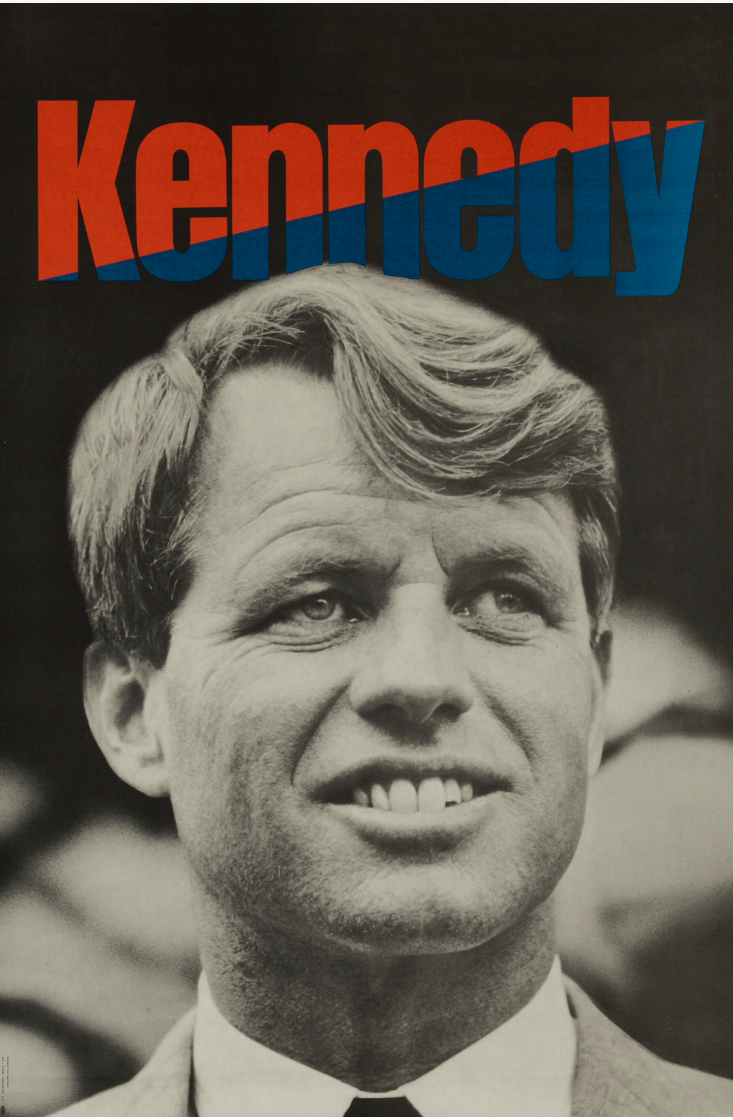
Robert F. Kennedy’s 1968 presidential campaign portrait. Photo: David Pollack / Corbis via Getty Images.
In addition to its historic importance, this particular painting is also a supreme example of Warhol’s unique ability to capture the essence of his subject using a simple image. Taking a photograph from Kennedy’s 1968 presidential election as his source image, Warhol renders it in arresting black-and-white. This clearly displays the subject’s familiar features; the tussled hair, penetrating eyes and enigmatic smile that all mark him out as a Kennedy. Unlike many of Warhol’s serial portraits which were executed in a rainbow of electric hues, the monochromatic palette of this work acts to focus attention on the elements of the image which make up its iconography, and given the tragic events that would ultimately unfold, freezes the image in time. Thus, Kennedy’s smiling face is seared into our subconscious, adding to—and enhancing—the power and poignancy of this particular work.
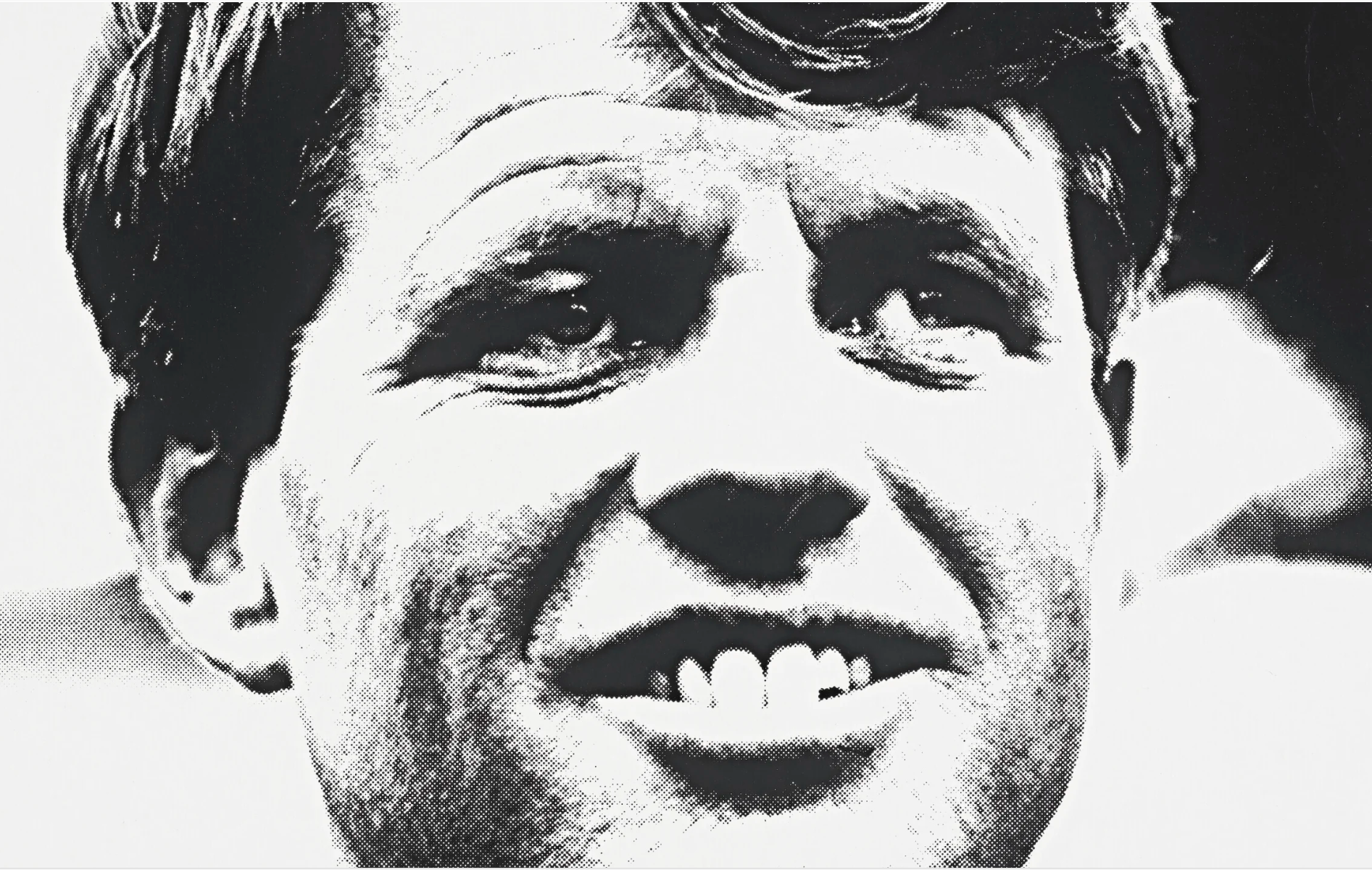
Initially, Kennedy was to be featured in Warhol’s Flash portfolio, produced in 1968 in response to the assassination of Robert Kennedy’s brother five years earlier. Warhol had selected the image that was to be made into a screen, resulting in the present work. But Robert’s death disrupted those plans, and Warhol decided not to include the younger Kennedy’s image in the portfolio, leaving Flash (Robert Kennedy) the only example of this screen in existence. Yet, more than just an act of remembrance, the work becomes a prescient examination into modern American politics. Executed at a time when politicians were still held in some form of high esteem, Warhol had already spotted that image represented a façade of reality. “His portraits stand as more than records of the individuals,” writes curator Sharon Atkins, “they position the leaders within cultural tastes and political values… Warhol’s images of these commanding personalities highlight the interrelationship between politics and celebrity culture in the twentieth century—connections that remain ever present today… Like his images of Hollywood celebrities and social elite, these political portraits relate not only to ideas of fame but also to his fascination with the social fabric of American life” (S. M Atkins, ibid., p. 4).
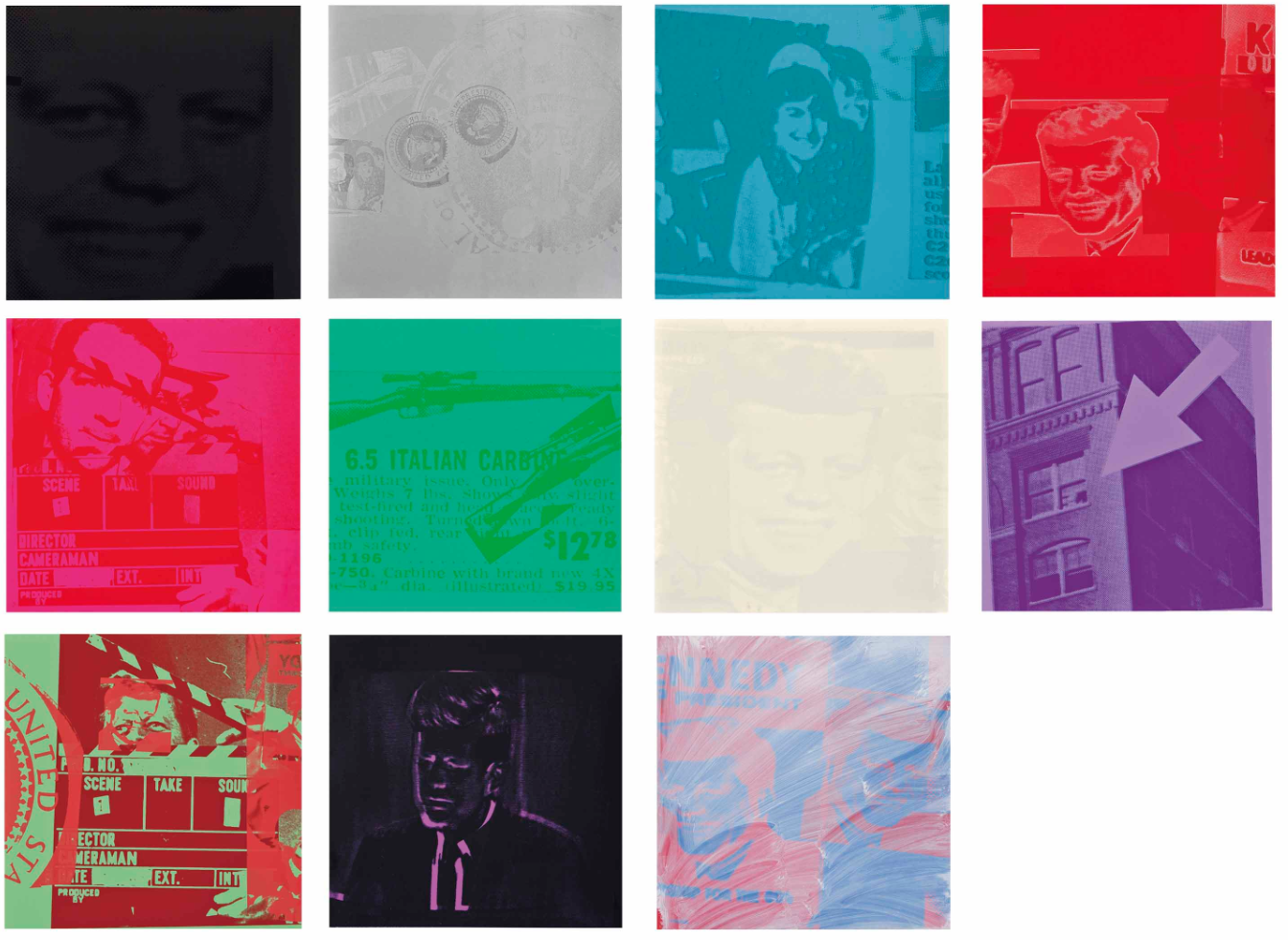
Andy Warhol, Flash – November 22, 1963, 1968. Private Collection. © 2024 The Andy Warhol Foundation for the Visual Arts, Inc. / Licensed by Artists Rights Society (ARS).
In this regard, Robert F. Kennedy was the perfect subject for Warhol’s investigations. The Senator has frequently been described as the ‘greatest president America never had,’ and following the untimely death of his brother, the younger Kennedy carried the political hopes of an entire generation. Born into the famed Kennedy family, Robert’s early political ambitions were eclipsed by those of his older brother John Fitzgerald Kennedy, who would become the 35th President of the United States. After his brother’s election, the younger Kennedy was appointed to serve as United States Attorney General, before leaving government following his brother’s death and serving as a United States Senator for New York between 1965 and his own assassination in 1968. His tenure as Attorney General is best known for his advocacy for the civil rights movement, his fight against organized crime and the Mafia. As a Senator, he opposed the U.S. involvement in Vietnam and raised the issue of poverty to national attention. In 1968, he was the leading candidate for the Democratic Party nomination when he was shot in a Los Angeles hotel, shortly after winning the California primary. He died in hospital the following day. Delivering his eulogy, his younger brother Edward Kennedy said “My brother [should be] remembered simply as a good and decent man, who saw wrong and tried to right it, saw suffering and tried to heal it, saw war and tried to stop it” (E. Kennedy, quoted in New York Daily News, June 8, 1968, via www.jfklibrary.org [accessed 10.20.2024]). Yet, following his brother’s assassination, Robert Kennedy had taken on the hopes of a new generation, and had appeared in the media and popular press in the guises of his celebrity status as much as for his political views.