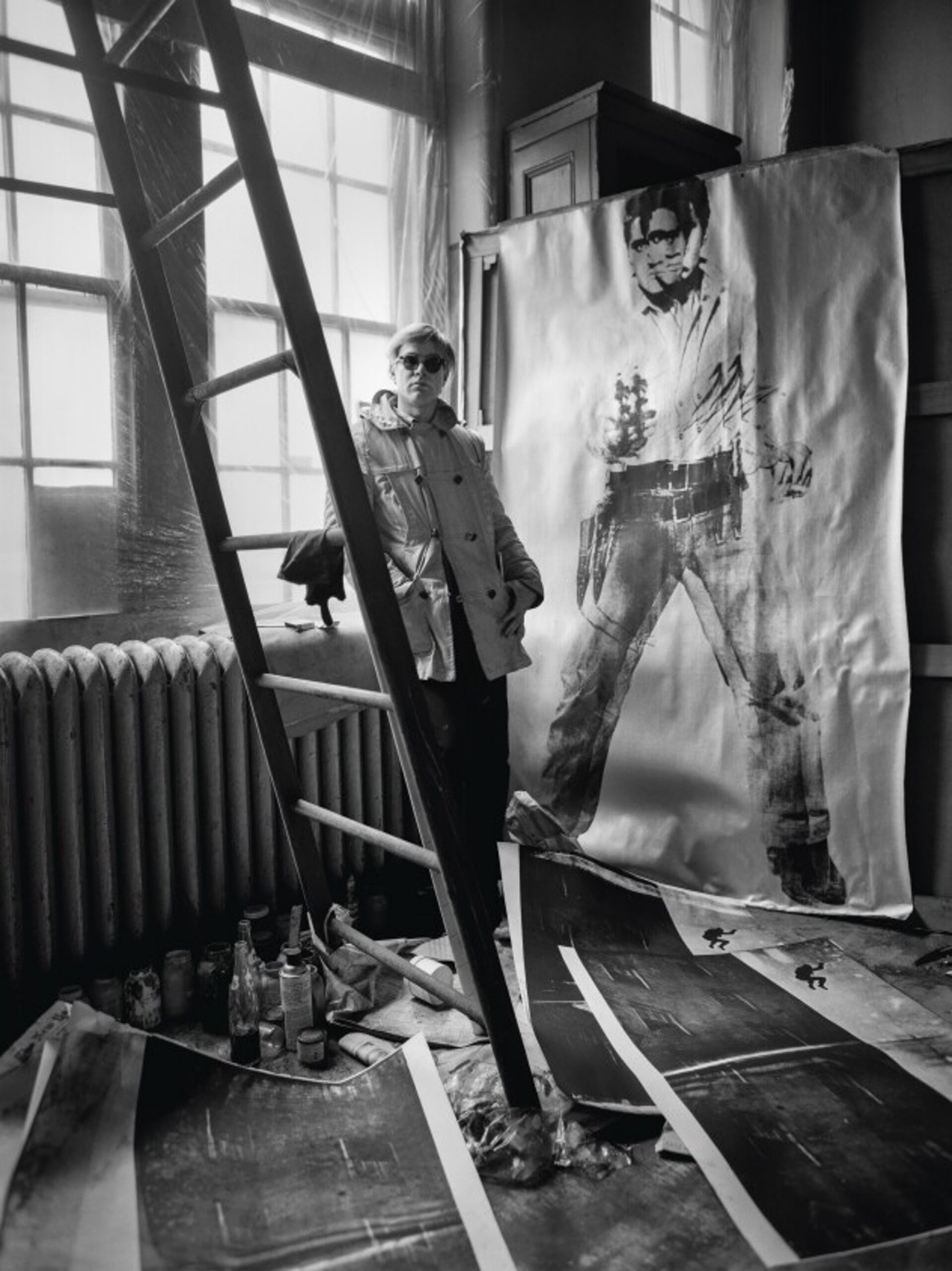
Standing with his trademark proud stance, Andy Warhol’s portraits of Elvis Presley dominate their shimmering canvasses just as the singer dominated the cultural landscape of the 1950s and 1960s. First shown at the artist’s important 1963 exhibition at Irving Blum’s Ferus Gallery in Los Angeles, Warhol’s Elvis paintings join the pantheon of the Pop master’s Hollywood superstars. It was only natural that, having portrayed Marilyn Monroe, Elizabeth Taylor and Marlon Brando, he should also turn to Elvis as his subject matter. While the others were famous movie stars, none of them achieved the immense and unprecedented star power that Elvis attracted during the crest of his early career in the mid-1950s.For Warhol, who was fascinated by popular culture, fame and celebrity, Elvis was the ultimate subject.
Introduction
This use of repetition was an important strategy for Warhol. In Triple Elvis, the overlapping images are reminiscent of a film strip, individual frames containing a single image but when viewed together producing a sense of dynamism and movement. Elvis was also known as The King, a product of Hollywood and the mass media designed to be adulated and adored. By using an image of Elvis as a cowboy, Warhol also pays homage both to an existing American icon but also acknowledges Hollywood’s propensity for appropriation—taking existing cultural references and producing new works for a new audience.
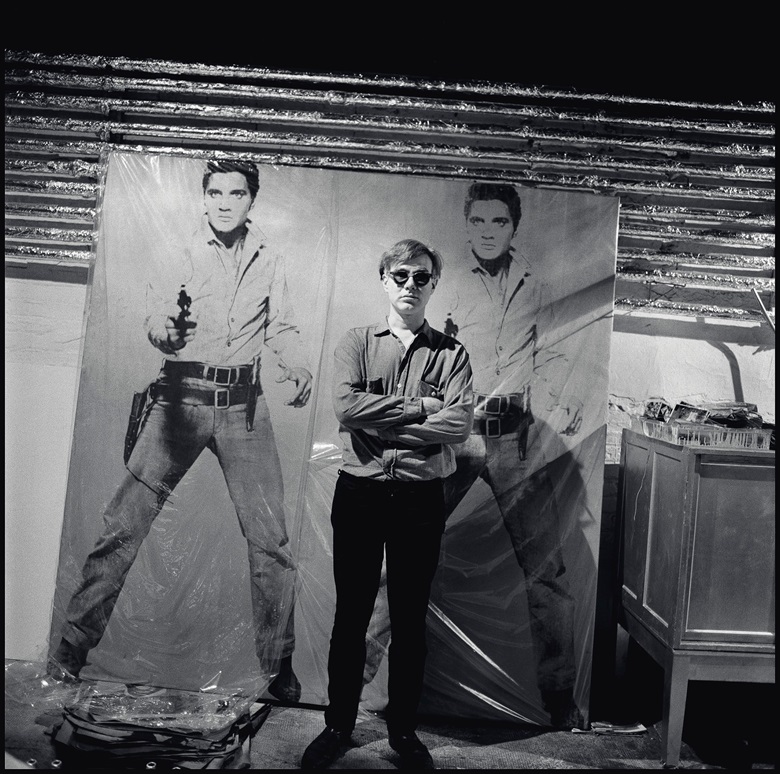
“It was thrilling to see the Ferus Gallery with the Elvises in the front room and the Lizes in the back. Very few people on the [West] Coast knew or cared about contemporary art, and the press for my show wasn’t good. I always have to laugh, though, when I think of how Hollywood called Pop Art a ‘put-on!’ Hollywood?? I mean, when you look back at the kind of movies they were making then—those were supposed to be real???”
In addition to the impressive proportions of the canvas itself, the impact of this painting comes from Warhol’s’ decision to fill the entire surface of this vast canvas with this cultural icon. Warhol packs this canvas with Elvis’s physical image, and by default, suggests the pervasiveness of the singer’s fame around the world. From edge to edge, the canvas is filled with Elvis’s appearance, with the images—the top of Elvis’s head, the tips of his boots and the left and right leg at the extreme edges of the stretcher—all cropped in order to heighten the impact of this painting.
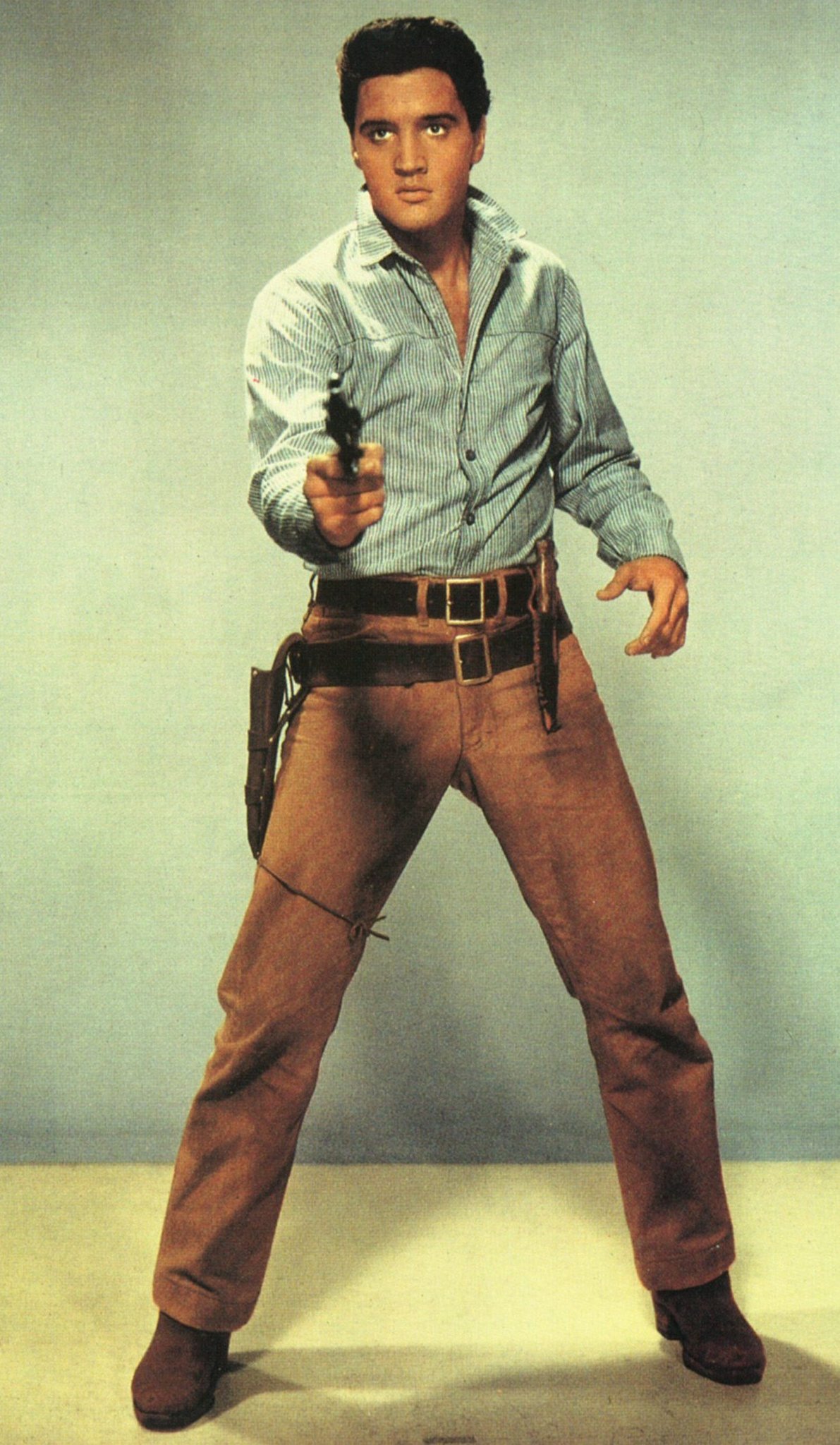
For Elvis Warhol selected a publicity image for a movie, Flaming Star, directed by Don Siegel. It is therefore all the more appropriate that Elvis is shown here against a silver background, a substitute for the silver screen. Warhol was a huge fan of cinema, so it was only natural that he took his idols from movie screen to silkscreen. In addition to recalling the silver of the cinema screen itself, the background of Elvis gives the impression of opulence. The success of this aesthetic would be evidenced later in 1963 when the artist had to abandon his Firehouse studio, and set up the famous Factory, which he coated with silver paint and foil. The effect was a strange, almost-mirrored space that was glamorous and at the same time futuristic. It was like being inside a machine, a concept that particularly appealed to Warhol, who often stated that he wished to be a machine. Wealth, clinical practicality, glamor, science fiction—all these were referenced in the burnished walls of the Factory, and indeed in the background of Elvis. In the silver of Elvis there is also splendor as well as glamor. There is a religious feel to the silver, recalling some of the religious adornments that filled the Byzantine Catholic Churches of his youth. Here, Elvis is presented as the glistening new god for a more secular age, and Warhol has deliberately couched him in semi-religious trappings. Even the pistol leveled at the viewer could be a modern substitute for the lances, swords and spears of the Christian warrior saints.
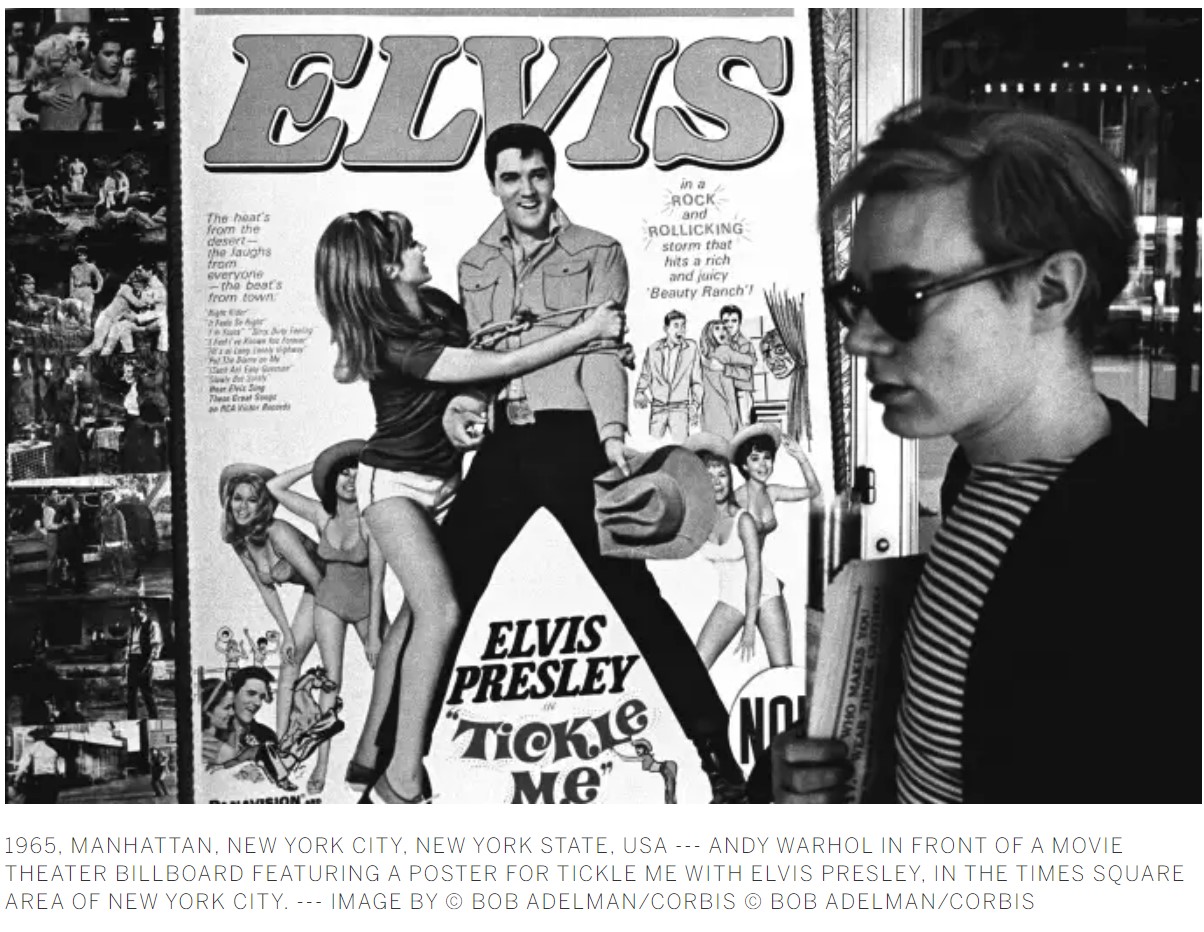
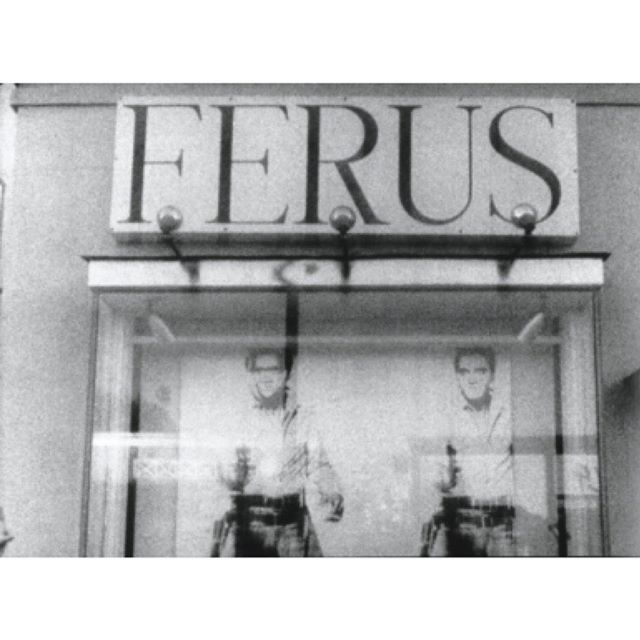
In September of 1963, Warhol travelled westwards for the opening of his exhibition at the Ferus Gallery. It would be his first time in Los Angeles, the source of all the celluloid fantasies and celebrities he had admired for so long. During the drive cross-county, he contemplated how few people had yet to ‘tune in’ to the glorious kitschiness of popular culture, concluding that, “Once you ‘got’ Pop you could never see a sign the same way again. And once you thought Pop you could never see America the same way again” (A. Warhol & P. Hackett, ibid, p. 50). Warhol’s reputation was already established on the West Coast as one of the most important artists associated with the Pop art movement following the 1962 presentation of his Campbell’s Soup Can paintings at the Ferus Gallery. But this time Warhol tailored his work specifically for the context in which it would be displayed, using the serial quality of his art to reflect on the manufactured nature of celebrity and Hollywood’s most ingrained stereotypes.
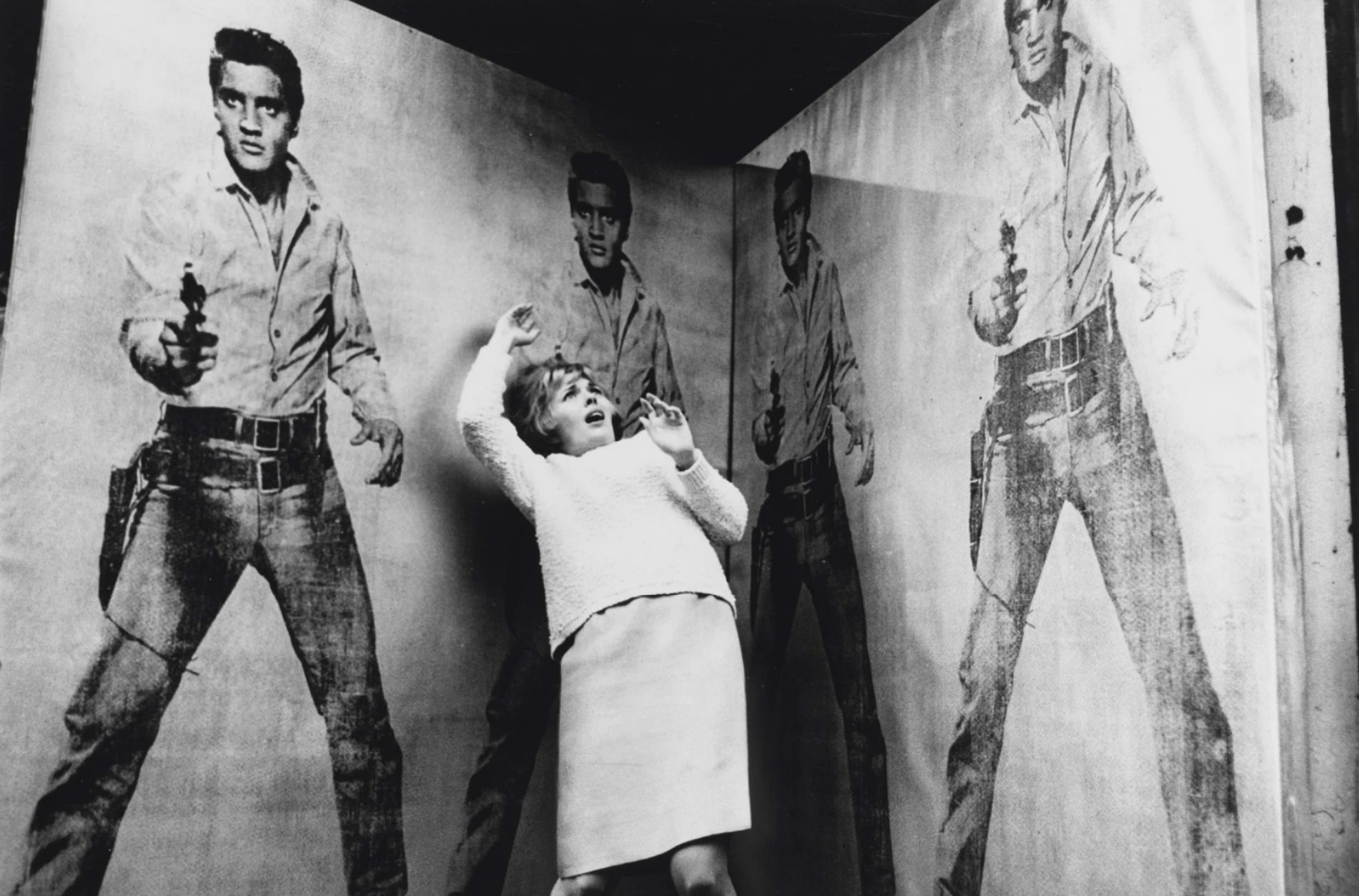
The Ferus Gallery’s director, Irvin Blum, had tried to press on Warhol the idea of a mini-retrospective, writing, “your exhibition should be the most intense and far-reaching composite of past work, and the Elvis paintings should be shown in the rear of my gallery area” (I. Blum, quoted in G. Frei and N. Printz, The Andy Warhol Catalogue Raisonné, Paintings and Sculptures 1961-1963, Vol. 01, New York, 2002, p. 355).
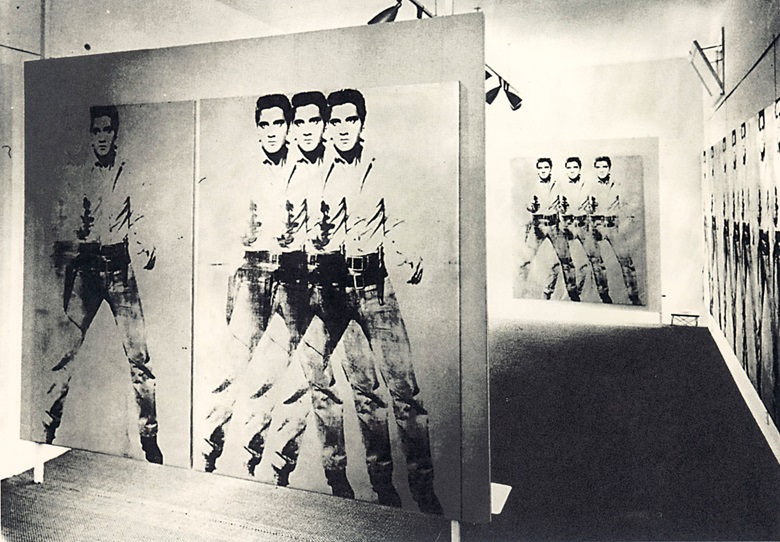
Warhol, however, insisted on focusing on his new work and planned to utilize the gallery’s physical space as part of a highly conceptual installation. Before his arrival, Warhol instructed Blum to line the front room with his series of Elvis paintings and the back room with portraits of Elizabeth Taylor. He sent the smaller, headshot paintings of Taylor already stretched, but the Elvises arrived at the Ferus Gallery on rolled canvas with a box of assorted stretcher bars. Blum later recalled: “I called him and said, ‘Will you come?’ And he said, ‘I can’t. I’m very busy. Will you do it?’ I said, ‘You mean, you want me to cut them? Virtually as I think they should be cut and placed around the wall?’ And he said,
‘Yes, cut them any way that you think they should be cut … The only thing I really want is that they should be hung edge to edge, densely – around the gallery…’”
Much like the collaborative process Warhol used to silkscreen his canvases, this act of delegation helped break down the aura of sole authorship and the criterion of authenticity in art, moving him closer to his impersonal mechanical ideal. The staged studio-produced photo used to make Double Elvis likewise calls the notion of authenticity into question. The constructed nature of the photo and its repetition in Warhol’s painting (not to mention Presley’s role as an actor) presents an eternal return to the simulacrum—there is no beginning, no ‘original’, and no end.
The installation of Double Elvis and its cohorts was site specific in more ways than one. The subject matter was a clear response to the filmmaking capitol of America, and the carefully choreographed arrangement of celebrity royalty (Elvis being the King of Rock ‘n’ Roll, and Taylor the recent star of Cleopatra) seemed to acknowledge the kind of clichéd gender binaries being played out in popular culture, where men and women are typically represented within the formulaic realms of action and romance. Warhol was also eagerly anticipating the opening of Marcel Duchamp’s retrospective at the Pasadena Art Museum during his Los Angeles sojourn and it is conceivable that the spatial division between male and female in his Ferus display was a tribute to the Dada artist’s masterpiece The Bride Stripped Bare by Her Bachelors, Even (The Large Glass) 1915–23. The Large Glass depicts the erotic encounter between the ‘Bride’, in an upper pane of glass, with her nine ‘Bachelors’ gathered below. As art historian David McCarthy has identified, Presley’s splay-legged pose mimics the abstract form of Duchamp’s ‘Malic Mould’ bachelors, while the installation at the Ferus “linked perhaps Hollywood’s most eligible bachelor with its most notorious bride” (D. McCarthy, ‘Andy Warhol’s Silver Elvises: Meaning Through Context at the Ferus Gallery in 1963’, The Art Bulletin, June 2006, p. 368).
By taking something from the universe of popular culture around him and presenting it in an almost religious context, smuggling what was considered “low” by dint of being popular into the venerable spaces of the art galleries of the United States, Warhol was enacting a process of democratization that was itself a microcosm of the American Way. The vulgar can become “high” art through the Warholian formula in the same way that Elvis, the son of a truck driver, occasional farmer, convicted petty thief—can become one of the most recognized cultural figures of the twentieth century, and indeed of all history.
There is also a strong element of irony in this process, both at the cost of popular culture and our choices of new popular saints, and at the cost of the art world itself. In the early 1960s, the art world in the United States was still dominated by the Abstract Expressionists. Nothing could contrast more with their outpourings on canvas than the stenciled crispness of Warhol’s silkscreens. In terms of content, the idea of taking pop stars, actors, or Campbell’s soup cans and enshrining them on canvas was clearly an affront not only to the death of figuration that had been trumpeted by critics such as Clement Greenberg, but also to the elitist concepts of the artists who had held reign over the avant-garde and the galleries for the past decade.
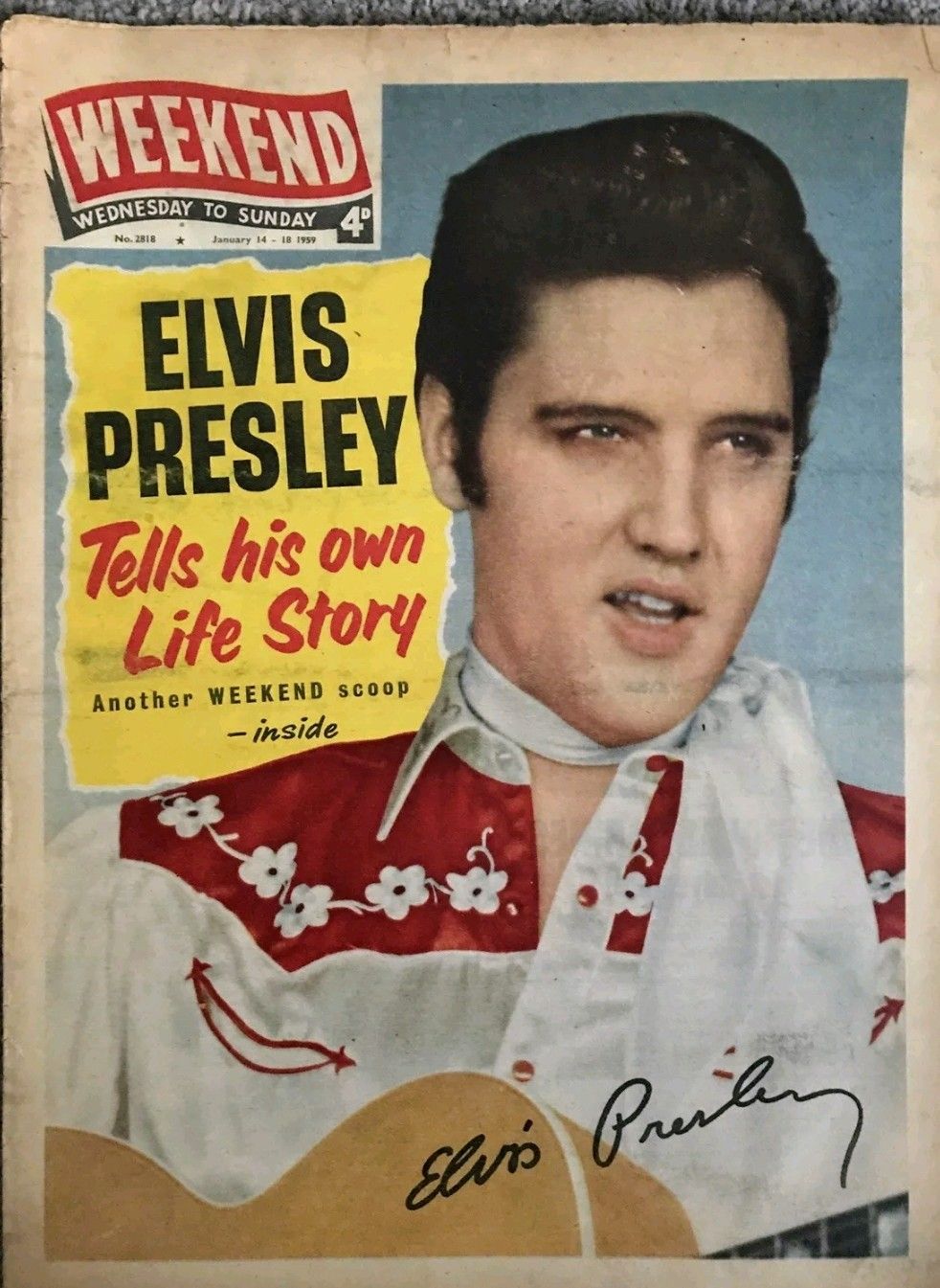
This edginess was a striking contrast to the Elvis who was emerging during this period following his time in the Army. After his discharge, Elvis released several records to great acclaim and chart success, and then embarked upon a film career. His manager, “Colonel” Tom Parker, arranged a deal for seven motion pictures, of which Flaming Star was one. Elvis retired increasingly from live or even television performances of his songs, instead performing tracks for the soundtracks and releasing them as albums. (It was dwindling sales of those soundtracks that would see him take to the stage again for the “1968 Comeback Special.”) Less dancing, less live performing…and less notoriety or scandal. He was now heading towards a role as an entertainer for a wider public, no longer the hip-gyrating king of controversy. By the time Triple Elvis was painted, Elvis was fairly respectable, and the clean-cut image in the picture shows this. One need only to look at the photographs from a couple of years later of the Velvet Underground, Warhol’s protégés from 1965 and as far a cry as was possible from the smooth, homely, chiseled Elvis of the Flaming Star publicity stills, to see the difference.
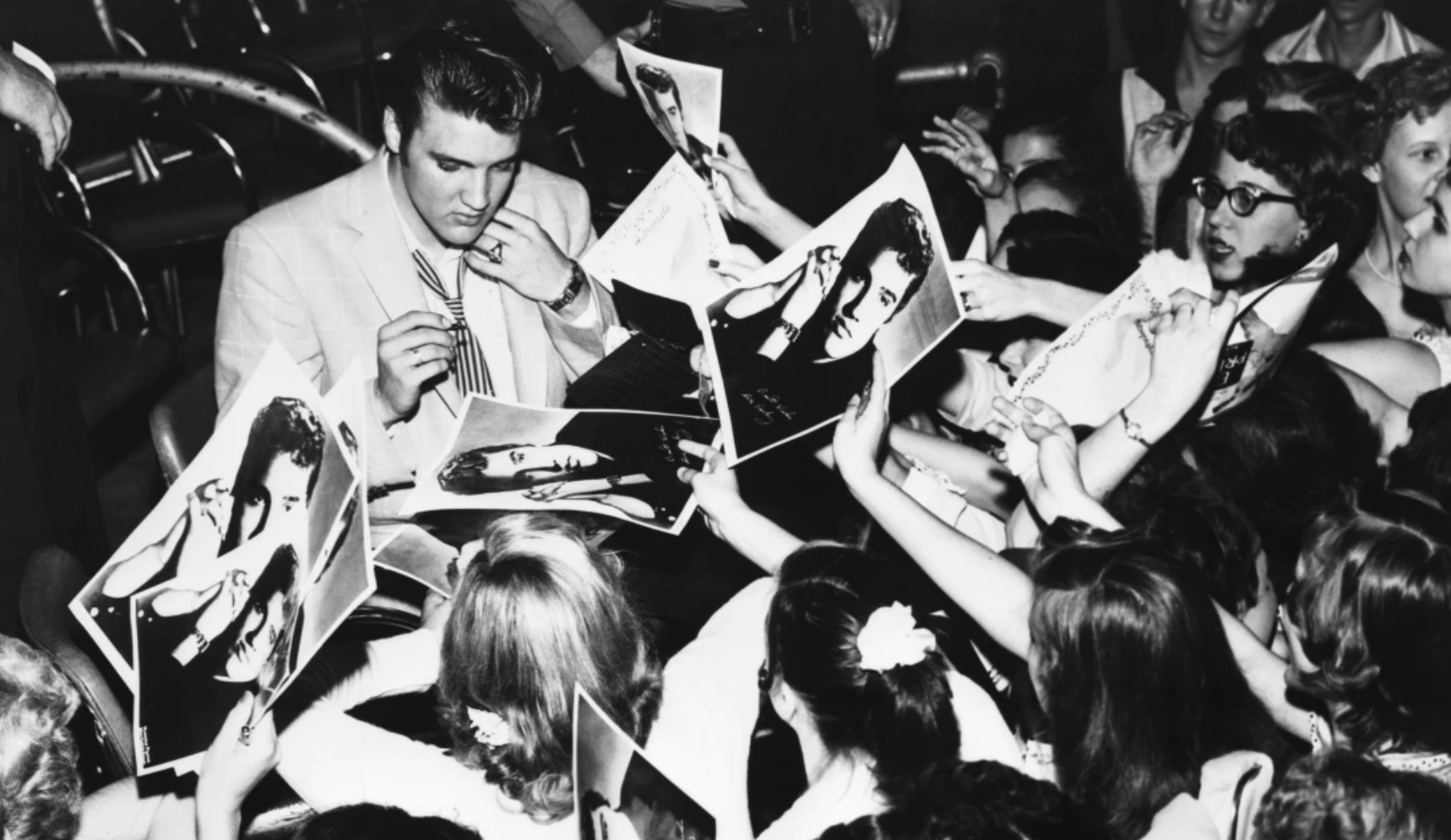
In the mid-1950s, he embarked on a film career and over the next two decades he appeared in a total of 33 movies, including Jailhouse Rock, Blue Hawaii and Flaming Star (from where the source material for the current lot was taken). Presley’s emergence as a cultural phenomenon coincided with the birth of the American teenager—a new consumer market that, thanks to the popularity of people like Elvis, would come to be worth billions of dollars. As early as 1956 the Wall Street Journal identified the potential of this new sector of buying power and identified Elvis as a major contributor. Elvis’s popularity spawned demand for everything from new lines of clothing based on his black slacks and loose, open-necked shirts to pink portable record players for teenagers’ bedrooms. It was also responsible for a phenomenal growth in the sales of transistor radios, which rocketed from sales of an estimated 100,000 in 1955 to 5,000,000 in just three years later.
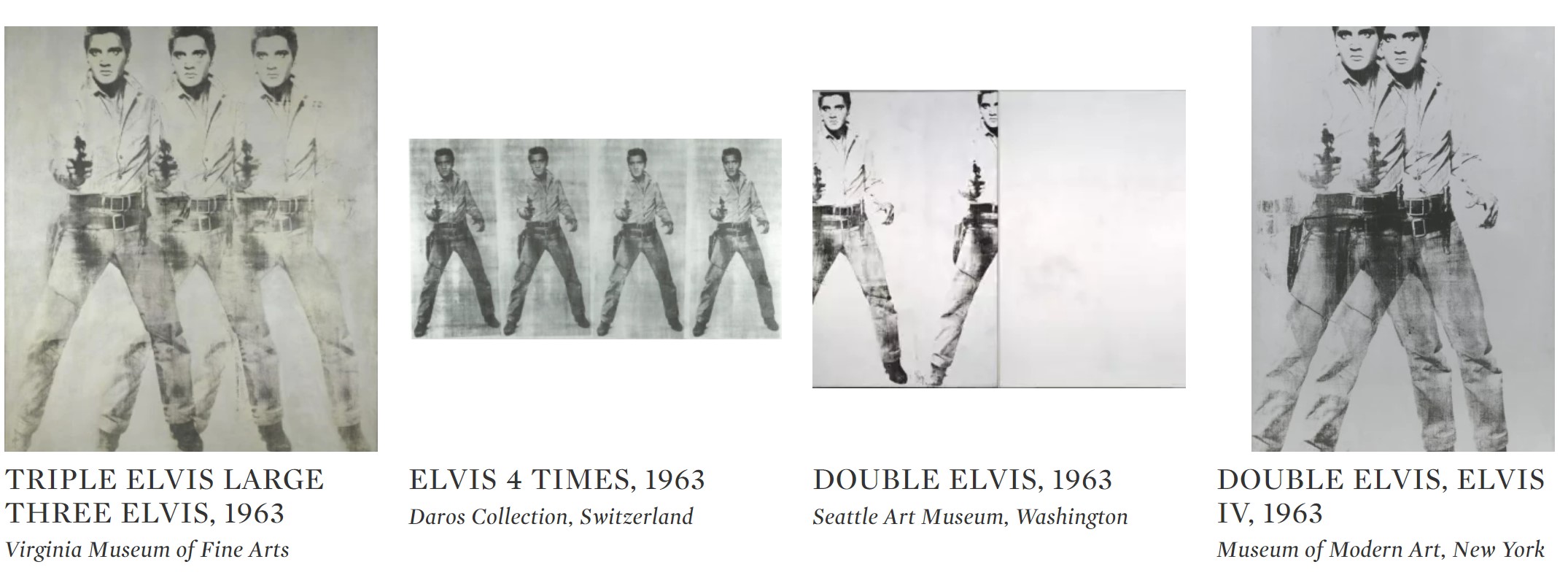
Considered one of Warhol’s most celebrated series of works, other examples of his Silver Elvis paintings are contained in many of the world’s most prestigious museums and private collections, including the Museum of Modern Art, New York (Double Elvis [Elvis IV] [Ferus Type]), The National Gallery of Australia (Single Elvis [Ferus Type]), Museum Ludwig, Cologne (Double Elvis, [Two Evis][Ferus Type]), Fukuoka Art Museum (Elvis 2 times [Studio Type]) and the Andy Warhol Museum in Pittsburgh (Elvis 11 Times [Studio Type]). Ever ambiguous, Warhol manages in Triple Elvis to present us with something that contains death and violence yet celebrates the singer of the silver screen of the Land of Opportunity. As with so much of Warhol’s work, this picture is a modern gleaming icon, a shimmering promise of wealth and of streets paved with gold, a mirage and a dream. It is a thrillingly opaque picture that today continues to confront, defy and engage its viewer and it is perhaps for this reason that Warhol’s Elvis series has become so iconic in its own right. The star’s powerful physical presence in Triple Elvis acts as a poignant reminder of the enduring power of the personality. A cultural behemoth during his lifetime, even his early death in 1977 did nothing to diminish his star power, and with this painting—with remarkable foresight on the part of Warhol—we witness the continuing power of the man himself.
The ‘horse opera’ experienced its peak success in the years preceding the creation of Double Elvis, dominating sliver screens and television sets alike. A LIFE magazine article on ‘the western hero’ released a few months after Warhol’s 1963 show in Los Angeles observed that, “Americans have always regarded the cowboy as a national symbol and the movies have made him so all around the world” (D. Moser, ‘The Western Hero: America’s Cowboy Rides the Range the World Over’, LIFE, December 20, 1963, p. 104). Described as “the most stylized dramatic form since Greek tragedy” in LIFE, the celluloid Western was also prophetically interpreted by Marshall McLuhan in his groundbreaking 1951 treatise The Mechanical Bride: Folklore of Industrial Man as an ideal contrast to the pressures of industrialized society. According to McLuhan, the Western was a “rigidly adolescent” genre that was spawned from a deep-seated nostalgia brought about by rapid change and it was aimed at men who had lost confidence in their place in the world. It is hard to believe that Warhol, who was an insider to the world of advertising, hadn’t at least heard of McLuhan’s book, which described in depth how films, comics, advertisements and magazines exert their persuasive powers. The artist’s own first-hand experience and keen interest in mass-media culture made him acutely aware of its manipulations and distortions.
Contrary to the critical perception that Warhol’s images were an enthusiastic surrender to mass culture, the artist in fact spoke of it from a distance. His particular form of realism—bestowed with the symbolic systems of consumerism—introduced a cool and reticent voice. He did not present transmissions from the psyche, like the painterly work of his New York School forebears, but instead offered an aloof and consistently analytical engagement with the contemporary world. In typically playful fashion, Warhol’s Double Elvis documents and decodes the conventions of popular imagery. It is a satirical take on both the super-macho image of the cowboy and America’s favourite morality play. Presley’s status as a teen idol emphasizes the juvenile nature of the Western, while his gun-toting posture—emulated by every boy at play—underlies the violence that lies at the heart of this fantasy. With the aid of hindsight, the symbolism evident in Warhol’s Elvis paintings seem almost prescient, for the optimistic post-Cuban Missile Crisis period in which they were created would be shattered by President Kennedy’s assassination before the year was out.
Auction Results
#1. Triple Elvis (Ferus Type), 1963
Christie’s New-York: 12 November 2014
Estimate on Request
USD 81,925,000
Andy Warhol (1928-1987) (christies.com)
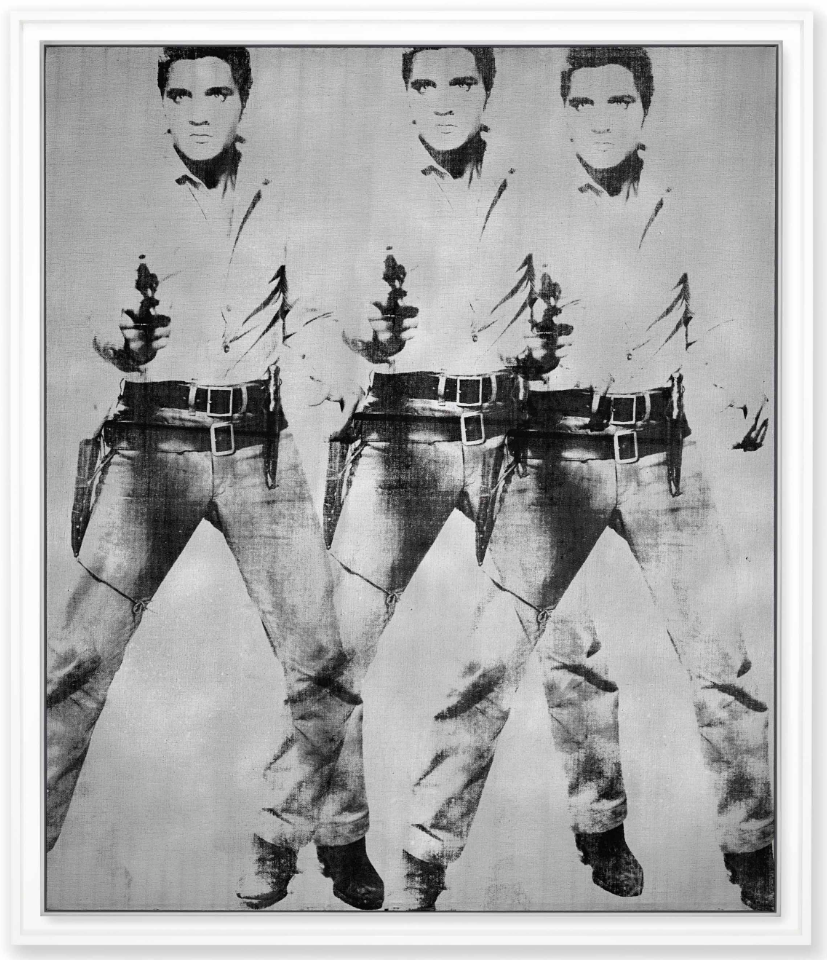
ANDY WARHOL
Triple Elvis (Ferus Type), 1963
Silkscreen ink and silver paint on linen
82 x 69 inches (208.3 x 175.3 cm)
Signed, titled and dated ‘elvis Andy Warhol 63’ (on the reverse)
#2. Double Elvis [Ferus Type], 1963
Christie’s New-York: 15 May 2019
Estimated: USD 50,000,000 – 70,000,000
USD 54,755,000
Andy Warhol (1928-1987) (christies.com)
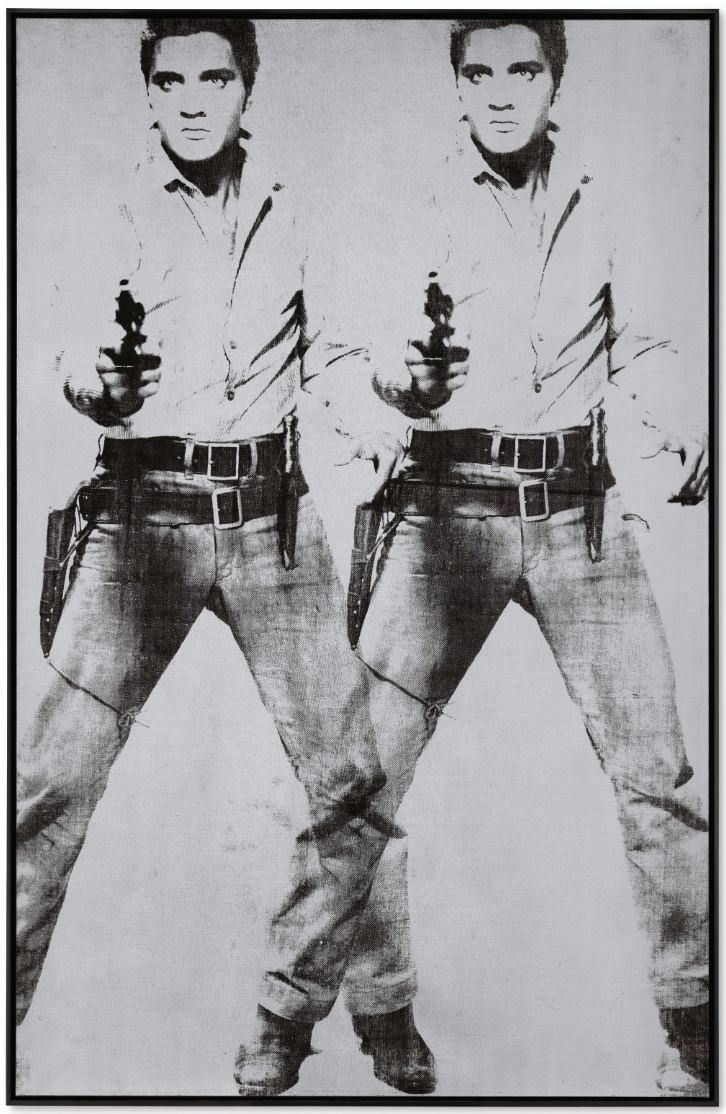
Andy Warhol (1928-1987)
Double Elvis [Ferus Type], 1963
Silkscreen ink and silver paint on linen
81 7/8 x 52 3/4 inches (208×134 cm)
Signed, inscribed and dated ‘elvis Andy Warhol 63’ (on the reverse)
#3. Elvis 2 Times, 1963
Sotheby’s New-York: 12 May 2021
Estimated: USD 20,000,000 – 30,000,000
USD 37,032,000
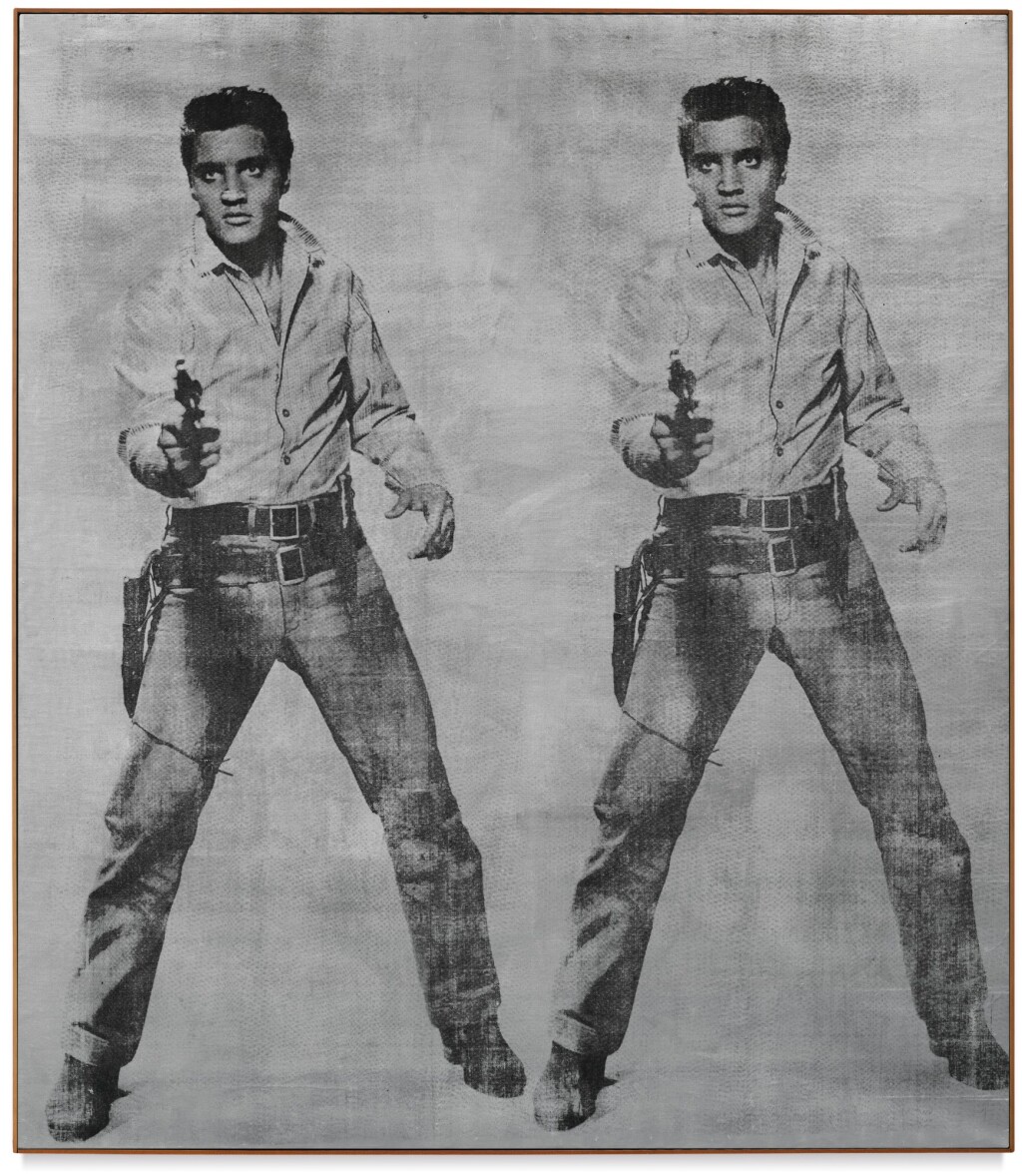
ANDY WARHOL
Elvis 2 Times, 1963
Silkscreen ink and silver paint on canvas
81.5 x 71.7 inches (207 x 181.3 cm)
Stamped by The Estate of Andy Warhol
Stamped twice by The Andy Warhol Foundation for the Visual Arts and stamped and numbered PA55.016 on the overlap
#4. Double Elvis [Ferus Type], 1963
Christie’s New-York: 17 May 2018
Estimate on Request
USD 37,000,000
Andy Warhol (1928-1987) (christies.com)
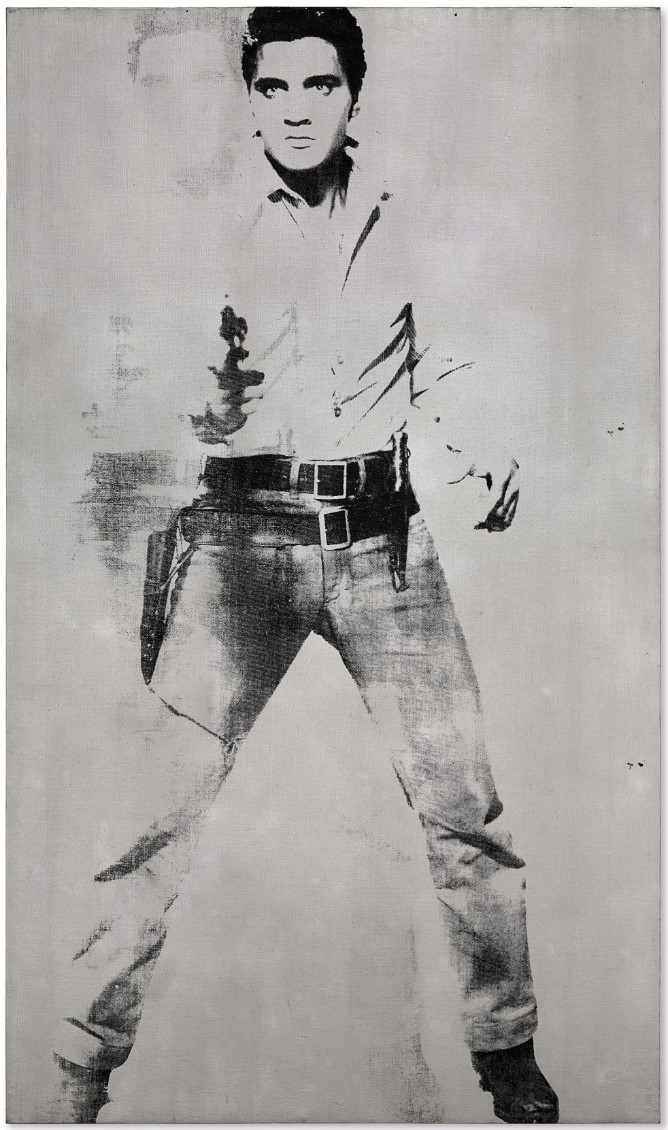
ANDY WARHOL
Double Elvis [Ferus Type], 1963
Silkscreen ink and spray paint on linen
81.7 x 48 inches (207.6 x 121.9 cm)
#5. Elvis, 1963
Sotheby’s New-York: 19 May 2022
Estimated: USD 15,000,000 – 25,000,000
USD 21,581,000
Elvis | Contemporary Evening Auction | 2022 | Sotheby’s (sothebys.com)
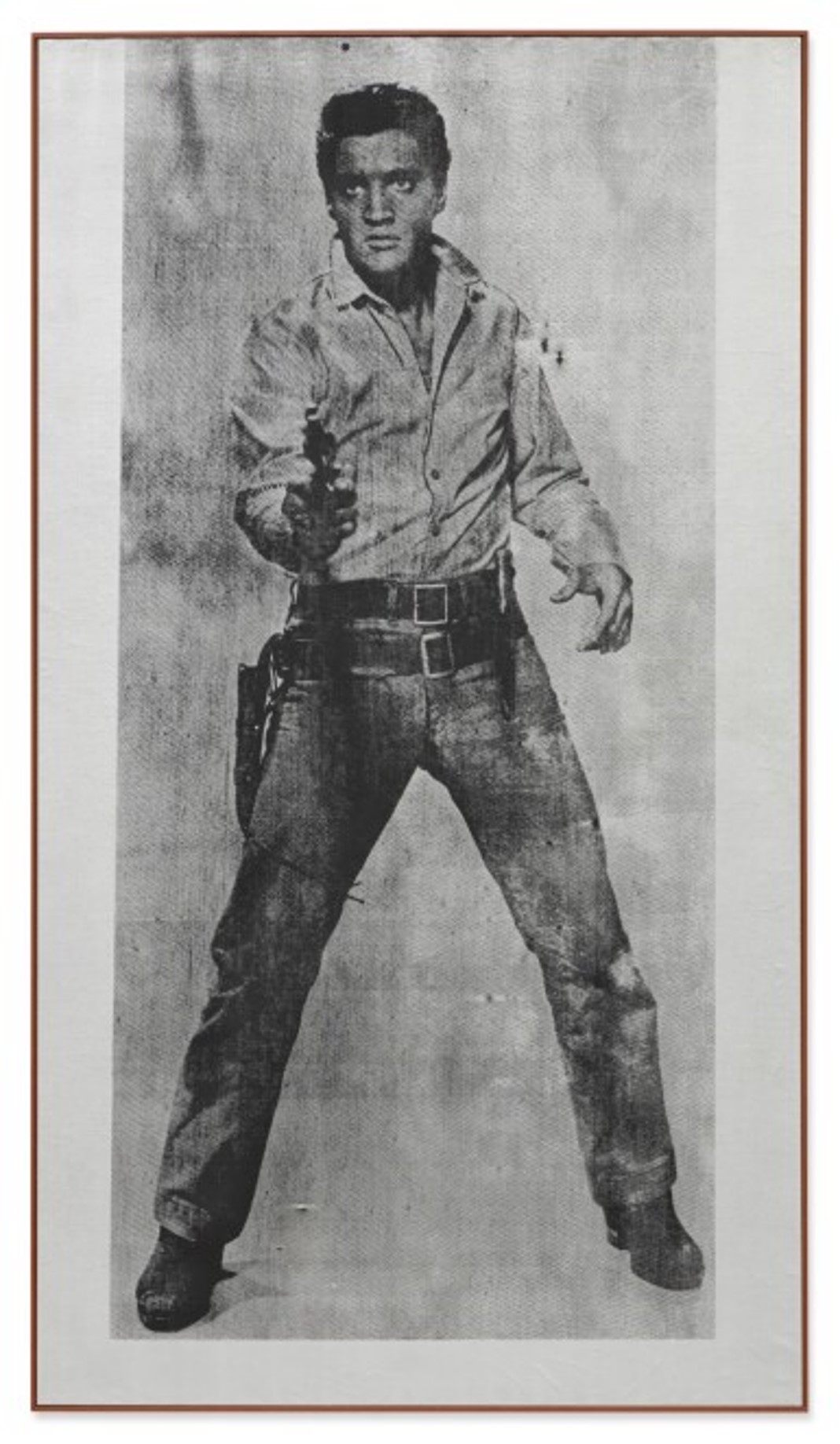 ANDY WARHOL
Elvis, 1963
Silkscreen ink and silver paint on canvas
82 3/4 x 46 1/4 inches (210.2 x 117.5 cm)
Stamped by The Andy Warhol Art Authentication Board and numbered A121.956 (on the reverse)
#6. Triple Elvis, 1964
Christie’s New-York: 18 November 1998
Estimated: USD 1,800,000 – 2,500,000
USD 1,872,500
Andy Warhol (1928-1987) (christies.com)
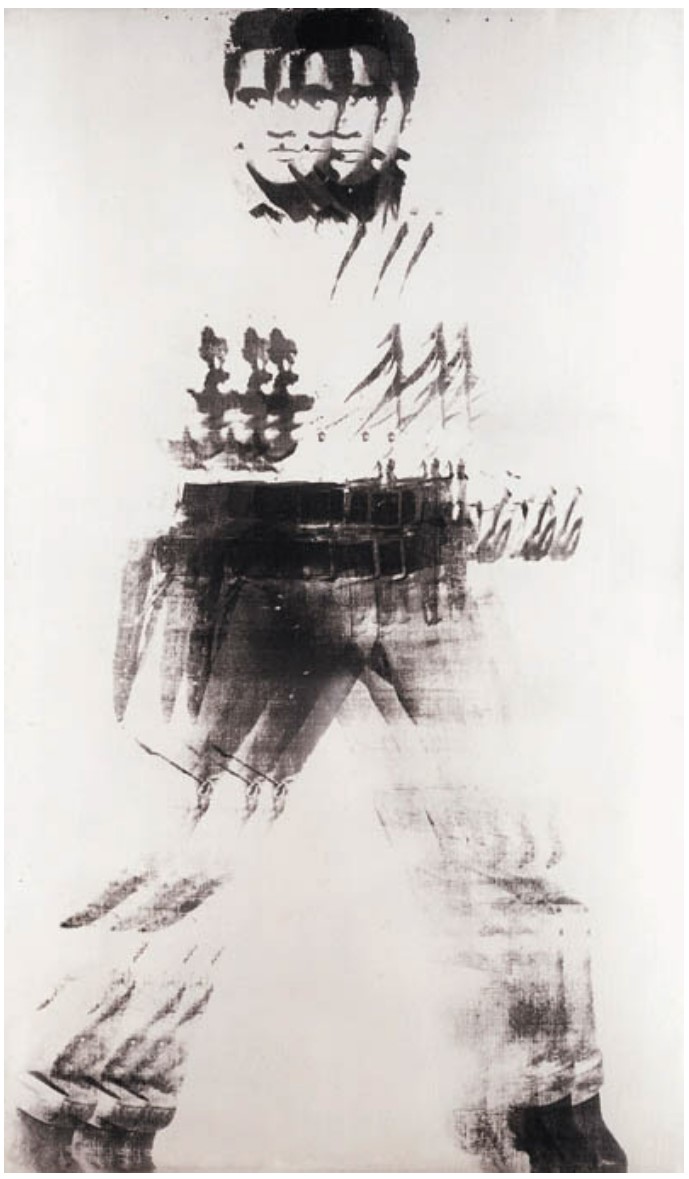
ANDY WARHOL
Triple Elvis, 1964
Synthetic polymer and silkscreen inks on canvas
82×47 inches (208.3 x 121.5 cm)
Signed and dated ‘Andy Warhol 64’ (on the upper right overlap)
Elvis, 1963
Elvis, 1963
Sotheby’s New-York: 19 May 2022
Estimated: USD 15,000,000 – 25,000,000
USD 21,581,000
Elvis | Contemporary Evening Auction | 2022 | Sotheby’s (sothebys.com)
ANDY WARHOL
Elvis, 1963
Silkscreen ink and silver paint on canvas
82 3/4 x 46 1/4 inches (210.2 x 117.5 cm)
Stamped by The Andy Warhol Art Authentication Board and numbered A121.956 (on the reverse)
A gleaming visionary force, Andy Warhol’s Elvis embodies the artist’s singular ability to appropriate and manipulate familiar imagery to examine greater cultural currents and moments. Inspired by a publicity shot, Elvis Presley is adorned with a gunslinger for the western film Flaming Star and stands life-size, striking a pose that is instantly recognizable against the silver screen. Shimmering, the silver ground encapsulates the glistening brilliance of Hollywood, distinguished in Elvis by the exceptional silkscreen technique against the surface. In the summer of 1963, Andy Warhol was thirty-four years old and, having perfected his silkscreen technique the previous year, was beginning to transform the landscape of visual culture in America. Appropriating the visual vernacular of consumerism, Warhol levelled his silkscreen at subjects he perceived as the most important concerns of contemporary life: icons such as Marilyn Monroe, Jackie Kennedy, Elizabeth Taylor, Marlon Brando, and, of course, Elvis Presley. Elvis was the ultimate subject for Warhol to explore popular culture and fame, a figure whose fame and image dominated the cultural zeitgeist of the 1950s and 1960s. Multiplying readymade images of these icons gleaned from newspapers, magazines and advertising, Warhol turned a mirror onto the contradictions of quotidian existence. With a playful theatricality and painterly illusionistic rendering of space, Elvis typifies Warhol’s career-long fascination with the immortality of celebrity and popular culture.
Elvis 2 Times, 1963
Elvis 2 Times, 1963
Sotheby’s New-York: 12 May 2021
Estimated: USD 20,000,000 – 30,000,000
USD 37,032,000
ANDY WARHOL
Elvis 2 Times, 1963
Silkscreen ink and silver paint on canvas
81.5 x 71.7 inches (207 x 181.3 cm)
Stamped by The Estate of Andy Warhol
Stamped twice by The Andy Warhol Foundation for the Visual Arts and stamped and numbered PA55.016 on the overlap
Elvis 2 Times was executed shortly after he had created 32 Campbell’s Soup Cans for his immortal show at the Ferus Gallery, Los Angeles in July and August 1962, and which is now housed in the Museum of Modern Art, New York. In the intervening period he had produced the series Dollar Bills, Coca-Cola Bottles, Suicides, Disasters, and Silver Electric Chairs, all in addition to the portrait cycles of Marilyn and Liz. This explosive outpouring of astonishing artistic invention stands as definitive testament to Warhol’s aptitude to seize the most potent images of his time. For Warhol, the act of image replication and multiplication anaesthetized the effect of the subject, and while he had undermined the potency of wealth in 200 One Dollar Bills and cheated the terror of death by electric chair in Silver Disaster # 6, the proliferation of Elvis here emasculates a prefabricated version of character authenticity. Here the cinematic quality of variety within unity is apparent in the subtle differences between the two Elvises, and the repetition of the figure echoes the flickering images of an early reel films, creating the effect of still photographs in motion.
Double Elvis [Ferus Type], 1963
Double Elvis [Ferus Type], 1963
Christie’s New-York: 15 May 2019
Estimated: USD 50,000,000 – 70,000,000
USD 54,755,000
Andy Warhol (1928-1987) (christies.com)
Andy Warhol (1928-1987)
Double Elvis [Ferus Type], 1963
Silkscreen ink and silver paint on linen
81 7/8 x 52 3/4 inches (208×134 cm)
Signed, inscribed and dated ‘elvis Andy Warhol 63’ (on the reverse)
A gleaming masterpiece that stands among the most iconic images of 20th century art, Andy Warhol’s Double Elvis [Ferus Type] faces us with visionary force. Elvis Presley, dressed as a gunslinger in a publicity shot for the 1960 Western movie Flaming Star, is doubled in black silkscreen upon a shimmering silver ground. He looms almost life-size, as if caught in a full-length mirror. The painting is at once striking, its six-foot star recognizable in a flash, and loaded with ambiguity. Warhol distills his famed serial production method into a succinct twinned image that reflects the overlapping nuances of celebrity, filmmaking, desire and performance in sixties America. Cropped slightly at the head, the two Elvises intersect at the knees, aligned in such a way that the left-hand figure appears to be holding both pistols. With our attention drawn to his pose and finely tuned outfit, Presley as cowboy is the image of idealized American manhood wryly exposed as a costumed interloper. United with the silver canvas, he takes his place in a flat, empty surface that, for Warhol, functions as a looking glass. With subtle mastery, Warhol mirrors the cultural world of his time, both glorifying and destabilizing its glamorous, seductive fictions.
Double Elvis [Ferus Type], 1963
Double Elvis [Ferus Type], 1963
Christie’s New-York: 17 May 2018
Estimate on Request
USD 37,000,000
Andy Warhol (1928-1987) (christies.com)
ANDY WARHOL
Double Elvis [Ferus Type], 1963
Silkscreen ink and spray paint on linen
81.7 x 48 inches (207.6 x 121.9 cm)
Double Elvis features two black screenprinted images of the King on a silver painted ground. A bold, high-contrast figure is accompanied by its ghostly duplicate, collapsing Warhol’s strategy of serialization into a single frame, while also providing an eerie reminder that Presley was a twin, his brother being lost at birth. When the crowd of cloned Elvises were shown at the Ferus Gallery, the paintings were both confrontational and an almost anonymous backdrop. Their ubiquitous presence both increased the sense of cult yet removed some of the distance and aura of celebrity, making these repeated images approachable, claiming them for the everyday world of Coke bottles and Campbell’s Soup cans.
Triple Elvis (Ferus Type), 1963
Triple Elvis (Ferus Type), 1963
Christie’s New-York: 12 November 2014
Estimate on Request
USD 81,925,000
Andy Warhol (1928-1987) (christies.com)
ANDY WARHOL
Triple Elvis (Ferus Type), 1963
Silkscreen ink and silver paint on linen
82 x 69 inches (208.3 x 175.3 cm)
Signed, titled and dated ‘elvis Andy Warhol 63’ (on the reverse)
Standing with his trademark proud stance, Andy Warhol’s rare triple portrait of Elvis Presley dominates this shimmering canvas just as the singer dominated the cultural landscape of the 1950s and 1960s. First shown at the artist’s important 1963 exhibition at Irving Blum’s Ferus Gallery in Los Angeles, Warhol’s Elvis paintings join the pantheon of the Pop master’s Hollywood superstars. It was only natural that, having portrayed Marilyn Monroe, Elizabeth Taylor and Marlon Brando, he should also turn to Elvis as his subject matter. While the others were famous movie stars, none of them achieved the immense and unprecedented star power that Elvis attracted during the crest of his early career in the mid-1950s.
At nearly seven feet tall, the image of Elvis Presley looms large over the viewer. The three figures display a confident posture, with Elvis staring directly out of the canvas with his famous “baby blue” eyes. Using a single screen, Warhol repeats the image three times, each time producing an image of Elvis that is notable for its exceptional clarity and depth. The quality of these renditions can be seen in the remarkable details that each contains; from the penetrating precision of Elvis’s eyes to the individual folds of his shirt, right down to the texture of his trousers, the exceptional detail of this particular example marks it as one of the pre-eminent examples from this important series of paintings. As well as the clarity of these images, Triple Elvis is also distinguished by the arrangement of the figures within the scope of the canvas. In most of his Elvis paintings, Warhol screens a number of images—ranging from singles to over eleven in one particular canvas—in a linear progression, some separated by a small amount of space between each screen, or others overlapping each other with varying degrees of intersection. In this painting we have three images, perfectly positioned within the canvas, with a degree of overlap but without the distortion that appears in some works from the series when the screens appear too close to each other.
Triple Elvis, 1964
Triple Elvis, 1964
Christie’s New-York: 18 November 1998
Estimated: USD 1,800,000 – 2,500,000
USD 1,872,500
Andy Warhol (1928-1987) (christies.com)
ANDY WARHOL
Triple Elvis, 1964
Synthetic polymer and silkscreen inks on canvas
82×47 inches (208.3 x 121.5 cm)
Signed and dated ‘Andy Warhol 64’ (on the upper right overlap)