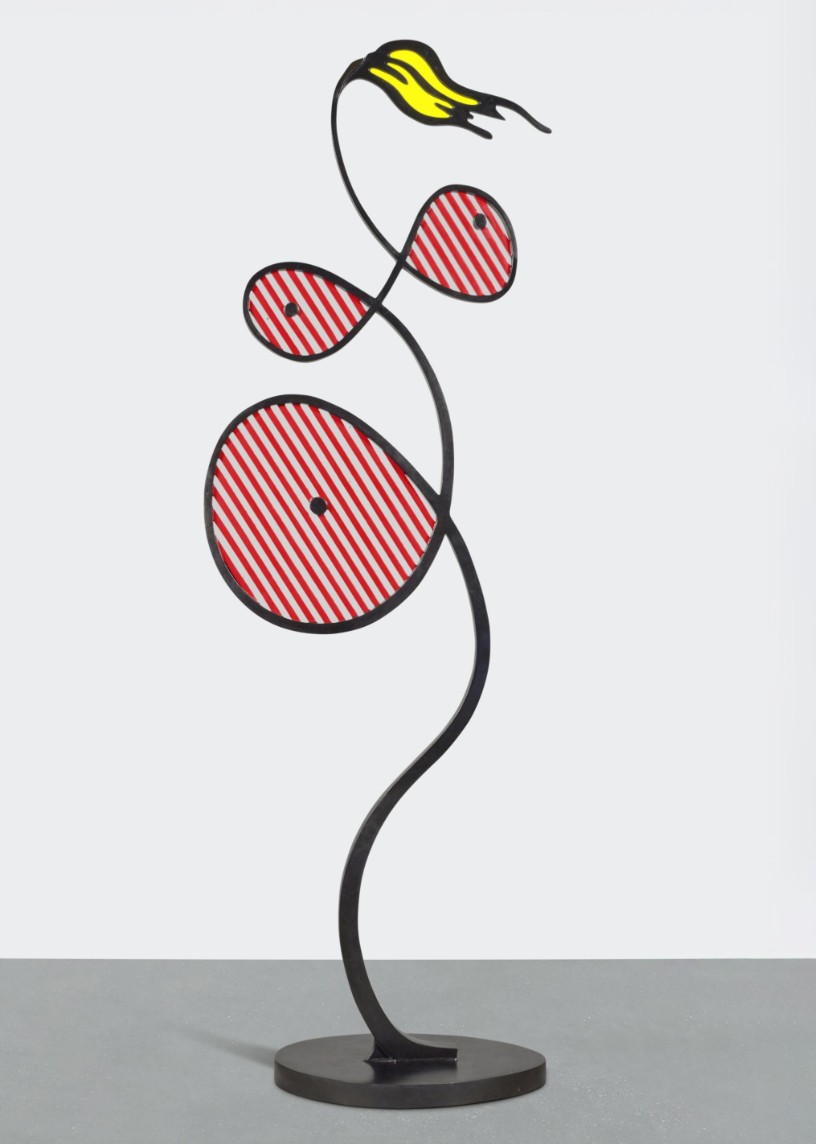
ROY LICHTENSTEIN (1923 – 1997)
Galatea, 1989-90
Conceived in 1989 and cast in 1990
Painted and patinated bronze
90x31x19 inches (228.6 x 78.7 x 48.3 cm)
Edition: 6 + 1 AP
Inscribed with the artist’s signature
numbered and dated (on the base)
Galatea brings Lichtenstein’s lifelong engagement with art history to a culmination—drawing on mythology, filtered through Pop, and realized with his distinctive sculptural style. Executed in 1989, the work revisits the myth of Pygmalion’s statue brought to life, but instead of classical marble, Lichtenstein reimagines the figure in industrial enamel and painted bronze, uniting centuries of artistic tradition in a striking contemporary form.
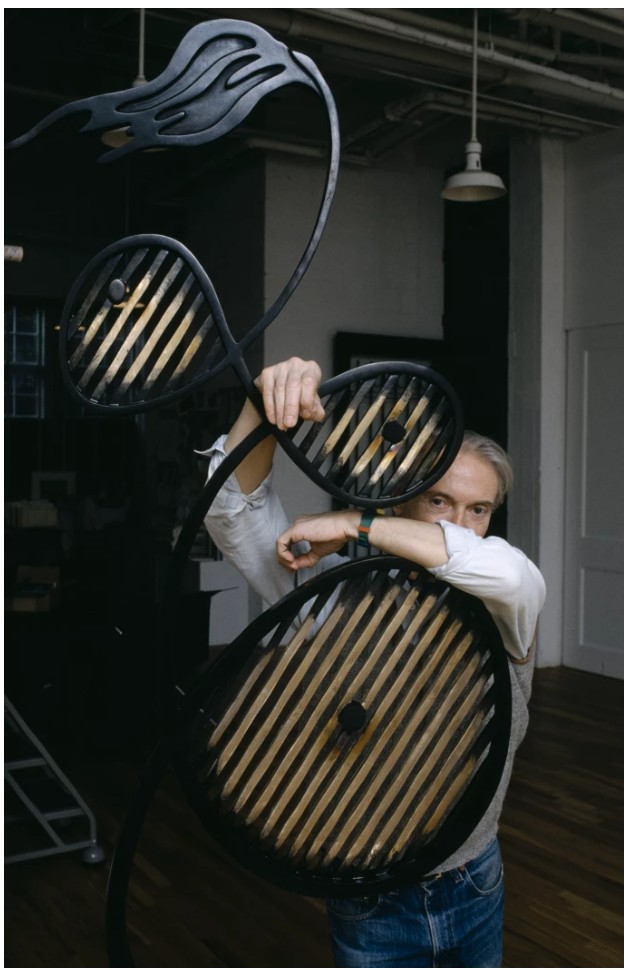
Roy Lichtenstein with Galatea (in progress), 1989. Photo © Bob Adelman. Art © Estate of Roy Lichtenstein
Harkening back to his comic bombshells of the 1960s such as Crying Girl or Girl with Ball, Lichtenstein draws inspiration from iconic motifs that have come to define his distinct style. The present work boldly disrupts sculptural convention with its flat, two-sided profile while reflecting on the evolution of contemporary popular imagery and Lichtenstein’s signature iconography of the stylized brushstroke.
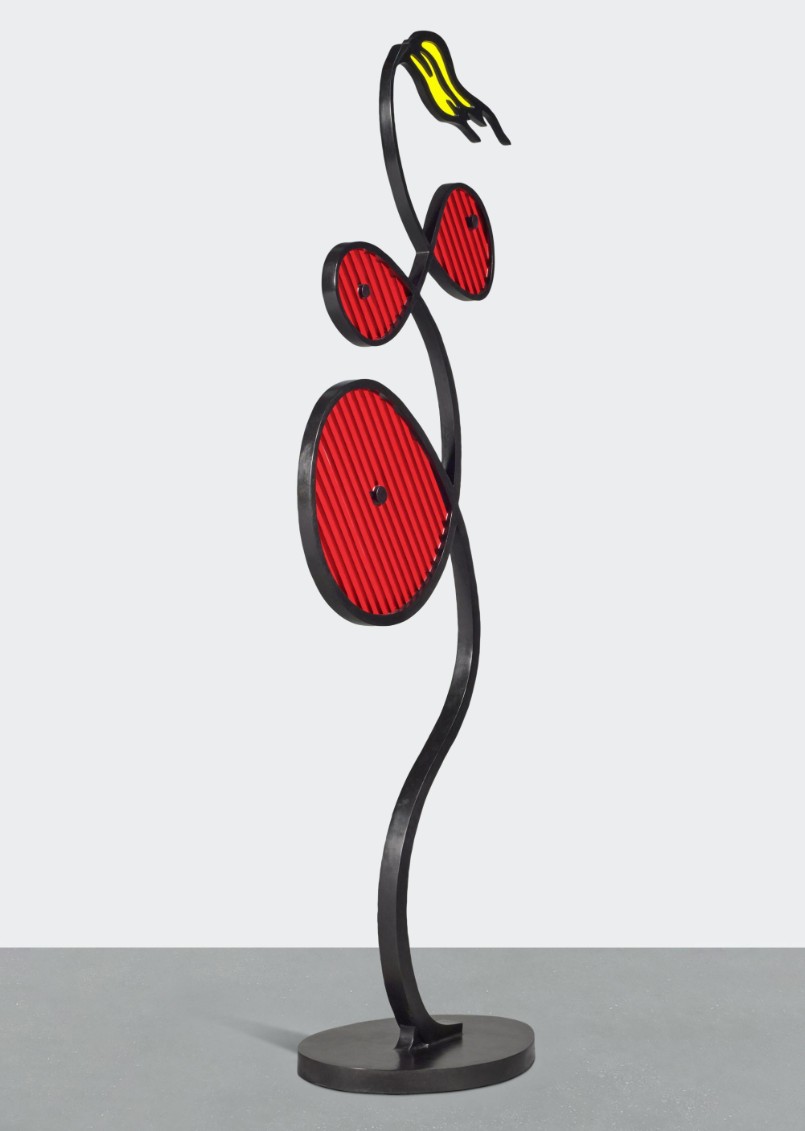
The sinuous outline of Galatea evokes the contrapposto elegance of Botticelli’s Birth of Venus with its serene curve and poised posture. Yet, where Botticelli’s Venus floats ethereally upon the sea, Lichtenstein’s Galatea asserts corporeal weight in the gallery space—substantial, graphic, yet softly anthropomorphic. This tension between weightless myth and stylized mass is part of its beguiling charm.
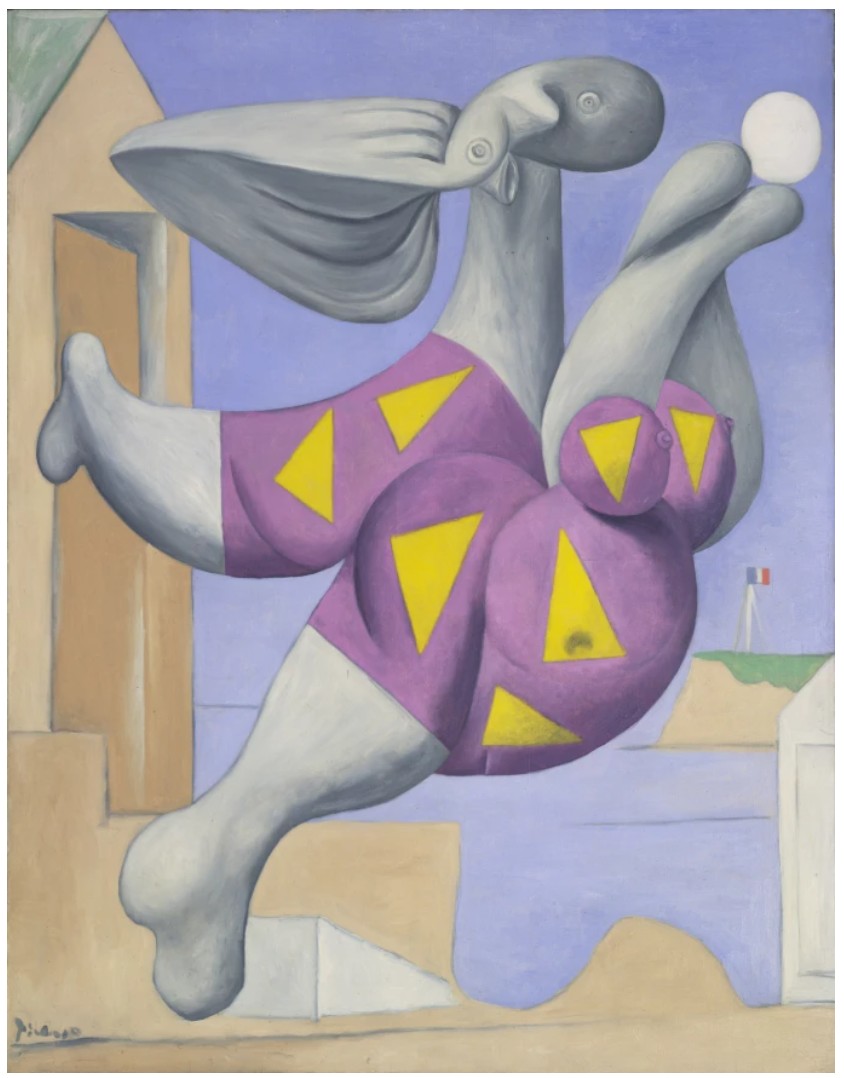
Pablo Picasso, Bather with Beach Ball, 1932. The Museum of Modern Art, New York. Image © The Museum of Modern Art/Licensed by SCALA / Art Resource, NY. Art © 2025 Estate of Pablo Picasso / Artists Rights Society (ARS), New York
When viewed through his Pop‑informed lens, the work also hums with dialogue with Picasso. The subtle abstraction of Galatea’s form—reduced to ovals, a stylized brushstroke of hair and her abstract yet womanly figure, all shaded with engraved red lines—recalls the 1932 Picasso painting Bather with Beach Ball. Lichtenstein’s treatment nods to Picasso’s legacy not by imitation but by reinvention: he embraces Picasso’s forms. Picasso’s incomparable legacy has been present in Lichtenstein’s artistic ethos from the nascent stages of his career; in 1943 he painted a variation on Picasso’s Portrait of Gertrude Stein, while embarking on a series of four Picasso paintings from 1962-64, and making a series of prints following Picasso’s passing in 1973. Lichtenstein’s invocation of the modern master furthers the career-long interrogation of “high” versus “low” culture, not only in the juxtaposition of cerebral Cubist deconstruction with commercial-inspired imagery, but also in Picasso’s works dual existence as perennial masterpieces and ever-reproduced, nearly ubiquitous images.
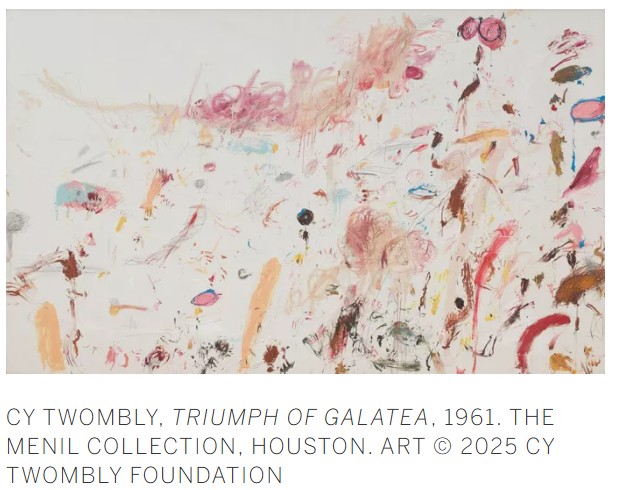
Expanding beyond Picasso, one might also perceive echoes of Cy Twombly’s lush, painterly Triumph of Galatea. Though Lichtenstein’s Pop vocabulary is antithetical to Twombly’s romantic Abex gestures, the shared subject becomes a bridge—Twombly’s emotional flourish and classical fantasia, transported into Lichtenstein’s cool, conceptual precision. The juxtaposition adds subtle irony: two Galateas, one dreamy and visceral, one taut and tongue‑in‑cheek.
Galatea, in its elegance, wit, and intellectual rigor, is a stunning homage to the artist’s most enduring motifs rendered with a masterful sense of visual acuity.
Auction Results
Galatea, 1989-90
Reflections on Pop: Works from the Collection of Dorothy and Roy Lichtenstein
Sotheby’s New-York: 26 September 2025
Estimated: USD 800,000 – 1,200,000
USD 2,185,000
ROY LICHTENSTEIN (1923 – 1997)
Galatea, 1989-90
Painted and patinated bronze
90x31x19 inches (228.6 x 78.7 x 48.3 cm)
Inscribed with the artist’s signature, number 1/6 and date ’90 (on the base)
Conceived in 1989 and cast in 1990
This work is number 1 from an edition of 6 plus 1 artist’s proof