For 500 years Leonardo da Vinci’s Mona Lisa has been one of the most recognizable paintings in the world. Since her creation in 1503, she has become the ultimate Pop icon, so it is unsurprising that in 1963—while on a wildly successful tour of the United States—Mona Lisa caught the attention of Andy Warhol, the ultimate chronicler of popular culture. Inspired as much by the ubiquitous nature of the image as its historical importance, Warhol produced a series of seven canvases using Leonardo da Vinci’s famous painting as his source. One of the largest works in this group, Colored Mona Lisa, is also regarded as one of the most striking and significant paintings of the artist’s early career.
“Why don’t they just have someone copy it and send the copy.
No one would know the difference”
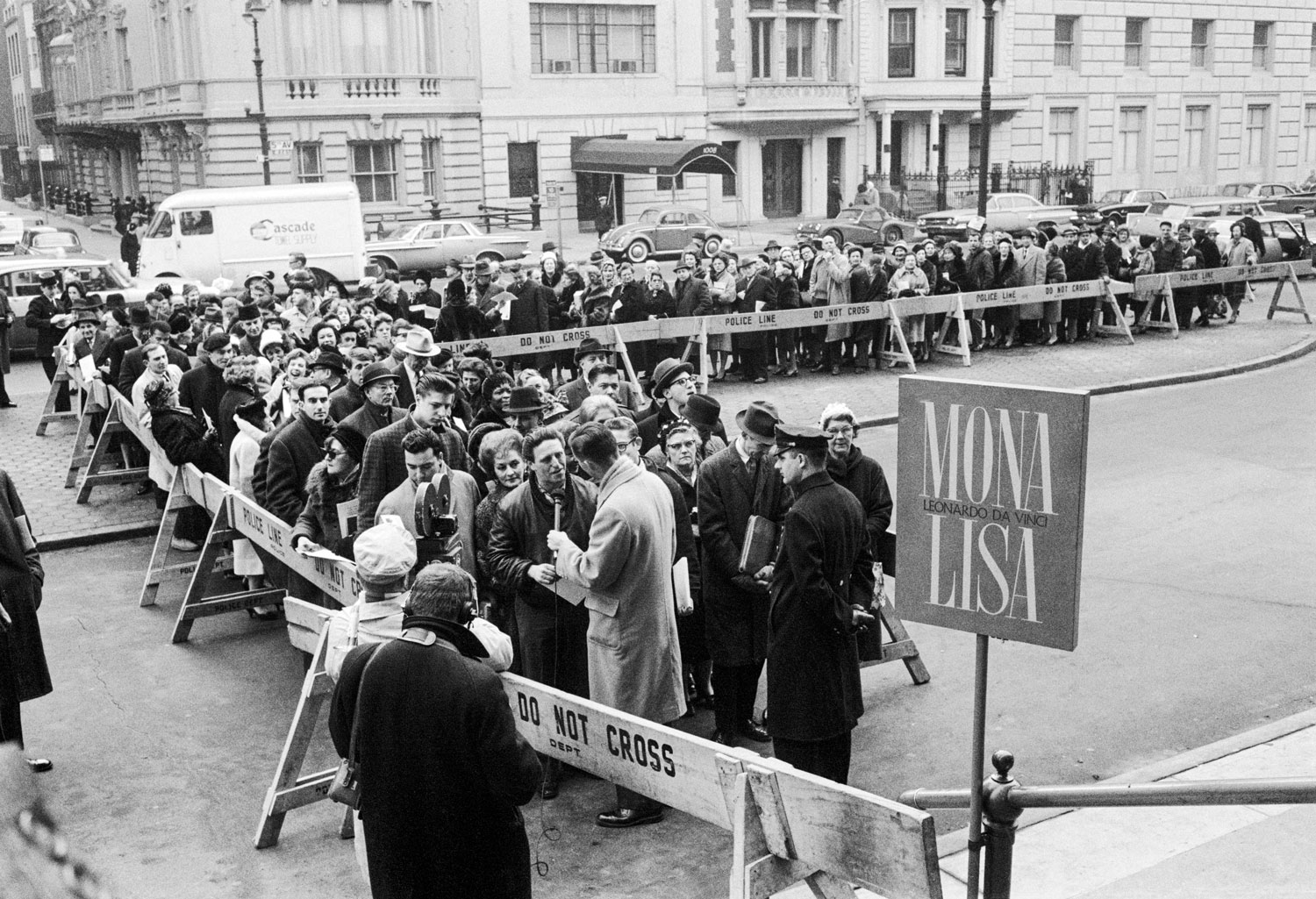
Crowds awaiting the inauguration of the Metropolitan Museum of Art’s Mona Lisa exhibition in New York in February 1963.
PHOTO: BETTMAN/GETTY IMAGES
Introduction
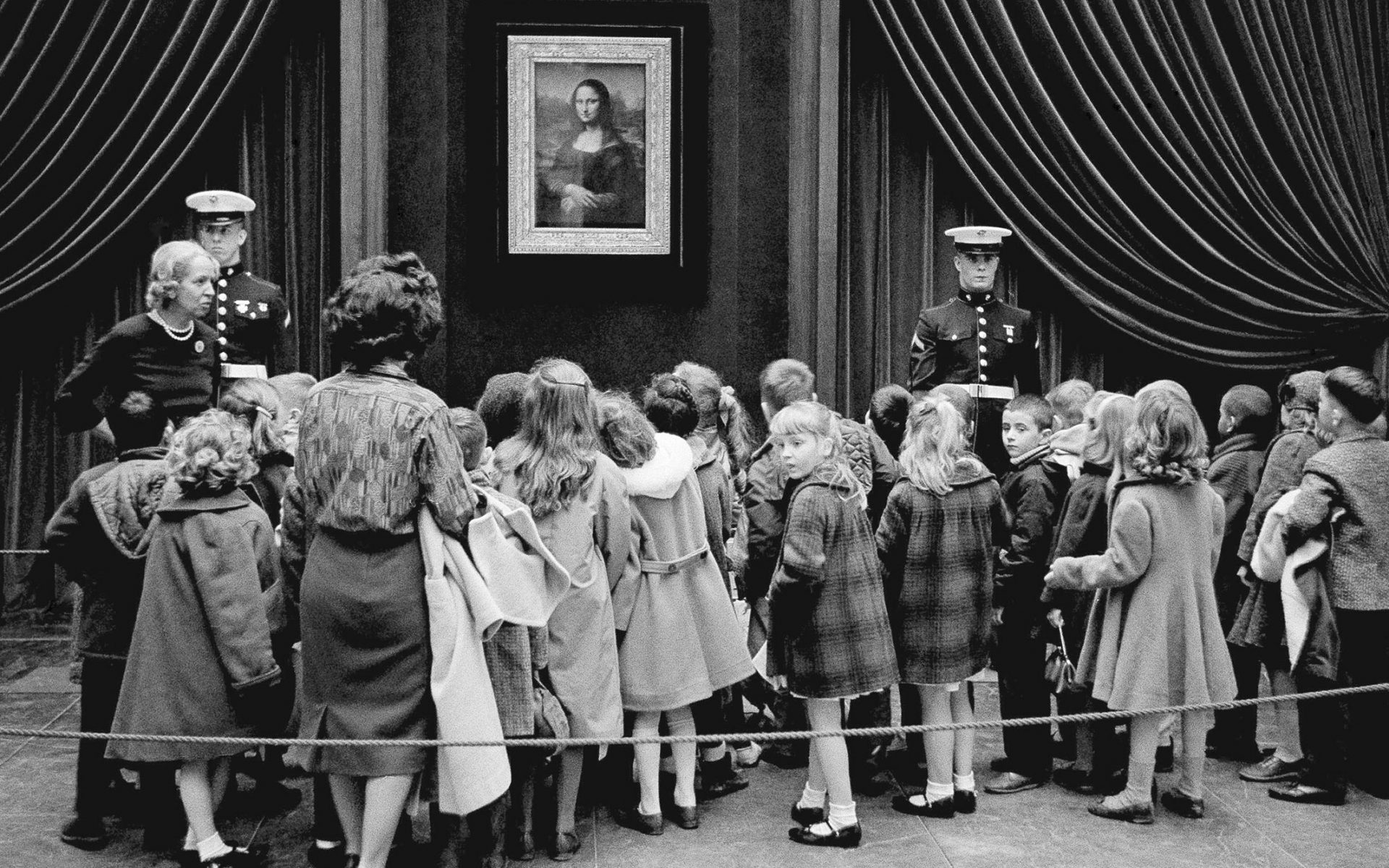
The Mona Lisa was exhibited first at the National Gallery in Washington in early 1963, and then for three weeks at the Metropolitan Museum of Art in New York. Commentators considered it the first “blockbuster” exhibition; an estimated 1.6 million viewers paraded past da Vinci’s painting, which was protected by temperature and humidity controls, a thick layer of glass and armed guards. Crowds formed at 4:30 in the morning, with lines wrapped around the block. Warhol foresaw the level of celebrity that the Mona Lisa achieved when it was exhibited. Spectacle surrounded her arrival, similar to the celebrity cult that had so fascinated Warhol in his paintings of Marilyn, Liz and Jackie. Da Vinci’s painting was the most copied and most reproduced art object (not to mention the most expensive). By assembling this progression of multicolored images of the Mona Lisa, Warhol not only commented on the ubiquitous nature of one of the most reproduced painting images in modern society, but also on the means of production, too. Within the surface of this large-scale canvas we can see evidence of the artist’s exceptional ability to capture the zeitgeist of a particular moment in time and provide an early example of his prescient ability to identify the emergence of a nascent age in which high art and consumer culture would become inextricably linked.
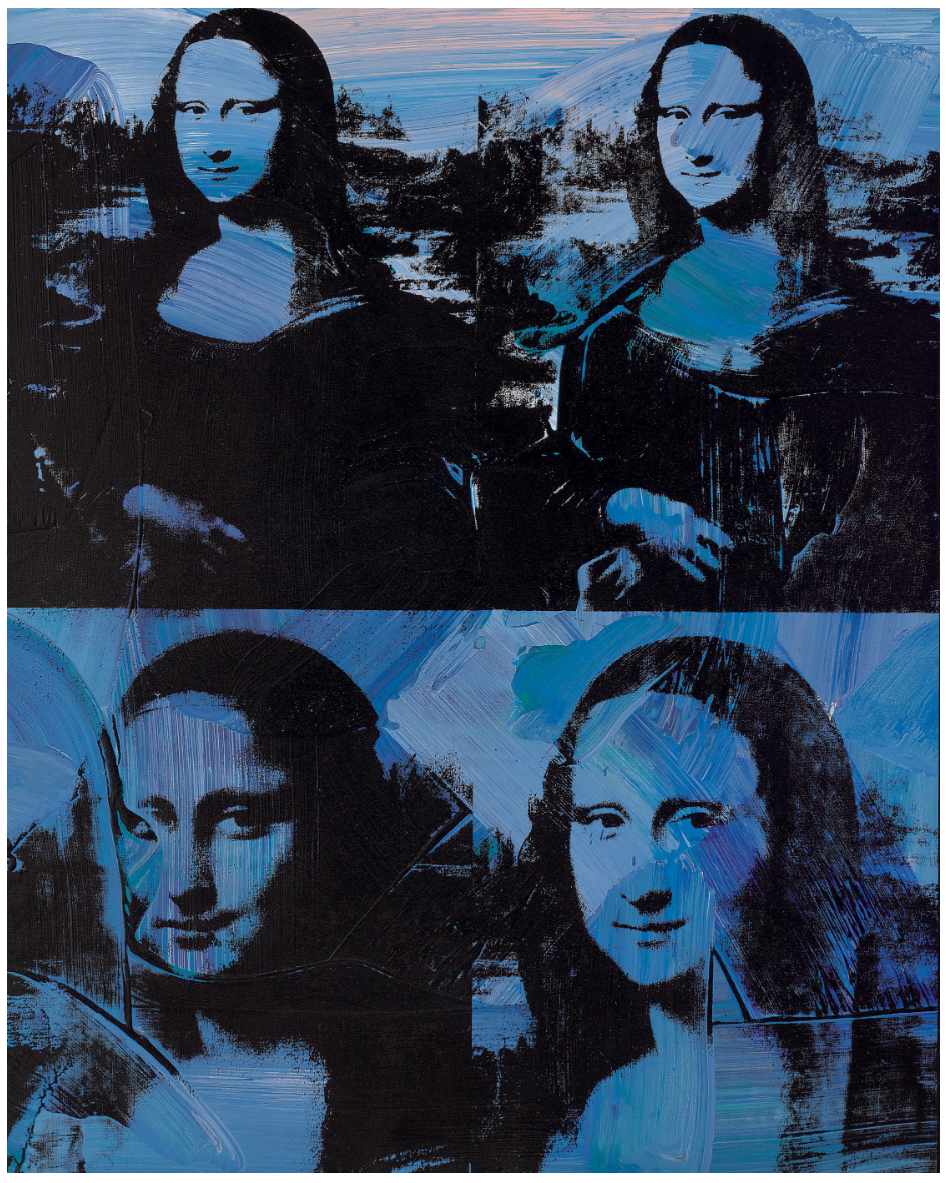
Mona Lisa, 1978
Synthetic polymer and silkscreen ink on canvas
50 1/8 x 40 1/8 inches (127.3 x 101.9 cm.)
Christie’s New-York: 9 November 2010
USD 3,610,500
Among the postwar American figures who inspired the nation’s love of the arts, Jacqueline Kennedy was a leading light. The First Lady believed that the White House should showcase America’s cultural heritage. She was instrumental in having Congress declare it a museum in 1961 and undertook a complete renovation that culminated in her televised tour of the White House in February 1962.
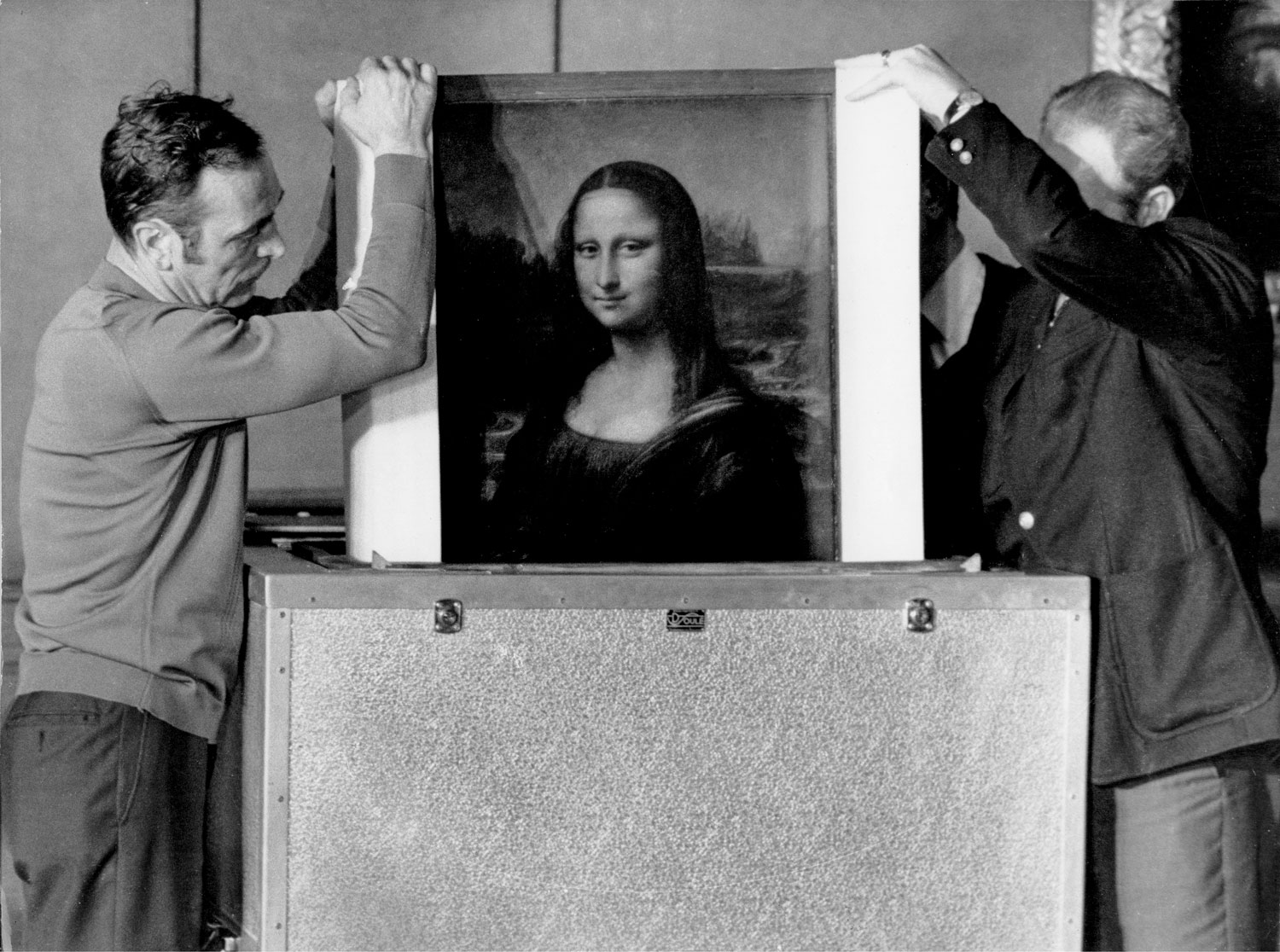
Handlers pack up the painting for its voyage to the U.S. two months prior.
PHOTO: IMAGNO/GETTY IMAGES
Her promotion of the visual arts began during her first year in the White House, when she regularly visited the National Gallery of Art to see her friend John Walker, the museum’s director, and got better acquainted with its treasures. She had developed a relationship with Walker as a teenager while spending time at her family’s Virginia home and going to the National Gallery with her mother. It was where her love of art and culture began, flourishing further during her junior year studying at the Sorbonne in Paris.
Mrs. Kennedy’s boldest move came during her first year in the White House, on the occasion of a presidential trip to Paris. She had been enthralled with André Malraux’s famous novel La Condition Humaine as a French-literature student, and she had always wanted to meet the writer, who was now France’s minister of culture. Upon her arrival in France, Malraux personally escorted her through Paris’s sites while her husband met with President Charles de Gaulle. After she attended several engagements, the French public was charmed by the American First Lady’s perfect French and deep knowledge of the country’s rich history.
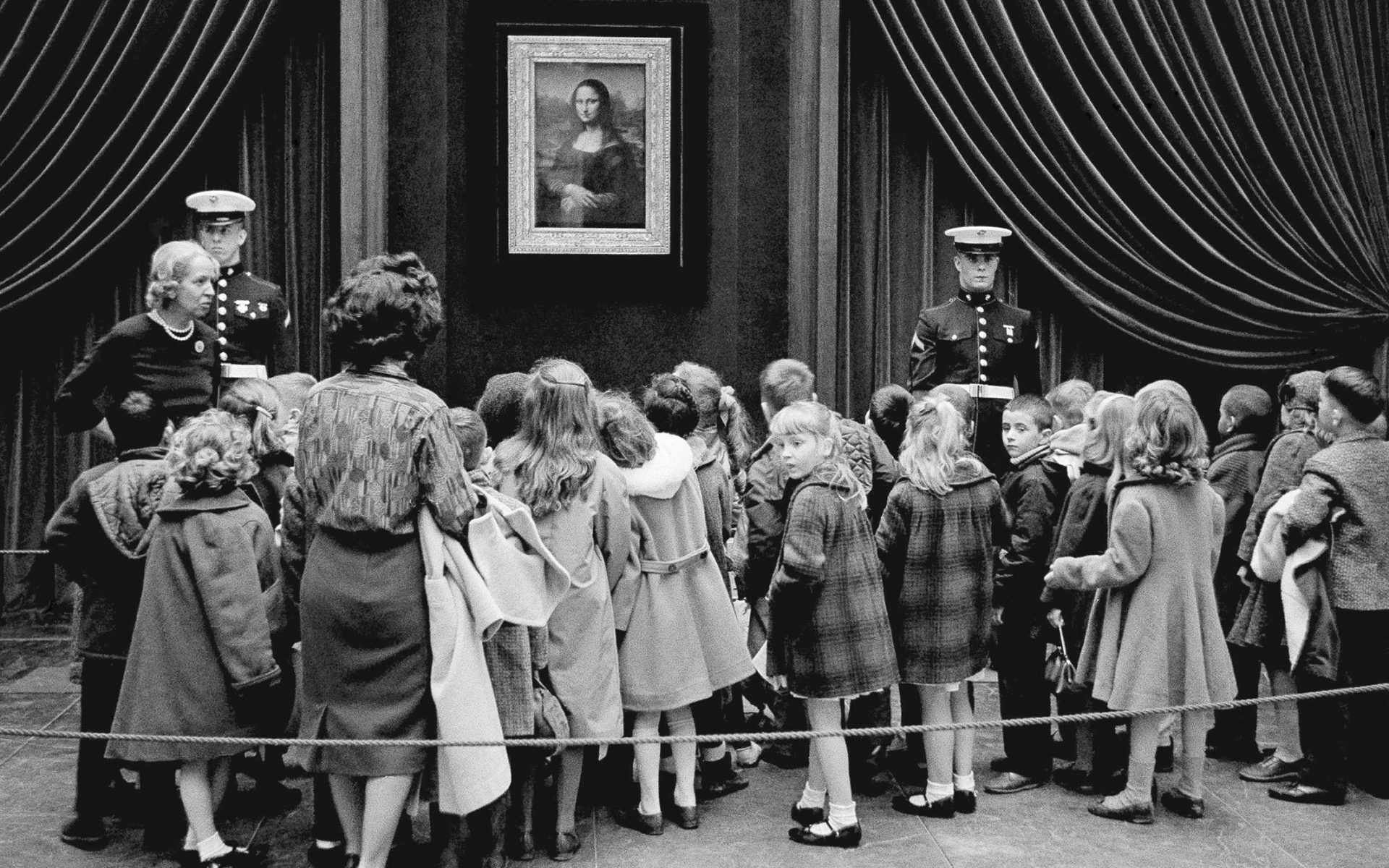
Young visitors crowd around the Mona Lisa during its visit to the National Gallery of Art in Washington.
PHOTO: AP IMAGES
It was apparent that President John F. Kennedy was upstaged by his wife when he exclaimed: “I am the man who accompanied Jacqueline Kennedy to Paris!” Mrs. Kennedy also charmed Malraux. At their final dinner in Paris, the First Lady told him about her dream of bringing da Vinci’s Mona Lisa—one of art history’s greatest masterpieces and the most famous painting in the Louvre—to the U.S. to share with millions of Americans. He whispered a promise that he would try to persuade the Louvre to loan it.
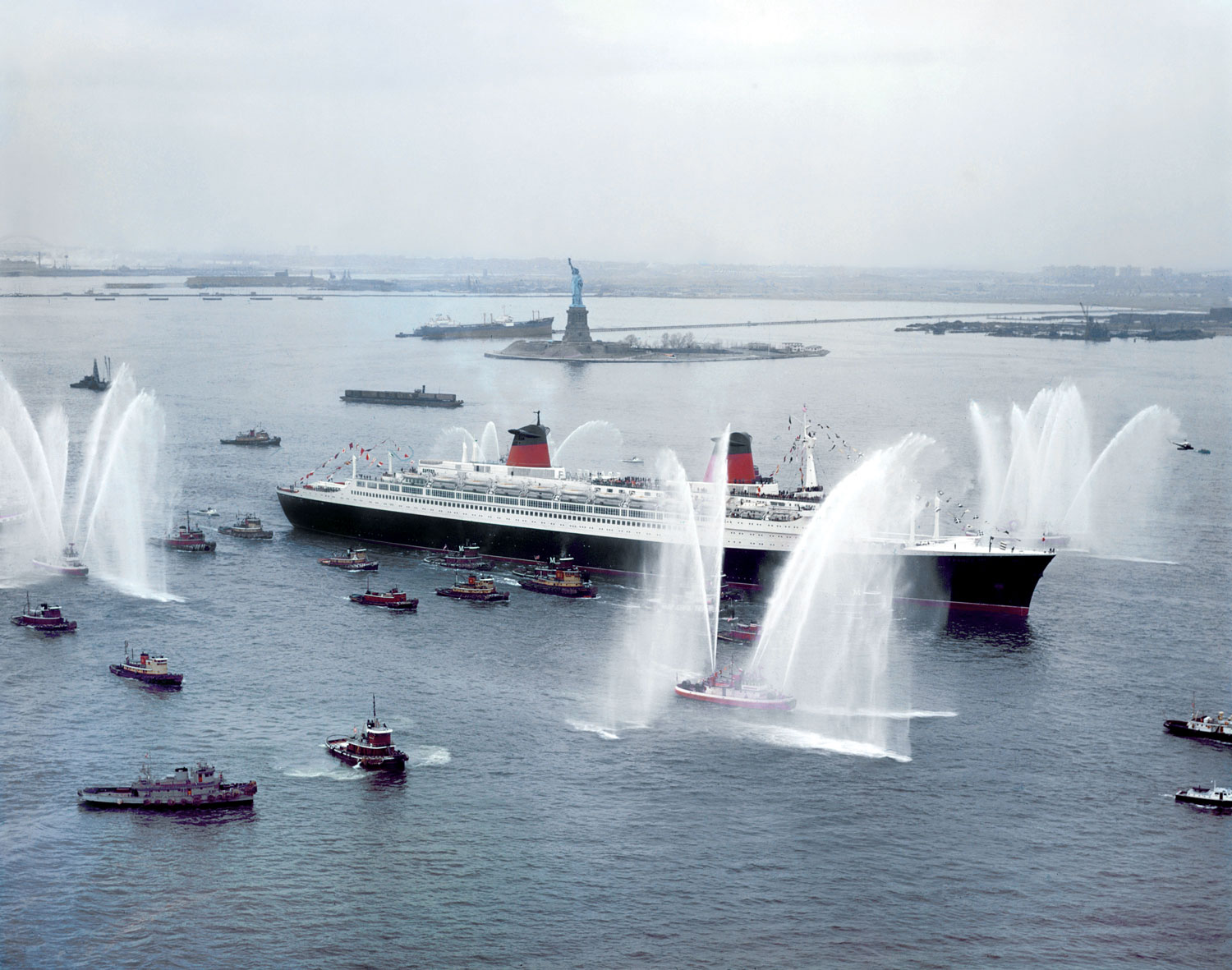
Fireboats surround the SS France as it enters New York Harbor carrying the Mona Lisa.
PHOTO: STRINGER/GETTY IMAGES
Overcoming strong resistance (the painting was, and still is, considered a national treasure), Malraux prevailed. The fragile painting would have to be transported by the SS France ocean liner in a temperature-controlled box in its own stateroom, accompanied by armed guards. The temperature, which was alarm-monitored, would not be allowed to fluctuate by more than one degree throughout the entire journey!
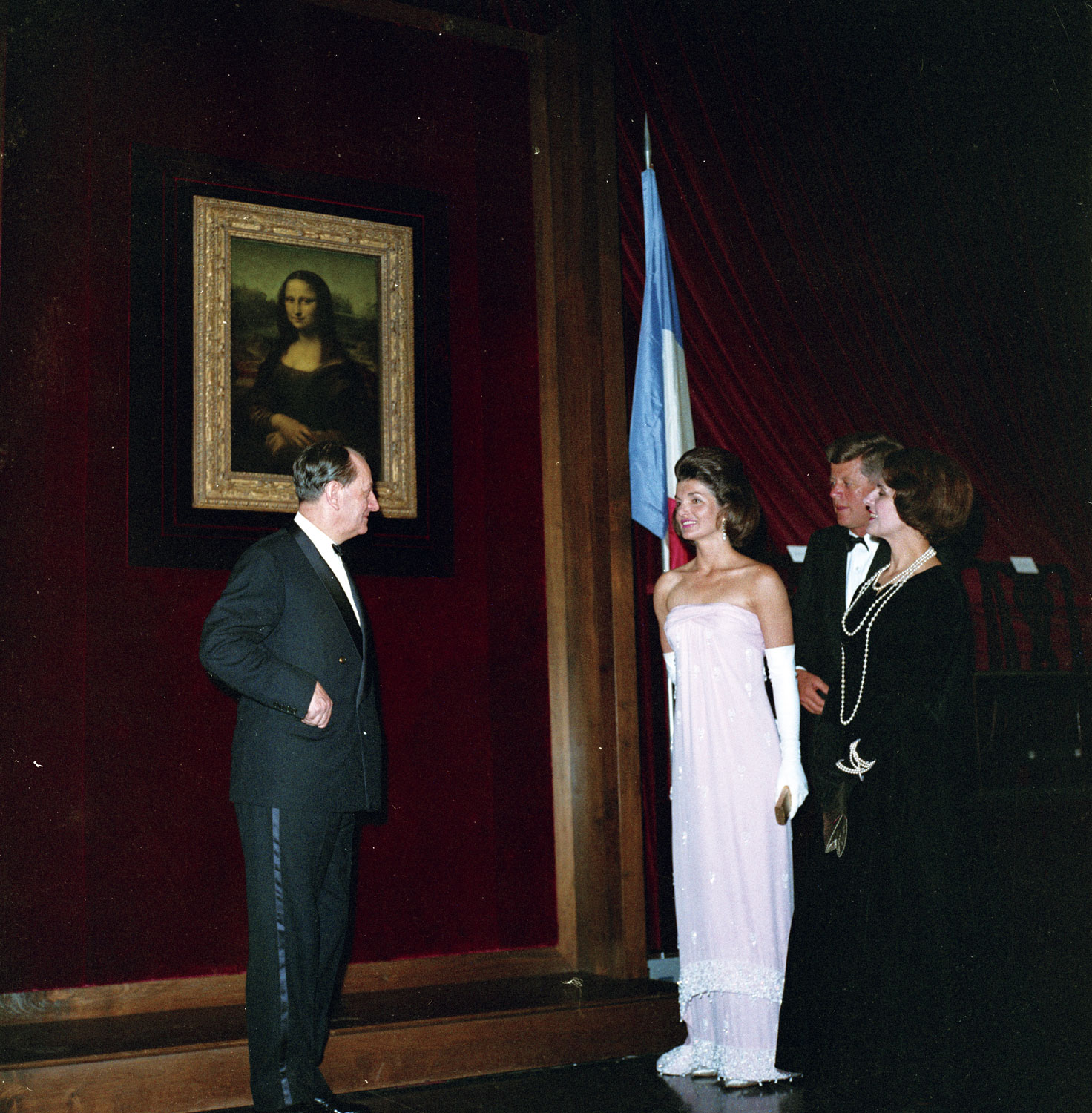
Mrs. Kennedy with President Kennedy, The Malraux’s, and the Mona Lisa.
And so, in December of 1962, Mrs. Kennedy’s dream came true as the Mona Lisa reached American shores, stopping first at the National Gallery, then at New York’s Metropolitan Museum of Art. Nearly two million people ended up viewing the masterpiece, many traveling long distances and waiting in line for hours. Jacqueline Kennedy had brought the best of the visual arts to the American people and, in doing so, created a blockbuster show that made history.
Source: How Jacqueline Kennedy Brought the Mona Lisa to America (galeriemagazine.com)
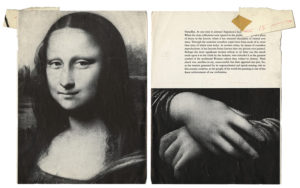
Warhol used the Met’s brochure illustration of the Mona Lisa as his source for the present painting, transferring the image into silkscreen and quadrupling it. By replicating the image onto canvas, Warhol not only makes the viewer immediately aware that they are looking at a copy, but also drives home this replication by showing a copy of a copy of a copy. Like his seminal Four Jackies of 1964, he presents four Mona Lisas, each created from the same image, but each radically different in execution. Warhol had reached a peak with the silkscreen technique by this time in his career. He reproduced the famous image with crispness and accuracy, ease and facility, of a level not found in his earliest works. Warhol handles each screen differently, presenting four different Mona Lisas, each with an entirely different expression. The Mona Lisa of the upper right quadrant nearly copies the original, the winding road stretching behind her and details of her dress still visible, while the figures in the lower half of the painting are the most mysterious of all. With the flick of his screen, Warhol leaves some details out, their existence fading into memory. Perhaps the most important feature affected by Warhol’s rendering is the Mona Lisa‘s enigmatic smile, reproduced four times, but different in each panel. Melancholia pervades the painting, which Warhol reinforced by presenting her likeness monochromatically, overlaying it with judiciously applied blue paint. Since he relied so much on repetition and silkscreen technique, we rarely see evidence of Warhol’s hand, as we do here. The paint’s lusciousness lends richness and sumptuousness to the work, while sealing the Mona Lisa in a mysterious blue shroud.
Co-opting the Mona Lisa was a modern gesture, beginning with Marcel Duchamp’s L. H. O. O. Q., a postcard-sized reproduction of Leonardo’s masterpiece upon which Duchamp drew a mustache and a thin goatee. Duchamp’s Mona Lisa equates a museum standard with vulgar vandalism and cheap reproduction, and it subverts high art into low commodity. Duchamp’s title is the work’s most subversive element. When pronounced in French, L. H. O. O. Q. sounds like “Elle a chaud au cul,” which means (roughly) “She’s got a hot ass.”
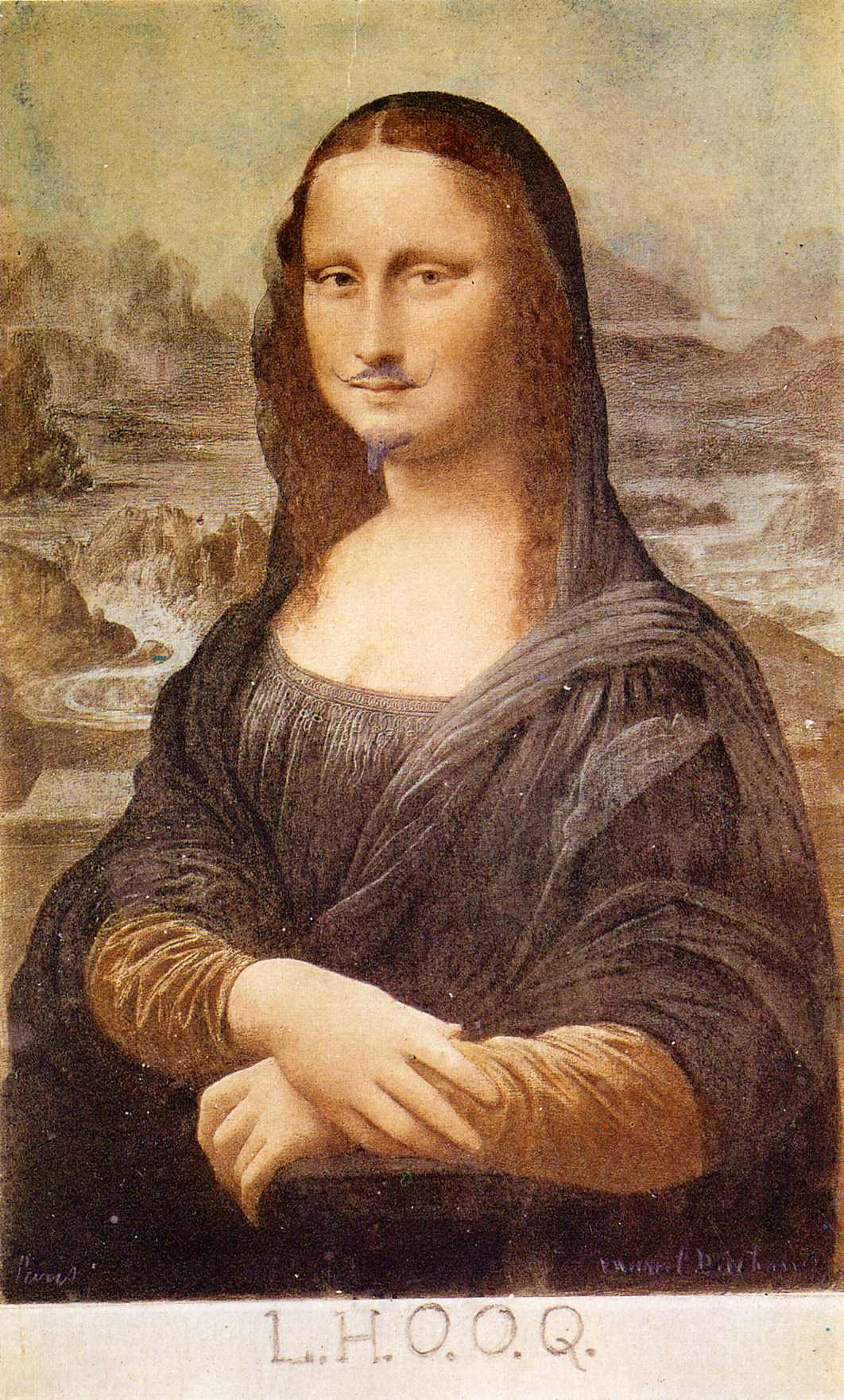
Duchamp may have been the first to “vandalize” the Mona Lisa, but he also hints at something deeper – the “aura” surrounding an object that powerful and rare. Water Benjamin, in his legendary essay “The Work of Art in the Age of Mechanical Reproduction,” suggested that photographs and copies could not capture the aura of an original, believing that they even tended to rob the original of its authority as a unique artwork. But Warhol’s Mona Lisa series points to a different conclusion. It is only because the Mona Lisa has been reproduced that she has attained a powerful celebrity and cultural currency she could not have achieved without it.
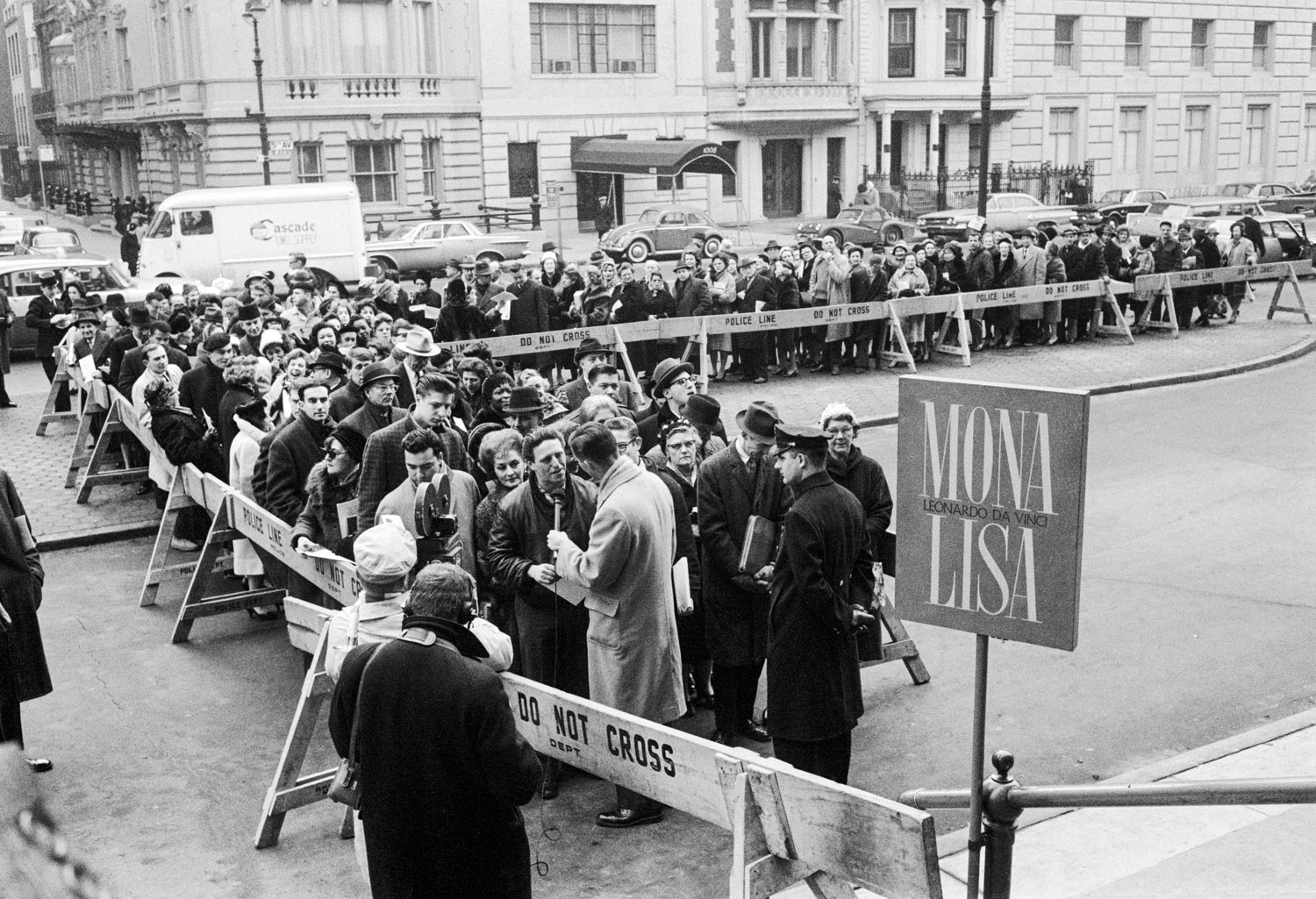
Eighteen years earlier in 1962, Warhol encountered the original Mona Lisa firsthand when the painting travelled to New York for exhibition. Universally considered the most famous (and thereby expensive) work of art in existence, the occasion of the Mona Lisa’s first official tour outside of Europe roused unprecedented attention from the press. Her arrival in America was a major media event, and the exhibition tour to Washington’s National Gallery of Art and New York’s Metropolitan Museum of Art was covered by wave upon wave of photographers, both amateur and professional, each hoping to capture the enigmatic essence of her fame. The press devoted vast column inches in attempting to analyze her beauty and celebrity as the world’s most famous work of art. Her arrival to the United States was unveiled by President John F. Kennedy and his wife, Jackie, as a way of reinforcing Franco-American relations and, indeed, many of the photographers juxtaposed the radiant smile of Jackie with the ‘enigmatic’ one of Mona Lisa. She was a media star in the truest sense of the word and by the end of her trip over 1.6 million people had seen her. Amongst them was a young Warhol, on the cusp of wider creative recognition and embarking on a career which would see him become one of the most famous and celebrated artists of the Twentieth Century.
Warhol was immediately captivated by the Mona Lisa and incorporated the legendary image within his own oeuvre for the first time shortly after its iconic exhibition in 1962. The small corpus of seven preliminary paintings executed between January and February of 1963 denotes Warhol’s first serialization of an art historical work; moreover, the Mona Lisa was to remain the only painting appropriated in this way until the 1980s. Though unimpeachable as a landmark of art history, it was her status as a celebrity and priceless commodity that undoubtedly caught Warhol’s artistic attention. Possessing an unrivalled degree of iconicity and instantly recognizable stardom, the Mona Lisa seems tailor-made for Warholian veneration. Allegedly the portrait of a little-known Florentine lady, ‘Monna’ Lisa Gherardini, painted by Leonardo circa 1503, today Leonardo’s image represents an archetype ingrained within the mass consciousness. Possessing a unique ‘brand identity’ the Mona Lisa enjoyed fame to match the movie stars and celebrities revered by Warhol and a symbolic status to equal the ubiquity of consumer products. The painting’s fragile and precious nature has ensured that it has rarely travelled: her fame being spread almost solely through mechanically reproduced facsimiles. As the most photographed and reproduced work of art in the world, the fascination with the Mona Lisa ‘brand’ extends its legend through replicas and souvenirs as well as books and postcards. She has attained an eternal and immortal status somewhat removed from the humble beginnings of the original painting. Warhol’s decision to utilize the image within his own celebrated corpus further perpetuates the myth and legend of the Mona Lisa.
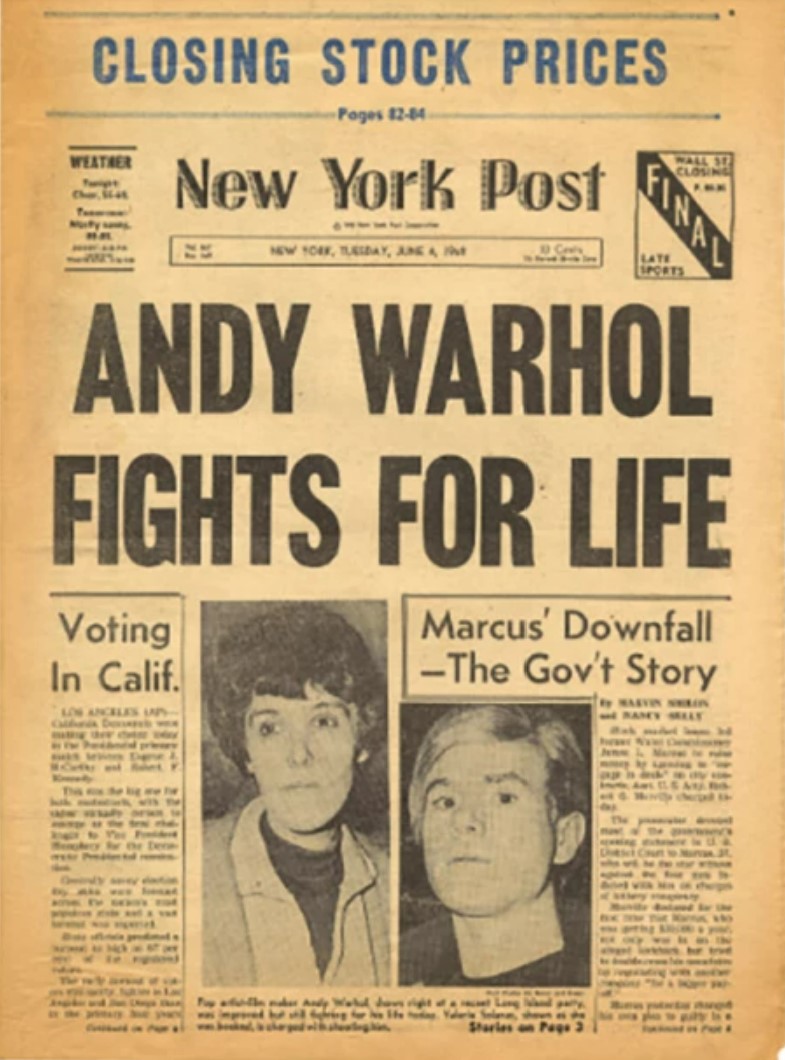
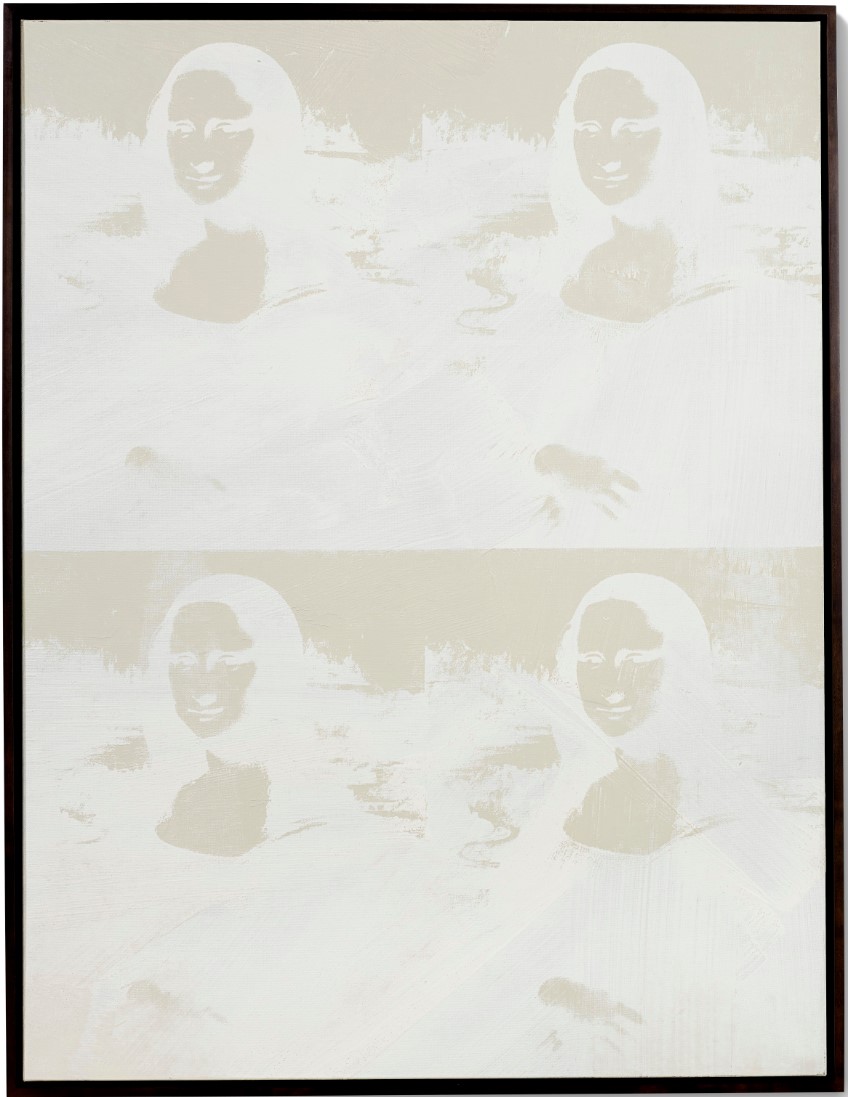
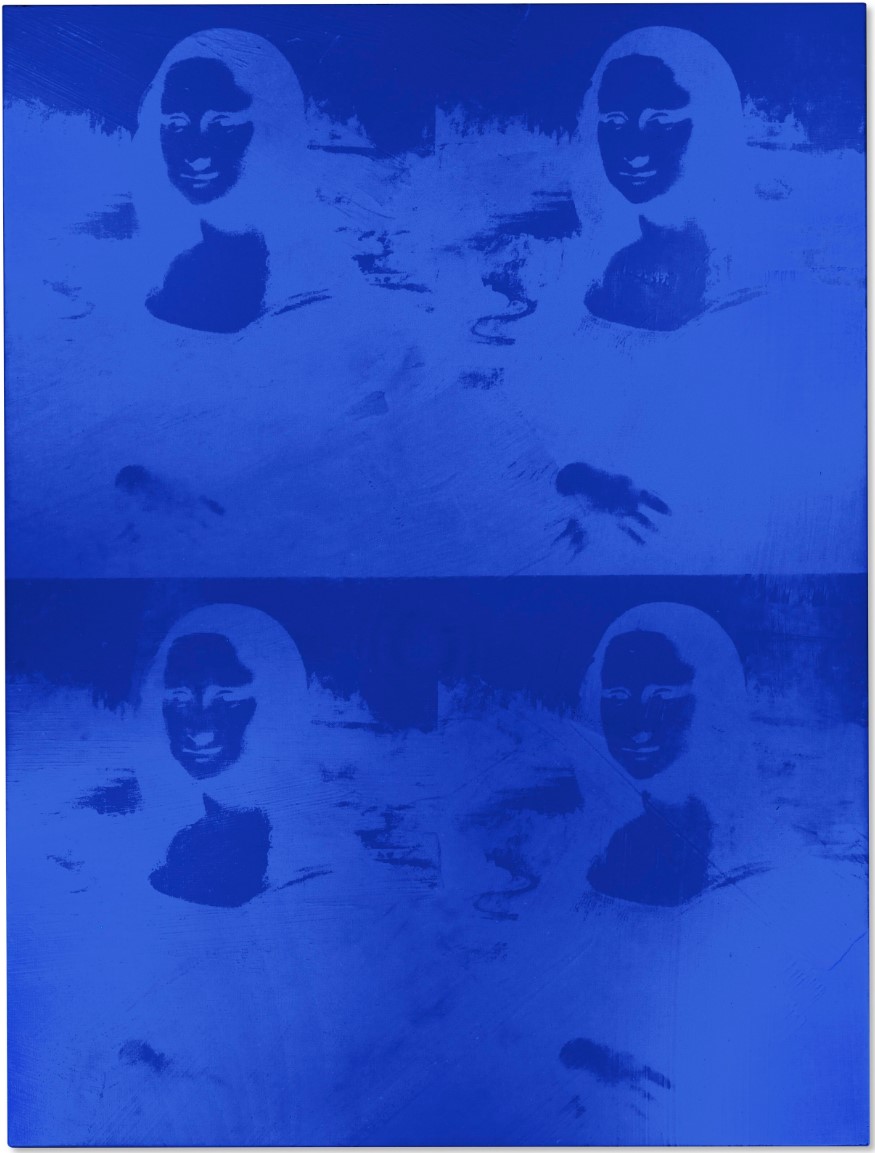
In this 1980 work, Warhol draws on the rebellious spirit of the 1950s and early 1960s, when Jasper Johns’ Flags and Targets forced the viewer to look again at familiar images with a different kind of perception. But Warhol’s increasing preoccupation with mortality—which followed his near-death experience when Valerie Solanas attempted to assassinate him in 1968—is amplified in his works of the late 1970s and early 1980s. During this period, Warhol’s work becomes increasingly personal, still mediating on themes of death and violence, but more often, in terms of his own limited lifespan. His apt plundering of past motifs finds special resonance in Four White on White Mona Lisas, as she represents an image that has endured for over five hundred years. Warhol’s eerie white coloring recalls the Renaissance tradition of casting death masks that preserve the likeness of the recently deceased. Similarly, in his 1980 work, he revisits his 1960s icon by using his past silkscreen, which will preserve his two-toned subject ad infinitum. As the de facto leader of Pop Art, Warhol seamlessly interweaves notions of consumerism, high art, artifice and mortality via the perpetual reproduction of imagery. His super-flat surfaces and silhouettes of ghostly white pigment point to a metaphysical nothingness beyond his glossy surface of paint.
Auction Results
2024 Auction Results
Double Mona Lisa, 1963
Christie’s New-York: 16 May 2024
Estimated: USD 4,000,000 – 6,000,000
USD 5,616,000
ANDY WARHOL (1928-1987), Double Mona Lisa | Christie’s (christies.com)
ANDY WARHOL (1928-1987)
Double Mona Lisa, 1963
Silkscreen ink on canvas
30 x 33 7/8 inches (76.2 x 86 cm)
Signed and dated ‘Andy Warhol 1963’ (on the overlap)
2023 Auction Results
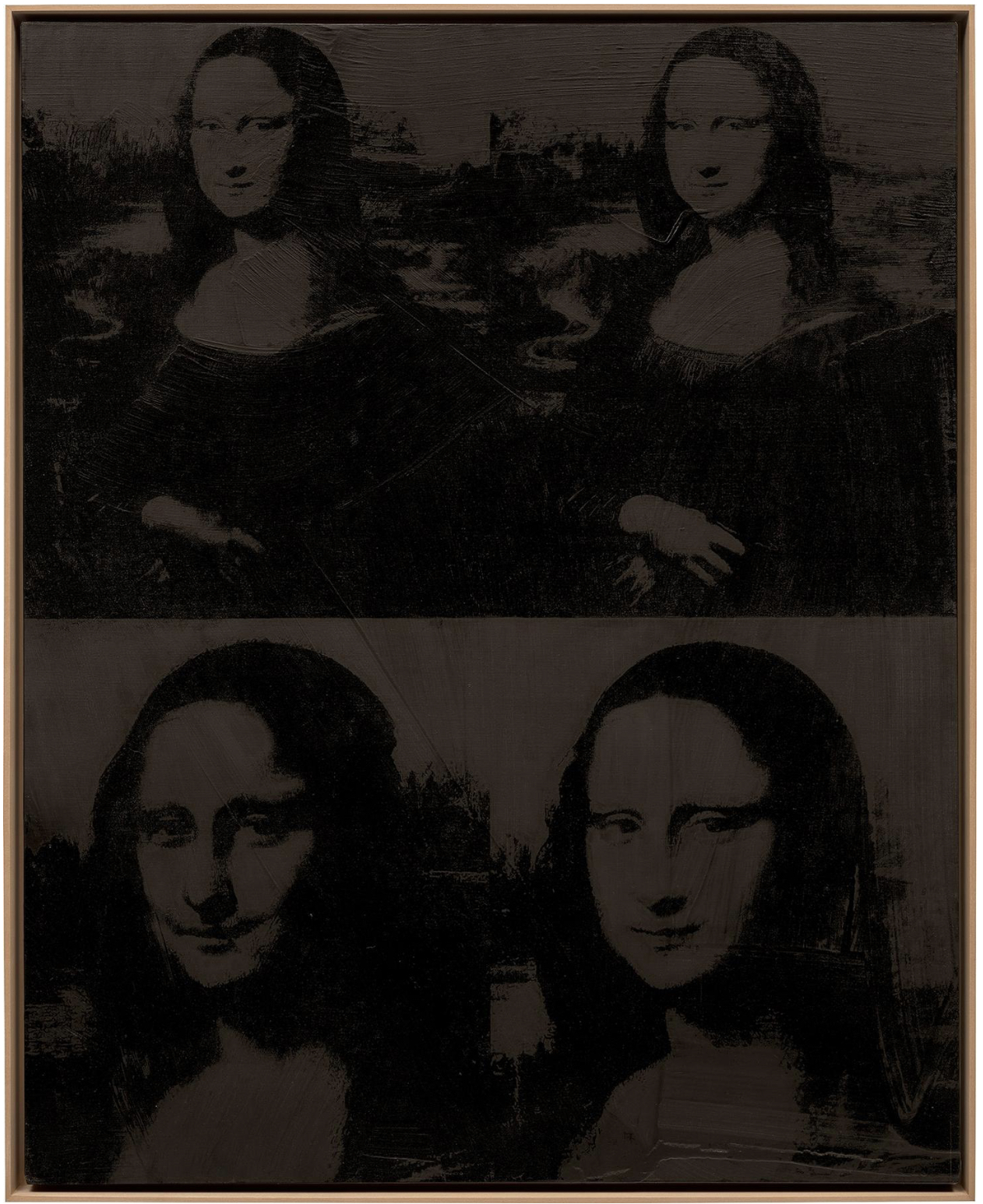
Mona Lisa Four Times, 1973
Phillips New-York: 17 May 2023
Estimated: USD 2,000,000 – 3,000,000
USD 2,359,000
Andy Warhol – 20th Century & Contemporar… Lot 28 May 2023 | Phillips
ANDY WARHOL
Mona Lisa Four Times, 1973
Silkscreen ink and acrylic on canvas
50 1/4 x 40 inches (127.6 x 101.6 cm)
Signed and dated “A Warhol 1973 A Warhol 73” and stamped by the Andy Warhol Art Authentication Board, Inc. and numbered “A104.066” on the overlap
Early Mona Lisas
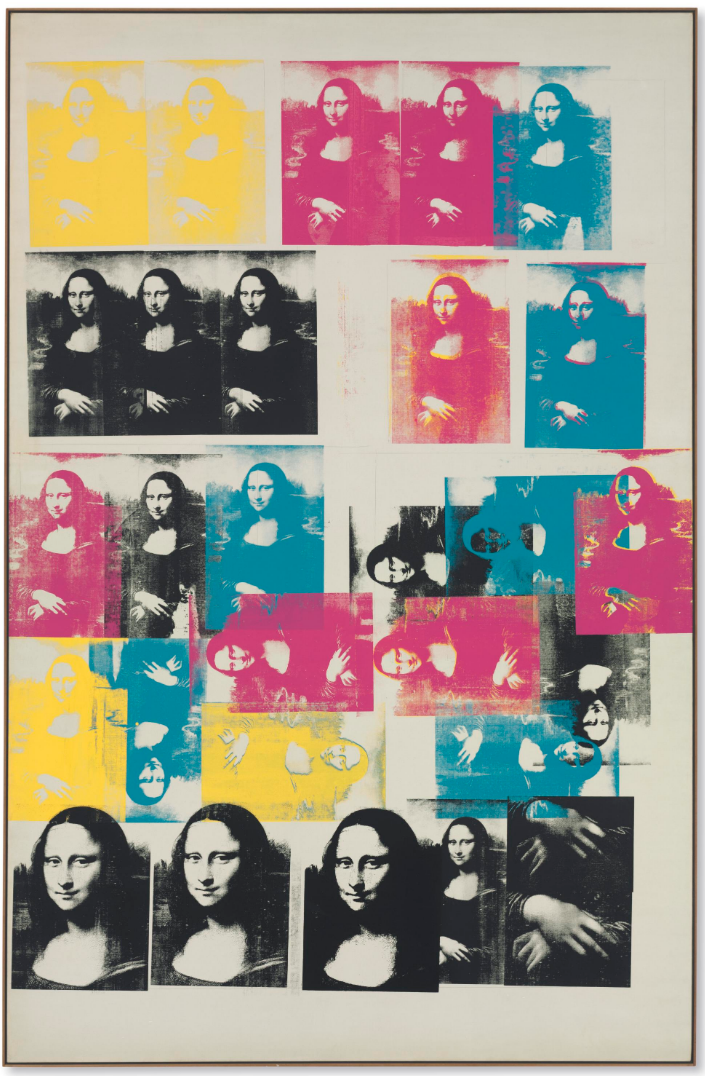
Colored Mona Lisa, 1963
Christie’s New-York: 12 May 2015
USD 56,165,000
Andy Warhol (1928-1987) (christies.com)
ANDY WARHOL
Colored Mona Lisa, 1963
Silkscreen inks and graphite on canvas
125 7/8 x 82 1/8 inches (319.7 x 208.6 cm)
Signed and dated ‘Andy Warhol 1963’ (on the reverse)
Double Mona Lisa, 1963
Christie’s New-York: 16 May 2024
Estimated: USD 4,000,000 – 6,000,000
USD 5,616,000
ANDY WARHOL (1928-1987), Double Mona Lisa | Christie’s (christies.com)

ANDY WARHOL (1928-1987)
Double Mona Lisa, 1963
Silkscreen ink on canvas
30 x 33 7/8 inches (76.2 x 86 cm)
Signed and dated ‘Andy Warhol 1963’ (on the overlap)
Andy Warhol’s Double Mona Lisa is an early work which brings together two of art history’s greatest icons. Painted in 1963, shortly after Warhol had shocked the art world with his painting of one hundred Campbell’s Soup cans, it was partly inspired by the phenomenal American tour of Leonardo da Vinci’s Mona Lisa organized by the First Lady, Jacqueline Kennedy. After witnessing the crowds who flocked to see the famous painting (including Warhol himself), the artist painted a series of seven canvases featuring the Mona Lisa. One of only two black-and-white double Mona Lisa’s from the 1960s (the other example is in the Menil Collection, Houston), another example (Four Mona Lisa’s) is in the permanent collection of the Metropolitan Museum of Art in New York. Painted shortly after his Gold Marilyn Monroe (1962, Museum of Modern Art, New York), and only within a few months of his Silver Liz canvases of 1963, Double Mona Lisa joins the pantheon of cultural icons that came to define the artist’s career.

As the name suggests, Double Mona Lisa presents two screens of da Vinci’s masterpiece side by side in striking black-and-white monochrome. The left-hand screen displays a slightly cropped version of the original, showing Mona Lisa’s visage against a backdrop of Renaissance Italy. The clarity of this particular screen renders the lush vegetation and meandering rivers of da Vinci’s original in remarkable clarity, even the narrow stone bridge is visible over Mona Lisa’s right shoulder. This clarity continues with the right screen, which presents a close-up of the Mona Lisa’s face, together with her enigmatic smile. This close-up view offers a delicate framing of the face, complete with the diaphanous veil (believed to be a guarnello, worn by Renaissance women while pregnant), and the gold embroidery around the neck of her dark silk dress.

Cover of LIFE Magazine, January 4, 1963.
At the time Warhol painted Double Mona Lisa, the painting had recently completed a highly successful U.S. tour. The journey of the world’s most famous work of art from the Louvre in Paris to the United States began almost six months earlier when, during a visit to Washington, the French Minister of Culture André Malraux whispered to First Lady Jacqueline Kennedy that he would be able to grant her wish that the Mona Lisa travel to the United States. When the painting was finally unveiled to the public in January of 1963, there was an outpouring of interest in both the painting and in art in general that kick-started America’s love affair with art, marking the beginning of the age of the blockbuster exhibition. “The visit of the Mona Lisa produced the greatest outpouring of appreciation for a single work of art in American history and pioneered the phenomenon of the blockbuster museum show,” said one commentator. “It was one of the most darling, elaborate art exhibitions ever staged, and the painting’s unlikely, romantic journey to America captured the imagination of the world” (M. L. Davis, Mona Lisa in Camelot: How Jacqueline Kennedy and Da Vinci’s Masterpiece Charmed and Captivated a Nation, New York, 2008, p. ix). That this event captured Warhol’s imagination should not be a surprise, as it conjured up everything Warhol was fascinated by: fame, beauty and a modicum of art history.

Marcel Duchamp, L.H.O.O.Q., 1919. Centre Georges Pompidou, Paris. Photo: © CNAC /MNAM / Dist. RMN-Grand Palais / Art Resource, NY.
One of the earliest works in which Warhol employed the silkscreen technique, Double Mona Lisa represents an artist on the cutting edge of his primary mode of expression. In 1962, he adopted the printing process to efficiently duplicate preexisting source material in a stylized aesthetic that has become synonymous with Warhol’s name. In Double Mona Lisa, he delights in the act of appropriation and repetition while masterfully subverting conventional ideas of artistic innovation. The Mona Lisa’s appearance in the United States coincided perfectly with the flourishing of Pop, even acting as a catalyst for Warhol’s inevitable fascination with celebrity and popular culture. Like Robert Rauschenberg, who began silkscreening paintings after visiting Warhol’s studio, Warhol embraced the innovative silkscreen technique as it perfectly suited the new direction of his art, allowing for objectivity and seriality. By representing this icon of high art and culture via the silkscreen process, which was previously employed for commercial and industrial endeavors, Warhol mires the boundaries between high and low in classic Warholian fashion.

Warhol was not the first artist to appropriate Leonardo da Vinci’s masterpiece in a more contemporary manner. In 1919, Marcel Duchamp, one of Warhol’s greatest influences, famously adorned a postcard-sized reproduction of her famous visage with a mustache and goatee. While Duchamp was attempting to subvert the pretenses of museum and high-art culture, Warhol takes Leonardo’s subject as a readymade icon, the ultimate celebrity of art history, or a brand as famous as Campbell’s Soup. By repeating, cropping, and manipulating the original image, he draws attention to its ubiquity and mass-appeal. Indeed, in 1963, the painting was particularly well-suited for Warhol since, to celebrate the Mona Lisa‘s arrival in New York, museum vendors and tourist shops sold endless reproductions on coffee cups and tote bags. In fact, the artist’s source image for this painting was taken from mass produced Metropolitan Museum’s exhibition brochure.
1070’s Mona Lisas
Mona Lisa Four Times, 1973
Phillips New-York: 17 May 2023
Estimated: USD 2,000,000 – 3,000,000
USD 2,359,000
Andy Warhol – 20th Century & Contemporar… Lot 28 May 2023 | Phillips
ANDY WARHOL
Mona Lisa Four Times, 1973
Silkscreen ink and acrylic on canvas
50 1/4 x 40 inches (127.6 x 101.6 cm)
Signed and dated “A Warhol 1973 A Warhol 73” and stamped by the Andy Warhol Art Authentication Board, Inc. and numbered “A104.066” on the overlap
At first glance, the four Mona Lisas of Andy Warhol’s Mona Lisa Four Times, 1973, seem identical. The two bust-length portraits and two close-ups of Mona Lisa are silkscreened on a ground of thick, near-black paint, which gives the work a mysterious aura akin to that of the original. And like Leonardo da Vinci’s 1503 portrait of Lisa del Giocondo, Mona Lisa Four Times rewards close looking. Diligent inspection reveals how the amount of ink used for each print shifts the shadows of Mona Lisa’s face, creating the illusion of an enigmatic expression: that infamous Mona Lisa smile.
Warhol revisited the Mona Lisa motif repeatedly over the course of his career, beginning in 1963, the year da Vinci’s Mona Lisa was exhibited at the Metropolitan Museum of Art, New York. This historic loan was facilitated by another famous Warholian subject, First Lady Jackie Kennedy, who personally convinced the French Cultural Minister to send the work across the ocean. The present work dates to the midpoint of Warhol’s sustained artistic investigation into the Renaissance subject matter, which lasted into the late 1970s. Mona Lisa Four Times engages Warhol’s key artistic pursuits of celebrity, pop culture, and seriality at a grand art historical scale, while at the same time grounding the iconic image in the visual language of his early 1970s art practice.
Mona Lisa (Reversal Series)
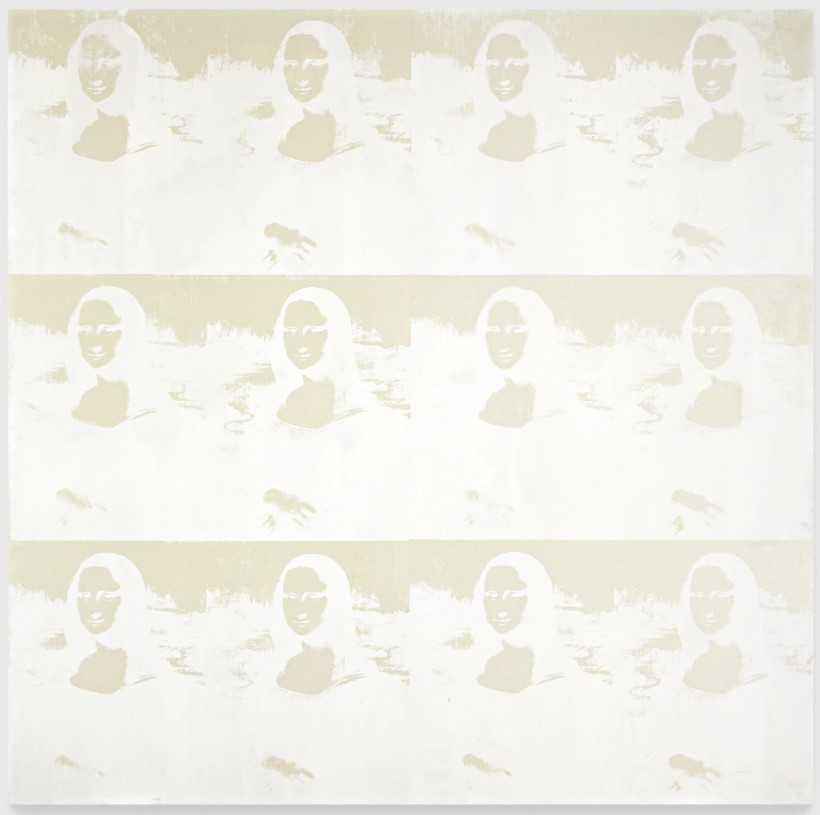
With his Reversal Series, Andy Warhol revisited various subject matters from earlier in his career, such as Marilyn Monroe, Chairman Mao, and the Mona Lisa. He flipped the tonal values, layering lighter shades on darker grounds so that his subjects appeared like photographic negatives. By 1980, Warhol’s silkscreen technique had developed in a series of more gestural paintings that were distinguished by a more casual sketchiness, and he had begun to increasingly use a white-on-white palette to dematerialize his subject into an abstracted, nearly unrecognizable portrait. In this particular work, Warhol also introduces an added layer of visual intrigue as, when viewed under ultraviolet light, the painting glows with added detail, a technique he first investigated in 1966, when he included invisible inks in a series of paintings of the human body. In these four vignettes, each Mona Lisa is rendered slightly differently; her famous enigmatic smile, and the details of her hand or eyes gradually become indistinct in our memory.
The re-iteration and repetition of iconic personalities and consumer products had long been the very cornerstone of Warhol’s practice – with the renewed conceptual vigor of the Reversals and Retrospectives, this artistic project reached its apotheosis. Roberto Marrone contended that, “Warhol’s ‘appropriating’ of his own imagery in the Reversal and Retrospective series ran parallel to the then current aesthetic of irreverent undermining of the traditional canons of art history and its hierarchical divisions between so-called ‘high’ and ‘low’ art.” (Roberto Marrone in Exh. Cat., Zurich, Galerie Bruno Bischofberger, Andy Warhol: Big Retrospective Painting, 2009, p. 32) 12 Mona Lisas carries this concept of ‘appropriation’ a step further still. Herein, Warhol’s decision to employ the Mona Lisa does not purely allude to Leonardo da Vinci’s sixteenth-century masterpiece, but also to Marcel Duchamp’s wittily acerbic L.H.O.O.Q. from 1919, in which the delicate and enigmatic face of La Gioconda is jokingly defaced by a moustache. Duchamp’s doctored version posed questions regarding conventional assumptions of gender whilst simultaneously imbuing the Mona Lisa –an unassailable and iconic beacon of chastity – with sexual provocation: Duchamp’s choice of title makes reference to a sexual pun in French. With 12 Mona Lisas and its greater series as a whole, Warhol thus explicitly exposes the Duchampian nature of his project: not only does he identify Leonardo’s painting as a readymade to be appropriated and manipulated for a new artistic dialogue, he also identifies his own work as fair game. Taking his cue from a long tradition of artists who have adapted, varied and transformed the art of their predecessors, Warhol, in an act of post-modernist brilliance, expropriated material from his own infamous repertoire of images, transforming his classic Pop iconography with surprising painterly techniques and compositional reconfigurations.
Twelve Mona Lisas (Reversal series), 1980
Sotheby’s New-York: 13 May 2014
Estimated: USD 10,000,000 – 15,000,000
USD 11,365,000
ANDY WARHOL
12 Mona Lisas (Reversal Series), 1980
Acrylic and silkscreen ink on canvas
80×80 inches (203.2 x 203.2 cm)
Articulated in screens of ethereal pearlescent white on a rich ivory ground, the imposing 12 Mona Lisas (Reversal Series) from 1980 is paradigmatic of Andy Warhol’s revered late series in which he revisited and reprised the subjects that propelled him to prominence in the early 1960s. Shown in some of the most important exhibitions of Warhol’s work to date such as the 1989 retrospective at MoMA, and SuperWarhol at the Grimaldi Forum in Monaco, the present work was also prestigiously chosen to represent Andy Warhol during the artist’s lifetime at the 1984 Venice Biennale. Inhabiting a position of utmost importance for Warhol’s late career, 12 Mona Lisas is a work of undeniable beauty and delicate poignancy.
2. Four Mona Lisas
Four White on White Mona Lisas (Reversal Series), 1980
Christie’s New-York: 12 May 2021
Estimated: USD 3,000,000 – 5,000,000
USD 3,500,000
Andy Warhol (1928-1987) (christies.com)
ANDY WARHOL
Four White on White Mona Lisas (Reversal Series), 1980
Acrylic and silkscreen ink on canvas
53×40 inches (134.6 x 101.6 cm)
Signed and dated ‘Andy Warhol 1980’ (on the overlap)
With his characteristic bravado, in Four White on White Mona Lisas (Reversal Series) Andy Warhol fuses the High Renaissance with Pop Art. Returning to a subject matter he first tackled nearly two decades earlier, Warhol demonstrates that the perceptive eye that first led him to produce his iconic Campbell’s Soup Cans in 1962, never abandoned him in the intervening years. This painting is a preceptive reexamination of the power of the image, and an enduring demonstration of his considerable talents as both an artist and also as one of the dominant cultural forces of the twentieth century.
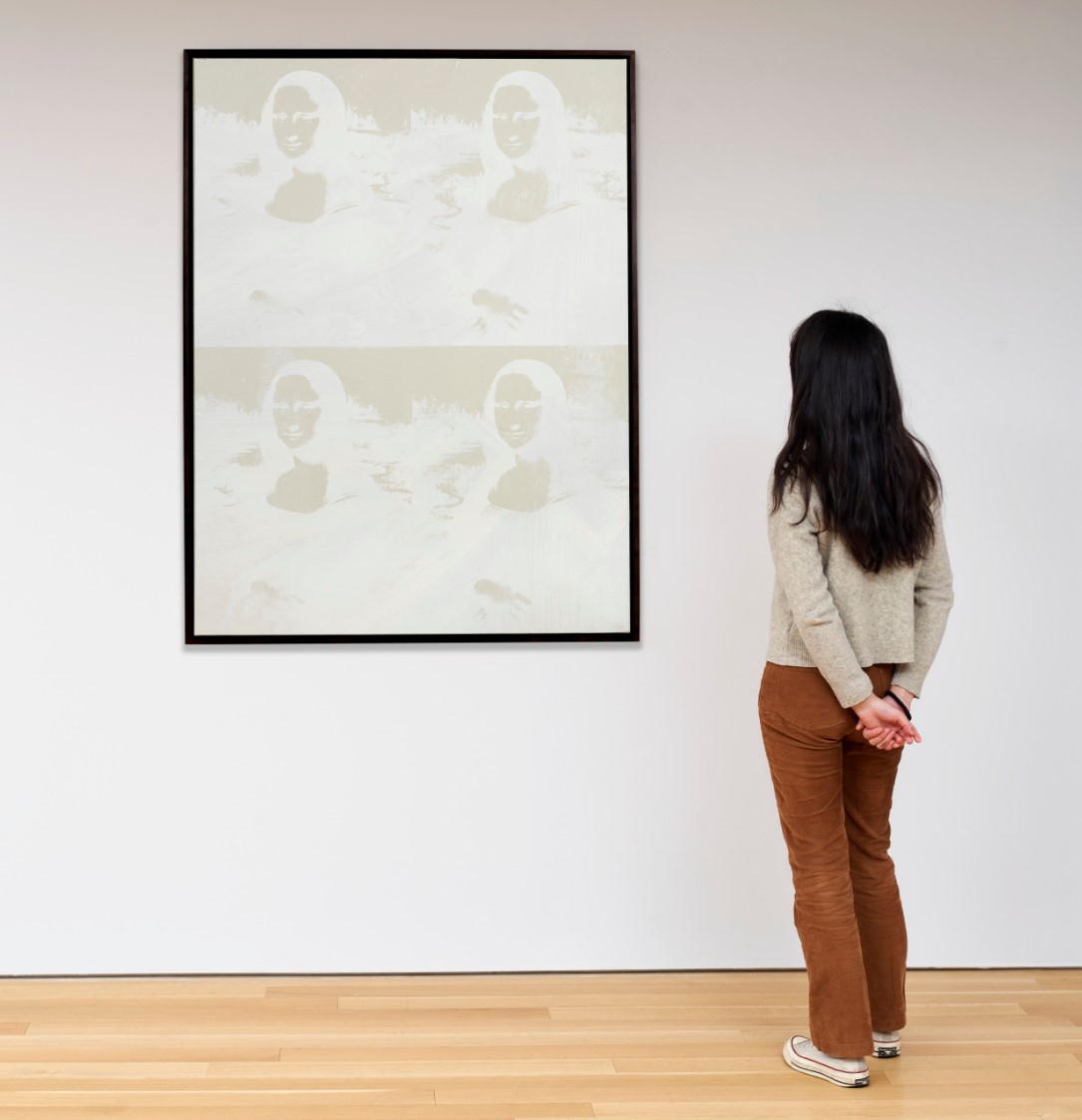
Painted in 1980, with this work Warhol returned his attention to the most famous painting in the world. He first painted Leonardo da Vinci’s masterpiece in 1963, when the painting made a rare visit to the United States of America. It was during its exhibition at the National Gallery of Art in Washington and the Metropolitan Museum of Art in New York, that Warhol became fascinated by the continued power of this centuries old painting. Over 1.6 million people, many of them queuing for hours, saw the painting during its seven week sojourn, accompanied by countless column inches of press coverage and endless hours of TV broadcasts. In this respect the sitter in da Vinci’s enigmatic portrait, Lisa Gherardini—the wife of a prominent Florentine cloth merchant, was like any of Warhol’s other celebrity superstars, namely, Elizabeth Taylor, Elvis Presley or Marlon Brando. In Four White on White Mona Lisas, the artist transforms the familiar portrait into ghostly apparitions that dissolve into the background, and the familiar Mona Lisa of the sixteenth century becomes seductively blurred in our minds.
Warhol was not the first artist to appropriate Leonardo da Vinci’s masterpiece in a more contemporary manner. In 1919, Marcel Duchamp famously adorned a postcard sized reproduction of her famous visage with a mustache and goatee. While Duchamp was attempting to subvert the pretenses of museum and high-art culture, Warhol takes Leonardo’s subject as a readymade icon, the ultimate celebrity of art history, or a brand as famous as Campbell’s Soup and the Brillo Box. In 1963, the painting was particularly well-suited for Warhol since, to celebrate the Mona Lisa‘s arrival in New York, museum vendors and tourist shops sold endless reproductions on coffee cups and tote bags. In fact, the artist’s source image in the 1960s was taken from a Metropolitan Museum’s exhibition brochure.
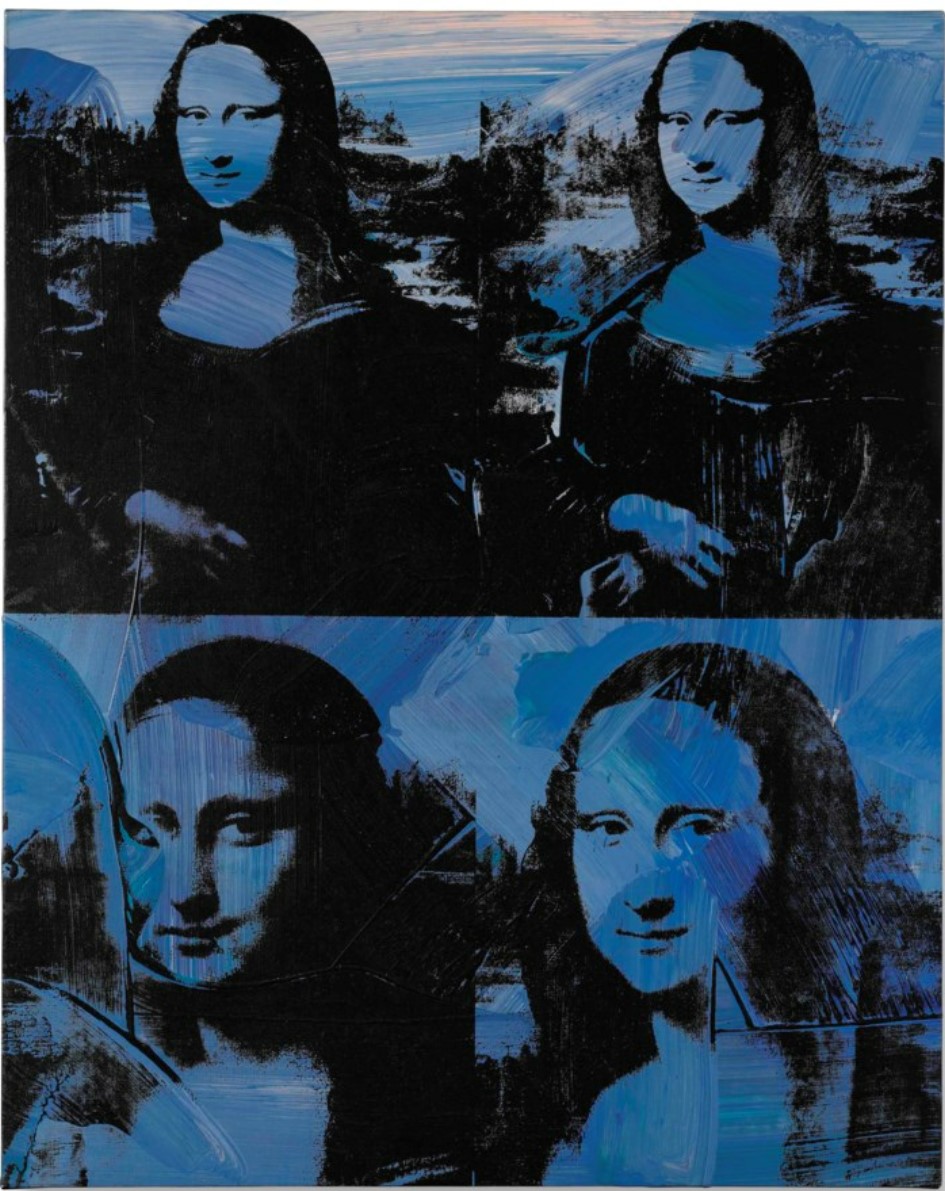
Mona Lisa, 1978
Christie’s New-York: 12 November 2014
Estimated: USD 2,500,000 – 3,500,000
USD 5,989,000
Andy Warhol (1928-1987), Mona Lisa | Christie’s
ANDY WARHOL
Mona Lisa, 1978
Synthetic polymer and silkscreen ink on canvas
50.1 x 40.1 inches (127.3 x 101.9 cm)
Blue Mona Lisa is a bejeweled canvas featuring four images of the most famous face in art history. Arranged in 2 x 2 grid, Warhol used a pair of different screens; one a full-length version of the painting complete with her folded hands and the other comprised of a shorter, cropped version showing a more detailed rendition of Mona Lisa’s face. In stark contrast to his earlier Mona Lisa’s which Warhol screened onto a plain white ground, this later version has the black silkscreen ink applied directly on top of an effervescent surface of multi-toned blue hues. By using a wide brush, loaded with blue and white paint, he mixed together gigantic sweeps of pigment producing a surface that not only comes alive with a boundless sense of energy, but also produces an expansive range of color accents that range from pure white right through the blue spectrum to delicate shades of purple and mauve.
3. Two Mona Lisas
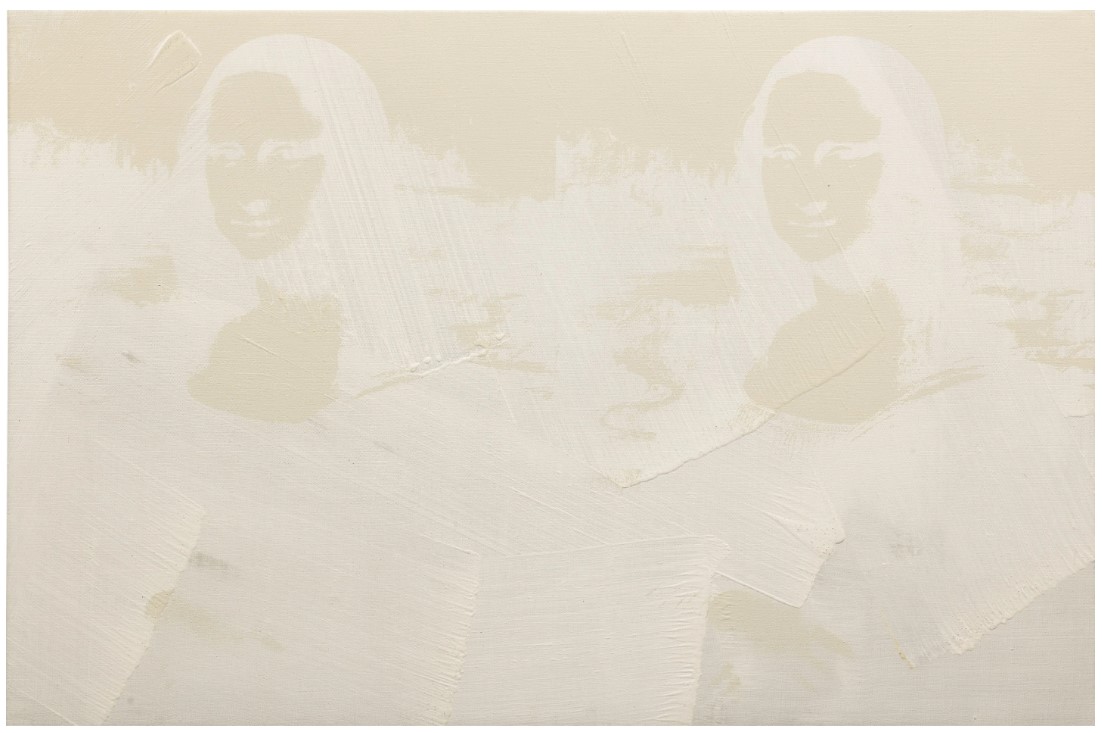
Two White Mona Lisas, 1980
Sotheby’s London: 10 February 2016
GBP 1,385,000
ANDY WARHOL
Two White Mona Lisas, 1980
Acrylic and silkscreen ink on canvas
26.6 x 40 inches (68×102 cm)
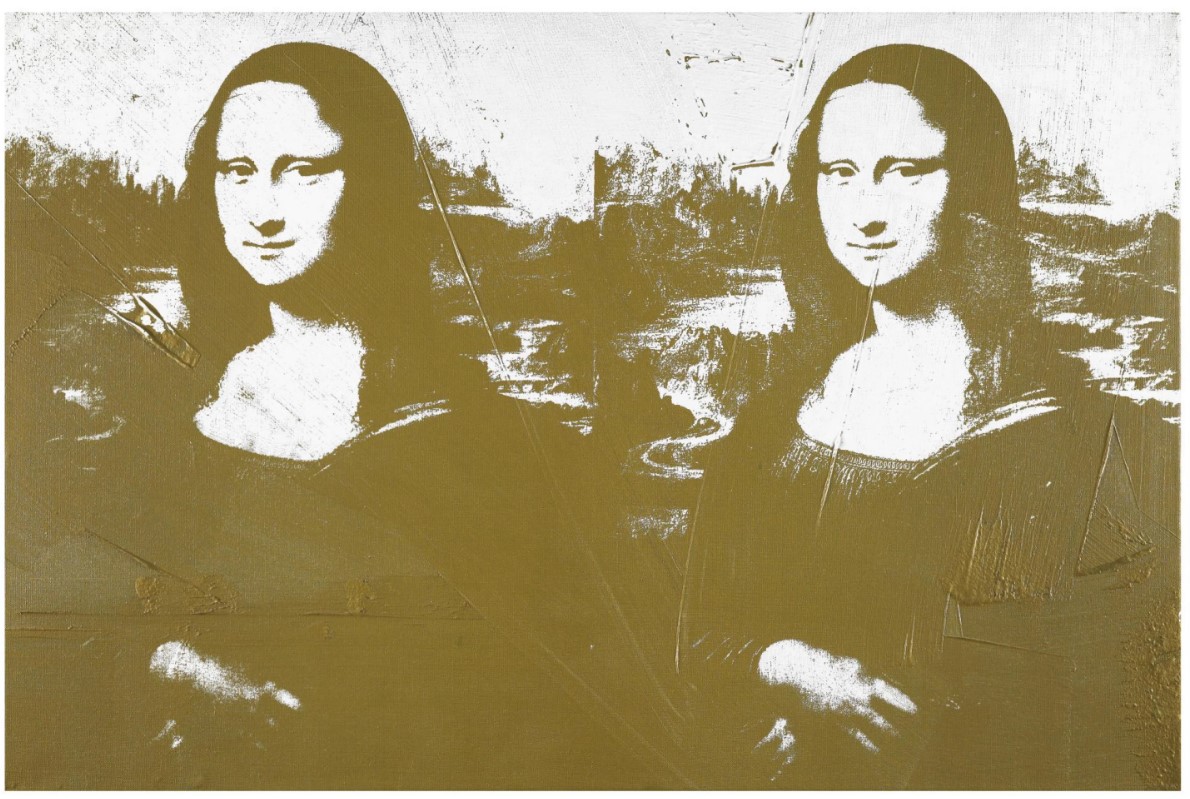
Two Gold Mona Lisas, 1980
Sotheby’s London: 17 October 2008
GBP 959,650
 ANDY WARHOL
Two Gold Mona Lisas, 1980
Acrylic and silkscreen ink on canvas
26.6 x 40 inches (67.6 x 101.7 cm)
As the color that signifies glamour, riches and luxury more than any other, the metallic glow of gold gives the portrait a timeless, other-worldly quality, echoing the most potent golden portraits of Warhol’s contemporary heroines. Shimmering with elegance, sophistication and beauty, Two Gold Mona Lisas is quite literally one of the jewels in Warhol’s crown. The ‘Retrospective’ series, first started in the late 1970s found Warhol revisiting many of his most famous images. The golden pinnacle of a seventeen-year relationship with the image, Two Gold Mona Lisas stands alone as a masterful work of art, an icon of its time. More than that, it combines dazzling visual beauty with a deep conceptual intelligence whose relevance transcends time.
4. Single Mona Lisa
Sotheby’s New-York: 12 May 2009
USD 1,762,500
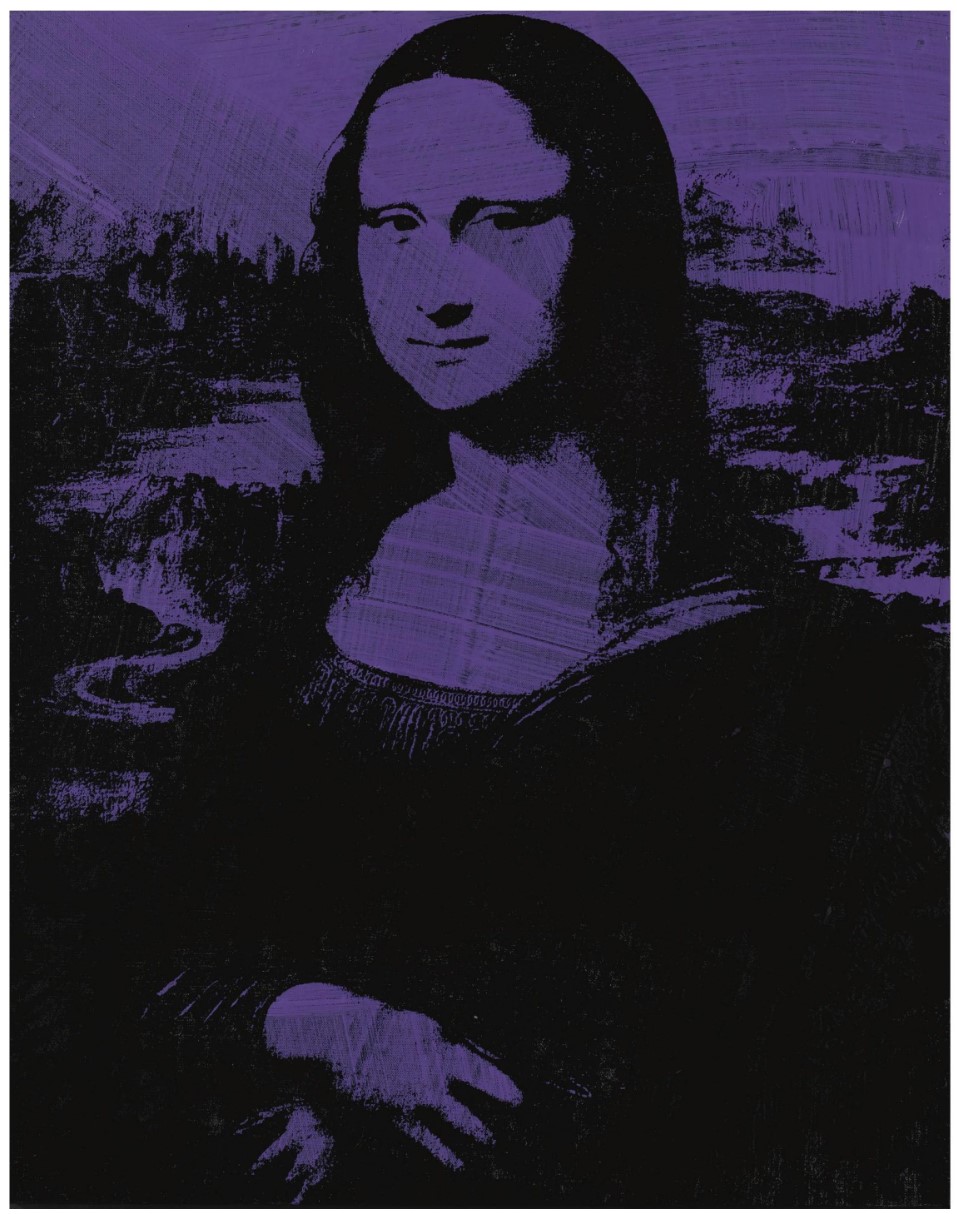 ANDY WARHOL
Mona Lisa
Acrylic and silkscreen ink on canvas
25×20 inches (63.5 x 50.8 cm)
Christie’s New-York: 13 November 2002
USD 295,500
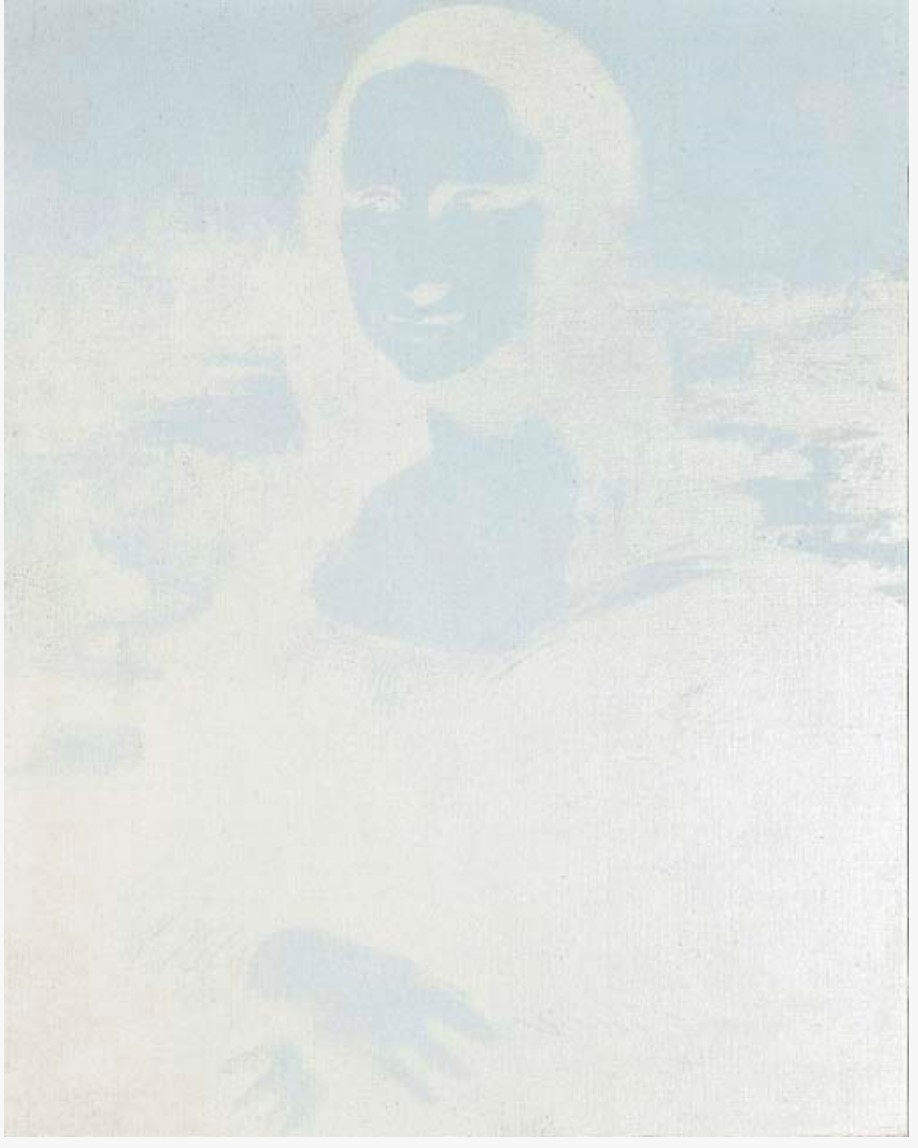
ANDY WARHOL
Mona Lisa, 1979
Synthetic polymer and silkscreen inks on canvas
25×20 inches (63.5 x 50.8 cm)