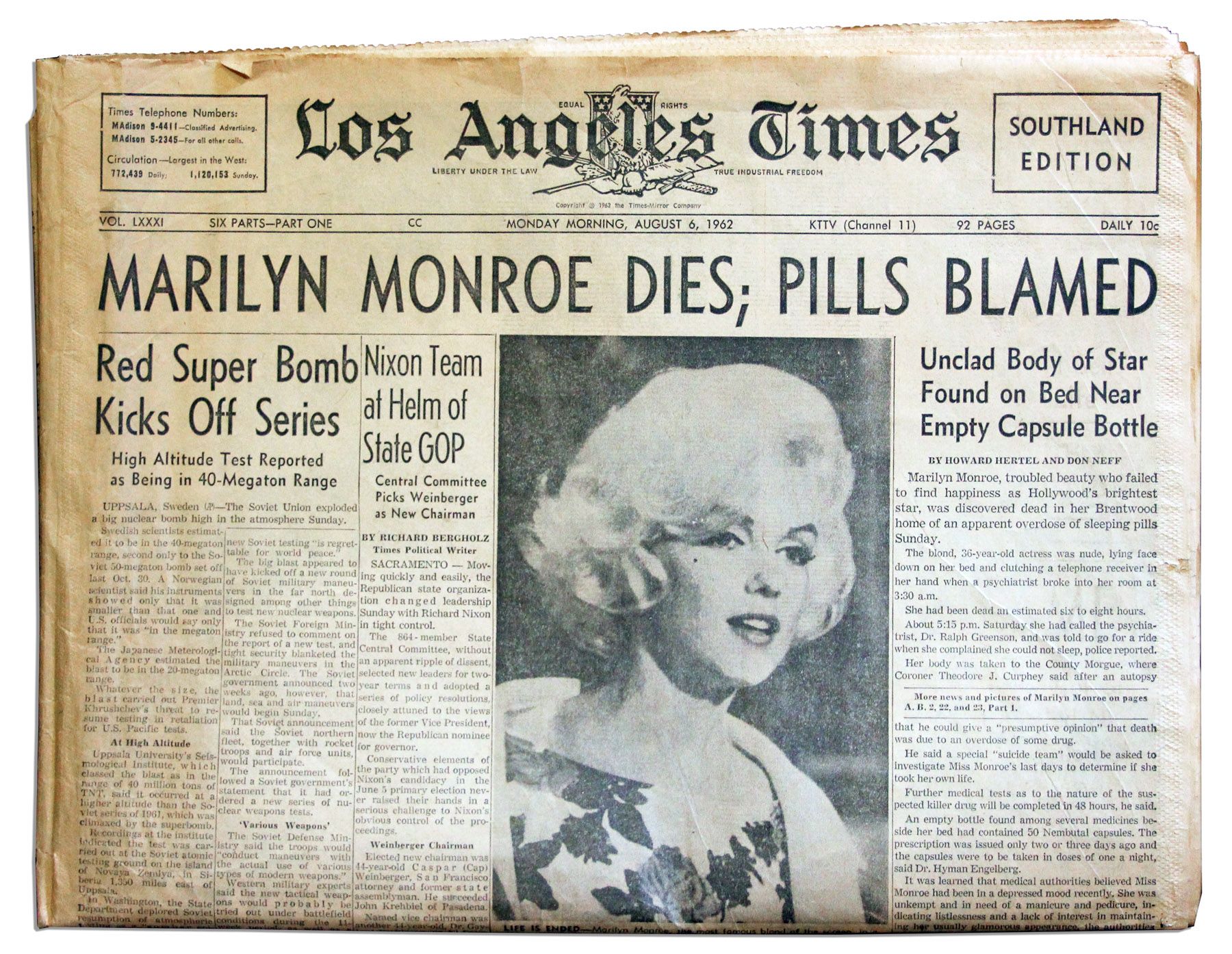
As a golden legend of Hollywood, Marilyn Monroe held particular fascination for Andy Warhol. Her suicide on 5 August 1962 struck a personal chord and triggered a dedicatory series that isolated her beautiful and elusive visage against variously colored, almost acidic, backdrops. Newspaper accounts of the tragedy appeared on the East Coast on the morning of 6 August 1962, the day of Warhol’s 34th birthday.
“In August ’62 I started doing silkscreens…It was all so simple, quick and chancy. I was thrilled with it…when Marilyn Monroe happened to die that month, I got the idea to make screens of her beautiful face, the first Marilyns.”
Introduction
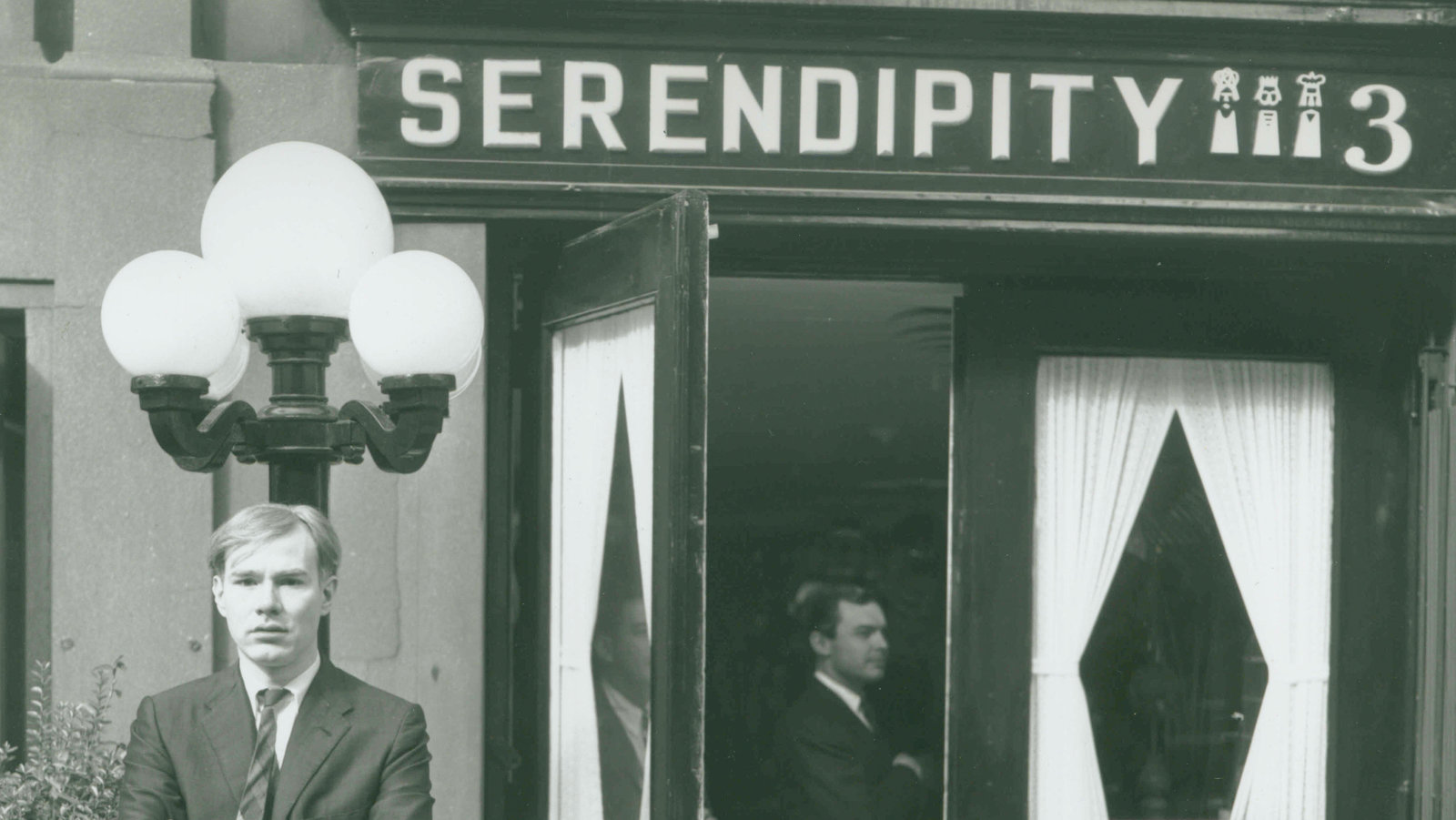
Radiating with an electrifying palette of candy colors, Warhol’s inspiration for the Marilyn series was modestly sparked at the artist’s favorite sweet shop, Serendipity 3, where the walls were often covered in his early work and his checks were paid with drawings. Monroe, too, had been a famed regular at the dessert parlor. Often coming in with her acting coach, Paula Strasberg, Monroe, like Warhol, struck a close bond with the restaurant’s owner, Stephen Bruce. Eventually, Monroe would become quite comfortable leaving her chauffeur behind to quietly dine alone in the back with only Bruce to keep her company. Bruce has often famously recalled that, on one occasion, Monroe entered the parlor dressed coyly in a raincoat, babushka and mules. Sitting across from her, Bruce casually observed that she was completely unclothed beneath her raincoat.
Throughout the 1960s Warhol would revisit Marilyn as his primary subject three distinct times.
First, in 1962, with his chef-d’oeuvre, Gold Marilyn Monroe (Museum of Modern Art, New York), his 12 “Single Marilyns” or “Flavor Marilyns”, named for the dual ability of their titles to provoke not only a color but also taste, as well as a cycle of “Serial Marilyns,” from which such works as Marilyn Diptych (Tate, London), Marilyn x 100 (Cleveland Museum of Art).
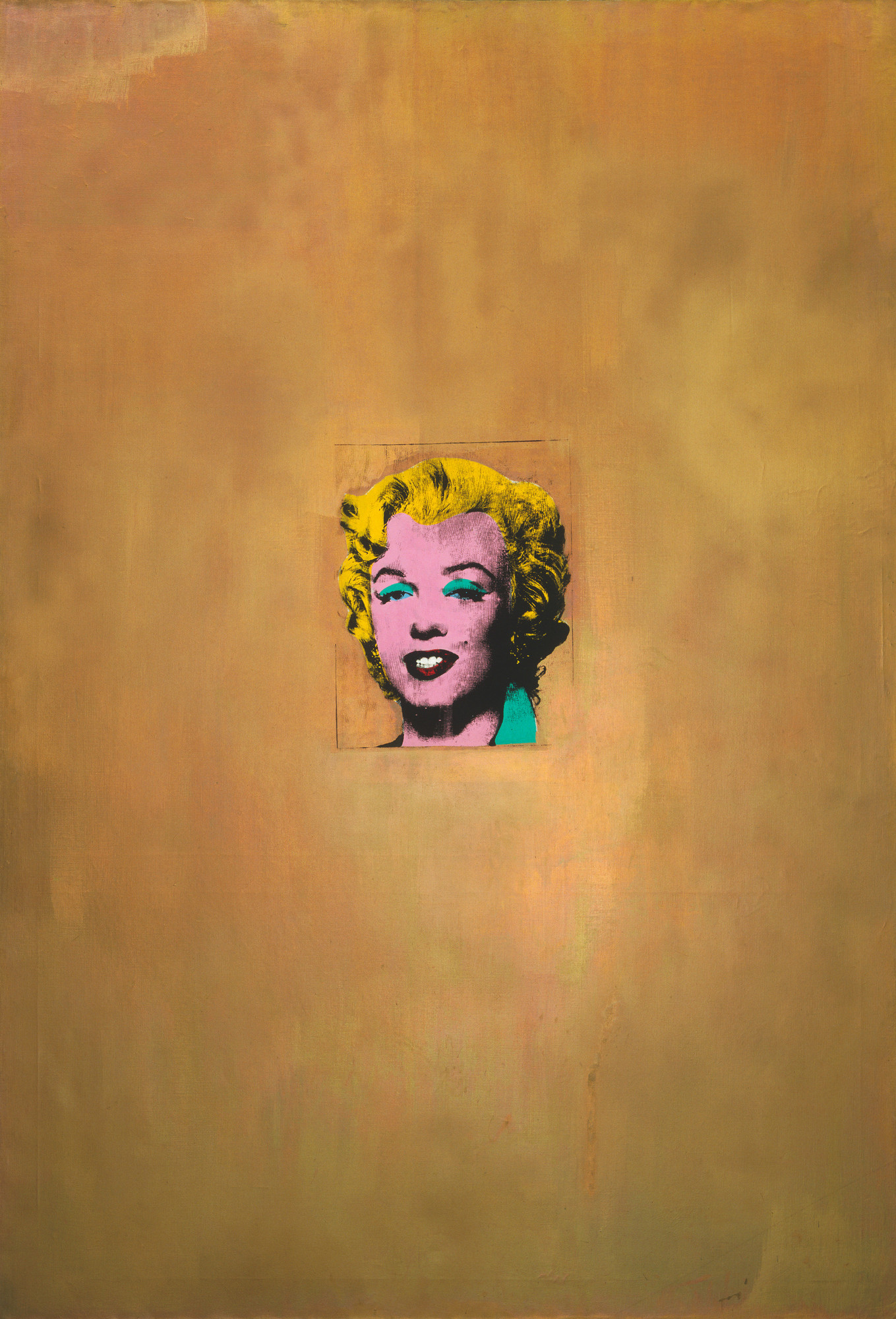
GOLD MARILYN MONROE, MUSEUM OF MODERN ART, NEW-YORK
Later, in 1964, he would produce a set of five additional single Marilyns, four of which would notoriously be maimed by Dorothy Podber, a friend of Billy Name’s. Shortly after the creation of the five new Marilyns, Podber and Name visited Warhol at The Factory. When his guest asked if she could shoot the new works, Warhol agreed, believing she innocently meant to photograph them. Instead, Podber doffed a pair of white gloves, removed a small revolver from her handbag and fired a shot into the stack of four Marilyns leaning against The Factory wall, famously creating the celebrated series of “Shot Marilyns.”
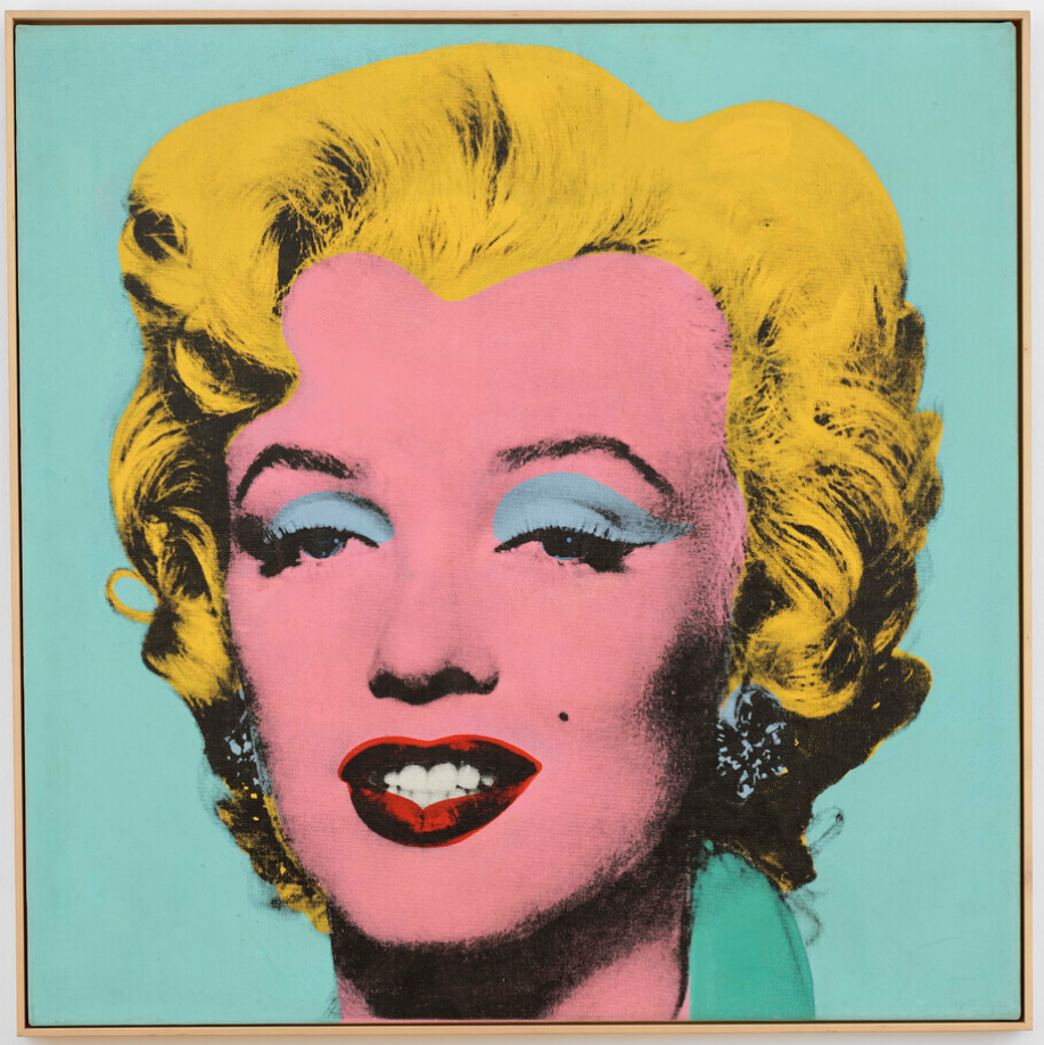
Though Warhol would revisit Monroe’s visage in one of his final artistic explorations, the Retrospective and Reversal series of the late 1970s and ‘80s, his last true study of the Hollywood actress came in 1967 with a portfolio of ten Technicolor edition prints.
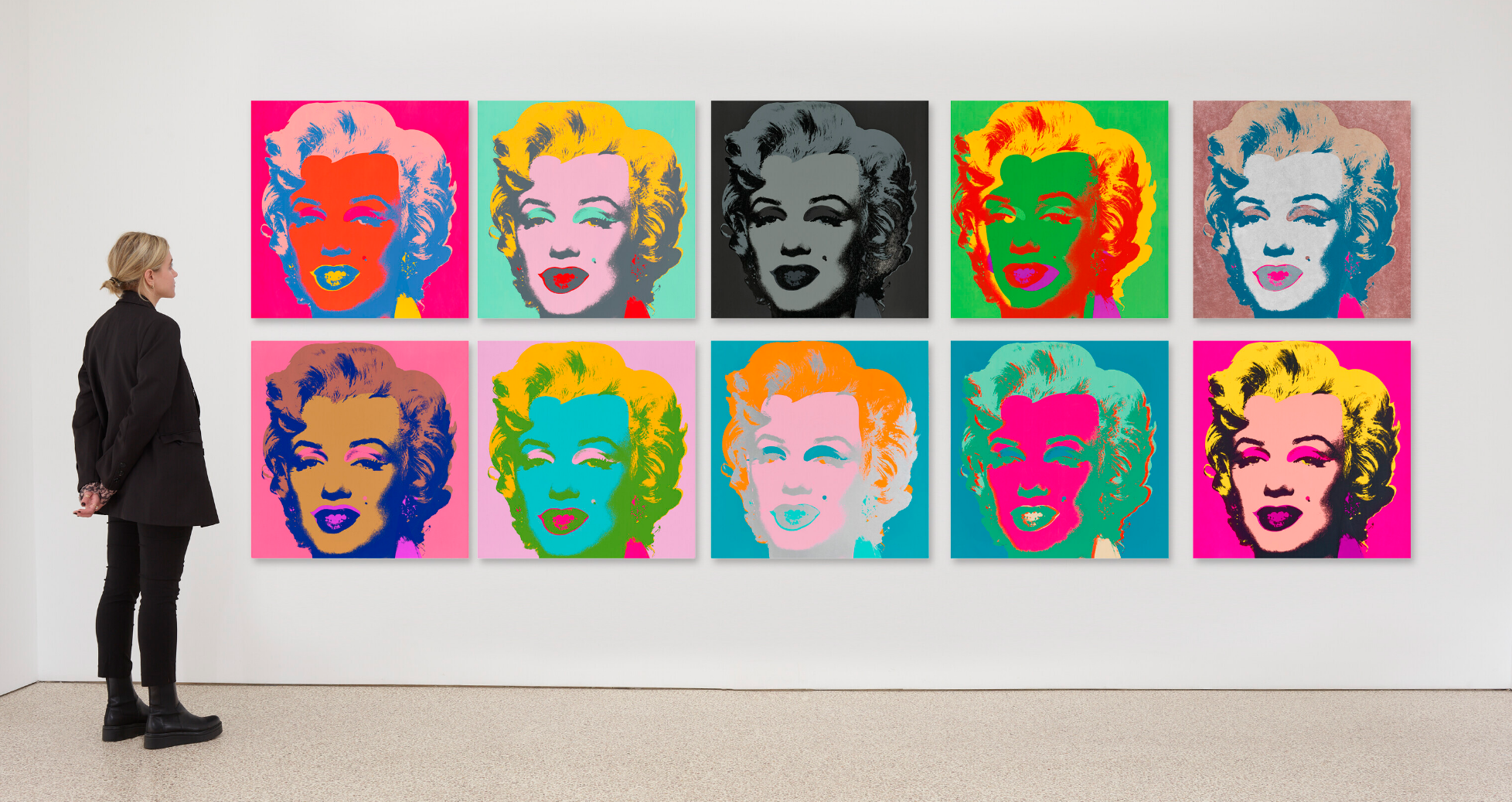
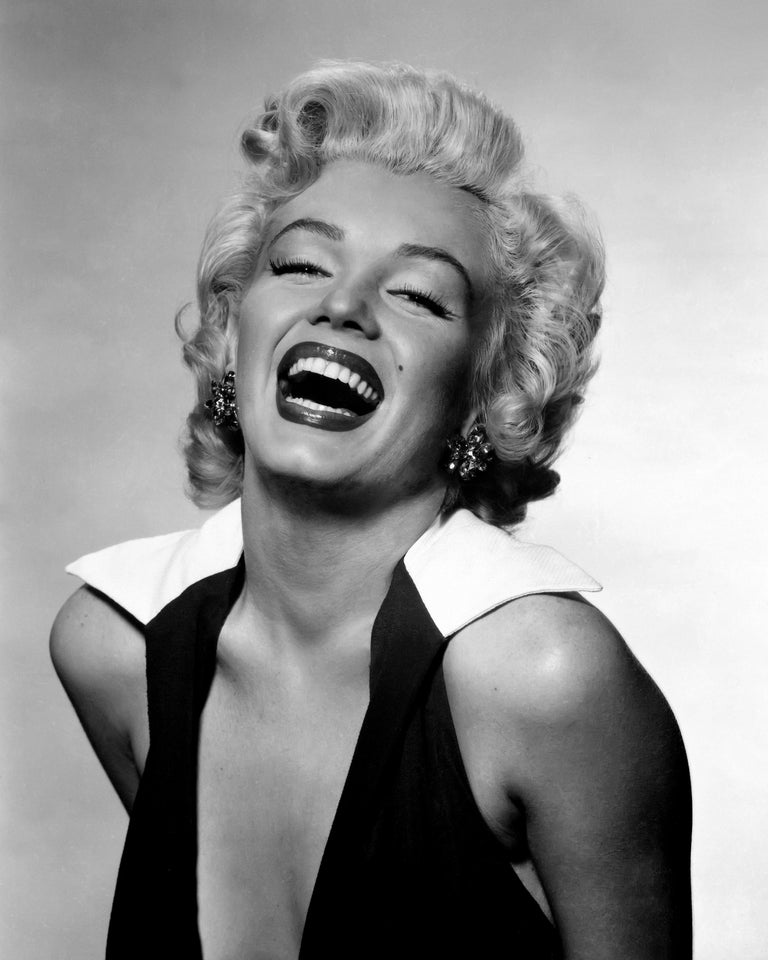
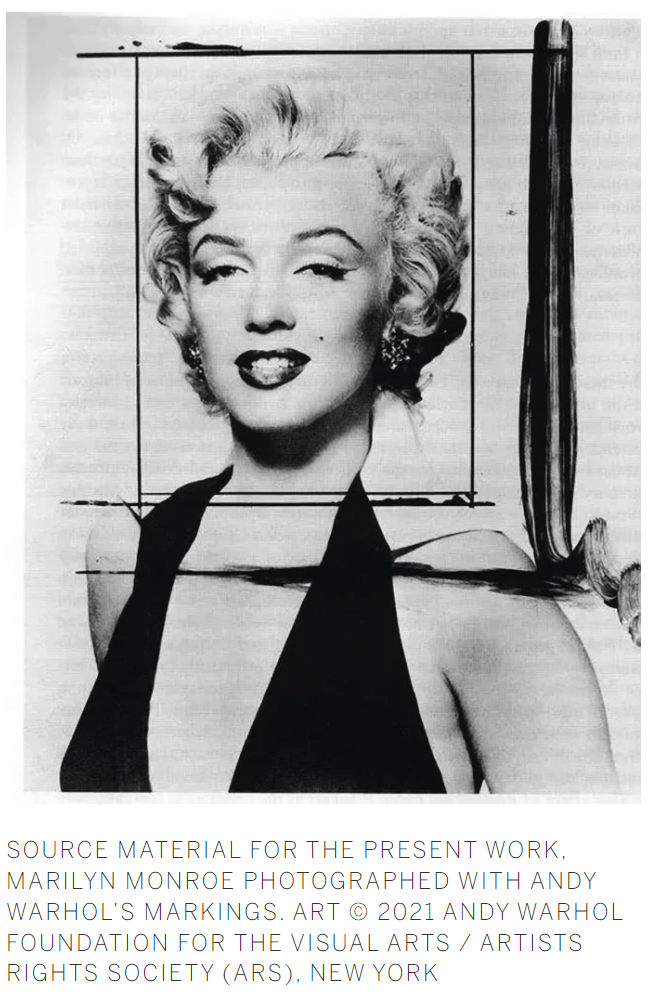
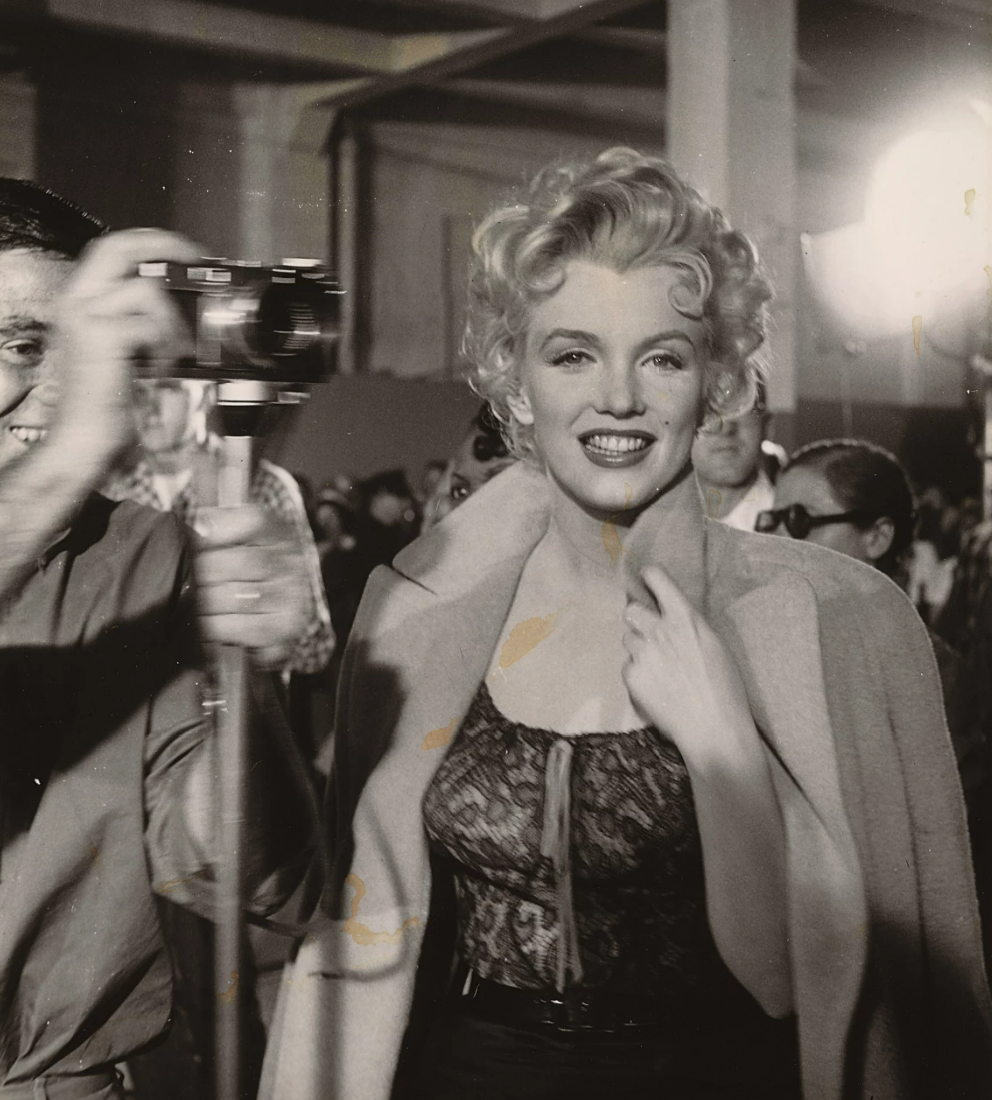
All of these were based on the same source image of the widely circulated 8×10 inch glossy black and white photograph taken by Gene Korman for the promotion of the 1953 film Niagara that Warhol variously cropped. For the 1962 series of Marilyns, Warhol cropped the photograph where the neck meets the shoulders, just below the shadow cast by the jaw and chin. Warhol had two different sized screens made of this cropped image, one appropriate for 20×16 inch canvases, and another of approximately 15×11 inches that he used for serial compositions. Of the fewer than 20 known serial Marilyn compositions from 1962, Warhol created a discrete group of six Two Marilyns.
Warhol’s portraits of Marilyn Monroe helped not only to secure his own stardom, but also bolstered the myth of the artist we know today. Indeed, the poignancy of his earliest Marilyn paintings was so powerful that he selected eight of his early single Marilyns to appear in his first solo exhibition in New York at Eleanor Ward’s Stable Gallery in November 1962. In later years, Warhol would recall the influential collection on view.
“[It] had the large Campbell’s Soup Cans, the painting of a hundred Coke bottles, some Do-It-Yourself paint-by-numbers paintings, the Red Elvis, the single Marilyns, and the large gold Marilyn.”
This embrace of supermarket essentials and larger-than-life stars heralded Warhol’s move from a secure career as a commercial illustrator into the emblem of the emerging Pop Art movement. He had staged a startling and prescient panorama of American consumerism, commercial art, mass media and popular entertainment.
Famously harvesting complex relationships with Hollywood stars, Warhol spent much of his childhood daydreaming about Shirley Temple and other starlets and divas. Simultaneously exuding a sense of natural bliss and sexual mischievousness, Monroe’s sensual and breathily innocent persona greatly differed from the classic silk-and-steel stars of the 1940s and ‘50s. Yet, even so, her life was a source of continuous destruction. Both exceedingly glamorous and abundantly tragic, Marilyn was the perfect subject for Warhol. Regarding her as kindred spirt, Warhol sympathized with the idea of a fellow artist, an actress, who was under-appreciated by her peers and whose creative talents were often misunderstood and rarely celebrated for their nuances. Indeed, the lives of Andy Warhol, born Andrew Warhola, and Marilyn Monroe, born Norma Jeane Baker, dually unfolded as a rag-to-riches American saga, ultimately lending to their starstruck myths. America’s and Warhol’s fascination with Marilyn owed much to her looks and much to her history. For who could better have encapsulated all that was good and wholesome about the USA than Marilyn, born Norma Jeane and by the time of her death moving in the highest circles, marrying heroes of sport and culture, Joe DiMaggio and Arthur Miller, and even singing ‘Happy Birthday’ to the President… Nothing is more Warholian than the American Dream, except perhaps those moments in which it crashes to Earth and is shown to be so much hope, so much bubble, so little substance.
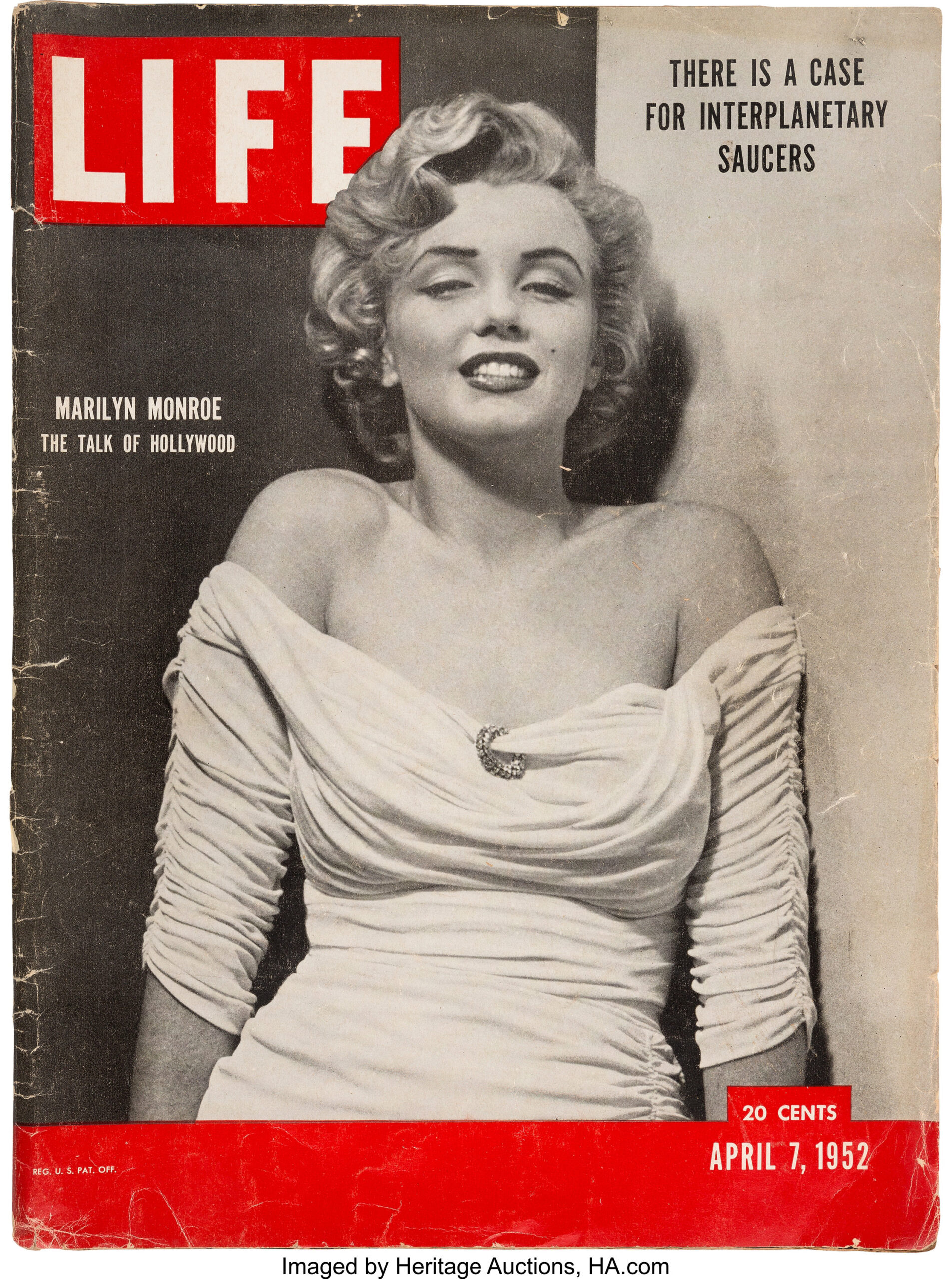
After spending much of her childhood in foster homes, Monroe began a career as a model, which soon elevated to a film contract in 1946 with Twentieth Century Fox. While her earliest film appearances were minor, her performances in The Asphalt Jungle and All About Eve in 1950 began to draw attention. By 1952 she had her first leading role in Don’t Bother to Knock and 1953 brought a lead in Niagara, the melodramatic film noir that profited on her seductiveness, and served as the source for Warhol’s Marilyn series. Her “dumb blonde” persona was used to comic effect in subsequent classics such as Gentlemen Prefer Blondes, How to Marry a Millionaire and The Seven Year Itch. Limited by typecasting, Monroe studied at the Actor’s Studio to broaden her range. Her dramatic performance in Bus Stop was hailed by critics and garnered a Golden Globe nomination. She further received a Golden Globe Award for her iconic performance in Some Like It Hot, shortly before she completed her last film, The Misfits, in 1961.
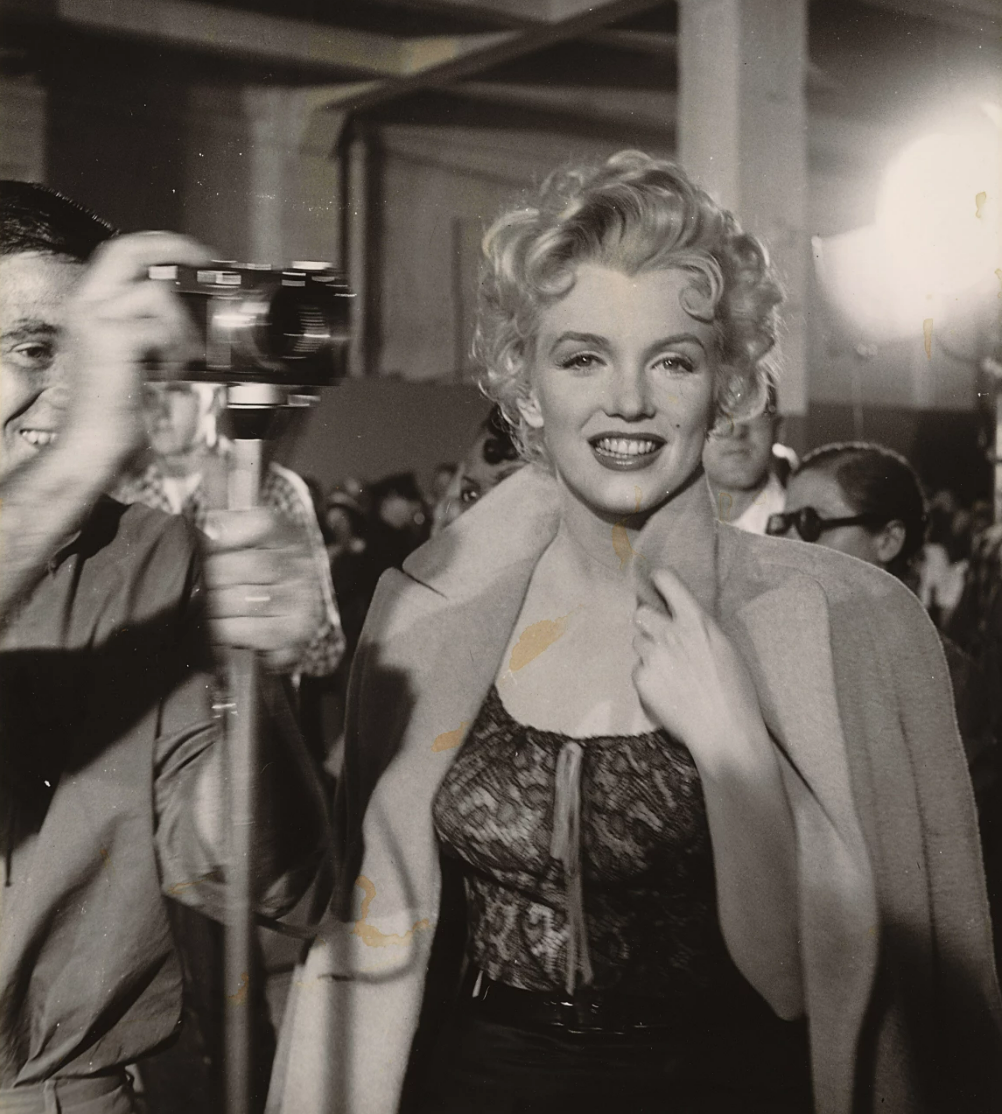
The final years of Monroe’s life were marked by illness, personal problems and a reputation for unreliability. In fact, even the circumstances of her death, from an overdose of barbiturates, have been the subject of conjecture. Though officially classified as a “probable suicide,” the possibilities of an accidental overdose or homicide have not been ruled out. And yet, regardless of her tragic demise, Monroe’s image is just as strong today as it was at the height of her career. In 1999, Monroe was ranked as the sixth-greatest female star of all time by the American Film Institute. In the decades following her death, she has often been cited as both a pop and a cultural icon as well as the quintessential American sex symbol. Central to his pantheon of Pop icons, which included Elizabeth Taylor, Jackie Kennedy and Elvis, Marilyn immortalizes Marilyn Monroe as the embodiment of the cult of celebrity. Created at approximately the same time as his depictions of electric chairs and car crashes, Warhol’s full-face images of Marilyn, Jackie and Liz followed on the heels of deaths and disasters in all three of his subjects’ lives: Monroe’s suicide, Taylor’s catastrophic illness in 1961, and John F. Kennedy’s assassination in November 1963.
“I don’t feel I’m representing the main sex symbols of our time in some of my pictures, such as Marilyn Monroe or Elizabeth Taylor. I just see Monroe as just another person. As for whether it’s symbolical to paint Monroe in such violent colors: it’s beauty, and she’s beautiful and if something’s beautiful it’s pretty colors, that’s all. Or something. The Monroe picture was part of a death series I was doing, of people who had died by different ways. There was no profound reason for doing a death series, no victims of their time; there was no reason for doing it at all, just a surface reason.”
This surface reason was not a superficial reason. Instead, it was more of a reaction to the strange numbing, the anaesthetization that the media age has introduced when faced with death and disaster. By repeating the image of the dead Marilyn, Warhol makes her appear more abstract and therefore deliberately dissipates the sense of tragedy, an effect that is heightened by the colors, Pop bright to the point of being lurid.
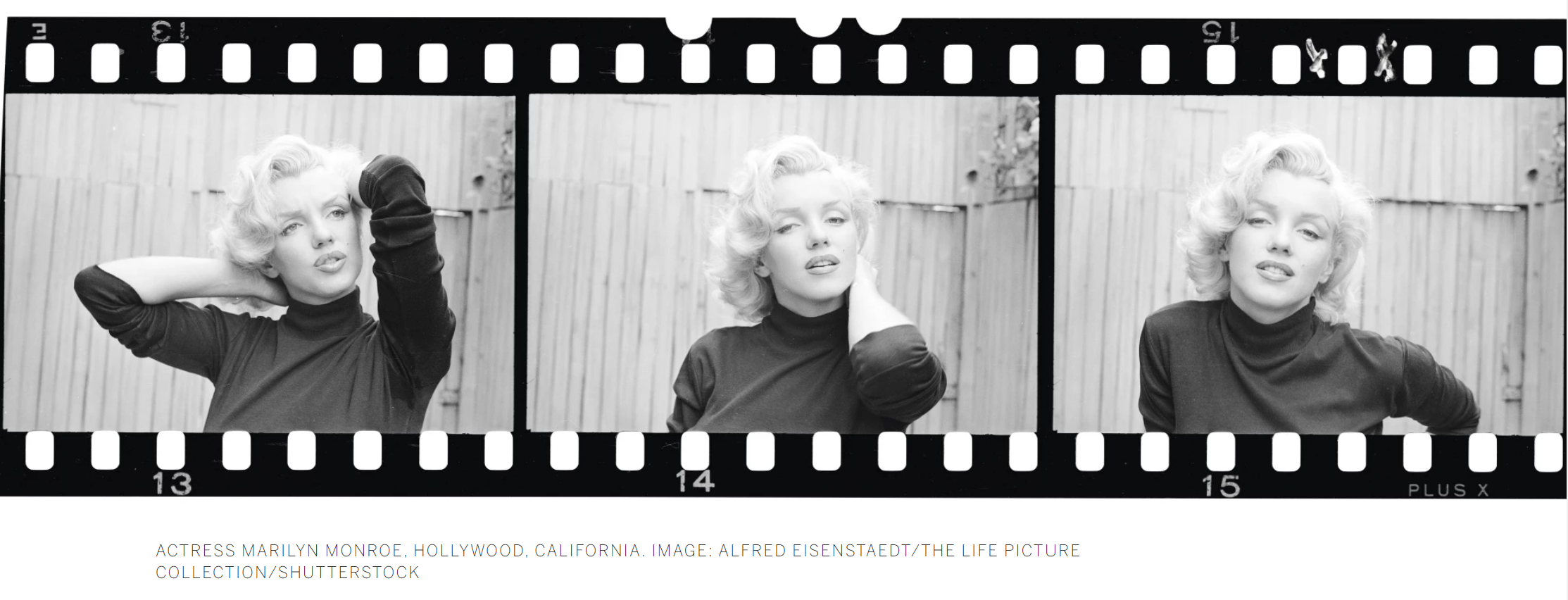
In the weeks prior to Monroe’s death, Warhol had been exploring an eccentric and highly topical approach to realist art. By utilizing the silkscreen, Warhol was taking his first steps in the Duchampian tradition of using a “readymade” image, in this case, a photograph, as the basis for a work of art. He used the silkscreen process to stencil a photo-derived image on top of a hand-painted background. Head shot portraits of the attractive young actors Troy Donahue and Warren Beatty were initially his main focus, and his custom-made silkscreens reproduced the kinds of publicity photographs that abounded in the latest teen and movie magazines. Warhol soon learned how to make the inky detailing of the silkscreen stand out against the flat color beneath, creating an electric effect. For his new Marilyn series, he ordered a silkscreen enlargement of a widely circulated photograph taken by Gene Korman for the promotion of the 1953 film Niagara. Taken nine years before Marilyn’s death, the subject of Warhol’s canvas is not the ill-fated star of the 1960s, but rather the celebrity at the peak of her youth. A symbol of innocence when juxtaposed with the downward personal spirals and career missteps that were to follow, Warhol’s image of Monroe is idealized to the extent that no amount of glorification could prevent the viewer from feeling the pathos of her later years.
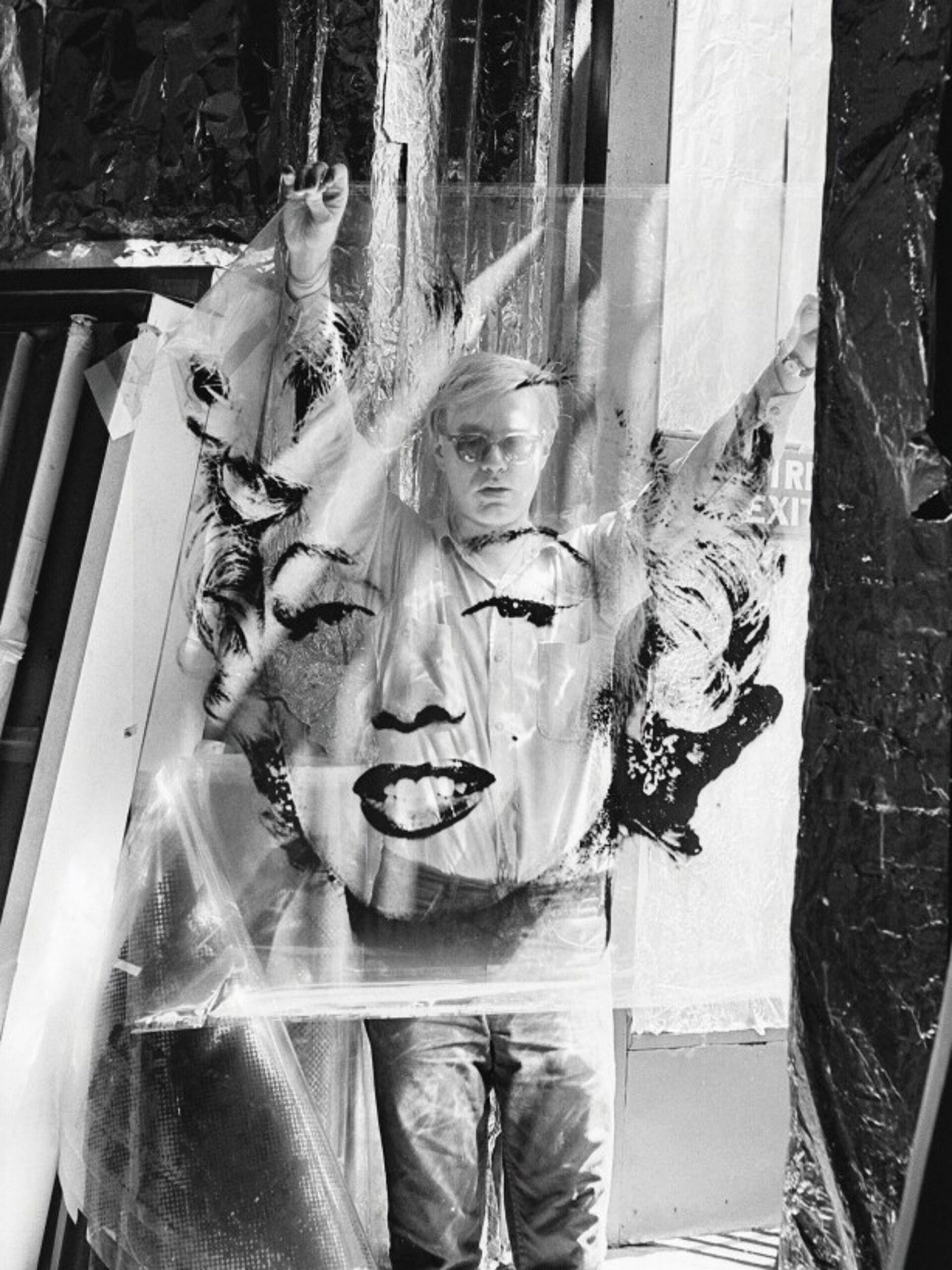
The sense of spontaneity and risk, where no two canvases two canvases are the same, is what sparked Warhol’s enthusiasm for this method of image making, along with the fact that it enabled him to harvest the mass of media images for his source material. Although often regarded as being the antithesis of so-called ‘action painting’ Warhol felt the silkscreen process alluded to a similar artistic language. For Warhol the gestural nature and energy need to force the ink through the screen replicated the energetic methods of Pollock’s drops and de Kooning’s brushstrokes.
“In August ’62 I started doing silkscreens. The rubber-stamp method I’d been using to repeat images suddenly seemed too homemade; I wanted something stronger that gave more of an assembly-line effect. With silkscreening, you pick a photograph, blow it up, transfer it in glue onto silk, and then roll ink across it so the ink goes through the silk but not through the glue. That way you get the same image, but slightly different each time. It was all so simple-quick and chancy. I was thrilled with it. My first experiments with screens were heads of Troy Donahue and Warren Beatty, and then when Marilyn Monroe happened to die that month, I got the idea to make screens of her beautiful face – the first Marilyns”
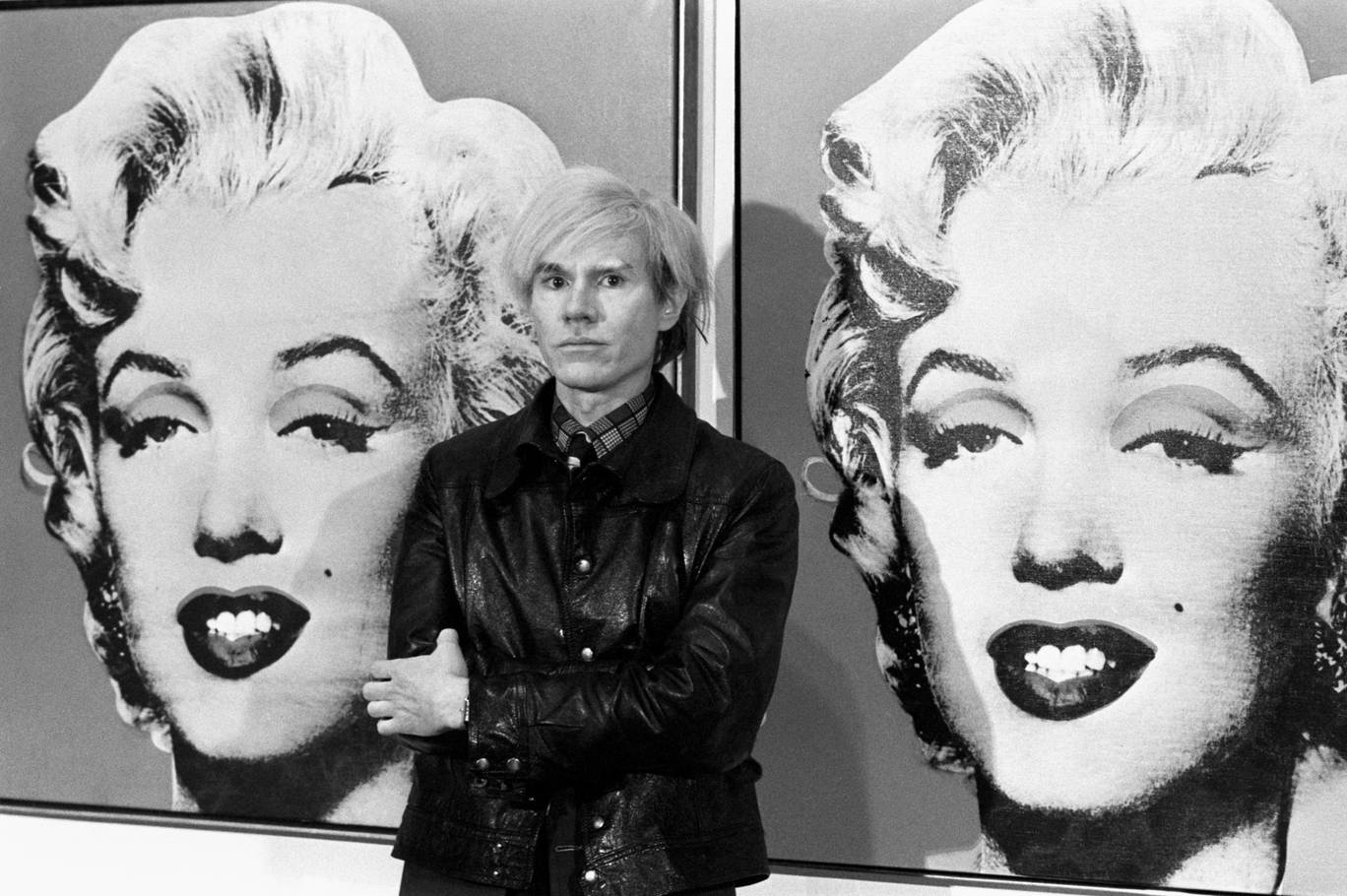
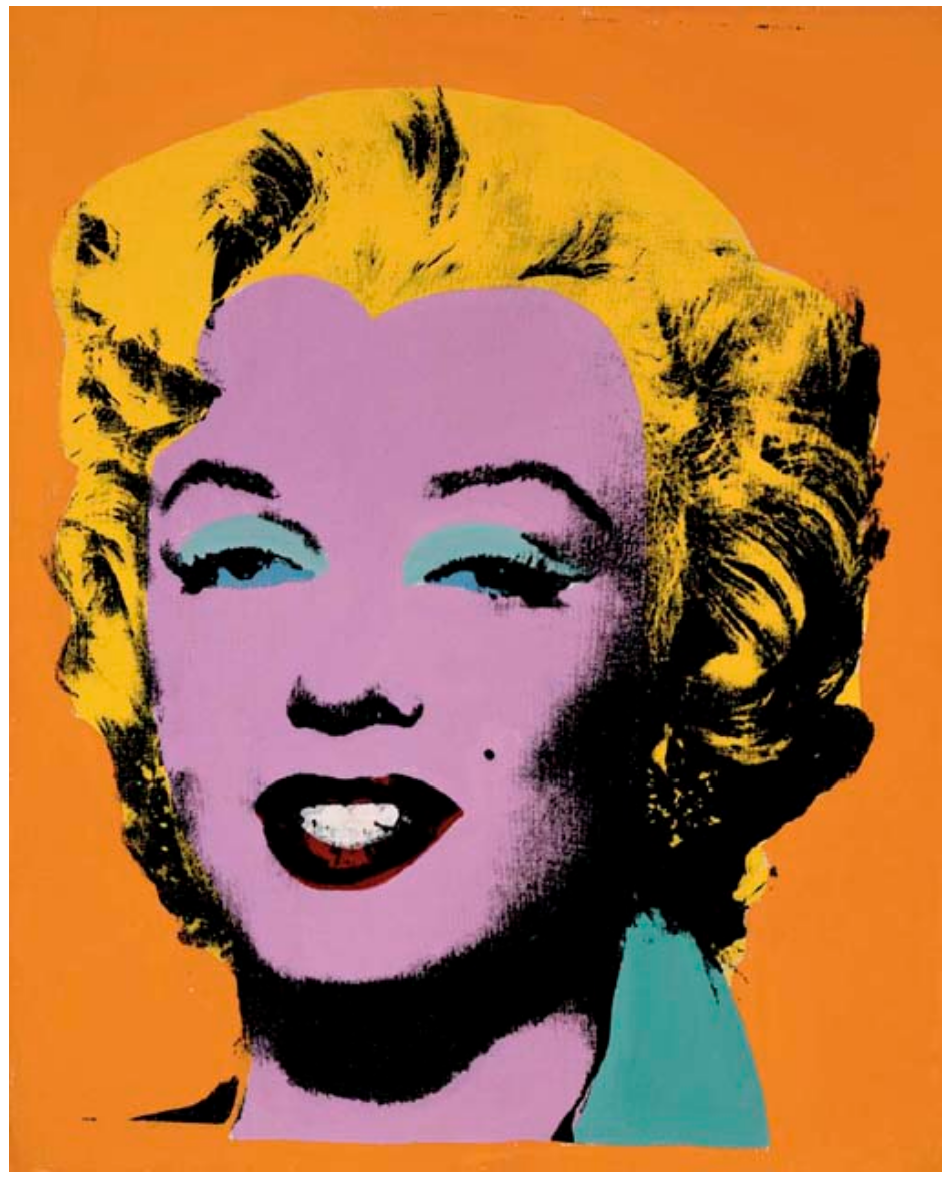
Marilyn was also one of the first paintings in which Warhol introduced what became his signature range of vibrant colors. Although the Pop Art movement was defined partly by its often-vivacious use of pigment, much of Warhol’s earlier work was executed in monotones and it was only in 1962 that he first began to use an increasing number of colors on the same canvas. Marilyn’s background of fresh cadmium orange is electrified next to Monroe’s halo of golden hair and the fleshy pink tones of her complexion. The bold swaths of color helped to map out the broad areas of the composition while the half-tone screen that was applied in black gave the face its particular definition. The finishing touches of detail—the eyes, lips and other facial features—were then added with a final flourish of the artist’s brush.
With her face stamped across the four quadrants of the canvas, Four Marilyns embodies the masterful use of repetition for which Warhol’s work has come to be known. While Warhol repeated everything from Coca-Cola bottles to self-portraits, he is perhaps best known for his serial images relating to his Death and Disaster series as well as his most iconic celebrities, including Marilyn Monroe, Jacqueline Kennedy and Elvis Presley.
“I guess it was the big plane crash picture, the front page of the newspaper; 129 DIE. I was also painting the Marilyns. I realized that everything I was doing must have been Death. It was Christmas or Labor Day, a holiday, and every time you turned on the radio they said something like ‘four million are going to die.’ That started it. But when you see a gruesome picture over and over again, it doesn’t really have any effect.”
Warhol’s repetition of Monroe’s image was as much an homage to a recently departed American icon as it was a reflection of the rapaciousness of both Hollywood and the media in creating, consuming and disposing of stars. Combined with Marilyn’s iconic publicity still, Warhol’s electrifying chromatic vision was stunningly visionary in terms of garnering a reaction from his intended audience. Upon their debut in November 1962 at the Stable Gallery, the Marilyn paintings struck both a sensitive and tragic chord with their viewers. Likened to a religious zealot confronted by the death of a martyr, Warhol has attested that he had observed several of the exhibitions attendees visibly saddened when confronted by the youthful radiance of his Marilyn paintings in the aftermath of the morose and often grim coverage of her recent death. Indeed, the influence of Andrew Warhola’s Byzantine Catholic upbringing in Pittsburgh would manifest as a studding artistic catharsis in his later life. Influenced by the glittering religious iconography that filled the apse behind the alter of St. John Chrysostom Byzantine Catholic Church, where he worshiped with his mother, Warhol was quick to recognize that movie stars had replaced these religious figures of his childhood as the idols that the population at large chose to worship. Like a Catholic saint, Warhol had helped Marilyn Monroe transcend her celebrity, even after her death.
As well as reacting to themes of mortality and the American Dream, in his Marilyns Warhol was reacting to what had become the status quo amongst American artists. The cool stencilled appearance of Warhol’s screenprints provided a stark contrast to the Abstract Expressionism that had held sway over the art scene in New York for over a decade.
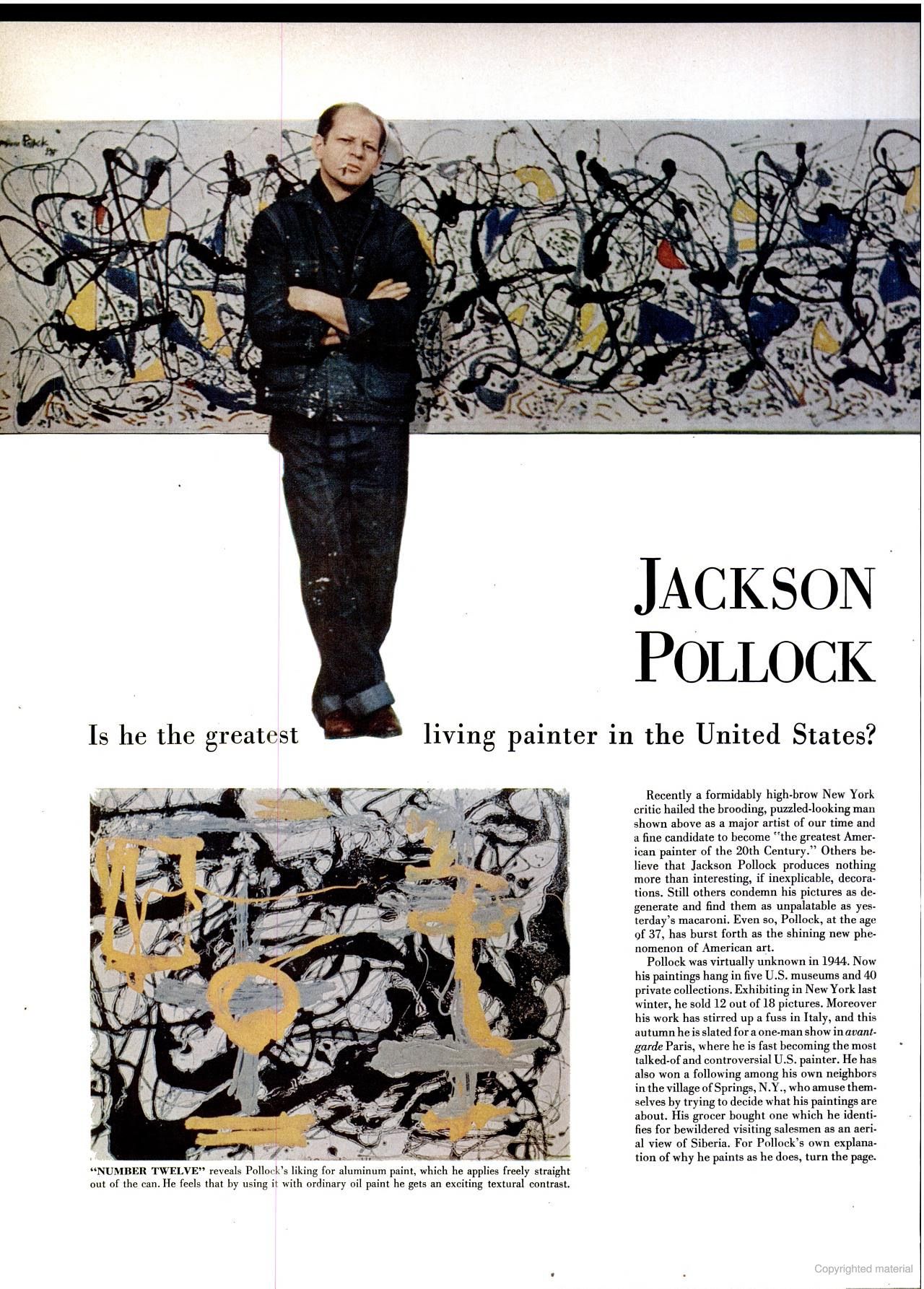
In this picture, unlike the Action Painting of Pollock and de Kooning, the artist has deliberately kept himself at a distance through the manufacture-like process of execution. In addition to this, he has insisted not only on a figurative theme, but one that is from the ‘vulgar’ world of celebrity tittle-tattle. This is art with a tabloid inspiration, and as such provides a deliberate contrast to the lofty ideals and epic concerns of many of the Abstract Expressionists.
”Pop… Art’… is… use… of… the… popular… image.”
As such, it was anathema to many of his predecessors on the New York scene, as demonstrated by Rothko’s well-documented horror at even being invited to the same parties as Warhol and his Pop comrades. It is a tribute to the breadth of his influences and to the deliberateness of his reaction to the Ab Ex giants that Warhol stated that,
“De Kooning gave me my content and motivation.”
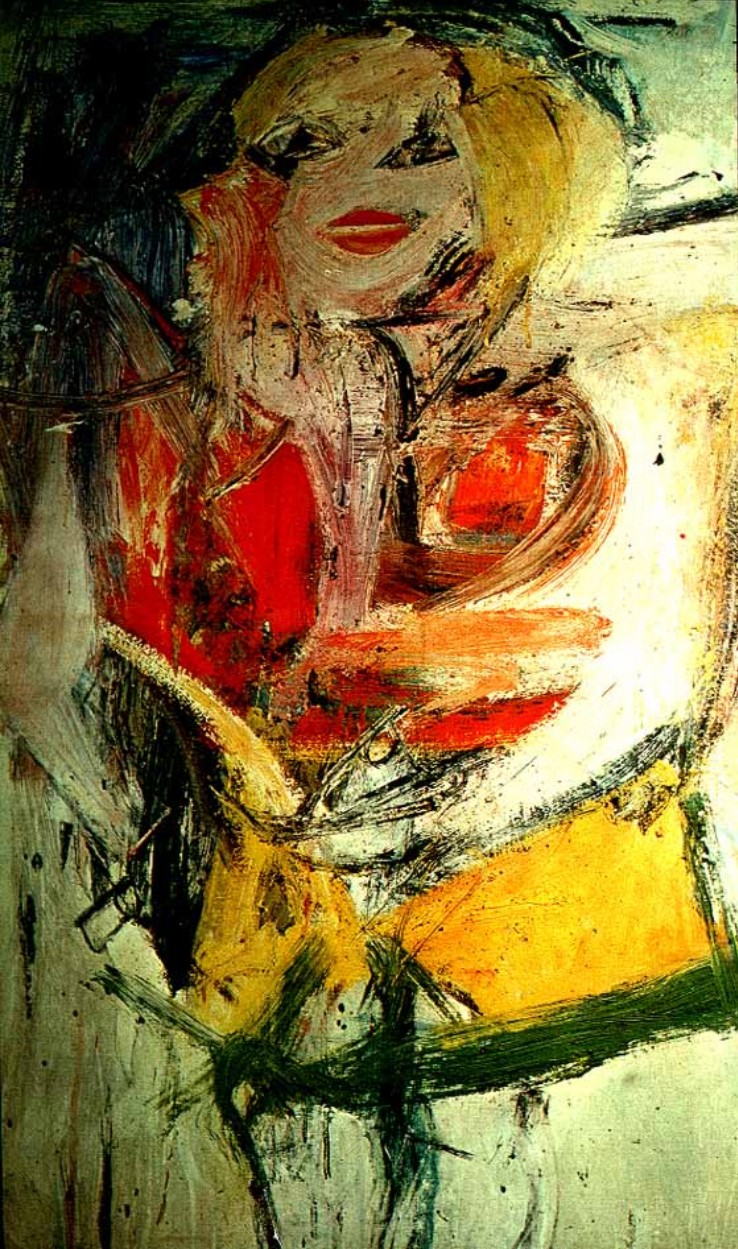
Willem de Kooning, Marilyn Monroe, 1954
Yes, de Kooning painted Marilyn Monroe in 1954, yet two works could hardly, regardless of shared motif, be more different than that picture and Warhol’s Marilyns. This latter is an active assault on the hegemony of the previous generation, albeit one in which Warhol may slightly and slightingly doff his cap. For in looking at Warhol’s Marilyns, one can see the impossible distance that lies between it and de Kooning’s 1954 masterpiece, Marilyn Monroe, in using this screen-print image of the screen goddess, Warhol managed to topple as many pedestals as possible.
Auction Results
#1. Shot Sage Blue Marilyn, 1964
Christie’s New-York, 9 May 2022
Estimated on Request
USD 195,040,000
ANDY WARHOL (1928-1987), Shot Sage Blue Marilyn | Christie’s
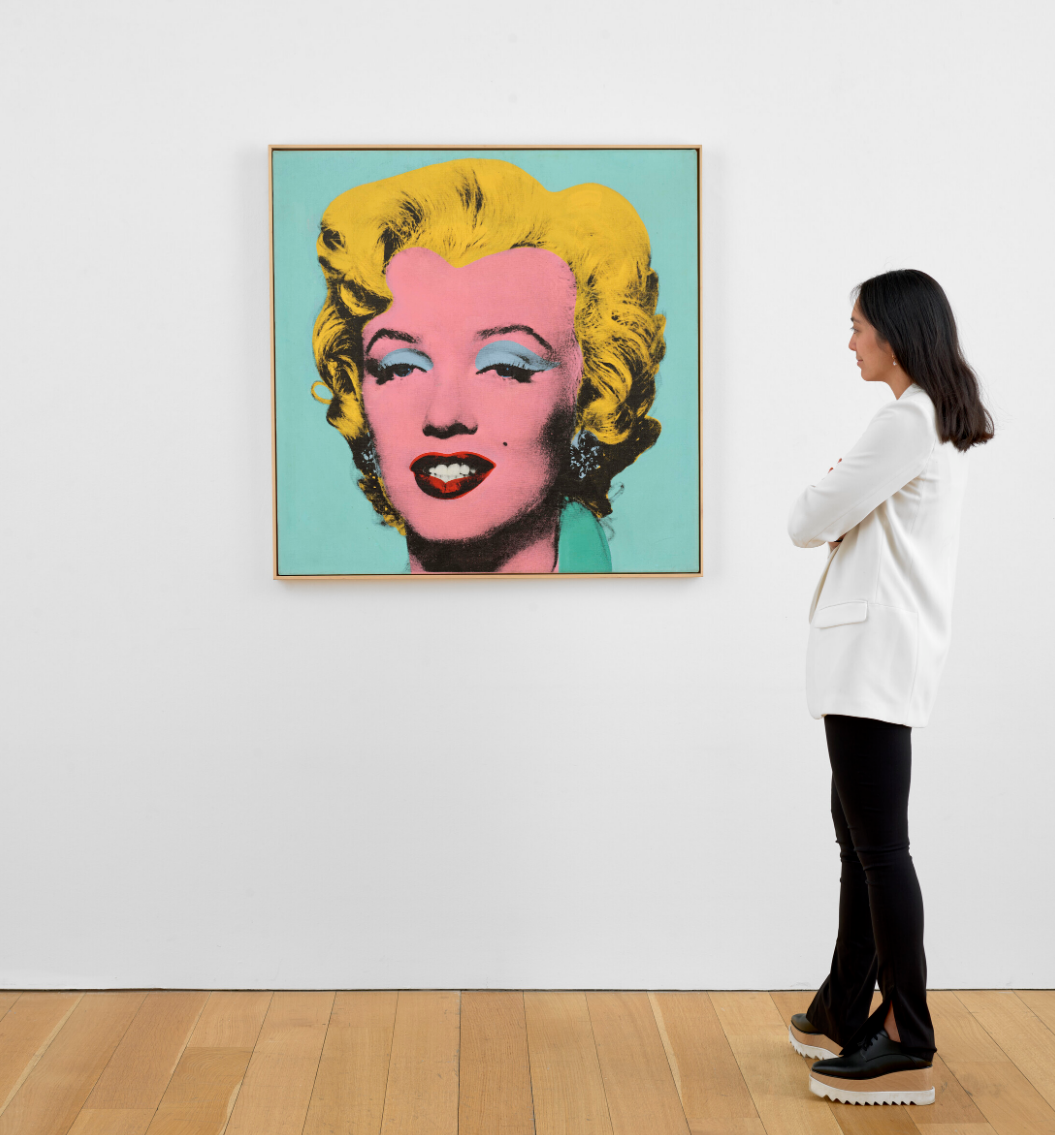
ANDY WARHOL
Shot Sage Blue Marilyn, 1964
Acrylic and silkscreen ink on linen
40 x 40 inches (101.6 x 101.6 cm)
Signed and dated ‘Andy Warhol / 64’ (on the overlap)
#2. Nine Marilyns, 1962
Sotheby’s New-York: 15 November 2021
Estimated: USD 40,000,000 – 60,000,000
USD 47,373,000
Nine Marilyns | The Macklowe Collection | 2021 | Sotheby’s (sothebys.com)
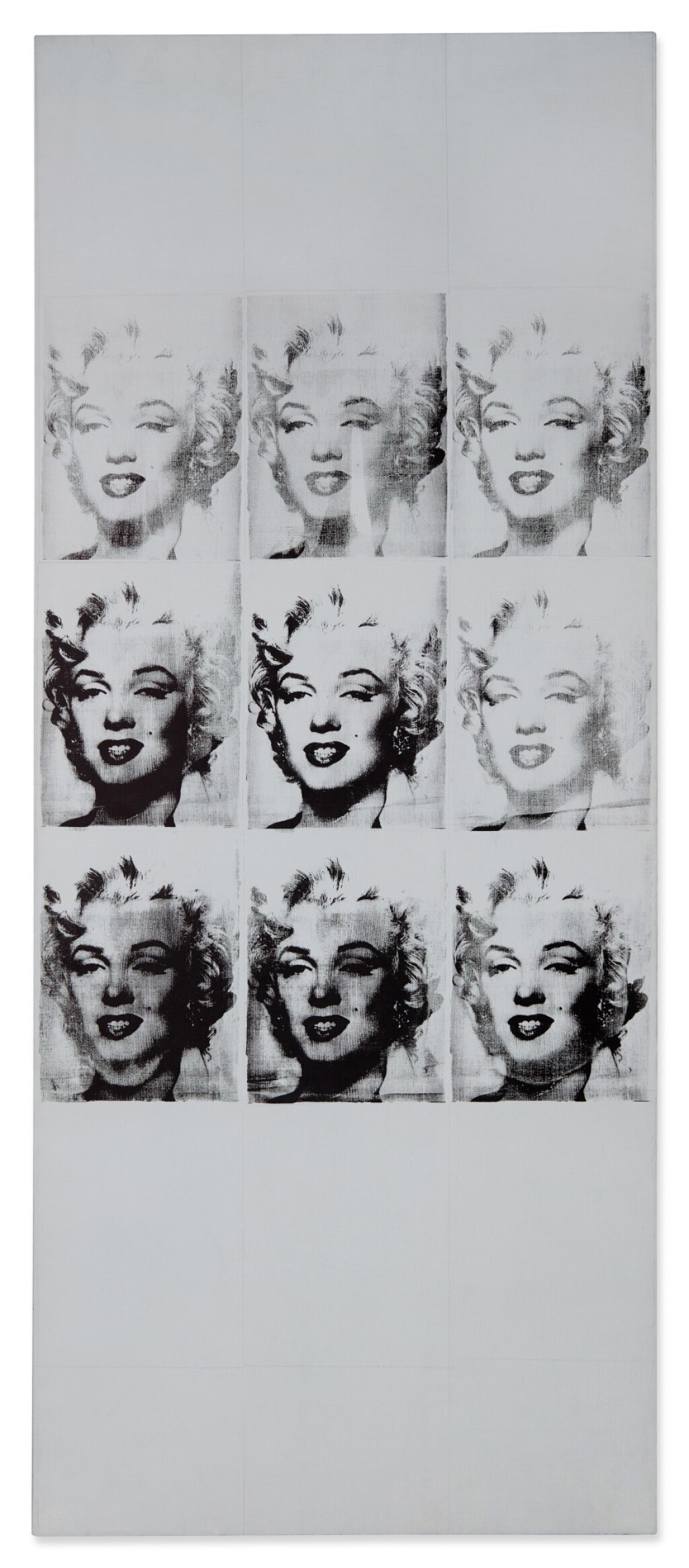
ANDY WARHOL
Nine Marilyns, 1962
Acrylic, silkscreen ink and graphite on canvas
81.5 x 33.7 inches (207 x 85.7 cm)
#3. White Marilyn, 1962
Christie’s New-York: 12 May 2014
Estimated: USD 12,000,000 – 18,000,000
USD 41,045,000
Andy Warhol (1928-1987) (christies.com)
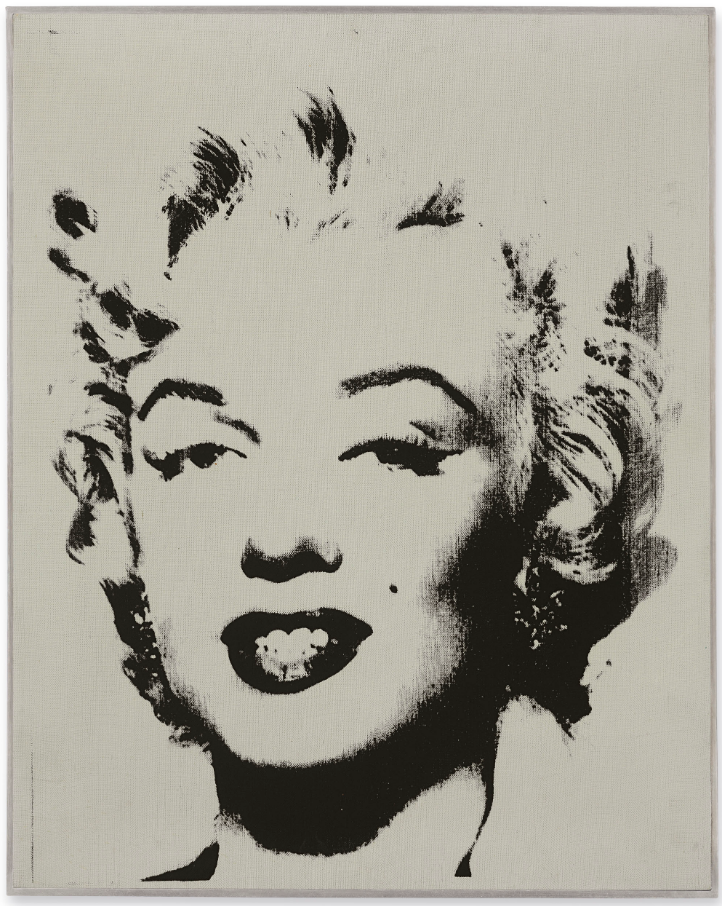
White Marilyn, 1962
Acrylic and silkscreen ink on linen
20 x 16 inches (50.8 x 40.6 cm)
Signed, dated and inscribed ‘To Eleanor Ward Andy Warhol/62’ (on the reverse)
#4. Four Marilyns, 1962
Christie’s New-York: 10 November 2015
Estimate on Request
USD 36,005,000
Andy Warhol (1928-1987) (christies.com)
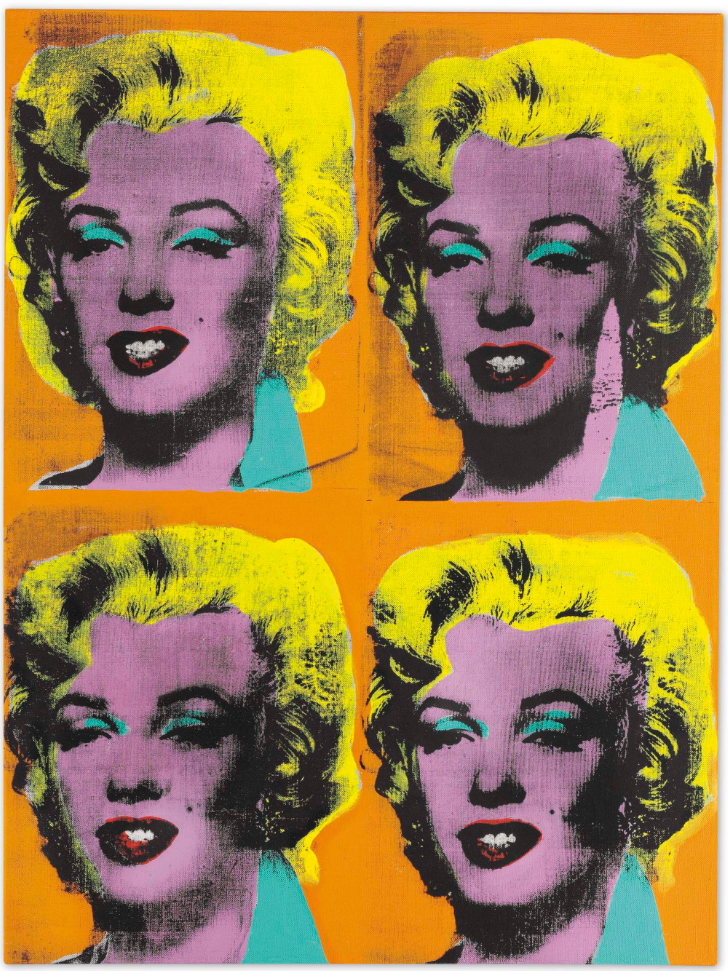
ANDY WARHOL
Four Marilyns, 1962
Acrylic, silkscreen ink and graphite on canvas
28 3/4 x 21 3/4 inches (73 x 55.2 cm)
Signed and titled ‘4 Marilyn’s Andy Warhol’ (on the reverse)
Numbered ‘A1090.2’ (on the overlap)
#5. Lemon Marilyn, 1962
Christie’s New-York: 16 May 2007
Estimate on Request
USD 28,040,000
Andy Warhol (1928-1987) (christies.com)
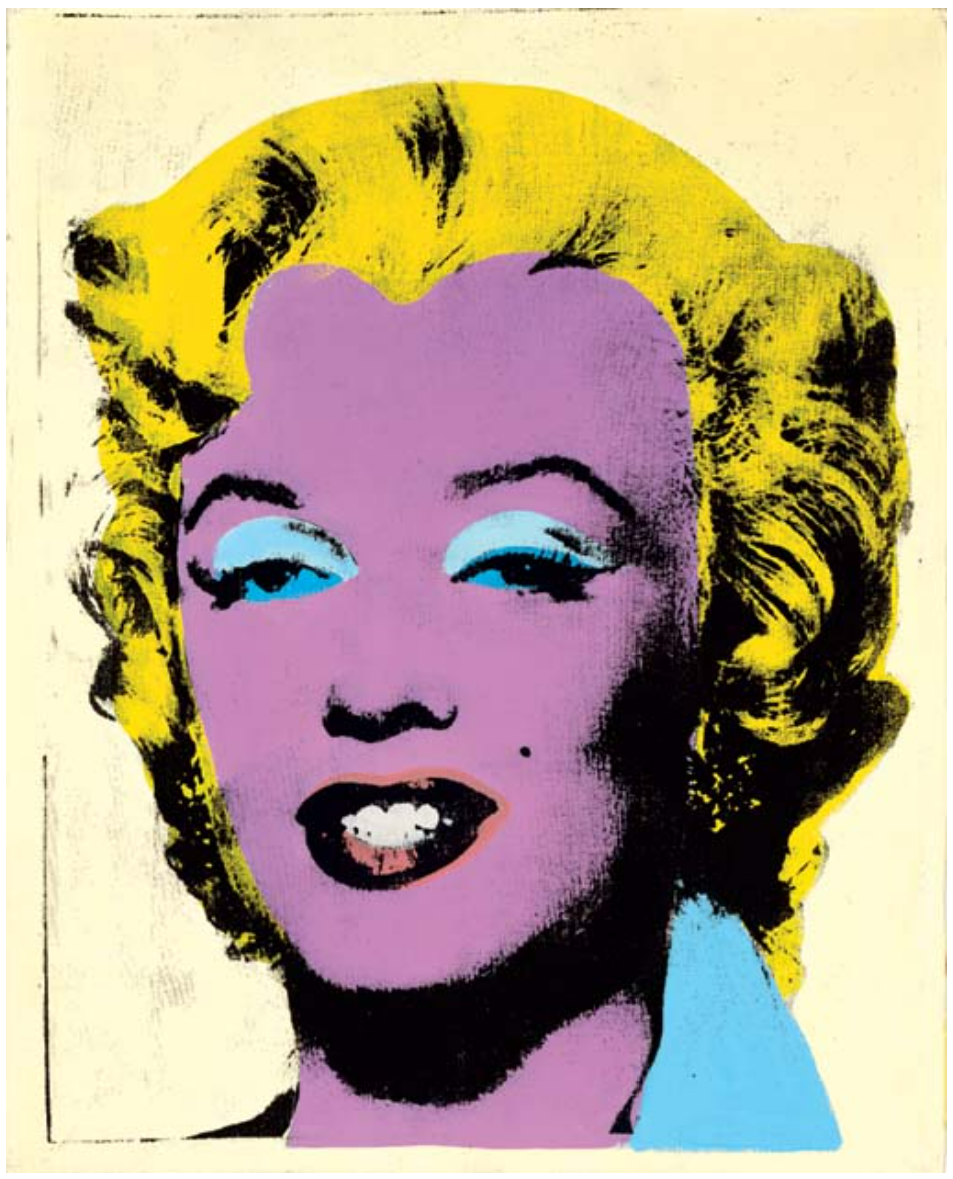
ANDY WARHOL
Lemon Marilyn, 1962
Synthetic polymer, silkscreen inks and acrylic on canvas
20×16 inches (50.8 x 40.6 cm)
Signed and dated ‘Andy Warhol 62’ (on the reverse)
#6. Orange Marilyn, 1962
Christie’s New-York: 14 November 2006
Estimated: USD 10,000,000 – 15,000,000
USD 16,256,000
Andy Warhol (1928-1987) (christies.com)
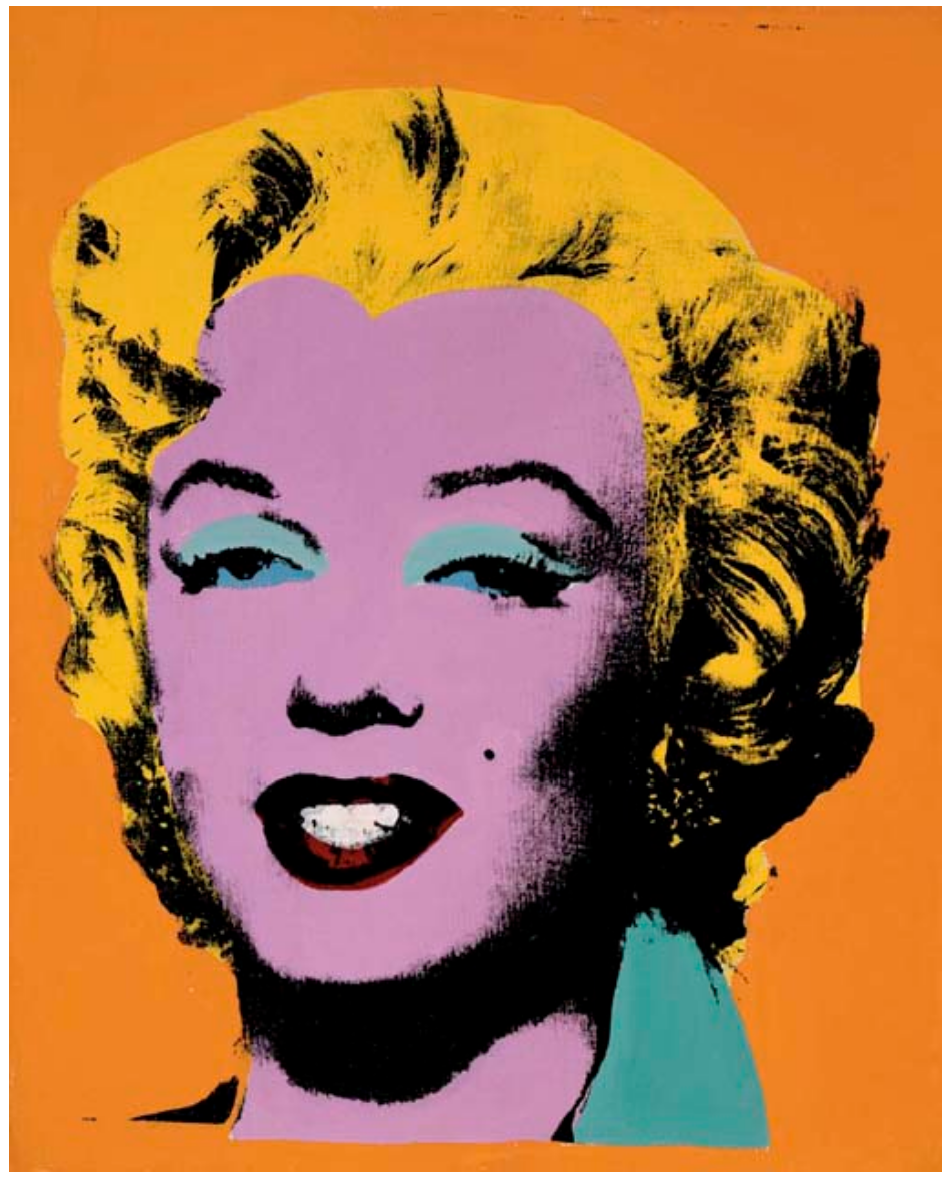
ANDY WARHOL
Orange Marilyn, 1962
Synthetic polymer and silkscreen inks on canvas
20×16 inches (50 x 40.5 cm)
Signed and dated ‘ANDY WARHOL/62’ (on the reverse)
#7. Two Marilyns (Double Marilyn), 1962
Christie’s New-York: 12 May 2021
Estimated: USD 14,000,000 – 18,000,000
USD 15,817,500
Andy Warhol (1928-1987) (christies.com)
REPEAT SALE
Christie’s London: 19 October 2008
Estimated: GBP 4,500,000 – 6,500,000
GBP 3,737,250
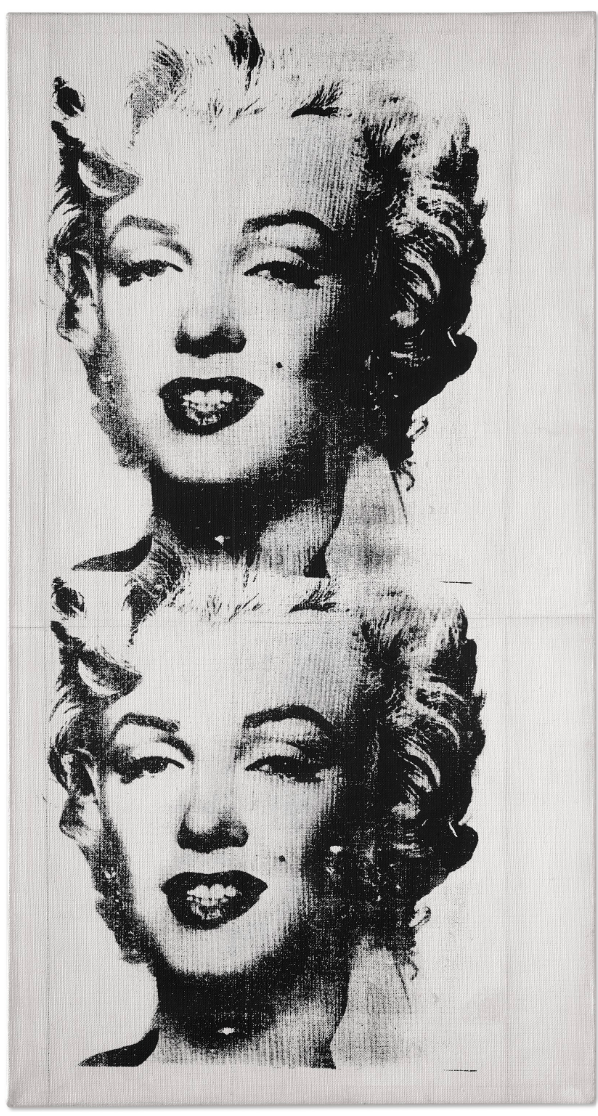
ANDY WARHOL
Two Marilyns (Double Marilyn), 1962
Silkscreen ink and graphite on canvas
26×14 inches (66 x 35.6 cm)
Signed twice and dedicated
Numbered and dated twice ‘Andy Warhol 62 To Todd B With Love A692.101’
(on the overlap)
#8. Three Marilyns, 1962
Christie’s London: 20 June 2007
Estimated: GBP 5,000,000 – 7,000,000
GBP 5,620,062 / USD 11,205,185
Andy Warhol (1927-1987) (christies.com)
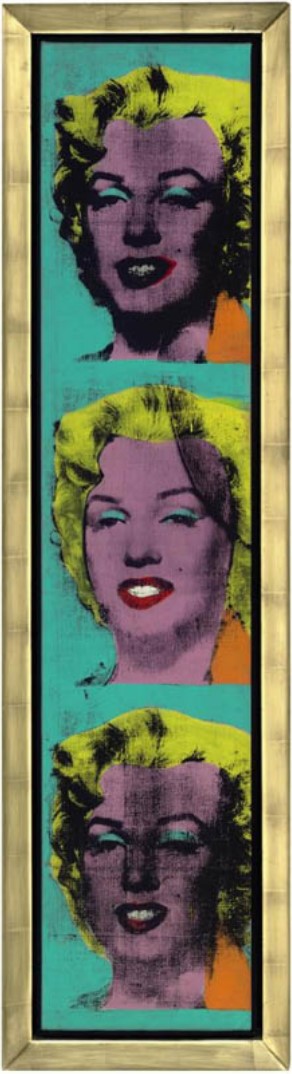
ANDY WARHOL
Three Marilyns, 1962
Synthetic polymer paint and silkscreen inks on canvas
43.5 x 9.4 inches (110.5 x 23.8 cm)
#9. Lavender Marilyn, 1962
Sotheby’s New-York: 11 November 2002
USD 4,625,000
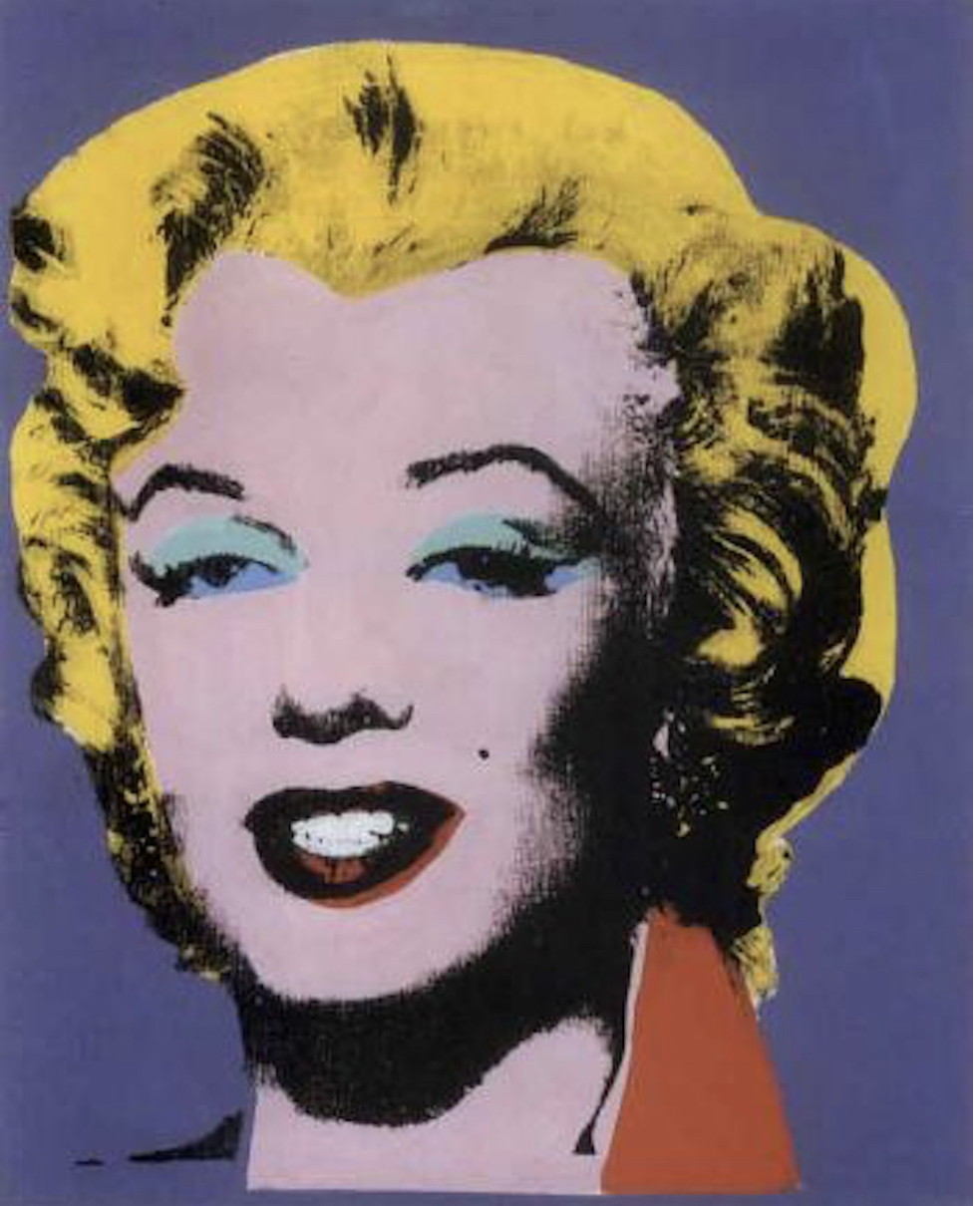
ANDY WARHOL
Lavender Marilyn, 1962
Synthetic polymer, silkscreen inks and acrylic on canvas
20×16 inches (50.8 x 40.6 cm)
Signed and dated ‘Andy Warhol 62’ (on the reverse)
#10. Marilyn, 1962
Christie’s New-York: 10 November 2010
Estimated: USD 4,000,000 – 6,000,000
USD 4,450,500
Andy Warhol (1928-1987) (christies.com)
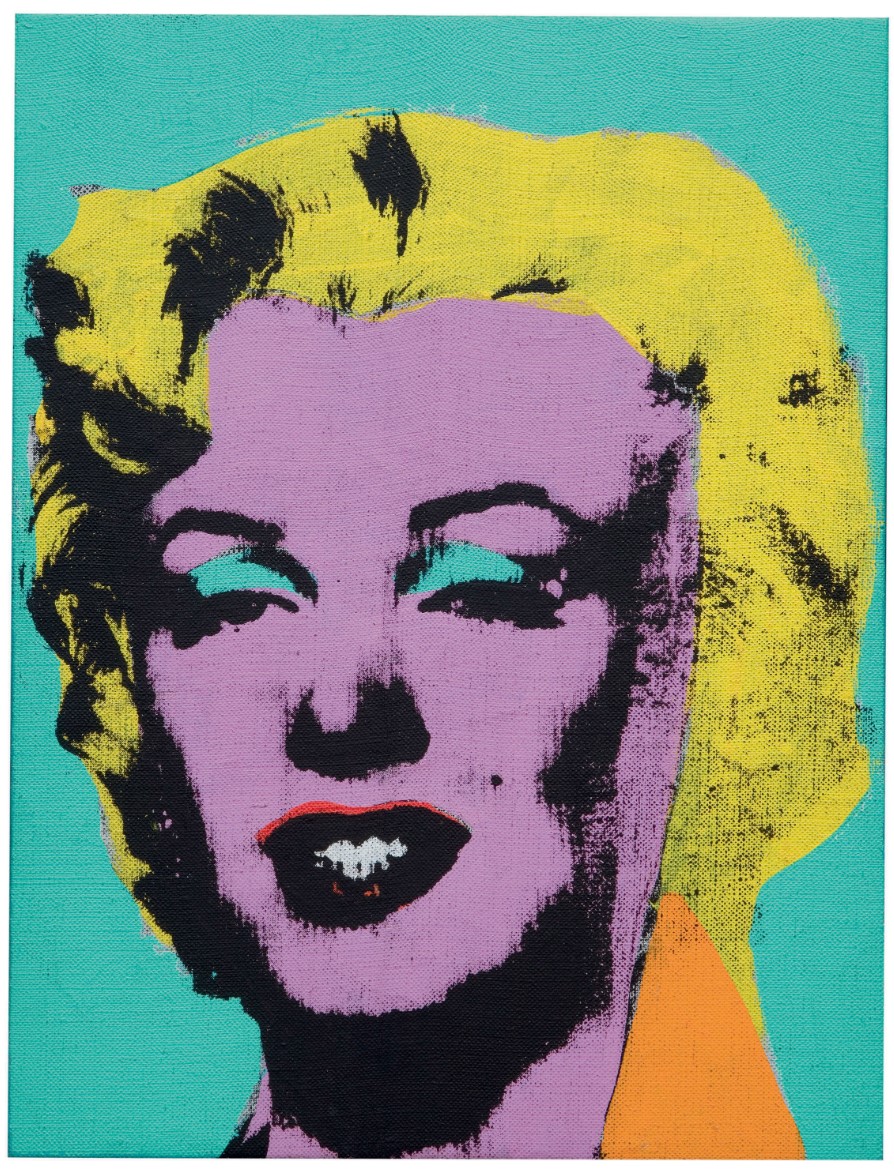
ANDY WARHOL
Marilyn, 1962
Acrylic and silkscreen ink on linen
14 x 10.7 inches (35.5 x 27.3 cm)
#11. Two Marilyns, 1962
Phillips New-York: 17 May 2018
Estimated: USD 3,000,000 – 4,000,000
USD 3,200,000
Andy Warhol – 20th Century & Contemporar… Lot 32 May 2018 | Phillips
ANDY WARHOL
Two Marilyns, 1962
Acrylic and silkscreen ink on linen, laid on canvas
12.5 x 22 inches (31.8 x 55.9 cm)
SILVER MARILYNS
Nine Marilyns, 1962
Nine Marilyns, 1962
Sotheby’s New-York: 15 November 2021
Estimated: USD 40,000,000 – 60,000,000
USD 47,373,000
Nine Marilyns | The Macklowe Collection | 2021 | Sotheby’s (sothebys.com)
ANDY WARHOL
Nine Marilyns, 1962
Acrylic, silkscreen ink and graphite on canvas
81.5 x 33.7 inches (207 x 85.7 cm)
Nine Marilyns from 1962 represents not only one of the most important and immediately iconic examples of Andy Warhol’s celebrated output, but also a uniquely searing iteration of perhaps the most infamous visage in contemporary popular culture. Belonging to a moment of extraordinary change in this most legendary of artistic careers, during which Warhol revolutionized the terms of popular visual culture in the early 1960s, the present work epitomizes the monumental themes of Warhol’s career: namely, an unprecedented artistic interrogation into the agencies of mass-media, celebrity, and death. In Marilyn Monroe, Warhol found the ultimate embodiment of these artistic obsessions. Rendered in succession with startling clarity and crispness against a luminous sterling background—conjuring the silver screen of the cinema—Warhol captures Monroe’s visage with a haunting power.
The metallic expanse of the canvas accentuates the irrefutable mortality of its ill-fated subject, as Monroe’s immortal beauty is so exquisitely captured and offered up for perpetual consumption. The depiction of nine perfectly registered impressions in sequence across three rows positions the present work amongst Warhol’s key masterpieces, aligning it with the best of his early serial images. From the time of Monroe’s death in August 1962 to the end of that year, Warhol created twenty silkscreen paintings based on a publicity photograph of Monroe from the 1953 film Niagara, an image indelibly etched in the minds of millions worldwide. Of those twenty, there are only six serial Marilyn paintings in which her face is repeated in nine or more screens; the present work is one of only two from this esteemed group still in private hands. Uniting two figures of unprecedentedly outsize fame, Marilyn Monroe and Andy Warhol, Nine Marilyns powerfully encapsulates the extraordinary impact Warhol’s praxis has had on the history of art and pop culture at large.
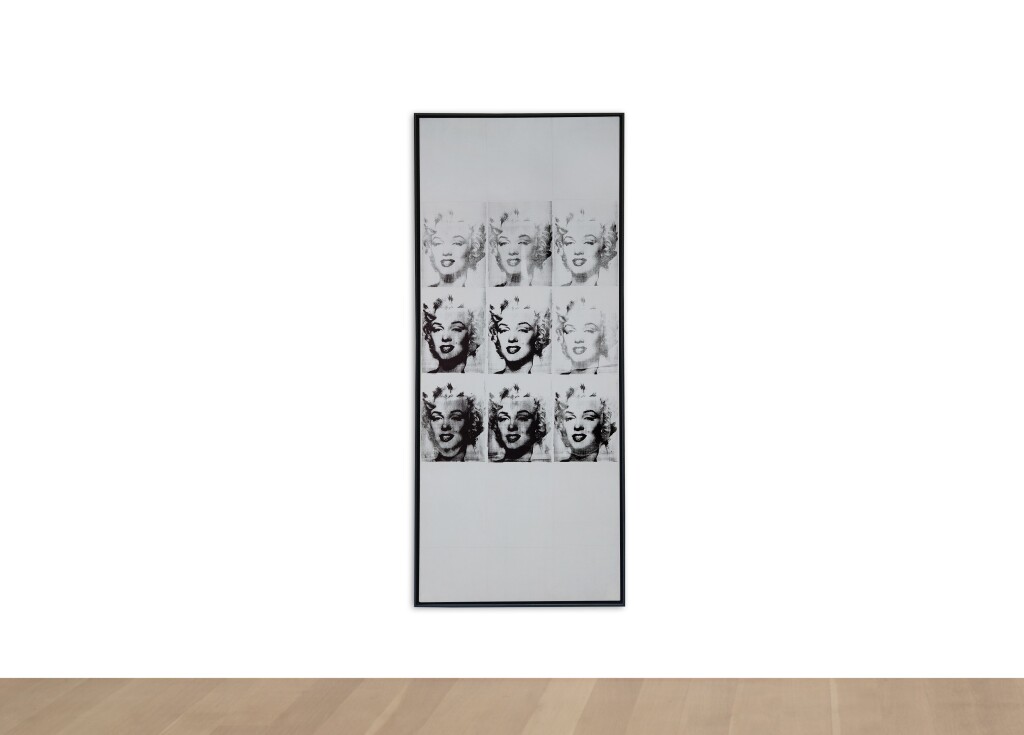
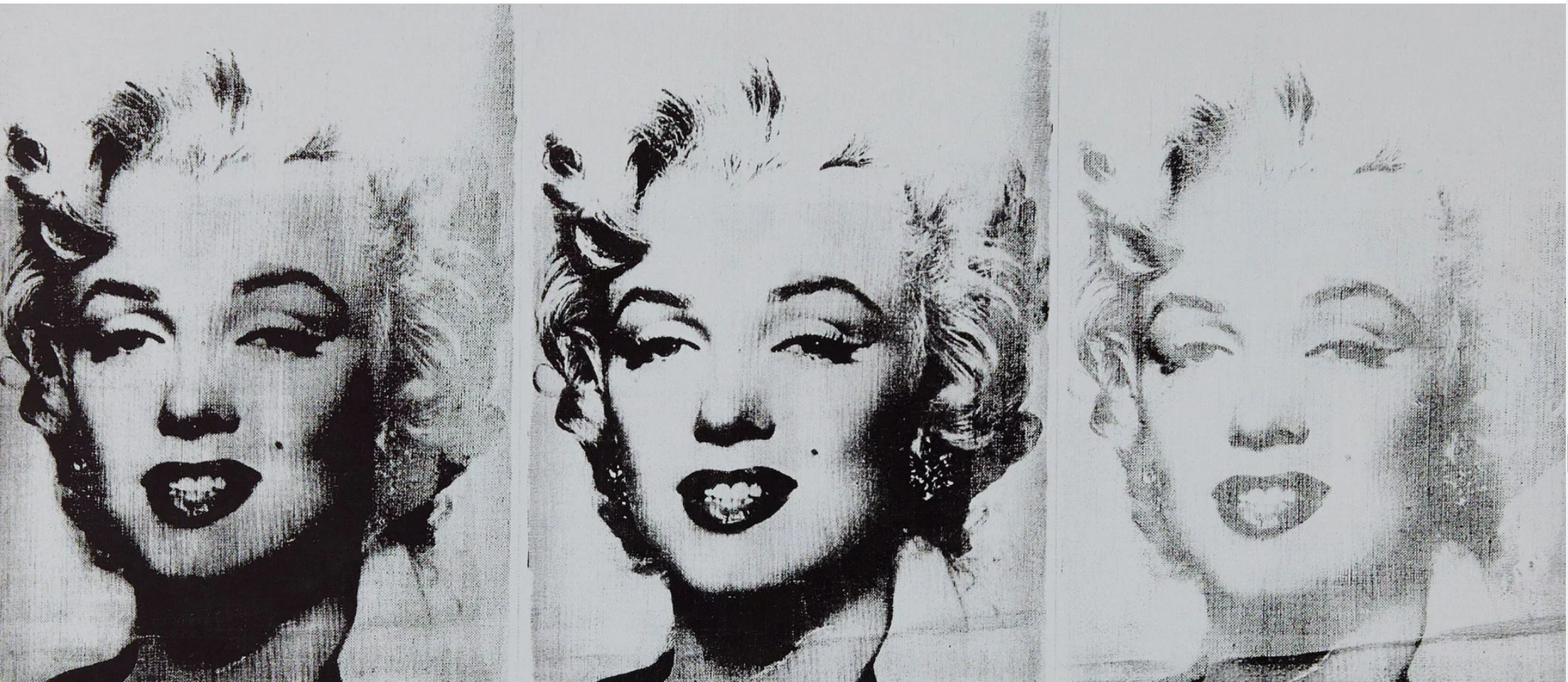
In the present example, the hauntingly mesmeric black and white portrait of Monroe is repeated nine times. While the absence of color here exposes the ruled pencil lines which guided Warhol’s impression, the silkscreen endows the composition with a luminous silver veil that obliquely references Hollywood’s “silver screen,” while also calling to mind the repetitive printings of black-and-white tabloid papers, which, even before Monroe’s highly publicized death, had already rendered Monroe’s portrait an image ubiquitous in popular culture at the time. In some impressions of Monroe’s portrait, black ink pools thickly, nearly obliterating Monroe’s ghostly visage, while in others, her silhouette renders only as a faint trace, a barely visible impression that appears to recede from the canvas before the viewer’s eyes. The serial repetition takes on the sinister quality of the very tabloid papers which both tortured her life and glamorized her death.
Two Marilyns (Double Marilyn), 1962
Two Marilyns (Double Marilyn), 1962
Christie’s New-York: 12 May 2021
Estimated: USD 14,000,000 – 18,000,000
USD 15,817,500
Andy Warhol (1928-1987) (christies.com)
REPEAT SALE
Christie’s London: 19 October 2008
Estimated: GBP 4,500,000 – 6,500,000
GBP 3,737,250
ANDY WARHOL
Two Marilyns (Double Marilyn), 1962
Silkscreen ink and graphite on canvas
26×14 inches (66 x 35.6 cm)
Signed twice and dedicated
Numbered and dated twice ‘Andy Warhol 62 To Todd B With Love A692.101’
(on the overlap)
Two Marilyns (Double Marilyn) is an important early example, executed in the aftermath of the actress’s tragic death in August that year; its self-possessed palette acting almost as a memento mori not only on the fragility of life, but also of the fleeting nature of the fame that the actress craved, and which the artist found so fascinating. This painting was first acquired by Eleanor Ward, the New York art dealer who gave the artist his first solo exhibition in the city at her famed Stable Gallery in 1962 and remained in her private collection until her death in 1984. Rendered with remarkable clarity directly onto the painted surface of the canvas, the iconic features that made Monroe adored by her millions of fans are rendered crisply in black silkscreen ink. Her famously luscious lips are curled into her classic pout; her piercing eyes stare out from the surface of the canvas, and are rendered in such detail that—particularly in the upper image—one can make out individual long eyelashes; and the individual strands of her perfectly coiffed bottle blond hair are given volume by the light and dark shadows that focus attention on her face like a halo. Finally, her most famous feature of all, her beauty spot, sits illuminated like a pinpoint on the surface of her cheek.
In addition to the exceptional clarity of the images, Two Marilyns (Double Marilyn) is witness to Warhol’s working process as the graphite guidelines on where to place the individual screens on the canvas are left visible. This rare feature allows us to see the precision with which Warhol worked, carefully mapping out the surface of the canvas to ensure the maximum impact of his dual portraits. Warhol was fastidious in his attempts to create the right aesthetic, and these guidelines helped to ensure that the regularity of the repeated images was kept intact throughout the screening process.
EARLY COLORED MARILYNS
Four Marilyns, 1962
Four Marilyns, 1962
Christie’s New-York: 10 November 2015
Estimate on Request
USD 36,005,000
Andy Warhol (1928-1987) (christies.com)
ANDY WARHOL
Four Marilyns, 1962
Acrylic, silkscreen ink and graphite on canvas
28 3/4 x 21 3/4 inches (73 x 55.2 cm)
Signed and titled ‘4 Marilyn’s Andy Warhol’ (on the reverse)
Numbered ‘A1090.2’ (on the overlap)
Marilyn was also one of the first paintings in which Warhol introduced what became his signature range of vibrant colors. Although the Pop Art movement was defined partly by its often-vivacious use of pigment, much of Warhol’s earlier work was executed in monotones and it was only in 1962 that he first began to use an increasing number of colors on the same canvas. Marilyn’s background of fresh cadmium orange is electrified next to Monroe’s halo of golden hair and the fleshy pink tones of her complexion. The bold swaths of color helped to map out the broad areas of the composition while the half-tone screen that was applied in black gave the face its particular definition. The finishing touches of detail—the eyes, lips and other facial features—were then added with a final flourish of the artist’s brush.
Marilyn, 1962
Marilyn, 1962
Christie’s New-York: 10 November 2010
Estimated: USD 4,000,000 – 6,000,000
USD 4,450,500
Andy Warhol (1928-1987) (christies.com)
ANDY WARHOL
Marilyn, 1962
Acrylic and silkscreen ink on linen
14 x 10.7 inches (35.5 x 27.3 cm)
Marilyn was one of the first paintings in which Warhol introduced what became his signature range of vibrant colors. Although the Pop Art movement was defined partly by its often-vivacious use of pigment, much of Warhol’s earlier work was executed in monotones and it was only in 1962 that he first began to use an increasing number of colors on the same canvas. Marilyn‘s background of fresh phthalo green is complemented by Monroe’s halo of golden hair and the fleshy pink tones of her complexion. The bold swathes of color helped to map out the broad areas of the composition while the half-tone screen that was applied in black gave the face its particular definition. The finishing touches of detail – the eyes, lips and other facial features – were then added with a final flourish of the artist’s brush.
Two Marilyns, 1962
Two Marilyns, 1962
Phillips New-York: 17 May 2018
Estimated: USD 3,000,000 – 4,000,000
USD 3,200,000
Andy Warhol – 20th Century & Contemporar… Lot 32 May 2018 | Phillips
ANDY WARHOL
Two Marilyns, 1962
Acrylic and silkscreen ink on linen, laid on canvas
12.5 x 22 inches (31.8 x 55.9 cm)
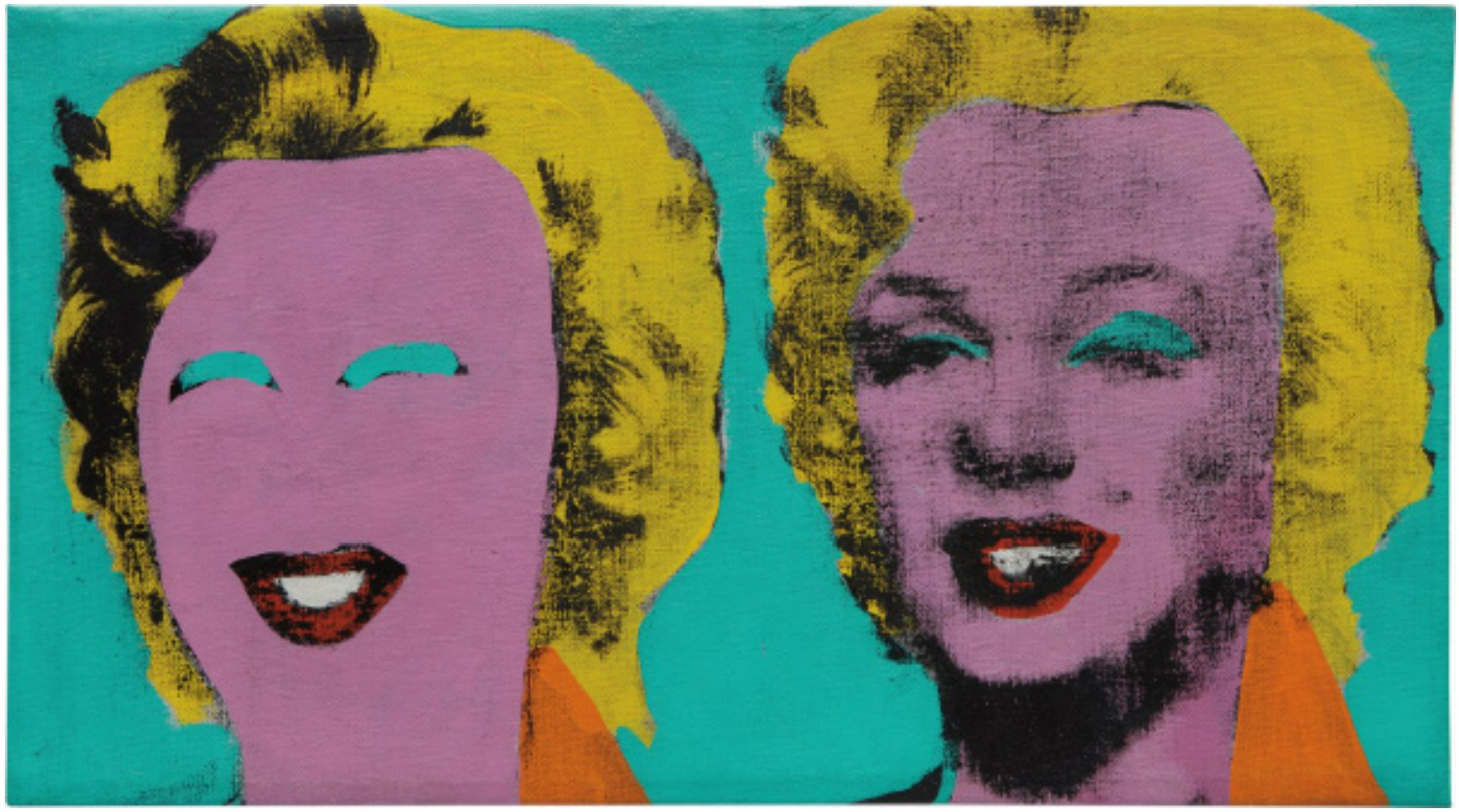
Coming from the Warhola Family, who was gifted the work by the artist in 1962, Two Marilyns is a powerful example from the first Marilyns series that the artist conceived in the immediate aftermath of the icon’s untimely death that summer. Employing his signature strategy of doubling, Warhol in the present work starkly contrasts the full facial portrait of Marilyn Monroe on the right, with a mask-like version of the icon’s visage on the left. Perfectly evidencing the sense of spontaneity and risk that the silkscreen technique introduced into his formal repertoire, this rare rendition of Marilyn uniquely sees Warhol abstract the female figure in a manner that pays homage to the great lineage of Pierre Bonnard, Pablo Picasso and Henri Matisse. Pursuing a similar distillation of form, color, and line, Warhol, with a playful nod to his Pop Art contemporary Tom Wesselmann as well as his own Comic Strip Paintings, obfuscates the silkscreened face with flat, planar areas of paint in a manner that emphasizes precisely those fragmented features that defined Monroe’s status as a sex symbol. Two Marilyns clearly holds a unique position within his oeuvre.
Three Marilyns, 1962
Three Marilyns, 1962
Christie’s London: 20 June 2007
Estimated: GBP 5,000,000 – 7,000,000
GBP 5,620,062 / USD 11,205,185
Andy Warhol (1927-1987) (christies.com)
ANDY WARHOL
Three Marilyns, 1962
Synthetic polymer paint and silkscreen inks on canvas
43.5 x 9.4 inches (110.5 x 23.8 cm)
Three Marilyns dates from this legendary moment in the history of art. It is one of the first multiple images that Warhol made of the deceased star and is particularly rare in its verticality: of these 1962 Marilyns, only one other is recorded with a single strip of vertical images, and in that case, there are only two, in black and white. Here, though, with the triple repetition, Warhol manages to give this silk-screened image of Marilyn Monroe a filmic appearance, as though it were itself related to the strips of celluloid of her cinema career.
FLAVORED MARILYNS
White Marilyn, 1962
White Marilyn, 1962
Christie’s New-York: 12 May 2014
Estimated: USD 12,000,000 – 18,000,000
USD 41,045,000
Andy Warhol (1928-1987) (christies.com)
White Marilyn, 1962
Acrylic and silkscreen ink on linen
20 x 16 inches (50.8 x 40.6 cm)
Signed, dated and inscribed ‘To Eleanor Ward Andy Warhol/62’ (on the reverse)
While all but two “Flavor Marilyns” implement the use of brightly colored inks, White Marilyn is particularly compelling because its pared-down palette of black and white refers not only to Warhol’s earlier creations, as well as his interest in black and white cinematography, but also to the broader tradition of radical experiments in the history of abstraction. As Newman demonstrated, such a palette could be a powerful tool of discovery and renewal, which he used to great effect in works such as his famed Stations of the Cross. “When an artist wants to change, when he wants to invent,” Newman once said (discussing the 1948 and 1950 pictures of de Kooning and Kline), “he goes to black; it is a way of clearing the table-of getting to new ideas” (B. Newman quoted in, Barnett Newman: The Complete Drawings, 1944-1969, Baltimore, 1979, pp. 13-14). An extension of Warhol’s black and white paintings of singular commodities based on advertising images, Warhol’s austere palette was originally used to heighten the visual effect of the graphically distorted advert images. The choice of palette not only echoes the photographic source material that Warhol used for his portraits, but pays homage to Marilyn as an actress, thereby linking her to the silver screen from which she emerged.
Orange Marilyn, 1962
Orange Marilyn, 1962
Christie’s New-York: 14 November 2006
Estimated: USD 10,000,000 – 15,000,000
USD 16,256,000
Andy Warhol (1928-1987) (christies.com)
ANDY WARHOL
Orange Marilyn, 1962
Synthetic polymer and silkscreen inks on canvas
20×16 inches (50 x 40.5 cm)
Signed and dated ‘ANDY WARHOL/62’ (on the reverse)
Orange Marilyn belongs to the twelve “single Marilyns” mentioned by Warhol in POPism, all of which measure 20×16 inches. While it was not one of the eight that the artist sent to the Stable Gallery in November 1962, it did represent him five months later at the Washington Gallery of Modern Art, Washington, D.C., in the group exhibition The Popular Image. By that time several of the pictures in this category had been informally named according to the color used for their backgrounds, often with words signify a flavor as well as a hue. Thus, the four paintings of Marilyn Monroe on display at the Washington Gallery of Modern Art in 1963 were titled Orange Marilyn, Cherry Marilyn, Grape Marilyn, and Mint Marilyn. (The latter has long been in the personal collection of Warhol’s artistic contemporary, Jasper Johns).
For a colored early canvas like Orange Marilyn Warhol devised a somewhat time-consuming procedure to get the illusion that he wanted. Taking a canvas covered with a coat of white paint he printed the photo-derived silkscreen image in black ink. Then, painting by hand, he blocked out areas using seven different colors, thereby indicated hair, skin, eyes, eyelids, lips, dress, and the void surrounding the head. The canvas’s white priming coat provided the color for the teeth. Finally, he screened the black portrait image on top of this colored background scheme. We know from other works in the Marilyn series that Warhol relished a look of rough or hasty imperfection. Consider, for example, the jumpy interactions of the black, yellow, and peachy orange at the right side of Orange Marilyn; or the odd vertical streaking of the shadows on her cheeks and neck. Since the artist intended this series to be elegiac, he must have accepted the fact that such “accidents” of technique would trigger viewers to project an array of poetic interpretations. For example, might the grainy shadows and the misaligned edges allude to the damaging effects of fame or the tawdriness of the entertainment industry? On the other hand, the subject of Orange Marilyn asserts a radiant and disarming presence. This picture’s neo-folk energy has affinities with the sacred icons Warhol knew during his early years of worship at the St. John Chrysostom Byzantine Catholic Church in the impoverished Pittsburgh neighborhood.
Lemon Marilyn, 1962
Lemon Marilyn, 1962
Christie’s New-York: 16 May 2007
Estimate on Request
USD 28,040,000
Andy Warhol (1928-1987) (christies.com)
ANDY WARHOL
Lemon Marilyn, 1962
Synthetic polymer, silkscreen inks and acrylic on canvas
20×16 inches (50.8 x 40.6 cm)
Signed and dated ‘Andy Warhol 62’ (on the reverse)
Compared to the graphic flatness of some her siblings, Lemon Marilyn portrayed an ineffable softness on account of her nuanced hues; indeed, the contrast of her mauve face with the specific choice of her pale-yellow background created a three-dimensional image that sympathetically alluded to a real person behind her projected persona. Receding into ethereal space, Lemon Marilyn was an alluring woman, closer to a Byzantine icon of a bygone era than a contemporaneous Pop-star. Haunting and mysterious, she lingered just beyond human reach, embodying the projection of an impossible dream. As a canonization of the actress, Lemon Marilyn is one of the most successful images from the series. Tapping into the collective consciousness at the particular moment when Monroe the star became Monroe the myth, this work completely embodies that transformation. The radiant and elusive protagonist of Lemon Marilyn assumes the appearance of a sacred icon; she is a martyr to her fame. Afloat in the gilded aura of her background, Lemon Marilyn shares affinities with the saints that decorated the walls of St. John Chrysostom Byzantine Catholic Church in Pittsburgh, where Warhol had worshipped as a child.
Lavender Marilyn, 1962
Lavender Marilyn, 1962
Sotheby’s New-York: 11 November 2002
USD 4,625,000
ANDY WARHOL
Lavender Marilyn, 1962
Synthetic polymer, silkscreen inks and acrylic on canvas
20×16 inches (50.8 x 40.6 cm)
Signed and dated ‘Andy Warhol 62’ (on the reverse)
Shot Sage Blue Marilyn, 1964
Shot Sage Blue Marilyn, 1964
Christie’s New-York, 9 May 2022
Estimated on Request
USD 195,040,000
ANDY WARHOL (1928-1987), Shot Sage Blue Marilyn | Christie’s
 ANDY WARHOL
Shot Sage Blue Marilyn, 1964
Acrylic and silkscreen ink on linen
40 x 40 inches (101.6 x 101.6 cm)
Signed and dated ‘Andy Warhol / 64’ (on the overlap)
There are few images in history that have the ability to transcend the time and place of their creation, surpassing even the reputation of their creator or the magnificence of their subject. From the classical beauty of the Venus de Milo and the enigmatic smile of the Mona Lisa, to the sultry Sirens of Picasso’s Les Demoiselles D’Avignon, the beauty of the human figure has inspired artists to extend their creativity to new heights. In the latter half of the twentieth-century, one woman captivated the world with her legendary looks, the Hollywood star Marilyn Monroe. This small town girl rose to become the most famous woman in the world, and today—sixty years after her death—the myth of Marilyn Monroe is still as potent as ever. This is due to one man: Andy Warhol, his unique ability to capture the humble beauty of a global superstar has seared her likeness onto our collective consciousness. His flawless rendering has become the image of Marilyn Monroe. It represents not only her physical attractiveness, but also her cultural power and enduring legacy. Through this image, she lives on forever as one of the definitive artistic icons of all time, a Mona Lisa for the twentieth-century.
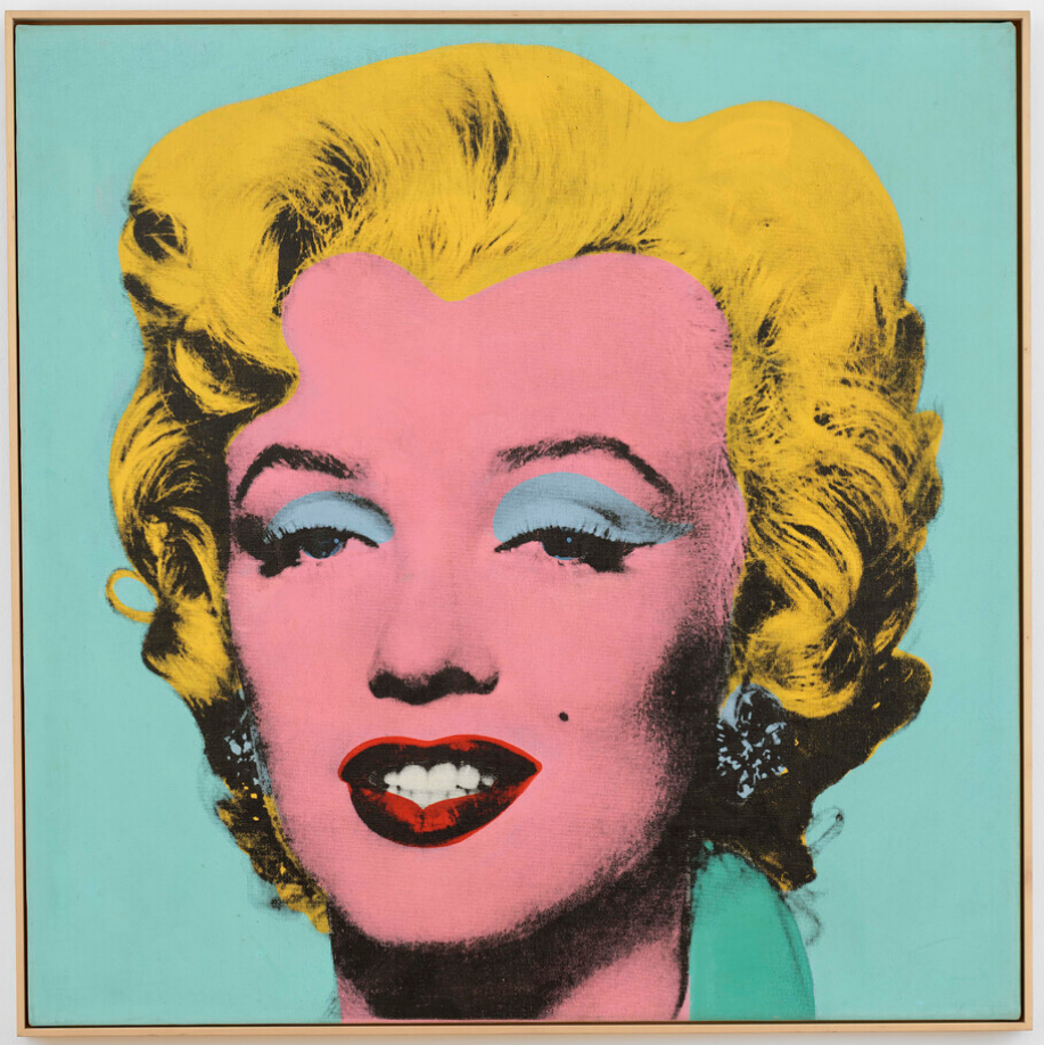
Shot Sage Blue Marilyn is Warhol’s ultimate depiction of his ultimate muse; an image that surpasses the transient nature of the actress’s life and the fame she endured. Distinguished by an inner luminosity, the screen idol’s legendary beauty radiates out from the surface of this large-scale painting. Her blond hair, piercing eyes, full-lips, and even her famous beauty spot are all rendered in a clarity and detail that is absent from other examples of Warhol’s famous screening process. Here, the flatness and uniformity of previous renderings of her famous locks have been replaced by an expansive sweep of voluminous curls executed with such skill that individual strands are highlighted; even the renegade coils that have escaped her hairdresser’s attention—such as the one just above her real right ear—are perfectly captured by Warhol in consecutive layers of yellow and black paint. Marilyn’s arched eyebrows define generous arcs of blue eyeshadow, which in turn frame her piercing deep blue eyes. The outline of her red lipstick perfectly hugs the outline of her full red lips and—to her real left—the iconic beauty spot sits proudly on the surface of her cheek. In addition to the obvious facial features, the clarity of Marilyn’s image is enhanced by Warhol’s sophisticated use of chiaroscuro. At her left temple, embracing her cheek and shrouding her neck, soft shadows add a unrivalled degree of depth and plasticity to Warhol’s iconic image.
The aesthetic superiority of Marilyn is the result of a radically different and more complex screening process that Warhol developed in 1964. In his earlier silkscreens of the actress, or any of his portraits executed between 1962 and 1964 for that matter, the colored elements were applied between two layers of black silkscreen ink. The use of a preparatory screened underlayer, followed by the elements of local color, following by another screening of black, often led to images that lacked a degree of crispness due to the difficulty of accurately lining up the three independent layers of screening. This often led to “ghost-images,” where the eye shadow or red lips, for example, extended beyond the physical features defined by the black screened layers. On occasions it also led to somewhat blurry images as subsequent layers merged together somewhat unsuccessfully.By mid-1964, and Shot Sage Blue Marilyn, where local color was required, there is little evidence of a preliminary silkscreen impression, and the registration of the uppermost black screen and color is virtually seamless. Warhol had arrived at a new method for registering local colors, using a positive image that his silkscreen maker would print on acetate and provide him as a proof. Warhol was then able to trace this image onto the canvas as an under-drawing, guiding both the hand-painted local color and the subsequent black layer. Both Gerrard Malanga and Mark Lancaster—frequent visitors to the Factory during this period—also observed that the tracing was partially masked with tape, allowing the local color to be applied by hand with much greater clarity and precision. This new, more intricate, method ultimately proved to be too time consuming for the famously impatient artist, and Warhol abandoned
This painting also enters ‘Warhol-lore’ as one of the famous Shot Marilyns, a group of four paintings involved in an infamous event that took place at the Factory in the fall of 1964. Warhol had just completed a set of five 40×40 inch canvases of Marilyn (the four Shot Marilyns plus Turquoise Marilyn) using his new screening process, when he was visited by his friend Ray Johnson and a woman named Dorothy Podber. She was a sometime performance artist and the owner of outlandish pets including an ocelot which she took for walks around New York’s Central Park. She was also known as a photographer and when she entered the Factory and saw Andy silkscreening, she asked if she could shoot them. Assuming that she meant photograph his latest work, Warhol agreed. Podber promptly took a gun from purse and fired a single shot at the canvases leant up against the wall. She then put the gun back in her purse and left.
Subsequently the paintings became among the most celebrated of the twentieth-century postwar canon, each with provenance to match. Shot Sage Blue Marilyn was first acquired by the legendary New York Pop collector Leon Kraushar. During an intense period in the early 1960s, Kraushar—an advertising executive—amassed one of the greatest collections of Pop Art ever assembled. Kraushar and his wife acquired many early works by Warhol and Roy Lichtenstein. Among his early purchases were the now legendary Red Jackie, Green Liz and Orange Marilyn, all of which were displayed alongside Lichtenstein’s iconic Nurse in bedroom of Kraushar’s suburban Long Island home. The painting was then acquired by Fred Mueller, the influential contemporary art dealer and former partner in the Pace Gallery along with Arne and Eva Glimcher. Subsequently, S.I. Newhouse, the owner of the Condé Nast magazine empire, acquired the painting in the early 1970s, before Thomas Ammann acquired it in the early 1980s, and in whose private collection it has remained ever since.
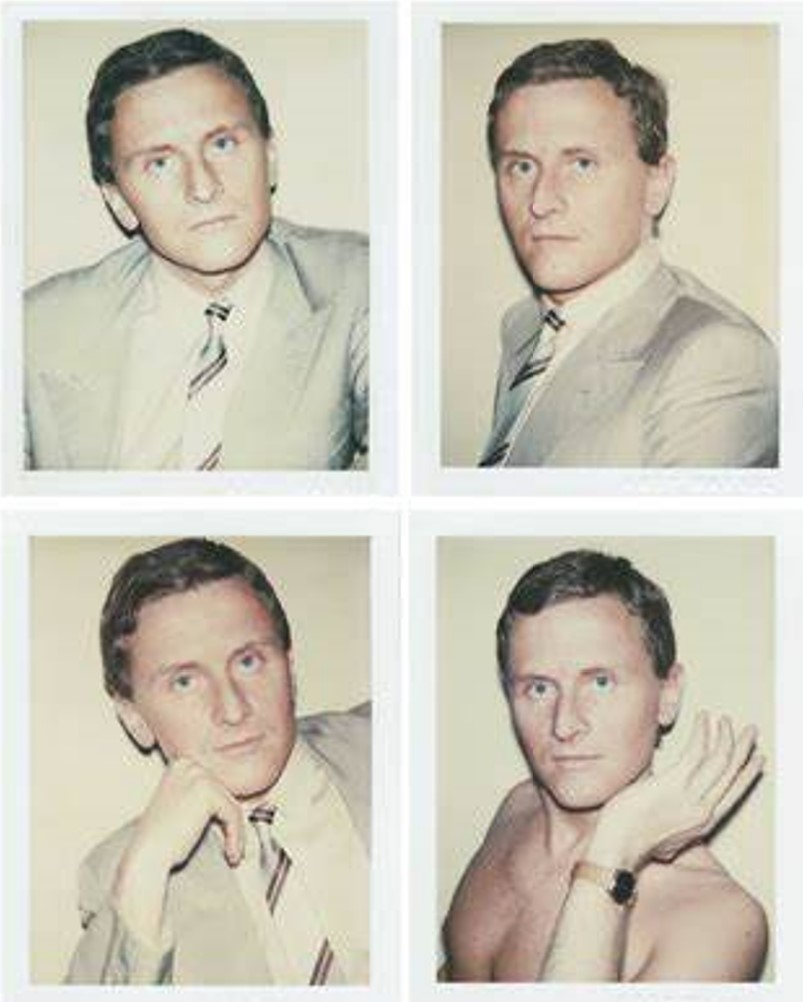
ANDY WARHOL, Thomas Ammann, 1977
Four unique polaroid prints
Each: 4.2 x 3.4 inches (10.8 x 8.6 cm)
Ammann built a reputation as one of the most respected dealers and gallery owners in the world. After leaving school at 18, he worked for the legendary dealer Swiss Bruno Bischofberger, before opening his eponymous gallery, Thomas Ammann Fine Art, in Zürich in 1977. Together with his older sister, Doris, he quickly became one of the pre-eminent dealers in Impressionist and twentieth-century art including works by Matisse, Picasso, Giacometti, and Francis Bacon. They boasted a client list that included all of the world’s top collectors who appreciated his knowledge, his highly-sophisticated eye, and—perhaps most importantly—his discretion. In addition to acquiring works for his private clients, Thomas was also instrumental in placing major works in international museum and institutional collections, including Max Ernst’s The Blessed Virgin Chastises the Infant Jesus Before Three Witness in the Ludwig Museum and Vincent van Gogh’s Portrait of Joseph Roulin at the Museum of Modern Art, New York. When Thomas died in 1993, Doris took over the running of the gallery, building on her brother’s legacy, while at the same time introducing a new generation of contemporary artists to collectors around the world.
Thomas and Andy Warhol became close friends after being introduced by his mentor Bruno Bischofberger. Warhol was a frequent visitor to Thomas’s house in Switzerland, and the pair quickly became close friends. In 1977, Ammann initiated a project to produce an authoritative catalogue raisonné of the artist’s paintings, sculptures, and drawings, and working Warhol began the daunting task of assembling the material needed for such a monumental undertaking. In 2002, under the editorship of Georg Frei and Neil Printz, the first of the current five volumes was published. In 1978, Thomas also organized a large retrospective exhibition of Warhol’s work at the Kunsthaus in Zurich which did much to bolster Warhol’s reputation in Europe.