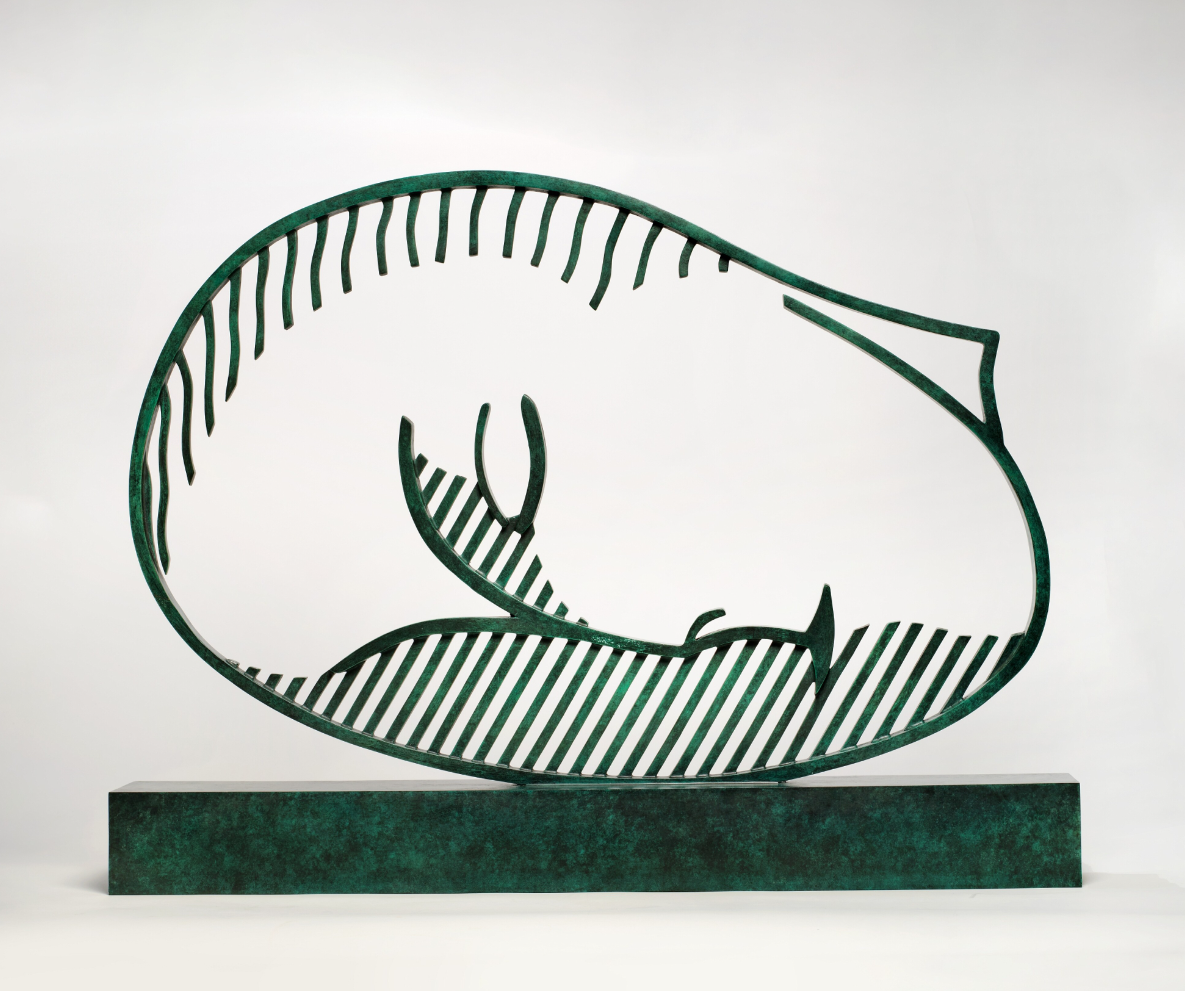
ROY LICHTENSTEIN (1923 – 1997)
Sleeping Muse, 1983
Patinated bronze
25 3/4 x 34 1/4 x 4 inches (65.4 x 87 x 10.2 cm)
Edition: 6 + 1 posthumous cast
Incised with the artist’s signature
Numbered, dated ’83 and stamped with the foundry mark (lower edge)
As a consummate example of Roy Lichtenstein’s masterful engagement with and reorientation of the art historical canon, Sleeping Muse from 1983 at once beautifully evokes and radically advances Constantin Brancusi’s paradigmatic Sleeping Muse from 1910. Composed of elegantly refined contours which enclose a void, Sleeping Muse achieves a sense of volume precisely through the absence of mass, probing the boundaries of the discipline of sculpture. Capturing the essence of Brancusi’s form with bold lines which evoke those of mid-century comic strips, Lichtenstein fuses the visual vernacular of pop culture with an iconic symbol of Modernism. Appearing first at Leo Castelli Gallery’s celebrated exhibition, Roy Lichtenstein: Paintings; Greene Street Mural, 1983-1984, the present work has been widely exhibited around the world, including the most significant exhibition of the artist’s lifetime: Roy Lichtenstein: A Retrospective, organized by the Solomon R. Guggenheim Museum and traveling internationally. One of few works that Dorothy and Roy Lichtenstein retained for their personal collection, Sleeping Muse, alongside the other choice examples from their collection, provides a rare glimpse into Roy’s process and artistic development. The very first time that these treasured works have been available on the public market, their presentation this fall represents a remarkable and unprecedented opportunity to acquire masterworks from pivotal moments in Roy’s practice, and the works he and Dorothy cherished most.
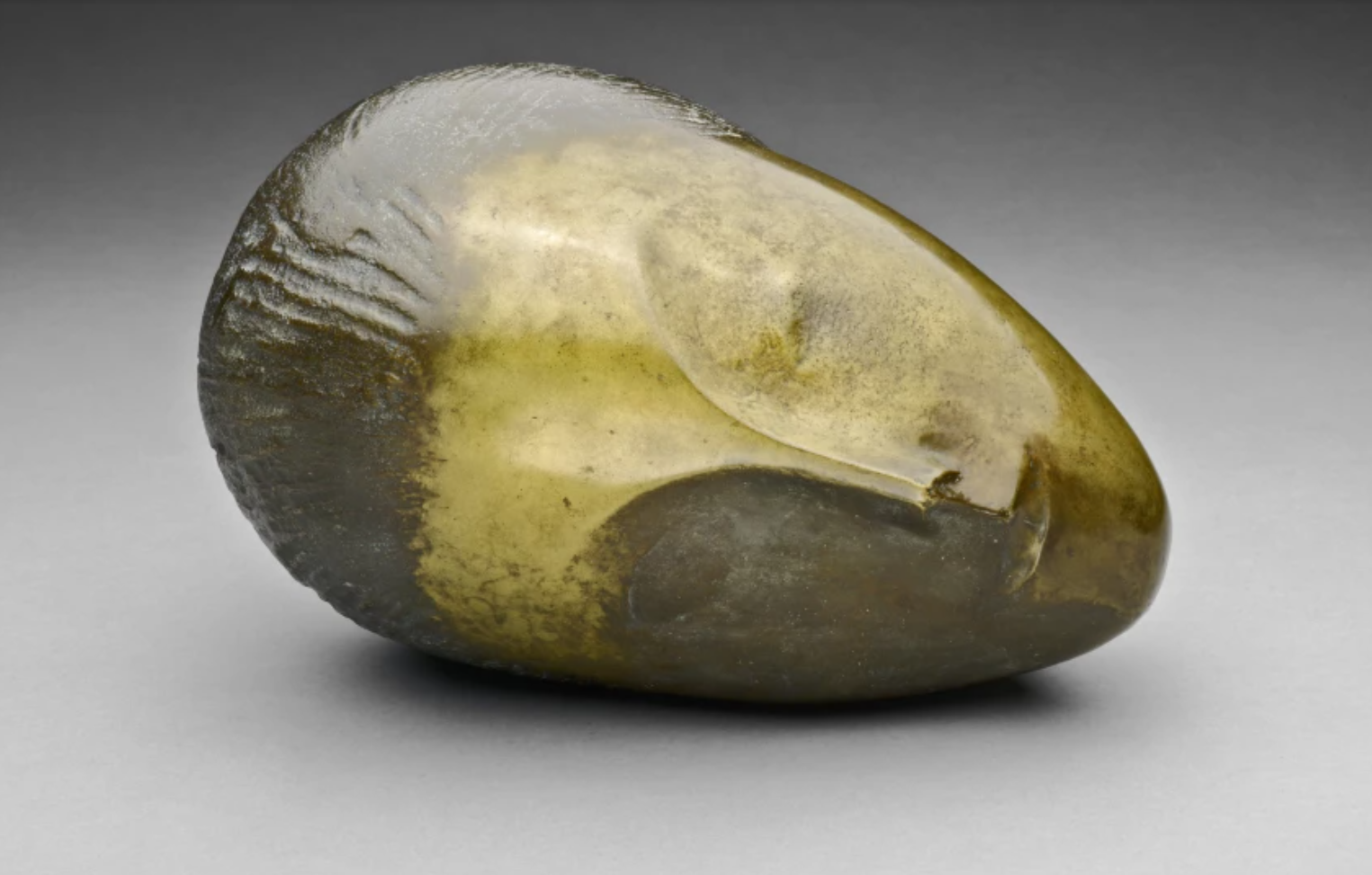
Constantin Brâncuși, Sleeping Muse, 1910. Art Institute of Chicago.
Image © The Art Institute of Chicago / Art Resource, NY. Art © Succession Brancusi – All rights reserved (ARS) 2018
Quoting from amongst the most celebrated and exquisite works of early Modernism, Brancusi’s seminal Sleeping Muse, Lichtenstein investigates the visual systems of sculpture. Through refined lines, framing a voided space, Lichtenstein evokes the imperative of Brancusi’s work and profoundly disrupts the basis of the sculptural form. Radical in his own right, Brancusi challenged the conventions of European sculpture, reducing his form to its most fundamental elements. Resting on its side with no base, Brancusi’s work appears to have toppled over, weighed down by gravity.
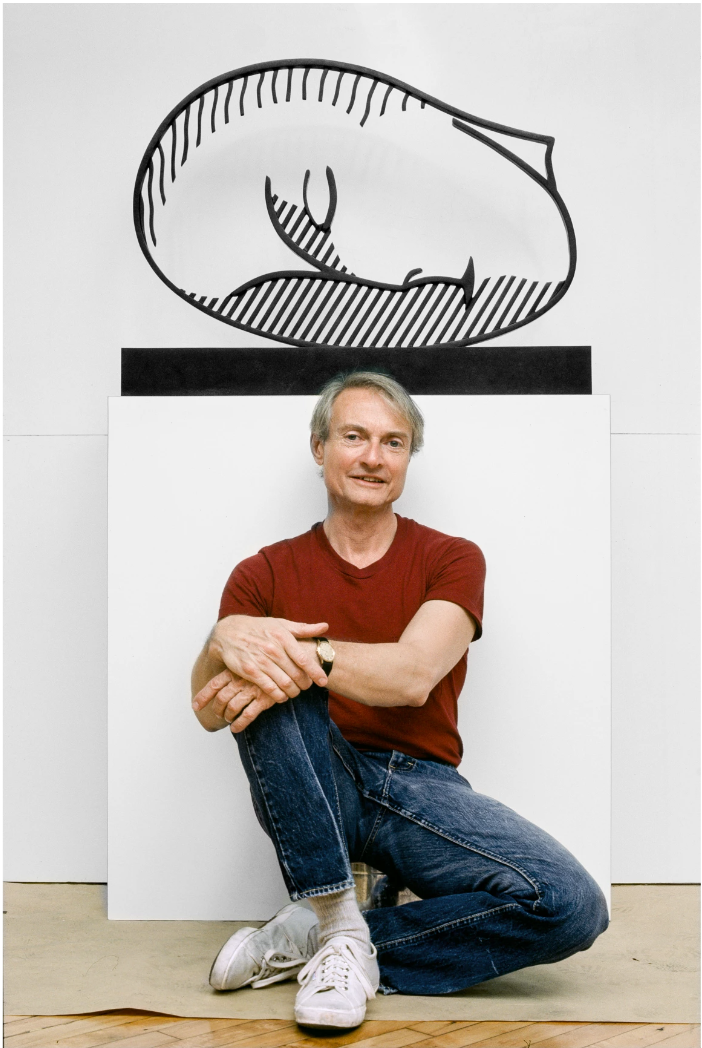
The artist pictured with an edition of the present work in his New York apartment, 1983.
Photo © Bob Adelman. Art © Estate of Roy Lichtenstein
In his exploration of Brancusi’s sculpture, Lichtenstein further blurs the boundaries of the medium, challenging the very substance and definition of sculpture as a necessarily three-dimensional form of expression. Lichtenstein renders space and volume through absence; in transposing his visual systems and cues, such as hash lines and bold contours, used to convey depth and volume in his two-dimensional works, Lichtenstein achieves a sense of mass and depth in his bronze relief. The precise contours and clusters of diagonal lines prompt the viewer to conjure depth and mass, suggesting a sense of three-dimensionality despite inherent flatness of the form.
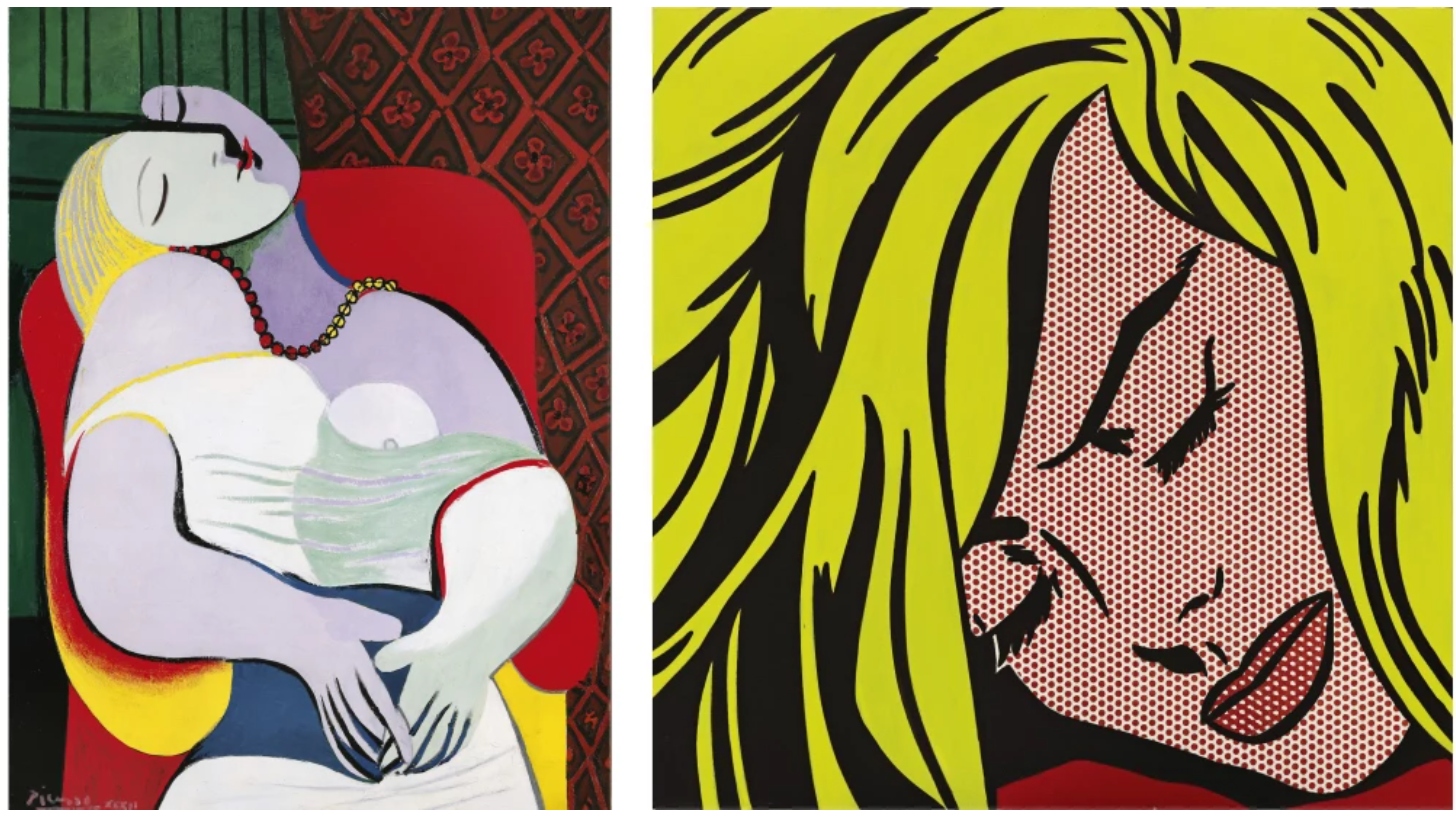
Left: Pablo Picasso, The Dream, 1932. Private Collection. Image © Christie’s Images / © Succession Picasso/DACS, London 2024 / Bridgeman Images. Art © 2024 Estate of Pablo Picasso / Artists Rights Society (ARS), New York.
Right: Roy Lichtenstein, Sleeping Girl, 1964. Private Collection. Sold at Sotheby’s New York in May 2012 for $45 million. Art © 2024 Roy Lichtenstein Foundation
Though most overtly referential to Brancusi’s iconic Modern sculpture, Lichtenstein’s Sleeping Muse is also a self-reflexive exploration, recalling his own iconic paintings of the 1960s. The subject of the sleeping figure appears in one of Lichtenstein’s most celebrated works, Sleeping Girl from 1964, in which Lichtenstein explores representation of the female heroine through a comic strip aesthetic. The present work exemplifies Lichtenstein’s ability to not only contend with art historical precedent and the contemporary pop culture vernacular, but also to reflect upon his own practice across media and time. Sculpture occupied a critical place at the center of Lichtenstein’s oeuvre, from his earliest forays with three-dimensionality in the mid-1940s through the end of his life in 1997. Across media and form, Lichtenstein operates to blur the boundaries and arbitrary parameters of their qualities. He probes the semiotics of space and perspective, volume and mass through his distinctive visual lexicon of color and line. Indeed, nowhere is this playful investigation more apparent than in his sculptures. Sleeping Muse is a seminal example of Lichtenstein’s career-long engagement with paragons of the canon and Contemporaneous visual culture through his distinctive Pop idiom and revolutionary reassessment of its form, content, and meaning.
Auction Results
Sleeping Muse, 1983
Works from the Collection of Dorothy and Roy Lichtenstein
Sotheby’s New-York: 20 November 2024
Estimated: USD 2,000,000 – 3,000,000
USD 4,440,000
Sleeping Muse | The Now and Contemporary Evening Auction | 2024 | Sotheby’s
ROY LICHTENSTEIN (1923 – 1997)
Sleeping Muse, 1983
Patinated bronze
25 3/4 x 34 1/4 x 4 inches (65.4 x 87 x 10.2 cm)
Incised with the artist’s signature, numbered 1/6, dated ’83 and stamped with the foundry mark (lower edge)
This work is number 1 from an edition of 6 plus 1 posthumous cast