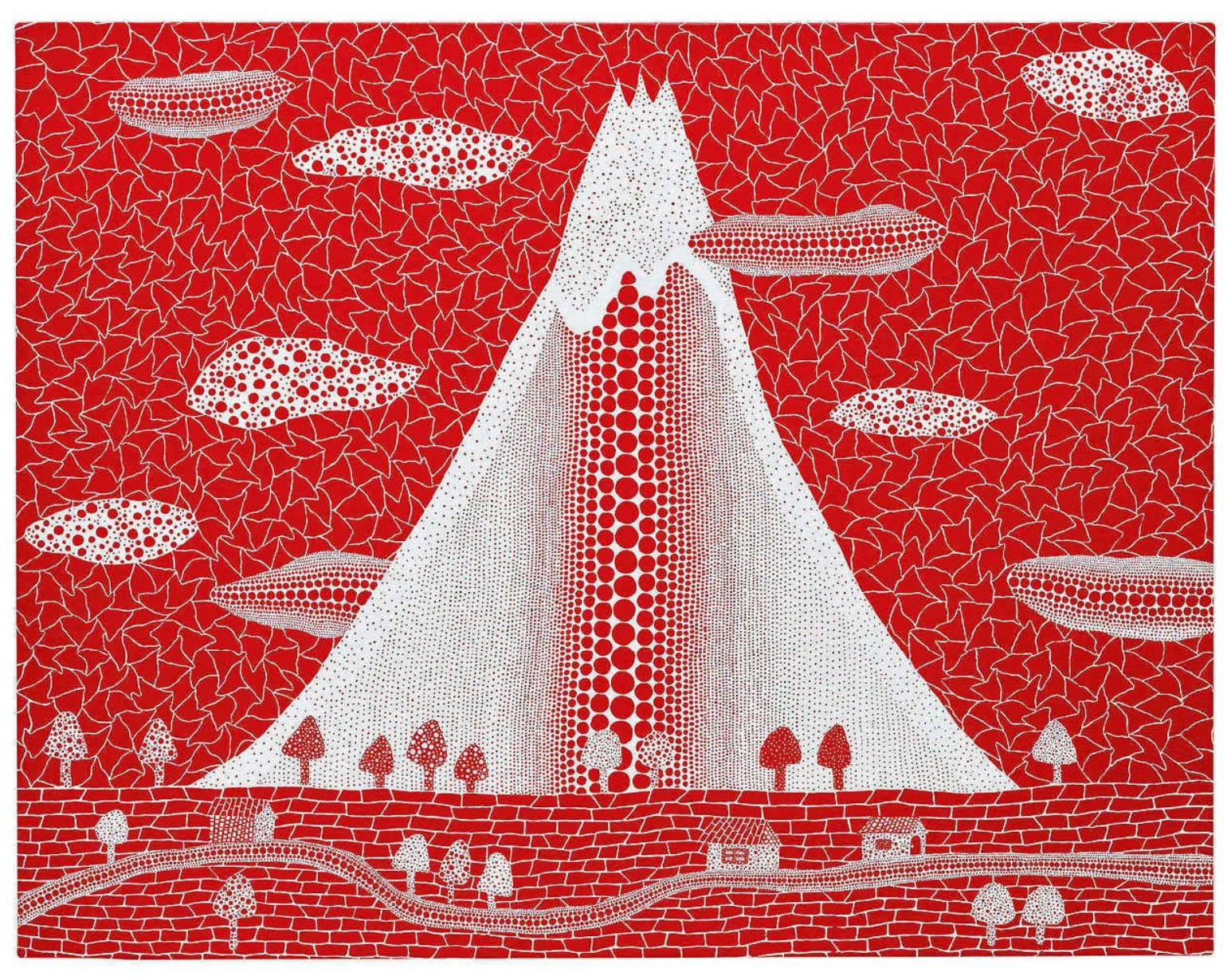
Mt. Fuji
Medium: Screenprint in colors on Peche Soleil paper
[2 screens, 2 colors, 2 runs]
Year: 1983
Image: 49×60 cm (19.3 x 23.6 inches)
Sheet: 55×69 cm (21.7 x 27.2 inches)
Edition: 75
Artist’s Proofs: 8 AP
Printer’s Proofs: 3 PP
Printer: Okabe Tokuzo, Tokyo
Literature: ABE 24
ABE Publishing Ltd., Yayoi Kusama: Prints 1979-2017, Tokyo, 2017, Number 24, Illustrated page 24
Signed, dated, and numbered in pencil on lower edge
Mt. Fuji depicts the iconic Mount Fuji, a highly traditional subject in Japanese art, particularly known from historic woodcuts. Kusama’s rendition, however, is distinct. The mountain is given volume and dimensionality entirely through the meticulous application of her signature polka dots. Larger dots are concentrated towards the center/summit, while they radiate smaller towards the edges, creating a unique sense of perspectival depth that makes the mountain appear to “jump forward” at the viewer. This approach departs from the subtle depth found in traditional Nihonga (Japanese painting).
This print is rich in meaning and context:
- Homage to Tradition: By depicting Mount Fuji, a monumental and culturally significant symbol of Japan, Kusama harks back to a long tradition of Japanese artists paying homage to the peak, and also to her early Nihonga training.
- Personal Twist: Kusama incorporates her personal artistic language, the polka dots, into this national subject, blending traditional Japanese subject matter with her unique, avant-garde style.
- Infinity and Self-Obliteration: For Kusama, polka dots represent the infinite cosmos and a form of “self-obliteration,” where the self dissolves into the vastness of the universe. In this context, the dots transform the physical mountain into a representation of cosmic unity.
- Defying Tradition: Kusama’s use of a bold, un-subtle approach (the dots) and sometimes vivid, untraditional colors (in the later series) for depth and effect can be seen as a defiance of traditional Japanese artistic conventions, which often rely on haziness and subtle shades.
This print was released in 1983 following Kusama’s return to Japan and her voluntary admission to a psychiatric hospital in the late 1970s, where she has lived and worked since. During this period, she continued to work prolifically across various mediums, including printmaking. This particular work is part of a collection of prints reflecting her awe and personal connection to Mount Fuji, integrating her unique vision of the world into a cherished national symbol.
Auction Results
SBI Art Auction: 23 May 2025
Estimated: JPY 2,000,000 – 3,000,000
JPY 3,450,000 / USD 24,200
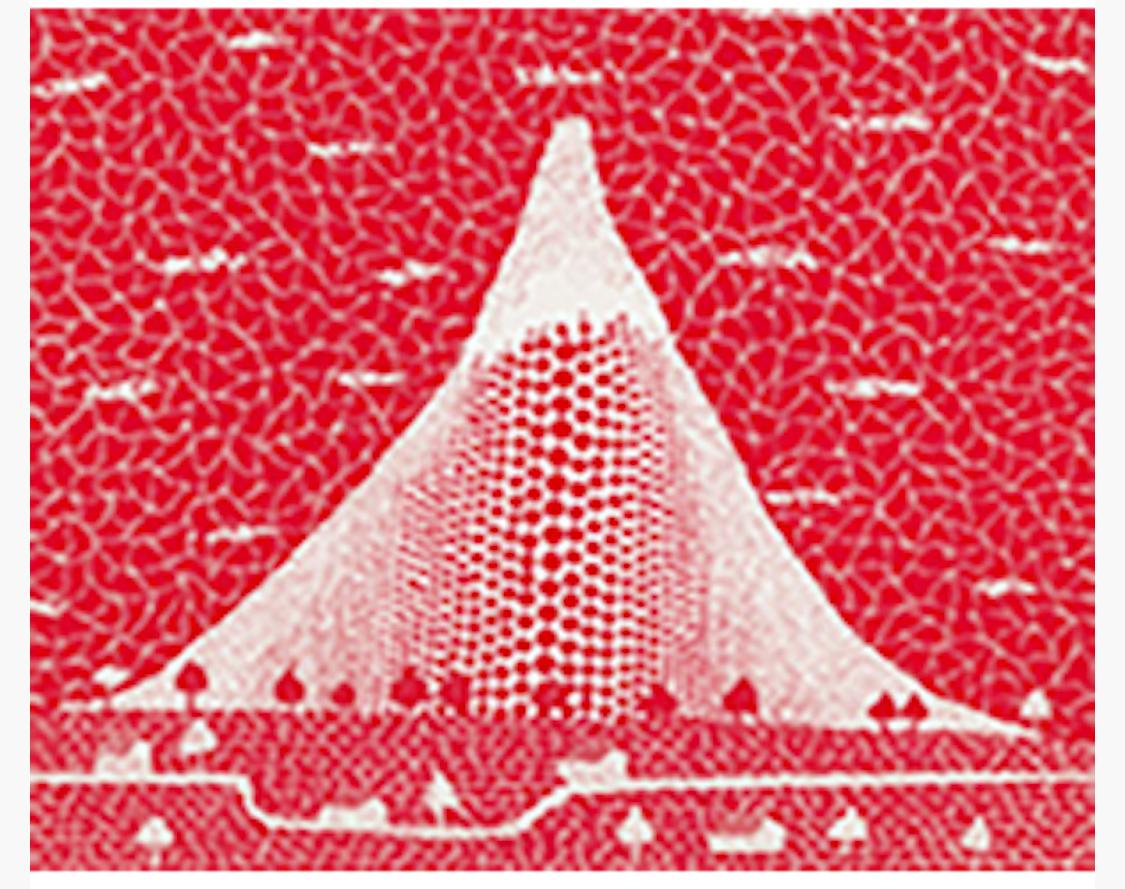
YAYOI KUSAMA
Mt. Fuji (Kusama 24), 1983
Screenprint
Signed, titled, dated and numbered
From the edition of 75
SBI Art Auction: 24 May 2024
Estimated: JPY 2,500,000 – 3,500,000
JPY 6,325,000 / USD 40,287
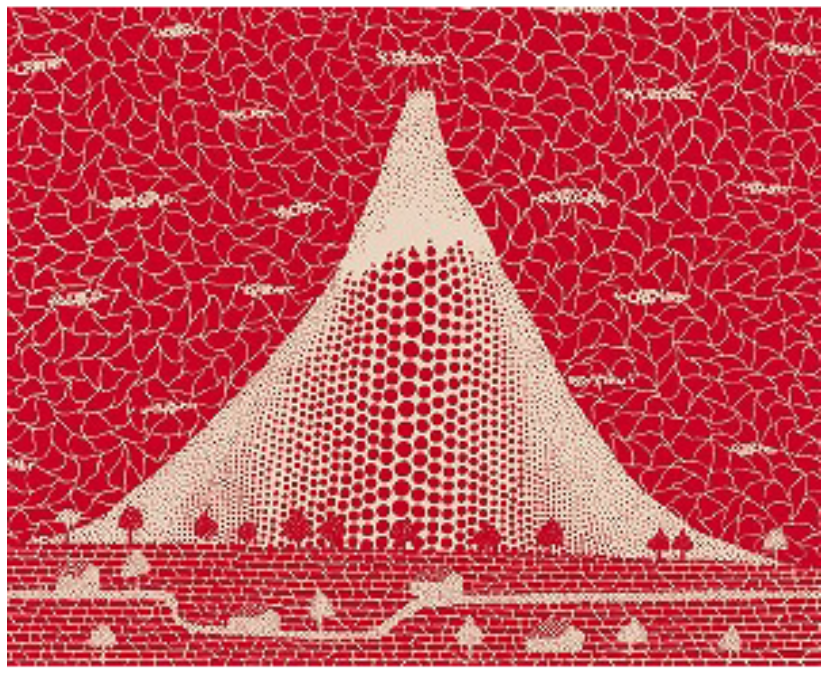
YAYOI KUSAMA
Mt. Fuji (Kusama 24), 1983
Screenprint
Signed, titled, dated and numbered
From the edition of 75
SBI Art Auction: 27 January 2023
Estimated: JPY 3,000,000 – 5,000,000
JPY 5,060,000 / USD 38,963
YAYOI KUSAMA
Mt. Fuji (Kusama 24), 1983
Screenprint
Signed, titled, dated and numbered
From the edition of 75
Mallet Auction Tokyo: 1 December 2022
Estimated: JPY 2,000,000 – 3,000,000
JPY 4,000,000 (Hammer)
JPY 4,660,000 / USD 34,385
YAYOI KUSAMA
Mt. Fuji, 1983
Screenprint in colors
Signed, titled, dated and numbered
From the edition of 75