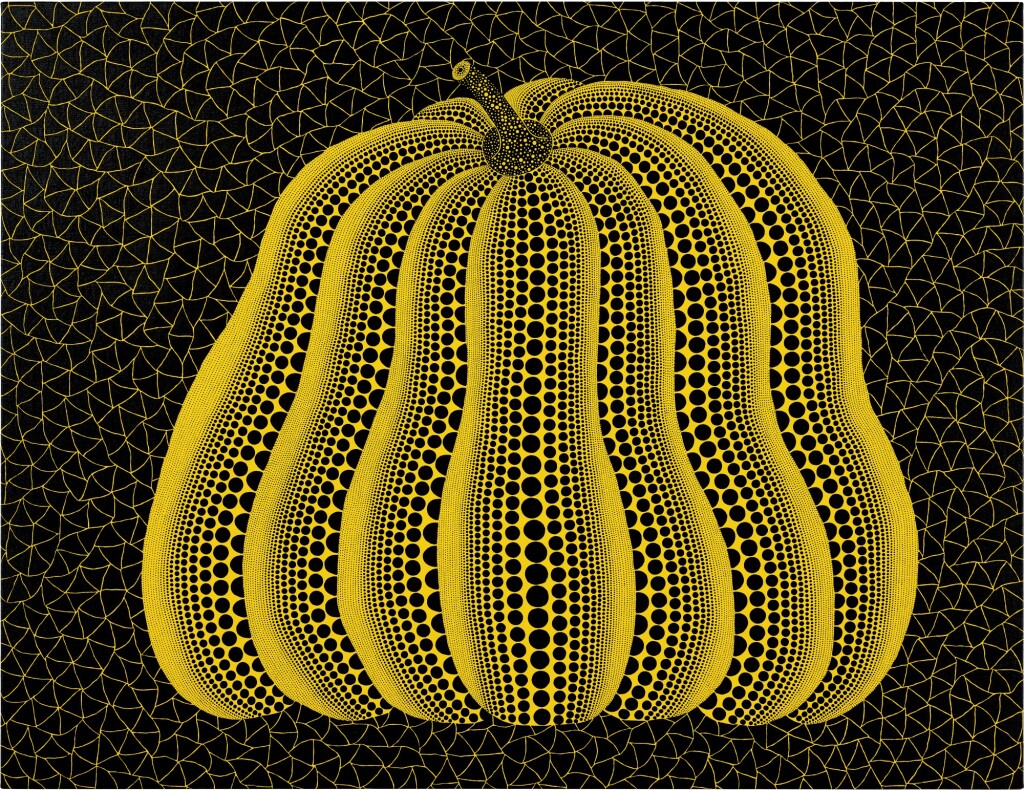
YAYOI KUSAMA
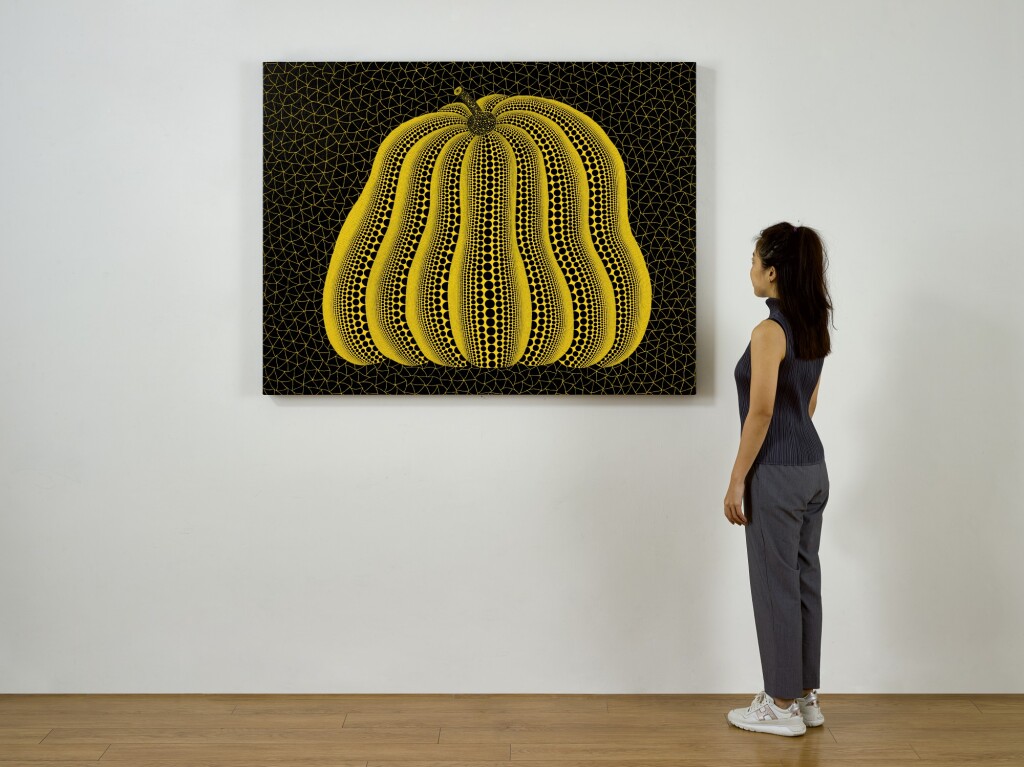
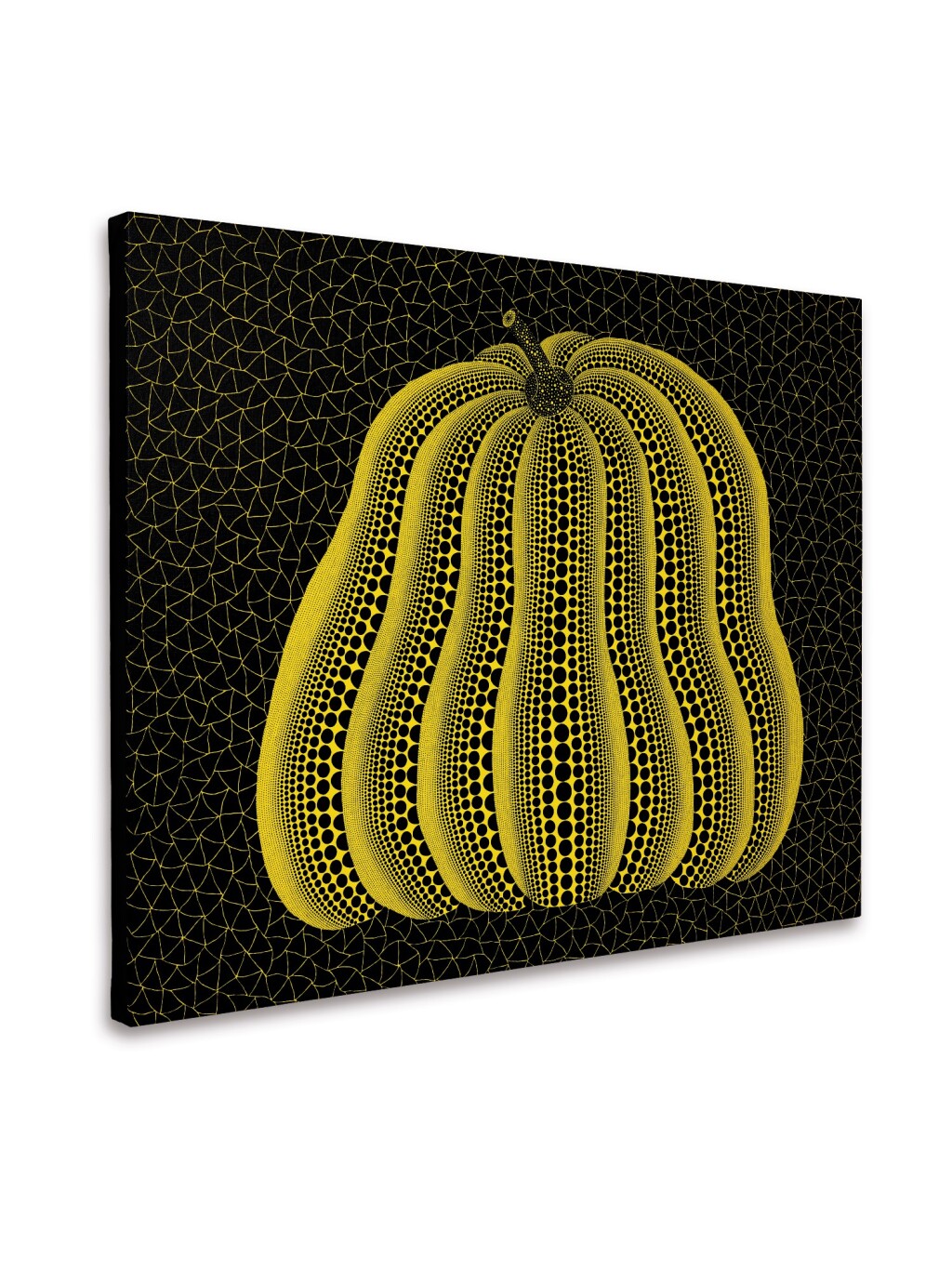
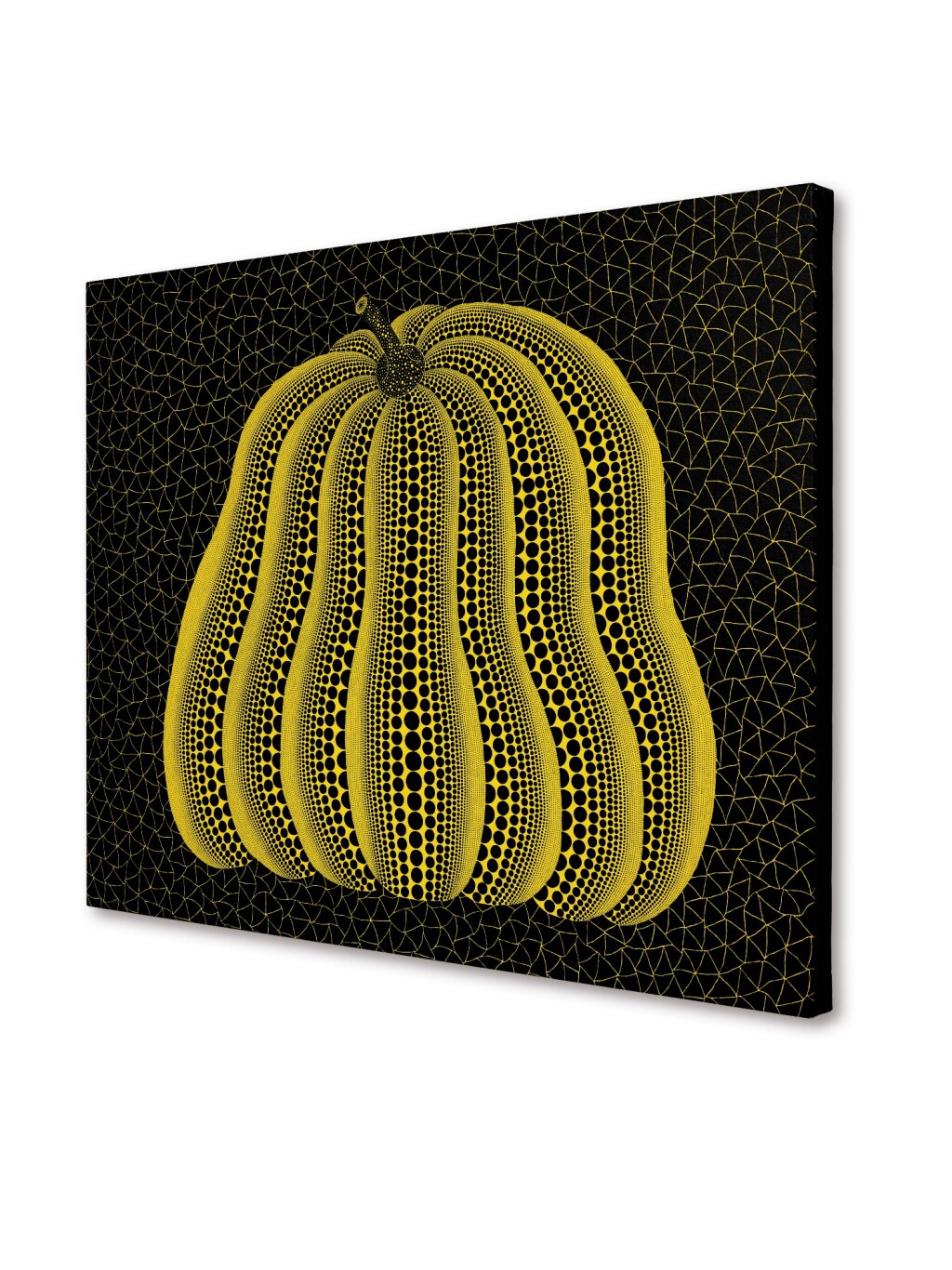
A-PUMPKIN-(CHA), 2011
Acrylic on canvas
112 x 145.5 cm (44 x 57.2 inches)
Signed, titled and dated 2011 on the reverse
Provenance
Ota Fine Arts
Acquired from the above by the present owner
Sotheby’s Hong-Kong: 6 October 2020
HKD 29,2150,000
Source: Sotheby’s
YAYOI KUSAMA 草間彌生 | A-PUMPKIN-(CHA) 南瓜(CHA) | Contemporary Art Evening Sale | | Sotheby’s (sothebys.com)
Executed in 2011, A-PUMPKIN (CHA) is a resplendent, flawlessly executed archetype from Yayoi Kusama’s oeuvre – a testament to almost nine decades of astonishing dedication to creation, technique, and a singular artistic vision. In the background, Kusama’s all-over scaled tessellations – an iconic iteration of the artist’s most distinctive infinity net motif employed often within her pumpkin paintings – are so tightly and dexterously woven that the canvas hums with the rhythmic intensity of the pattern. The pumpkin itself, anthropomorphic and brilliantly luminous, presents the legendary artist at the height of her powers: each gleaming circle shimmers and vibrates; each meticulously crafted row of multi-striated dots throbs and slithers fluidly down the body of the gourd. Supremely unparalleled in terms of quality of execution and the disorienting yet mesmerizing complexity of pattern and form, A-PUMPKIN (CHA) is an undeniable magnum opus of one of the most legendary figures of contemporary art.
As universally emblematic of Kusama’s oeuvre as the Campbell’s soup can was to Andy Warhol’s, the pumpkin is deeply central to the artist’s psyche, and its origins within her art can be traced back to her most early years. In 1948, three years after the war ended, a 19-year-old Kusama enrolled in a fourth-year course at the Kyoto Municipal School of Arts and Crafts. “During my time in Kyoto I diligently painted pumpkins”, wrote the artist, “which in later years would become an important theme in my art” (Kusama Yayoi, Infinity Net: The Autobiography of Yayoi Kusama, trans. Ralph McCarthy, Tate Publishing, 2011, p. 75). Kusama recalls having consumed the vegetable endlessly to the point of nausea in her childhood years during and after the war; in spite of this, she retains a fond attachment to its organic bulbous form, describing it as embodying a “generous unpretentiousness” and “solid spiritual balance” (Ibid., p. 76). Already experiencing hallucinations at the time, involving pumpkins that spoke to her in a most animated manner, Kusama found the gourd a benign and nurturing subject – as opposed to the more traumatic and menacing feelings she associates with flowers, plants and objects that plagued her throughout her life.
Kusama’s early pumpkins were painted with traditional Nihonga materials, which she left behind after her move from Matsumoto to New York in 1958. Within only eighteen months of her arrival, Kusama stunned the New York art scene with her radical Infinity Nets in 1959, executed in the Western medium of oil, which were followed by her Accumulation soft sculptures in 1961. In 1965 Kusama infused explosions of colour into her sculptures through the use of dotted and striped fabrics; by this time, the sheer breadth, scale and ambition of her diverse cross-media oeuvre had taken over the city like an epidemic. Her ubiquitous polka-dot and net motifs, manifested in mesmeric paintings, immersive rooms, hypnotic installations, body art and participatory performances, forged a wholly unique aesthetic that articulated a rigorous, overwhelming language of obsession and obliteration – a language that enabled the artist to combat her hallucinatory mental illness. The artist reflects: “I use my complexes and fears as subjects. I make them and make them and then keep on making them, until I bury myself in the process. I call this ‘obliteration’” (Kusama Yayoi, cited in Mignon Nixon, ‘Infinity Politics’, in Francis Morris (ed.), Yayoi Kusama, Tate Publishing, 2012, p. 180).
The present A-PUMPKIN (CHA) was created in 2011, by which time Kusama had become a global household name. The artist’s international resurgence and rise to global stardom occurred in parallel with – and was inextricably tied with – her iconic pumpkin motif. It was to pumpkins that Kusama turned for solace during her period of reclusion, and it was with pumpkins in mind that she set about creating a work for her momentous Venice Biennale comeback. The pumpkin stands as a symbol of triumph for the artist’s personal as well as artistic rebirth, representing a mediation of the artist’s psychiatric illness that went hand-in-hand with the ever-increasing sophistication, dexterity and creativity of her creations. As Alexandra Munroe writes, Kusama’s art requires her “not only to surrender to madness but also to triumph over it; trauma must be substantially transformed before it can communicate to others as beauty and meaning” (Alexandra Munroe, ‘Between Heaven and earth: The Literary Art of Yayoi Kusama’, in Exh. Cat. Love Forever: Yayoi Kusama 1958-1968, Los Angeles County Museum of Art, 1998, p. 81).