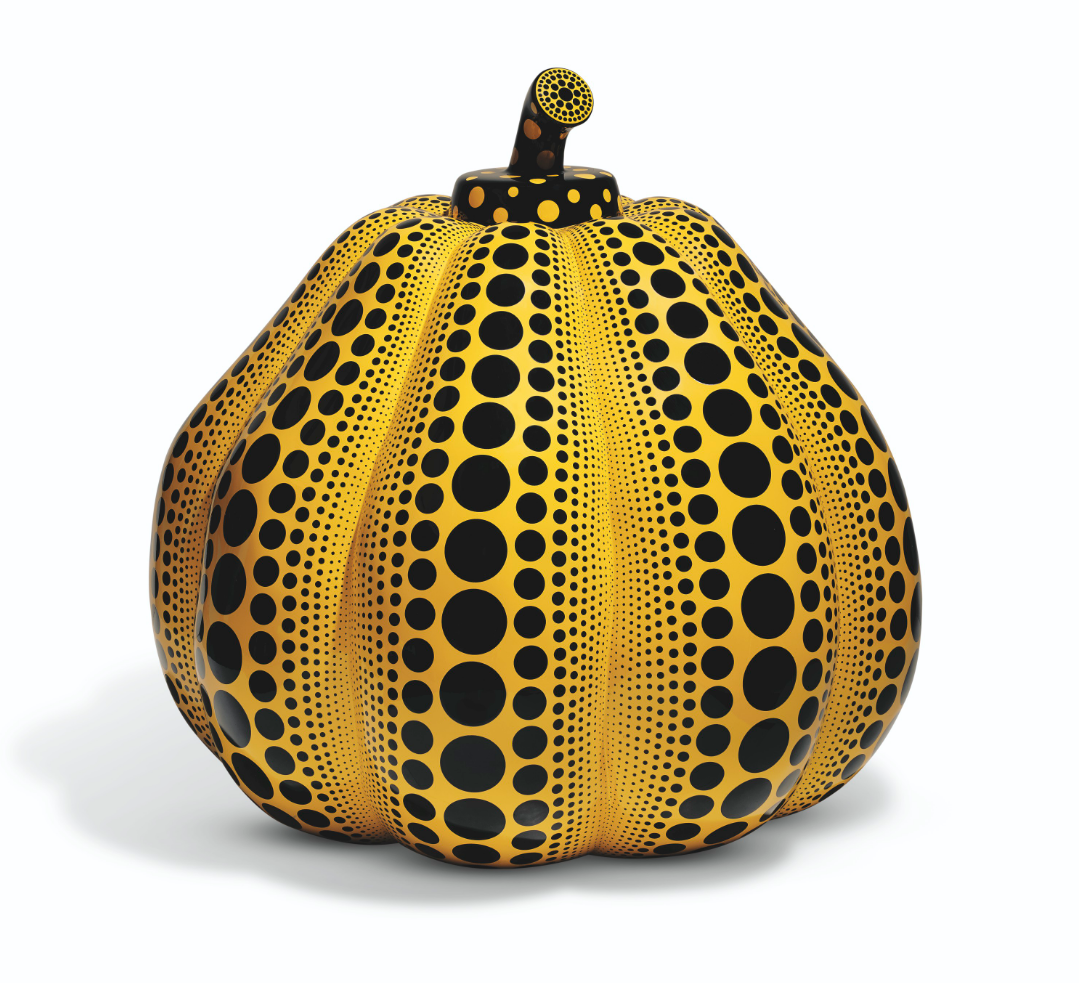
YAYOI KUSAMA
Pumpkin, 2009
Painted fiberglass reinforced plastic
122x129x129 cm (48 x 50.7 x 50.7 inches)
Signed and dated ‘YAYOI KUSAMA 2009’ (on the side)
Provenance
Gagosian Gallery, New York.
Acquired from the above by the present owner in 2009.
Christie’s London: 29 June 2021
GBP 2,662,500
Source: Christie’s
Yayoi Kusama (b. 1929) (christies.com)
“Pushing away the bushes of zinnia, I reached in and pulled a pumpkin from its stalk. It was in this moment the pumpkin came alive and began talking to me. The freshly-picked pumpkin was covered with dew. As it glistened in the sunlight, its gorgeousness was indescribable”
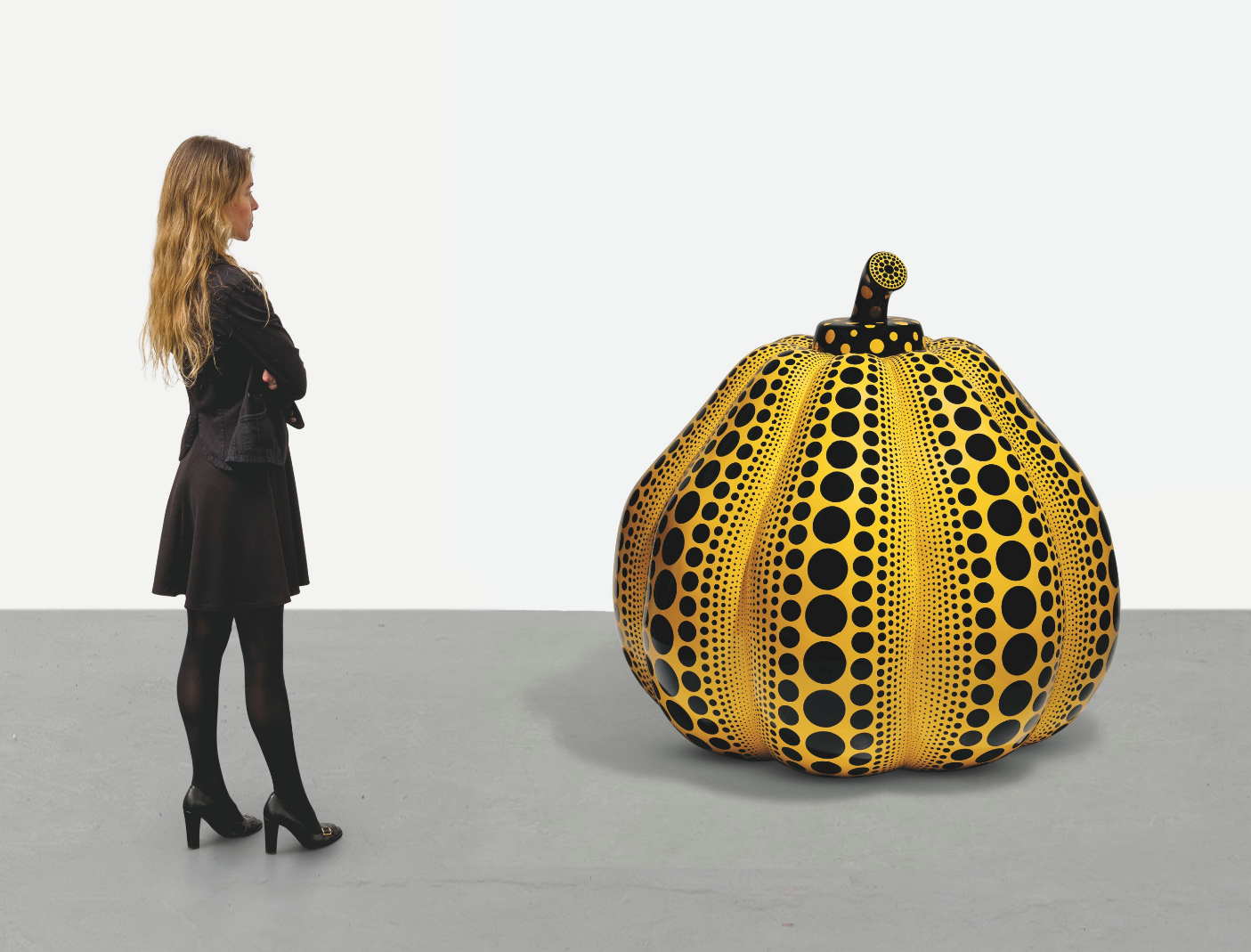
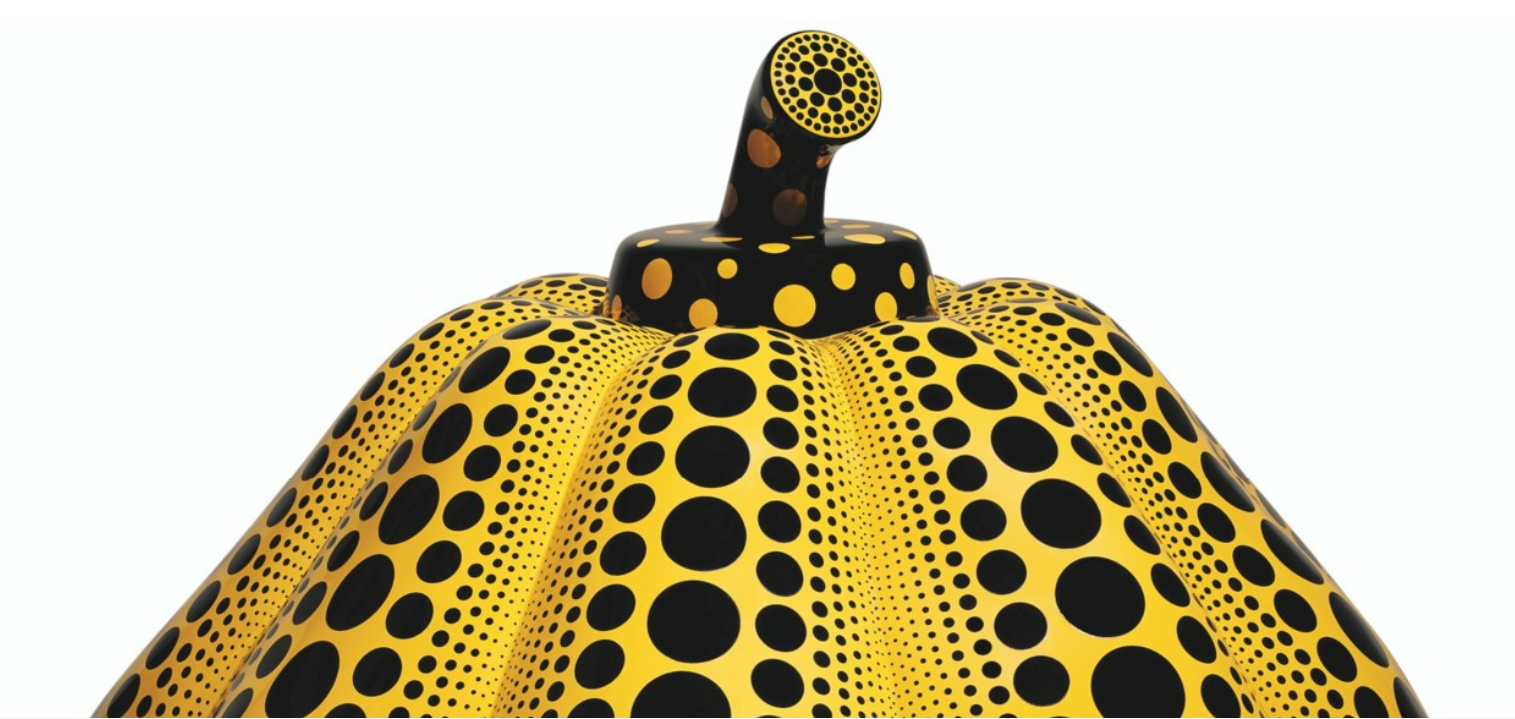
Bedecked in gleaming black and yellow, Yayoi Kusama’s Pumpkin (2009) is a charming sculptural incarnation of the artist’s most beloved motif. The vegetable’s plump, ribbed form bulges weightily outward towards its base; its volume is enhanced by the rows of black polka-dots that dapple its yellow skin, which dilate from pinpoints to large circles according to the swell of the surface. The stalk flips the scheme into yellow on black, while its cut cross-section holds further rings of concentric dots, as if intimating a limitless polka-dot interior. Both pumpkin and polka-dot are foundational obsessions for Kusama, who at ten years old began to experience overwhelming hallucinations of patterned fabric coming to life, and flowers and pumpkins speaking to her. It was around this time that she began to paint. A soothing and tactile presence, Pumpkin exemplifies Kusama’s ability to channel her visions into wondrous, three-dimensional beings.
“I was enchanted by their charming and winsome form. What appealed to me most was the pumpkin’s generous unpretentiousness. That and its solid spiritual balance”
After making some early pumpkin paintings in the traditional Japanese Nihonga style during the 1940s, Kusama did not revisit the motif for three decades. In 1958 she moved to New York, where she became renowned for her Infinity Nets—vast, painterly mirages of endless cellular form—as well as radical ‘Happenings’ which saw her polka-dots cover installation environments, costumes, and even the nude bodies of performers. Her return to the pumpkin coincided with her return to Japan, where she took up permanent residency at a Tokyo psychiatric hospital in 1977. She merged the pumpkin’s almost anthropomorphic form with webs of dots in drawings, paintings and prints throughout the 1980s. For her acclaimed presentation at the Japanese pavilion at the 1993 Venice Biennale, she exhibited Mirror Room (Pumpkin) (1991), a hallucinogenic polka-dot space containing a large mirrored cube: through a peep-hole in its side, the viewer could gaze on a seemingly infinite field of small papier-mâché pumpkins within. Following the Biennale, she continued to develop her pumpkin sculptures in an array of sizes and media. Famed examples include the iconic open-air Pumpkin (1994) that sits at the end of a pier on the ‘art island’ of Naoshima, and the dazzling 2016 mirror room All the Eternal Love I Have for the Pumpkins, a reflective chamber filled with glowing acrylic gourds. Through such surreal transformations of scale and context, Kusama’s pumpkin renders the physical world extraordinary, and—as Suzi Gablik has written of Magritte’s enigmatic apple motif—is able to ‘disturb the elaborate compromise that exists between the mind and life’ (S. Gablik, Magritte, New York 1985, pp. 113-114).