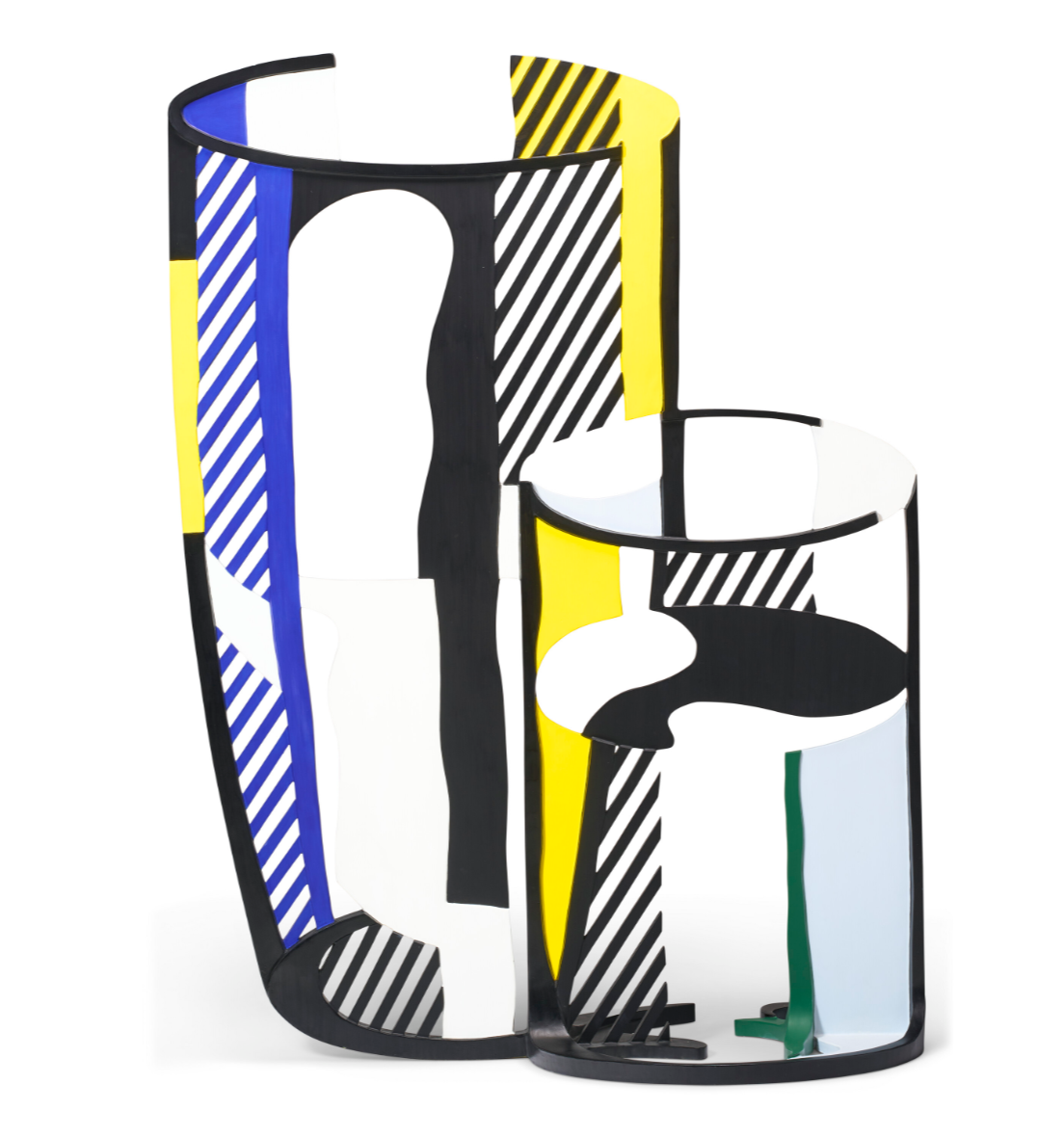
ROY LICHTENSTEIN (1923-1997)
Double Glass, 1979
Painted bronze
56x42x17 inches (142.2 x 106.7 x 43.2 cm)
Edition: 3
Incised with the artist’s signature
Numbered and dated (lower edge)
Few artists are able to reinvigorate history, culture and iconography as electrifyingly as Roy Lichtenstein, his hand so strong that is had the capacity to cast every image, every period, every medium through his lens. Examples like Double Glass are indicative of this very point, nodding referentially to the canon of 17th century Dutch still life painting while completely redefining it altogether. The present work projects the static nature of this lineage into a play between two and three dimensional space, the work simultaneously occupying and seemingly evading space depending on one’s vantage point.
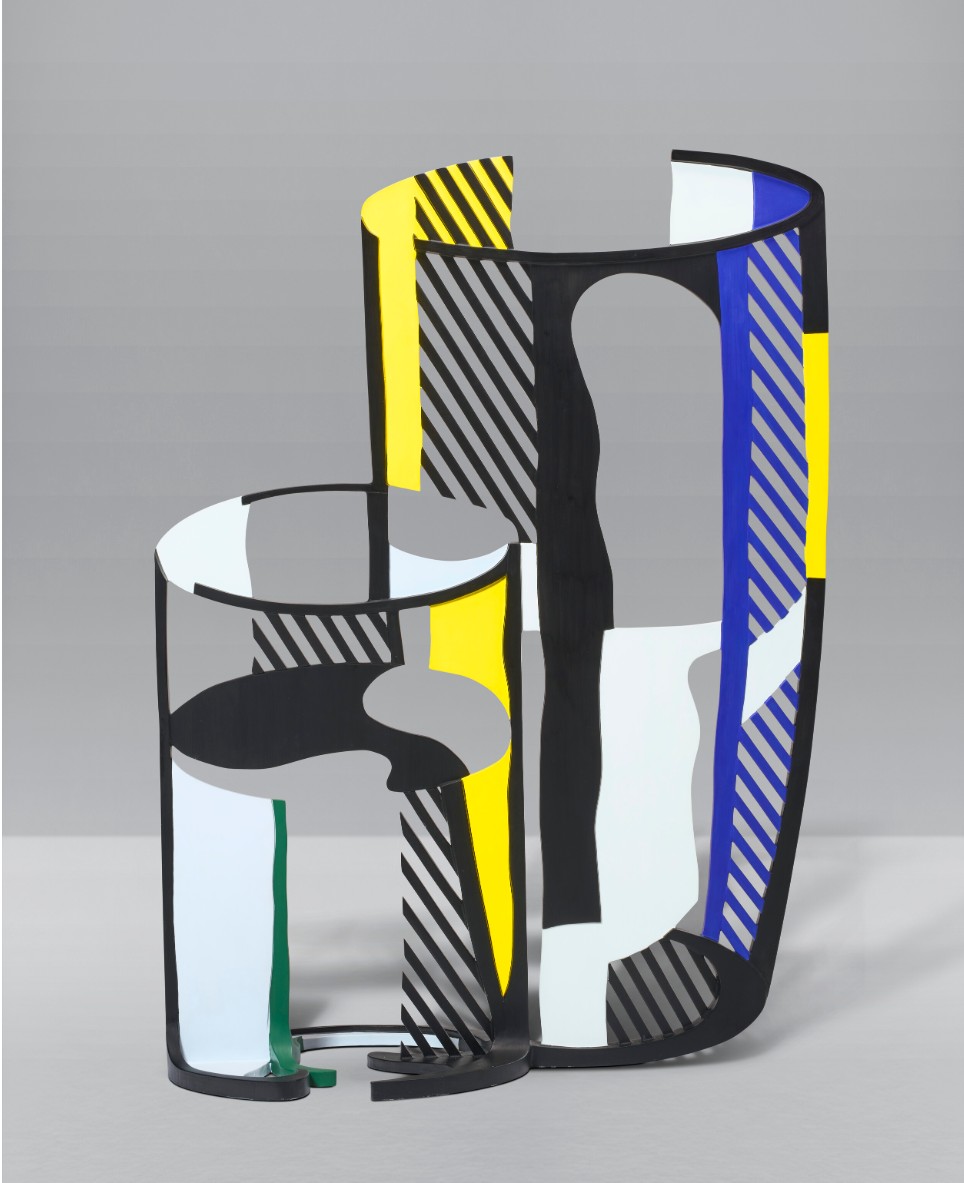
“I think that … the sense is almost an affinity of two-dimensional points of view. A sculpture from any viewpoint should work the way a drawing works, which is a two-dimensional thing.”
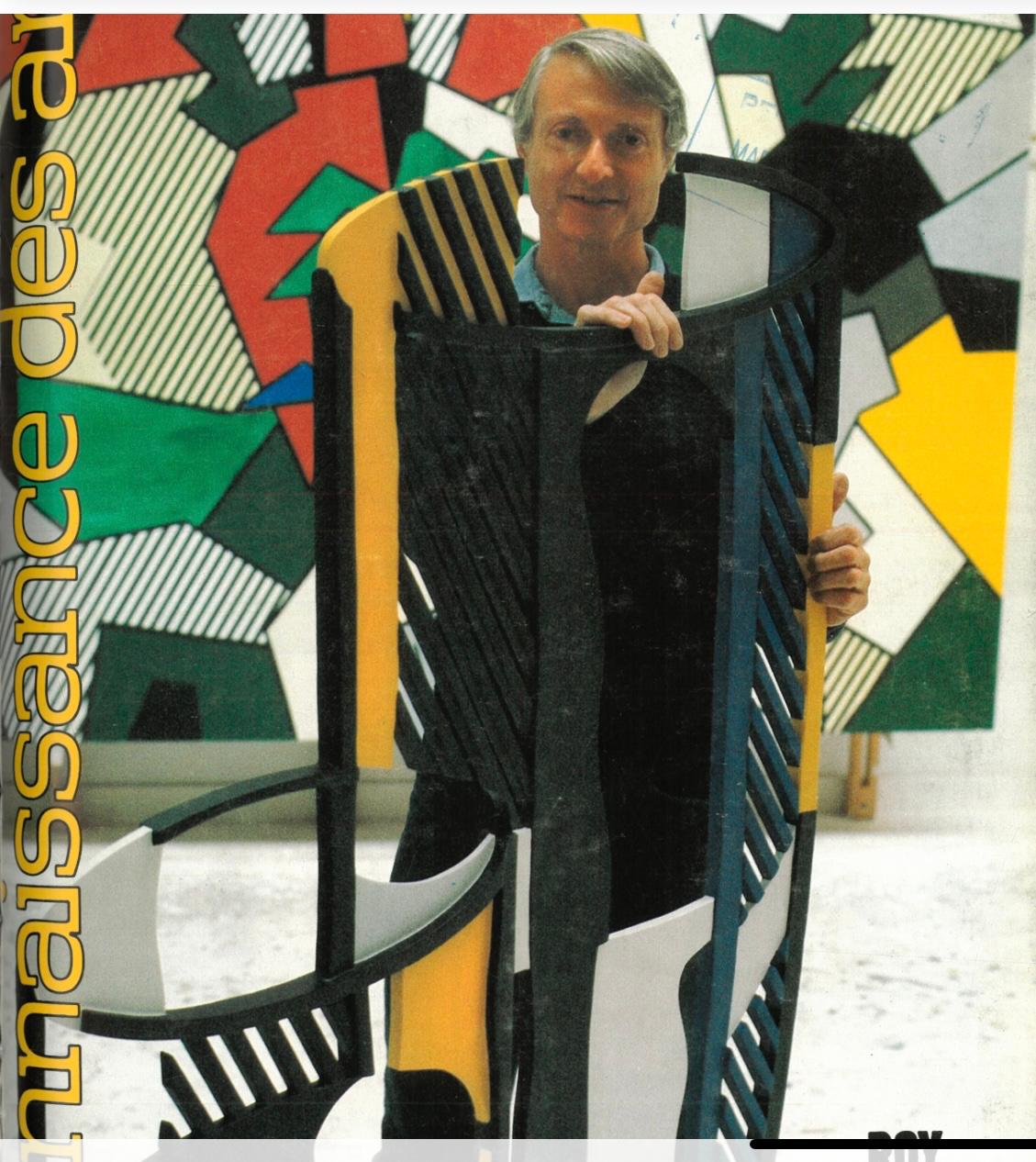
Roy Lichtenstein photographed in his New York studio, c. 1981, on the cover of Connaissance des arts, Paris, 1981.
Photo: Pascal Hinous. Artwork: © Estate of Roy Lichtenstein.
Lichtenstein sparks this history with his distinct visual language. Where one might expect a still life to be meticulously painted and deliciously lifelike, Lichtenstein does the complete opposite, rendering the forms down to color and line. Fine brushwork is replaced with both colors and cartoonish gestures. Across all of Lichtenstein’s oeuvre is a universal language which is both so varied and expansive yet instantly recognizable.
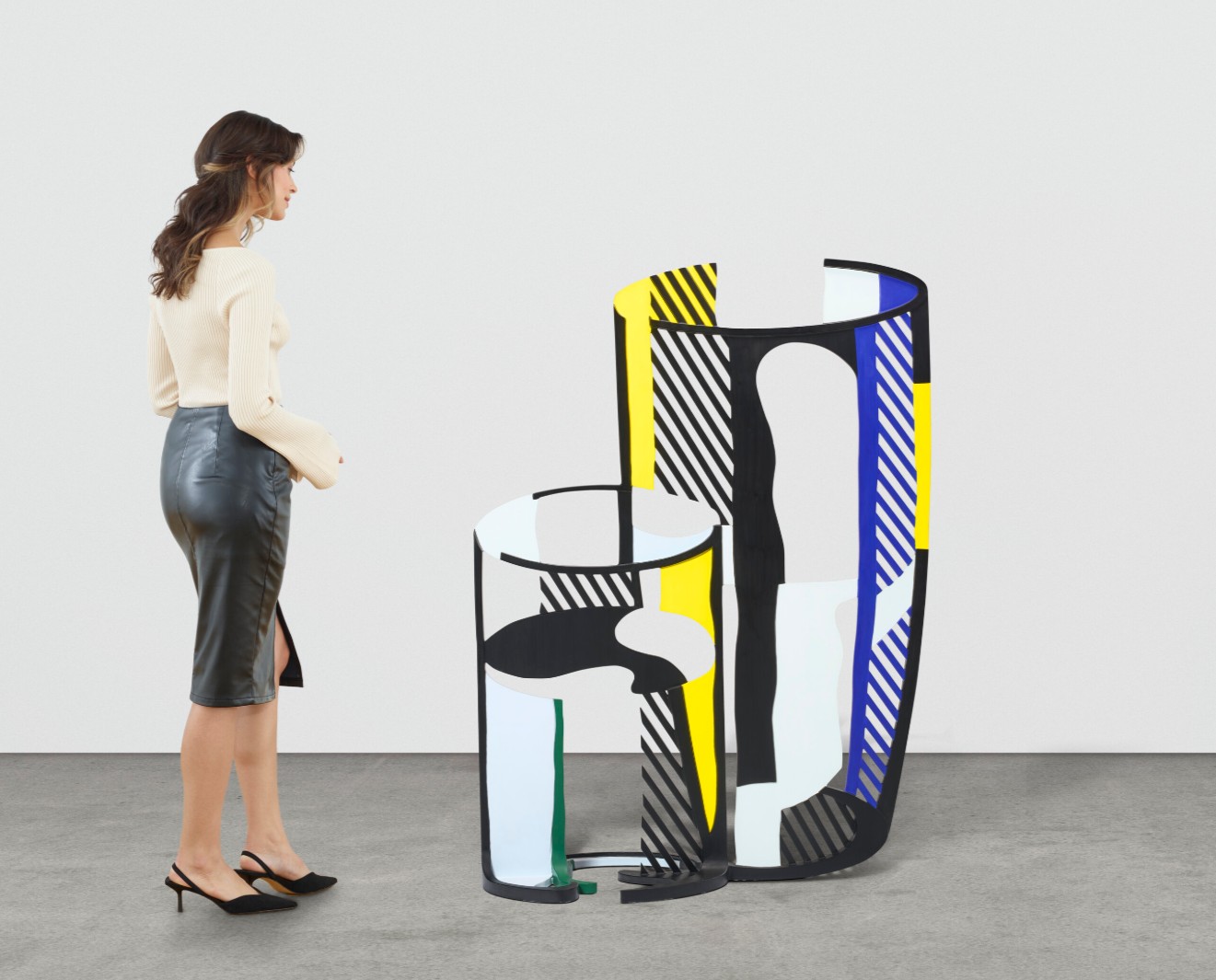
Lichtenstein achieved a new visual lexicon that was so full and complete that it could be translated several times over and still feel distinctly his. The present work is a testament to that, with focus resting less on the composition itself and rather on the means by which the artist is able to translate his personal language to the history of painting.
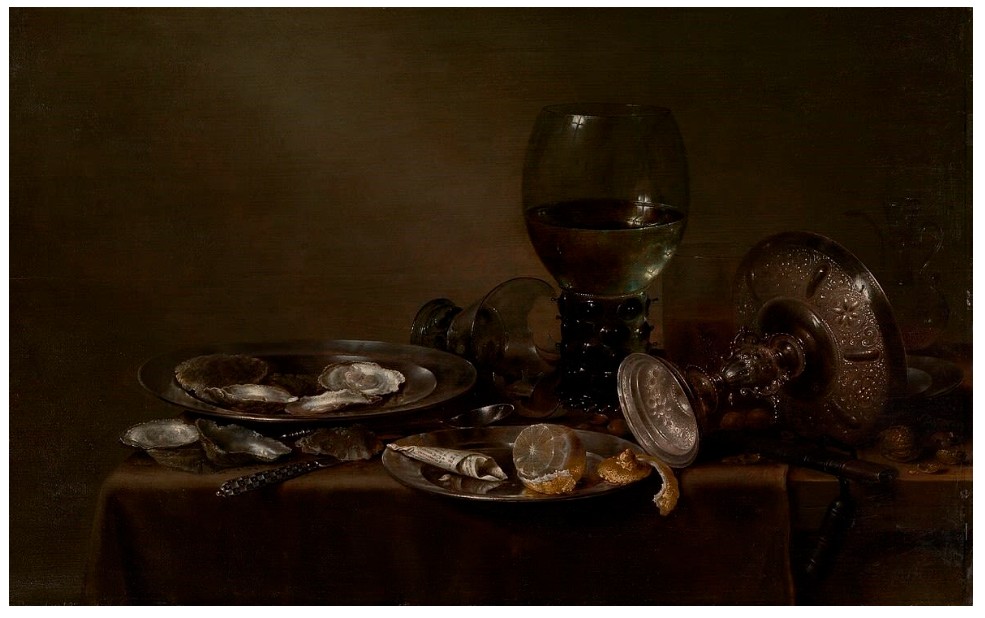
Willem Claesz Heda, Still Life with Oysters, a Silver Tazza, and Glassware, 1635. Metropolitan Museum of Art, New York
The 1970s represent an impressive turning point in the artist’s career. By this time, Lichtenstein looked less to comic book iconography as source material for his compositions and rather chose to present himself with boundless challenges to test the elasticity of his artistic voice. This shift coincides with the artist’s move from the Bowery to Southampton, New York, where perhaps it was the quiet of the Long Island shore which inspired the artist’s practice away from Pop iconography, looking both inward and beyond the contemporary moment to the history of art. It is during this time that he started quoting various art-historical genres, rendering subjects in Expressionist and Cubist styles, always with his signature hand. He also excavated the work of the masters like Gris, Léger, Peale and the 19th century deception paintings of Harnett for still life motifs, stripping them of their gravitas in favor of a cartoonish flair. Through these examples, the artist began diversifying his mark-making, introducing spikes, crosshatches and stripes into his works. Here, dappled accents of white, green, blue and yellow play against negative space to elicit the subtle highlights of water suspended in glass, and quick stripes define the curvature of the glasses.
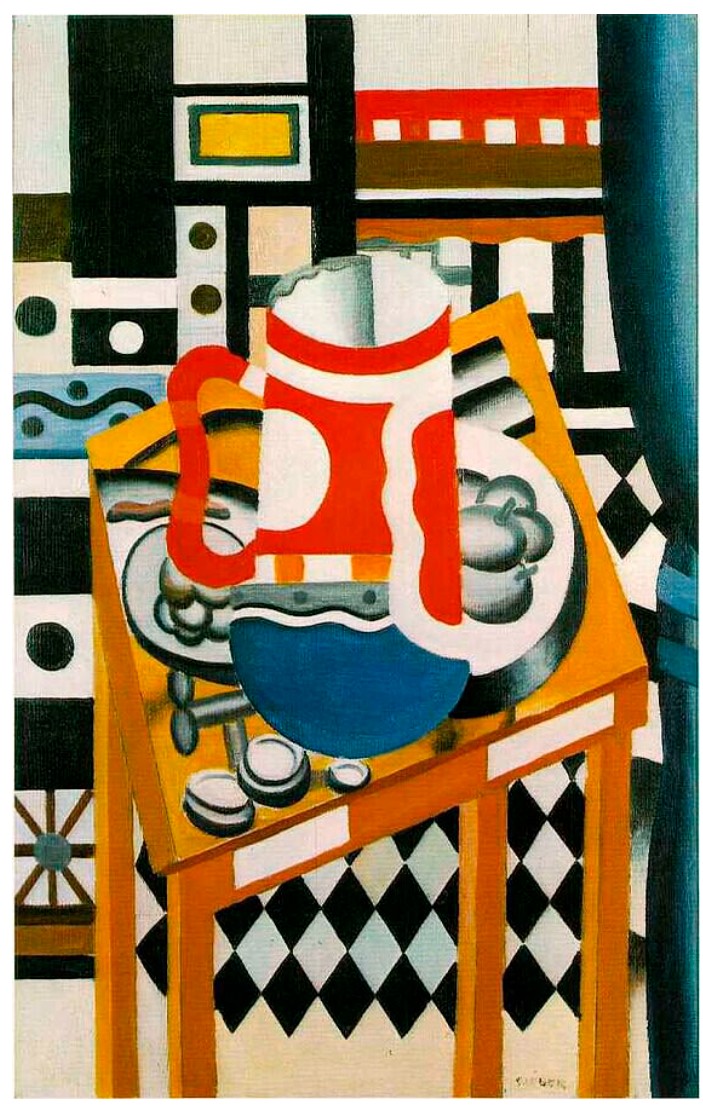
Fernand Léger, Still Life with a Beer Mug, 1921-1922. Tate, London.
Though a departure in some ways from his earlier practice, the tenets of Pop remain ever-present in Double Glass. Lichtenstein would still turn to commercial advertisements, rendering the meticulous illustrations of different tableware, edible goods, vases, and even supplies from his own studio with his signature hand. Whereas a still life painter may have preferred to place their easel before the objects themselves, Lichtenstein would reference a reproduction or an advertisement—a cornerstone of his Pop aesthetic and artistic practice. Rather than delving further into his commerciality, Lichtenstein uses the still life to depart from that important period in his career, while his contemporaries like Andy Warhol leaned in, repeating motifs of commercial products like Campbell’s soup cans or Brillo boxes.
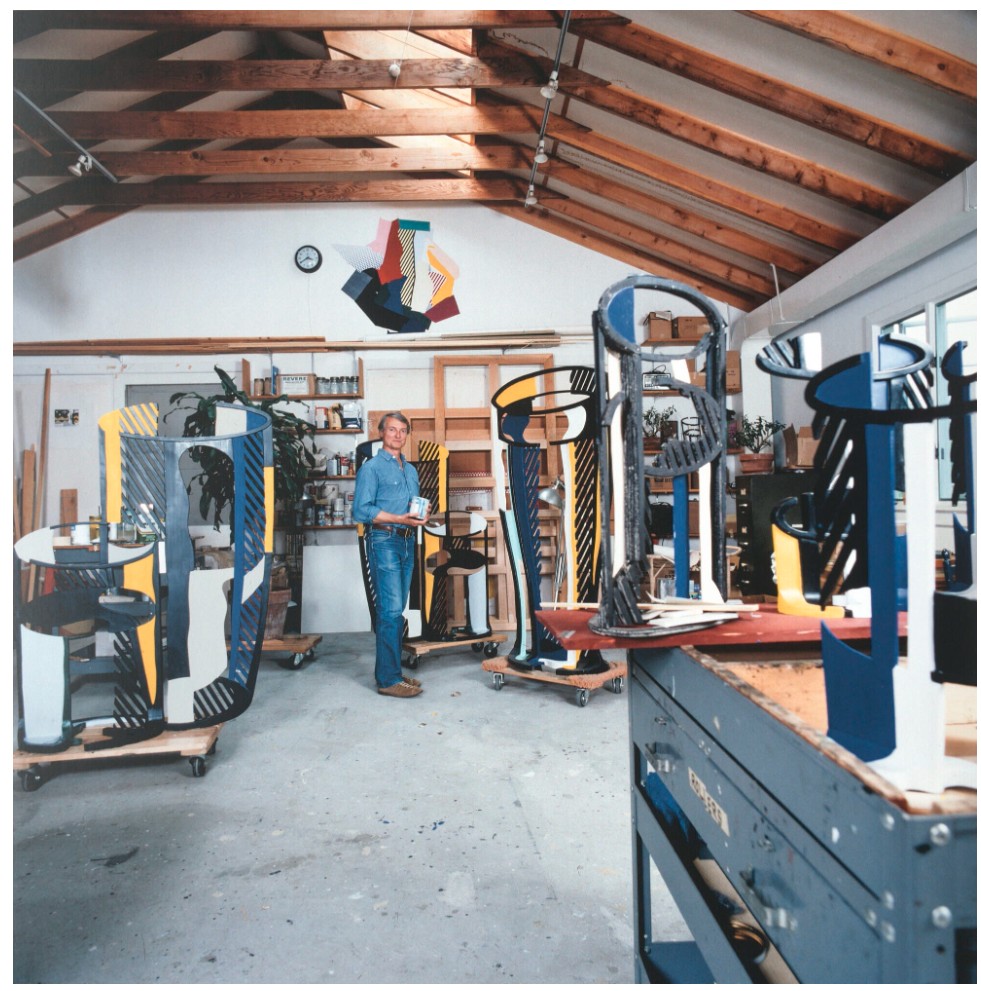
Roy Lichtenstein in his studio, c. 1980, Southampton. Photo: Hans Namuth. Courtesy Center for Creative Photography, University of Arizona © 1991 Hans Namuth Estate. Artwork: © Estate of Roy Lichtenstein
It also during this time that the artist begins his famed Mirror works, which merge the figurative with the abstract, Lichtenstein translating his signature style into various reflections, fragmentations and abstractions. This cerebral exercise of his own innovative technique is demonstrative of an artist at the peak of his oeuvre, where confidence inspires expansion and technical innovation. Another example from this edition is held in the Nasher Sculpture Center in Dallas, reflecting the work’s recognized importance within the canon of modern sculpture and affirming the work’s institutional significance.
Auction Results
Double Glass, 1979
Christie’s New-York: 18 May 2026
Estimated: USD 800,000 – 1,200,000
USD 1,905,000
ROY LICHTENSTEIN (1923-1997), Double Glass | Christie’s
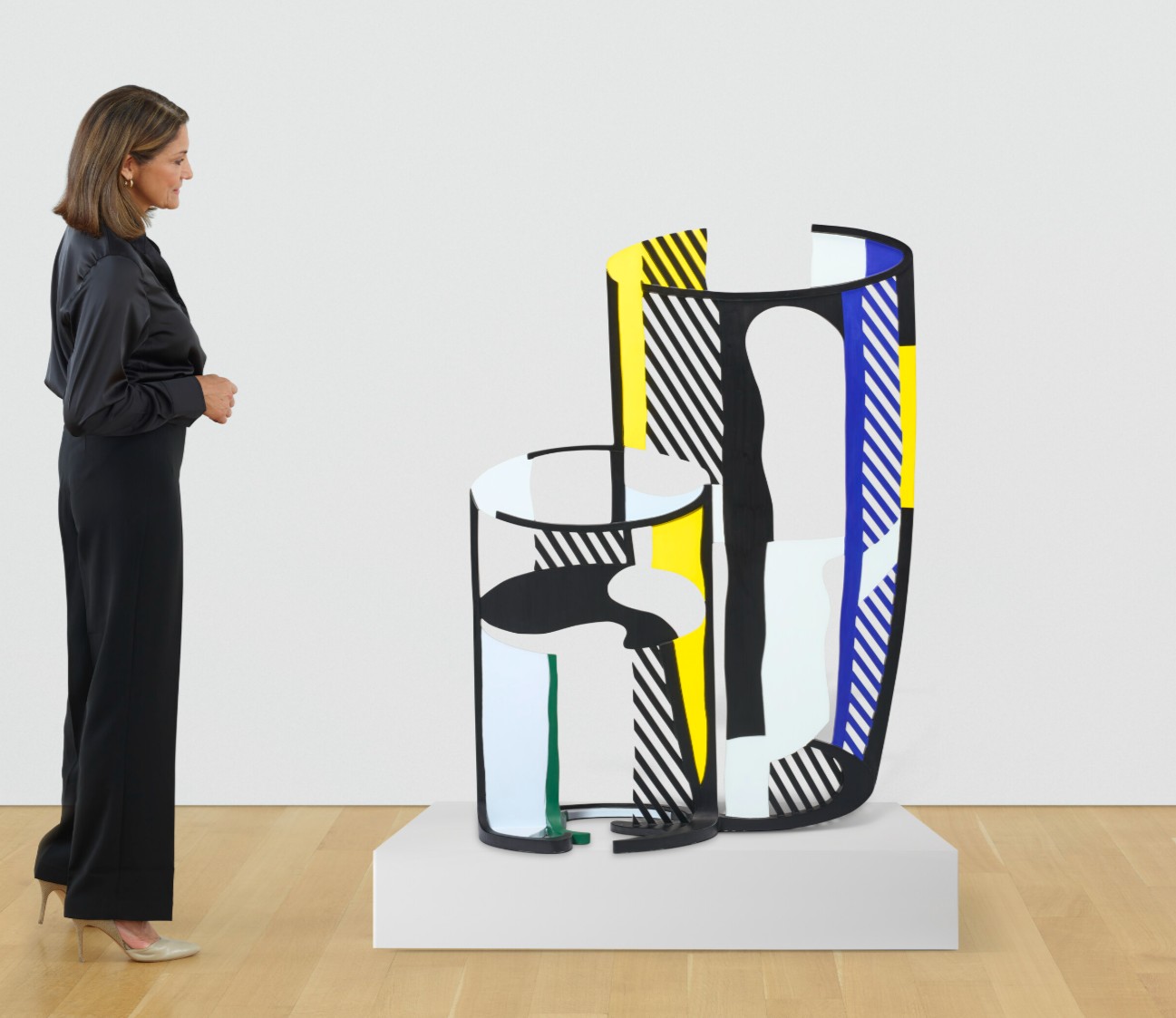
ROY LICHTENSTEIN (1923-1997)
Double Glass, 1979
Painted bronze
56x42x17 inches (142.2 x 106.7 x 43.2 cm)
Incised with the artist’s signature
Number and date ‘3⁄3 rf Lichtenstein ’79’ (lower edge)
This work is number three from an edition of three