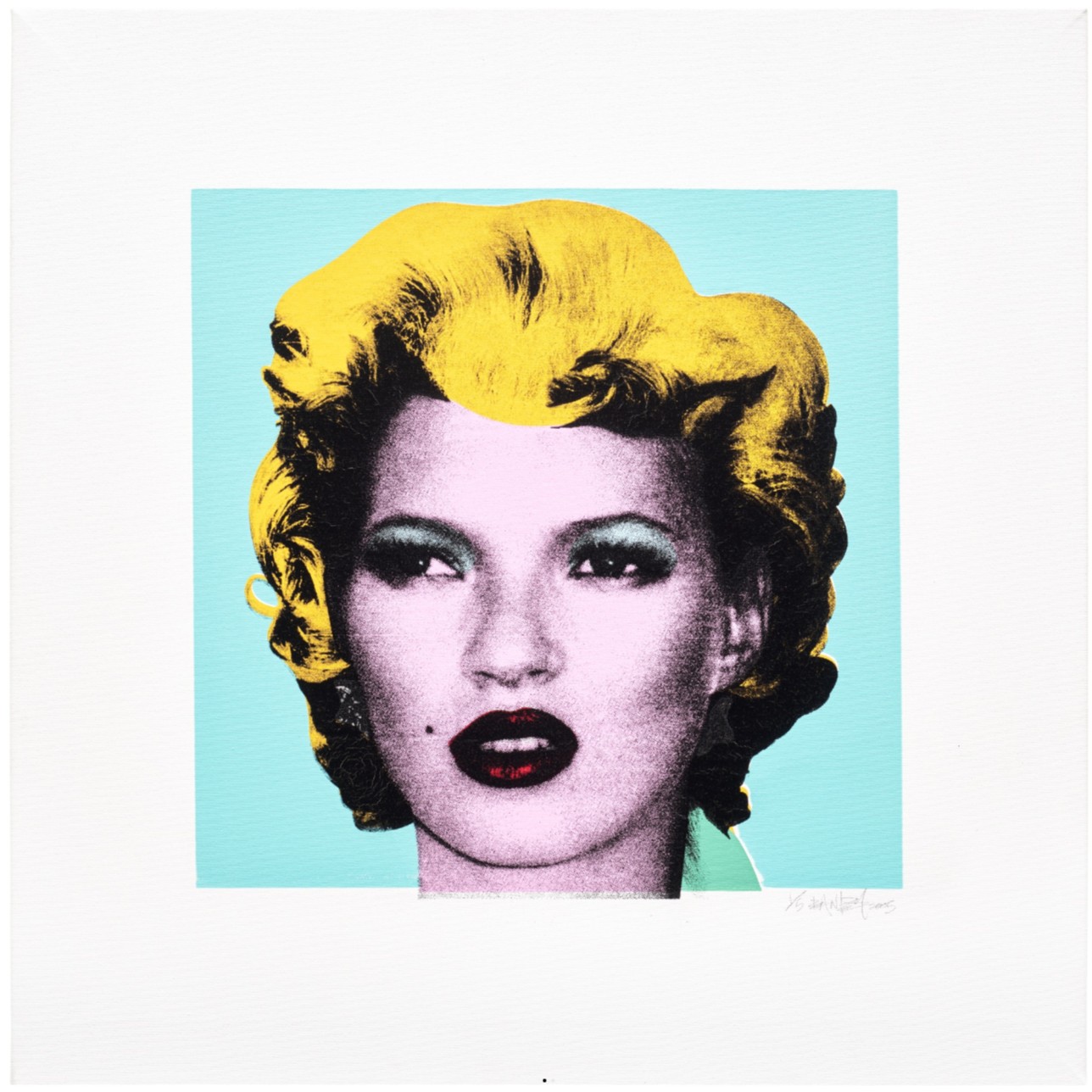
Kate Moss, 2005
Screenprint on canvas
Provenance
Private Collection (acquired directly from the artist in 2005)
Bonhams, London, 23 October 2008, lot 103 Acquired at the above sale by the present owner
Auction History
Phillips London: 16 October 2025
Estimated: GBP 700,000 – 1,000,000
PASSED
Banksy Modern & Contemporary Art Evening Sale
An image utterly synonymous with early 2000s UK culture, Banksy’s Kate Moss stands as a definitive statement on the rebellious anti-establishment spirit of an era where Supermodels, Britpop, and UK street art redefined popular culture on a global scale. Featured on the invite of the now infamous 2005 exhibition Crude Oils: A Gallery of Re-Mixed Masterpieces: Vandalism and Vermin, Kate Moss signaled the extension of the sharp satire and political critique evident in the anonymous street artist’s site-specific graffiti stencil work into a more robust engagement with art historical discourse and exposure of the mechanisms of the art market itself. The first of an edition of just five silkscreened canvases, this tongue-in-cheek homage to Andy Warhol’s iconic portrait of Marilyn Monroe was presented alongside a selection of Banksy’s irreverent hand-painted reworkings of art historical masterworks, including parodies of Claude Monet’s scenes of the Japanese Bridge at Giverny littered with abandoned shopping trollies, Edward Hopper’s Nighthawks disturbed by the violent action of a late-night lout stripped down to his Union Jack boxer shorts, and a bouquet of withered petrol station flowers standing in for Vincent Van Gogh’s iconic sunflowers. Representing the artist’s first presentation in a more conventional gallery space, in typical fashion Banksy nevertheless disrupted the reverence surrounding these art historical masterpieces and the gallery space itself, releasing over one hundred and fifty live rats into the space for the duration of the exhibition.
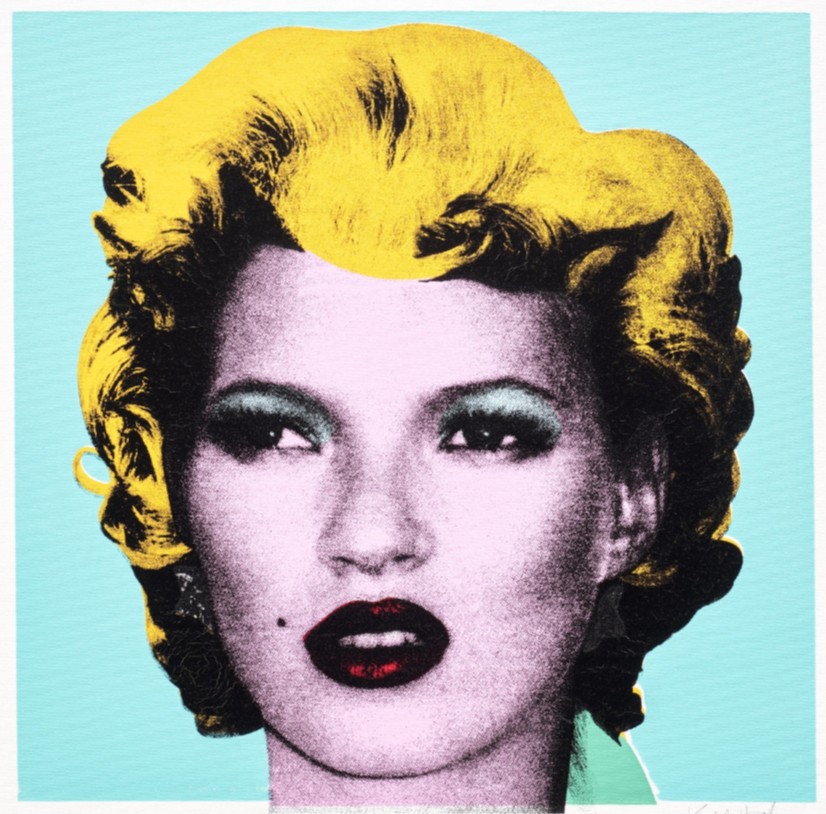
Selecting some of the most iconic images in Western art history, Banksy at once engaged with and subverted this canon, dismantling certain assumed narratives and weaponizing their familiarity as a means of exposing more uncomfortable contemporary truths related to power, exploitation, and the environmental consequences of capitalism. In his more playful take on Andy Warhol’s definitive silkscreen portraits of Marilyn Monroe, Banksy engages most directly with the themes of originality, appropriation, and celebrity culture that so preoccupied Warhol himself. Indeed, just as Warhol sought to address what he recognized as the determining aspects of 20th century culture – the circulation and mass reproduction of commodities, the rise of mass media and consumer culture, the seductive allure of fame and glamour – Banksy’s work similarly reflects and comments on the society in which it was created. It is with fitting irony that the particular colorway selected by Banksy in his homage to Warhol closely approximates that of the Pop artist’s Shot Sage Blue Marilyn, now infamous as holding the record for the highest price ever paid for a work of 20th century art at auction.
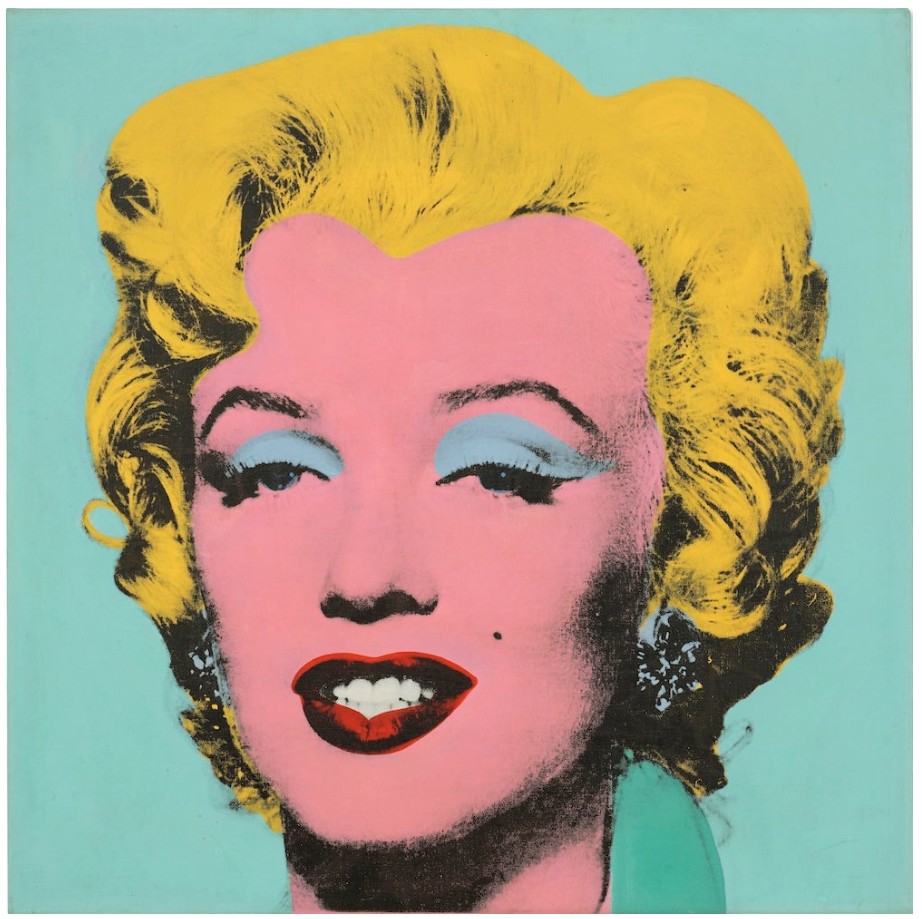
Andy Warhol, Shot Sage Blue Marilyn, 1964, sold for $195 million in 2022.
Image: © Christie’s Images / Bridgeman Images
Artwork: © 2025 The Andy Warhol Foundation for the Visual Arts, Inc. / Licensed by DACS, London
For Warhol, Marilyn Monroe embodied the tragedy and glamour of 20th century celebrity, and the darker underbelly of the American Dream itself. Appropriating and altering a publicity headshot originally taken for her 1953 film Niagara, Warhol amplified the enigmatic allure of her gaze and timeless beauty, creating a modern icon that echoes the enduring power and appeal of Leonardo da Vinci’s Mona Lisa. Fittingly, details of both were featured on the cover of Ulrike Sommer’s The Story of Painting: From the Renaissance to the Present cementing Warhol’s Marilyn screenprints not just as icons of American Pop Art, but as a motif synonymous with 20th century art and culture itself. The nod to Mona Lisa here is not incidental; while Warhol’s Marilyn echoes the iconic aura that radiates from this Renaissance masterpiece, Banksy’s borrowing of Warhol’s motif also repeats Dada pioneer Marcel Duchamp’s acts of appropriation, most notably in relation to the Mona Lisa herself. In what has become one of the most infamous acts of ‘vandalism’ in the history of art, in 1919 Duchamp added a moustache to the infamous face of the Mona Lisa in his irreverent ‘rectified readymade’ L.H.O.O.Q, later reimagined in an edition for Duchamp’s close friend the collector and scholar Arturo Schwarz.
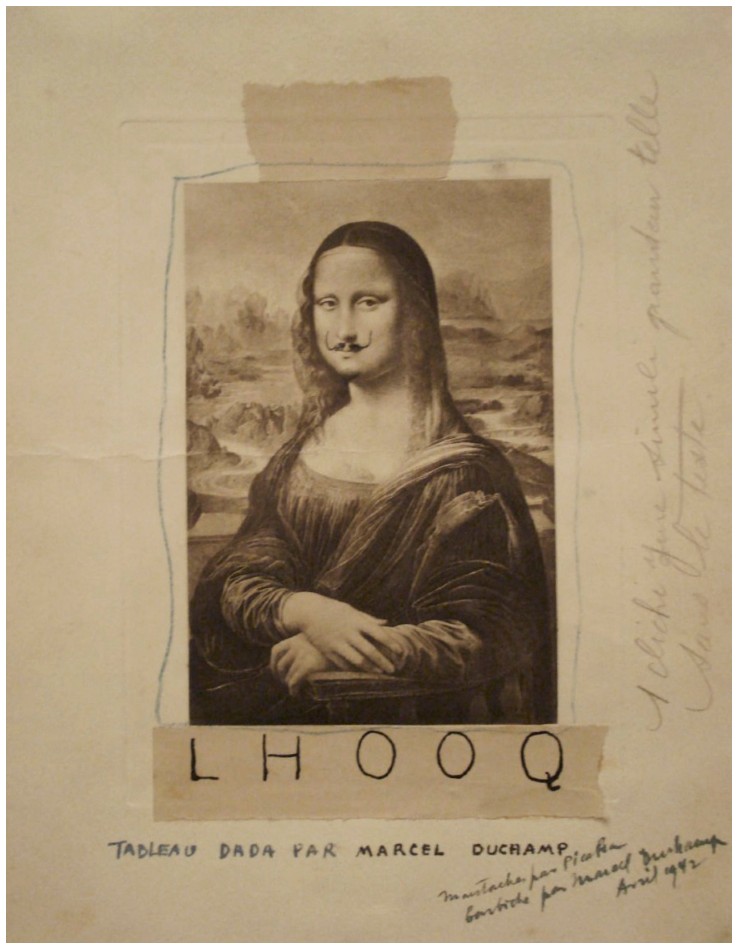
Marcel Duchamp, L.H.O.O.Q, conceived in 1919, originally published in 391, N. 12.
Artwork: © Association Marcel Duchamp / ADAGP, Paris and DACS, London 2025
Like Marcel Duchamp before him, Warhol was intensely interested in the power of the readymade or appropriated image to challenge our perception of what constitutes a work of art, and the ways in which we might fundamentally shift the terms by which we define modern and contemporary art itself, a legacy enthusiastically engaged with by Banksy and the broader culture of politically inflected and decidedly anti-establishment street art to which his work belongs. In aligning himself to Warhol’s methods, most central imagery, and deeper probing of the darker currents underpinning popular culture, Banksy pushes this project into new and exciting territory in works such as Kate Moss. Just as Warhol and Marilyn Monroe defined the consumer culture of mid-century America, Banksy and Kate Moss crystallize the unique cultural climate emanating from the UK at the turn of the 21st century, one that still resonates today.
The definitive face of 90s ‘Cool Britannia’, supermodel Kate Moss embodied the youthful energy, effortless cool and exuberance of an era where UK musicians, models, and artists redefined popular culture on a global stage. Discovered at just fourteen years old and having appeared on every major runway and magazine cover in the intervening four decades Moss not only pioneered shifting trends in the fashion world during these years, but through high profile relationships with actors and musicians personified the hedonistic party lifestyle associated with early 00s ‘Indie Sleaze’ and a new era of celebrity visibility. Playfully appropriating and redefining the language of the icon for the 21st century, in Kate Moss Banksy acknowledges the supreme Supermodel as the defining face of our times, adopting Warhol’s celebrated silkscreen technique complete with bright, bold accents in a clear homage to what is undoubtably the American Pop artist’s most famous and immediately recognizable motif. While Moss’ luminous beauty and elfin features are still unmistakably her own, in incorporating key aspects of Monroe’s appearance including her infamous blonde curled bob and beauty mark, Banksy aligns the two women, drawing on the artwork’s status as one of the most iconic images of the 20th century to redraw lines between celebrity, popular culture, and the visual language of the icon in our own times.