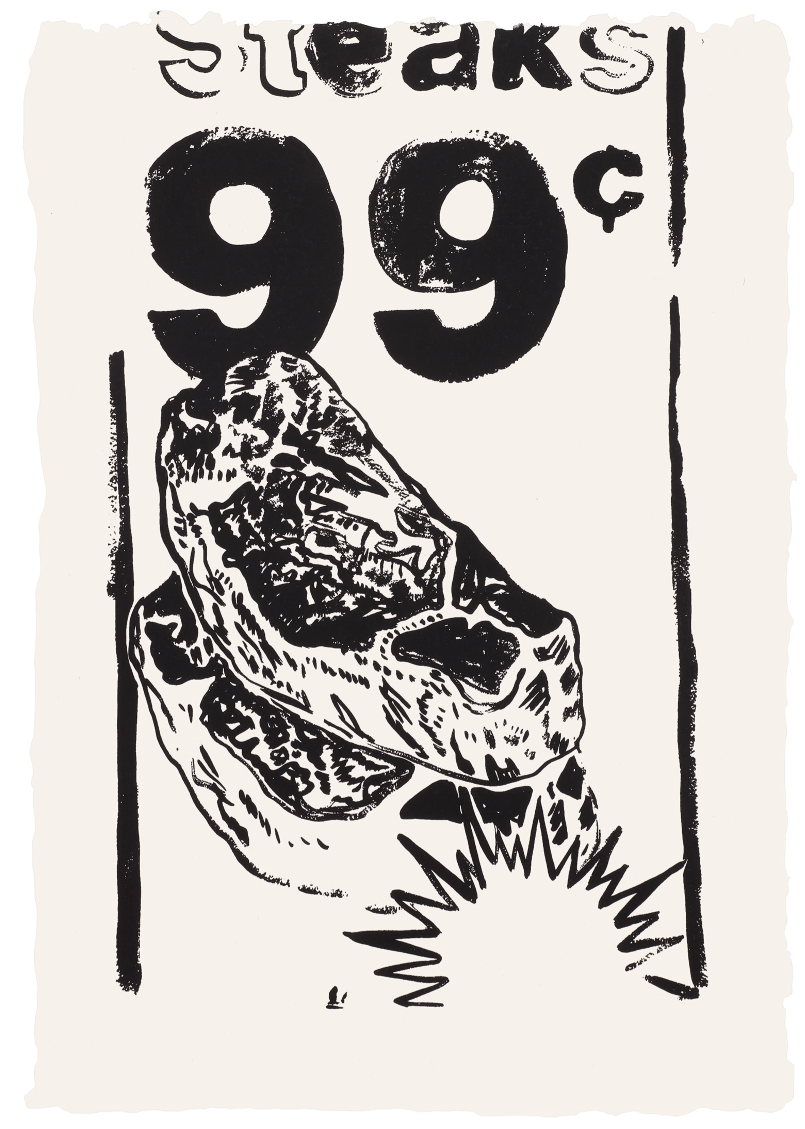
Steaks 99¢
Medium: Screenprint on Moulin du Verger paper
Year: circa 1986
Sheet: 21 3/4 x 15 inches (55.2 x 38.1 cm)
Printer: Rupert Jasen Smith, New-York
Literature: Feldmann & Schellmann IIIA.68
Unpublished Print.
Based on a newspaper advertisement.
They were intended as holiday gifts.
Andy Warhol’s Steaks 99c, created in the mid-1980s, encapsulates the artist’s fascination with media, consumer culture and the commodification of imagery. The screenprint appropriates a newspaper advertisement for discount steaks, featuring a bold “99¢” price and a stark black-and-white illustration of two slabs of meat. Warhol’s cropping and presentation of this ordinary, utilitarian graphic elevates it into the realm of fine art while retaining its connection to mass media. The subject matter – steaks, a symbol of indulgence and affluence – juxtaposed with their bargain price adds a subtle irony, highlighting the tensions between desire and value in contemporary capitalist society. By isolating this familiar imagery and repeating the industrial aesthetic of the original ad, Warhol exposes the ways consumer advertising manipulates perception, reducing goods to symbols of status or aspiration.
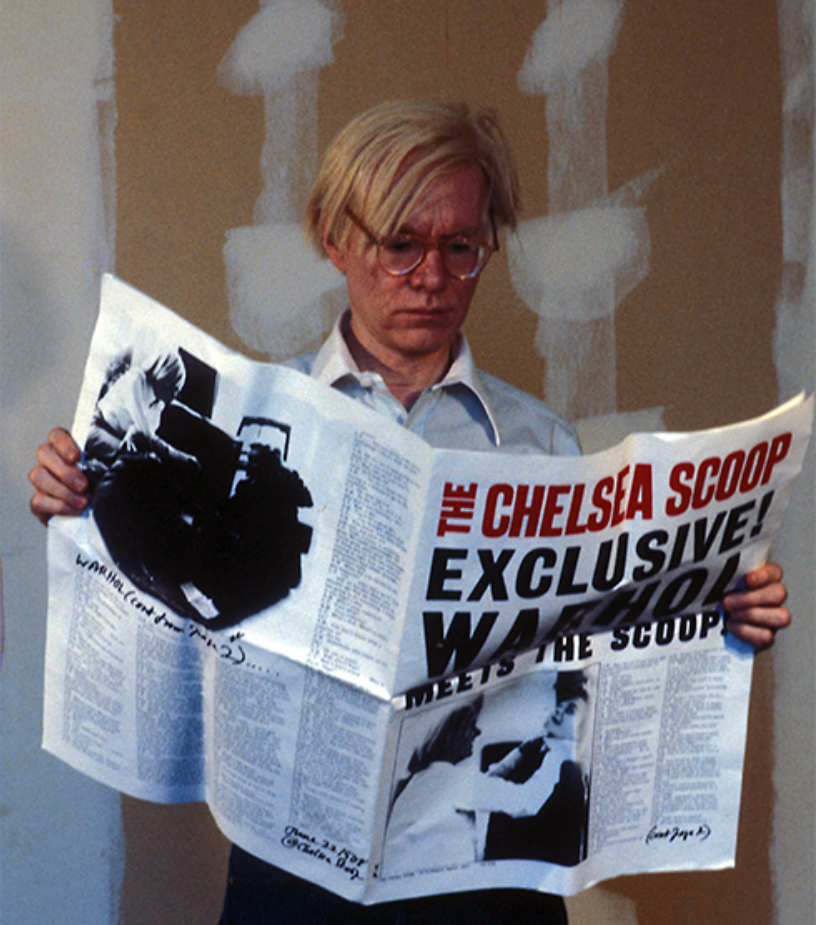
In the 1980s, the United States was marked by economic boom and a culture of material excess under Ronald Reagan’s presidency. This “Reaganomics” era fostered a focus on wealth, consumption, and aspirational living, themes deeply embedded in advertising and popular culture. At the same time, mass media’s influence surged, saturating daily life with images that defined desires and cultural values. Steaks 99c reflects this moment: a period where the promises of capitalism coexisted with a quiet irony about its contradictions. The steak, an emblem of luxury, rendered banal through discount pricing, epitomizes this dissonance. Warhol, ever the astute observer, transformed ephemeral media such as the steaks advertisement into artworks that comment on the increasingly blurred boundaries between abundance, accessibility, and meaning.
“I don’t change the media, nor do I distinguish between my art and the media. I just repeat the media by utilising the media for my work.”
Warhol’s use of newspaper imagery extended far beyond consumer ads, as seen in works like the Death and Disaster series (1962–63). In this body of work, Warhol lifted photographs of car crashes, electric chairs, and suicides from newspapers, repeating them through screenprint to unsettling effect. This exploration underscored the desensitizing nature of mass media, where even tragedy becomes consumable, afforded its own fifteen minutes of fame before fading and being replaced by the next sensationalist news story. In Steaks 99c, the same strategy of direct appropriation is at play.
“I don’t change the media, nor do I distinguish between my art and the media. I just repeat the media by utilizing the media for my work.”
For Warhol, the newspaper ad served both as inspiration and subject matter, a reflection of the era’s media-saturated culture. Fittingly, Warhol’s embrace of the mechanical, commercial process of screen printing mirrored the very techniques used to mass-produce the advertisements he appropriated. Since the 1960s, Warhol had favored screenprinting for its ability to produce consistent, repeated images while diminishing the role of the artist’s hand. This industrial technique allowed him to blur the boundaries between fine art and commercial production, aligning his work with the processes underpinning consumer culture. In Steaks 99c, the screenprinting process reinforces Warhol’s critique of mass media and consumerism while celebrating their visual power, offering a commentary on repetition, reproduction, and the ways images mediate everyday experience.
Auction Results
Phillips London: 23 January 2025
Estimated: GBP 10,000 – 15,000
GBP 12,700 / USD 15,690
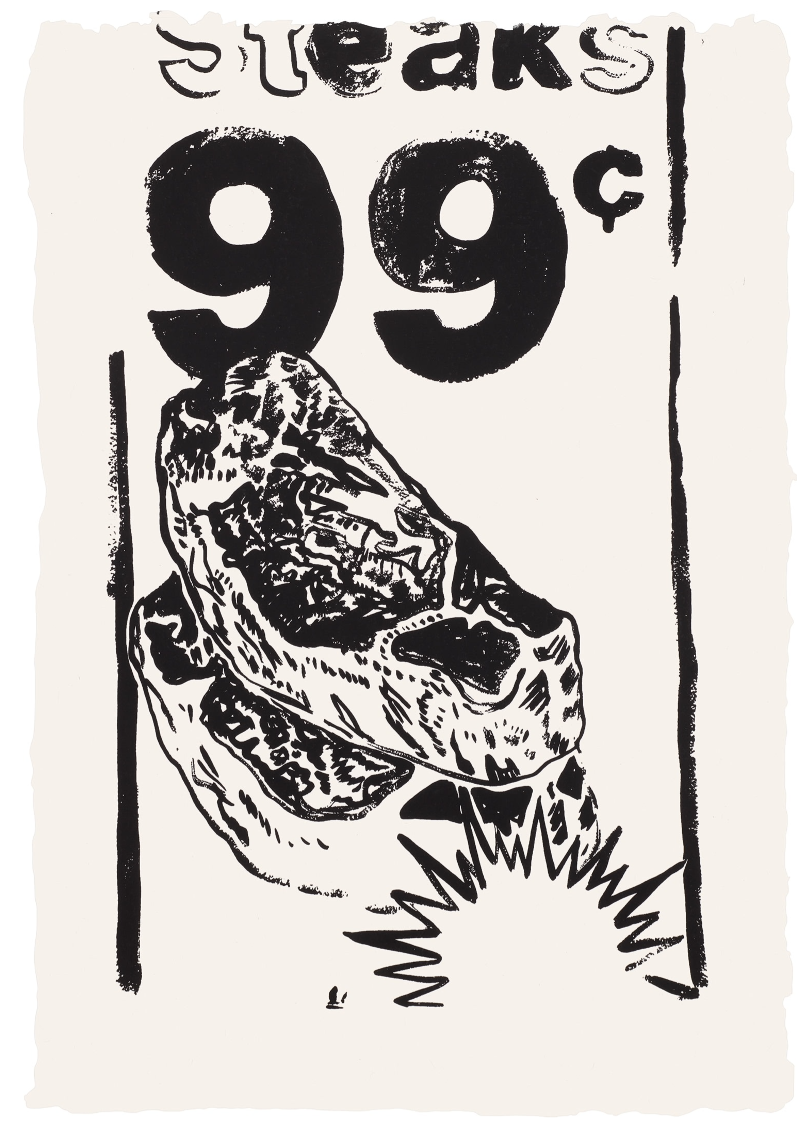
ANDY WARHOL
Steaks 99¢ (F. & S. IIIA.68), circa 1986
Unique screenprint on Moulin du Verger paper
One of a small number of impressions (there was no published edition)
With the Estate of Andy Warhol and the Visual Arts Foundation inkstamps
Initialed ‘T.J.H.’ by Timothy J. Hunt of the Andy Warhol Foundation
Annotated ‘UP15.36’ and ‘A026421’ in pencil on the reverse
Bonhams New-York: 14 February 2024
Estimated: USD 20,000 – 30,000
USD 20,480
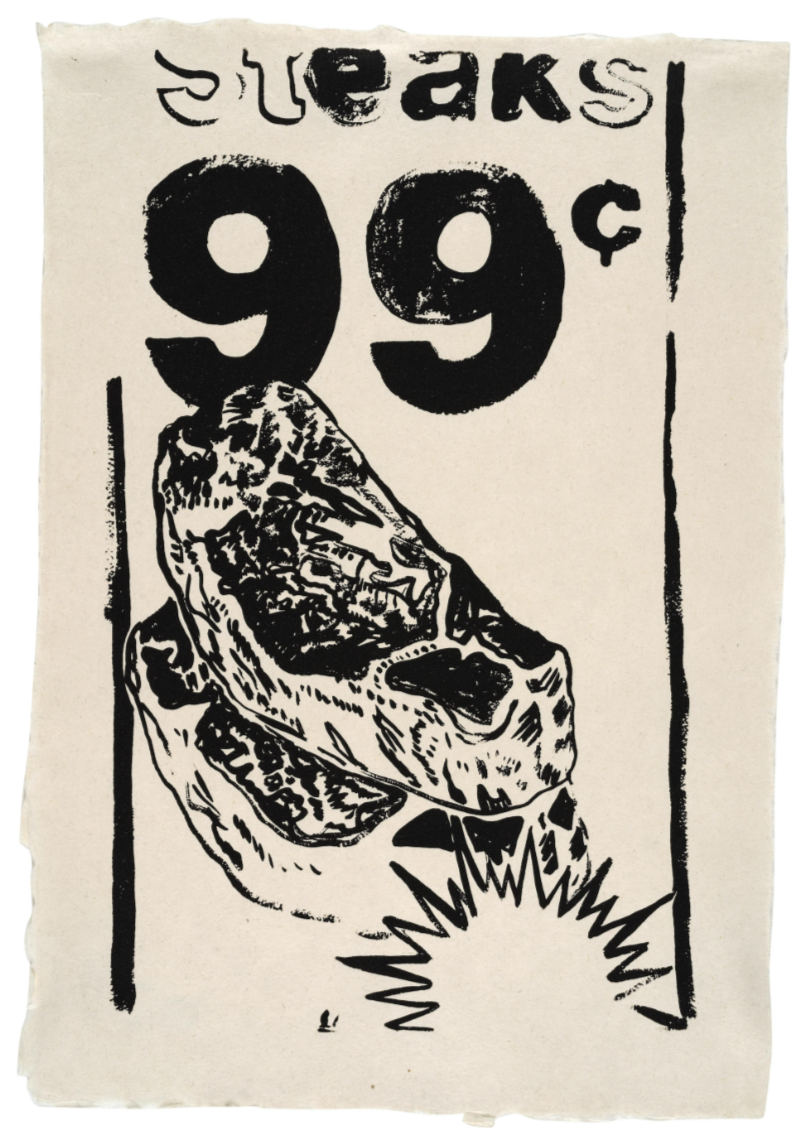
Stamped with The Estate of Andy Warhol and the Andy Warhol Foundation for the Visual Arts seals
Numbered UP15.42 on the reverse