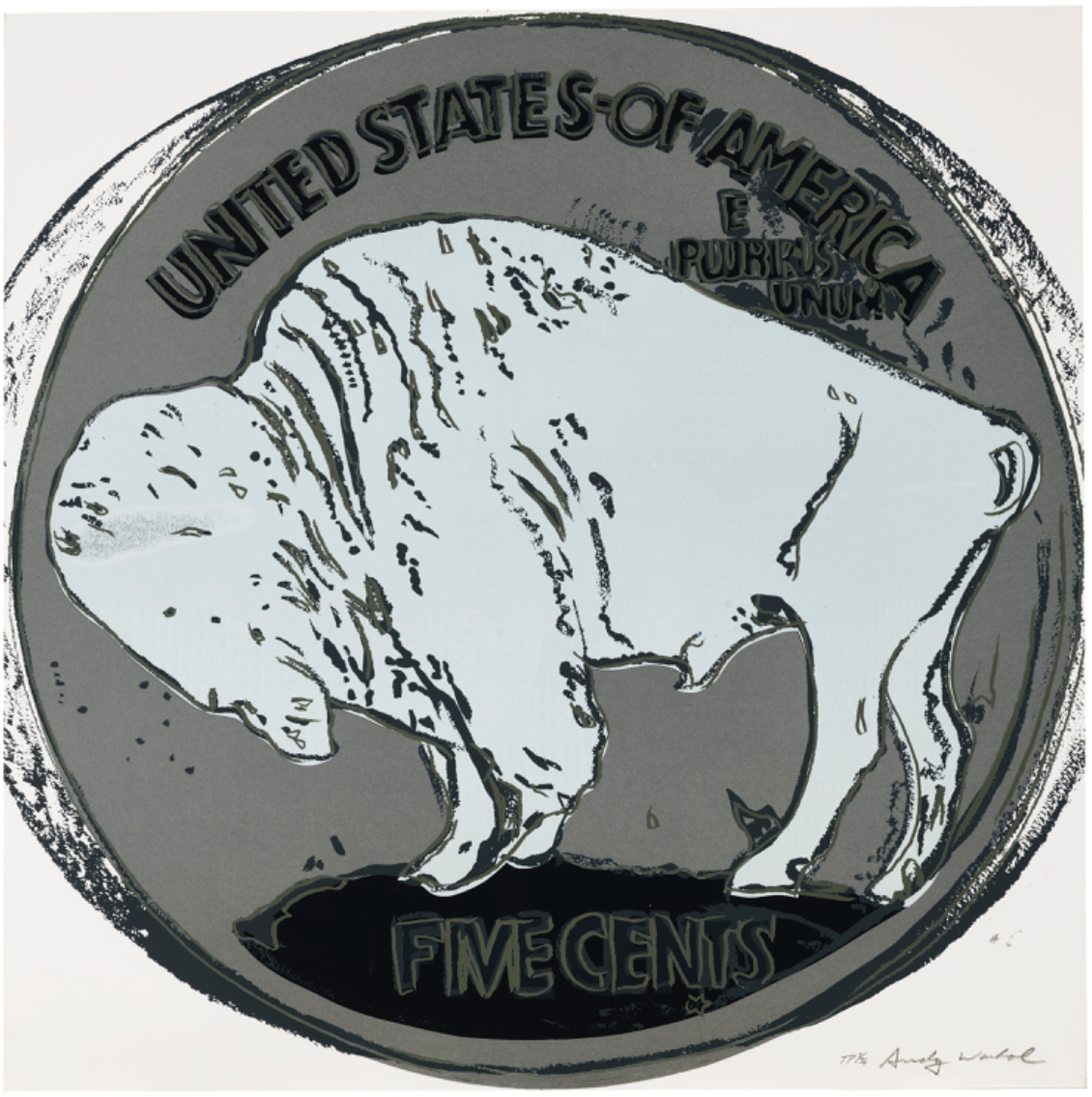
Buffalo Nickel
From Cowboys and Indians
Medium: Screenprint in colors on Lenox Museum Board
Year: 1986
Sheet: 36×36 inches (91.4 x 91.4 cm)
Edition: 36 TP (Trial Proof) of each print
Each print is unique
Publisher: Gaultney, Klineman Art, Inc., New York
Printer: Rupert Jasen Smith, New-York
Literature: Feldmann & Schellmann II.374
Signed and numbered in pencil lower right
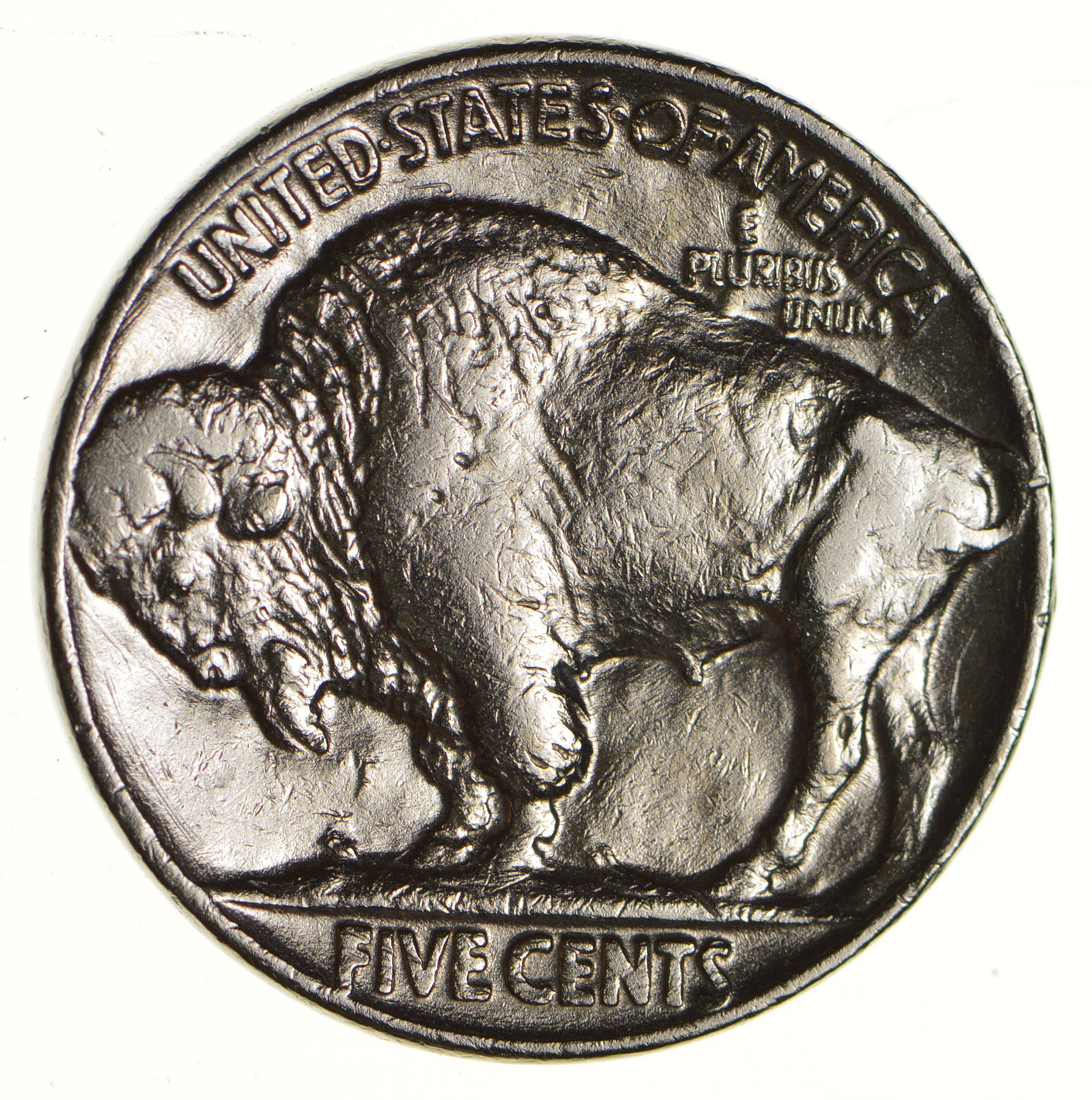
Warhol places this coin in relation to imagery that expresses the myth of the American West in popular culture as part of the Cowboys and Indians series. The buffalo fits into this theme nicely — it was considered a uniquely American symbol, and the specific buffalo on the Buffalo Nickel was modeled after “Black Diamond,” a buffalo on display at the New York Central Park Zoological Garden. Andy Warhol’s Buffalo Nickel brings to light the extent of American fascination with an idealized conception of the West by appropriating American symbols — the buffalo, as well as the currency itself — to explore the ways that this idea was conceived and disseminated.
Auction Results
Christie’s New-York: 28 October 2023
Estimated: USD 70,000 – 100,000
USD 277,200

ANDY WARHOL (1928-1987)
Buffalo Nickel, from Cowboys and Indians, 1986
Unique screenprint in colors on Lenox Museum Board
Signed in pencil, numbered ‘TP 3⁄36’
One of 36 unique trial proofs