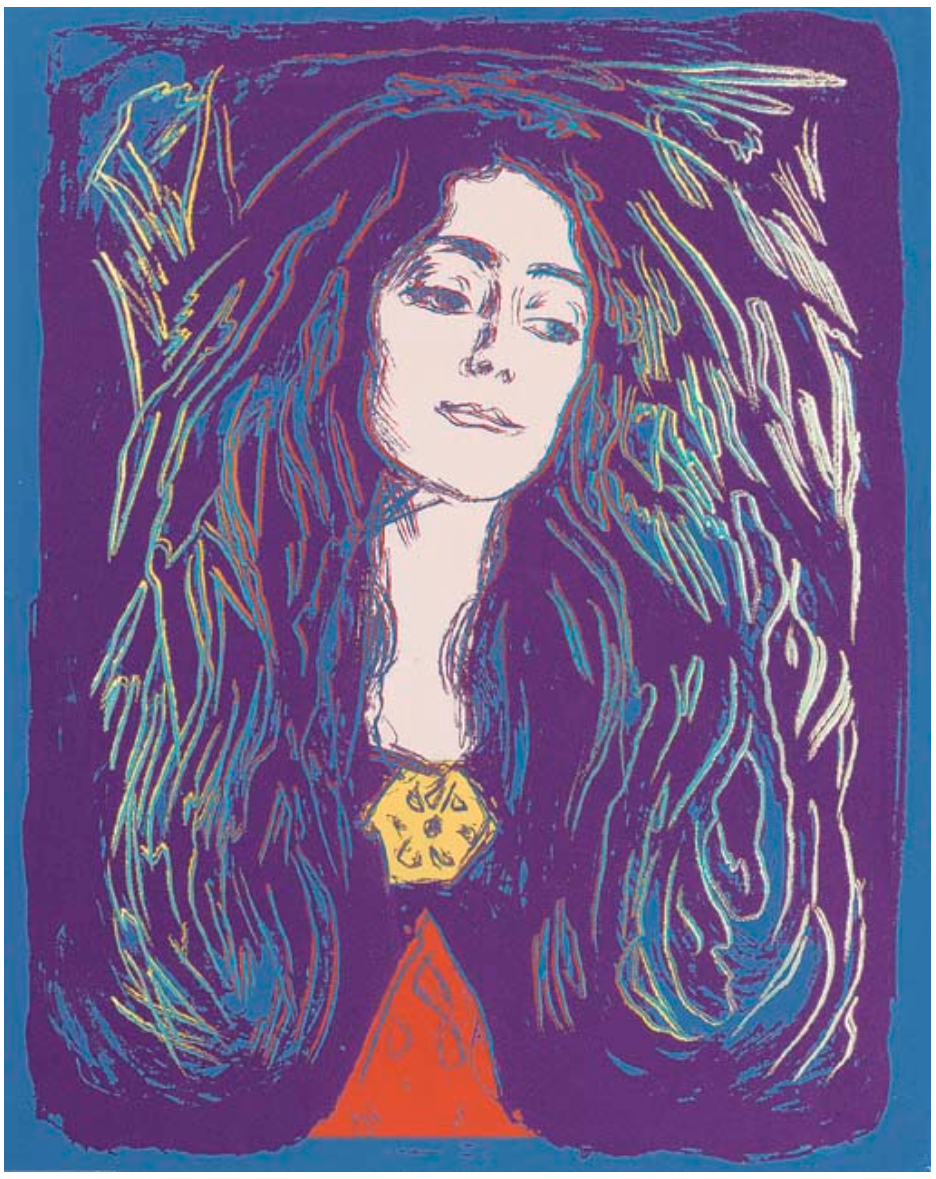
Eva Mudocci (After Munch)
Medium: Screen-print in colors on Lenox Museum Board
Year: 1984
Sheet: 40×32 inches (101.6 x 81.3 cm)
Medium: Screen-print in colors on Arches Aquarelle paper
Year: 1984
Sheet: 59 1/8 x 40 inches (150.2 x 101.6 cm)
Edition: Small number of unique impressions
Based on Edvard Munch’s 1903 lithograph Eva Mudocci (The Brooch), commissioned as an edition print was never published
Printer: Rupert Jasen Smith, New-York
Literature: Feldman & Schellmann IIIA.59
From the earliest days of his career, Andy Warhol had a strong appreciation for, and encyclopedic knowledge of, art history. Beginning in 1963 with his reproduction of Leonardo Da Vinci’s Mona Lisa in a series of several paintings, the Pop artist would often return to the annals of visual art for source material. Eva Mudocci (After Munch) is a prime example of Warhol’s interest in translating and digesting works by other artists through his own unique processes. He found himself drawn to the Norwegian painter Edvard Munch on more than one occasion, and the present work is a testament to Warhol’s ability to coax a radical mix of emotive vibrancy and machine-like precision from the famous original. Actively railing against the dramatic tendencies of the Abstract Expressionists, Warhol sought to separate himself from the drippy, splashy emotions of his forebears by embracing mass production and reproductive techniques like silk-screening. He operated in a more democratic mode, making ‘high’ art into something more accessible to a population already familiar with works like Botticelli’s Venus, Leonardo’s Last Supper, or Munch’s The Scream while also elevating Hollywood celebrities and Campbell’s soup labels to the level of art historical canon. Warhol often eschewed machismo and ego-driven connections in his art in favor of works that appealed to and resonated with a broad audience.
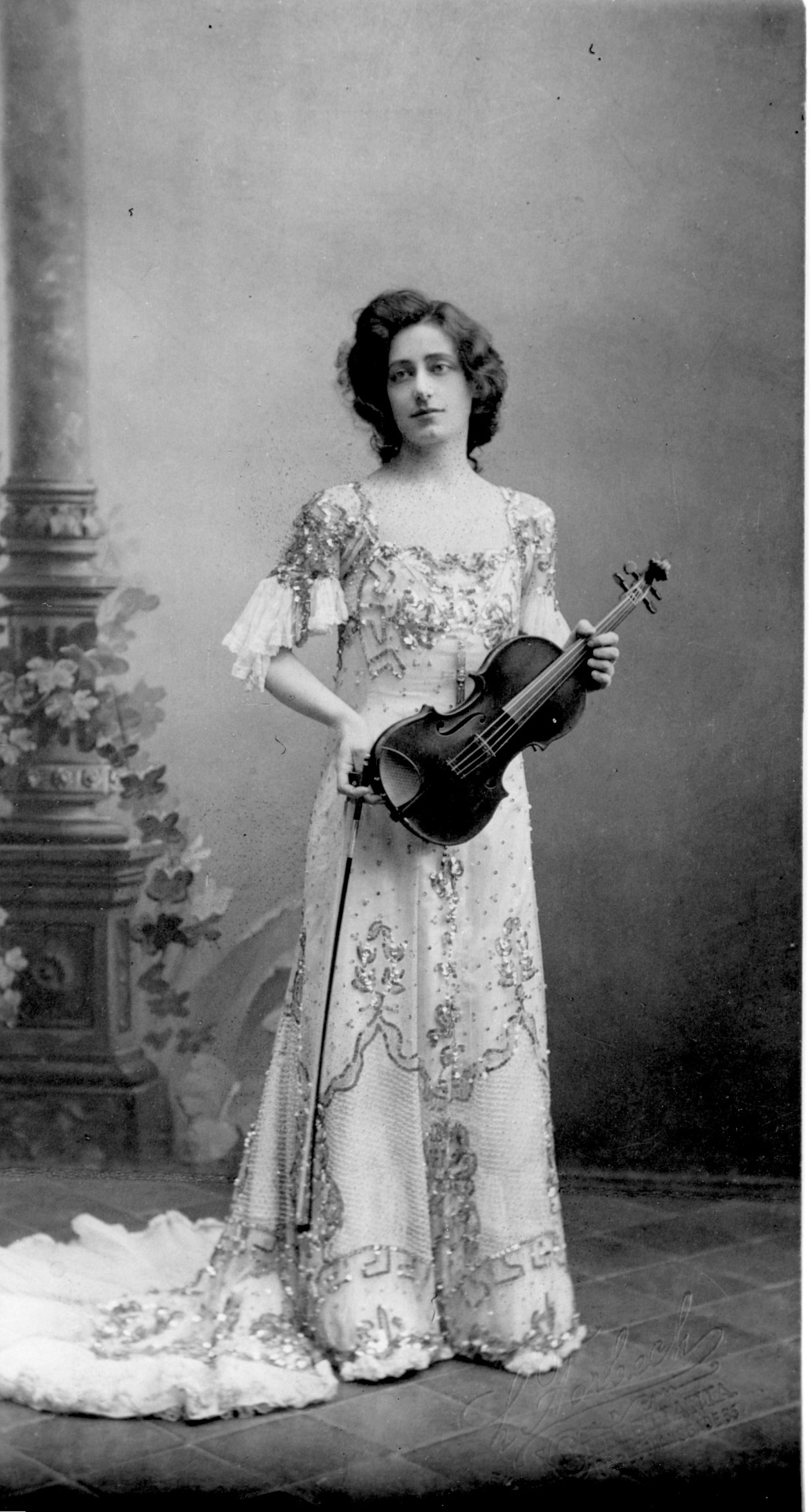
Warhol’s homage electrifies and invigorates the dark, moody source material by thrusting the quiet portrait into new territory. Munch’s Eva Mudocci (The Brooch) is clearly reproduced through Warhol’s expert silkscreening process, but the end result is decidedly Pop. In 1982, Warhol happened into Galleri Bellman on New York’s 57th Street and was taken by a Munch retrospective made up of over 100 prints and paintings. After several repeat visits and a discussion with the gallery directors, he started work on a series of paintings subtitled After Munch. The four works he chose as his source material included Munch’s instantly recognizable The Scream, as well as the portrait of Eva Mudocci, a self-portrait of the Norwegian artist, and the ethereal Madonna. This was not the first time the Pop icon had been enamored with Munch, however. A visit to the National Gallery and Munch Museet in Oslo in 1971 had piqued his interest, and Warhol had been collecting examples of the artist’s work ever since.
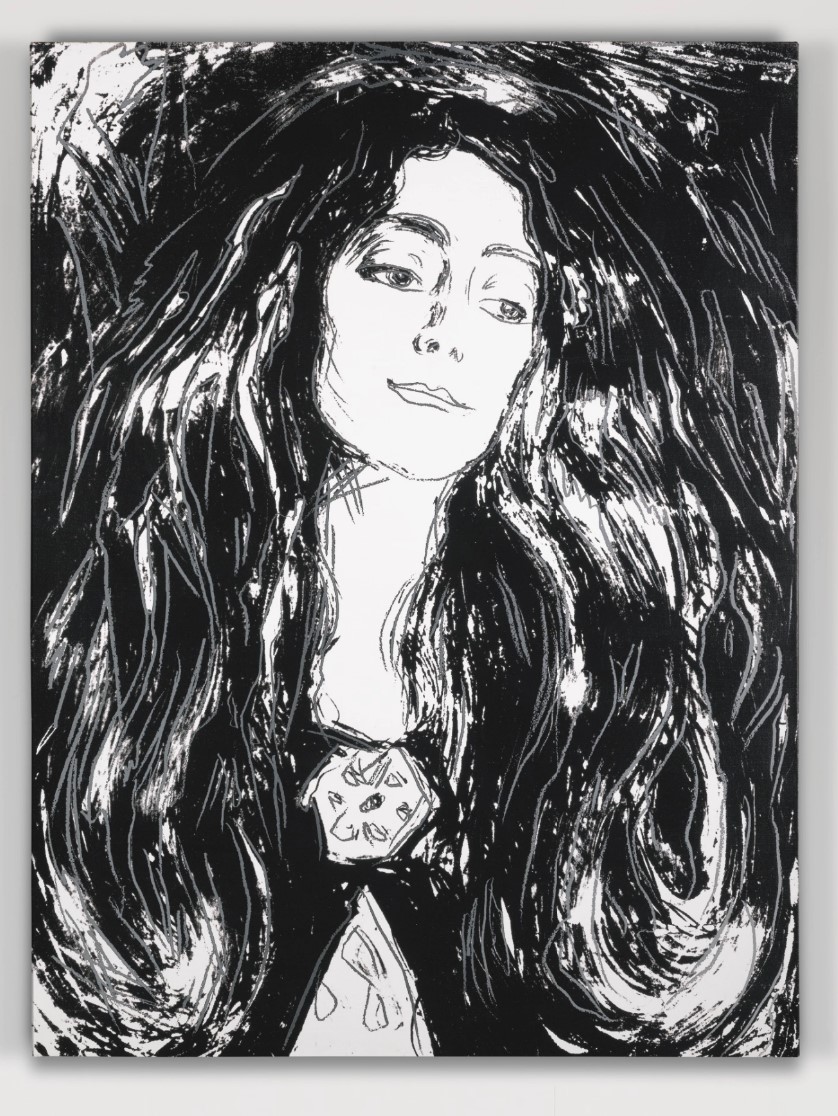
Utilizing as a source one of Edvard Munch’s most iconic prints, The Brooch (Eva Mudocci), Andy Warhol imbues the original image with his trademark Pop sensibility. Maintaining the monochromatic palette of Munch’s famous print, Warhol re-animates the original image. Forming part of a series of paintings inspired by four of Munch’s most well-known works, Warhol’s Eva Mudocci retains the enigmatic facial expression, wildly liberated cascades of hair and distinctive brooch that characterizes Munch’s original. In Warhol’s contemporary re-imagining however, Mudocci takes her place amongst the pantheon of the artist’s iconic female portraits: an early twentieth-century pinup is here elevated to the status of Warhol’s celebrated images of Marilyn Monroe, Jackie Kennedy or Elizabeth Taylor.
Warhol’s homage electrifies and invigorates the dark, moody source material by thrusting the quiet portrait into new territory. Munch’s Eva Mudocci (The Brooch) is clearly reproduced through Warhol’s expert silkscreening process, but the end result is decidedly Pop. In 1982, Warhol happened into Galleri Bellman on New York’s 57th Street and was taken by a Munch retrospective made up of over 100 prints and paintings. After several repeat visits and a discussion with the gallery directors, he started work on a series of paintings subtitled After Munch. The four works he chose as his source material included Munch’s instantly recognizable The Scream, as well as the portrait of Eva Mudocci, a self-portrait of the Norwegian artist, and the ethereal Madonna. This was not the first time the Pop icon had been enamored with Munch, however. A visit to the National Gallery and Munch Museet in Oslo in 1971 had piqued his interest, and Warhol had been collecting examples of the artist’s work ever since.
The genius behind Warhol’s art historical references lies not in his ability to accurately duplicate his predecessors (he left that to the precision of his screening), but to start a conversation about iconic works of art and their place within the cultural consciousness. Like advertising images, logos, or celebrity headshots, famous works of art transcend the museum space and the dusty art historical tome. They take up residence in the present, stripped of many previous allusions and instead existing as icons to be revered, copied, referenced, and put on dorm room posters. They are separated from their referents by so many steps that the aura of the original metamorphoses into something greater than the singular image itself. Warhol understood this transferal of meaning, and through his paintings sought to level the playing field. Throughout his career, Warhol consistently equated himself to his work and vice versa. His predilection for mass-media tropes and mechanical processes may seem at odds with the highly emotive oeuvre of Edvard Munch, but the two artists had a shared appreciation for tumultuous love and their own mortality. Hidden behind the iconic, oft-reproduced surfaces of their works is a deeply somber inquiry into humanity itself.
Auction Results
Christie’s London: 25 September 2025
Estimated: GBP 60,000 – 80,000
GBP 114,300 / USD 153,780
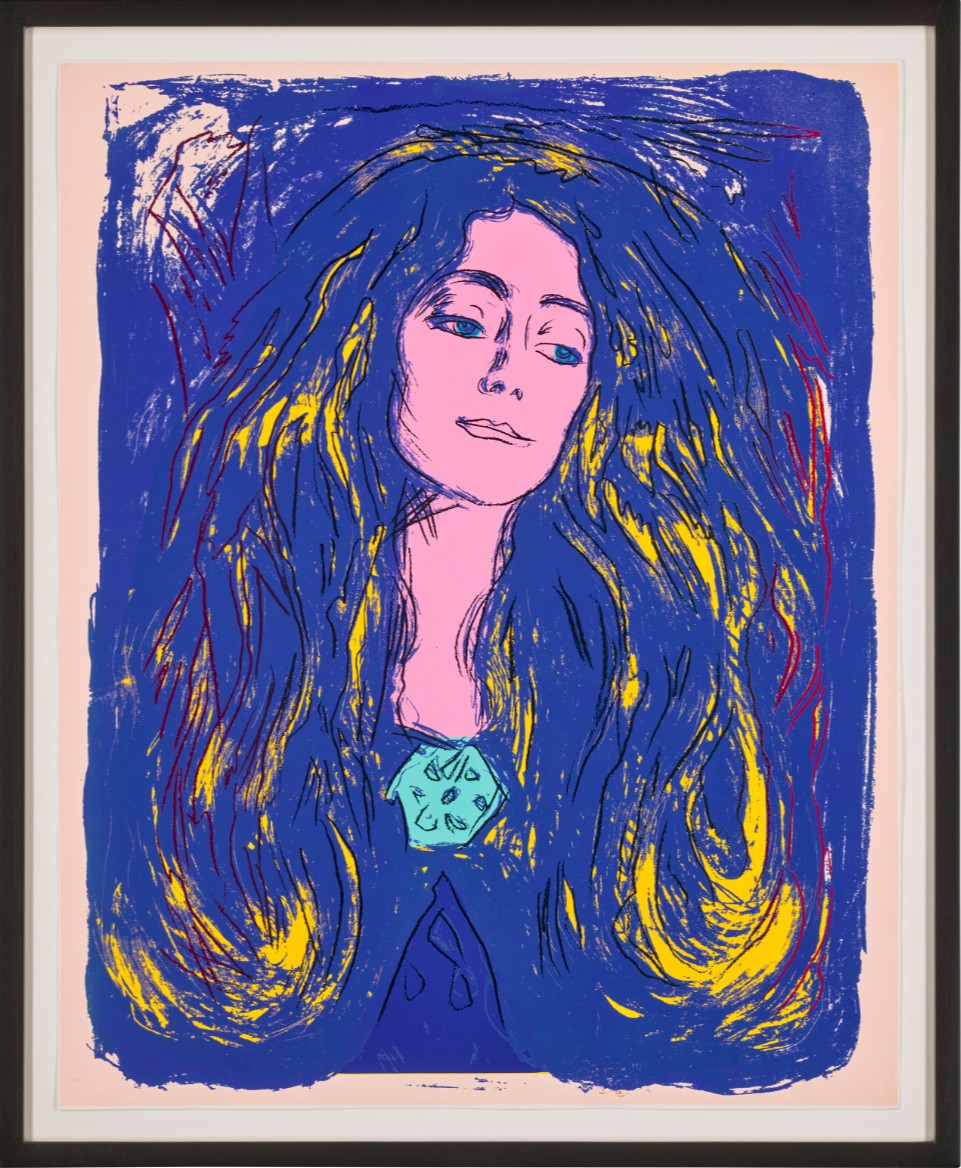
ANDY WARHOL (1928-1987)
Eva Mudocci (After Munch) (see Feldman & Schellmann IIIA.59), 1984
Unique screenprint in colors on Lenox Museum Board
From a small unpublished edition of unique color variants
With the Estate of Andy Warhol and the Andy Warhol Foundation for the Visual Arts ink stamps verso
Annotated ‘UP34.51’ and ‘T. J. H.’ in pencil verso
Van Ham: 30 November 2022
Estimated: EUR 79,000
EUR 99,000 / USD 102,180
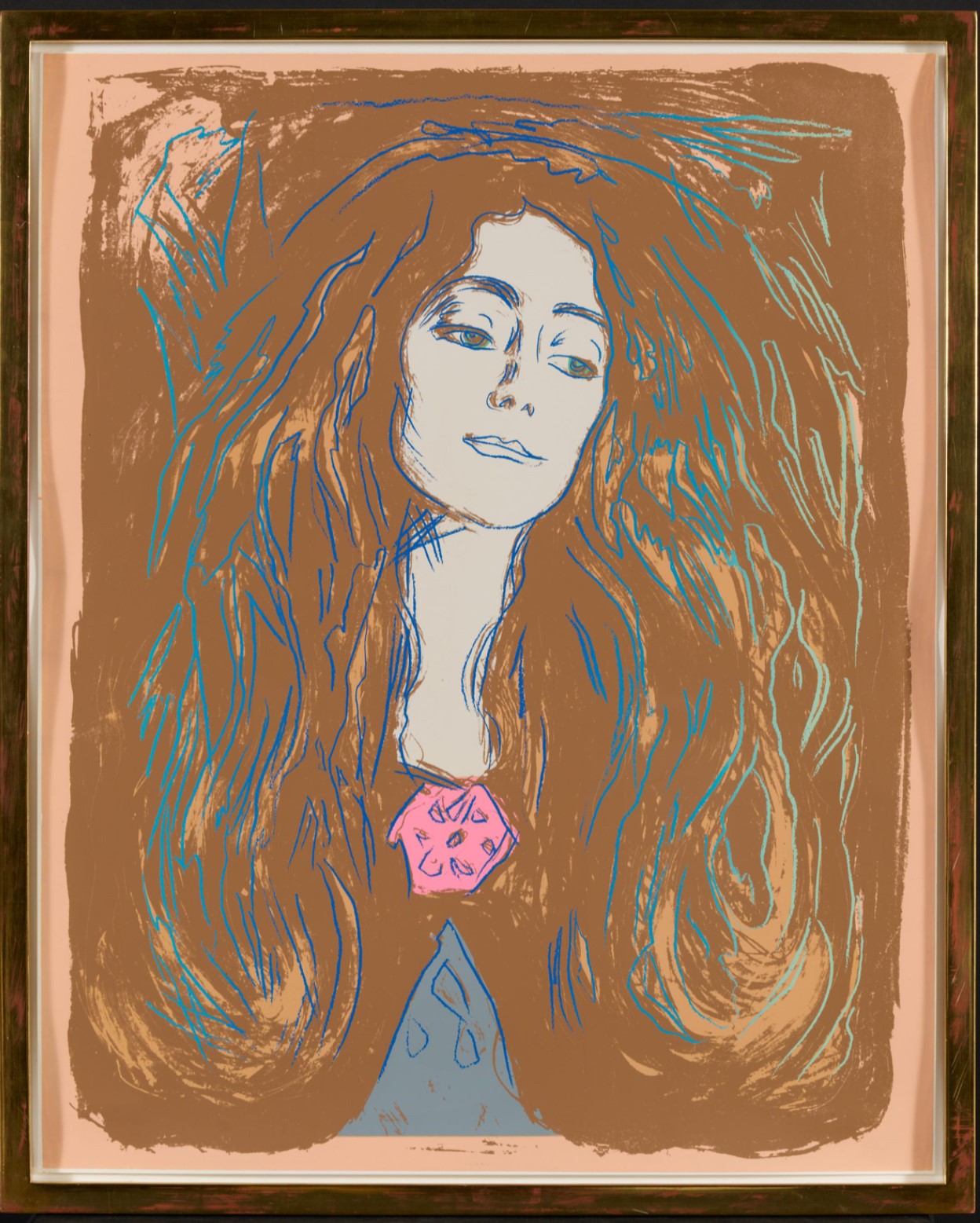
ANDY WARHOL
Eva Mudocci (After Munch) (F. & S. IIIA.59), 1984
Screenprint in a unique combination of colors on Lenox Museum Board
Sheet: 40×32 inches (101.5 x 81.2 cm)
From a small unpublished edition of unique color variants
Letter from the Andy Warhol Art Authentication Board, Inc., New York, dated July 30, 2002
Sotheby’s London: 26 March 2019
Estimated: GBP 60,000 – 80,000
GBP 87,500 / USD 115,585
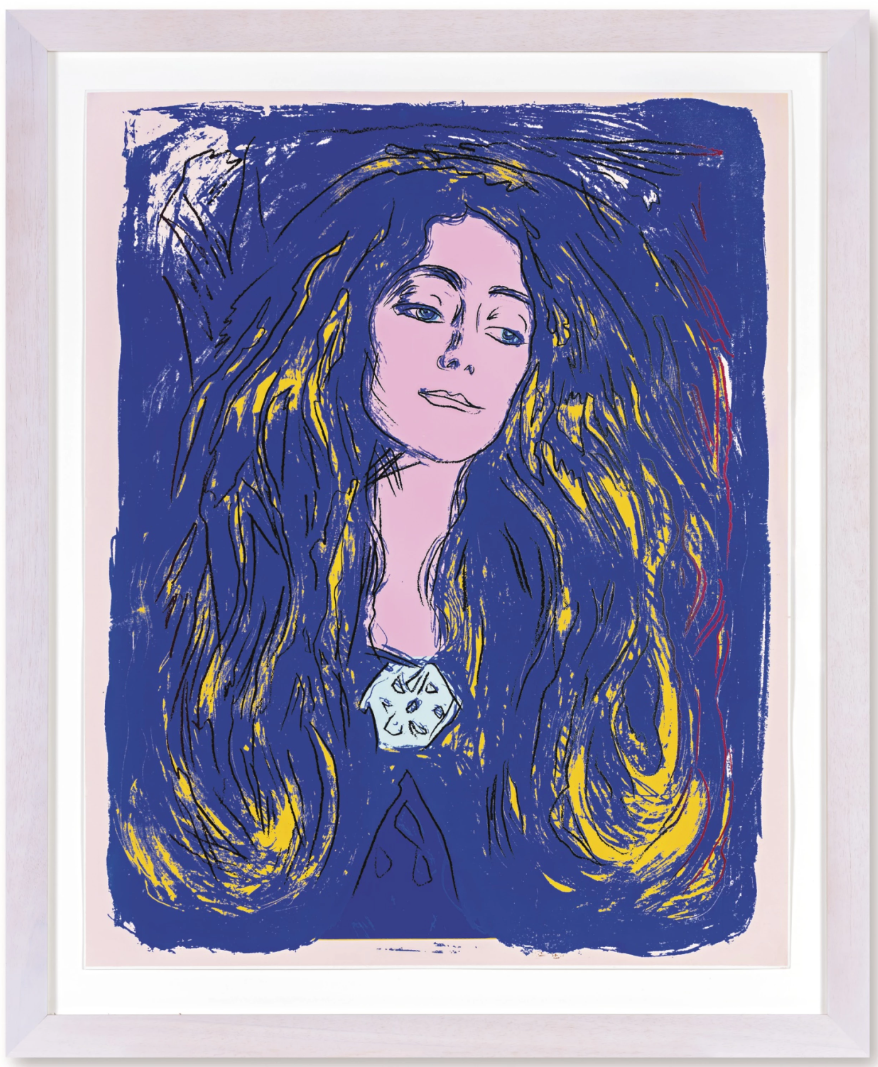
ANDY WARHOL
Eva Mudocci (After Munch) (F. & S. IIIA.59), 1984
Screenprint in a unique combination of colors on Lenox Museum Board
Sheet: 40×32 inches (101.5 x 81.2 cm)
From a small unpublished edition of unique color variants
With the Estate of Andy Warhol and the Andy Warhol Foundation for the Visual Arts inkstamps verso
Annotated ‘UP34.51’ and ‘T. J. H.’ in pencil verso
Sotheby’s London: 26 September 2018
Estimated: GBP 60,000 – 80,000
GBP 106,250 / USD 139,990
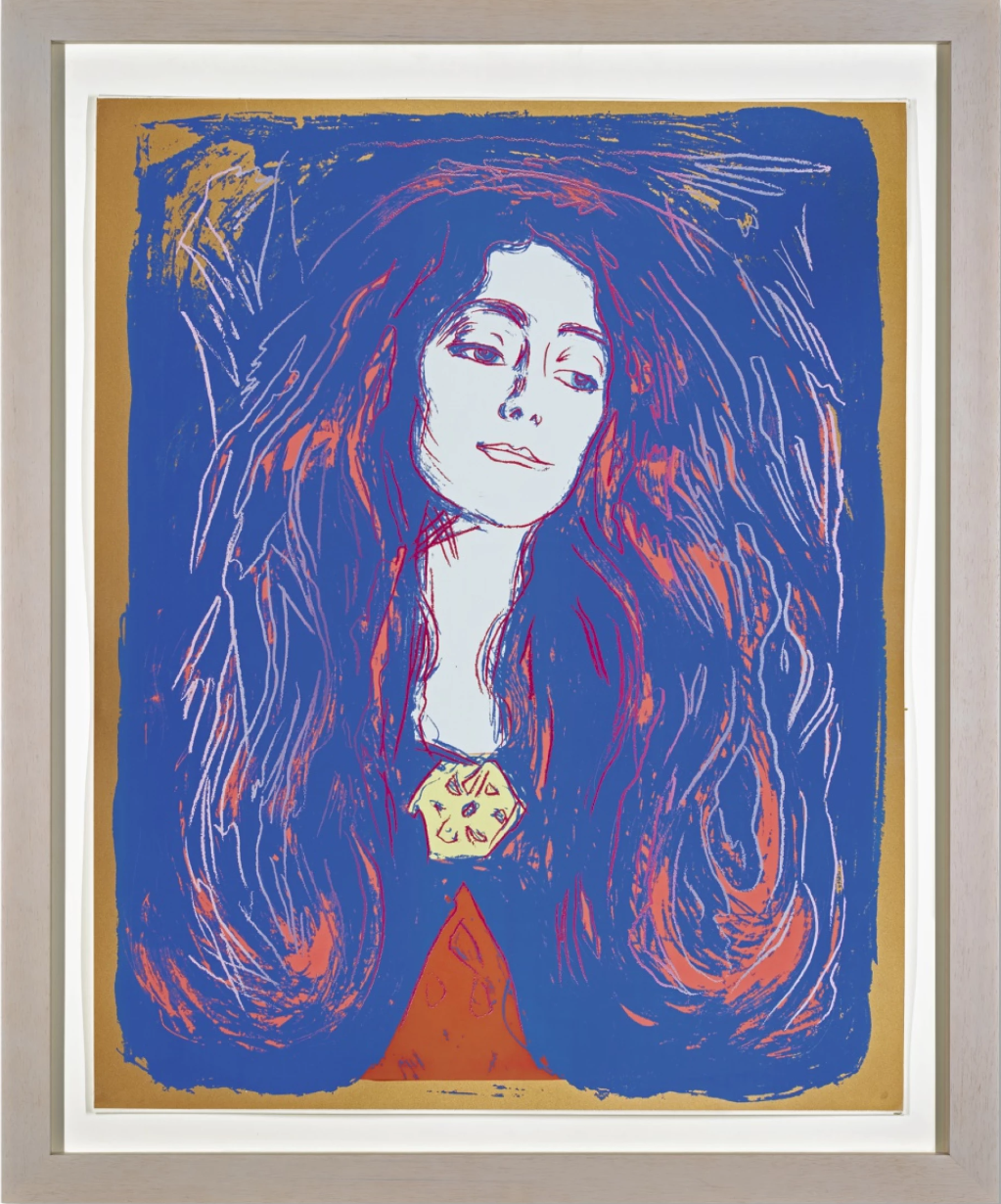
ANDY WARHOL
Eva Mudocci (After Munch) (F. & S. IIIA.59), 1984
Screenprint in a unique combination of colors on Lenox Museum Board
Sheet: 40×32 inches (101.5 x 81.2 cm)
From a small unpublished edition of unique color variants
Annotated ‘UP34.82’ and ‘T. J. H.’ in pencil verso
Sotheby’s New-York: 2 May 2015
Estimated: USD 60,000 – 80,000
USD 112,500
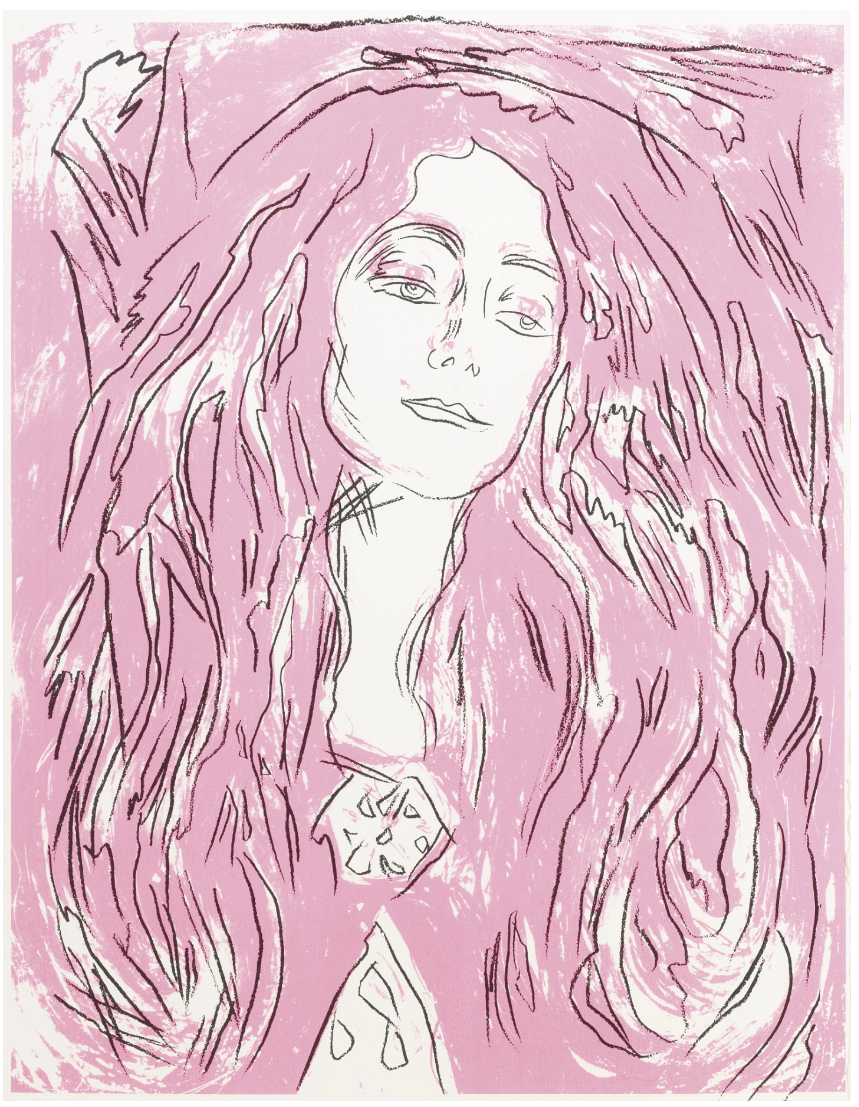
ANDY WARHOL
Eva Mudocci (After Munch) (F. & S. IIIA.59[b]), 1984
Screenprint in colors on Arches Aquarelle paper
Sheet: 59 1/2 x 40 inches (151.1 x 101.6 cm)
Image: 1267 by 993 mm 49 7/8 by 39 1/8 inches (126.7 x 99.3 cm)
With the stamps of the Andy Warhol Art Authentication Board and the Andy Warhol Estate
Inscribed ‘UP 34.40’ on the verso
Ketterer Kunst: 6 December 2014
Estimated: EUR 90,000
EUR 112,500 / USD 121,500
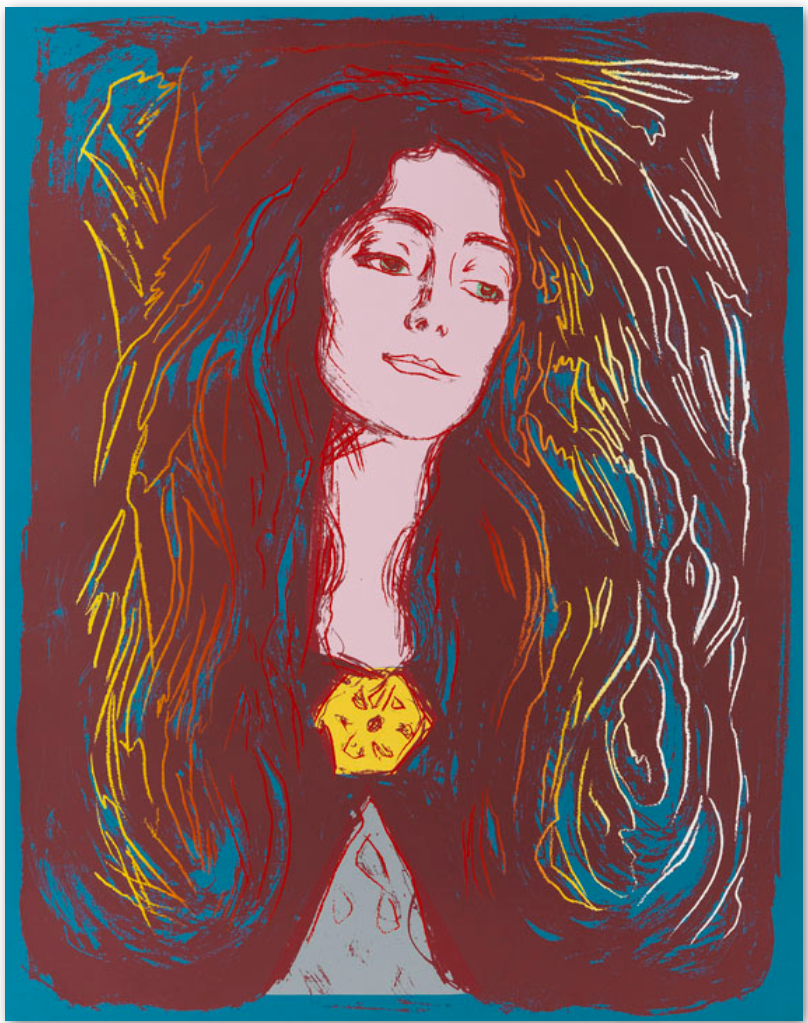
ANDY WARHOL
Eva Mudocci, 1984
Silkscreen in colors on light board (Lenox Museum Board)
Verso with estate stamp and with number “UP 3458” as well as “VF”
Only known proof in this color variant
Sotheby’s London: 18 March 2014
Estimated: GBP 100,000 – 150,000
GBP 110,500 / USD 183,370
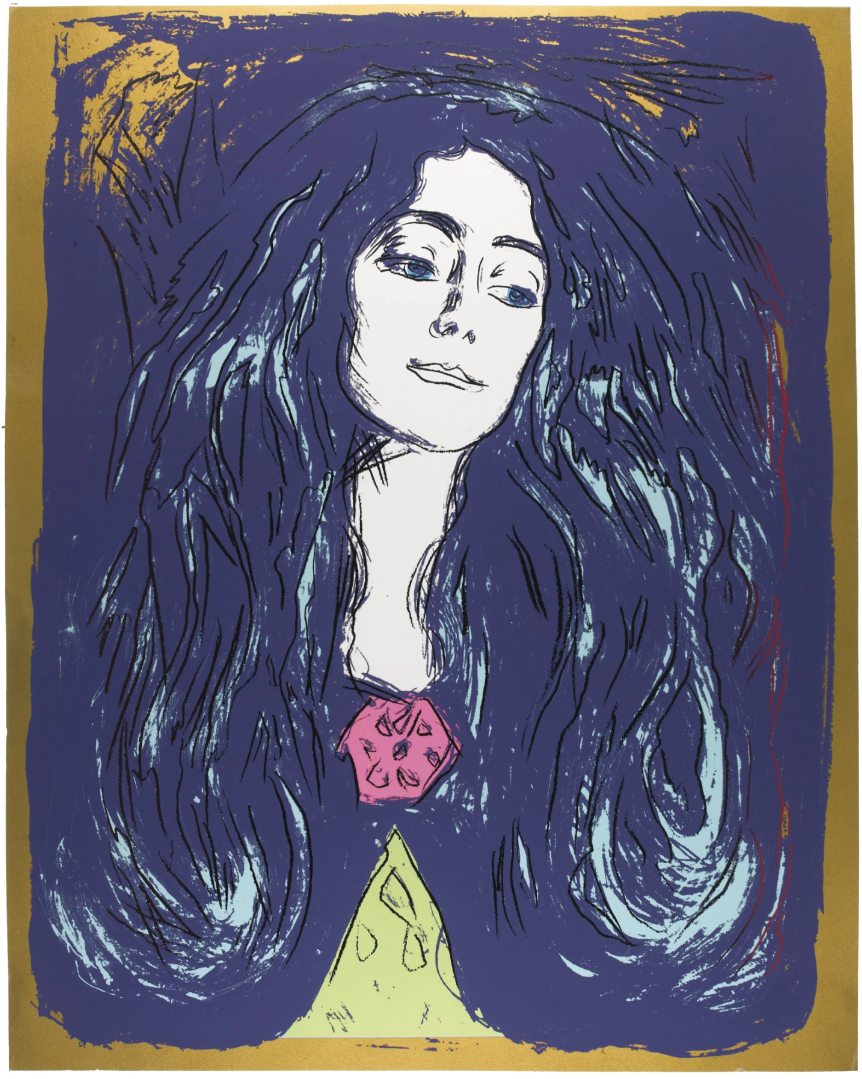
ANDY WARHOL
Eva Mudocci (After Munch) (F. & S. IIIA.59), 1984
Screenprint in a unique combination of colors on Lenox Museum Board
Sheet: 40 x 32 1/8 inches (101.6 x 81.5 cm)
With the Andy Warhol Estate and Andy Warhol Foundation stamps verso
Annotated ‘UP34.53‘ and with the initials ‘VF ‘ in pencil
Sotheby’s London: 19 September 2012
Estimated: GBP 100,000 – 150,000
GBP 121,250 / USD 196,585
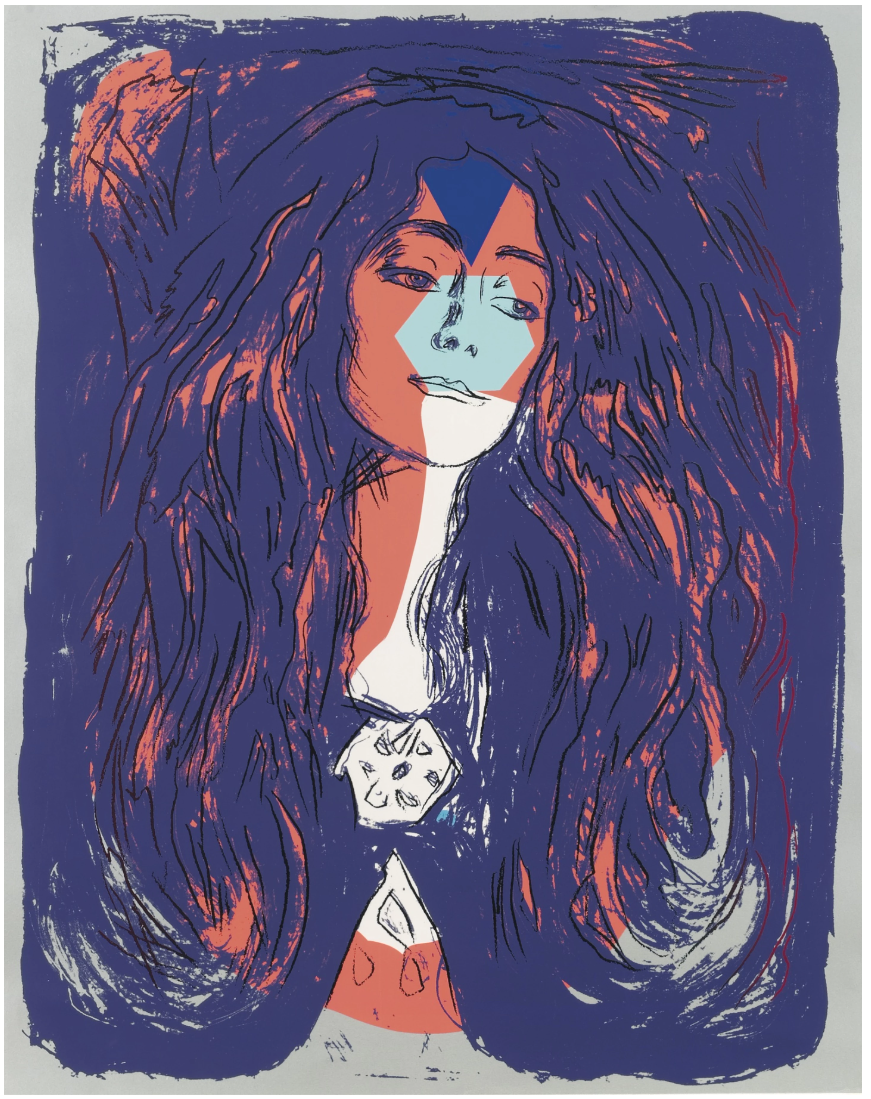
ANDY WARHOL
Eva Mudocci (after Munch) (F.& S. IIIA. 59), 1984
Screenprint in a unique combination of colors on Lenox Museum Board
Sheet: 40×32 inches (101.6 x 81.3 cm)
With the Andy Warhol Estate stamp and Andy Warhol Foundation stamp verso
With the number UP34.54 in pencil