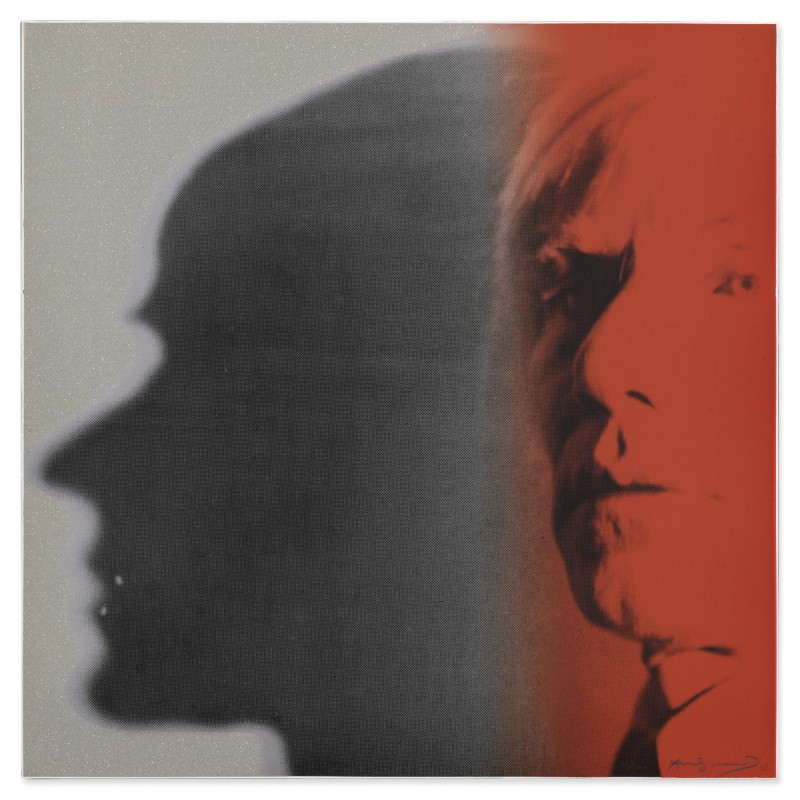
The Shadow
from Myths
Medium: Screenprint in colors on Lenox Museum Board with diamond dust
Year: 1981
Sheet: 38×38 inches (96.5 x 96.5 cm)
Edition: 200
Artist’s Proofs: 30 AP
Printer’s Proofs: 5 PP
Exhibitor’s Proofs: 5 EP
Hors Commerce: 1 HC
Trial Proofs: 30 TP in unique color combination, most with diamond dust
(see Feldman & Schellmann IIB.267)
Publisher: Ronald Feldman Fine Arts, New York
Printer: Rupert Jasen Smith, New-York
Literature: Feldman & Schellmann II.267
Each signed and numbered in pencil
With the printer’s blindstamp
With the artist’s and publisher’s copyright inkstamps on the reverse
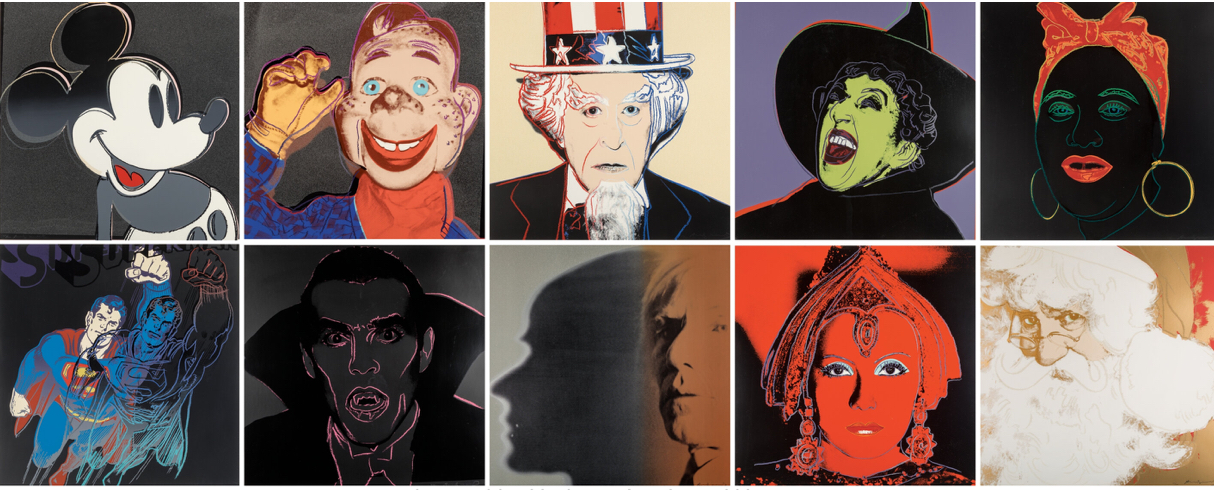
The Shadow is part of Myths
(Click on picture below to access the Catalogue Entry)
In The Shadow, Warhol portrayed himself as “The Shadow”, a popular radio crime fighter from the 1930s, during Warhol’s childhood. This work also references Warhol’s earlier interest in shadows as a broader theme in the mid 1970’s. The Shadow features the artist’s self-portrait. On the right side of the composition, the viewer sees Warhol’s face bathed in washes of deep red. The rest of the composition shows Warhol’s shadow in a contrasting cool blueish grey. the light source comes in harshly from the right, which highlights the artist’s profile. The use of color-blocking further accentuates the difference between Warhol himself and his shadow. The placement of the artist’s face and the direction his shadow is facing gives the viewer a sense of a split self, or another persona.
In The Shadow, we see the profile of a Hitchcock-ian shadow as well as its creator, Warhol himself, looking out toward the viewer. With this self-portrait, Warhol neatly inserts himself into the pantheon of American icons. This is an act of extreme hubris, yet it is completely valid. By 1981 Warhol had become the epitome of fame that he was always fascinated by in his early years. He looks out quizzically, as if he is telling his audience “this is what you have created.” However, it is important to note that Warhol makes his shadow the focus of the work rather than his face. By making his shadow the main subject, Warhol demonstrates that he is ironically aware that people are obsessed with the idea of him rather than who he is as a person. The myth of Warhol is the brand that will long outlast the human being, and today we behold a painting whose commentary on American culture will last even longer.
The Shadow, 1981
Sotheby’s New-York: 8 November 2023
Estimated: USD 2,000,000 – 3,000,000
USD 3,085,000
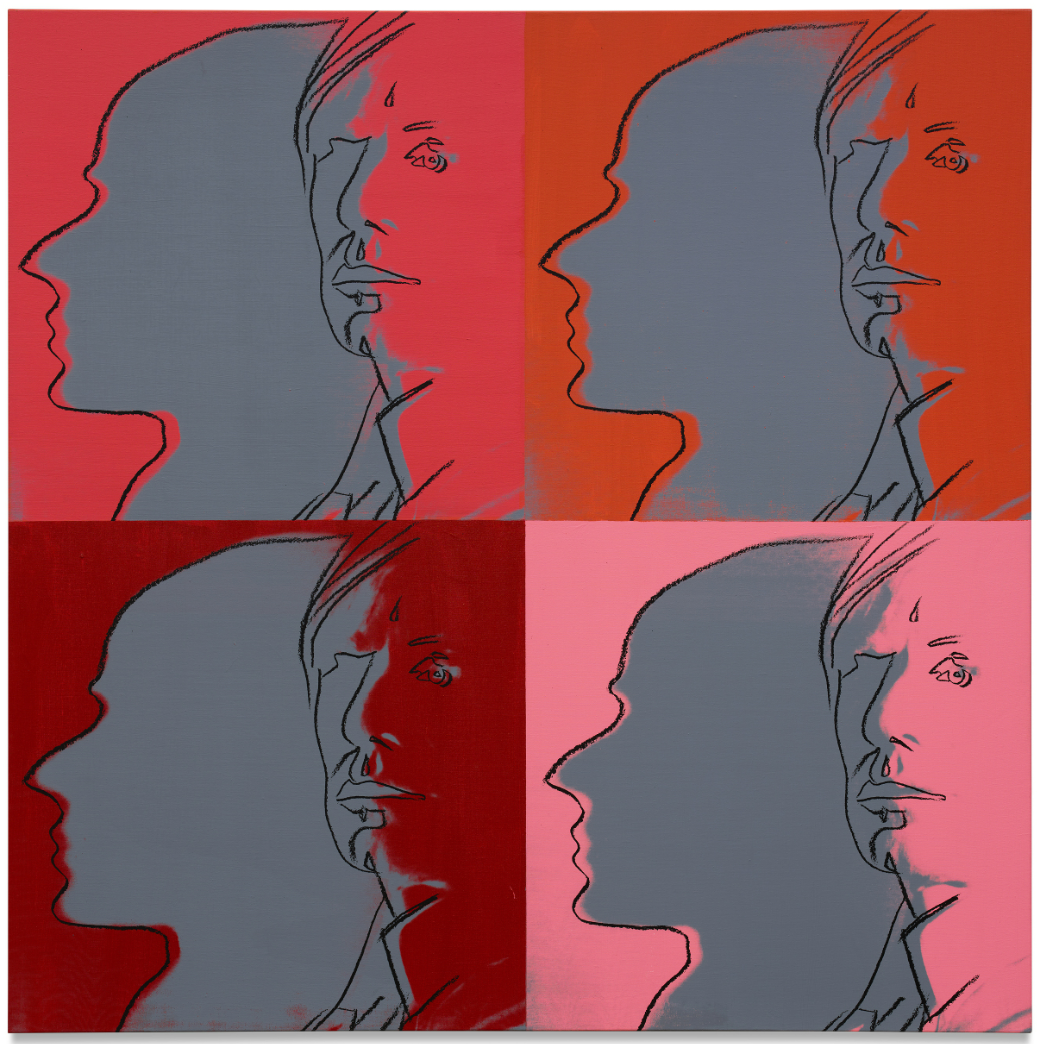
ANDY WARHOL (1928 – 1987)
The Shadow, 1981
Acrylic and silkscreen ink on canvas
60×60 inches (152.4 x 152.4 cm)
Signed and dated 1981, stamped by The Estate of Andy Warhol
Stamped by The Andy Warhol Foundation for the Visual Arts
Numbered PA51.002 (on the overlap and on the stretcher)
Shown in profile in fluorescent scarlet and pink, burgundy and navy, Warhol and his shadow appear four times over in his 1981 The Shadow: a mysterious and haunting immortalization of his meticulously cultivated artistic persona. The artist’s gaze alarmingly direct yet his face shrouded in harsh chiaroscuro. The present work has remained in Emily Fisher Landau’s collection for over two decades, and other works containing this uncanny double portrait are held in such major museum collections as The Museum of Modern Art, New York; The Whitney Museum of American Art, New York and the Tate, London. Lauded for his catalytic recalibrations of American Pop, Warhol, alongside a posse of omnipresent, universally recognizable faces, asserts his status as an icon in his own right.
The Shadow presents a resounding image of Warhol as both man and legend, challenging the act of self-depiction with unrivaled experimentation and intensity. The Shadow belongs to Warhol’s Myth series, in which Warhol conjures characters from the pantheon of American popular culture—into which Warhol, notably, places himself. Uncle Sam and Mickey Mouse, Santa Claus and Superman happily coexist in Warhol’s electrically hued court, leaving the viewer struck simultaneously by fascination and anxiety. These are the contemporary celebrity’s predecessors, spectral and saturated in a pumped-up rainbow, and Warhol looks on as both prophetic creator and participant. Marrying themes and processes developed over the course of Warhol’s titanic career, The Shadow joins his punchy self-portraiture and chromatically brilliant silkscreen technique with the recurring shadow motif.
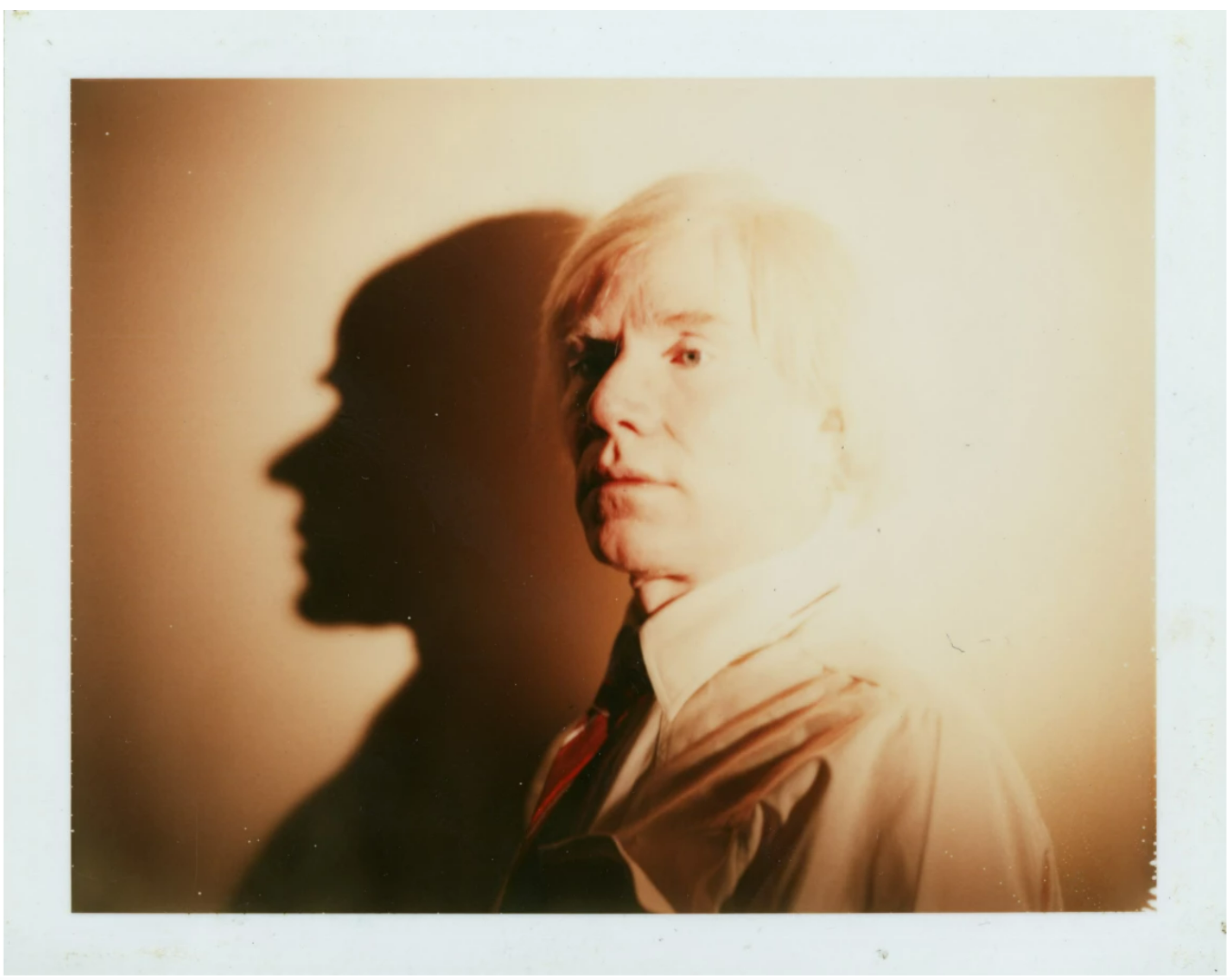
ANDY WARHOL, SELF-PORTRAIT, 1981. THE ANDY WARHOL MUSEUM, PITTSBURGH. IMAGE © THE ANDY WARHOL FOUNDATION FOR THE VISUAL ARTS, INC. COURTESY OF THE ANDY WARHOL MUSEUM AND THE POLAROID MUSEUM. ART © 2023 ANDY WARHOL FOUNDATION FOR THE VISUAL ARTS / ARTISTS RIGHTS SOCIETY (ARS), NEW YORK
Executed just six years before his unexpected death, the artist’s self-effacing portrait in The Shadow reflects Warhol’s lifelong concerns with the transience of life, conveying a prophetic consciousness of his fate. Warhol’s evasive and enigmatic manner of depicting himself is likewise a thread from his earlier production. In his first series of self-portraits as an established artist, created from 1963-64, Warhol shrouds himself in dark sunglasses and a trench coat, but in the present work, he unsheathes himself from his costume, relying only on his shadow to retain an air of inaccessibility. Throughout his entire career, Warhol employed his self-portraiture as a means of identity construction, and in The Shadow we witness the complete conflation of the artist and the sensational style for which he garnered so much fame and attention. In the tireless performance of his carefully preened persona, Warhol established an aura of both exposure and anonymity.
“I’d prefer to remain a mystery. I never like to give my background and, anyway, I make it different all the time I’m asked.”
In the present work, Warhol looks over his shoulder and casts a distorted, elongated shadow on the wall behind him. Under the theatrical lighting exaggerated further by the filter of his Polaroid camera, Warhol and his shadow appear conjoined. He once again calls upon the shadow as a tool, which appeared in his early portraiture and reappeared in his later abstractions. Here, it obscures nearly half of his face, reading as an opaque field and precluding any clear delineation of the contours on his proper right side. Throughout the 1960s, Warhol used the shadow to mystify and obscure his silkscreened icons, harnessing its associated symbolism to enhance a reading of transience and mortality. In the 1970s, he isolated the motif and abstracted it, transforming the shadow from an element of his canvases to the sole subject of them. Warhol’s re-visitation of the motif in the final decade of his career, however, signals his attempts to mask his persistent fears, insecurities and doubts, both serving as an aesthetic and metaphorical aid. Oxymoronically, the shadow, despite its association with darkness and absence, is inherently an ephemeral replication of a physical object: an indication of life. The shadow’s connotative contradictions offer clarity on the inclusion of this self-portrait in his Myths series. This moment of congratulation is met with vulnerability: he has cemented his place as an American icon, but the icons amongst which he situates himself are all notably past, a feeling for and fear of the closeness of an inevitable end.
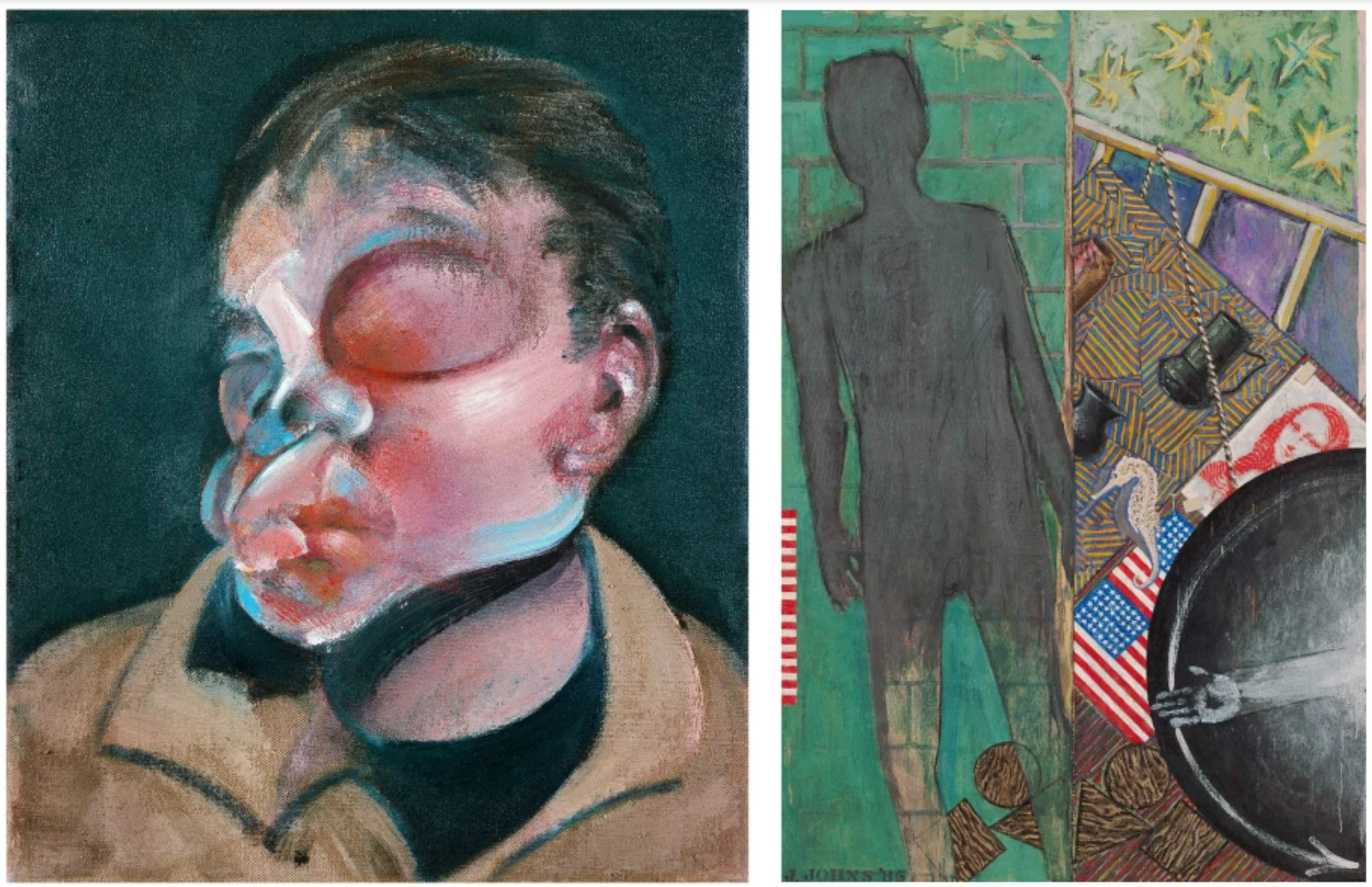
LEFT: FRANCIS BACON, SELF PORTRAIT WITH INJURED EYE, 1972. PRIVATE COLLECTION. ART © THE ESTATE OF FRANCIS BACON / DACS LONDON 2023. ALL RIGHTS RESERVED. RIGHT: JASPER JOHNS, SUMMER, 1985. IMAGE © THE MUSEUM OF MODERN ART/LICENSED BY SCALA / ART RESOURCE, NY. ART © 2023 JASPER JOHNS / ARTISTS RIGHTS SOCIETY (ARS), NY
More than any artist before him, Warhol’s image was inextricably bound to his art, as he lived within the realm of celebrity that his work so crucially examined. The Shadow epitomizes a lifelong obsession with image and identity, life and death, and depicts an artist who had become just as famous as the legion of celebrity sitters he had painted. Here the visage of the artist is of such closely choreographed clarity and obfuscation that we remain desperate to understand him, even once we cease to look. The silkscreen captures every minute detail of his face, from his lips, elegantly outlined, to his gaze over his shoulder. If Warhol’s credo was the seductive surface, here it reaches its apogee – he has compressed his identity, his interiority, his secrets in the totalizing flatness of this canvas. It is in the spectacular moments of introspection that characterize the artist’s last years that his conceptual premise reaches its height: the marriage of man and myth, the confrontation of death, and the incontestable gravity and immortality of Warhol’s work in the contemporary world.
Auction Market Overview
PRELIMINARY AUCTION RESULTS
As of 30 November 2025
The Shadow sold 3 times at auction so far in 2025, at an average price of USD 46,904.
The Shadow did not sell at auction in 2024.
The Shadow sold 3 times at auction in 2023, at an average price of USD 47,093. It sold at Christie’s online on 27 September 2023, for GBP 40,320 (USD 48,920), its highest price for 2023.
The Shadow sold twice at auction in 2022, at an average price of USD 47,962. It sold at Christie’s online on 28 September 2022, for GBP 48,320 (USD 51,923), its auction record.
The Shadow sold 4 times at auction in 2021. It sold at Sotheby’s in London on 17 March 2021, for GBP 50,400 (USD 69,980), its auction record.
Regular Editions
Mainichi: 18 October 2025
Estimated: JPY 6,000,000 – 8,000,000
JPY 6,900,000 / USD 45,810
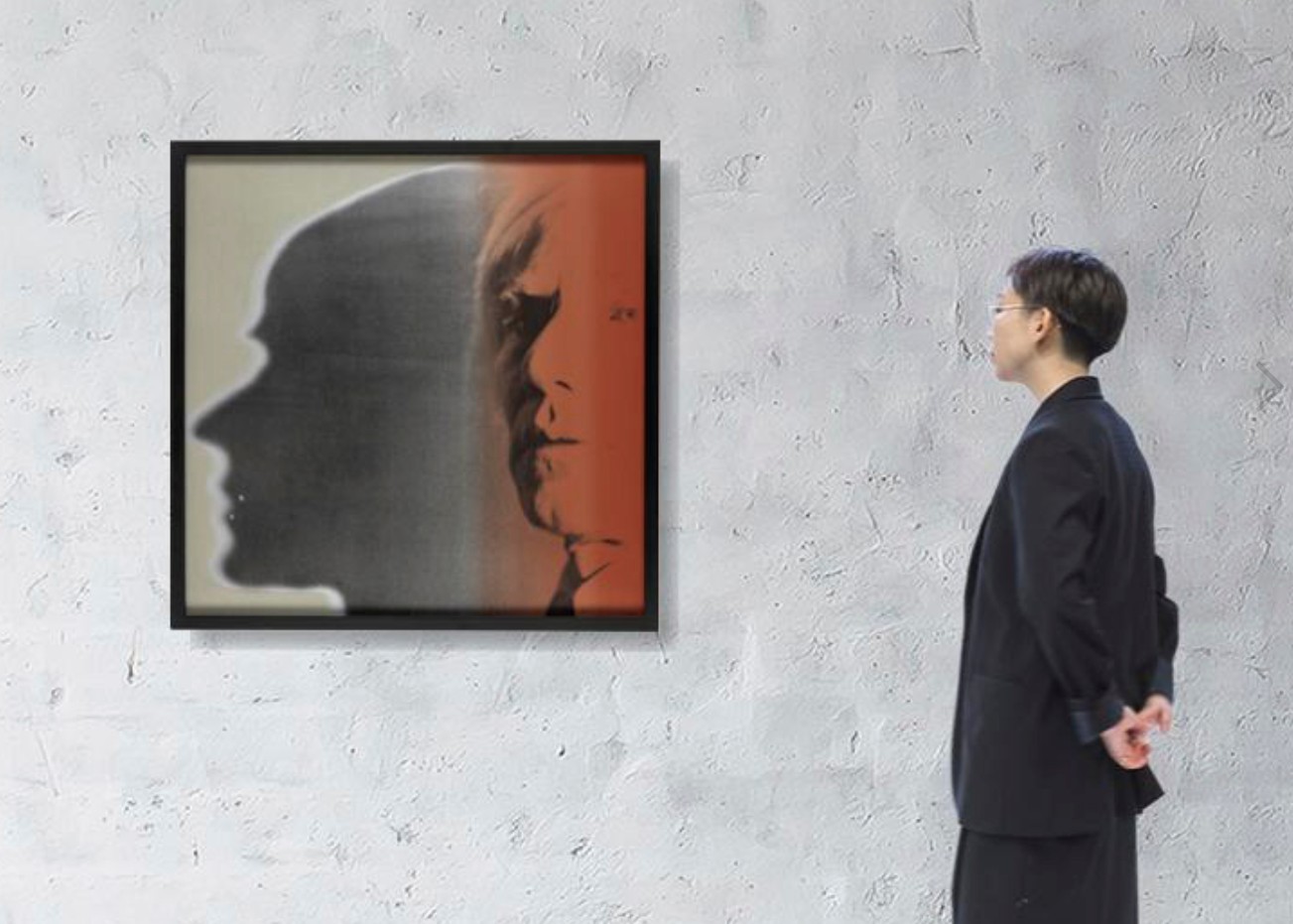
ANDY WARHOL
The Shadow (F & S.II.267), 1981
From Myths
Screenprint and diamond dust
Signed and ed.200 at lower right image
With a copyright stamp on verso
Wright: 3 April 2025
Estimated: USD 40,000 – 60,000
USD 50,800
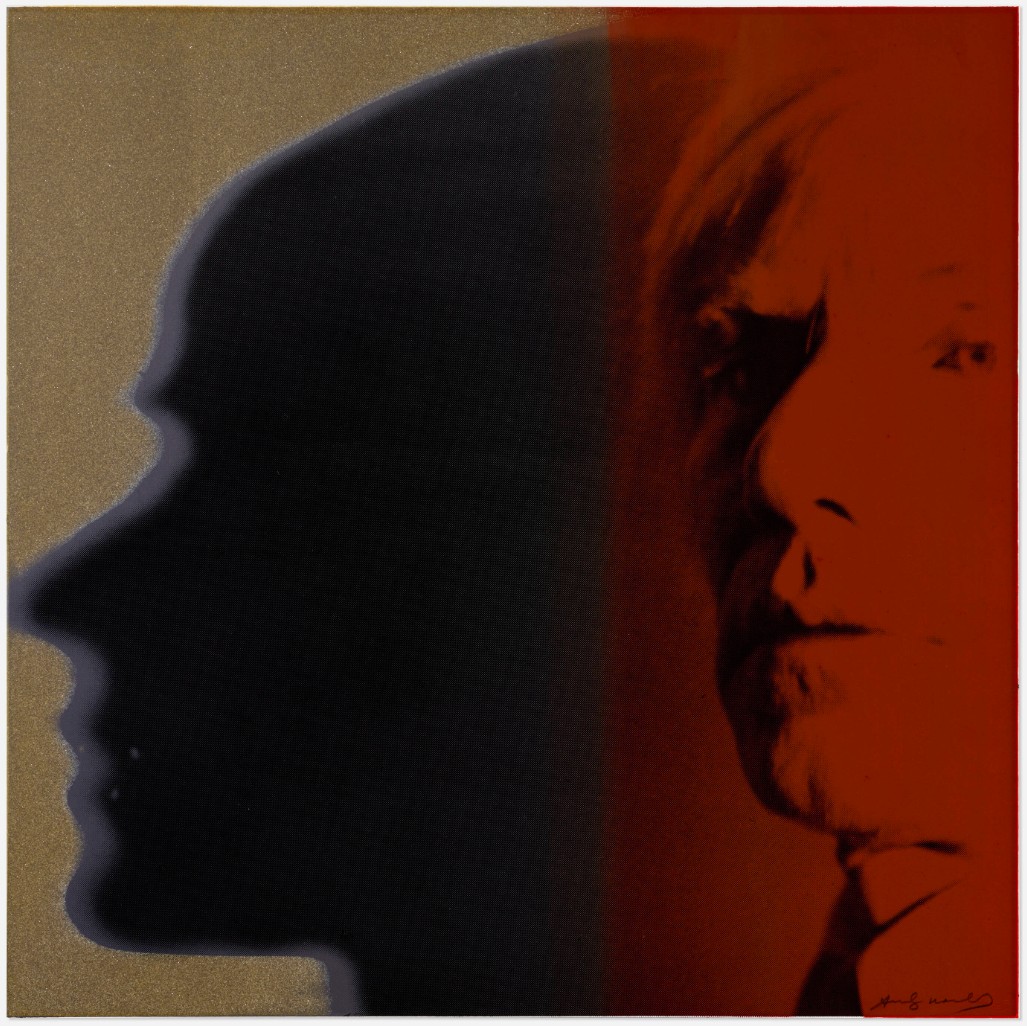
ANDY WARHOL (1928–1987)
The Shadow (from the Myths suite) (Feldman/Schellmann II.267), 1981
Screenprint in colors with diamond dust on Lenox Museum Board
Signed and numbered to lower right ‘AP 15/30 Andy Warhol’ with publisher’s inkstamp to verso
An artist’s proof 15 of 30 apart from the edition of 200
Christie’s online: 14 February 2025
Estimated: USD 40,000 – 60,000
USD 44,100
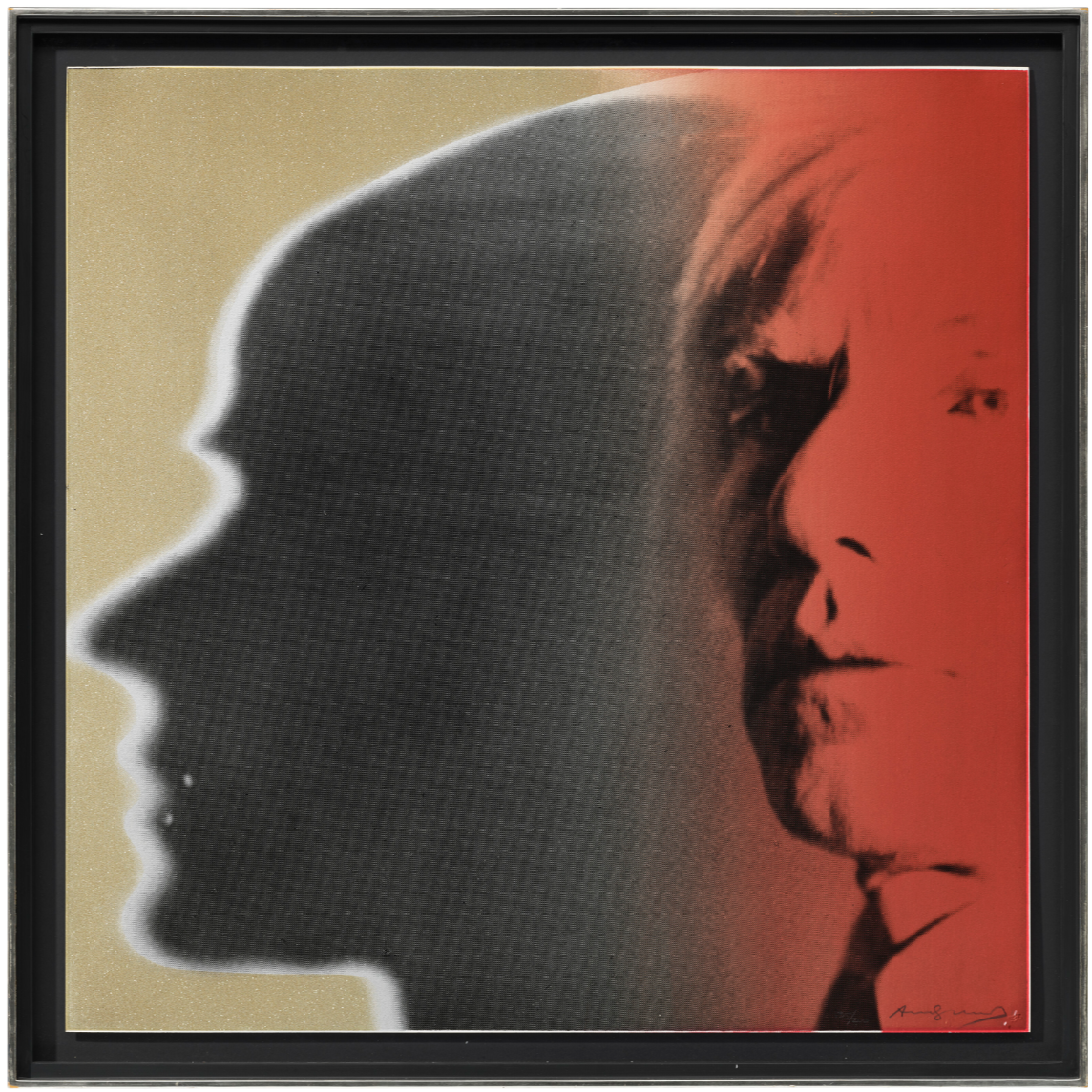
ANDY WARHOL (1928-1987)
The Shadow, from Myths (Feldman and Schellmann II.267), 1981
Screenprint in colors with diamond dust on Lenox Museum Board
Signed in pencil, numbered 135/200 (there were also 30 artist’s proofs)
Sotheby’s New-York: 24 October 2023
Estimated: USD 30,000 – 50,000
USD 48,260

ANDY WARHOL (1928 – 1987)
The Shadow, from Myths (F. & S. II.267), 1981
Screenprint in colors on Lenox Museum Board
Signed in pencil and numbered 29/200
Christie’s London: 27 September 2023
Estimated: GBP 30,000 – 50,000
GBP 40,320 / USD 48,920
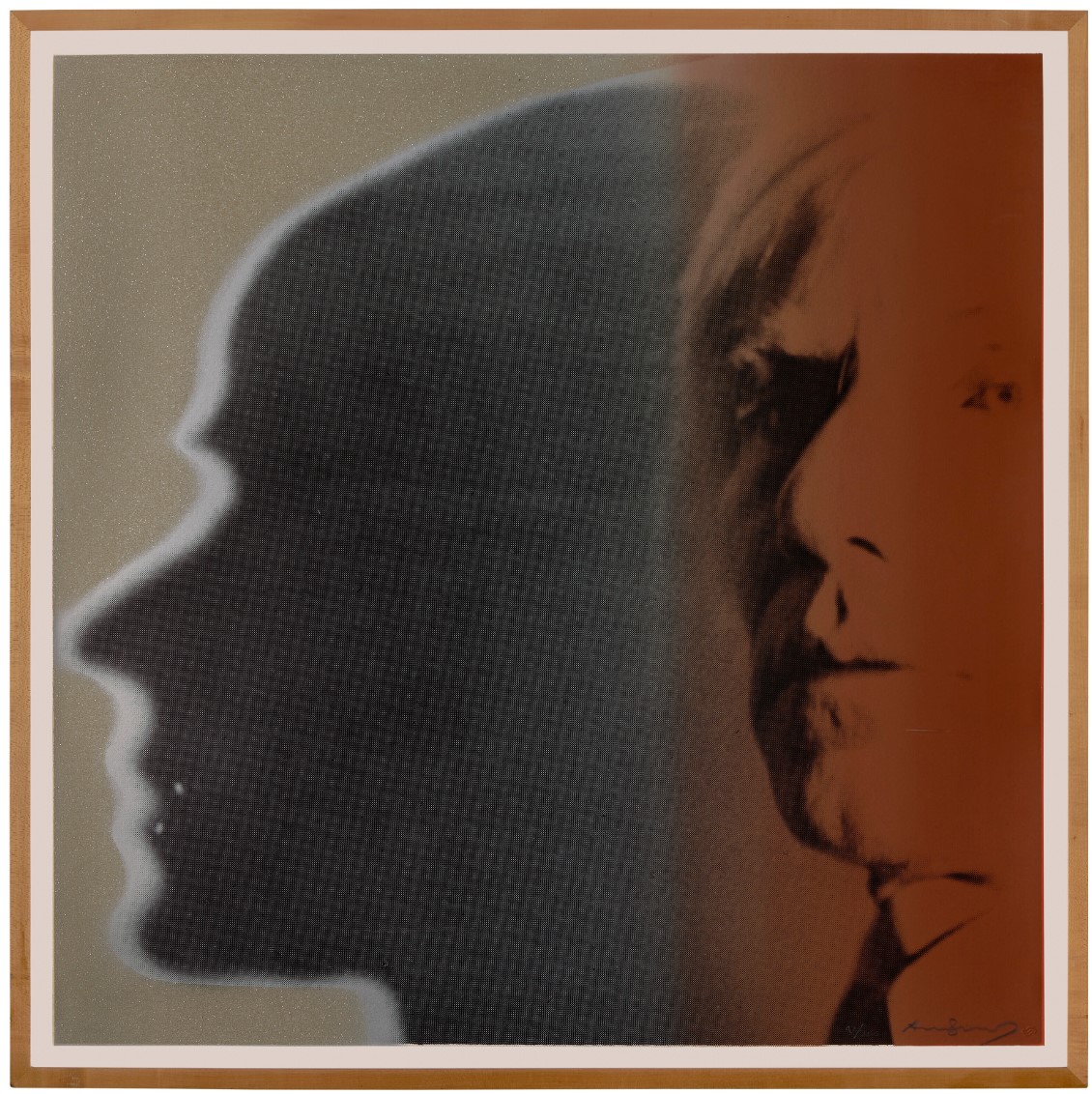
ANDY WARHOL (1928-1987)
The Shadow, from: Myths, 1981
Screen-print in colors with diamond dust on Lenox Museum Board
Signed in pencil, numbered 42/200
Christie’s New-York: 20 April 2023
Estimated: USD 40,000 – 60,000
USD 44,100
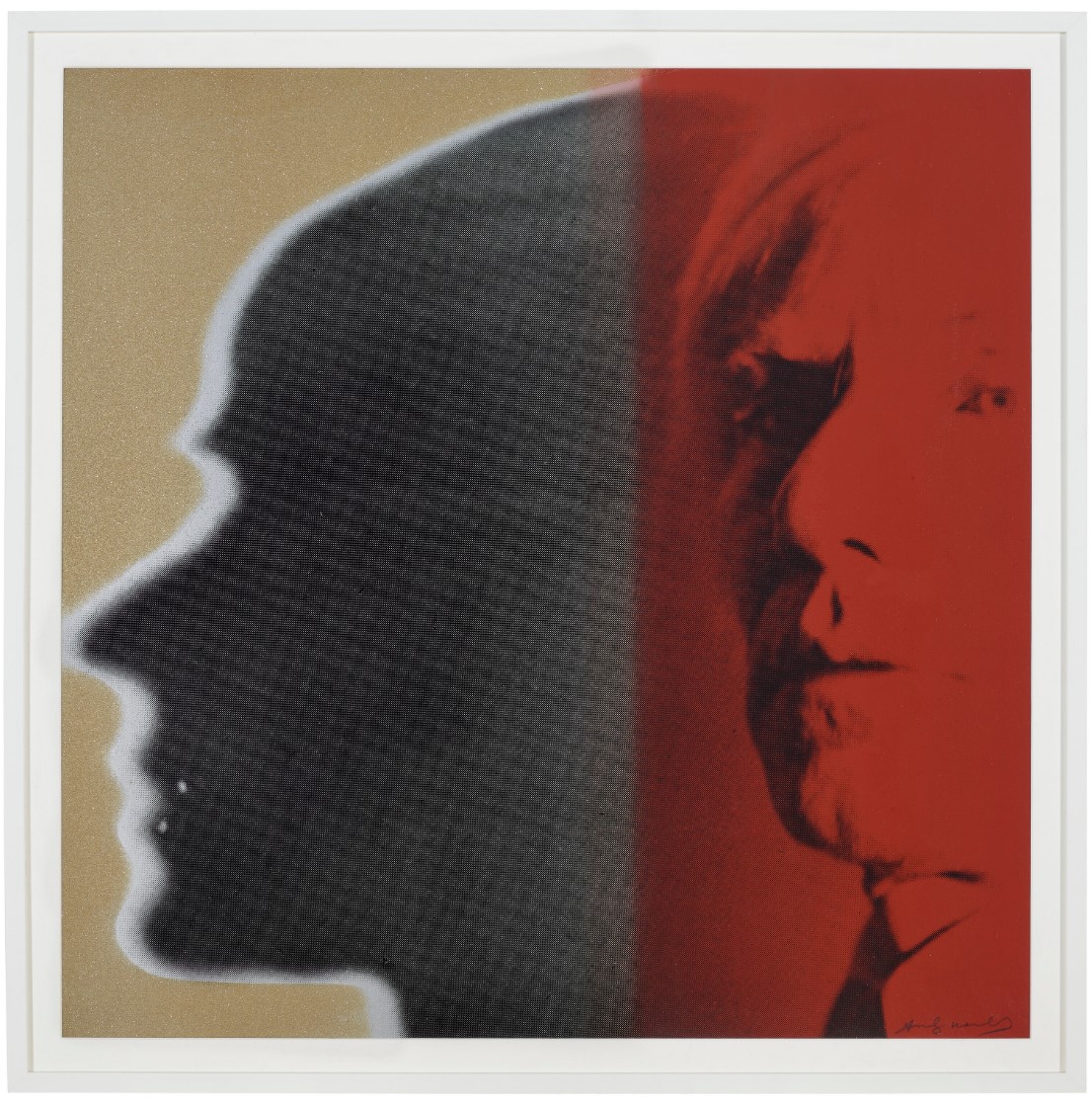
ANDY WARHOL
The Shadow, from Myths, 1981
Signed in pencil, numbered ‘AP 15/30’
An artist’s proof, the edition was 200
Sotheby’s New-York: 28 October 2022
Estimated: USD 30,000 – 50,000
USD 44,100

ANDY WARHOL (1928-1987)
The Shadow, from Myths, 1981
Screen-print in colors on Lenox Museum Board
Signed in pencil and numbered 16/200
Christie’s online: 28 September 2022
Estimated: GBP 40,000 – 60,000
GBP 48,320 / USD 51,823
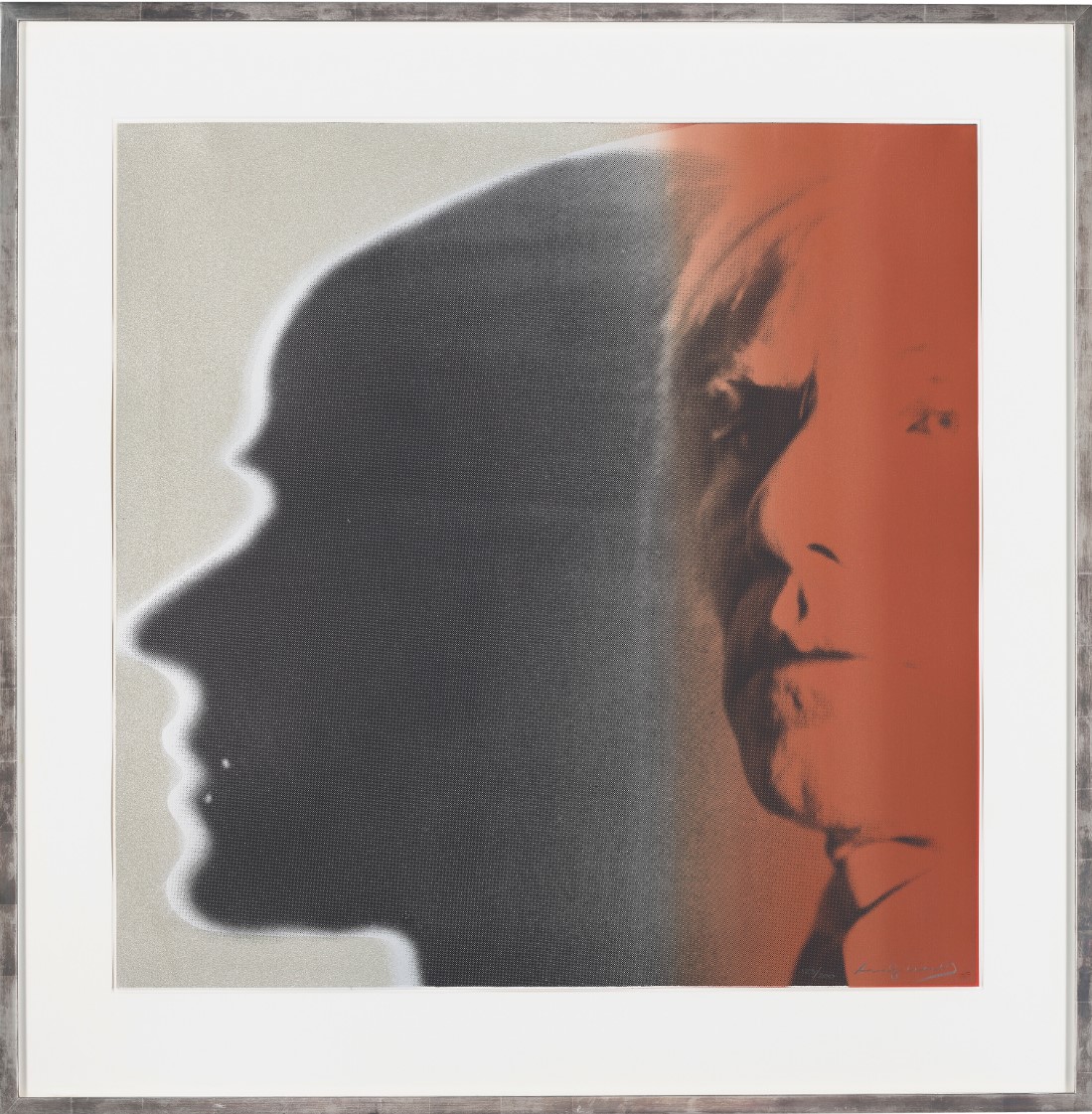
ANDY WARHOL (1928-1987)
The Shadow, from: Myths, 1981
Screen-print in colors on Lenox Museum Board
Signed in pencil, numbered 123/200
Est-Ouest Auctions Tokyo: 18 November 2021
Estimated: JPY 4,000,000 – 6,000,000
JPY 4,840,000 / USD 42,370

ANDY WARHOL (1928-1987)
The Shadow, from: Myths, 1981
Screenprint
Signed and numbered 71/200
Heritage Auctions: 22 April 2021
Estimated: USD 40,000 – 60,000
USD 43,750
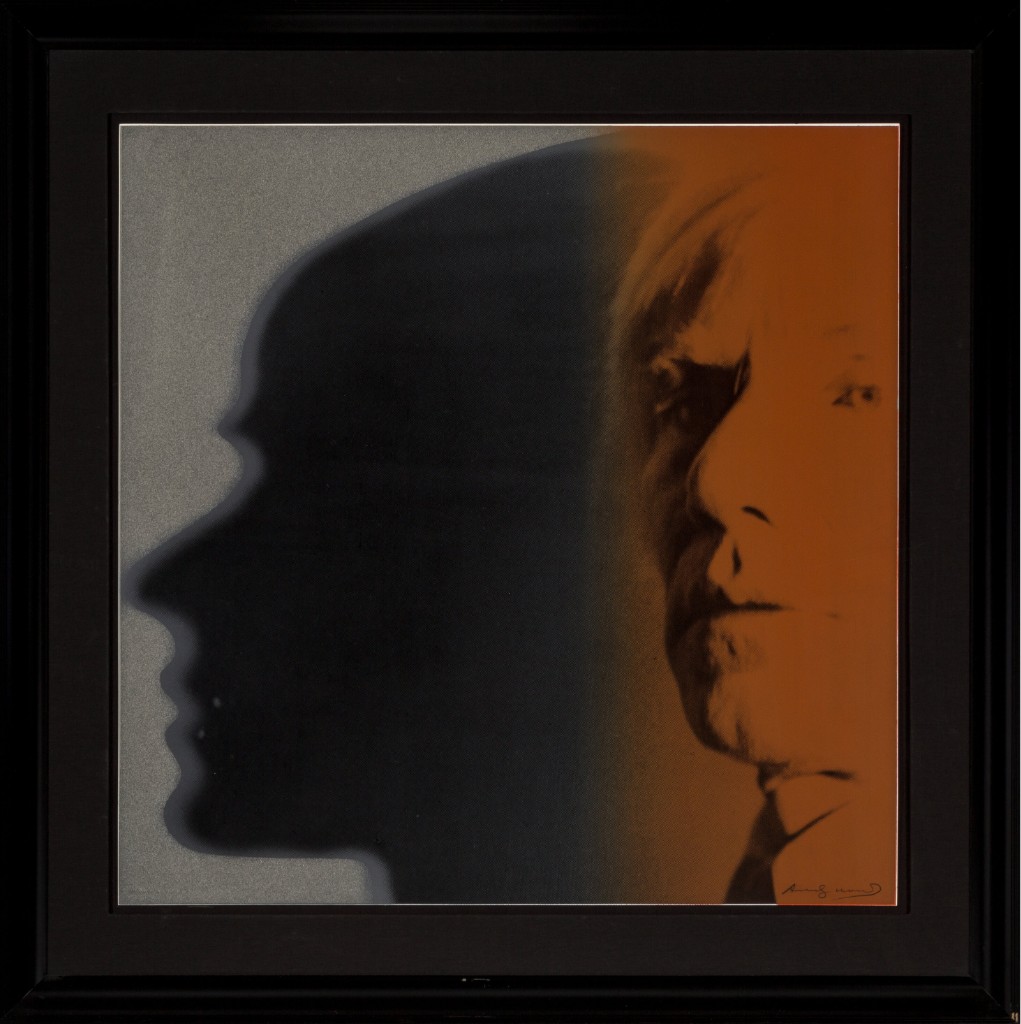
ANDY WARHOL (1928-1987)
The Shadow, from Myths, 1981
Screenprint in colors with diamond dust on Lenox museum board
Ed. 147/200 (there were also 30 artist’s proofs)
Signed and numbered in pencil lower right, with publisher’s stamp
Published by Ronald Feldman Fine Arts, Inc., New York
Phillips New-York: 22 April 2021
Estimated: USD 40,000 – 60,000
USD 44,100
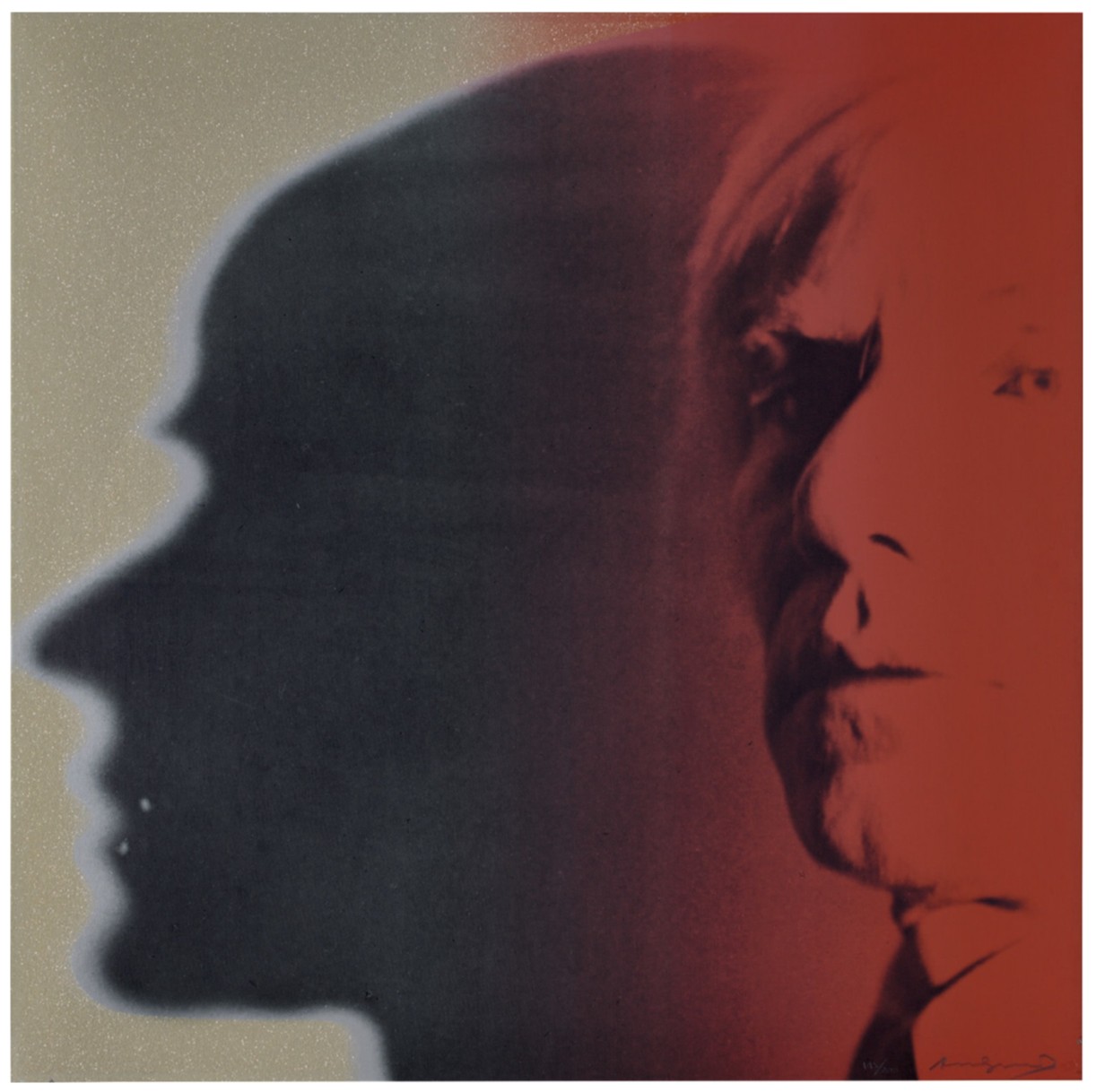
Screenprint in colors with diamond dust, on Lenox Museum Board
Signed and numbered 145/200 in pencil
Sotheby’s London: 17 March 2021
Estimated: GBP 26,000 – 36,000
GBP 50,400 / USD 69,980
AUCTION RECORD FOR THE SHADOW (REGULAR EDITION)
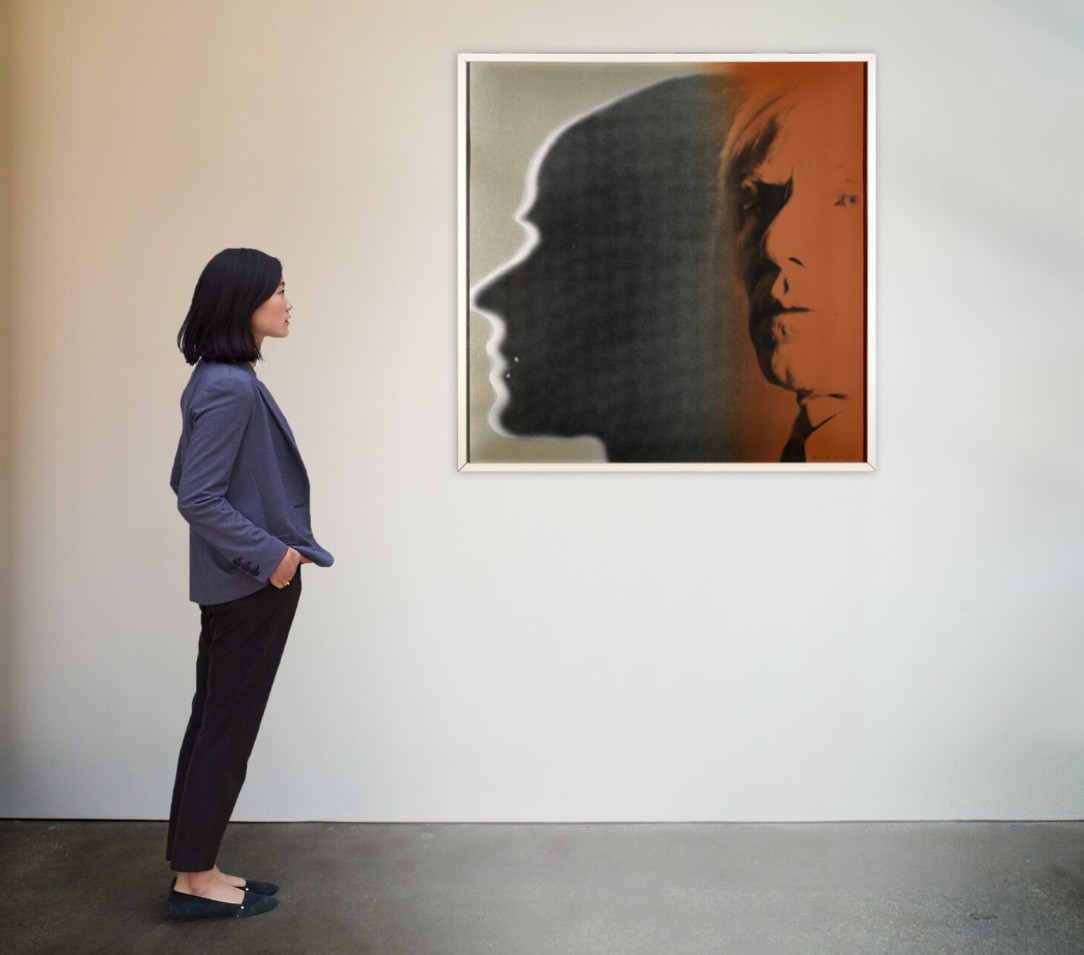
ANDY WARHOL (1928 – 1987)
The Shadow (F. & S. II.267) from Myths, 1981
Screenprint in colors with diamond dust on Lenox Museum Board
Signed in pencil, numbered 4/200
Trial Proofs
Van Ham: 1 December 2021
Estimated: EUR 35,000
EUR 90,300
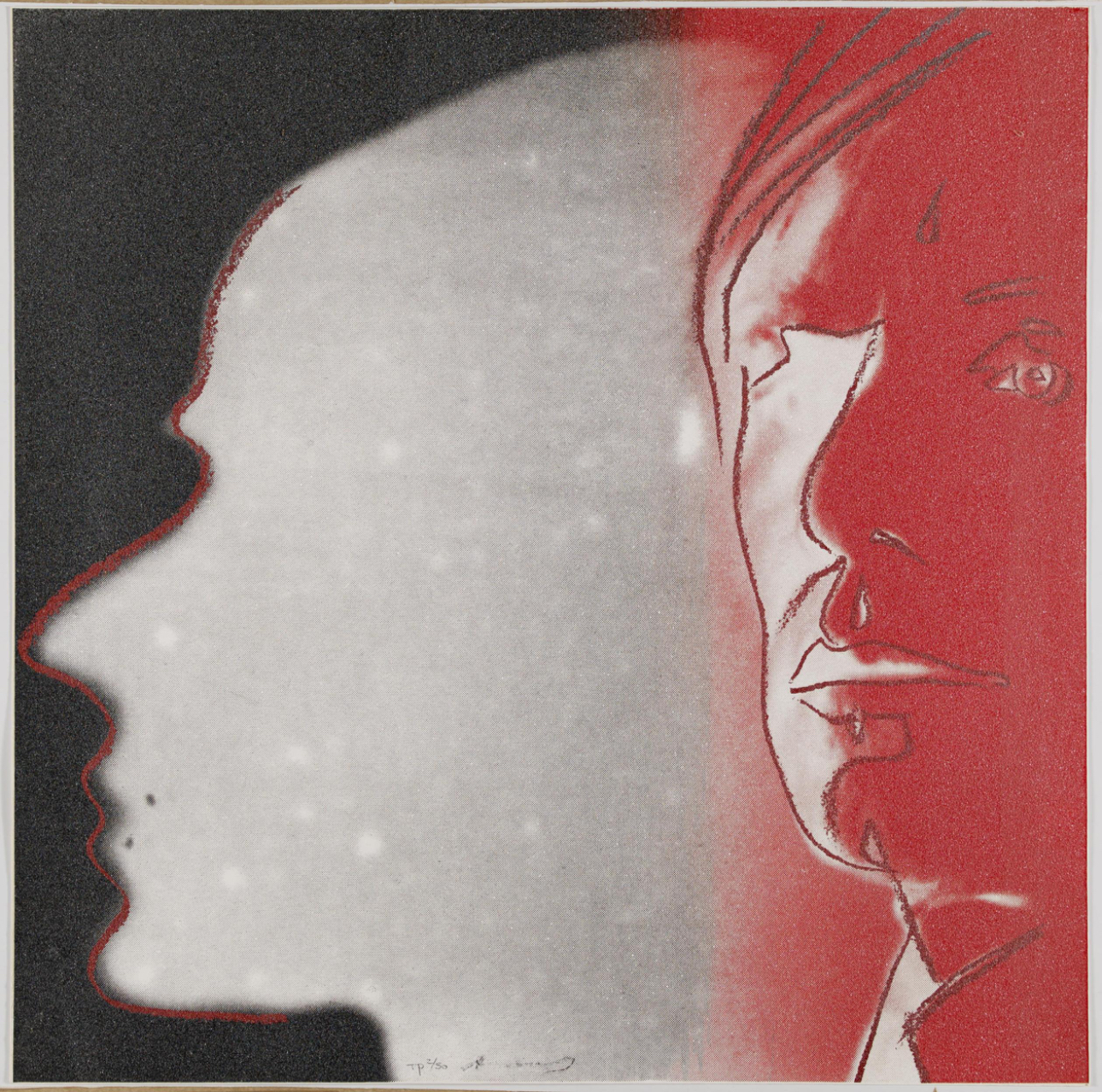
ANDY WARHOL (1928-1987)
The Shadow, from: Myths, 1981
Unique Screen-print in colors on Lenox Museum card
Signed in pencil, numbered TP 2/30
Christie’s New-York: 18 April 2019
Estimated: USD 30,000 – 50,000
USD 60,000
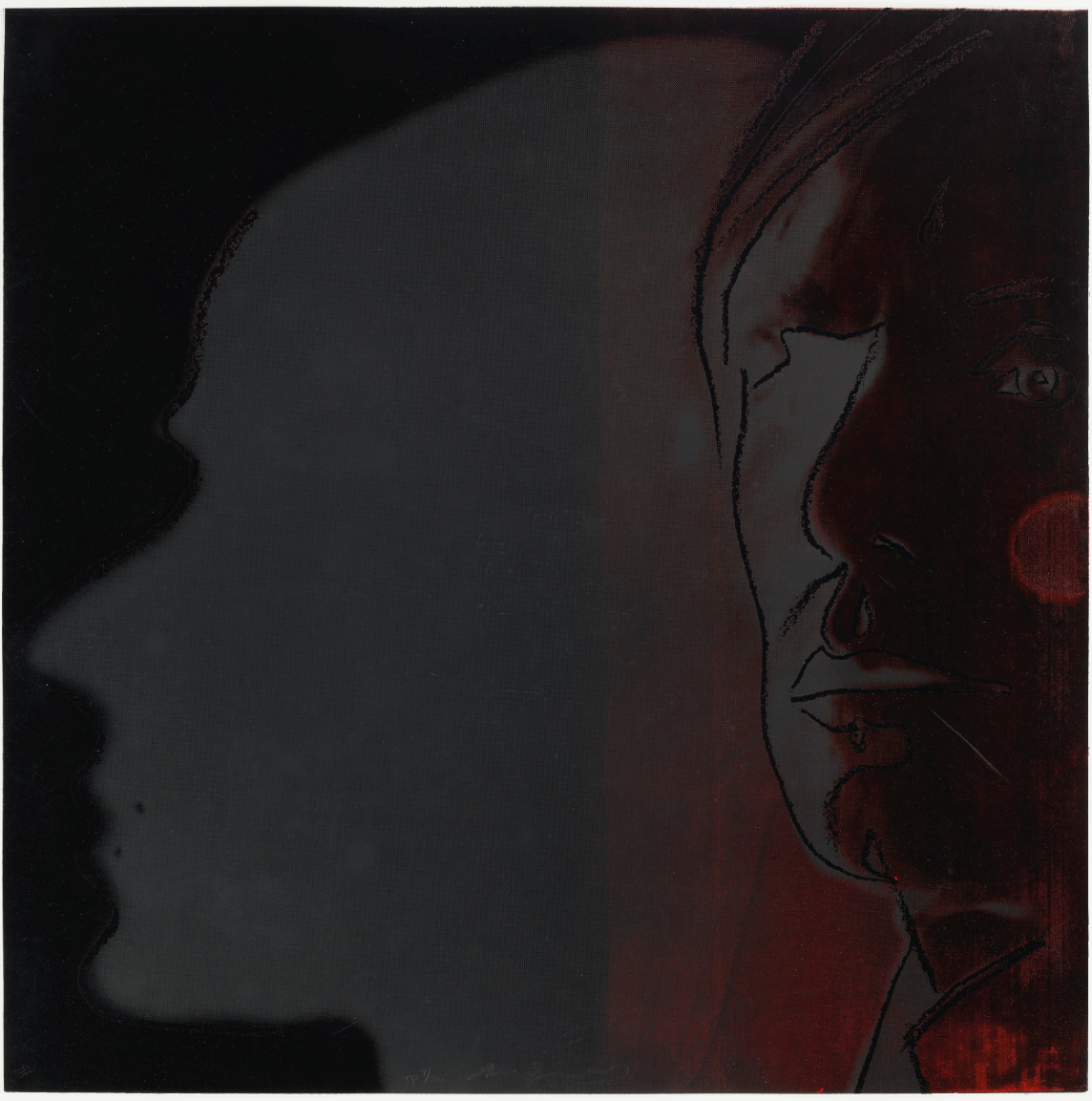
ANDY WARHOL (1928-1987)
The Shadow, from Myths, 1981
Unique screenprint in colors on Lenox Museum Board
Signed in pencil, numbered ‘TP 7/50’ (a trial proof, the edition was 250)
Phillips New-York: 26 October 2016
Estimated: USD 50,000 – 70,000
USD 50,000
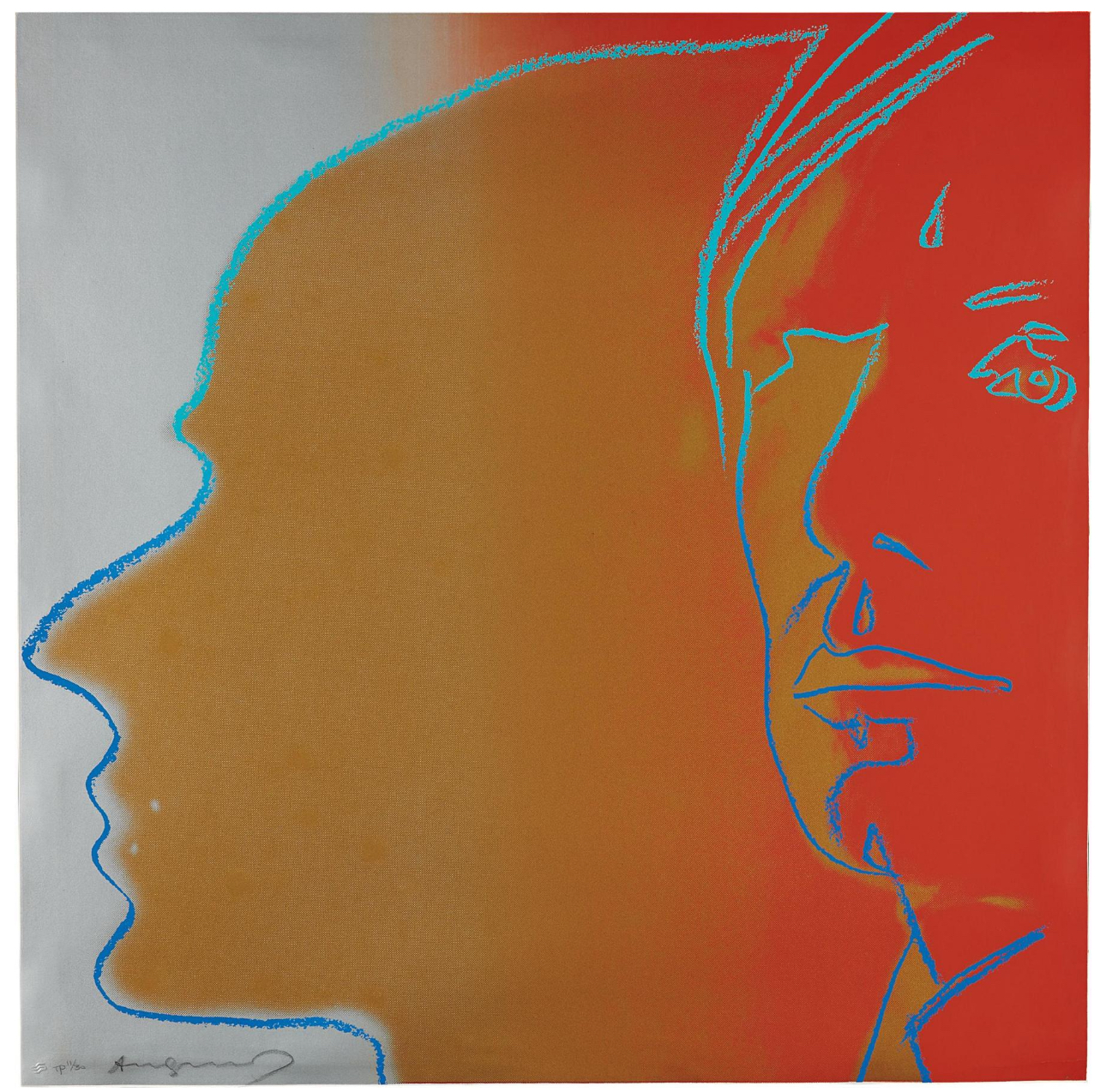
ANDY WARHOL
The Shadow, 1981
Unique screenprint in colors on Lenox Museum Board
Signed and numbered ‘TP 11/30’ in pencil
From the unique trial proof edition, the regular edition was 200 and 30 artist’s proofs