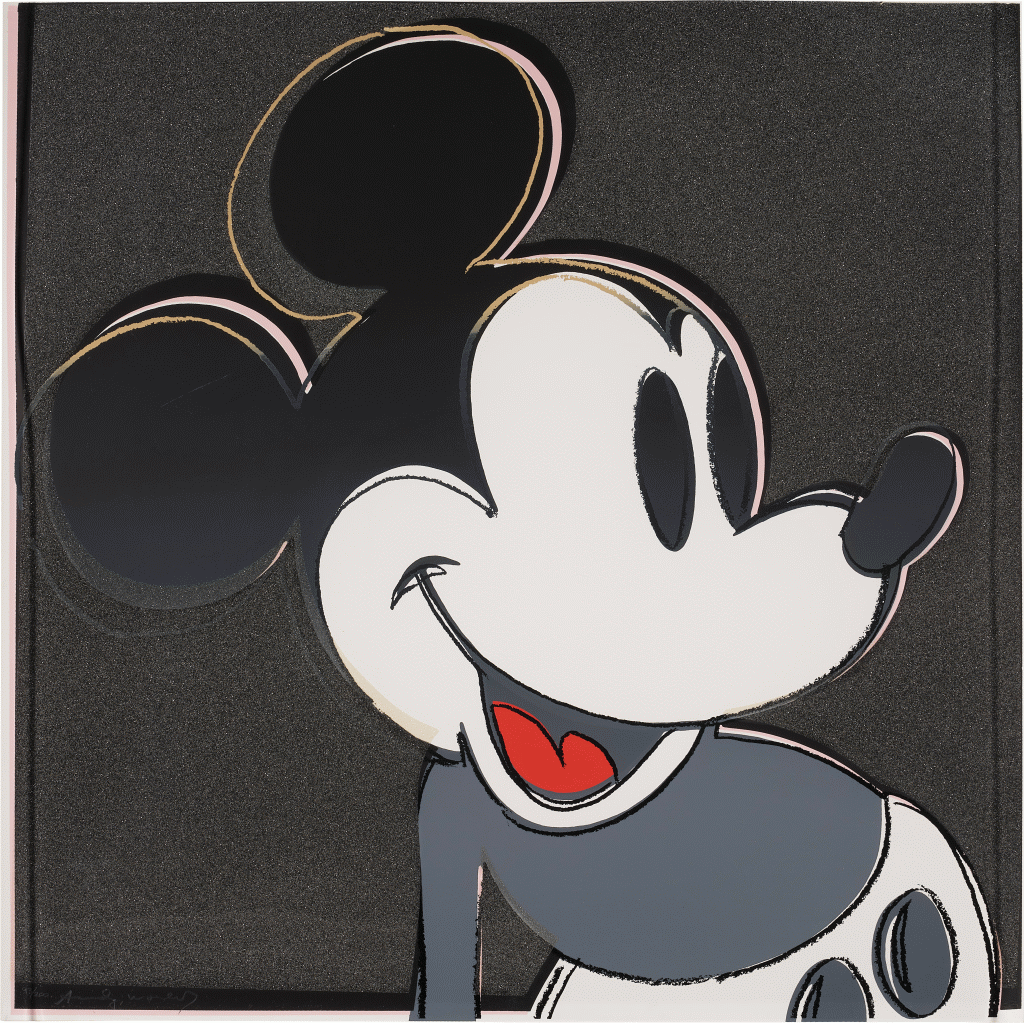
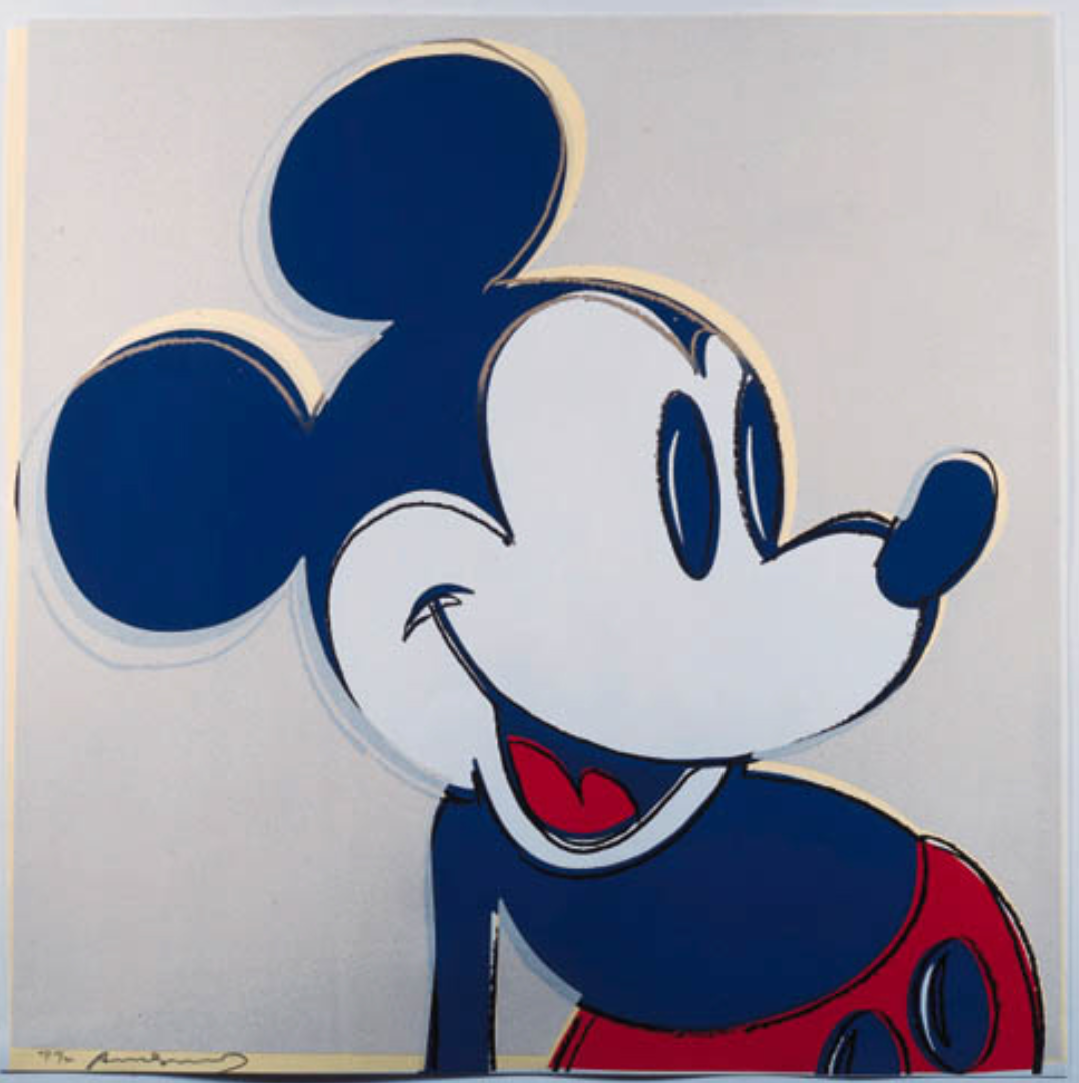
Mickey Mouse
from Myths
Medium: Screenprint in colors on Lenox Museum Board with diamond dust
Year: 1981
Sheet: 38×38 inches (96.5 x 96.5 cm)
Edition: 200
Artist’s Proofs: 30 AP
Printer’s Proofs: 5 PP
Exhibitor’s Proofs: 5 EP
Hors Commerce: 4 HC
Trial Proofs: 30 TP in unique color combination, most with diamond dust
(see Feldman & Schellmann IIB.265)
Publisher: Ronald Feldman Fine Arts, New York
Printer: Rupert Jasen Smith, New-York
Literature: Feldman & Schellmann II.265
Each signed and numbered in pencil
With the publisher’s and the artist’s copyright inkstamps on the reverse
Mickey Mouse is part of Myths
(Click on picture below to access the Catalogue Entry)
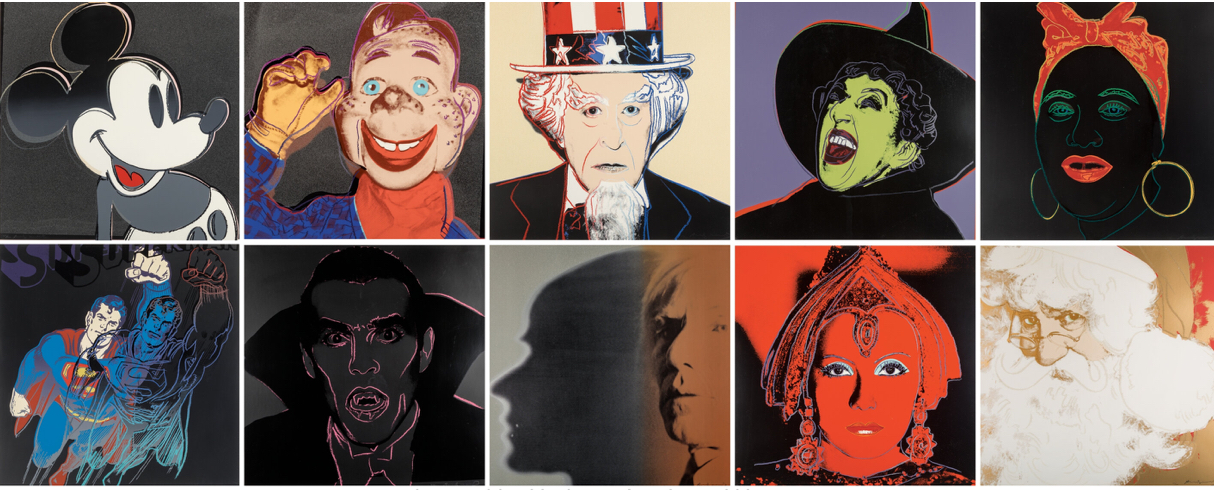
Instantly recognizable and consummately powerful, Mickey Mouse embodies Andy Warhol’s understanding of the relationship between celebrity and consumer culture in American society. In Warhol’s closely cropped, deadpan representation of Mickey Mouse, the image of carefree play and childhood innocence is conferred with media’s power to create identity and desire. Unlike Warhol’s earlier comic strip works, the Mickey Mouse composition is closely cropped and the possibility of narrative is banished in favor of focusing on the central image. Mickey is part of America’s entertainment legacy; his identity was born of and will forever be associated with the Disney name. Andy Warhol idolized Walt Disney as the consummate entrepreneur who created a successful commercial art empire.
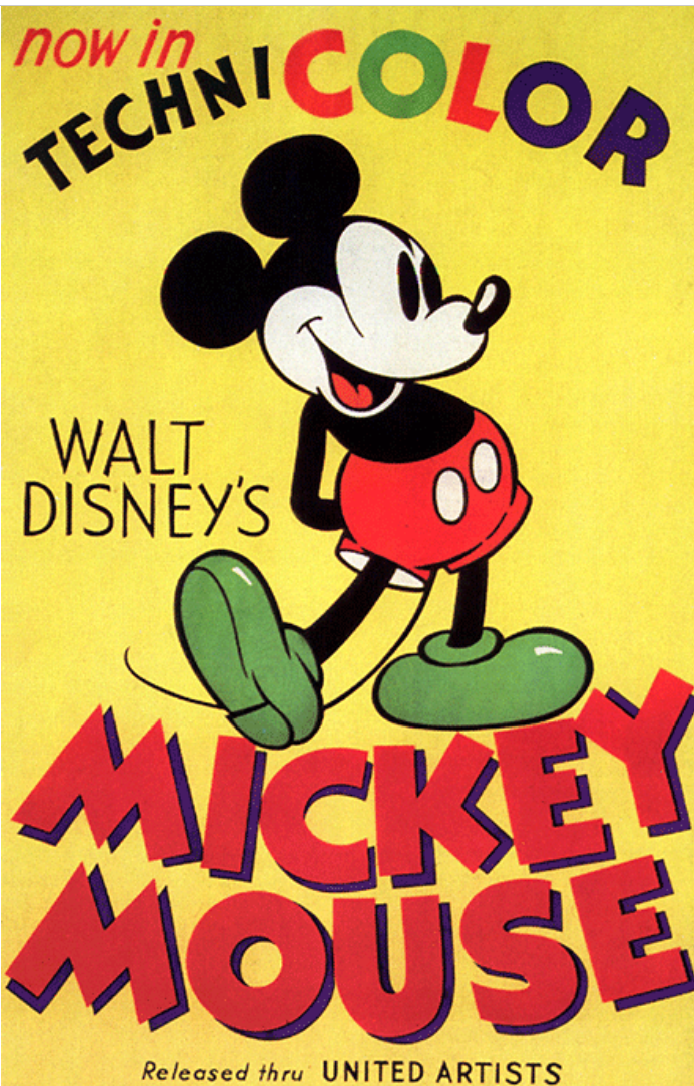
Poster for Walt Disney’s Mickey Mouse, 1935. Image: Everett Collection/Bridgeman Images
Andy Warhol consistently mentioned Walt Disney as the artist he most admired and the earliest artist to influence him. In light of this fact, it seems obvious that Warhol would turn to one of his earliest influences during the last decade of his life. As an image, Mickey Mouse not only suited his pictorial means but was also laden with meaning: there is perhaps no bigger emblem of childhood itself than Mickey Mouse. In Quadrant Mickey Mouse, Warhol depicts the happy-go-lucky cartoon mouse in classic fashion. Viewed in profile, Mickey’s jaunty round ears and bright, smiling face instantly transport the viewer to childhood reveries spent in front of the television or Sunday paper.
“Yes. I was interested to see how other people did so much of the work. I liked the show so much that I went to see The Fox and the Hound. That movie looked like it was done 50 years ago because the backgrounds were so painterly. But I wish the Whitney show had been larger; I wanted to see more”

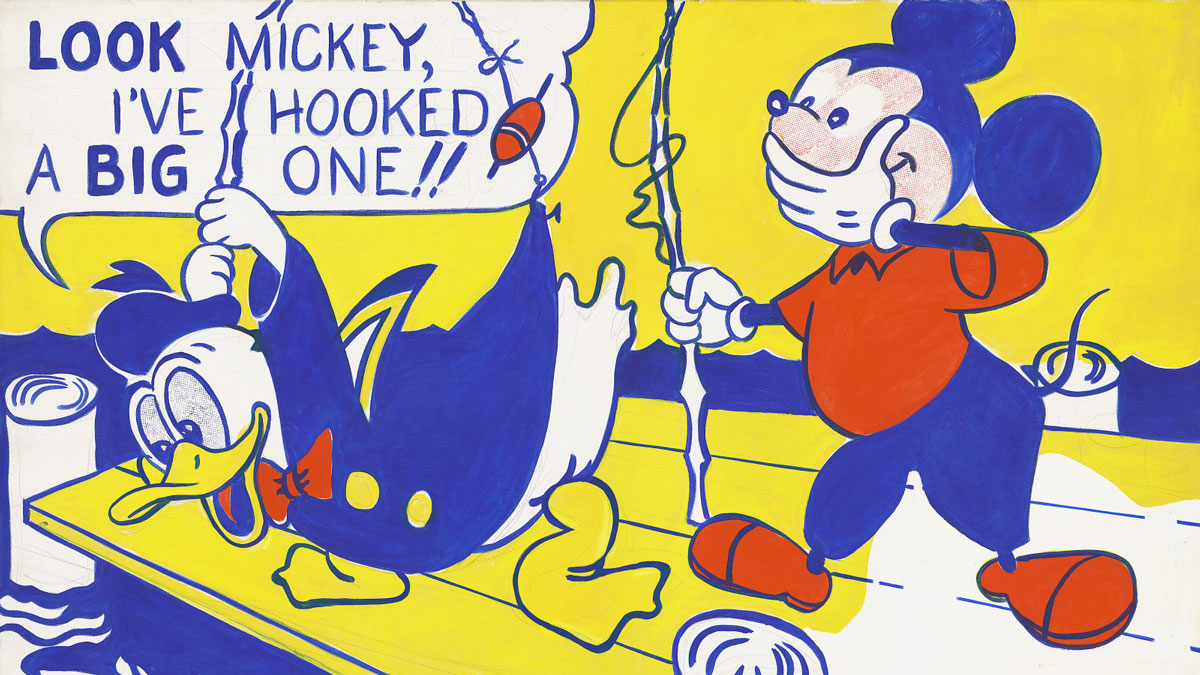
By the time Warhol painted Mickey Mouse, the Disney brand was nearly sixty years old and a global entertainment phenomenon, first appearing to major audiences in the black-and-white “talkie” Steam Boat Willie in 1928. Almost immediately, the Mickey Mouse character spread around the globe, making him the most recognizable cartoon character in history and—perhaps more importantly—a symbol of American innovation and spirit. Mickey played a key role in the development of Pop Art as well. Roy Lichtenstein’s Look Mickey, from 1961, is considered one of the first Pop Art paintings. Warhol, too, first turned to comics as the source of his early work, depicting both Superman and Popeye that same year. Mickey Mouse embodies those first Pop Art impulses while passed through the lens of a mature artist at a seminal moment in his career. The similarities between Warhol’s factory and Disney’s production studios have been oft-cited, but it is each artist’s iconic dominance of the globe—both culturally and commercially—as well as their enduring appeal that most closely links them. Traveling the world, nearly everyone recognizes “Mickey” or a “Warhol” so that the images themselves transform from mere depiction to something larger and more symbolic, achieving icon status.
Andy Warhol idolized Walt Disney as the consummate entrepreneur who created a successful commercial art empire. In this context it is interesting to consider how Warhol’s Factory is similar to an animation studio, with many assistants mechanically producing silkscreened images of art that is not drawn by their own hand but is in concert with a larger cultural product. Walt Disney was himself an illustrator, and Mickey Mouse was one of the first characters created for what would become the Walt Disney media empire as it is known today. In early Mickey Mouse shorts, Disney provided the voice and personality for the animated character. This intermingling of fantasy and reality at the foundation of one of America’s most well-known cultural icons is the perfect subject for Warhol’s composition.
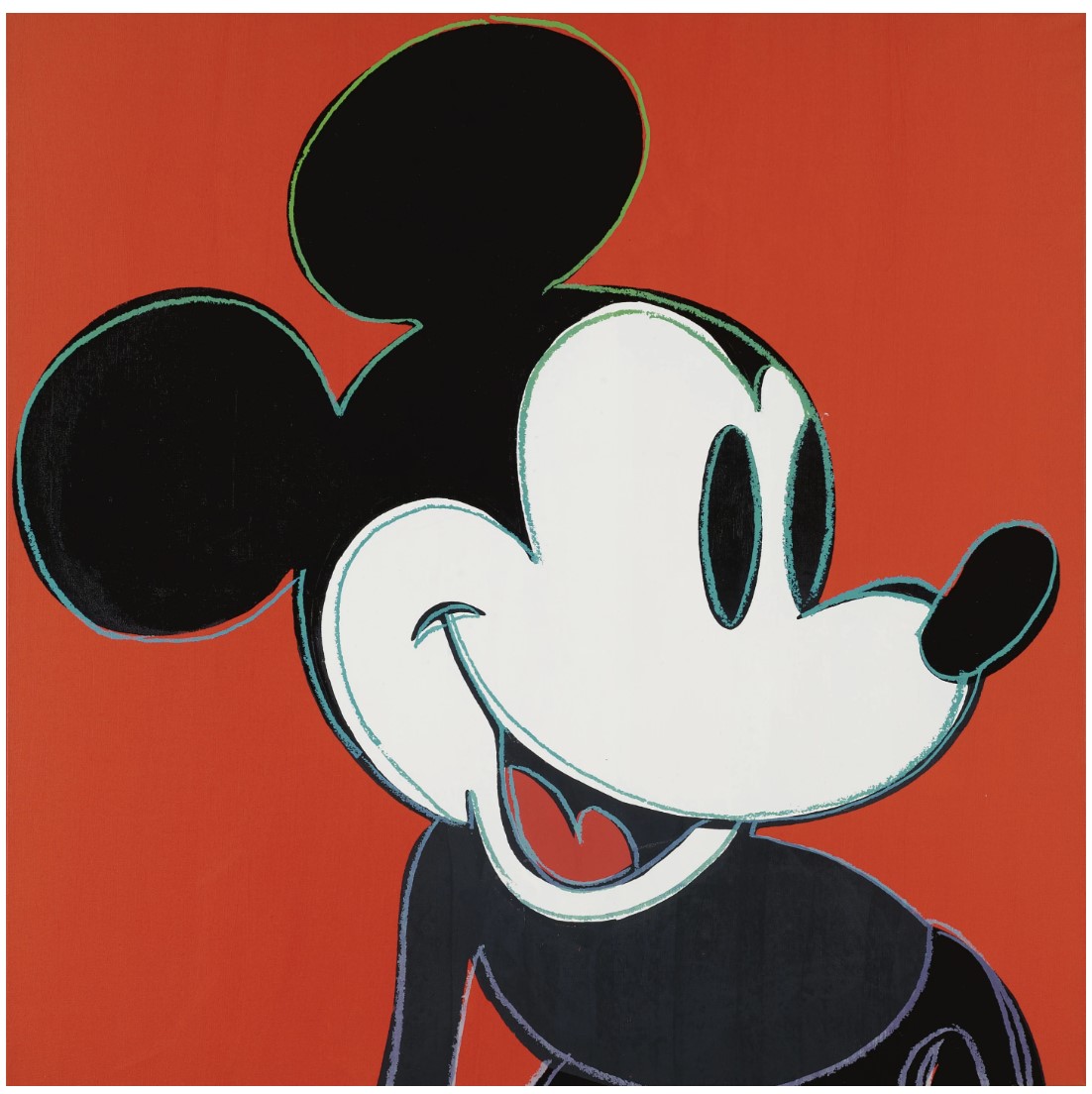
Walt Disney and Mickey Mouse are so intimately intertwined that by silk-screening the simple geometric forms the world recognizes as Mickey Mouse, the man behind the mouse looms large along with everything that his empire has come to mean in America. The result is that both positive feelings and more trying associations emerge from Warhol’s Mickey Mouse: entrepreneurial success, cutting-edge innovation, the production of popular American culture, and nostalgia for the more homegrown varieties of entertainment that cannot compete. This mixture of emotions also reflects aspects of the American transition from the prosperity of the early1960s to the challenging economic and political events of the next few decades.
Regular Editions
Christie’s online: 24 September 2026
Estimated: GBP 150,000 – 200,000
GBP 179,200 / USD 239,160
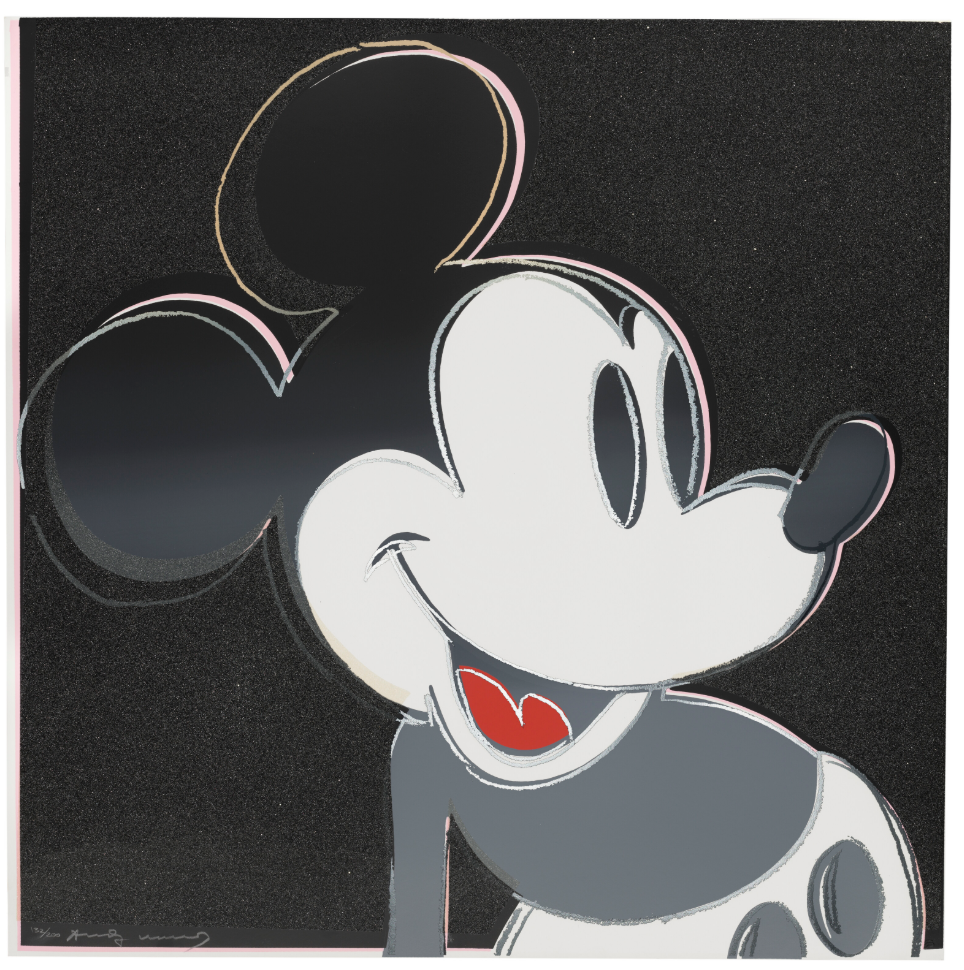
ANDY WARHOL (1928-1987)
Mickey Mouse, from: Myths, 1981
(Feldman & Schellmann II.265)
Screenprint in colors with diamond dust on Lenox Museum Board
Signed in pencil, numbered 132/200
Tthere were also thirty artist’s proofs)
Printed by Rupert Jasen Smith, New York, with his blindstamp
Published by Ronald Feldman Fine Arts, Inc., New York
With the artist’s copyright ink stamp on the reverse
Phillips London: 17 September 2026
Estimated: GBP 140,000 – 180,000
GBP 193,500 / USD 258,475
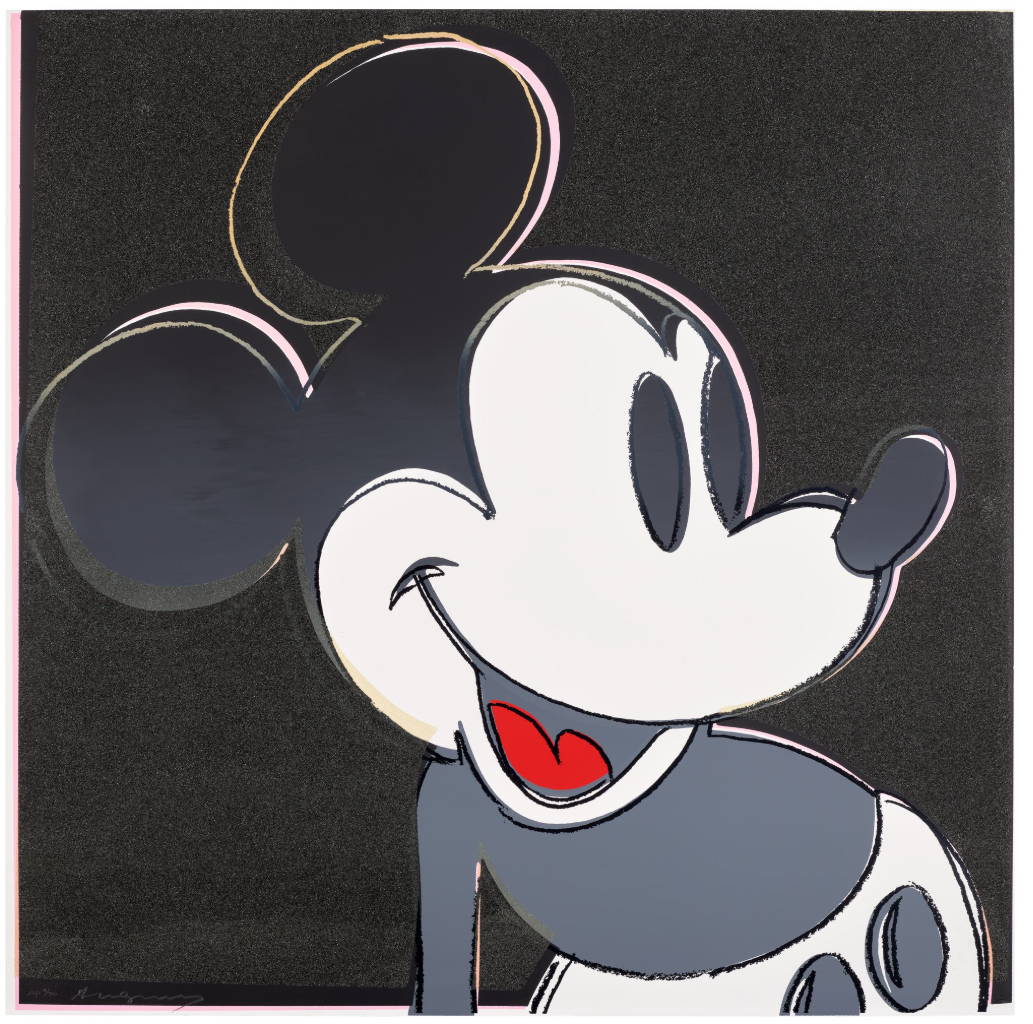
ANDY WARHOL
Mickey Mouse, from Myths (F. & S. 265), 1981
Screenprint in colors with diamond dust on Lenox Museum Board
Signed and numbered ‘AP 4/30’ in pencil (the edition was 200)
Published by Ronald Feldman Fine Arts, Inc., New York
With their and the artist’s copyright inkstamp on the reverse
XXXXXXXXXX
Swann Auction Galleries: 13 November 2025
Estimated: USD 150,000 – 200,000
USD 188,000
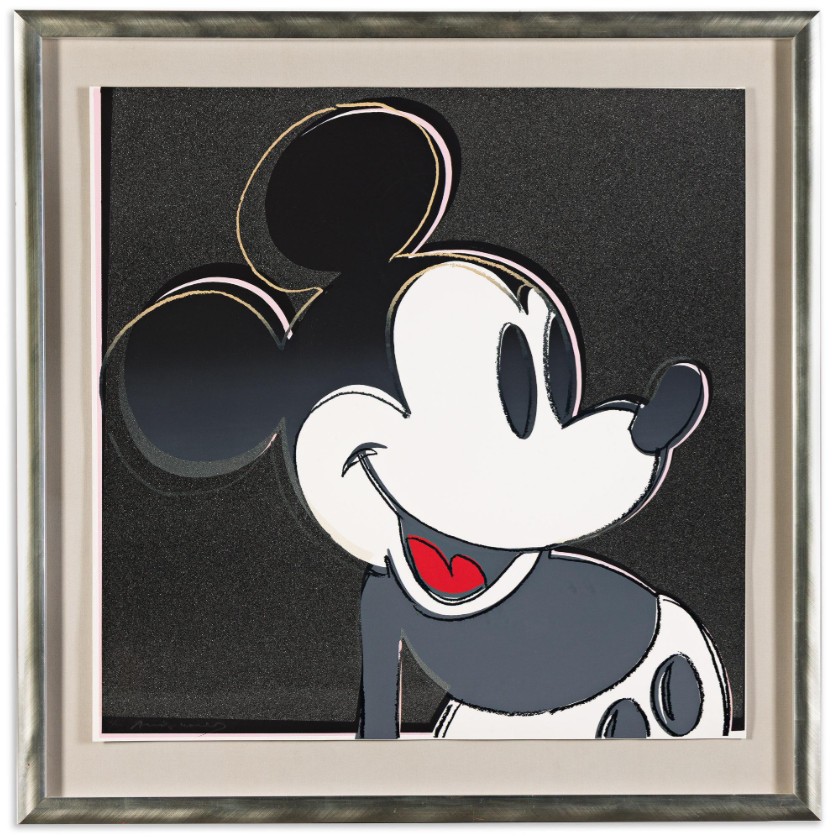
ANDY WARHOL (1928-1987)
Mickey Mouse (Feldman-Schellmann II.265), 1981
from Myths
Color screenprint with diamond dust on Lenox Museum Board
Signed and numbered 32/200 in pencil, lower left
Published by Ronald Feldman Fine Arts, Inc., New York
With the artist, publisher, and Walt Disney copyright ink stamps, verso
Sotheby’s New-York: 22 October 2025
Estimated: USD 180,000 – 250,000
USD 241,300
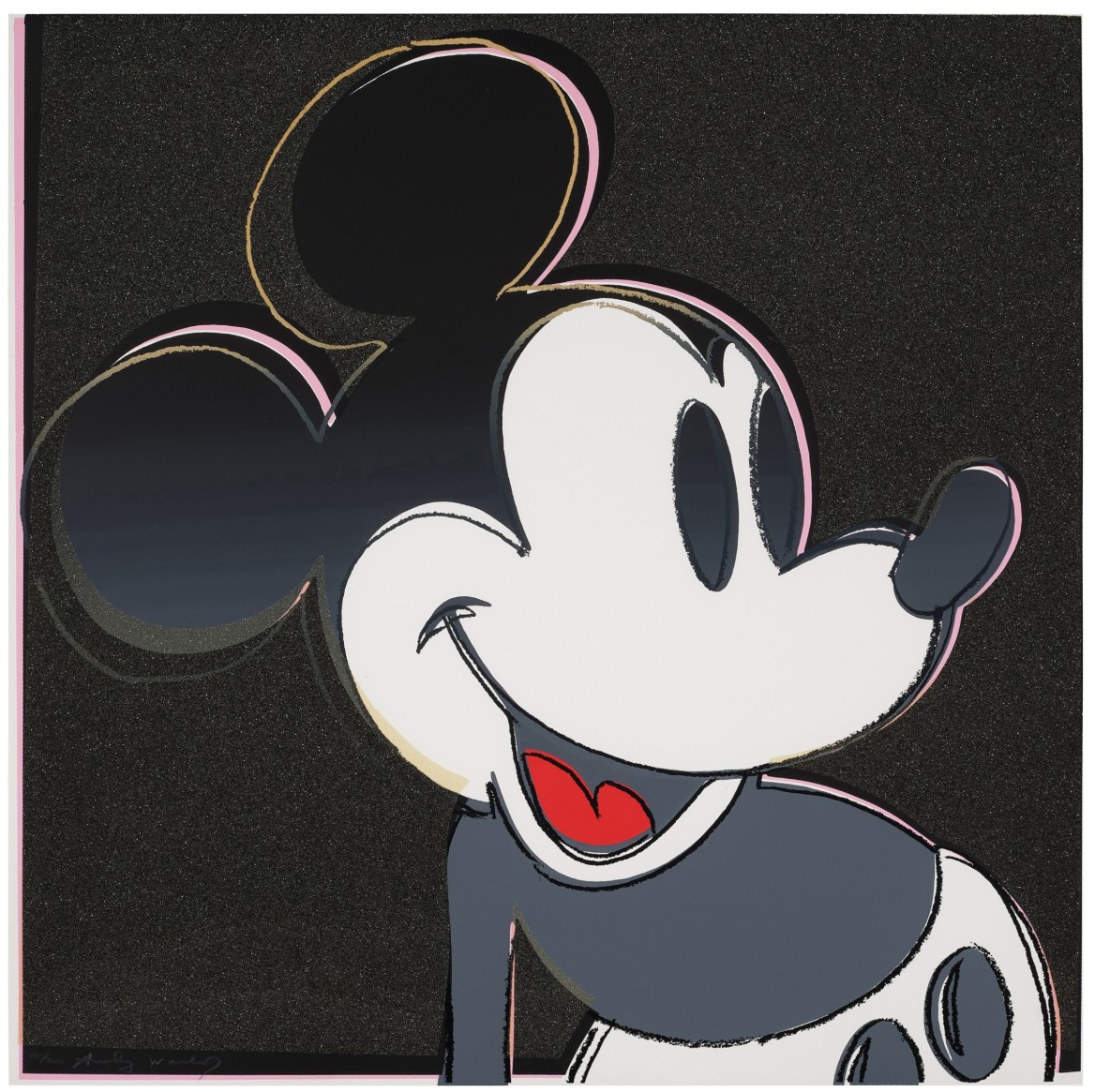
ANDY WARHOL (1928 – 1987)
Mickey Mouse (Feldman & Schellmann II.265), 1981
from Myths
Screenprint in colors with diamond dust on Lenox Museum Board
Signed in pencil and inscribed AP 22/30
One of 30 artist’s proofs aside from the numbered edition of 200
With the blindstamp of the printer, Rupert Jasen Smith
Published by Ronald Feldman
Christie’s online: 14 February 2025
Estimated: USD 180,000 – 220,000
USD 189,000
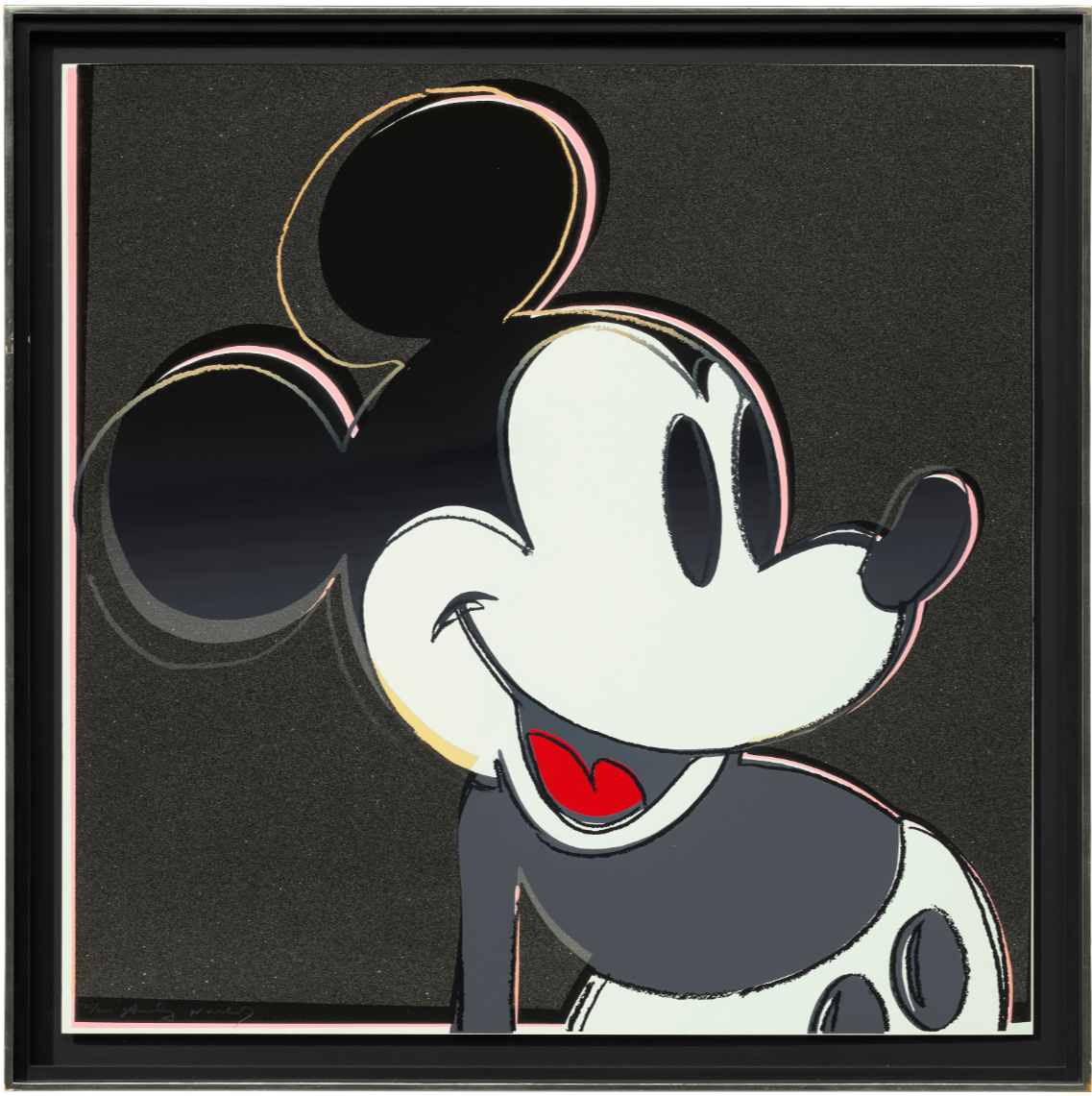
ANDY WARHOL (1928-1987)
Mickey Mouse, from Myths (Feldman and Schellmann II.265), 1981
Screenprint in colors on Lenox Museum Board
Signed in pencil, numbered 135/200 (there were also 30 artist’s proofs)
XXXXXXXXXX
Artnet Auctions: 10 October 2024
Estimated: USD 150,000 – 250,000
USD 225,000
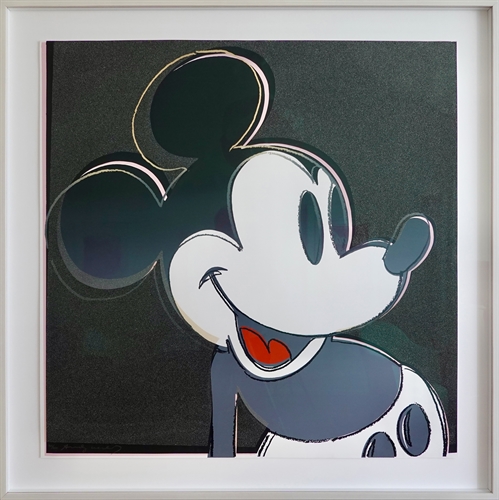
ANDY WARHOL
Mickey Mouse (from Myths), 1981
Screenprint in colors with diamond dust on Lenox Museum Board
Signed and numbered 84/200 in pencil
Heritage Auctions: 16 April 2024
Estimated: USD 150,000 – 250,000
USD 206,250

ANDY WARHOL (1928-1987)
Mickey Mouse, from Myths, 1981
Screenprint in colors with diamond dust on Lenox Museum board
Ed. 13/200 (aside from 41 proofs, variously editioned)
Signed and editioned in pencil, lower left; printer’s chop mark, lower right
Sotheby’s online: 20 March 2024
Estimated: GBP 150,000 – 180,000
GBP 190,500 / USD 241,935
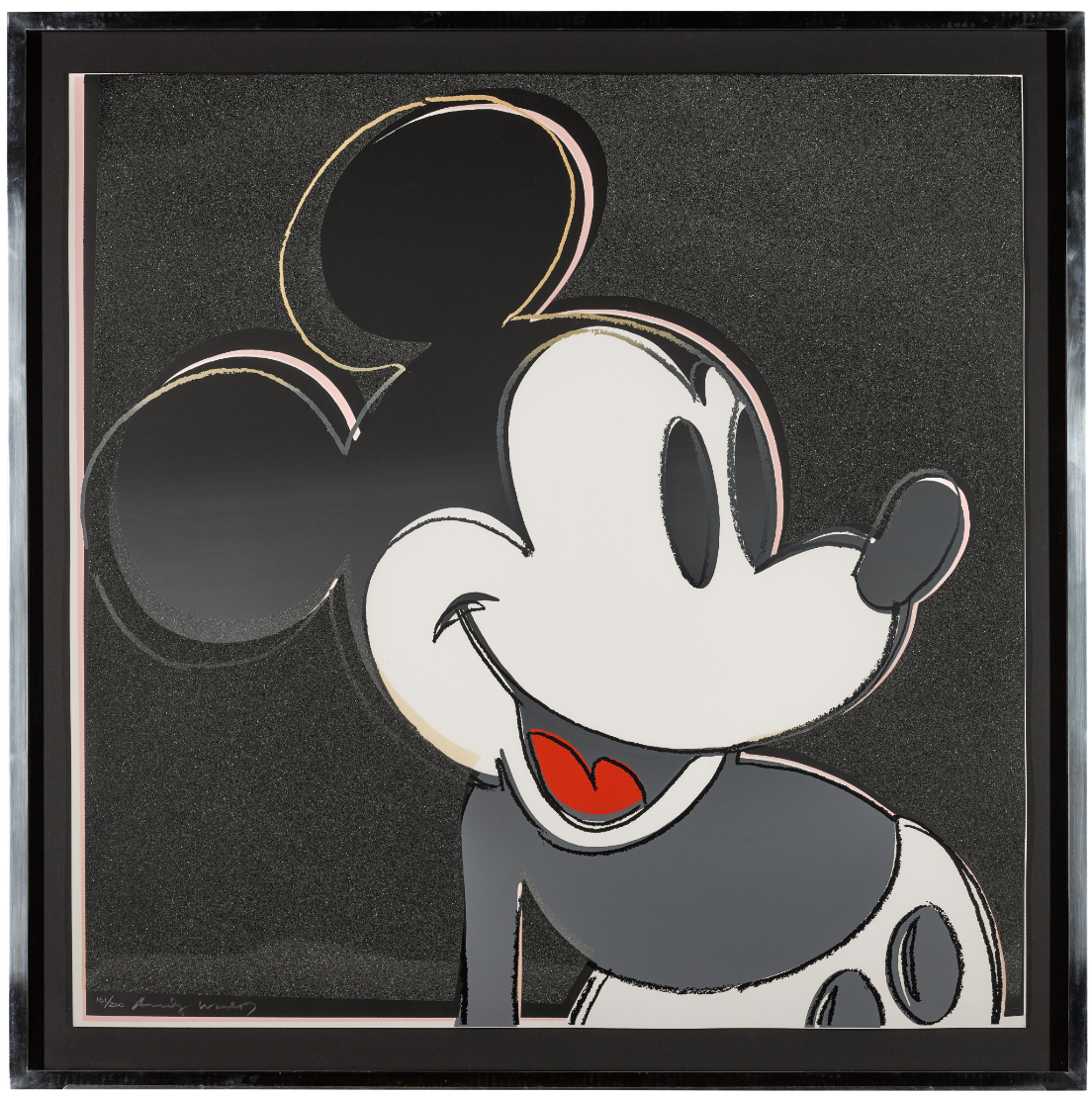
ANDY WARHOL (1928 – 1987)
Mickey Mouse, from Myths, 1981
Screenprint in colors with diamond dust on Lenox Museum Board
Signed in pencil and numbered 161/200
SBI Art Auction: 9 March 2024
Estimated: JPY 15,000,000 – 25,000,000
JPY 33,350,000 / USD 225,049
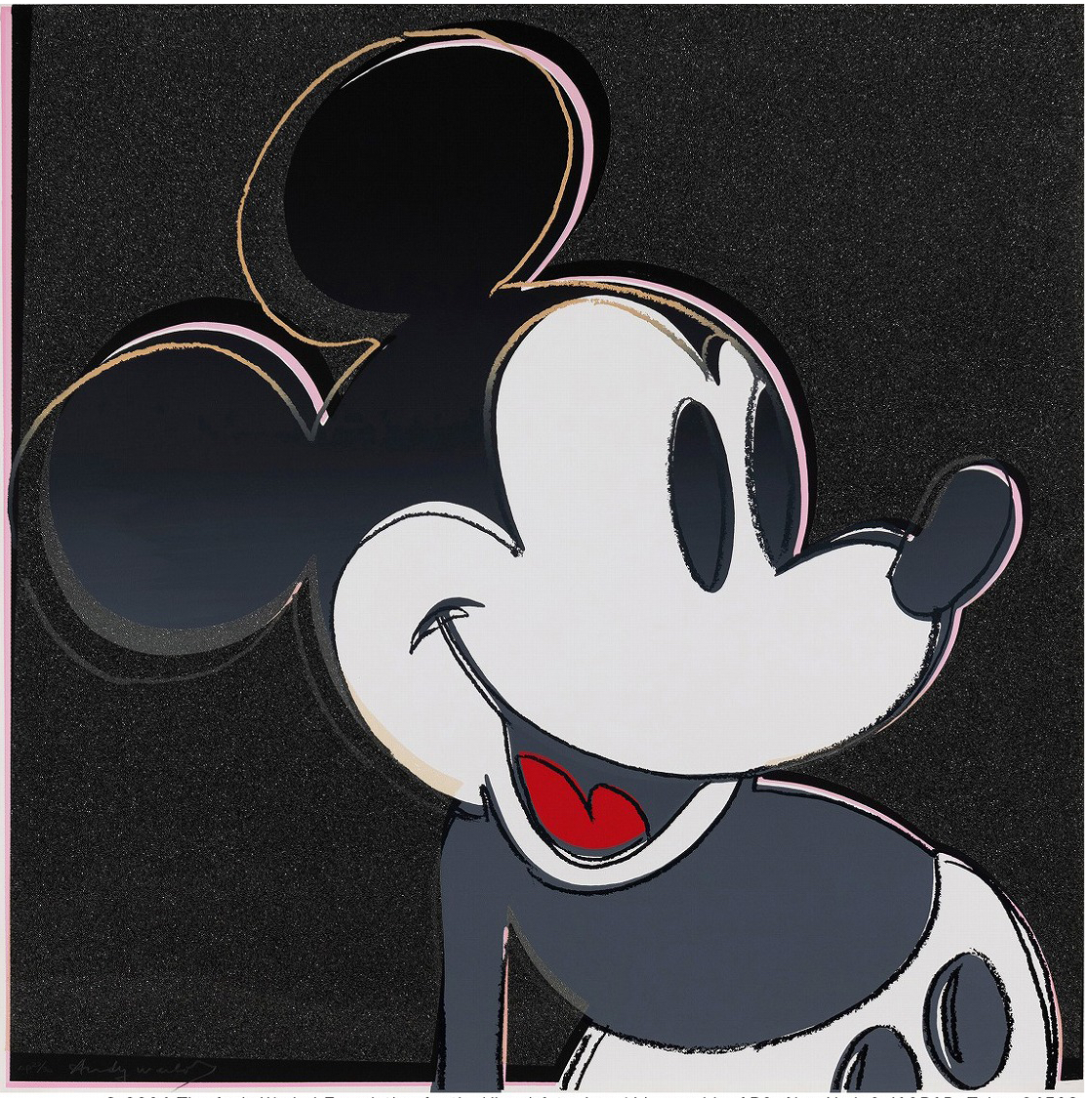
ANDY WARHOL
Mickey Mouse from Myths (F&S II.265), 1981
Screenprint with diamond dust
Signed and numbered on the lower left, Copyright stamp on the reverse
An Artist’s Proof aside from the edition of 200
XXXXXXXXXX
SBI Art Auction: 15 July 2023
Estimated: JPY 15,000,000 – 25,000,000
JPY 39,100,000 / USD 281,717
AUCTION RECORD FOR MICKEY MOUSE
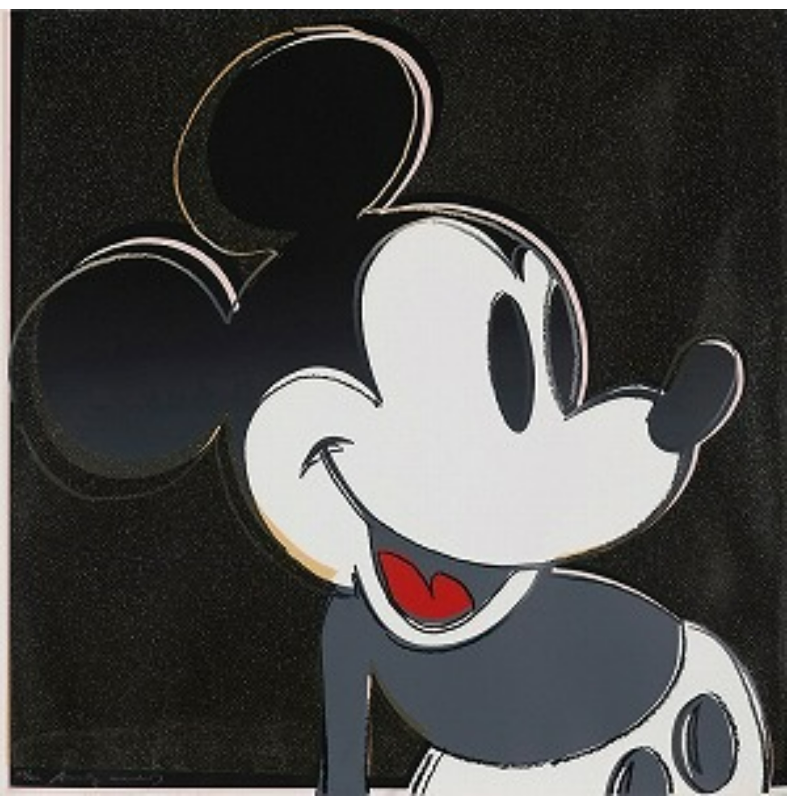
ANDY WARHOL
Mickey Mouse, from Myths, 1981
Color silkscreen with diamond dust on Lenox Museum Card
Signed in pencil and numbered from the edition of 200
Van Ham Kunstauktionen: 5 June 2023
Estimated: EUR 140,000 – 180,000
EUR 217,800 / USD 233,465
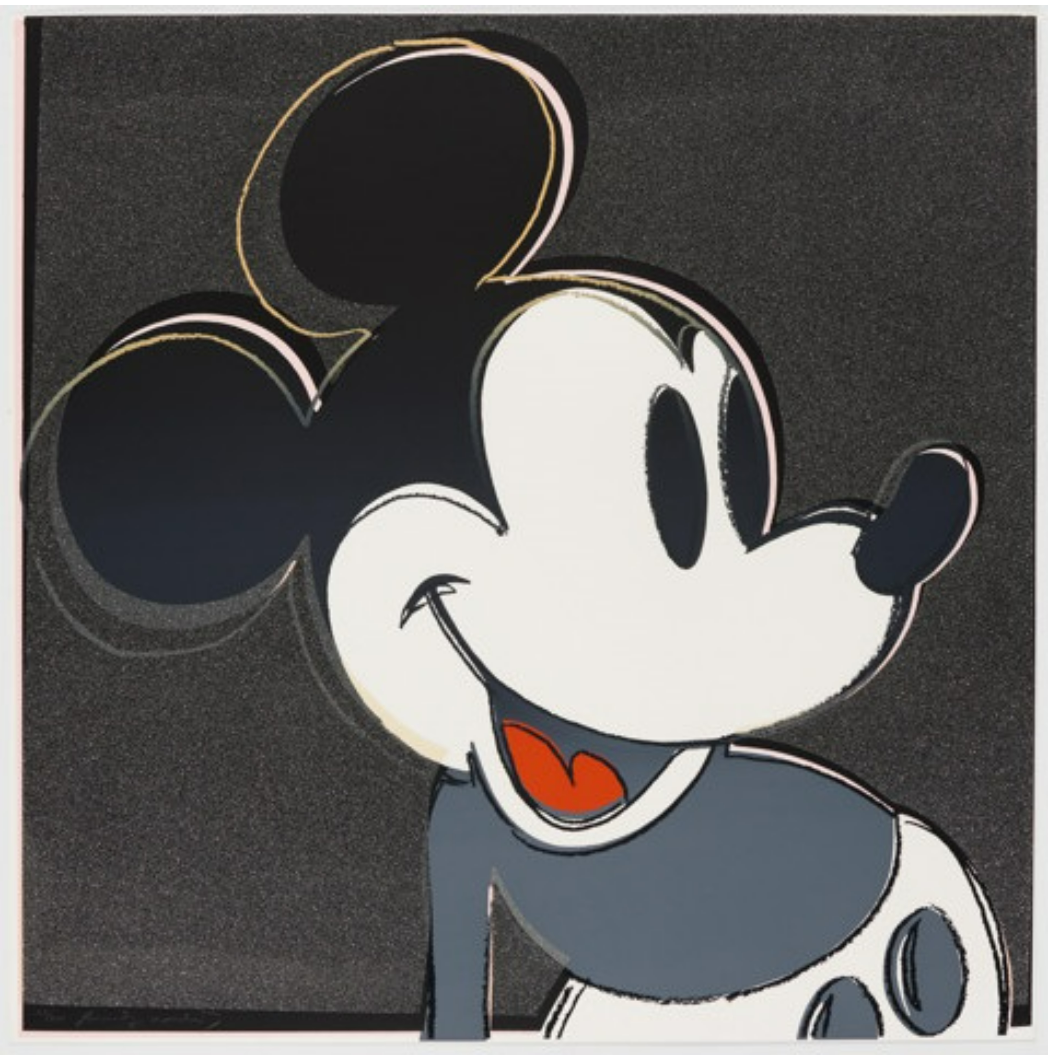
ANDY WARHOL
Mickey Mouse, from Myths, 1981
Color silkscreen with diamond dust on Lenox Museum Card
Signed in pencil and numbered 168/200
XXXXXXXXXX
Sotheby’s New-York: 28 October 2022
Estimated: USD 150,000 – 200,000
USD 214,200
ANDY WARHOL
Mickey Mouse, from Myths, 1981
Screen-print in colors on Lenox Museum Board
Signed in pencil and numbered 93/200
Phillips New-York: 26 October 2022
Estimated: USD 140,000 – 180,000
USD 201,600

ANDY WARHOL
Mickey Mouse, from Myths (F & S. 265), 1981
Screen-print in colors on Lenox Museum Board
Signed and numbered 7/200 in pencil
XXXXXXXXXX
Sotheby’s New-York: 13 October 2021
Estimated: USD 100,000 – 150,000
USD 239,400
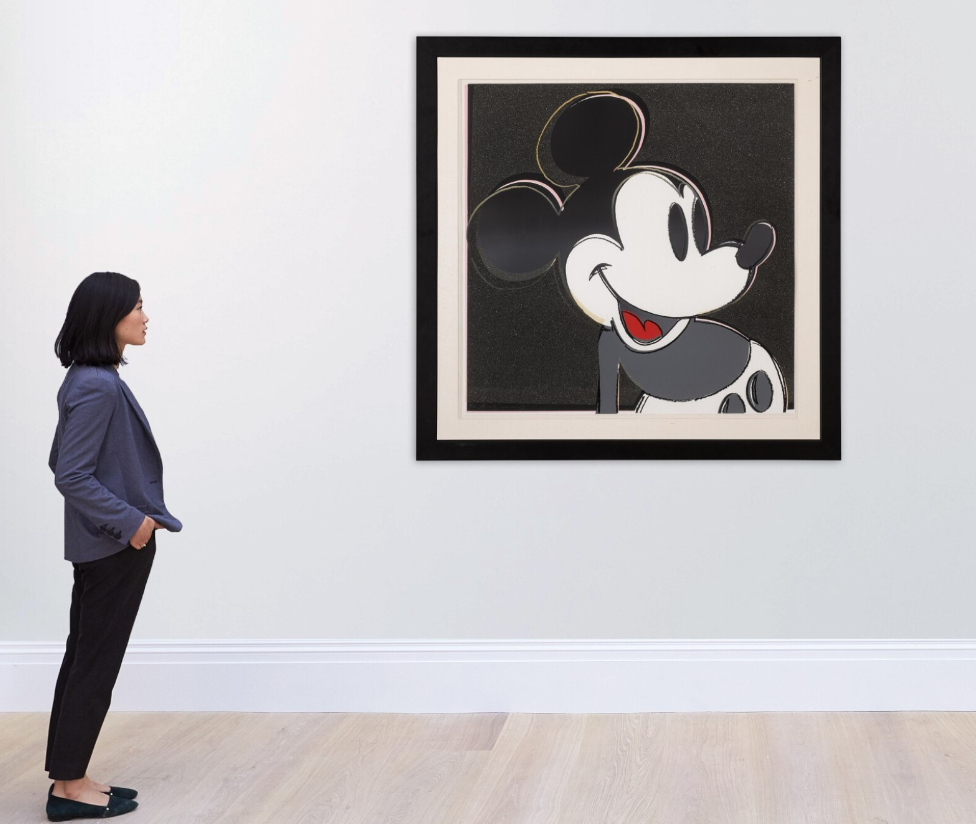
ANDY WARHOL (1928 – 1987)
Mickey Mouse (F. & S. II.265), from Myths, 1981
Screenprint in colors with diamond dust on Lenox Museum Board
Signed in pencil and numbered 79/200 (total edition includes 30 artist’s proofs)
Pook & Pook: 1 October 2021
Estimated: USD 80,000 – 120,000
USD 196,800

ANDY WARHOL
Mickey Mouse, from Myths (F & S. 265), 1981
Screen-print in colors on Lenox Museum Board
Signed and numbered 147/200 in pencil
Christie’s London: 28 September 2021
Estimated: GBP 100,000 – 150,000
GBP 187,500 / USD 254,755
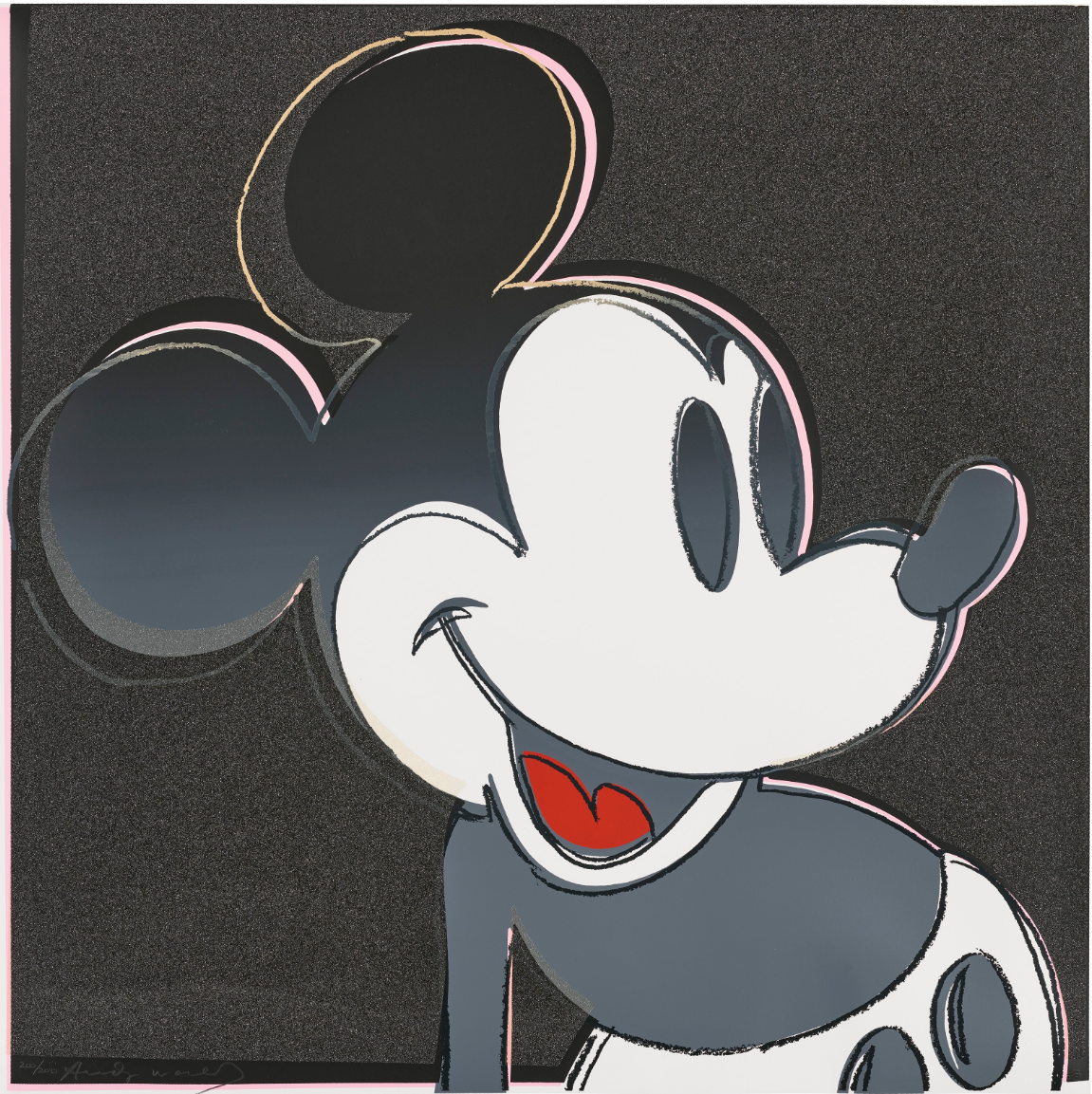
ANDY WARHOL (1928-1987)
Mickey Mouse, 1981
Screenprint in colors with diamond dust on Lenox Museum Board
Signed in pencil, numbered 200/200 (there were also thirty artist’s proofs)
Mainichi Auction: 23 January 2021
Estimated: JPY 8,000,000 – 12,000,000
JPY 19,500,000 (Hammer)
JPY 22,717,500 / USD 219,065
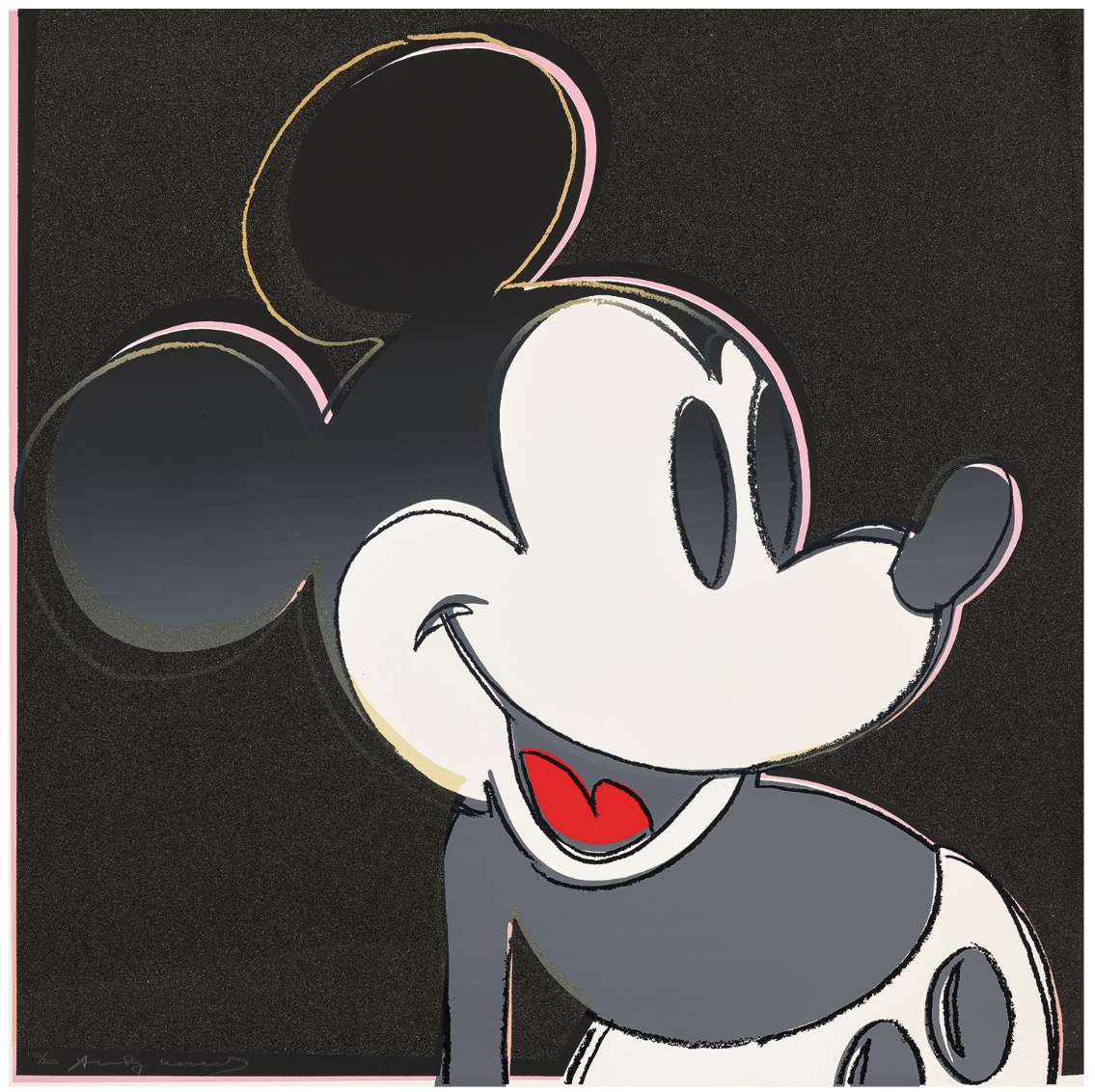
ANDY WARHOL
Mickey Mouse, 1981
Screenprint
Signed and numbered 33/200
Phillips London: 21 January 2021
Estimated: GBP 70,000 – 90,000
GBP 176,400 / USD 241,995
ANDY WARHOL
Mickey Mouse, from Myths (F & S. 265), 1981
Screenprint in colors with diamond dust on Lenox Museum Board
Signed and numbered 130/200 in pencil (there were also 30 artist’s proofs)
XXXXXXXXXX
Phillips New-York: 25 October 2019
Estimated: USD 80,000 – 120,000
USD 137,500
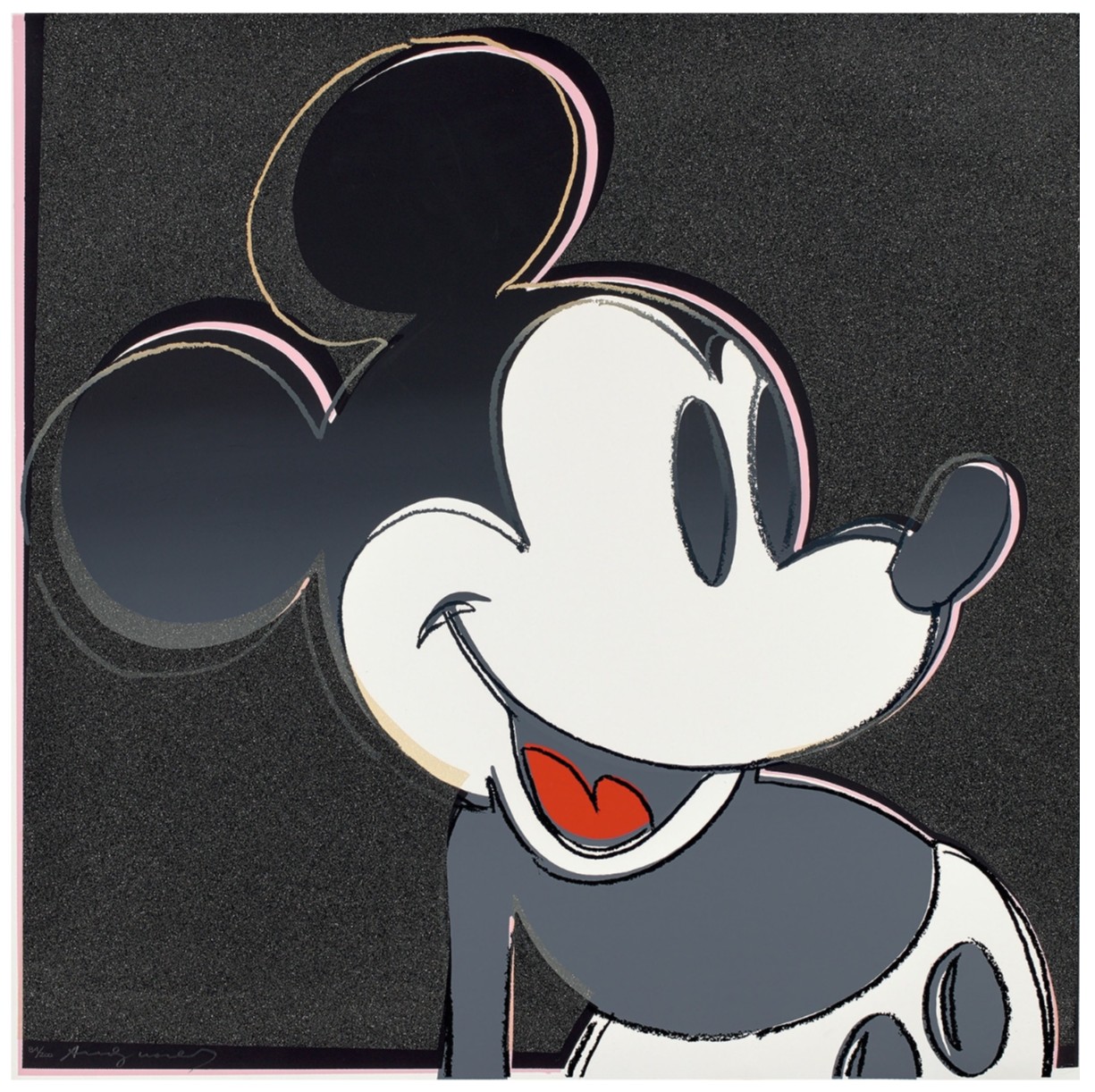
Screenprint in colors with diamond dust, on Lenox Museum Board
Signed and numbered 84/200 in pencil
Christie’s New-York: 23 October 2019
Estimated: USD 100,000 – 150,000
USD 187,500
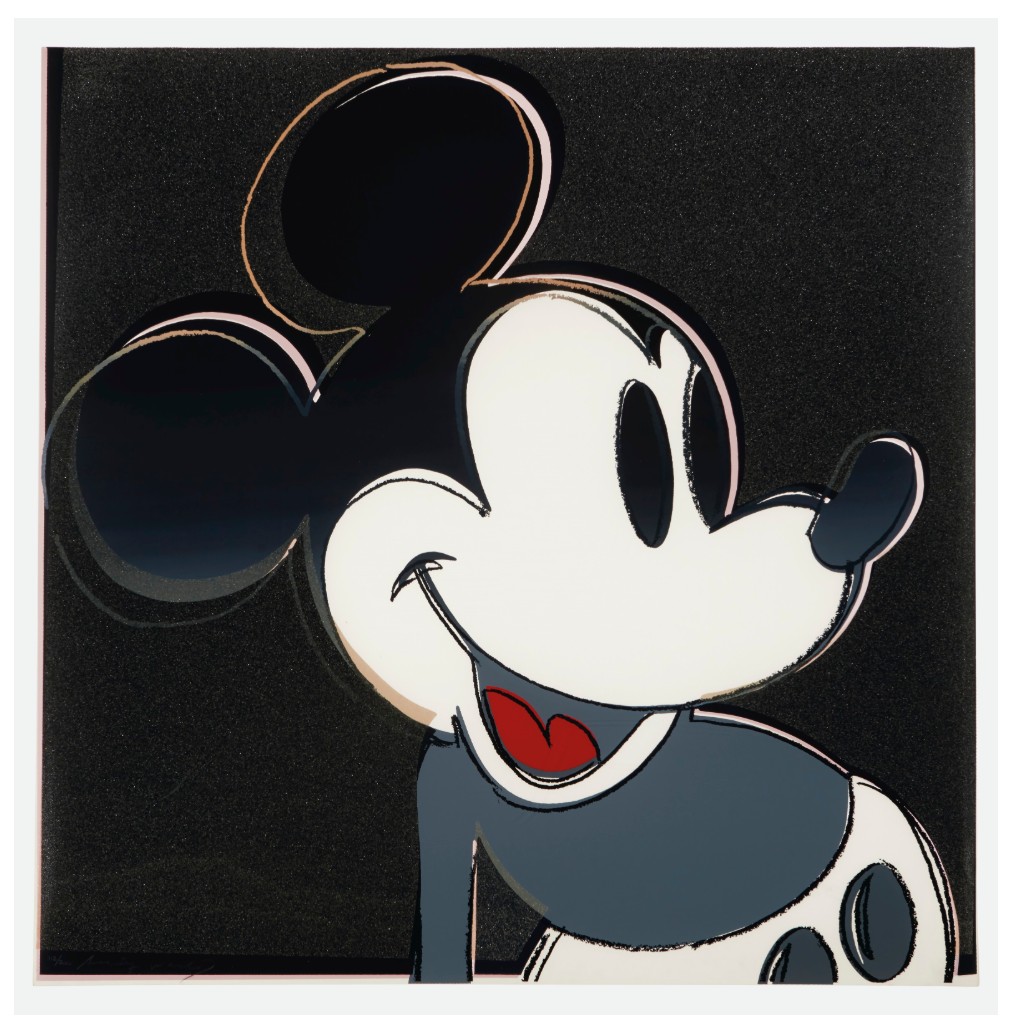
ANDY WARHOL (1928-1987)
Mickey Mouse, from Myths, 1981
Screenprint in colors with diamond dust on Lenox Museum Board
Signed in pencil, numbered 112/200
Sotheby’s London: 17 September 2019
Estimated: GBP 70,000 – 100,000
GBP 106,250 / USD 132,845
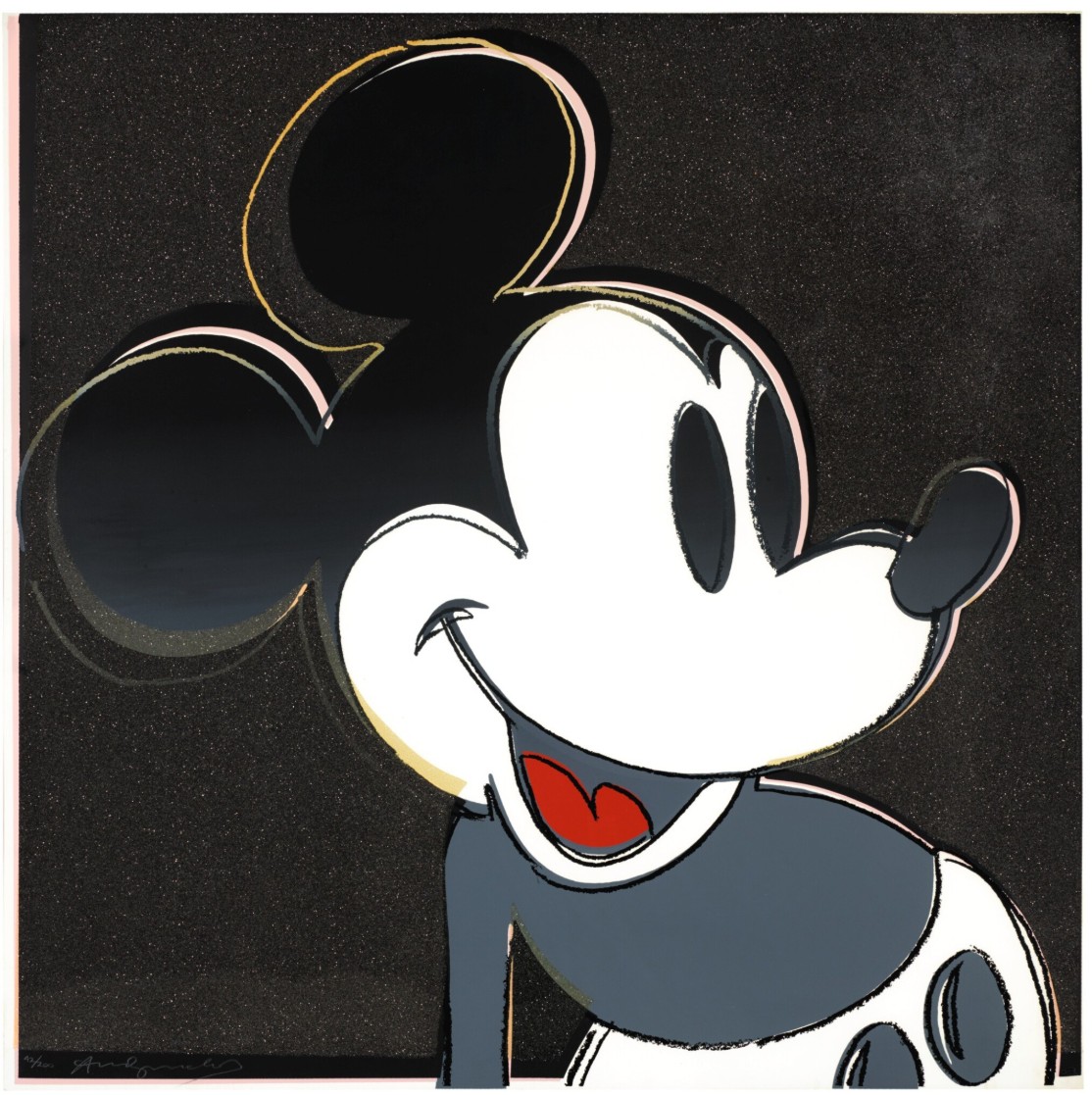
ANDY WARHOL (1928 – 1987)
MICKEY MOUSE (F. & S. II.265) from Myths, 1981
Screenprint in colors with diamond dust on Lenox Museum Board
Signed in pencil, numbered 42/200
Christie’s New-York: 18 April 2019
Estimated: USD 80,000 – 120,000
USD 112,500
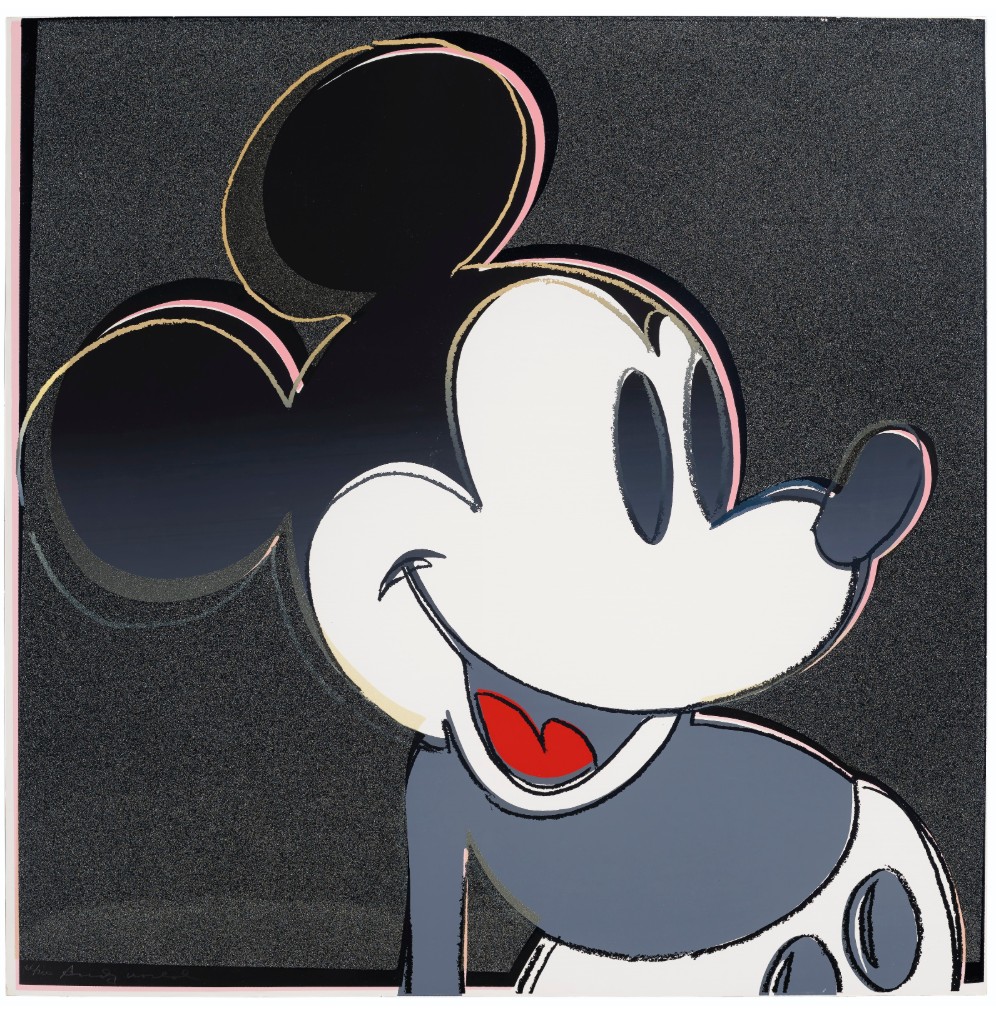
ANDY WARHOL (1928-1987)
Mickey Mouse, from Myths, 1981
Screenprint in colors with diamond dust on Lenox Museum Board
Signed in pencil, numbered 66/200
LA Modern: 17 February 2019
Estimated: USD 100,000 – 150,000
USD 143,750
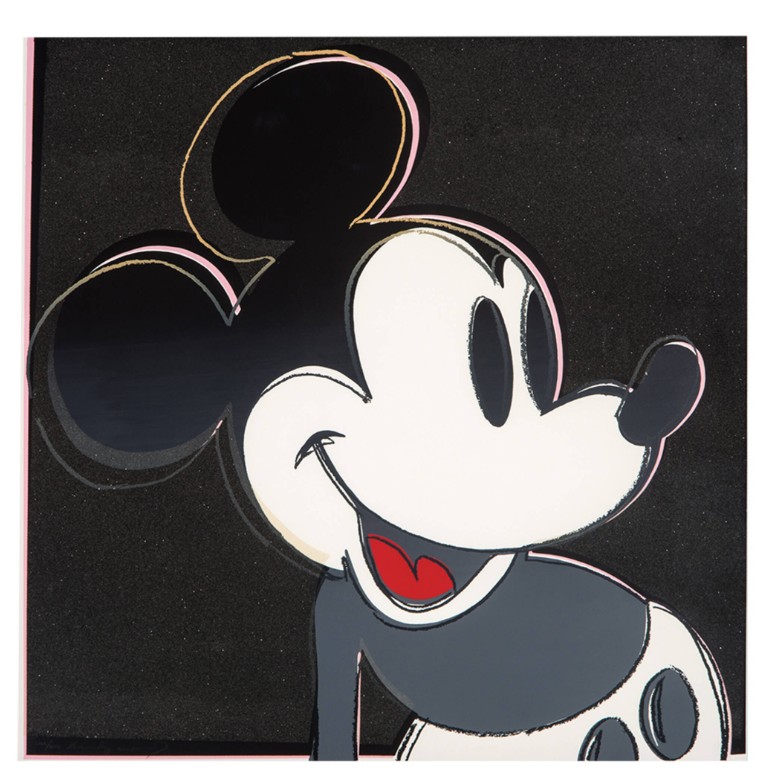
ANDY WARHOL
Mickey Mouse (from Myths), 1981
Screenprint on Lenox Museum Board
Signed with edition in graphite lower left edge of sheet
Retains printer’s blind stamp lower right
Edition: #146 of 200
Trial Proofs
Sotheby’s New-York: 22 October 2020
Estimated: USD 200,000 – 300,000
USD 327,600

ANDY WARHOL (1928 – 1987)
MICKEY MOUSE (SEE F. & S. IIB.265)
Screenprint in a unique color combination with diamond dust
Signed in pencil and inscribed ‘TP 25/30’
A trial proof aside from the numbered edition of 200 plus 30 artist’s proofs
Christie’s New-York: 25 October 2018
Estimated: USD 250,000 – 350,000
USD 324,500
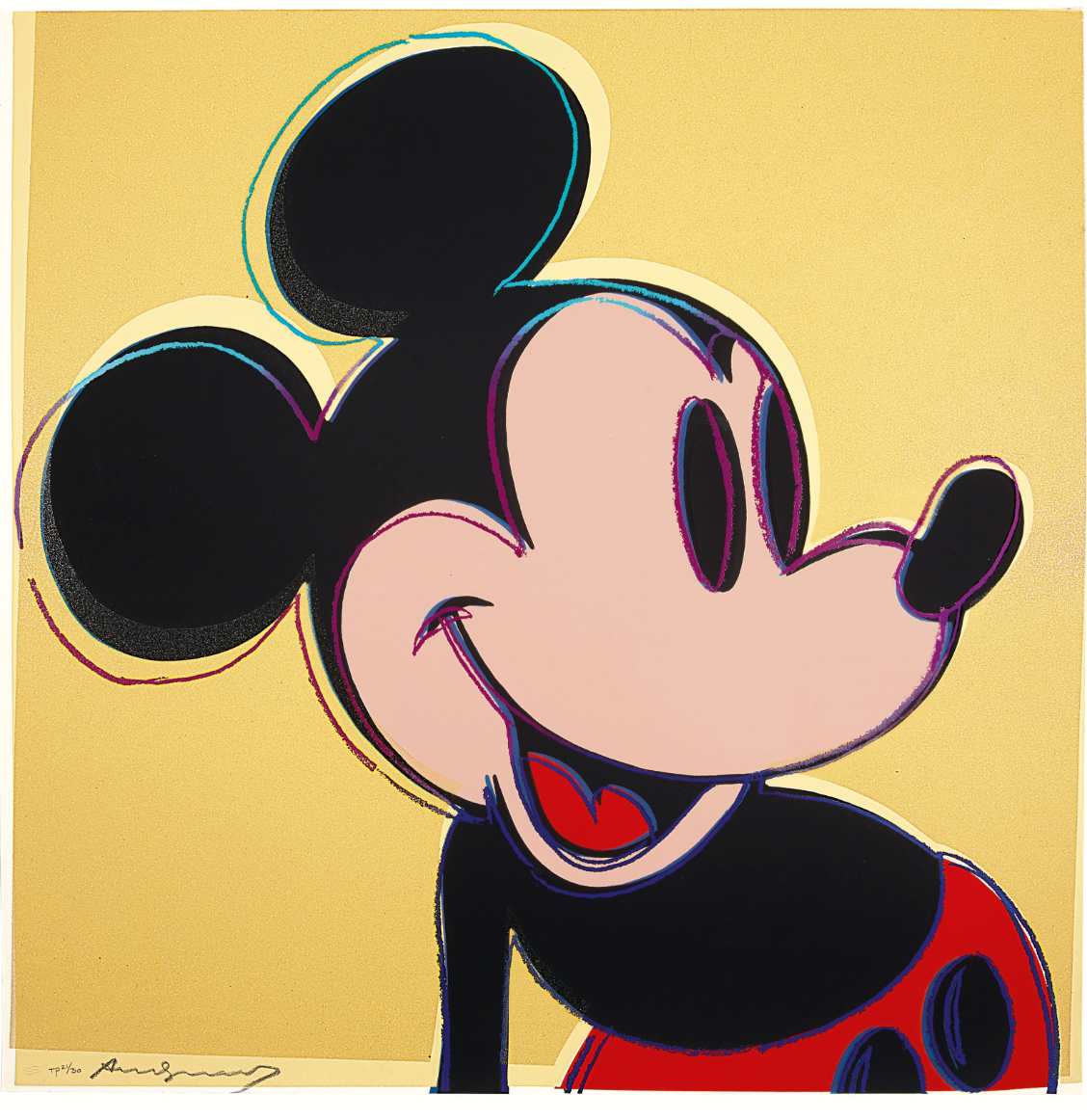
ANDY WARHOL (1928-1987)
Mickey Mouse, from Myths, 1981
Unique screenprint with diamond dust in colors on Lenox Museum Board
Signed in pencil, numbered ‘TP 21/30’ (a trial proof, the edition was 200)
Christie’s Los Angeles: 13 December 1999
Estimated: USD 25,000 – 35,000
USD 55,200
ANDY WARHOL
Mickey Mouse, for Myths (F. and S. B.265), 1981
Unique screenprint in colors with diamond dust on Lenox Museum Board
Signed in pencil, numbered ‘T.P. 19/30’
One of 30 unique color variants aside from the edition of 200 plus 30 artist’s proofs