
Daisy
Medium: Screenprint on Lenox Museum Board
Year: circa 1982
Two formats: (a) One Daisy, (b) Two Daisies
Sheet: 38×38 inches (96.7 x 96.7 cm) (a)
Sheet: 40×60 inches (101.6 x 152.4 cm) (b)
Printer: Rupert Jasen Smith, New-York
Inspired by the proposal for the Tacoma Dome, in Tacoma, Washington
Literature: Feldman & Schellmann IIIA.38
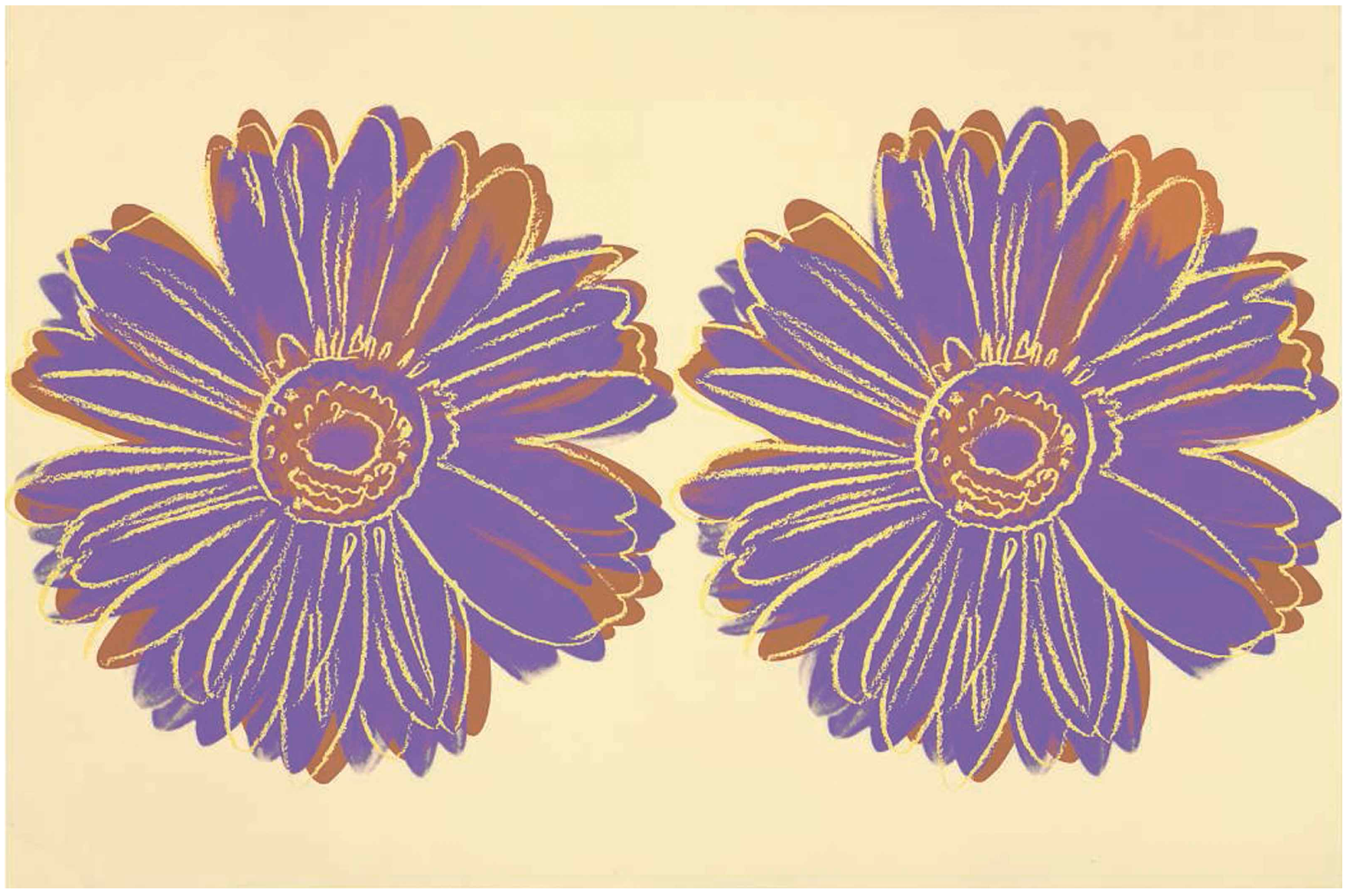
When we think of Andy Warhol, images of famous pop icons such as Marilyn Monroe and Mick Jagger flash across the mind, alongside screenprints of Campbell’s Soup cans and other commercialized goods. Warhol’s 1982 Daisy is a refreshing departure from his preliminary explorations into pop culture and commodification. In stark contrast to the proliferation and repetitious iconography of colorfully branded objects, Warhol’s flower subjects appear as an almost surprising, contradictory venture into the world of nature. However, from a young age Warhol developed a love for nature and retained a long-lasting affinity to the natural environment in his personal life and through his art.
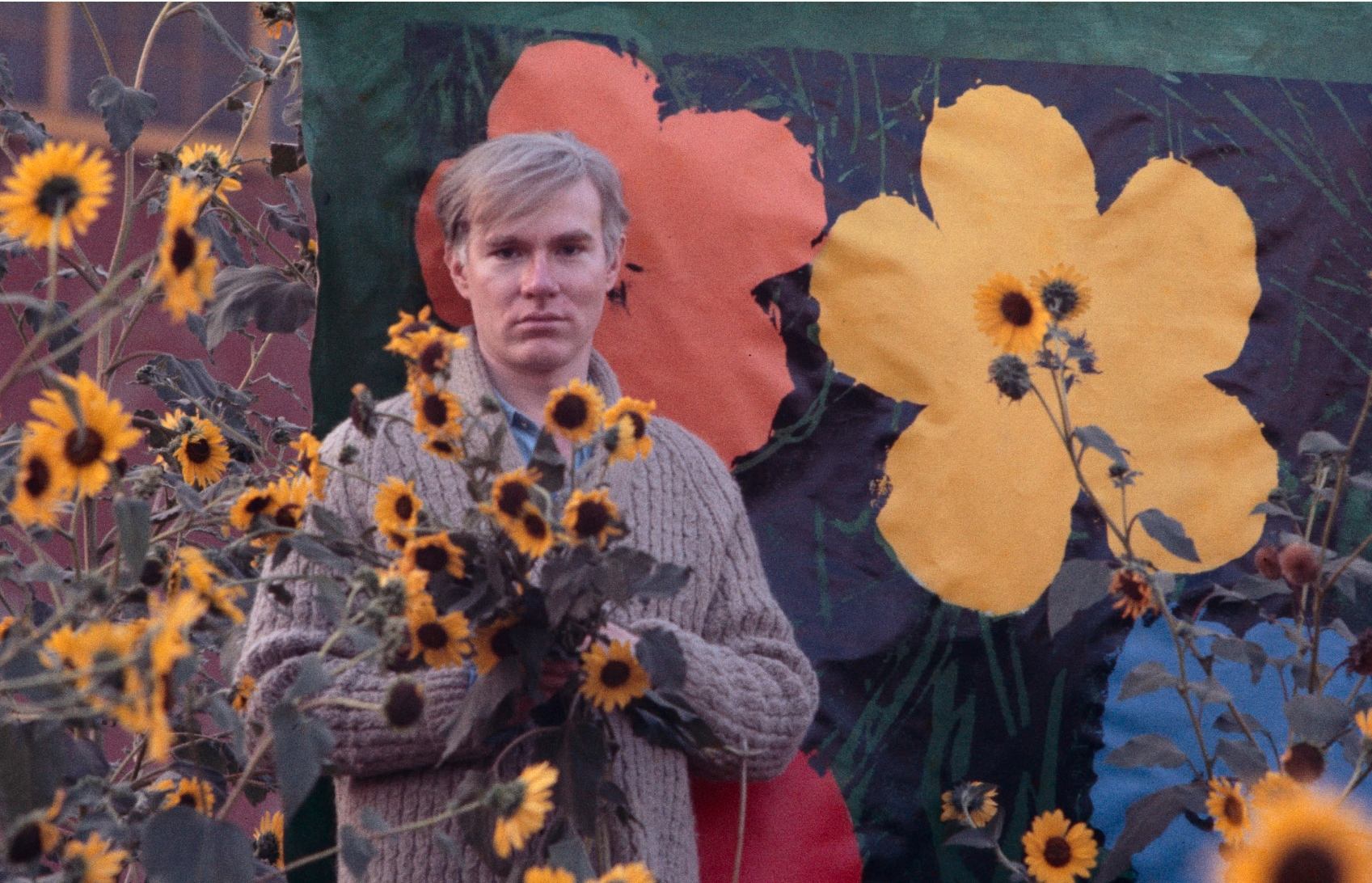
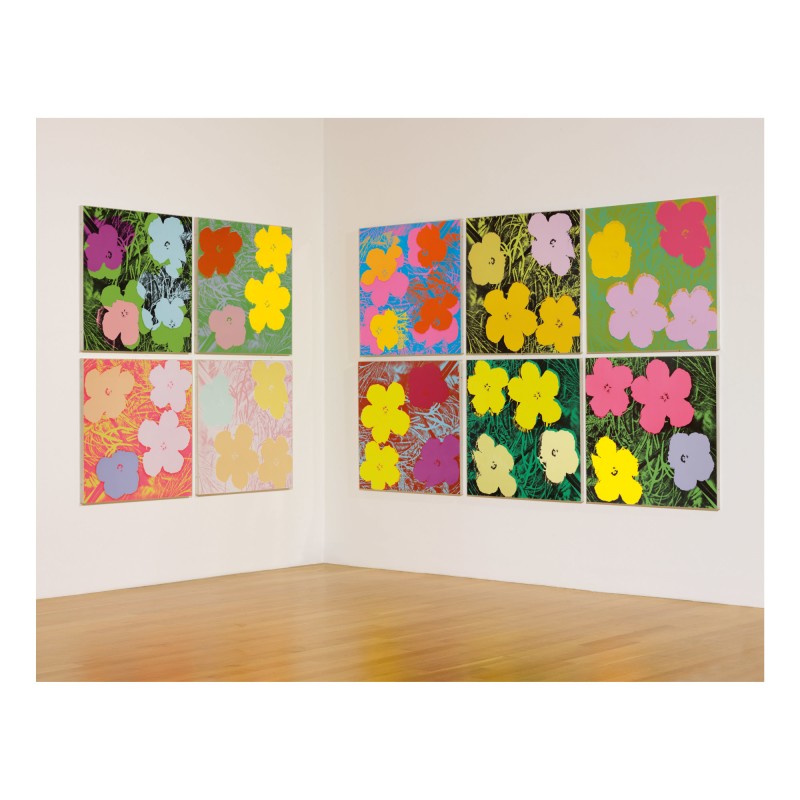
Warhol’s Daisy follows his iconic Flowers of the 1960s, consisting of ten screenprints that depict a colorful assortment of nondescript flowers appearing as blocky outlines against a bed of grass. The series immediately garnered attention when exhibited at the renowned Leo Castelli Gallery in 1964. Warhol’s inspiration for the series originated from an incidental encounter with a photograph of hibiscus flowers in a Modern Photography catalogue.
He immediately harnessed the image; cropping, rotating and infusing the flowers with vibrant colors so that they appear non-distinct yet infused with new life. The transformation from a rare hibiscus flower to a generic floral silhouette, however, aligns with critical discussions surrounding the stronghold of pop culture, mass media and the increasing commodification and distribution of products on an unprecedented scale. Moreover, Warhol found himself at the center of a lawsuit when Patricia Caulfield, the original photographer of the hibiscus image, sued the artist for copyright infringement. The dispute was particularly comical as Warhol had until then relied heavily on the appropriation of copyrighted brands for his images. That this organic, natural motif was the iconography that caused him the most trouble is particularly ironic and speaks to Warhol’s persistent inquiry – and Pop Art’s broader interrogation – into ownership, commodification, and originality.
Warhol previously explored daisy imagery in his 1970 Rain Machine (Daisy Waterfall) installed at the Expo ’70 in Osaka, Japan, and later debuted at LACMA, California. Forming a holographic wall of lenticular photographic daisies behind a recircling waterfall, the sculptural instillation created a remarkably large vision of nature translated into an artificial world. Departing from his habitual medium of screenprinting and mass-media subject matter, the work coincided with growing concerns around ecological issues such as the Greenhouse Effect in the 1970s. Rain Machine (Daisy Waterfall) played into the illusion of a natural environment, using the hypnotic sound of water to lure the viewer into the natural world on a physical and psychological level. This was of course a simulation; a botanical realm created with electric vitality and uncanny liveness that highlighted the artificiality of the modern world and called for a return to nature.
“There is beauty in everything. Just not everybody sees it.”
Warhol’s recurring exploitation of botanical subject matter in the 1980s is manifest through the Daisy prints. The prints focus on a singular, recognizable flower with much less of a photographic effect. Unlike the Flowers series, Daisy is stripped back to an outline overlaying pastel colors without the support of a background, yet we can still immediately identify the specific flower. The print is one of Warhol’s most direct interactions with nature – simplified yet still remarkably compelling. It is this tension between natural life and mechanical, hyper-processed art that makes Warhol’s flowers so captivating: simple yet bold, complex yet recognizable, natural yet man-made.
Source: Phillips
Auction Results
Estimated: GBP 25,000 – 35,000
GBP 33,540 / USD 48,805
UNIQUE PROOF

Unique screenprint in colors on Lenox Museum Board
A rare unique color variant proof (there was no edition)
With the Estate of Andy Warhol and the Visual Arts Foundation inkstamps on the reverse
Initialed ‘T.J.H.’ by Timothy J. Hunt of the Andy Warhol Foundation
Annotated ‘UP 21.28’ in pencil on the reverse
Estimated: GBP 25,000 – 35,000
GBP 33,540 / USD 48,805
UNIQUE PROOF
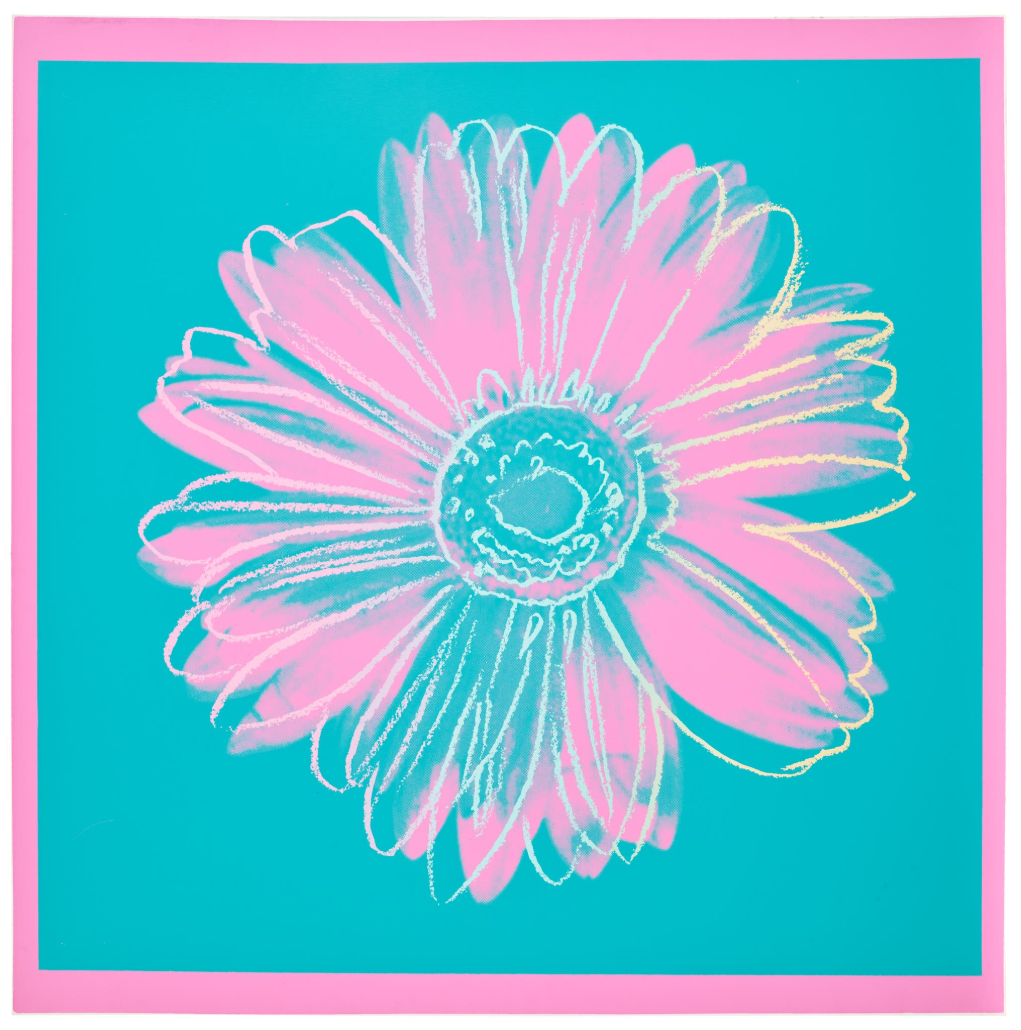
Unique screenprint in colors on Lenox Museum Board
A rare unique color variant proof (there was no edition)
With the Estate of Andy Warhol and the Visual Arts Foundation inkstamps on the reverse
Initialed ‘VF’ by Vincent Fremont of the Andy Warhol Foundation
Annotated ‘UP 21.27’ in pencil on the reverse
Phillips London: 6 June 2024
Estimated: GBP 30,000 – 50,000
GBP 57,150 / USD 73,100
ANDY WARHOL
Daisy (see F. & S. IIIA.38), circa 1982
Unique screenprint in colors on Lenox Museum Board
Sheet: 38 1/8 x 38 1/8 inches (96.7 x 96.7 cm)
A rare, unsigned, unique color variant proof (there was no edition)
With the Estate of Andy Warhol, the Visual Arts Foundation, and the Andy Warhol Art Authentication Board inkstamps on the reverse
Initialled ‘T.J.H.’ by Timothy J. Hunt of the Andy Warhol Foundation
Annotated ‘UP 21.30’ and ‘A157.021’ in pencil on the reverse
SBI Art Auction: 3 November 2018
Estimated: JPY 4,000,000 – 7,000,000
JPY 4,830,000 / USD 42,665
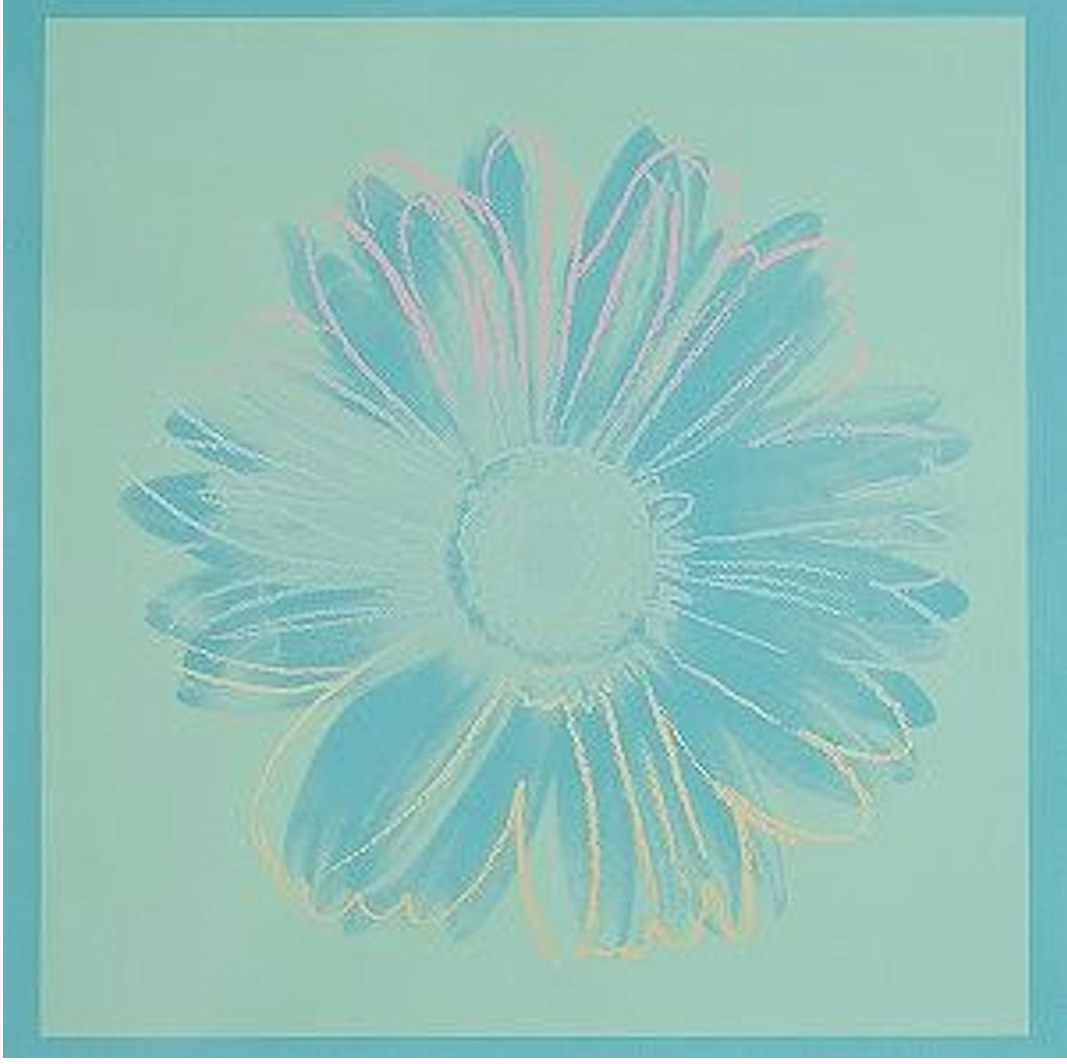
ANDY WARHOL
Daisy (F. & S. ⅢA. 38), c. 1982
Screenprint, unique
Authorized stamp by Andy Warhol Foundation on the reverse
SBI Art Auction: 21 April 2018
Estimated: JPY 4,000,000 – 7,000,000
JPY 6,900,000 / USD 64,075
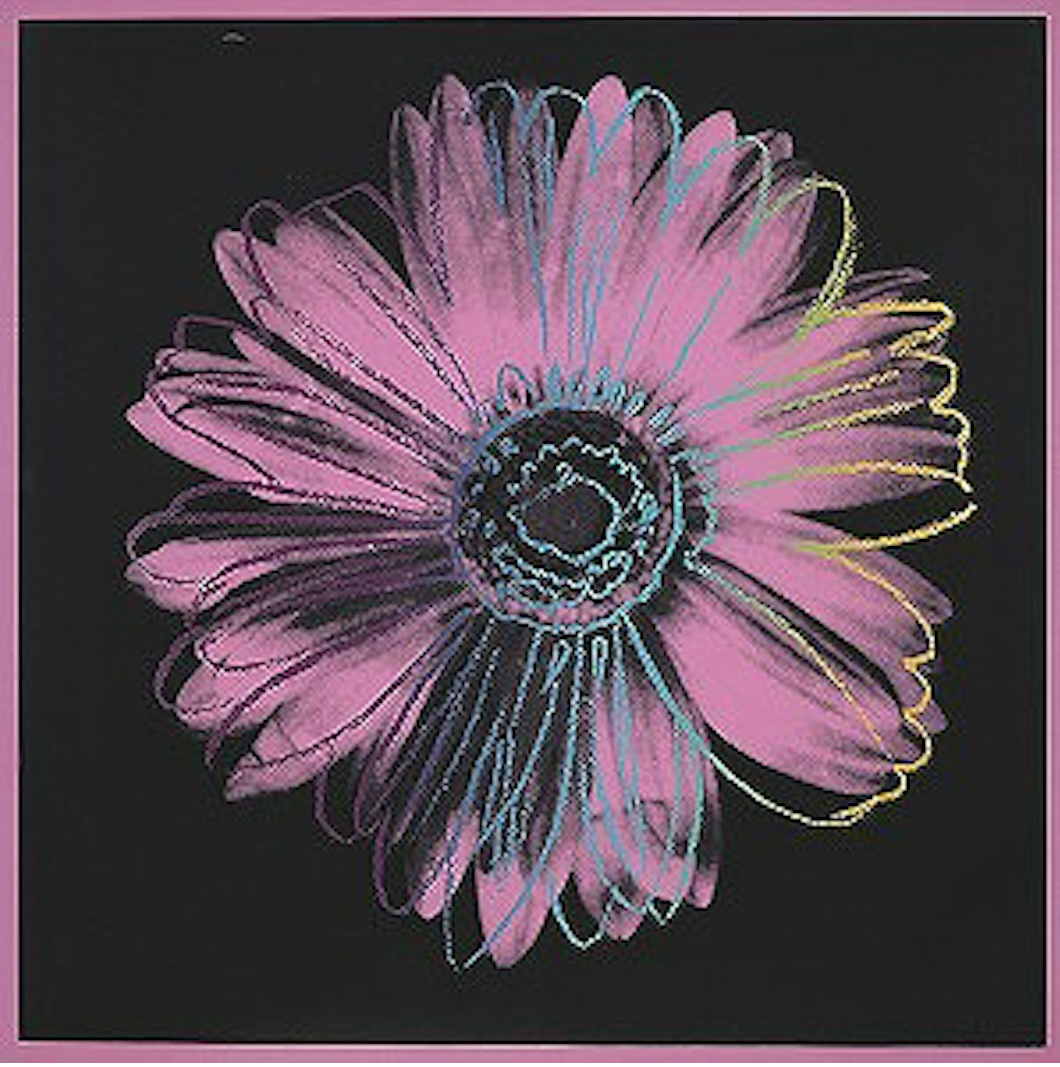
ANDY WARHOL
DAISY (F. & S. ⅢA. 38), c. 1982
Screenprint
Authorized stamp by Andy Warhol Foundation on the reverse
Unique
Christie’s New-York: 25 October 2017
Estimated: 50,000 – 70,000
USD 50,000
ANDY WARHOL (1928-1987)
Daisy, c. 1982
Screenprint in colors on Lenox Museum Board
Sheet: 40 x 60 inches (101.6 x 152.4 cm)
One of a small number of impressions of this subject
With ‘The Estate of Andy Warhol’ and ‘Authorized by the Andy Warhol Foundation for the Visual Arts’ inkstamps
Annotated ‘UP21.60’ in pencil on the reverse
Sotheby’s London: 15 March 2016
Estimated: GBP 20,000 – 30,000
GBP 38,750
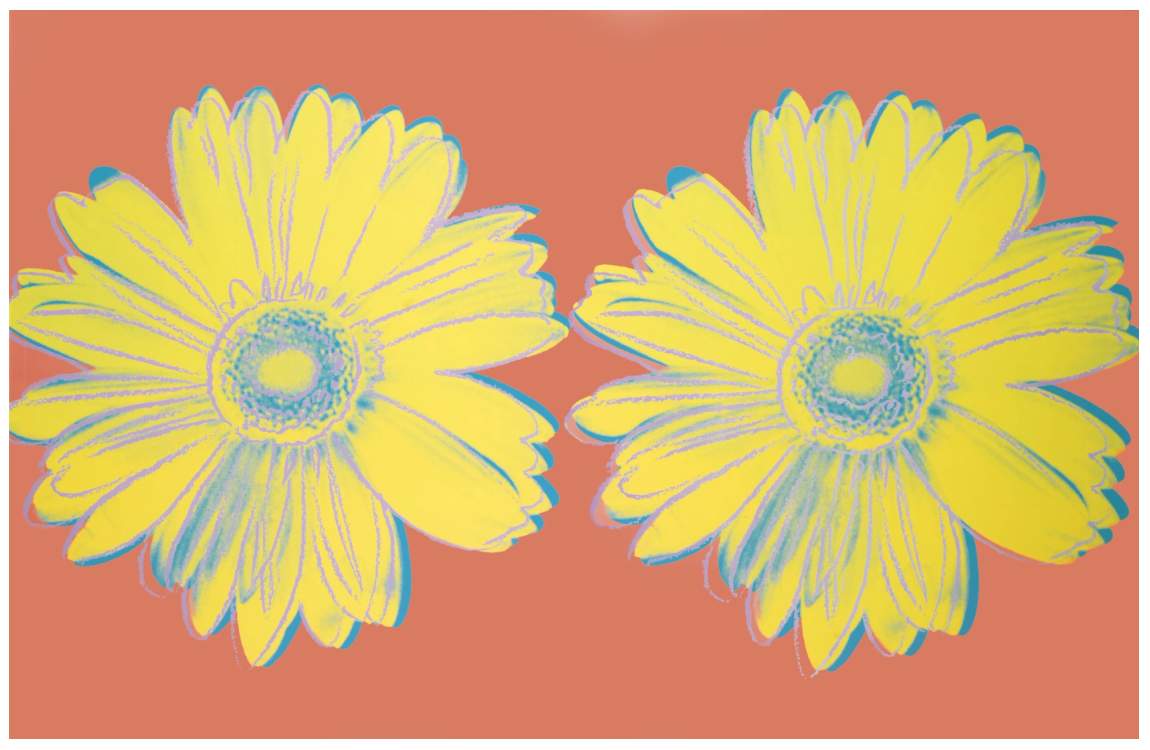
ANDY WARHOL
Daisy, circa 1982
Silkscreen on museum board
40×60 inches (101.6 x 152.4 cm)
Stamped by the Estate of Andy Warhol and numbered T.J.H. UP21.58 on the reverse
Christie’s New-York: 14 November 2002
Estimated: USD 30,000 – 40,000
USD 62,140
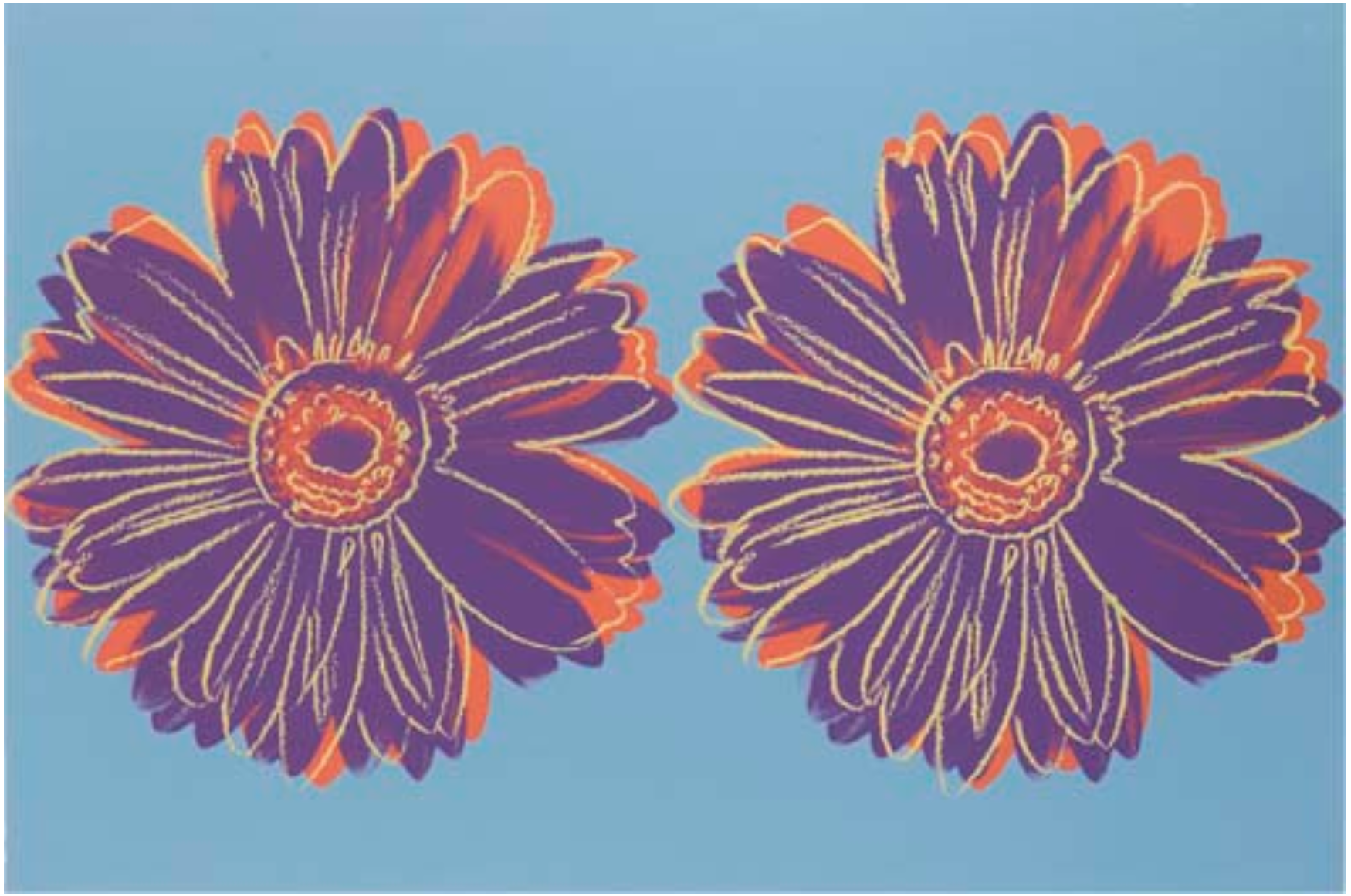
ANDY WARHOL (1928-1987)
Daisy, circa 1982.
Unique screenprint on paper
40×60 inches (101.6 x 152.4 cm)
Stamped with the Estate of Andy Warhol and the Andy Warhol Foundation for the Visual Arts stamps
Inscribed ‘TJH 49’ (on the reverse)