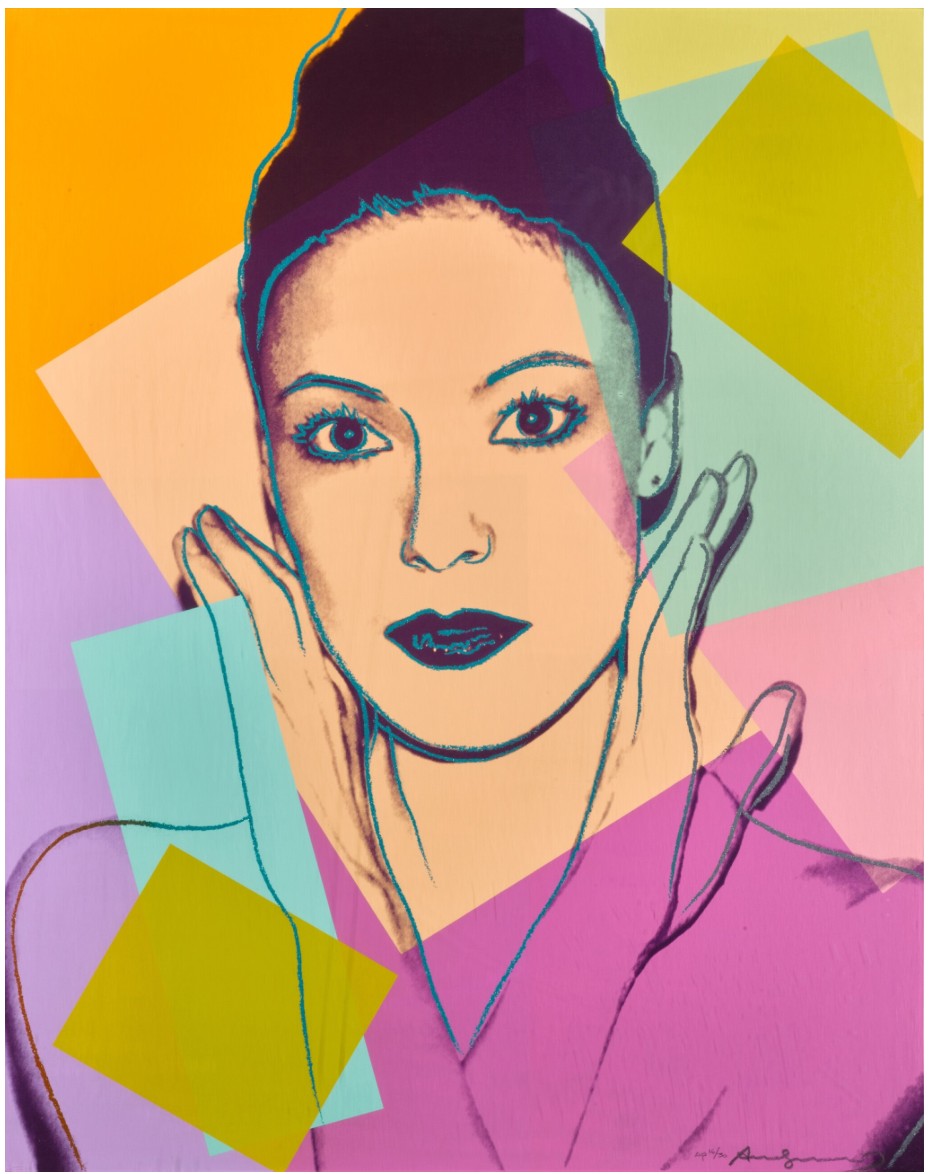
Karen Kain
Medium: Screenprint with diamond dust on Lenox Museum Board
Year: 1980
Sheet: 40×32 inches (101.6 x 81.3 cm)
Edition: 200
Artist’s Proofs: 30 AP
Printer’s Proofs: 5 PP
Trial Proofs: 25 TP, each print is unique, some have diamond dust
Printer: Rupert Jasen Smith, New-York
Publisher: William Hechter, Toronto, Canada
Literature: Feldman & Schellmann II.236
Signed and numbered in pencil lower right
With the printer’s blindstamp and the publisher’s inkstamp on verso
The edition of 200 is also signed by Karen Kain
Early in her career, Kain was partnered with the legendary ballet dancer Rudolph Nureyev. One night, after dancing together in Swan Lake in New York City, Nureyev invited Kain to attend a party at the Iranian Embassy. Kain recalls that the night was hot, and she hadn’t found time to shower off the pale body makeup that she wore on stage – she simply tossed on a white linen dress before hopping into a cab to 5th Avenue. The party was attended by all manner of celebrities, and Kain has memories of wandering around the rooms, largely unnoticed – except by Warhol. Of their first meeting, Kain told Toronto Life, “Andy Warhol walked up to me and said, ‘You look like an angel.’ It was really weird.”
The two artists’ paths would cross again in 1980, when Toronto lawyer William Hechter commissioned Warhol to make an edition of screenprints and a series of portraits of the ballerina. Kain flew from Toronto to New York City on a Sunday morning, and headed to Warhol’s famous Factory, located at 860 Broadway. There she was met by a makeup artist who painted her face entirely in white before drawing on a very red set of lips – Kain believes that Warhol was looking to make her face a “unified surface” to better achieve the superflat look he preferred in his screen printed portraits.
Of the sitting itself, Kain recalls that the entire session lasted less than 45 minutes. She explained that “he was mumbling, mumbling all the time, I couldn’t understand what he was saying. And he was taking many, many, many pictures all around me, mumbling, and then he was gone and it was over.” Warhol used his preferred camera for the session, his Polaroid Big Shot – which he referred to as “his pen and pencil.” The Big Shot had an integrated light source, which meant that Warhol’s portraits all functionally had the same lighting setup, unified from sitter to sitter, session to session.
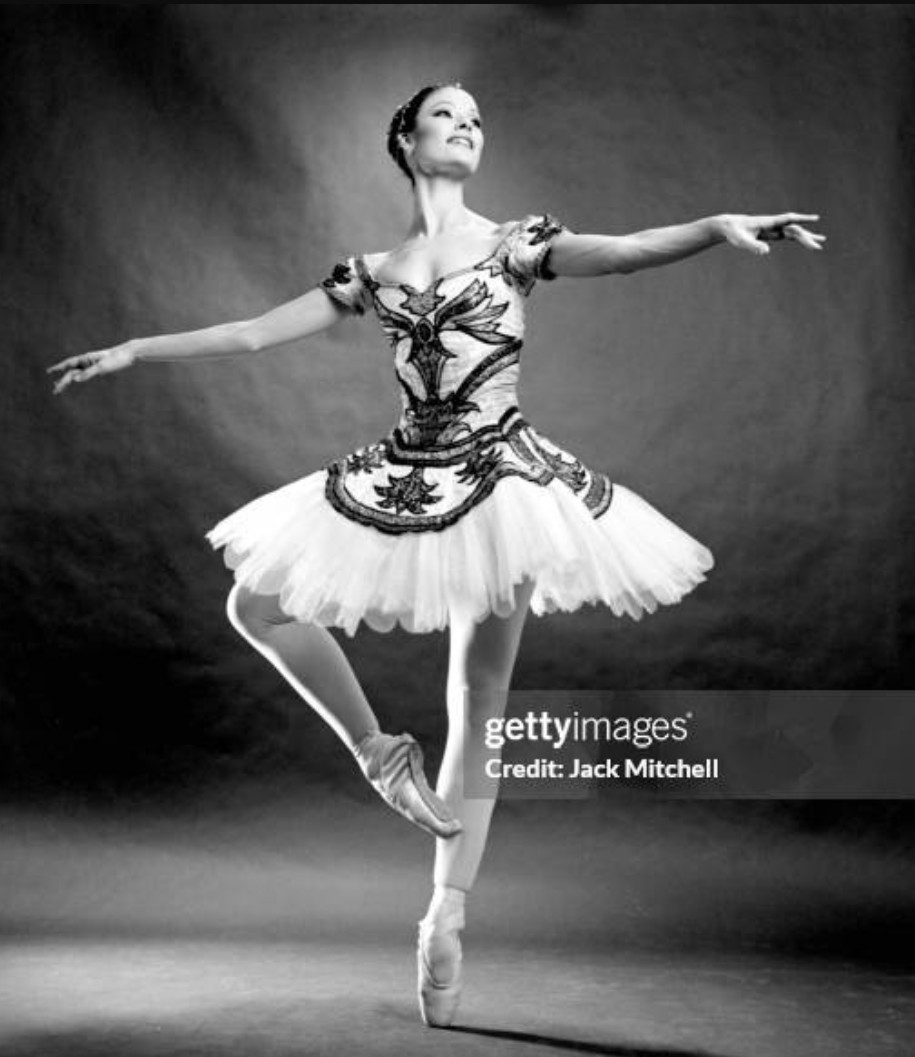
Though many accounts of Warhol’s process mention the incredible bustle of The Factory, Kain’s sitting was just her and the artist – even the makeup artist had left. Warhol’s ease with the process was evident, which Kain found comforting. She compares her sitting to working with a choreographer: despite her shyness, her experience as a dancer had made her very used to being told how to pose. Kain notes that Warhol didn’t tell her what she should be feeling in the portrait, rather, “he just let me be blank. I think he liked that.”
Warhol had a very clear vision for the photoshoot, and directed Kain how to hold her hands. He photographed some shots with her hands in the frame, and some without – there were no other poses taken. Kain notes: “it was very curt. Quiet. [He had a] very quiet voice, but he knew exactly what he wanted me to do. I don’t know why he wanted my hands like that, but he did. I wouldn’t have done that.”
Kain’s portrait stands out from Warhol’s oeuvre precisely because of her hands, which are typically absent from his portraits, particularly those of female sitters whom he depicted from the shoulders up, in the style of a classical bust. Interestingly, Warhol included Muhammed Ali’s fists in his portrait, perhaps seeing Kain and Ali’s hands as essential tools of the athletes’ trade. In Kain’s opinion, “[Warhol] obviously saw something in my hands that spoke to him, because right away he told me what he wanted to do with my hands. I think he observed […] me as Rudolph’s partner, and what stood out to him was how I used my hands.”
Kain never crossed paths with Warhol after her fleeting visit to The Factory. Warhol enjoyed the experience of photographing Kain, telling the Timmins Press Review that “she was so beautiful, a great dancer. She stands out, the way she moves. And she was so easy to do.”
Warhol’s screenprints of Kain were unveiled in Toronto on June 19, 1980, at an event at the Sutton Place hotel. The proceeds from the first 50 prints from the edition of 200 went to benefit The National Ballet of Canada. Kain recalls that by the time the unveiling happened, she had largely forgotten about her trip to the Factory, so immersed was she in her ballet career. She recalls that she didn’t know what to expect, not being well versed with Warhol’s work at the time.

Famously, Kain was uncomfortable with the portrait for many years. Of her first look, she explained that she was shocked by the intense sparkle of the diamond dust-encrusted surface, which Warhol had begun to incorporate in some of his portraits in the late 1970s. Kain recalls having been told as a young dancer that sparkle was “cheap.” Speaking to Toronto Life, she says that “at the time I was embarrassed by how flamboyant it was, but I appreciate it now.”
As payment for her sitting, Kain was given the choice to receive two screenprints or one painted portrait. She chose the former, giving one copy to her parents. Kain’s copy hangs in her Toronto home, and her opinion of the iconic image has certainly changed over the years: “I feel very differently about Andy’s work now, with maturity and the passing of time and an understanding of his place in the artistic milieu. Honestly, I really was not taken with the paintings or the silkscreens at all in the beginning.” She adds, “I really didn’t get why he was so famous or why everyone wanted their portrait done by him, but now I have a different appreciation of what he brought to the world.”
Source: Waddington’s Toronto
Auction Results
1. Regular Editions
Christie’s New-York: 23 October 2025
Estimated: USD 20,000 – 30,000
USD 33,020
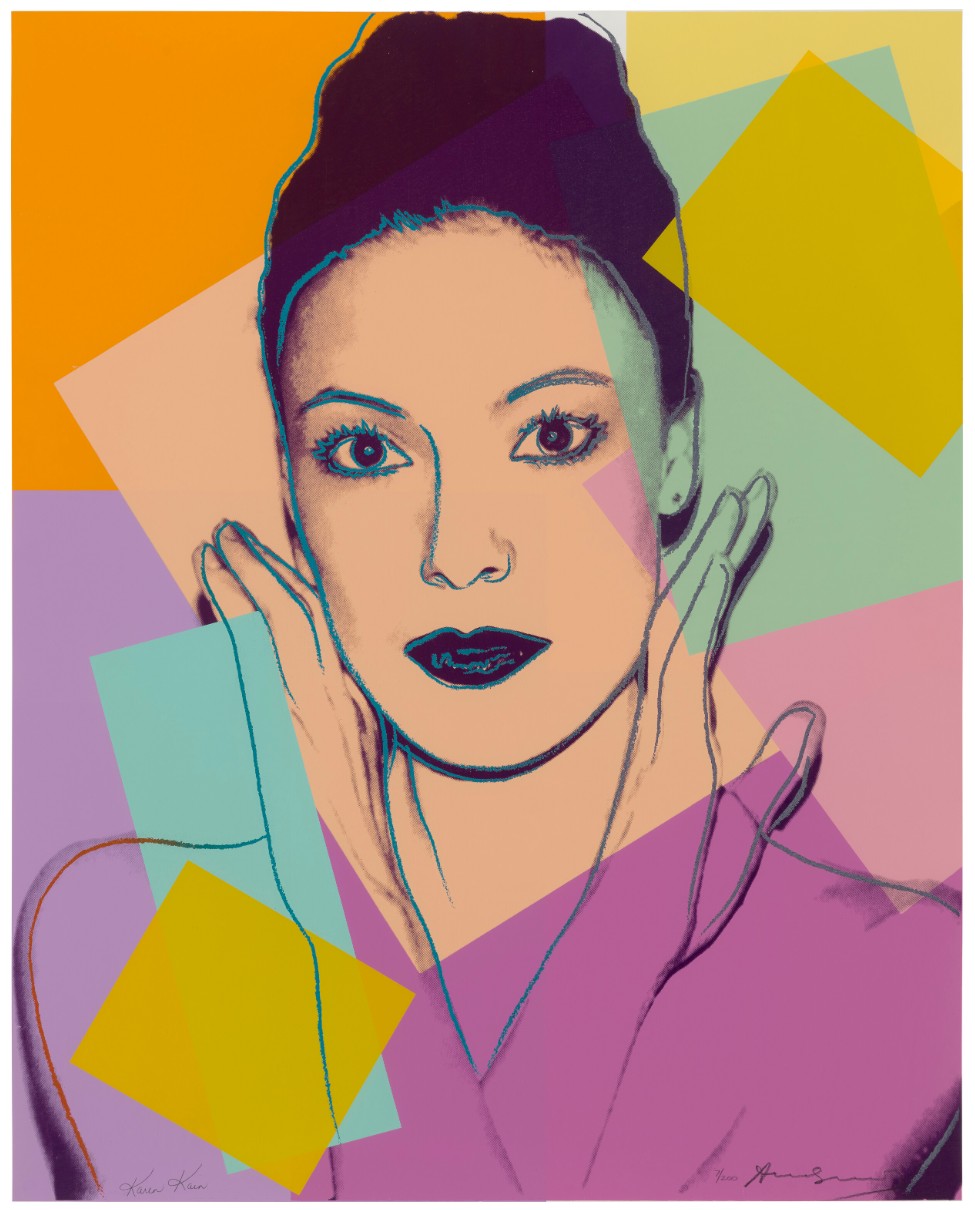
ANDY WARHOL (1928-1987)
Karen Kain (Feldman & Schellmann II.236), 1980
Screenprint in colors with diamond dust on Lenox Museum Board
Signed by the artist and Karen Kain in pencil
Numbered 7⁄200 (there were also 30 artist’s proofs)
Sotheby’s London: 26 September 2023
Estimated: GBP 15,000 – 20,000
GBP 31,750 / USD 38,775
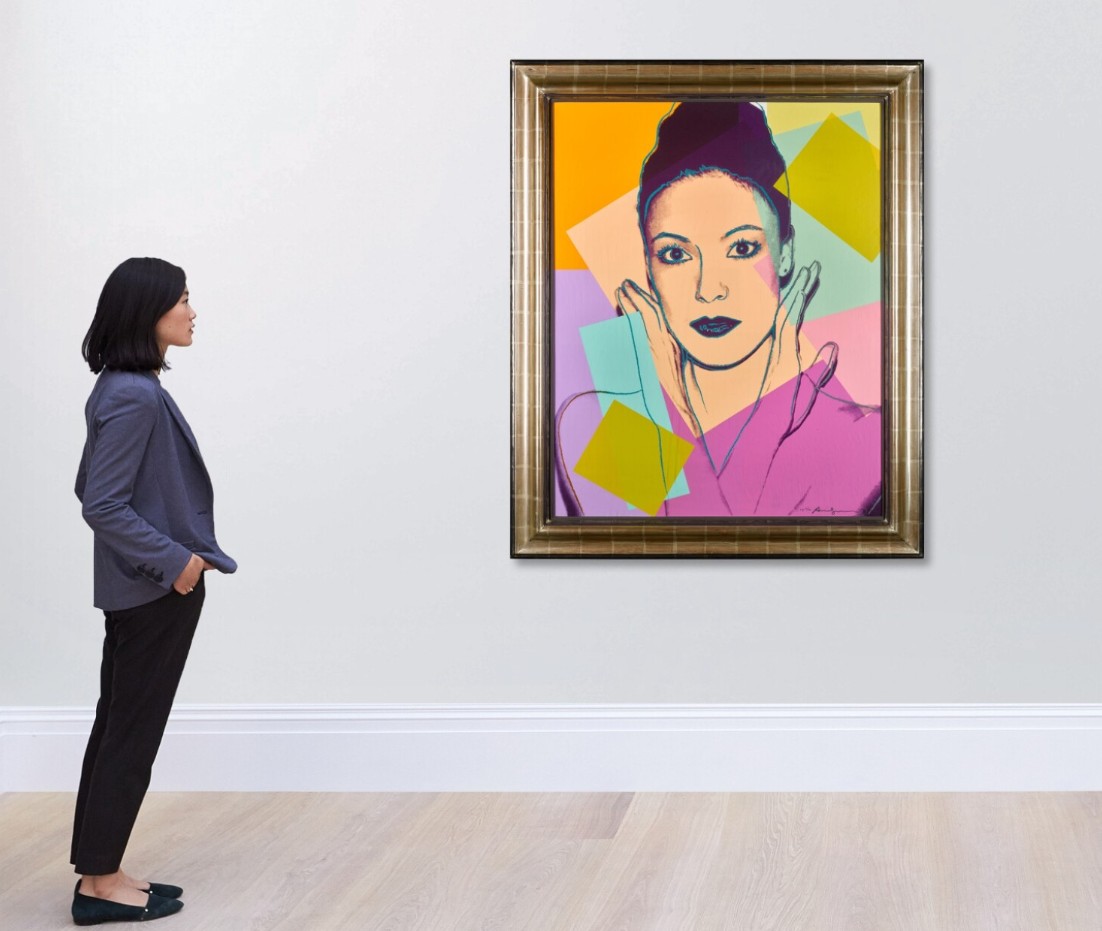
ANDY WARHOL (1928 – 1987)
Karen Kain, 1980
Screenprint in colours with diamond dust on Lenox Museum Board
Signed in pencil, inscribed and numbered AP 16/30
One of 30 artist’s proofs aside from the numbered edition of 200
Waddington’s Toronto: 10 November 2022
Estimated: CAD 30,000 – 40,000
CAD 46,800 / USD 34,595
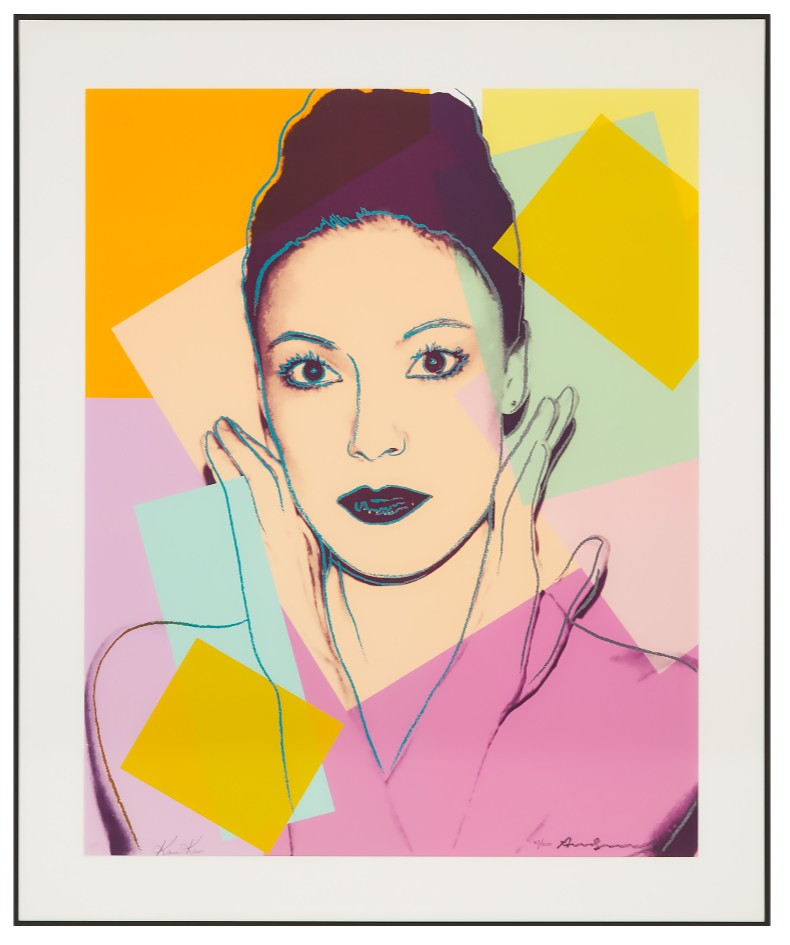
ANDY WARHOL (1928-1987)
KAREN KAIN, 1980 [F.S. II.236]
Screenprint in colors with diamond dust on Lenox Museum Board
Signed by Andy Warhol and Karen Kain in pencil
Numbered 87/200 (there were also 30 artist’s proofs)
Sotheby’s New-York: 23 October 2020
Estimated: USD 18,000 25,000
USD 22,680
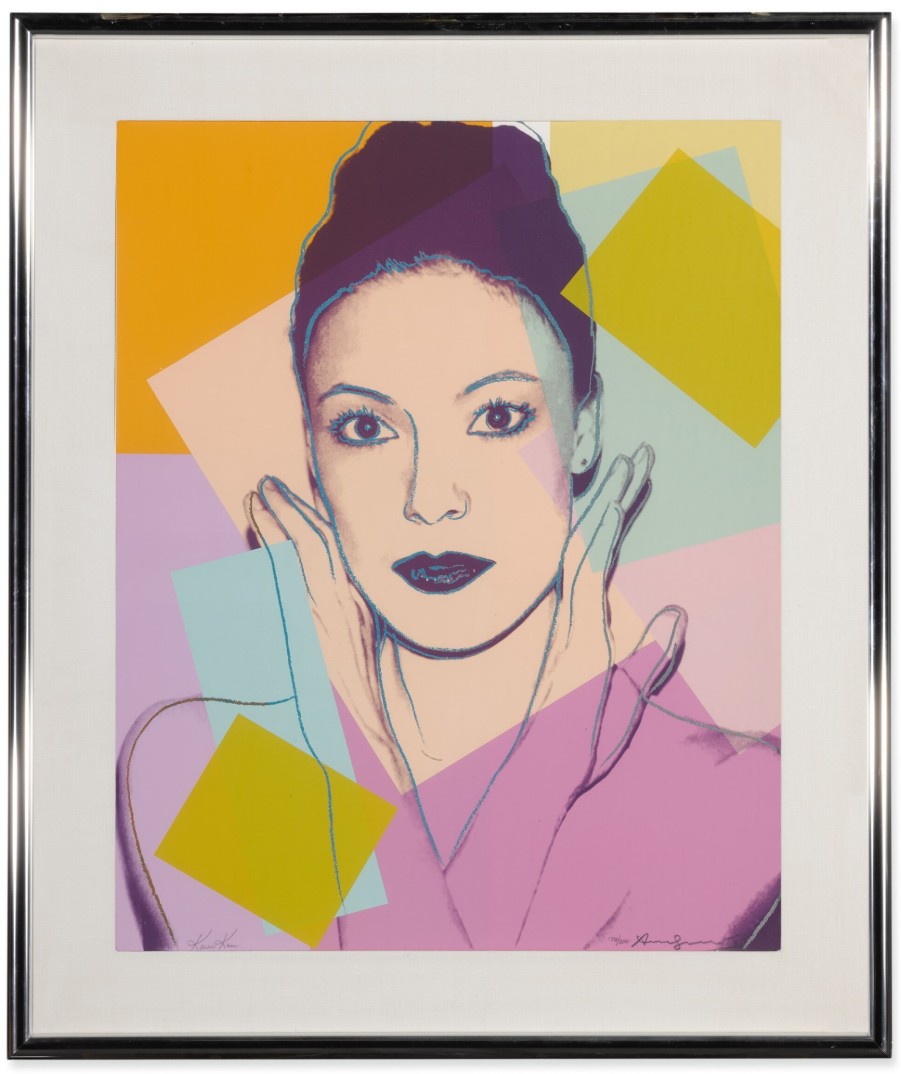
ANDY WARHOL (1928 – 1987)
KAREN KAIN (F. & S. II.236), 1980
Screenprint in colors with diamond dust on Lenox Museum Board
Signed in pencil and numbered 178/200 (total edition includes 30 artist’s proofs)
Also signed by Karen Kain
2. Trial Proofs
Van Ham Cologne: 2 December 2020
Estimated: EUR 30,000 – 35,000
EUR 36,120 / USD 43,755
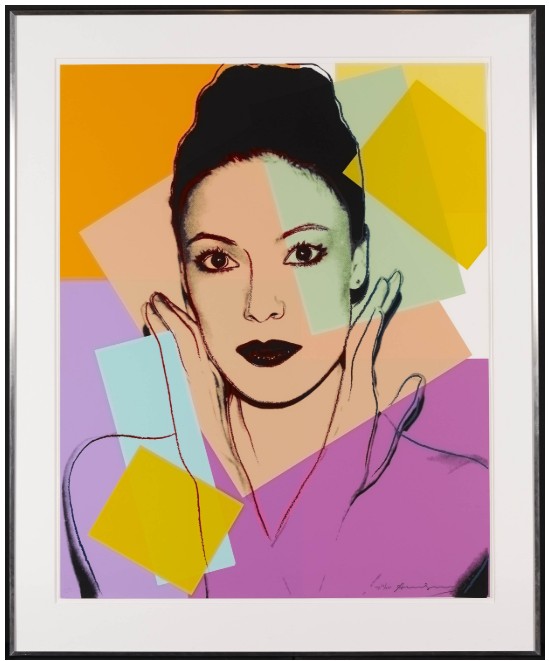
WARHOL, ANDY (1928 Pittsburgh, PA/USA – 1987 New York)
Karen Kain, 1980
Color serigraph on Lenox museum cardboard
Signed and inscribed TP 12/25