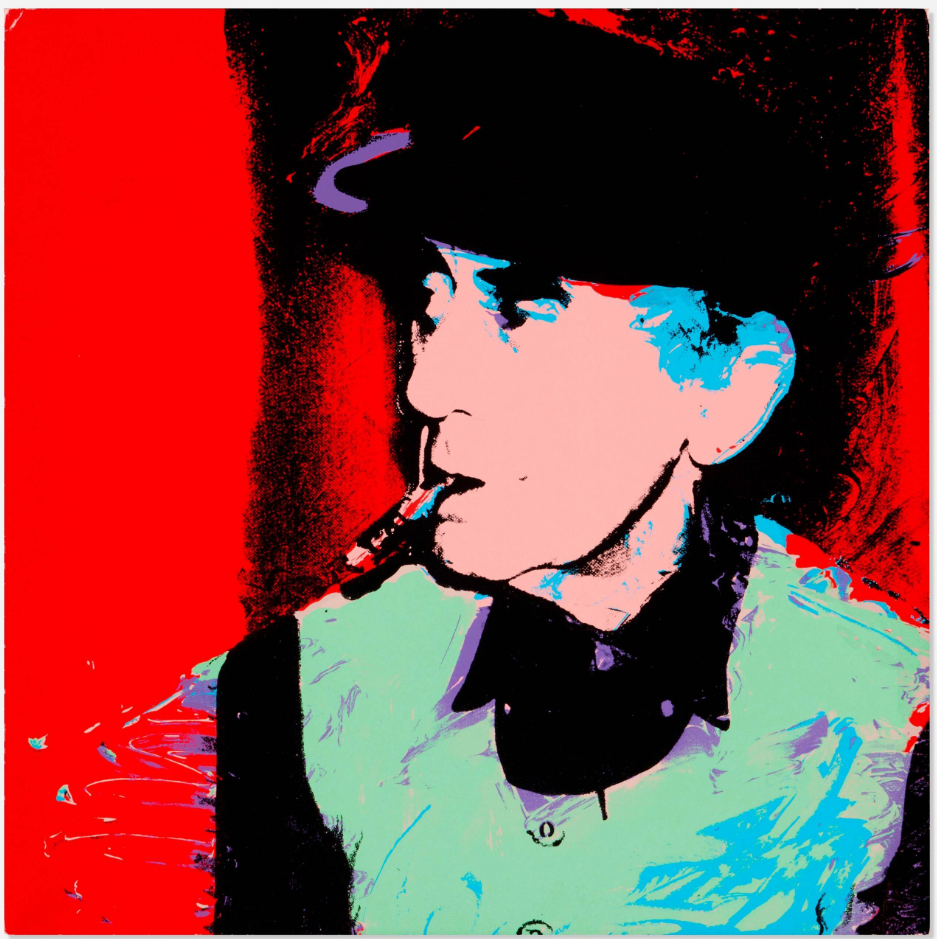
Man Ray
Medium: Screenprint in colors on Strathmore Bristol paper
Year: 1974
Sheet: 31 1/2 x 31 1/2 inches (80×80 cm)
Edition: 100
Hors Commerce: 20 HC
Publisher: Luciano Anselmino, Milan, Italy
Printer: Il Fauno, Milan, Italy
Literature: Feldman & Schellmann II.148
Signed, dated and numbered in ball-point pen on verso with the publisher’s and printer’s ink stamps in blue
“I took a SX-70 and then I put in a whole roll and I got ten… ten pictures of that and then he put a cigar in his mouth… And actually the cigar was bigger than he was because he’d… he’d gotten very… very bent over. And he looked like he was always far out but uh… I think it was just because he was bent over… I had him smoke the cigar.”
Warhol’s words perfectly sum up his recollections of the momentous occasion when he met and photographed one of his idols, the modernist photographer Man Ray. While Warhol was always interested in creating portraits of artists with which he was personally friends with – Jasper Johns, Roy Lichtenstein, Frank Stella and Robert Rauschenberg to name just a few – the present work is near unique as a portrait of an artist who had an undeniable influence on him. There is a sense of homage in Warhol’s portrait of Man Ray one does not feel in the images of his contemporaries. During their meeting in late 1973 – organized by the dealer Luciano Anselmino – this sense of homage extended to an almost student-master relationship. Trading the camera – a cheap model Warhol preferred – back and forth, they spent the day photographing each other.
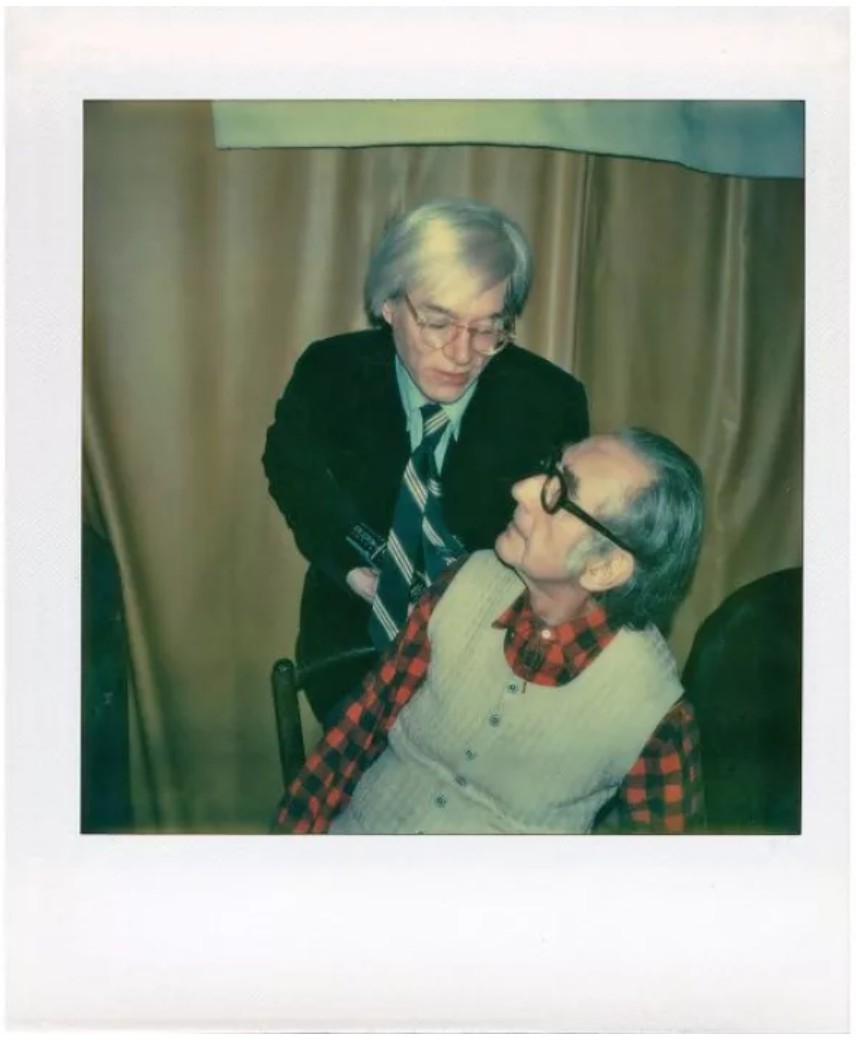
Polaroid of Andy Warhol and Man Ray. Image © The Andy Warhol Foundation for the Visual Arts, Inc
The reverence Warhol held for Man Ray extended far past the source photograph of the present work to the large collection of photographs by Man Ray that he religiously collected. Warhol was naturally drawn to the enigmatic societal portraits Man Ray made of the celebrities and socialites that preceded his heyday. Images of key figures such as Pablo Picasso, Dora Maar and Nancy Cunard formed the basis of his collection that also counted a number of Man Ray’s revolutionary Solarizations and Rayographs. Yet as always, Warhol had a decidedly capricious opinion of his idol; in a self-recorded video diary taken in 1976 – only a few years after he produced the present work – Warhol claimed he “only really loved him [Man Ray], to be truthful…his name was the best thing about him” (Andy Warhol cited in: Ibid, p.231). While this is typical of Warhol’s interest in surface and the vapid celebrity of a name, it hardly tallies with the pride of place in which he installed a rare painting by Man Ray, Peinture Feminine (1954) – hung prominently in the sitting room of his New York home. In many ways, this attests to the complex relationship Warhol had with the world, one moment deeply involved in the richness of one man’s art, the next vulgarly obsessed with simply the power of one’s name.
Man Ray, 1974
Sotheby’s London: 6 October 2017
Estimated: GBP 280,000 – 350,000
GBP 296,750 / USD 388,010
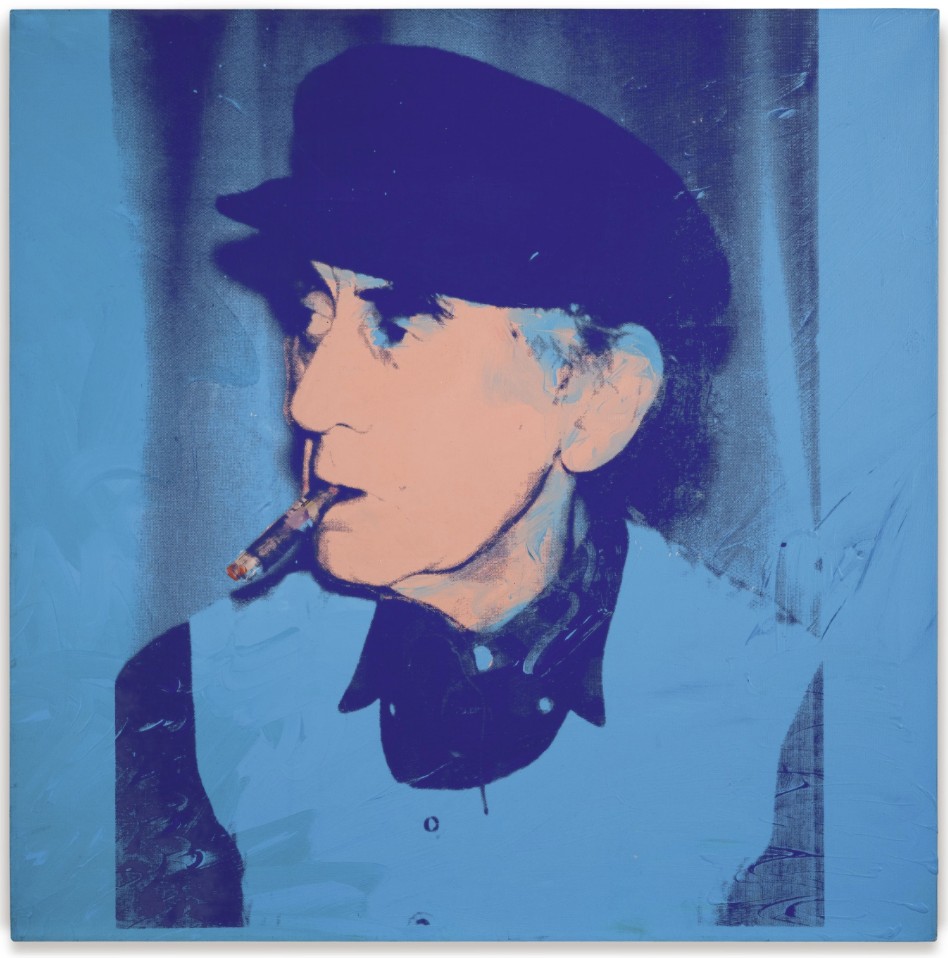
ANDY WARHOL
Man Ray, 1974
Acrylic and silkscreen ink on canvas
40×40 inches (101.6 x 101.6 cm)
Signed, titled and dated 74 on the overlap
Man Ray shows Warhol’s paintbrush at its most free-spirited, a fact unusually acknowledged in his catalogue raisonné for the period: “Warhol’s portraits of Man Ray show just how far he was willing to push painterliness, how free-style the brush could become in his hands” (Neil Printz and Sally King-Nero, Eds., The Andy Warhol Catalogue Raisonné: Paintings and Sculptures 1970-1974, Vol. 3, New York 2010, p.374). Built up through wet-on-wet paint, the present work is the most boldly simplified composition of colourways with bright – somewhat melancholic – blue flashes against the cool pink of Man Ray’s face. The most alive of the series, it is the only work out of the twelve listed in the catalogue raisonné in which Warhol playfully touches a bold dot of red paint to light the end of his cigar. Indeed, Warhol engaged in a more traditional form of portrait making than his pop aesthetic would usually reveal – 5 drawings of Man Ray attest to an artist working out preliminary compositions before transferring to canvas. Part of the 40 by 40 inch series, it is a substantially larger work than the two held in the Tate’s collection. The various styles of canvas and thick involved brushwork with which they were painted attests to Warhol’s regard for a photographer he admired and collected throughout the formative years of his career. It stands witness to a seminal meeting for Warhol on 30th November 1973 when two of the major artists of the Twentieth century traded portraits of each other, united by their love for film, and for the undeniable lure of their own celebrity.
Auction Results
Christie’s online: 27 May 2025
Estimated: EUR 7,000 – 10,000
EUR 12,600 / USD 14,350
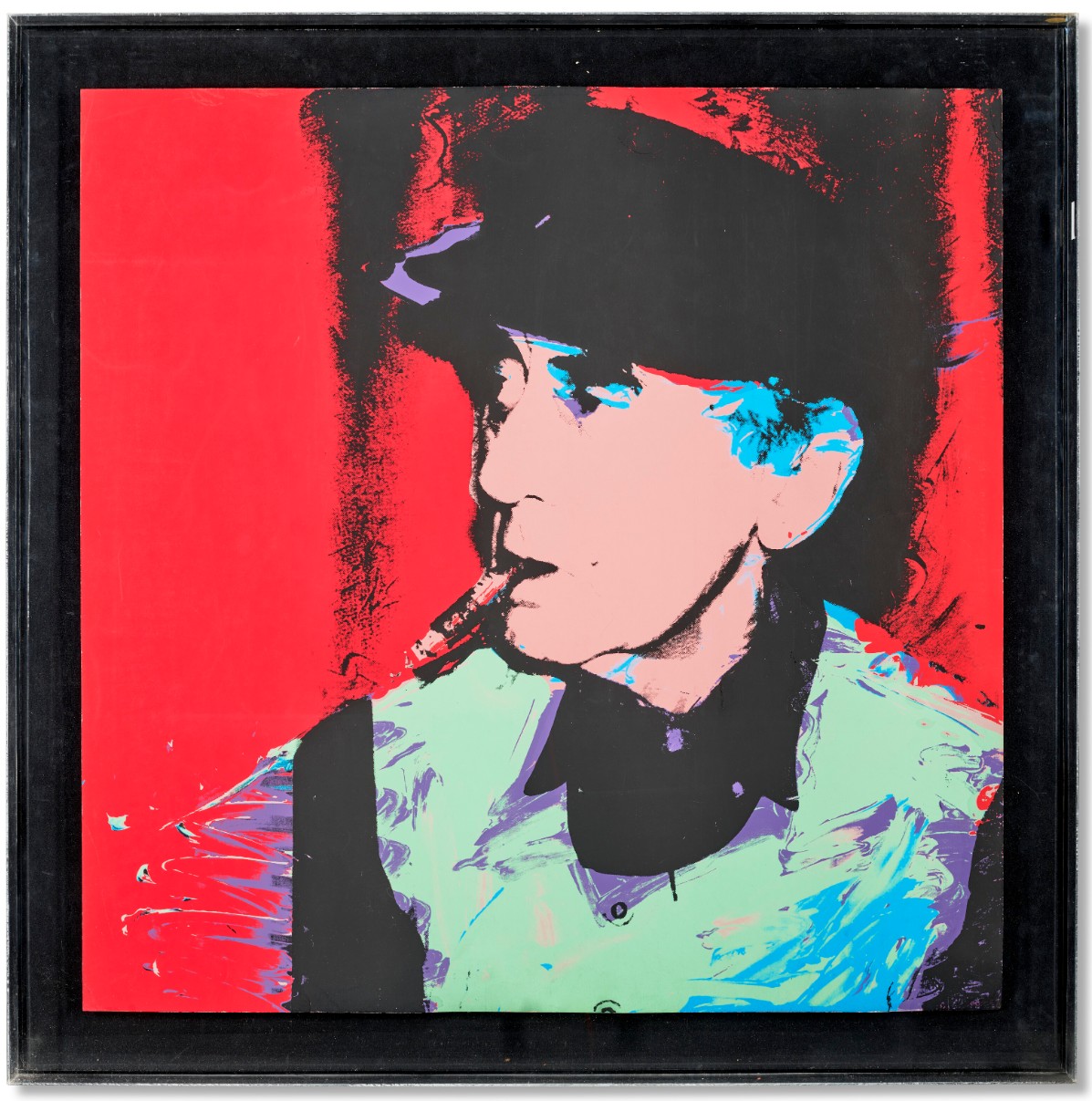
ANDY WARHOL (1928-1987)
Man Ray (Feldman, Schelmann no. II.148), 1974
Screeprint in colors on Strathmore Bristol paper
Signed ‘Andy Warhol’ and dated ’74’ in black ink on the reverse (lower left)
Numbered 37/100 (lower right)
Rago: 12 February 2025
Estimated: USD 6,000 – 8,000
USD 11,430
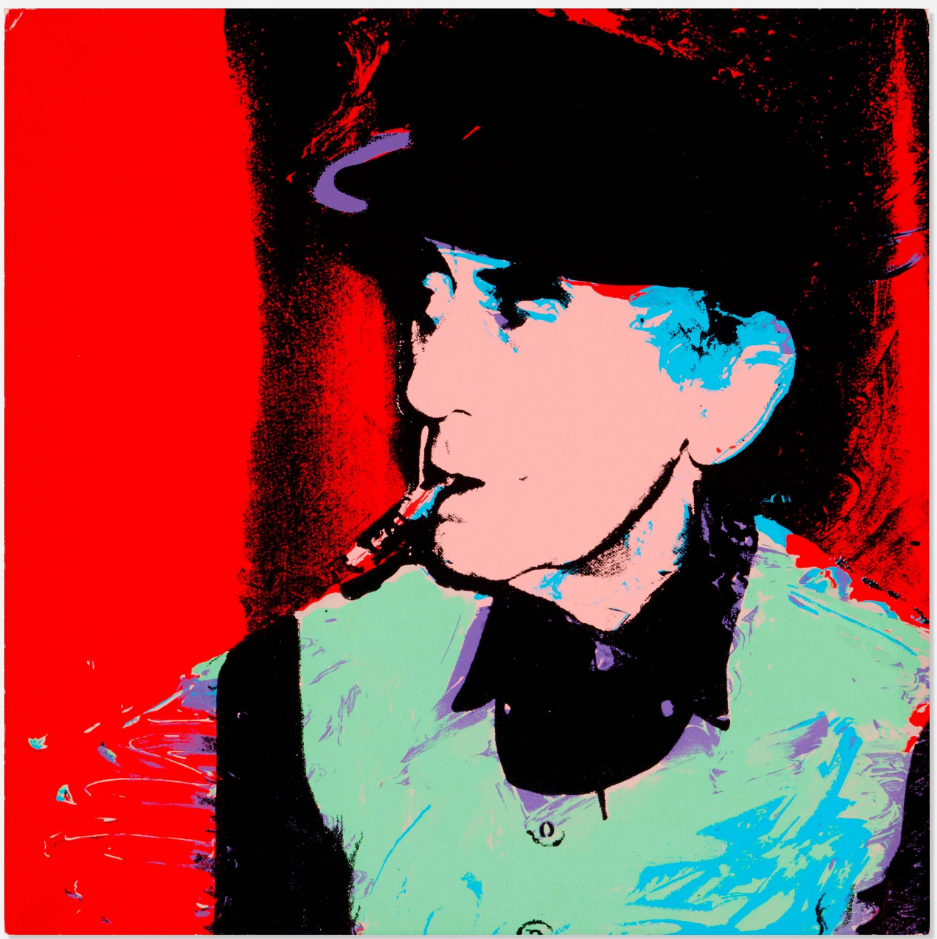
ANDY WARHOL (1928–1987)
Man Ray (Fedlman/Schellman II.149), 1974
Screenprint in colors
Signed, dated and numbered to verso ‘Andy Warhol 74 IV/XXV’
This work is proof 4 of 25 apart from the edition of 100
XXXXXXXXXX
Sotheby’s London: 15 September 2021
Estimated: GBP 5,000 – 7,000
GBP 11,970 / USD 16,550
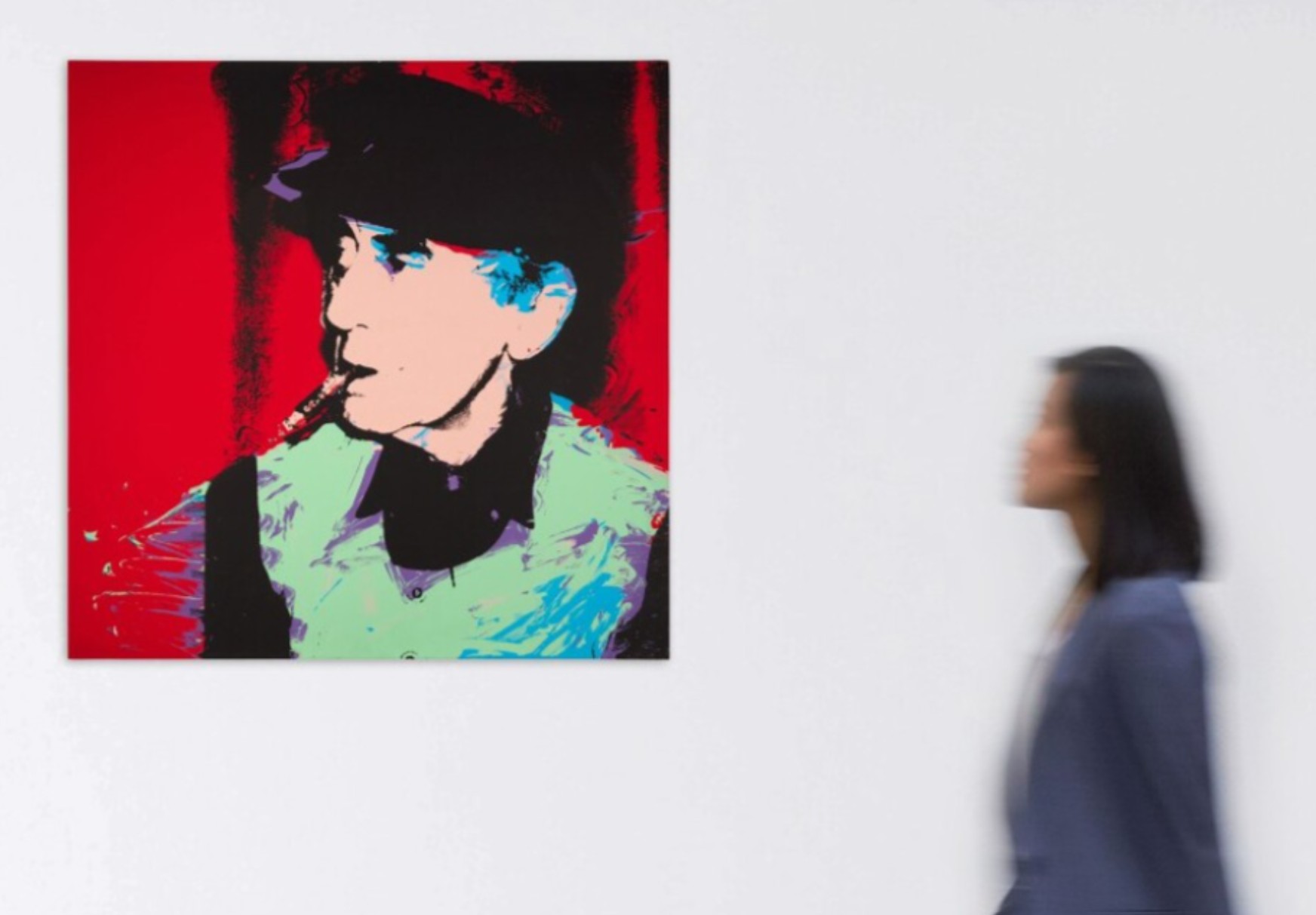
ANDY WARHOL (1928 – 1987)
Man Ray (F.& S. II. 148), 1974
Screen-print in colors
Signed in black ball-point pen, dated, numbered 68/100 verso
Venduehuis The Hague: 28 April 2021
Estimated: EUR 15,000 – 18,000
EUR 19,500 / USD 23,535
AUCTION RECORD FOR MAN RAY
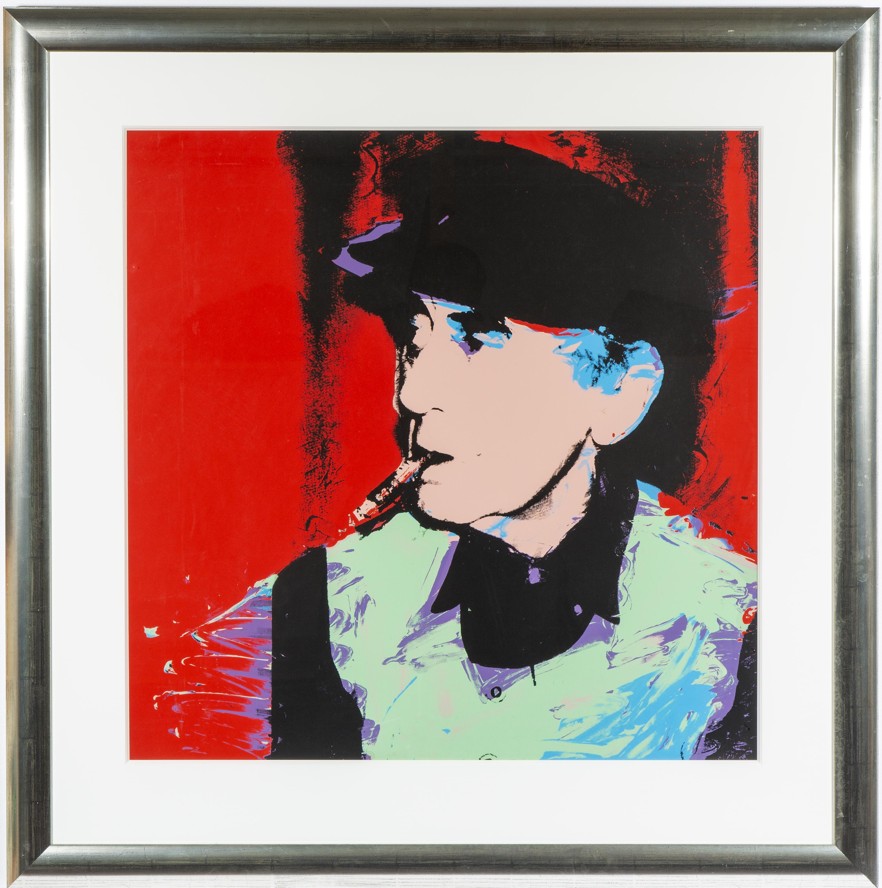
Silkscreen in colors on Strathmore Bristol paper
Sotheby’s New-York: 22 October 2018
Estimated: USD 7,000 – 10,000
USD 12,500
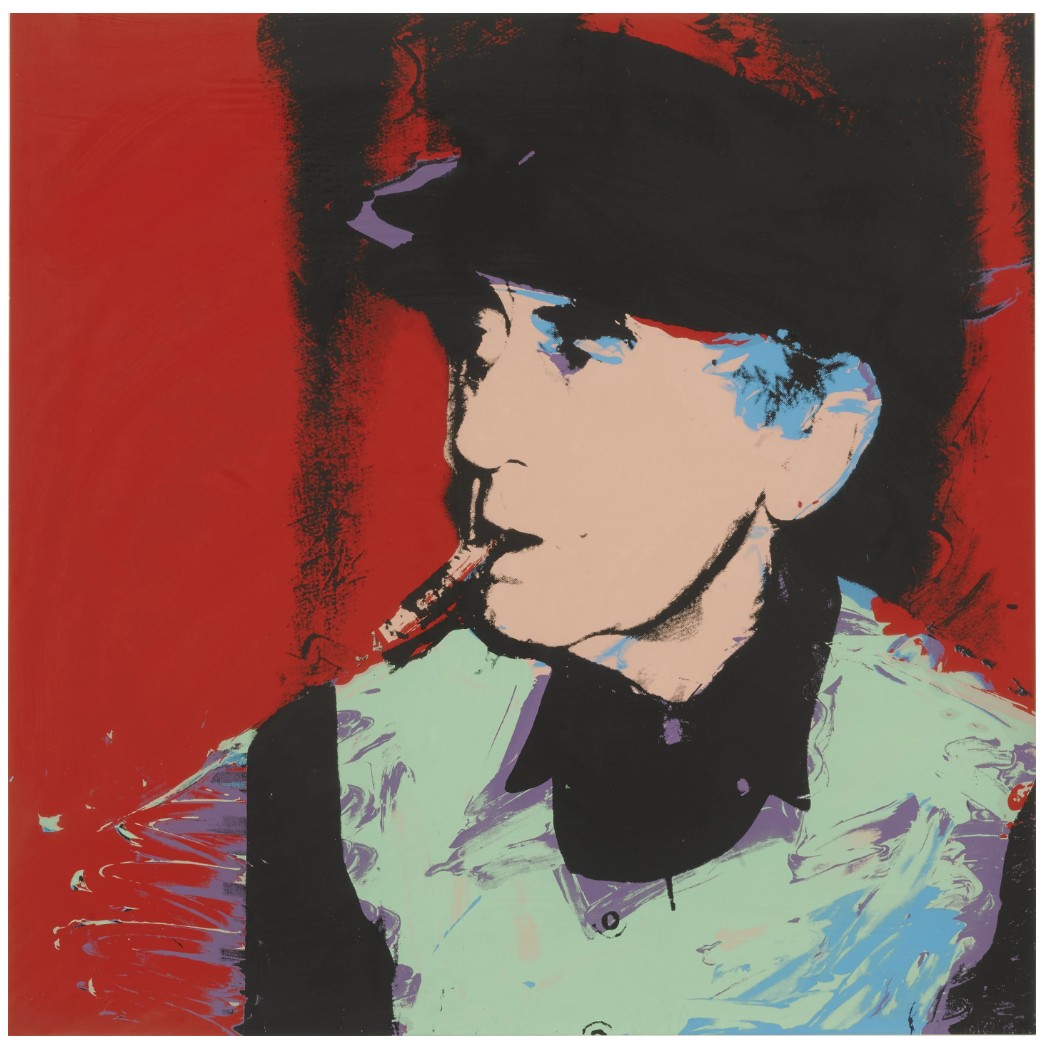
ANDY WARHOL
Man Ray (F. & S. II.148), 1974
Screenprint in colors on Strathmore Bristol paper
Signed in pencil on the verso and inscribed ‘H.C. 13/20’
An hors commerce impression aside from the numbered edition of 100