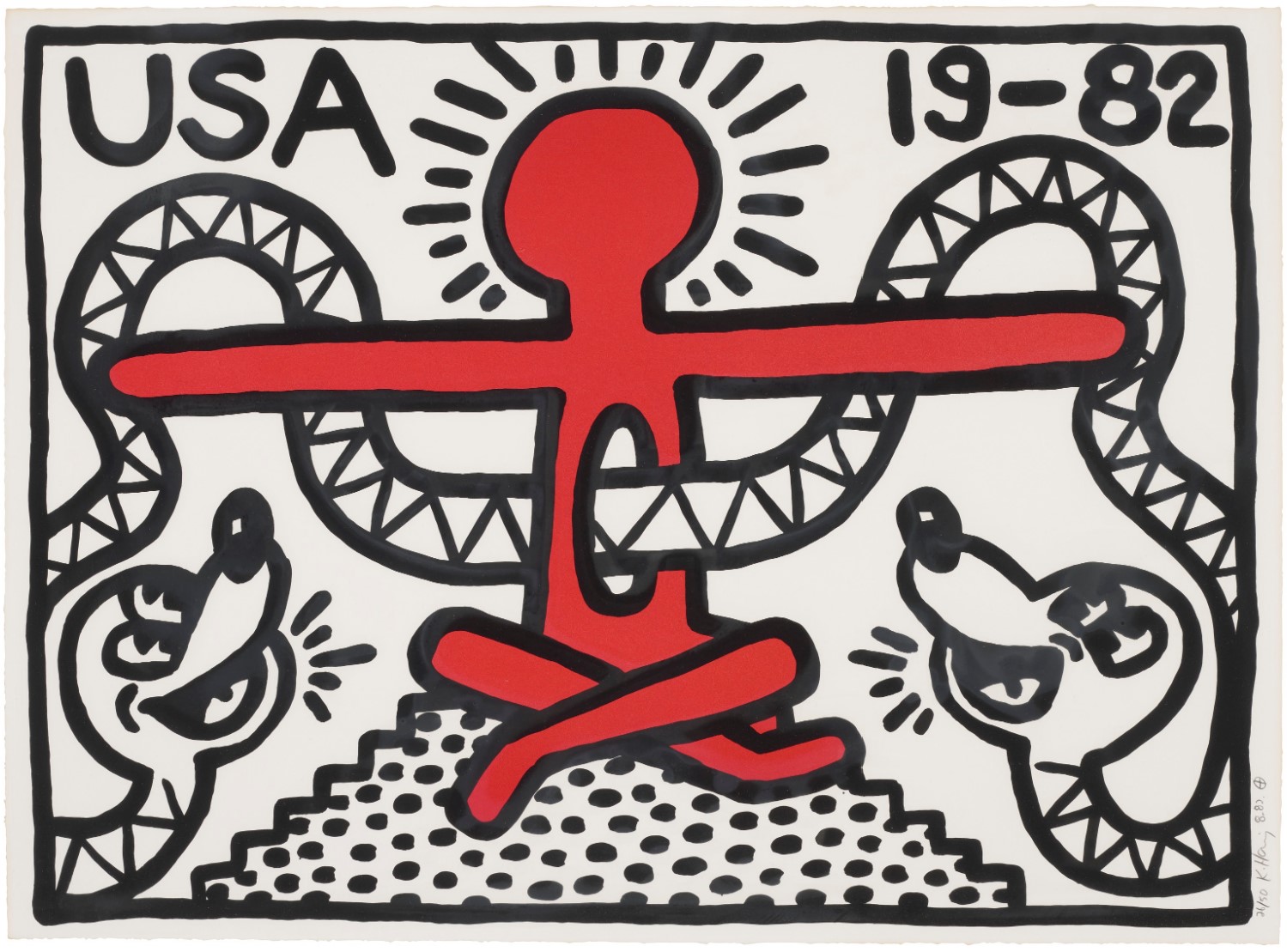
USA 19-82
Medium: Lithograph in black and red, on Copperplate Deluxe paper
Year: 1982
Image: 21 1/4 x 29 inches (54 x 73.7 cm)
Sheet: 22×30 inches (56 x 76.2 cm)
Edition: 50
Artist’s Proofs: 12 AP
Literature: Littmann pp. 16-17
Signed, dated and numbered in pencil
USA 19-82 features Keith Haring’s bold, black lines and a striking use of vermilion red. The composition showcases a central, cross-legged human figure, often associated with the “radiant baby” motif, symbolizing purity or new life, together with a two-headed, serpentine, dog-like creature that entwines the central figure and passes through a hole in its abdomen. A mound of dots in the background and the word “USA” scrawled in the black border at the top of the image. Radiant lines emanating from the figure’s head, suggesting a halo or spiritual energy.
USA 19-82 addresses complex socio-political issues, leveraging several of Haring’s recurring symbols.
The Hole in the Abdomen, prominent in Haring’s work after the murder of John Lennon in 1980, represents a metaphorical void, grief, or the violence inflicted upon marginalized people.
The Two-Headed Dog (together with The barking dog motif) typically symbolizes oppression, struggle, and the abuse of power. The two-headed snake-like creature here can be interpreted as a critique of power structures or the complexities and dualities of the contemporary world.
The Dotted Mound/Steps can connote “otherness” or illness, potentially referencing the emerging AIDS crisis, which was a significant concern for Haring and the LGBTQ+ community at the time.
Moreover, the figure’s pose evokes the ancient, cross-cultural practice of snake charming, pointing to collective, spiritual experiences over individual ones, contrasting with the specific “USA” identifier.
The print was created in 1982, a pivotal year in Haring’s career that coincided with his first major solo exhibition at the Tony Shafrazi Gallery in New York, which launched him into the mainstream art world. This was early in the AIDS epidemic, and Haring’s art began to reflect the crisis and other social issues with increasing urgency, a trajectory that would continue throughout his life until his death from AIDS-related complications in 1990.
USA 19-82 is an early example of how Haring fused his unique street art aesthetic with powerful socio-political commentary. His legacy is defined by his ability to create a universal visual language that communicated clear narratives about the human condition, social justice, and activism, all while bridging the gap between high art and public accessibility.
Auction Results
Christie’s New-York: 23 October 2025
Estimated: USD 15,000 – 25,000
USD 25,400
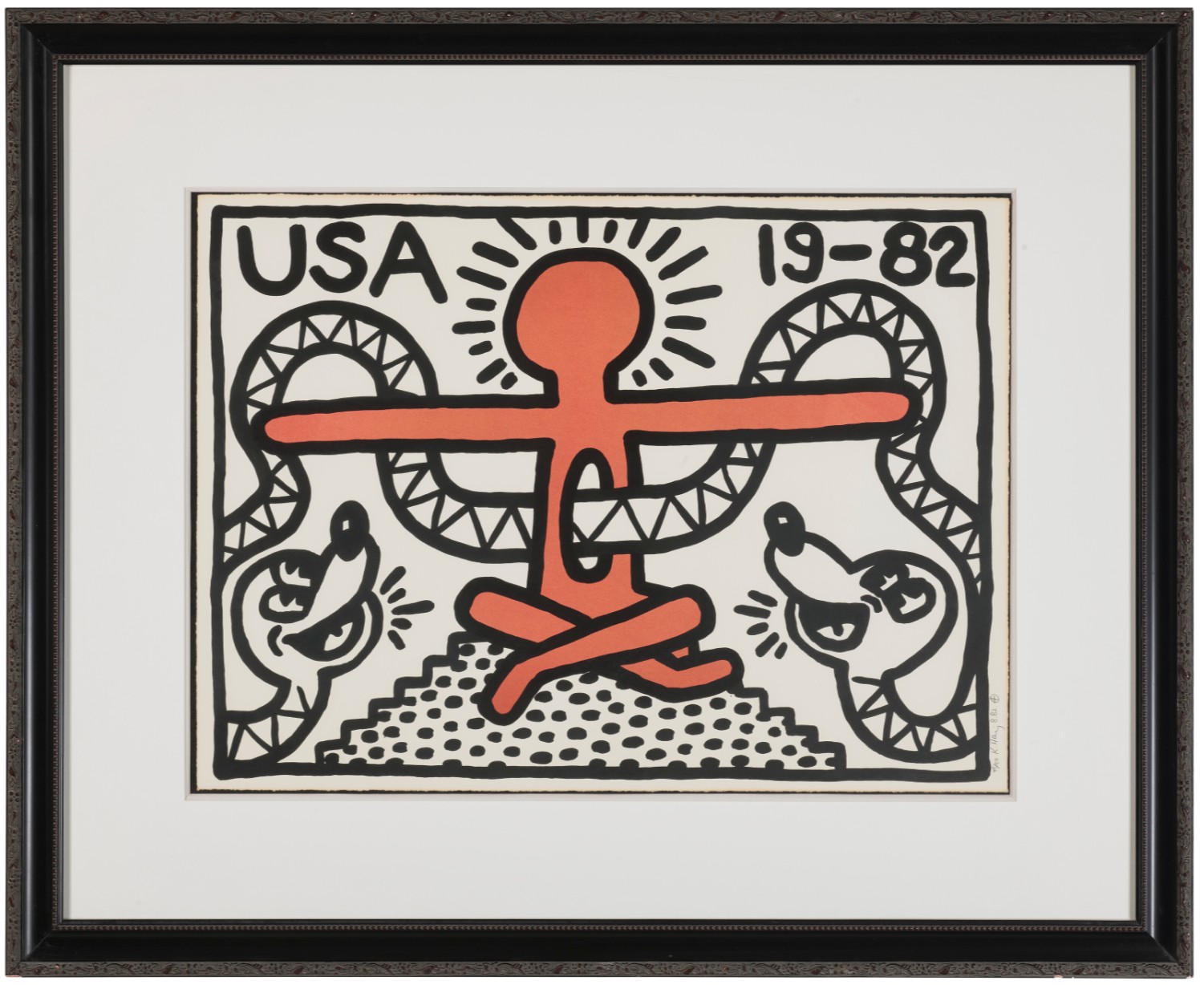
KEITH HARING (1958-1990)
USA 19-82 (Littmann pp. 16-17), 1982
Lithograph in black and red, on Copperplate Deluxe paper
Signed and dated in pencil, numbered 45⁄50
(there were also twelve artist’s proofs)
Christie’s New-York: 25 October 2024
Estimated: USD 20,000 – 30,000
USD 44,100
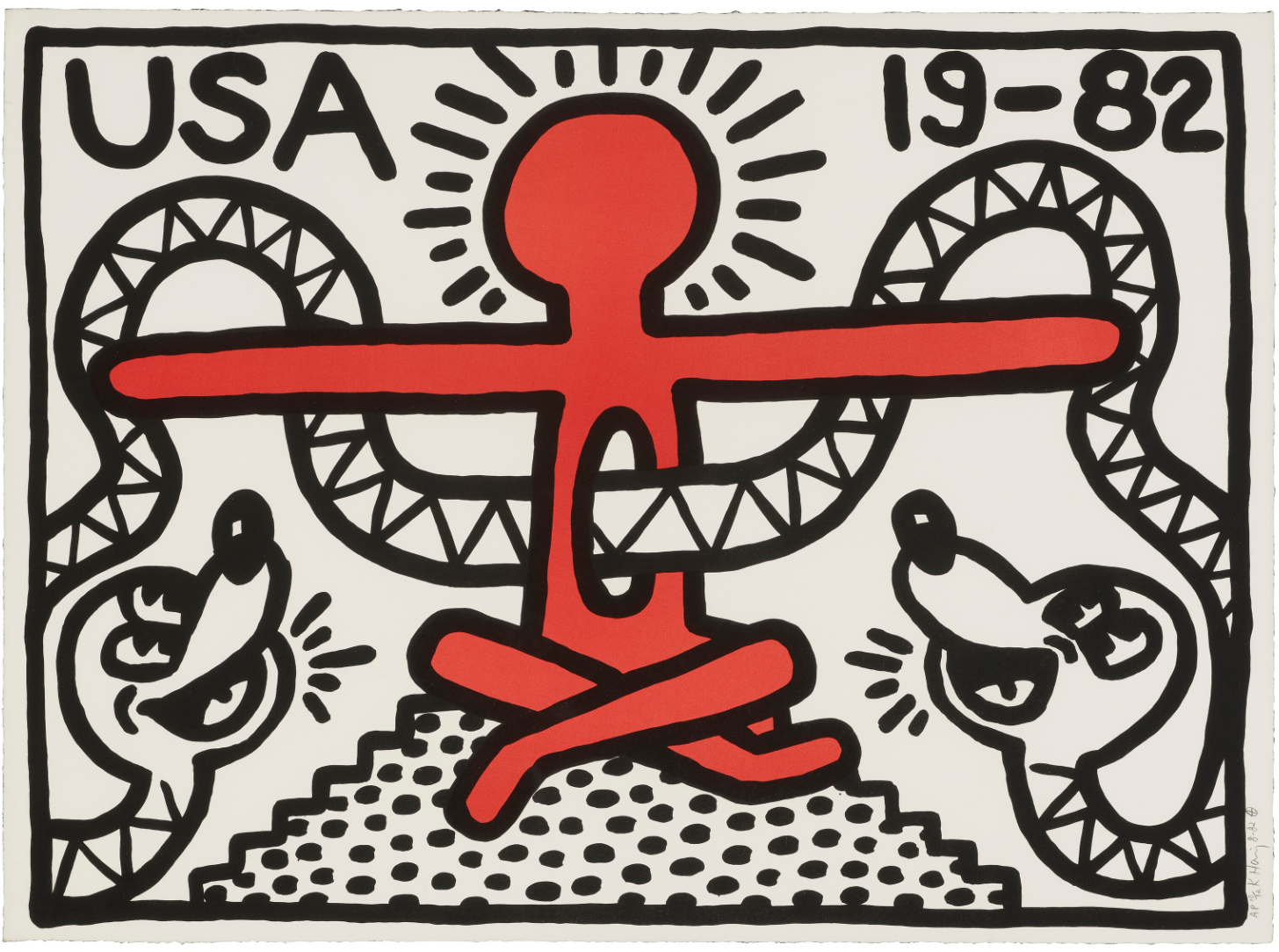
KEITH HARING (1958-1990)
USA 19-82 (Littmann pp.16-17), 1982
Lithograph in black and red on Copperplate Deluxe paper
Signed and dated in pencil, numbered ‘AP 10⁄12’
An artist’s proof, the edition was 50
Christie’s New-York: 21 October 2021
Estimated: USD 15.000 – 25,000
USD 43,750
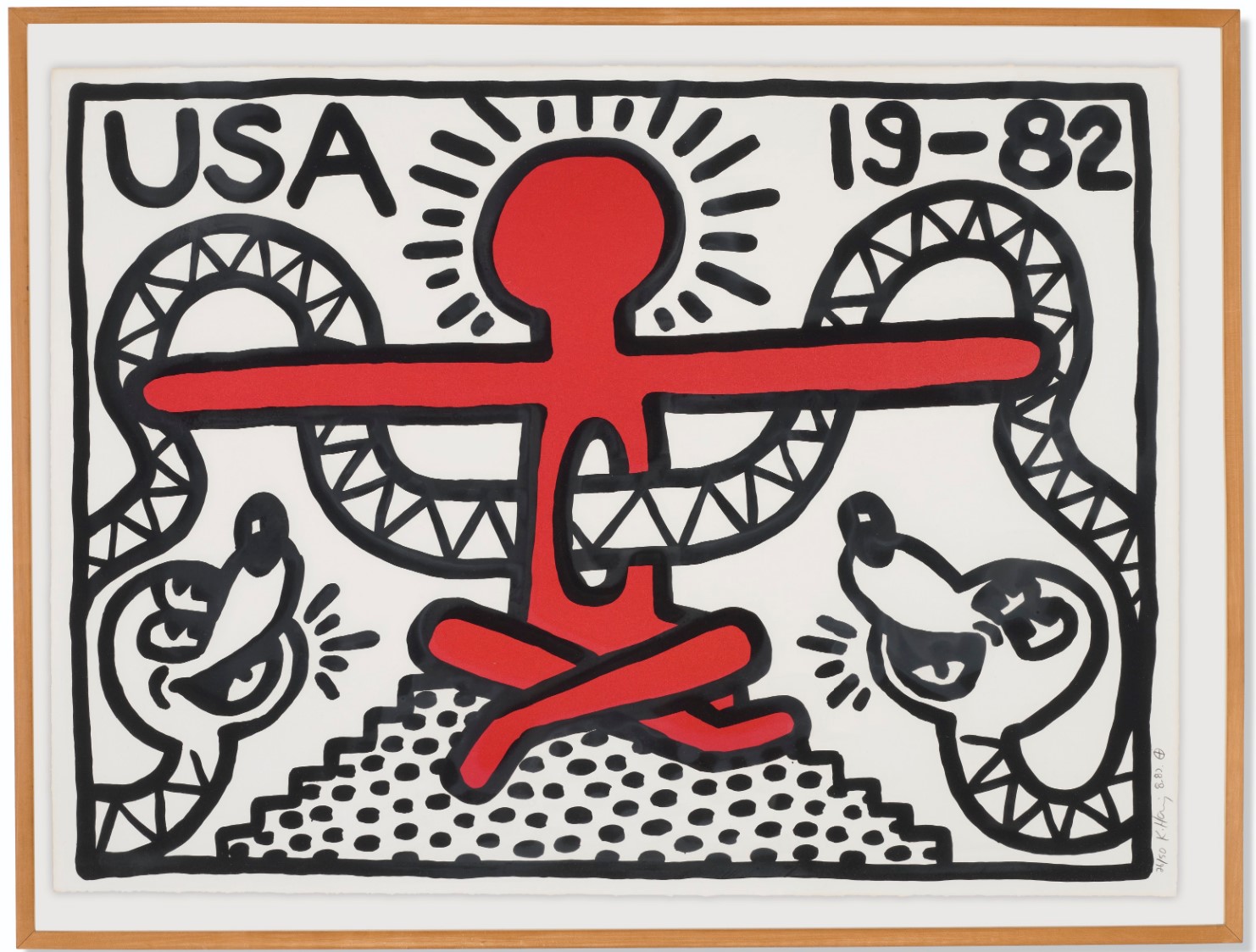
KEITH HARING (1958-1990)
USA 19-82, 1982
Lithograph in black and red on Copperplate Deluxe paper
Signed and dated in pencil, numbered 26/50