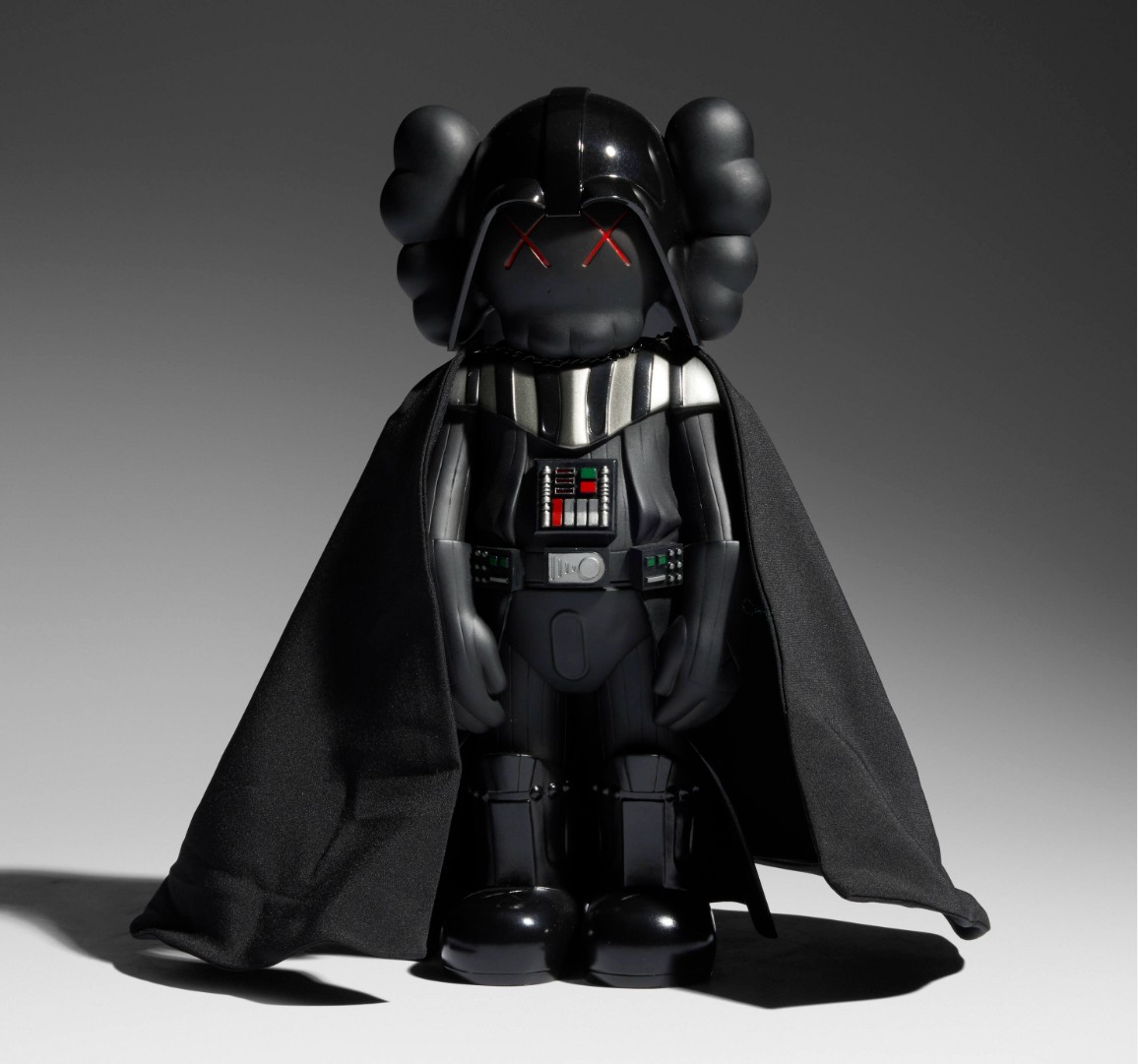
Star Wars Darth Vader Companion
Medium: Painted cast vinyl, fabric
Year: 2007
Dimensions: 26x30x13 cm (10-1/8 x 11-5/8 x 5-1/4 inches)
Edition: 500
Co-Produced by: Medicom Toy, Tokyo and OriginalFake, Tokyo
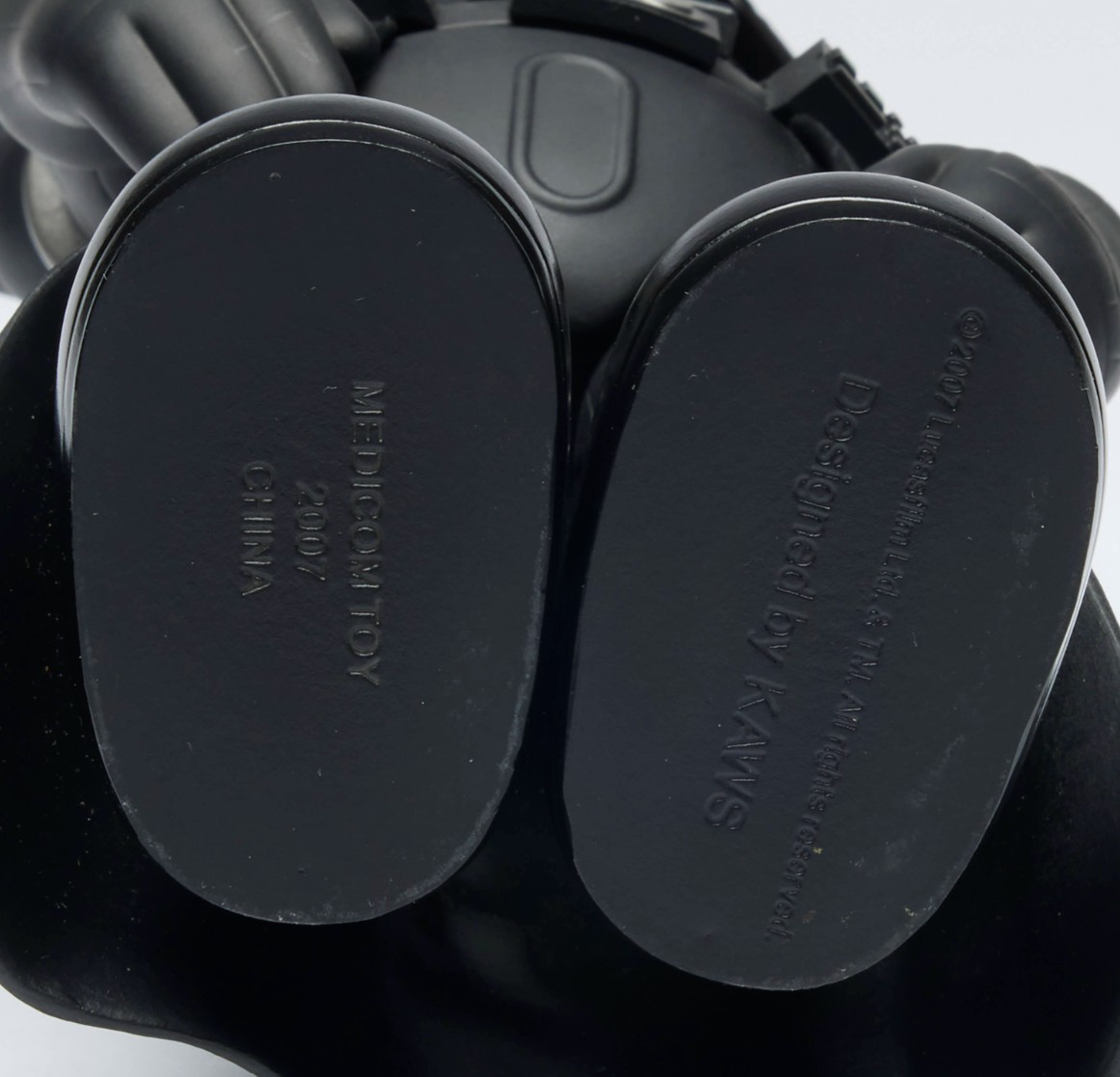
Impressed signature, date and manufacturer’s marks to the underside
‘©2007 Lucasfilm Ltd. & TM. All rights reserved. Designed by KAWS MEDICOM TOY 2007 CHINA’
Darth Vader Companion released in 2007 is one of the most striking collaborations between contemporary artist Brian Donnelly, known globally as KAWS, and the Japanese collectible manufacturer Medicom Toy. Produced in a limited edition of 500 examples, the figure merges KAWS’s signature character, the Companion, with the iconic villain Darth Vader from the legendary Star Wars universe created by George Lucas. Standing approximately 12 inches tall, the sculpture exemplifies the fertile intersection between contemporary art, collectible design, and pop culture mythology. At the time of its release, KAWS was rapidly gaining recognition for transforming the world of designer toys into a legitimate platform for artistic experimentation and cultural commentary. Figures produced in collaboration with Medicom Toy became central to the early diffusion of his work, allowing collectors to access sculptural interpretations of his characters long before his monumental public sculptures and major gallery exhibitions became widespread.
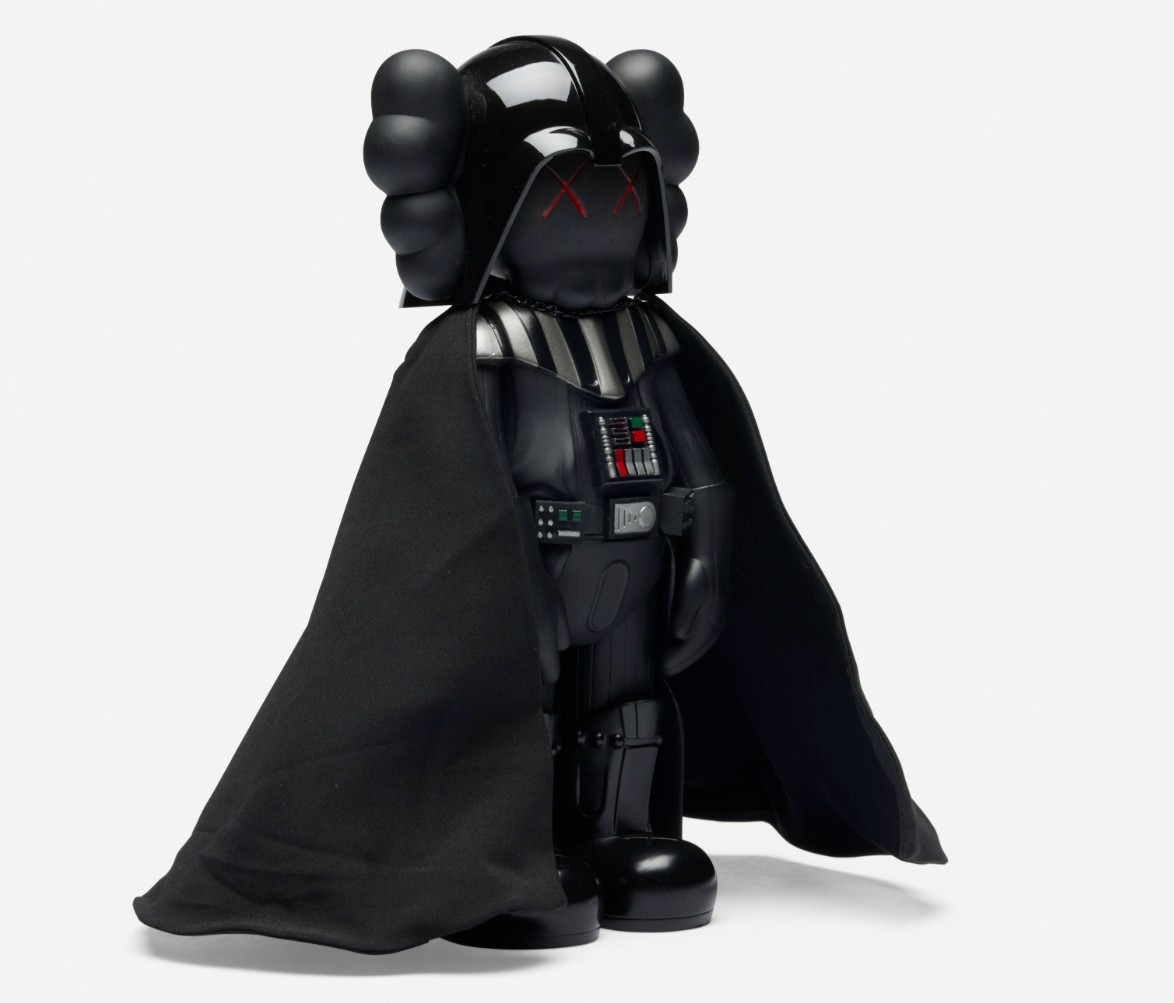
The figure presents KAWS’s Companion character wearing the unmistakable armor of Darth Vader. The Companion is instantly recognizable through its defining features: the skull-like head with crossed-out X-shaped eyes, rounded ear-like protrusions, and simplified cartoon anatomy inspired in part by early animation characters. In this edition, these elements are seamlessly merged with the design language of the Star Wars universe. The famous Vader helmet has been carefully adapted to fit the Companion’s distinctive head shape, while the character is dressed in the familiar armor, chest control panel, and belt system associated with the Sith Lord.
One of the most compelling aspects of the sculpture is the careful balance between the playful visual language of KAWS and the imposing presence of Darth Vader. The matte and glossy black surfaces of the vinyl armor create subtle contrasts that enhance the sculptural depth of the piece. The figure is completed with a flowing fabric cape, introducing a mixed-media element that adds both realism and dramatic presence. This textile component contrasts with the rigidity of the molded vinyl body and contributes to the theatrical quality of the figure.
The production of the sculpture reflects the meticulous manufacturing standards associated with Medicom Toy. The figure is fabricated using cast vinyl, a material that became the hallmark of the designer toy movement in the late 1990s and early 2000s. The process typically involves sculptural modeling followed by mold casting, precision paint applications, and careful assembly of multiple components. Medicom Toy has played a crucial role in the evolution of collectible art figures by collaborating with contemporary artists, fashion brands, and major entertainment franchises. Through these partnerships, the company helped establish vinyl toys as legitimate collectible artworks that blur the boundary between sculpture, design, and pop culture.
The release of the Darth Vader Companion occurred during a pivotal moment in KAWS’s career. By 2007, the artist had already developed a strong international following through his reinterpretations of familiar cultural icons. Beginning in the 1990s, KAWS gained attention by intervening directly into urban advertising spaces, modifying billboard imagery and cartoon characters with his now-famous X-eyed motif. This strategy of appropriation and transformation became central to his artistic language. The Companion figure emerged as his most recognizable creation, functioning almost as an alter ego within his broader artistic universe.
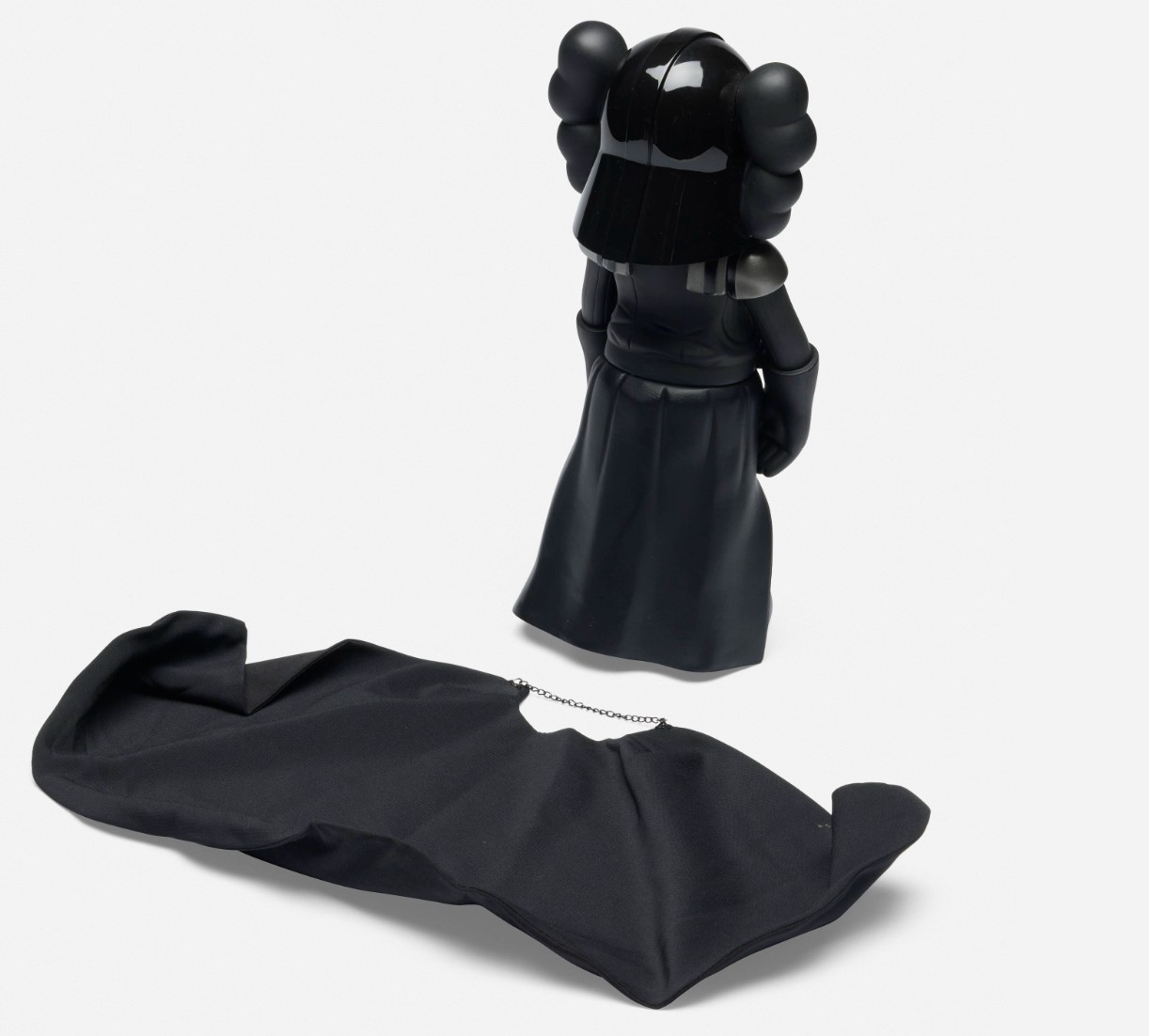
By merging the Companion with Darth Vader, KAWS engages in a dialogue with one of the most powerful mythologies of contemporary cinema. Darth Vader represents authority, tragedy, and redemption within the Star Wars narrative. When combined with the Companion’s melancholic expression and simplified cartoon form, the result is a character that simultaneously evokes humor, nostalgia, and introspection. This visual paradox lies at the heart of KAWS’s practice. His figures often appear playful at first glance, yet they carry subtle emotional undertones that resonate with modern audiences accustomed to navigating a world saturated with images and cultural references.
The Darth Vader Companion also illustrates the broader rise of designer toys as a significant cultural phenomenon. During the early twenty-first century, artists working at the intersection of street culture, graphic design, and contemporary art began using collectible figures as a new medium for artistic expression. These objects functioned simultaneously as sculptures, design objects, and cultural artifacts. KAWS quickly emerged as one of the most influential figures within this movement, elevating the status of vinyl figures from niche collectibles to highly desirable artworks.
The popularity of KAWS’s work has expanded dramatically over the past two decades. His paintings, sculptures, and large-scale installations are now exhibited in major museums around the world, and his works regularly achieve strong prices on the secondary market. Early vinyl figures produced in collaboration with Medicom Toy have therefore acquired historical significance within the trajectory of his career. They represent the formative stage during which KAWS established the visual vocabulary that would later define his global artistic practice.
Within this context, the Darth Vader Companion occupies a particularly notable position. The fusion of KAWS’s most recognizable character with one of the most famous figures in cinematic history creates a powerful cultural hybrid. For collectors, the sculpture embodies the moment when contemporary art, global entertainment franchises, and collectible design converged to produce objects that are both playful and historically meaningful. Today, these early editions are appreciated not only as collectible figures but also as artifacts that document the transformation of popular culture into a central language of contemporary art.
Auction Results