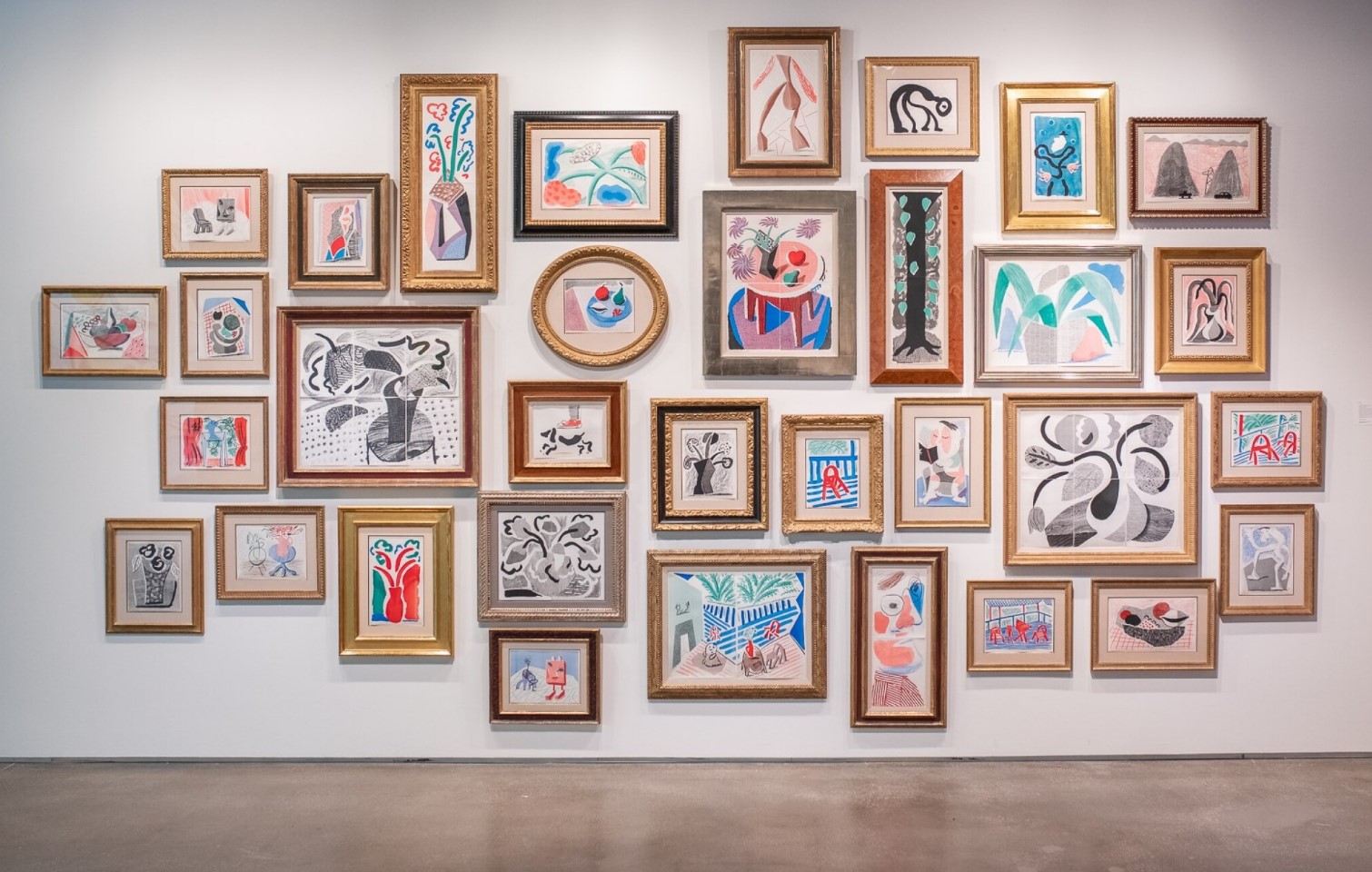
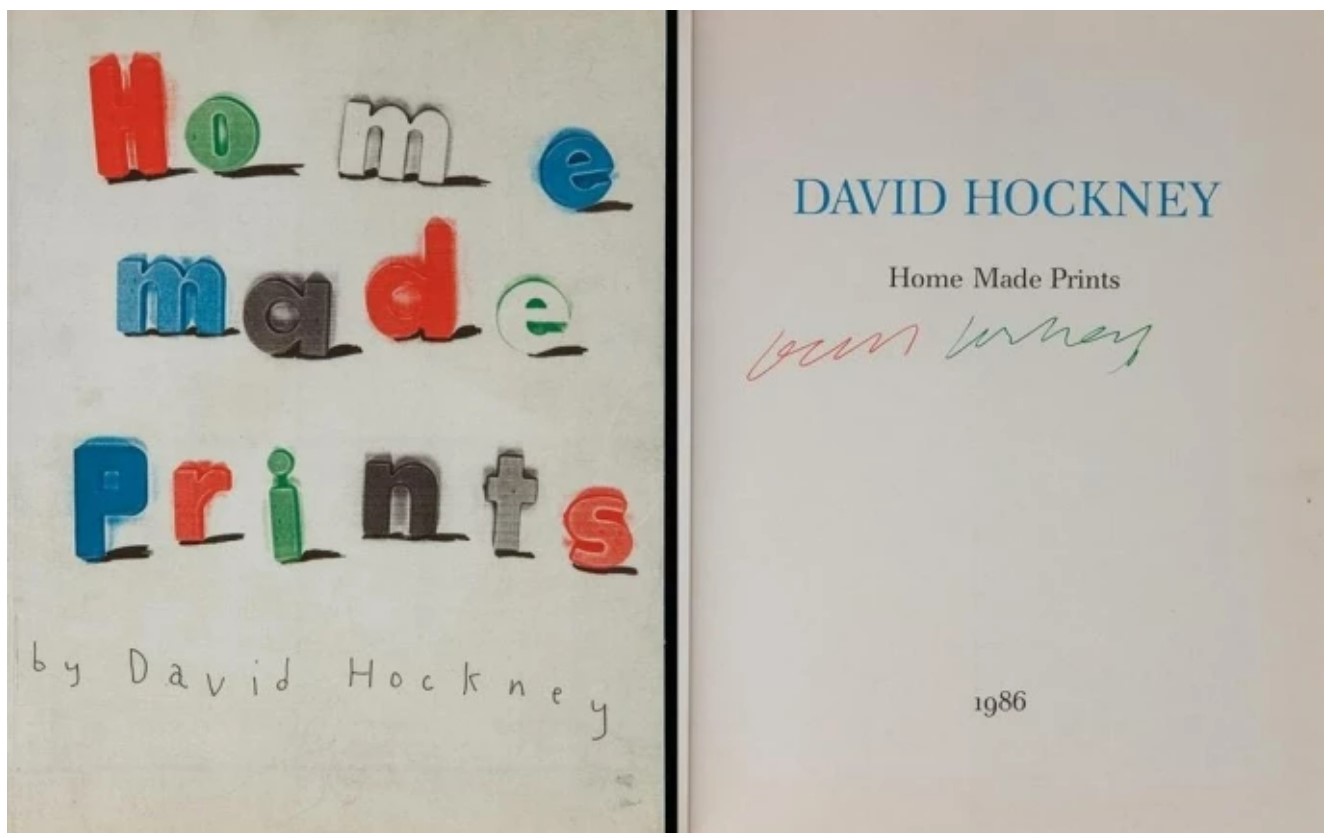
Home Made Prints [thirty three works]
Thirty-three home-made prints in colors executed on an office copy machine
Medium: Home-made print executed on an office color copy machine on wove paper
Year: 1986
Largest Sheet: 22 x 25 1/2 inches (55.9 x 64.8 cm)
Smallest Sheet: 8 1/2 x 11 inches (21.6 x 27.9 cm)
Edition: various sizes (the largest edition size is 60)
Publisher: The Artist
Literature: Museum of Contemporary Art Tokyo (289-317)
Signed, dated and numbered in pencil with the artist’s blindstamp
As told by Charlie Scheips, David Hockney’s studio assistant in the 1980s: “In 1986, inspired by the advent of inexpensive color copying machines a few years earlier, Hockney created his Home-Made Prints series. Canon had just come out with a PC copying machine with changeable color cartridges. Realizing it was both a camera that “photographed” flat surfaces and a means of reproduction, Hockney sent a single sheet through the machine multiple times using a variety of “plates” (a variety of paper sheets on which Hockney drew with pen and brush marks as well as collaged printed textures). He also had archival paper cut to standard copying machine sizes and composed multiple sheets into, larger works. Then employing a larger Kodak copying machine with a particularly rich black toner, he used the two machines to create the Home-Made Prints. The Pynoos collection of Home-Made Prints is exceedingly rare in that it comprises the original suite of 33 prints as included in the 1986 Andre Emmerich exhibition in New York and memorialized with an exhibition catalogue.”
This experience of printmaking on his own allowed Hockney more freedom and ownership over the medium, and he was no longer tied to the studios of master printmakers with whom he had collaborated throughout the 1960s. Following the advent of the Home-Made Prints, Hockney began using a fax machine to create and send off prints himself to a number of friends, once again freeing himself from the traditional boundaries of printmaking. This ever-inquisitive spirit is still present today: Hockney’s series of iPhone and iPad drawings, begun in 2009, shows the artist once again using new media to disrupt and remake the printmaking process, and would not have existed without Hockney’s bold experimentation with the Home-Made Prints.
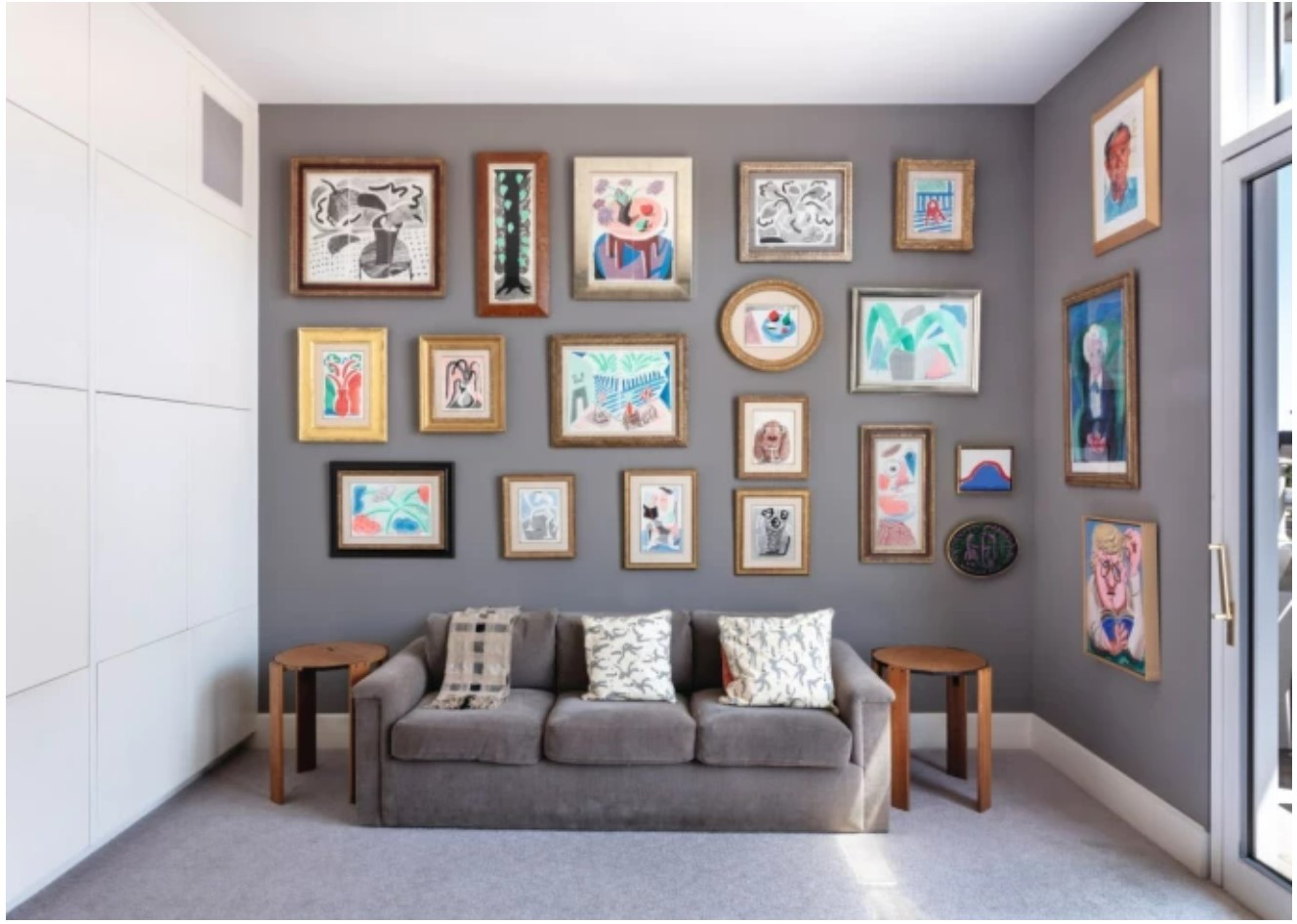
THE PRESENT WORKS INSTALLED IN THE HOME OF MORRIS AND RITA PYNOOS.

The story of David Hockney’s ‘Home Made Prints’ | Christie’s (christies.com)
David Hockney began his printmaking career in 1954 as a student at the Bradford College of Art before expanding his technique during his studies at the Royal Academy. His interest in new technology, and how it might lead to new processes of printmaking, developed in the 1980s and has gone on to make a lasting impact on his art and how he sees the world.
“Anyone who likes drawing or mark-making would like to explore new media. I’m not a mad technical person, but anything visual appeals to me. In linocuts, for example, everything has to be bold. You don’t make tiny, thin lines in a linocut, it would be too niggly. But get an etching plate, it’s all about fine lines. Anybody who draws will enjoy that sort of variety of graphic medium: because it requires inventiveness.”

In February of 1986, Hockney began experimenting with a friend’s copy machine and within an hour he’d discovered it was, in fact, a new type of printing machine. The ‘home-made prints’ he produced using the machine disrupted the traditional processes of color printmaking, traditionally a painstaking process that involves many layers and experts to match each new section of the print.
“Over the years I’ve made a lot of prints working with several different master printshops. It’s an exciting process, but I’ve always been bothered by the lack of spontaneity: how it takes hours and hours, working alongside several master craftsmen, to generate an image. How you’re continually having to interrupt the process of creation from one moment to the next for technical reasons.”

“But with these copying machines, I can work by myself — indeed you virtually have to work by yourself; there’s nothing for anyone else to do — and I can work with great speed and responsiveness. In fact, this is the closest I’ve ever come in printing to what it’s like to paint: I can put something down, evaluate it, alter it, revise it, all in a matter of seconds.”

The process of printing with the copy machine is very similar to that of a traditional color artist’s print. Each color is drawn onto a separate sheet of paper. That color is then printed onto each sheet of the edition. Once one color has been completed, the printed sheets are loaded back into the machine and a sheet with another, separate color is placed on the copy bed. In this way, the print remains rooted in the tradition of layering ink, giving the surface depth and dimensions. Had all of the colors been printed at once from one sheet the effect would have been far less interesting, appearing ‘flat’, as you would expect from a copier, with the layers removed.
Auction Results
Sotheby’s New-York: 13 May 2021
Estimated: USD 150,000 – 200,000
USD 963,800
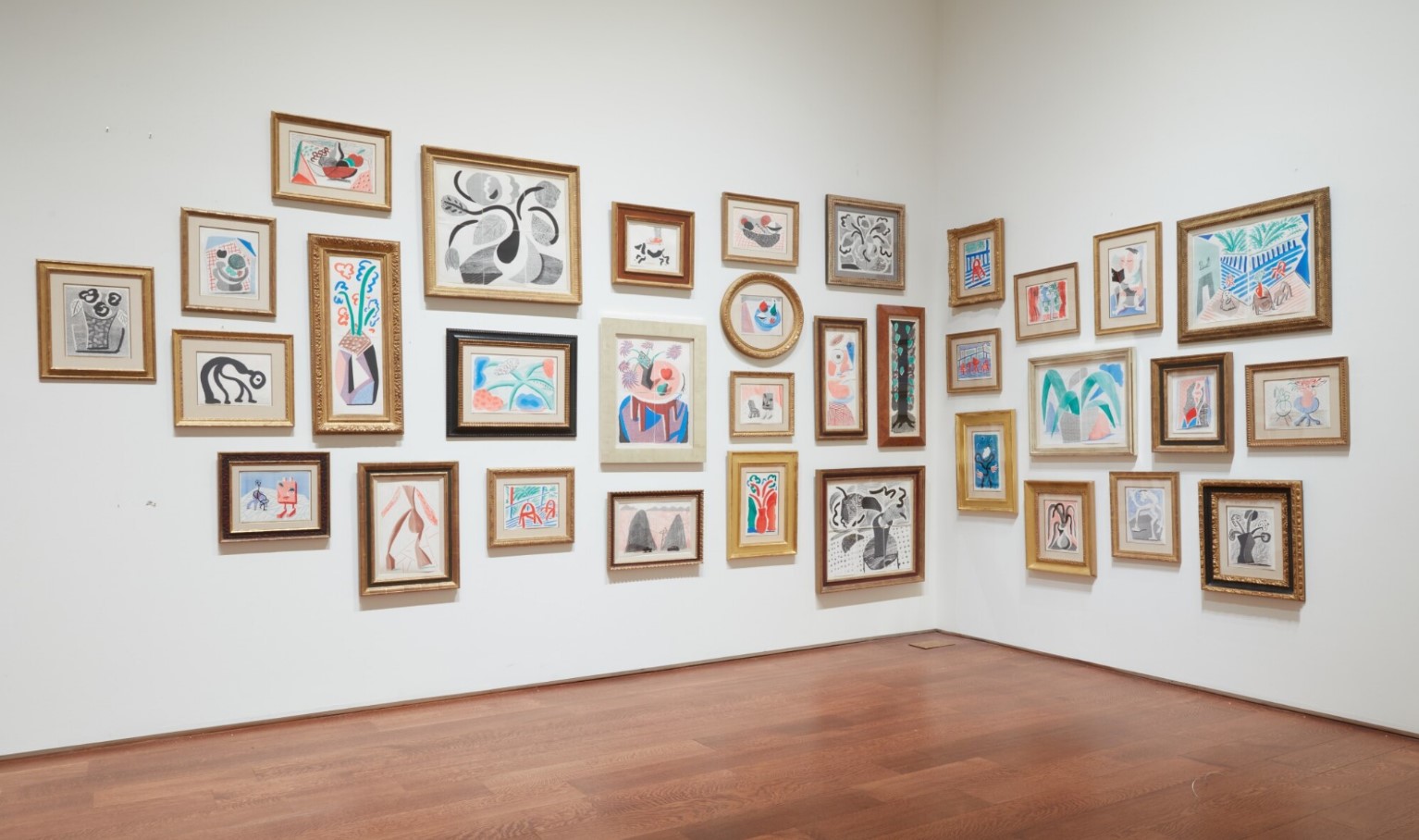
DAVID HOCKNEY (b. 1937)
Home-Made Prints [Thirty-three Works], 1986
Thirty-three home-made prints in colors executed on an office copy machine
Each signed in pencil, dated and variously numbered from the editions of various sizes