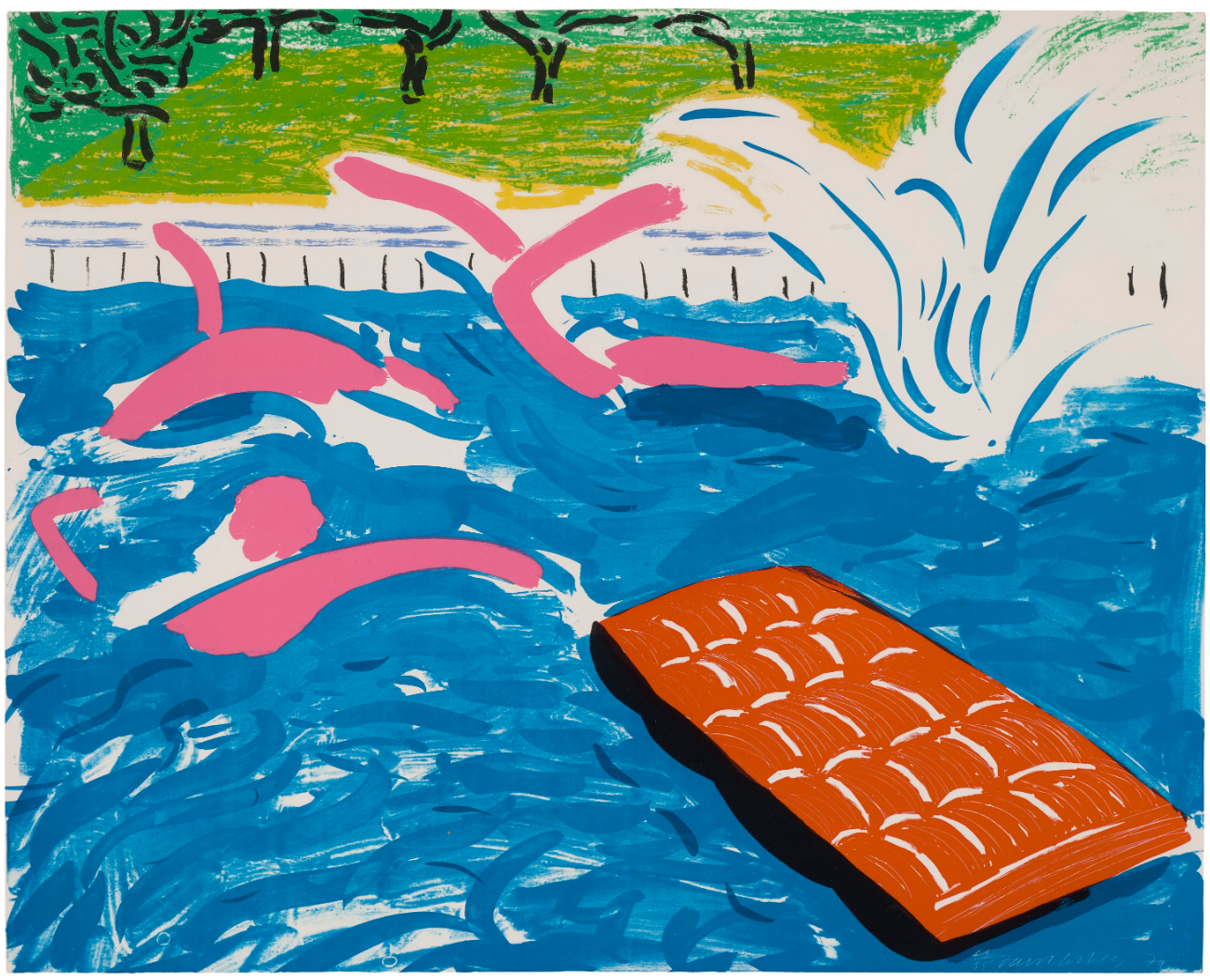
Afternoon Swimming
Medium: Lithograph in colors on Arches Cover mould-made paper
Year: 1979
Size: 31 1/2 x 39 5/8 inches (80 x 100.6 cm)
Edition: 55
Artist’s Proofs: 18 AP
Publisher: Tyler Graphics Ltd., Bedford Village, New York
Literature: Museum of Contemporary Art Tokyo (233); Tyler (266)
Signed, dated and numbered in white pencil with the publisher’s blindstamp
Afternoon Swimming is the largest of Hockney’s lithographs of pools from the 1970s and is considered one of the most significant prints produced by the artist at Tyler Graphics. Afternoon Swimming illustrates the artist’s sustained interest in water in his print practice, not just as a subject but as a way to explore color, light and surface.
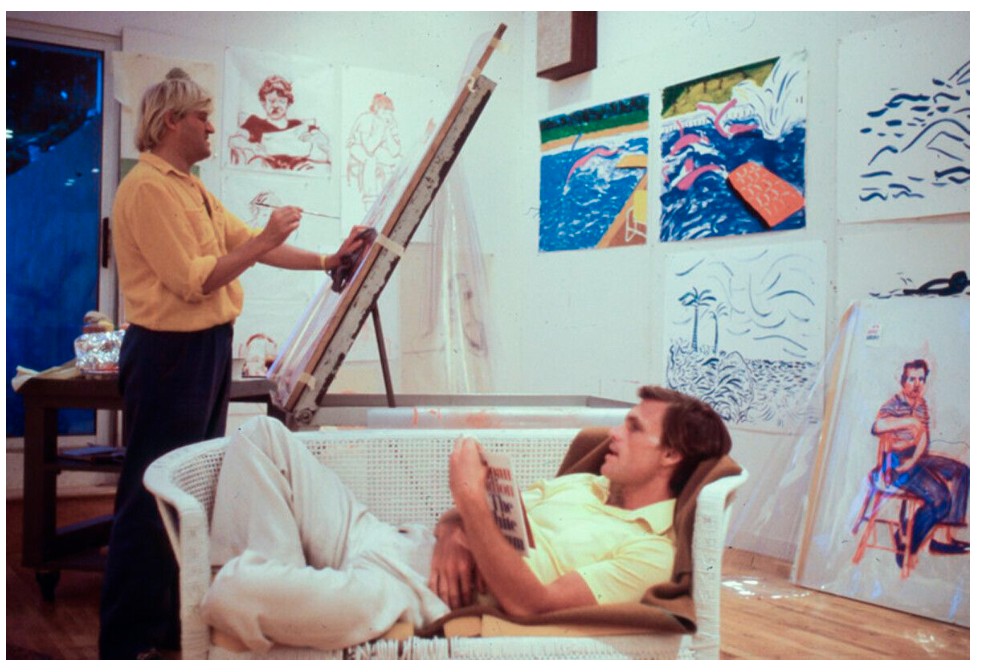
David Hockney painting on an easel in the Tyler Graphics artist studio, lithographic proofs of ‘Afternoon Swimming’, ‘Bora Bora’ and others on surrounding walls, with Joe McDonald reading on a cane chair in front, Bedford Village, New York, 1980. Credited to: Kenneth E Tyler. © David Hockney
Hockney first began working with master printer Kenneth Tyler in the 1960s at Gemini GEL in Los Angeles and followed Tyler to Bedford, New York to create several series of prints at the printer’s workshop throughout the 1970s and 1980s. This period of intense collaboration resulted in many of Hockney’s most ambitious editioned projects, from portraits to landscapes and most famously, his images of swimming pools.
“With Kenneth Tyler nothing was impossible.
If I said, could we, he said, yes, yes, it can be done.”
Working with Ken Tyler, Hockney was able to realize subtle gradations in tone, transparency, and texture in lithography, as the workshop’s technical capacity gave him room to experiment. The printer’s ability to capture spontaneous motion in large scale lithographs was a natural fit for Hockney’s depictions of the pool subject.
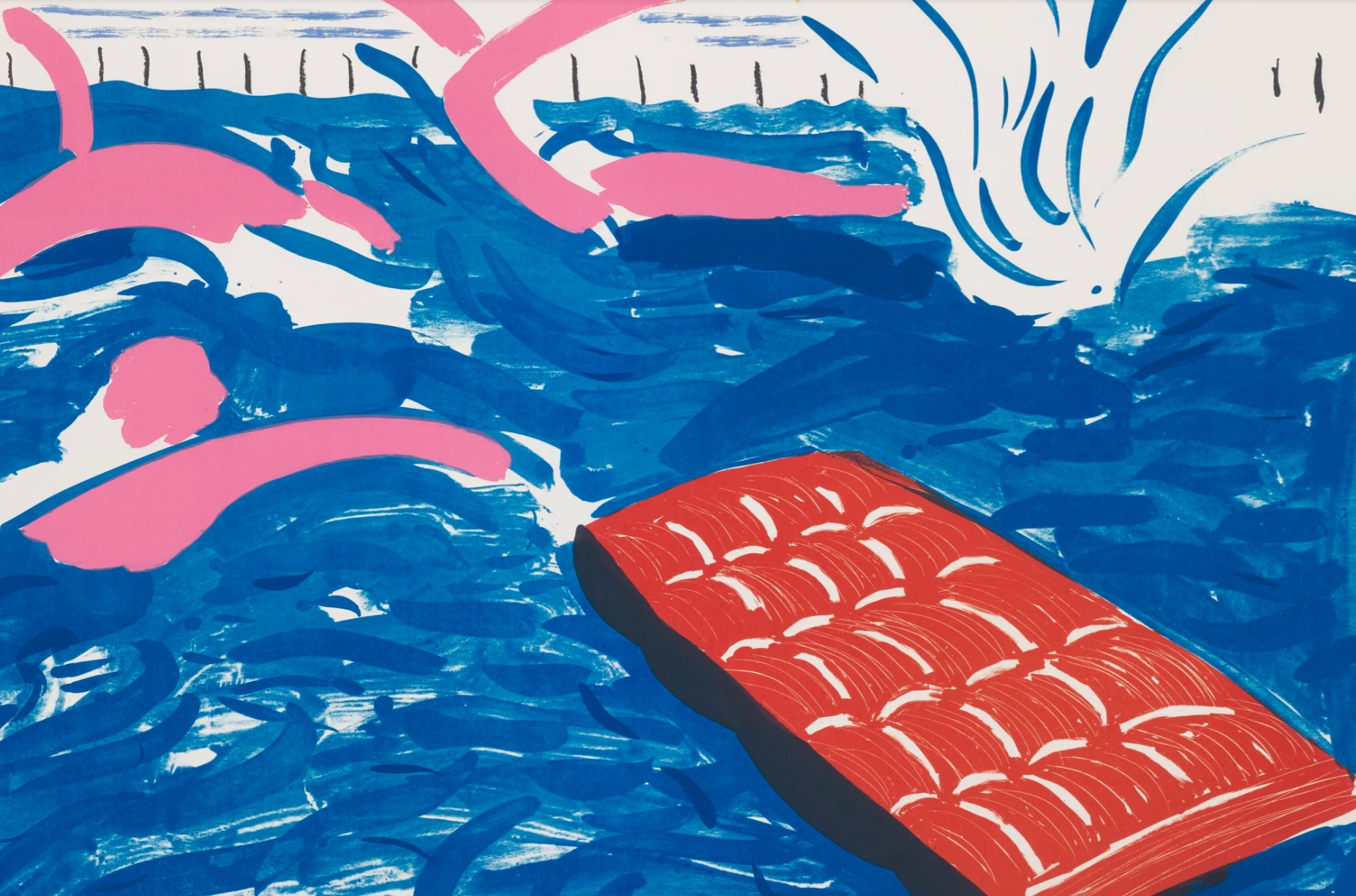
The swimming pool was a central theme in Hockey’s work starting in the 1960s, as the artist was enchanted by the sunshine of Los Angeles, modern architecture, and the formal visual challenge to represent water. Early prints often approached water through simplified motifs. curving ripples, wave-like patterns, or rhythmic linework. These works reduced the complexity of water to a set of visual signs, engaging with the problem of how something fluid and constantly moving could be frozen in graphic form. Afternoon Swimming shows the artist rendering the subject by the late 1970s not only with a series of surface patterns but also showing a sense of depth and motion.
‘Ken [Tyler] had a swimming pool in the garden and every day we would have lunch by the swimming pool, every lunch time I would have a swim. I kept looking at the swimming pool; and it’s a wonderful subject, water, the light on the water…every time you look at the surface, you look through it, you look under it…’
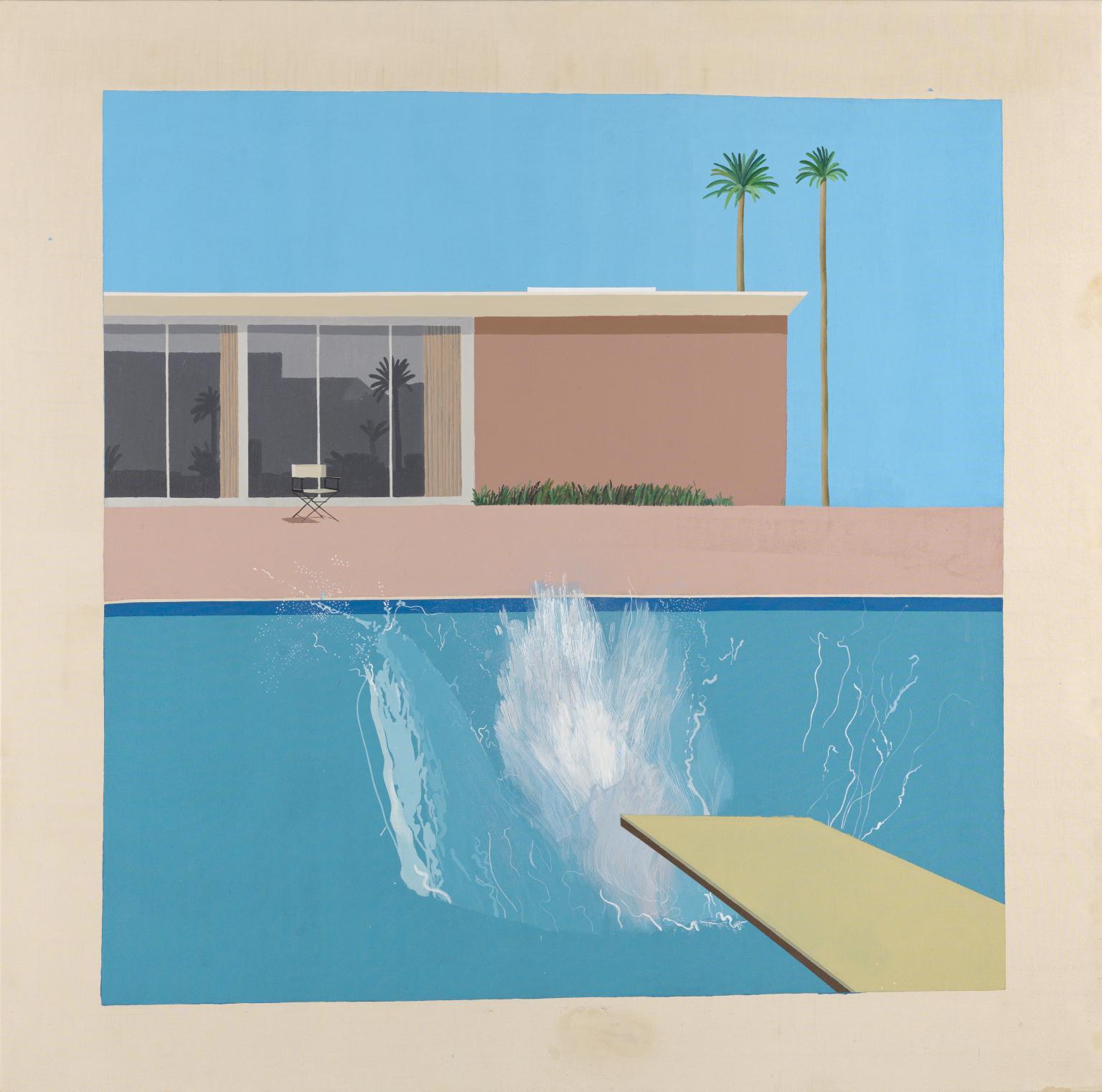
With its bold blue and pink brushstrokes this work exuberates the carefree joy of swimming. The pool that is so ubiquitous in Hockney’s LA period is here transformed from the still, flat style of A Bigger Splash to a more transparent lithograph, filled with figures – or perhaps just the same figure repeated as they swim lengths – and movement.
A red lilo floats on the surface of the pool looking like a section of an overstuffed armchair and presenting an image of relaxation which is at odds with the vigorous exercises of the swimmer(s). Hockney’s brushstrokes on the lithograph stone are hugely expressive and suggest he may have been using tusche (diluted lithographic ink) in order to achieve this watery and free effect. In this way the work appears almost fauvist in style, recalling the work of Matisse, particularly in the splash of water in the right-hand side and the black outlines of trees or plants that act as a background. Hockney moved to LA in 1964, in search of the sharp light and shadows he had seen in Hollywood movies as a student. Comparing the move to ‘Van Gogh going to Arles’, he sought to escape what he saw as the greyness of post-war England, and in Afternoon Swimming it appears he succeeded.
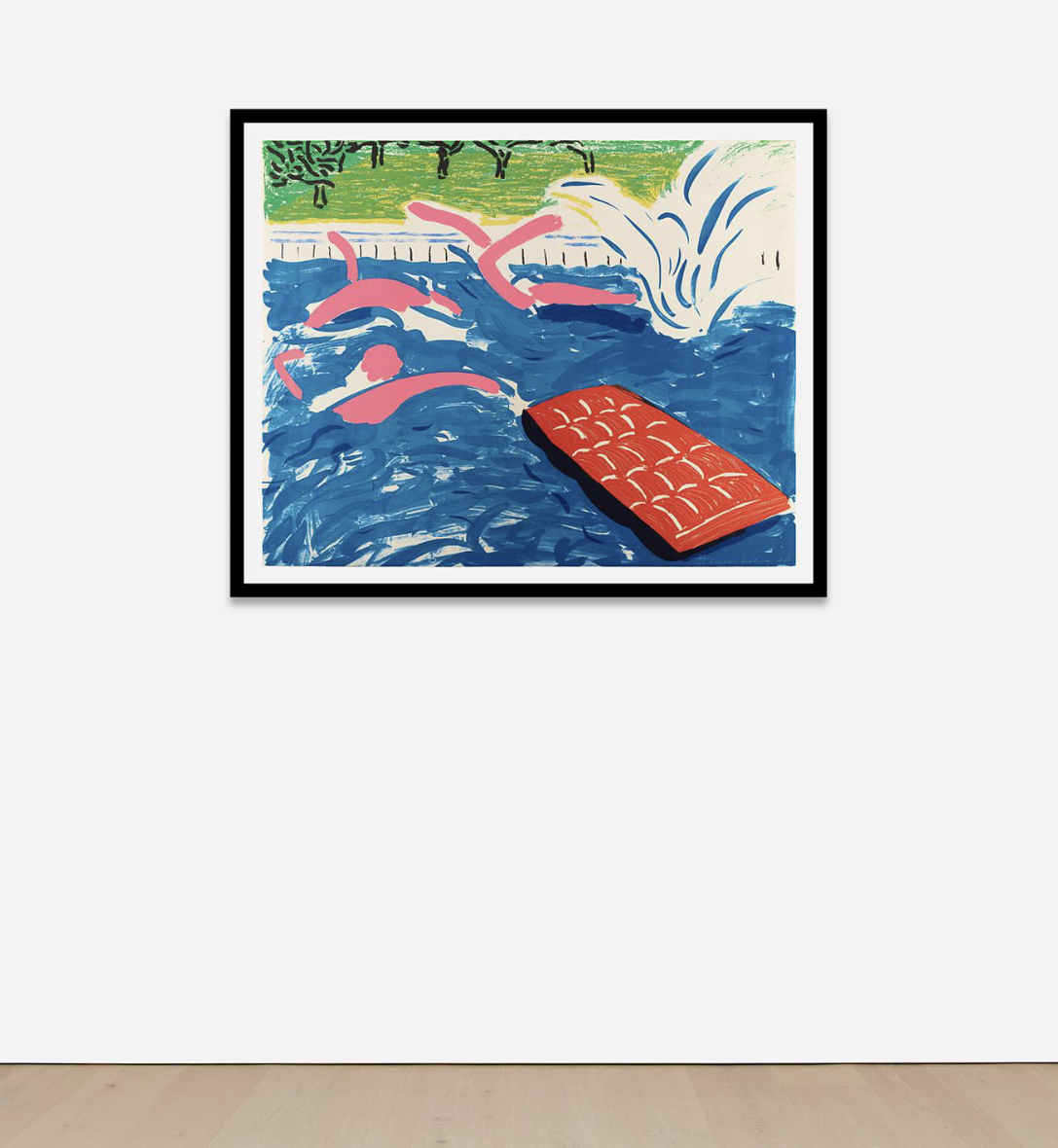
Instantly recognizable, David Hockney’s swimming pools are widely identified as the artist’s most famous motif and embody his fascination with post-war America. In 1978, Hockney established a permanent residence in ‘the promised land’ of Los Angeles. Although printed in New York, Hockney’s large-scale lithograph Afternoon Swimming (1979) is a vivid celebration of life, saturated with the colours, exuberance, and freedom that Hockney associated with California. Incorporating an iconic splash – a reference to his earlier and widely celebrated Los Angeles pool paintings, such as A Bigger Splash (1967) – Afternoon Swimming also reveals the aesthetic influence that the work of Henri Matisse had on Hockney.
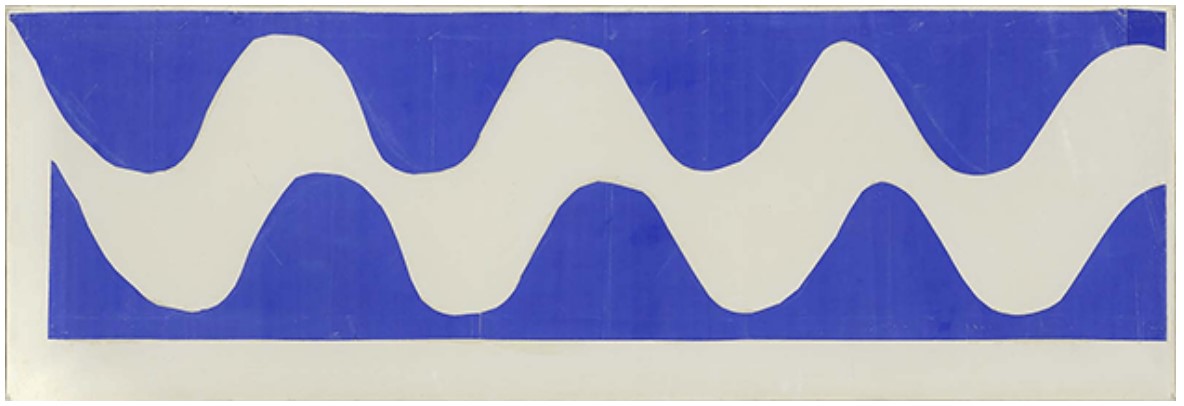
Henri Matisse, La Vague, Nice, c. 1952, Musée Matisse, Nice. Artwork: © Succession Henri Matisse/DACS 2022
In 1952, aged 82, Matisse was staying at the Hôtel Régina in Nice when he expressed a desire to visit his favorite swimming pool in Cannes. Unable to complete the journey in the sweltering heat, the artist exclaimed to his assistant, ‘I will make myself my own pool’. The result was The Swimming Pool, Matisse’s only site-specific cut-out. By painting paper shapes an ultramarine blue and placing them on a band of white paper that stretched around his hotel room, Matisse captured the fluidity of water through which his swimmers dip, dive and dance. La Vague of the same year further emphasizes Matisse’s interest in the movement of water – this time, focusing on the undulations of waves. Acquired by the Museum of Modern Art in 1975, Matisse’s The Swimming Pool embarked on a landmark tour around the United States before returning to New York where it was permanently reconstructed in 1977.
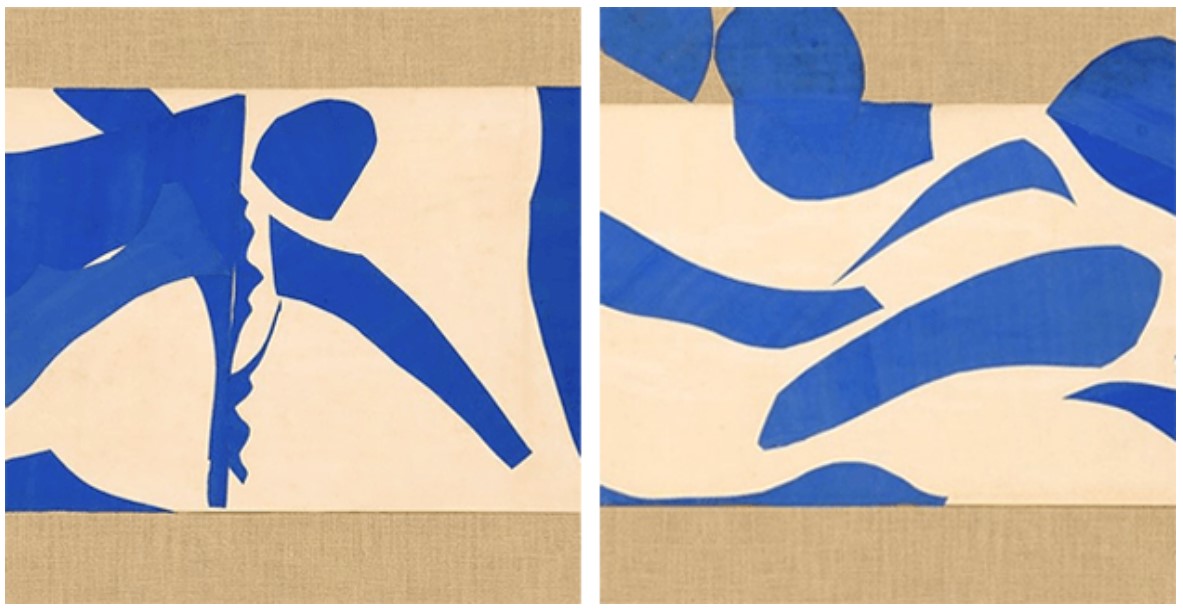
Henri Matisse, The Swimming Pool, Nice-Cimiez, Hotel Regina, late summer, 1952, Museum of Modern Art, New York. Image: © The Museum of Modern Art, New York/Scala, Florence, Artwork: © Succession Henri Matisse/DACS 2022
By 1979, the year that Hockney produced Afternoon Swimming, swimming pools were already an established part of his iconography. Flying into Los Angeles for the first time in 1963, Hockney looked out of the aeroplane window and was immediately captivated by the striking blues of the countless swimming pools scattered throughout the city below. Swimming pools became a motif through which he visually defined Los Angeles, and they illustrate his perception of the city as a liberal, prosperous, and sun-drenched utopia. While realistically depicted figures inhabited Hockney’s earlier pool paintings, other lithographs he produced of swimming pools in the 1970s were largely deserted and focused more on depicting the ever-changing characteristics of water. In contrast, Afternoon Swimming contains three flattened pale-pink figures, with one reaching for a bright orange pool inflatable. The limbs of Hockney’s semi-abstracted swimmers swirl through the composition and appear to undulate in rhythm with the pool water, which ripples from the impact of someone diving in. Far from indicating fully formed figures, Hockney’s swimmers are created through graphic marks which merely allude to human bodies. Similarly, the splash of water and even the trees in the background are constructed entirely of individual staccato marks. The distinctiveness of each lithographic gesture draws parallels with Matisse’s cut outs, in which an overall image emerges through the careful placement of numerous fragments of paper.
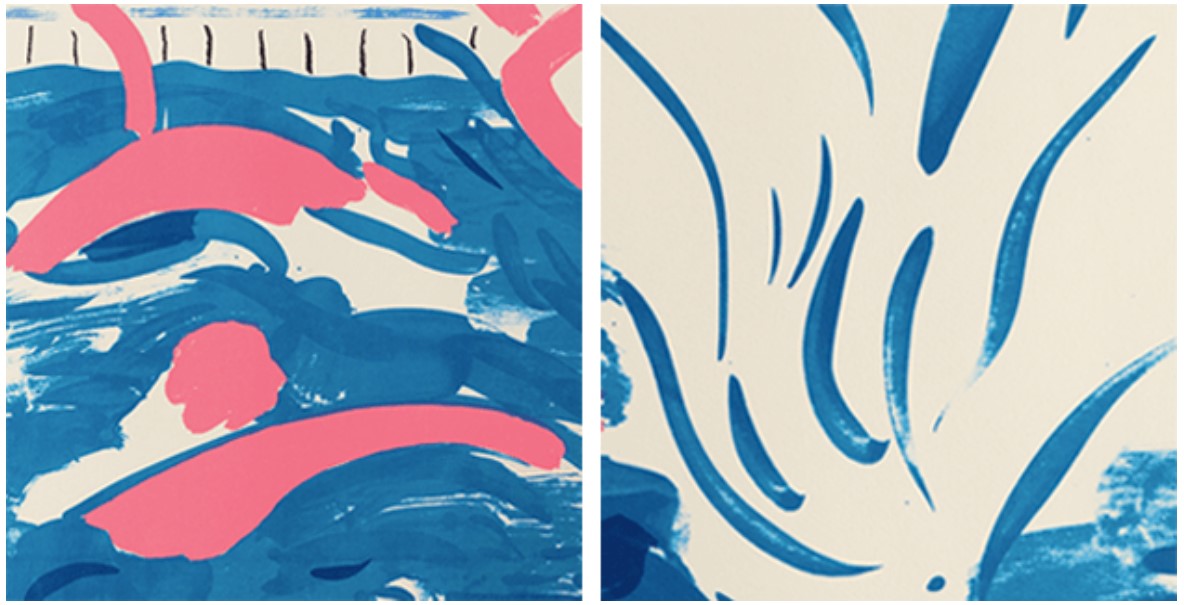
While aesthetic similarities can be identified between the two swimming pools despite the differing media used, for both artists, these works recall the places that were fundamental to their artistic production. For Hockney, America – and particularly the bohemia of Los Angeles – juxtaposed the repressive atmosphere of post-war Bradford where he grew up. He felt that colors shone brighter in the United States, and he believed this positively impacted his work. For Matisse, his cut-out swimming pool served as a vessel to transport himself out of his blisteringly hot hotel room in 1952, but it also references his long-standing love affair with the French Riviera, which he returned to throughout his life to produce some of his most important works. While other influences on Hockney have been widely explored – such as the impact that the work of Picasso had on the British artist – the relationship between Hockney and Matisse has been less examined. In a bid to rectify this, the Musée Matisse in Nice is currently running an exhibition titled Hockney – Matisse. Un Paradis retrouvé (Hockney – Matisse. A Paradise Found). All the Hockney works on display are on loan from the artist’s personal collection and his foundation based in Los Angeles.
Auction Results
Christie’s New-York: 23 October 2025
Estimated: USD 200,000 – 300,000
USD 304,800
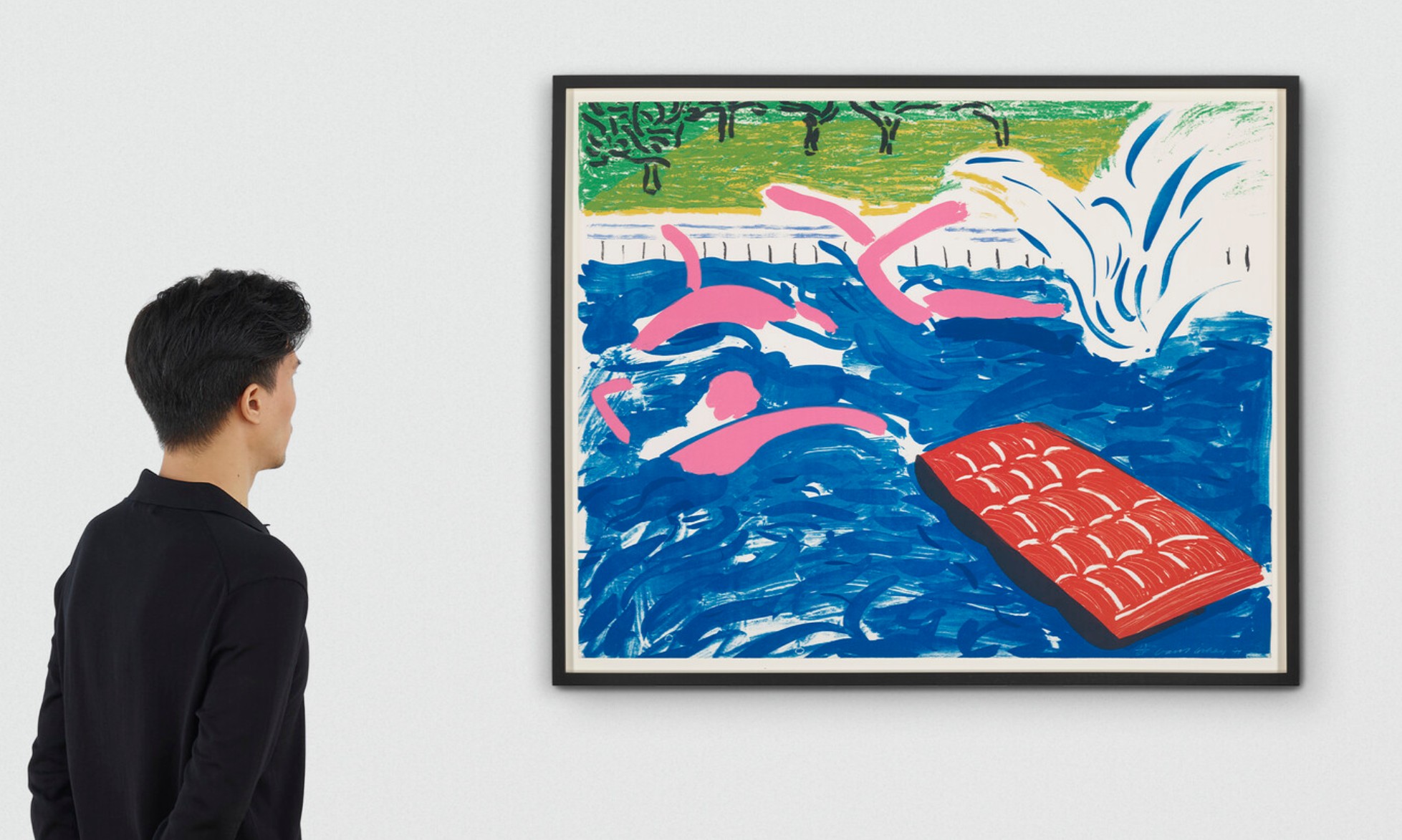
DAVID HOCKNEY (B. 1937)
Afternoon Swimming (Museum of Contemporary Art Tokyo 233; Tyler 266), 1979
Lithograph in colors, on Arches Cover paper
Signed and dated in white pencil, numbered 13⁄55
(there were also eighteen artist’s proofs)
Phillips London: 13 September 2022
Estimated: GBP 250,000 – 400,000
GBP 302,400 / USD 348,628
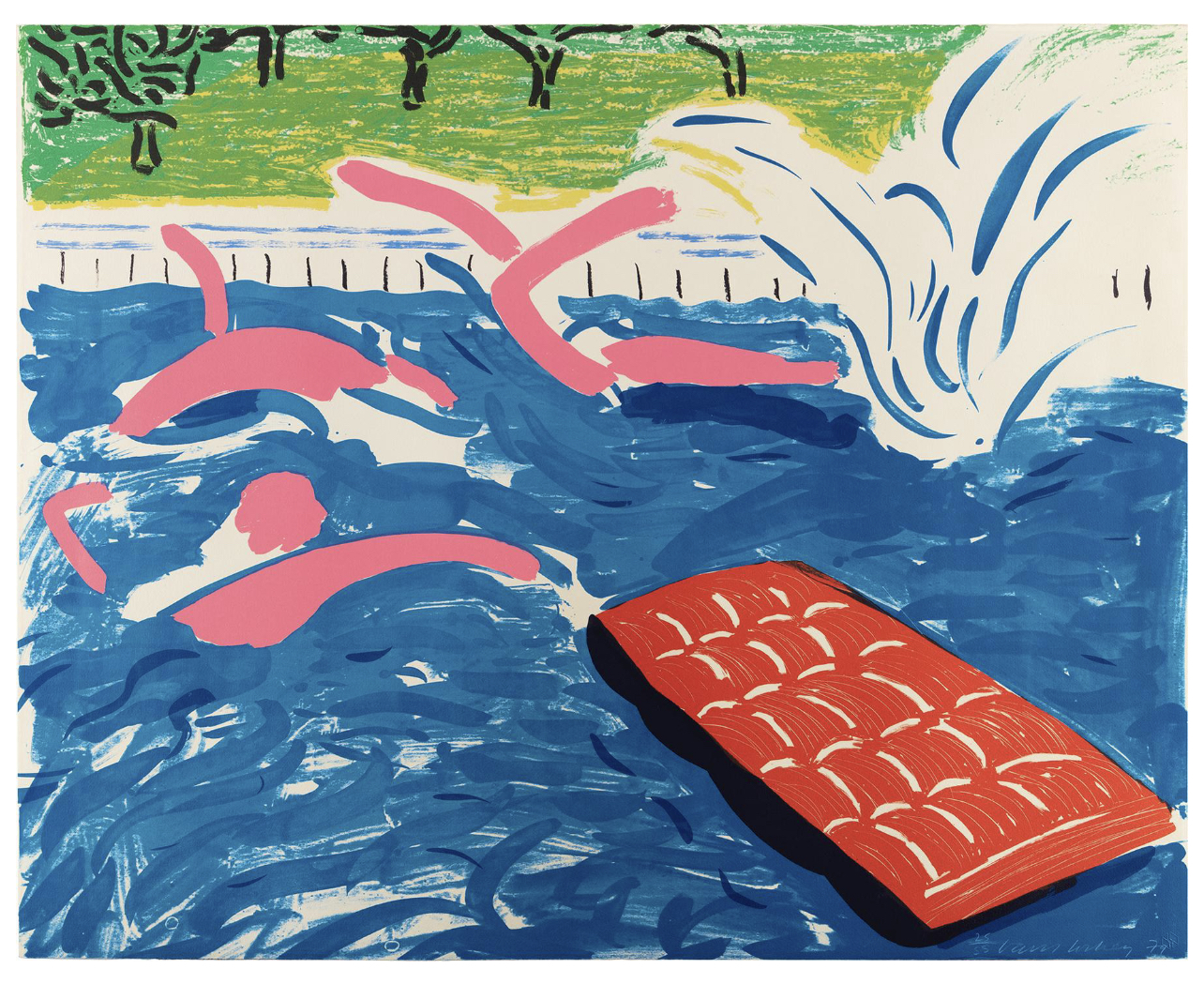
DAVID HOCKNEY
Afternoon Swimming (T.G. 266, M.C.A.T. 233, W.G. 87), 1979
Lithograph in colors, on Arches Cover mould-made paper
Signed, dated and numbered 25/55 in white pencil
Christie’s New-York: 21 October 2021
Estimated: USD 100,000 – 150,000
USD 500,000
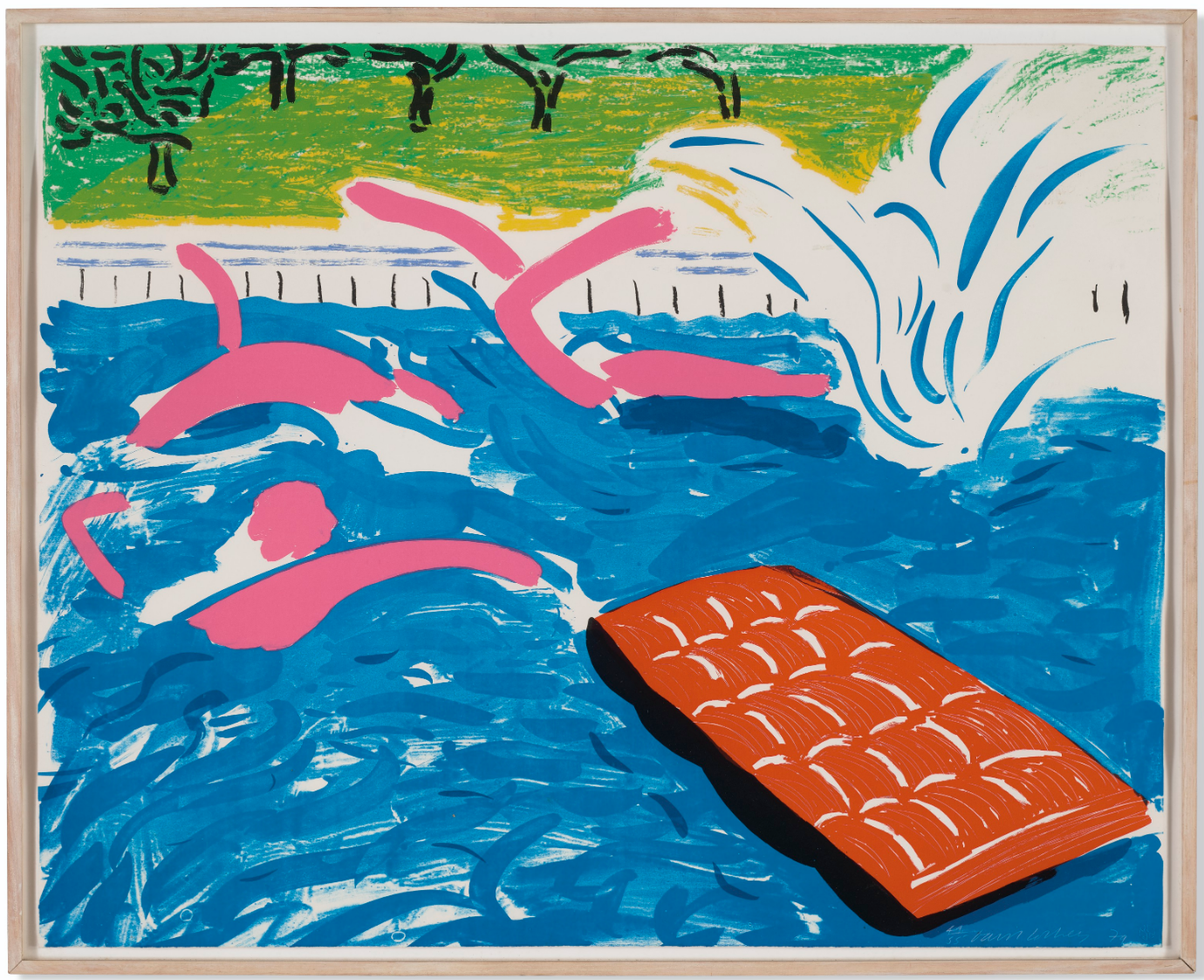
DAVID HOCKNEY
Afternoon Swimming, 1979
Lithograph in colors, on Arches Cover paper
Signed and dated in white pencil, numbered 44/55